






Abstract
The current study aims to identify the determinants that inspire hotels based in Jammu & Kashmir to employ social media marketing (SMA) to improve their performance in addition to the mediating influence of customer relationship management capabilities (CRMC). The study adopts a quantitative approach where data is gathered from 389 hotel managers/owners. Empirical validation of the theoretical model employing structural equation modelling with Smart-PLS4 is accomplished. The findings show that a hotel's adoption of SMA is influenced by perceived usefulness, perceived ease of use, cost-effectiveness, institutional pressure and structural assurance. Hotels’ acceptance of SMA improves their performance significantly, with CRMC having a partial mediating effect.
Introduction
In contemporary times, progress in information and communication technologies (ICTs), notably social media, has transformed the way marketing operations are carried out (Eid et al., 2020; Khayer et al., 2020; Ndekwa and Katunzi, 2016). Digital technologies like social media are transforming the marketplace, business atmospheres and corporate models (Cortez and Johnston, 2017), as well as the promotional paradigm (Mangold and Faulds, 2009). Social media has evolved into a distinct and important marketing tool in defining the success of any product, service or business (Eid et al., 2020; Wamba et al., 2019). Therefore, it is obvious that social media marketing (SMA) provides a solid foundation for discovering clients, providing an atmosphere in which to engage with them and produce promoters for diverse businesses (Abbasi et al., 2022).
The advantages that users of social media sites experience are reflected in their perceived usefulness (PU). According to Almaiah and Alismaiel (2019), people will use a computerized system if they think it will help them perform better. Additionally, the perceived usability of the information directly affects purchasing intention. Another important aspect influencing intention to employ information technology systems like SMA is perceived ease of use (PEU). Furthermore, research by Jo (2022) emphasizes the importance of PEU in giving social media users a utilitarian benefit and promoting its use, which in turn influences well-being indirectly. Also due to the availability of digital platforms that offer efficiency and cost-effectiveness (CE) in distributing a huge volume of information to both internal and external users, social media has become a widely used engagement tool (Marchesani et al., 2024). Social media in terms of marketing provides hotel firms with benefits such as increased sales, faster direct communication with customers, efficient distribution and procurement, high customer satisfaction, cost reduction and improved brand image (Melian-Gonzalez and Bulchand-Gidumal, 2016; Okazaki et al., 2017). It also aids in increased awareness (Jones et al., 2015), and the ability to provide 24/7 operations thus overcoming time constraints as it is affordable and much simple to implement (Kim et al., 2013). A strong SMA presence allows hotels to reach out to potential customers immediately, saving time and money (Su et al., 2016). Also, they can more often change their promotional campaigns, events and services (Hudson and Thal, 2013). These innovative media technologies such as SMA that provide businesses with altogether new techniques to connect, communicate and customize communications with customers are especially becoming relevant for the customer relationship management process as well (Hennig-Thurau et al., 2010). A recent analysis of technologies engaging customers has determined that ‘Twitter’ is among the prominent three social media platforms, namely Facebook, Twitter and LinkedIn, utilized by hotels in the United States, as reported by Leung et al. (2015). Also in the current era, businesses in the same industry are usually motivated to adopt new technologies by pressure from competitors (Dahnil Sikumbang, 2021). Morever, Jammu and Kashmir (J&K) is one of the states of India which has rich natural tourism resources and products and the spendings of domestic and international tourists do have a significant contribution to the GDP of the country. In order to compete with the national and global hospitality firms, to enhance their visibility and to provide highest level of satisfaction to their customers, adoption of these innovative technologies is of utmost importance for this segment. According to Ezzaouia and Bulchand-Gidumal (2020), competitive pressure has a significant impact on hotels’ use of information technology. Also according to Rahman et al. (2020), one of the key factors influencing the adoption of new technology like social media in the environmental setting is customer demand. In line with the objective of the Ministry of Tourism of India which is to encourage innovation and application of contemporary technologies in the hospitality sector, these platforms have also put in place technological and legal precautions to prevent consumers from being mistreated by sellers while making purchases online and to encourage safe trading (Sanchez-Loor and Chang, 2023).
As per the latest statistics, SMA is becoming increasingly important, where advertisement spending in the Digital Media Advertising segment has reached US$207.10 billion in 2023 and is expected to increase further (Statista, 2023). Similarly, tourism is one of the fastest expanding economic sectors with a substantial impact on employment and a multiplier effect on the activity of associated sectors. In 2022, India registered Foreign Tourist Arrivals (FTAs) of 6.19 million, a 305.4% increase over the same period the previous year, accounting for Foreign Exchange Earnings (FEEs) of Rs.1,35,543 crore (Provisional estimates), a 106.77% increase (Annual report 2022–23). Moreover, the hospitality sector within the tourism industry is one of the core areas that contributes greatly towards the visitor experience. The Ministry has also established the National Integrated Database of Hospitality Industry (NIDHI), a technology-driven system designed to encourage digitalization and convenience of doing business in the hospitality and tourism sectors. As a post-Covid promotional plan to market India as a safe and secure travel destination that is prepared to welcome visitors from all over the world. The Ministry created two 60-s audiovisual films (with a 30-s short edit) on the themes of confidence building and reassurance. The films were produced in English, Hindi and nine foreign languages, including Russian, Korean, Thai, Japanese, Italian, German, Spanish, French and Arabic, and were broadcasted on various social media sites. Apart from that, various hashtags were made viral on various social media platforms to reinstate trust among travellers. Moreover, the exchange of ideas among overseas visitors with consumers of lodging establishments has been ascertained to be a valuable and reliable source of information for forthcoming travel planning (Marco-Lajara et al., 2017). According to a study conducted by Dewantara et al. (2023) that used social media content analysis confirmed by the nominal group technique. The physical beauty of the vlogger is essential, but other elements such as social, task and location attractiveness also affect how attractive the vlog is to the viewer. Also the growing acceptance of social media has changed the methods of communication and involvement in the hospitality sector (Leung et al., 2015). While there has been an increase in academic interest in knowing the outcomes of social media in tourism, the literature is still in its infancy stage. As most studies have addressed social media from the standpoint of a consumer/traveller, less attention has been made to the perceptions of social media from the perspective of tourism service providers, primarily hotels (Canovi and Pucciarelli, 2019). Several studies have indicated that the hotel industry has gradually embraced the use of social networking platforms which are significant for advertising, marketing and promotional activities of the hotels (Kim and Park, 2017; Luo and Zhong, 2015; Taylor et al., 2015). Nevertheless, the extent of empirical investigation concerning the correlation between the utilization of social media and hotel performance (HP) is limited (Kim et al., 2016). The majority of tourism enterprises have yet to implement digital marketing or SMA tools to enhance their business performance (Usakli et al., 2017). Nonetheless, there is an increasing global interest in SMA research in the tourism and hospitality industries. Based on the foregoing discussion, the following research gaps and questions have been identified.
Studies conducted by Qalati et al. (2021) have provided future directions to study product and service-based firms separately, as well as more factors such as institutional pressure (IP), which are critical factors for social media adoption. Prior studies have solely examined modest tourism ventures such as travel agencies and tour operators which may not provide an exact picture of SMA in the industry. As noted in the future research directions provided by Matikiti et al. (2018), there exists a pressing necessity to shift attention towards alternative domains in the tourism industry, particularly the realm of accommodations such as hotels. Also as stated by Deb et al. (2022), future studies on the application of digital marketing such as SMA on tourism businesses of all types should be performed individually. Moreover, in accordance with the guidelines laid out by Pateli et al. (2020), forthcoming research studies should extend their scope not only to encompass the determinants that propel the adoption of social media but also to investigate the influence of social media adoption on the performance of hospitality enterprises. An extension of this nature would provide businesses with an opportunity to identify the key characteristics that not only facilitate the adoption of social media but also enhance the value that businesses can extract from this phenomenon, thereby allowing them to accomplish their strategic objectives and consolidate their position in the global hospitality market.
Also there is a paucity of research on the direct relationship between SMA and HP. Furthermore, the mediating effect of customer relationship management capabilities (CRMC) has received less scrutiny (Olanrewaju et al., 2020; Tajvidi and Karami, 2021).
Moreover, prior investigations have predominantly concentrated on industrialized nations, with no emphasis on developing nations, including India, particularly J&K which boasts extensive tourism and hospitality resources. The present study therefore shall enhance the generalizability of findings by extending the investigation to other populations situated in different geographical areas as also suggested by Pateli et al. (2020).
The Technology Adoption Model (TAM) framework is used in the current study to close these gaps, answer the research questions in the literature and create a comprehensive framework. With marketing capabilities playing a mediating role, this research intends to investigate the antecedents that link to SMA adoption and its influence on performance results. So far, there have been few empirical investigations in this area. Moreover, as per UNWTO (2021), adopting social media is crucial for the tourism and hospitality sectors to recover sustainably from the COVID-19 pandemic which necessitates re-establishing confidence through communication. Therefore, in the current socio-economic context, the study shall provide a rich contribution both theoretically and practically.
The rest of the work is organized as follows: theoretical background and hypothesis development come first. This is followed by a section on research methods and data analysis findings. The discussion on theoretical contribution is followed by a section on the practical implications of our results. The current study's limitations are also noted as future research goals.
Theoretical foundation and hypothesis development
Technology adoption model
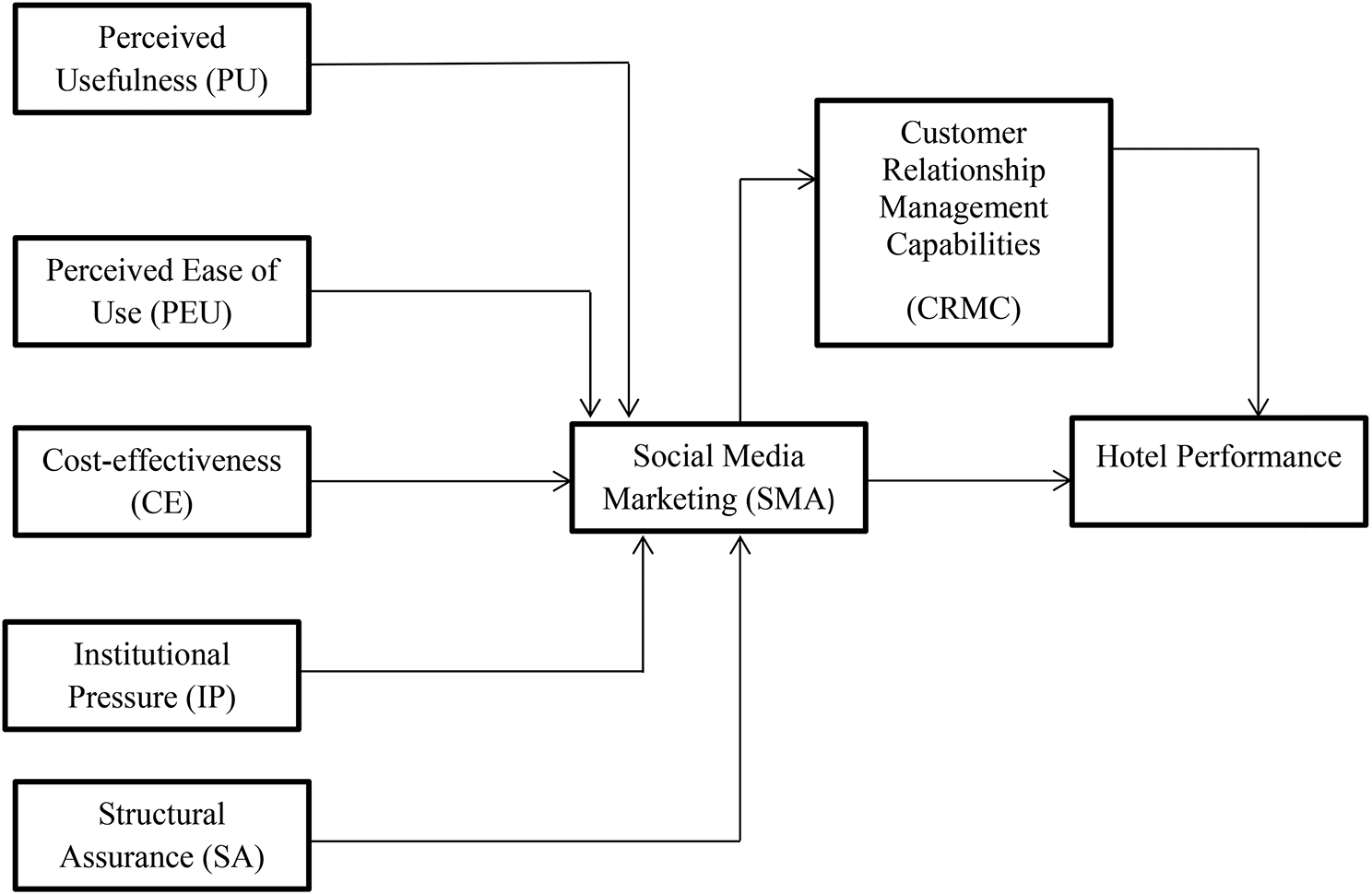
The adoption of SMA technology by the hotel industry is the subject of the present study. TAM, developed by Davis in 1989, is frequently given priority by researchers when using and adopting new technologies because it is a widely recognized paradigm for doing so (De Graaf et al., 2019; Lee et al., 2003). Despite being vintage, the model is still very popular (Choe and Noh, 2018), and there are three good explanations for this. It is an IT-specific model that can effectively explain how technology adoption occurs in a diverse population with a variety of cultural backgrounds in various organizational contexts such as firms operating in tourism sectors (El-Archi and Benbba, 2023). This model has become a leading one with significant predictive potential (De-Graaf et al., 2019). This paradigm is supported by a valid inventory of several psychometric scales and a solid theoretical foundation. These justifications led us to expand the TAM theory to take into account significant factors that the hotel business has paid very little attention to. Therefore, to strengthen the theoretical underpinning of our study, we have included two of the key TAM variables (PU and PEU) along with the support of four additional variables, including CE, institutional pressure, structural assurance as antecedents of SMA and CRMC as a mediating factor in a relationship between SMA and HP.
Perceived usefulness and social media marketing
PU can be understood as the conviction that making use of a system would raise the performer's level of performance (Davis, 1989). If users believe that SMA is advantageous for the hotel industry, they will be more driven to utilize it. The core notion of TAM is this (Davis, 1989). According to Kanchanatanee et al. (2014), PU influences attitudes towards adopting e-marketing. As per Cho and Son (2019), PU had a substantial impact on attitudes towards the use of digital marketing content (social commerce). El-Gohary (2012) discovers that usefulness and simplicity had a favourable direct influence on the adoption of e-marketing by Egyptian small tourism organizations. According to Deb et al. (2022), PU has a significant impact on the adoption of digital marketing in the tourism industry. According to Tariyal et al. (2023), Indian millennials consider the usefulness of social media as an essential factor in their online booking decision for hotel products and services. Hence, a company's decision to adopt cutting-edge Internet technologies like digital marketing may be influenced by PU (Matikiti et al., 2018). Therefore, the following hypothesis is presented based on the aforementioned arguments:
Perceived ease of use and social media marketing
Perceived ease of use (PEU) is connected to the idea that consumers of new technology will adopt it if they believe that it is relatively simple (Venkatesh et al., 2012). TAM also adds support to this idea (Davis, 1989) where the use of a particular technology or a system effectively requires an individual to put up some reasonable effort (Park, 2009). PEU influences decisions to implement e-marketing (El-Gohary, 2012) and it has been demonstrated that PEU positively influences the adoption of digital marketing across a variety of industries including online retail (Ayeh, 2015) and mobile technologies (Dutot, 2015). PEU has a favourable impact on the adoption of digital marketing in the tourism industry (Deb et al., 2022). According to Anas et al. (2023), the entertainment characteristics of SMA significantly contributes to enhancing customer satisfaction in the restaurant industry. Therefore, the hotel authority would not hesitate to accept it if the hotel sector feels that using a technology like SMA is not linked to complexity. This prompts the formulation of the hypothesis.
Cost-effectiveness and social media marketing
Cost and technology adoption is frequently seen as having a value-relevant relationship (Alam and Noor, 2009). CE and the adoption of technology have a significant relationship claim (Kim and Shin, 2015). Cost is seen as a crucial technological aspect that can greatly affect a firm's decision to embrace SMA practices (Chatterjee and Kumar-Kar, 2020). Cassetta et al. (2020) claim that CE encourages organizations to use e-business ICT. Also social media is a useful platform for promoting tourism-related products and services due to its CE (Islam and Boro, 2019). Social media can also be an even more cost-effective alternative for promotions. Social networking being generally a low-cost innovation makes it possible for hotels to interact with guests affordably. With SMA, hotels can enable potential consumers to search for relevant information about the hotel's products, services or offers (Rezeki et al., 2024). Hence, the following hypothesis is established on the fact that the hotel industry will adopt SMA if the associated costs are reasonable.
Institutional pressure and social media marketing
Less research has been done on the impact of IP on SMA adoption in the hospitality industry, specifically hotels. An institutional theory emphasizes how external factors such as IP motivate organizations to adopt innovations (Henderson et al., 2012). The pressure from institutional environments that can lead businesses to adopt widespread standards and practices is referred to as IP (DiMaggio and Powell, 1983). Agents that could apply pressure on a company include its main clients, suppliers, rivals and the government (Ke et al., 2009). The adoption and use of internet technologies have been the subject of several studies using an institutional perspective (Chatterjee et al., 2002; Ke et al., 2009; Liu et al., 2010; Purvis et al., 2001; Teo et al., 2003). According to Pizam et al.(2022), competitive pressure is the game-changing factor concerning the adoption of digital technology in hotels. Therefore, it is reasonable to say that hotel industries are likely to be forced to utilize SMA as a result of outside forces. Consequently, IP is incorporated into the TAM framework to investigate its relationship with SMA. Thus, the following hypothesis is made:
Structural assurance and social media marketing
The influence of SA on SMA adoption within the hotel industry also has been less documented. In previous studies, the researchers have looked into various forms of trust and have revealed that an organization is more likely to adopt a technology if there is greater trust in it (Choudhury and Karahanna, 2008; Egea and Gonzalez, 2011; Tung et al., 2008). In their studies, the researchers have looked into various forms of trust. Situational normality and structural assurance (SA) were the two categories of institution-based trust that McKnight et al. (1998) identified. Institution-based trust is the one that would be better appropriate for this study. Situational normality is the idea that success is expected since the circumstances are normal, but SAs is the idea that favourable outcomes are probably because of the surrounding structures such as agreements, rules and guarantees. According to the study conducted by Pizam et al. (2024), where data was collected from hotels of 11 countries including the United States, United Kingdom, Turkey, Spain, Romania, Japan, Israel, India, Greece, Canada and Brazil, it was found that perceived risk had a negative impact on customers’ intention to use service robots in hotels while information security had a positive impact. Hotels frequently share details about their products, services and other marketing initiatives on social media. Therefore, SA may be required for the hotel industry's implementation of SMA technology. So, this study looks into how SA affects the adoption of SMA. Based on that, the following hypothesis is put forth:
Social media marketing and hotel performance
Performance, according to Dahnil Sikumbang (2021), is the ability of the company to use social media to accomplish management goals in business practice and their realized outputs by the end of a certain period. Venkatraman and Ramanujam (1986) categorized firm performance into five areas based on an earlier study by Sainaghi (2010): (a) accounting, (b) market and (c) operational performance as objective measurements, and (d) financial and (e) non-financial assessment as subjective measures. While objective performance metrics are typically based on secondary data (such as financial reports and market value), subjective performance measures are assessed through questionnaires or interviews. There are important reasons why many earlier research used subjective measurements, and why future studies would continue to do so even if objective metrics are often preferred above subjective measures. Subjective performance measurements are, first and foremost, economical and cost-effective. Second, for some sizes or types of businesses, gathering objective performance measurements might not be possible (Sainaghi et al., 2017; Wall et al., 2004). It is also necessary to rely on subjective data gathered from the participants because objective standards in a business's financial statements may be inaccurate, there may be a lack of relevant objective data, and it may be difficult to gather objective data to measure an enterprise's success (Zehir and Acar, 2005). Furthermore, organizations usually wish to keep objective performance data private, which makes it difficult to gather information on it. Also managers of businesses are asked how successful they believe their organizations are in comparison to other businesses in the industry based on a variety of performance criteria. This is done using a subjective measurement technique that aims to assess both qualitative and quantitative performance (Alpkan et al., 2005).
In view of the aforementioned discussion, the current study uses a subjective assessment of the financial and non-financial measures for marketing performance of the hospitality business. Furthermore, as was previously mentioned, perception-based responses are generally accepted as trustworthy and have been demonstrated to yield results that are in line with objective measurements (Ainin et al., 2015; Dess and Robinson, 1984).
Moreover, web-based apps and interactive platforms that allow users to produce, discuss, alter and share user-generated material are known as social media (Kaplan and Haenlein, 2010; Kietzmann et al., 2011). SMA is thus defined as a company's practice of building and promoting online marketing-related activities on social media platforms that add value to its stakeholders (Pham and Gammoh, 2015). While keeping an eye on travel reviews and comments, social media gives marketers a chance to not only market information about their goods or services but also to perform marketing research and get client feedback (Leung et al., 2013). Relying on a panel survey of 1279 prospective hotel guests performed in January 2021, a multi-group model demonstrates that social media content exchanges enhance brand attachment and intention to book (Gomez-Suarez and Veloso, 2024). According to Hogberg (2017), hotel management and local hotels hold divergent opinions regarding the benefits of social media adoption and that the hotels face several organizational issues, like the need to establish procedures for using social media in organizations. According to Lin et al. (2020), studies should be conducted to understand how the performance outcomes of different social media platforms vary, as does the digital divide in the use of social media for marketing tourism and hospitality sector. According to Buhalis (2003), using social media to connect with large numbers of geographically scattered tourists is a cost-effective marketing strategy for hotels. Additionally, by offering their clients online deals and rewards, hotel management can enhance promotion by using social media. Hotel management can ensure customer retention and loyalty by adopting social media tools (Lee-Kelley et al., 2003). Given the fierce competition in the tourism sector, hotels must understand that social media should be a completely integrated part of their marketing plan for SMA operations to be profitable (Andzulis et al., 2012). Spita et al. (2020) claim that social media adoption has a significant effect on HP. Also the social media usage has significantly impacted the performance of the Italian bed and breakfast sector during the COVID-19 era (Hu and Olivieri, 2021). Moreover, the results of the study conducted by Jimenez et al. (2024) demonstrate the connection between user-generated and shared content and customer happiness, with a focus on the hotel industry. Therefore, in keeping with the arguments above, we suggest the following hypothesis:
Mediating role of customer relationship management capabilities
Utilising SMA as a resource improves CRMC, which has a beneficial impact on customer engagement and performance in the customer relationship process (Trainor et al., 2014) as well as on business performance (Wang and Kim, 2017). According to Chang et al. (2010), marketing capabilities act as a mediator in the relationship between the adoption of CRM technology and corporate performance. This mediation impact is backed by a resource-based view and dynamic capability theory in light of which the use of new technologies improves current capabilities, which in turn improves firm performance. Following the framework for marketing capabilities developed by Morgan (2012), we regard SMA as a resource that would be utilized to produce worthwhile output through CRMC. To sum up, the prior empirical research shows that marketing technology in and of themselves does not directly improve corporate performance. As a result, these technologies improve marketing capabilities, which in turn boost business performance. Using the same reasoning and logic, it can be proposed that the use of SMA could boost HP via improved CRMC. Also according to Serdar (2024), there is a significant mediating role of customer relationship management in the effect of innovation on perceived service quality in the case of service sector like airlines system. As a result, we anticipate the following hypothesis.
Research model of the study
Research methods
The research employs a quantitative methodology. The list of hotels was drawn from the department of tourism Kashmir and the department of tourism Jammu. Sample was drawn based on a probability sampling technique which is simple random sampling technique without making any distinction between different hotel star ratings. Simple random sampling technique ensures that all the sampling elements get the equal chance of being selected in the sample. RAND command in the Microsoft excel was used to select the sample randomly. Responses were gathered using a 5-point Likert scale (1 for strongly disagree and 5 for strongly agree) by survey technique using questionnaires. In total, 610 questionnaires in total were distributed both online and offline to the respondents (hotel managers/owners). Following the repeated reminders, a total of 389 responses from hotel managers/owners – reflecting a response rate of 63% – were received and deemed appropriate for investigation. All the items of the questionnaire were adopted from the previous literature. Table 1 displays the source of the study's research instrument. The questionnaire was pre-tested by 23 hotel owners/managers and four tourism and marketing academics, who provided input on a variety of aspects including item comprehension, language, readability and ambiguity (Hair et al., 2010). The measurement items were phrased correctly, according to the responses. This helped achieve content validity. The Harman single-factor test was utilized to investigate common method bias. Podsakoff et al. (2003) state that bias in responses is present if the variance explained by a single component is higher than 50%; however, the variance explained by a single component in the current study is less than 50%, indicating that there is no bias in responses. For the current study, assessment of the measurement and structural model is done using PLS-SEM with Smart PLS4 version.
Source of research instrument.
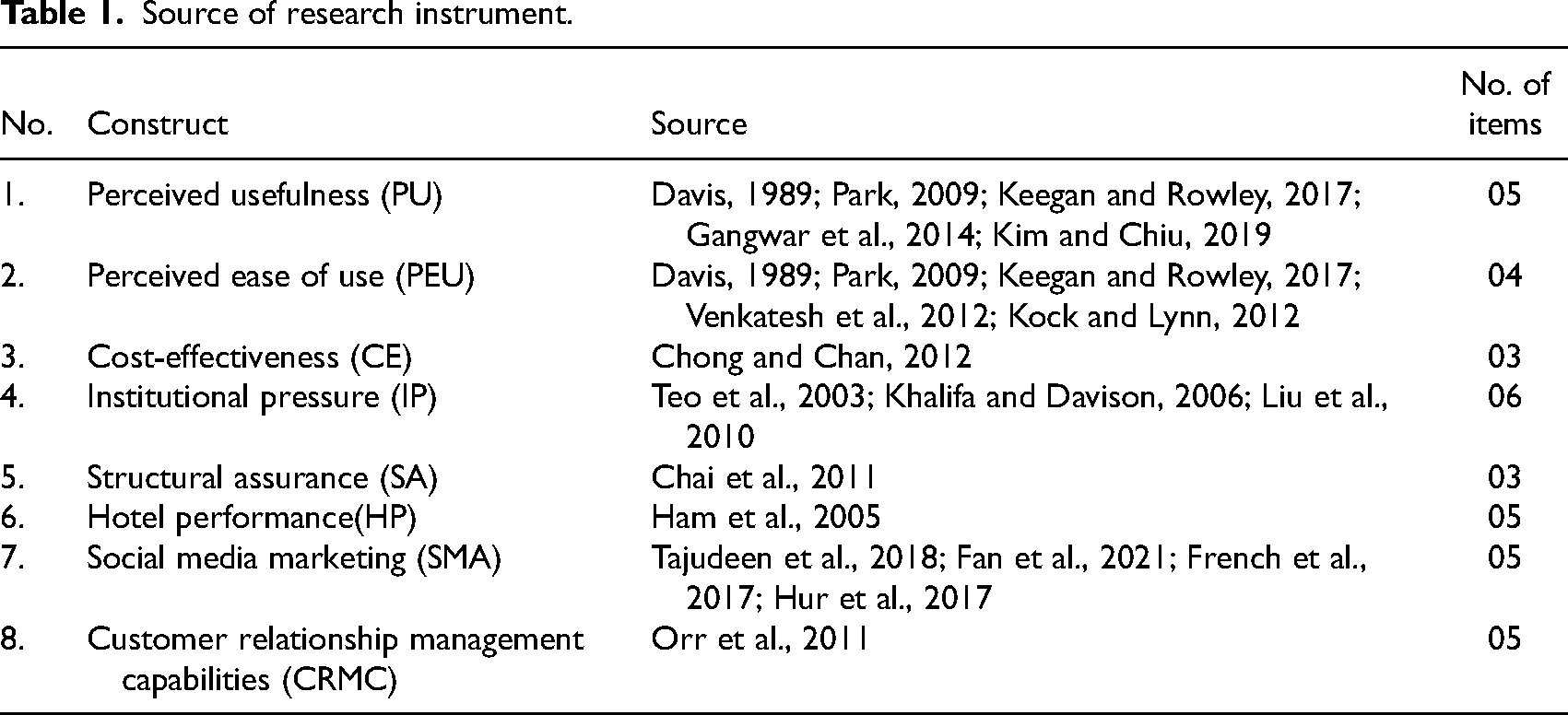
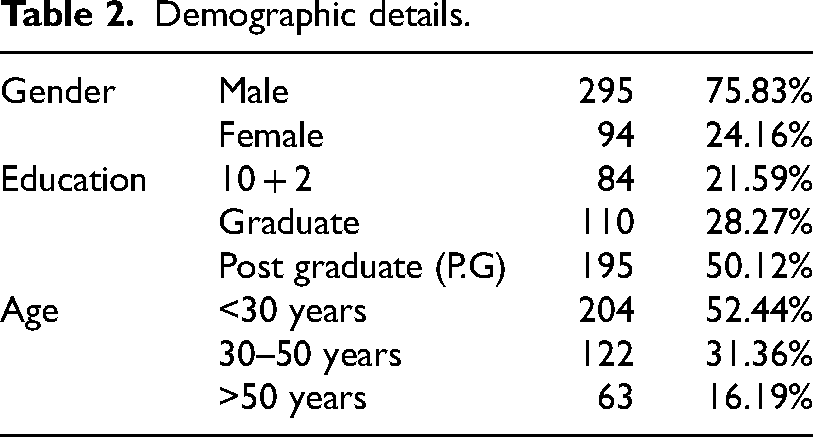
Table 2 displays demographic information about the respondents. The respondents who provided responses to the questionnaire were hotel managers/owners. During the data collection, it was found that either the marketing managers or in some cases owners handle the SMA of their firms, and these owners held both the ownership and marketing managerial positions in their firms. Maximum of the respondents (75.83%) belong to the male category. Most of the respondents (50.12%) were having post graduation as their highest qualifications. Among all the respondents, maximum (52.44%) belong to the young age category of <30 years. The complete questionnaire is shown in Appendix A.
Demographic details.
Data analysis
Assessment of the measurement model
For the current study, assessment of the quality of constructs and hypothesis testing is done using PLS-SEM. The examination of the measurement model is based on the assessment criteria of reflective measurement models. Items are retained if their outer loadings are more than 0.708 (Hair et al., 2014) which for the current study is more than 0.708 (shown in Table 3 and Figure 1), hence none of the items were removed from the scale. To assess the construct reliability and convergent validity, values of composite reliability and average variance extracted were examined which according to Hair et al. (2019) should be more than 0.7 and 0.5. For the present study, all the constructs have composite reliability of more than 0.7 and AVE greater the 0.5, hence establishing the construct reliability and convergent validity. Additionally, reliability is also examined based on the values of Cronbach's alpha which considers similar thresholds of 0.7 but rather generates smaller values than composite reliability (Hair et al., 2019). Values of Cronbach's alpha, composite reliability and average variance extracted are shown in Table 4. The subsequent criterion for evaluation pertains to discriminant validity, which mandates that the factor loadings of each item should surpass the cross-loadings of items belonging to other constructs (Bhattacherjee and Sanford, 2006; Pavlou and Gefen, 2004). Table 5 reveals that the studied model's constructs exhibit stronger loadings on their corresponding factors compared to other constructs. The Fornell–Larcker criterion reveals that the square root of average variance extracted for the studied constructs is higher than values for inter-construct correlation. This establishes discriminant validity. Values of the Fornell–Larcker criterion are shown in Table 6. However, according to Henseler et al. (2015), the Fornell–Larcker criterion is ineffective, especially when the indicator loadings on a construct are just marginally different (e.g. item loadings are in between 0.65 and 0.85). Instead, Henseler et al. (2015) proposed the heterotrait–monotrait (HTMT) ratio of the correlations (Voorhees et al., 2016), which has a threshold value of 0.90 for structural models with constructs that are conceptually similar and 0.85 for constructs that are conceptually more separate. Values of the HTMT ratio shown in Table 7 are within the suggested thresholds, hence establishing the discriminant validity.
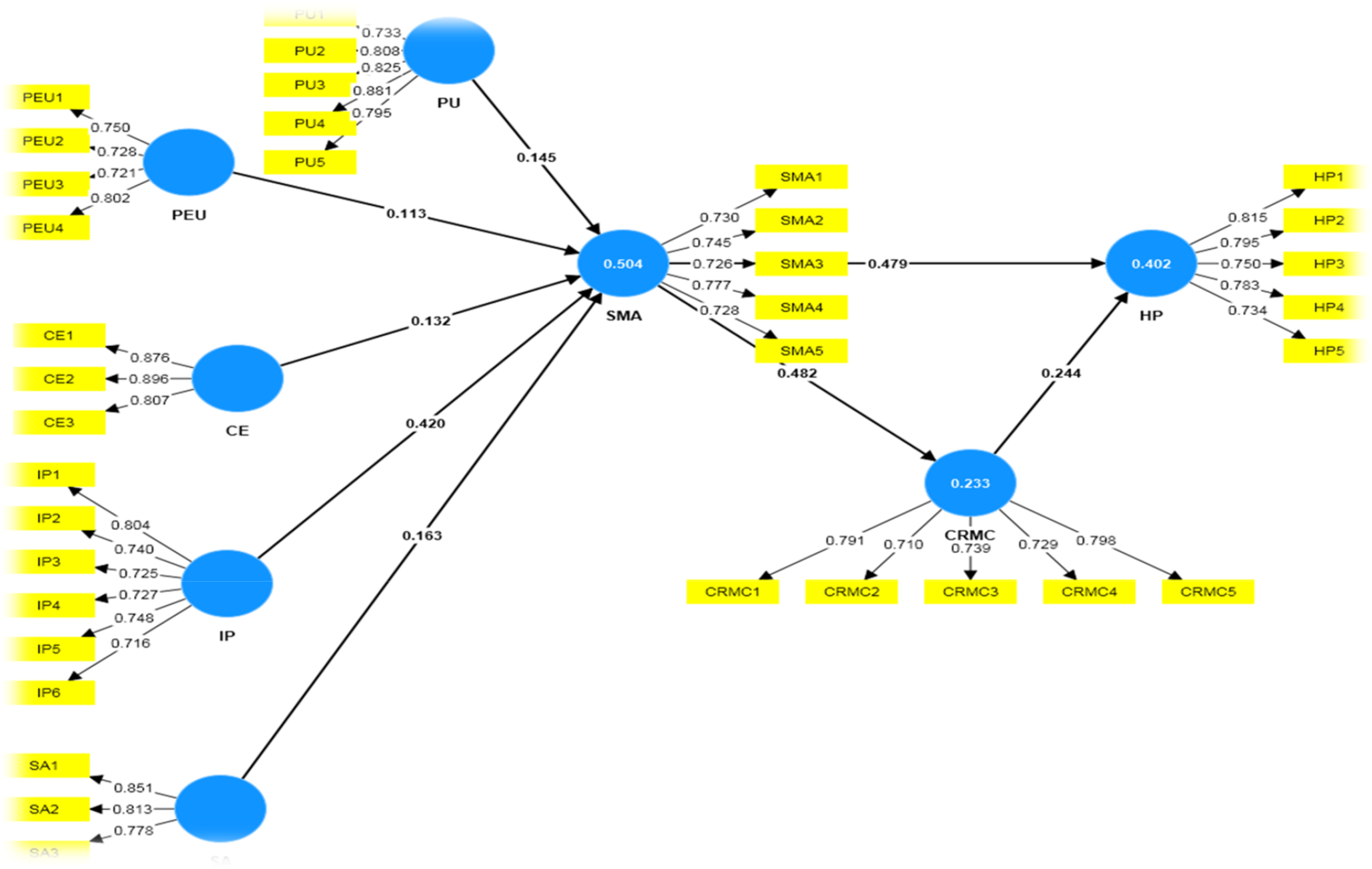
Outer loadings and R2 values.
Item loadings.
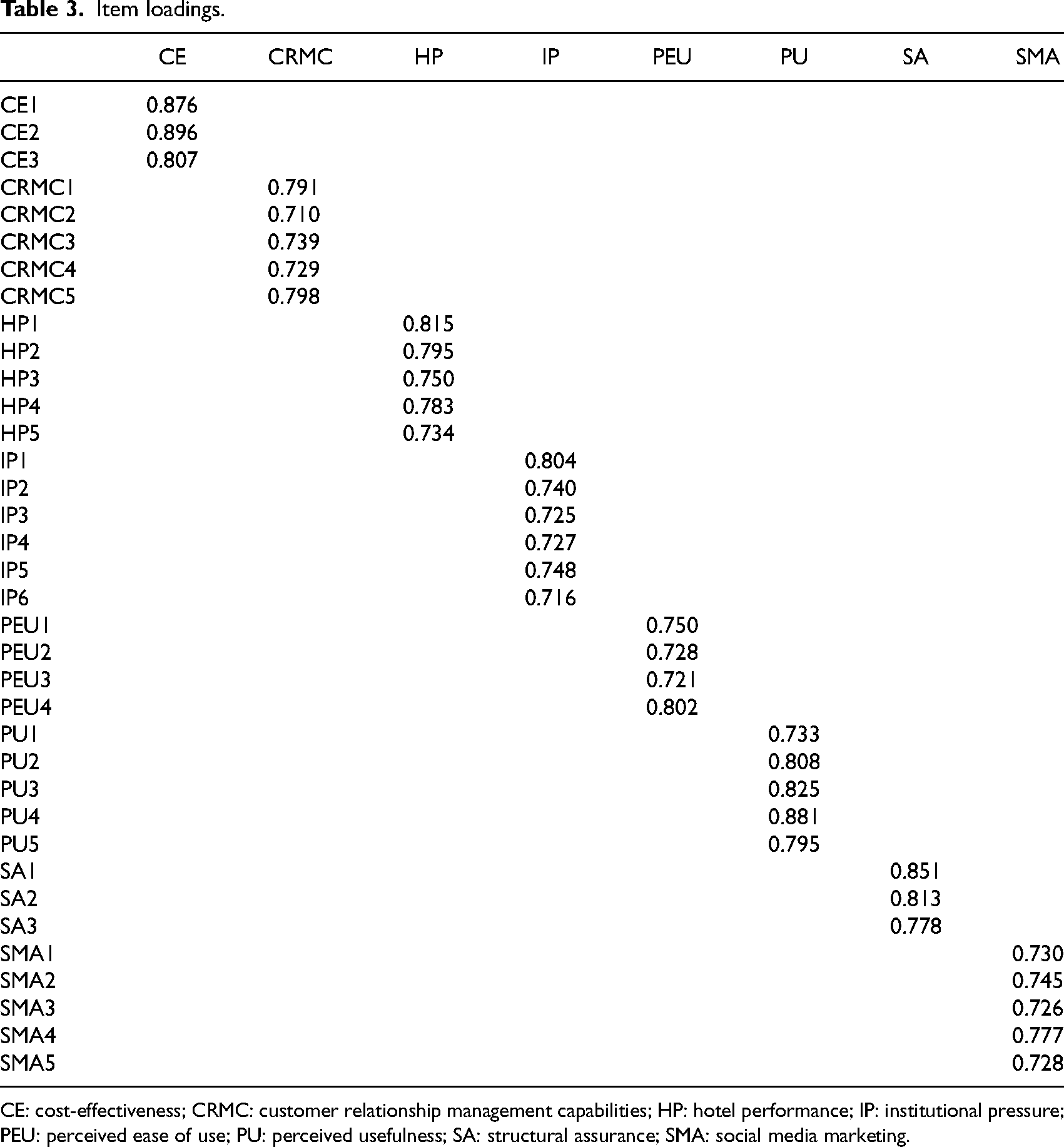
CE: cost-effectiveness; CRMC: customer relationship management capabilities; HP: hotel performance; IP: institutional pressure; PEU: perceived ease of use; PU: perceived usefulness; SA: structural assurance; SMA: social media marketing.
Values of CA, CR and AVE.
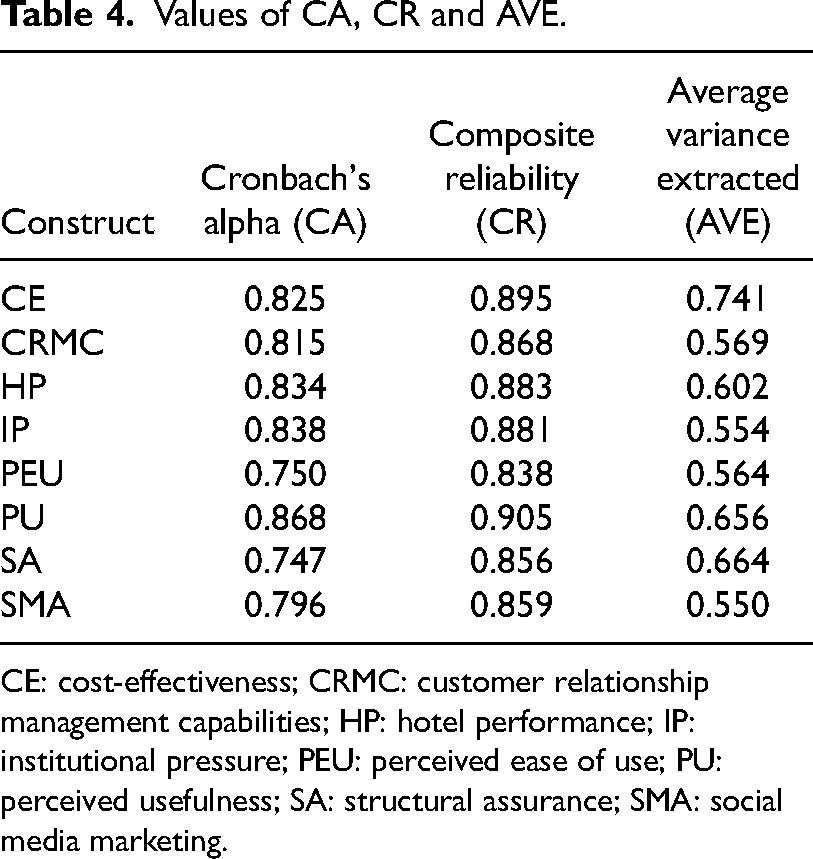
CE: cost-effectiveness; CRMC: customer relationship management capabilities; HP: hotel performance; IP: institutional pressure; PEU: perceived ease of use; PU: perceived usefulness; SA: structural assurance; SMA: social media marketing.
Cross loadings.
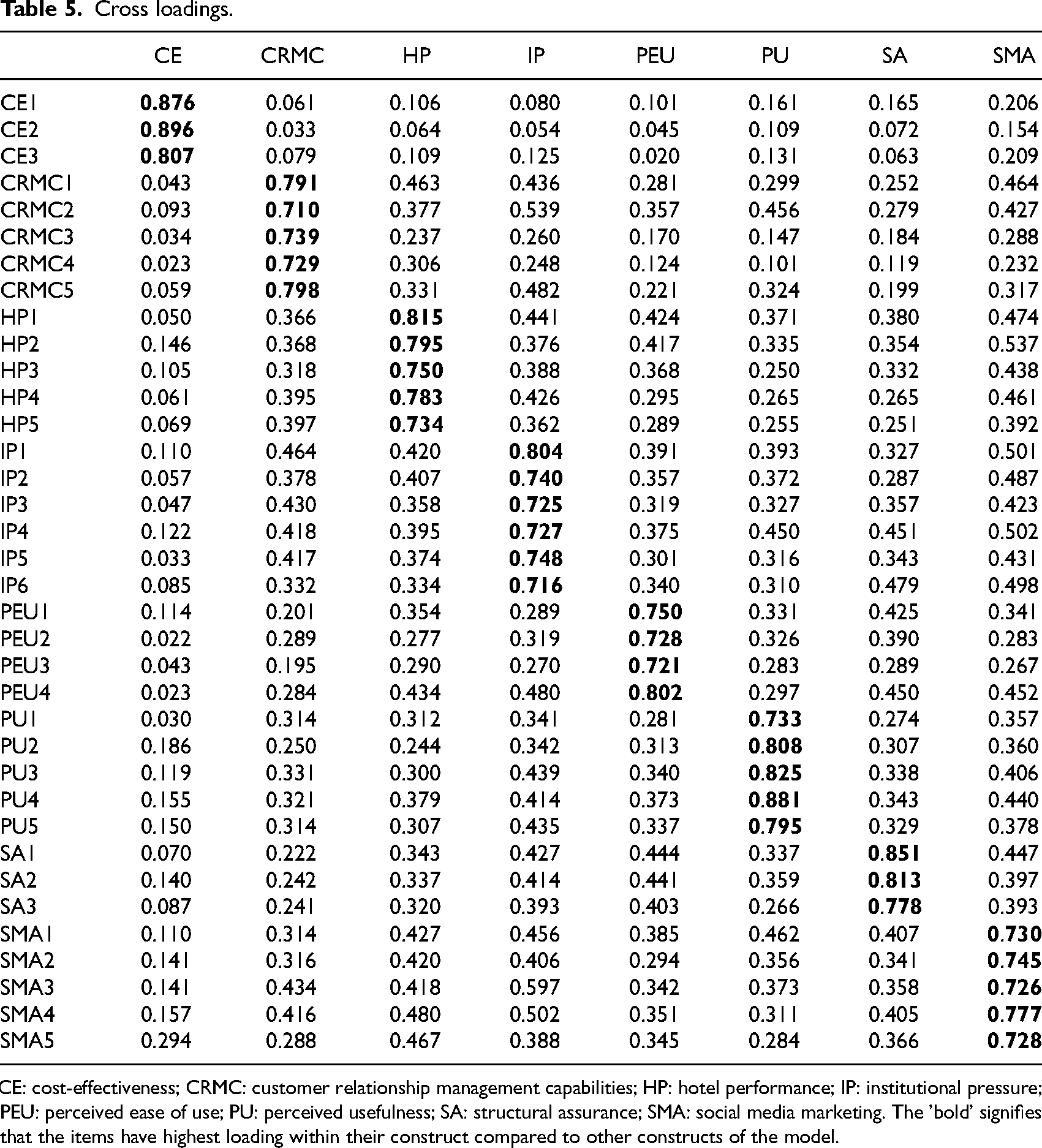
CE: cost-effectiveness; CRMC: customer relationship management capabilities; HP: hotel performance; IP: institutional pressure; PEU: perceived ease of use; PU: perceived usefulness; SA: structural assurance; SMA: social media marketing. The 'bold' signifies that the items have highest loading within their construct compared to other constructs of the model.
Fornell–Larcker criterion.
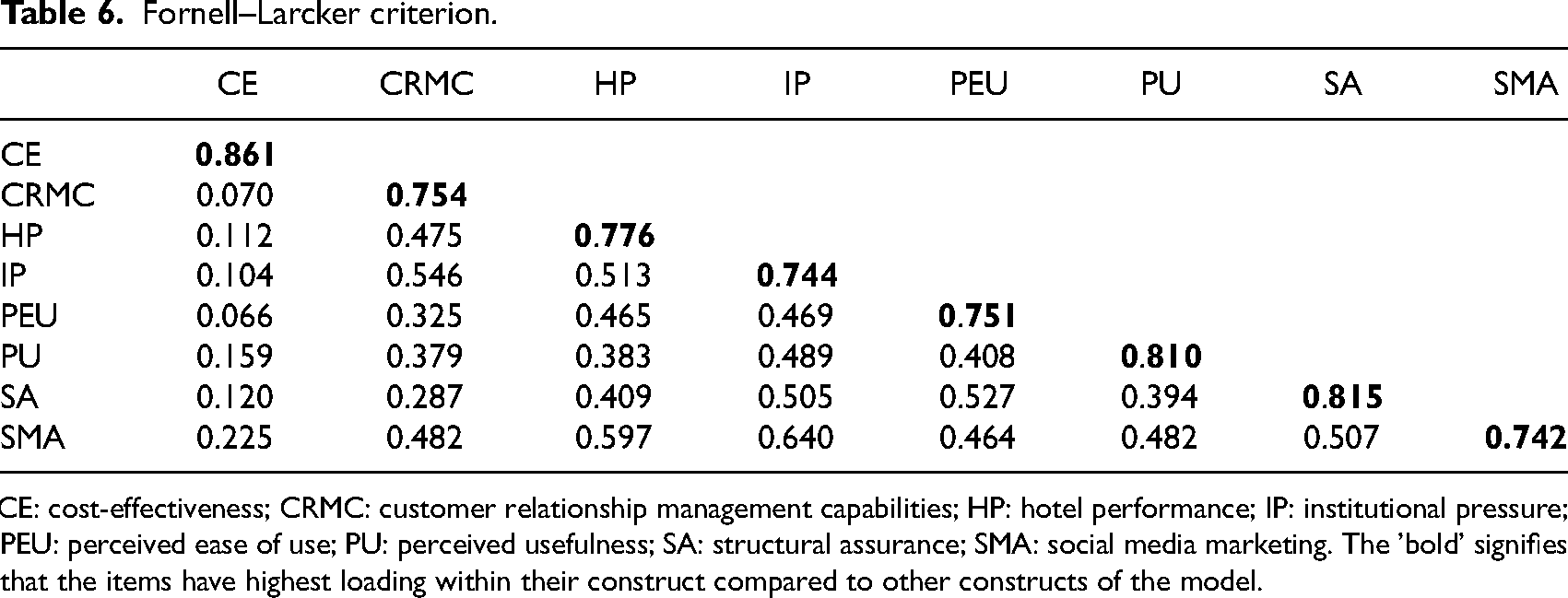
CE: cost-effectiveness; CRMC: customer relationship management capabilities; HP: hotel performance; IP: institutional pressure; PEU: perceived ease of use; PU: perceived usefulness; SA: structural assurance; SMA: social media marketing. The 'bold' signifies that the items have highest loading within their construct compared to other constructs of the model.
HTMT ratio.
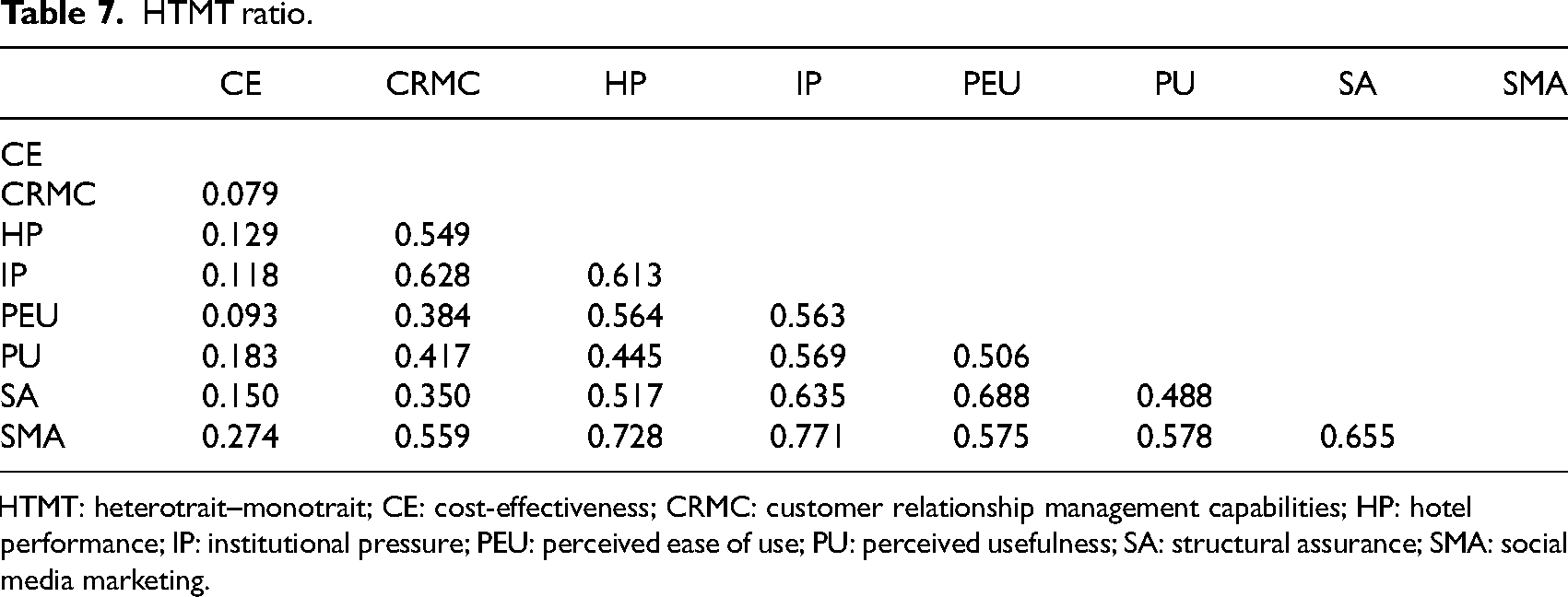
HTMT: heterotrait–monotrait; CE: cost-effectiveness; CRMC: customer relationship management capabilities; HP: hotel performance; IP: institutional pressure; PEU: perceived ease of use; PU: perceived usefulness; SA: structural assurance; SMA: social media marketing.
Assessment of structural model
Before the evaluation of the structural model, variance inflation factor values were checked and were less than 3 as suggested by Hair et al. (2018), hence no issue of multicollinearity is found. The criterion used to test the hypotheses were t-values for every path loading. The threshold criteria are t-value greater or equal to 1.96 at α level of 0.05. Based on this criterion, the results reveal that perceived usefulness, perceived ease of use, CE, institutional pressure and structural assurance are significant in influencing a hotel's SMA adoption. Also, SMA adoption significantly influences HP. Hypothesis testing results are shown in Table 8, and p-value and t-statistics are shown in Figures 2 and 3. R2 values of 0.67, 0.33 and 0.19 were categorized by Chin (1998) as substantial, moderate and weak. R2 and adjusted R2 values (shown in Table 8 and Figure 1) of the present study are moderate for SMA and HP but weak for CRMC.
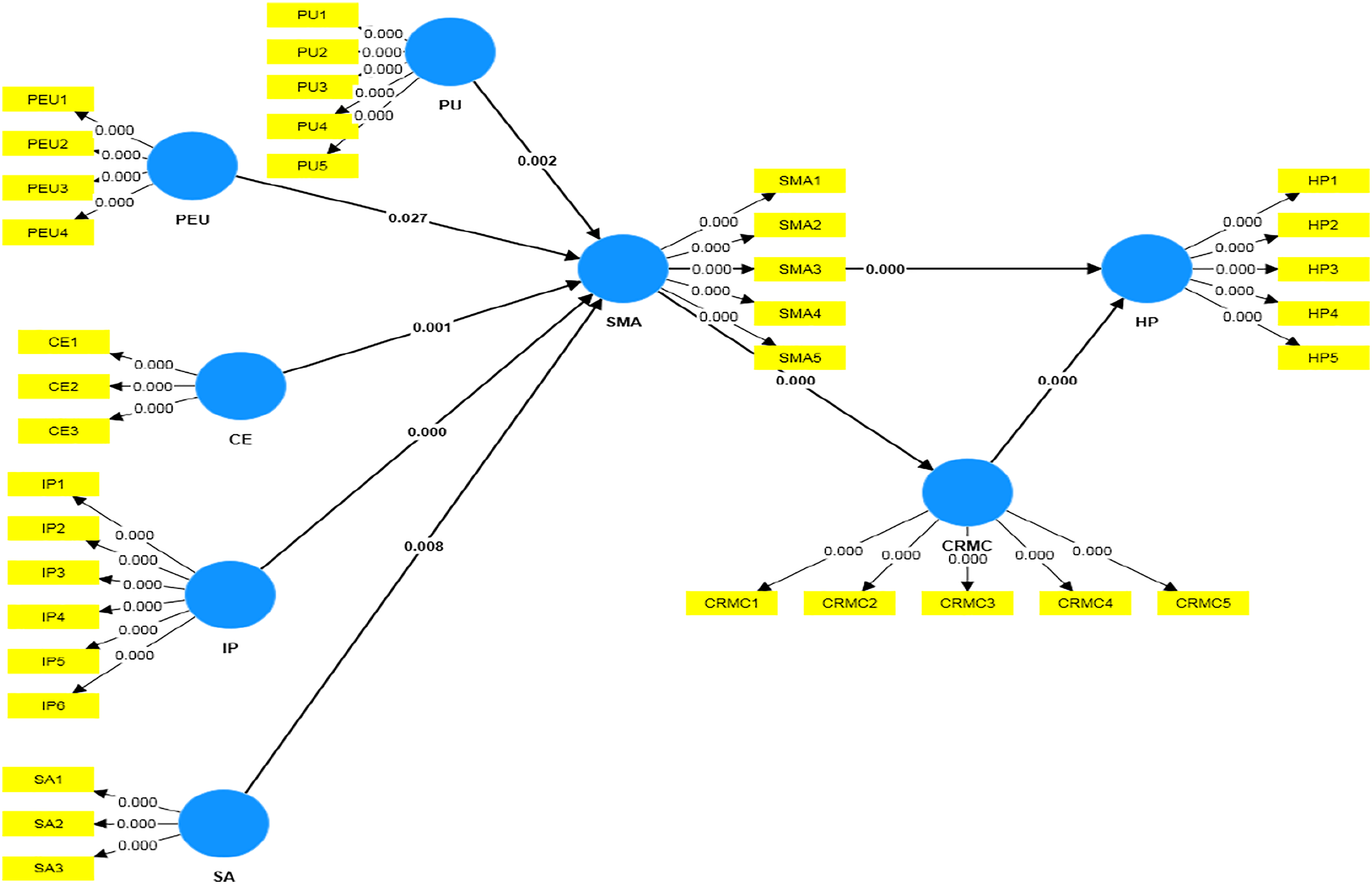
p-Values.
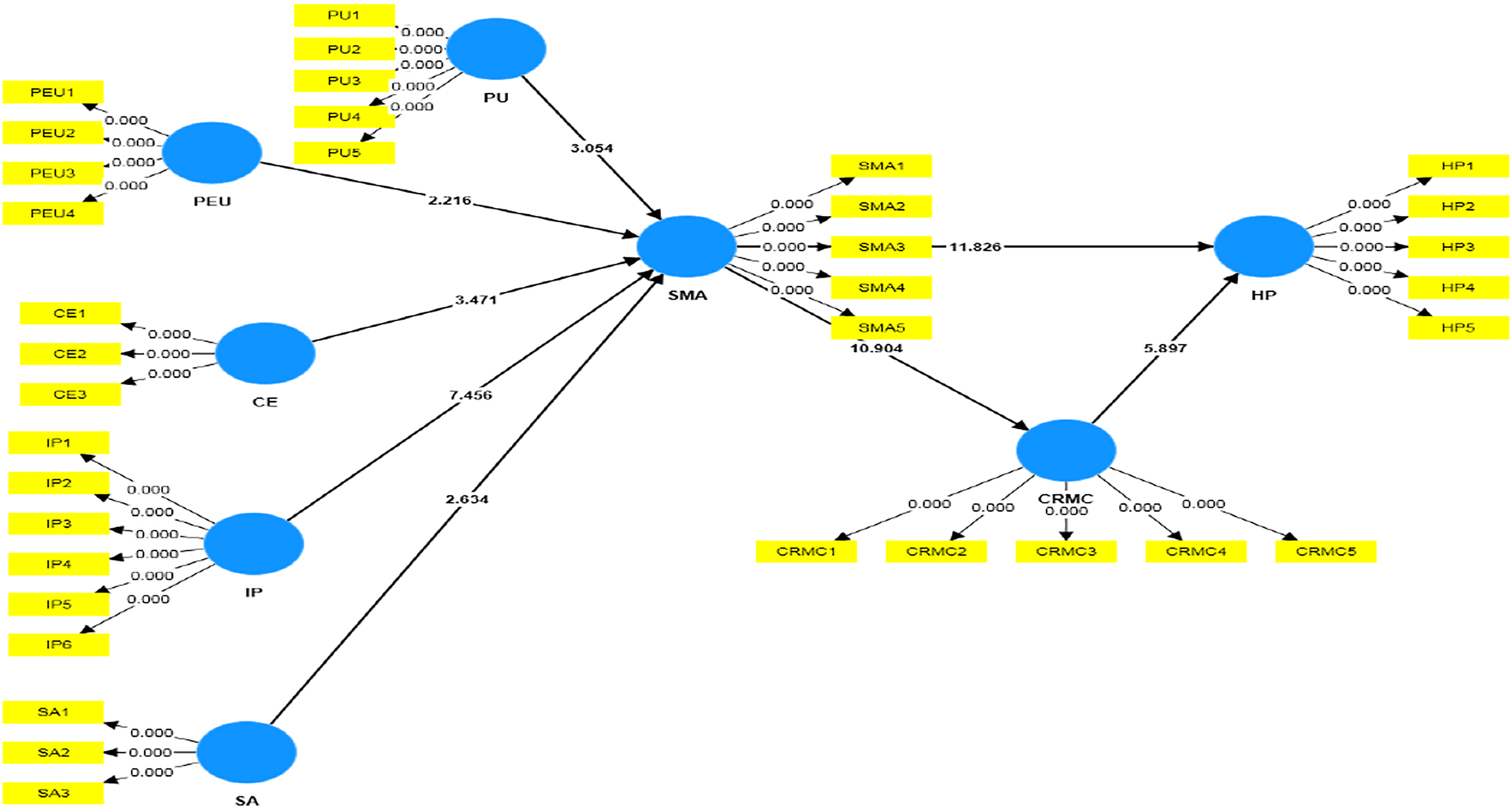
t-Values.
Hypothesis testing results and R2-square values.
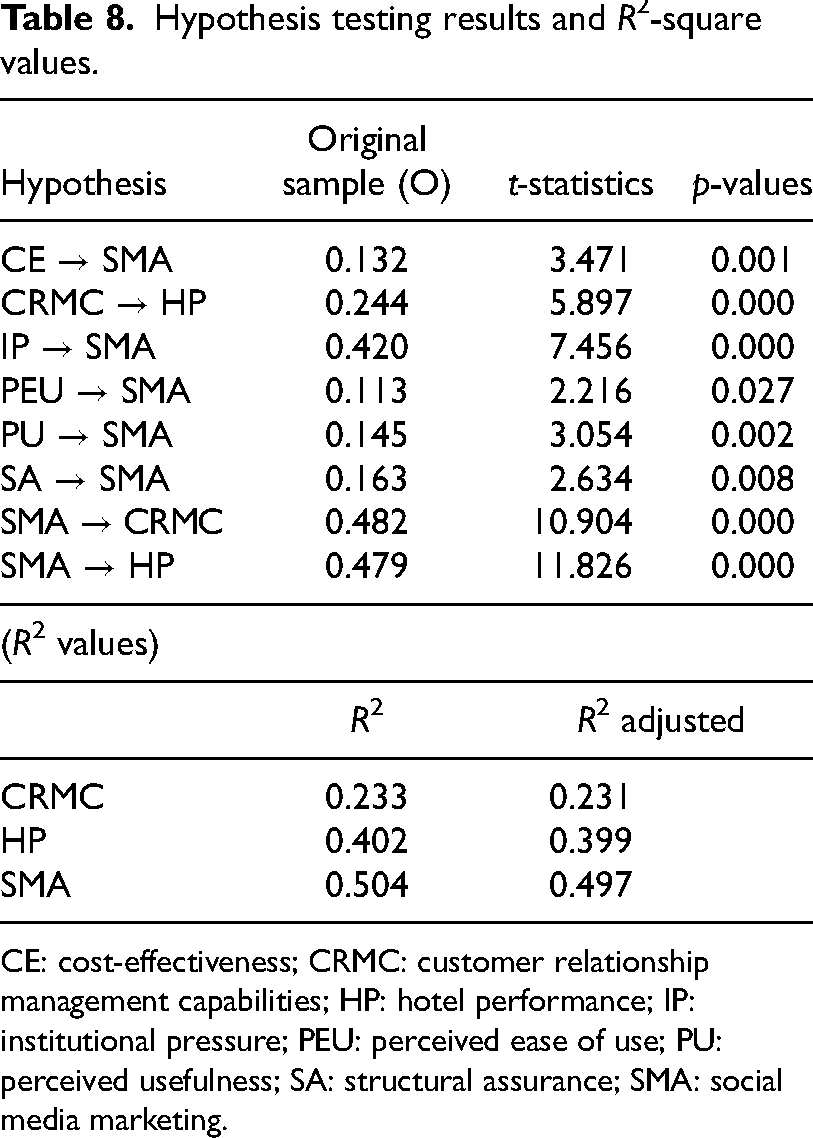
CE: cost-effectiveness; CRMC: customer relationship management capabilities; HP: hotel performance; IP: institutional pressure; PEU: perceived ease of use; PU: perceived usefulness; SA: structural assurance; SMA: social media marketing.
Mediation analysis
Mediation analysis is done following the guidelines of Zhao et al. (2010) using the bootstrapping of 5000 subsamples to examine the mediating role of CRMC in the relationship between SMA and HP. The results in Table 9 depict that the total effect of SMA on HP was found to be significant. With the incorporation of mediating variable CRMC, the influence of CRMC on HP was also found to be significant. Further, the indirect effect of SMA on HP through mediating variable CRMC was also significant. Also, the product of indirect and direct path coefficients was positive. This depicts that the relationship between SMA on HP is complimentary and partially mediated by CRMC.
Mediation analysis.
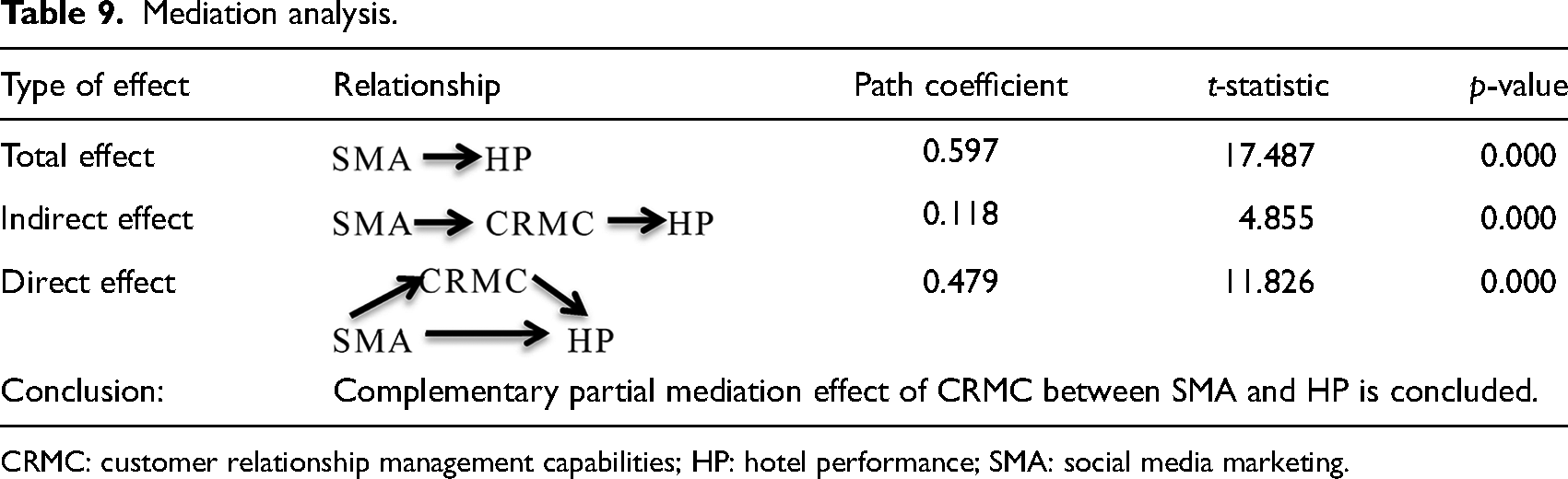
CRMC: customer relationship management capabilities; HP: hotel performance; SMA: social media marketing.
Discussions
The study achieved its objectives successfully by answering the aforementioned research gaps and questions. The study's results were seen to be intriguing given that SMA usage improves HP. The results demonstrate that the association between SMA and HP was favourable (p = 0.000), confirming H6. Results show that SMA helps hotels run their operations more economically, fosters positive word-of-mouth, generates more repeat business, fosters greater occupancy rates, and boosts annual sales. These results corroborate the assertions made by Jimenez et al. (2024) that social media e-marketing significantly affects business service performance.
CRMC's mediating role was supported concerning H7 (p = 0.000). The current study claims that CRMC mediates the connection between SMA and HP. The findings show that the direct, indirect and total impacts are all substantial which means that implementing CRMC improves the performance of hotels. Overall, hotel participation in CRMC significantly boosts the performance effects of SMA adoption compared to its non-participation. Therefore, when an organization is very active with its CRMC, it is more likely to quickly adopt the SMA and increase its performance much more successfully. These findings align with those of Foltean et al. (2019), and Serdar (2024) who found that CRMC mediates the link between the adoption of social media technologies and corporate performance.
Regarding the PU–SMA–adoption relationship, PU has a significant association with SMA adoption (p = 0.002) supporting H1. PU–SMA–adoption relationship states that hotels adopt SMA as a result of its advantages for businesses as a powerful marketing tool, improved query management, increased customer satisfaction and increased business output. These are consistent with the findings of Deb et al. (2022), and Tariyal et al. (2023) which show that PU had a positive impact on behavioural intentions to adopt digital marketing.
Regarding the effect of PEU on the adoption of SMA, H2 obtained support (p = 0.027). Results show that SMA's inherent attributes, such as general ease of understanding, the ease of finding new clients, the ease of gathering customer information and the ease of determining consumers’ needs, lead hotels to embrace SMA for business objectives. This finding agrees with the studies of Anas et al. (2023), and Deb et al. (2022) who found that PEU has a beneficial impact on businesses’ use of digital marketing.
The results show a significant influence of CE on the adoption of SMA supporting H3 (p = 0.001). With regard to CE–SMA relationship, the results demonstrate that adopting SMA as opposed to other types of marketing platforms is more cost-effective, avoids unnecessary expenditures and time, and reduces time and labour costs for marketing, branding and customer support. These elements motivate hotels to apply SMA technologies to their business activities. These findings concur with the studies of Chatterjee and Kumar-Kar (2020), and Rezeki et al. (2024) which demonstrated that the CE of SMA positively promotes enterprises’ adoption of SMA.
H4 received support regarding how IP affects the adoption of SMA (p = 0.000). Moreover, it was found that IP has the maximum impact of all the elements affecting SMA. It demonstrates that hotels adopt SMA because its adoption has been extremely advantageous for their major competitors, their customers are more favourable towards major competitors who have embraced SMA, their important clients and important suppliers believe that they should use SMA and encourage them to adopt it, without adopting SMA they may not be able to retain their valuable clients. These results are consistent with the past studies of Matikiti et al. (2018), and Pizam et al. (2022) which show that customer and competition pressure had a beneficial influence on the adoption of SMA.
SA influences the use of SMA favourably (p = 0.008), supporting H5. SA is found to be another factor that affects how often SMA is used in hotels. It demonstrates how the security features provided by social media platforms allow them to use and publish valuable information. Additionally, these platforms provide a stable and safe setting for information transmission. Also the technological and legal structures adequately shield them from social media problems. The results are in line with prior studies of Pizam et al. (2024), and Tajudeen et al. (2018) which found a beneficial association between SA and social media adoption by businesses in terms of marketing, customer relationships and information accessibility.
Theoretical contributions
From an academic standpoint, the current study provides insights of SMA by reacting to future research proposals made by Deb et al. (2022), Matikiti et al. (2018), Pateli et al. (2020) and Qalati et al. (2021). Therefore, the study adds to the existing literature on SMA in a novel way.
This study is regarded as one of the few empirical investigations which has responded to future research recommendations given by Pateli et al. (2020) to improve the generalizability of results by expanding the study to other populations of other geographical tourist locations.
Although the direct SMA–HP interaction has been studied in the past, the role of CRMC as a mediator has been least investigated. This void is relevant because firms may eventually adopt the newest technologies concurrently, expecting to use unique CRMC to achieve business goals. Moreover success for the service industries largely depends on how well their clients are satisfied. Also social media being the customer relationship management technologies, CRMC is one of the unique and important variables to be studied in this context and in this domain. Thus, the current work contributes by filling this gap as a response to the future research directions proposed by Olanrewaju et al. (2020), and Tajvidi and Karami (2021).
Furthermore, very few studies have given attention to and evaluated hypotheses comparable to those used in the current study, specifically the impact of IP and SA in adopting SMA, as well as the mediating role of CRMC. Hence, the environment in which the firms operate do influence their decision in the adoption of latest technologies due to the demand from customers, suppliers and competition among the rivals. Also, for using social media technology, organizations do need to provide safe, secure and legal environment from both the supplier and consumer point of view. As a result, the current work contributes by responding to the future research call put out by Qalati et al. (2021).
The current study thus extends TAM by integrating crucial social media-specific factors such as PU, PEU, CE, IP, SA and CRMC. Hence, the study signifies that the technologies which provide relative advantage and are easy to use and cost-effective are likely to be embraced for business purposes. The study also verifies the usefulness of TAM frameworks in analysing SMA use because the findings confirm that TAM is one of the most important theories to explain the adoption of internet technologies like SMA. Thus, the current study conceptually enhances the academic literature by enumerating empirical evidence on the factors influencing SMA usage and its impact on HP with a mediating role of CRMC, and it extends TAM with the inclusion of crucial variables stated above.
Practical contributions
The study provides a good beginning point and raises awareness for firms considering to implement SMA. It will make a variety of jobs easier for public and private tourism players to engage in the formulation and updating of tourism policies with regard to the marketing of products and services offered by the hospitality sector, as well as assisting them in formulating future strategies.
The impact variables that help managers and decision-makers realize the true value of SMA are outlined in detail in this study. It makes it easier for them to comprehend how, as the study suggests, appropriate and efficient use of SMA would enhance the performance of the organization in a number of areas. The results of the study, for example, demonstrate that SMA benefits businesses by lowering marketing and customer service expenses, higher amounts of repeat business, good word-of-mouth, increases yearly sales and higher occupancy rate. In a similar vein, SMA usage strengthens bonds with clients and cultivates brand loyalty. SMA has also improved the availability of information on clients and rivals. The study's evidence of SMA advantages is expected to encourage senior management to offer early and ongoing support for SMA adoption in businesses.
Decision-makers can focus on the crucial elements that are positively correlated with SMA because they have a better grasp of the antecedents of SMA. For example, the confirmed result emphasizes the CE of SMA technology. Therefore, SMA must be less expensive than traditional marketing expenses, so policy formulators and decision-makers must keep an eye on this. Furthermore, PU and PEU have a considerable impact on SMA usage. Thus, policy formulators and decision-makers should ensure that employees considering to utilize SMA believe that doing business through SMA methods will be simple and beneficial to both the organization and the end user.
Furthermore, these findings help managers in developing countries by illustrating how IP and SA, specifically in terms of staying competitive and trusting SMA technologies, offer businesses a competitive advantage. This, in turn, helps managers, executives and staff to adopt SMA and thus improve their overall business outcomes.
Additionally, this paper details the importance of CRMC. The paper highlights that the SMA does improve the performance of hotels but that performance outcome can further be improved if the firms do possess CRMC. The study suggests, an effective CRMC system enforcement can help with tracking and monitoring client activity in real time. Through CRMC, this can establish a deeper relationship with customers, which helps accelerate the client satisfaction process.
More importantly, with the enhanced visibility characteristics, SMA is cost-effective, easy to use, trustable, one of the customer relationship management technologies and the technology type which provides relative advantage over its competitors. Also the viral hashtag characteristic of SMA and short duration multi-lingual videos shall help to reinstate trust among travellers in crisis situation. Additionally, it is suggested that tourist companies, similar to those in the hotel industry, make advantage of social media's networking, cooperation and incoming and outgoing communication capabilities to incorporate a number of extra stakeholders in their crisis management activities and plans.
Limitations and future scope
A quantitative methodology was used to investigate the relationships between the analysed constructs. Future research could take a qualitative or mixed-methods approach. The current survey makes no distinction between hotel star categories. Future research could include specific star-category hotels and the factors investigated on SMA adoption should be broadened to include technological, organizational and environmental variables. Future research is recommended to conduct comparative studies using different star-category hotels to gain in-depth outcomes. Future research can examine demographic and cultural variables to evaluate the moderating relationship, as well as other mediating variables such as innovation capacities. Further, a longitudinal study might provide information on what is happening over time while the findings of this study simply provide a glimpse of what is currently happening in the hotel industry in terms of SMA. To improve the generalizability of results, researchers in the subject may study other places, taking into account perceptions from hotels operating in various other states of India or outside India.
Footnotes
Declaration of Conflicting Interests
The authors declared no potential conflicts of interest with respect to the research, authorship, and/or publication of this article.
Funding
The authors received no financial support for the research, authorship, and/or publication of this article.
