






Abstract
Ethical concerns about animal-based tourism are raising ongoing attention from the international community, and investigation of tourists’ ethically responsible behaviors in animal eco-tourism is limited. This study investigated the formation of ethically responsible behaviors by integrating constituents from the value-belief-norm (VBN) theory, the norm-activation model (NAM), and the theory of planned behavior (TPB), including biospheric value, altruistic value, ethical beliefs, awareness of ethical issues, ascribed responsibility, personal norm, attitude, social norm, and behavioral intentions with regard to animal-based tourism. The cultural involvement of Confucian harmony and media coverage were found to positively influence awareness of ethical issues. The proposed research framework was further optimized by identifying a moderator, described as perceptions of animal protection. Methodologically, along with structural equation modeling (SEM) analysis, this study also used fuzzy-set qualitative comparative analysis (fsQCA) to evaluate asymmetric configurations (causal recipes) and necessary conditions for predicting different levels of behavioral intentions in animal-based tourism.
Keywords
Introduction
Tourism activities that use confined, captive, or wild animals have led scholars to pay more attention to ethically responsible tourist behaviors (Fakfare et al., 2023, 2024; Kline and Fischer, 2023; Meng et al., 2024; Von Essen et al., 2020). Tourist attractions featuring animal-based tourism resources are still on the rise, and are expected to enhance tourists’ experience value as the function of animal co-creation is recognized and the inclusion of animals shapes the way nature is experienced (Bertella, 2021; Meng et al., 2024; Tkaczynski et al., 2023). In some rural areas, farm animals are a significant pull factor for agritourists (Bertella, 2021). However, the growth in animal-based tourism has sparked competing perspectives for and against this type of tourism. Fennell (2013) and Von Essen et al. (2020) indicated that animal-based tourism is associated with better animal welfare, which could enhance the well-being and humane treatment of endangered animals. Duffy and Moore (2011), Fennell (2012) and Moorhouse et al. (2017) have pointed out the animal ethics issues in animal-based tourism activities that suppress animals’ freedom and autonomy. With the development of the green tourism industry, animal ethics issues related to the tourism industry are expected to receive more attention worldwide. There has been much debate on the social issue of “zero animal exploitation”, questioning whether animals could be considered part of the environment and used as resources (Herdoiza et al., 2024; Köllen and Schneeberger, 2023), and an animal welfare objective has been suggested as an additional goal that should be incorporated into the Sustainable Development Goals (SDGs) (Herdoiza et al., 2024). Meanwhile, Fennell (2014) declared the need to explore the confines of a global code of ethics in the animal-based tourism context, calling for re-amendment of the United Nations World Tourism Organization's Global Code of Ethics to make it a “truly responsible creed”.
The existing literature on animal-based tourism criticizes utilitarianism in tourism consumption, which is considered unethical as it seeks to justify the use of animals in tourism solely on the basis of maximizing human benefits (pleasure) or preventing suffering for humans at the expense of animals (Fennell and Thomsen, 2021; Meng et al., 2024; Winter, 2020). Disapproval of utilitarianism centers on the scale of suffering caused to animals (Fennell and Thomsen, 2021) and the replaceability/irreplaceability debate when their use in tourism involves killing (Von Essen and Allen, 2021). The welfare arguments emphasize animal well-being, challenging the consumption of animals primarily for profit and customer entertainment (Fennell, 2022a; Winter, 2020). Ethical concerns about the use of animals in tourism have been identified, including tourists’ self-interested motives, animal confinement in unnatural habitats, along with ecofeminism, and the use of animal pictures in promotions (Bertella, 2013; Fennell, 2020; Meng et al., 2024). While animal-based tourism may indeed raise ethical concerns from an animal rights standpoint, it can be deemed acceptable under the framework of animal welfare, which focuses on ensuring the well-being and humane treatment of animals in tourism activities. Meng et al. (2024) stated that tourists’ ethical awareness and attitudes towards animal-based tourism products are associated with the cultural aspect of Confucian Harmony, which could lead to tourists’ ethically responsible participation in animal-based tourism.
Despite significant progress in extending the breadth and width of knowledge on animal use in tourism, a thorough literature review revealed that there are still gaps. First, most existing animal-based tourism research fails to capture the predictors of tourists’ ethical and responsible behavior from a philosophical perspective, and instead focuses on qualitative descriptions of morals and institutional forces (Fennell and Sheppard, 2021; Font et al., 2019; Meng et al., 2024). Second, although there is some research on individuals’ normative activation and pro-social/pro-environmental behavioral intentions in relation to consuming green hotel and tourism products or services (Chi et al., 2022, 2023; Han, 2015, Han et al., 2017; He et al., 2023), normative ethics and responsible behaviors in animal-based tourism deserve further exploration. Several studies have drawn attention to normative ethics in relation to animals in tourism (Hoy et al., 2023; Meng et al., 2024; Ying et al., 2022), which involve a comprehensive consideration of values, ethical beliefs, attitudes, norms, Confucianism cultural values, animal sentience and perceptions of animal protection, and communication factors such as media coverage (Fennell, 2022a; Meng et al., 2024; Mkono and Holder, 2019; Wattanacharoensil et al., 2024). Third, the value-belief-norm (VBN) theory, the norm-activation model (NAM), and the theory of planned behavior (TPB) have been used in previous studies to elucidate tourists’ norm activation and their pro-environmental behaviors (Chi et al., 2022, Han et al., 2017; He et al., 2023; Kim and Hwang, 2020), while the combination of such theories with the mentioned variables (i.e., media coverage, CICH, perceptions of animal protection) has received little empirical testing to evaluate the formation of ethically responsible behavior among tourists (Han et al., 2021; Kiatkawsin et al., 2020; Meng et al., 2024), especially in the animal-based tourism context. Lastly, from a methodology perspective, the current literature on animal-based tourism has usually adopted structural equation modeling (SEM) to determine the net effects of potential antecedents on tourists’ intentions of practicing ethical behaviors (Meng et al., 2024). Asymmetrical causal recipes could provide more detailed knowledge about promoting tourists’ responsible behaviors, which are worthy of identification by using fuzzy-set qualitative comparative analysis (fsQCA) (Kim et al., 2023; Wattanacharoensil et al., 2024).
To address the research gaps identified, four specific research objectives were formulated in the present study. The first was to investigate the formation of ethically responsible behaviors by integrating constituents of the VBN theory, the NAM, and two components of the TPB (i.e., biospheric value, altruistic value, ethical beliefs, awareness of ethical issues, ascribed responsibility, and personal norm, attitude, and social norm) to determine behavioral intentions for animal-based tourism. This avoided the limitations of using a single theory, which could present problems such as the inaccuracy of the VBN in predicting specific behaviors involving conflicting interests (Stren, 2000), the ineffectiveness of the NAM in explaining behavior that is not directly related to perceived consequences (Onwezen et al., 2013), and the failure of the TPB to account for the gap that exists between intention and action (Sniehotta et al., 2014). Considering the significance of media coverage and Confucian culture in affecting individuals’ awareness of social issues (Han et al., 2021; Kiatkawsin et al., 2020), the second objective was to investigate the impact of media coverage and cultural involvement of Confucian Harmony on tourists’ awareness of ethical issues. Since tourists’ perceptions of animal protection may play a significant role in determining the relationships between values, beliefs, norms, attitudes, and behavioral intentions towards animal-based tourism, the third objective was to examine the moderating role of perceptions of animal protection in the proposed framework. In addition to the examination of linear relationships among study variables with SEM, the fourth objective was to use fsQCA to address asymmetrical effects (causal recipes) from potential antecedents to predict different levels of behavioral intention relating to animal-based tourism, which could further enhance the predictive power of the research framework, providing insights on how to promote ethically responsible practices by tourists in the animal-based tourism context.
Literature review
Travelers’ ethically responsible behaviors in animal-based tourism
Animal-based tourism is not just about wildlife; it also encompasses a broader range of zoos, aquariums, marine parks, and animal-based parks (Hooper, 2023; Kim et al., 2023; Meng et al., 2024). Research on the role of animals in tourism began in the late 1990s and the early twenty-first century, with a considerable number of studies (Orams, 2002; Ryan, 1998; Viskovic, 1993). As research on animal-based tourism has expanded in depth and breadth, animal-based tourism seems to have transformed from conventional niche tourism to a form that is more accessible to the general public (Äijälä, 2021; Bersaglio and Margulies, 2022; Bertella, 2021; Fennell, 2022a, 2022b; Fennell et al., 2024; Meng et al., 2024). There is a growing body of academic research linking animal-based tourism to ethics, moral codes, animal welfare, and individuals’ responsible behavior (Fennell, 2014, 2020, 2023; Font et al., 2019; Meng et al., 2024; Wattanacharoensil et al., 2024). Ethics pedagogy has gained greater attention in animal-based tourism, which relates to aspects including species involvement in different settings, level of engagement, and the emotions and states of animals (Fennell et al., 2024). Amid the growing awareness of the ethical implications of animal-based recreational activities, discussion of travelers’ responsible behavior in relation to animal-based tourism is consistently evolving (Fakfare et al., 2023, Fennell and Sheppard, 2021; Meng et al., 2024; Wattanacharoensil et al., 2024). Environmental education in animal-based tourism should receive more attention from both the academic and industry aspects of tourism (Caplow, 2021; Fennell et al., 2024).
A number of studies have indicated that paying attention to pro-environmental and pro-social consumption behavior has become one of the important aspects of the sustainable and responsible development trend in the tourism industry (Chi et al., 2023; Han et al., 2020; Zhu et al., 2022). Likewise, in animal-based tourism, tourists are increasingly becoming mindful of excessive commercialization of animals and the associated suffering caused to them (Fennell, 2023; Fennell and Thomsen, 2021; Wattanacharoensil et al., 2024). Although commercialization is common in other forms of tourism (e.g., cultural tourism), it may trigger a variety of detrimental consequences in animal-based tourism. Therefore, tourists’ concerns about animal welfare and environment conservation, as well as their responsible behaviors in animal-related tourism (e.g., whale-watching tourism) have been greatly valued (Köllen and Schneeberger, 2023; Meng et al., 2024; Suárez-Rojas et al., 2022; Wattanacharoensil et al., 2024). This is in line with humanity's pursuit of SDGs in tourism and will promote the sustainability of animal-related tourism, echoing prior studies advocating for zero animal exploitation to be included as an additional goal in the SDGs (Herdoiza et al., 2024; Köllen and Schneeberger, 2023). Despite significant progress in discussing the antecedents influencing the formation of individuals’ responsible behavior in a variety of contexts (e.g., Chi et al., 2022, 2023; Han et al., 2017, 2021; He et al., 2023), empirical examination of the antecedents influencing tourists’ ethically responsible behavior in the context of animal-based tourism is relatively limited (Kim et al., 2023; Meng et al., 2024) and the potential causal recipes for predicting different levels of tourists’ responsible behavior in animal-based tourism settings are worthy of exploration (Kim et al., 2023; Wattanacharoensil et al., 2024).
Theoretical foundations
The NAM and the VBN theory are considered authoritative in analysing the determinants of travelers’ environmentally responsible behaviors (Han et al., 2017; Meng et al., 2024; Kim and Hwang, 2020). The NAM explains the vital influence of three factors (problem awareness, ascribed responsibility, and personal norms) in activating the formation of individuals’ responsible behaviors (Chi et al., 2022). In the NAM, problem awareness relates to one's awareness of the negative consequences of failing to act pro-socially/pro-environmentally for others or for other things, and the ascription of responsibility triggered by problem awareness refers to a perceived obligation or responsibility for acting pro-socially/pro-environmentally to avoid some of the negative consequences (Han, 2015; Kim and Hwang, 2020). These factors have a direct and positive influence on personal norms, representing the moral duty to engage in or refrain from specific eco-friendly or pro-social actions (Han et al., 2020). Previous scholars also applied the extended NAM to evaluate the formation of pro-environmental/pro-social behavioral intentions, and they found that anticipated emotions of pride and guilt significantly mediated the relationship between ascription of responsibility and personal norms (Chi et al., 2022; Han et al., 2017).
The VBN, while emphasizing broad value orientations, claims that although individuals’ values might vary throughout their lifespans, they play a central role as guiding principles in personal norms and lives (Han et al., 2017). In the VBN theory, individuals’ beliefs stem from and are significantly affected by differentiated value orientations. Both values and beliefs are significant predictors of personal norms and pro-environmental/pro-social behavioral intentions (Han, 2015; Le et al., 2021). Previous research on the VBN theory classified values into three aspects: altruism value, which embraces collective environmental values; biospheric value, which emphasizes the biosphere; and egoistic value (Han et al., 2017). Human beliefs in these studies are interpreted as the capabilities and limitations of humans in achieving a balance between nature and the development of human society, often reflected as an ecological worldview or described as the new environmental paradigm, involving awareness of consequences and ascription of responsibility (Han, 2015; Le et al., 2021). The new environmental paradigm is influenced by altruism value, biospheric value, and egoistic value, and can be conceptualized as a worldview based on the need for balanced growth through humans’ responsible preservation of nature (Han et al., 2017; Le et al., 2021), which in turn increases or strengthens individuals’ problem awareness, ascription of responsibility, personal norms, and pro-environmental behavioral intentions.
Based on the viewpoints extracted from these two theories, the formation of pro-environmental behaviors can be logically summarized into a framework: the impact of triple value orientations (altruism value, biospheric value, and egoistic value) on behavioral intention is achieved by the sequential mediators of the new environmental paradigm, problem awareness, and personal norms. While studies on tourists’ pro-environmental behaviors are widely available, relatively few empirical studies have examined visitors’ responsible behavior in the animal-based tourism context using the VBN theory and the NAM (Denley et al., 2020; Meng et al., 2024). Han et al. (2017) and Denley et al. (2020) demonstrated that altruism value and biospheric value positively predicted individuals’ environmental beliefs and concerns (new environmental paradigm and problem awareness), and such beliefs and concerns significantly predicted ascribed responsibility and personal norms, which enhanced individuals’ intentions to visit endangered animals in parks and their engagement in the conservation of parks’ plants and animals. Fakfare et al. (2023) found that personal norms influenced tourists’ word-of-mouth intentions relating to animal ethics. Taken together, individuals’ ethically responsible behaviors are tightly related to their ethical beliefs, which are primarily based on the value orientations of altruism value and biospheric value. Differences in personal ethical beliefs lead to differences in awareness of ethical issues in animal-based tourism, which could further activate the ascribed responsibility that significantly drives the formation of personal norms and behavioral intention.
Historic studies have also combined the TPB with the VBN theory or the NAM to comprehensively examine the factors contributing to the generation of pro-environmental/pro-social behavior (Chi et al., 2022, 2023; Trang et al., 2019). Three constituents in the TPB include attitude, which refers to individuals’ fondness and/or antipathy for a certain behavior; perceived behavioral control, which reflects the influence of external factors (e.g., time, money, and materials) on individuals’ behaviors; and social norms, which can be described as the outcome of the influence of social pressures or prejudices on personal behaviors (Chi et al., 2022; Han, 2015; Han et al., 2017). Previous studies on green hotels and pro-social/pro-environmental behaviors by Han (2020) and Verma et al. (2019) have experimentally verified that ascribed responsibility has a significant impact on attitude and social norms, which drive responsible behavioral intentions through the mediator of personal norms. Likewise, attitude and social norms were identified as essential factors in predicting the formation of personal norms and behavioral intention (Kim et al., 2023; Meng et al., 2024). Given the above empirical arguments, this study focused on combining the two theoretical frameworks (VBN theory and the NAM) with the variables of attitude and social norm in the TPB to assess the generation of behavioral intentions for animal-based tourism. Hence the following hypotheses were developed.
Media coverage and cultural involvement of Confucian harmony
The formation of individuals’ awareness and attitude towards some significant social or political issues is often affected by external factors, such as media information and social environments with different cultural ideologies. Likewise, in the context of animal-based tourism, tourists’ awareness and mindfulness of ethical issues concerning animal-based tourism could be significantly affected by forces including media exposure, which is an external stimulus; and the influences of philosophical beliefs, such as the cultural involvement of Confucian harmony (Meng et al., 2024; Mkono and Holder, 2019; Ying et al., 2022). It is meaningful to investigate the specific role of external factors (i.e., media coverage and cultural involvement of Confucian harmony) in illustrating the formation of tourists’ awareness and mindfulness of the ethical issues that arise in animal-based tourism development.
In modern society, the critical role of media coverage in raising public awareness and affecting national image, destination image, company image, and individuals’ decision-making has been thoroughly documented (Chemli et al., 2022; Graf-Vlachy et al., 2020). Media coverage indicates the attention given to a particular topic in various media forms, including print, broadcast, and digital platforms (Graf-Vlachy et al., 2020). Media coverage is a common way to introduce new products and technologies, disseminate marketing information and intervene in destination image management. For instance, media coverage during the Covid-19 pandemic played a key role in drawing public attention to the disease, providing travel information and influencing individuals’ awareness, attitude, and decision-making with regard to future long-distance and outbound travelling, and even changed the image of the entire tourism industry (Chemli et al., 2022). Deng et al. (2023) also noted the impact of media coverage on tourist re-visit intentions in the post-pandemic era. Despite the wealth of literature on the application of media coverage in marketing and tourist psychology and behavior, limited evidence exists on how it shapes tourists’ awareness of ethical issues. A few empirical studies have shown that media coverage may help the public to quickly become aware of certain adverse phenomena on an international scale, which can cause individuals to reflect on ethics and behavioral norms. Mkono and Holder (2019) found that the global “cyber movement” triggered by perceived unethical hunting was successful, at least in the short run, in preventing the practice in several wildlife parks.
Previous studies have pointed out that media coverage is an important antecedent of biospheric value orientation and pro-environmental/pro-social behavior (Han et al., 2021; Lee, 2011; Liu and Li, 2021). In animal-based tourism, the significance of media coverage in helping tourists to develop a greater awareness of ethical issues (e.g., animal exploitation and cruelty) and guiding or regulating their ethical behaviors, needs to be recognized and emphasized (Mkono and Holder, 2019; Ying et al., 2022). As one method of information disclosure and knowledge dissemination, media coverage can greatly increase public awareness of ethical issues and influence tourists’ cognitive and affective responses to animal ethics (Fakfare et al., 2023; Mkono and Holder, 2019). Ying et al. (2022) noted that whether an interaction between animal tourism and tourists was seen as ethical depended on tourists’ perceptions of the existence of symbiotic relationships between humans and game animals. Tourists’ mindfulness of ethical issues can also be shaped by involvement in and exposure to social and philosophical systems. For instance, Aristotelian ethics, Greek ethics, and Confucian ethics have been consistently explored in terms of their implications for business ethics and pro-social practices (Koehn, 2022; Sison et al., 2020). Confucian ethics are hailed for fostering values related to the environment, nature, democracy, and social harmony (Meng et al., 2024; Wan et al., 2022).
According to Confucianism, uprightness, holistic equilibrium, and a comprehensive life balance are central to ensuring harmony, as the philosophy encompasses personal, social, and cosmic virtues. This implies that human beings are expected not only to promote harmony between humans, but also throughout the universe (Li and Düring, 2022; Meng et al., 2024). Confucianism is seen as being able to shape consumers’ and firms’ behaviors in service industries, including hospitality and tourism. Its inherent values can be linked with business ethics, work morals, service provision, corporate social responsibility, and ethical pro-environmental/pro-social behaviors. Philosophical values similar to Confucian harmony exist in other parts of the world, such as South America, which highlights harmony with nature and communal living (Rist and Dahdouh-Guebas, 2006), and the Nordic countries, which focus on egalitarianism and social welfare systems (Fritzell et al., 2005). Confucian harmony may be best suited to this study as it places importance on social order, hierarchical relationships, and collective well-being over individual desires.
Taking into account the various facets of Confucian cultural values (including family, social life, harmonious living environments, respecting history, knowledge or education, sense of obligation, and long-term orientation), the cultural involvement of Confucian harmony could contribute to human quality of life and harmonious unity between humans and nature (Meng et al., 2024; Wen et al., 2019). Although Confucianism is consistent with the SDGs of the tourism industry, limited evidence exists on the impact of Confucian harmony on tourists’ awareness of ethical issues (Meng et al., 2024). Influenced by Confucian cultural concepts, Chinese tourists were found to be actively concerned about nature, animals, and environmental issues (Packer et al., 2014). The cultural involvement of Confucian harmony takes a weaker approach to the anthropocentric view and places restrictions on taking animals in a wasteful or unsportsmanlike way and in the wrong seasons. It enhances tourists’ ethical mindfulness to place an emphasis on maintaining correct and appropriate behavior (Meng et al., 2024; Packer et al., 2014), including practicing forbearance and conforming to the interests of a wider group rather than following individual desires. Kiatkawsin et al. (2020) also demonstrated that cultural involvement positively influences problem awareness, ascribed responsibility, and attitude, which drives the formation of personal norms and responsible behavior intentions. In the context of animal ethics, media coverage about ethical animal-based tourism and individuals’ cultural involvement in Confucian harmony are believed to raise individuals’ awareness of ethical issues and to promote love and empathy toward endangered and/or domesticated animals. The preceding discussion indicates that media coverage and cultural involvement of Confucian harmony significantly influence individuals’ mindfulness and awareness of ethical issues. Hence, the following hypotheses were formulated:
Identification of asymmetric configurations
Considering the complex nature of predicting causal recipes for ethically responsible behavioral intentions, the non-linear and asymmetric configurations of factors of the VBN and the NAM, as well as the other four variables (attitude, social norm, media coverage, and cultural involvement of Confucian harmony) are worthy of further investigation. In addition to using multiple behavioral theories to clarify the impact of antecedents on behavioral intentions, some researchers have found that examination of the combined impacts of various antecedents on intentions to engage in ethically responsible behaviors seems to be acknowledged and productive in tourism studies using fsQCA (Han, 2020; Kim et al., 2023; Wattanacharoensilet al., 2024), which can explain the underlying processes behind ethically responsible behaviors. Tourists’ cognitive and affective states, as well their behavioral intentions with regard to animal ethics, may be concurrently affected by various factors, including media coverage, value orientations, Confucian culture, and ethical and normative beliefs (Denley et al., 2020; Fakfare et al., 2023; Kim et al., 2023; Meng et al., 2024; Wattanacharoensil et al., 2024). Consistent with complexity theory's claim that individuals’ decision-making is a complex process, this study proposed the following hypothesis to examine asymmetric configurations for predicting ethically responsible behavioral intentions in animal-based tourism.
Moderating role of perceptions of animal protection
As the reality behind animal performances and animal-based tourism continues to emerge, controversial ethical topics involving animal exploitation and abuse, animal experimentation, and the reintroduction of extinct species are being discussed in depth in the international community, and the public perspective on animal protection and welfare is receiving increasing attention (Broad, 2018, 2020; Fennell, 2022a; Font et al., 2019; Sinclair et al., 2022). However, the ethical issues dividing opinion today, in countries with different socio-cultural and economic backgrounds, are the perceptions of protecting endangered animals kept in captivity for commercial performances. While the variables of value orientation, ethical beliefs, norms, attitudes, ascribed responsibility, media coverage, and cultural involvement of Confucian harmony have separate and optimal effects on behavioral intentions related to animal-based tourism, whether the structural relationships and statistical associations between them can be enhanced or moderated by varying perceptions of animal protection has not yet been experimentally tested.
Historic studies on pro-environmental/prosocial behaviors have indicated that individuals’ perceptions of an event or a social issue have significant moderating effects on the relationships between variables of the NAM and the TPB. Such perceptions relating to an event or a social issue largely depend on individuals’ knowledge and are related to external factors involving policies and ongoing states of affairs (Chi et al., 2022; Kim and Hwang, 2020). In this study, perceptions of animal protection could be tightly linked with individuals’ knowledge about animal welfare and conservation, cultural involvement of Confucian harmony, social norms relating to psychological and behavioral ethics, interpersonal and inter-species experience, and ongoing efforts to eliminate negative or unethical phenomena in animal-based tourism, involving media exposure/coverage and related laws and regulations (Broad, 2018, 2020; Fennell, 2022a; Font et al., 2019; Meng et al., 2024; Sinclair et al., 2022). Different perceptions of animal protection can influence the intensity of awareness and ascribed responsibility with regard to ethical issues involved in animal-based tourism. This is consistent with the findings of Meng et al. (2024), which indicated that a sense of harmonious connection with nature/animals and a perceived need for autonomy of nature/animals play significant roles in affecting problem awareness. Alonso et al. (2020) indicated that individuals with low levels of knowledge about farming prefer to improve the living environment or welfare of farm animals, and perceptions of animal protection can mediate the links between biospheric value and altruism value, and ethical beliefs. Most social movements advocating for animal rights and welfare have helped to raise awareness of animal suffering and to promote animal welfare, emphasizing the value of altruism and ethical beliefs (Broad, 2018, 2020).
The associations between ethical beliefs, awareness of ethical issues, and ascribed responsibility can be also moderated by perceptions of animal protection. Previous findings have indicated that consumers’ positive perceptions of animal protection can lead to their increased awareness or concerns relating to animal ethics and welfare issues, and strong feelings of societal responsibility for harmonious coexistence and interactions with animals (Pelé et al., 2021). In addition, it is meaningful to test the moderating impacts of perceptions of animal protection on the relationships between ascribed responsibility, attitude, personal norms, social norms, and behavioral intentions in animal-based tourism, which is supported by the viewpoint of Petetta and Ciccocioppo (2021) that perceptions of animal protection enhance the sense of responsibility of active moral subjects (humans) towards passive moral subjects (other animal species). Rizzolo (2023) stressed that leisure tourists who have positive attitudes about supporting the sustainability of animal-based tourism are more likely to engage in conservation behaviors. Zhao et al. (2020) and Liu and Li (2021) noted that individuals can obtain different knowledge and considerations, and understanding about ethical issues, from media exposure and their own past experience, which can influence the formation of their ethical and normative beliefs (e.g., attitude, perceived responsibility, personal norms) and social norms, and lead to them autonomously reducing their intentions to engage in unethical behaviors. In animal-based tourism, tourists play an active role in promoting animal welfare and conservation, and the strength of the relationships between the study variables in the research framework is largely influenced by their perceptions of animal protection. Based on the previous empirical evidence, the moderating role of perceptions of animal protection was examined in the present study, with the following proposed hypotheses.
Figure 1 shows the theoretical framework incorporating relevant constructs and hypotheses.
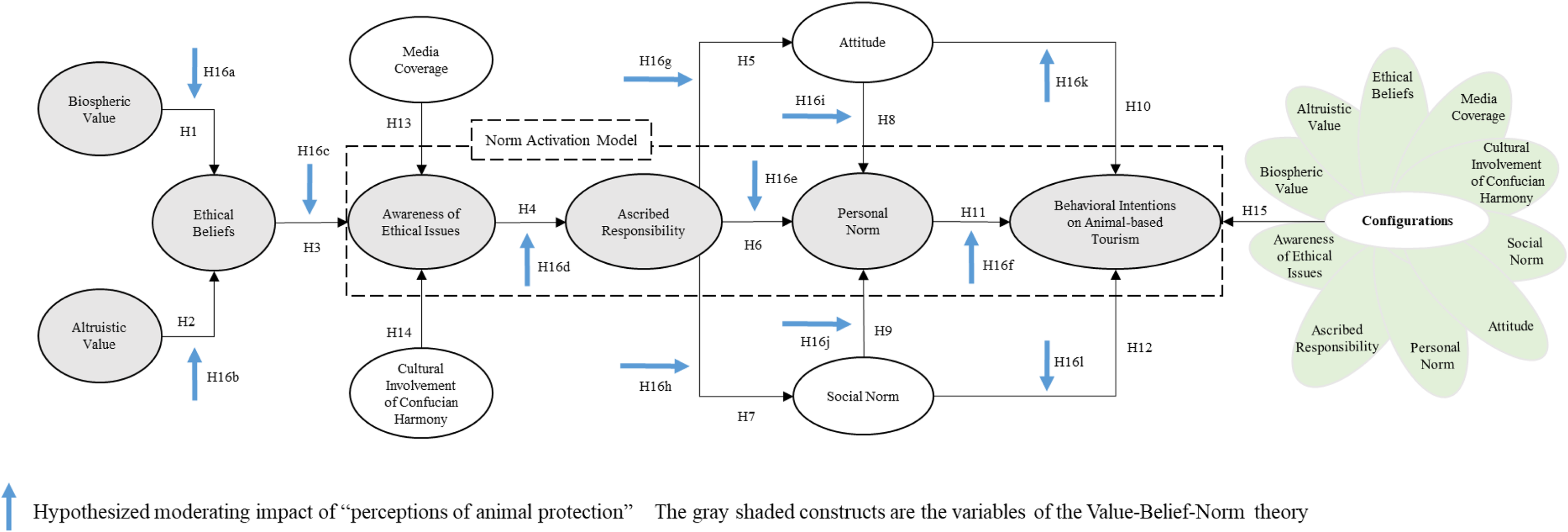
Proposed conceptural model.
Methodology
Measures
All measurement items for the study variables were adopted from prior studies (Chi et al., 2022; Han et al., 2017; Kiatkawsin et al., 2020; Kim and Hwang, 2020; Lee, 2011; Le et al., 2021; Meng et al., 2024; Wattanacharoensil et al., 2024; Whang et al., 2016; Zhao et al., 2020) and adapted to the research context of animal-based tourism. A 7-point Likert scale was used for scoring items, ranging from “strongly disagree” [1] to “strongly agree” [7], except for the measurement items for attitude, which were rated using a semantic differential scale (“bad” [1] to “good” [7]).
Data collection
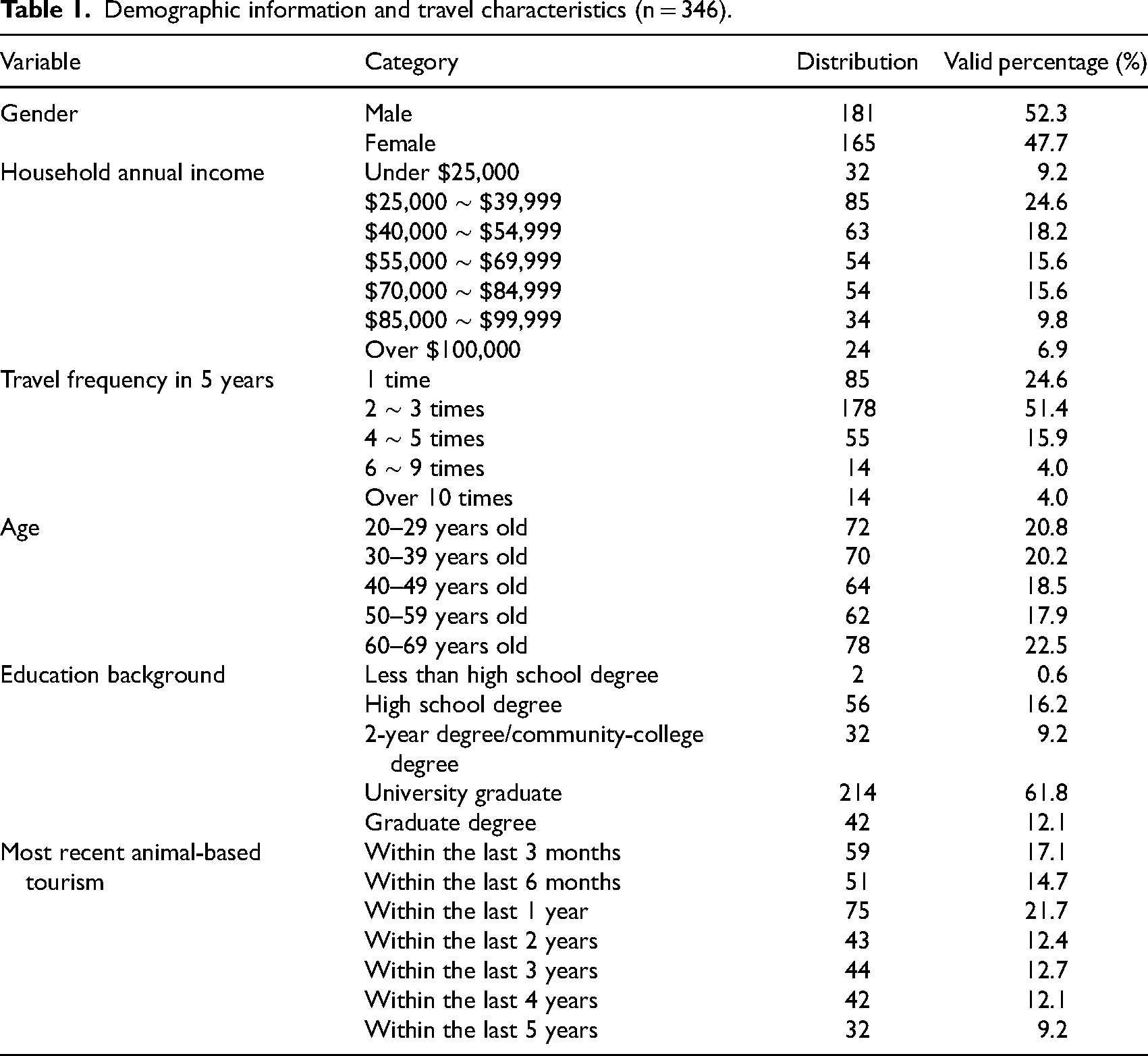
The survey was conducted in South Korea, and the questionnaires were targeted at Koreans who had experienced animal-based tourism, including species such as elephants, dolphins, monkeys, and camels. Data collection lasted three weeks from early to mid-September 2022. The questionnaire contained a screening question: “Have you participated in animal-based tourism within the past five years?”. Respondents who answered ‘no’ were excluded from completing the survey. The survey was administered online to potential participants via Embrain, a well-established survey company in South Korea, and 346 questionnaires were used for data analysis. Table 1 summarizes the sample profiles.
Demographic information and travel characteristics (n = 346).
Results
Assessment on the measurement model
Confirmatory factor analysis (CFA) was carried out to evaluate the reliability and internal and convergent consistency of the measurement model by calculating the Cronbach’s alpha, composite reliability (CR), and average variance extracted (AVE) values (Bagozzi and Yi, 1988; Chi et al., 2024). The factor loadings of items ranged between 0
Results of reliability and validity.
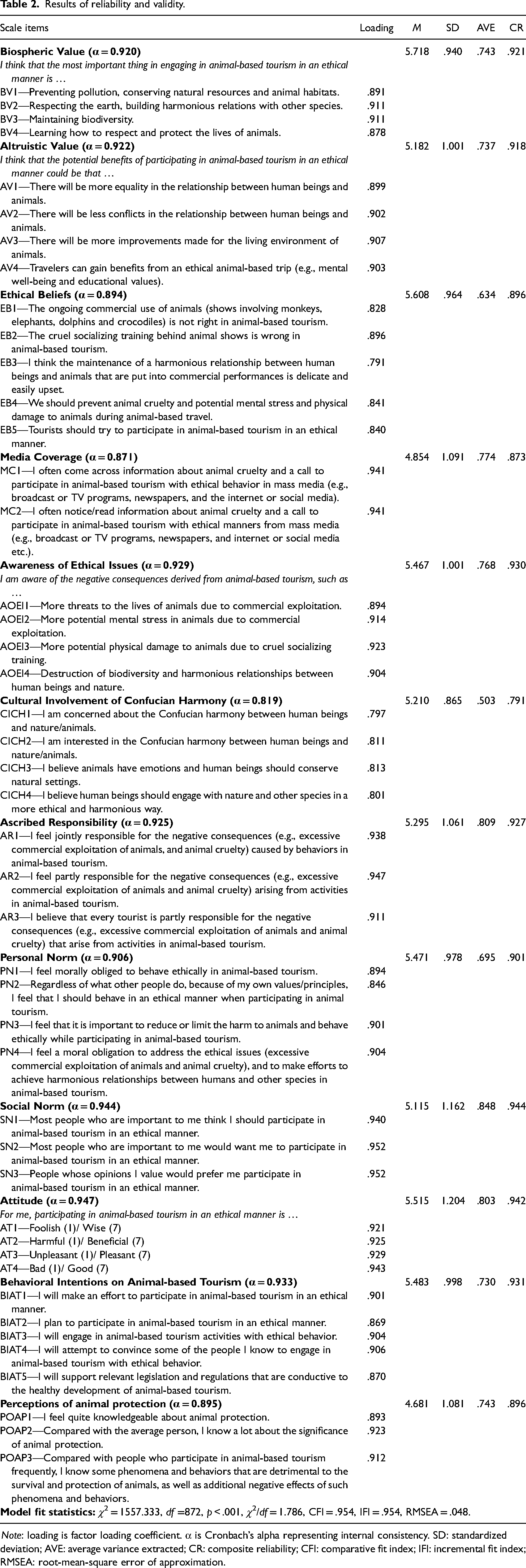
Note: loading is factor loading coefficient. α is Cronbach’s alpha representing internal consistency. SD: standardized deviation; AVE: average variance extracted; CR: composite reliability; CFI: comparative fit index; IFI: incremental fit index; RMSEA: root-mean-square error of approximation.
Structural equation modeling
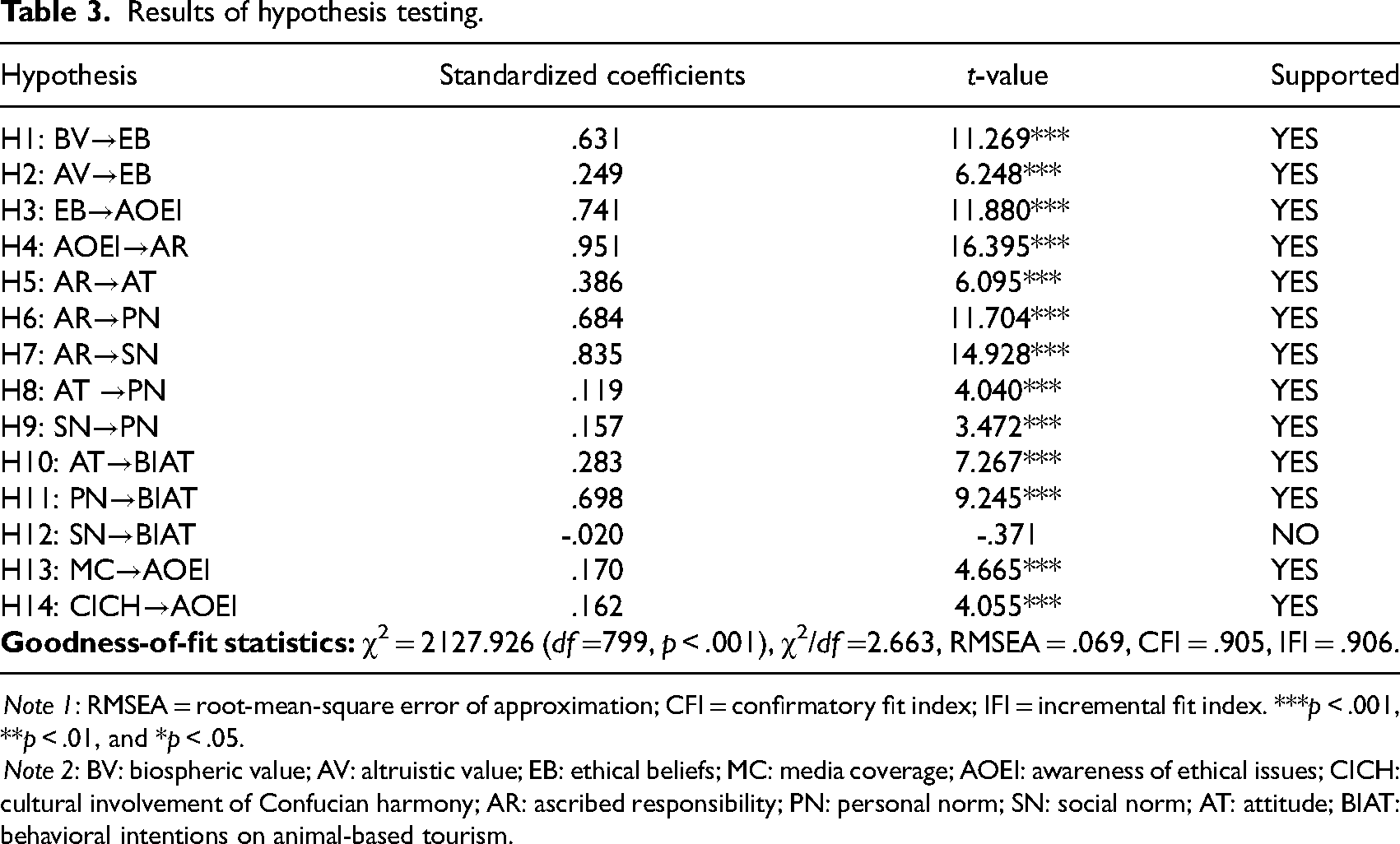
The SEM results in Table 3 and Figure 2 show that the model fit (χ2 = 2127.926, df = 799, p < .001; χ2/df = 2.663; CFI = .905; IFI = .906; TLI = .898; RMSEA = .069) was acceptable. Biospheric value (β = .631; p < .001) and altruistic value (β = .249; p < .001) significantly influenced ethical beliefs. Ethical beliefs (β = .741; p < .001), media coverage (β = .170; p < .001), and CICH (β = .162; p < .001) had significant effects on awareness of ethical issues, which played a significant role in affecting ascribed responsibility (β = .951; p < .001). Ascribed responsibility had significant effects on attitude (β = .386; p < .001), personal norm (β = .684; p < .001), and social norm (β = .835; p < .001), respectively. Personal norm was significantly influenced by attitude (β = .119; p < .001) and social norm (β = .157; p < .001). Also, attitude (β = .283; p < .001) and personal norm (β = .698; p < .001) were shown to have significant effects on behavioral intentions on animal-based tourism. In contrast, social norm (β = –.020; p > .05) did not show a significant impact on behavioral intentions on animal-based tourism. Thus, the proposed Hypotheses 1–14 were supported, with the exception of Hypothesis 12.
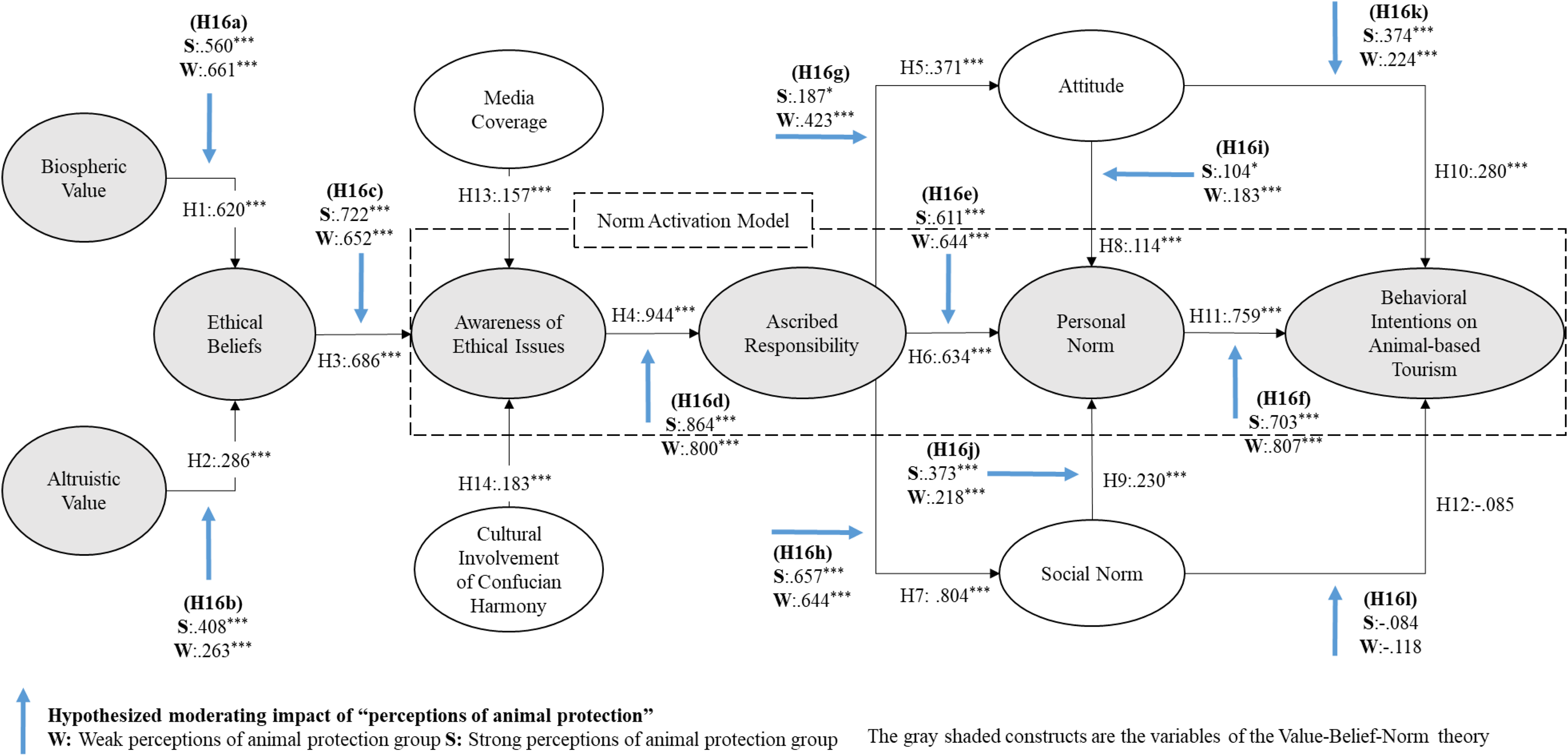
The structural model.
Results of hypothesis testing.
Note 1: RMSEA = root-mean-square error of approximation; CFI = confirmatory fit index; IFI = incremental fit index. ***p < .001, **p < .01, and *p < .05.
Note 2: BV: biospheric value; AV: altruistic value; EB: ethical beliefs; MC: media coverage; AOEI: awareness of ethical issues; CICH: cultural involvement of Confucian harmony; AR: ascribed responsibility; PN: personal norm; SN: social norm; AT: attitude; BIAT: behavioral intentions on animal-based tourism.
Moderation effects
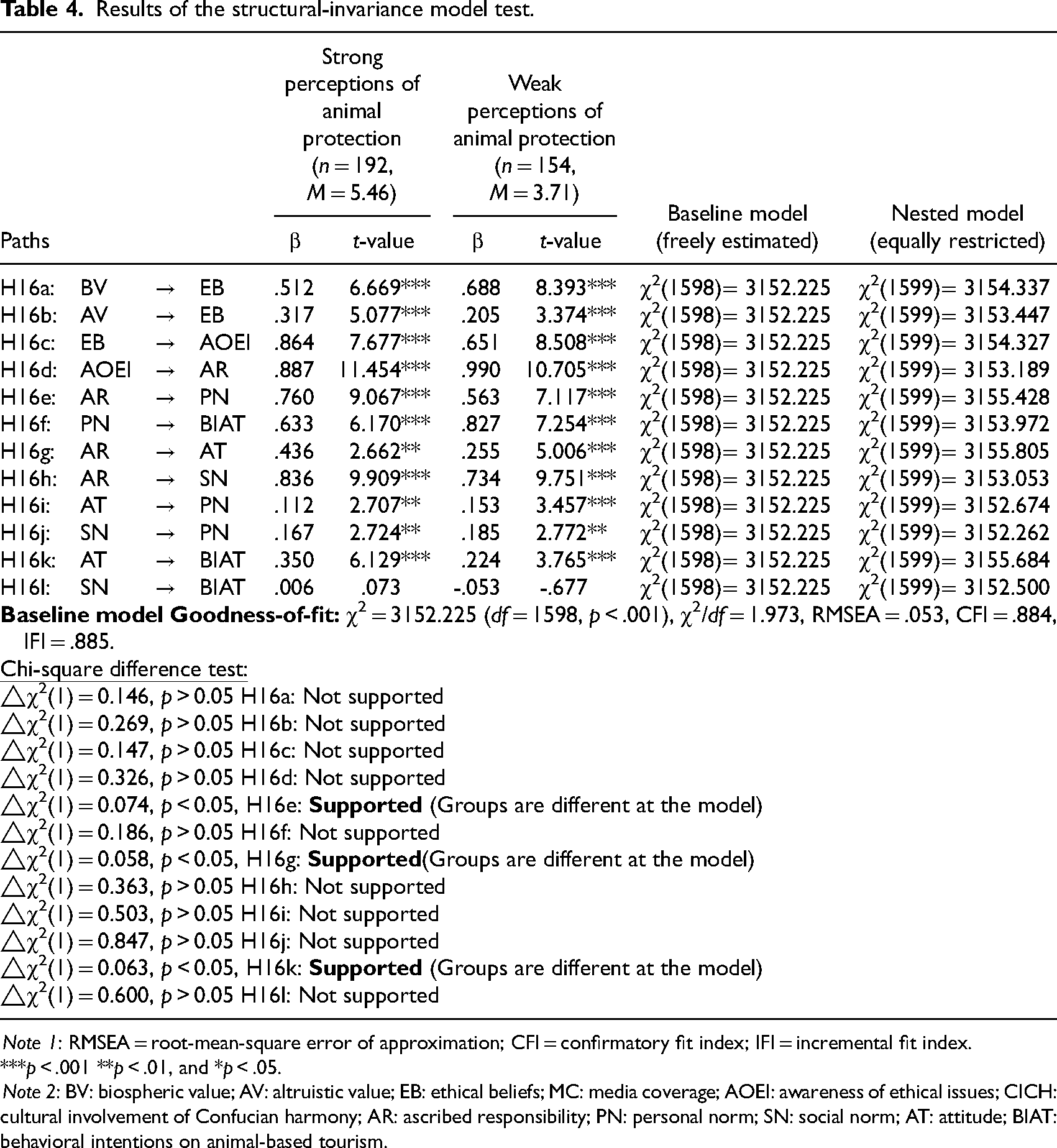
The survey sample was divided into two groups: strong and weak perceptions of animal protection (192 cases, M = 5.46; 154 cases, M = 3.71), using the K-means cluster analysis. A baseline model was generated with these two groups, all variable loadings were constrained to be equal, and associated pathways were estimated freely. The baseline model was found to satisfactorily fit the data (χ2 = 3152.225, df =1598, p < .001; χ2/df = 1.973; RMSEA = .053; CFI = .884; IFI = .885). The differences between the baseline model and nested models were calculated using a chi-square test. Only the chi-square differences of three paths from ascribed responsibility to personal norm (Δχ2(1) = 0.074, p < .05) and attitude (Δχ2(1) = 0.058 and p < .05), and from attitude to behavioral intentions on animal-based tourism (Δχ2(1) = 0.063 and p < .05) were statistically significant between the two groups with strong and weak perceptions of animal protection, which supported Hypotheses 16e, 16g, and 16k. The relationships between ascribed responsibility and personal norms (β = .760; p < .001), ascribed responsibility and attitude (β = .436; p < .001), and attitude and behavioral intentions on animal-based tourism (β = .350; p < .001) were stronger in the group with higher perceptions of animal protection. There were no statistically significant chi-square differences for additional paths among study variables between these two groups, thus Hypotheses 16a, 16b, 16c, 16d, 16f, 16 h, 16i, 16j, and 16 l were rejected. The multi-group invariance test results are shown in Table 4.
Results of the structural-invariance model test.
Note 1: RMSEA = root-mean-square error of approximation; CFI = confirmatory fit index; IFI = incremental fit index.
***p < .001 **p < .01, and *p < .05.
Note 2: BV: biospheric value; AV: altruistic value; EB: ethical beliefs; MC: media coverage; AOEI: awareness of ethical issues; CICH: cultural involvement of Confucian harmony; AR: ascribed responsibility; PN: personal norm; SN: social norm; AT: attitude; BIAT: behavioral intentions on animal-based tourism.
Necessary condition analysis
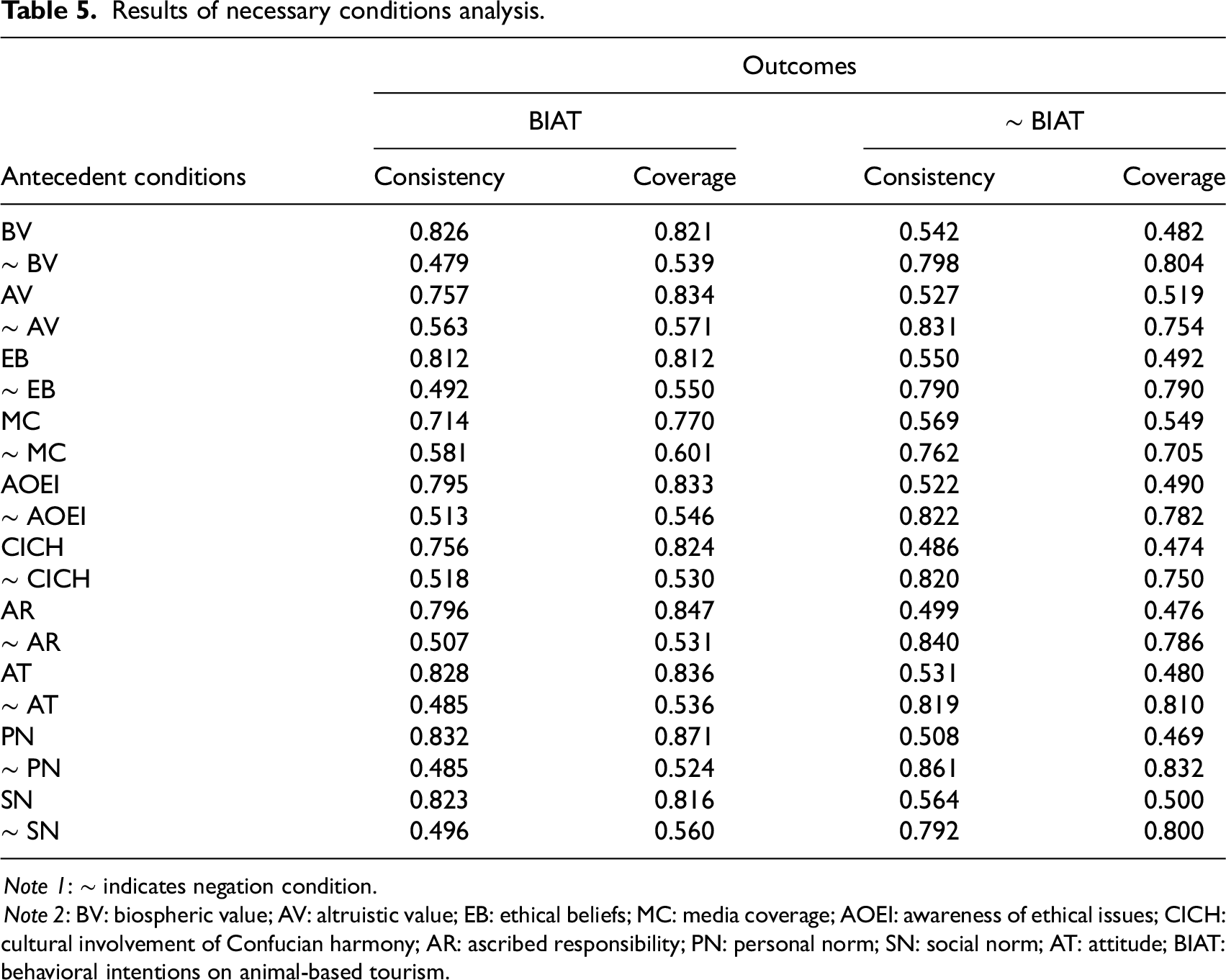
A necessary condition analysis (NCA) was conducted to demonstrate whether the cause was a subset of the outcome. A condition can be generally considered necessary if it has a consistency value of 0.9 or above (Ragin, 2008; Wattanacharoensil et al., 2024). Table 5 shows that none of antecedent conditions had a consistency value exceeding 0.9; that is, none of the antecedent variables were identified as necessary conditions for generating strong or weak behavioral intentions on animal-based tourism.
Results of necessary conditions analysis.
Note 1: ∼ indicates negation condition.
Note 2: BV: biospheric value; AV: altruistic value; EB: ethical beliefs; MC: media coverage; AOEI: awareness of ethical issues; CICH: cultural involvement of Confucian harmony; AR: ascribed responsibility; PN: personal norm; SN: social norm; AT: attitude; BIAT: behavioral intentions on animal-based tourism.
Sufficient configurations
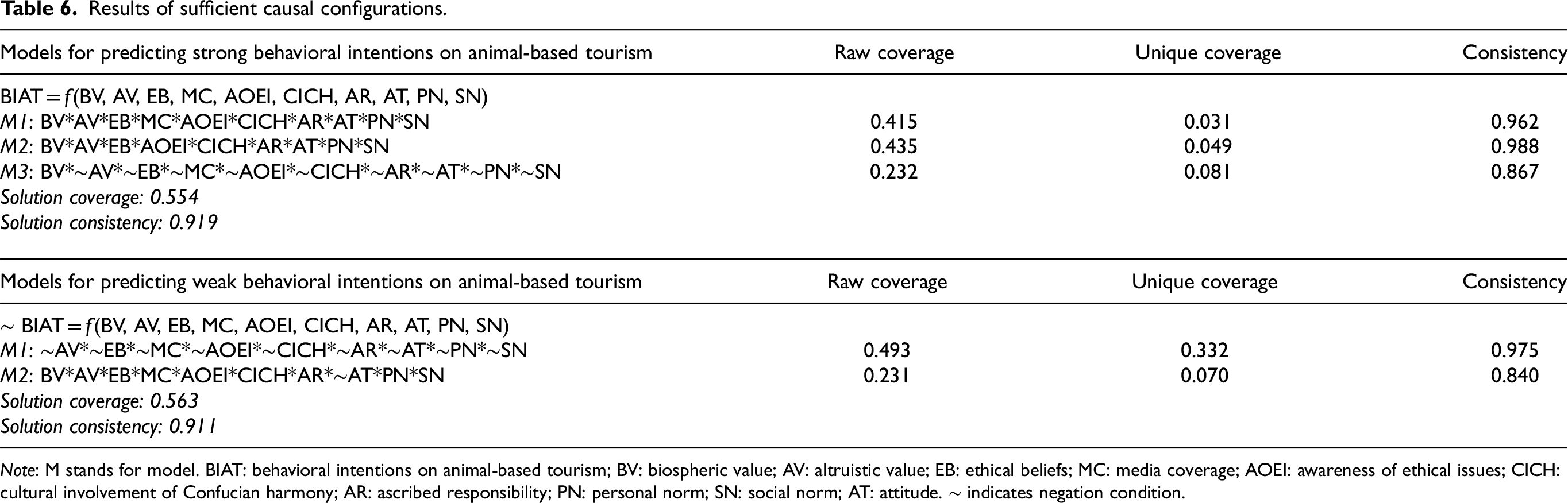
The fsQCA 3.0 software was used to identify the specific causal recipes. Calculations of solution coverage and consistency were the probability measures used to examine whether the computed recipe was reliable and validated, with critical values of 0.2 and 0.8, respectively (Kim et al., 2023). As displayed in Table 6, three configurations (coverage: 0.554, consistency: 0.919) were identified for predicting the formation of strong behavioral intentions relating to animal-based tourism. Specifically, Model 1 demonstrates that when tourists were rated as having strong biospheric value, altruism value, ethical beliefs, awareness of ethical issues, cultural involvement of Confucian harmony, ascribed responsibility, personal norms, social norms, and attitude, they were in an environment with media coverage about ethical animal-based tourism, they were more likely to form strong intentions to behave ethically and responsibly when undertaking animal-based tourism. Model 2 indicates that once tourists are under the synergistic influence of strong biospheric value, altruism value, ethical beliefs, awareness of ethical issues, cultural involvement of Confucian harmony, ascribed responsibility, attitude, personal norms, and social norms, strong intentions to behave ethically and responsibly when undertaking animal-based tourism will be more obvious. Model 3 illustrates that even if altruism value, ethical beliefs, attitude, perception of media coverage, awareness of ethical issues, cultural involvement of Confucian harmony, ascribed responsibility, personal norms, and social norms are at a lower level, as long as tourists have stronger biospheric value, robust behavioral intentions to behave ethically and responsibly when engaging in animal-based tourism can also be achieved. Conversely, two configuration models provided causal recipes for weak behavioral intentions with regard to animal-based tourism (coverage: 0.563, consistency: 0.911). The first model shows that weak behavioral intentions were caused by weak altruism value, ethical beliefs, media coverage, awareness of ethical issues, cultural involvement of Confucian harmony, ascribed responsibility, personal norms, social norms, and attitude. Alternatively, although tourists may be synergistically influenced by positive configuration of all other study variables, if their attitude is relatively negative, their intentions to behave responsibly in animal-based tourism may be weak.
Results of sufficient causal configurations.
Note: M stands for model. BIAT: behavioral intentions on animal-based tourism; BV: biospheric value; AV: altruistic value; EB: ethical beliefs; MC: media coverage; AOEI: awareness of ethical issues; CICH: cultural involvement of Confucian harmony; AR: ascribed responsibility; PN: personal norm; SN: social norm; AT: attitude. ∼ indicates negation condition.
Discussion
Theoretic contribution
This study provides significant theoretical implications for individuals’ psychology and ethical behaviors. Firstly, the constituent variables of VBN and NAM (i.e., biospheric value, altruistic value, ethical beliefs, awareness of ethical issues, ascribed responsibility, and personal norm) were identified as the key predictors for behavioral intentions relating to animal-based tourism, which is consistent with the outcomes of previous tourism research on the NAM and self-interested processes in tourists’ pro-environmental and ethical behaviors (Chi et al., 2023; Kiatkawsin et al., 2020; Kim and Hwang, 2020; Meng et al., 2024). This resonates with the “equal consideration of interests” principle (Singer, 2013): that the interests of animals should not be subject to unfair treatment based on individual characteristics. Secondly, in the context of animal-based tourism, the direct relationships between attitude to personal norm and behavioral intentions, and between social norm and behavioral intentions, were confirmed, which is consistent with the previous studies using the TPB to evaluate the activation of moral norms and pro-environmental actions in the research contexts of festival tourism and green hotels (Chi et al., 2022, 2023). However, the positive relationship between social norm and behavioral intentions on animal-based tourism was not supported, indicating that social norm relating to animal-based tourism do not seem to create a unified standard or a strong force to influence the ethically responsible behavior of tourists. However, the fsQCA results indicated that the identified causal recipes with stronger social norm can lead to either strong or weak behavioral intentions on animal-based tourism. This also implies that social norms can play a significant role in affecting the formation of different levels of tourists’ ethically behavioral intentions, depending on how social norm interact with other antecedent conditions.
The empirical findings also verified that media coverage significantly influences awareness of ethical issues, leading to ascribed responsibility toward animal-based tourism. Media coverage can be considered an essential source of information for understanding animal-based tourism, which has been shown to have an impact on problem awareness and personal norm activation (Han et al., 2021; Liu and Li, 2021). Fakfare et al. (2023) have also linked media influence with Stimulus-Organism-Response (SOR) theory to explain the formation of behavioral intentions, revealing that media reports on negative behaviors related to animal exploitation and abuse, serving as external stimuli, could play a crucial role in raising tourists’ awareness and concern for animal welfare and influence their ethically responsible behaviors. Moreover, research findings confirmed that cultural involvement of Confucian harmony had significant impact on the awareness of ethical issues in animal-based tourism contexts. This finding is consistent with a study on smart tourists’ environmentally responsible behavior (Kiatkawsin et al., 2020), which revealed the significance of cultural involvement in affecting individuals’ awareness of consequences and ascription of responsibility. It confirms the fact that Confucian philosophy is often linked with the awareness of environmental or ethical issues in various contexts, including animal-based tourism (Meng et al., 2024; Wan et al., 2022). Li and Wei (2023) have declared that to some extent, Confucian Eco-Ethics could serve as a value guide to teach humans about solving some of the dilemmas related to sustainable development.
From the perspective of methodological approaches, in addition to SEM, this study used fsQCA to asymmetrically determine the complex causal recipes for behavioral intentions relating to animal-based tourism, enriching the understanding of the psychological and normative processes involved in tourists’ ethically responsible behavior. While this approach is beginning to become efficient in predicting the formation of behavioral intention (Liao et al., 2023), its application in the animal-based tourism industry remains limited (Kim et al., 2023; Wattanacharoensil et al., 2024). The fsQCA results show that various configurations can lead to different levels of behavioral intentions relating to animal-based tourism. For instance, three identified causal configurations all revealed that a high level of biospheric value is important to achieve positive behavioral intentions related to animal-based tourism, as supported by Wattanacharoensil et al. (2024), who found that a series of cognitive, affective, and normative antecedents, involving altruistic value, ethical beliefs, awareness of ethical issues, social norm, and personal norm, were asymmetrically configured to provide causal recipes for intentions on animal ethics in tourism.
It is also important to note that although some animal-related tourism studies drew attention to the anthropocentric nature of tourist experience and satisfaction (Flower et al., 2021; Tolls and Carr, 2021), the present study is not solely limited to a human-centered perspective of animal-based tourism development. The proposed theoretic framework was not only to detect more insights on the antecedents influencing the formation of ethically responsible behaviors, but also to consider the potential factors influencing the achievement of a more balanced and harmonious coexistence in the context of animal-based tourism, in terms of animal wellbeing or welfare. The present study successfully identified that the moderator variable (perceptions of animal protection) had a moderating role in affecting relationships between ascribed responsibility and personal and social norms, and between attitude to behavioral intentions on animal-based tourism, confirming that deeper perceptions based on an individual’s own knowledge of an event or phenomenon can regulate the formation of their normative beliefs and behavioral intentions (Chi et al., 2022; Kim and Hwang, 2020). Different perceptions of animal protection could moderately affect the formation of individuals’ beliefs, moral norms, social norms, and behavioral intentions. This study emphasizes the significance of Confucian Eco-Ethics, animal protection and welfare in animal-based tourism development, which resonates with the studies on animal welfare and protection movements (Broad, 2018, 2020), avoiding the limits of prior animal-related tourism studies from an anthropocentric perspective, and instead analyzes tourists’ behavioral intentions with regard to animal-based tourism with an ethically responsible orientation.
Practical contribution
Based on the empirical findings of this study, a series of measures that contribute to tourists’ ethical responsibility behaviors in the context of animal-based tourism can be discussed. First of all, animal-based tourism practitioners should pay full attention to the educational significance of animal-based tourism (Fennell et al., 2024). It is important to reinforce tourists’ biospheric values, altruistic values, ethical beliefs, awareness of ethical issues, ascribed responsibility, and personal norms relating to animal-based tourism. Managers of animal-based tourism sites are encouraged to collaborate with animal protection associations and non-governmental organizations to examine any cruelty involved in animal-based tourism (e.g., high-intensity animal training and animal abuse), publicize the adverse effects of tourists’ inappropriate behavior on the survival and welfare of animals, and emphasize the importance of ethically responsible behavior for the sustainable development of animal-based tourism, using slogans, videos, and other material to promote ethical sightseeing in animal-based tourism. These measures can significantly enhance travelers’ ethical beliefs and awareness of ethical issues involved in animal-based tourism through a higher level of biospheric value and altruistic value, which may further promote personal norms and ethically responsible behaviors in animal-based tourism.
Tourists’ understanding of animal-based tourism may be influenced by their personal biases and lack of professional knowledge. This requires media exposure and Confucian culture to play a positive role in guiding ethically responsible behaviors by raising tourists’ awareness of ethical issues in animal-based tourism. Animal-based tourism attractions can appropriately adopt mass media to introduce relevant Confucian culture to tourists by hosting Confucian culture forums, and showing the Confucian harmony emphasis on harmonious coexistence between humans and the natural world, which could significantly enhance travelers’ ethical beliefs and awareness of ethical issues relating to animal-based tourism (Meng et al., 2024; Wang et al., 2023). Also, since personal norms are significantly influenced by attitude and social norms, the operators of animal-based tourism need to be well informed about the legislation and regulations for animal welfare and protection (Duffy and Moore, 2011). Government agencies could also encourage community involvement in the marketing and operation of animal-based tourism, which would help to optimize existing social norms for animal welfare and protection. This would help to promote more ethical and harmonious attitudes in supporting the survival and welfare of other species.
Based on the moderating role of perceptions of animal protection in the proposed framework, animal-based tourism attractions could cooperate with non-government organizations to set up animal rescue centers of different sizes, and encourage more members of society to participate in related rescue activities, to enhance social influence and social norms on animal protection. Tourism value co-creation and destination pro-social/pro-environmental performance have received widespread attention from relevant experts, scholars, and the public (Chi et al., 2024), so animal-based tourism attractions should not only enhance co-creation, but also discuss with relevant stakeholders how to further optimize the living facilities and environments of animals, which will help to promote animal welfare and subjective well-being. Such approaches may also influence tourists’ attention and support for environmentally friendly animal-based tourism and enhance green experiences of animal-based tourism. In addition, the managers of animal-based tourism attractions could train employees in adhering to ethical principles at work and encourage them to remind tourists to ethically participate in animal-based tourism activities. TV programs could invite zoologists and internet celebrities, as ecological animal-based tourism ambassadors, to introduce animal protection, animal welfare, and the concept of a harmonious society, to mobilize tourists’ engagement in ethical and responsible behavior. It could be helpful to use digital technology and SNS platforms to enable tourists’ participation in animal rescue tourism activities and thus subtly enhance their perceptions of animal protection, ethical beliefs, perceived responsibility, and personal norms (Wong et al., 2023).
The causal recipes that were identified in the present study provided insightful practical implications for promoting tourists’ ethically responsible behaviors in relation to animal-based tourism. Multi-party collaboration is needed, including related stakeholders, non-government organizations, and communities. The fsQCA and NCA results showed that the generation of ethically responsible behavior in tourists is an intricate process, which requires relevant practitioners to have a comprehensive understanding of value orientations, normative beliefs, and global motives, with the additional considerations of media coverage, Confucian culture and perceptions of animal protection. The fsQCA results emphasized the significance of biospheric value and attitude in affecting tourists’ behavioral intentions with relation to animal-based tourism. Therefore, when stakeholders take into account economic factors such as business operating budgets, biospheric value should be given top priority, as it appears in all predictive combinations, having a strong effect on behavioral intentions related to animal-based tourism. Tourists can experience the wonders of the biosphere firsthand through eco-experience activities such as eco-adventures, and biodiversity observation, thereby enhancing their understanding of the value of the biosphere. Tourists’ attitudes towards animal-based tourism should also be valued, as this factor appears in all predictive combinations affecting weak behavioral intentions related to animal-based tourism. Animal-based tourism operators are encouraged to conduct a series of surveys to predict tourist attitudes when developing new animal-based tourism projects. The practical implications derived in this study are essential references and guidelines for promoting green animal-based tourism and ethically responsible behaviors in tourists.
Conclusion
There are growing calls to do more to promote the sustainable development of animal-based tourism, which is closely related to tourists’ ethically responsible behaviors (Fennell, 2023; Kim et al., 2023; Meng et al., 2024; Thomsen et al., 2023). Our research verified that the VBN theory and the NAM were effective in describing the formation of tourists’ ethically responsible behavior in the context of animal-based tourism. This study also identified the additional antecedents (media coverage and cultural involvement of Confucian harmony) that play significant roles in activating tourists’ awareness of ethical issues with regard to animal-based tourism. Attitudes and social norms, as crucial components of the TPB, also significantly influence personal norms and behavioral intention in relation to animal-based tourism. Based on the complex nature of behavioral research, at the methodological level, this research not only clearly examined the linear relationships between study variables, but also identified the potential causal recipes that lead to different levels of behavioral intentions. The constructed framework, with SEM and configuration models, elucidates the intricate psychological and normative mechanisms involved in tourists’ behavioral intentions with regard to animal-based tourism, which theoretically provides a valuable reference for better understanding the value orientations, global motives, and normative behaviors of potential tourists interested in any types of animal-based tourism. Overall, the academic and managerial implications are expected to provide novel insights for activating individuals’ ethically responsible behaviors in animal-based tourism, enriching the existing research directions in terms of the educational significance of animal-based tourism for individuals’ pro-environmental and pro-social behaviors.
Limitation and future research
Considering that there are differences between the natural and human environments and the social norms for animal-based tourism may also vary between countries and regions, the generalizability of the research findings needs further verification, as the survey respondents were all Korean, with animal-based tourism experience. This implies that cross-national research on animal-based tourism would be worthwhile. Behavioral intentions with regard to animal-based tourism involve various aspects, and while this study focused on intentions to practice ethically responsible behavior, additional facets such as willingness to support animal welfare could be further investigated. Also, the findings of the current study need to be read with caution, as some of the experiences reported by respondents were not recent, with some dating back up to 5 years. In addition, this research primarily focused on relatively easily observable animals that are included in tourism activities, even including wild animals. Other forms of animal-based tourism, such as dog sledding, horse riding, petting zoos, cat cafés, and donkey rides, among other domestic animal-based tourism activities, were not adequately represented in the current study. Future studies could broaden the scope of species, incorporating a wider variety of animals such as birds, whales, and pandas. Meanwhile, one additional point that needs to be mentioned is that the animal-based tourism mentioned in this study is different from pet tourism, so the research findings should be referenced with caution in the context of pet tourism. Lastly, experimental design approaches could be applied in conjunction with the proposed research framework in future, related studies.
Footnotes
Declaration of conflicting interests
The authors declared no potential conflicts of interest with respect to the research, authorship, and/or publication of this article.
Funding
The authors received no financial support for the research, authorship, and/or publication of this article.
