







Abstract
Tourists’ environmentally responsible behavior (ERB) is crucial for the sustainable development of destinations, and the external environment can alter individuals’ cognition and behavior through sensory perception. To investigate the impact of the natural environment on tourists’ ERB, a conceptual model was developed and validated from a sensory perspective by integrating the embodied cognition theory and the stimulus-organism-response model. The results of structure equation modeling indicated that, with the exception of auditory perception, tourists’ perceptions through each sense influenced ERB to varying degrees, mediated by memorable tourism experiences (MTEs) and environmental awareness. Additionally, the fuzzy-set qualitative comparative analysis method was employed to identify five distinct configurations associated with high ERB. Notably, MTEs and environmental awareness, driven by sensory perceptions, emerged as critical factors. While all senses played a role, none alone could singularly determine high ERB. The findings reveal the mechanism through which sensory perception influences tourists’ ERB and offer practical insights for destinations to integrate tourism resources by aligning with tourists’ sensory experiences to promote sustainable tourism.
Keywords
Introduction
The sustainable development of a destination is heavily influenced by its natural environment (Cheng and Wu, 2015; Su and Swanson, 2017). However, the rapid growth of global tourism has resulted in substantial environmental impacts (He and Filimonau, 2020), raising concerns about environmental degradation associated with tourism development (Su et al., 2018). Nevertheless, the practice of environmentally responsible behavior (ERB) by tourists has the potential to mitigate the impact on the local environment (Bratanova et al., 2012; Xu et al., 2020). Against this backdrop, there is a growing focus on researching tourists’ ERB, with scholars delving into the factors influencing such behavior and intention. While the concept of ERB and intention may not be complex, individual behavior and perception formation typically stem from a blend of personal, social, economic, and environmental factors (Baron, 2007; Ferguson and Bargh, 2004; Strasser and Fuchs, 2015), necessitating a continuous in-depth exploration.
According to embodied cognition theory, environmental stimulation of the senses can modify an individual's cognition and behavior (Crouch, 2000; Zhou et al., 2023). This theory posits that an individual's perceptions are grounded in and shape bodily experiences (Krishna, 2012), with sensory stimuli capable of influencing an individual's psychology and cognition, subsequently impacting behavior. Recent research in the realm of tourism has validated this claim, highlighting the substantial influence of sensory perceptions on tourists’ psychological experiences and behavioral intentions (Lv et al., 2022; Zhou et al., 2023). While tourists’ ERB significantly contributes to a destination's sustainable development, research in this area has delved into various antecedents, including place attachment (Cheng and Wu, 2015), contact to nature (Cooper et al., 2015), and environmental awareness (Fu et al., 2020). However, limited studies have elucidated the causal link between sensory perception and ERB.
Additionally, within the realm of tourism research, the majority of existing studies concentrate on the individual examination of various senses, including taste (Everett, 2008), smell (Dann and Jacobsen, 2003), and vision (Sun and Lv, 2021). Only a few studies have explored the significance of multisensory experiences (Agapito, 2020; Buzova et al., 2021), with limited empirical analysis due to the absence of suitable quantitative tools (Buzova et al., 2021). Findings from current multisensory tourism research indicate that not all sensory cues have an equal impact on tourists’ experiences (Agapito et al., 2014; Buzova et al., 2021; Lv and McCabe, 2020). Hence, the variations in the influence of sensory perception on tourists’ cognition and behavior necessitate urgent exploration.
Furthermore, the stimulation of multiple senses serves as a direct source of tourists’ experiences (Goldstein, 2002). Memorable tourism experiences (MTEs) indicate the profound impression that tourists have of their travel process (Chen et al., 2023; Hosany et al., 2022), which is directly linked to the environmental stimuli they encounter (Obradović et al., 2022). Environmental awareness is an important antecedent variable for ERB (Fu et al., 2020; Mkumbachi et al., 2020). Both environmental awareness and MTEs reflect the psychological and cognitive changes that tourists may undergo when in natural environments, aligning with the embodied cognition theory. However, there is currently no research directly incorporating both variables into the sensory and ERB framework. Tourists’ first-hand experiences often prompt a shift in their awareness (Ballantyne et al., 2011a; Lee and Moscardo, 2005). Therefore, we investigate the positive impact of MTEs on environmental awareness and their mediating role in nature-based sensory perception and ERB.
Based on the identified research gaps, we aim to address the following research questions: (1) Does the natural environment in tourism influence tourists’ ERB through senses? (2) If so, do MTEs and environmental awareness play a role in it? (3) What distinct roles do different senses of tourists play in influencing their ERB? To address these questions, we integrated the stimulus-organism-response (S-O-R) model with embodied cognition theory to develop a theoretical framework that enhances our understanding of the internal mechanism through which natural environments stimulate tourists’ ERB. Considering the varying impacts of different senses on ERB, we complemented the fuzzy-set qualitative comparative analysis (fsQCA) with structure equation modeling (SEM) to analysis the collective influence of different senses on ERB. This approach helps to uncover the diverse sensory configurations that promote tourists’ high ERB.
This study expands previous research in three aspects. Firstly, the effectiveness of sensory perception in stimulating tourists’ ERB is confirmed in this study, enriching the literature on the antecedents of ERB. Additionally, we demonstrate the mediating role of MTEs and environmental awareness, to a certain extent, elucidating the underlying mechanism of tourists’ formation of ERB. Finally, we showcase five sensory configurations that shape ERB, providing more specific insights for destination management and marketing.
Theoretical basis and hypotheses development
Embodied cognition theory and nature-based sensory experience
Embodied cognition theory comprises a collection of perspectives advocating the “integration of body and mind,” in contrast to the symbolic view of cognition, which upholds the “dualism of body and mind,” thereby representing two distinct stances on cognition (Lv et al., 2022; Springborg and Ladkin, 2018). The focus of the debate between these views pertains to how cognition is developed. According to the traditional symbolic view of cognition, cognition relies on abstract semantic symbols that encode phenomena in the brain through specific activation patterns (Springborg and Ladkin, 2018). In this perspective, senses and perceptions serve as channels for cognitive input and output, suggesting that studying an individual's cognition can occur independently of their perceptions (Barsalou, 2008). Nevertheless, numerous studies on embodiment have shown the feasibility of employing the “integration of body and mind” to elucidate individual cognitive development (Sherman and Clore, 2009; Williams and Bargh, 2008). The “integration of body and mind” aspect of embodied cognition theory posits that the body, including the five senses and kinesthesia, actively contributes to cognition, influencing individuals’ mental processes (e.g., thinking, attitudes, and behaviors). Individuals integrate their bodily sensations with their mental states to comprehend the world around them (Crouch, 2000).
For tourists, a visit is not a mere stroll, but rather an immersive experience that integrates the body with its surroundings (Krishna and Schwarz, 2014). Research on the tourism experience should be approached from an embodied perspective rather than being detached from the body (Lv et al., 2022). Actually, tourists engage with and interact with the external world through their senses, establishing sensory experience as the foundation of the tourism experience and a critical element in tourism experience design (Agapito et al., 2013, 2017). As one of the most important forms of tourism, nature-based tourism is centered around tourists’ sensory experiences, involving the connection between humans and nature, habitats, and wildlife (Fossgard and Fredman, 2019; Kularatne et al., 2021). Although nature-based tourism also includes human-made environments (such as hotels, restaurants, and other facilities), natural environment (including weather, mountains, rivers, flora and fauna, etc.) form the core part of sensory experiences for nature-based tourists (Fossgard and Fredman, 2019). For example, Kastenholz et al. (2012) asked tourists in their study to make sensory evaluations of the natural environment of the destination, and tourists mentioned the sounds of the animals, the smells of the plants, and the greenery of nature, Sharpley and Jepson (2011) also pointed out that the contact and interaction with the natural environment provide spiritual satisfaction for tourists. Additionally, existing research indicates that tourists often perceive the natural environment through vision, touch, hearing and smell. Taste does not directly interact with the natural environment but is related to the destination's cuisine (e.g., Buzova et al., 2021; Fossgard and Fredman, 2019; Luo et al., 2024; Zhou et al., 2023). Therefore, this study does not include taste as a component of sensory perception in nature-based experiences.
Overall, while research on tourists’ experiences from an embodied perspective has become a mature field, only a few studies have explored the role of sensory experiences in destination sustainable development (Luo et al., 2024).
Stimulus-organism-response model
The S-O-R model, initially introduced by Mehrabian and Russell (1974), was developed to elucidate the impact of the external environment on individual behavior. It posits that external stimuli, such as the social and physical environments, can affect an individual's immediate internal emotions and cognitive state (organism), subsequently triggering a cascade of behavioral responses (response) (Robert and John, 1982). The model has found extensive application in examining consumers’ awareness and behavior related to environmental protection. Many scholars (e.g., Hu et al., 2021; Su et al., 2017) have considered pro-environmental behavior as a response by consumers to investigate various psychological processes and emotional states induced by diverse external stimuli. They have also identified factors influencing willingness toward environmental protection and ERB in different contexts, including tourism experience (Chen et al., 2023), consumer sentiment, and tourist satisfaction (Su et al., 2020).
According to the embodied cognition theory, tourists’ participation in nature-based tourism involves a process that external natural environment stimulates their senses to affect their cognitive and behavior (Agapito et al., 2013, 2017). Therefore, we integrated the embodied cognition theory with the S-O-R model. Interpreting tourists’ sensory-based environmental perception as an external stimulus, their environmental awareness and MTEs as psychological and cognitive processes (i.e., the organism in the S-O-R model), and their ERB as the response. This allowed us to explore the mechanisms by which tourists’ sensory perceptions influence their ERB.
Hypotheses development
Nature-based sensory perception, MTEs, and environmental awareness
Tung and Ritchie (2011) suggest that promoting environmental development enhances the probability of tourists creating their own MTEs. And environmental management and physiography have been recognized as two factors influencing MTEs (Kim, 2014). In accordance with embodied cognition theory, tourists’ sensory perception has various effects on their psychological state. When tourists are completely immersed in a destination's natural environment, the sense of physical and mental unity impacts their cognition, leading to the creation of MTEs (Sherman and Clore, 2009; Williams and Bargh, 2008). The arousal theory in environmental psychology also posits that environmental stimuli serve as precursors to tourists’ cognitive and emotional responses (Wang et al., 2020). Existing studies have illustrated the close relationship between sensory perception and tourism experiences. Meacci and Liberatore (2018) used Italian tourist destinations as a case to demonstrate the necessity of stimulating senses to enhance tourist experiences. Zhou et al. (2023) verified the positive impact of sensory experiences on tourists’ mental recovery within a historical and cultural context. Agapito et al. (2012) discussed the importance of sensory experiences in tourism from a marketing perspective. Furthermore, numerous empirical studies have explored the direct connection between sensory perception and tourism experiences (e.g., Alyahya and McLean, 2022; Fan et al., 2023; Guzel and Dortyol, 2016). Since the focus of this study is on tourists seeking to appreciate the natural environment, and taste perception is frequently linked to the unique cuisine of the destination (Brochado et al., 2021; Kim et al., 2021), the stimuli they encounter are not directly associated with the natural environment. Therefore, taste perception was excluded from this study. Based on the above deduction, we propose the following hypotheses:
Environmental awareness typically manifests after an individual demonstrates concern for the environment, influenced by sources such as media, personal experiences, and information from others. It can lead to proenvironmental behaviors in everyday life (Do Paco and Raposo, 2009). Alternatively, environmental awareness may stem from an individual's connection with nature: when individuals engage with nature, they subconsciously develop a sense of unity with it, perceiving harm to nature as harm to themselves, thereby enhancing their environmental awareness (Fretwell and Greig, 2019). Contact with nature is a means through which individuals perceive the natural environment. During this interaction, individuals undergo various positive transformations, such as experiencing unique moods (Joye and Bolderdijk, 2015), psychological healing (Carrus et al., 2017), and potential improvements in physical health (Ulrich et al., 1991). Research also indicates that contact with nature can indirectly enhance an individual's inclination to protect animals (Zhang et al., 2014). Combining the above research, embodied cognition theory and S-O-R theory, we believe that when tourists have deep contact with the natural environment, their environmental awareness may be awakened with cognitive changes. Therefore, the following hypotheses are proposed:
MTEs, environmental awareness, and ERB
Kim et al. (2012) defined MTEs as tourism experiences that are positively recollected and remembered after an event, leading the way in creating a scale to assess MTEs. On this basis, scholars have investigated the effects of MTEs on attitudes and behaviors such as tourist satisfaction (Gohary et al., 2020), destination loyalty (Chen and Rahman, 2018), and intention to revisit (Tiwari et al., 2022). In the context of nature-based tourism, an MTE for visitors means a deep connection with nature, and contact with nature has a lasting impact on environmentalism (Chawla and Derr, 2012; Cooper et al., 2015). There is even a direct connection between exposure to nature and ERB (Pensini et al., 2016). For example, Chen et al. (2023) confirmed the positive relationship between memorable rural-based tourism experiences and tourists’ environmental awareness and connection with nature. Obradović et al. (2022) confirmed that MTEs in national parks significantly influence tourists’ ERB, and Ballantyne et al. (2011b) found that in-depth wildlife tourism experiences stimulate tourists’ environmental awareness and behavior. These studies all indicate the promoting effect of MTEs on tourists’ positive attitudes and behaviors toward the destination, and according to the theory of embodied cognition, tourists’ personal experience feedback may directly manifest in consciousness and behavior (Lv et al., 2022). Based on these, we propose the following hypotheses:
Environmental awareness is crucial for the development of ERB and is considered the primary factor driving the formation of such behavior (Giudici et al., 2019; Mkumbachi et al., 2020; Testa et al., 2021). Fu et al. (2020) confirmed that environmental awareness can lead to ERB, moderated by perceived policy effectiveness. Safari et al. (2018) established the significant impact of environmental awareness on managers’ eco-conscious behavior. Rustam et al. (2020) demonstrated that environmental awareness significantly moderates the link between environmental disclosure and customers’ willingness to engage in eco-responsible consumption practices. Yang et al. (2021), drawing on survey data from 39 countries, discovered that consumers’ environmental awareness positively influences their inclination to engage in eco-friendly behaviors. Building on these studies, we posit the following hypothesis:
In the above reasoning, we assume a positive influence of nature-based sensory perception on MTEs (H1) and environmental awareness (H2), MTEs’ positive influence on environmental awareness (H3) and ERB (H4), and environmental awareness’ positive influence on ERB (H5). Combining the above assumptions and the S-O-R theory, we also assume that MTEs and environmental awareness act as the organism in mediating the relationship between tourists’ nature-based sensory perception and their ERB, all hypotheses as shown in Figure 1.
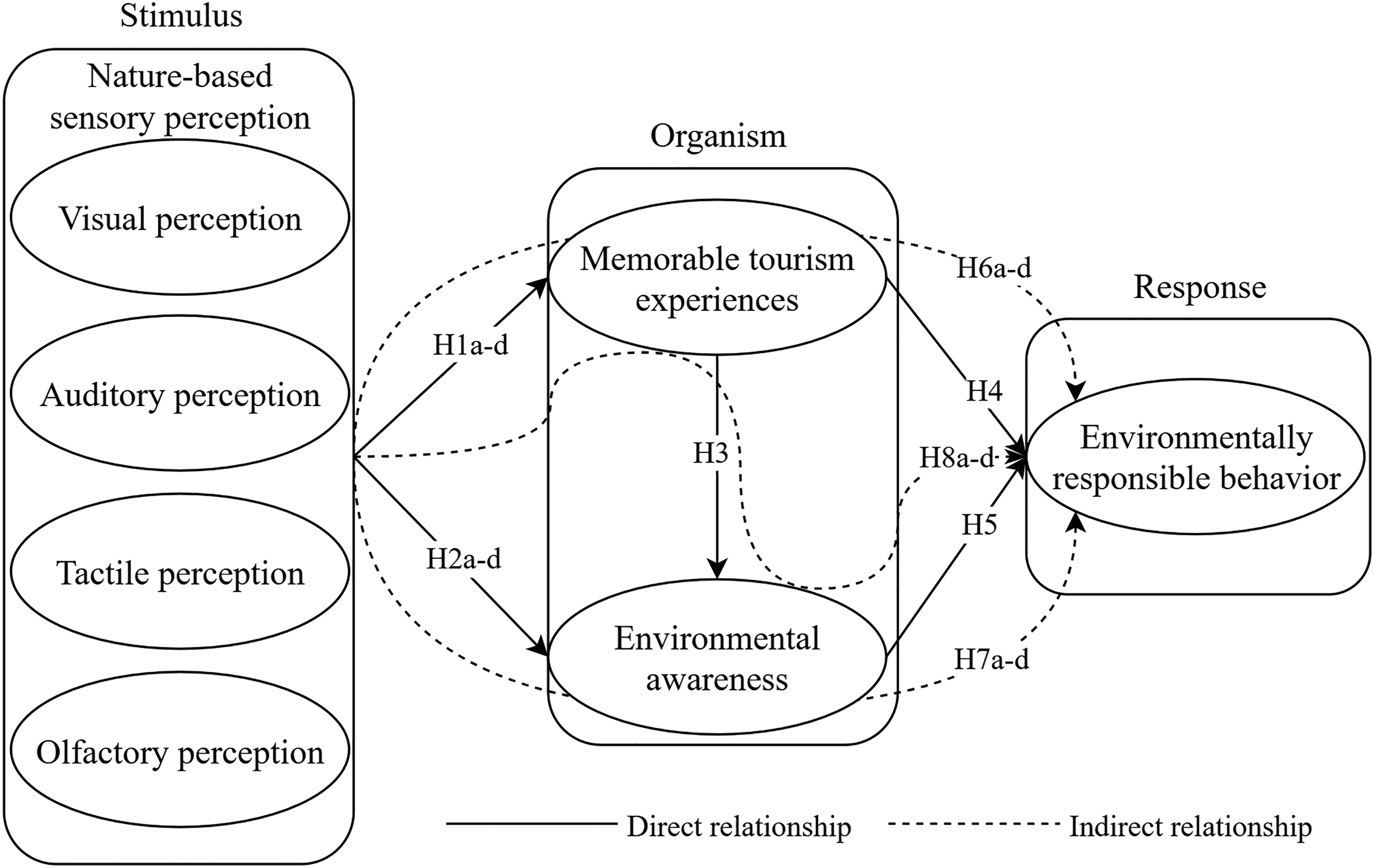
Linear influence model of environmentally responsible behavior.
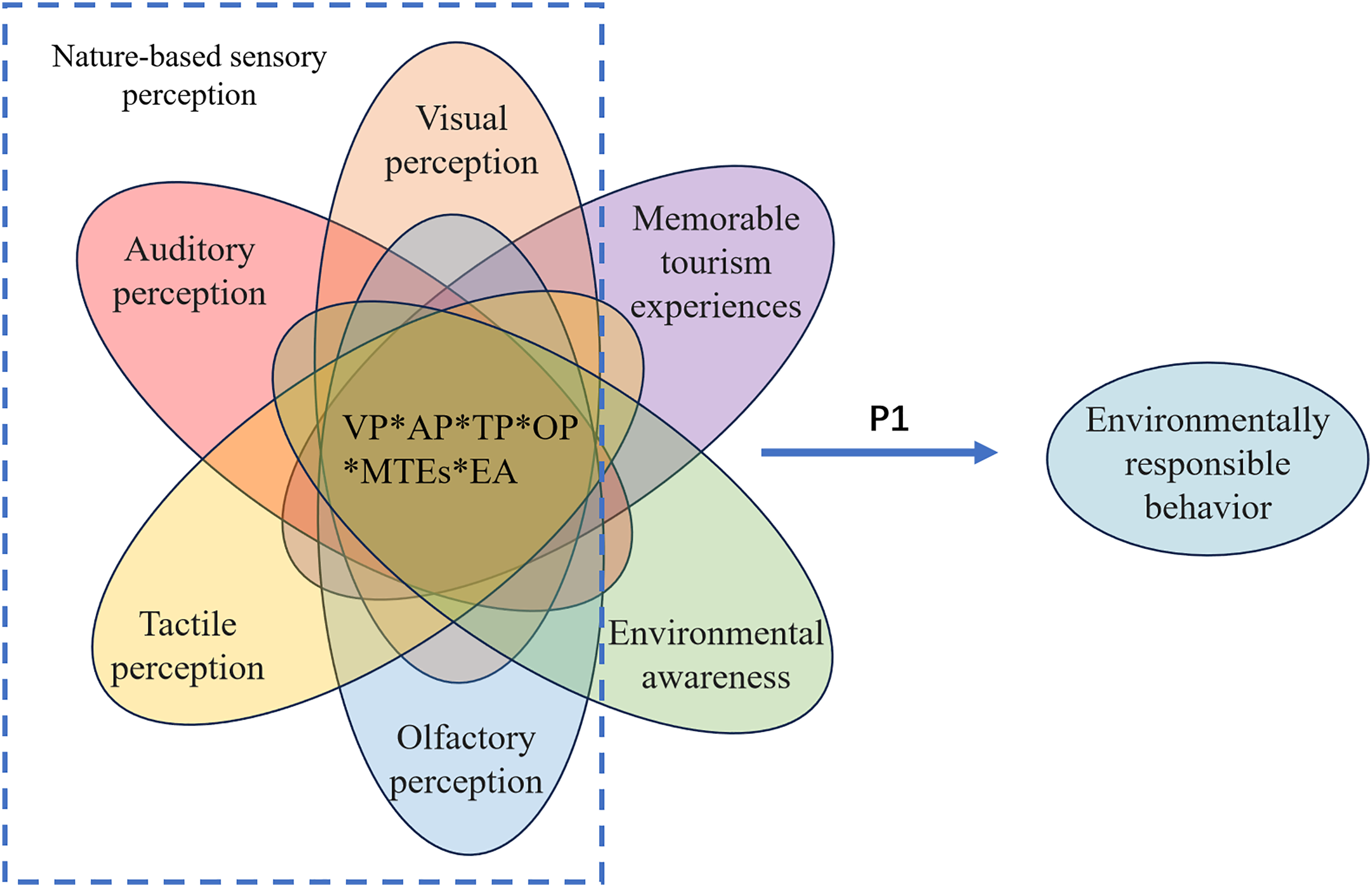
Nonlinear influence model of environmentally responsible behavior.
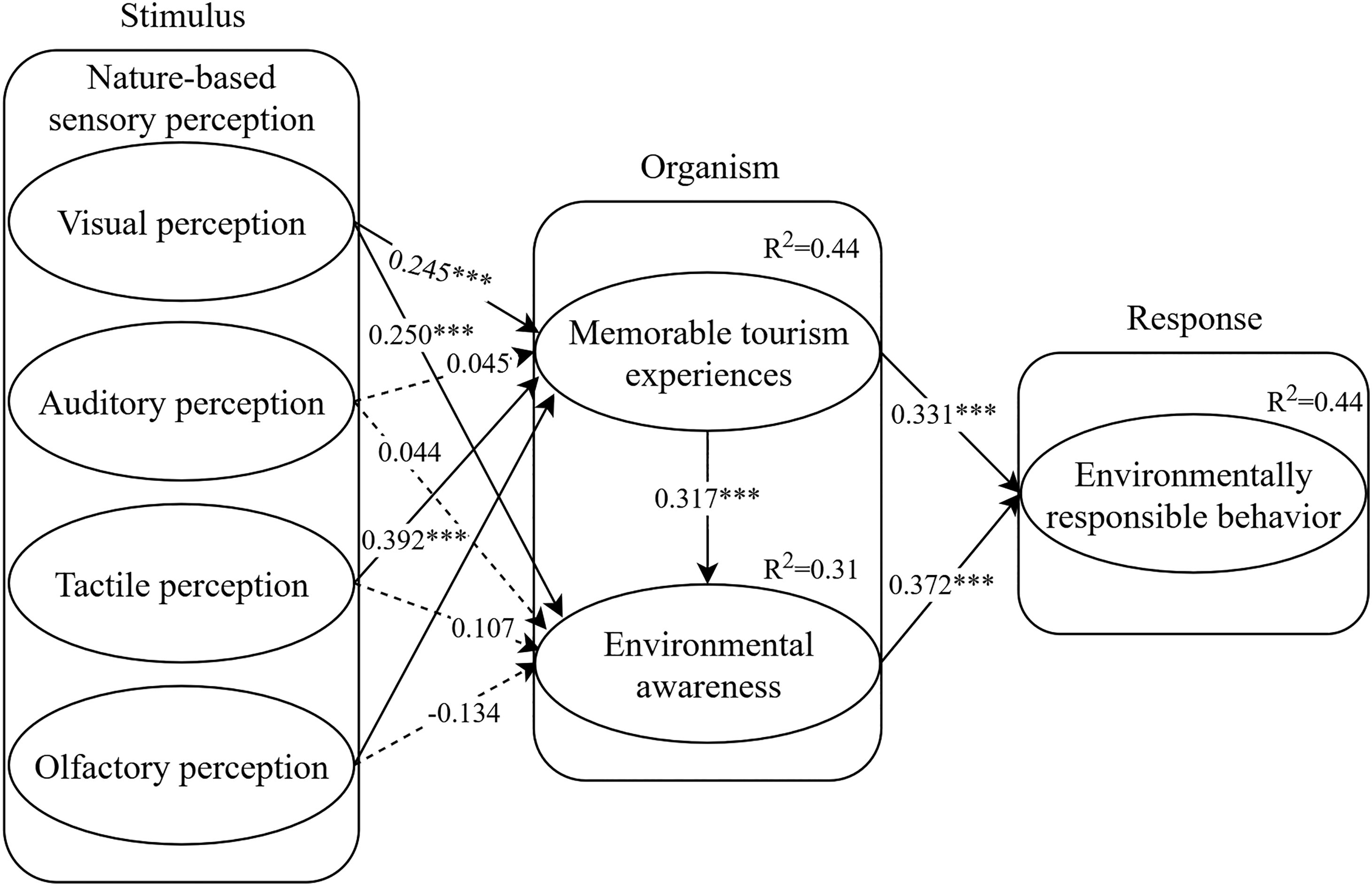
Structural model path coefficients.
Research proposition for fsQCA
The above hypothesized relationships suggest a chain of causality from nature-based sensory perception to ERB. However, even if tourists are not influenced by the natural environment, other factors (such as MTEs and environmental awareness) may collectively influence the outcome (ERB). This implies that different tourists can create unique sensory and psychological connections based on their individual preferences, resulting in diverse pathways that trigger ERB (Zhou et al., 2023). However, symmetric regression-based analysis tools like SEM struggle to address the interactive effects of two variables and are insufficient in capturing complex real-life possibilities (Fainshmidt et al., 2020; Woodside, 2014). Therefore, we introduced the fsQCA approach to investigate synergistic sensory configurations that drive ERB (see Figure 2). Building upon this, the proposition of fsQCA is as follows:
Research design
Study site conditions
The purpose of this study is to examine the relationship between tourists’ nature-based sensory perception and their ERB. Therefore, destinations with a strong connection to nature were the primary focus for selecting the case study site, leading to the final selection of Zhagana National Geopark. Situated in the Gannan Tibetan Autonomous Prefecture, Gansu Province, China, at an average elevation of 2800 m above sea level, it includes the villages of Yeri, Daiba, Dongwa and Dari. Zhagana National Geopark is a nature-based tourism destination that renowned for its high aesthetic value. The park's landscape and diverse flora and fauna provide optimal stimuli for tourists’ sensory experiences, rendering Zhagana National Geopark an ideal location for this study.
Variables and measurement
The items used in the questionnaire were taken from previously validated scales. Some modifications were made to the survey items to match the context of the study. The questionnaire was divided into three sections: (1) introduction; (2) measurement items; and (3) respondent demographics.
Nature-based sensory perception was divided into four subdimensions, with its 17 items adapted from existing literature (Buzova et al., 2021; Xu et al., 2022; Zhang et al., 2019). Considering the operability of tourists in filling out questionnaires on the spot, the seven-dimensional scale of MTEs proposed by Kim et al. (2012) was not selected, instead, the five-item scale proposed by Kim (2018) was used. Environmental awareness included five items, referring to the studies of Chen and Tung (2014), Paul et al. (2016), and Xu et al. (2020). Chiu et al.'s (2014) and Kim and Stepchenkova's (2020) scale were adapted to measure tourists’ ERB using four items. All items were measured on a five-point Likert scale (1 = strongly disagree; 5 = strongly agree).
Sample and data collection
Since the scale was adopted from the English literature, it underwent translation into Chinese using the back-translation process proposed by Brislin (1980) before formal questionnaire distribution. The questionnaire was then disseminated to team members who had visited Zhagana, and the scale was refined based on their feedback, ensuring clarity and appropriateness of statement and question wording.
Westland's (2010) method, which suggests a minimum sample size of five times the number of items, was utilized to estimate the required sample size. With 33 items in the current study, a minimum of 165 respondents was deemed necessary.
From October to November 2023, the research team conducted field research in Zhagana and distributed formal questionnaires, using a convenience sampling method to select respondents in various villages, scenic spots, and rest areas. During the survey, the researchers initially inquired if the respondents were tourists. Upon receiving confirmation, a brief communication ensued. All respondents were Chinese and spoke about the remarkable natural environment of Zhagana. Subsequently, the questionnaires were distributed, and the survey's purpose was explained to them. Out of the 350 questionnaires distributed, 317 were deemed valid after eliminating invalid questionnaires containing blanks and numerous duplicates, resulting in a validity rate of 90.5%.
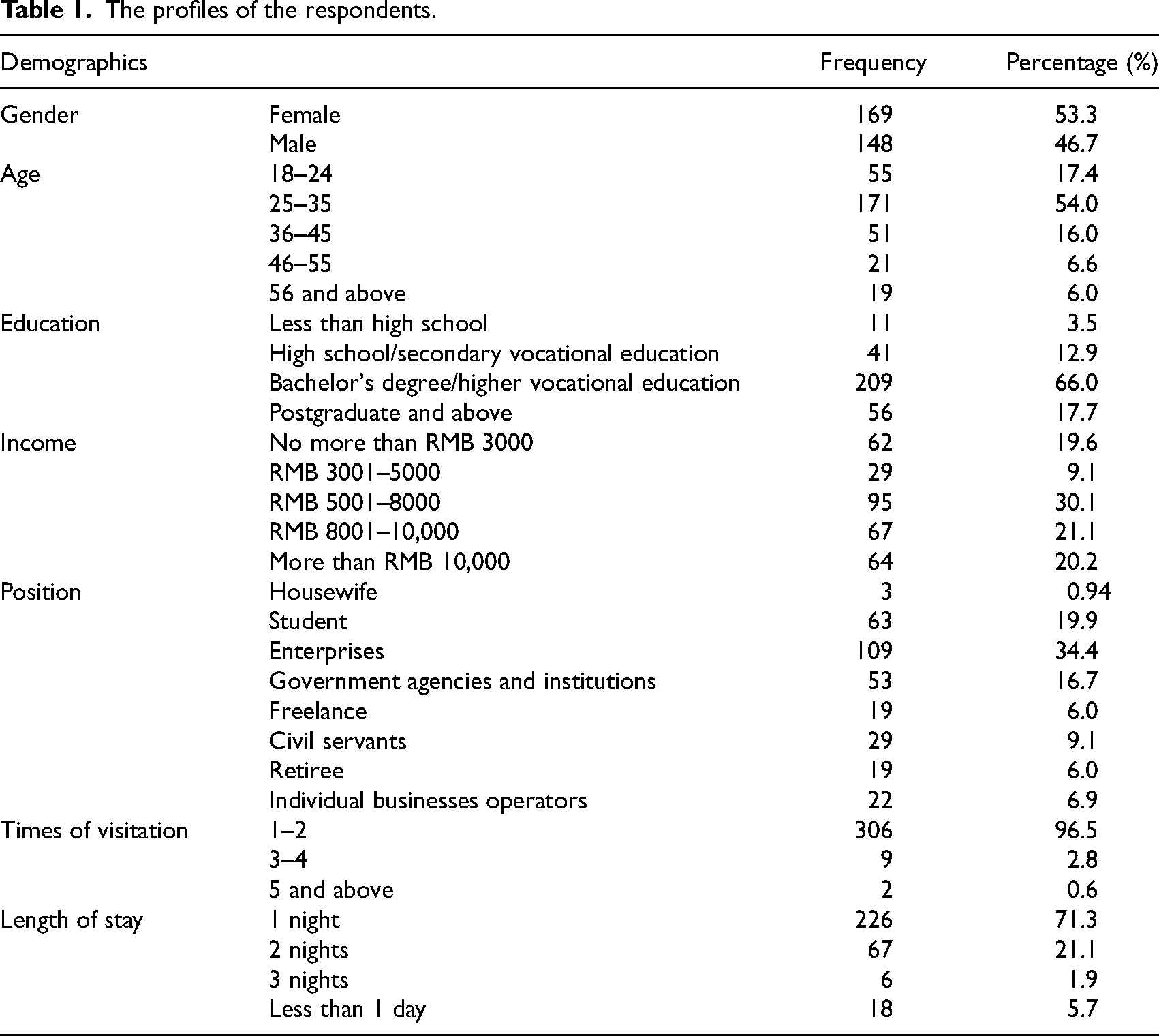
The demographic information is shown in Table 1. Among them, there were 171 females (53.6%) and 148 males (46.4%). The majority of the respondents were between 18 and 45 years old, accounting for 87.4% of the sample. In terms of education, 83.7% of the respondents had an associate degree or above. 70.8% of the respondents had a monthly income of over 5000 RMB. Almost all respondents (96.6%) had visited Zhagana no more than twice, and their travel companions were mainly family members, friends, and partners.
The profiles of the respondents.
Research methods and analysis steps
The primary research methods utilized in this study are CB-SEM and fsQCA. The CB-SEM focuses on the net effect of the independent variable on the dependent variable. This method assumes that the relationships between variables are linear and symmetric, and each variable competes with each other to explain the maximum variance percentage (Pappas and Woodside, 2021). And fsQCA assumes that the relationships between variables can be asymmetric and nonlinear, it can explore the synergistic effects of variables and their combinations to explain the results, so these two approaches complement each other well (Fiss, 2011; Pappas and Woodside, 2021). Given the applicability of the CB-SEM technique in identifying crucial factors and testing hypothesized relationships, it is utilized to assess the hypotheses and the strength of relationships between variables. Moreover, since this study involves multiple senses and CB-SEM cannot capture the synergistic effects of sensory combinations, fsQCA is also employed to explore different combinations of conditions leading to ERB, thereby enhancing the understanding of tourist behavior.
The specific analysis steps are as follows: first, use SPSS 27.0 and Amos 24.0 to analysis the reliability and validity of the data. Second, use Amos 24.0 to test the model fit and path assumptions. Third, use fsQCA 4.1 to determine the necessary and sufficient conditions for the outcome variables.
Prior to conducting data analysis, through the Harman's single-factor test for common method bias test and multicollinearity diagnosis of all measurement items, the percentage of variance explained by the unrotated first common factor was 35.24, which was less than 40, so there is no serious common method bias in this study (Guide and Ketokivi, 2015). Meanwhile, in order to test whether there is a serious multicollinearity problem among variables, variance inflation factor (VIF) was applied, and it was found that the VIF among variables were within 1.294∼1.765, which were all less than 3.3, so there is no serious multicollinearity problem in this study (Diamantopoulos and Siguaw, 2006).
Result
Measurement model
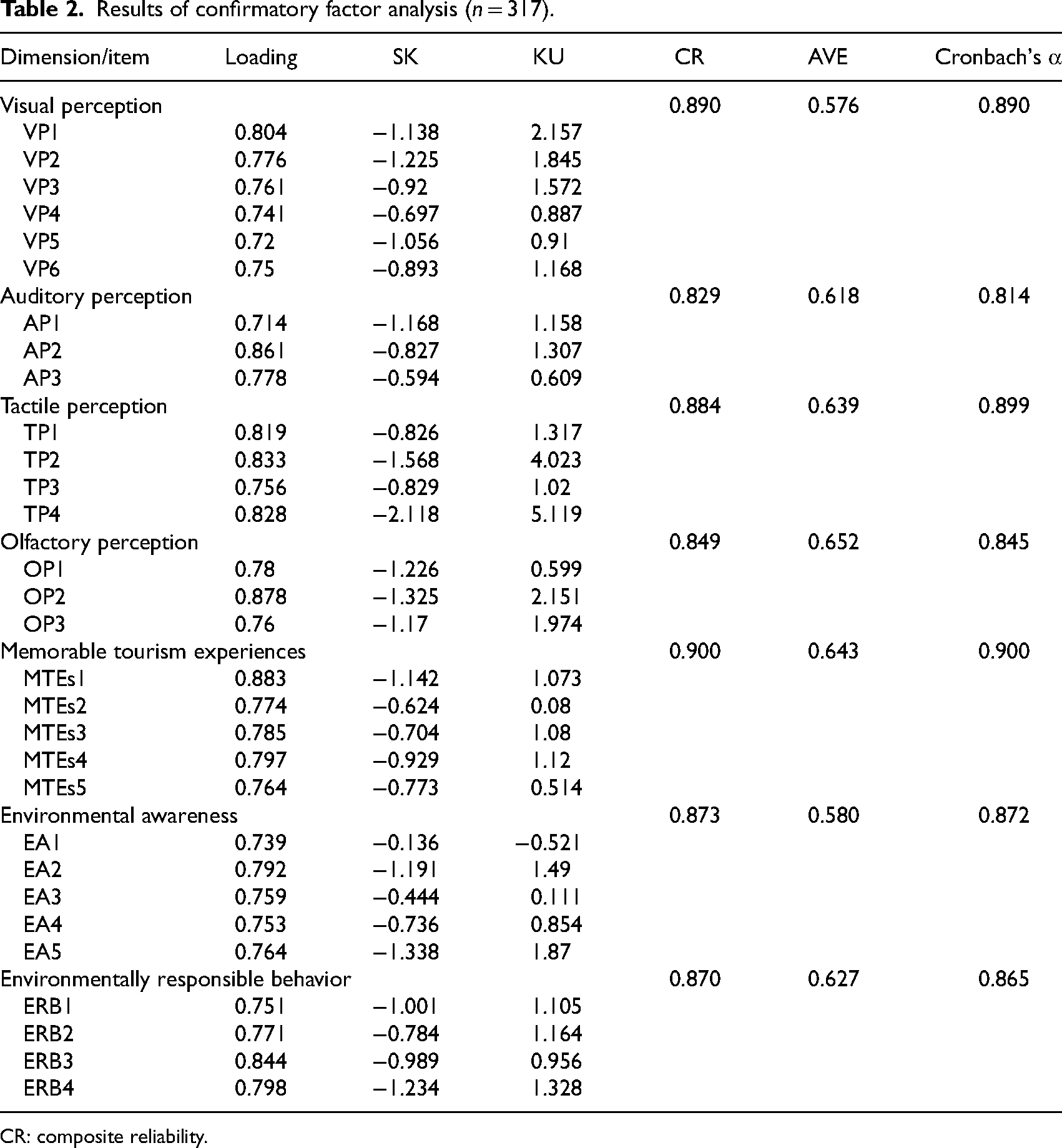
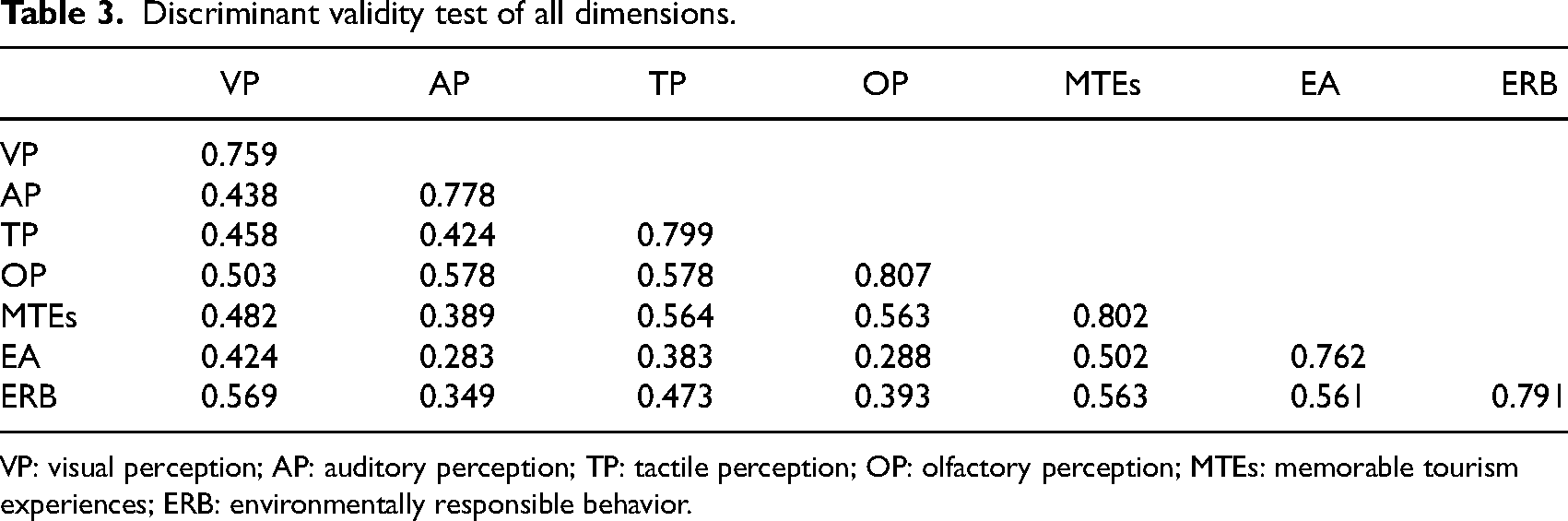
As shown in Table 2, the absolute value of the skewness of the data was less than 2, and the absolute value of the kurtosis was less than 7, indicating normal distribution of the data (Kline, 2015). The data were tested for reliability and validity using SPSS27.0 and Amos24.0. The results showed that the overall Cronbach's α values of all dimensions were above 0.7, and the composite reliability were above 0.8, indicating excellent reliability of the measurement model (Nunnally and Bernstein, 1994). The results of the confirmatory factor analysis revealed that the standardized factor loadings of each measurement item ranged from 0.714 to 0.883. Additionally, the average variance extracted (AVE) of each variable ranged from 0.576 to 0.652, surpassing the threshold value of 0.5, indicating sufficient convergent validity for each variable. As indicated in Table 3, all correlations between variables were below the square root of each AVE, confirming good discriminant validity among the variables (Fornell and Larcker, 1981).
Results of confirmatory factor analysis (n = 317).
CR: composite reliability.
Discriminant validity test of all dimensions.
VP: visual perception; AP: auditory perception; TP: tactile perception; OP: olfactory perception; MTEs: memorable tourism experiences; ERB: environmentally responsible behavior.
Structural equation model
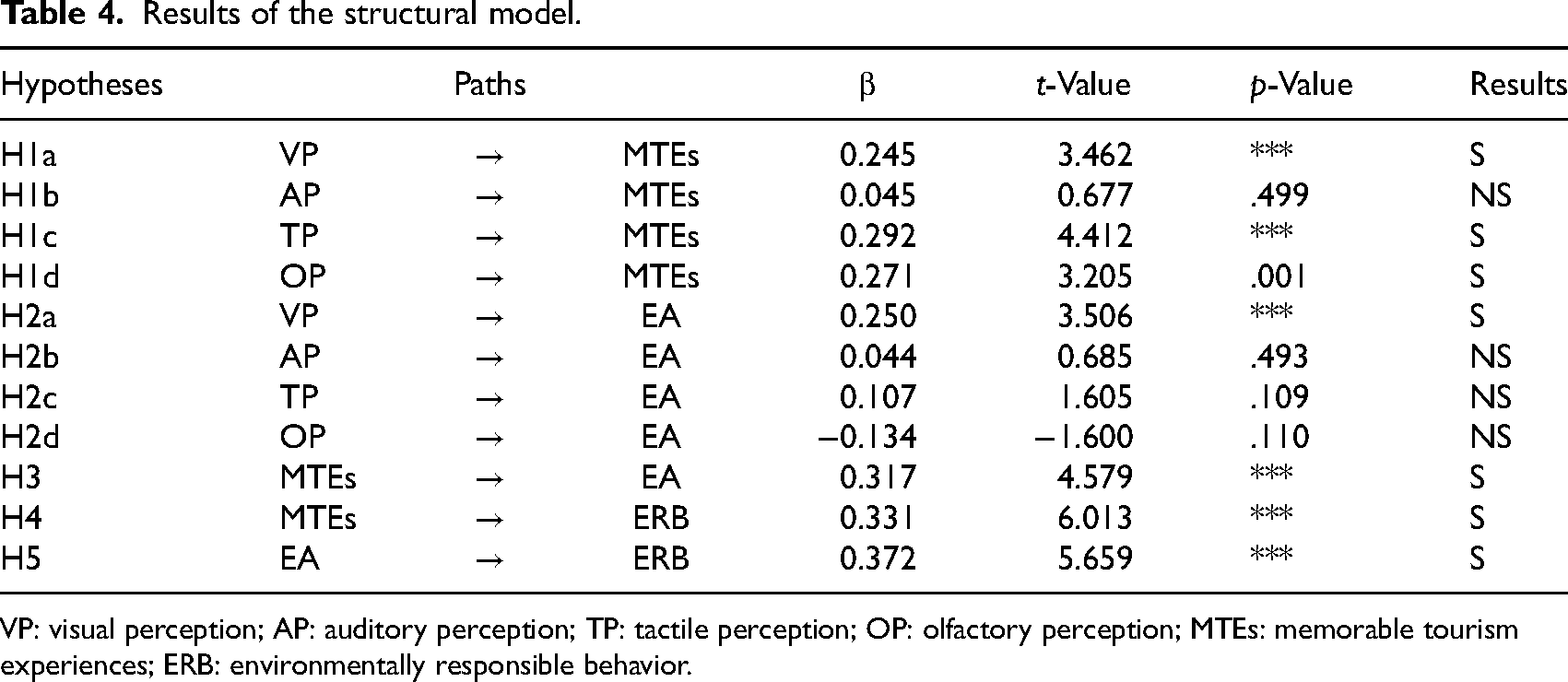
To test the proposed hypotheses, SEM was conducted through AMOS 24.0. The results in Table 4 indicate that the structural model fit the data well (χ2 = 837.345, df = 388, χ2/df = 2.158, CFI = 0.921, IFI = 0.922, TLI = 0.911, RMSEA = 0.060).
Results of the structural model.
VP: visual perception; AP: auditory perception; TP: tactile perception; OP: olfactory perception; MTEs: memorable tourism experiences; ERB: environmentally responsible behavior.
The test results are also presented in Table 4, where VP (β = 0.245, p < .001), TP (β = 0.292, p < .001), and OP (β = 0.271, p = .001) had a positive effect on MTEs, providing support for H1a, H1c, and H1d. Furthermore, VP (β = 0.250, p < .001) and MTEs (β = 0.317, p < .001) positively influenced EA, supporting H2a and H3. However, the results indicated that AP (β = 0.045) had no significant effect on MTEs, thus, H1d was not supported. AP (β = 0.044), TP (β = 0.107), and OP (β = −0.134) did not show significant effects on EA, leading to the lack of support for H2b, H2c, and H2d. EA (β = 0.372, p < .001) and MTEs (β = 0.331, p < .001) had a positive effect on ERB, supporting H4 and H5. Additionally, the R2 values of MTEs, EA, and ERB were 0.44, 0.31, and 0.44, respectively, indicating that the model has good explanatory power.
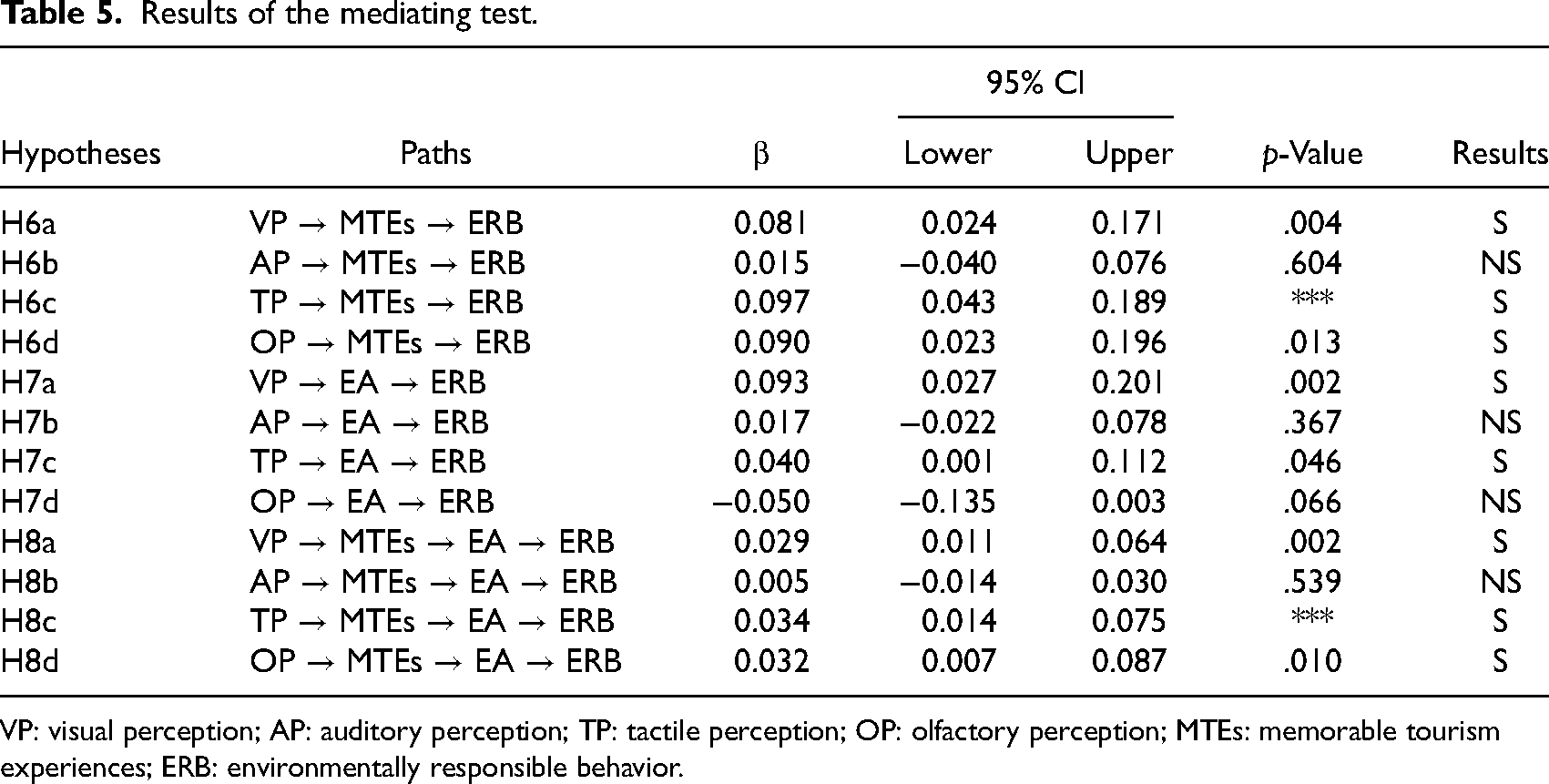
To further confirm the mediating role of EA and MTEs between VP, AP, TP, and OP and ERB, Bootstrap analyses were conducted using Amos 24.0, with the number of bootstrap samples set to 5000 and confidence level at 95%. If the bootstrap lower (BootLLCI) and upper (BootULCI) values do not include “0,” it indicates that the mediating effect is significant, and the results are shown in Table 5. It can be seen that MTEs mediated the effects of VP, TP, and OP on ERB, and EA mediated the effects of VP and TP on ERB, the paths of VP/TP/OP → MTEs → EA → ERB were also verified. All hypothesized relationships are shown in Figure 3.
Results of the mediating test.
VP: visual perception; AP: auditory perception; TP: tactile perception; OP: olfactory perception; MTEs: memorable tourism experiences; ERB: environmentally responsible behavior.
Analysis of necessary conditions
The continuous assignment scheme suggested by Ragin (2009) was implemented by defining continuous fuzzy sets within the interval [0, 1] and converting the variable data into fuzzy set affiliation scores using the linear deflation method. Given that the data adhered to a normal distribution, thresholds of 0.95, 0.50, and 0.05 were selected to represent fully in, intersection, and fully out, respectively. Subsequently, the data underwent calibration utilizing the fsQCA 4.1 software (Pappas and Woodside, 2021).
The analysis of necessary conditions indicated that the level of agreement for any of the conditions did not surpass the threshold of 0.9 (see Table 6). Therefore, each individual condition alone was inadequate to be a necessary condition for tourists to engage in high ERB (Schneider and Wagemann, 2010).
Necessity analysis of the antecedent conditions for high ERB.
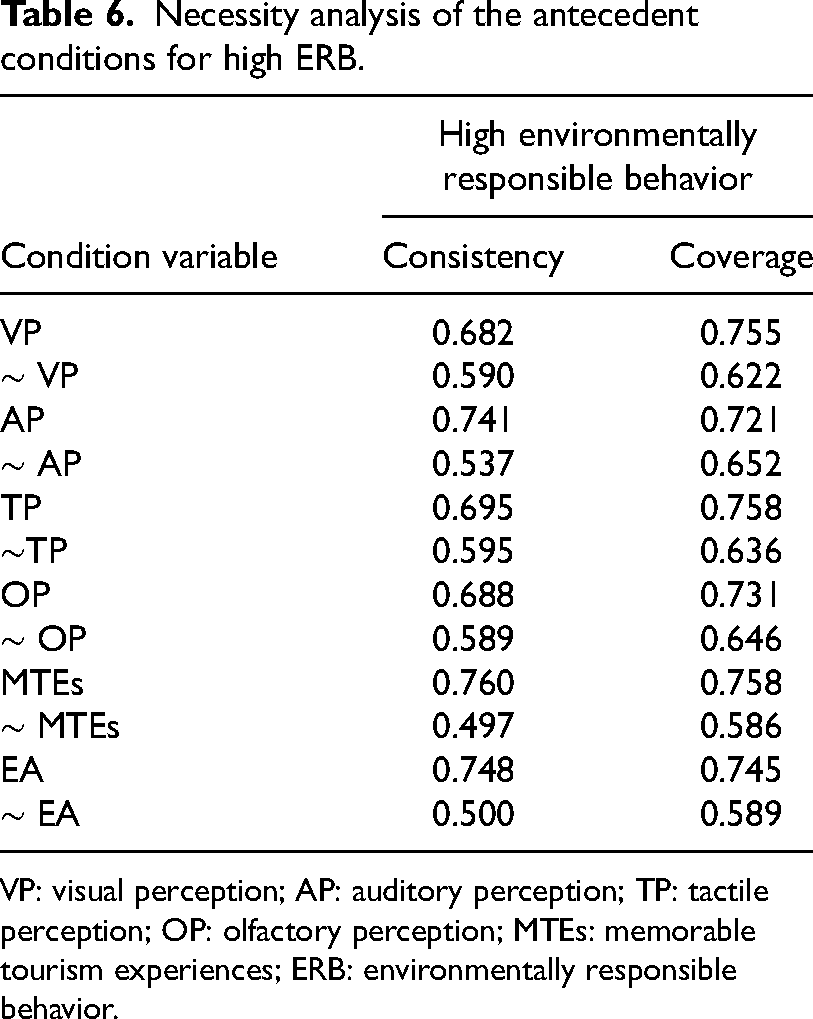
VP: visual perception; AP: auditory perception; TP: tactile perception; OP: olfactory perception; MTEs: memorable tourism experiences; ERB: environmentally responsible behavior.
Analysis of sufficient conditions
The analysis of necessity conditions reveals that no single condition can fully account for the emergence of the high ERB. In light of this, we delve deeper into the sufficiency of the conditional combinations contributing to tourists’ ERB. The analysis was based on criteria including raw consistency exceeding 0.8 and proportional reduction in inconsistency threshold surpassing 0.75, with the case frequency threshold set at 2.
Following the reporting form of Fiss (2011), we reported the coverage and consistency of intermediate solutions, and the results of the configuration paths combined intermediate and parsimonious solutions. A condition present in both the intermediate and parsimonious solutions is deemed a “core condition,” represented by ● and its absence denoted b ×. If a condition is optional, it is considered to have little impact and is represented as “blank.” The outcomes reveal five distinct configuration paths forming tourists’ high ERB, detailed in Table 7.
Configuration paths of high environmentally responsible behavior.
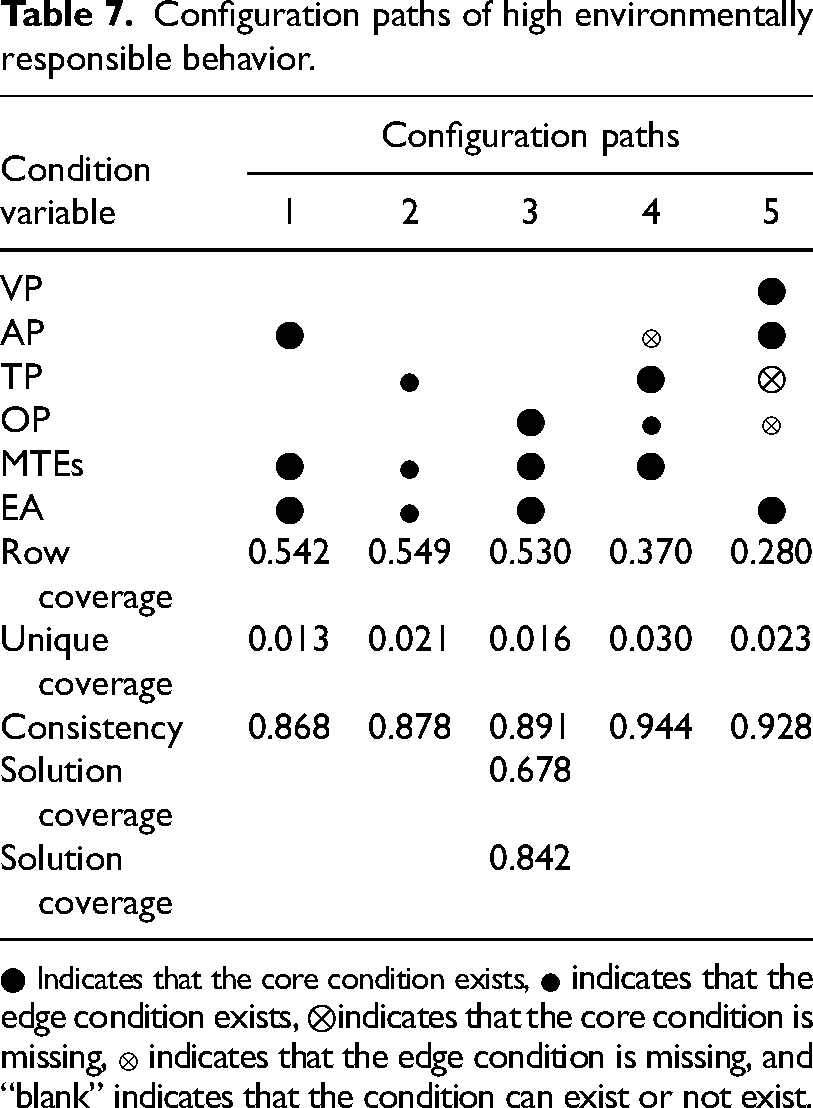
● Indicates that the core condition exists, ● indicates that the edge condition exists, ⊗indicates that the core condition is missing, ⊗ indicates that the edge condition is missing, and “blank” indicates that the condition can exist or not exist.
As demonstrated in Table 7, there are five primary configuration paths for tourists to cultivate high ERB, with an overall coverage of 0.678. This figure indicates that these five configuration paths collectively represent 67.8% of all solutions. The consistency for both individual and total solutions surpasses 0.75, implying a high level of effectiveness for these configuration paths (Ragin, 2009).
Path 1, Path 2, and Path 3 reveal that AP, TP, and OP play key roles in driving high ERB among tourists. The combination of these sensory factors with MTEs and EA effectively motivates tourists to partake in ERB. Path 4 illustrates the synergistic impact of TP and OP, indicating that these sensory perceptions, coupled with MTEs, can effectively encourage ERB, particularly in the absence of a strong auditory experience. Path 5 represents a two-factor-driven configuration involving audio-visual sensory interaction in circumstances where TP and OP are lacking. Above results confirm P1, that is, a single condition based on the dimensions of nature-based sensory perception, MTEs and EA does not lead to high ERB, but needs to synergistically drive in combination with other conditions.
Conclusions and discussion
Research findings
The results of SEM indicate that tourists’ visual perception significantly influences their MTEs and environmental awareness, thus emerging as the most important factor driving tourists’ implementation of ERB, consistent with the findings of Agapito et al. (2017). Tactile perception and olfactory perception significantly influence MTEs and subsequently impact ERB through both MTEs and environmental awareness, thereby emerging as the second most influential factors in predicting tourists’ ERB. Auditory perception, however, shows no significant effect on either MTEs or environmental awareness, thus representing the least influential among all sensory perceptions.
Nature-based sensory perception has a more direct impact on tourists’ MTEs than environmental awareness. Thus, MTEs are likely to be directly stimulated by natural environments rather than by environmental awareness, which necessitates a higher threshold of activation and must be guided by tourism experiences (Ballantyne et al., 2011a; Lee and Moscardo, 2005). The non-significant effect of auditory perception on MTEs and environmental awareness can be attributed to the competition and conflict between visual and auditory perception (Sato, 2023; Pei et al., 2022). When tourists are exposed to stunning natural environments, both visual and auditory senses are stimulated simultaneously, but those engrossed in the visual spectacle may disregard auditory perception. The significant effects of MTEs and environmental awareness on ERB were confirmed. An MTE in nature-based tourism implies that tourists are in direct contact with nature, establishing a connection between nature and environmental awareness/behavior, as supported by prior research (Chawla and Derr, 2012; Cooper et al., 2015).
The results of the fsQCA reveal various configurations of sensory perception leading to high ERB among tourists. This behavior is not solely dependent on individual senses, MTEs, or environmental awareness. Instead, it is driven by a combination of auditory, tactile, and olfactory perception, along with MTEs and environmental awareness. Alternatively, synergistic effects may arise from tactile and olfactory perceptions in conditions of auditory deprivation, and from visual and auditory perception when both tactile and olfactory perceptions are deprived. It is noteworthy that sensory perceptions do not sufficiently cover various configurations, as they require mediation through MTEs and environmental awareness to predict ERB. Meanwhile, MTEs and environmental awareness, being direct factors that significantly influence ERB, constitute crucial conditions for fostering high ERB, but only when stimulated by external sensory perceptions can they further contribute to such behavior.
In conclusion, the SEM results demonstrate the indirect influence of visual, tactile, and olfactory perception on ERB, and in the results of fsQCA, they can also be considered as core conditions for forming high ERB, thus corroborating the SEM results. The results of fsQCA further confirm the mediating role of MTEs and environmental awareness, indicating that both can serve as core or marginal conditions in any configuration to synergistically drive high ERB. Although the positive impact of MTEs and environmental awareness on ERB has been demonstrated in some previous studies, these studies seldom delve into the sensory context (e.g., Chen et al., 2023; Lee et al., 2015; Lin and Lee, 2020). Interestingly, the results of SEM indicate that auditory perception has no significant impact on ERB, but in the configurations of fsQCA, auditory perception plays a core role in two of the configurations (Path 1 and Path 5), suggesting that while the linear impact of auditory perception on ERB is not significant, it is indeed an important condition for forming high ERB, requiring synergy with visual perception, MTEs, and environmental awareness, among other conditions. Thus, while sound may influence tourists’ behavioral intentions (Jiang, 2022; Min et al., 2020), more stringent conditions exist for evoking ERB in tourists.
Theoretical implications
This study confirmed the effectiveness of natural environments in stimulating tourists’ ERB through their senses. The most existing studies on the antecedents of ERB have focused primarily on tourists’ values, environmental knowledge, and other aspects (Kim, 2018; Kim and Stepchenkova, 2020), neglecting the role of tourists’ sensory experiences themselves. The present study, however, integrates the theory of embodied cognition with the S-O-R model, and by subdividing the sensory dimensions, elucidates the underlying mechanisms through which natural environment influence the embodied cognitive processes of tourists. Consequently, it demonstrates the high suitability of combining the S-O-R model and the embodied cognition theory, and their significant potential for jointly explicating the psychological mechanisms linking sensory stimuli and behavioral responses.
Moreover, this study confirmed the significant impact of MTEs on environmental awareness and their mediating role between visual/tactile/olfactory perception and tourists’ ERB. This suggests that when nature-based tourists create memorable experiences, the reflection of nature in their experiences positively influences the enhancement of their environmental awareness (Chen et al., 2023). While the connection between positive nature experiences and proenvironmental attitudes has empirical support (Chawla and Derr, 2012; Cooper et al., 2015; Zhang et al., 2014), this relationship remains inadequately examined in the tourism context, with limited studies investigating the association between MTEs and environmental awareness. This study, by linking these as mediating variables between nature and ERB, comprehensively elucidates the underlying mechanism by which the sensory aspects of nature stimulate tourists’ ERB. It contributes to the theoretical framework of ERB and expands the existing literature on the sensory experiences in tourism.
Finally, this study combined SEM and fsQCA to comprehensively reveal the differences between the senses, enriching the relevant literature in the field of multisensory empirical research. Previously, research on the senses was rather fragmented, with numerous studies primarily exploring vision and other senses independently (Agapito, 2020; Lv et al., 2022; Sun and Lv, 2021), while research on multisensory experiences was relatively scarce (Zhou et al., 2023). In this study, the results of SEM demonstrated the differential net effects generated by each sense, and analysis of necessary conditions indicated that in nature-based tourism, a single sensory dimension and psychological variables alone cannot determine the occurrence of ERB by tourists. The utilization of fsQCA further explored the synergistic paths of multisensory experiences, effectively investigating the linear and nonlinear impacts of different senses on ERB through the combination of symmetric and asymmetric methods, expanding the application of this novel research paradigm in the fields of tourism and sensory experiences.
Managerial implications
First, destination managers should be aware of the importance of multisensory experiences and focus on multisensory synergies in the design of tourism environments (Agapito, 2020), integrating local resources to create more comprehensive and rational sensory landscapes to mitigate the significant effects that the absence of a single condition may have on tourists’ perceptions and behaviors (Zhou et al., 2023). For instance, poor and excessive noise/dirty environments may directly impact tourists’ sensory experiences, discouraging them from preserving the destination environment.
Second, the differences in tourists’ sensory experiences should not be overlooked. Managers should integrate various sensory experiences to make necessary adjustments and modifications to the destination's landscapes. This involves subdividing and promoting attractions that can engage different configurations of tourists’ senses. For example, mountain scenery may provide a visual experience, while water scenery offers an auditory experience. These elements can capture tourists’ interest and actively guide them to utilize multisensory stimulation, ensuring their full integration into the tourism experience. This can lead to tourists forming strong positive memories of the destination, creating MTEs and fostering spontaneous protection of the destination environment.
Third, the destination managers can further explore the potential of green marketing based on the environmental awareness and behavior generated by tourists. They can redesign and promote tourism souvenirs to highlight their eco-friendly nature to stimulate tourist consumption. For example, adding environmental certifications and slogans to existing products, increasing transparency in product development and production to enhance tourists’ positive perception of the destination's environmentalism. Sustainable materials can also be used to create products with local characteristics, providing tourists with a unique consumption experience, thereby prompting tourists’ environmental awareness and behavior to shift toward green consumption. In addition, for tourists who have had a deep sensory experience and have developed environmental awareness and behavior, destination marketing personnel should organize additional environmental volunteer activities to meet these tourists’ willingness to make more contributions to the destination and further strengthen the connection between tourists and the destination through this process to enhance promotion and positive word-of-mouth effects.
Limitations and future research
This research has several limitations that should be acknowledged. First, this study focused on the natural environment in tourism, while the cultural environment was not extensively explored. Therefore, future research could investigate the influence of cultural environmental factors, such as historical ambiance and cultural festivals, on tourists’ sensory experiences. Second, this study examined the mediating roles of MTEs and environmental awareness in the relationship between sensory perception and ERB. Future research could incorporate additional variables to further elucidate the underlying mechanisms of tourists’ ERB. Additionally, this study only selected one case site and used nonprobability sampling to collect samples, which may limit the generalizability of the research findings. Future research could expand the selection of case sites and adopt more rigorous sampling methods and multiple rounds of data collection to supplement the conclusions. Finally, this study explored the impact of sensory perception on tourists’ cognition and behavior from an embodied perspective, but the results were derived from self-reports. Future research could use neuroscience techniques such as galvanic skin response and eye-tracking to further investigate the embodied effects of sensory perception. For instance, the specific mechanisms by which MTEs lead to ERB.
The above limitations highlight potential directions for enriching relevant research. However, it is crucial for future studies to explore how to stimulate tourists’ senses through practical interventions to promote ERB. The most effective approach should involve conducting laboratory or field experiments to observe tourists’ behavior under various sensory conditions, thus revealing pivotal sensory factors and realistic strategies to motivate tourists to adopt ERB.
Declaration of generative AI and AI-assisted technologies in the writing process
During the preparation of this work the authors used ChatGPT in order to improve language. After using this tool, the authors reviewed and edited the content as needed and take full responsibility for the content of the publication.
Footnotes
Declaration of conflicting interests
The authors declared no potential conflicts of interest with respect to the research, authorship, and/or publication of this article.
Funding
The authors disclosed receipt of the following financial support for the research, authorship, and/or publication of this article: This work was supported by the Natural Science Foundation of Gansu Province and National Natural Science Foundation of China (Grant No. 23JRRA708 and 41661107).

Questionnaire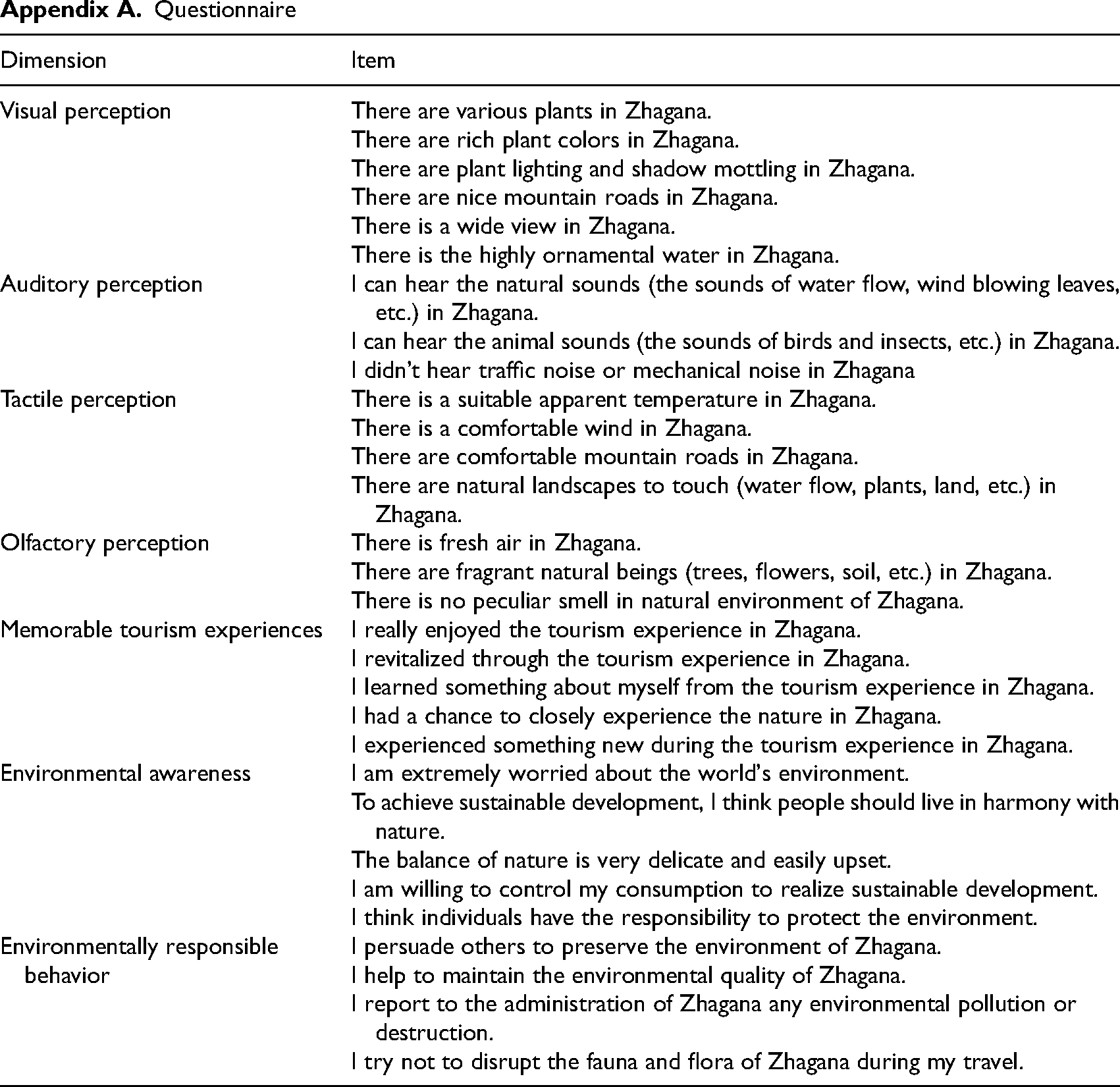
Dimension
Item
Visual perception
There are various plants in Zhagana.
There are rich plant colors in Zhagana.
There are plant lighting and shadow mottling in Zhagana.
There are nice mountain roads in Zhagana.
There is a wide view in Zhagana.
There is the highly ornamental water in Zhagana.
Auditory perception
I can hear the natural sounds (the sounds of water flow, wind blowing leaves, etc.) in Zhagana.
I can hear the animal sounds (the sounds of birds and insects, etc.) in Zhagana.
I didn’t hear traffic noise or mechanical noise in Zhagana
Tactile perception
There is a suitable apparent temperature in Zhagana.
There is a comfortable wind in Zhagana.
There are comfortable mountain roads in Zhagana.
There are natural landscapes to touch (water flow, plants, land, etc.) in Zhagana.
Olfactory perception
There is fresh air in Zhagana.
There are fragrant natural beings (trees, flowers, soil, etc.) in Zhagana.
There is no peculiar smell in natural environment of Zhagana.
Memorable tourism experiences
I really enjoyed the tourism experience in Zhagana.
I revitalized through the tourism experience in Zhagana.
I learned something about myself from the tourism experience in Zhagana.
I had a chance to closely experience the nature in Zhagana.
I experienced something new during the tourism experience in Zhagana.
Environmental awareness
I am extremely worried about the world's environment.
To achieve sustainable development, I think people should live in harmony with nature.
The balance of nature is very delicate and easily upset.
I am willing to control my consumption to realize sustainable development.
I think individuals have the responsibility to protect the environment.
Environmentally responsible behavior
I persuade others to preserve the environment of Zhagana.
I help to maintain the environmental quality of Zhagana.
I report to the administration of Zhagana any environmental pollution or destruction.
I try not to disrupt the fauna and flora of Zhagana during my travel.