







Abstract
This study aimed to develop and validate a memorable wellness tourism experiences scale to address an existing theoretical gap. Prior research reveals significant variation in tourist expectations of memorable experiences, indicating a need for focused studies in specialized areas such as wellness tourism. Inconsistencies and subjectivity in memorable tourism experience constructs reveal a gap in universally accepted frameworks and theoretical coherence. Employing a rigorous multi-phase methodological approach, the study combined deductive and inductive strategies. An extensive literature review, complemented by qualitative interviews, generated an initial pool of 40 items across 10 dimensions. These items were subjected to exploratory factor analysis using data from a questionnaire survey of 307 international wellness tourists, refining the scale to 31 items across six dimensions. Subsequent validation through confirmatory factor analysis with a larger sample of 622 participants confirmed the scale's reliability and validity, yielding 29 items within six dimensions. The scale dimensions—professionalism, meaningfulness, environmental aesthetics, tranquil ambience, novelty, and value for money—exhibited strong internal consistency and construct validity, confirming the robustness of the instrument. The scale thus offers a comprehensive and reliable tool for assessing memorable experiences in wellness tourism. It enhances both theoretical and practical understanding, thereby contributing to improved service offerings and deeper insights within the wellness tourism sector.
Keywords
Introduction
Wellness travel, driven by the need to escape modern life's stress (Dillette, 2016), has become a significant and rapidly growing niche sector within tourism (Kazakov and Oyner, 2021), particularly post-COVID-19 (Lamba and Mohan, 2021). This trend includes the popularity of spas, health resorts and Ayurveda remedies, reflecting the importance of health and wellness in tourism (Khare et al., 2021). Defined as travel aimed at enhancing physical, psychological, spiritual and social well-being (Voigt et al., 2011), wellness tourism appeals particularly to well-educated, middle and upper-class consumers seeking health improvements in exotic locations (Heung and Kucukusta, 2013). Wellness tourism has gained academic interest due to its role within the broader wellness economy, which includes sectors such as spas, fitness, healthy eating and alternative medicine, all promoting wellness behaviours and lifestyles (Global Wellness Institute [GWI], 2018). Everyday routines and excessive workloads can deplete vitality, making wellness tourism an effective strategy against a sedentary lifestyle (Moreno-González et al., 2020). Wellness tourists, categorized as primary or secondary travellers, seek wellness activities as either their main purpose or incidentally (Global Wellness Institute [GWI], 2018). Post-COVID-19, wellness tourism has evolved to emphasize health benefits, self-care, safety and domestic vacations or ‘Staycations’ (Tran, 2021). According to Tran (2021), millennials are increasingly significant in this sector, favouring activities like meditation, yoga and spa treatments, with reliability, trustworthiness and safety being key aspects in attracting repeat customers.
Wellness tourism involves a range of experiences in destinations offering wellness products, infrastructure, amenities and natural resources (Deesilatham, 2016). According to the experience economy theory (Pine and Gilmore, 1999), the tourism industry emphasizes economic value through experiential offerings rather than traditional products, underscoring the importance of understanding tourism experiences. According to Knobloch et al. (2014), tourists often perceive memorable experiences as pleasurable and noteworthy, emphasizing their significance in recent tourism studies. Memorable tourism experiences (MTEs), crucial for attracting return visits, have been extensively studied in previous tourism literature. Scholars have emphasized the importance of creating experiences that resonate positively in tourists’ memories (Kim, 2014, 2017; Ritchie et al., 2011). Rooted in Pine andand Gilmore's Experience Economy theory, prior studies delve into dimensions such as entertainment, escapism, aesthetics and education (Coelho and Gosling, 2018; Manthiou et al., 2016). Despite advancements in various MTE contexts, including marine (Jonas et al., 2020), cultural (Seyfi et al., 2020) and ecotourism (Subramaniam et al., 2018), identifying universal elements remains challenging (Wilson, 2019), highlighting the subjective nature of MTEs (Seyfi et al., 2020).
Prior research has highlighted significant variations in tourist expectations concerning memorable experiences (Akkus and Guluce 2016), emphasizing the necessity for exploring specialized tourism domains such as wellness tourism, which have been previously overlooked (Dillette, 2016). Seyfi et al. (2020) further noted inconsistencies in study findings and subjective nature of constructs, suggesting the refinement and validation of these constructs across different tourism contexts (Chandralal et al., 2015; Kim et al., 2012; Sthapit and Coudounaris, 2018). This highlights the absence of a universal consensus on the components of MTEs across various forms of tourism (Wilson, 2019), and the lack of theoretical consistency among scholars studying MTEs. Thus, the absence of a universally applicable scale for measuring MTE (Hosseini et al., 2021) underscores a significant theoretical gap. Particularly within wellness tourism, there is a compelling need to formulate a distinct theoretical framework that can substantially advance the conceptual understanding of what constitutes MTE (Dahanayake et al., 2023a; Sthapit et al., 2023). Therefore, to address this gap, this study attempts to develop and validate the memorable wellness tourism experience scale (MWTES). This study contributes theoretically by clarifying memorable wellness tourism experiences (MWTEs), developing and validating a robust assessment scale and supporting its application in enhancing tourist wellness experiences. It enhances conceptual clarity, methodological consistency, theoretical frameworks and practical applications in wellness tourism research. The paper follows a structured framework comprising an introduction, thorough literature review, detailed methodology section, presentation of results, comprehensive discussion, concluding remarks, theoretical and managerial implications, exploration of study limitations and directions for future research.
Literature review
Tourism experience within the wellness context
Wellness tourism, an ancient practice involving visits to healing sites like hot springs and the Dead Sea (Global Wellness Institute [GWI], 2015), has experienced significant growth in recent years. Defined as the “pursuit of a healthy and balanced lifestyle” (Bharti, 2015), wellness encompasses various aspects, including physical, mental, emotional, spiritual, social, occupational and environmental well-being. This holistic approach is reshaping the travel industry, combining tourism with wellness practices (Global Wellness Institute [GWI], 2018). The COVID-19 pandemic halted travel in 2020, but by 2021, there was a marked shift towards wellness-focused travel, characterized by safer, more intentional journeys (Glusac, 2021). Wellness tourism, as described by Voigt et al. (2011), involves tours aimed at maintaining or enhancing health and well-being by staying at facilities designed for enhancing physical, psychological, spiritual and social wellness. It is a holistic travel approach that integrates physical well-being, beauty, endurance, spiritual awareness, community connections and an appreciation of nature and mystery (Deesilatham, 2016). Accordingly, the Global Wellness Institute [GWI] (2021) defines wellness tourism as ‘travel associated with the pursuit of maintaining or enhancing one's personal wellbeing’. Despite pandemic-related challenges, wellness tourism presents an opportunity to mitigate adverse effects and promote holistic well-being.
According to Deesilatham (2016), wellness tourism encompasses experiences in areas with wellness amenities and natural resources. Pine and Gilmore (1999) have claimed that tourism's economic value lies in experiences rather than products, emphasizing the need to understand tourism experiences. According to them, the global economy has shifted from a service-based to an experience-based economy, with a growing emphasis on purchasing experiences over items. Although the concept of the tourism experience has been extensively researched, its components remain unclear. Kim and Fesenmaier (2017) describe tourism experience as a process involving tourists’ psychological and emotional states, considering spatial and temporal aspects before, during and after their journey. Subramaniam et al. (2018) characterize tourism experience as subjective, intangible, emotionally resonant, capable of influencing visitor behaviour across pre, during, and post-trip phases, and potentially retained in memory, highlighting its complexity and specificity compared to conventional customer experiences. Tourism experiences are pivotal in fostering visitor loyalty, encouraging word-of-mouth promotion and enhancing memory retention (Dwyer, 2015). Researchers have explored this across various tourism forms including wellness (Dillette et al., 2021; He et al., 2021; Luo et al., 2018), advocating for the enhancement of MTEs to cultivate a loyal customer base (Ritchie et al., 2011).
Integrating an experience economy and memorable experiences in wellness tourism
The absence of robust theoretical foundations in MTEs presents a barrier to generalization (Rahmani et al., 2014), underscoring the need for deeper exploration of relevant theories, particularly within wellness tourism. Pine and Gilmore’s (1998) seminal work on the experience economy paradigm is widely recognized for its theoretical significance. They propose a transformative economic era where consumers increasingly seek exceptional and memorable experiences (Sotiriadis and Gursoy, 2016). According to Pine and Gilmore (1998), an experience is an immersive offering that businesses create by staging services and utilizing tangible goods as props to engage consumers in a memorable encounter. They categorize experiences into four realms based on participation and connection: entertainment, educational, escapism and aesthetic. Moreover, they argue that the global economy has evolved towards an experience-centric model, highlighting the crucial role of memorable experiences. Pine and Gilmore (1998) put forward five principles for crafting memorable experiences: theming the experience, employing positive cues, minimizing negative cues, providing souvenirs and engaging all five senses.
The four realms of experiences are central to the experience economy in tourism, particularly in wellness tourism. Accordingly, educational experiences involve active participation to enhance cognitive and physical development (Pine and Gilmore, 1999), as seen in wellness tourism through fitness programs, meditation and personalized health advice (Luo et al., 2018). Entertainment, characterized by passive participation and sensory pleasure, plays a crucial role in retaining wellness tourists’ attention through emotional and social enjoyment (He et al., 2021; Wilson, 2019). Moreover, aesthetic experiences offer passive immersion in serene environments, particularly for wellness tourists seeking visually pleasing destinations (Choi et al., 2015; Wilson, 2019) while escapist experiences involve active engagement, providing an immersive escape from routine life, often through wellness services (Quadri-Felitti and Fiore, 2013). Though the scale of the experience economy theory suggests that positive experiences enhance memory and foster loyalty (Huang et al., 2019), there remains a notable gap in addressing the critical wellness aspect (Luo et al., 2018). Furthermore, the theory does not sufficiently account for how different forms of tourism may lead to varied impacts on memorable experiences. Hence, there is a call for further research to expand the theoretical framework, explore intricate relationships and variables, and delve into determinants specific to diverse forms of MTE (Dahanayake et al., 2023a; Sthapit et al., 2023; Subramaniam et al., 2018).
Determinants of memorable experiences in niche tourism forms
MTE research on scale construction and validation has been limited (Dahanayake et al., 2023a) and are primarily focused on a general MTE scale, rather than distinct scales for specific tourism forms (Coudounaris and Sthapit, 2017; Hung et al., 2016; Sthapit and Björk, 2019; Zhang et al., 2018). The initial MTE scale by Kim et al. (2012) has been widely examined, yet the specific dimensions that define MTE remain inconsistent across studies (Chandralal et al., 2015; Sthapit and Jiménez-Barreto, 2018; Zhang et al., 2018). Consistent with Hosseini et al. (2021), generalizing a general MTE scale across various tourism contexts is challenging, as omitted constructs may exist for specific tourism forms.
Accordingly, MTEs vary across niche tourism forms, with each adopting unique dimensions based on its specific characteristics (Dahanayake et al., 2023a). While many niche tourism forms incorporate the seven core dimensions – hedonism, involvement, novelty, meaningfulness, refreshment, local culture, and knowledge – proposed by Kim et al. (2012), studies demonstrate variations in constructs depending on the type of tourism (Dahanayake et al., 2023a). For instance, culinary tourism emphasizes sensory and emotional connections, authenticity and social interactions (Stone et al., 2018, 2022; Tsai, 2016; Williams et al., 2019), whereas cultural tourism focuses on engagement, authenticity and local cultural exchange (Seyfi et al., 2020). Similarly, dimensions such as hedonism, novelty, refreshment and local culture are recurring across forms like heritage tourism (Pujiastuti et al., 2022; Rasoolimanesh et al., 2021, 2022), marine tourism (Jonas et al., 2020; Wilson, 2019) and ecotourism (Subramaniam et al., 2018). However, specific niche tourism forms, such as wildlife tourism (Ballantyne et al., 2011) and food tourism (Di-Clemente et al., 2019; Sthapit and Björk, 2019), introduce unique constructs like sensory impressions, emotional affinity and experience intensification (Dahanayake et al., 2023a).
These divergences highlight the necessity to examine and identify the distinct dimensions that influence MTEs in each niche tourism form, particularly those, like wellness tourism, that remain underexplored. Understanding these dimensions is essential for comprehending how various tourism forms create lasting, impactful experiences for travellers. Moreover, Petroman (2021) identifies wellness tourism as a modern niche sector with similarities to cultural, adventure, risk, ecotourism, forestry, medical, health, social and thermal tourism. Additionally, spa, yoga and meditation, and spiritual tourism are recognized as subcategories within wellness tourism (Smith and Puczkó, 2009). Thus, constructs from these related tourism forms should be considered when studying MTEs in wellness tourism (Dahanayake et al., 2023a).
Determinants of memorable wellness tourism experiences
Tourism experiences are distinguished by their subjective and emotionally resonant qualities, which significantly impact tourists’ behaviour and long-term memory (Subramaniam et al., 2018). This concept has been extensively examined, particularly in wellness tourism (Dillette et al., 2021; He et al., 2021; Luo et al., 2018), with suggestions to focus on MTEs for enhancing customer loyalty (Tung and Ritchie, 2011). ‘Memorability’ in tourism research refers to experiences that are positively recalled and significantly impact future intentions (Hung et al., 2016). Tung and Ritchie (2011) describe these experiences as personally meaningful and reconstructed selectively, while Sthapit (2013) notes their remembrance post-event. Research by Kim et al. (2012) and Kim (2017) underscores their positive recall, whereas Kim and Chen (2019) highlight their self-centred nature and memory retention as part of one's life narrative. Research on memorable tourist experiences highlights their complexity (Kim, 2014, 2017; Ritchie et al., 2011) and the lack of consensus on what makes them more memorable (Coelho and Gosling, 2018). Despite multidimensional MTE frameworks, debates continue over the specific factors that enhance these experiences (Chandralal et al., 2015; Sthapit and Coudounaris, 2018; Zhang et al., 2018). Scholars advocate for context-specific measures and updated empirical data to better understand and evaluate these experiences across various tourism forms (Coudounaris and Sthapit, 2017; Sthapit and Björk, 2019; Zhang et al., 2018). Recent models address specific tourism sectors, including marine (Jonas et al., 2020), cultural (Seyfi et al., 2020) and ecotourism (Subramaniam et al., 2018). Wellness tourism, once overlooked, is gaining recognition for its capacity to create lasting memorable experiences (Dillette, 2016).
In a competitive market, tourists are drawn to wellness destinations to seek memorable experiences that offer relaxation and stress relief (Keadplang, 2018). According to Dillette (2016), wellness tourism has great potential to offer memorable experiences. Pine and Gilmore (1999) stress the importance of organizations creating memorable experiences to enhance consumer spending and competitiveness. Thus, maintaining exceptional service standards in wellness establishments is imperative for fostering interaction and securing long-term tourist loyalty (Dillette, 2016; Dillette et al., 2021). However, there is a lack of research focusing on the specific dimensions contributing to memorable experiences in wellness tourism (Dahanayake et al., 2023a; Sthapit et al., 2023). Sthapit et al. (2023) identified key antecedents of MWTEs: novelty, co-creation, experiencescape, refreshment and involvement, suggesting further exploration of additional dimensions for a comprehensive understanding (Dahanayake et al., 2023a). Corroborating their findings, a qualitative inquiry into the distinct constructs of MWTEs unveiled 10 dimensions: professionalism, meaningfulness, environmental aesthetics, refreshment, hedonism, hospitality, involvement, novelty, value for money and authenticity (Dahanayake et al., 2023b), which were utilized in this study to construct and validate the MWTE scale.
Accordingly, the study by Dahanayake et al. (2023a) aligns with and expands upon prior wellness literature by highlighting several key findings. Professionalism, identified as the most crucial factor, corroborates earlier studies that emphasized service quality, empathy and practitioner expertise as fundamental to memorable tourism experiences (Chandralal et al., 2015). Similarly, the importance of meaningfulness, linked to personalized and self-development-focused experiences, is consistent with prior research by Dillette et al. (2018, 2019), which emphasized the need for deeper, significant interactions in wellness tourism. Additionally, the study's emphasis on environmental aesthetics and refreshment as major contributors to memorable experiences builds upon previous findings by Voigt (2017) and Wayne and Russell (2020), which underscored the role of serene, natural surroundings and psychological rejuvenation in wellness tourism. The notion of refreshment, distinct by relaxation and stress relief, aligns with the work of Han et al. (2018), Tran (2021) and Sthapit et al. (2023), who found that psychological and physical refreshment are primary motivations for wellness tourists.
The inclusion of hedonism and hospitality as essential factors is also in line with earlier research that linked pleasure and a welcoming atmosphere to positive tourism experiences (Sthapit, 2017). Likewise, the findings on involvement and novelty, which promote emotional engagement and unique experiences, reflect earlier studies by Sthapit et al. (2023) and Voigt et al. (2011), which recognized the importance of active participation and novelty in creating lasting memories. Finally, the emphasis on value for money and authenticity supports previous research by Hui et al. (2012), Vasudevan (2021) and Fonseka and Pavithra (2021), who highlighted the importance of affordability, service quality and genuine, culturally-rich experiences in wellness tourism. These findings not only reinforce but also extend prior wellness literature by providing a comprehensive framework of constructs that foster memorable wellness tourism experiences.
Methodology
This study aimed to develop and validate the MWTE scale employing both deductive and inductive approaches, recommended for scale development (Carpenter, 2018; Churchill, 1979; DeVellis and Thorpe, 2022; Hinkin, 1995). Following Churchill's (1979) guidelines, the process involved three stages: item generation, data collection and measurement purification, and data collection and measurement verification, which are established standards in tourism scale development (Boley and McGehee, 2014; Kim and So, 2022).
Step 1: item generation
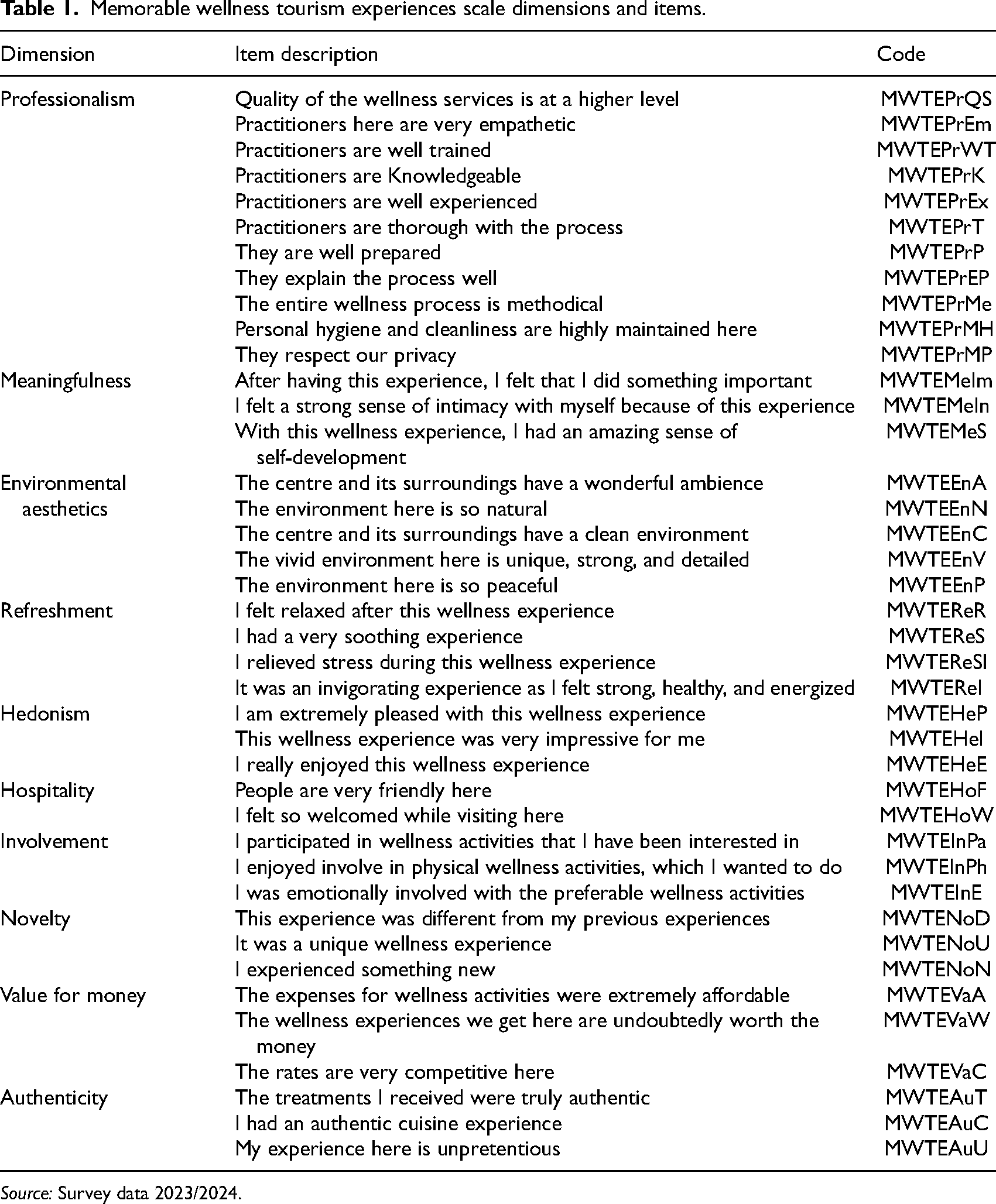
The initial pool of items for measuring MWTEs was developed through a multi-stage process. This included a thorough literature review and in-depth interviews, using both deductive and inductive approaches (Carpenter, 2018; DeVellis and Thorpe, 2022; Hinkin, 1995). Accordingly, the MWTE constructs were initially identified through a systematic literature review (Dahanayake et al., 2023a), following Churchill's (1979) recommendations. In addition, an exploratory qualitative study was performed using in-depth interviews with 20 international primary wellness tourists with prior wellness experience. Participants were selected through non-probability snowball sampling, based on initial referrals (Leavy, 2017; Patton, 2015). Two data sources were employed to triangulate results, consistent with methodologies in similar studies (Phuthong et al., 2022), enhancing trustworthiness and accuracy through cross-validation (Creswell and Miller, 2000). NVivo 12, a qualitative data analysis software based on grounded theory, was employed to analyse tourists’ memorable wellness experiences using thematic analysis, known for its reliable findings (Bigne et al., 2020). Subsequently, a panel of academic experts in tourism research and wellness tourism practitioners reviewed and validated the items for relevance, using a three-point scale, following established methods (Carpenter, 2018; DeVellis and Thorpe, 2022), employed in comparable studies (Chandralal and Valenzuela, 2015; Kim et al., 2022). This process led to the identification of 10 dimensions and 40 indicators in initial item generation (Dahanayake et al., 2023b). The identified dimensions and their respective items with corresponding indicators are shown in Table 1.
Memorable wellness tourism experiences scale dimensions and items.
Source: Survey data 2023/2024.
Step 2: Data collection and measurement purification
The identified 40 indicators across 10 dimensions of the MWTE variable were quantitatively refined using a questionnaire administered through a field survey. The data collection was conducted in two stages; preliminary and main study, following Churchill's (1979) guidelines as adopted in similar tourism research (Boley and McGehee, 2014; Kim and So, 2022). Accordingly, the preliminary study was conducted from mid-September to late October 2023 to refine the scale. The study focused on international wellness tourists at SLTDA-registered spa and wellness centres in Sri Lanka. A stratified multistage cluster sampling technique was employed to ensure a representative sample (Lohr, 2021; Saunders et al., 2019). The 108 SLTDA-registered spa and wellness centres were first divided into seven strata based on ‘Resort Regions’ and then clustered according to their attributes and geographic distribution (Sri Lanka Tourism Development Authority [SLTDA], n.d.). The sample was then proportionally allocated among these clusters, following Cochran's principles (Cochran, 1977).
Data collection employed non-probability convenience sampling due to unequal distribution and practical constraints like unknown population size (Etikan, 2016; Han et al., 2018). The sample was purposively selected, ensuring credibility (Saunders et al., 2019), targeting international wellness tourists, age above 18, who speak English, have engaged in wellness activities in the past five years and have visited spa and wellness centres. Respondents were selected based on willingness and availability, with pre-qualification and assistance from spa and wellness centre operators to ensure representative sampling (Saunders et al., 2019). Accordingly, based on Comrey and Lee's (2013) guidelines for sample size adequacy in factor analysis, a sample of 300 was deemed sufficient for the preliminary study to conduct exploratory factor analysis (EFA) and refine scale items. Their guidelines classify 50 as inadequate, 100 as insufficient, 200 as fair, and 300 as adequate for most analyses, justifying the selection of this sample size to meet the study's objectives. To address potential missing data and redundancies, a 10% contingency factor was applied, resulting in a total of 330 questionnaires distributed. Upon excluding incomplete responses and addressing missing data issues, 307 responses were retained for scale purification. Cross-sectional survey technique was employed to gather primary data through a structured questionnaire. The questionnaire comprised three sections: the first section included six questions on respondents’ overall wellness experiences and travel behaviours; the second section contained forty items assessing MWTEs across 10 dimensions using a 7-point Likert scale, ranging from 1 (strongly disagree) to 7 (strongly agree); and a final section featuring eight demographic questions. The questionnaire was administered in English, targeting English-speaking wellness tourists, ensuring their honest responses. The average completion time was estimated to be approximately 10‒15 min.
Data analysis was performed using EFA to purify the scale items, utilizing SPSS Version 25. The scale item purification process employed EFA with the recommended maximum likelihood extraction method (Carpenter, 2018; Costello and Osborne, 2019), utilizing Promax Rotation and Kaiser Normalization techniques, as advocated in prior studies (Carpenter, 2018; Kim et al., 2022). The Kaiser–Meyer–Olkin (KMO) measure evaluated sampling adequacy, while Bartlett's test of sphericity assessed data appropriateness, following the criteria of Bartlett's chi-square significance at p ≤ .05 and a KMO value ≥ .60 (Carpenter, 2018). Following Kaiser's criterion, factors with eigenvalues ≥1, communalities ≥0.40, absence of significant cross-loadings, at least three items per factor, and factor loadings ≥0.50 were considered for retaining variables and determining the variable structure (Carpenter, 2018). The internal consistency reliability was assessed utilizing the identified factors. Items were retained based on item-to-total correlations exceeding 0.50 (Hair et al., 2019c, 2019b; Marianti et al., 2023) and Cronbach's alpha values surpassing 0.70 (Hair et al., 2019a; Kim et al., 2022).
Step 3: Data collection and measurement verification
Subsequent to the preliminary study, the main study was conducted to validate the MWTE scale. Accordingly, the second stage of data collection for the main study focused on scale validation was conducted from November 2023 to mid-April 2024. The survey implementation procedures employed in the preliminary study were similarly adopted for the main study using the refined questionnaire with 31 items covering 6 dimensions. Consistent with the preliminary study, all scale items in the main study were assessed using a 7-point Likert scale, ranging from 1 (strongly disagree) to 7 (strongly agree). Data analysis was performed using the recommended confirmatory factor analysis (CFA) to validate the scale items (Hair et al., 2021), utilizing SmartPLS software (Version 4). A sample size of 619, was recommended based on Monte Carlo estimates, for validating the MWTE scale using SmartPLS (PLS-SEM) (Hair et al., 2021, 2022; Jhantasana, 2023). In this study, 680 international wellness tourists were surveyed, incorporating a 5% contingency to account for potential data issues (Sekaran and Bougie, 2016). Out of these, 622 usable responses were retained for scale validation, with 58 questionnaires excluded due to incompleteness, excessive missing data and outliers. The valid response rate was 91%, resulting in 622 questionnaires being used for final analysis. The MWTE scale's reliability, validity and factor loadings were assessed. The validation criteria encompassed Cronbach's alpha (α ≥ 0.70), composite reliability (CR ≥ 0.70), factor loadings (≥ 0.50), convergent validity (AVE ≥ 0.50) and discriminant validity (HTMT < 0.90) (Hair et al., 2017a, 2017b, 2019b, 2024; Sarstedt et al., 2021). To ensure the face and content validity of the scale, expert judgment was subsequently sought.
Results
Demographic characteristics of the preliminary study respondents
This section provides a brief overview of the demographic composition derived from 307 international wellness tourists who participated in the preliminary study. Among the 307 respondents, 64% were women and 36% were men. Age distribution was relatively balanced, with the highest proportion of participants (26%) in the 36–45 age range, suggesting a mature and potentially experienced demographic. Most were married (64%), indicating a potentially stable demographic. Geographically, the sample was primarily from Germany (22%), the UK (16%), and the USA (11%), with notable representation from Australia (8%) and Spain (4%). This distribution highlights a strong European presence. Employment data revealed that 62% were employed full-time, suggesting a primarily working-age sample, while 17% were retirees. Income distribution showed that 49% earned above $50,001, reflecting a relatively affluent group. Additionally, 62% held advanced academic qualifications, indicating a well-educated sample.
Purification of the memorable wellness tourism experience scale
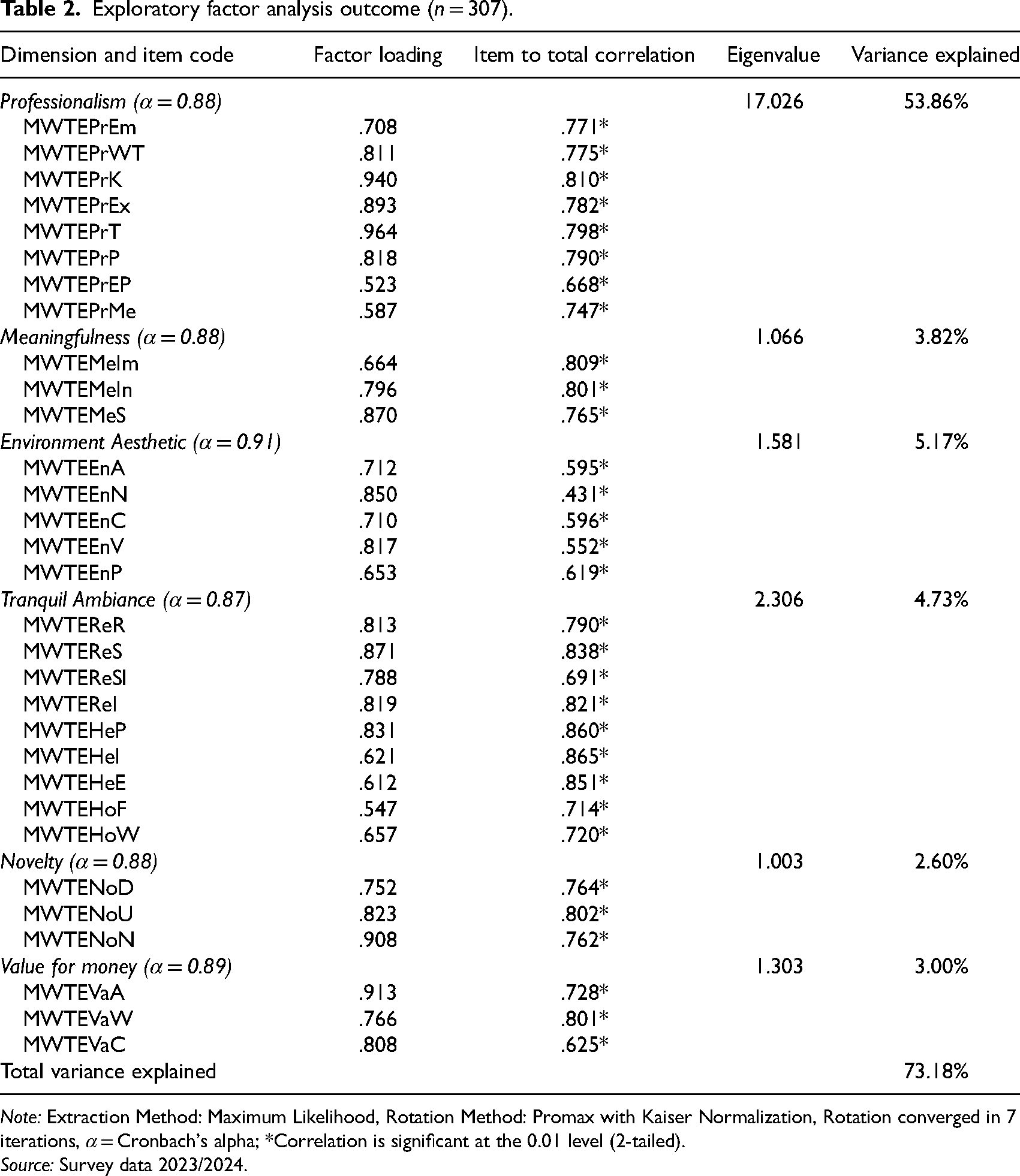
To evaluate the data's suitability for factor analysis, the Kaiser–Meyer–Olkin (KMO) measure and Bartlett's test of sphericity were used. The KMO measure was 0.946, and Bartlett's test was significant (χ² = 9894.948, df = 465, p < .001), confirming the data's appropriateness for EFA (Carpenter, 2018). Table 2 presents the results of the EFA conducted during the scale purification and refinement phase.
Exploratory factor analysis outcome (n = 307).
Note: Extraction Method: Maximum Likelihood, Rotation Method: Promax with Kaiser Normalization, Rotation converged in 7 iterations, α = Cronbach's alpha; *Correlation is significant at the 0.01 level (2-tailed).
Source: Survey data 2023/2024.
Accordingly, Table 2 presents factor loadings and extraction statistics for items across six constructs obtained through EFA of the MWTE scale using a sample of 307. After multiple iterations of EFA, a total of nine items were eliminated from the initial pool. These exclusions comprised one item characterized by low communalities (0.40 or below) and eight items exhibiting inadequate factor loadings (<0.50). Consequently, two dimensions, namely involvement and authenticity, were omitted primarily due to their poor factor loadings. The dimensions originally labelled refreshment, hedonism and hospitality were merged and relabelled as tranquil ambience, aligning with the conceptual coherence of the encompassed items. As a result, 31 items covering 06 dimensions remained.
Accordingly, the EFA yielded 6 factors and 31 indicators, each factor reflecting distinct dimensions of MWTEs. All factors exhibited eigenvalues exceeding 1, while each indicator met stringent criteria: communalities surpassing 0.40, absence of significant cross-loadings, a minimum of three indicators per factor, and factor loadings exceeding 0.50. Professionalism, meaningfulness, environment aesthetic, tranquil ambience, novelty and value for money were identified as core constructs, supported by their respective factor loadings exceeding the threshold values (≥ 0.50). These loadings signify robust associations between the constructs and their corresponding items (factor loadings ranging from 0.523 to 0.964), affirming the distinctiveness and validity of each dimension captured by the scale. Moreover, each dimension exhibited strong internal consistency, with Cronbach's alpha coefficients ranging from 0.87 to 0.91. Additionally, the item–total correlations fell within the range of 0.552 to 0.865, indicating a robust relationship between individual items and their respective constructs. Notably, the cumulative variance explained by these factors was 73.18%, indicating a strong representation of the underlying dimensions of MWTE. Accordingly, the refined MWTE scale demonstrated suitability for subsequent scale development and validity assessment.
Demographic characteristics of the main study respondents
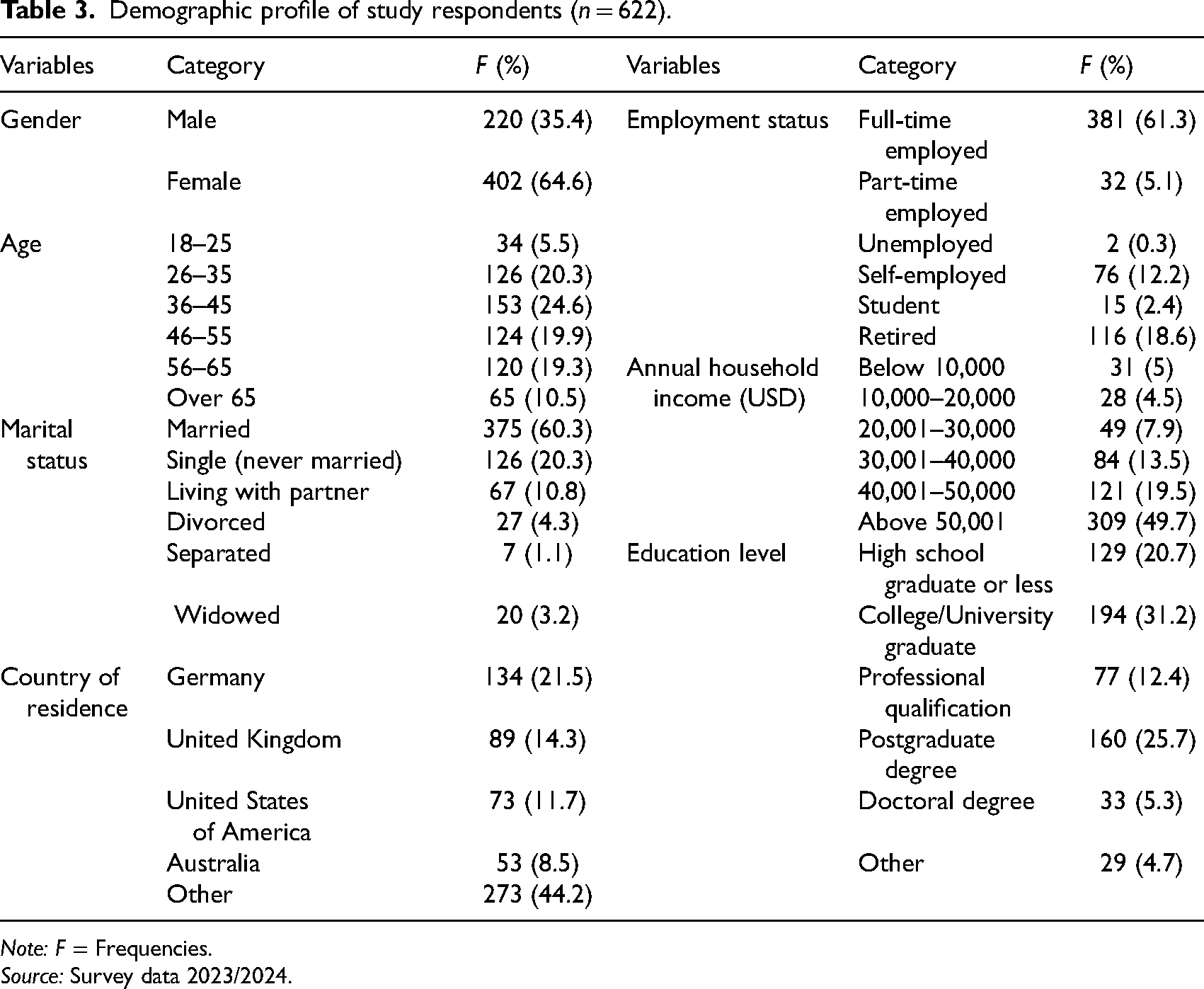
Table 3 outlines the demographic profile of the main study respondents (n = 622), showcasing a diverse sample. The majority are women (64.6%) and primarily 26–65 years old (84.1%). A significant proportion is married (60.3%). Respondents come from various countries, notably Germany (21.5%) and the UK (14.3%), with 44.2% from other regions in Europe, Asia, North America, Africa and Oceania. Most are employed full-time (61.3%), with others self-employed (12.2%) or retired (18.6%). Nearly half earn over $50,001 annually (49.7%). Education levels are varied, with many possessing college (31.2%) or postgraduate degrees (25.7%). This data reflects a varied sample, predominantly representing employed, educated adults and older adults, with Europe being the most represented region.
Demographic profile of study respondents (n = 622).
Note: F = Frequencies.
Source: Survey data 2023/2024.
Validation of the memorable wellness tourism experiences scale
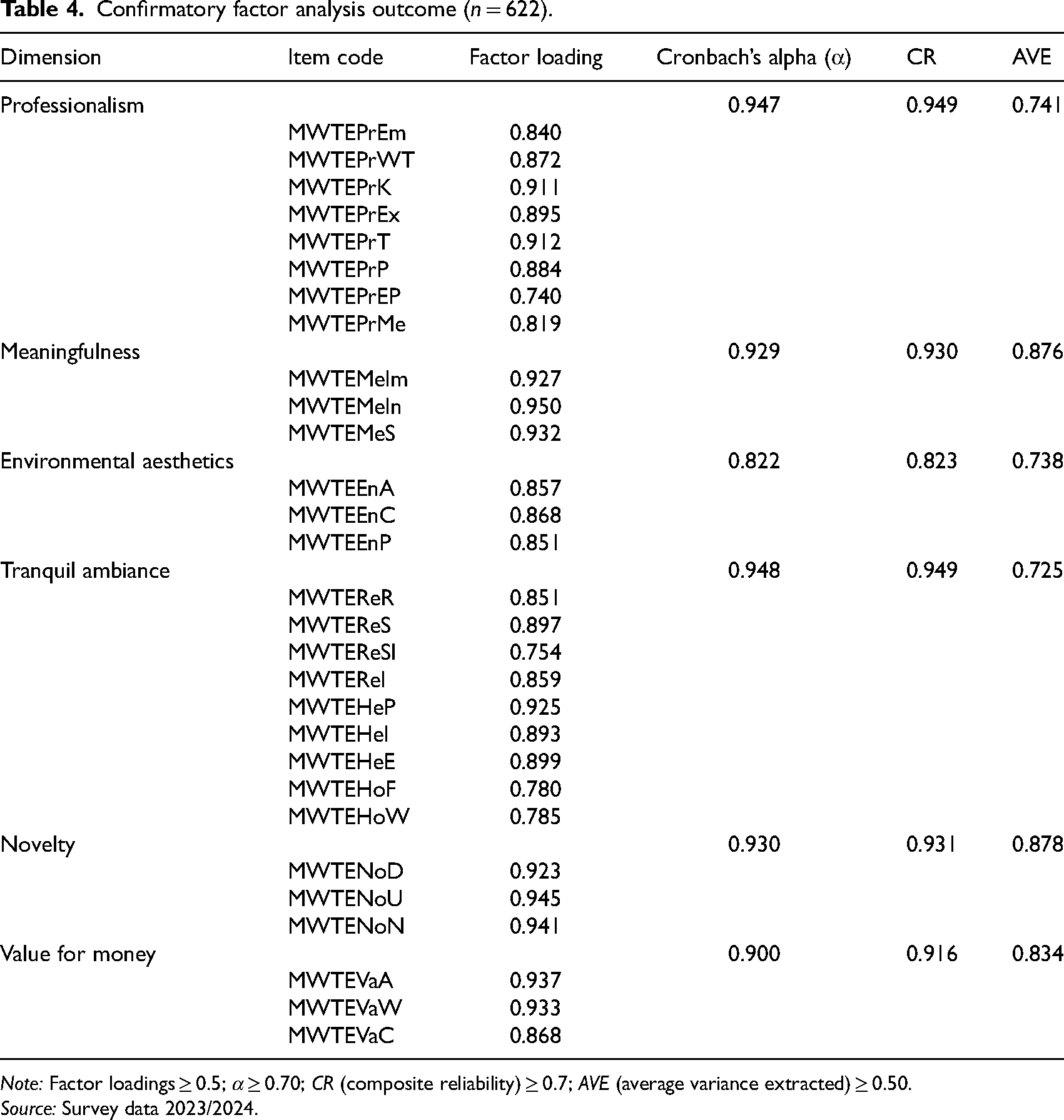
Following the identification of 6 dimensions and 31 indicators through EFA, CFA was conducted using SmartPLS (Version 4) to validate the MWTE scale items. It was acknowledged that factor loadings below 0.708 are typical in social sciences, with a threshold of ≥0.50 deemed acceptable for new scales (Hair et al., 2017a, 2017b, 2021; Herman, 2016). Consequently, two of the 31 items were excluded from the MWTE scale due to insufficient factor loadings, resulting in the retention of 29 items with acceptable loadings. To ensure the scale's face and content validity, an expert evaluation was subsequently conducted.
The CFA outcomes presented in Table 4 demonstrate strong measurement validity and reliability for the MWTE scale, evaluated across six dimensions with 29 retained indicators (N = 622). Each dimension demonstrates high internal consistency, with Cronbach's alpha values ranging from 0.822 to 0.948, exceeding the acceptable threshold of 0.70. Composite reliability (CR) values, all above 0.823, further support the reliability of the dimensions. The average variance extracted (AVE) values, ranging from 0.725 to 0.878, indicate good convergent validity, as all exceed the minimum requirement of 0.50. Factor loadings for individual indicators are substantial, with all values surpassing 0.740, confirming strong relationships between observed variables and their respective latent constructs.
Confirmatory factor analysis outcome (n = 622).
Note: Factor loadings ≥ 0.5; α ≥ 0.70; CR (composite reliability) ≥ 0.7; AVE (average variance extracted) ≥ 0.50.
Source: Survey data 2023/2024.
The HTMT results, as shown in Table 5 provide evidence of the discriminant validity of the MWTE scale across its dimensions. The HTMT values illustrate the extent to which correlations between different constructs surpass those within the same construct. All values in the table fall below the HTMT threshold of 0.90, indicating discriminant validity among the dimensions. Specifically, the HTMT values range from 0.428 to 0.818, demonstrating that correlations between different dimensions are significantly lower than those within the same dimension. This confirms that the MWTE scale effectively measures distinct aspects of memorable experiences of wellness tourists across six dimensions: professionalism, meaningfulness, environmental aesthetics, tranquil ambience, novelty and value for money. The findings demonstrate the scale's reliability and validity, confirming its robustness as an effective assessment tool.
Outcomes of the heterotrait-monotrait ratio of correlations (HTMT) criterion.
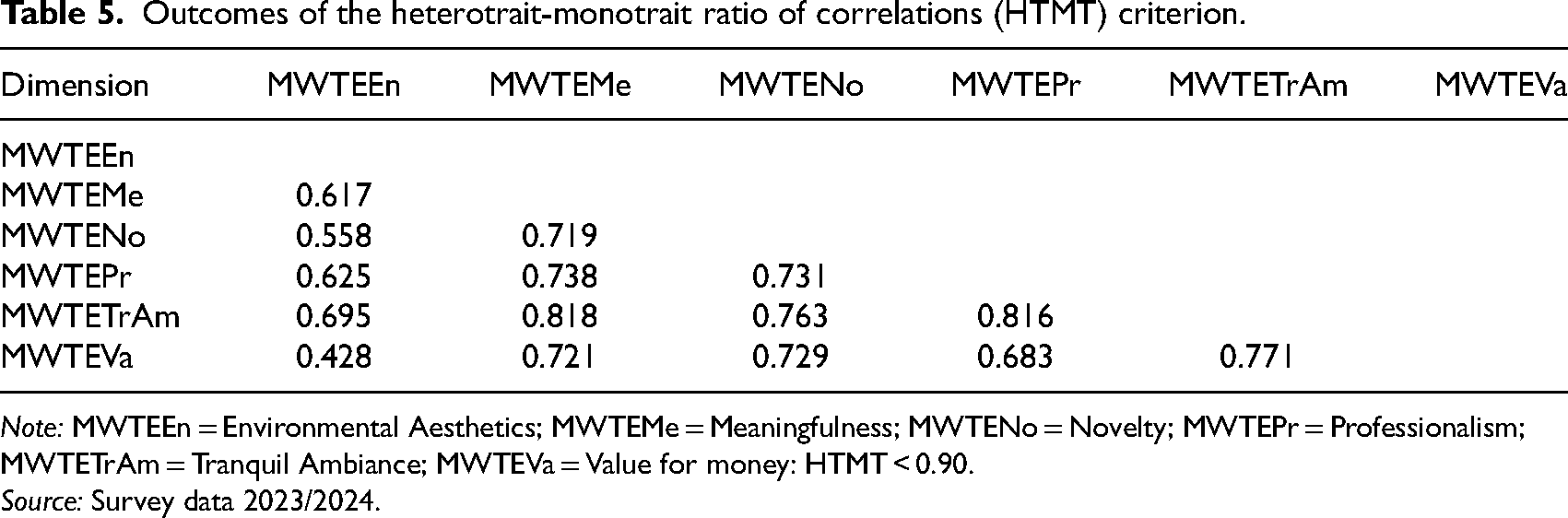
Note: MWTEEn = Environmental Aesthetics; MWTEMe = Meaningfulness; MWTENo = Novelty; MWTEPr = Professionalism; MWTETrAm = Tranquil Ambiance; MWTEVa = Value for money: HTMT < 0.90.
Source: Survey data 2023/2024.
Discussion and conclusion
Existing research revealed notable discrepancies in tourist expectations for memorable experiences, with wellness tourism often overlooked (Dillette, 2016). The inconsistency and subjectivity in defining memorable experiences across varied tourism forms (Seyfi et al., 2020) underscores more precise and validated constructs (Chandralal et al., 2015; Kim et al., 2012; Sthapit and Coudounaris, 2018), particularly in wellness tourism (Dahanayake et al., 2023a; Sthapit et al., 2023). Addressing this theoretical gap, this study developed and validated the MWTE scale following Churchill's (1979) framework, identifying 31 items through EFA and refining them to 29 via CFA to ensure robust measurement properties. The study respondents in both the preliminary and main studies were mature, predominantly female, and well-educated, with a notable European presence, aligning with prior wellness research, which focuses on individuals with stable employment and higher incomes (Lee and Kim, 2023; Težak Damijanić, 2020; Wangzhou, 2022). The final outcomes of the MWTE scale validation revealed six dimensions: professionalism, meaningfulness, environmental aesthetics, tranquil ambience, novelty and value for money.
The item generation stage and subsequent EFA and CFA established professionalism as a critical component of the MWTE scale (Dahanayake et al., 2023b). This has been proven in prior similar studies convincing that professionalism is one of the driving forces for spa and wellness businesses (Manhas et al., 2020). Moreover, it is a significant determinant in creating memorable experiences in distinct niche tourism forms such as boating cruises (Hurombo et al., 2014) while being a crucial determinant in the general MTE scale (Chandralal and Valenzuela, 2015; Chandralal et al., 2015). Professionalism in this study is characterized by empathetic, well-trained, knowledgeable and experienced practitioners, together with thoroughness, preparedness, clear explanations and methodical approaches, as supported by existing literature (Chandralal and Valenzuela, 2015; Chandralal et al., 2015; Hurombo et al., 2014; Manhas et al., 2020).
The study emphasized the importance of meaningfulness in creating memorable experiences for wellness tourists, consistent with prior MTE research across various niche tourism sectors, including heritage (Rasoolimanesh et al., 2021), marine (Jonas et al., 2020; Wilson, 2019), rural (Lee and Lee, 2021), coffee (Wang et al., 2019), ecotourism (Subramaniam et al., 2018), monastery (Kamenidou and Stavrianea, 2022) and so on. Meaningfulness as described by Wilson (2019), involves engaging in activities that are significant and valuable, enhancing self-awareness and creating lasting memories (Jonas et al., 2020). According to Rasoolimanesh et al. (2021), tourists are more inclined to revisit destinations where they have had profound and meaningful experiences. Moreover, Lee and Lee (2021) highlighted that meaningful rural travel fosters family bonding and deeper emotional connections. In the context of wellness tourism, experiences that evoke a sense of importance, personal intimacy and self-development align with these findings (Dahanayake et al., 2023b), demonstrating how meaningfulness in such experiences can lead to greater personal reflection and long-lasting memories.
Environmental aesthetics, which involve the interplay between physical surroundings and human cognitive and perceptual processes (Perkins and Brown, 1999), significantly influence MWTEs. Prior research has emphasized the role of the environment in shaping MTEs (Stavrianea and Kamenidou, 2022; Wang et al., 2019) yet has neglected the environmental aesthetic aspect. Moreover, it was not specifically identified as a key determinant in creating memorable experiences in wellness tourism until recently. Environmental aesthetics, encompassing elements such as ambience, naturalness, cleanliness, vividness and peacefulness have recently emerged as crucial factors in shaping MWTEs (Dahanayake et al., 2023b). According to Pine and Gilmore (1999), effective experiences involve customer participation and environmental engagement, which Kim (2009) supported this by noting that memorable experiences are enhanced by active involvement in activities connected to their surroundings. Voigt (2017) further corroborates that the aesthetic appeal of environments contributes significantly to wellness tourism experiences.
The merging of refreshment, hedonism and hospitality into tranquil ambience further enhances the conceptual coherence of the scale. Similar studies underscore the critical role of a tranquil ambiance in fostering tourists’ wellness experiences memorable. According to Maitra (2022), India's wellness tourism leverages the tranquil ambience of locations such as the Himalayas and hot springs to attract wellness tourists, offering serene and pleasing environments for spiritual practices and relaxation. Moreover, Phakdeephirot (2021) noted that spa hot springs in Asia are distinguished by their tranquil ambience, which is crucial for attracting high-end clientele seeking a luxurious and serene experience. Wellness travellers seek destinations with natural beauty and serenity to escape daily stress. The tranquil ambience of these locations is crucial for deep relaxation and rejuvenation (Dhillon, 2023). A study by Insani et al. (2024) on East Java'’ adventure, wellness, and eco-tourism, revealed that Padusan Village's tranquil ambience is enhanced by its welcoming locals, who celebrate Javanese heritage through festivals and rituals, creating a serene, pleasing and inviting atmosphere.
Novelty, established as another crucial determinant in wellness tourism experiences (Kim et al., 2017; Težak Damijanić, 2020), has further corroborated its significance in creating memorable wellness experiences (Dahanayake et al., 2023a; Sthapit et al., 2023). It motivates wellness tourists to visit destinations (Kim et al., 2017; Sthapit et al., 2023; Voigt et al., 2011) and have memorable experiences (Sthapit et al., 2023). According to Sthapit et al. (2023), higher novelty in wellness experiences leads to stronger, more lasting memories. Tourists prioritize novelty, uniqueness and diversity, which significantly enhance the memorability of wellness tourism experiences (Dahanayake et al., 2023b). Conversely, value for money enhances wellness tourists’ experiences, with affordable and competitively priced services significantly contributing to a positive perception of value (Dahanayake et al., 2023b). Hui et al. (2012) identify pricing as a major concern for wellness tourists, suggesting that products and services should be perceived as worth their cost. This importance is supported by prior wellness studies (Dillette et al., 2021; Xie et al., 2022) and other specific MTE studies (Sthapit and Jiménez-Barreto, 2018; Wang et al., 2019). Overall, the MWTE scale demonstrates strong reliability and validity in assessing memorable experiences in wellness tourism, focusing on professionalism, meaningfulness, environmental aesthetics, tranquility, novelty and value for money. It aids researchers and practitioners in identifying key factors affecting wellness tourists’ memorable experiences, facilitating the development of strategies to enhance wellness tourism offerings.
Theoretical implications
The development and validation of the MWTE scale offer theoretical contributions to the existing body of tourism and wellness literature. This study contributes to the theoretical foundation of wellness tourism by providing a comprehensive and empirically validated scale that captures the dimensions of MWTEs. Combining deductive and inductive methods, the study bridges the gap, linking theoretical constructs with practical insights, and providing a solid foundation for future research. The identified six core dimensions – professionalism, meaningfulness, environmental aesthetics, tranquil ambience, novelty and value for money – offer a comprehensive framework for analysing memorable experiences in wellness tourism. This multidimensional approach enhances the understanding of what constitutes MWTEs and can be effectively utilized in diverse contexts within tourism research. By emphasizing previously underexplored constructs such as professionalism and environmental aesthetics, and integrating refreshment, hedonism and hospitality into tranquil ambience, the study refines the conceptualization of factors enhancing wellness tourism experiences, advancing the theoretical understanding of MWTEs. Moreover, this study exhibits methodological rigour in scale development, adhering to established guidelines, ensuring the reliability and validity of the scale using EFA and CFA, and offering a methodological framework for future tourism research. Additionally, cross-validation of the scale through preliminary and main studies improves its generalizability across various international wellness tourist samples, thereby enhancing the MWTE scale's applicability in diverse geographical and cultural contexts and facilitating comparative and cross-cultural research in wellness tourism. Furthermore, integrating qualitative in-depth interviews and literature reviews with quantitative survey results in this study, demonstrates the effectiveness of mixed-methods in scale development, enriching the theoretical framework of wellness tourism research.
Managerial implications
Beyond its theoretical contributions, the MWTE scale provides practical insights for wellness tourism practitioners, managers and policymakers to enhance memorable experiences and improve service delivery. Understanding the role of professionalism in wellness services can direct service providers to prioritize staff training and development, emphasizing empathy, expertise and thoroughness in service delivery to enhance the quality of wellness experiences among tourists. Moreover, the meaningfulness dimension underscores the need for wellness tourism providers to design wellness programs fostering self-development and intimacy, enhancing the memorability of experiences through personal growth, mindfulness and emotional well-being. Environmental aesthetics and tranquil ambience are crucial for optimizing wellness centre experiences. Therefore, wellness service providers should invest in maintaining centres by prioritizing clean, natural and aesthetically pleasing environments, along with a relaxed and pleasing ambience with welcoming and friendly people, to maximize the overall wellness experience. Furthermore, wellness tourists value unique and new experiences. Thus, wellness services and activities should be innovative, novel and distinctive, incorporating new treatments, cultural practices and technologies. Another key aspect in creating MWTE is value for money, which is critical to determining effective pricing strategies. Managers should ensure that the pricing of wellness experiences reflects the quality and uniqueness of the services provided. Offering competitive rates without compromising on quality can attract more tourists and enhance their overall experiences.
Study limitations and future research directions
While the development and validation of the MWTE scale mark significant progress in understanding wellness tourism experiences, several limitations require further consideration. Firstly, the study's sample, predominantly from Europe, offers valuable insights into regional wellness tourism experiences but may leave aspects from other regions unexplored. Secondly, the cross-sectional design of the study provides a snapshot of respondents’ experiences at a particular point in time, potentially overlooking the dynamic nature of wellness tourism experiences that may evolve over time. Thirdly, although the sample sizes for the preliminary and main study are adequate, a larger and more varied sample could enhance the insights and generalizability of the scale. Fourthly, data collection focused on international wellness tourists visiting spa and wellness centres in Sri Lanka, though cultural and regional factors in other countries may also affect the dimensions of memorable experiences of wellness tourists. Lastly, although this study contributes to the understanding of wellness tourism, it does not extensively examine the spirituality dimension, which has emerged as a critical component in the contemporary wellness tourism landscape.
Therefore, future studies should include a more diverse range of geographic locations to enhance the generalizability of the findings. Comparative studies across different regions and cultures could reveal unique dimensions of memorable experiences in wellness tourism pertinent to specific regions. Longitudinal studies would be beneficial to capture the dynamic nature of memorable experiences in wellness tourism over time, providing a deeper understanding of how these experiences evolve and their long-term impact on tourists. Future research could expand the sample size and include a more diverse demographic to enhance the generalizability and robustness of the findings. Moreover, future studies should advance the MWTE scale by incorporating additional dimensions through diverse qualitative methods, such as in-depth interviews, focus groups and so on, across various geographical areas. Additionally, future research could focus on investigating the integration of spiritual practices, such as meditation, mindfulness and sacred retreats, into wellness tourism experiences. Such studies could provide deeper insights into how spiritual elements influence tourist motivations, behaviours and overall satisfaction, thereby offering a more holistic perspective on wellness tourism trends.
Footnotes
Declaration of conflicting interests
The authors declared no potential conflicts of interest with respect to the research, authorship, and/or publication of this article.
Funding
The authors received no financial support for the research, authorship, and/or publication of this article.
