







Abstract
Real-scene travel live streaming (TLS) has increasingly become an effective tool for fostering social connection and stimulating destination desire, particularly appealing to individuals with compensatory social needs. By enabling real-time interaction between viewers and streamers, TLS creates a psychologically supportive virtual environment that mitigates stress and fosters emotional connection through self-empowerment, reflection, and social interaction, thereby enriching the tourism experience and enhancing destination desire. However, most existing studies focus on external stimuli that influence viewers’ destination desire, such as TLS platform features, attributes, and servicescape elements, while viewers’ compensatory psychology and streamer characteristics remain underexplored. Accordingly, the present study, based on viewers’ practical needs, applies parasocial relationship theory to examine viewers’ social compensatory personality traits (social anxiety, shyness, and vulnerable narcissism) and streamer characteristics (authenticity, affability, and knowledge spillover) on destination desire. Using 653 valid responses, structural equation modeling results indicate that both personality traits and streamer characteristics significantly predict parasocial relationship formation, which subsequently enhances emotional well-being and strengthens destination desire. This study broadens the research perspective on real-scene TLS and offers valuable insights for tourism practitioners, multi-channel network agencies, and destination marketers.
Keywords
Introduction
Information and communication technology has facilitated new forms of tourist interaction on social media, driving the evolution of online communication and relationship formation (Deng et al., 2022). Within this context, real-scene travel live streaming (TLS) has emerged as a distinctive extension of “cloud tourism.” Unlike asynchronous tourism media (e.g. travel vlogs) that rely on aesthetics and post-production (Xu et al., 2021), real-scene TLS enables streamers to share real-time experiences and personal insights at authentic destinations while interacting synchronously with viewers (Lo et al., 2024). As a powerful destination marketing tool, real-scene TLS enhances viewer engagement, strengthens social presence, and effectively stimulates destination desire (Ji et al., 2024).
Research on real-scene TLS and destination desire falls into two main streams. The first focuses on environmental stimuli, examining how TLS features, attributes, and servicescape elements stimulate viewers’ destination desire (Ji et al., 2024; Wang et al., 2025; Zhang et al., 2025; Zheng et al., 2023), thereby informing the external design of TLS. The second stream has begun to shift attention to the role of streamers, with several qualitative studies (Li et al., 2023) and a few quantitative empirical studies examining streamer responsiveness and typologies (Zhang et al., 2024; Zheng and Fu, 2024). However, quantitative research on streamer-related factors remains scarce (Shao and Huang, 2025), and existing qualitative studies have yet to establish clear causal relationships. Previous literature has emphasized the need for further quantitative research to assess the measurable effects of real-scene TLS on viewers’ behavioral intentions (Chen et al., 2025). Additionally, viewer-related antecedents are still underdeveloped. While Liu et al. (2022) identified the pursuit of socializing and belonging as primary motivations for viewer engagement in TLS, personality traits, which serve as an important variable influencing media participation motives (Rubin, 1993), have yet to receive sufficient attention and examination. Addressing these gaps, the present study investigates how viewers’ traits associated with social compensation as well as streamer characteristics influence the formation of destination desire.
Social compensation describes the tendency of individuals with difficulties in offline social interactions to engage in mediated communication as a compensatory mechanism (McKenna and Bargh, 1998) and to form parasocial relationships with media figures to fulfill their need for belonging (de Bérail et al., 2019). This compensatory psychology can shape individuals’ behavioral intentions, particularly in media environments like real-scene TLS, which emphasize real-time social interaction (Zhang et al., 2025). Real-scene TLS is particularly appealing to individuals with compensatory social needs, as it creates a psychologically supportive virtual environment that helps mitigate stress and fosters emotional connection through self-empowerment, reflection, and social interaction, thereby enriching the tourism experience (Zhang and Xiao, 2023) and further enhancing destination desire (Bi et al., 2021). In China, TikTok (known domestically as Douyin) has emerged as the leading platform for real-scene TLS. For example, the 2022 “Watching Mountains and Rivers” campaign brought together more than 200 streamers, generated over 13,000 h of live content, and attracted more than 290 million views (Chen et al., 2025), demonstrating the platform's strong market potential. However, despite constant connectivity in the digital era, TikTok users are still observed to exhibit personality traits associated with social compensation. For instance, narcissistic individuals are more likely to become immersed in TikTok as a highly visual virtual playground to seek validation and recognition (Meng and Leung, 2021). Meanwhile, users from the TikTok generation also frequently display traits such as social anxiety and shyness (Kovács et al., 2022; Yao et al., 2023). These individual-level personality traits are not isolated occurrences but rather mirror a broader social trend toward increasing offline social avoidance. According to BBC Science Focus, social anxiety is on the rise globally, and narcissism is often likened to a modern epidemic (Frankel, 2025; Spanner, 2024). Similar trends are observed in China, where offline social avoidance and narcissism are viewed as prominent features of social dynamics, especially among youth (SOHU, 2024). Supporting this, a national survey by Guangming Daily found that 97% of 2532 respondents experienced some level of offline social avoidance (Yusheng, 2020). Against this backdrop, examining how narcissism, social anxiety, and shyness influence viewers’ destination desire in real-scene TLS holds both theoretical and practical significance.
Compared with asynchronous tourism media, real-scene TLS presents more diverse and intriguing real-time visuals through its “spatially separated yet temporally synchronized” communication structure (Wang et al., 2025; Zhang and Xiao, 2023). This advantage stems not only from the authentic presentation of destination environments but also from the persuasive role of streamers (Li et al., 2023). Streamers’ every expression is genuinely captured on camera, making them more approachable than traditional social media celebrities as they respond to viewers’ comments in real time while showcasing travel destinations (Deng et al., 2022; Zhang et al., 2022). However, empirical studies on streamer characteristics in the real-scene TLS context remain limited (Shao and Huang, 2025). To fill this gap, this study adopts Aristotle's rhetoric persuasion modes to propose three key streamer characteristics: authenticity, affability, and knowledge spillover. This theory posits that effective persuasion involves three dimensions: appeals to credibility, emotion, and logic, underscoring the speaker's central role in influencing audience attitudes (Li et al., 2023; Murphy, 1981). Authenticity serves as the foundation of persuasion (Manthiou et al., 2024); authentic streamers foster credibility and persuade viewers (Liu and Sun, 2024). Emotional appeal is conveyed through affability, demonstrated by positive emotional cues (e.g. smiling) and the creation of a “feel-right” atmosphere, which increases communicative effectiveness (Cesario and Higgins, 2008; Soldat and Sinclair, 2001). Logical appeal is reflected in knowledge spillover, whereby streamers respond to viewers’ comments and questions by introducing information about the destination's historical background, geographical features, and folk culture (Zheng and Fu, 2024). This process demonstrates logical reasoning in destination interpretation and strengthens the persuasiveness of the message (Li et al., 2023).
Given that parasocial relationship theory is well-suited for examining audiences’ psychological and behavioral intentions across different technological contexts (Lu et al., 2023), this study adopts it as the theoretical foundation (Horton and Richard Wohl, 1956). Specifically, it examines viewers’ personality traits (i.e. social anxiety, shyness, and vulnerable narcissism) and streamer characteristics (i.e. authenticity, affability, and knowledge spillover) that influence the development of parasocial relationships in real-scene TLS. These relationships are then expected to impact viewers’ emotional well-being and destination desire (Hoffner and Bond, 2022; Lu et al., 2023). This study pioneers the empirical development of a model based on parasocial relationship theory in the real-scene TLS context by integrating viewer traits, streamer characteristics, emotional outcomes, and behavioral intentions.
This research focuses on the under-researched real-scene TLS. Drawing on its reality-supporting characteristics, it introduces the perspective of viewers’ social compensatory psychology and empirically examines how three viewer traits influence destination desire, thereby deepening the understanding of the viewers’ psychological antecedents. Second, based on Aristotle's rhetoric persuasion modes, the study proposes key streamer characteristics and enriches the literature on streamer-related influencing factors. Third, the study offers important insights into parasocial relationships and emotional well-being and contributes to the related theory. Fourth, the findings provide practical implications for tourism practitioners, multi-channel network (MCN) agencies, and destination marketing strategies.
Literature review
Travel live streaming
TLS differs from conventional tourism influencer marketing (e.g. travel blogs and vlogs). The latter uses asynchronous media with curated, edited content that emphasizes aesthetics, editing, and narrative, mainly serving informational purposes (Xu et al., 2021). In contrast, TLS adopts a “spatially separated yet temporally synchronized” format, facilitating real-time interaction, authenticity, and unscripted representation (Zheng et al., 2023). Streamers broadcast live from destinations, frequently appear on camera, maintain high approachability, and actively engage with viewers (Deng et al., 2022; Zhang et al., 2022). Therefore, TLS can serve as substitutive tourism for those with mobility issues or social anxiety, enriching experiences and fostering social connection (Zhang and Xiao, 2023). In comparison, tourism influencers may avoid on-camera appearances (e.g. through B-roll filming), control identity visibility, and limit viewers’ interaction to asynchronous comments (He et al., 2022). They may further engage in comment moderation by restricting neutral or negative comments while privileging positive ones, deliberately screening, filtering, or deleting feedback on their posts, which can undermine viewers’ freedom of speech rights (Guo et al., 2025). These nuances imply that understanding the formation of destination desire requires attention to the unique media characteristics of TLS and the role of streamers in influencing viewers’ psychological and behavioral responses.
The literature identifies two primary forms of TLS: tourism e-commerce live streaming, and real-scene TLS. Existing research has primarily focused on tourism e-commerce live streaming, where streamers promote tourism products (e.g. accommodations, flights, attraction tickets, and vouchers) from fixed indoor settings, typically using virtual backgrounds (Xie et al., 2022). By contrast, real-scene TLS features streamers broadcasting from authentic destinations while sharing personal experiences and interacting with viewers in real time (Lo et al., 2024), yet it has received comparatively limited academic attention (Chen et al., 2025). By directly engaging with physical environments, real-scene TLS helps streamers overcome spatial constraints and create immersive, enduring viewing experiences that sustain audience interest and stimulate destination desire (Chen et al., 2025; Wang et al., 2025). Accordingly, this study focuses on real-scene TLS and explores the formation mechanism of destination desire.
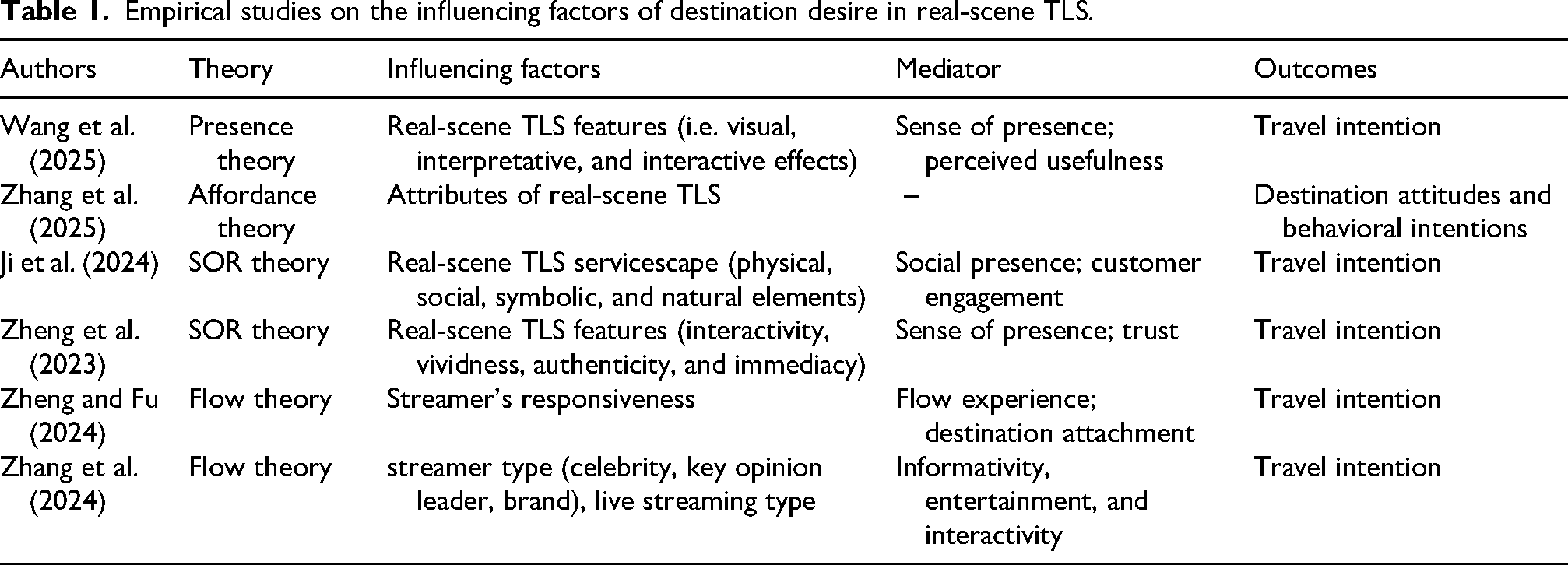
As summarized in Table 1, recent studies have primarily examined the features, attributes, and servicescape of real-scene TLS as environmental stimuli influencing viewers’ destination desire (Ji et al., 2024; Wang et al., 2025; Zhang et al., 2025; Zheng et al., 2023). Relatively few studies have examined how real-scene TLS influences destination desire from the perspective of streamers. Existing research has explored streamers’ interaction strategies and typologies (Zhang et al., 2024; Zheng and Fu, 2024). However, viewer-related antecedents and their role in shaping interactions with streamers have been largely overlooked.
Empirical studies on the influencing factors of destination desire in real-scene TLS.
Since destination desire is a non-static concept (Lo et al., 2024), it is shaped by both external stimuli from TLS and the perceived interpersonal connections formed during viewer engagement (Deng et al., 2022). Understanding its formation requires examining perceived social relationships during TLS engagement. Traditional relationship theories, which rely on face-to-face interaction, mutual experiences, and personal knowledge, reveal theoretical defects when applied to TLS, where communication is mediated by technology and many communication cues may be weakened (Steinhoff et al., 2019). Recent research suggests that parasocial relationships can compensate for these limitations by providing a relevant and distinctive relational construct for understanding technology-mediated interactions (Deng et al., 2022), particularly the unique emotional bonds between viewers and streamers and their outcomes (Lu et al., 2023).
Theoretical background: Parasocial relationships theory
Horton and Richard Wohl (1956) first introduced the concept of parasocial relationships in their study of traditional mass media, describing the one-sided, illusory bonds that media users form with media figures to fulfill psychological needs for companionship. In real-scene TLS, the term refers specifically to the unique bonds formed between viewers and streamers (Lu et al., 2023). Streamers acknowledging viewer presence and engaging in real-time interaction enhance perceived intimacy, thereby fostering parasocial relationships (Deng et al., 2022).
Parasocial relationships represent enduring, cumulative bonds that extend beyond individual encounters with media content (Deng et al., 2022), reflecting a deeper and more sustained form of viewer–persona engagement (Dibble et al., 2016). In this sense, parasocial relationships established in real-scene TLS closely resemble real-world social relationships (Rosaen and Dibble, 2016). Given that the core motivation for viewers’ participation in real-scene TLS is socializing, the formation of these real-like emotional bonds with streamers effectively satisfies viewers’ psychological needs for social interaction and belonging (Liu et al., 2022). Consequently, exploring parasocial relationships provides deeper insights into viewers’ behavioral intentions in real-scene TLS and the underlying psychological mechanisms.
Parasocial relationship theory offers a relevant framework for exploring how streamer characteristics and viewer traits influence viewers’ behavioral intentions in real scene TLS.
According to this theory, McLaughlin and Wohn (2021) emphasized two key predictors for the development of parasocial relationships: individual traits and media figure characteristics. Accordingly, the present study identifies two sets of antecedents (i.e. viewer traits related to social compensation and streamer characteristics). In addition, emotional well-being is recognized as a significant outcome variable of parasocial relationships (Hoffner and Bond, 2022). Within the TLS context, individuals may perceive a seemingly two-way relationship with the streamer. This relationship is nurtured through the streamer's verbal and nonverbal cues, which create the impression of face-to-face interaction (Deng et al., 2022). The resulting ties, resembling offline friendships, can positively contribute to multiple dimensions of individual well-being (Hoffner and Bond, 2022). Moreover, individuals frequently take up the interests or activities of social media figures with whom they maintain a parasocial relationship, which may foster a stronger sense of self-congruity and enhance their well-being (Kim and Kim, 2020). In the tourism context, recent empirical studies have also employed the concept of parasocial relationships to understand viewers’ destination desire, which is regarded as an outcome of parasocial relationships and is considered to ultimately generate market benefits (Zheng et al., 2022).
Viewers’ personality traits
Social compensation hypothesis
The social compensation hypothesis, also known as the “poor-get-richer” hypothesis (McKenna and Bargh, 1998), posits that individuals with social competence deficits or psychological vulnerabilities tend to prefer mediated communication as a compensatory mechanism for managing offline interaction challenges. This hypothesis has been widely applied in social media research. Hutchins et al. (2021) found that socially anxious individuals use social media to meet social needs and enhance well-being. Similarly, Baker and Oswald (2010) observed that social networking platforms provide shy individuals with opportunities to form higher-quality relationships, thereby improving social interactions and friendship quality. Greenwood et al. (2018) also found that vulnerable narcissism positively predicts favorable attitudes toward celebrities, as vulnerable narcissists, experiencing social pressure and lacking real-life rewards, are more inclined to form parasocial relationships with idealized figures. From this perspective, individuals experiencing interpersonal difficulties, such as social anxiety, shyness, and narcissism, might resort to social media to form connections and attain social fulfillment (Scott et al., 2018). de Bérail et al. (2019) further suggest that the social compensation hypothesis reflects the fact that individuals lacking real-life social connections may fulfill their need for belonging through parasocial relationships with media figures.
Social anxiety
Social anxiety is a stable personality trait characterized by inhibition, social withdrawal, and reserved behavior during interactions. It is defined as a persistent, intense fear of social or performance situations, leading individuals to either avoid or endure them with discomfort (American Psychiatric Association, 2013). Socially anxious individuals frequently and passively engage with TikTok livestreaming (Yao et al., 2023), as online environments provide a less intimidating space for interaction, reduce reliance on non-verbal cues and spontaneity in face-to-face communication, and offer a more controlled medium for forming intimate social connections (Weidman et al., 2012). According to the social compensation hypothesis, socially anxious individuals derive greater benefits from online interactions compared to in-person communication (Valkenburg and Peter, 2009). Supporting this, de Bérail et al. (2019) found that they are more likely to develop parasocial relationships with media figures, fostering a sense of belonging and alleviating social discomfort. Thus, it is hypothesized:
H1: Social anxiety positively influences parasocial relationship.
Shyness
Shyness is a personality trait marked by excessive self-focus and negative self-evaluation, causing discomfort in social situations and hindering relationship development (Henderson et al., 2010). It affects individuals across the population and exhibits generational differences, with Generation Z reporting higher levels than the millennial generation (Schmidt et al., 2023). A large cross-sectional study of 552,663 participants aged 17 to 70 further shows that shyness varies by age and gender, reflecting both stability and change in personality over the life course (Van Zalk et al., 2017). The Internet, with its anonymity and controllability, provides shy individuals a safer space to express themselves and reduce social inhibitions (Saunders and Chester, 2008). Studies show that shy individuals frequently turn to social media to form connections, compensating for real-world social challenges (Sheeks and Birchmeier, 2007). Parasocial relationship with media figures offers them social interaction without the risks of rejection or the need for advanced social skills, serving as a compensatory mechanism (Putri and Yatim, 2019; Tukachinsky et al., 2020). Supporting this, Ashe and McCutcheon (2001) found a positive link between shyness and parasocial relationships. Thus, it is hypothesized:
H2: Shyness positively influences parasocial relationship.
Vulnerable narcissism
Narcissism, marked by grandiosity, entitlement, perceived superiority, and attention-seeking, is a socially aversive personality trait (Miller et al., 2011). Although research on narcissism has increased in recent years, it has rarely received positive recognition in academia, as it is classified as one of the Dark Triad traits (alongside Machiavellianism and psychopathy) (Nikbin et al., 2022). Limited studies have begun to explore narcissism in the context of tourism-related social media, for instance, concerning landmark check-in behavior (Tan and Yang, 2021) and the sharing of travel selfies (Christou et al., 2020). Surprisingly, despite evidence that narcissistic individuals are particularly drawn to TikTok as a “virtual playground” (Meng and Leung, 2021), few studies have investigated narcissism within the context of TLS.
Narcissism comprises grandiose and vulnerable subtypes (Miller et al., 2011). Grandiose narcissists exhibit exaggerated self-belief, while vulnerable narcissists are hypersensitive to rejection and dependent on external validation, resulting in psychological vulnerability (Grieve et al., 2021; Rogoza et al., 2022). Compared to the former, which has been extensively studied in social psychology and personality research, vulnerable narcissism has received limited empirical attention (Tan and Yang, 2021). Vulnerable narcissists exhibit a stronger attraction to social media, utilizing it as a means to compensate for social insecurities (Ozimek et al., 2018), aligning with the social compensation hypothesis, which suggests that individuals with social deficits benefit more from mediated interactions than face-to-face encounters (Scott et al., 2018). Grieve et al. (2020) further revealed that vulnerable narcissists rely on media platforms to feel valued. Live streaming fosters interactions resembling traditional celebrity engagements (Chen, 2021), making vulnerable narcissists more prone to forming parasocial relationships with idealized figures (Greenwood et al., 2018). Therefore, it is hypothesized:
H3: Vulnerable narcissism positively influences parasocial relationship.
Streamer's characteristics
Aristotle's rhetoric persuasion modes
In real-scene TLS, examining how streamer characteristics influence viewers’ destination desire essentially involves a process of persuasion (Li et al., 2023). Persuasion reshapes recipients’ attitudes to align with the persuader's intent (Hovland et al., 1953). In Aristotle's musings on rhetoric and persuasion, the philosopher articulated three types of persuasion between the speaker and the audience (Murphy, 1981). In a given persuasive context, the speaker attempts to achieve persuasion through logical proof (logos), the revelation of credible character (ethos), and interconnecting with the audience (pathos) (Murphy, 1981). Accordingly, the process of persuasion encapsulates three dimensions: appeals to credibility, emotion, and logic (Li et al., 2023). First, persuasion begins with the communicator, and authenticity is the basic foundation of persuasion (Manthiou et al., 2024). In real scene TLS, the communicator is the streamer, whose perceived authenticity plays a crucial role in establishing credibility and influencing viewers (Liu and Sun, 2024). For instance, authentic depictions of destinations can enhance trust and support future travel planning (Chen et al., 2025). Second, the emotional responses of the communicator can likewise enhance the persuasion process (Vakratsas and Ambler, 1999). Positive external cues (e.g. smiling) and inducing a “feel-right” experience significantly enhance persuasive communication (Cesario and Higgins, 2008; Soldat and Sinclair, 2001). In live-streaming research, streamer affability facilitates the development of intimacy with viewers, which may influence their behavior (Zhang et al., 2022). Finally, logical appeal refers to a method of logical deduction used by a communicator to conclude (Gentes and Selker, 2013). Beyond traditional verbal logic (Gentes and Selker, 2013), knowledge spillover also embodies logical appeal. It is manifested in the way streamers, in response to viewers’ comments and questions, depict historical backgrounds, geographical features, folk customs, and other information related to the destination (Zheng and Fu, 2024), thereby constructing a causally structured exposition, enhancing the message's persuasiveness (Li et al., 2023). Accordingly, this study focuses on three key streamer characteristics in real-scene TLS: authenticity, affability, and knowledge spillover.
Authenticity
Personal authenticity refers to the alignment between an individual's actions and their true self (Moulard et al., 2015). In TLS, authenticity is regarded as a critical streamer characteristic, defined as viewers’ subjective evaluation of whether the streamer acts in line with their authentic self (Liu and Sun, 2024). This authenticity is crucial for attracting audiences and enhancing persuasion (Manthiou et al., 2024). Streamer's authenticity facilitates the rapid establishment of interpersonal connections with viewers (Li et al., 2024). Audrezet et al. (2020) argue that the authenticity of social media influencers enhances viewer trust and relatability, promoting parasocial relationships (Nah, 2022). Therefore, it is hypothesized:
H4: Authenticity positively influences parasocial relationship.
Affability
Affability, an essential interpersonal element of an individual's charisma, refers to the capacity to help others feel relaxed and comfortable, and charismatic individuals tend to foster an affable atmosphere, encouraging approachability in social interactions (Tskhay et al., 2018). Affability is a key characteristic for streamers, demonstrating their ability to appear friendly and approachable to their viewers (Zhang et al., 2022). By adopting affable conversational styles and interactive strategies, streamers cultivate intimacy with viewers and foster the formation of parasocial relationships (Schlütz and Hedder, 2022). Thus, it is hypothesized:
H5: Affability positively influences parasocial relationship.
Knowledge spillover
Knowledge spillover refers to the transfer of knowledge and expertise from the originator to other parties (Scarrà and Piccaluga, 2022). In real-scene TLS, knowledge spillover denotes the streamer's ability to introduce information related to the destination's history, geographical features, and folk culture in response to viewers’ comments (Zheng and Fu, 2024). Existing marketing research has shown that knowledge spillover can enhance consumers’ perceived level of subjective knowledge, thereby increasing their motivation to engage in social interaction (Sun et al., 2021). In real-scene TLS, streamers highlight a destination's popularity by sharing historical knowledge behind it, such as explaining that a place became well known because a renowned writer once found inspiration there, which can enhance viewers’ engagement (Li et al., 2023). This, in turn, deepens their understanding of the streamer and contributes to the formation of parasocial relationships (McLaughlin and Wohn, 2021). Thus, it is hypothesized:
H6: Knowledge spillover positively influences parasocial relationship.
Parasocial relationship and emotional well-being
Emotional well-being is commonly referred to as hedonic well-being or experienced happiness (Baloglu et al., 2019). As a core concept in tourism research, emotional well-being has been widely examined in hospitality contexts (Sohaib et al., 2022), with growing attention to its association with TLS. The relationship between real-scene TLS and emotional well-being is reciprocal and sustainable; real-scene TLS not only reflects the essence of tourism but also fosters social connection, thereby enhancing viewers’ immersion and promoting positive emotional experiences (Zhang and Xiao, 2023).
Parasocial phenomena, facilitated by media, also contribute to emotional well-being by fostering a sense of friendship and fulfilling users’ social needs (Hoffner and Bond, 2022), which can generate pleasant emotions (Hu et al., 2024). Parasocial relationships, as “imagined” social connections, resemble offline friendships and benefit various aspects of well-being (Hoffner and Bond, 2022). Thus, the hypothesis is formulated:
H7: Parasocial relationship positively influences the viewer's emotional well-being.
Parasocial relationship and destination desire
Destination desire is defined as an individual's intention to visit a particular destination, driven by its perceived significance and the aspirations it evokes (Lo et al., 2024). The affect transfer theory supports the potential development of destination desire among viewers (Biswas et al., 2006). This phenomenon aligns with the Chinese proverb, “the love for a person extends even to the crows on the roof of his house” (ai wu ji wu), which implies that emotions can transfer from one person or object to another, a concept that can be extended to tourism contexts (Biswas et al., 2006; Zhang et al., 2020). Specifically, the emotional bonds that viewers have with a streamer may transfer to the destinations associated with that streamer. Thus, the hypothesis is formulated:
H8: Parasocial relationship positively influences the viewer's destination desire.
Emotional well-being and destination desire
Emotional well-being represents an individual's optimal functioning state, driving short- and long-term performance efficiency (Fredrickson, 2004). Research underscores the pivotal role of anticipated emotions in shaping desires and highlights the impact of emotional well-being on behavioral intentions (Baloglu et al., 2019). For example, Io and Peralta (2022) found that emotional well-being significantly influenced tourists’ travel motivations and intentions. Accordingly, this study hypothesizes:
H9: Viewer's emotional well-being positively influences destination desire.
The mediating effect of emotional well-being
Emotional well-being is crucial in influencing how individuals react during decision-making (Sohaib et al., 2022). Studies in digital media reveal that higher well-being derived from travel vlogs leads to more favorable behavioral outcomes (Hu et al., 2024). Moreover, emotional well-being is closely tied to online environments, where social interactions in these spaces significantly contribute to its development (Bi et al., 2021). Social media platforms offer users opportunities to form parasocial relationships with media figures, and such imagined social experiences can complement and extend offline social ties, thereby enhancing well-being (Hoffner and Bond, 2022). Applying this concept to real-scene TLS, it is expected that the parasocial relationship between viewers and streamers will enhance emotional well-being, thereby strengthening destination desire. Accordingly, this study hypothesizes:
H10: Emotional well-being plays a mediating role between parasocial relationship and destination desire.
Figure 1 illustrates a research model based on the above theoretical foundation and hypotheses.
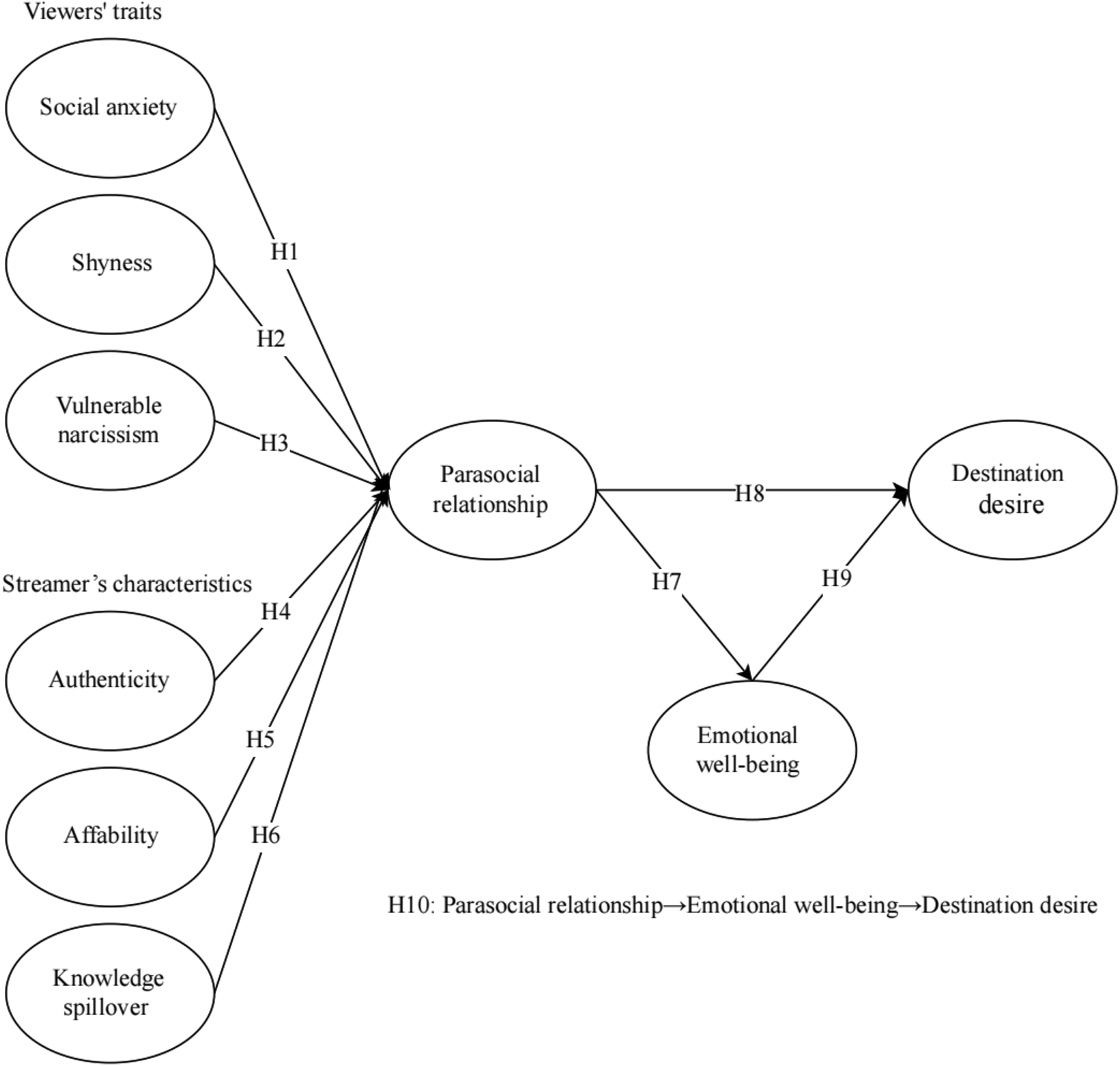
Proposed research model.
Methodology
Survey instrument
All variable items in this study were adapted from prior literature and tailored to the context of real-scene TLS, as detailed in the Online Supplemental Material. Specifically, social anxiety was measured using items from Hu et al. (2023), shyness from Schmidt et al. (2023), and vulnerable narcissism from Hendin and Cheek (1997). Authenticity was measured following Cheah et al. (2024), while affability was measured using Tskhay et al. (2018). Knowledge spillover was measured following the scale by Zheng and Fu (2024). Parasocial relationship items were drawn from Lim et al. (2020), and emotional well-being was measured using items from Baloglu et al. (2019). Finally, destination desire was measured using items from Lo et al. (2024). The questionnaire items were rated using a 5-point Likert scale (1 = strongly disagree, 5 = strongly agree).
A back-translation method was used to translate the original scales into Chinese. To ensure content validity, two tourism scholars reviewed both language versions. A pilot study with 63 participants from the target population was then conducted to improve the questionnaire by identifying potential wording issues and enhancing clarity.
Data collection
The target participants of this study were adult viewers who had watched real-scene TLS on TikTok within the past three months. TikTok has been frequently cited in previous real-scene TLS-related research due to its extensive volume of real-scene TLS content and its highly active, socially engaged user base (Chen et al., 2025). To test the research hypotheses, data were collected via an online survey conducted from June 24 to July 9, 2025, using the Credamo platform, which is widely adopted in tourism research. To ensure sample validity, the questionnaire was carefully designed. A combination of images and text clarified the concept of real-scene TLS, while a screening question restricted participation to respondents who had watched real-scene TLS within the past three months and provided a corresponding streamer ID. To mitigate common method bias, as recommended by Tehseen et al. (2017), data were collected at different times and through multiple channels. Purposive sampling targeted TikTok real-scene TLS fan groups, while convenience sampling was conducted via Chinese social media platforms such as WeChat and Little Red Book. Recruitment messages invited eligible participants to take part in the survey. Interested users were contacted via private messages, and those meeting the inclusion criteria were sent a link to the questionnaire. A total of 727 responses were collected, excluding pilot study data. Among them, 74 responses were deemed invalid (i.e. missing data, excessively short or long completion times, identical responses to all questions, and failure to pass attention check questions). After excluding these responses, a total of 653 valid questionnaires remained, yielding a validity rate of 89.8%.
Data analysis
This study employed structural equation modeling (SEM) to test the proposed hypotheses, following the two-step approach recommended by Anderson and Gerbing (1988). Confirmatory factor analysis (CFA) was first used to assess model fit, followed by hypothesis testing. Convergent and discriminant validity were evaluated using standardized factor loadings, composite reliability (CR), and average variance extracted (AVE), ensuring the constructs met reliability and validity requirements before further analysis. Data were analyzed using SPSS 27.0 and AMOS 26.0. AMOS was selected for its widespread application and robust capacity to model complex variable relationships.
Results
Sample characteristics
The demographic characteristics of the sample were analyzed using SPSS 27.0. A total of 653 participants were included (317 males, 336 females; age range: 18–57; Mage = 28.95, SDage = 8.387). Education levels were as follows: junior high school or below (1.5%), high school (11.3%), technical secondary school (6.9%), undergraduate (45.2%), associate degree (23.0%), and postgraduate degree (12.1%). Monthly income (CNY): 3000 and below (16.1%), 3001–6000 (35.7%), 6001–10,000 (32.3%), above 10,000 (15.9%).
Validity and reliability
This study conducted common method bias (CMB) and multicollinearity tests using SPSS 27.0. Harman's single-factor test indicated that the single-factor variance was 36.463%, which remained below the 50% threshold (Podsakoff et al., 2003). Accordingly, CMB was deemed negligible. Multicollinearity was assessed using the variance inflation factor, with values of all variables ranging from 1.503 to 1.952, well below the recommended cutoff of 3.3, thereby confirming the absence of multicollinearity and the appropriateness of the data for regression analysis. Additionally, the data fit the assumptions of a normal distribution, with skewness values varied between −0.911 and −0.352, while kurtosis values were between −0.936 and 0.280, thereby fulfilling the criteria of an absolute skewness value below 2 and an absolute kurtosis value below 7 (Hair et al., 2010).
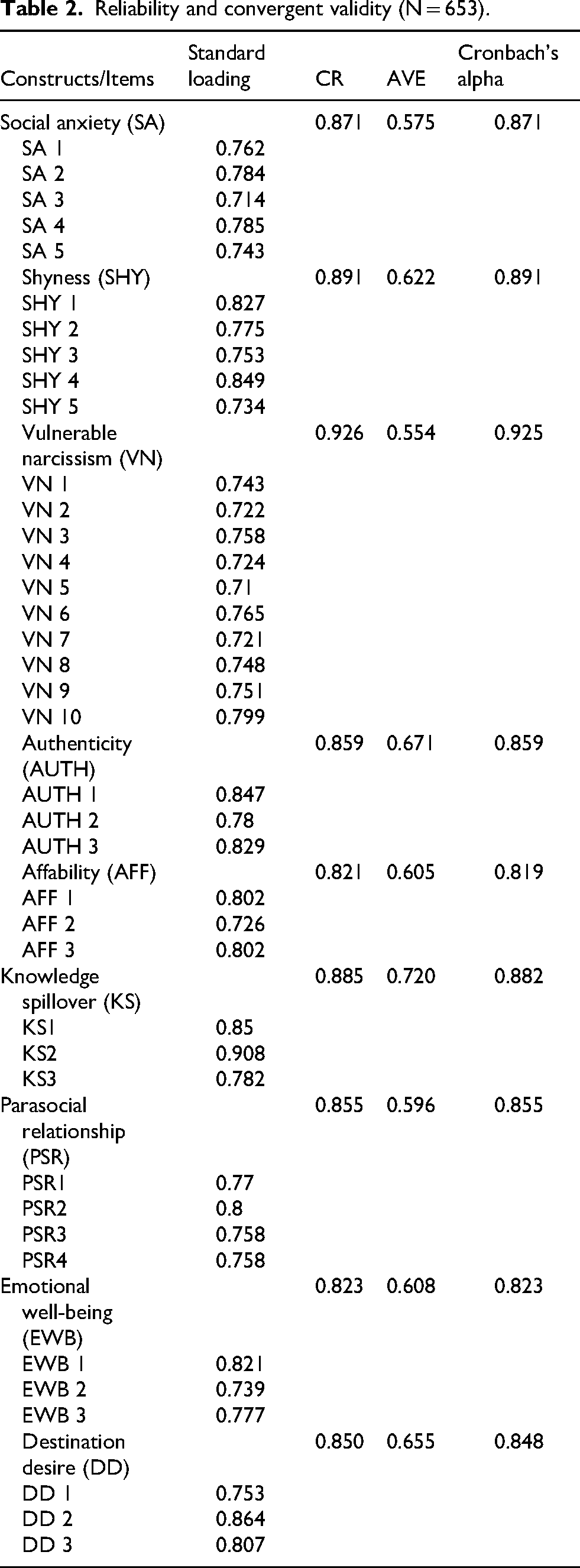
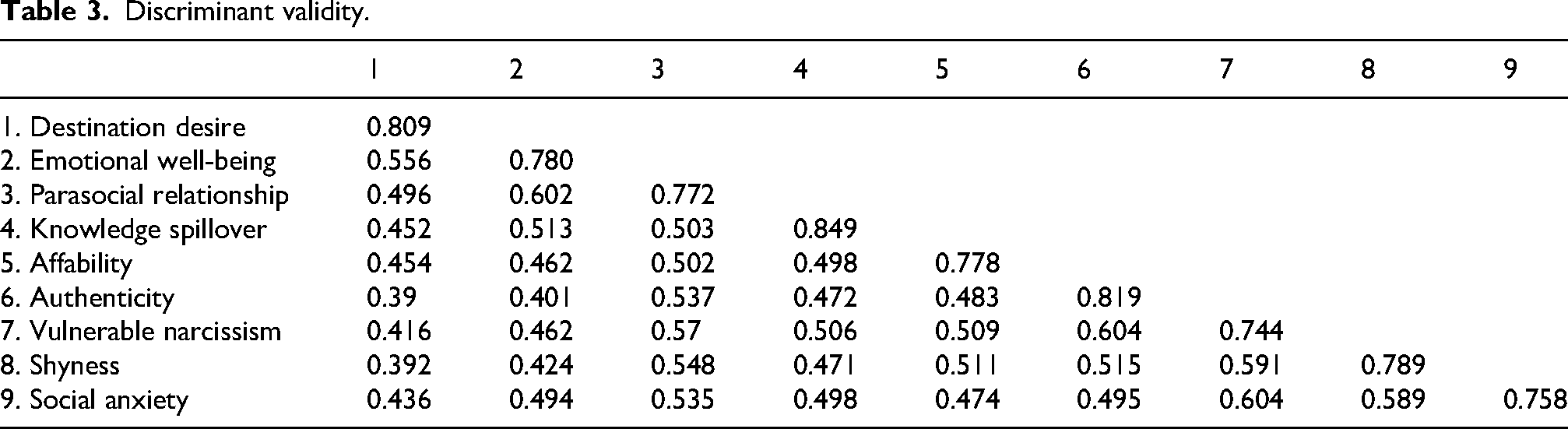
Furthermore, this study assessed the internal consistency of the questionnaire items through Cronbach's alpha. All scale items yielded alpha coefficients greater than 0.7 (Table 2), indicating strong reliability of the questionnaire scale. In addition, CR values for all constructs ranged from 0.821 to 0.926, surpassing the commonly accepted threshold of 0.7, thereby confirming the high reliability of the measured variables. To evaluate the measurement model, CFA was conducted. The model exhibited a good fit with the data, as indicated by the following fit indices: χ2 = 951.227, χ2/df = 1.428, RMSEA = 0.026, GFI = 0.931, NFI = 0.937, RFI = 0.930, IFI = 0.980, TLI = 0.978, CFI = 0.980. Moreover, the construct measurement validity was assessed through tests of convergent validity and discriminant validity. Standardized factor loadings of each measurement item across the respective constructs ranged from 0.71 to 0.908, demonstrating that each item effectively explains its respective construct. Additionally, the AVE values of all latent variables ranged from 0.554 to 0.720 (above 0.5), demonstrating adequate convergent validity (Hair et al., 2010). Finally, discriminant validity was evaluated according to the criteria proposed by Fornell and Larcker (1981), which require that the square root of the AVE value for each construct exceeds its correlations with all other latent constructs (Table 3).
Reliability and convergent validity (N = 653).
Discriminant validity.
Structural model and hypothesis testing
SEM analysis was conducted using AMOS 26.0 to test the proposed hypotheses. The overall model demonstrates a good fit: χ2 = 1037.302, χ2/df = 1.530, RMSEA = 0.029, GFI = 0.925, NFI = 0.932, RFI = 0.925, IFI = 0.975, TLI = 0.973, CFI = 0.975. All nine direct paths were significant and positive (p < 0.05), as shown in Figure 2. Social anxiety had a significant positive effect on parasocial relationship (β = 0.152, t = 2.969, p = 0.003), supporting H1. Shyness also showed a significant positive influence on parasocial relationship (β = 0.151, t = 3.010, p = 0.003), supporting H2. A positive relationship was found between vulnerable narcissism and parasocial relationship (β = 0.158, t = 3.013, p = 0.003), supporting H3. Streamer authenticity positively influenced parasocial relationship (β = 0.156, t = 3.177, p = 0.001), supporting H4. Streamer affability also had a positive effect on parasocial relationship (β = 0.146, t = 3.016, p = 0.003), supporting H5. Streamer knowledge spillover significantly impacted parasocial relationship (β = 0.168, t = 3.707, p < 0.001), supporting H6. Furthermore, parasocial relationship demonstrated significant positive effects on emotional well-being (β = 0.640, t = 12.964, p < 0.001), supporting H7. It also had a positive effect on destination desire (β = 0.310, t = 5.404, p < 0.001), supporting H8. Emotional well-being positively influenced destination desire (β = 0.357, t = 6.062, p < 0.001), supporting H9.
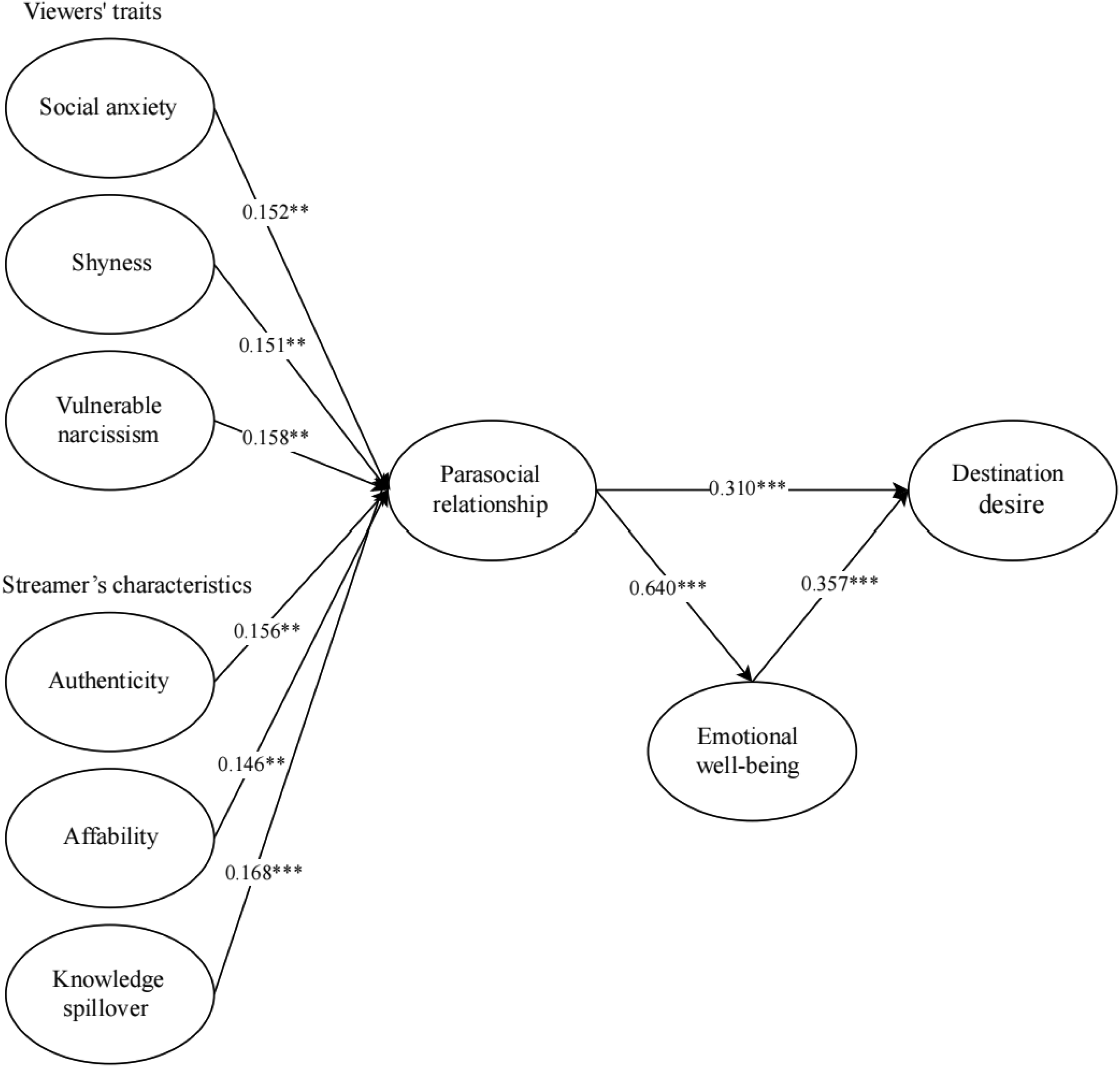
Structural model with standardized path coefficients.
To test the mediating role of emotional well-being between parasocial relationship and destination desire, the bootstrapping procedure in AMOS 26.0 was employed (Jose, 2013), with 2000 bootstrap samples and both percentile and bias-corrected confidence intervals set at a 95% confidence level. The confidence intervals’ lower and upper bounds were used to evaluate the point estimates of the mediation pathways, with effects deemed statistically significant only when the confidence intervals excluded zero. As presented in Table 4, the indirect effect of parasocial relationship on destination desire via emotional well-being was significant and positive, supporting H10.
Estimates of indirect paths.

Discussion
This study provides robust empirical evidence that vulnerable narcissism is the strongest predictor of parasocial relationships. This finding aligns with Greenwood et al. (2018), who suggest that individuals with vulnerable narcissism often face high social pressure and low interpersonal rewards, leading them to form parasocial relationships with media figures (e.g. streamers) to avoid evaluative anxiety. Social anxiety also significantly predicts parasocial relationships. This contrasts with earlier studies on traditional social media celebrities, where social anxiety had little relevance to parasocial friendships (Tatem and Ingram, 2022). One potential explanation is that traditional social media celebrities tend to present more distant and curated personas, whereas streamers may appear more approachable, thereby reducing psychological distance (Zhang et al., 2022). Another explanation lies in media context differences: real-scene TLS combines the relaxing nature of tourism with social interaction (Zhang et al., 2025), creating a psychologically supportive environment for socially anxious individuals (Zhang and Xiao, 2023), which may foster parasocial relationships. This study finds that shyness positively influences parasocial relationships. Although shy individuals tend to avoid offline interactions, they actively seek online friendships to fulfill their social needs (Baker and Oswald, 2010). Prior research has also observed similar patterns, indicating that introverts are more likely to develop parasocial relationships with media figures (McLaughlin and Wohn, 2021).
Among streamer characteristics, knowledge spillover emerges as the strongest antecedent of parasocial relationships, a result that parallels the views of Sun et al. (2021), indicating that streamers’ knowledge spillover enhances viewers’ self-perceived subjective knowledge, which in turn motivates them to socially engage with the streamer. This study also echoes the increasing scholarly interest in livestreaming research to streamers’ knowledge spillover (Xie et al., 2022; Zheng and Fu, 2024). Authenticity also shows a significant positive effect on parasocial relationships, consistent with prior research suggesting that authenticity fosters positive interpersonal outcomes in real-world interactions (Tang et al., 2021). Although parasocial relationships are inherently one-sided, streamer authenticity in TLS can replicate mechanisms of face-to-face interactions, thereby enhancing the formation of such relationships. Furthermore, streamer affability positively influences parasocial relationships. Previous studies have shown that affability helps create a sense of online belonging for viewers, reinforcing emotional connections (Chen and Wu, 2024). Extending this, this study confirms the direct effect of affability on parasocial relationships.
While social media facilitates the development of parasocial relationships that benefit well-being (Hoffner and Bond, 2022), such mechanisms are rarely examined in TLS. This study reveals a positive association between parasocial relationships and emotional well-being, differing from prior research on youth populations (average age 20.6), which found no significant link between the two (Ravi and Patki, 2025). This discrepancy may result from differences in sample composition, as the present study includes a broader age range from 18 to 57. This result also echoes the United Nations Sustainable Development Goal 3, “Good Health and Well-being” (UN, 2030), suggesting that real-scene TLS may serve as an effective medium for improving emotional well-being among individuals facing social difficulties and psychological stress. Additionally, viewers’ destination desire is shaped by their parasocial relationships with streamers and emotional well-being, extending prior research on media-driven tourism influence (e.g. Ji et al., 2024; Wang et al., 2025). This study draws on the concept of parasocial relationships to explain how real-scene TLS stimulates potential tourists’ desire to visit a destination. As parasocial relationships closely resemble real-life social bonds (Rosaen and Dibble, 2016), real-scene TLS effectively reduces the psychological distance between viewers and streamers. The perceived intimacy developed through these one-sided relationships fulfills viewers’ social needs and enhances emotional well-being, which in turn fosters destination desire.
Lastly, the indirect effect of parasocial relationships on destination desire via emotional well-being is significant, revealing a broader psychological process through which generalized parasocial relationships shape destination desire. The mediating role of emotional well-being demonstrates its potential utility. Parasocial relationships offer social compensation for individuals with tendencies toward offline social avoidance (de Bérail et al., 2019), thereby improving their emotional well-being. As Bi et al. (2021) noted, positive emotions can facilitate shifts in behavioral intentions among potential tourists.
Implications
Theoretical implications
To the best of the authors’ knowledge, this is the first study to introduce viewers’ social compensatory psychology into real-scene TLS research and empirically examine the influence of three viewer personality traits associated with social compensation (i.e. social anxiety, shyness, and vulnerable narcissism) on destination desire. Existing empirical studies have primarily focused on external environmental stimuli in real-scene TLS, such as features, attributes, and servicescape, in shaping destination desire (Ji et al., 2024; Wang et al., 2025; Zhang et al., 2025; Zheng et al., 2023), while largely neglecting viewer-related factors. Given the critical role of individual traits in shaping behavioral intentions (Deng et al., 2023), this study shifts the focus to viewer personality traits and develops and validates a theoretical model that identifies the psychological antecedents of destination desire. Scholars have acknowledged that the mechanism of social compensatory psychology offers a valuable perspective for social media research by integrating individual traits, media environments, and behavioral outcomes (O’Day and Heimberg, 2021), though its application in TLS remains scarce. With the growing prevalence of offline social avoidance (Yusheng, 2020), real-scene TLS is increasingly regarded as an alternative to physical travel; it offers a psychologically supportive environment for socially avoidant individuals to relieve stress, build social connections, and experience enriched forms of tourism (Li et al., 2023; Zhang and Xiao, 2023). The primary motivation for viewers to engage with TLS lies in their pursuit of social connection (Liu et al., 2022). As a pioneering attempt, this study reveals how personality traits’ pursuit of social compensation can drive destination desire, offering a new analytical framework for understanding viewer psychology and destination marketing, while deepening insight into how individuals use digital media to reconstruct self-related experience and foster destination desire.
Second, although the influence of streamer characteristics on viewer experiences and psychological responses has been widely acknowledged, empirical research in the context of real-scene TLS remains scarce (Shao and Huang, 2025). Existing studies have examined streamers’ interaction strategies, such as responsiveness and typologies (i.e. celebrities, key opinion leaders, and brand streamers), offering empirical evidence of their effect on destination desire (Zhang et al., 2024; Zheng and Fu, 2024). Addressing this gap, the present study proposes and validates three key streamer characteristics: authenticity, affability, and knowledge spillover. In TLS research, streamer influence is often understood as a persuasive process (Li et al., 2023), drawing on Aristotle's rhetoric persuasion modes (Murphy, 1981), which comprise appeals to credibility, emotion, and logic (Li et al., 2023). This study demonstrates that the three proposed characteristics align with these rhetorical persuasion appeals and contribute to viewers’ destination desire. Future research is encouraged to further explore additional streamer characteristics to deepen the understanding of how streamers stimulate destination desire mechanisms that operate in TLS contexts.
Third, this study represents the first attempt to contextualize parasocial relationship theory within the real-scene TLS field by identifying the antecedents and outcomes of parasocial relationships. Accordingly, it provides empirical evidence for the validity of Horton and Richard Wohl's (1956) parasocial relationship theory in tourism social media marketing and extends its relevance within tourism-related social media research. Whereas prior studies in tourism social media marketing have predominantly relied on traditional bilateral relationship theories, the concept of parasocial relationship offers deeper insights into the one-sided, illusionary relationships formed between viewers and streamers in a web-mediated environment (Deng et al., 2022; Steinhoff et al., 2019). Furthermore, although recent tourism studies have increasingly addressed parasocial phenomena, most have primarily focused on parasocial interaction, an episodic and situational process used to explain user behavioral intentions (e.g. Bi et al., 2021; Yılmazdoğan et al., 2021), while giving less attention to more enduring parasocial relationships that closely resemble real-life interpersonal bonds. Drawing on the social compensation hypothesis, this study investigates the psychological antecedents of parasocial relationships and is the first to empirically identify social anxiety, shyness, and vulnerable narcissism as significant personality-based predictors associated with social compensatory motivations. As previous studies have reported inconsistent findings regarding which social compensation variables effectively predict parasocial relationships, most have focused on state-based compensatory factors (e.g. loneliness, need to belong) (Rosaen and Dibble, 2016). Building on this foundation, the study extends the earlier work by focusing on personality-based compensatory variables and provides robust empirical evidence within the real-scene TLS. The findings support Tsao's (1996) view that individuals’ tendencies to form parasocial relationships mirror their habitual social interaction patterns, which are largely shaped by stable individual traits. These insights advance understanding of how parasocial relationships are formed and expand the application of the social compensation perspective in mediated communication. At the outcome level, prior tourism studies have predominantly emphasized the influence of parasocial relationships on behavioral intentions (Lu et al., 2023), while empirical research on their emotional outcomes remains limited (Hoffner and Bond, 2022). As a response, this study verifies emotional well-being as a consequential outcome of parasocial relationships, highlighting the value of parasocial relationships in enhancing social connectedness and promoting viewers’ well-being.
Finally, this study offers an additional contribution by revealing the mediating role of emotional well-being. The findings indicate that parasocial relationship influences destination desire both directly and indirectly. Parasocial relationship with streamers enhances viewers’ emotional well-being, an optimal state of functioning (Fredrickson, 2004), and further ensures valence consistency in affect transfer, thereby maintaining positive destination desire. This finding emphasizes emotional well-being as a stable emotional resource in linking digital engagement to real-world behavioral outcomes.
Practical implications
This study provides practical insights for tourism practitioners, MCN agencies, and destination marketing. First, the findings highlight the critical role of viewers’ traits, such as social anxiety, shyness, and vulnerable narcissism, in fostering parasocial relationships in real-scene TLS. To address the social compensation needs associated with these traits, streamers should prioritize cultivating a socially secure and supportive live-streaming environment. One implication is for streamers to enable anonymous viewing modes (as available on platforms like TikTok) to limit access to other viewers’ personal information (i.e. usernames or profiles), thereby reducing perceived vulnerability, lowering psychological barriers, and encouraging inclusive engagement. Given that vulnerable narcissism is the strongest predictor of parasocial relationships, streamers should also focus on fostering recognition and validation. Acknowledging viewer comments or questions can enhance individuals’ sense of visibility and value. Additionally, streamers should avoid publicly displaying interaction rankings or disproportionately spotlighting highly active viewers, as such practices may induce upward social comparison (Kong et al., 2021) and intensify the social insecurity linked to vulnerable narcissism.
Second, for tourism practitioners aiming to leverage real-scene TLS, this study shows that authenticity, affability, and knowledge spillover are vital in enhancing viewers’ parasocial relationships, thereby increasing emotional well-being and destination desire. Among these, knowledge spillover is the most influential. Streamers should tailor their content based on viewers’ questions; for example, when streaming at cultural tourism sites, they may incorporate classical literature, historical events, or local stories relevant to the site to enhance viewer engagement (Li et al., 2023). MCN agencies should support this by providing relevant content resources and targeted training. Authenticity and affability are also confirmed as essential streamer characteristics. This indicates that streamers need to respond sincerely to viewers’ needs, prioritize their concerns, and present the destination objectively. These practices reduce viewers’ psychological defenses during the brief TLS sessions and foster rapid interpersonal rapport (Li et al., 2024). Additionally, streamers can maintain affability by smiling and creating a relaxed atmosphere, which promotes intimacy (Schlütz and Hedder, 2022), triggers a parasocial relationship, and ultimately enhances viewers’ destination desire.
Finally, the findings reveal that parasocial relationship significantly influences emotional well-being. To capitalize on this, streamers should create emotionally engaging content and respond to interactive comments. This study recommends storytelling techniques to compellingly convey destination information and enhance enjoyment. Additionally, a parasocial relationship may transfer into destination desire, highlighting the importance of maintaining a consistent TLS frequency. For viewers with real-world social difficulties, streaming interruptions can lead to parasocial break-ups (Cohen, 2004). Streamers should strategically schedule broadcasts to ensure sustained interaction and foster destination desire. These findings also provide actionable insights for destination marketing. Strengthening collaborations with travel streamers and leveraging platform-specific features, such as live-stream reminders and playback options, can expand viewer reach and enhance destination visibility.
Limitations and future studies
First, the study focuses on real scene TLS streamer characteristics but does not explore the broader influence of the streamer's follower size. In tourism influencer marketing, the relationship between influencers’ follower size and consumer engagement intention has been found to exhibit an inverted-U relationship (Guo et al., 2024). While an increase in follower size can increase the persuasiveness of tourism information and strengthen engagement intentions, it may simultaneously weaken the sense of intimacy between influencers and consumers, thereby reducing willingness to engage (Guo et al., 2024). Future research could therefore categorize streamers by follower size (nano-, micro-, macro-, and mega-streamers) to examine how these factors shape parasocial relationships, emotional well-being, and destination desire. Second, this research used SEM, which assumes symmetric and linear relationships and may not capture the complexity of multiple causal paths. Recent studies in tourism increasingly use Fuzzy-set Qualitative Comparative Analysis (fsQCA) to address multiple realities and the limits of symmetric statistical tests. Future research could adopt fsQCA to explore how diverse combinations of conditions influence the outcomes. Lastly, although this study provides valuable insights within the Chinese context, it does not address potential cultural differences in real-scene TLS usage experiences. Since cultural factors may shape individuals’ cognition and behavior (Chen et al., 2025), future research should incorporate data from other countries where TLS is prevalent (e.g. Australia) to yield more comprehensive insights. In addition, cultural differences may influence the relationship between parasocial relationships and emotional well-being. While the present study demonstrates a significant positive association between the two in the Chinese context, evidence from a study conducted in a different cultural setting found no such relationship (Ravi and Patki, 2025). Replicating this research across diverse cultural contexts is therefore essential to ascertain the applicability and robustness of the findings.
Supplemental Material
sj-docx-1-jvm-10.1177_13567667251398013 - Supplemental material for From viewers to tourists: Compensation psychology in travel live streaming
Supplemental material, sj-docx-1-jvm-10.1177_13567667251398013 for From viewers to tourists: Compensation psychology in travel live streaming by Yilin Hu and Huawen Shen in Journal of Vacation Marketing
Footnotes
Authors’ note
Dr. Yilin Hu obtained her PhD degree from City University of Macau. She is currently working in School of Tourism Management, Wuhan Business University (No. 816 Dongfeng Avenue, Wuhan Economic and Technological Development Zone, Wuhan 430056, China), where the research associated with this article was carried out and supported. Accordingly, Wuhan Business University is listed as her first affiliation.

Ethical approval and informed consent
This study did not require further ethics committee approval as it did not involve animal or human clinical trials and was not unethical. Before participating in the online survey, all respondents were presented with a detailed informed consent statement outlining the study's purpose, procedures, estimated duration, and their rights as participants. They were informed that participation was entirely voluntary, and they could withdraw at any time without penalty. Participants were assured of full anonymity and confidentiality and were made aware that there were no foreseeable risks involved. Only those who confirmed their understanding and voluntary agreement to participate were permitted to proceed. Contact information for the researcher was provided to address any questions related to the study or participant rights.
Funding
The authors received no financial support for the research, authorship, and/or publication of this article.
Declaration of conflicting interests
The authors declared no potential conflicts of interest with respect to the research, authorship, and/or publication of this article.
Data availability
The data are available from the corresponding author upon reasonable request.
Supplemental material
Supplemental material for this article is available online.
References
Supplementary Material
Please find the following supplemental material available below.
For Open Access articles published under a Creative Commons License, all supplemental material carries the same license as the article it is associated with.
For non-Open Access articles published, all supplemental material carries a non-exclusive license, and permission requests for re-use of supplemental material or any part of supplemental material shall be sent directly to the copyright owner as specified in the copyright notice associated with the article.
