







Abstract
Acknowledging the contribution of digital nomads to sustainable tourism in host destinations, this study aims to identify factors influencing this behavior in emerging markets. By applying the theories of stimulus-organism-response and self-determination, a framework is developed to explore sustainable tourism support for digital nomads through a multimethod approach. At the qualitative stage, semi-structured interviews were undertaken with 16 digital nomads. These interviews helped identify key dimensions of social integration and psychological motives influencing engagement and support for tourism destinations. At the quantitative stage, a web-based survey was administered in Taiwan (N = 385) and Vietnam (N = 404). Partial least squares structural equation modeling and multi-group analysis were used to examine the theoretical framework. The findings reveal that social integration and psychological motives serve as the stimulus and organism. Social integration fosters a sense of relatedness among digital nomads in Taiwan, while strengthening autonomy in Vietnam.
Keywords
Introduction
Tourism significantly contributes to the global economy and facilitates sustainable development (e.g. social cohesion, environmental conservation, cultural diversity) (Becken, 2005; UNWTO, 2017). Many sustainable tourism practices with the prospect of reducing environmental impacts, such as long-stay and slow-travel lifestyles, have attracted public attention (Dickinson and Peeters, 2014; Gabarda-Mallorquí et al., 2021). Digital nomadism refers to a promising pathway for skilled employees’ emancipation from corporate constraints, social norms, and territorial boundaries by leveraging the Internet and digital work practices (Schlagwein, 2018). This labor form is linked to values such as freedom, flexibility, and self-actualization, allowing people to live and work anywhere (Wang et al., 2025). Digital nomadism is often associated with principles of sustainable mobility, as the lifestyle encourages flexible travel and remote work practices that can reduce environmental impacts (Jiwasiddi et al., 2024). It contributes positively to host communities by bringing knowledge and expertise, revitalizing local economies (high expenditure and lengthy stay), and environmental stewardship (Gupta et al., 2024; Günay et al., 2024; Lacárcel, 2025). Although digital nomads contribute to sustainable social responsibility (Mourato et al., 2023), existing literature on their impacts on local communities remains limited (Hannonen et al., 2023). This underscores the need to further investigate the role of digital nomadism in local development and sustainability (Zhang et al., 2024a).
Social integration reflects individuals’ social connectedness or institutional linkages within their community (Seeman, 1996). Through social integration, people form shared identities connected to their place, and these emotional bonds make them care about social well-being and behave responsibly to maintain sustainability (Uzzell et al., 2002). Sustainability engagement, which denotes support for long-term environmental, social, and economic well-being (Saunila et al., 2019), is influenced by such community ties. From the host regions’ standpoint, digital nomads generate more income for local economies since their stay is longer than that of business tourists and their spending surpasses that of leisure tourists. They also undertake social responsibilities such as developing business networks between locals and remote workers, knowledge sharing, and encouraging destination innovation (Kozak et al., 2024). In contrast to mass and marine tourism, which often exert significant pressure on environmental resources (Günay et al., 2024; Simonsen et al., 2019), digital nomads tend to favor less crowded sites and explore less frequented areas, which may help reduce environmental and cultural pressures on destinations (Lacárcel, 2025). Although digital nomads contribute to social, economic, and environmental sustainability (Mourato et al., 2023) and integrate into destinations as neighbors rather than mere customers (Kozak et al., 2024), little is known about how digital nomads integrate socially, prompting an inquiry into a mechanism that links social cohesion to sustainable tourism outcomes.
Psychological integration is a further stage of social integration and a crucial factor in ensuring that culturally or ethnically diverse groups can truly feel part of a unified community (Xie et al., 2022). Despite their transient nature, digital nomads also enhance socialization with residents and build sustainable relationships, enabling them to integrate as neighbors within local regions (Cheung and Leung, 2011; Kozak et al., 2024; Lee et al., 2019). Psychological motives influence their lifestyle (Hensellek and Puchala, 2021). Digital nomads are motivated by values such as well-being and self-development (Chevtaeva and Denizci-Guillet, 2021; Sánchez-Vergara et al., 2023), driven by beliefs in autonomy, effort, and mobility (Tiberius et al., 2024). Psychological drives, such as freedom and relatedness, encourage travelers to engage with their surrounding environment or destinations (Lin et al., 2024; Van Winkle and Lagay, 2012). Currently, few studies have examined their internal psychological mechanisms (e.g. belonging, autonomy, and values) that translate social cohesion into sustainable engagement. Such a gap raises the question regarding the role of psychological motives mediating social integration and sustainable tourism engagement.
With the rise of budget airlines and mobile technology, Asia has become a hub for digital nomads (Akgiş İlhan et al., 2024). However, the behavioral dynamics of this group in Asia remain insufficiently studied. Taiwan and Vietnam are two prominent Asian destinations for digital nomads (Singh et al., 2020; Symons and Marsden, 2024), yet they differ in economic development, visa and tax policies (KC and Triandafyllidou, 2025; KPMG, 2025), and appeal to mobile professionals (Hall et al., 2019; Wallace, 2025). These disparities shape different behavioral patterns among digital nomads in each location. This highlights the need to examine whether the behavioral engagement with sustainable tourism of digital nomads differs between emerging markets (e.g. Vietnam and Taiwan).
We explore how sustainability-related behaviors are formed and the contribution of social integration and psychological motives in building this mechanism. We combined the stimulus-organism-response (S-O-R) model and Self-Determination Theory (SDT) to develop a theoretical framework. Based on empirical data collected in Taiwan and Vietnam, we employed a mixed-methods design, including semi-structured interviews, partial least squares structural equation modeling, and multi-group analysis (MGA), to explain the phenomenon. The two research questions (RQ) are as follows: RQ1: What are the key dimensions of social integration and psychological motives that drive digital nomads’ engagement with host tourism destinations? RQ2: How do the mechanisms derived from social integration and psychological motives contribute to shaping digital nomads’ destination engagement? RQ3: Do different host destination contexts (i.e. Vietnam and Taiwan) shape differences in digital nomads’ engagement and support behaviours?
After the introduction, the paper proceeds as follows: Section Literature review and hypothesis development reflects the relevant literature to build the conceptual framework. Sections Research overview and Methods describe mixed-methods design and present results, followed by discussions and implications in Section Conclusion and implications.
Literature review and hypothesis development
Digital nomads and sustainable tourism
Digital nomads are remote independent workers who often engage in leisure travel, supported by technological advancements that facilitate remote work (Chevtaeva and Denizci-Guillet, 2021). Beyond finding work-life spaces, some digital nomads choose destinations based on opportunities for tourism, culture, and personal growth (Sánchez-Vergara et al., 2023). Because of their mobile nature, there is no universally consistent legal classification across countries. While several destinations, such as South Korea and Japan, have introduced specific “digital nomad visas” (Dreher and Triandafyllidou, 2023), the regulatory frameworks in many countries (e.g. Mexico, Vietnam) still permit foreigners to engage in remote work under tourist or other visas (KC and Triandafyllidou, 2025). Therefore, to ensure conceptual clarity and cross-national comparability, this study defines digital nomads based on their functional characteristics (i.e. individuals who engage in sustained remote work while traveling) rather than visa status (Gupta et al., 2024). Certain groups of digital nomads engage in sustainable mobility practices. This is demonstrated through their lifestyle, which involves remote work practices that reduce environmental impacts (Jiwasiddi et al., 2024). Upon arriving at a host destination, digital nomads contribute knowledge and expertise, as well as generate revenue for the local community through extended stays (Gupta et al., 2024; Günay et al., 2024; Lacárcel, 2025). However, the sustainable aspects of digital nomads’ mobility practices, as well as their engagement in host destinations, remain largely unexplored, revealing a conceptual gap that this study seeks to address.
Though their lives revolve around nomadic activities, digital nomads often face contradictions between autonomy and disconnection, struggling with social isolation and long-term integration (Günay and Akgiş İlhan, 2024). Their goal is to achieve independence in their work and structure a life that aligns with their desires (Tiberius et al., 2024). But they are also aware that the drawbacks of this lifestyle include isolation and loneliness (Orel, 2021). For example, they are often criticized by locals for contributing to economic decline because they isolate themselves from host communities (Xiao and Lutz, 2025), which makes locals perceive them as outsiders (Gupta et al., 2024). Digital nomads are not like regular tourists; they need more information about destinations. Residents are a crucial source of knowledge that helps them understand local institutions, language, and culture (Miocevic, 2025). Thus, digital nomads need to build social connections with host communities (Lacárcel, 2025), which in turn fosters their sense of belonging (Miguel et al., 2025). To do this, they make efforts to build sustainable relationships, which require a long-term commitment, or within their limited time in local communities by joining pre-existing communities or dedicated programs that align with their lifestyle (Lee et al., 2019). Another study indicated that host regions consider digital nomads attractive to destinations because of the benefits they bring to locals, such as exchanging practical knowledge, fostering creative collaboration, economic contribution, and promoting cultural exchange (Kozak et al., 2024). Acknowledging the complexity in the engagement between digital nomads and locals, Xiao and Lutz (2025) argue that digital nomads should be educated about local issues and encouraged to attend cultural events, while locals should learn to understand the values, priorities, and habits of digital nomads.
Sustainable tourism balances current and future economic, social, and environmental considerations to meet stakeholders’ expectations (e.g. tourists, business, inhabitants) (McKenna and Hanrahan, 2024). Inspired by a sense of sustainable social responsibility toward local regions where they live, digital nomads contribute to regional development by protecting local environments (Mourato et al., 2023; Poulaki et al., 2023). Additionally, Mourato et al. (2023) reveal that digital nomads highly value a sense of community, a clear legal framework, and efficient bureaucracy to fulfill their sustainable responsibilities. Jiwasiddi et al. (2024) unveil that digital nomads are likely a more “sustainable” option than other traveler types (e.g. backpackers, mass tourists, expats) in Chiang Mai (Thailand) because of the contribution of knowledge transfer and remote work encouragement in local communities. Prior studies have sought to demonstrate how digital nomads strive to embed in local communities by engaging in sustainable activities across various aspects.
Foundational theory: stimulus-organism-response theory
The S-O-R theory offers a foundational framework for understanding how environmental attributes (stimulus) impact individual behavior (response) through perception and emotion (organism) (Mehrabian and Russell, 1974). It is useful for evaluating tourist responses, offering deep insight into how tourists perceive and react to external stimuli (Bai et al., 2025; Shi et al., 2022). The theory is valuable in sustainability research to explain consumer behavior in environmentally conscious contexts. For instance, Talwar et al. (2023) examined how informational and environmental stimuli shape attitudes toward virtual reality (VR) and eco-guilt, framing VR tourism as a sustainable option. Similarly, Wang et al. (2024) linked tourists’ affective solidarity with locals and co-creation experiences to sustainable tourism. Accordingly, this study applies the S-O-R theory to model psychological responses that shape sustainable tourism support in reaction to various stimuli.
Social integration (Stimulus). Stimulus refers to external environmental or socio-cognitive cues that trigger internal cognitive and affective states (Lee et al., 2011; Lin and Lo, 2016). Social integration can serve as an environmental cue influencing tourist behavior. In contrast to social isolation, social integration is defined as the individual's connectedness within their social networks (Seeman, 1996) and serves as a driver of psychological integration (Xie et al., 2022). Unlike other types of tourists, digital nomads foster cross-cultural integration and enrich local cultures through the exchange of diverse perspectives and traditions, enhancing tolerance for cultural diversity (Gupta et al., 2024). Community development promotes social integration by enhancing socialization and reinforcing residents’ neighborhood identification, fostering a sense of belonging and benefiting both individuals and communities (Cheung and Leung, 2011). Social integration mechanisms facilitate external knowledge acquisition and innovation by strengthening linkages among individuals, groups, and organizations (Von Briel et al., 2019). Digital nomads contribute to local development by supporting small businesses, transferring digital skills to civilians, and supporting environmental sustainability (Jiwasiddi et al., 2024; Kozak et al., 2024; Lacárcel, 2025). This research, therefore, conceptualizes social integration as a stimulus encompassing cultural integration, community development, and knowledge sharing.
SDT: Psychological motives (Organism). Both SDT and the S-O-R framework emphasize the crucial role of internal motivation in forming behavioral outcomes (Deci et al., 2017; Shi et al., 2022). In the S-O-R framework, organisms refer to internal states (e.g. emotional, cognitive, and physiological responses) (Mehrabian and Russell, 1974; Talwar et al., 2023). Similarly, in SDT, intrinsic motivations and basic psychological needs (autonomy, competence, relatedness) lead to distinct outcomes, such as performance, persistence, and creativity (Deci et al., 2017). First, autonomy is defined as the freedom to make judgments and issue enforceable decisions within an individual's scope of operations (Ballou, 1998). Tourists’ autonomy is related to a sense of freedom, diminished external control, and immersion in their activities (Kim, 2026). Autonomy influences digital nomads’ rejection of traditional routines and office-based work (Reichenberger, 2018). They seek independence and freedom, preferring living and working environments where they can develop a network to alleviate insecurities (Günay and Akgiş İlhan, 2024).
Secondly, relatedness is the sense of belonging and connectedness to others, groups, or cultural integration (Ryan and Deci, 2000). Tourists’ relatedness can be obtained through a two-way connection between oneself and residents in tourism attractions (Kim, 2026). This need for connection also appears in the behavior of freelance workers (e.g. digital nomads), who often select spaces of communal belonging for reasons such as “interactive environments,” “social interaction,” and “tired of home isolation” (Merrell et al., 2021). Driven by relatedness, digital nomads connect with peers and local citizens to fulfill social needs and cultivate a sense of belongingness (Cheung and Leung, 2011). Finally, value is a special type of belief that is cultivated from preferred objects, ethos, behavioral patterns, and ultimate life goals. Values comprise preferences, optimal standards, desirability, and normative obligations, and provide a standard to evaluate things, people, and ideas (Horley, 1991). The lifestyle values of digital nomads are self-determination (Cook, 2023), connectedness to locals (Lacárcel et al., 2024), freedom, personal growth, and self-fulfillment (Chevtaeva and Denizci-Guillet, 2021; Sánchez-Vergara et al., 2023; Tiberius et al., 2024). Their values reflect shared experiences and cultural integration (Lacárcel et al., 2024).
Hence, this study uses the autonomy and relatedness of SDT and distinctive characteristics of digital nomads (e.g. values and beliefs) to conceptualize the organisms within the S-O-R framework.
Supporting Sustainable Tourism (Response). The response explains the behavioral reaction or outcome (Mehrabian and Russell, 1974). People react to external environments in two ways: with positive response or avoidance behavior (Manthiou et al., 2017). Engagement refers to the extent of physiological change in response to stimulus relative to task demand (Bradshaw et al., 2011). Destination engagement serves as a crucial antecedent of support for sustainable tourism, proving that a strong affective bond to a destination enhances pro-sustainability behaviors (Zakiah et al., 2023). Digital nomads contribute to local communities by engaging in activities that reflect their care about sustainable social responsibility in the places where they live (Mourato et al., 2023). They build deep connections with fellow travelers and locals, giving back to local destinations through eco-friendly volunteer programs (Poulaki et al., 2023).
Hypothes development
Social integration → value and beliefs
Maxwell (1996) indicated that social integration involves building shared values. Social integration is conceptualized as the condition in which people of diverse beliefs, values, and backgrounds coexist peacefully and equally (Schiefer and Van der Noll, 2017). While ordinary migrants seek regions where they can share lifestyles, values, and beliefs (Hannonen, 2020), digital nomads believe their core values are connectedness with and belonging to local communities (Günay and Akgiş İlhan, 2024; Lacárcel et al., 2024). They achieve integration with residents through shared experiences and local cultural engagement (Lacárcel et al., 2024). Local regions also highly value the role of digital nomads compared to other tourists due to their economic and social contribution (Kozak et al., 2024). Indeed, social integration is promoted when community members share similar values and complement one another's personal needs in their social interactions (Blau, 1960). Hence, we suggest the hypothesis:
Social integration → relatedness
Social integration has a positive influence on migrants’ sense of relatedness to a host city (Chen et al., 2020). When individuals feel integrated and fit into a local culture, they perceive it as supporting their psychological demands (e.g. relatedness, competence, autonomy). Therefore, they often internalize the norms and develop stronger senses of identification with that culture (Chirkov et al., 2005). Strong relatedness fosters active community involvement, emphasizing the need to cultivate this connection for effective community engagement (Zanbar, 2020). Social integration also reflects the extent of individuals’ social ties within their community (Seeman, 1996). Social ties foster a sense of belonging among digital nomads to their community (Miguel et al., 2025). Hence, we hypothesize:
Social integration → autonomy
Social integration and autonomy are documented in earlier research as “group cohesion” and “social support.” Social integration indicates the extent to which individuals maintain supportive relationships within their community (social support), while autonomy reflects the ability to control work activities (McCloskey, 1990). The nature of social cohesion is genuinely communal, representing how people behave together in social groups to engage in autonomous behaviors that have common goods (Heuser, 2005). Digital nomads demonstrate their “social support” by sharing knowledge, entrepreneurial skills, and mindsets with inhabitants (Cook, 2023) or supporting the local economy (Thompson, 2019). Concurrently, they seek independence and freedom, and they resist traditional routines and office-based work (Günay and Akgiş İlhan, 2024; Reichenberger, 2018). In some cases, social integration is effective in mitigating or preventing the negative effects of low autonomy (McCloskey, 1990). The hypothesis mentioned below:
Value and beliefs → destination engagement
Investigating the relationship between values, beliefs, and tourism engagement is crucial for theoretical and practical implications, as it sheds light on psychological motives driving actual behavior (Denley et al., 2020). For example, personal values (e.g. conservation, openness to change) significantly influence tourists’ engagement in ecotourism (Paul and Roy, 2024). In the context of digital nomadism, the pursuit of authenticity and connection with host communities and local cultures reflects the values of digital nomads (Lacárcel et al., 2024). These foster their cultural exchange and local engagement (Gupta et al., 2024). Therefore, many digital nomads demonstrate readiness for social engagement and contribute to local regions, such as Thailand (Jiwasiddi et al., 2024). We suggest a hypothesis:
Relatedness → destination engagement
Individuals’ sense of belonging positively influences their engagement with a community (Gruss et al., 2020). Building on this, to encourage tourists to strongly engage with types of tourism, such as the metaverse, we need to create environments that satisfy their psychological needs of relatedness, competence, and autonomy (Zhang et al., 2024b). Although digital nomads highly prioritize freedom and self-determination, they sometimes experience feelings of loneliness (Von Von Zumbusch and Lalicic, 2020). Consequently, they tend to seek opportunities to build meaningful and sustainable relationships (Lee et al., 2019). While digital nomads meet their basic needs during trips, they seek a sense of citizenship by connecting with like-minded individuals. Their values highlight the importance of socialization and psychological support, shaping their sense of belonging and engagement with local communities (Günay and Akgiş İlhan, 2024). The hypothesis discussed next:
Autonomy → destination engagement
Autonomy refers to the extent to which individuals have the freedom to make their own decisions (Ballou, 1998). Autonomy involves schedule flexibility in balancing work and private life (Günay and Akgiş İlhan, 2024; Kim, 2026). It emerged as a significant determinant of work engagement (Heyns and Rothmann, 2018). Digital nomads prioritize autonomy and self-determined lives, seeking to escape hierarchies and unappealing job content (Tiberius et al., 2024). For them, freedom and flexible time management in the workplace are a precondition for a “good life” (Günay and Akgiş İlhan, 2024; Reichenberger, 2018). Freedom to explore the world in one's own way offers travelers opportunities for self-reflection. Flexibility in choosing how much time to spend on activities is crucial to overall learning experiences, as it allows people to engage deeply and meaningfully with their surroundings (Van Winkle and Lagay, 2012). Hence, we hypothesize:
Destination engagement → support for sustainable tourism
The harmony between an individual's self-image and place image sheds light on how the sustainability-oriented attributes of places play a crucial role in building human-place bonds (Zakiah et al., 2023). This alignment reflects the growing importance of understanding how individuals’ identities influence their interactions with the environment. Community-oriented approaches and solutions are essential for sustainable policy development (McKenna and Hanrahan, 2024). Digital nomadism thrives on the interplay between cultural exchange and local engagement (Gupta et al., 2024). Community engagement in sustainable tourism stems from the belief that individuals feel they are a part of the solution for sustainable tourism strategies (Sharma and Bhat, 2023). Digital nomads are not just mere tourists. They seek to assume the role of citizens within local communities (Günay and Akgiş İlhan, 2024). They foster the sustainable local economy of destinations through high incomes and long-term stay (Günay et al., 2024). Certain groups of digital nomads participate in sustainable tourism activities to explore the world responsibly by using sustainable transportation and choosing eco-friendly destinations (Lacárcel, 2025). Thus, we propose the forthcoming hypothesis:
Comparing digital nomads’ support for sustainable tourism in Taiwan and Vietnam
Visa policies shape digital nomads’ sense of autonomy and relatedness differently in Taiwan and Vietnam. Taiwan is the latest East Asian destination to launch digital nomad visas, aiming to attract 100,000 remote workers (Symons and Marsden, 2024). This visa permits digital nomads to work in Taiwan for a maximum stay of up to 6 months (Talent Taiwan, 2025) and allows visa holders to bring their household members under the Gold Card program. Family members are eligible to access Taiwan's healthcare system and educational institutions (Nakamura, 2025, August 15). In contrast, Vietnam does not offer a digital nomad visa; remote workers often use tourist visas, which allow a stay of up to 90 days but do not permit work or family sponsorship (KC and Triandafyllidou, 2025; Ministry of Public Security Immigration Department, 2025). Beyond visa frameworks, cultural factors also play a role. Taiwan is a collectivist society that emphasizes uncertainty avoidance more than Vietnam. Taiwanese tend to prioritize remaining within their comfort zone to avoid the challenges of cultural adjustment. Meanwhile, the Vietnamese are open to new experiences and prefer interacting with people from different cultures abroad (De Angelis, 2023).
Digital nomads are drawn to Taiwan for its culture, modern conveniences, and it is known as a haven for LGBTQ + travelers (Symons and Marsden, 2024), while Vietnam attracts digital nomads primarily due to its low cost of living, pleasant weather, and culture (Hall et al., 2019; Wallace, 2025). Lastly, Taiwan residents recognize the environmental and cultural costs they may bear due to tourism development. Therefore, sustainable tourism in Taiwan requires that tourists show the utmost respect for local culture (Lee and Hsieh, 2016). However, Vietnam has environmental laws related to tourist destinations to promote sustainable tourism, and this country often relies on tour guides to encourage green behaviors among tourists (Tuan, 2018).
Differences in visa policies and culture can shape the different extent to which digital nomads integrate with local communities, exercise independence in managing their work-life arrangements, and develop a stronger sense of belonging to the destination in the two countries. Additionally, the divergences in motivations and regulations for protecting the environment led to varying behaviors among digital nomads in each country:
Hence, the proposed model is developed (see Figure 1).
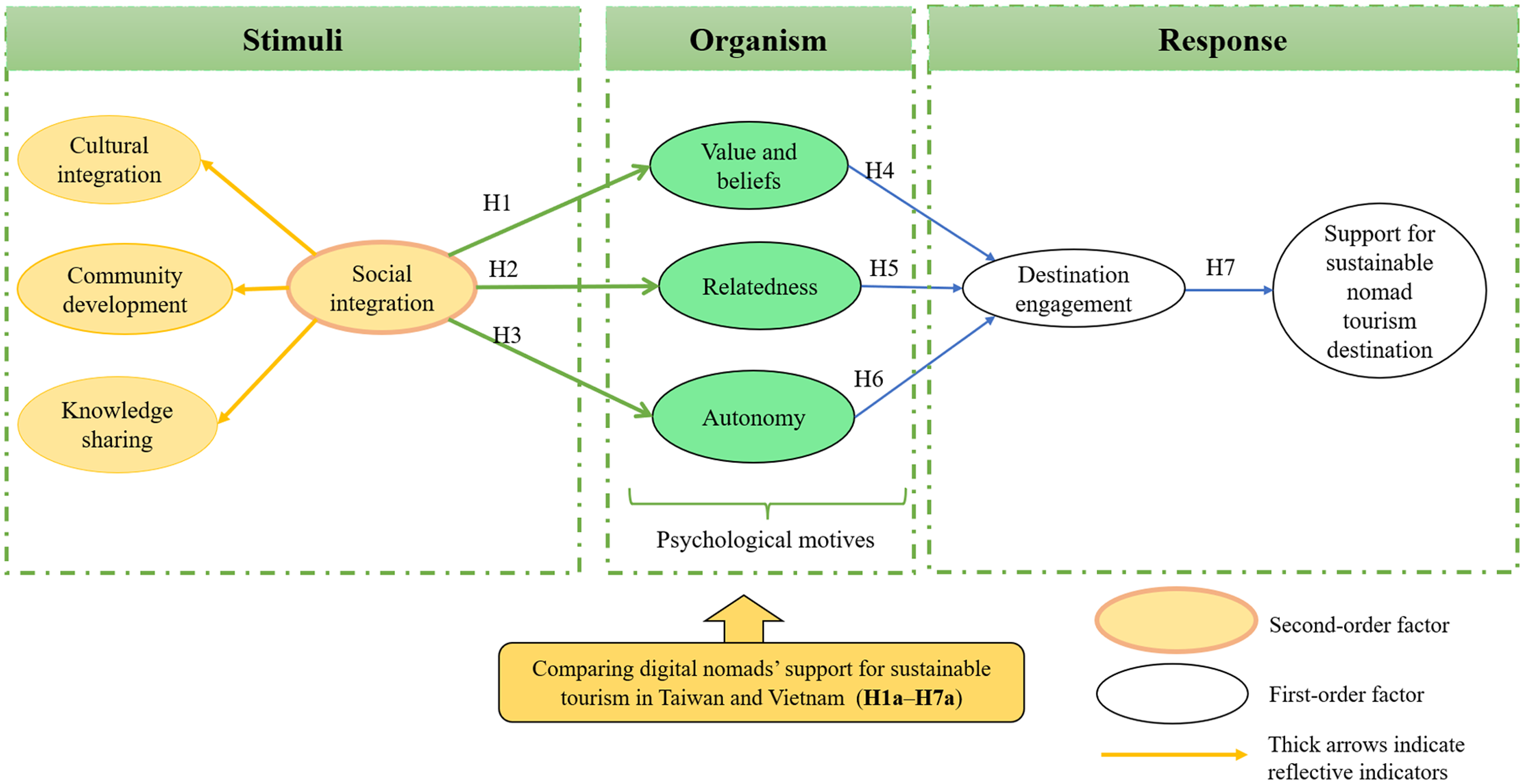
Theoretical research model.
Research overview
Research problems involving human emotions and behaviors are often complex and multifaceted, requiring approaches that capture both detailed and broader insights (Plano Clark, 2017). Thus, we employed a two-phase mixed-methods approach focused on digital nomads’ engagement with sustainable tourism destinations. In the qualitative phase, we conducted in-depth interviews with 16 digital nomads to identify key dimensions of social integration and psychological motives, and then we refined the constructs for further investigation. Building on these insights, the quantitative phase tested the proposed hypotheses and enabled generalization of findings across the broader digital nomad population. By integrating qualitative depth with quantitative rigor, we provide a comprehensive understanding of the factors that drive digital nomads’ engagement with and support for sustainable tourism destinations.
Methods
Qualitative procedures
Participants and procedure
We used semi-structured interviews to explore and validate key dimensions of social integration and psychological motives. Semi-structured interview questions were framed as open, neutral, and flexible prompts designed to elicit detailed accounts of digital nomads’ experiences, while enabling interviewers to probe further (see Supplementary Table A). Participants were recruited via snowball sampling, targeting digital nomads aged 18 and above who provided informed consent. This method was appropriate as digital nomads often connect through peer networks. Inclusion criteria required participants to (1) actively work remotely, (2) have spent considerable time selecting a destination, (3) be familiar with the local community and digital nomad environment, and (4) actively engage in and support host destinations. The sample size was determined by data saturation, with interviews continuing until no new insights emerged (Patton, 1990). Saturation was reached at 16 interviews (see Supplementary Table B). We then conducted a thematic analysis following Braun and Clarke (2006).
To ensure transcription accuracy, recordings were first transcribed using speech-to-text software and then manually verified by two researchers. Thematic analysis followed six stages: data familiarization, initial coding, theme identification, theme review and refinement, theme definition, and report production. Codes were systematically developed to capture recurring patterns, grouped into broader categories, and refined into final themes. The research team collaboratively evaluated themes and cross-referenced them with existing literature to ensure validity and produce meaningful interpretations.
Insights from the interviews
The findings reveal that social integration plays a crucial role in shaping the decision-making and experiences of digital nomads (DN). A key aspect is cultural integration. Participants emphasized the importance of relationships with locals to engage in traditions, language, and customs. As DN1 shared, “Attending cultural exchange events helps me understand local traditions and learn the local language.” DN2 added, “When I chose to stay in Danang, I quickly felt a sense of belonging… I feel comfortable living in this city.”
Community engagement also emerged as essential. Many interviewees gained a sense of belonging through local initiatives. DN3 explained, “I sometimes organize seminars for fellow digital nomads… I also enjoy attending events that promote environmental awareness.” DN6 shared, “I collaborate with some communities, which gives me insights into local life… I also share my expertise at events in my field.”
Knowledge sharing further supports integration. Participants valued exchanging skills to foster personal and professional growth. DN12 noted, “I attend seminars where I can share knowledge… Knowledge exchange helps me build stronger connections with the community.”
Shared values shaped destination choices. DN7 stated, “It's about work-life balance… building relationships and being part of a supportive community.” DN12 emphasized: “I’ve lived here for over seven years… I feel truly valued and respected by the local community.”
Although many interviewees emphasized the importance of relatedness or sense of belonging, many admitted that they did not truly experience this feeling in practice. For instance, DN8 remarked: “As a digital nomad, I may move to new destinations quite often; therefore, limited time at a destination does not allow me to develop a sense of belonging or build meaningful relationships with community members and fellow nomads as well.” Autonomy was also significant. DN10 noted, “It is crucial to have flexibility… a reliable internet connection and environment that aligns with my schedule.” DN14 added, “I can live in any city that provides better access to my market… It makes my job very flexible.”
Overall, these interview findings directly informed the subsequent quantitative stage. The identified themes (e.g. cultural integration, community engagement, knowledge sharing, shared values, relatedness, and autonomy) guided the development of survey constructs and hypotheses, ensuring that the next stage captures the dimensions of social integration and psychological motives most relevant to digital nomads. By linking qualitative insights to the survey design, the study integrates both phases to provide a more comprehensive understanding of how social and experiential factors influence destination engagement and support for sustainable tourism.
Quantitative procedures
Measures
Measurement items were derived from prior studies and adapted to fit the research context. Social integration has three dimensions: cultural integration, community development, and knowledge sharing, which were obtained from Zhang et al. (2018), Hussain et al. (2022), and Abbas et al. (2019), respectively. Additionally, values and beliefs were inherited from Ngoc Thuy and Nguyen Hau (2010). Relatedness was derived from Dini et al. (2023), while autonomy was used from Hartner-Tiefenthaler et al. (2023). Lastly, destination engagement and support for sustainable nomad tourism destinations were adapted from Saleem et al. (2021) and Lee (2013), respectively. All 33 items were rated on a seven-point Likert scale ranging from 1 (strongly disagree) to 7 (strongly agree). The original English questionnaire was translated into Mandarin Chinese and Vietnamese, with two linguistic experts reviewing each version to ensure translation accuracy and consistency.
Data collection
Based on the criteria outlined in the literature review and interviews, we targeted digital nomads aged 18 and above residing in Taiwan and Vietnam. A convenience sampling method was used in this study. The survey was distributed via a market research platform (http://amosleminh.com) for both the Taiwan and Vietnam samples. Data collection occurred from August to December 2024. Following Hair et al. (2014), with 33 measurement items, a minimum of 330 responses was required. Of 909 individuals invited, 385 valid responses from Taiwan and 404 from Vietnam were retained after removing outliers, straight-lining patterns, and non-nomads. Before conducting SEM analysis, data normality was confirmed; skewness and kurtosis values fell within acceptable ranges (−2 to +2 and −7 to +7, respectively). Harman's single-factor test was used to assess common method bias. The first factor accounted for 37.7% of the variance in Taiwan and 34.1% in Vietnam (< 50% threshold), confirming the data's suitability for further SEM testing.
Sample characteristics
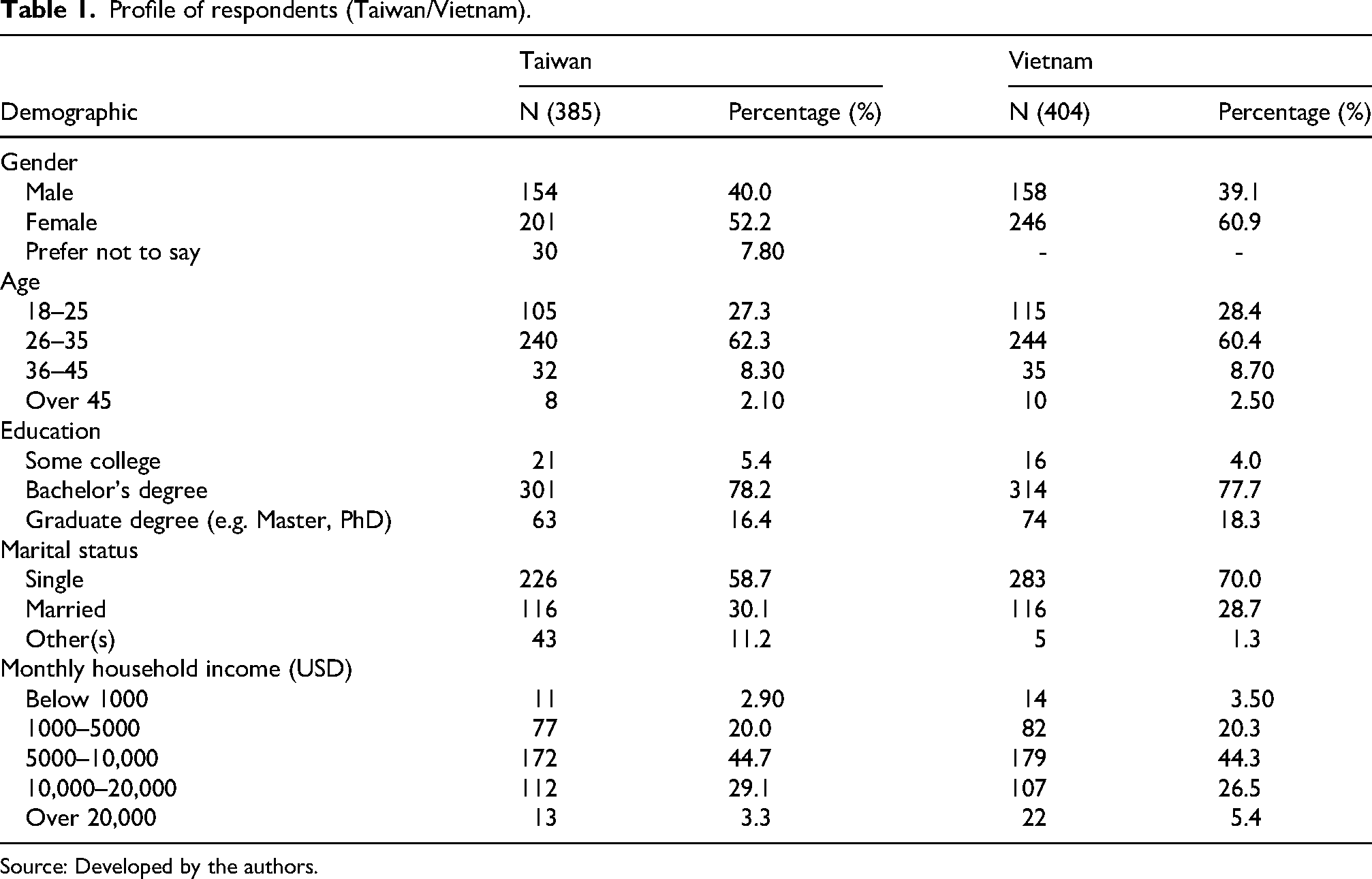
Females constitute a majority in both countries, with Vietnam (60.9%) slightly higher than Taiwan (52.2%). The dominant age group is 26–35, comprising 62.3% (Taiwan) and 60.4% (Vietnam), respectively. Educational levels are similar, with most holding bachelor's degrees (78.2% in Taiwan; 77.7% in Vietnam). Marital status aligns with most respondents being single (69.1% in Taiwan; 70.1% in Vietnam). Monthly household income patterns are comparable, with the largest group earning $5000 - $10,000 in both countries (44.7% in Taiwan and 44.3% in Vietnam) (see Table 1).
Profile of respondents (Taiwan/Vietnam).
Source: Developed by the authors.
Partial least squares structural equation modeling
First-order measurement model assessment
This study first assessed the measurement model for all eight first-order factors to examine internal consistency reliability (i.e. factor loading, composite reliability (CR), Cronbach's alpha) and validity (i.e. convergent and discriminant validity) (Hair et al., 2019). All factor loadings exceeded the 0.5 threshold, and CR for all dimensions was above 0.8, indicating strong internal reliability. All average variance extracted (AVE) values meet the minimum 0.5 standard for convergent validity (Hair et al., 2014). Each AVE value exceeded its squared inter-factor correlation, confirming discriminant validity (Fornell and Larcker, 1981). These results confirm the reliability and validity of the model, supporting the robustness of subsequent analysis in both Taiwan and Vietnam samples (see Supplementary Tables C, D, and E).
Second-order measurement model assessment
Social integration is modeled as a second-order construct comprising cultural integration, community development, and knowledge sharing. Factor loadings for these components ranged from 0.704 to 0.861 (Taiwan) and 0.605 to 0.809 (Vietnam) (> 0.5). CR values for both samples surpassed 0.8, indicating strong internal consistency. Similarly, all AVE values exceeded 0.5, and each exceeded its squared inter-factor correlation, confirming discriminant validity. These findings affirm the reliability and validity of the second-order construct in both samples. The model also shows strong predictive power, with all Q2 values above zero, indicating substantial predictive relevance (see Supplementary Table C).
Structural models and hypothesis testing
The research model was estimated using a bootstrapping technique with a resample of 5000. The Standardized Root Mean Square Residual (SRMR) value between 0.08 and 0.10 indicates an acceptable model fit (Hair et al., 2014). The SRMR for the Vietnamese sample was 0.084, while the Taiwanese sample had an SRMR of 0.095, confirming that both models fall within the acceptable range. Hence, the model testing results from the Taiwan and Vietnam samples confirmed the validation of all proposed hypotheses.
In Taiwan, social integration exhibited a strongly significant influence on values and beliefs (H1: β = 0.486, p < 0.001), relatedness (H2: β = 0.544, p < 0.001), and autonomy (H3: β = 0.534, p < 0.001). Additionally, destination engagement was significantly influenced by values and beliefs (H4: β = 0.255, p < 0.001), relatedness (H5: β = 0.202, p < 0.05), and autonomy (H6: β = 0.296, p < 0.001). Lastly, digital nomads’ destination engagement positively influences their support for sustainable tourism (H7: β = 0.526, p < 0.001) (see Supplementary Table F and Figure 2).
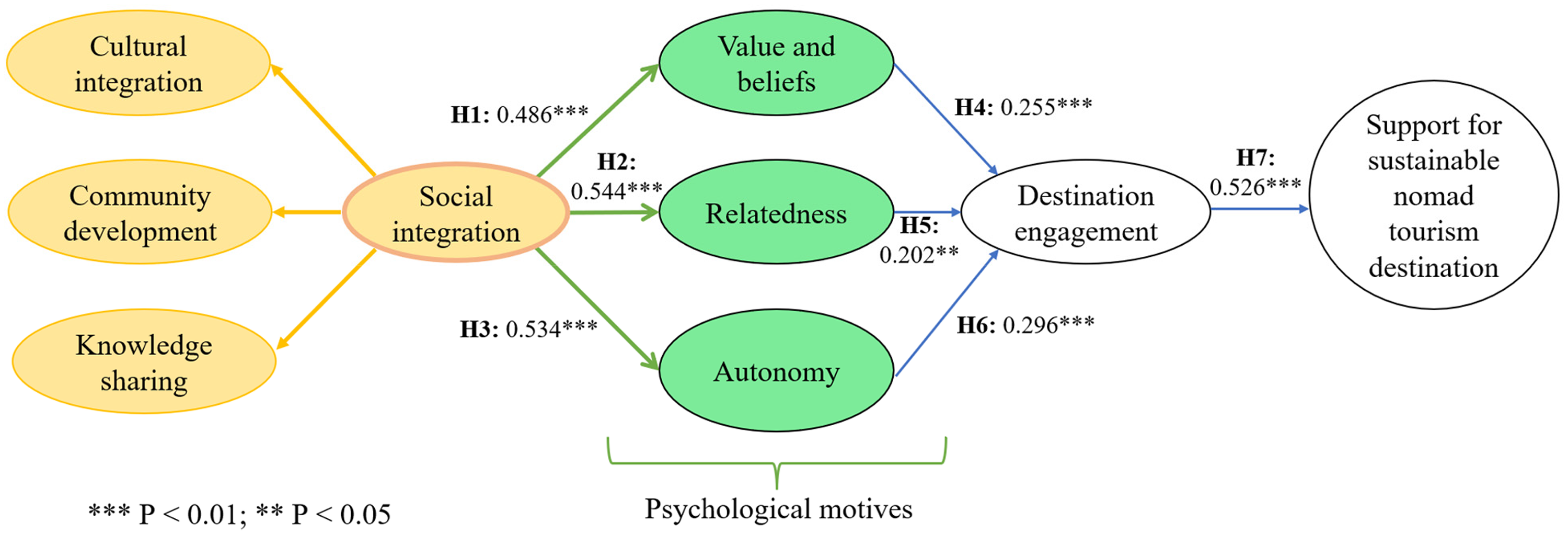
Results of the model tested in Taiwan.
In Vietnam, social integration positively influences values and beliefs (H1: β = 0.483, p < 0.001), relatedness (H2: β = 0.532, p < 0.001), and autonomy (H3: β = 0.577, p < 0.001), respectively. Furthermore, values and beliefs (H5: β = 0.257, p < 0.001), relatedness (H5: β = 0.175, p < 0.05), and autonomy (H6: β = 0.283, p < 0.001) demonstrated significant effects on destination engagement. Finally, digital nomads’ destination engagement positively impacts their support for sustainable tourism (H7: β = 0.507, p < 0.001) (see Supplementary Table F and Figure 3).
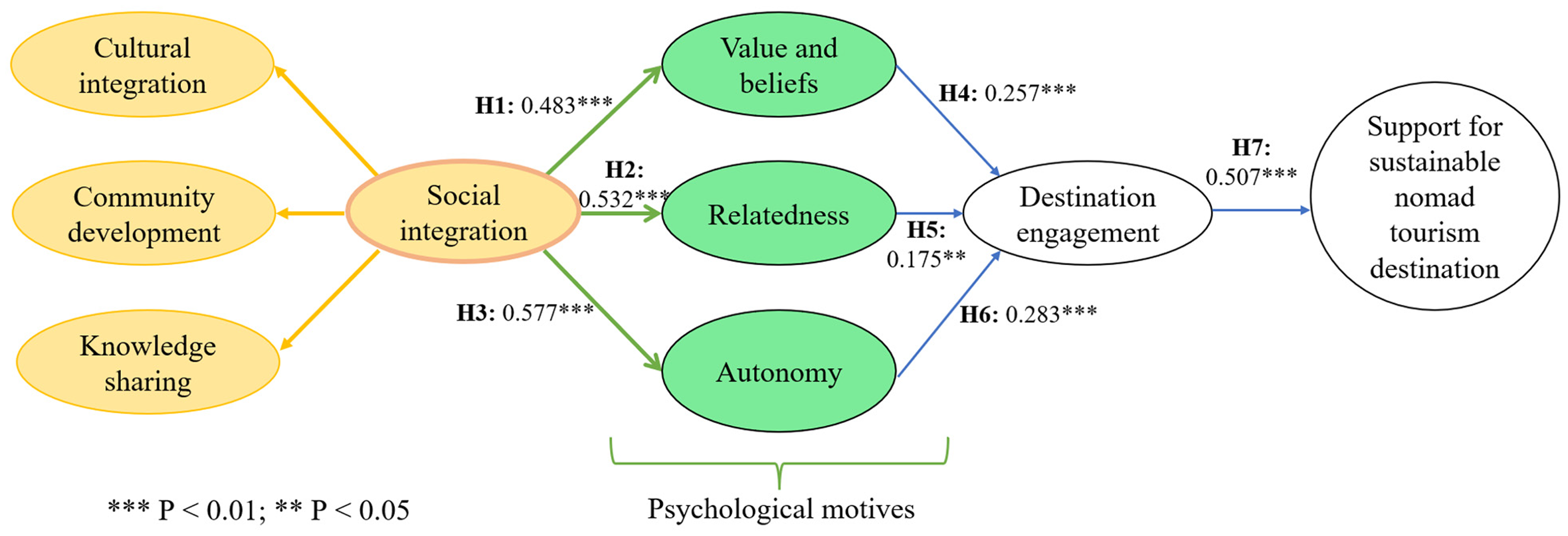
Results of the model tested in Vietnam.
Multi-group analysis results
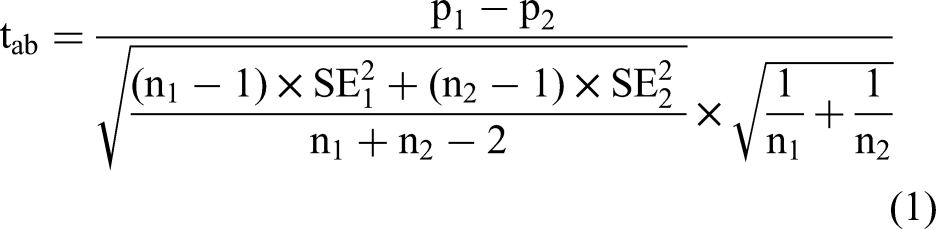
The equation for the t-test (Keil et al., 2000) was used to conduct a multi-group analysis (MGA) between Taiwanese and Vietnamese samples. Particularly, p1 represents the path coefficient in the nation
a
structural model, n1 represents the nation
a
sample size, SE1 denotes the standard error in the nation
a
structural model, t
ab
is the t-statistic with (n1 + n2 - 2). Lastly, “a” stands for Taiwan, and “b” represents Vietnam:
We compared the variance explained (R2) between Taiwan and Vietnam to discover slight differences (Hair et al., 1998). The R2 values of value and beliefs, relatedness, destination engagement, and support for sustainable tourism for Taiwan are 0.3%, 1.3%, 2.5%, and 2% lower than Vietnam, respectively. In contrast, the R2 value for Taiwan is 4.7% higher than for Vietnam.
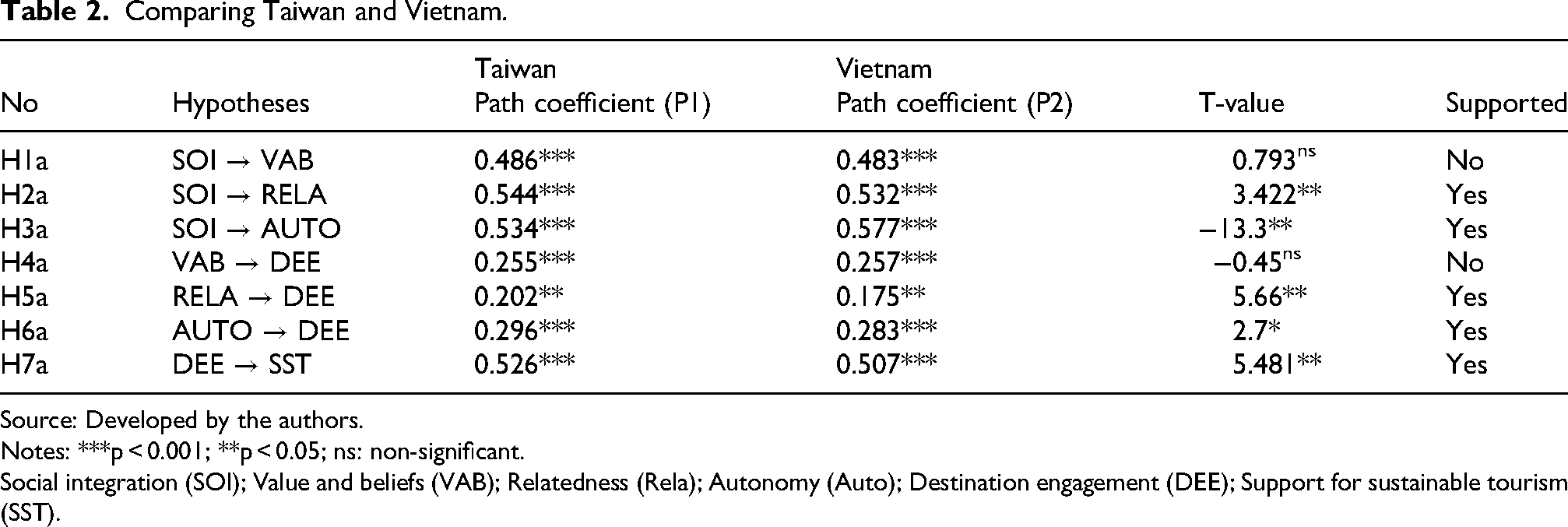
The MGA shows that five of seven hypotheses were significant, indicating that digital nomads’ behaviors toward sustainable tourism in Taiwan differ from those in Vietnam. The extent to which social integration influences values and beliefs (H1a) and the degree to which values and beliefs impact destination engagement (H4a) are similar between Taiwan and Vietnam. Interestingly, except for the extent to which the impact of social integration on autonomy (H3a) is higher in Vietnam than in Taiwan, the extent of all other hypotheses is the opposite. Specifically, the extent to which social integration influences relatedness (H2a) and the degree to which relatedness (H5a) and autonomy (H6a) impact destination engagement are stronger in Taiwan than in Vietnam. Similarly, the extent to which destination engagement impacts support for sustainable tourism destinations (H7a) is slightly higher in Taiwan than in Vietnam (see Table 2).
Comparing Taiwan and Vietnam.
Source: Developed by the authors.
Notes: ***p < 0.001; **p < 0.05; ns: non-significant.
Social integration (SOI); Value and beliefs (VAB); Relatedness (Rela); Autonomy (Auto); Destination engagement (DEE); Support for sustainable tourism (SST).
Conclusion and implications
Discussion
The integrated findings advance understanding of digital nomads by showing that social and psychological processes are deeply intertwined with their engagement in host destinations. Qualitatively, we found that social integration, manifested through cultural adaptation, community development, and knowledge sharing, functions as a core external cue shaping nomads’ experiences, challenging portrayals of them as detached and transient (Gupta et al., 2024; Jiwasiddi et al., 2024; Kozak et al., 2024; Von Von Briel et al., 2019). Rather than eroding social ties, mobility enables digital nomads to reconfigure them in ways that foster cultural learning and relational engagement. This is echoed in the quantitative analysis, which showed that psychological motives, particularly autonomy and values-driven beliefs, strongly predict digital nomads’ emotional attachment and identification with the host community, such that praise or criticism of the place feels personally directed at them. In other words, the ability of nomads to integrate socially and build networks translates into stronger psychological investments in place, which then drive active support for sustainable tourism through community-based initiatives, cultural exchange, and environmental education.
Yet, the integration of the two strands also reveals important cultural contingencies. In our qualitative analysis, we found that in Vietnam, social integration primarily reinforced autonomy, as peer networks compensated for the lack of institutional or structural support for flexible work. This helps explain the quantitative finding that nomads in Vietnam displayed relatively weaker emotional engagement with the host city; their connection was often framed around pragmatic concerns, such as affordability and career opportunities, rather than deep cultural attachments. By contrast, in Taiwan, where social harmony and community infrastructure are more developed (Clark et al., 2020; Truong et al., 2021), social integration was more strongly tied to relatedness and connectedness. This qualitative insight is consistent with the quantitative evidence that engagement and sustainability support were significantly higher among nomads in Taiwan, where inclusivity and safety (Symons and Marsden, 2024) facilitated the translation of cultural integration into pro-sustainability behaviors.
The integrated findings suggest that autonomy and relatedness should not be treated as universal psychological traits of digital nomads but as outcomes contingent upon local contexts. Autonomy-driven engagement may prevail in specific settings with weaker institutional infrastructures (e.g. Vietnam). While relatedness-driven engagement becomes more salient where social harmony and inclusivity are stronger (e.g. Taiwan). These culturally specific pathways complicate place-attachment models that assume emotional bonds are the primary driver of sustainable tourism support (Hall et al., 2019), showing instead that pragmatic, relational, and cultural motives are dynamically configured across contexts.
A notable point from the interview results is that some digital nomads admitted they rarely experience relatedness with host communities in practice. This is because they frequently move to new destinations, and having limited time prevents them from developing meaningful relationships with locals and fellow nomads. This pattern is also supported by the model assessing behavior in Taiwan and Vietnam, which shows that relatedness has the lowest impact on destination engagement compared to value/beliefs and autonomy. Superficial social connections may be rooted in the digital nomads’ lifestyle. Although they often interact with others frequently, the interactions are mainly online or short-term networking. It cannot foster true relatedness. In face-to-face settings, some digital nomads often mainly connect with people in places such as pubs and cafés (Lee et al., 2019). Furthermore, this lack of connectedness may stem from local people perceiving digital nomads as temporary outsiders (Gupta et al., 2024). This also limits opportunities for meaningful connections. Overall, relatedness may be less central for highly mobile or autonomy-driven populations, and its level of influence also depends on individuals.
The magnitude of social integration's effect on values and beliefs, as well as the effect of these values and beliefs on destination engagement, is equivalent across Taiwan and Vietnam. This means that digital nomads’ value-based belief formation and destination engagement processes are not country-specific but instead follow a generalizable theme. Digital nomads’ values and beliefs serve as a linkage in the social-psychological mechanism that fosters destination engagement through social integration. Collectivist-oriented societies, such as Taiwan and Vietnam, share a common mechanism for value alignment through social cohesion. These two countries emphasize core values about the pursuit of social connection and community belonging (Günay and Akgiş İlhan, 2024; Lacárcel et al., 2024). For example, in Taiwan, this is expressed through respect for local culture, while in Vietnam, it is reflected in participation in sustainable tourism (Lee and Hsieh, 2016; Tuan, 2018).
Theoretical implications
This research applies the S-O-R theory (Mehrabian and Russell, 1974) to understand the engagement and support for sustainable tourism development of digital nomads in host destinations. The research demonstrates that social integration serves as a meaningful environmental stimulus. We expand the concept of stimulus in S-O-R theory from external cues (Lee et al., 2011; Lin and Lo, 2016) to include socio-cognitive dimensions within tourism and mobility, reflecting previous findings that social and cultural factors influence tourist behavior (Shi et al., 2022; Talwar et al., 2023). Furthermore, another theoretical contribution of this study lies in integrating autonomy and relatedness from SDT and distinctive characteristics of digital nomads (e.g. values and beliefs) into the organism component of the S-O-R framework. While prior studies focused on external stimuli or general tourist responses (Chevtaeva and Denizci-Guillet, 2021; Wang et al., 2024), our approach explicitly considers the intrinsic motivations of digital nomads, extending the psychological depth of S-O-R in the context of mobility and sustainable tourism.
The study sheds light on social integration in digital nomadism by highlighting its dual role in fostering cohesion and enabling autonomy, with significant cultural variations. Prior research often portrayed digital nomads as independent and self-sufficient (Chen et al., 2020; Denley et al., 2020; Thompson, 2019). However, our findings reveal that social networks substantially shape their values, autonomy, and integration into host destinations. In Vietnam, social integration strongly supports autonomy, suggesting that peer networks are critical for facilitating flexible work arrangements in transitional economies. This aligns with Sánchez-Vergara et al. (2023) and Reichenberger (2018), who emphasized the interplay of autonomy and social connection in nomads’ destination choices. However, in Taiwan, social integration is more closely associated with a sense of belonging and community integration, reflecting the country's emphasis on social harmony and collective values. This resonates with Clark et al. (2020) and Truong et al. (2021), who highlighted how cultural norms influence social connectedness and engagement in East Asian contexts. These differences challenge the universalist assumption that digital nomads maintain autonomy in various contexts (Novy et al., 2012) and emphasize culture-sensitive patterns of nomadic work lifestyles.
This study also illuminates that digital nomads’ support for sustainability is contingent on their type of engagement with host destinations. In Taiwan, digital nomads form stronger emotional bonds linked to higher sustainability engagement, reflecting supportive social infrastructures and inclusive environments, consistent with Symons and Marsden (2024). In contrast, Vietnam has a weaker link between belonging and engagement, suggesting that nomads may be driven more by pragmatic concerns such as affordability and career opportunities rather than cultural or emotional ties. This contrasts with prior assumptions that emotional connection is a universal driver for engagement (Hall et al., 2019; Lee et al., 2019) and highlights context-dependent motivational differences. While Taiwanese nomads’ stronger cultural and emotional bonds foster deeper sustainability behaviors, Vietnamese nomads’ engagement appears to be influenced by instrumental needs, such as economic advancement. Such findings reveal a deeper understanding of destination engagement, which can arise from both emotional connection and practical motivations (Clark et al., 2020; Von Von Zumbusch and Lalicic, 2020).
By comparing Vietnam and Taiwan, this study unveils a nuanced perspective on how digital nomads’ social integration and psychological motives drive engagement and support for sustainable tourism. Our findings complement and extend prior studies on social integration, autonomy, and relatedness (Chevtaeva and Denizci-Guillet, 2021; Günay and Akgiş İlhan, 2024), while providing new empirical evidence on cross-national differences in emerging digital nomad destinations. This finding adds nuance to existing views of place attachment by illustrating that destination engagement can arise from both emotional attachment and practical motivations. Taiwanese nomads’ stronger cultural and emotional bonds foster deeper sustainability behaviors, while Vietnamese nomads’ engagement may reflect instrumental needs such as economic advancement (Clark et al., 2020).
Practical implications
By comparing Vietnam and Taiwan, we have a nuanced perspective on how digital nomads’ social integration and psychological motives drive engagement and support for sustainable tourism. Our findings complement and extend prior studies on social integration, autonomy, and relatedness (Chevtaeva and Denizci-Guillet, 2021; Günay and Akgiş İlhan, 2024), while providing new empirical evidence on cross-national differences in emerging digital nomad destinations. This finding adds nuance to existing views of place attachment by illustrating that destination engagement can arise from both emotional attachment and practical motivations. Taiwanese nomads’ stronger cultural and emotional bonds foster deeper sustainability behaviors, while Vietnamese nomads’ engagement may reflect instrumental needs such as economic advancement (Clark et al., 2020).
Second, the research highlights the role of destination engagement in promoting sustainable tourism behaviors. In Taiwan, stronger emotional ties suggest stakeholders should involve nomads in sustainability efforts, such as conservation projects and eco-friendly initiatives (McKenna and Hanrahan, 2024; Zakiah et al., 2023). In Vietnam, where emotional attachment is weaker, promoting sustainability through work-based incentives and professional networking may be more effective. Tailoring strategies to local culture is essential for maximizing engagement (Günay et al., 2024). Due to multiple pathways to sustainability support without strong emotional ties, sustainability efforts shouldn’t only target highly attached nomads. Knowledge-sharing programs, community sustainability challenges, and collaborations with local businesses can attract nomads with varied motivations. Recognizing this diversity will help develop more inclusive and effective strategies aligned with the distinct values and work styles of digital nomads.
Lastly, autonomy is a psychological driver that exerts the strongest influence on digital nomads’ engagement with destinations. To improve their autonomy, policymakers should provide flexible legal frameworks by streamlining visa and work permit processes. Particularly, countries that have not yet introduced a digital nomad visa, such as Vietnam, should consider launching this type of visa. Furthermore, policymakers can empower nomads to design their own work-life balance and develop social avenues that facilitate connections with locals. Developing “digital nomad ambassador programs,” where experienced nomads assist newcomers in integrating into the local community, could enhance engagement and cultural exchange. Such initiatives can have a significantly positive impact on digital nomads’ core values and their sense of relatedness to the destination.
Study limitations and future research directions
This study has limitations. It only focuses on digital nomads in Taiwan and Vietnam, limiting generalizability. In addition to using a mixed-methods approach, future research can apply longitudinal studies to observe behavioral trajectories. The focus on social integration and destination engagement leaves room to explore other psychological and institutional factors influencing sustainable behaviors. Many digital nomads struggle with social isolation and long-term integration (Günay and Akgiş İlhan, 2024). They also create cultural tensions and environmental challenges to local regions (Orel, 2021). However, this study has not taken into account the negative effects that digital nomads may have on host communities. Therefore, future research could explore the complexity of their relationship with host communities.
Supplemental Material
sj-docx-1-jvm-10.1177_13567667261416127 - Supplemental material for Social integration and psychological motives of digital nomads driving sustainable tourism: A comparative study of Vietnam and Taiwan
Supplemental material, sj-docx-1-jvm-10.1177_13567667261416127 for Social integration and psychological motives of digital nomads driving sustainable tourism: A comparative study of Vietnam and Taiwan by Linh Tran-Thi-My and Hai Long Duong in Journal of Vacation Marketing
Footnotes

Funding
The authors received no financial support for the research, authorship, and/or publication of this article.
Declaration of conflicting interests
The authors declared no potential conflicts of interest with respect to the research, authorship, and/or publication of this article.
Supplemental material
Supplemental material for this article is available online.
References
Supplementary Material
Please find the following supplemental material available below.
For Open Access articles published under a Creative Commons License, all supplemental material carries the same license as the article it is associated with.
For non-Open Access articles published, all supplemental material carries a non-exclusive license, and permission requests for re-use of supplemental material or any part of supplemental material shall be sent directly to the copyright owner as specified in the copyright notice associated with the article.
