






Abstract
Destination image (DI) formation is a dynamic and psychologically complex process, shaped not only by travel experiences but also by individuals’ perceived psychological proximity to a place. Investigating Arabs’ image of Japan, this study draws on Construal Level Theory (CLT) to explore how psychological distance affects the formation of DI among individuals with varying travel histories. Through in-depth, semi-structured interviews with 40 Arab participants (18 visitors vs. 22 non-visitors), the study uncovers nuanced distinctions and overlaps in Japan's DI. Notably, a sub-set of non-visitors—vicarious visitors—exhibited significantly reduced psychological distance through credible cognitive mediators, thereby enabling them to construct an image closely aligned with that of actual visitors. These findings suggest that the strength and specificity of cognitive inputs—not just direct experience—play a pivotal role in shaping DI. This research extends theoretical understandings of how DI evolves across varying groups of visitors and non-visitors and offers actionable insights for destination marketers.
Keywords
Introduction
Overview
Destination image (DI) is a foundational concept in tourism research, shaping tourists’ destination choice, on-site experiences, and post-visit behaviors. Traditionally, DI comprises two primary dimensions: cognitive (knowledge, beliefs, destination attributes, and characteristics) and affective (emotions and feelings) (Artuger and Cetinsoz, 2017; Baloglu and McCleary, 1999), with some scholars also emphasizing a conative dimension (likelihood to visit or recommend a destination) (Agapito et al., 2013; Stylos et al., 2016; Woosnam et al., 2020). These dimensions are inter-connected, with cognitive evaluations typically preceding affective responses and conative intentions (Llodrà-Riera et al., 2015). Understanding and managing these DI components is key to building successful destination marketing.
However, the formation of DI is a highly subjective process and varies substantially depending on individuals’ prior experience with a destination (Fakeye and Crompton, 1991). Non-visitors tend to rely on secondary sources such as media portrayals, promotional materials, and word-of-mouth information, resulting in abstract or superficial images that may lack realism or depth (Cherifi et al., 2014). In contrast, first-time and repeat visitors construct more nuanced and stable images based on direct, personal experiences with the destination's infrastructure, value, and emotional resonance (Lu et al., 2023). These differences between visitors and non-visitors reflect broader psychological processes—including prior exposure, expectations, and cultural distance—that shape how people perceive and memorize places (Ye and Tussyadiah, 2011). To further understand these distinctions, it is helpful to examine how the discourse on DI has developed.
Over the past five decades, scholars have explored DI from various angles, ranging from early comparisons of visitors’ and non-visitors’ perceptions to more recent investigations into emotional solidarity, cultural distance, and tourist–resident interactions (Le Hong and Hsu, 2024; Pike, 2002; Stepchenkova and Mills, 2010; Wang et al., 2023). However, despite these advances, most studies remain descriptive, lacking in-depth explanations of the psychological mechanisms that influence DI formation. What drives some non-visitors to hold rich and realistic images of a place, while others rely on distorted or generalized impressions? To address this gap, the present study applies Construal Level Theory (CLT), a well-established framework in social psychology that explains how psychological distance affects the way people mentally construe objects, people, and places (Trope and Liberman, 2010). By framing the inquiry through CLT, it becomes possible to investigate how individuals’ perceived closeness to a destination influences the complexity, specificity, and emotional tone of their DI, thus filling a notable gap in existing literature.
Focusing on Arab visitors and non-visitors to Japan, this study offers a novel application of CLT in the context of cross-cultural tourism. Arab people represent a regionally diverse group with a growing interest in Japan and varying degrees of psychological and cultural proximity to it. Building on the earlier discussion of psychological mechanisms, this study examines how cognitive mediators reduce psychological distance and influence DI among Arabs, thereby contributing to the DI literature and offering practical insights for culturally sensitive destination marketing.
Study context: Arab perception of Japan
Japan is geographically, culturally, linguistically, and socially distant from Arabs. However, unlike other countries (e.g. South Korea, China, and European countries), Japan offers a special blend of symbolic familiarity and experiential distance for Arabs. On the one hand, perceived familiarity with Japan without direct experience is mediated by daily interactions with Japanese products (e.g. cars, food, and electronic devices) and the mass media's promotion of Japanese popular culture (e.g. Anime and drama). Moreover, there has been an increasing amount of Arabic content on social media about Japan (e.g. nippon.com and bloggers’ reels), leading to a distinctive combination of perceived exoticism and symbolic proximity with Japanese culture and people among a broad range of Arab audiences. However, some Arabs hold an exaggerated view of Japan as the “Sister Planet” (Abaza, 2002), or as a country living in the future, admiring Japan for its cutting-edge technology, balanced modernization and tradition, cleanliness, punctuality, and hospitality. On the other hand, experiential distance from Japan has been reduced by the growing number of Arab visitors, driven by the Japanese government's efforts to attract more Arab visitors, including the establishment of the Japan National Tourism Organization (JNTO) regional office in Dubai in November 2021. Additionally, Japan promotes itself as an optimal tourist destination for all cultures, particularly by catering to Muslim (including Arab) tourists with Halal food, prayer spaces, and multi-lingual signage (Henderson, 2016). As a result, recent statistical reports indicate a significant increase in Arab visitors to Japan, with an 81% rise from 29,916 in 2019—the highest before the COVID-19 pandemic—to 54,317 tourists in 2024 (Japan National Tourism Organization, 2025). About 73% of these visitors are from Gulf countries, especially Saudi Arabia, the United Arab Emirates, Kuwait, and Qatar. Moreover, a recent survey by Travel Voice (2023) found that visiting Japan is a dream for 96% of surveyed Arabs, with 99% of them having never been there.
This co-existence of symbolic familiarity and experiential distance provides an optimal context for analyzing CLT mechanisms, specifically by examining how distance-induced DI construal processes differ between individuals with and without direct experience.
Research questions, objectives, and originality
Although several studies have explored Japan's DI from the perspectives of Chinese, Malaysian, Indonesian, and Western tourists (e.g. Chew and Jahari, 2014; Liou, 2010; Stegnienko et al., 2018), the Arab market remains under-explored. No prior research has utilized CLT to investigate how psychological distance influences Arab tourists’ perceptions of Japan. CLT helps move beyond surface-level comparisons of DI by explaining how and why psychological distance influences image construction. This application bridges DI theory with psychological theories of mental construal, providing a deeper understanding of how cognitive, affective, and conative attributes evolve across levels of familiarity and proximity. Accordingly, this study fills that gap by investigating how Arab visitors and non-visitors form cognitive, affective, and conative images of Japan. Specifically, it addresses the following research questions:
To what extent do the perceptions of Arab visitors to Japan reflect low-level, concrete construals compared to the higher-level, abstract construals of non-visitors, as predicted by CLT? And to what extent do these attributes differ between Arab visitors and non-visitors? How do differences in psychological distance between Arab visitors and non-visitors shape the level of construal underlying their DI of Japan? What cognitive mediators reduce psychological distance for non-visitors? How do the observed cognitive and affective construals translate into and justify conative construals (e.g. intentions to visit or revisit Japan) among Arab participants?
Adopting CLT in this context enriches the theoretical discourse on DI by introducing a psychological structure to its formation and evolution. Empirically, it provides a nuanced understanding of Arab tourists’ perceptions of Japan, including novel constructs such as vicarious visitors. Practically, it equips destination marketers and tourism authorities (e.g. JNTO) with strategies to bridge psychological distance, foster familiarity, and convert interest into visitation.
Literature review and theoretical background
CLT and tourism
CLT provides a framework for understanding perceptions of both visitors and non-visitors toward their destinations. According to this theory, the degree of abstraction at which information is represented in the cognitive hierarchy depends on the psychological distance between people and the objects or events being perceived (Wang et al., 2022). Psychological distance refers to the “subjective experience that something is close or far away from the self, here, and now” (Trope and Liberman, 2010: 440). It manifests in several forms: (1) temporal (how far in time), (2) spatial (how far in physical distance), (3) social (distance between an individual and others), and (4) hypotheticality (likelihood of an event/action) (Su and Li, 2024). The CLT core principle is that distant events or places are construed at a high, abstract level, whereas proximal events or places are construed at a low, concrete level (Yan et al., 2024). Thus, high-level construals are more abstract and superordinate, whereas low-level construals are more detailed and contextualized (Su and Li, 2024). This difference in construal levels influences how information is processed, affecting individuals’ expressions, evaluations, perceptions, and behaviors in different mental representations of psychological distance (Sun and Sano, 2024).
Previous tourism studies have demonstrated that tourists’ psychological distance significantly influences how they evaluate destination marketing messages and their behavioral responses. For instance, Kim et al. (2016) found that tourists prefer abstract promotional information for spatially distant destinations and specific information for nearby destinations. In a similar vein, Wang and Lehto (2020) argued that abstract social media advertisements increase visit intentions for distant destinations, while specific advertisements are more effective for closer destinations. Building on these findings, studies on tourist DI have identified similar results. For instance, Wang et al. (2022) found that aligning the DI with tourists’ psychological distance enhances the attractiveness and persuasiveness of advertisements. Similarly, Tan (2017) observed that temporal psychological distance changes tourists’ use of word-of-mouth information regarding safety and relaxation attributes. Chung and Chen (2018) demonstrated that individuals refer to superficial images for distant destinations, whereas for familiar destinations they rely on concrete, attribute-rich images. This claim suggests that non-visitors hold generalized images, whereas experienced tourists develop more detailed ones.
In this study, we build on the CLT to investigate how psychological distance affects perceptions of Japan as a tourist destination among visitors and non-visitors. CLT suggests that individuals use different approaches to understand places, depending on whether they are familiar or unfamiliar with them. We apply this psychological framework to examine how psychological distance, shaped by direct or indirect experience, influences abstract and concrete perceptions of a destination. This study contributes to DI and psychological research by demonstrating how cognitive processes, such as construal levels, influence the formation of DI.
DI formation
Due to its significant influence on destination selection and tourist behavior, DI has been a subject of interest in tourism research since the 1970s. It is commonly described as “the sum of beliefs, ideas, and impressions that a person has of a destination” (Crompton, 1979). Over the years, several conceptualizations have been introduced; nonetheless, most tourism literature concurs that DI is a multi-faceted construct encompassing cognitive, affective, and conative dimensions (Gorji et al., 2023). Although the three DI constructs are inter-related, cognitive evaluations of a destination are often antecedents to both affective and conative aspects (Figure 1). This relationship suggests that visitors’ and non-visitors’ feelings and intentions are primarily directed by their cognitive assessment of the destination's attributes (Llodrà-Riera et al., 2015).
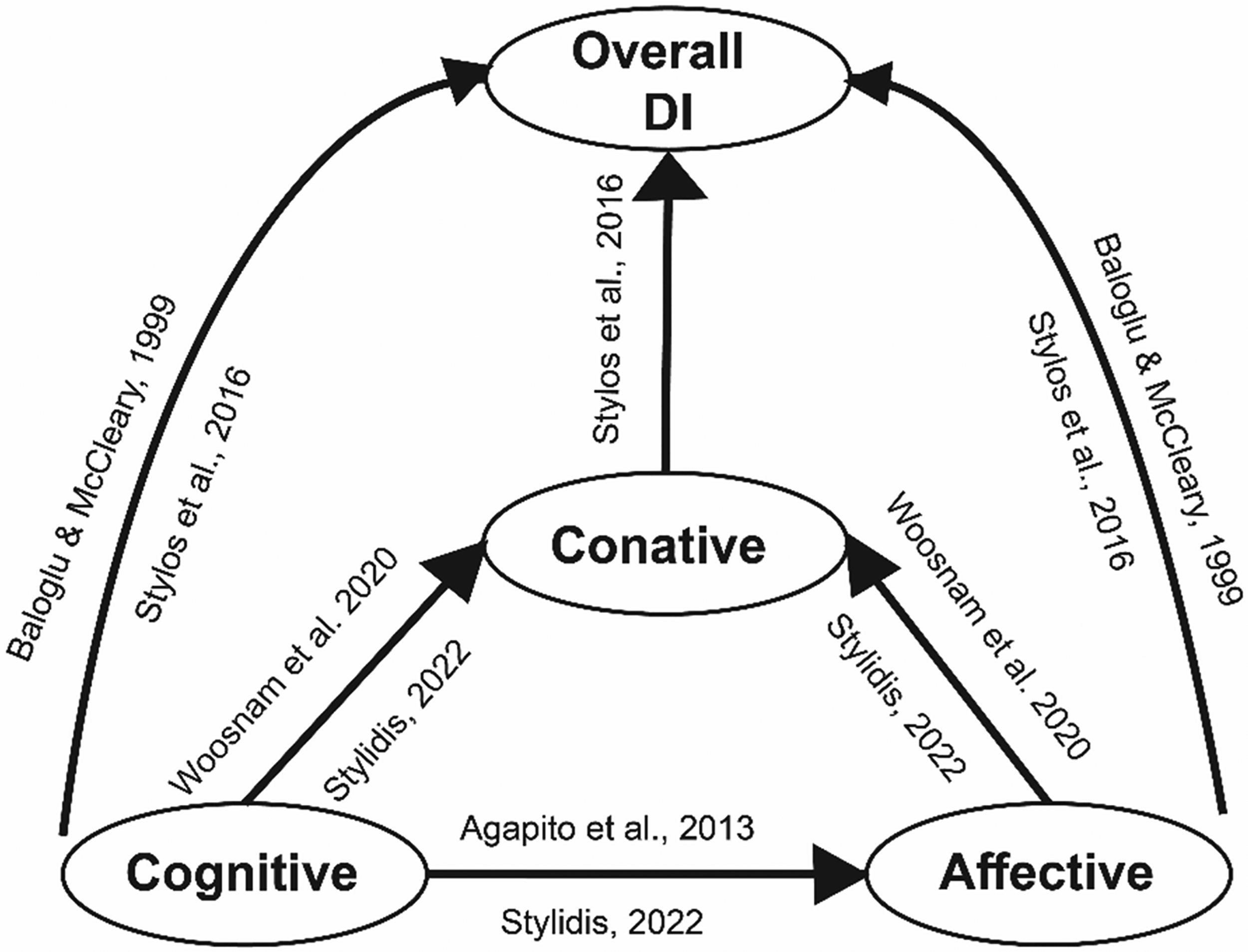
Inter-related relationship between the DI dimensions (source: by authors). DI: destination image.
Changes in individuals’ DI through visitation have long been recognized in early DI formation literature. However, scholars have introduced various terms and definitions to describe DI variations, such as organic versus induced (Gartner, 1994; Gunn, 1972), primary versus secondary (Kislali et al., 2020), or naïve versus complex (Fakeye and Crompton, 1991). For instance, Fakeye and Crompton (1991) outline three stages of image formation: organic (general knowledge from education/media), induced (promotional materials during holiday planning), and complex (personal experience at the destination). Hence, non-visitors know less about the destination than visitors (Hughes and Allen, 2008), while first-time visits often update or correct prior images through comparative evaluations of pre-visit expectations versus on-site realities (Lu et al., 2023). Overall, research indicates that firsthand experience at the destination significantly shapes and modifies DI (Echtner and Ritchie, 1991; Stylidis et al., 2017).
Beyond experience, DI is shaped by socio-cultural and psychological factors. Yilmaz and Yilmaz (2020) suggest that two different backgrounds can shape non-visitors’ images: pre-trip destination background (information sources, brand, travel constraints) and pre-trip personal background (tourist profiles, motivations, familiarity, beliefs, risk, cultural values). Similarly, Bianchi and Milberg (2017) found that destination brand awareness, brand image, and value are the primary drivers attracting non-visitors to long-haul holiday destinations. As a result, long-haul visitors develop concrete DI focusing on the destination's specific themes (Wu et al., 2021). Studies have also found that emotional solidarity and resident–tourist interaction quality (Stylidis, 2022; Woosnam et al., 2020), cultural distance, and perceived discrimination (Le Hong and Hsu, 2024), as well as pro-social cultural orientations that heighten empathy and place attachment (Tian et al., 2021), all play significant roles in shaping DI. These studies suggest that DI research should consider factors beyond experience that may widen or narrow the perceived distance between the tourist and the destination.
Most DI research narrowly focuses on post-visit evaluations, assuming that the experience is the sole driver of image formation. This experiential bias limits understanding why some non-visitors form detailed, reality-congruent images, while others retain abstract or inaccurate perceptions. This study argues that applying CLT introduces a crucial shift: psychological distance, rather than experience alone, influences the formation of DI. By foregrounding the roles of mental construal and mediated familiarity, this approach reframes DI differences beyond mere visitor experience, advancing a mechanism-based framework that addresses how mental and cultural proximity shape tourist perceptions and intentions.
DI of Japan
The DI of Japan has been primarily examined in specific contexts, such as media portrayals and cultural encounters (Liou, 2010; Song and Kim, 2016; Turzynski-Azimi, 2021). For example, Nghiêm-Phú and Bagul (2020) argued that cultural encounters, particularly sensory images (e.g. visual, auditory, olfactory, gustatory, and tactile), serve as foundational inputs in shaping potential Malaysian tourists’ DI during pre-trip planning for a visit to Japan. Moreover, Stegnienko et al. (2018) identified cultural heritage and service infrastructure as significant strengths of Japan's DI, while high prices, visa acquisition issues, and language barriers were noted as weaknesses by both previous/potential Russian visitors to Japan. In addition, Josephine et al. (2023) found that past travel experiences and subjective norms (e.g. opinions of family and friends) significantly influenced Indonesian tourists’ decisions to revisit Japan.
In a different context, Chew and Jahari (2014) explored how perceived physical risks following the Fukushima disaster in 2011 negatively influenced the intentions of Malaysians to revisit Japan, despite not significantly impacting their perceptions or emotions about the destination. Similarly, Wu and Shimizu (2020) used a hypothetical earthquake scenario as a stimulus to assess the changes in Japan DI among respondents from China and the USA. They argued that the effectiveness of tourism recovery strategies for tourist destinations frequently exposed to natural disasters is strongly influenced by the cultural proximity (familiarity) of targeted visitors.
Despite three decades of research on Japan's DI, two key gaps remain. First, few studies examine the growing Arab market, despite increased interest and arrivals. Particularly, the understanding of Arabs’ cultural expectations and DI remains limited (Isomae, 2013). Second, little is known about psychological mechanisms, such as psychological distance and mediated familiarity, that help non-visitors form concrete, nuanced images of Japan. This study addresses these gaps by including Arab tourists, both visitors and non-visitors, in the Japan DI discussion and proposing a mechanism-based framework that explains how various perceptions of Japan emerge, whether abstract or reality-congruent. These insights will help Japan's destination marketers and policymakers (e.g. JNTO-Dubai) bridge cultural and psychological distance and convert interest into travel.
Methodology
This study employed an exploratory qualitative design, utilizing semi-structured interviews to examine how Arab visitors and non-visitors construct their image of Japan. First, an intensive literature review collected theoretical insights on DI formation, CLT, and Arabs’ image of Japan. Moreover, supplementary data on Arabs’ image of Japan were retrieved from online sources that share information, such as travel blogs, social media, and newspaper articles. A bilingual Arabic–English interview protocol, encompassing the interview procedure, main questions, and follow-up probes, was designed and adopted based on previous research (Mohamed et al., 2024; Stylidis and Cherifi, 2018). A pilot study was conducted with two visitors and two non-visitors to ensure the efficacy of the interview questions in eliciting sufficient data to achieve the study's aims. Guideline questions covered: (a) cognitive attributes Arabs associate with Japan and their sources, (b) affective and conative responses to Japan as a destination, and (c) perceived psychological and cultural distance from Japan. Visitors and non-visitors were asked questions with similar phrasing to facilitate cross-contextual comparison. Example prompts included:
What comes to mind when you think of Japan as a travel destination? How close or distant do you feel Japan is from your culture? How have media, movies, or social media influenced your view of Japan? Can you recall other specific sources that have shaped your perception of Japan?
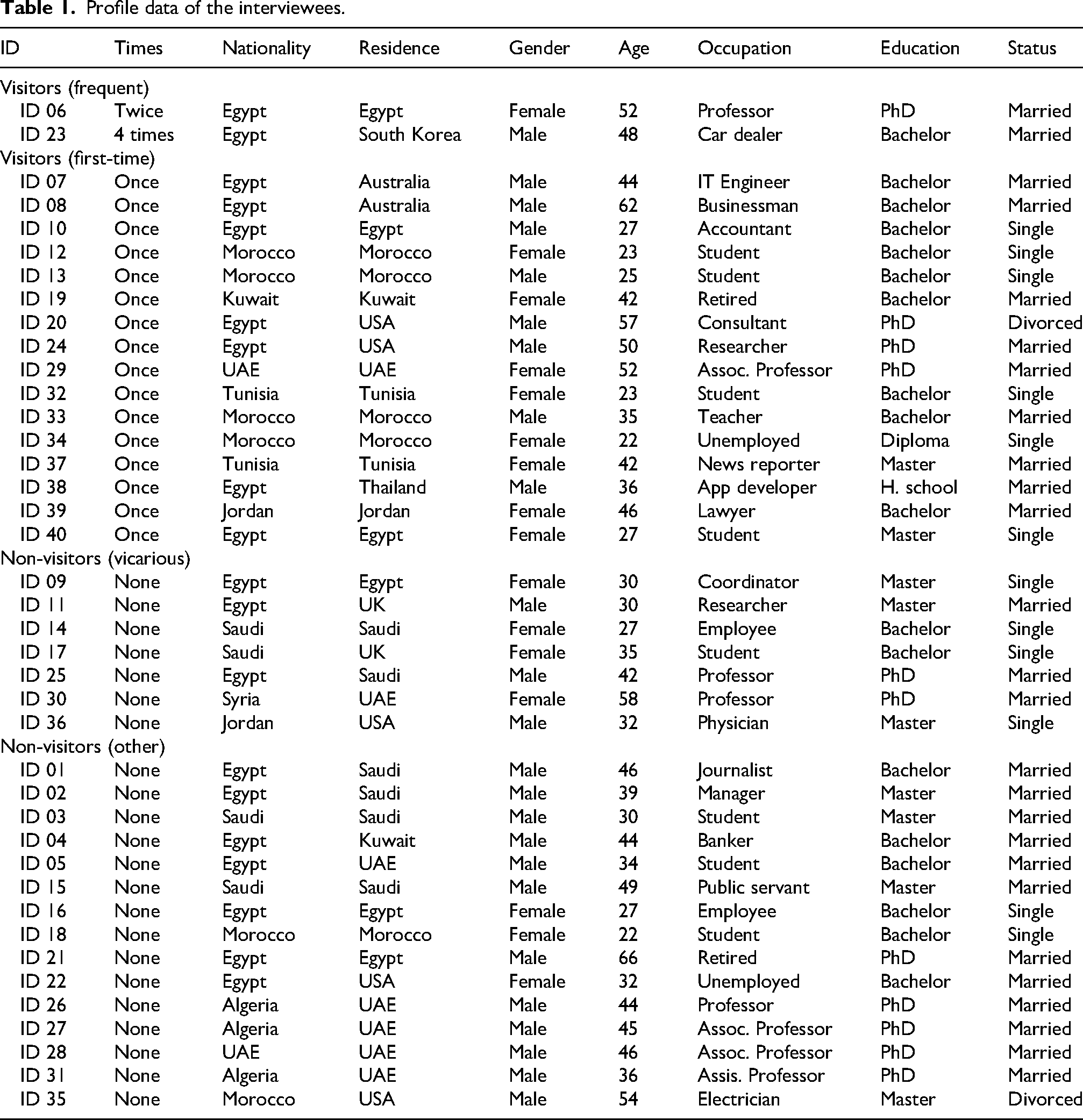
Purposive sampling criteria were employed to recruit two pre-defined groups: Arab visitors and non-visitors. Recruiting participants from these Arab national backgrounds and places of residence allowed the study to capture a range of perspectives across different socio-cultural contexts within the broader Arab region. Participants aged 18 years or older were recruited in two phases. In the first phase, a broad segment of the targeted Arab population was accessed online through Arab travel-related social media groups. In the second phase, the visitor sample was expanded to ensure a reliable cross-contextual comparison. This phase focused on recruiting representatives from the leading Arab source markets for Japan, including Saudi Arabia, the UAE, Kuwait, Egypt, Tunisia, and Morocco, which together account for the largest share of Arab arrivals to Japan (Japan National Tourism Organization, 2025). Targeted participants were reached through Arab-based travel agencies in Japan and via snowball sampling within community networks. These inclusion criteria enabled reaching data saturation by collecting sufficient, in-depth data from a diverse and balanced sample of individuals with and without travel experience in Japan. Most interviews were conducted online via video meeting apps (e.g. Zoom or Microsoft Teams), and averaged 43 minutes. Only three interviews were conducted face-to-face, including two participants (IDs 19 and 37), who agreed to be interviewed immediately after completing 2-week guided tours with a travel agency in Japan. A total of 40 Arabs (18 visitors, 22 non-visitors) were interviewed between November 2024 and February 2025. Table 1 shows the participants’ demographic characteristics (age, gender, nationality, and travel history). This diverse range of participants allowed for triangulation across different Arab sub-regions and socio-demographics, providing breadth rather than statistical representativeness.
Profile data of the interviewees.
All interviews were voice-recorded, transcribed, and, if conducted in Arabic, translated into English. Adopting a multi-layered qualitative approach, the data were coded and analyzed using NVivo 15. First, thematic analysis was conducted to identify sub-themes corresponding to the three DI domains (cognitive, affective, and conative). During this stage, coding was initially inductive to capture participants’ perceptions and narratives regarding Japan. In a second step, the analysis incorporated the study's theoretical framework by examining how participants’ descriptions reflected different dimensions of psychological distance as conceptualized in CLT, including temporal, spatial, social, and hypothetical distance. Varying DIs were then interpreted through content and descriptive analyses of participants’ responses to a follow-up question about the sources that shaped their perceptions of Japan. This process enabled the analysis to connect participants’ cognitive information sources with their perceived psychological proximity to the destination.
Through iterative coding, team discussions, and constant comparison of travel experiences and information sources, four analytically distinct sub-groups emerged: frequent visitors, first-time visitors, vicarious visitors, and other non-visitors. For instance, vicarious visitors emerged inductively during the analysis as a distinct category of non-visitors. Thus, non-visitors were classified into vicarious visitors and other non-visitors according to three analytically derived criteria: (a) resemblance of cognitive, affective, and conative attributes to those of visitors, (b) reliance on credible cognitive sources, and (c) expressed psychological proximity to the destination. Based on these operational criteria, vicarious visitors are defined as individuals who share detailed experiential descriptions, sensory impressions, and intentions regarding Japan that resemble those of individuals with direct experience, rely on trustworthy cognitive sources to form their image of Japan, and express greater spatial, temporal, social, and hypothetical proximity to Japan compared to other non-visitors. These emerging sub-groups served as an analytical framework to refine interpretations of the varying DIs of Japan beyond conventional visitor/non-visitor distinctions, rather than as criteria for the inclusion or exclusion of participants. Such a multi-layered qualitative analysis approach helped identify the connection among cognitive sources, psychological distance, and DI formation across participant groups.
To ensure methodological rigor, this study followed Gub'’s (1981) criteria for trustworthiness in qualitative analysis. Credibility was strengthened through iterative comparison of data and theory during the coding process, in which transcripts were repeatedly revisited to refine emerging themes, and through triangulation of data sources and coders by comparing interpretations across participants with different travel experiences (visitors and non-visitors). Peer debriefing sessions were conducted among the research team to discuss coding decisions and resolve interpretive disagreements, and an audit trail documenting coding revisions and theme development was maintained throughout the analysis. Dependability and confirmability were established through an inter-coder reliability analysis of 25% of transcripts (n = 10) containing rich data. The results indicated substantial to almost perfect agreement among coders. Cohen's kappa values ranged from 0.6307 to 0.884, and percentage agreement ranged from 83.25% to 99.76%, demonstrating high coding consistency and reliability (Landis and Koch, 1977). Thematic saturation was monitored throughout data collection; no substantively new themes emerged after approximately the 36th interview, and the remaining four interviews confirmed the stability of the coding structure. Given the interpretive nature of the thematic analysis and its emphasis on conceptual understanding rather than statistical generalization, agreement was reached through iterative discussion and consensus among the researchers. To further substantiate the qualitative patterns observed in cognitive source reliance, Fisher's exact tests were applied to the proportional distribution of mention frequencies across source categories, comparing visitors and non-visitors. The purpose of this analysis was not to test causal hypotheses or to generalize statistically, but rather to confirm that the observed patterns are unlikely to result from chance variation in a small sample. This approach serves as a transparent validation step consistent with contemporary mixed-methods standards (Creswell and Clark, 2018). Authenticity was ensured by incorporating participants’ voices through direct quotations and by revisiting selected interview excerpts during analysis to confirm that interpretations accurately reflected participants’ meanings. Finally, transferability was addressed by situating the findings within the broader DI literature and providing detailed descriptions of participant characteristics and study context, thereby enabling resonance with similar contexts.
Results and discussion
Perceived attributes and cognitive sources
Three main themes emerged from data coding, analysis, and aggregation: cognitive, affective, and conative, reflecting the multi-faceted aspects of DI. Cognitive representations were especially prominent, with participants evaluating Japan's built and natural environments, culture, people, and challenges, either based on direct experiences of Arab visitors or on secondary sources accessed by non-visitors.
Table 2 presents the relative frequencies of cognitive attributes associated with Japan among Arab visitors and non-visitors, as identified through qualitative coding in NVivo. Both groups strongly associate Japan with natural landscapes and seasonal aesthetics, such as cherry blossoms, indicating that the natural environment is a globally recognized symbolic image of Japan. Cultural heritage and traditions, including traditional culture, lifestyle, clothing, and ceremonies, were emphasized equally by both groups, regardless of travel experience. Although Japanese pop culture enjoys global popularity, it was mentioned only occasionally, suggesting that Arab respondents are not predominantly influenced by Japan's entertainment-driven imagery. Notable differences emerged between the groups. Visitors emphasized Japanese behavior and social norms, such as respect, politeness, and punctuality. They also emphasized the quality of urban infrastructure, culinary experiences, safety measures, and challenges encountered during their stay. These findings suggest that firsthand observation enhances appreciation of intangible cultural values and enables more nuanced evaluation. In contrast, non-visitors appear more influenced by global images of Japan as a technologically advanced nation and frequently admire its innovation, sometimes describing it as a “sister planet.” For example, one non-visitor expressed admiration for Japan's technological advancements, stating, “Compared to other countries, Japan has experienced rapid technological advances over the past few decades. Thanks to advanced technology, Japan is living in the future and enjoying a luxurious lifestyle” (ID 18).
Most frequently cited perceptual attributes of Japan among Arab visitors and non-visitors.
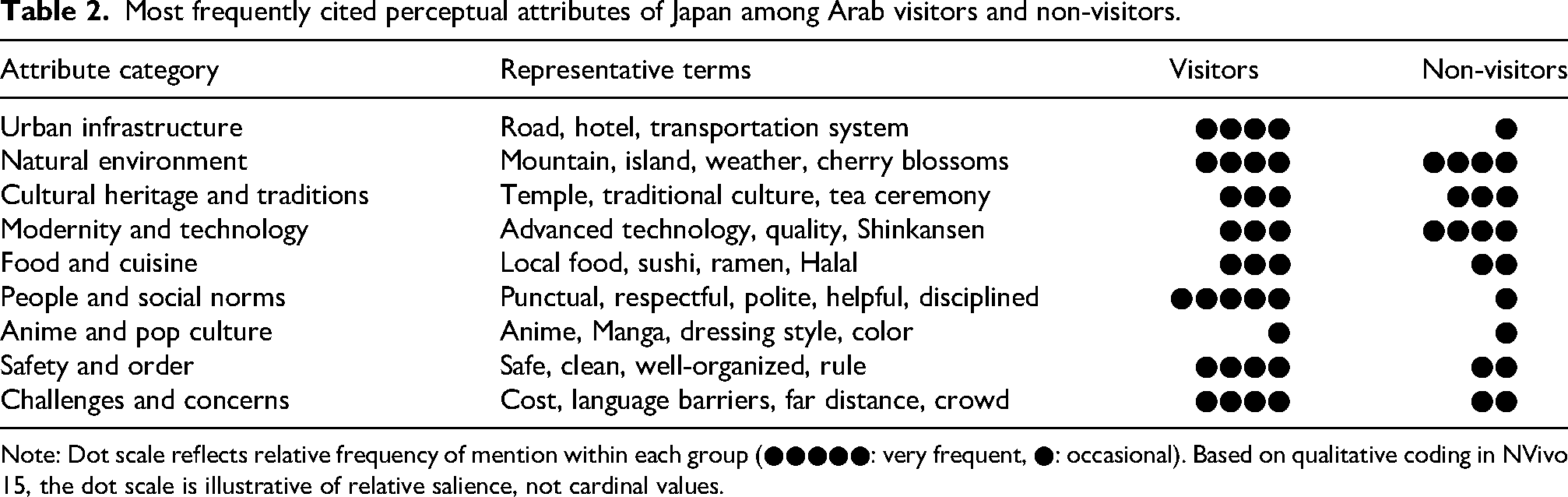
Note: Dot scale reflects relative frequency of mention within each group (●●●●●: very frequent, ●: occasional). Based on qualitative coding in NVivo 15, the dot scale is illustrative of relative salience, not cardinal values.
The findings suggest that although Arab non-visitors frequently possess over-simplified or exaggerated perceptions of Japan, they attribute symbolic qualities to Japan similar to those identified by visitors. Notably, nearly one-third of non-visitors (32%) demonstrated accurate or realistic perspectives of Japan despite lacking firsthand experience. This meaningful minority contrasts with the remaining 68% whose images were more abstract or idealized, a distinction central to the vicarious visitor construct developed below. For example, a non-visitor expects that major tourist cities such as Tokyo and Kyoto will be crowded. He added, “Japan is famous for its skyscrapers, Buddhist temples, and historical palaces such as Tokyo Imperial Palace” (ID 36). These detailed perspectives prompt further inquiry into the sources of cognitive attributes that Arab visitors and non-visitors associate with Japan.
Figure 2 illustrates the cognitive sources utilized by Arab visitors and non-visitors when constructing their image of Japan, as identified through qualitative coding in NVivo. To determine whether the observed distributional patterns reflect systematic differences rather than sampling variation, Fisher's exact tests were conducted on the proportions of each source category across the two groups. The findings indicate that several sources are distinctively characteristic of each group. Non-visitors demonstrated a greater reliance on stereotypes and overseas experience with Japanese culture or people (p < .001 for both), whereas direct comparative experience, such as previous visits to Japan and home-country comparisons, was significantly more prevalent in visitors’ accounts (p < .001 and p < .05, respectively). Importantly, narratives from previous visitors served as a common cognitive resource for both groups (p = .52), indicating that trusted human accounts act as a credible bridge regardless of direct visit experience (see Supplemental Table A1 for full Fisher's exact test results).
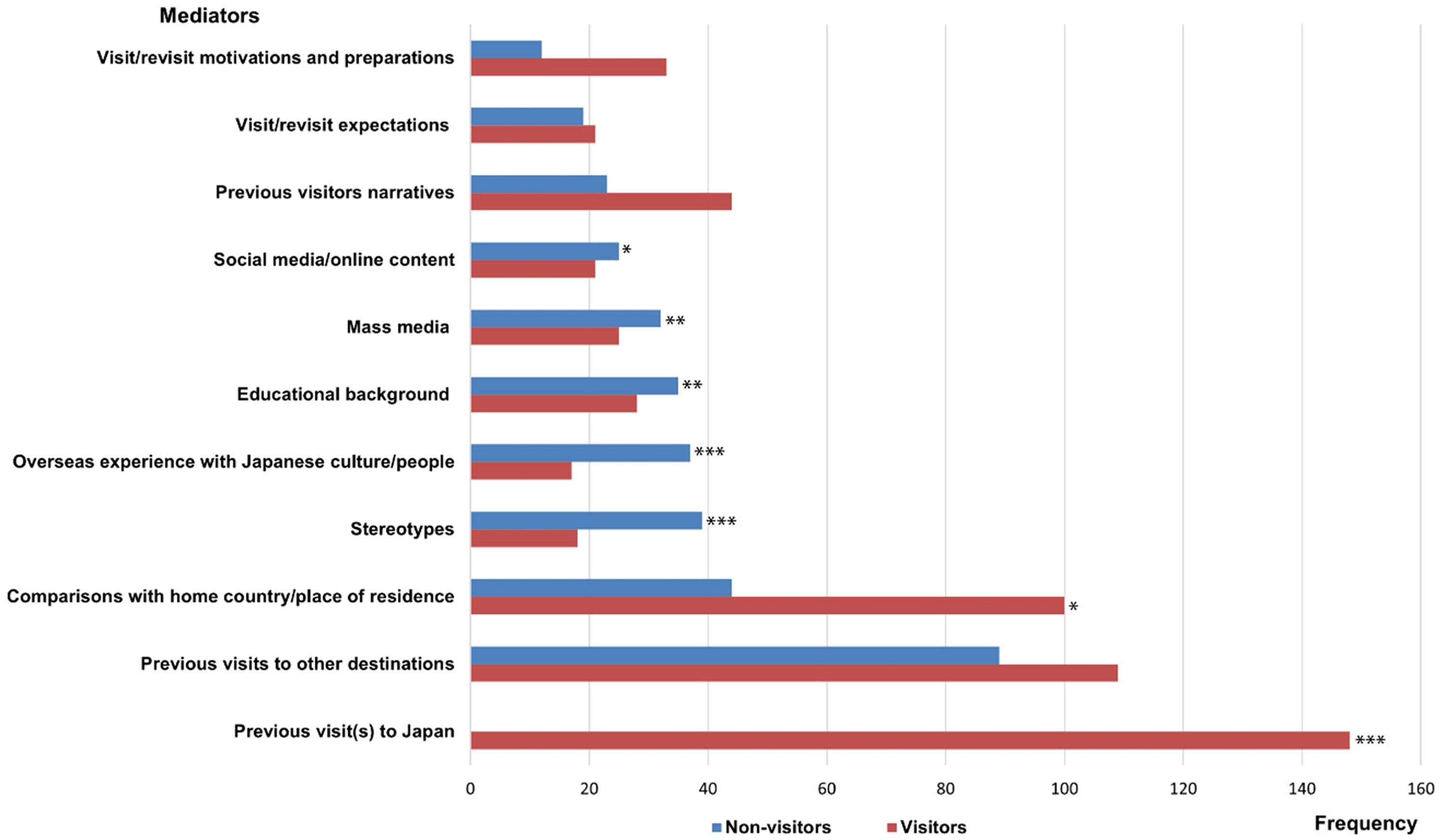
Cognitive mediators reported by Arab visitors and non-visitors (mention frequencies from qualitative coding). Asterisks indicate sources where proportional distributions differed significantly between groups (Fisher's exact test: *p < .05, **p < .01, ***p < .001); non-significant differences indicate shared cognitive resources across groups.
When evaluating the Japanese environment, people, and culture, both groups consistently draw on comparisons with their home countries, current places of residence, and other destinations they have visited. Arab visitors, however, integrate these comparisons with their firsthand experience(s), resulting in more realistic and nuanced understandings of Japan. Among non-visitors, those who construct close-to-reality images of Japan—the vicarious visitors—are distinguished not by the quantity but by the credibility of their cognitive sources. These include direct encounters with Japanese people or culture abroad, trusted accounts from family members or close friends who had visited Japan, experience with culturally similar neighboring destinations such as China and South Korea, and a relevant educational background. As one participant illustratively described: I studied in Canada with Japanese people, who were kind to me … In 2022, I visited the Japan area at the Boulevard World in Riyadh, where examples of traditional Japanese clothing, Sakura trees, and Samurai culture were exhibited. (ID 17)
This pattern aligns with Baloglu and McCleary’s (1999) argument that credibility, rather than mere volume, of information sources is a key stimulus in DI formation. Indirect but reliable exposure leads to more accurate perceptions, whereas reliance on stereotypes or mass media tends to produce inflated or idealized DIs, a distinction confirmed by the significantly higher reliance on stereotypes observed among non-visitors (p < .001). Consistent with Weaver and Tang (2021), this credibility-driven sub-group represents vicarious visitors who construct a pragmatic, close-to-reality image of a non-visited destination through indirect yet trustworthy sources. Based on cognitive source patterns and travel status, interviewees were grouped into frequent visitors, first-time visitors, vicarious visitors, and other non-visitors (see Table 1). The following section examines how these source patterns shape the characteristics of Japan's DI across these groups.
Characteristics of DI
Figure 3 synthesizes the aforementioned findings by illustrating how variations in cognitive intermediaries shape the Arabs’ overall DI of Japan. First, frequent visitors have concrete, detailed views of Japanese people, culture, and environment, informed by multiple personal visits. Additionally, they expressed strong feelings, both positive and negative, that capture a genuine sense of Japan's urban, cultural, and natural settings (e.g. transportation, art, cuisine, drinks, and weather). Therefore, their loyalty and conative intentions regarding recommending or revisiting Japan are clearer and more specific, informed by past experiences. For instance, a frequent visitor (ID 23) suggests visiting Japan in April, as the weather is better, and the country resembles a paradise with cherry blossoms in bloom. His recommendations are based on memorable experiences from four prior visits to Japan in 2000, 2003, 2010, and 2016, spanning different seasons.
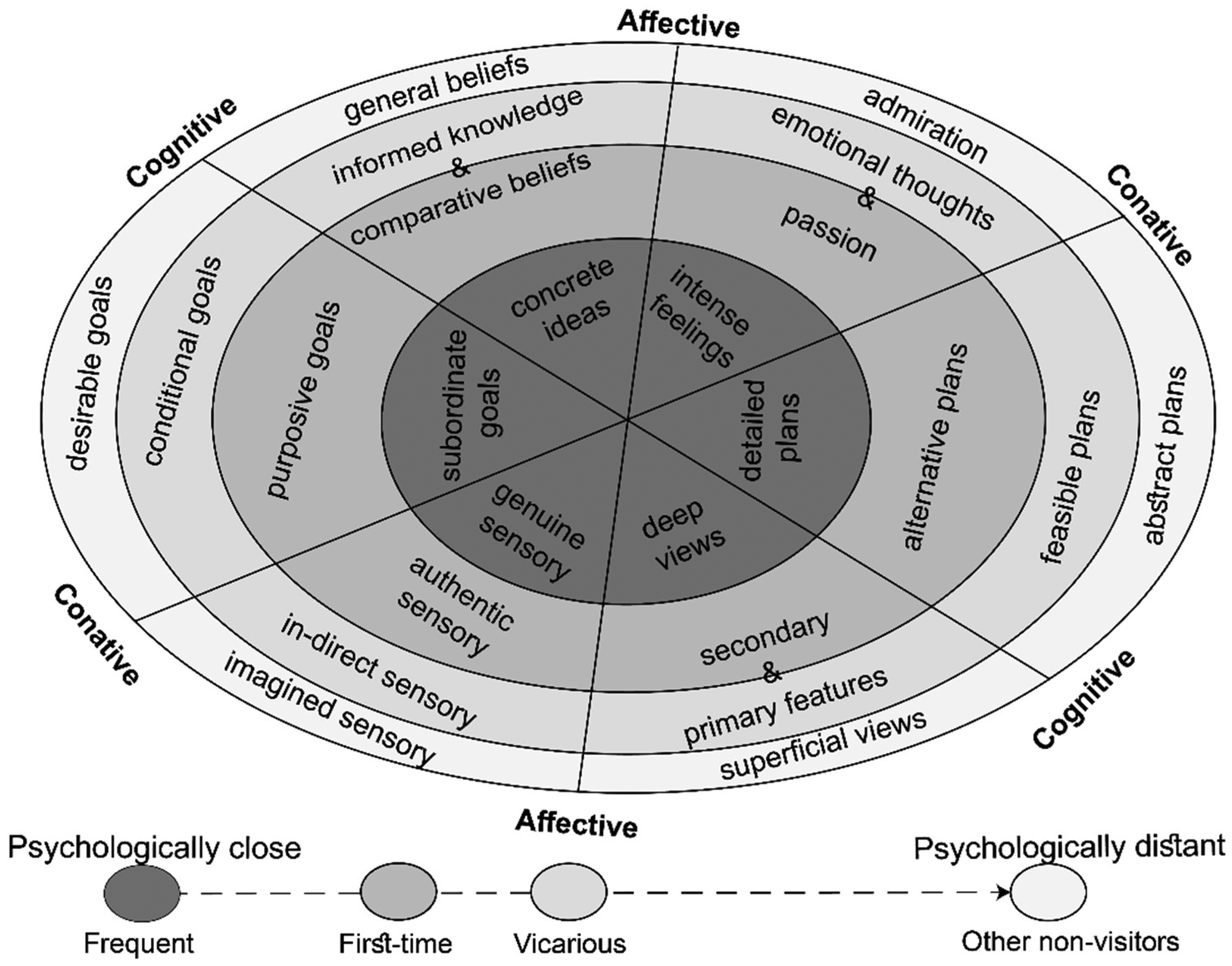
Characteristics of DI among visitors and non-visitors according to their psychological distance. DI: destination image.
Second, 62.5% of first-time visitors recalled secondary features of Japan, such as locals’ attitudes and traditional art, from recent short-term trips (averaging 2 weeks), reflecting the interpretive depth that even brief direct experience adds to DI formation—a level of nuance absent among non-visitors relying solely on secondary sources. While others shared primary features from Japan, like prominent landmarks and services, which they recalled from an earlier visit a long time ago. Both groups’ evaluations are shaped by comparing pre-visit expectations with actual experiences, often resulting in positive emotions when expectations are met and negative feelings when they are not. For instance, one interviewee who had visited Japan only once, in December 2024, said she did not expect to receive as much respect from the Japanese people as an Arab woman. She added: “This was so elegant; I think it is the best choice to visit for Arabs” (ID 19). Another participant was disappointed by the crowdedness, small hotel rooms, and unexpected rubbish in Tokyo (ID 07). These narratives illustrate the impact of pre-visit expectations on first-time visitors’ emotions and behavioral intentions. When expectations are met, visitors are more likely to provide positive feedback and return. Conversely, unmet expectations may deter return visits or prompt visitors to adjust their future travel plans to avoid the obstacles they encountered on the first visit.
Third, vicarious visitors, relying on indirect but reliable sources, hold a DI of Japan that closely resembles that of first-time visitors. For instance, they shared both general and detailed views of Japan, including advanced technology, modern and traditional houses, capsule hotels, the Shinkansen (bullet train), and traditional tea ceremonies. Like first-time visitors, they expressed a sense of connection and passion for Japan, articulating both positive and negative emotional thoughts about the Japanese people. For instance, one participant described a friendly encounter with a Japanese girl in Italy. She said: “When I was alone in Italy, I met a Japanese girl who offered me help by taking me pictures at many tourist landmarks, ending with becoming friends and helping each other” (ID 09). Such indirect experiences with Japanese culture and people increase the interest of vicarious visitors in visiting Japan. However, they lack confidence about their first trip and often make conditional travel plans, such as traveling in groups (IDs 11, 17, and 25) or participating in multi-country trips that include destinations such as South Korea, Taiwan, and the Philippines (ID 09).
Finally, other non-visitors often hold superficial views and sometimes unrealistic perceptions of Japan, gained from less trustworthy sources. Their cognitive views of Japan focus on technology and perfectionism, sometimes illustrated by common sayings in their home countries, such as “Do you think you are in Japan?!” (ID 35), which serves as an exclamatory expression that positions Japan as superior to other countries. This group of non-visitors envisions Japan through imagined auditory, gustatory, olfactory, tactile, and visual senses of desirable experiences. For example, a non-visitor said, “I want to see the airport floating in the ocean as a piece of art” (ID 21). This narrative demonstrates how unrealistic perceptions and visual-sensory imaginings of Japan influence non-visitors’ conative aspects, leading to aspirational rather than actionable goals. Consequently, their plans to visit Japan are often abstract or impractical, highlighting a lack of direct or indirect experiential knowledge of Japanese people and culture. Therefore, their plans to visit Japan are often abstract or unfeasible, driven by inaccurate perceptions and exaggerated emotions, reflecting abstract motivations and a limited understanding of Japan's landmarks.
These findings indicate that Arabs’ varying levels of concrete and abstract DIs are mainly shaped by their cognitive sources, supporting the argument of Llodrà-Riera et al. (2015) that individuals’ cognitive processes determine their overall DI. Moreover, Figure 3 conceptually synthesizes that reliance on distinct cognitive intermediaries corresponds to systematic shifts along the construal continuum, ranging from psychologically proximal to psychologically distant representations of Japan. For instance, frequent visitors, drawing on repeated direct experiences, develop detailed perspectives and emotionally grounded attributes, which foster concrete evaluations and clearly defined intentions consistent with low-level construals. First-time and vicarious visitors, informed by personal experience or credible indirect exposure, form partially concrete perceptions and interpretive-sensory experiences that explain their oriented goals, thereby reflecting intermediate-level construals. In contrast, non-visitors who rely on less credible cognitive sources tend to form superficial, sometimes idealized views that articulate their imagination and future aspirations regarding Japan, indicating high-level construals. This synthesis aligns with the notion of the CLT, emphasizing that abstract DI stems from high-level construals and concrete DI from low-level construals (Su and Li, 2024), with psychological distance determining the degree of abstraction at which information is processed within the cognitive hierarchy (Tan, 2018; Wang et al., 2022). Also, it provides a theoretical basis for understanding DI formation through the lens of construal-level mechanisms, which are further discussed in the following section.
Psychological distance from Japan
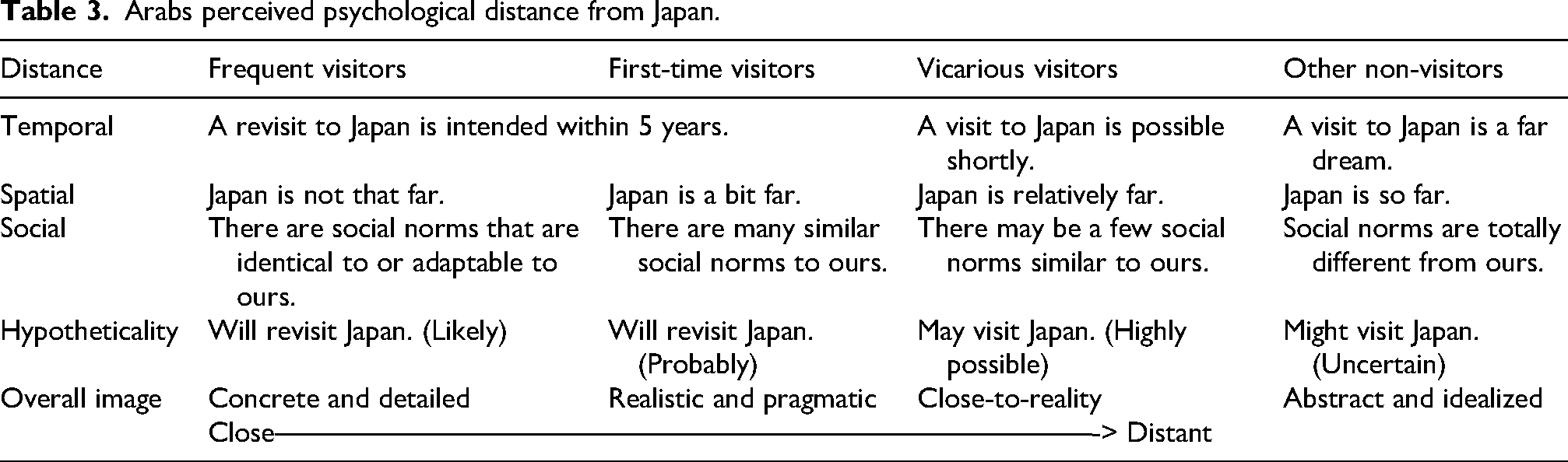
As outlined above, psychological distance is expressed through four dimensions: temporal, spatial, social, and hypothetical. Table 3 illustrates the differences in these dimensions across four groups: frequent visitors, first-time visitors, vicarious visitors, and other non-visitors.
Arabs perceived psychological distance from Japan.
Temporal distance
To examine how closely in time Arab visitors and non-visitors feel to Japan, both groups were asked whether they plan to visit or revisit Japan within the next 5 years. Frequent and recent visitors feel Japan is closer in time due to vivid memories, which strengthen their attachment to Japan, and 66.7% of visitors expect to return within 5 years, reflecting the stronger temporal proximity that direct experience generates—a pattern that diminishes progressively among non-visitor groups. However, the sense of urgency differs depending on how each group reduces its temporal distance. Frequent visitors familiar with immediate motivators, such as the weather or major events like the Osaka EXPO 2025, can set a fixed revisit schedule, thereby further reducing their temporal distance. In comparison, first-time visitors often rely on broader motivations or personal readiness, such as seeing the cherry blossoms or having sufficient funds and time. They are more flexible about revisiting within 5 years, so their temporal distance is higher than that of frequent visitors. One participant noted: “I will revisit Japan soon, maybe next year. I visited it in the winter; this time, I am more interested in enjoying the nature of Japan in Summer or Spring” (ID 34).
In contrast, the expectations and motivations of non-visitors led to a sense of greater temporal distance from Japan. However, all vicarious visitors hope to visit Japan soon, influenced by positive stories from prior visitors, which fuel their curiosity to explore Japan whenever possible. They anticipate a visit to Japan within the next 5 years, thereby reducing their temporal distance. In contrast, other non-visitors describe visiting Japan one day as a distant dream that requires significant preparation, so they remain unsure whether they will visit even within 5 years. In this regard, a non-visitor stated: “I think visiting Japan for the first time would be quite difficult; it is like visiting another planet … I hope to visit it one day” (ID 27).
Spatial distance
Notably, both Arab visitors and non-visitors perceive Japan as being geographically distant from their home countries or current place of residence. However, the degree and impact of this perceived distance vary depending on each group's strategies to reduce spatial distance. Frequent visitors reported that Japan does not feel far away, whereas first-time visitors perceive it as somewhat remote. Frequent visitors reduce their spatial distance through multiple direct experiences during their journeys to Japan; thus, they argue that “it is not that far” (ID 06). Meanwhile, 62.5% of first-time visitors compared their real experience to pre-visit expectations, often finding Japan closer than anticipated, a corrective pattern enabled by direct experience that was notably absent among non-visitors, who consistently relied on imagination or secondary portrayals to judge spatial distance.
By contrast, vicarious visitors regard Japan as a relatively distant destination. Those who have visited neighboring countries, such as China or South Korea, perceive Japan as distant yet attainable, thereby reducing their perceived spatial distance from it. On the other hand, other non-visitors rely on imagination or stereotypes (such as viewing Japan as another planet) when judging the spatial distance from their home. Consequently, they often view Japan as extremely far away, deterring them from considering a visit. One Moroccan non-visitor explained: “I think Japan is very far from Morocco, and it would cost a lot of money to visit there. I am more interested in visiting other countries near Morocco before going to a far place” (ID 18).
Social distance
Arabs perceive Japanese people as socially different, but this perception varies depending on whether the experience is direct or indirect. Frequent visitors often feel that certain Japanese social norms—such as family ties and mutual respect between generations—mirror their values. They believe they can gradually adapt to other customs, such as punctuality, drawing on their frequent direct contact with Japanese people to support these views. Thus, they feel socially closer to Japan. Similarly, first-time visitors highlight similarities with Japanese society, comparing firsthand experiences to their initial assumptions that Japanese norms would be wholly different. Thus, their perceived social distance is also significantly reduced. As a first-time visitor said: “I noticed many Japanese attitudes which are similar to ours as Arabs, such as being respectful and providing help to others with warm feelings” (ID 24).
Vicarious visitors, meanwhile, suspect there may be a few overlapping social norms. They perceive Japanese society indirectly, relying on trusted visitors or experiences with Japanese people overseas. Although this partial narrowing of social distance is acknowledged, vicarious visitors recognize that their perceptions may be biased, built on others’ thoughts or indirect experiences with a few unrepresentative samples of Japanese people abroad. As one participant said, “The Japanese people I met in Canada were open-minded, maybe because they are exposed to other cultures. I think the people in Japan would be more conservative talking to strangers” (ID 17). Conversely, other non-visitors consider Japanese social norms fundamentally different. In this regard, a non-visitor claimed that “the social aspects of life make Japan unique among other destinations” (ID 05). Their assessments are primarily influenced by stereotypes, social and mass media portrayals, or comparisons with their home countries and places of residence. Consequently, they view Japan as socially remote, heightening their apprehension about visiting it.
Hypotheticality
When considering a visit or return to Japan, Arab visitors express greater certainty, while non-visitors hesitate. Both frequent and first-time visitors aim to revisit Japan within 5 years, but frequent visitors are especially confident and motivated by clear goals, such as attending a conference or visiting the Osaka EXPO 2025 (ID 06). First-time visitors want to maximize their experiences or explore new regions in Japan, turning their hypothetical intent to visit Japan into a real commitment. For example, a first-time visitor explained: “I still have some places to visit in Japan; I look forward to discovering the South of Japan, Osaka, and Kobe” (ID 13).
Vicarious visitors, for their part, perceive a trip to Japan as highly attainable, spurred on by motivation and purposeful planning. They are eager to experience Japan firsthand, as inspired by trusted accounts. Still, their intentions often depend on factors such as saving money, having travel companions, or combining a trip to Japan with other destinations. For example, one participant planned to hike in Japan while in South Korea in 2021, but was prevented from doing so by COVID-19. She intends to visit soon and is preparing by downloading official hiking trail maps. Yet, she notes, “If I visit Japan, it will be part of a route trip that includes Taiwan and the Philippines” (ID 09). In contrast, other non-visitors only dream of visiting Japan but feel unlikely to do so. They often adopt stereotypes or social media portrayals that highlight cultural hurdles and challenges for Arabs in Japan, making even brief visits seem daunting. As a result, they are discouraged from seriously learning more about Japan or considering a visit, leaving their intentions uncertain.
As conceptualized by Trope and Liberman (2010), CLT provides a useful framework for interpreting the inter-connectedness among the four distance dimensions and their influence on the mental construal of Japan's DI. However, the above findings extend this perspective by suggesting that the dimensions of psychological distance do not operate independently but dynamically reinforce one another within tourism decision-making contexts. Spatial and social distances appear to affect Arabs’ cognitive and affective evaluations, whereas temporal, spatial, and hypothetical distances more directly influence their conative responses, such as the likelihood of visiting or recommending Japan.
Notably, frequent and first-time visitors reported greater psychological proximity to Japan, likely because firsthand experiences enable them to share concrete descriptions and emotionally grounded attributes. Thereby, they reflect greater experiential certainty with clearly defined subordinate and purposive goals. Consistent with Wang et al. (2022), who claimed that construal processes correspond to perceived closeness, these findings suggest that experiential familiarity may reduce uncertainty rather than merely altering abstract views.
In contrast, other non-visitors who perceive Japan as geographically distant often exclude it from their travel considerations, which may subsequently amplify their perceived temporal and hypothetical distance. In this regard, Zhang and Wang (2009) argued that greater spatial distance leads to greater perceived time, greater social closeness, and a higher likelihood of interaction. However, the findings suggest that these effects may decrease due to motivational and symbolic factors associated with long-haul destinations, especially those offering exotic cultural distinctiveness and appealing experiences for travelers, such as Japan. For example, the sustained interest among vicarious visitors in visiting Japan challenges the assumptions of distance decay theory, which posits that travel interest declines sharply with increasing distance (McKercher, 2008). Moreover, it challenges the claims of Chung and Chen (2018), who suggested that spatially distant destinations are typically evaluated through superficial representations. Instead, the findings suggest that mediated exposure through credible cognitive sources may simulate experiential knowledge, effectively reducing psychological distance and blurring the distinction between experiential and symbolic familiarity, a phenomenon that has been insufficiently addressed in earlier DI research. Rather than invalidating distance decay, the present findings call for reconsidering it in the context of contemporary digital intermediaries and transnational cultural flows.
Beyond psychological distance and information sources, previous research highlighted several contextual variables that may strengthen or weaken DI formation among visitors, including visit frequency (Fakeye and Crompton, 1991), experiential intensity (Wu et al., 2021), diversity of visited attractions (Martín-Santana et al., 2017), vivid tourism memories (Kim et al., 2022), and socio-demographic traits (Beerli and Martín, 2004). Furthermore, the present study highlights that cultural segmentation is more influential than perceived distance in explaining DI variation, supporting Wu et al. (2021). Participants from different Arab countries shared varying levels of perceived barriers and challenges (e.g. economic, communication and navigation, cultural and religious, and accessibility), which may influence their psychological distance and, in turn, their overall image of Japan. Therefore, it is important to understand how perceived cultural compatibility, challenges, and identity alignment interact with the dimensions of psychological distancein DI formation.
Conclusion
This study investigates the application of CLT to explain the relationship between psychological distance and the construction of DIs, focusing on Arabs’ perceptions of Japan. By integrating CLT into DI research, the study moves beyond descriptive comparisons between visitors and non-visitors to reveal the psychological mechanisms that shape the evolution of DIs across varying levels of familiarity and perceived proximity. The research explains explicitly how perceived psychological distance influences the formation of either abstract or concrete images of a tourism destination. Using an exploratory qualitative approach, the findings revealed that Arab non-visitors, who experience greater psychological distance, generally maintain more abstract images of Japan. In contrast, visitors demonstrate more concrete perceptions. This pattern is supported by both qualitative analysis and the proportional distribution of cognitive source reliance, as confirmed by Fisher's exact tests (see Supplemental Table A1).
However, using specific operational criteria, a distinct group of non-visitors—vicarious visitors—emerged inductively during the analysis. This group demonstrated both specific and general images, relying on credible cognitive sources such as trusted visitors or indirect experience with Japanese culture or people abroad. The concept of vicarious visitors is introduced as a theoretically generalizable construct. It suggests that mediated experiences through reliable cognitive sources can reduce psychological distance by enabling individuals to form images of destinations that closely resemble reality, even without prior visitation. This is demonstrated by the 32% of non-visitors who developed close-to-reality images without direct experience. Psychological distance and the credibility of information sources are therefore critical factors in shaping perceptions of a destination among both visitors and non-visitors.
Theoretical implications
The study offers significant contributions to DI literature. In particular, the study extends prior DI research, which has largely documented differences between visitors and non-visitors descriptively, by applying CLT to provide a mechanism-based explanation of how psychological distance shapes the nature and robustness of DI formation. Theoretically, while previous research rarely models why non-visitors hold concrete images, this study adopts CLT to explain the mechanism. It demonstrates that the four psychological distance dimensions (temporal, spatial, social, and hypothetical) systematically shape the level of construal (abstract vs. concrete) underlying DI formation. Additionally, the study introduces a four-group visitor/non-visitor typology based on cognitive mediators. Critically, the study demonstrates that source credibility, rather than the mere presence of cognitive mediators, is the primary determinant of image robustness. This is evidenced by a significantly greater reliance on stereotypes among non-visitors (p < .001) and by a shared reliance on visitors’ narratives across both groups (p = .515). These findings extend CLT and established DI frameworks by demonstrating that psychological distance and credible mediators, rather than just physical proximity, largely shape the robustness and nature of DI, including the appeal associated with remoteness. These conclusions are drawn from an exploratory qualitative study and are presented as theoretically generative propositions warranting further quantitative validation.
These findings also suggest that DI formation should be understood as a dynamic process shaped by both experiential familiarity and mediated familiarity. While direct travel experience reduces psychological distance through firsthand interaction with the destination, credible indirect exposure—such as trusted social narratives, cultural encounters, or educational experiences—can also partially simulate experiential knowledge. This insight broadens existing DI frameworks by demonstrating that realistic destination perceptions may emerge even in the absence of direct visitation when credible cognitive mediators are present.
This study also highlights the importance of integrating perspectives of psychological distance into DI research. The findings demonstrate that reducing perceived psychological distance enables individuals to form more detailed and specific DIs, underscoring the central role of credible cognitive information sources in shaping these perceptions. By highlighting the dynamic relationship between psychological distance and DI formation, this study contributes to a deeper understanding of how tourist perceptions evolve across varying levels of familiarity and exposure.
Practical implications
Practically, understanding how psychological distance interacts with DI offers valuable insights for destination marketing organizations (DMOs) aiming to attract non-visitors. By easing access to credible content that challenges stereotypes or providing immersive virtual/interactive experiences, DMOs can make destinations feel more accessible and relatable to their audience. Addressing social and cultural concerns through multi-lingual support, staff training, and cultural exchange initiatives, as well as supplying faith-based amenities and diverse lodging options, further helps overcome barriers and reduce psychological distance. Outbound agencies can also play a pivotal role in shaping accurate perceptions of destinations by fostering cultural engagement abroad through cultural festivals, pre-departure informative seminars, or pop-up events in target markets. Together, these targeted efforts create vivid, realistic images that inspire higher visitation and satisfaction.
More broadly, the findings suggest that destination marketers should strategically manage the credibility of the information environment surrounding the destination while reducing perceived psychological distance through concrete and relatable communication strategies. Marketing content can emphasize specific experiential details—such as everyday travel moments, local interactions, and the destination's sensory elements—to help potential visitors mentally simulate the trip and transform abstract perceptions into more concrete mental representations. Credibility can be further strengthened through authentic narratives shared by trusted travelers, culturally relatable influencers, diaspora communities, or user-generated storytelling formats such as short-form travel videos, traveler diaries, or interactive virtual tours. Such approaches allow potential visitors to visualize realistic experiences and may be particularly valuable for long-haul or culturally distant destinations, where reducing psychological distance can help overcome perceived barriers and encourage visitation.
Limitations and future research
Several limitations should be acknowledged when interpreting the findings. First, the study relies on qualitative interviews with a relatively small sample, prioritizing conceptual depth over statistical generalizability. Second, the study focuses on a single destination context (Japan), which may shape the specific patterns of mediated familiarity and psychological distance observed among participants. Third, although the analysis identifies distinct participant sub-groups, these categories emerged inductively from the data and should be interpreted as analytical constructs rather than rigid market segments. Fourth, the scope is limited to Arab tourists with varying cognitive intermediaries and perceived barriers; future research may examine how varied mediated exposures, such as “third culture,” social media storytelling, or virtual tourism experiences, continue to shape DI through psychological distance across broader groups. Fifth, the participant composition reflects sub-regional variation within the Arab world that warrants acknowledgment. Egyptian participants accounted for approximately 50% of the non-visitor group, while Gulf Arab participants accounted for approximately 73% of the visitor group. This uneven distribution may introduce sub-regional bias, as socio-cultural backgrounds, travel patterns, and exposure to Japanese culture may differ across Arab sub-regions, including North Africa, the Levant, and the Gulf. Future research should endeavor to include more nationally and sub-regionally balanced Arab samples to assess the broader generalizability of the identified DI formation patterns and visitor typology across the Arab world.
Future quantitative research could build on these findings in several directions. The four-group visitor/non-visitor typology could be operationalized in large-scale survey designs using established psychological distance and construal level scales, enabling formal hypothesis testing of the relationships identified here. Experimental designs could further test whether exposure to credible versus non-credible cognitive sources produces measurable differences in psychological distance and image concreteness among non-visitors. Additionally, a larger-sample content analysis would allow more powerful non-parametric comparisons across all four visitor groups, providing stronger confirmatory evidence for the patterns observed qualitatively in the present study. Lastly, country-specific research can further illustrate how varying perceived socio-cultural encounters shape perceived psychological distance and the formation of DI among prospective Arab travelers.
Supplemental Material
sj-docx-1-jvm-10.1177_13567667261465545 - Supplemental material for Evolution of destination image among visitors and non-visitors: Construal level theory perspective
Supplemental material, sj-docx-1-jvm-10.1177_13567667261465545 for Evolution of destination image among visitors and non-visitors: Construal level theory perspective by Mohamed N El-Barbary, Mohamed E Mohamed and Mohamed Abou-Shouk in Journal of Vacation Marketing
Footnotes
Author's Note
Mohamed Abou-Shouk is also affiliated with “Fayoum University, Egypt”.
Acknowledgments
The authors are grateful to the interviewees for their valuable contributions to this research and to the Banzai travel agency and tour guides for connecting them with several interviewees.

Author contribution(s)
Ethical considerations and informed consent statements
This research is approved by the Wakayama University Research Ethics Committee (Approval no. R07-01). Verbal informed consent was obtained from each participant during the research interviews.
Funding
The authors disclosed receipt of the following financial support for the research, authorship, and/or publication of this article: This research is supported by the JSPS KAKENHI Grant-in-Aid for Early Career Scientists [No. JP25K21474].
Declaration of conflicting interests
The authors declared no potential conflicts of interest with respect to the research, authorship, and/or publication of this article.
Supplemental material
Supplemental material for this article is available online.
References
Supplementary Material
Please find the following supplemental material available below.
For Open Access articles published under a Creative Commons License, all supplemental material carries the same license as the article it is associated with.
For non-Open Access articles published, all supplemental material carries a non-exclusive license, and permission requests for re-use of supplemental material or any part of supplemental material shall be sent directly to the copyright owner as specified in the copyright notice associated with the article.
