






Abstract
Introduction
According to Global Cancer Observatory 2020 data, breast cancer is the most frequently diagnosed cancer among women in the world and has the highest mortality rate. 1 In high-income countries, however, 5-year net survival probabilities are generally above 80%. 2 More than 2.9 million women in the United States, 3 more than 570,000 women in the United Kingdom/England, 4 and many women worldwide are currently diagnosed with breast cancer, and these numbers are expected to increase further.2–4 In parallel with the world data, it is the most common breast cancer in women as one of every 4 women's cancers in Turkey. The incidence of breast cancer was 45.8 per 100.000, and approximately 17.000 women were diagnosed with breast cancer in one year. 5 More women are diagnosed with breast cancer than ever before, 6 and these women face many challenges as they try to come back to life after cancer diagnosis and treatment. These difficulties lead to many mental problems. 6 In addition, treatment methods such as mastectomy, breast-conserving surgery, nodule biopsy, axillary lymphatic dissection, chemotherapy, hormone therapy, and medication are frequently used in the treatment of breast cancer today. However, although these developments in medical technology reduce the mortality rate, physical and psychological problems associated with the side effects of treatment occur.78
Being diagnosed with breast cancer is generally disturbing. 9 Having breast cancer or receiving treatment is seen as a traumatic experience due to its effects on women's self-image and sexual relations, and it causes shock, denial, anger, depression, anxiety, hopelessness, helplessness, uncertainty about the future, reflection, psychological stress, pathological addiction, Anxiety and intense fear about the recurrence and progression of cancer can lead to psychological reactions such as loss of femininity and fear of death, suicidal thoughts.9–13 Therefore, the problems experienced by survivors of breast cancer diagnosis include physical symptoms, psychological reactions and existential concerns that could potentially impair their well-being. 14 Initial reactions to the diagnosis of breast cancer are usually associated with pain and death, and later reactions are associated with breast loss, which may occur secondary to surgical treatments. 9 When breast-conserving surgeries and mastectomy surgeries are compared, there is no significant difference in survival after surgical intervention, but patients encounter many physical and psychosocial symptoms after mastectomy surgeries.15–17 In a meta-analysis study, which included 40 studies, it was found that 30–47% of the mental disorders were seen without a significant difference between breast-conserving surgery and Modified Radical Mastectomy, which are among the surgical procedures applied in the treatment of breast cancer. It has been determined that 20–45% of these disorders continue 1 year after the operation, and 10% turn into serious mental disorders after 6 years. It has been observed that these mental disorders are mostly major and minor depression, anxiety and phobic disorders. 18 In addition to the stigmatization effect caused by breast cancer, the loss of the breast is mostly interpreted as the loss of fertility, attractiveness, sexuality and femininity as a combination of all these. 9 Therefore, although mastectomy causes a feeling of loss, it affects the person's self-confidence, perception of his own body, functions, relationships, and psychological state. 19 A woman who has undergone a mastectomy may see herself as disabled, sexually inadequate, incomplete, and lonely. The loss of the body part, which is so important for women, causes serious mental problems. 15 In addition, various anxieties and fears occur in women, such as separation anxiety from relatives and the environment, fear of losing love, interest, support and approval caused by esthetic concerns, anxiety of losing control over the body and basic functions. 19 Various reasons such as, diagnosis and treatment of breast cancer, physical symptoms, the fear of recurrence and death, uncertainty about the future, the fear of pain, difficulties in the activities of daily living, also cause some mental disorders.9,20–22
Mental disorders such as depression and anxiety disorders are common in most breast cancer patients.2,9,10,23–27 Mentioned anxiety disorders include generalized anxiety disorder, post-traumatic stress syndrome, anxious mood and adjustment disorder. 26 In addition, sleep problems, body dysmorphic disorder, 9 substance abuse similar to opioid analgesic use, suicide, and neurocognitive and sexual dysfunctions are common in women with breast cancer. 2 A recent systematic review found that breast cancer survivors are more likely to have anxiety and depression, and have an increased risk of suicide and other mood disorders, including neurocognitive and sexual dysfunctions, than women without a history of cancer. 25 In another study, approximately one-third of the breast cancer patients reported the symptoms of depression. 28 In another study, both depression and anxiety had negative effects on relapse and all-cause mortality in the patients with breast cancer, and depression were found to predict cancer-specific mortality. 29
Considering all these study results and the overall burden of mental disorders, 2 early and regular detection and timely treatment of mental disorders of the breast cancer patients, especially in the early period after cancer diagnosis, is extremely important. It is extremely important to address these mental problems experienced by breast cancer patients during the treatment process. On the other hand, within the scope of preventive mental health, mental problems that may develop can be prevented by protecting and improving mental health for these patients. In this study, the mental states of women with breast cancer, the mental problems experienced by the patients and their mental health are examined. In this context, in the study; depression, quality of life, psychological distress/distress anxiety and cognitive functions, cancer recurrence/fear of recurrence and psychological empowerment, sleep, intrusive/avoidant/invading thoughts, functional/functional capacity, optimism and control over the future, positive mood state and life appreciation, drug compliance, and psychological adjustment were addressed. There are many types of psychological interventions in dealing with these mental states. In recent years, the widespread use of portable computers and the development of reliable communication systems have made telehealth applications popular in psychological support therapies. 30
According to the World Health Organization, telehealth is defined as improving the health levels of individuals and communities, preventing diseases and accidents, continuing education of healthcare professionals, and providing health services by using information and communication technologies remotely and with valid information communication methods. 31 Telehealth was originally developed as a technology to increase access to the healthcare services for individuals living in rural and low-population areas. 32 However, factors such as the increase in the cost of healthcare services with the population, the need to reduce the frequency of patient visits to the hospital, more effective use of specialist doctors, accessing long-term statistical information about the disease, and determining more effective treatment methods have led to the widespread use of telehealth practices. 33
The literature has shown that telehealth practices are important for women with breast cancer due to their positive effects on cancer and treatment-related psychological conditions.34–36 The studies have shown that internet-based cognitive behavioral therapy applied within the scope of telehealth/telepsychiatry services reduced fatigue, 37 increased sleep quality, 38 reduced stress, 39 increased the quality of life, reduced anxiety and depression. 37 Although there are many randomized controlled studies in the literature on the subject, no systematic review has been encountered. Considering that systematic reviews and Meta-analyzes are the most reliable sources of evidence, it can be understood how valuable the studies in this direction are. Based on this idea, it has been seen that accessing studies at the level of evidence on the effectiveness of telehealth practices, which is a new and popular field, on the mental states of women with breast cancer can provide beneficial contributions in providing more effective care to their patients. In the light of this information, this research was conducted to combine and summarize the information and results obtained from the studies on the effects of telehealth programs (They consist psychological interventions. These interventions are; psychotherapy, psychoeducation, game practice, etc.) on the mental state (mental health characteristics and mental problems) of women with breast cancer.
Review methods
In the research process, all details such as defining the articles and selecting them according to the criteria were carried out by using the Preferred Reporting Items for Systematic Reviews and Meta-Analyzes guidelines (PRISMA). 38
In the present research, the studies which were published in English between the dates of 01.01.2015 and 12.31.2019 (including the last five years) in Pub Med, PsycINFO, Medline, Science Direct, Scopus, Web of Sciences and Cochrane databases and in the type of randomized controlled studies with the keywords of "telemedicine," "telehealth," "web-based therapy," "telepsychiatry," "online therapy" and "breast cancer" were examined. Since telehealth programs are an interventional study, descriptive and qualitative studies were not included in the study. It is also not included because there are not enough cohort studies on this subject. Since RCTs are both interventional and high-evidence studies, it included only these studies. Keywords were selected according to MeSH search results. For example, when the word “telemedicine” is entered into the MeSH search engine, this word is also listed for similar and more detailed words and has been selected from this list The related databases were preferred due to their substantial evidence-based literature in the field of health, nursing and psychiatry. The selection process was completed in two stages. The title and summary parts of the studies were systematically examined first in July 2019 and secondly in December 2019 in order to keep the errors caused by two independent researchers at a minimum level. When there was not enough information in the title and summary of the studies, the necessary data were obtained from the full texts, and the studies were evaluated. At this stage, the full texts of the studies deemed appropriate were downloaded and read by two independent researchers to verify the existence of each inclusion criteria. The rejected studies were separately recorded and the reasons for exclusion were shown. Of the 1730 studies that were rejected, it was seen that 1435 studies were excluded because the abstracts of them were excluding telehealth, telemedicine, web-based therapy, telepsychiatry, online therapy, breast cancer, and mental health, and the full texts of other 295 studies did not include a psychological intervention, and the collected results did not include the mental status (mental health characteristics and mental problems).
The studies dealing with telehealth, telemedicine, web-based therapy, telepsychiatry, online therapy, breast cancer and mental state (mental health and mental problems) between the years of 2015 and 2019 The articles published in English in a scientific journal Randomized controlled studies on the subject The studies published before 2015 The studies other than telehealth, telemedicine, web-based therapy, telepsychiatry, online therapy, breast cancer and mental state The studies published in a nonscientific journal Non-English language articles in a scientific journal The studies other than randomized controlled trials
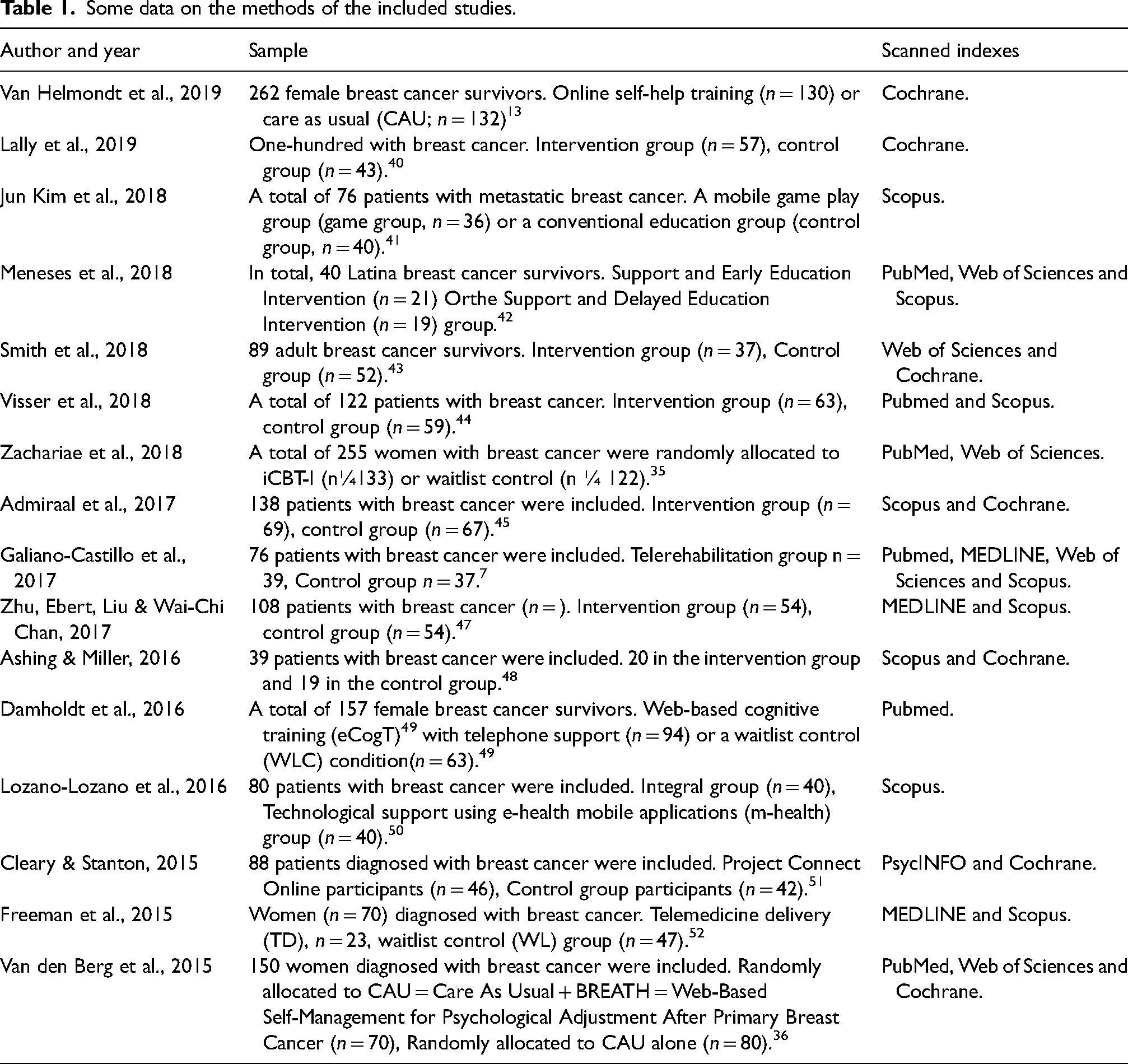
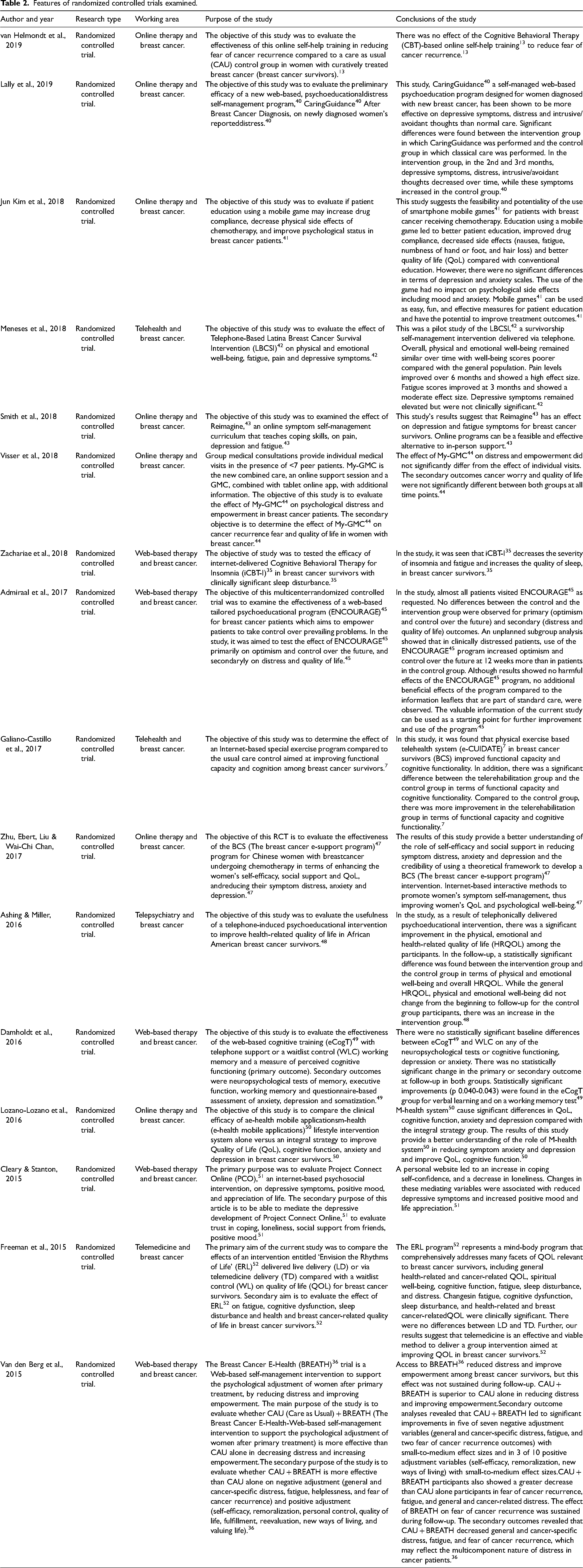
120 articles in Pubmed search, 360 articles in PsycINFO search, 44 articles in Medline search, 108 articles in Scopus search, 817 articles in Web of Science search, 115 articles in Science-Direct search and 202 articles in Cochrane search were found online (Figure 1). The results from different databases were combined and duplicate studies were removed. A total of 1730 articles, including irrelevant abstracts (n = 1435), irrelevant full text (n = 295), and duplicate articles (n = 20), were excluded from the evaluation. As a result of the evaluations, the research was completed with 16 studies meeting the research criteria. The literature search procedure is shown in Figure 1. Summary tables were created to determine the methodology of the selected articles. Then, the theming process of the data was started by carefully examining the relevant data collection and analysis process. The objectives and results (Table 2) and methodological characteristics (Table 1) of the studies included in the present research were presented in the summary tables.
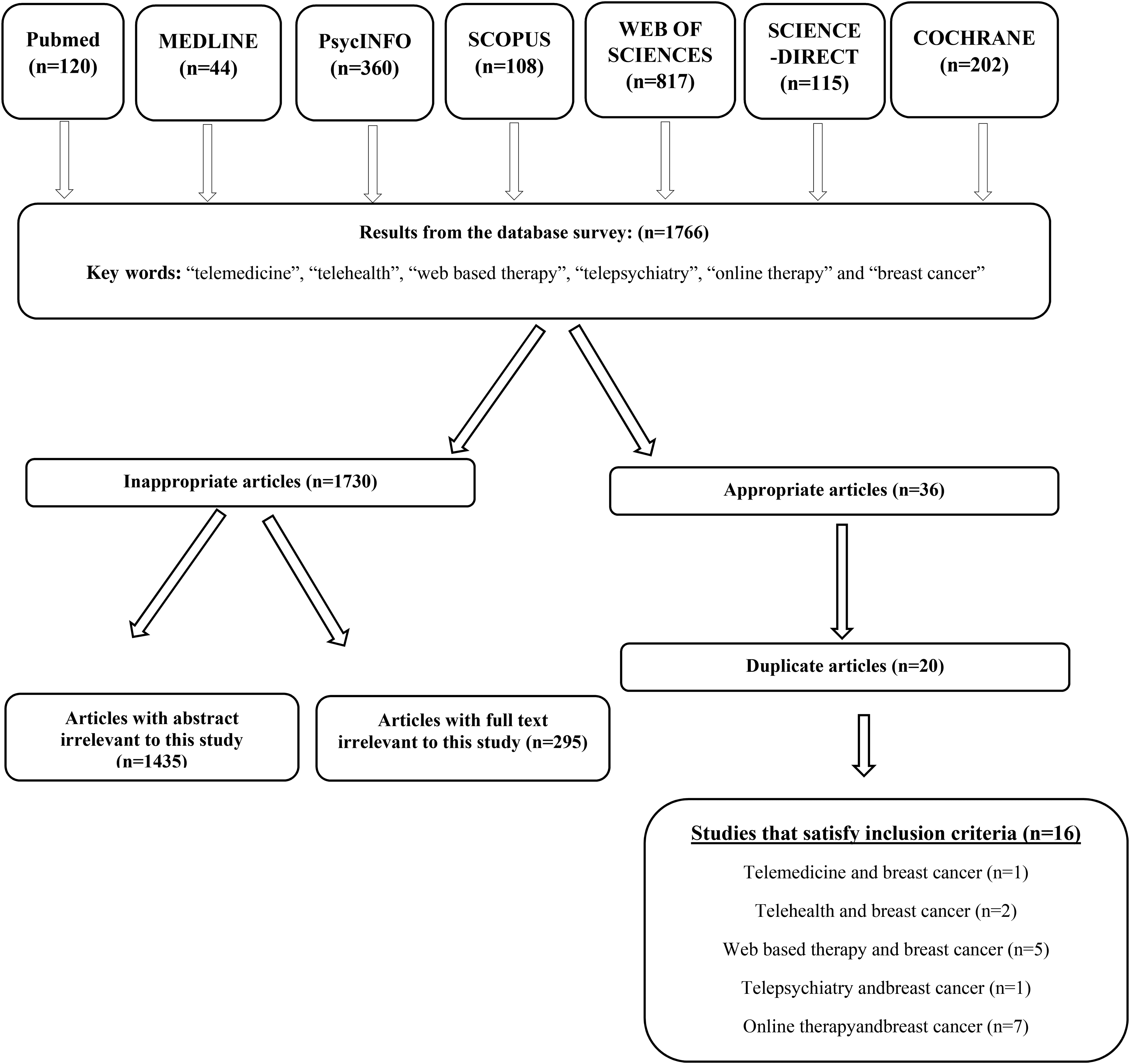
Flowchart of literature review and selection criteria (PRISMA). 38
Some data on the methods of the included studies.
Features of randomized controlled trials examined.
Results
The results of the analysis were evaluated in two separate sections: The methods of the studies, the thematic areas and the content-related features.
The features of telehealth applications applied in studies
Telehealth programs included in the studies, which were selected for the research, were as follows: Cognitive Behavioral Therapy (CBT) based online self-help training, 13 CaringGuidance, 40 a web-based psychoeducational distress self-management program, 40 a self-directed intervention training with using mobile games, 41 Telephone-Based Latina Breast Cancer Survival Intervention (LBCSI), 42 Reimagine, 43 an online symptom self-management curriculum that teaches coping skills, 43 online support session and combined care group medical consultation (GMC) with additional information with online application My-GMC, 44 Internet-based Cognitive Behavioral Therapy (iCBT-I) for insomnia, 35 a web-based special psychoeducation program (ENCOURAGE), 45 an internet-based special exercise program, 46 breast cancer e-support program (BCS), 47 a psychoeducational intervention on the phone, 48 web-based cognitive training (eCogT), 49 an e-health mobile application (m-health) with a lifestyle intervention system, 50 Project Connect Online (PCO), 51 an internet-based psychosocial intervention, 51 The intervention titled "Envision the Rhythms of Life" (ERL), 52 which represents a soul-body program that comprehensively addresses many aspects of quality of life, 52 Breast Cancer E-Health (BREATH) trial, 36 a Web-based self-management intervention to support psychological adjustment, 36 e-CUIDATE, 7 a telehealth system based on physical exercise. 7
Discussion
The aim of this paper is to systematically describe current telehealth intervention options available to mental health professionals across breats cancer diagnostic populations, and reviewing the results for use of different telehealth intervention. In this regard, the present study was conducted to analyze the studies conducted on evidence-based research results on the effects of telehealth practices on the psychological conditions of women with breast cancer. Although there are many randomized controlled studies on the effects of telehealth practices on the psychological conditions of women with breast cancer, there is no systematic review study. This study is the first systematic review study conducted in terms of evidence-based practices in this field. In this study, a total of 16 studies meeting the inclusion criteria examined the effects of telehealth services on the psychological conditions of women with breast cancer. Among the effects of telehealth practices on the psychological conditions of women with breast cancer, eight studies addressing depression, seven studies on quality of life, six studies on distress, four studies in the category of anxiety and cognitive functions, three studies on the fear of relapse of cancer, two studies on sleep and psychological health, and other psychological effects (Intrusive/avoidant/evoker thoughts, functional/operational capacity, optimism and control over the future, positive mood and life appreciation, drug compliance, psychological adjustment) were found.
Today's technology and internet usage have increased the accessibility of telehealth services. Web-based psychoeducations using computers, tablets and smart phones have enabled interventional studies. 39 Examples of these applications include computer games, web-based care guides, mobile applications via smart phones, online cognitive behavioral therapy and group therapies, and phone calls. 53 It can be stated that technology-based interventions are effective on the depressive symptoms experienced by women with breast cancer. Depression is quite common in women with breast cancer, and its prevalence doubles in low-income countries. 54 Study results indicated that psychoeducational distress self-management program, 40 online symptom self-management program, 43 breast cancer e-support program 3 and internet-based Psychosocial intervention 51 reduced the depressive symptoms and severity of depression in women with breast cancer, on the other hand, the training with using mobile games, 41 phone-based 42 and web-based cognitive training 49 did not affect depressive symptoms and depression severity of women with breast cancer. Several factors can be mentioned in the effectiveness of self-management studies. Individuals’ supervision of these practices can help them develop learning strategies and positively affect their attitudes towards treatment by increasing their perceived self-efficacy. These results showed that more studies are needed in order to investigate the effects of telehealth applications performed with different methods on the depressive symptoms of women with breast cancer.
Research findings proved that telehealth practices have an impact on the quality of life of women with breast cancer.41,48,50 When the studies were examined in terms of intervention; patient education with mobile games, 41 breast cancer e-support program, 48 m-health, 50 psychoeducational intervention delivered on the phone, 48 Designing life rhythms 52 improved the quality of life, and it was determined that the web-based special psychoeducation program 45 and the breast cancer e-health trial, 36 which is a web-based self-management intervention, did not affect the quality of life. There are mind-body programs and psychoeducation practices that comprehensively address many aspects of the quality of life of breast cancer patients such as general health and cancer-related mental well-being, cognitive functions, fatigue, nausea and vomiting.48,52 In these programs, the effect of mental imagery and emotional experience on physiological processes was determined and the quality of life was tried to be increased. 52 In addition to these studies, meta-analysis results also have proved that mind-body and online psychoeducation-based practices are effective on the quality of life. 55 It has been determined that group medical consultation including combined care and web-based special psychoeducation program are not effective in reducing distress. The ineffectiveness of these programs on the quality of life suggests that the sociodemographic characteristics of the patients used in the combined care and psychoeducation program were different, they showed different symptoms related to their diseases, and they were at different stages of cancer.44,45
Web-based psychoeducational distress self-management program, breast cancer e-support program, breast cancer e-health trial with web-based self-management intervention, and designing life rhythms appeared to have an impact on the distress.7,36,40,52 The main purpose of self-made programs that increase psychoeducational distress self-management and psychological adjustment was to increase psychological resilience. In the intervention studies conducted with women with breast cancer, it was seen that mindfulness-based practices were effective in reducing psychological compulsion and distress. 56
In addition, telehealth practices have been found to be effective in reducing the anxiety levels of women with breast cancer and on their cognitive functions. It has been determined that breast cancer e-support program and m-health reduced the anxiety of women with breast cancer, while patient education with mobile games and web-based cognitive training did not affect the anxiety.41,47,49,50 It can be said that breast cancer e-support program and m-health applications increased the motivation of the patients and reduced anxiety because they are practices that encourage the self-symptom method and interfere with lifestyle such as diet and exercise.47,50 However, the fact that patient education with mobile games and web-based cognitive education had no effect on anxiety has indicated that more studies should be carried out on these practices. However, it has been found that m-health, the telehealth system based on physical exercise, and designing life rhythms improved cognitive functions, and web-based cognitive training had no effect on neuropsychological memory, executive functions, working memory, and cognitive functions compared to live education.7,49,50,52 The studies have showed that lifestyle intervention system, physical practices and mind-body practices improved cognitive functions. However, according to online trainings, it is thought that the therapist's professional guidance, supportive attitude and immediate patient feedback played a role in the development of cognitive functions in face-to-face cognitive trainings.
On the other hand, the findings have showed that CBT-based online self-help training 13 and group medical consultation with combined care 44 had no effect on reducing the fear of cancer recurrence. The breast cancer e-health trial, 36 a management intervention, have proved that the intervention reduced the fear of cancer recurrence. CBT-based online self-help training consisted of 2 basic modules with psychoeducation and 4 sub-modules, which included how to stop rumination, plans to do when fear of cancer recurrence emerges, relaxation practices and assurance times. The ineffectiveness of this method on the fear of recurrence of cancer may be due to the inclusion of patients with cancer recurrence or metastasis in the study, and the fact that the assessment was done by the individual, not by the nurses or primary caregivers. The fact that the group medical consultation practice that included combined care was technically difficult to use, and nurses needed to have more complex communication skills compared to providing face-to-face care in this practice may have caused no effect on the fear of cancer recurrence.
Internet-based cognitive behavioral therapy 35 and ERL 52 among telehealth applications have been found to improve sleep quality and reduce insomnia severity. In non-drug interventions for insomnia, behavioral interventions such as psychoeducation, relaxation, stimulus control and cognitive interventions such as intervention to dysfunctional thoughts have been proven to be effective, and the treatments containing these interventions are defined as Cognitive Behavioral Therapies for Insomnia (iCBT-I). iCBT-I has been offered as the first therapy option for insomnia.35,52 These applications have been used due to the limited availability of therapists trained in sleep and the relatively high costs of CBT-I applied face-to-face, and from this point of view, it can be said that the treatment packages and the underlying theory of change in the CBT have been effective in insomnia.
In addition to all these effects of telehealth practices, it has been seen that they are also effective on other psychological conditions such as intrusive/avoidant/evoker thoughts, functional/operational capacity, optimism and control over the future, positive mood and life appreciation, drug compliance, and psychological adjustment. However, it is noteworthy that there are a limited number of studies in this area. More research is needed.
Limitations of the study
The presented study contains certain limitations. The heterogeneity of the studies limits the generalizability of this systematic review study. The inclusion of different intervention and comparison groups in the studies prevented making a definite judgment about the effectiveness of the studies. In addition, the samples consisted of women with breast cancer who were at different cancer stages and at different stages (for example, those receiving primary treatment or cancer follow-up) or who were receiving different cancer treatments. These differences are likely to have various psychological consequences.
Conclusion and recommendations
The evidence generated through a systematic review can provide the mental health professionals with greater confidence in decision making at the moment of practice and optimize the benefits to patients with breast cancer, serving as a tool to assist managers in making decisions regarding the implementation of new strategies in favor of the mental health. As a result of the studies examining telehealth practices in women with breast cancer, these practices were determined to reduce the fear of cancer recurrence (1 of the 3 studies), depressive symptoms and severity of depression (5 of the 8 studies), psychological disturbance/distress (4 of the 6 studies), intrusive thoughts (1 study), anxiety (2 of the 4 studies), sleep disturbance and insomnia (2 studies) and improve quality of life (5 of the 7 studies), cognitive functions (3 of the 4 studies) and increase psychological strength (2 of the 3 studies) and sleep quality (2 studies). In addition, telehealth practices have been found to increase psychological health, functionality, optimism and control over the future, positive mood and life appreciation, and drug adherence. In line with all these findings, it can be said that telehealth practices are positive effective on the mental states of women with breast cancer. In the majority of telehealth applications, it has been observed that it improves mental health while reducing mental problems in women with breast cancer. Further, our results suggest that telehealth intervention is an effective and viable method to deliver an intervention aimed at improving the mental health in breast cancer survivors. The valuable information of the current study can be used as a starting point for further improvement and the use of the telehealth program. In this sense, it is recommended to expand the use of telehealth applications, which are less time consuming, low cost, accessible and easily applicable by nurses, to improve the mental status of women with breast cancer, and further studies on this subject are recommended. In this systematic review, women's many mental health states (fear of cancer recurrence, depressive symptoms and depression severity, psychological distress/distress, intrusive thoughts, anxiety, sleep disturbance, insomnia, sleep and quality of life, cognitive functions, psychological strength, psychological health, functionality optimism and control over the future, positive mood and life appreciation, and medication adherence) are reviewed. It has been seen that more studies and results are needed for specific telehealth programs that address each of these separately. Although there are relatively many studies to compare its effectiveness on depression, more studies investigating mental health problems other than depression are needed. In this review, different telehealth programs that are effective and ineffective on the investigated mental health parameters are presented. In these studies, it has been seen that telehealth programs are not standard and different techniques are used in each program. Conducting more studies on telehealth programs, especially effective on mental problems, and systematic review will guide the practices.
Footnotes
Acknowledgements
We greatly appreciate the support of Gaziantep University Faculty of Health Sciences, Department of Nursing for the research.
Declaration of conflicting interests
The authors declared no potential conflicts of interest with respect to the research, authorship, and/or publication of this article.
Funding
The authors received no financial support for the research, authorship and/or publication of this article.
