







Abstract
Introduction
The rising number of outpatient spine surgeries creates challenges in postoperative management and care. Telemedicine offers a unique opportunity to reduce in-person clinic visits and improve resource allocation. We aimed to investigate the impact of a validated smartphone application on clinic utilization following full-endoscopic spine surgery (FESS).
Methods
We evaluated patients undergoing FESS from 2020 to 2022 and a pre-COVID control group (CG) from 2018 to 2019. Subsequently, we divided the patients into three groups: one using the application (intervention group, IG), and two CGs (2020–2022, CG and 2018–2019, historical control group (HG)). We analyzed the post-surgical hospitalization rate, all follow-ups, and virtually transmitted patient-reported outcomes.
Results
A total of 115 patients were included in the IG. The CG consisted of 137 and the HG of 202 patients (CG and HG in the following). Group homogeneity was satisfactory regarding patient age (p = 0.9), sex (p = 0.88), and body mass index (p = 0.99). IG patients were treated as outpatients significantly more often [14.78% vs. 29.2% vs. 37.62% (p < 0.001)]. Additionally, IG patients showed significantly higher follow-up compliance [74.78% vs. 40.14% vs. 37.13% (p < 0.001)] 3-month post-surgery and fewer in-patient follow-up visits [(0.5 ± 0.85 vs. 1.32 ± 0.8 vs. 1.33 ± 0.7 (p < 0.001)].
Conclusion
Our results underline the feasibility, efficacy, and safety of remote patient monitoring following FESS. Furthermore, they highlight the opportunity to implement a virtual wound checkup, and to substantially improve postoperative follow-up compliance via telemedicine.
Keywords
Introduction
The advent of telehealth marked a significant milestone in the constantly evolving medical field. Although the COVID-19 pandemic accelerated the shift towards remote healthcare visits and consultations, the potential advantages of telehealth had been under investigation well before this global crisis. 1 The continuous integration of telehealth into healthcare systems worldwide and the exploration of new areas of application underscore its utility.2,3
Telehealth has demonstrated its ability to enhance patient safety and satisfaction while also eliminating the need for patients to travel to physicians’ offices, resulting in reduced direct costs and transportation time. 4 Asynchronous telehealth enables individuals to provide essential health information at predetermined timepoints, allowing healthcare providers to make longitudinal observations of their progress. This approach has proven highly successful for several medical applications, including Parkinson's disease, diabetes, implantable cardioverter defibrillators, and physical therapy.5–8 Furthermore, telehealth consultations play a vital role in making recent medical advances more accessible to rural areas by extending coverage of specialized care. 9
In the surgical field, post-surgical in-person visits are still the norm, especially for wound checks to allow for early detection of wound healing issues or infections. However, modern high-resolution cameras, installed in virtually every smartphone, provide the surgeon with sufficient visualization of the wound's condition with successful trials in abdominal, cardiac, and vascular surgery.10–13 Despite the recent publication of a consensus paper emphasizing the importance of telehealth in spine surgery and proposing potential implementation strategies, as well as a report showcasing the effectiveness of telemedicine in developing surgical plans, the adoption of telemedicine in spine surgery remains limited to video consultations.14–16 However, global demographic changes and the concomitant rise in degenerative pathologies are expected to substantially increase the number of spine surgeries, challenging healthcare systems and necessitating a judicious use of finite hospital resources. 17 The aim of this study was to assess the impact of postoperative remote patient monitoring (RPM) via a smartphone application (SPINEHealthie)18,19 on clinic utilization patterns for patients undergoing full-endoscopic spine surgery (FESS). SPINEHealthie combines RPM via the assessment of patient-reported outcomes (PROMs), virtual follow-ups, and patient-provider communication through a chat function. Despite being an emerging field, FESS has been proven to be a safe and efficient surgical technique for spinal pathologies with substantially lower invasiveness and complications when compared to open spine surgery, facilitating safe outpatient monitoring.20,21 Furthermore, FESS diminishes surgical site infections and is a safe surgical approach especially for elderly and obese patients.22–25 Hence, FESS presents an ideal surgical modality for asynchronous virtual follow-up and continuous RPM.
Methods
Patient selection and data collection
This study was an analysis of prospectively and retrospectively collected data of 454 patients >18 years that underwent FESS due to degenerative pathologies at a university clinic. Data was obtained via the electronic patient charts and the SPINEHealthie app database. FESS was defined as the utilization of a working channel endoscope that incorporates a light source, a camera, and an irrigation channel. Patients of the intervention group (IG) furthermore were required to have access to a mobile smartphone that supported the app (iOS or Android). Acute pathologies of the spine, e.g. traumatic injuries, were not considered for inclusion, nor were procedures utilizing microsurgical techniques without the use of endoscopic instruments.
Patients were subdivided into three groups: the IG included all patients who enrolled with the smartphone application (02/2021–12/2022); a control group (CG, 01/2020–12/2022); and an additional, historical control group (HG) to account for potential distortions due to the COVID-19 pandemic.
Demographic parameters included sex, age, body mass index (BMI), surgical details, as well as comorbidities. Additionally, we assessed inpatient treatment, in-person follow-ups, telemedicine visits, and a virtual surgical site examination. Telemedicine visits were not assessed for the 2018–2019 CG as telemedicine was not established during that period. To account for post-surgical complications, data including the utilization of the emergency department (ED), clinic readmission, and revision surgeries within the first 100 days after the surgery was acquired.
Data was obtained following the approval of the Institutional Review Board of the University of Washington, and collected pseudonymously according to national law, and in accordance with the 2013 Declaration of Helsinki.
Smartphone application and PROM collection
For this study, SPINEHealthie—an IRB approved smartphone application—was used as previously described. 18 In brief, after informed consent and registration, it allows for asynchronous virtual patient-provider communication, and virtual follow-ups. The follow-ups include a survey to assess the patient's well-being and progress as well as a surgical site wound check-up through image transfer (Figure 1). It enables virtual patient monitoring via patient surveys that prospectively collect PROMs daily for the first 7 days post-surgery, as well as at 2 weeks, 3 months, and at chronic timepoints (Figure 2). PROMs include questionnaires assessing a visual analog score (VAS) of the respective anatomical region (i.e. neck/back and extremity pain), and the Oswestry Disability Index (ODI) for functional outcome. 26 The accuracy and effectiveness of the digitally collected PROMs when compared to the collection of traditional paper PROMs has been previously described. 19 Patients of the SPINEHealthie group were asked to utilize the app for virtual follow-ups after 2 weeks and 3 months, analogous to the previously established clinic standard for in-person follow-ups. PROMs from the CGs were collected prospectively via traditional paper questionnaires during the postoperative in-person follow-ups. The reported PROMs refer to the postoperative development of symptoms (i.e. pain and function) and do not include patient experience or satisfaction measures. Every patient, irrespective of the assigned group, was given the opportunity to have in-patient or telemedicine visits.
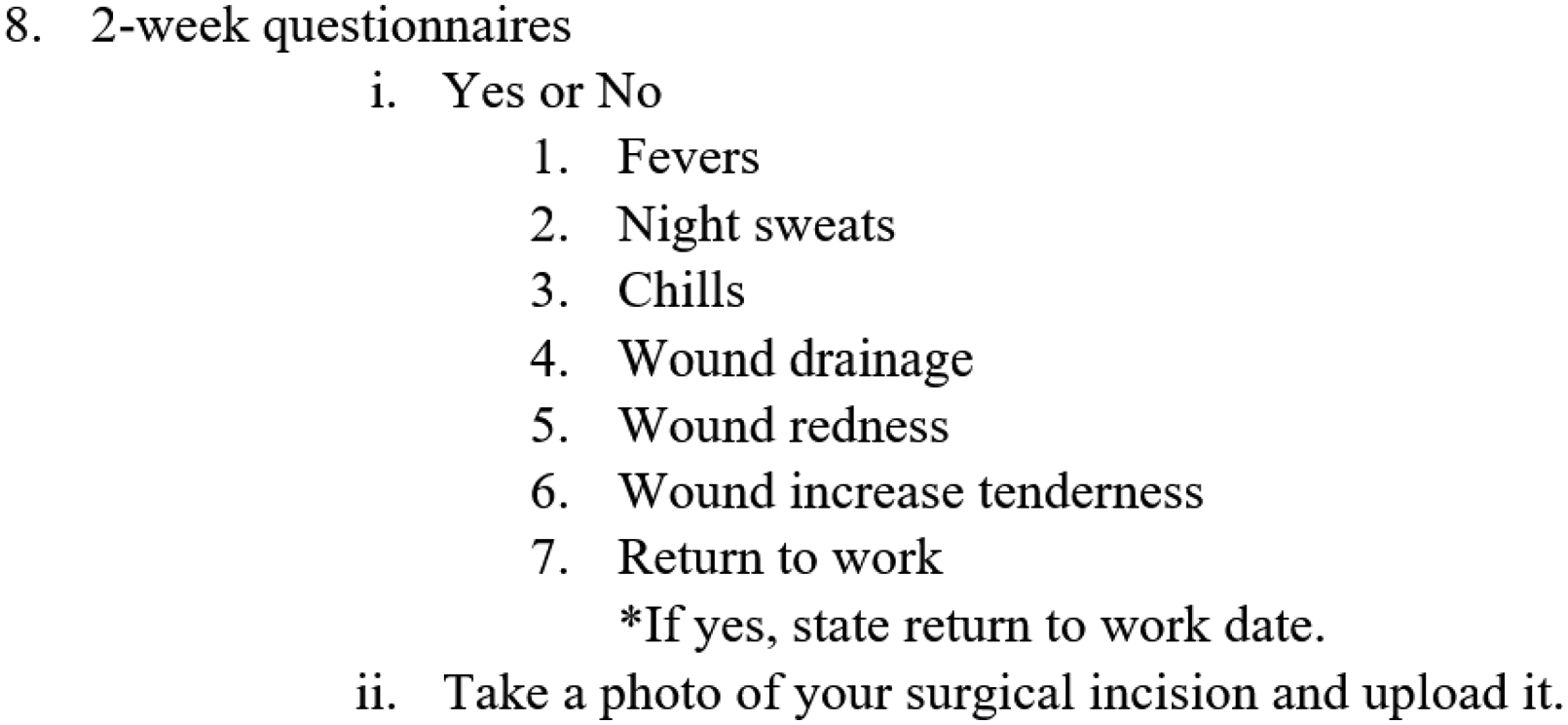
Questionnaire for the 2-week follow-up assessing the wound condition and inflammation-associated symptoms. Furthermore, the patients are asked to report on a potential return to work. The patients are asked to upload an image of their surgical wound via the application.
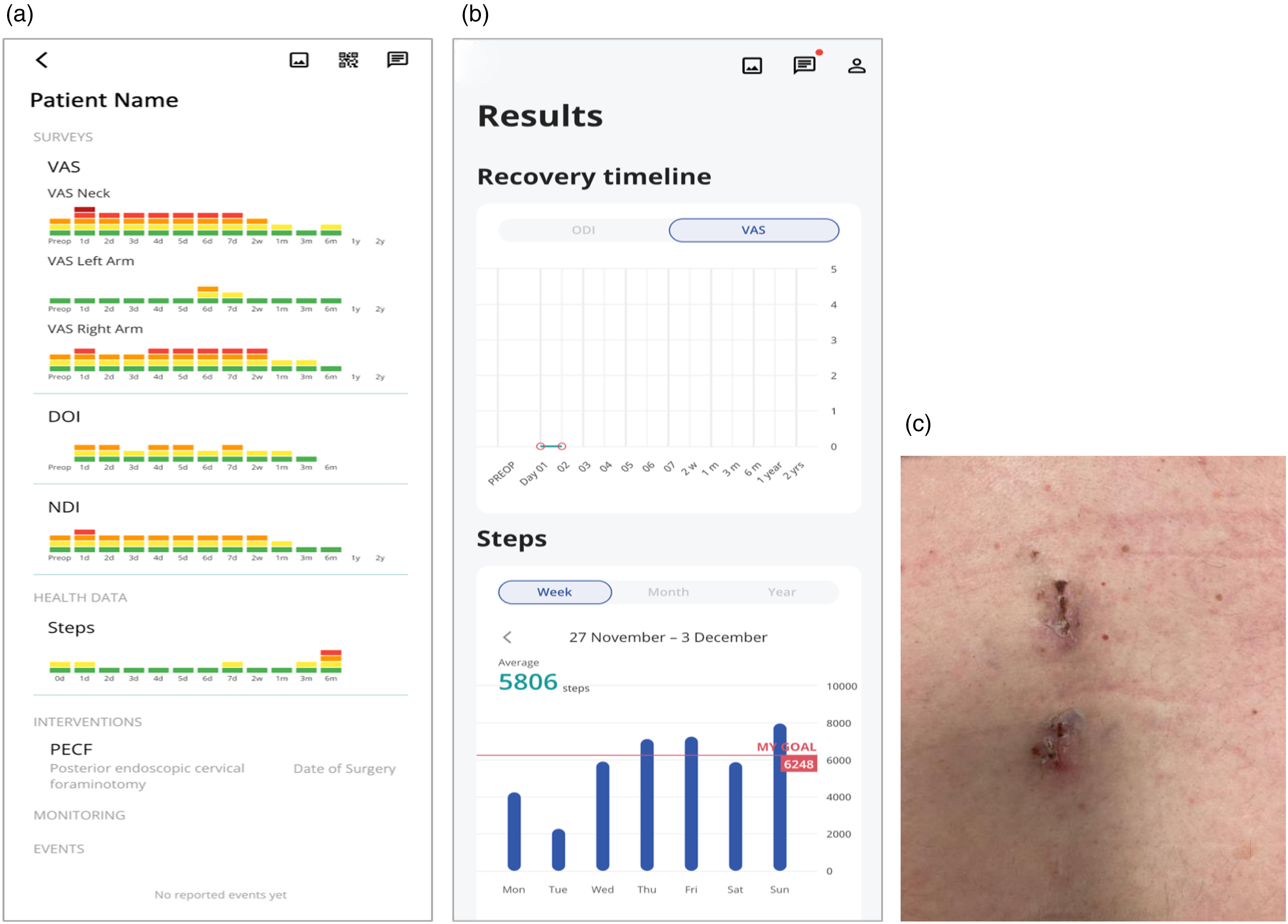
(a) Patient interface from the application. The app utilizes a VAS that allows patients to rate the pain in their necks/backs and extremities pre-surgery and at various timepoints post-surgery. Analogously, they can report their ODI as a functional surrogate. The bar graphs are color coded with green representing no pain/disability, and red representing severe pain/disability. The bar graphs for this patient indicate pain relief just 1 day after surgery. Additionally, the interface gives information about the performed surgery and any reported events that occurred post-surgery (e.g. hospitalization). (b) Recovery timeline of the patients with their weekly stepping data and their daily stepping goal. (c) Example of an image transferred for a surgical wound check-up. The image depicts the surgical wound site at the lumbar spine 2-week post-surgery. In the evaluation, the patient did not report any wound-related issues. The image can be appreciated through the “image” icon (top right). VAS: visual analog score; ODI: Oswestry Disability Index.
Statistical analysis
Statistical calculations and data analysis were carried out using GraphPad Prism (Version 9.5.0; GraphPad Software, Boston, MA). Continuous variables are depicted as means ± standard deviation or as the number of cases with percentages for categorical variables. Continuous variables were analyzed by using Student's t test or Mann–Whitney U test for nonnormally distributed variables. Group comparisons were performed using ANOVA or Kruskal–Wallis test for non-parametric data. Chi-square or Fisher's exact test was used for categorical parameters when appropriate. A p-value < 0.05 was determined as statistically significant.
Results
A total of 454 patients were included in the current study. The IG included 115 patients registered with the SPINEHealthie app. The control cohorts consisted of 137 patients enrolled between 2020 and 2022 (CG), and 202 patients enrolled between 2018 and 2019 (HG). Table 1 shows a comparison of patient demographics, surgical details, and postoperative clinic utilization characteristics. Comparison of the IG with the CG and HG yielded satisfying homogeneity for patients’ demographics. Interestingly, patients of the IG had a higher number of comorbidities and a higher number of operated segments (Table 1). Furthermore, patients of the IG were less frequently treated as inpatients with a significantly lower number of postoperative nights spent in the hospital. Meanwhile, patients using the smartphone application exhibited a significantly lower utilization of in-patient follow-ups, and telemedicine appointments while showing significantly higher postoperative follow-up compliance. No significant differences in safety measures (i.e. ED utilization, clinic readmission, and revision surgery) were reported between groups.
Patient demographics, surgical information, and postoperative clinic utilization comparing the intervention (IG) and control groups (CG, HG). Values are shown as mean (SD) or as total numbers (%). p-values show a comparison of the cohorts.
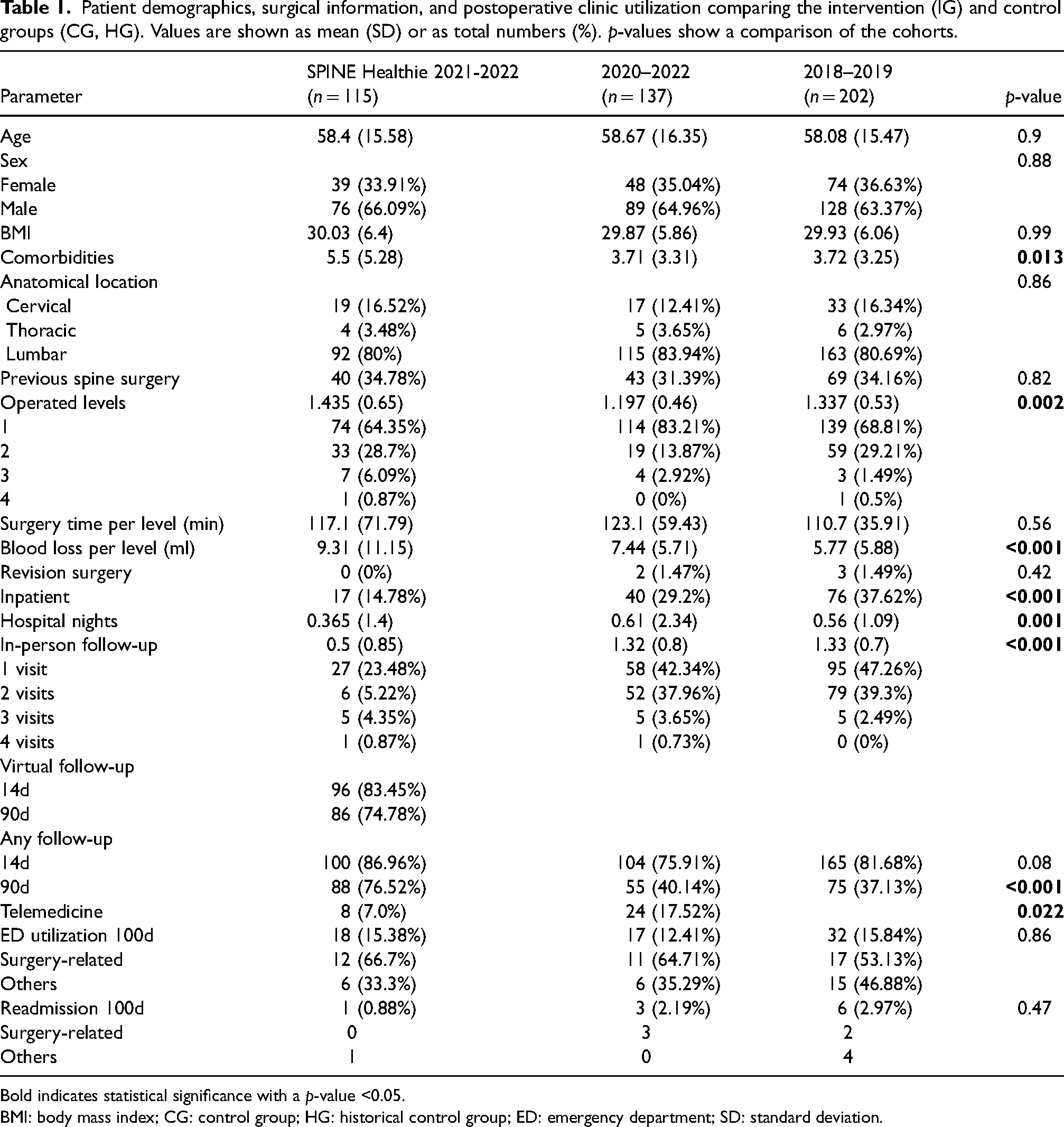
Bold indicates statistical significance with a p-value <0.05.
BMI: body mass index; CG: control group; HG: historical control group; ED: emergency department; SD: standard deviation.
Remote wound check at 2-week post-surgery
Table 2 summarizes the outcomes of postoperative 2-week wound check-up. Only minor wound-related issues were reported. A representative image of a postoperative wound is depicted in Figure 1.
Results from the patients’ remote surgical wound check 2-week post-surgery.
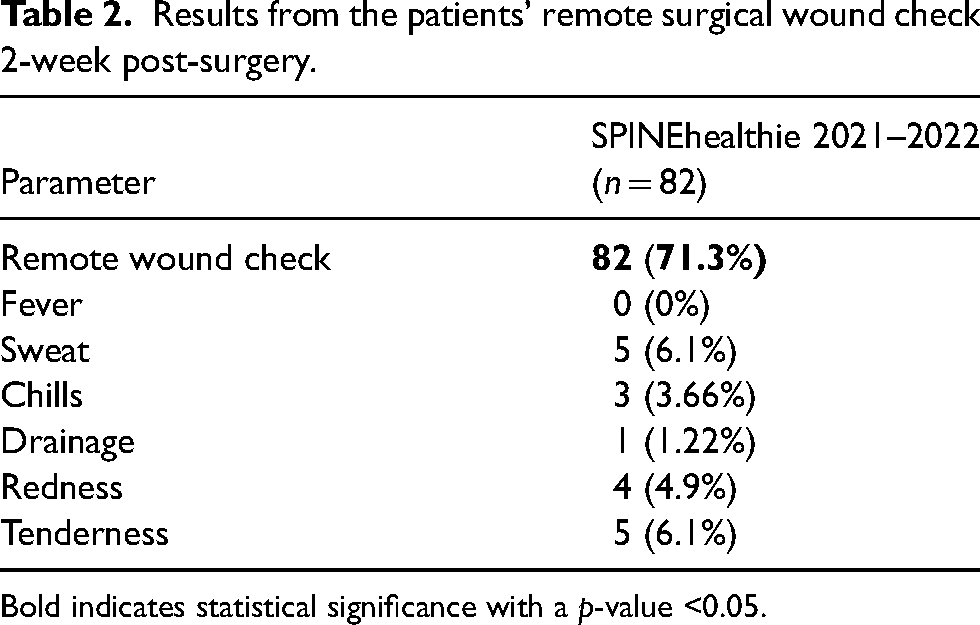
Bold indicates statistical significance with a p-value <0.05.
Reported functional outcomes and postoperative pain development
Table 3 entails the postoperative recovery. At baseline, patients of the CGs reported significantly more pain and a worse ODI. Patients of all groups reported significant benefits after the surgery with significantly larger reduction of the ODI in both CGs when compared to the IG at first follow-up. At the last follow-up, no significant differences were observable between the groups.
Reported PROMs.
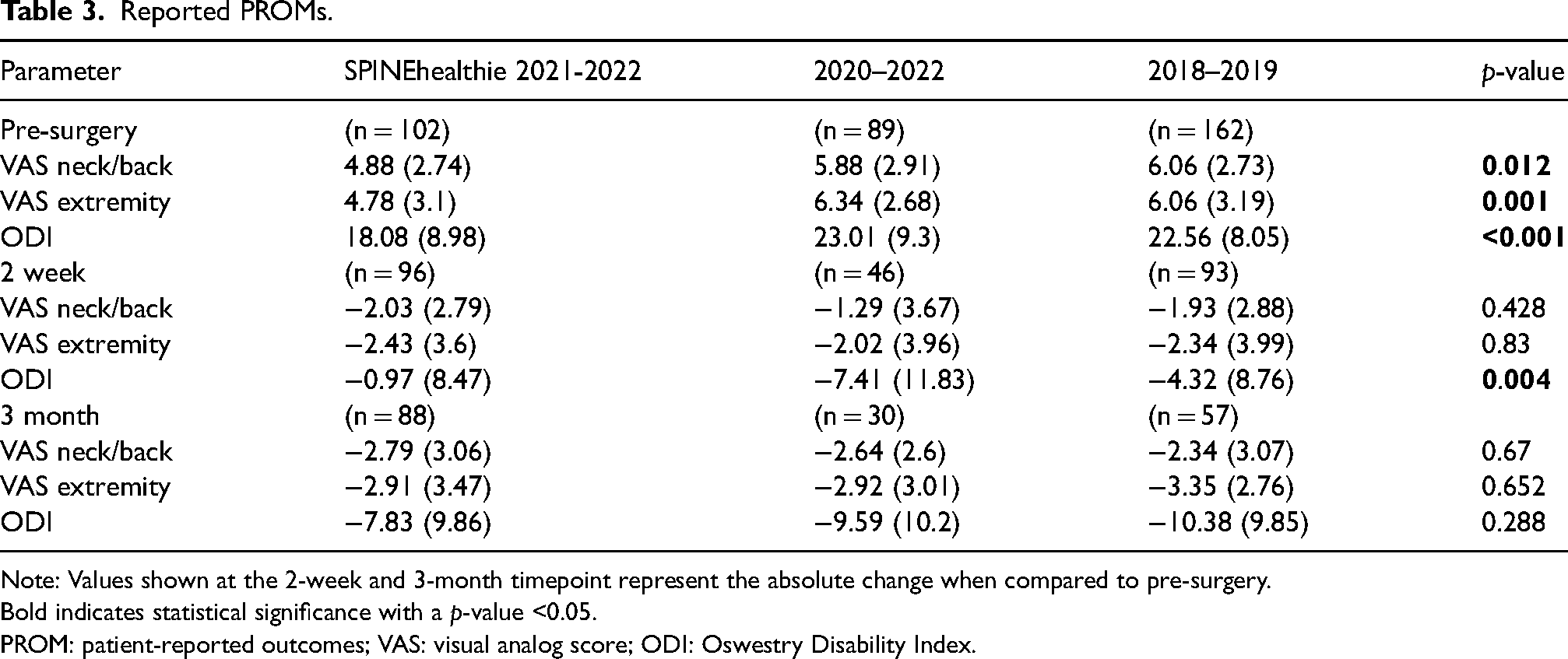
Note: Values shown at the 2-week and 3-month timepoint represent the absolute change when compared to pre-surgery.
Bold indicates statistical significance with a p-value <0.05.
PROM: patient-reported outcomes; VAS: visual analog score; ODI: Oswestry Disability Index.
Discussion
Our presented results highlight the capability of RPM to optimize postoperative follow-up compliance in the surgical field. Furthermore, they add another tool to directly monitor and study the post-surgical recovery after FESS while generating invaluable data for patient safety, satisfaction, and clinical research.
Telehealth is a rapidly evolving field, accelerated by the COVID-19 pandemic that exposed a substantial lack of alternatives to traditional in-person consultations. Despite COVID-19-associated restrictions being suspended globally, novel applications for telehealth are surging with stunning results regarding efficiency and patient satisfaction. The wide spectrum of diverse utilizations includes virtual follow-ups, RPM of chronic diseases, and supervision of mental health.27–29 Our application presents yet another promising implementation of telehealth in the surgical field.
The statistical comparison showed satisfying results for homogeneity regarding age, sex, and BMI between the patient cohorts. In opposition to the belief that young patients have a higher affinity for telehealth, our analysis revealed no significant age-differences between app- and non-app-users. Interestingly, patients of the IG had a significantly higher number of comorbidities, contradicting the idea of a bias towards a younger, healthier population for telemedicine usage. Via RPM, a statistically significant reduction of clinic visits was reported. This is supported by data from a previous study, indicating that our patients appreciated the application's opportunity to directly contact their surgeon using the chat function. 18 Through the implementation of our application, significantly more patients had a same-day discharge, most importantly while maintaining the highest levels of patient care and safety. This is corroborated by equal numbers for ED utilization, and hospital readmissions when compared to the control cohorts. With some COVID-19 restrictions still being implemented in 2021, patients were provided an alternative to an in-patient follow-up with attendance rates comparable to pre-pandemic levels for the first postoperative visit. Furthermore, the implementation of SPINEHealthie substantially increased the rate of 3-month follow-ups, even when compared to pre-pandemic timepoints, giving surgeons better feedback regarding their patients’ recovery. Through the data generated by the application, we were able to demonstrate benefits following FESS including significant pain alleviation as early as 2 weeks after the surgery, and significant functional improvements after 3 months. The provided wound check after 2 weeks revealed only very few, mild wound-related issues with no necessity for a surgical intervention, emphasizing the safety and efficacy of FESS. Most importantly, patients across all groups reported postoperative benefits without statistically different outcomes after 3 months.
The presented study adds to the considerable literature of mobile health (mHealth) applications as novel and versatile tools for postoperative care. Several reports indicate feasibility and demand for mHealth solutions as auxiliary tools for postoperative care.30,31 Especially remote wound checks, a feature that is included in the toolkit of our presented application, have shown success as clinical guidance for the early identification of wound-related issues.32–34 Furthermore, mHealth allows for an implementation of procedure-specific education alongside tracking and supporting the patient's recovery after elective orthopedic surgery as invaluable features.35–37
The SPINEHealthie app encourages surgeons to follow their patients’ progress daily, allowing for proactive communication. This may aid in the detection and treatment of post-surgical complications, e.g. a relapse of pain, before exacerbation necessitates higher levels of care. We encourage providers to follow their patients’ recovery daily in the first postoperative week, to actively reach out to them in case of a delayed recovery, and schedule timely in-person visits whenever necessary. As of today, six national centers actively enroll patients in the application with monthly cross-institutional meetings in which optimizations of the enrollment processes and content of the application are discussed. This allows for dynamic changes of the application to optimize the workflow and to implement new questionnaires for research questions, as well as patient satisfaction assessments. Thus, the continuous, prospective acquisition of PROMs has the capacity to improve future research by defining benchmark outcomes through large sets of independent and unbiased data. Simultaneously, we strive to keep the application user-friendly through a simple, and intuitive interface. Furthermore, we aim to widen the focus of the application through the implementation of procedure-specific education. As the number of patients is continuously growing, it is the authors’ aim to assess and evaluate the patients’ feedback in order to maintain the high standard of care and the exceptional response rates.
The authors acknowledge that there are limitations to this study. The main limitation is the inevitable loss to follow-up, and the short follow-up period of 100 days. While a return rate of more than 85% for any follow-up through the application was satisfactory, some data got lost. Additionally, the COVID-19 pandemic may have distorted the results.
The presented study introduces a novel, safe approach for RPM following FESS, combining asynchronous virtual surgical wound follow-up with possible continuous patient monitoring through the collection of the patients’ stepping data, and direct patient-provider communication. High response rates indicate its capacity to be utilized by both young and elderly patients. Furthermore, continuous monitoring serves as immediate feedback for the provider, enabling a timely intervention in case of symptom persistence or aggravation for an improvement in short- and long-term outcomes.
Footnotes
Declaration of conflicting interests
Dr. Hofstetter is a consultant for Joimax, Globus Medical, Innovasis, and Johnson & Johnson. The application is owned by the University of Washington and is used as a research and quality improvement tool without any commercial use. The other authors declare no conflicts of interest.
Funding
The authors received no financial support for the research, authorship, and/or publication of this article.

Data Availability Statement
Data sharing not applicable to this article as no datasets were generated or analyzed during the current study.