







Abstract

A 68-year-old woman presented to the emergency department with 2 days of chest pain radiating to the back. She had a 75 pack-year smoking habit, with a history of hypertension, gastro-oesophageal reflux disease, migraines, and anxiety. Initial workup excluded a cardiac event, but computed tomography (CT) of the aorta, performed to rule out dissection, revealed a 5.5-cm infrarenal abdominal aortic aneurysm (AAA) (Panel A). Her chest pain resolved with simple analgesia, and she was referred to vascular surgery for elective endovascular aneurysm repair (EVAR). At operation, severe tortuosity of the left external iliac artery (Panel A) required adjuvant techniques with a contralateral ‘through and through wire’ to gain access into the AAA. An initial angiogram of the AAA showed bilateral, tortuous ‘string of pearls’ (Panel B; arrows) renal arteries 1 akin to a ‘skydancer’ (Panel B). This ‘string of pearls’ sign of alternating disease-related stenoses with aneurysmal dilatation is known to be indicative of fibromuscular dysplasia (FMD). 1
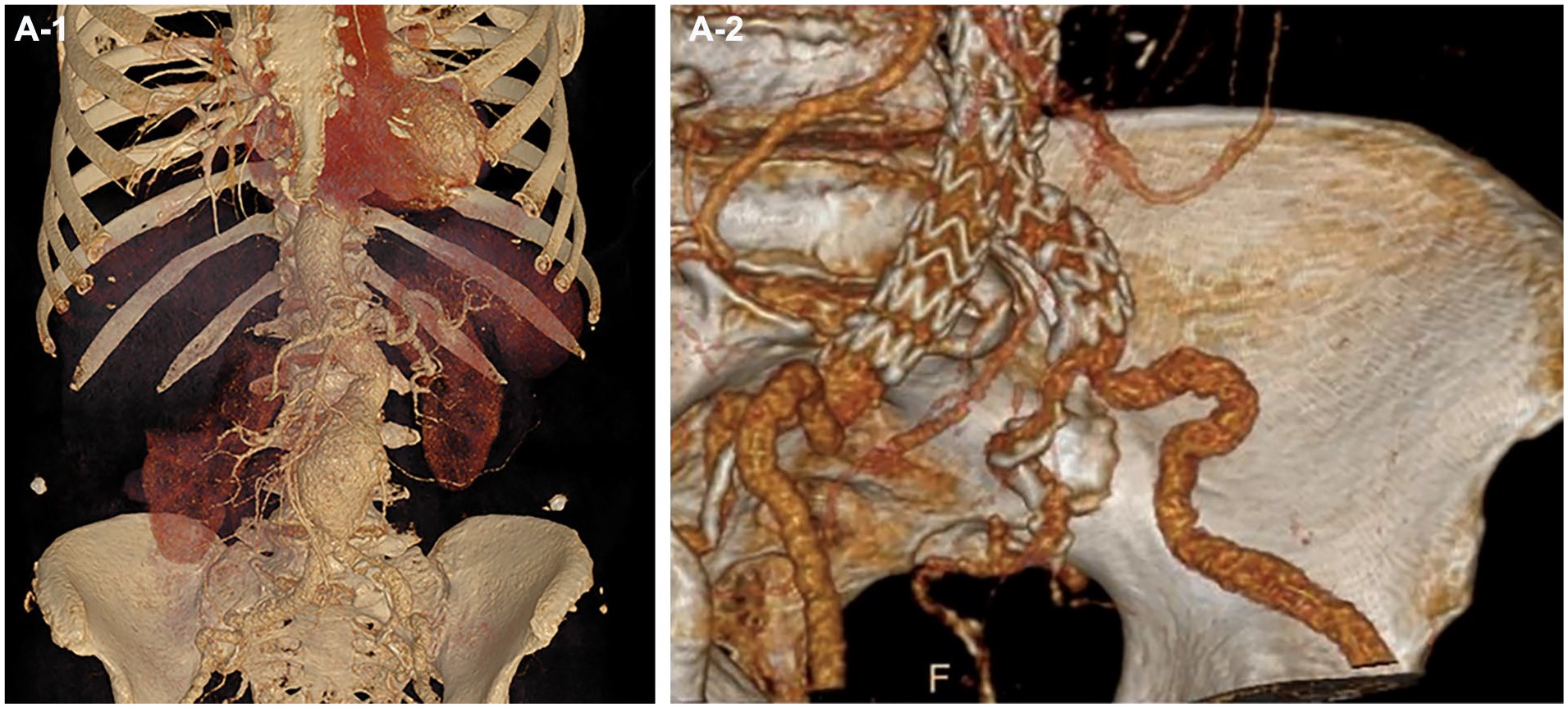
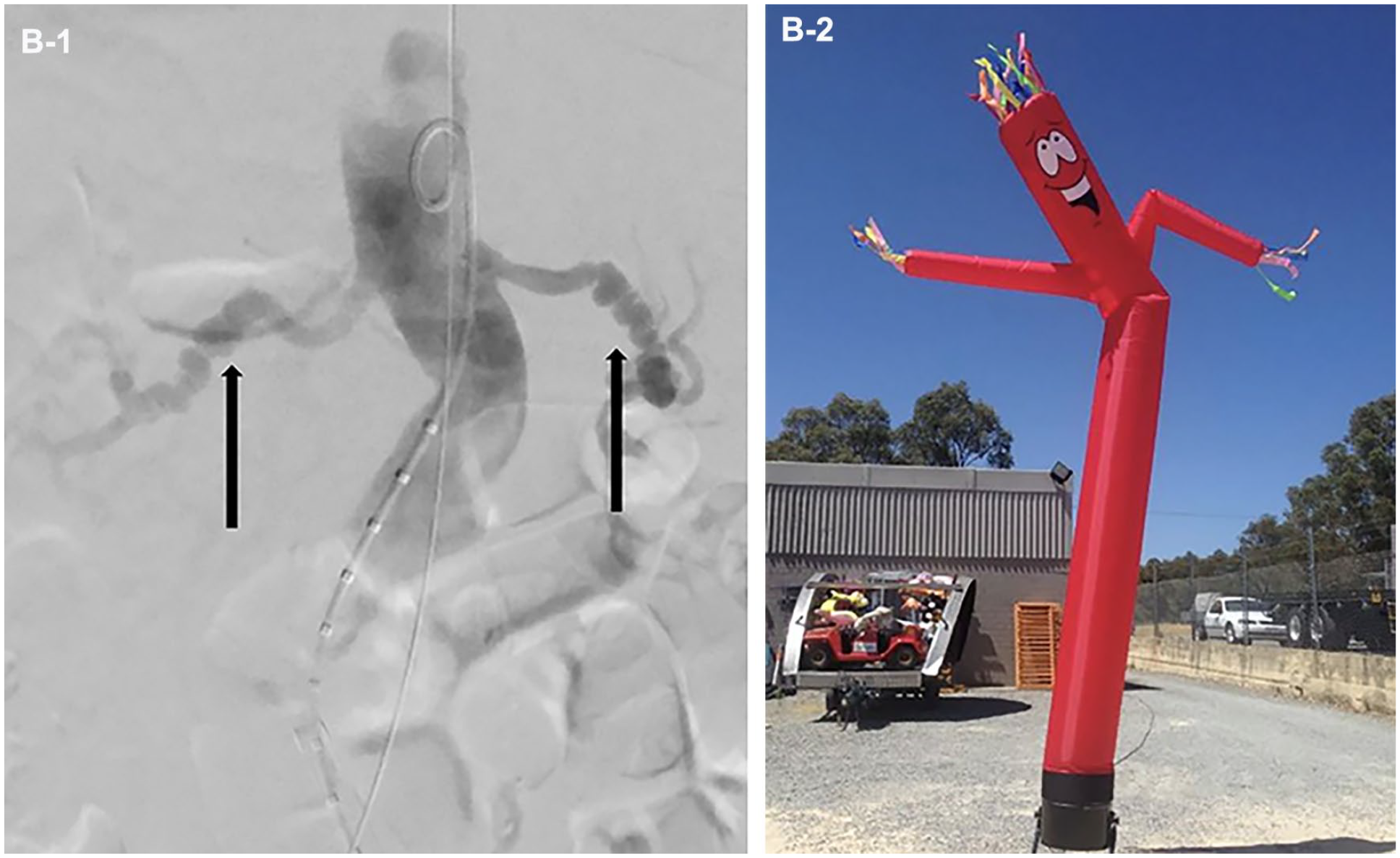
FMD is a rare, 2 noninflammatory arterial disease that primarily affects medium-sized arteries, commonly the renal (up to 75%), carotid, or vertebral arteries. FMD is more common in women (80–90%) and smokers, with presentations including hypertension or stroke due to renal artery stenosis or aneurysm formation.3,4 This case was unusual in its presentation with a 5.5-cm AAA, occurring in 10% of FMD cases, which perhaps distracted from more detailed preoperative characterization and iliac artery involvement that caused operative difficulties. 5
As such, in this female smoker who presented with AAA and tortuous iliac arteries, lateral thinking and analysis of these vessels could have prompted consideration of FMD. There could also have been consideration of potential problematic access during EVAR for adjuvant intraoperative renal arterial pressures and renal artery angioplasty.
Footnotes
Declaration of conflicting interests
The authors declared no potential conflicts of interest with respect to the research, authorship, and/or publication of this article.
Funding
The authors received no financial support for the research, authorship, and/or publication of this article.
