







Abstract

Practice tools: Support and resources for patients with venous thromboembolic disease
Sneha Thomas, MD, FSVM; Sahibaan Sondh, BS; Aditi Yadav-Malhorta, MD, FSVM; Kevin Cohoon, DO, MBA, FSVM; Carlos Echevarria, MD, FSVM, Syed Ahsan, MD, FSVM
Introduction
Venous thromboembolism (VTE) includes superficial vein thrombosis (SVT), deep vein thrombosis (DVT), and pulmonary embolism (PE). 1 VTE affects thousands of individuals yearly in the United States and remains a major contributor to global morbidity and mortality. 2
Beyond acute events, many patients experience long-term complications including post-thrombotic syndrome (PTS), post-PE syndromes (PPES), and psychological disorders. Tackling VTE-related care requires awareness efforts, research collaborations, and strong advocacy networks. Having structured education, clear guidance on activity levels, expectations during the recovery phase, symptoms plan, and proper follow up often helps reduce the psychological impact.
Several organizations have emerged worldwide to offer dedicated support services aimed at improving patient outcomes and managing this growing health concern. On behalf of the Society for Vascular Medicine’s Marketing & Communications Committee and the Venous & Lymphatic committee, this contribution focuses on practical tools and resources that clinicians can provide to patients with VTE, with the goal of improving care, adherence, reducing anxiety, and optimizing long-term outcomes.
Support groups and organizations
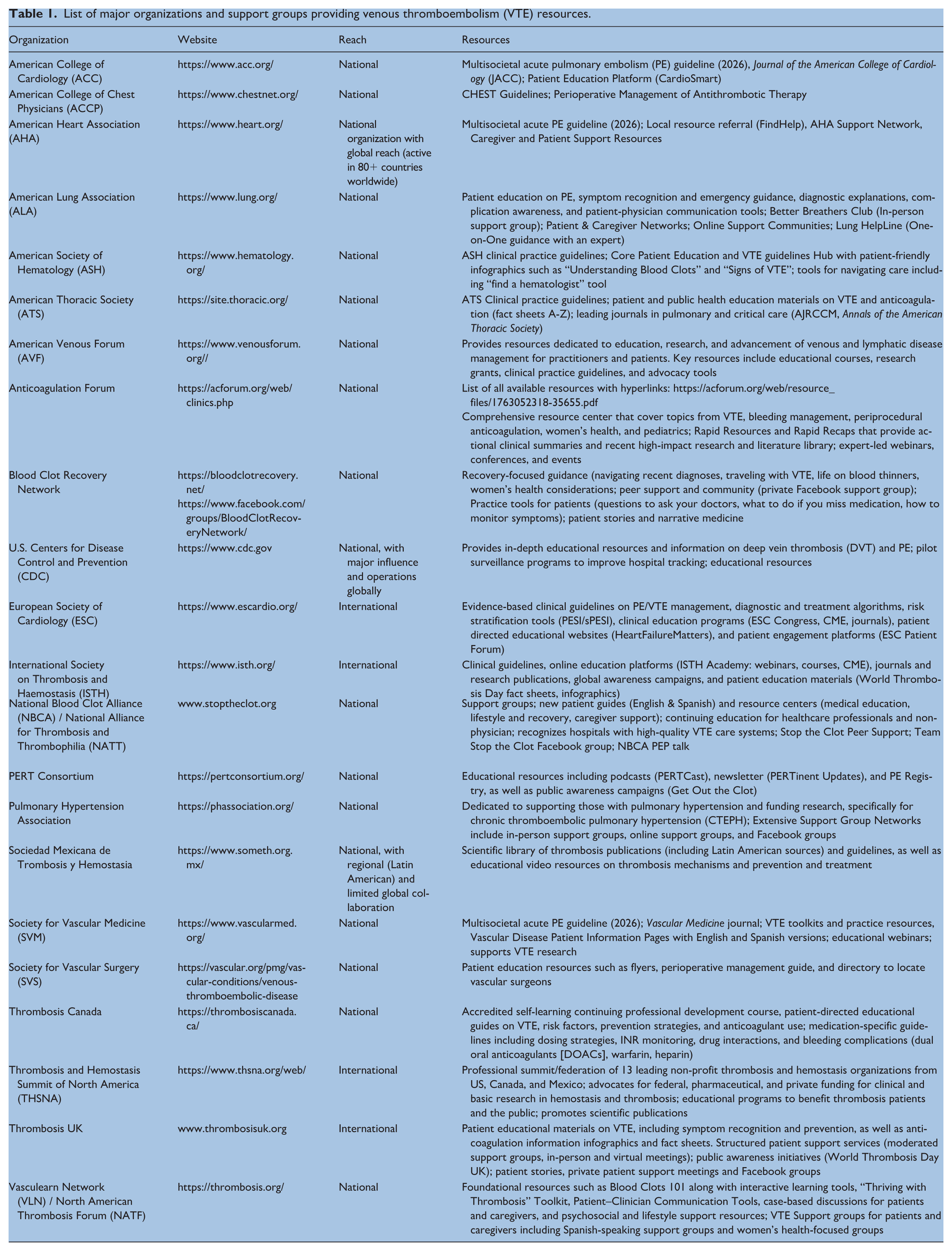
Support organizations play a crucial role in providing access to reliable medical information and practical guidance for patients and their families. Even though medical understanding of thrombosis dates back to the 19th century when a German physician first described Virchow’s triad, organized patient support groups and advocacy initiatives have emerged only in recent years. 3 This aligns with increasing recognition of the disease burden associated with VTE and the need for prevention and patient education. Major societies such as the International Society on Thrombosis and Haemostasis (ISTH), founded in 1969, played a pivotal role in advancing scientific knowledge, promoting research collaborations, and developing clinical guidelines for thrombotic disorders. Similarly, several other organizations have made substantial contributions in providing resources. A select number of these support groups, advocacy organizations, and patient education websites are outlined in Table 1.
List of major organizations and support groups providing venous thromboembolism (VTE) resources.
Educational resources
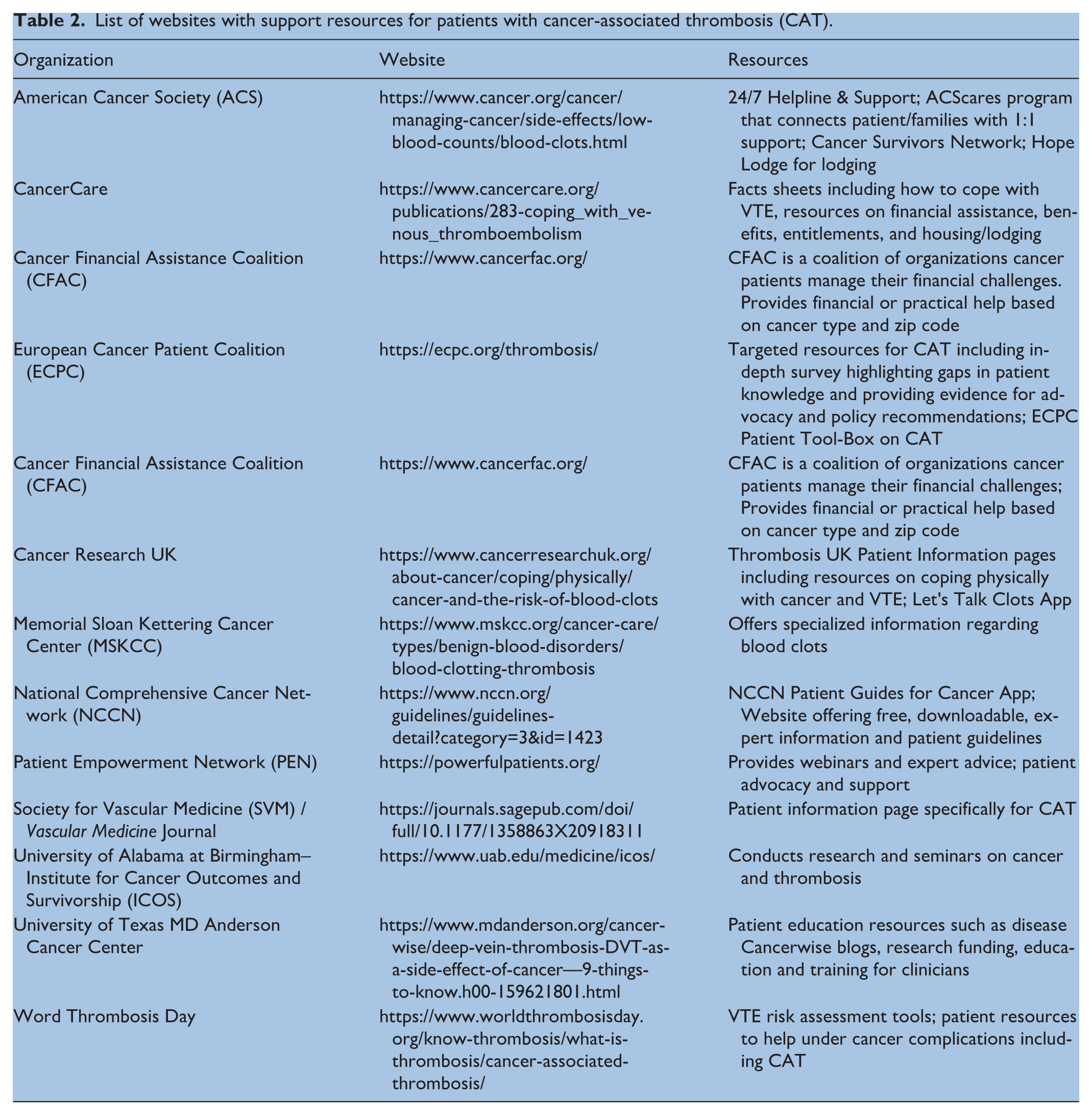
The Vascular Disease Patient Information Page is a recurring feature of Vascular Medicine that is available online for free. 4 The Patient Pages provide up-to-date and concise information for patients and cover a variety of cardiovascular health issues, including a guide for patients diagnosed with DVT, PE, and VTE complications in English and Spanish5–7. Similarly, other websites such as ClotCare.org and clotconnect.org also provide useful patient information resources. Patients with cancer-associated thrombosis benefit from dedicated educational websites as VTE in cancer presents specific barriers, challenges, and needs (Table 2). 6
List of websites with support resources for patients with cancer-associated thrombosis (CAT).
Advocacy campaigns
Advocacy efforts are crucial to allow for policy changes and funding for cutting-edge research initiatives. World Thrombosis Day was launched in 2014 by ISTH and is observed on October 13th.8,9 Other major campaigns for VTE awareness include ‘Stop the Clot, Spread the Word’ by CDC and ‘Stop the Clot’ and “Get out the Clot’ by NBCA.10,11
Research
Research efforts in VTE have grown tremendously in the past 2 decades. Some of these initiatives are driven by large contemporary clinical trials targeting both pharmacologic and interventional therapies. 12 Recent trials are attempting to refine anticoagulation strategies, including acute and long-term treatment and evaluation of novel thrombolytic drugs and emerging fibrinolytic approaches, while assessing the safety profile. Interventional studies are also rapidly expanding with trials evaluating impact on right heart function, long-term complications, and mortality benefits. Clinical outcomes using mechanical thrombectomy and clot extraction devices compared with standard anticoagulation or catheter-directed thrombolysis are also being investigated. Innovations in diagnostic tools such as novel imaging modalities are of interest. Several international and national organizations such as International Network of Venous Thromboembolism Clinical Research Networks (INVENT), Venous Thromboembolism Network United States (VENUS), National Institute of Health (NIH), and the Patient-Centered Outcomes Research Institute (PCORI) along with previously mentioned organizations and industry partners are involved in these trials. 13
Caregiver support
Engaging caregivers as active participants in VTE management through structured education, clear communication, and access to support resources improves adherence, reduces complications, and enhances patient recovery. 8 Caregiver support involves providing education about the condition and recovery process, emotional support, practical care planning, and self-care strategies to help manage the stress. Caregiver resources and social media groups, such as “Team Stop the Clot” (Facebook) provide tips for managing recovery, care advocacy, and accompanying patients to appointments. NBCA 11 offers caregiver educational material and recovery guidance, and the CDC 7 offers simple and accessible educational tools for caregivers.
Financial Assistance
To help patients with the financial burden of anticoagulation therapy, a few medication assistance programs exist for generic warfarin, such as Eliquis 360 support (eliquis.bmscustomerconnect.com/support-form and eliquis.bmscustomerconnect.com/commercially-insured-patients), Xarelto with Me Savings card (xarelto-us.com/xarelto-cost), and Rx outreach (rxoutreach.org).
Challenges and Future Directions
Despite advances in VTE awareness and treatment, challenges remain. The absence of standardized post-PE follow-up pathways, limited patient awareness of long-term complications, and fragmented care across multiple specialties contribute to significant delays in diagnosis and referral to specialized centers. Many patients and healthcare providers still underestimate thrombosis risk, and disparities in healthcare access limit education in socio-economically disadvantaged areas of the Unites States and low-income countries. Future efforts should focus on implementing structured post-PE follow-up programs, expand global awareness, improve access to educational resources, strengthen collaboration between research networks and patient advocacy groups, and leverage digital health platforms and artificial intelligence for education and support.
Summary
Support organizations represent a critical yet often underutilized component of comprehensive VTE care. Proving accessible education, peer support, and opportunities for patient engagement in advocacy and research initiatives will empower patients to become more informed participants and advocates of their own health. The structured incorporation of support organizations and educational resources should be considered an essential element of modern VTE management for patients, clinicians, and broader vascular care community (Figure 1).
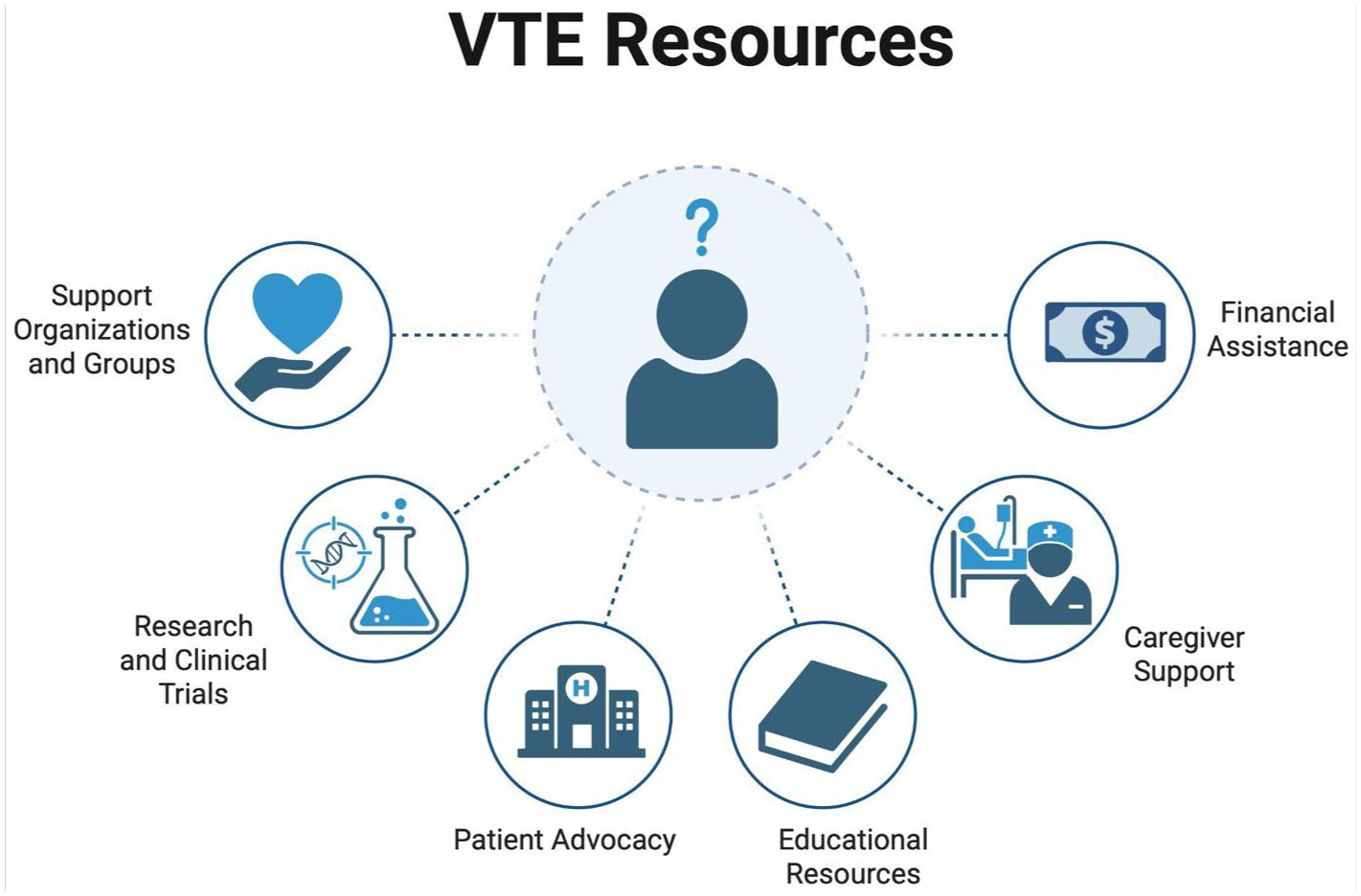
VTE resources for providers, caregivers, and patients.
Highlights from the 2026 SVM Fellows and Advanced Practice Provider Course
Stanislav Henkin, MD, MPH, FSVM; Danielle Vlazny, PA-C, MS, FSVM
The 12th Annual SVM Fellows and Advanced Practice Provider (APP) Course was held March 21-22 in Chicago, Illinois. Course leadership included Stanislav Henkin, MD, MPH, FSVM as chair, and Kamal Gupta, MD, FSVM as co-chair for the Fellows course; and Danielle Vlazny, PA-C, MS, FSVM as chair, and Ali Baird, DNP as co-chair for the APP course.
This year, 52 Fellows and 45 APPs attended the course; with faculty and industry representatives, there were over 150 people at the Loews Chicago O’Hare Hotel (Figure 2). The course attracted residents, fellows, and APPs in cardiovascular medicine, interventional cardiology vascular surgery from across the United States and Canada. Similar to prior years, world-class diverse faculty, who are leaders in vascular medicine, vascular surgery and interventional radiology provided exceptional education on vascular medicine to the attendees. Highlights of the course included sessions on aortic disease, peripheral artery disease, and acute and chronic venous disease; and emphasis on vascular imaging with Imaging Cases Over Cocktails and Point of Care Ultrasound (POCUS) sessions. There were several new hands-on sessions focusing on wound care and compression therapy, including APP-focused workshop on compression sponsored by Tactile; and a wound care workshop focusing on compression, dressings, and basic debridement strategies. Attendees were able to network with industry partners during Industry Tabletop Learning, industry-sponsored meal-time symposia, and breaks.
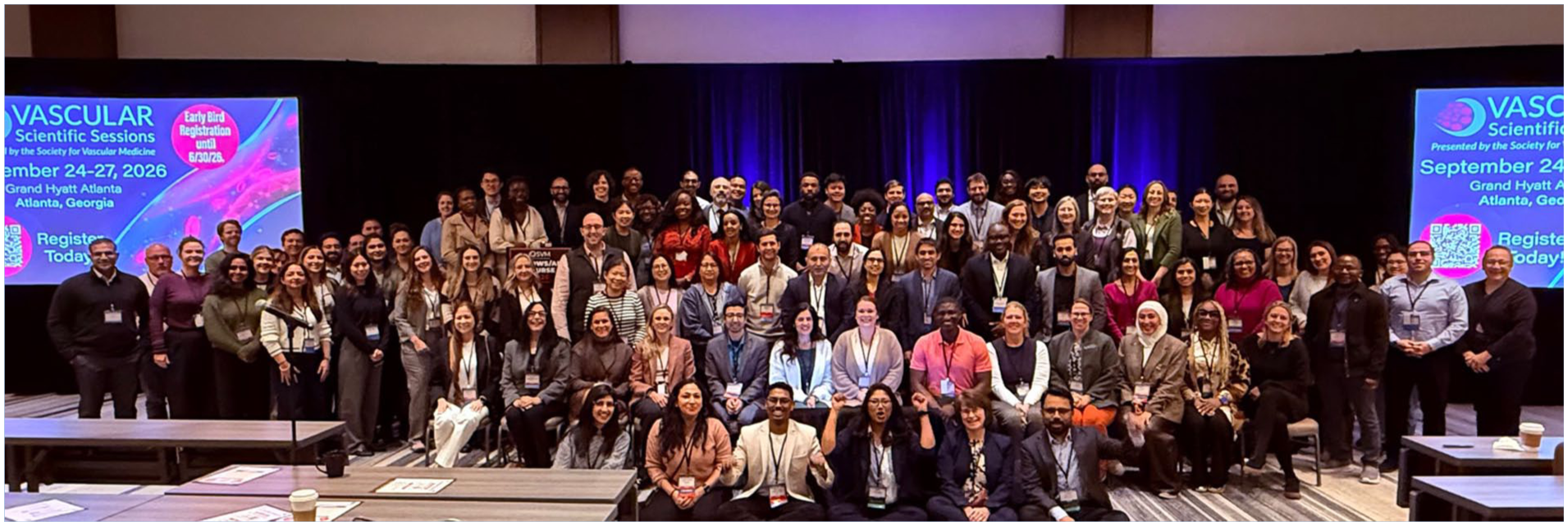
Photograph of many faculty and attendees at the 2026 SVM Fellows and Advanced Practice Provider (APP) Course.
The 13th annual Fellows/APP course will be held in Chicago in March 2027. Please stay tuned for more information and spread the word to your trainees and APPs!
Please see below for some examples of the feedback we received from our Fellow and APP attendees:
Fantastic learning experience. The covered topics reinforced my knowledge. 10/10 would recommend.
I really enjoyed the conference and learned a lot. POCUS workshop was super helpful! Great way to meet and interact with mentors.
Excellent, high yield course with practical case-based discussions that reinforced core vascular concepts and board relevant management.
Extremely well structured. Plenty of clinical pearls and relevant takeaways. I learned a lot, the teaching was amazing.
Amazing experience. I'm so grateful that I was able to attend this conference. I'll share the information with my practice and will care for my patients more comprehensively and with up to date information. All of the presentations were excellent.
Excellent APP course for vascular surgery PA. Rare to find courses that emphasize on specialty- based medical management. This conference felt like visiting family of closely knit providers.
One of the best conferences courses I've attended. All presenters presented clearly and efficiently and learned a lot from each of them. Well organized and educational.
Overall, this was one of the best most informative conferences I have attended. Very worthwhile and great information, very relevant to my practice. Definitely joining SVM now and plan to continue attending SVM conferences. Thank you for this opportunity to learn in such a collaborative, non-threatening atmosphere, amazing presenters and faculty.
Boston Scientific
Inari
Penumbra
Pfizer/Bristol Myers Squibb
Medtronic
Sun Scientific
Lipedema Foundation
GE HealthCare
Shockwave
