






Abstract
This study investigated the influence of drug-company funding on websites about attention-deficit hyperactivity disorder (ADHD). Websites in the top 60 for either Google or Yahoo!Xtra with information about causation and treatment were analysed. Likert scales, based on those used in previous similar studies, were developed to rate aetiological explanations and recommended treatment approaches, on a dimension from psycho-social to biological. Overall, the quality of information on websites was poor with a strong bias towards bio-genetic aetiological explanations of ADHD. Twenty-one of the 57 websites (37%) were funded by drug companies. The drug-company funded (DCF) websites were significantly more likely than non-DCF websites to recommend medication rather than psycho-social treatments. The selective lack of consideration of psycho-social treatments by DCF websites is discussed in relation to the relevant research literature, including the evidence in favour of a multimodal approach. The findings, which are consistent with previous similar studies in relation to websites about adult mental health problems, confirm that the pharmaceutical industry is seeking to influence public opinion via the internet.
Introduction
Attention-deficit hyperactivity disorder (ADHD) is the most commonly diagnosed mental health problem among children, with prevalence rates, from a range of countries, as high as 7 or 8 percent, with rates consistently several times greater for boys than for girls (American Psychiatric Association [APA], 2000; Bauermeister et al., 2007; Ouyang, Fang, Mercy, Perou, & Grosse, 2008).
Causes
As is the case for most mental health problems, a range of biological and psycho-social causal factors have been identified, with many researchers and reviewers concluding that rather than one single factor having a predominant etiological role, multiple factors interact to cause the symptoms of ADHD (Rickel & Brown, 2007).
Psychosocial factors
The same adverse life events and circumstances that play a causal role for most other mental health problems (Read & Sanders, 2010) have been found to be risk factors for ADHD. For example, the families of children diagnosed with ADHD are consistently found to be relatively poor and more likely to live in urban areas (Bauermeister et al., 2007; Dopfner, Breuer, Wille, Erhart, & Ravens-Sieberer, 2008; Pineda et al., 1999). Numerous studies report elevated rates of abuse and neglect among children diagnosed with ADHD and a considerable degree of symptom overlap and comorbidity between ADHD and PTSD (Weinstein, Staffelbach, & Biaggio, 2000), with this being open to multiple interpretations (Caron & Rutter, 1991). In a US study of 80 children diagnosed with ADHD 71 per cent met criteria for at least one type of maltreatment (De Sanctis et al., 2008). Another recent US study, of 29 children diagnosed with ADHD, found that all but one had been exposed to multiple forms of emotional, physical and sexual abuse and/or neglect, and all but three had witnessed violence between adult family members (Becker-Blease & Freyd, 2008). A study of New Zealand children aged four to 16 who had disclosed recent sexual abuse found that 13.6% met DSM-III criteria for a diagnosis of ADHD, twice the rate of children sampled from the community (Merry & Andrews, 1994). A Canadian study found that adults diagnosed with ADHD were significantly more likely than a control group to report childhood sexual and emotional (but not physical) abuse, and childhood emotional and physical neglect (Rucklidge, Brown, Crawford, & Kaplan, 2006).
Significantly higher rates of inattention and overactivity problems have been found in institutionalized orphans who experienced severe deprivation compared with orphans who had not (Kreppner, O’Connor, & Rutter, 2001). Several population-based studies have reported associations between ADHD symptoms and child abuse (Lam, 2005; Spencer et al., 2005). For example, a study of 14,322 people in the US found, after controlling for other risk factors for child abuse, that physical abuse, physical neglect, supervision neglect and contact sexual abuse were all significantly related to ADHD (Ouyang et al., 2008). A study in Puerto Rico found that in both a community sample (n = 1897) and a clinical sample (n = 763) negative disciplinary practices (yelling and physical punishment) were significantly related to ADHD.
Other factors found disproportionately in the families of children diagnosed with ADHD include insecure child–parent attachment (Bauermeister et al., 2007; Clarke, Ungerer, Chahoud, Johnson, & Stiefel, 2002), parental substance abuse (De Sanctis et al., 2008), lack of social support for the family (Bauermeister et al., 2007), and parental history of a range of mental health problems (Bauermeister et al., 2007).
The causal nature of these relationships remains unclear. While abuse and neglect may have a causal or exacerbating role, some have argued that the symptoms of ADHD can lead to higher exposure to abuse and neglect (De Sanctis et al., 2008). Both, of course, could be true. There may be subgroups that are, and are not, related to abuse and neglect (Briscoe-Smith & Hinshaw, 2006).
Biological factors
Biological explanations of ADHD have focused on genetic and neurophysiological differences. Neurophysiological dysfunction has been identified in brain areas associated with the frontal and striatal system in children with attention problems (Chabot & Serfontein, 1996) as well as hypo-arousal of cortical regions, in particular, the frontal region (Loo & Barkley, 2005), which is consistent with a set of cognitive deficits identified among children and adults with ADHD, typically in verbal fluency, perseveration, motor sequencing, planning and working memory (Rickel & Brown, 2007). However, it has been pointed out that “The sample sizes in these studies have usually been small, the brains of ADHD diagnosed children have not been considered to be clinically abnormal in any of the studies, nor has any specific, or characteristic, neuroimaging difference been convincingly demonstrated” (Timimi, 2009a, p. 140). Furthermore, any differences could be due to the medication that most of the children in the studies had taken (Timimi, 2005, 2009a).
Brain differences, moreover, do not necessarily indicate a purely biological etiology, since the brain is, of course, acutely responsive to, and thereby altered by, the physical and social environment (Read & Sanders, 2010; Timimi, 2009a, 2009b), especially – because of extreme plasticity – by trauma or abuse in the first few years of life (Perry, 2002). For example, secure attachment can lead to behaviours which protect the brain from subsequent stress whereas insecure attachment and psycho-social stress may lead to dysfunction of the locus coeruleus-norepinephrine circuit (Egle, Hardt, Nickel, Kappis, & Hoffman, 2002). It has been hypothesized that this can cause damage to the prefrontal cortex (PFC) which may then lead to deficits in coping and planning, and increased distractibility which are some of the core symptoms of ADHD (Arnsten, 2000; Egle et al., 2002). Even relatively mild stress can affect the functioning of the PFC and this may continue to function ‘off-line’ while stressful events occur, resulting in the child not being able to regulate their behaviour (Arnsten, 1999).
Research regarding a genetic predisposition to ADHD is inconclusive, with even those studies reaching firm conclusions accounting for only a small fraction of ADHD. Family aggregation studies typically ignore the confound of environmental influence and modelling of parental behaviours (Barkley, 2006; Faraone & Khan, 2006). If ADHD does ‘run in families’ that, by itself, does not of course constitute evidence of a genetic predisposition (Read & Sanders, 2010). For example, a recent study showed that ADHD symptoms of parents are associated with adverse parenting styles (Edel, Juckel, & Brune, 2010).
Studies comparing monozygotic twins to dizygotic twins typically find higher rates among monozygotic twins which have led many to interpret ADHD as having a genetic predisposition (Hudziak, Rudiger, Neale, Heath, & Todd, 2000). However, many conceptual and methodological problems with twin studies have recently been identified (Joseph, 2006; Timimi, 2009a), including, in relation to ADHD specifically, rater bias (Rickel & Brown, 2007). A much publicized recent study (Williams et al., 2010) found that 57 of 366 (15.6%) children diagnosed with ADHD had chromosomal deletions and duplications known as copy number variants (CNVs), leading the authors to claim, in the media, that “Now we can say with confidence that ADHD is a genetic disease” (Goldacre, 2010). However, 7.4 per cent of the control group had the same CNVs. Molecular genetic studies have led some researchers to conclude that ADHD may be caused by the combined effects of several genes. Reviews of candidate gene studies have found significant odds ratios for several genes, yet contradictory findings have been found for many of these genes and “The few genome wide scans conducted thus far are not conclusive” (Faraone et al., 2005, p. 1313).
Some cases of ADHD are associated with foetal alcohol exposure (Bhatara, Loudenberg & Ellis, 2006). Diet, including food additives and specific allergies, may also contribute to the symptoms of ADHD for some children (Monastra, 2005; Pelsser et al., 2009).
Treatments
Over the past 15 years the use of stimulants for ADHD has increased dramatically. In 2003 US$2.4 billion was spent on ADHD medications globally, nine times more than in 1993 (Scheffler, Hinshaw, Modrek, & Levine, 2007). In the UK, prescriptions of stimulants for ADHD increased from 6000 a year in 1994 to 550,000 by 2006 (Timimi, 2009c). Prescriptions of ADHD drugs in the Netherlands recently increased 6.5 fold over just five years (van den Ban et al., 2010).
Methylphenidate (Ritalin) is the most commonly used drug. Methylphenidate, and other drugs, have been shown to reduce symptoms of ADHD (Charach, Ickowicz, & Schachar, 2004; Quinn et al., 2004; Silva et al., 2008). Other studies, however, have failed to find significant improvements in academic functioning or social behaviour (Rickel & Brown, 2007). Meta-analyses have revealed significant flaws in many studies investigating medication for ADHD (King et al., 2006; Schachter, Pham, King, Langford, & Moher, 2001), including inadequate reporting of methodology, a lack of long-term data and limited reporting of adverse effects (Timimi, 2009c).
Adverse effects of ADHD medication (Charach et al., 2004) include sleep disturbances (Corkum, Panton, Ironside, MacPherson, & Williams, 2008) and significant delays in weight and body mass index development, and suppressed height gain (Faraone & Giefer, 2007; MTA Cooperative Group, 2004b).
Since many children with ADHD exhibit deficits at school, psycho-social treatments designed to teach academic skills have been developed. An eight-week organization skills intervention found significant improvements in grade point average (Langberg, Epstein, Urbanowicz, Simon, & Graham, 2008). These improvements occurred regardless of medication status and were maintained for at least eight weeks (Langberg et al., 2008).
Although there is some evidence that family therapy can be effective (von Sydow, Beher, Schweitzer-Rothers, & Retzlaff, 2006), more research attention has been focused on Behavioural Parent Training (BPT) (Chronis, Chacko, Fabiano, Wymbs, & Pelham, 2004). BPT is based on social learning theory and teaches parents how to identify and control their child’s behaviour using positive reinforcement for desirable behaviours and non-physical punishment for undesirable behaviours (Chronis et al., 2004). A recent meta-analysis found that behavioural treatments are highly effective in the treatment of ADHD and that these were consistent across studies, regardless of study design. The effect sizes were considered ‘large’ and comparable to stimulant medication (Fabiano et al., 2009).
The frequently cited Multimodal Treatment Study of Children with ADHD compared long-term differences in ADHD symptoms for medication alone, behaviour therapy alone, a combination of the two, and the usual community care (Swanson et al., 2008). This 14-month randomized controlled trial found that children in all four groups demonstrated substantial reductions in ADHD symptoms (MTA Cooperative Group, 1999). The combined and medication alone groups produced superior results to the behaviour therapy alone and community care group, however the combined treatment produced better outcomes than the medication group on several measures including: ‘oppositional/aggressive symptoms, internalising symptoms, teacher rated social skills, parent–child relations, and reading achievement’ (MTA Cooperative Group, 1999). A follow-up study 24 months later (MTA Cooperative Group, 2004a) demonstrated similar results but the effect sizes of combination and medication treatment above behavioural and community care were smaller by half. These findings would seem to indicate that a combination of medication and behavioural therapy is the best treatment for ADHD. However several authors have suggested that comparisons between the groups were not equal (Arnold et al., 2004). Notably, at the 14-month follow-up time the behavioural intervention had been discontinued several months earlier, yet the medication dosage of most children had increased over time, therefore these two groups were not equal in treatment potency. Furthermore, at the beginning of the study the parents and teachers had been given pro-medication literature thereby increasing the probability of a placebo effect in the medication groups (Timimi, 2009c).
At 24-month follow-up the effect of behavioural intervention was smaller than that of medication, but had been maintained from post-treatment whereas medication had not (MTA Cooperative Group, 2004b). More importantly, at three- and eight-year follow-ups the superiority of the medication only and combined groups over the other two groups had disappeared (MTA Cooperative Group, 2007, 2009). Furthermore, after three years the children who had taken medication continuously had higher rates of delinquency and were on average 4cm shorter than those who had not taken medication (MTA Cooperative Group, 1999).
Therefore, it might be argued that psycho-social treatments are more beneficial in the long-term as many children benefit without on-going treatment which does not seem to be the case with medication. Furthermore, psycho-social approaches do not involve stunted growth and sleep disturbances.
The internet
Websites regarding mental health are increasingly the public’s primary source of information. Eighteen per cent of all internet users in England used the internet for information about mental health, rising to 31.5% of those with a history of mental health problems (Powell & Clarke, 2006). The information presented on many of these sites is often not evidence-based (Griffiths & Christensen, 2000; Kisely, Ong, & Takyar, 2003; Read, 2008).
Drug companies
Pharmaceutical companies have used their considerable financial resources to gain significant influence in the medical professions, including psychiatry, with an increasing influence on psychology (American Psychological Association, 2005). By the turn of the century the American Psychiatric Association was annually receiving more than US$13 million from drug companies, which accounted for approximately 30 per cent of their budget (Antonuccio, Danton, & McClanahan, 2003). The American Journal of Psychiatry devotes approximately 25 per cent of its pages to drug-company related articles and advertisements which portray medication in a positive light (Antonuccio et al., 2003). Dr Steven Sharfstein (President of the American Psychiatric Association) is aware of this influence:
As we address these Big Pharma issues, we must examine the fact that as a profession, we have allowed the bio-psycho-social model to become the bio-bio-bio model … If we are seen as mere pill pushers and employees of the pharmaceutical industry, our credibility as a profession is compromised. (Sharfstein, 2005, p. 5)
Fifty-six percent of the panel members on the DSM-IV Task Force received payments from drug companies, including 62 per cent of those on the childhood disorders panel (Cosgrove, Krimsky, Vijayaraghavan, & Schneider, 2006). More recently, 69 per cent of the current DSM-V Task Force have had some ties with the Pharmaceutical Industry in the last eight years (Griffin, 2010).
The industry has undertaken huge marketing and advertising campaigns to persuade people that everyday problems, such as shyness, may be diseases worthy of treatment via medication (Moynihan & Cassels, 2005). Drug companies have gained influence over both governments, including the US Food and Drug Administration (Relman & Angell, 2002), and patient groups (Moynihan & Cassels, 2005). Drug companies provide significant funding to lobby groups such as the National Alliance for the Mentally Ill (NAMI) and the Children and Adults with Attention Deficit Hyperactivity Disorder (CHADD) in the USA, and the Attention Deficit Disorder Information and Support Service (ADDISS) in the UK (Timimi, 2008, 2009c).
The industry spends billions of dollars on marketing each year (Antonuccio et al., 2003). Additionally there has been a rapid increase in direct-to-consumer advertising in the last decade (Rosenthal, Berndt, Donohue, Frank, & Epstein, 2002). It is estimated that New Zealanders watch about 10 advertisements from pharmaceutical companies each day (Moynihan & Cassels, 2005). The increase in direct-to-consumer advertising could be perceived as a positive development as it allows consumers to obtain wider knowledge about the potential treatment options available to them. However, many consumers may then ask their doctors about certain advertised drugs, which may be more expensive and less safe than alternative treatments that work equally well. This can lead to increased pressure on physicians to prescribe the drug requested by their patient. One study found that 25 per cent of people surveyed had asked their doctor about drugs they had seen advertised (Rosenthal et al., 2002). A survey of GPs in New Zealand found that more than 40 per cent had prescribed advertised drugs while believing they would have little advantage, because a patient had asked them to do so (Gamble, 2003).
Direct-to-consumer marketing of prescription drugs is only legal in the US and New Zealand. However, the internet allows for direct-to-consumer advertising internationally (Woodlock, 2005). An analysis of several drug company websites found that the primary explanation for mental illness was biological, and very few sites suggested psycho-social causes for depression, panic disorder, social anxiety disorder, obsessive-compulsive disorder, generalized anxiety disorder, post-traumatic stress disorder and bulimia (Woodlock, 2005).
Hypotheses
Given that the drug companies have considerable influence on health professionals and the public, and that the internet is increasingly used by both groups, it is important to determine if DCF websites present unbiased, comprehensive information about the causes and treatments of a range of mental health problems. Recent studies, on schizophrenia (Read, 2008), PTSD (Mansell & Read, 2009) and depression (de Wattignar & Read, 2009), have all found a biological bias among drug-company funded websites. To date there has been no such investigation in relation to childhood mental health problems.
Therefore, this study investigated the following hypotheses: (i) that DCF websites place significantly greater emphasis on biological, genetic and neurophysiological explanations of ADHD compared to non-DCF websites; (ii) that DCF websites place significantly greater emphasis on medication in the treatment of ADHD compared to non-DCF websites; and (iii) that DCF websites place less emphasis on side effects.
Method
Website selection and categorization
Both the Google and Yahoo! websites were searched using the term ‘attention deficit hyperactivity disorder’. The top 60 websites from each search engine were selected for analysis. Links to books or video sites were excluded. Any duplicate websites (within or between two search engines) and sites with insufficient content regarding aetiology and treatment to permit meaningful scoring on the two scales (see below), as well as sites which required more than one click to reach information about aetiology and treatment and mainly had links to external websites, were excluded. This left a total of 57 websites to be analysed (Table 1).
Websites, treatment and total score

Notes: DCF = drug-company funded; NGO = non-governmental organization; Drug Com = drug company. Higher scores indicate greater emphasis on bio-genetic factors.
Websites which were drug company websites, displayed advertisements from drug companies, acknowledged financial support from one or more drug companies, or acknowledged drug companies as partners were classified as drug-company funded (DCF). All other websites were classified as ‘non-DCF’. The websites were also divided into eight categories, according to the type of organization involved: Government, Non-governmental organization (NGO; for example, support groups), Professional (comprising doctors, organizations and individuals), Consumer (websites run by families, carers and/or supporters of individuals with ADHD, and individuals with ADHD), Media, Educational (universities, academic journals and educational institutes), Business (company or individual selling products that did not state that they were non-profit), and Drug company sites.
Scales
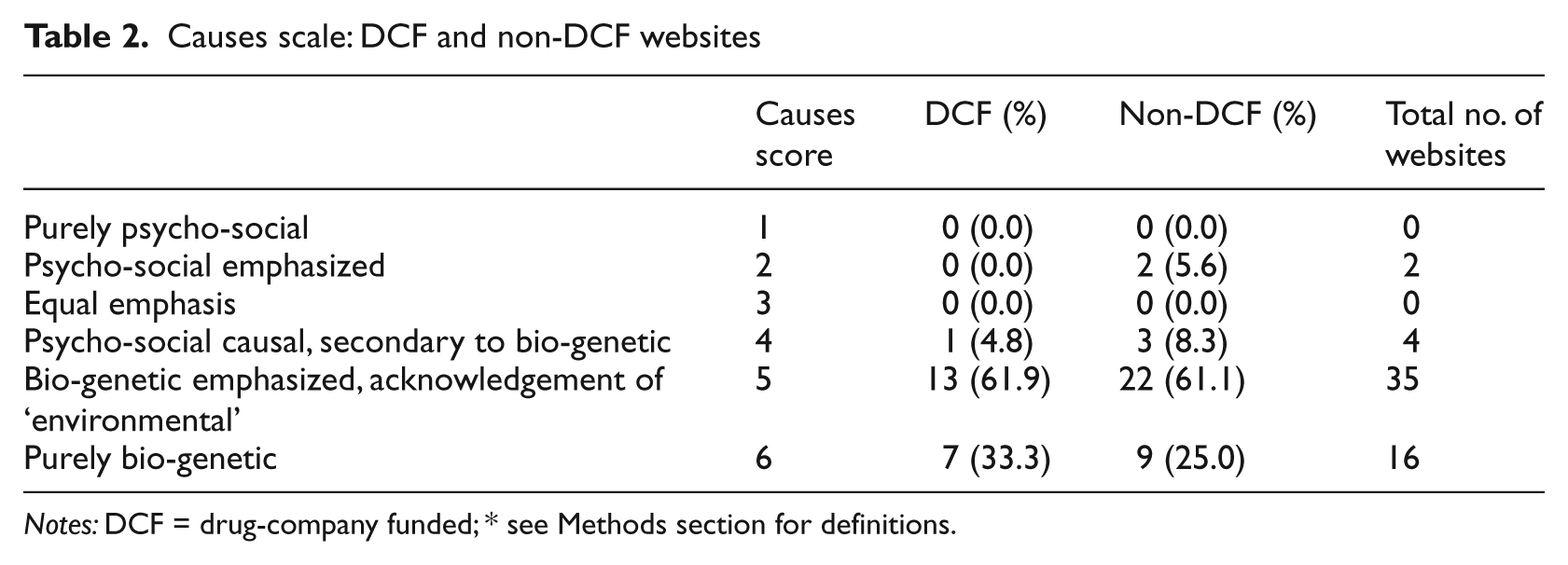
Likert scales regarding causation and treatment were broadly similar to those used in previous studies of adult disorders (Mansell & Read, 2009; Read, 2008; de Wattignar & Read, 2009). The Causes scale was a 6-point Likert scale (Table 2). Websites met criteria for “psycho-social” causes if they mentioned childhood trauma, parenting issues, family difficulties, or neglect. “Environmental” causes were nutrition and pregnancy effects, brain injury, or exposure to chemicals such as lead. “Bio-genetic” factors were identified as neurological abnormalities, a chemical imbalance, and genetic. Additional fractions of one point were added for negative statements about psycho-social causes: 0.25 for psycho-social factors do not cause ADHD but may exacerbate symptoms, 0.5 for psycho-social factors probably do not cause ADHD, and 0.75 for psycho-social factors definitely do not cause ADHD.
Causes scale: DCF and non-DCF websites
Notes: DCF = drug-company funded; * see Methods section for definitions.
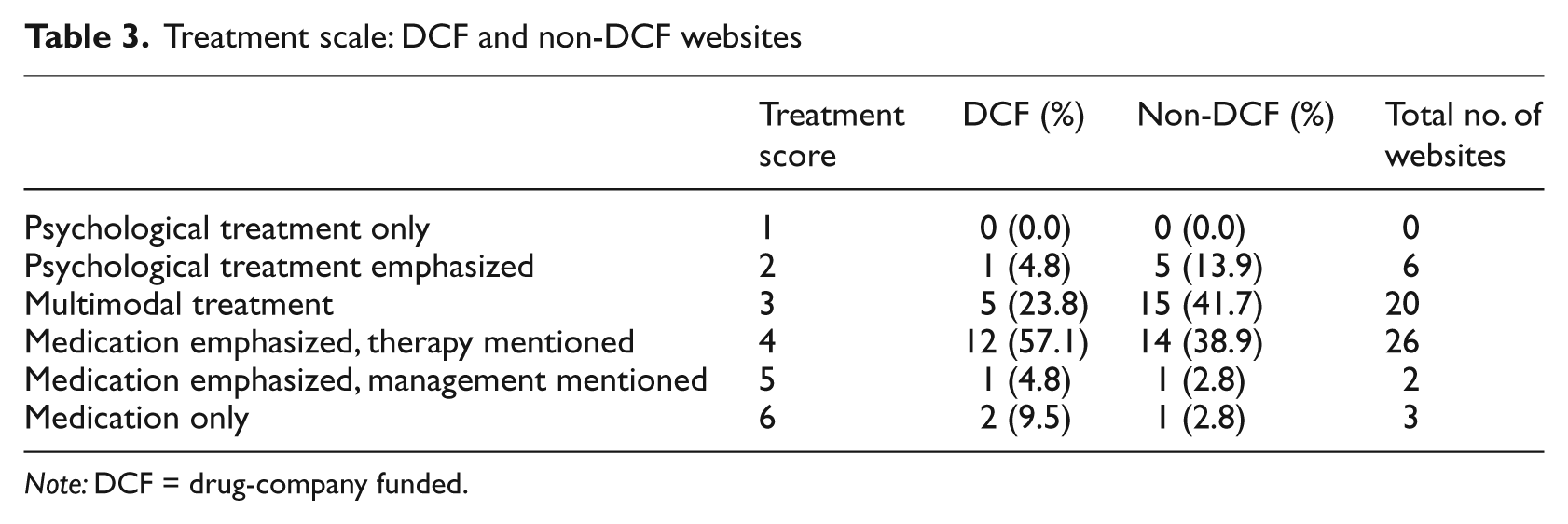
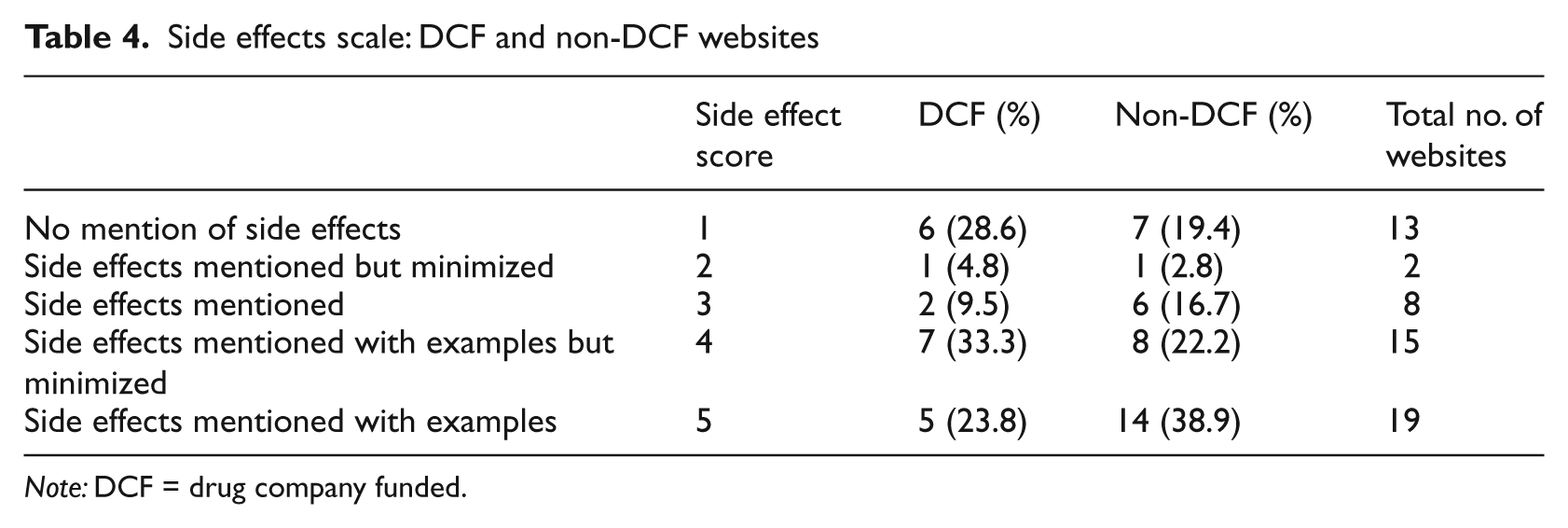
The Treatment scale was a 6-point scale (Table 3). Criteria for “emphasized” were if the website stated that the treatment was more efficient than others, was the primary treatment for ADHD, or if a larger amount of information was presented on that treatment. The Side Effects scale was a 5-point scale (Table 4). The criteria for “minimized” was the use of terms such as “mild” or “temporary” and “temporary”. The total score, with higher scores representing a favouring of a biological perspective, was calculated by adding the Causes (including additional fractions) and Treatment scores (Table 1).
Treatment scale: DCF and non-DCF websites
Note: DCF = drug-company funded.
Side effects scale: DCF and non-DCF websites
Note: DCF = drug company funded.
Inter-rater reliability
Inter-rater reliability was calculated to ensure that the scale point definitions had face validity and, moreover, because the lead researcher (JM) was not blind to DCF/non-DCF status. For each of the three scales five random websites, with identifiers removed, were scored by an independent rater (JR). Where inter-rater reliability was less than 100 per cent the problematic scale point definitions were identified and refined and a further five websites were then scored by both raters using the refined definitions.
Data analysis
Comparisons were made between DCF and non-DCF websites For the Causes, Treatment, Side Effects, and Total Score variables using Mann-Whitney U tests. This non-parametric test was used because Likert scales are not considered suitable for parametric testing.
Results
Drug-company funding
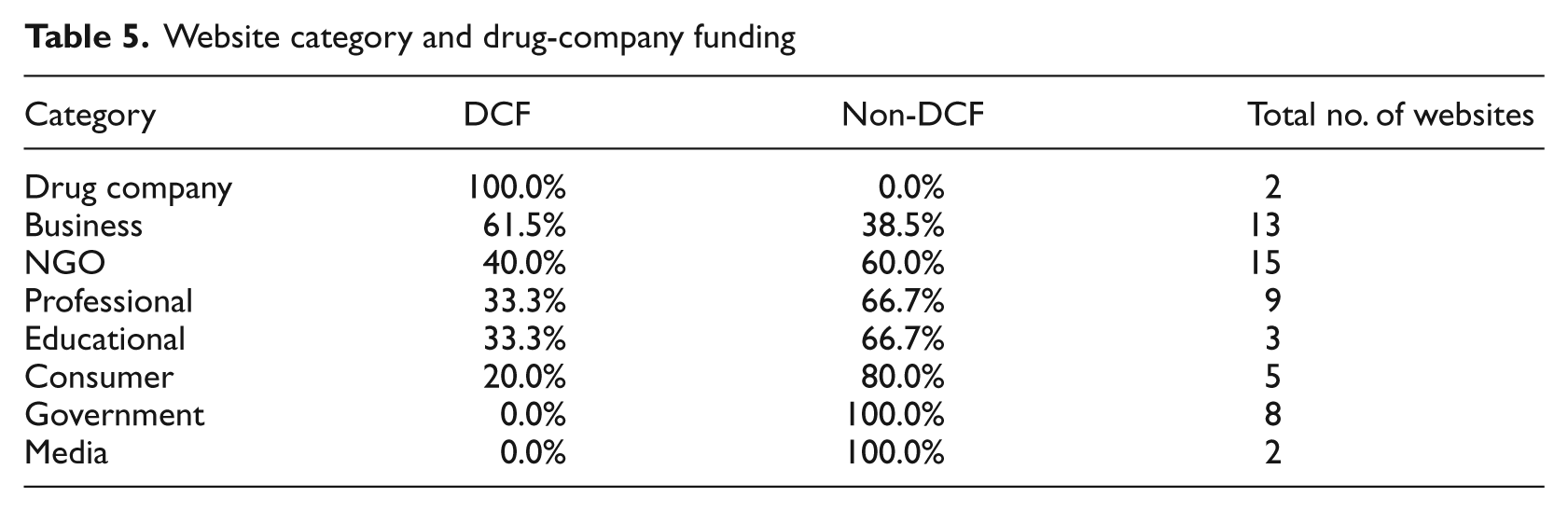
A total of 21 (36.8%) websites received drug-company funding. Business (61.5%) and NGO (40.0%) websites were most frequently DCF (Table 5).
Website category and drug-company funding
Inter-rater reliability
Inter-rater reliability for the Causes scale for the first five websites analysed was less than adequate (κ = .444, p = .094). There were discrepancies regarding the negative statements about psycho-social causal factors, due to the inability of the original two fraction-points (0.25 and 0.5) to reliably differentiate the degree of certainty with which these factors were rejected. An additional fraction (.75) was added, and all websites re-scored. An analysis of a further five websites produced inter-rater reliability of 100 per cent. Inter-rater reliability for the Treatment scale for the first five websites was clearly inadequate (κ = .063, p = .836). There were several discrepancies between the raters and revisions were therefore made to the Treatment scale, for example making clarifications to points 4 and 5 regarding different interventions, and all websites re-scored. A further five websites were then independently rated. The inter-rater reliability for these websites was 100 per cent. Inter-rater reliability for the Side Effects scale for the first five websites was 100 per cent.
Causes scale
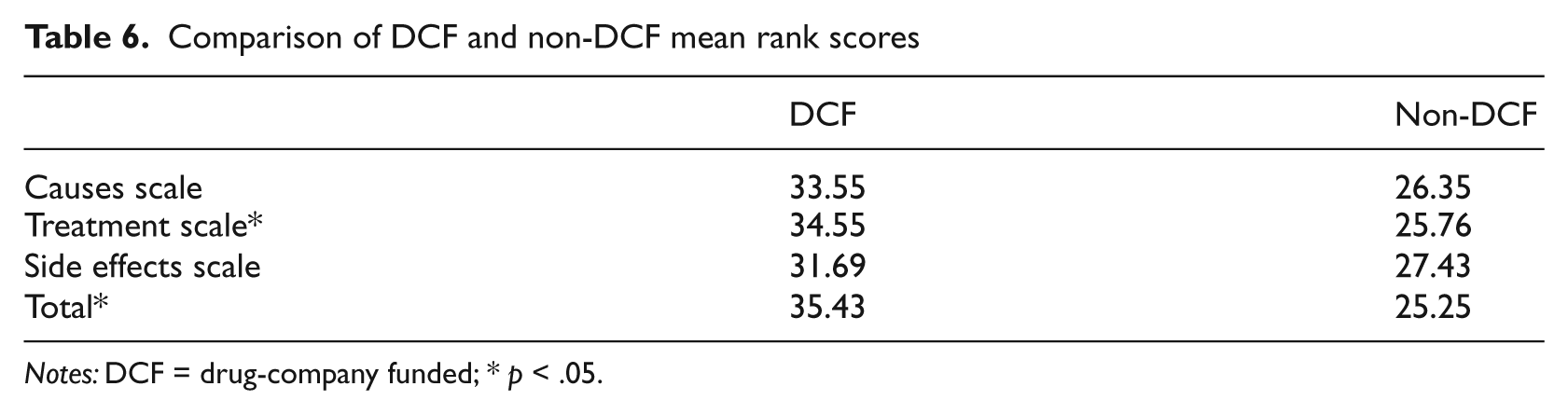
The difference between DCF (M = 5.61, SD = 0.67) and non-DCF (M = 5.18, SD = 0.97) websites was in the hypothesized direction, but was not statistically significant, U = 282.50, p = .109 (Table 6). The majority of websites (96.5%) placed greater emphasis on bio-genetic factors (Table 2). Only two websites, both non-DCF, placed greater emphasis on psycho-social explanations (scale point 2)
Comparison of DCF and non-DCF mean rank scores
Notes: DCF = drug-company funded; * p < .05.
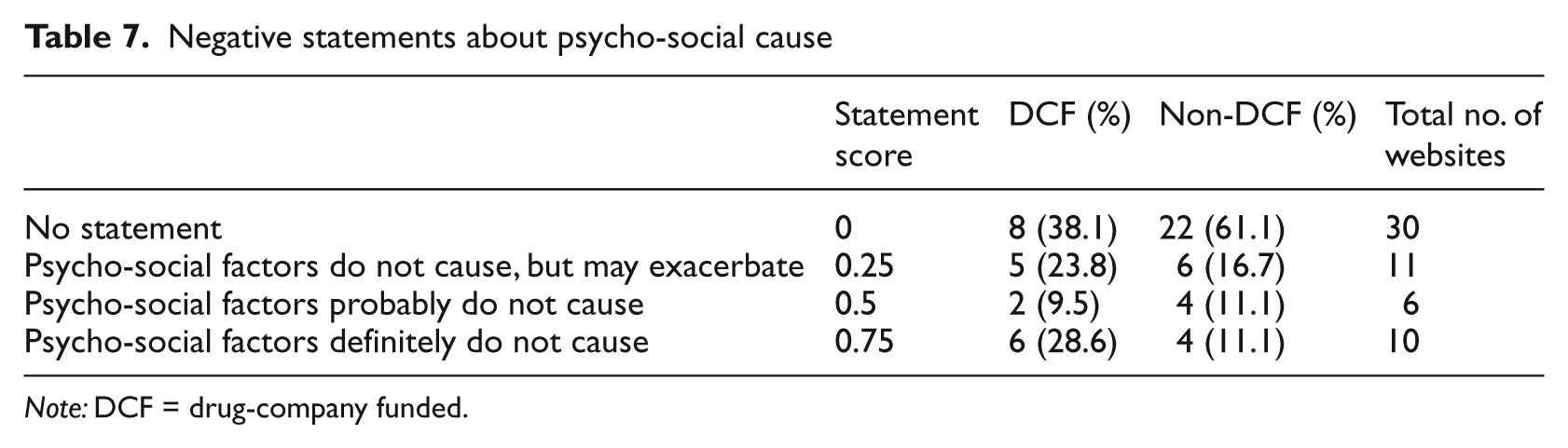
As part of the causes analysis an additional score was generated which measured if a website made a negative statement regarding the role of psycho-social factors. Although in the expected direction, the difference was not statistically significant between DCF (M = .321, SD = .318) and non-DCF (M = .181, SD = .265) websites, U = 279.00, p = .074 (Tables 3 and 5). More DCF (61.9%) than non-DCF sites (38.9%) made some form of statement about psycho-social factors not being a cause, with 28.6% of DCF sites stating they were definitely not a cause compared to 11.1% of non-DCF sites (see Table 7).
Negative statements about psycho-social cause
Note: DCF = drug-company funded.
Treatment scale
DCF websites (M = 3.90, SD = 0.94) placed significantly greater emphasis on medication than non-DCF websites (M = 3.39, SD = 0.87), U =261.5, p = .038 (Table 6). Multimodal treatment, with equal emphasis on medication and psychological treatments (scale point 3), was endorsed by 23.8 per cent of DCF websites and 41.7 per cent of non-DCF websites. Medication was emphasized, or was the only treatment mentioned (scale points 4–6) by 71.4 per cent of DCF websites but only 44.5 per cent of non-DCF websites (Table 3).
Side effects scale
DCF websites were slightly less likely to adequately address the side effects of medication (M = 2.81, SD = 1.60) than non-DCF websites (M = 2.42, SD = 1.52). This difference did not approach statistical significance, U = 321.5, p = .33 (Table 6). A third of DCF websites (33.4%) either failed to mention side effects at all or minimized them without giving any examples (scale points 1 and 2), compared to 22.2% of non-DCF websites (Table 4).
Total score
DCF websites (M = 9.51, SD = 1.17) had a significantly higher Total Score than non-DCF websites (M = 8.57, SD = 1.49), U = 238.5, p = .020 (Table 6).
Discussion
This study appears to confirm previous findings that the overall quality of information presented on mental health websites is poor. The 57 websites did not represent the range of causal factors and effective treatment modalities found in the research literature. This was most noticeable in the portrayal of causes, with 96 per cent of websites placing more emphasis on bio-genetic factors than psycho-social factors, and 28 per cent promoting a purely bio-genetic model. Furthermore 47 per cent actively discredited psycho-social factors as causal agents. No websites similarly discredited bio-genetic factors. In terms of treatments, the websites presented a greater range and, overall, more closely represented the research, with 35 per cent endorsing a multimodal approach including both biological and psycho-social treatments. Nevertheless 54 per cent placed greater emphasis on medication and only 33 per cent named any side-effects without making a minimizing statement.
Drug-company funding of ADHD websites
This study also confirms that a considerable number of websites about mental health problems receive funding from drug companies, with 37 per cent acknowledging or displaying evidence of drug-company funding. This is lower than the 58 per cent finding for schizophrenia websites (Read, 2008), but comparable to the 42 per cent found in relation to both PTSD (Mansell & Read, 2009) and depression (de Wattigner and Read, 2009). In the current study all the results regarding bias in DCF websites were in the hypothesized direction, and the Total Score produced a statistically significant difference.
Causes
While the 57 websites, overall, were heavily biased in favour of bio-genetic causes, the slightly greater bias of the DCF websites was not significant (p = .109). Previous studies about schizophrenia (Read, 2008) and depression (de Wattignar & Read, 2009) did find significant difference, but the study of PTSD (Mansell & Read, 2009), like the current study, did not. This was expained, in part, by the lack of variabality between the websites, with most PTSD websites clustering, unsurprisingly, at the psycho-social end of the causal dimension. Similarly, the failure of the current study to replicate the schizophrenia and depression findings can be partly understood in terms of lack of variability, with most websites clustering at the bio-genetic end of the dimension. It is also possible that the scale points towards the bio-genetic end of the Causes Scale failed to differentiate subtle differences. Alternatively there may simply be no difference. Perhaps drug companies may be less interested in what websites say about causation than whether they promote medication.
Bias on the internet towards bio-genetic causal factors at the expense of psycho-social factors raises a number of issues. At a societal level it can reduce the chances that primary prevention programmes will be developed to address issues such as poverty and childhood neglect in order to reduce rates of ADHD. Similarly, bio-genetic explanations of ADHD tend to remove responsibility from parents, families, schools and society in general and instead locate the problem within the individual child. This understandable desire not to ‘blame’ anyone – especially families – is a potential explanation for why psycho-social factors such as ‘bad parenting’ are actively dismissed by so many websites. Given the research about growing up in poverty and about neglect and abuse, however, it could be argued that locating the problem entirely within the child comes rather close to ‘blaming the victim’.
Along with locating the problem within one individual child comes the implication that the child is defective, or, more specifically, has a ‘mental illness’. Stigma towards children diagnosed with ADHD is well documented. One study found that 33 per cent of respondents viewed children with ADHD as somewhat or very likely to be violent towards others (Pescosolido, Fettes, Martin, Monahan, & McLeod, 2007). Numerous studies have found that people who understand mental health problems from an illness or bio-genetic perspective have more negative attitudes towards ‘mental patients’ and tend to view them as more dangerous and unpredictable (Read & Harré, 2001). Destigmatization programmes, which are also often funded by drug companies, are often designed to teach the public to adopt a ‘medical model’ perspective (e.g. “mental illness is an illness like any other”), based on the well-intentioned belief that this reduces prejudice by reducing perceptions of responsibility and, thereby, reducing blame. It has been repeatedly demonstrated, however, that this approach increases, rather than decreases, stereotyping, fear and prejudice (Angermeyer & Dietrich, 2006; Angermeyer & Matschinger 2005; Read, Haslam, Sayce & Davies, 2006). British psychiatrist and columnist Dr Ben Goldacre (2010) summarized these findings when commenting on the statement, by the authors of the previously discussed recent genetic study (Williams et al., 2010) that “We hope that these findings will help overcome the stigma associated with ADHD”. He added:
These findings are at odds with everything that many people who campaign against stigma have assumed for many years, but … a story about genetic causes may lead to people being conceived of as “defective” or “physically distinct”. It can create an associative stigma for the whole family, who in turn receive labels such as “at risk” or “carrier”. This stigma may persist long after ADHD symptoms have receded in adulthood: perhaps a partner will wonder: “Do I really want to risk having a child with this person, given their genetic predisposition?” Perhaps it will go further than that: your children, before they even begin to show any signs of inattentiveness or hyperactivity, will experience a kind of anticipatory stigma. Do they have this condition, just like their father? “It’s genetic you know.” … Blaming parents is vile. But before reading this research I think I also assumed, unthinkingly, like many people, that a “biological cause” story about mental health problems was inherently valuable for combating stigma. Now I’m not so sure. People who want to combat prejudice may need to challenge their own prejudices, too. (Goldacre, 2010, p. 18)
Treatments
A significant difference was found between DCF and non-DCF websites on the treatment scale. This is consistent with the schizophrenia, depression and PTSD studies which all found that DCF websites placed greater emphasis on medication than psycho-social treatments (Mansell & Read, 2009; Read, 2008; de Wattigner & Read, 2009). The consistency of these findings is not surprising. Given that drug companies’ main goal is to maximize profits, it is to be expected that websites receiving drug-company money place greater emphasis on drugs.
DCF websites that place greater emphasis on medication over other treatments are overstating the efficacy of medication and ignoring or minimizing other valid, and safer, treatment options. This bias may have serious implications in that it is potentially misleading for consumers and may lead to parents investigating medication as the first or only treatment option for their child. Parents of children with ADHD are likely to be under substantial stress and therefore easily influenced by marketing campaigns by drug companies to opt for a ‘quick-fix’ solution. Practitioners may also be at risk for only prescribing medication instead of looking at other long-term interventions. It is recommended that a diagnosis of ADHD not be made until a child has been seen by a variety of practitioners in a number of different settings, and that psychometric assessments and reports are collected from parents and teachers (Rickel & Brown, 2007). However, it is apparent that many are being diagnosed and treated by their general practitioners without ever seeing a psychologist or psychiatrist (Heneghan et al., 2008). It therefore appears that many children with ADHD are only having access to medications and not wider psycho-social treatments, including educational programmes or behavioural therapy, or recommendations for their learning environment. Many doctors receive pressure from patients to prescribe advertised drugs (Gamble, 2003; Rosenthal et al., 2002).
This is the first study to investigate what websites say about side effects. In the case of medication for ADHD, these side effects are common and serious, including stunted growth (Corkum et al., 2008; Faraone & Giefer, 2007). Overall 23 per cent of websites made no mention at all of side effects and a further 30 per cent made minimizing statements. While not a significant finding, DCF websites were somewhat less likely to mention side effects and if side effects were mentioned they were slightly less likely to give examples and/or more likely to minimize these effects, than non-DCF websites. Combined with the overall bias towards medication, especially in DCF websites, this failure to provide responsible information to consumers and prescribers is of concern.
Limitations
It was not always entirely clear whether a website was DCF or not. Not all websites disclosed their funding sources. This may mean that more websites were classified as non-DCF than should have been, which may have affected the findings from this study by underestimating the contributions of DCF websites.
Another limitation is the nature of the Likert rating scales. For example, the Side Effects scale does not allow for a differentiation between more severe side effects such as growth issues and less severe side effects such as temporary sleep disturbances.
A causal relationship cannot be established with certainty from this study. It is impossible to determine whether websites are influenced by receiving funding or drug companies choose to support organizations that have already adopted a stance favourable to maximizing sales of medication. Both may be the case.
Future research
Since this is the first study of websites relating to childhood disorders it will be important to replicate the findings in relation to other childhood disorders. Future studies could usefully add a qualitative approach and examine the content of websites more thoroughly as there may be more subtle differences that were not detectable by quantitative scales. Research investigating the efficacy of various approaches to regulating the content of websites regarding mental health issues might be important. Another avenue of research could be to determine the extent to which people trust information on the internet and explore whether views of mental health problems are actually changed as a result of viewing these websites, and the extent to which any attitudinal changes translate into actual behaviour. It may also be helpful to investigate the level of awareness about influence and bias among individuals and organizations who post websites and accept drug-company support to do so. It would be valuable, as well, to research other causes of incomplete, inaccurate or biased information on websites
Conclusion
The pervasive influence of drug companies in the mental health field is now well established. The influence is not always obvious, but has serious implications for consumers and providers of mental health services and, in terms of primary prevention, for society in general. It seems important that clinicians and parents do not simply opt for the ‘quick-fix’ solution medication can offer, without considering alternatives that may be equally, or more, effective and which are certainly safer. It is encouraging that decades of silence on the part of mental health professionals on the role of the drug companies has, in recent years been broken (Healy & Thase, 2003; Moncrieff, 2007; Sharfstein, 2005). In relation to the impact on services for children few have been as outspoken as child psychiatrist Dr Sami Timimi:
Psychiatry seems to be the top “offender” amongst medical specialties with regards use of and sponsorship from drug companies. Perhaps this is not surprising given the enormous potential markets that can be (and have been) developed if psychiatry is successful in medicalising peoples’ emotional responses and behaviour, in a field so reliant on subjective interpretations of normalcy and deviance. Child psychiatry seems particularly vulnerable, with, most recently, an influential group of child psychiatrists at Harvard, extensively involved in research promoting the use of psycho-pharmaceuticals (particularly for ADHD and paediatric bipolar disorder), found to have received millions of dollars of income from pharmaceutical companies most of which they had not disclosed. (Timimi, 2009c, p. 152)
Few have put it as starkly as Professor Mike Shooter (2005, p. 82), President of the Royal College of Psychiatrists in the UK:
I cannot be the only person to be sickened by the sight of parties of psychiatrists standing at the airport desk with so many perks about them that they might as well have the name of the company tattooed across their foreheads. It simply will not do.