







Abstract
Although nonsuicidal self-injury (NSSI) is prevalent among adolescents and is associated with an increased risk of adverse outcomes, many adolescents with NSSI do not seek help. However, there is a lack of research on the factors that may increase the likelihood of help-seeking, especially within Asia. To address this gap, the present study examined whether certain factors were associated with informal and formal help-seeking – specifically gender, severity of NSSI, functions of NSSI and authoritative parenting. 121 adolescents (Mage = 16.2 years, 71.1% female) were recruited from specialist outpatient clinics and inpatient psychiatric wards from a public hospital in Singapore. One caregiver per adolescent was also recruited. Data from self-report questionnaires were analysed using logistics regression analyses. The results suggest that the severity of NSSI increases the likelihood of informal help-seeking, while adolescents who have parents with more authoritative parenting style are less likely to seek informal help. Gender and functions of NSSI were not found to be associated with help-seeking. The findings from this study can guide professionals in their efforts to encourage help-seeking within Asian populations, as well as inform prevention and treatment programs for Asian adolescents with NSSI.
Plain language summary
Factors that encourage Asian youths who self-harm to get help from non-professionals and professionals: There are many youths who engage in self-harm for reasons other than suicide. Although self-harm could lead to various negative outcomes, many youths do not seek help. However, not much is known about what encourages these youths to seek help from non-professionals (e.g., family, friends) and professionals (e.g., psychologists), especially within Asia. This paper looked at certain factors that may be linked to whether youths seek help – including gender, severity of self-harm, reasons for self-harm, and parenting style. Youths and caregivers were recruited from a public hospital in Singapore. The study found that youths with more severe self-harm are more likely to seek help from non-professionals, whereas youths with parents who are highly responsive and provide consistent discipline are less likely to seek help from non-professionals. None of the factors studied were relevant in whether youths sought help from professionals. The findings from this study can guide professionals to prevent and treat self-harm in Asia, as well as improve efforts to encourage Asian youths to seek help.
Introduction
Nonsuicidal self-injury (NSSI) refers to intentional self-inflicted damage of body tissue without suicidal intent (Klonsky & Olino, 2008). Although NSSI is prevalent amongst adolescents and is associated with various adverse outcomes (Hilt et al., 2008; Kiekens et al., 2018; McManus et al., 2019; Wilkinson et al., 2018), many adolescents do not seek help and believe that they should be able to cope on their own (Fortune et al., 2008; Whitlock et al., 2006). Approximately only 48% of adolescents have received help from friends and family, and 17% to 23% have received professional support (Baetens et al., 2011; Rossow & Wichstrøm, 2010). This is concerning as adolescents who have not received treatment are more likely to continue engaging in NSSI and have poorer psychological well-being in adulthood (Halpin & Duffy, 2020). Conversely, early prevention and intervention can be beneficial in reducing NSSI and improving psychosocial functioning (Aseltine et al., 2007; Hasking et al., 2015). To better engage adolescents with NSSI and increase their access to resources, it may be important to understand what facilitates help-seeking.
Help-seeking in NSSI
Help-seeking can be understood in terms of informal and formal help-seeking. Informal help-seeking involves disclosure to non-professional sources such as family members and peers. Formal help-seeking includes receiving treatment from a professional who has a recognised role and appropriate training in providing help (Rickwood et al., 2005). Given the low rates of help-seeking among adolescents with NSSI, it may be important to understand what hinders them from reaching out to others.
Adolescents typically prefer to seek help from peers, followed by parents and professionals respectively (Evans et al., 2005; Martorana, 2015). The lower rates of formal help-seeking may be due to a fear of stigmatising responses by professionals, such as worries of assumptions being made on their motivations for NSSI and being labelled as “mentally ill” (Long, 2018). Adolescents may hesitate to speak to parents as they typically assert more independence from their parents during this developmental stage and may believe that parents are unable to help them (Berger et al., 2013; Defoe et al., 2018; Gorrese & Ruggieri, 2012). Peers often become a significant source of support during adolescence and may play an important role in the help-seeking process.
Additionally, several barriers may impede help-seeking among adolescents with NSSI. One barrier includes the perceptions that adolescents have about their NSSI. Adolescents have identified that feeling ashamed of their NSSI and of themselves prevent them from seeking help (Meheli & Lewis, 2022; Rosenrot & Lewis, 2020). Adolescents may also be ambivalent on whether to stop engaging in NSSI, or they may minimise their NSSI experiences and feel that it is not severe enough to warrant support (Fortune et al., 2008; Hooley & Franklin, 2018; Kelada et al., 2018). Another barrier is the fear of stigma surrounding NSSI. Adolescents with NSSI commonly perceive that others lack understanding on self-harm, which leads to fears of being judged or disbelieved (Meheli & Lewis, 2022; Rowe et al., 2014). They may worry that people will not understand their reasons for engaging in NSSI and may misinterpret it as a suicide attempt or an impulsive act (Fortune et al., 2008; Kumar et al., 2004). As such, the perceptions that adolescents have towards their NSSI and the fear of stigma could heighten secrecy and limit help-seeking.
Factors associated with likelihood of help-seeking
While existing literature has provided insight on what may hinder help-seeking, there is a lack of research on which subgroups of adolescents with NSSI are more likely to reach out to others, particularly within Asia. Examining the factors that increase the likelihood of help-seeking may allow for a better understanding on how help-seeking may be encouraged among Asian populations. Based on existing research, the following factors may be relevant in understanding the likelihood of help-seeking – gender, severity of NSSI, functions of NSSI and authoritative parenting.
Gender
Several studies suggest that gender may be associated with help-seeking, with females being more likely to have talked to informal sources or tried to get formal help after self-harming (Evans et al., 2005; Rossow & Wichstrøm, 2010; Ystgaard et al., 2009). Gender stereotypes on masculinity may lead males to believe that they should avoid an overt expression of feelings and vulnerability, which could reduce their willingness to seek help (Good & Wood, 1995; Judd et al., 2008; Wisch et al., 1995). In contrast, females tend to hold more positive attitudes regarding help-seeking and are more open to receiving help (Garland & Zigler, 1994; Leong & Zachar, 1999; Rickwood & Braithwaite, 1994).
Nevertheless, other studies reported that the gender had no impact on help-seeking to any source (De Leo & Heller, 2004; Heath et al., 2010). Given that NSSI can be a highly stigmatised behaviour, both sexes may experience the stigma equally and perceive accessing help for NSSI to be undesirable (Heath et al., 2010). Gender differences may also no longer be present due to evolving gender stereotypes and attitudes over recent decades, which may increase the willingness of males to seek help. This includes expressive traits becoming more socially desirable for males and males starting to perceive help-seeking as a rational and responsible action (Krumm et al., 2017; Swazina et al., 2004). Further studies are thus needed to ascertain if gender has a role in the likelihood of help-seeking.
Severity of NSSI
There has been some evidence suggesting that the severity of NSSI has an impact on help-seeking. Adolescents with more severe NSSI were reported to be more likely to disclose their NSSI and seek support from formal and informal sources (Armiento et al., 2014; Hasking et al., 2015; Kelada et al., 2016; Turner et al., 2016). As adolescents with more severe NSSI may experience higher levels of distress, they may be more likely to recognise the need to seek help and have more motivation to do so (Klonsky & Olino, 2008). Individuals engaging in higher severity of NSSI behaviours are also more likely to require medical care for their injuries, thus increasing the likelihood of others finding out about it (Hawton et al., 2009).
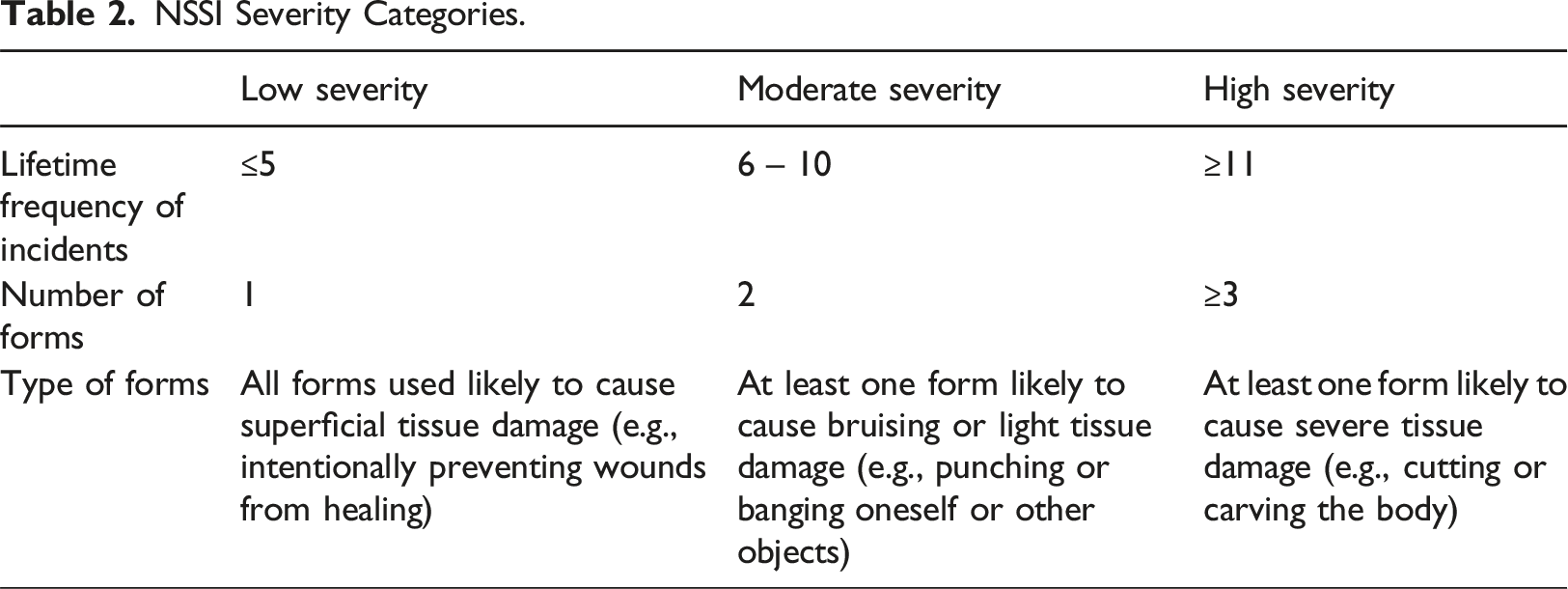
Findings on the relationship between severity of NSSI and help-seeking have nonetheless been variable. Several studies have reported that severity of NSSI was not associated with disclosure and willingness of adolescents to access services (Ammerman et al., 2021; Heath et al., 2010). The conflicting results could be due to a lack of consensus on how severity of NSSI is operationalised. Some studies examined individual features of NSSI, while others considered multiple features simultaneously (Hasking et al., 2008; Hooley et al., 2020). Given the heterogeneity of NSSI presentations, combining multiple features may allow for a more robust understanding on severity of NSSI. Whitlock et al. (2008) used latent class analysis to identify three subgroups that differentiated NSSI severity based on lifetime frequency of incidents, number of self-injury forms and type of tissue damage caused. These subgroups provide useful indicators to assess severity of NSSI in a comprehensive and standardised manner, which may be important given the conflicting findings of NSSI severity and inconsistent measures used across studies.
Functions of NSSI
Preliminary studies suggest that one’s reasons for engaging in NSSI may affect the likelihood of help-seeking. The functions of NSSI typically fall under intrapersonal functions (e.g., affect regulation, escape from dissociation) and interpersonal functions (e.g., peer bonding, communication of distress; Klonsky et al., 2015; Taylor et al., 2018). A study found that adolescents who cited interpersonal reasons for engaging in NSSI were more likely to disclose their NSSI to anyone (Armiento et al., 2014). The authors proposed that these adolescents were more likely to self-injure in a social context and may have been attempting to communicate with others, thus increasing the likelihood of help-seeking. Interpersonal functions of NSSI are also associated with a lack of expressive suppression, suggesting an increased willingness to communicate distress and seek help (Turner et al., 2012).
Other evidence suggests that intrapersonal functions are associated with increased help-seeking to formal and informal sources instead (Ammerman et al., 2021; Mirichlis et al., 2022). Intrapersonal functions are associated with an increased severity of NSSI, which may indicate heightened psychological distress and increased motivation to get help (Gardner et al., 2021; Guérin-Marion et al., 2018; Hawton et al., 2009; Klonsky & Olino, 2008). Additionally, certain intrapersonal functions for NSSI may reflect the experience of help-seeking. For instance, seeking help can be an emotional experience involving the individual and their confidant, which may be aligned with the function of wanting to avoid dissociation from emotional experiences (Mirichlis et al., 2022). It thus remains unclear whether interpersonal or intrapersonal functions of NSSI are linked to help-seeking.
Authoritative parenting
The parenting style that adolescents experience may affect their likelihood of help-seeking. Authoritative parenting, which is characterised by high responsiveness, demandingness, support and consistent discipline, has generally been associated with positive outcomes and good parent-child relationships (Nelson et al., 2011; Power, 2013). Studies found that authoritative parenting traits are positively associated with adolescents’ willingness to self-disclose to parents and their intentions to seek formal help for mental health problems (Maiuolo et al., 2019; Vieno et al., 2009). Parental authoritativeness may facilitate help-seeking by reducing barriers such as self-stigma, and promote greater psychological flexibility to engage in positive coping strategies (Gottman et al., 1996; Maiuolo et al., 2019; Pinquart, 2017).
However, existing research on parenting and help-seeking has primarily been conducted on Western populations and may not be applicable in Asia. Parenting behaviours are largely influenced by social norms and variations can exist between cultures (Bornstein, 2013). Authoritative parenting in Asian populations has not been consistently linked to the same beneficial outcomes found in their Western counterparts (Leung et al., 1998; Supple & Small, 2006). A study in Hong Kong suggested that parents who were more authoritative tended to be less encouraging of autonomy in adolescents (McBride-Chang & Chang, 1998). As Asian families tend to endorse collectivism and conformity, they may value obedience, strictness and control over authoritative parenting (Bi et al., 2018). Given that the outcomes of parenting behaviours may vary across cultures, further research is needed to ascertain the role of authoritative parenting in help-seeking for Asian populations. Additionally, majority of existing studies on NSSI assessed parenting behaviours from the adolescents’ perspective, with only a few studies gathering input from parents (Fong et al., 2022). As studies have found differences in parenting behaviours reported by adolescents and parents respectively (e.g., Baetens et al., 2014a), it may be helpful for studies to recruit parents when examining parenting behaviours and help-seeking.
Present study
The present study aims to examine the factors that may be associated with the likelihood of help-seeking among Asian adolescents with NSSI. Specifically, this study investigates if gender, severity of NSSI, functions of NSSI and authoritative parenting are associated with informal and formal help-seeking. Preliminary research suggests that these factors may have a role in help-seeking, but existing findings are limited and conflicting, thus making it difficult to draw further conclusions. Furthermore, majority of existing studies recruited from Western samples and may not be representative of how NSSI presents within an Asian context (Fernandez et al., 2022; Kim et al., 2022). Preliminary studies have reported differences in how NSSI presents in adolescents from Asia as compared to those from the West (e.g., Qu et al., 2023), suggesting the need for culture-specific research. The findings of this study could have valuable implications for encouraging help-seeking among Asian adolescents with NSSI and increasing their access to resources.
For purposes of this study, informal help-seeking was defined as having initiated a conversation with an informal source about NSSI. As literature has conceptualised help-seeking as an active coping process which includes the self-identification of one’s distress and an awareness of NSSI as a problem (Doll et al., 2021; McLaren et al., 2023; Rickwood & Thomas, 2012), this study looked at adolescents who had taken an active role to initiate the process of speaking to an informal source about their NSSI.
Formal help-seeking in this study was defined as having gone to therapy for NSSI, as the authors wanted to focus on those who had received psychological intervention for NSSI. However, it was recognised that it would be overly limiting to only include adolescents who had initiated to go for therapy and exclude those who were encouraged to go by someone. Not all adolescents may be aware of therapy as an option and may require someone to kick-start the process. Additionally, even if therapy was initiated by someone else, it would still require a degree of consent and participation from the individual to attend and be a recipient of therapy. As such, the definition of formal help-seeking was expanded to include all adolescents who had attended therapy, regardless of who had initiated the process.
The following hypotheses were proposed: 1. Females would be more likely than males to seek informal and formal help for NSSI, as studies suggest that females have higher rates of seeking help and hold more positive attitudes toward help-seeking (e.g., Leong & Zachar, 1999; Rossow & Wichstrøm, 2010). 2. Adolescents with more severe NSSI would be more likely to seek informal and formal help for NSSI, as studies suggest that higher severity of NSSI is associated with increased help-seeking (e.g., Turner et al., 2016). 3. Adolescents who engage in NSSI for interpersonal reasons would be more likely to seek informal and formal help for NSSI, as they may be more likely to communicate their distress and disclose their NSSI (e.g., Armiento et al., 2014). 4. Adolescents who have parents with a more authoritative parenting style would be less likely to seek informal and formal help for NSSI, as authoritative parenting in Asian cultures may lead to negative outcomes, such as autonomy among adolescents being discouraged (e.g., McBride-Chang & Chang, 1998).
Method
Participants
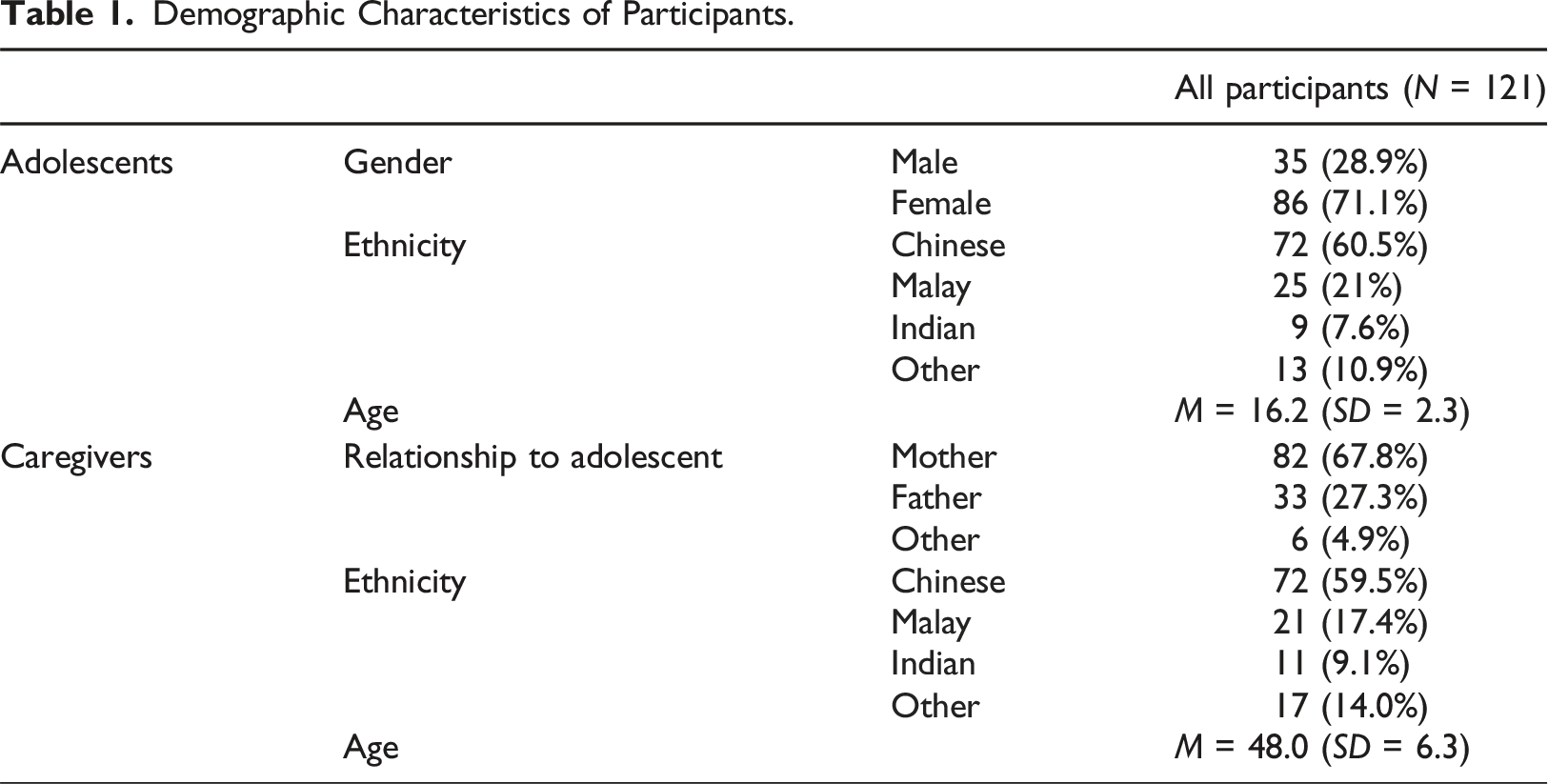
A total of 121 adolescents were recruited from the specialist outpatient clinics and inpatient psychiatric wards in a public hospital in Singapore. The ages of the participants ranged from 12 to 25 years (M = 16.2, SD = 2.3), with majority of adolescents being female (71.1%) and Chinese (60.5%). Adolescent participants met the following criteria: (a) engaged in NSSI behaviour at least once; (b) aged between 12 to 25 years; (c) English-speaking; and (d) no history of psychiatric disorders. With reference to criteria (b), adolescence typically spans from age 12–18 years, but recent studies have expanded the definition and timeframe of adolescence to include emerging adulthood – often up to 25 years of age (Jaworska & MacQueen, 2015; Malla et al., 2018; World Health Organization et al., 2005). Several studies cited in our literature review did sample adolescents of up to 25 years old, hence this study included participants from age 12–25 years.
One caregiver per participant was also recruited, leading to a total of 121 caregivers recruited. The caregiver sample ranged from 28 to 65 years old (M = 48.0, SD = 6.3), with majority of caregivers being mothers (67.8%) and Chinese (59.5%). Caregivers recruited were required to be English-speaking as the questionnaires used were developed in English and were self-administered. As English is the most frequently spoken language at home in Singapore (Singapore Department of Statistics, 2020), majority of the caregivers approached were eligible to participate.
Demographic Characteristics of Participants.
Measures
Help-seeking
To assess help-seeking, the Non-Suicidal Self-injury Assessment Tool (NSSI-AT; Whitlock et al., 2014) was used. The NSSI-AT is a comprehensive self-report tool that assesses 12 domains of self-injurious behaviours, including severity, functions, frequency and recency, disclosure and treatment. The tool has demonstrated strong psychometric properties, including good reliability and validity in large-scale surveys with the adolescent population and in Asian countries (Baetens et al., 2011; Whitlock et al., 2014; Yang et al., 2020).
Informal help-seeking
Participants were asked to indicate if someone knows that they intentionally hurt themselves and has had a conversation with them about it. They were then asked if the conversation was initiated by themselves or the other person. For purposes of this study, participants who indicated that they had initiated the conversation were categorised as having engaged in informal help-seeking. Additionally, participants were asked to specify who they had talked to (e.g., parent, friend). They were also asked to indicate if they found the conversation helpful (i.e., “Yes”, “No” and “I do not know”).
Formal help-seeking
Participants were asked to indicate if they had ever gone to therapy because they intentionally hurt themselves. They chose from the following three options: (1) “Yes”; (2) “No”; and (3) “Intentionally hurting myself was part of the reason I went but not all of it”. Participants who chose option one and three were classified as having engaged in formal help-seeking. Additionally, participants were asked to indicate if they had continued intentionally hurting themselves after treatment ended and if they found therapy helpful (i.e., “Very helpful”, “Helpful”, “Somewhat helpful” and “Not at all helpful”).
Associated factors
Severity of NSSI
In line with the subgroups of NSSI severity proposed by the NSSI-AT authors (Whitlock et al., 2008), the following information was gathered to assess NSSI severity: (1) lifetime frequency of incidents; (2) number of forms used to hurt themselves; and (3) type of forms used. On the NSSI-AT, participants were asked to estimate the total number of occasions they have intentionally hurt themselves. They were also asked to identify the types of forms they have used to hurt themselves, which was then used to determine the number of forms used and the extent of tissue damage typically caused.
NSSI Severity Categories.
Functions of NSSI
On the NSSI-AT, participants were given a list of possible reasons for hurting themselves and were asked to indicate how relevant each function was to them on a 4-point Likert scale (1 = strongly disagree, 4 = strongly agree). The items reflected various interpersonal functions (e.g., for someone to notice that something is wrong) and intrapersonal functions (e.g., to cope with uncomfortable feelings). Cronbach’s alpha in the present study was .807.
Authoritative parenting
The Parenting Styles and Dimensions Questionnaire (PSDQ) was administered to caregivers to assess authoritative parenting. The PSDQ groups parenting styles according to Baumrind’s categories of authoritative, authoritarian, permissive and neglectful parenting (Robinson et al., 2016). The authoritative parenting style includes 15 items, with participants rating their level of agreement or disagreement with the items using a 5-point Likert scale (1 = never, 5 = always). The PSDQ has demonstrated good reliability and validity in studies conducted in various Western and Asian countries (Fu et al., 2013; Oliveira et al., 2018; Riany et al., 2018; Robinson et al., 2016). Cronbach’s alpha in the present study was .887.
Procedure
Participants were recruited through convenience sampling. They either volunteered to participate by responding to posters in the outpatient clinics or were referred by clinicians who were team members in this research project. Subject eligibility for study participation was screened, including screening for age, history of NSSI behaviours and history of psychiatric disorders. The questionnaires were administered either through hardcopy or an online form. Participants were reimbursed for completing the questionnaires.
Informed consent was obtained prior to completing the questionnaires. For adolescents below 21 years old, consent was required from a legally authorised representative. Participants were informed about potential distress that they may encounter and were assured that they can withdraw from the study at any time. They were notified that their participation would not affect the care that they receive at the hospital. Research officers who were trained in mental health first aid accompanied participants as they completed the questionnaires and were prepared to offer immediate support in the event of emotional distress. In the event of incidental findings, a clinician member of the study team was informed to determine further action.
This study was approved by the National Healthcare Group Domain Specific Review Board, Singapore, in September 2019 and approval was renewed in August 2020.
Statistical analyses
Logistic regression analyses were conducted to predict informal help-seeking (coded 0 for did not initiate conversation with informal source and 1 for initiated conversation) using gender (coded 0 for female and 1 for male), severity of NSSI (coded 0 for low to moderate severity and 1 for high severity), functions of NSSI (i.e., interpersonal and intrapersonal) and authoritative parenting, over and above the effect of participant’s age and length of time engaged in NSSI. Logistic regression analyses were also conducted to predict formal help-seeking (coded 0 for did not attend therapy and 1 for attended therapy) using the same predictors. Multicollinearity tests were used to check that the assumption of collinearity was met.
Chi-square goodness of fit tests were run to compare ratings for helpfulness of disclosure, helpfulness of therapy and outcomes of therapy respectively. Data was analysed using IBM SPSS Statistics Version 23.0. A value of p < .05 was considered to be statistically significant.
Results
Sources of help-seeking
Adolescent participants primarily sought help from informal sources, with friends being the most common source (22.3%), followed by parents (17.9%). Refer to Figure 1 for the percentages of help-seeking to each source. Sources of help-seeking.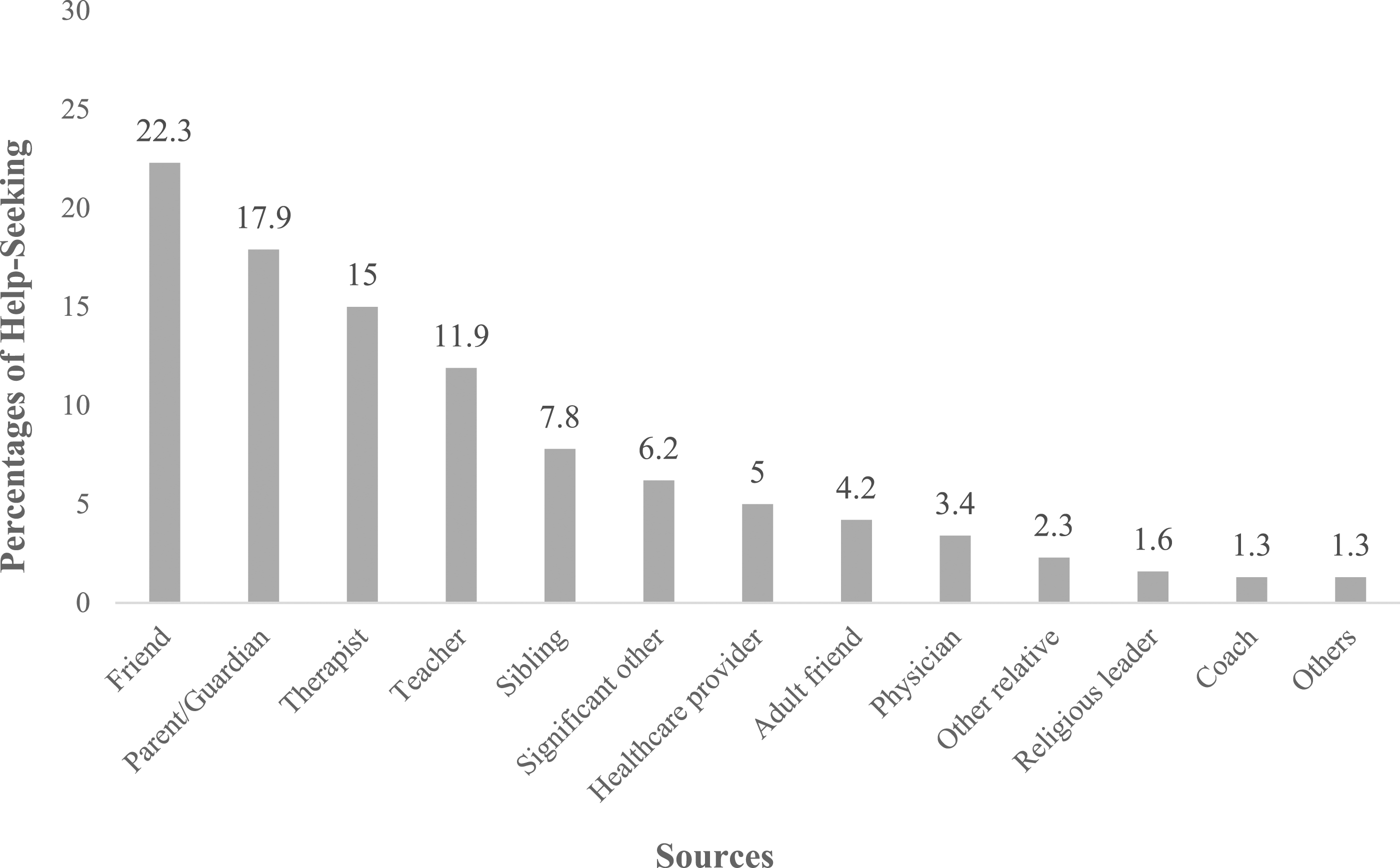
Informal help-seeking
With regard to informal help-seeking, 20.7% of adolescent participants (n = 23) reported that they had initiated a conversation with someone about NSSI. A chi-square analysis found no differences in participants’ ratings for the helpfulness of the conversation, χ2 (2) = 4.92, p > .05.
Formal help-seeking
In terms of formal help-seeking, 64.5% of adolescent participants (n = 78) had attended therapy. A chi-square analysis found differences in the ratings for helpfulness of therapy, χ2 (3) = 62.92, p < .001. Specifically, more participants found therapy ‘somewhat helpful’ (n = 49), than participants who found it ‘not at all helpful’ (n = 13), ‘helpful’ (n = 13), and ‘very helpful’ (n = 3).
Results of a chi-square analysis indicated differences in the ratings for outcomes of therapy, χ2 (2) = 16.23, p < .001. In particular, more participants ‘continued to intentionally hurt themselves after treatment’ (n = 41) than participants who had ‘seen multiple therapists and had some that helped and some that did not’ (n = 25). Likewise, more participants had ‘continued to intentionally hurt themselves after treatment’ (n = 41) than participants who had ‘stopped intentionally hurting themselves’ (n = 12).
Factors associated with likelihood of help-seeking
Informal help-seeking
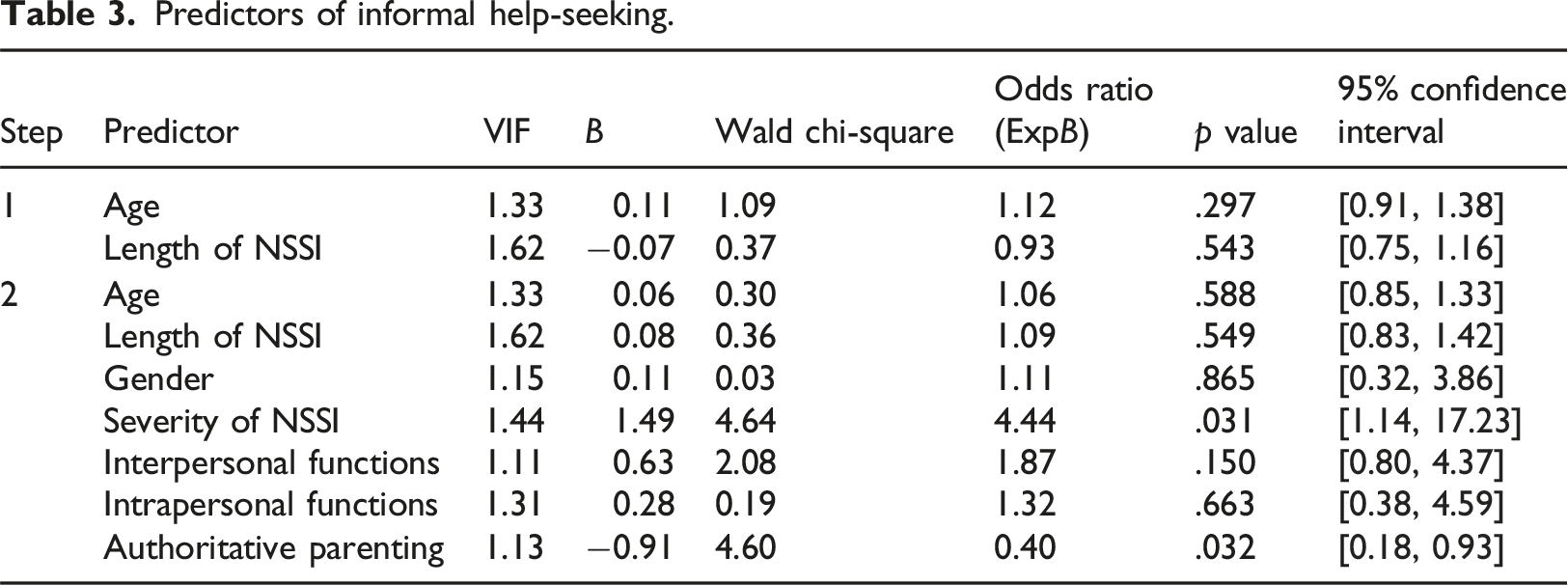
Logistic regression analysis was conducted to predict informal help-seeking using gender, severity of NSSI, functions of NSSI and authoritative parenting, over and above the effect of participant’s age and length of time engaged in NSSI. Multicollinearity tests indicated that the assumption of collinearity was met. Predictors of informal help-seeking.
Formal help-seeking
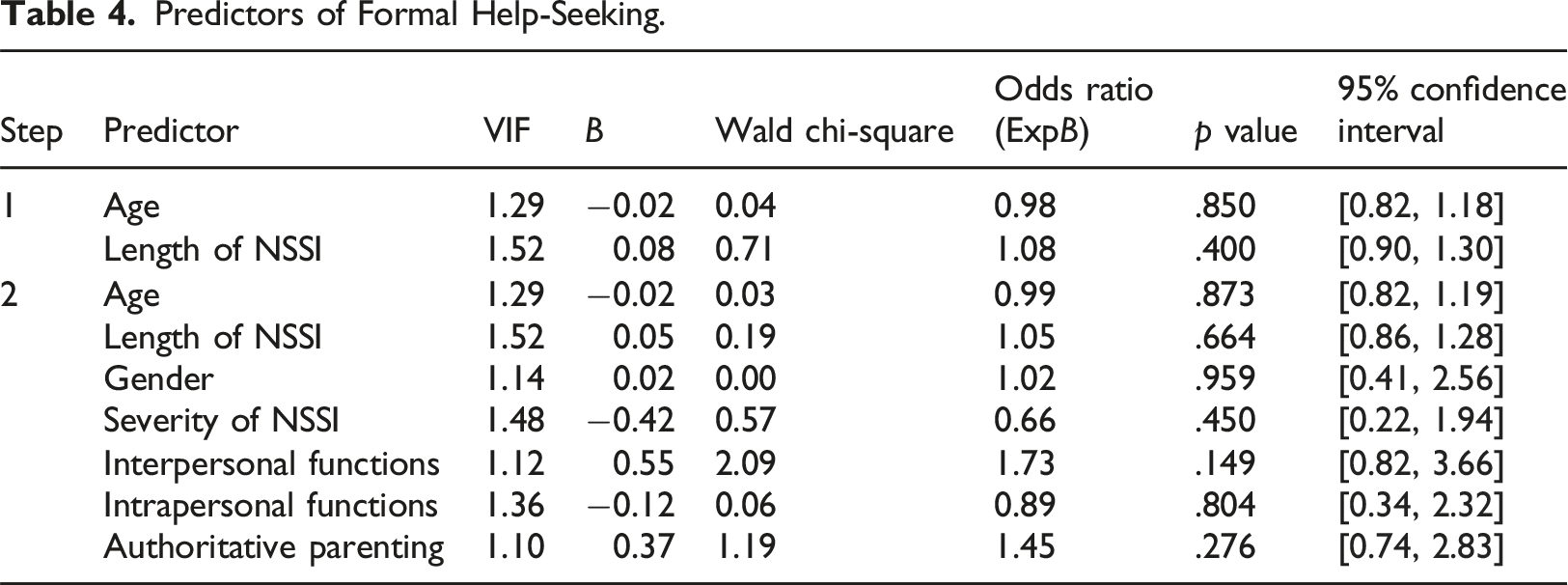
Logistic regression analysis was conducted to predict formal help-seeking using gender, severity of NSSI, functions of NSSI and authoritative parenting, over and above the effect of participant’s age and length of time engaged in NSSI. Multicollinearity tests indicated that the assumption of collinearity was met. Predictors of Formal Help-Seeking.
Discussion
Despite the widespread prevalence of NSSI among adolescents and the adverse outcomes associated with NSSI (e.g., Giletta et al., 2012; McManus et al., 2019; Muehlenkamp et al., 2012; Wilkinson et al., 2018), many adolescents with NSSI do not seek help (Baetens et al., 2011; Rossow & Wichstrøm, 2010). Little is known about the factors that may increase the likelihood of help-seeking and which subgroups of adolescents are more likely to reach out for help, especially for an Asian population. This present study aimed to examine the factors that may be associated with informal and formal help-seeking among Asian adolescents – specifically gender, severity of NSSI, functions of NSSI and authoritative parenting. It was hypothesised that females, more severe NSSI and interpersonal functions of NSSI would be associated with increased help-seeking, while a more authoritative parenting style would be associated with reduced help-seeking.
Results from this study indicated that adolescents with a higher severity of NSSI were more likely to have sought informal help, as similarly reported in several studies (Armiento et al., 2014; Hasking et al., 2015; Kelada et al., 2016; Turner et al., 2016). Adolescents with more severe NSSI may experience higher levels of distress and are more likely to require medical care for their injuries (Hawton et al., 2009; Klonsky & Olino, 2008). As such, they may be more motivated to seek help and more likely to recognise the need for assistance. In light of this, medical professionals should be adequately trained to identify and support adolescents with NSSI. Training could be provided on how to assess the immediate safety concerns and needs of the individual, offer safety advice to the individual and their family, as well as provide information on available resources. Attempts by adolescents with NSSI to seek help should be taken seriously and met with timely support, given that they may have more severe NSSI. While a few studies found no association between severity of NSSI and help-seeking (Ammerman et al., 2021; Heath et al., 2010), the conflicting findings may be due to differences in how severity of NSSI was operationalised (Hooley et al., 2020). The present study used multiple features of NSSI to obtain a holistic assessment on severity – in line with the criteria validated through latent class analysis by Whitlock et al. (2008). It may be helpful for further studies to investigate if this finding would be replicated when using validated constructs of NSSI severity and ideally for more consensus to be drawn on how to define and measure severity of NSSI.
This study found that adolescents who have parents with more authoritative parenting style were less likely to seek informal help. In contrast, previous studies conducted on Western populations have linked authoritative parenting to positive outcomes, including higher willingness of adolescents to self-disclose to parents (Maiuolo et al., 2019; Vieno et al., 2009). The findings from this study add to a growing body of literature which suggests that authoritative parenting in Asian populations may not lead to the same positive outcomes as Western cultures (Bornstein, 2013; Leung et al., 1998; McBride-Chang & Chang, 1998; Supple & Small, 2006). As Asian cultures tend to value conformity and interdependence, an authoritative parenting style, which encourages independence instead, may be less preferred over one that emphasises on obedience and control (Bi et al., 2018). In line with the collectivistic nature of Asian cultures, Asian parenting is typically associated with higher levels of authority, strictness and control, which may be interpreted by their children as parental love, care and involvement (Ang & Goh, 2006; Chao, 1994; Mousavi & Juhari, 2019). Consequently, Asian adolescents may perceive parents who are more authoritative to be less caring and involved in their lives, which could therefore result in them being less likely to seek help from their parents. Further studies are needed to investigate this and could examine the effects of other parenting styles as well. This finding nonetheless implies that professionals should carefully consider the family system and parental involvement when working with adolescents with NSSI. Prevention and intervention programs may help parents to understand the role of parenting behaviours on NSSI, and parenting workshops can be conducted to help them acquire more adaptive parenting and communication skills (Fong et al., 2022). In situations where professionals are unable to engage parents, individual therapy with the adolescents can focus on interpersonal effectiveness skills to manage challenging family situations.
Both gender and functions of NSSI were not associated with informal help-seeking in this study. The lack of gender differences in help-seeking is consistent with some studies (De Leo & Heller, 2004; Heath et al., 2010) and may be due to both sexes experiencing the stigma of NSSI equally (Heath et al., 2010). Additionally, evolving gender stereotypes and attitudes may have increased the willingness of males to seek help and minimised gender differences in attitudes toward help-seeking (Krumm et al., 2017; Swazina et al., 2004). It is possible that there were no respective effects of interpersonal and intrapersonal functions on help-seeking because individuals may concurrently endorse multiple functions that fall between both categories (Klonsky & Olino, 2008; Klonsky & Glenn, 2009). The functions of NSSI may also evolve over time within individuals (Klonsky & Olino, 2008). As such, it may be important for further studies to identify the primary function of NSSI that provides the strongest reinforcement for adolescents at the point of help-seeking.
None of the factors examined in this study were associated with formal help-seeking. There are a few explanations that may account for this finding. First, help-seeking to professionals may be influenced by a different set of variables that were not included in this study. For instance, the reactions of friends and family when adolescents first confide in them may affect subsequent formal help-seeking (Wu et al., 2012). Second, seeking professional help may often be accompanied with stigma and shame, leading to fears of being labelled by professionals, worries of feeling judged or concerns of professionals breaching confidentiality (Long, 2018; Meheli & Lewis, 2022). Adolescents may equally experience the stigma of seeing a professional and hence none of the factors examined in this study may have significantly contributed towards the likelihood of formal help-seeking. Third, adolescents may have limited financial resources to seek professional help. In Singapore, while public healthcare is usually subsidised, most insurance policies do not provide coverage for costs associated with mental health. The need to make regular payments to cover the assessment and treatment of NSSI may deter adolescents, who may not have a stable income, from actively seeking formal help. Fourth, due to potential self-selection bias, the sample recruited in this study may have been an over-representation of adolescents who were more likely to seek formal help. As the participants had voluntarily agreed to take part and were recruited from a clinical sample, it is possible that these individuals were more inclined to seeking formal help. There may have been an under-representation of a larger population of adolescents who chose not to seek help, thus making it difficult to differentiate between the factors examined in this study. Moving forward, it may be helpful for further studies to include more variability in their samples by recruiting from a larger group of nonclinical samples. Fifth, this study focused on psychological intervention as a form of formal help-seeking, which would exclude adolescents who did not attend therapy but had seen other professionals such as physicians. Further studies may broaden the range of adolescents recruited, or examine if there are differences in those who seek psychological intervention as compared to other forms such as pharmacological treatment.
Further analyses from this study indicated that most of the adolescents who attended therapy found it only “somewhat helpful” and majority of them continued to hurt themselves after treatment. These findings are concerning as negative help-seeking experiences may hamper treatment engagement and affect recovery outcomes (Muehlenkamp et al., 2013; Plener et al., 2015). As such, there may be a need for professionals to review their treatment plans for adolescents with NSSI and consider how it can be improved. To guide professionals on how to tailor effective intervention programs, further research can aim to understand the experiences of adolescents who have sought formal help, such as the aspects that they found unhelpful or areas they hoped to see more of. Additional studies may be helpful to understand the barriers that prevent adolescents from seeking formal help and examine how to support them more effectively.
In line with existing literature, the adolescents recruited in this study most commonly sought help from their peers, followed by parents and professionals (Evans et al., 2005; Martorana, 2015). As this suggests that adolescents are more likely to approach informal sources, interventions that target peers and family members may be helpful to encourage subsequent formal help-seeking. Schools can educate students on how to look out for signs of distress among their peers and implement peer support programs. Training programs can be developed to help parents and teachers to identify risk factors and warning signs of NSSI, as well as to equip them with the relevant skills on how to approach and respond to adolescents with NSSI.
Limitations and future directions
The current study presents with a few limitations. Given that the participants were recruited from a clinical sample, the generalisability of the findings to community or primary care settings may be limited. Clinical and nonclinical samples may differ in certain aspects, such as their level of distress, severity of NSSI and number of stressful life events (Horváth et al., 2020; Nock & Favazza, 2009). A clinical sample may not be representative of the general population and this may have made it challenging to differentiate between the factors examined in this study. Future studies can recruit participants from the community, such as through school-based populations. This may improve the generalisability of the findings and allow for a deeper understanding of NSSI in the wider Asian community.
Another limitation is that the data from this study was collected at a single time point and may not account for the trajectories of NSSI characteristics. Across a period of time, participants may vary in the severity of their NSSI or the functions that they engage in NSSI for (Baetens et al., 2014b; Klonsky & Olino, 2008). Parenting behaviours may also fluctuate overtime based on a variety of factors, such as the age and behaviours of the adolescent (Boele et al., 2020). To circumvent this, it may be helpful for future studies to use a longitudinal design with data collected at several time points. This may allow for comparisons on the progression of NSSI characteristics and provide a more comprehensive assessment of the constructs used in the study.
Nevertheless, this study adds to the paucity of literature on help-seeking for NSSI within an Asian context. Further qualitative research can expand on this study by understanding the perspectives of those who have sought help, including their reasons for seeking help and the factors that led to their decision. Additional studies can explore the likelihood of adolescents accessing alternative forms of support services, such as online sites or phone helplines, as these platforms may reduce the fear of stigma and increase ease of access. This study is among the few studies on NSSI that have assessed parenting behaviours from the parents’ perspective, as majority of studies have focused on the adolescents’ perspective (Fong et al., 2022). As more studies are needed to understand parenting from both perspectives, further studies may analyse reports from both parents and adolescents and examine how potential discrepancies may affect help-seeking.
Conclusion
This study provides valuable insight on what affects help-seeking for NSSI – an area that is under researched, especially in Asia. The results suggested that the severity of NSSI was associated with an increased likelihood of informal help-seeking among adolescents with NSSI, while adolescents who have parents with more authoritative parenting style were less likely to seek informal help. Gender and functions of NSSI were found to be unrelated to help-seeking. Understanding the factors associated with help-seeking can guide professionals in their efforts to reduce barriers and encourage help-seeking among an Asian population, as well as inform prevention and treatment programs for Asian adolescents with NSSI.
Footnotes
Declaration of conflicting interests
The author(s) declared no potential conflicts of interest with respect to the research, authorship, and/or publication of this article.
Funding
The author(s) disclosed receipt of the following financial support for the research, authorship, and/or publication of this article: This study was funded by the National University of Singapore, Mind-Science Centre.
Ethical statement
Code availability
All code for data cleaning and analysis associated with the current submission are available from the corresponding author upon request.

Data availability statement
The data that support the findings of this study are available from the corresponding author upon request.