






Abstract
Background
Child psychiatric and neurodevelopmental disorders (NDDs) significantly affect children’s physical and psychological well-being, while also placing substantial emotional and financial strain on families. Most existing research on the prevalence of childhood NDDs comes from urban populations, leaving rural communities underrepresented and poorly understood.
Methods
This retrospective study examined medical records of children diagnosed with psychiatric and neurodevelopmental disorders from rural areas of Assam, North-East India. Diagnoses were established according to the International Classification of Diseases, 11th Edition Clinical Description and Diagnostic Requirements (ICD-11CDDR). Descriptive statistics were applied to summarise socio-demographic variables and diagnostic distributions.
Results
Over a 20-month study period, 300 children from rural Assam sought treatment at our hospital, of whom 214 provided consent for inclusion. Among these participants, 36% were diagnosed with a neurodevelopmental disorder, while 82% presented with a psychiatric condition.
Conclusion
Neurodevelopmental disorders impose a considerable burden on families. In rural areas, lack of awareness and stigma frequently delay treatment, exacerbate comorbidities such as epilepsy, and worsen long-term outcomes. These findings highlight the urgent need for community-based epidemiological studies in rural settings to better estimate the true burden of NDDs and to inform policy development and advocacy initiatives.
Plain Language Summary
Children’s mental health problems are common but often overlooked in rural areas of India. This study reviewed medical records from children in rural Assam who were referred by local community health workers, called Swasthya Mitras, to a hospital’s psychiatry department between June 2022 and January 2024. Out of 300 children, 214 families agreed to take part. About one in three children had a neurodevelopmental disorder, such as autism or intellectual disability, while more than four out of five had a psychiatric condition like anxiety, stress-related problems, or mood disorders. The study found that many families delayed seeking help because of stigma, limited awareness, or the belief that traditional healing alone could solve these issues. Most families had low incomes and struggled to afford treatment or travel for follow-up visits. Anxiety and stress disorders were most common, followed by substance use, particularly cannabis, which is widely available in the region. Children with developmental problems rarely returned for follow-up, often due to the lack of therapy and rehabilitation facilities. The results show an urgent need to strengthen rural mental health systems. Training programs like the Swasthya Mitra initiative can help identify problems early and connect families with care. Integrating psychiatry, pediatrics, and rehabilitation at affordable costs would improve access to treatment. Policymakers should focus on creating community-based services that reduce stigma and bring mental health care closer to rural families. This model from Assam could guide other developing regions working to close the treatment gap for children’s mental health and developmental disorders.
Introduction
Mental health disorders in children and adolescents are increasingly recognized as major public health concerns due to their long-term effects on academic achievement, social functioning, and overall quality of life (Hossain & Purohit, 2019). Psychiatric and neurodevelopmental disorders are particularly linked to school absenteeism, which further compounds learning difficulties, impairs peer relationships, and affects emotional well-being (Patil et al., 2013; Srinath et al., 2005). Childhood and adolescence represent critical periods for establishing healthy development and mental health. Most mental disorders emerge before the age of 25, with onset most frequently occurring between 11 and 18 years. The burden of common disorders such as depression and anxiety typically increases during childhood and peaks in adolescence and early adulthood.
India, particularly its northeastern region, faces distinct challenges in accessing mental healthcare (Vogel & Holford, 1999). Assam, located in the northeastern corner of the country, remains one of the most socioeconomically disadvantaged states, with a population of 31 million, of whom 86% reside in rural areas. According to the World Bank, nearly one-third of the population lives in poverty (World Bank Group, 2017). Geographic barriers, scarcity of specialized child mental health services, and limited awareness often delay the diagnosis and management of psychiatric and neurodevelopmental disorders (Staller, 2006). In rural areas, reliance on traditional practices and faith healing further contributes to delays in treatment-seeking and worsens outcomes. Additionally, poor health-seeking behaviour, limited awareness, and high out-of-pocket expenditure adversely affect overall health outcomes (Borah et al., 2024). Although recent population-based studies from low- and middle-income countries have provided prevalence estimates for child and adolescent psychiatric disorders, most have been conducted in urban settings. In India, community-based studies have reported prevalence rates of 12.5% among children aged 0–16 years in Bangalore, 9.4% among 8–12-year-olds in Kerala, and 6.3% among 4–11-year-old schoolchildren in Chandigarh (Malhotra et al., 2009). The present retrospective study is the first to report data on neurodevelopmental and psychiatric disorders among children from rural Assam. This highlights the urgent need for community health grassroots workers to bridge the gap between illness burden and treatment-seeking.
Methodology
Recruitment of the Study Participants
Early detection of mental health concerns in rural communities requires the involvement of grassroots workers with strong local knowledge. To address this need, our tertiary healthcare centre developed the Swasthya Mitra (SM; “Helpers of Health”) programme. The SMs are community health workers trained to provide preventive, promotive, and curative care in rural Assam (Chandra Borah et al., 2023). Their responsibilities include conducting awareness programmes, facilitating community meetings through village panchayats, and undertaking door-to-door surveys to estimate disease burden. They also clarify doubts about symptoms and guide families toward appropriate treatment options. All SMs underwent induction training in recognising childhood neurodevelopmental and psychiatric disorders, supplemented by ongoing online and offline sessions. Each district of Assam is supported by a dedicated SM team linked to our hospital, ensuring sustained community-level engagement in mental health care (Figure 1). Workflow of SM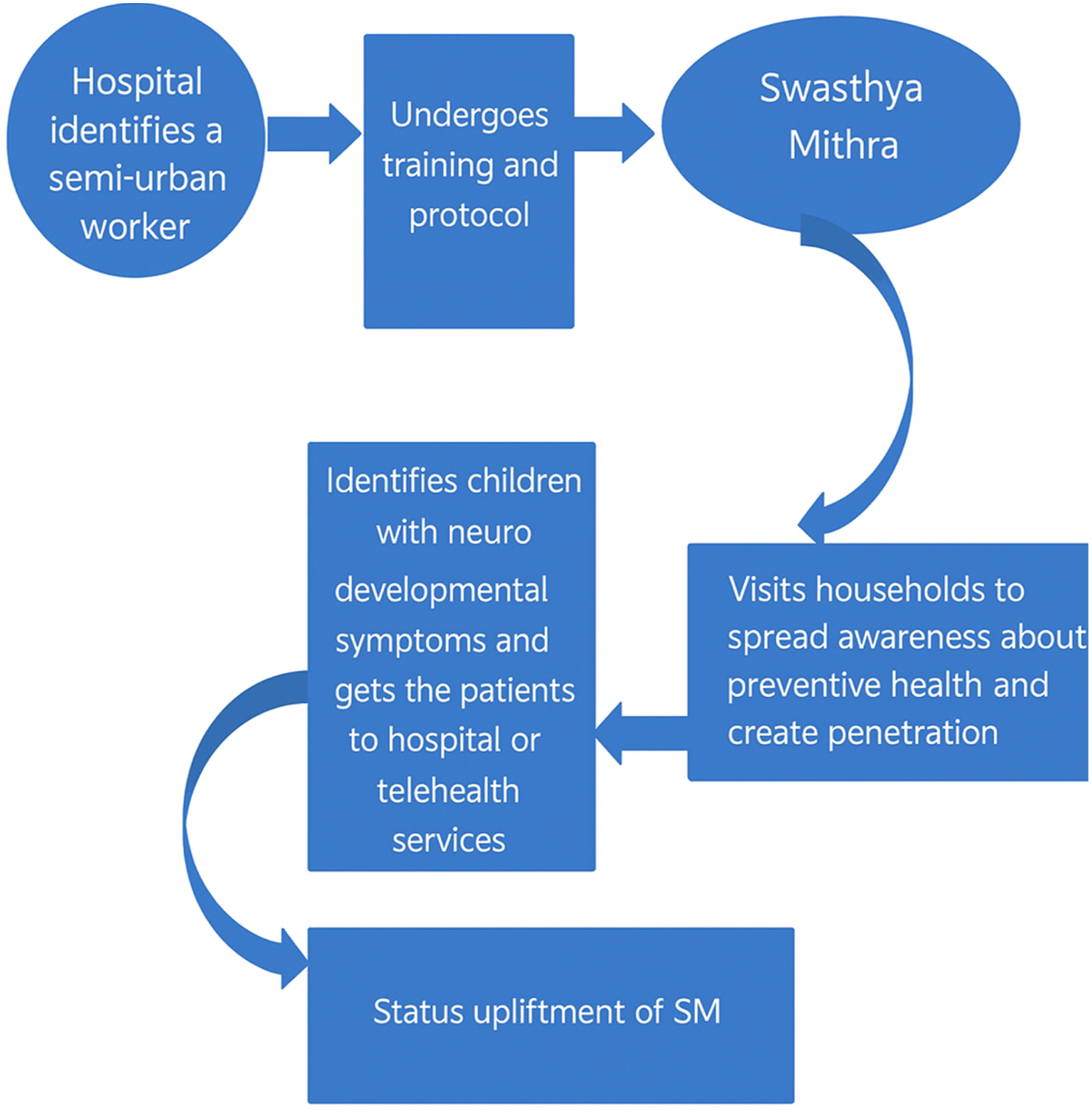
We conducted a retrospective chart review of Electronic Health Records (EHRs) for all child and adolescent cases referred by Swasthya Mitras (SM) from rural areas of Assam to the Psychiatry outpatient department (OPD) of our hospital between June 2022 and January 2024 (20 months). All records meeting the eligibility criteria were included. Convenience sampling was applied.
Inclusion Criteria
Parents or guardians of children and adolescents under 18 years of age who provided consent were included in the study. A virtual meeting was conducted by the principal investigator and the designated Swasthya Mitra (SM), during which the study details were explained to parents in their native language. Parents who agreed to participate received a consent form in Assamese and Hindi via social media platforms such as WhatsApp. Only data from children whose parents provided consent through WhatsApp were included in the study (Figure 2). Recruitment of participants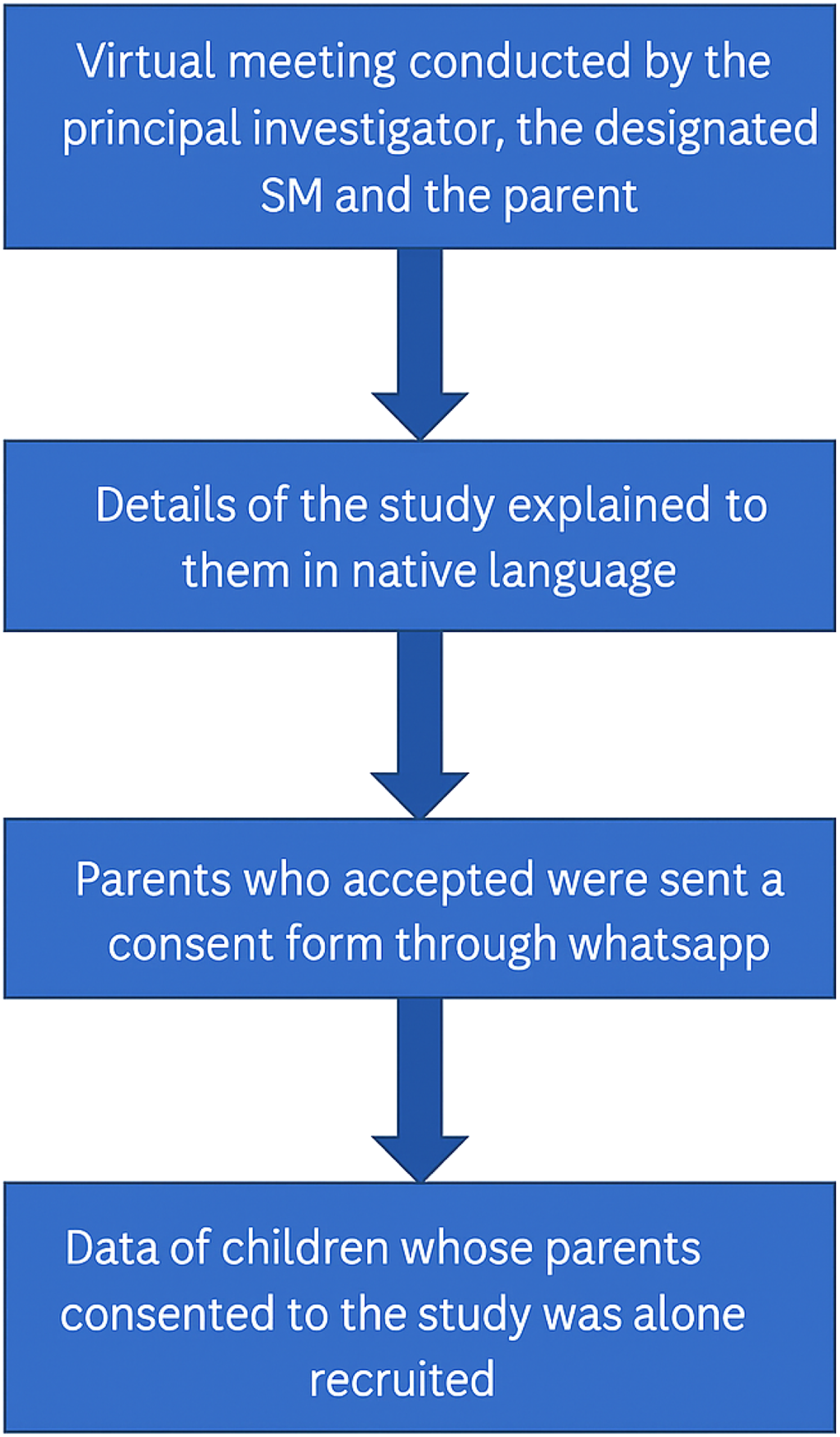
Every child and adolescent visiting the outpatient department undergoes a detailed history taking and mental status examination using the standard Child and Adolescent Psychiatry proforma, conducted by a psychiatrist. Psychiatric diagnoses were made in accordance with the International Classification of Diseases, 11th Edition – Clinical Descriptions and Diagnostic Requirements (ICD-11 CDDR). All information was recorded in the Electronic Health Record (EHR). A retrospective chart analysis was then conducted, and relevant details were retrieved from the EHR.
Exclusion Criteria
Patients over 18 years of age, parents of children who have not consented for the study at the end of the virtual meeting, children with chronic diseases, who had a head injury or stroke 6 months ago, records of the children who were delirious at the time of consultation were excluded. The study complies with the STROBE guidelines (Strengthening the Reporting of Observational studies in Epidemiology) and has been approved by the Ethics Committee (EC-INS-2024-25/012).
Results
Sociodemographic and Medical History
This retrospective observational study included 214 participants who attended the Psychiatry OPD between June 2022 and January 2024 (20 months). Of these, 116 (54%) were male and 98 (46%) were female. A total of 84 participants (39%) were younger than 12 years, while 130 (61%) were 12 years or older. Overall, 57% of participants presented as direct walk-ins to the Psychiatry OPD, and 43% were referred from other departments, predominantly Neurology. Delayed developmental milestones were reported in 35% of participants, while 65% had age-appropriate development.
Socio-Demographic Data and Illness Presentation
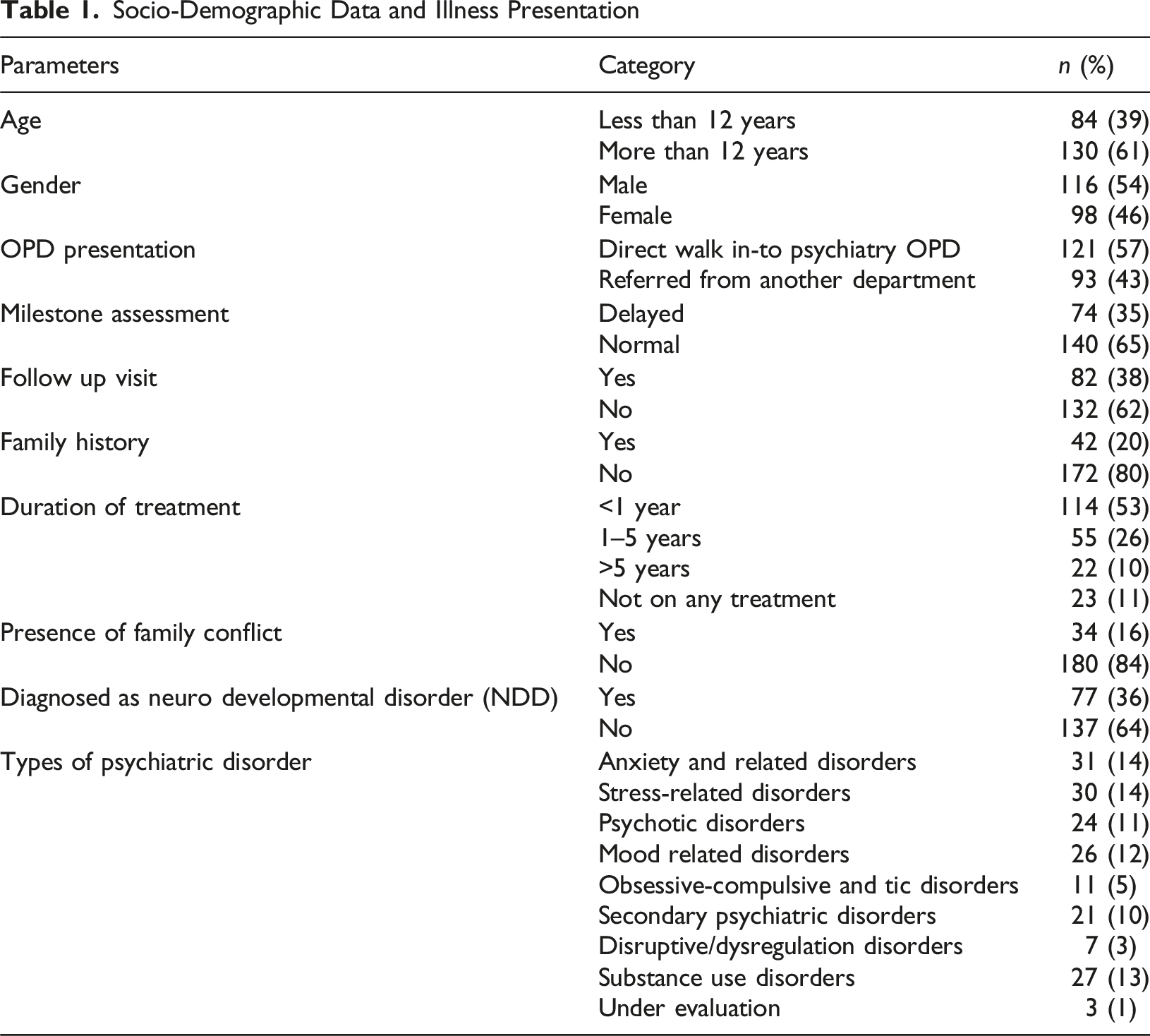
Thirty-five participants (15%) had positive findings on neurological investigations (CT, MRI, or EEG). Cardiovascular investigations yielded positive findings in 3 participants (2%), and gastrointestinal investigations (ultrasonography) in 7 participants (3%). Four participants (2%) showed findings related to inflammatory aetiology, while 24 (11%) demonstrated other abnormalities, including deranged liver function tests, impaired glucose tolerance, and elevated immunoglobulin E (IgE) levels.
Among the psychiatric conditions observed, anxiety and stress-related disorders were most common (14%), with panic disorder being the predominant presentation. This was followed by substance-induced disorders, with cannabis-related disorders particularly frequent given the high prevalence of cannabis use in the region. Cases classified as “under evaluation” included children undergoing psychological assessments and those with primary medical diagnoses who were referred to psychiatry for behavioural concerns. Disorders of intellectual development accounted for a substantial proportion of cases. Overall, 60.4% of the children in the study were referred from other departments of our hospital. 43% of the population got referred from other departments. Most referrals came from the neurology department for children with intellectual disabilities and autism spectrum disorder. The primary reasons for referral were the assessment, evaluation, and management of behavioural problems in these children. Only 38% of the study population returned for follow-up. The majority of those who followed up were children with anxiety and mood disorders. In contrast, children with neurodevelopmental disorders largely failed to return, primarily due to the absence of a multidisciplinary team comprising therapists and special educators 13% of the study population had substance use problems and cannabis was found to be the commonest substance being abused. Cannabis use has been closely linked to historical progression, strong religious faith, cultural practices, and traditional beliefs. The perceived medicinal properties of cannabis continue to influence their use among people in remote areas. The high prevalence of cannabis use in Northeast India is a growing concern, particularly given the region’s long international border with Myanmar (part of the Golden Triangle) and its geographical proximity, which facilitates cross-border influences (Yadav et al., 2016).
Discussion
To our knowledge, this is the first study to examine the prevalence of psychiatric disorders in rural areas of northeastern India. The Swasthya Mitra (SM) initiative was introduced in response to limited awareness of physical and mental illness in rural communities, where traditional beliefs and healing practices remain highly prevalent. This may explain why several cases with primary medical conditions—such as abnormal limb movements, weakness, headaches, urinary tract infections presenting with agitation, or seizure-related hyperactivity—were brought to the Psychiatry OPD by SMs. Nearly 24 such patients, who did not meet ICD-11 criteria for psychiatric disorders, were subsequently referred to relevant specialties such as Neurology or Paediatrics. Eleven patients registered with the Psychiatry OPD but never returned, possibly due to stigma or other unidentified barriers.
Follow-up was particularly poor among children with neurodevelopmental disorders, including autism spectrum disorder, attention-deficit/hyperactivity disorder, and intellectual disability. This may reflect the absence of a dedicated multidisciplinary team for child neurodevelopmental conditions, including occupational therapy, physiotherapy, and vocational rehabilitation services. Furthermore, as the hospital is privately run, patients are required to pay out-of-pocket for specialist consultations. Given that most families in this cohort come from rural, low- and middle-income backgrounds, financial barriers likely contributed to poor treatment adherence and follow-up.
Nearly 36% of patients in our study were diagnosed with a neurodevelopmental disorder (NDD) as per ICD-11 diagnostic criteria. This finding is consistent with a study by Jitendra et al. in Jaipur, western India, which also reported a 36% prevalence of intellectual disability (previously termed “mental retardation”) (Gupta et al., 2021). The most common NDDs identified were disorders of intellectual development (mild to moderate severity), followed by autism spectrum disorder. Developmental learning disorders were identified in only three patients, who were subsequently referred to a tertiary centre for further management.
The ICD-11 specifies that disorders of intellectual development require average intellectual functioning and adaptive behaviour to be approximately two or more standard deviations below the mean, based on appropriately normed, standardised tests. Where such assessments are unavailable, clinical judgement based on comparable behavioural indicators is recommended. This principle guided our diagnostic process. In some cases, psychological assessments were available and used to support diagnosis, while in others, diagnosis was based on clinical judgement. But the final diagnosis was made only when the ICD-11 CDDR criteria was met.
Among psychiatric disorders, anxiety spectrum disorders were most prevalent, a finding in line with the study by Bilal Ahmad Bhat (Bhat et al., 2018). Children presenting with panic disorder and panic attacks frequently utilised emergency services before referral to psychiatry, causing substantial emotional and financial strain on families. Caregivers, particularly those from rural and illiterate backgrounds, often misattributed symptoms such as breathlessness or chest pain to cardiac conditions, resulting in repeated emergency visits. Psychoeducation and appropriate investigations played a crucial role in reducing unnecessary emergency care use in this population.
Mood disorders, including mania and depression, accounted for 12% of cases in our cohort, similar to findings from Kashmir (Bhat et al., 2018). By contrast, studies conducted outside India have reported a broader prevalence range of 3–26% for depressive and mood disorders (Staller, 2006; Vogel & Holford, 1999).
Following anxiety disorders, stress-related disorders constituted a substantial proportion (14%) of cases. Dissociative neurological symptom disorder with non-epileptiform seizures—commonly referred to as psychogenic non-epileptic seizures (PNES) or “pseudo-seizures”—and gait disturbances were frequently observed. This finding is noteworthy, as such presentations have not been widely reported in previous studies conducted in other regions of India (Mehra et al., 2022; Sarwat et al., 2009). The aetiology of PNES in our cohort was primarily linked to scholastic stressors and heightened parental expectations regarding academic performance. Many affected children were first-generation learners from families with agricultural backgrounds, where parental pressure for academic success was particularly pronounced.
Disruptive behaviour disorders, including conduct disorder and oppositional defiant disorder, were identified in only 3% of patients, consistent with previous Indian studies (Vogel & Holford, 1999). By contrast, a study from Pakistan reported a much higher prevalence, with nearly 20% of cases meeting criteria for oppositional defiant disorder (Malhotra & Pradhan, 2013). Follow-up rates were poor in our cohort, with 62% of patients failing to return, likely due to financial constraints and transportation difficulties. A positive family history was reported in 20% of cases, most commonly involving psychosis, depression, substance use, or suicide. Kopp et al. also reported that maternal depression and deviant personality traits are associated with hyperactivity and conduct problems in children (Kopp & Beauchaine, 2007).
In our sample, 11% of patients did not seek any treatment. Caregivers often lacked awareness regarding the nature of these disorders, with some perceiving them as normal childhood behaviours; medical attention was typically sought only once symptoms became severe. A recent meta-analysis reported a pooled treatment rate of only 38% for any mental disorder in low- and middle-income countries, underscoring the global treatment gap (Wang et al., 2023).
Boys often externalise psychological distress through disruptive behaviours, which can negatively affect the school environment and may lead to exclusion. In contrast, girls, particularly those with emotional disorders or delayed diagnoses of neurodevelopmental disorders tend to present with anxiety and social withdrawal (John et al., 2022). Internalising disorders were found to be more prevalent in Singapore, with attention-deficit/hyperactivity disorder (ADHD) and autism spectrum disorder (ASD) contributing substantially to disability (Lim et al., 2017). A similar pattern was observed in our study, where panic disorder and anxiety disorders were among the most common presentations.
By contrast, studies from Malaysia and Pakistan reported higher rates of externalising disorders, including conduct problems, peer relationship difficulties, and broader emotional and behavioural disorders (Sahril et al., 2021). In our cohort, both childhood- and adolescent-onset conduct disorders were relatively uncommon.
Multiple interacting factors including temperament, neurobiological vulnerabilities, disability status, family dynamics, parenting practices, attachment patterns, parental mental health, physical abuse, disciplinary practices, socioeconomic deprivation, and wider social or ecological stressors such as conflict and war—are known to contribute to the development of childhood mental health disorders. Our study did not systematically examine these confounding variables, which represents a limitation, as they may directly or indirectly contribute to the pathophysiology of childhood-onset disorders (Malhotra et al., 2009).
Accredited Social Health Activists (ASHAs) have played a vital role in the early detection of disorders within the Indian community. In a similar manner, our Swasthya Mitras (SMs) were able to identify developmental delays such as autism spectrum disorder (ASD) and Intellectual Disability (ID) in the community (Kumar & Bhattacharya, 2024). Our study reflected findings consistent with earlier research, including the impact of low parental education leading to poor understanding and delayed referrals, a higher prevalence of neurodevelopmental disorders among males, and the association of rural backgrounds where parents are often less engaged in storytelling or conversation with delayed language development in children (Sharma et al., 2019). Mental health care seeking from traditional healers is a common practice in tribal and rural areas of India, largely due to their easy accessibility, low cost, and the trust they command. Our study also observed this trend, which often contributes to delays in accessing formal treatment. However, if faith healers are appropriately counselled to refer patients in a timely manner—while continuing only non-harmful cultural or spiritual practices—they could play a vital role in secondary prevention through early diagnosis and prompt treatment. Establishing strong collaborations between faith healers and modern health care providers may therefore enhance timely access to psychiatric care in these rural communities (Subudhi et al., 2020; Sharma et al., 2020).
Limitation
The study has several limitations, including its retrospective design, reliance on data extracted from electronic health records (EHRs), use of convenience sampling, absence of details of standardized diagnostic tools and the lack of longitudinal outcome assessment.
Conclusion
This study is the first attempt to profile psychiatric illnesses and neurodevelopmental disorders in the North-East region of India. While the retrospective design and modest sample size are important limitations, the findings underscore a pressing need for affordable, multidisciplinary services that integrate psychiatry, paediatrics, psychology, and rehabilitation. Strengthening community-based awareness and early detection strategies—through initiatives such as training Swasthya Mitras and leveraging existing primary health care systems—can play a pivotal role in reducing delays in diagnosis and intervention. Policymakers and stakeholders must prioritize resource allocation and service delivery models tailored to the unique challenges of this underserved region. Importantly, this community-based model can serve as a forerunner for other low- and middle-income countries (LAMICs), offering a scalable framework to bridge mental health care gaps globally.
Footnotes

Funding
The authors received no financial support for the research, authorship, and/or publication of this article.
Declaration of Conflicting Interests
The authors declared no potential conflicts of interest with respect to the research, authorship, and/or publication of this article.