






Abstract
Online gaming is a prevalent leisure activity among young people worldwide. However, limited data exist on the psychological effects of gaming addiction among university students in Oman. This cross-sectional study aimed to estimate the prevalence of gaming addiction risk and explore its relationship with stress, depression, anxiety and self-esteem among university students in Oman. A total of 428 participants completed a self-reported questionnaire encompassing the Game Addiction Scale, Rosenberg Self-Esteem Scale and the Depression, Anxiety and Stress Scale 21. A total of 18.7% (n = 80) of the participants met the polythetic criterion for gaming addiction risk based on the polythetic criterion. Logistic regression revealed that depression, gaming-related financial expenditure, hours spent on gaming, maternal education and academic performance measured by Grade Point Average (GPA) were significantly associated with gaming addiction risk. The model demonstrated good explanatory power, accounting for 47.5% of the variance in gaming addiction (Nagelkerke R2 = 0.475). The results may inform the development of comprehensive prevention strategies that address both psychological and behavioural risk factors. Focused interventions could potentially help mitigate the impact of gaming addiction and may support improved academic and mental health outcomes among university students.
Plain Language Summary
Playing video games is a popular activity among young adults, but for some, it can become a problem that affects their mental health and daily life. This study looked at university students in Oman to see how common gaming addiction is and how it relates to feelings of stress, anxiety, depression, and self-esteem. A total of 428 students completed an online survey about their gaming habits, mental health, and personal characteristics. Nearly one in five students (19%) were at risk of gaming addiction. Students who spent more time gaming each week or who spent money frequently on games were more likely to show signs of addiction. Higher levels of depression were also linked to an increased risk, showing that emotional difficulties may contribute to excessive gaming. Interestingly, students with lower grades at university and those whose mothers had higher levels of education were more likely to be at risk. Other factors, like stress, anxiety, and self-esteem, did not show a direct association when all factors were considered together. These findings suggest that gaming addiction is influenced by a mix of emotional, behavioural, and academic factors. University students who struggle with depression or who spend a lot of time and money on gaming may be at higher risk. While the study cannot prove that gaming causes mental health problems, it highlights the importance of supporting students’ emotional well-being and promoting healthy gaming habits. Universities could consider offering programs to identify students at risk and provide guidance on balanced digital use, coping with stress, and improving academic performance. Early support may help prevent the negative effects of gaming addiction and promote better mental health and study outcomes for students.
Introduction
Online gaming has become one of the most common leisure activities among young people worldwide. Recognising its widespread use and potential risks, the World Health Organization officially classified ‘Gaming Disorder’ as a behavioural addiction in the International Classification of Diseases, 11th Revision (World Health Organization, 2019). Gaming addiction refers to the persistent and recurrent use of video games, whether played online or offline (Nuckols, 2013). The prevalence of internet gaming addiction varies considerably worldwide. In some regions, the figures are notably high, with as much as 20%–30% of university students being susceptible to problematic gaming behaviour (King et al., 2017). For example, the prevalence of internet gaming addiction among Malaysian adolescents has been reported as 23% (Azmi et al., 2020), while in Thailand, it was 5.4% (Taechoyotin et al., 2020). Interestingly, the prevalence appears to be particularly high in certain areas, such as Kurdistan, where a notable 36.5% of university students were recorded as engaging in online gaming (Babakr et al., 2019). These substantial cross national differences highlight the importance of contextual factors such as technological access, cultural norms and social structures in shaping gaming behaviours, and underscore the need for country-specific investigations.
Students who are addicted to gaming display a variety of symptoms and behaviours. These include difficulties in reducing gaming, preoccupation with gaming activities and continued gaming despite negative consequences (Mohammad et al., 2023). They may also use gaming to escape or cope with negative emotions, experience withdrawal symptoms when not gaming and show reduced interest in other activities (Marques et al., 2023). Additionally, addicted gamers may exhibit increased tolerance leading to longer gaming sessions, take risks with personal relationships or opportunities due to gaming, and attempt to conceal the extent of their gaming from others, according to the American Psychiatric Association (2013). Among university students, these behaviours are of particular concern because this developmental stage is characterised by increasing autonomy, academic pressure and identity formation, which may heighten vulnerability to maladaptive coping strategies such as excessive gaming (Kuss & Griffiths, 2012).
Several predictors have been identified in previous studies relating to gaming addiction. These include male gender, sub optimal academic performance, deficient social and emotional competency, family members with video gaming addiction, parents with a lower educational standard and a single-parent family (Paulus et al., 2018; Rehbein & Baier, 2013). Gaming addiction is also associated with a range of significant mental health outcomes (Phetphum et al., 2023). These outcomes include conditions such as behavioural problems, anxiety, social phobia and attention deficit hyperactivity disorder (Andreassen et al., 2016; Azmi et al., 2020; Lemmens et al., 2015). Gaming addiction has also been identified as a source of clinical stress (Zhang et al., 2018), potentially leading to social isolation, social anxiety, loneliness and interpersonal conflicts (Pápay et al., 2013; Wang et al., 2019). Depression is another prevalent mental health concern frequently associated with gaming addiction among university students. Brunborg et al. (2014) identified a bidirectional relationship, suggesting that excessive gaming may contribute to the development of depression, and that the reverse is also true.
Research findings have highlighted the relationship between self-esteem and the propensity for gaming addiction (Hussain et al., 2012). Self-esteem has been found to correlate negatively with internet addiction, meaning that individuals who negatively self-evaluate often derive a sense of validation when they achieve success in these games. This success helps to counterbalance their self-perceived shortcomings, offering a temporary escape from their real-life circumstances. As a result, they experience an augmented sense of personal empowerment and elevated status, temporarily compensating for their perceived inadequacies and fostering a brief, positive self-assessment (Aydm & San, 2011; Hyun et al., 2015).
The Interaction of Person-Affect-Cognition-Execution (I-PACE) model may explain the mechanisms underlying gaming addiction and their association with mental health outcomes. The I-PACE model suggests that addictive behaviours result from a complex interplay of individual (I-P) predispositions such as personality traits and genetic vulnerabilities affective states (A) (e.g. depression, anxiety), cognitive responses (C) (e.g. using games to cope with negative moods, cognitive biases that favour gaming) and impaired executive control (E) (e.g. impaired self-control) (Brand et al., 2019; Brand et al., 2016). Over time, excessive gaming becomes reinforced through positive rewards, such as achievement and social connection, as well as negative reinforcement, which includes escaping stress or negative emotions, resulting in entrenched behavioral habits. The I-PACE framework reflects the notion that stressed university students might use gaming as an ineffective coping mechanism and experience short-term relief that may exacerbate their underlying anxiety or depression over time (Zhu et al., 2023).
In Oman, internet usage is among the highest in the Arab world, particularly among young people aged 18–25 years, where usage exceeds 95% (DataReportal, 2022). This exceptionally high level of digital connectivity, combined with widespread smart-phone ownership, affordable high-speed internet and a youthful population structure, creates an environment in which online and mobile gaming are easily accessible and deeply embedded in daily life. Gaming, especially mobile and multiplayer formats, has become a dominant form of entertainment. Social norms that favour indoor leisure activities, limited availability of alternative recreational spaces and the popularity of competitive and social online games may further contribute to prolonged gaming engagement among students in this context (Almenayes, 2015). Despite this, there is a scarcity of research examining how gaming addiction is related to psychological well-being in Oman university students.
Joseph et al. (2024) found that 59.9% of Omani junior college students showed signs of internet addiction, which was significantly associated with poor dietary habits and diminished appetite. Similarly, Al Mukhaini et al. (2021) reported that 37.3% of Oman Medical Specialty Board residents met the criteria for internet addiction. This was also significantly associated with depressive symptoms. While these findings point to problematic patterns of digital use in the Omani population, they largely focus on general internet addiction rather than gaming-specific behaviours, and they involve different age groups or professional populations. University students in Oman represent a distinct subgroup, as they experience a convergence of academic demands, increased independence from family supervision and extensive digital engagement, which may place them at heightened risk for gaming-related problems compared with students in other regions previously studied.
Consequently, examining gaming addiction specifically within this national and cultural context is essential for identifying unique risk factors and informing culturally appropriate prevention and intervention strategies. However, no large-scale studies to date have examined gaming addiction and mental health variables, such as stress, anxiety, depression and self-esteem, among university students.
The Current Study
Therefore, the purpose of this study was to estimate the prevalence of internet gaming addiction and its associations with stress, depression, anxiety and self-esteem among Oman university students, thereby contributing to the global understanding of how cultural, technological and social contexts shape gaming addiction in understudied regions.
Method
Participants and Procedure
The study was a cross-sectional correlational design. A convenience sampling method of 428 university students from higher education institutions was intended, but the final sample was recruited from a single university offering comparable undergraduate programmes in health sciences, social sciences and applied sciences. Inclusion criteria stipulated that participants must be registered students at university. To prevent any potential stress or anxiety from impending exams, students who were undergoing examinations at the time were excluded from the study. A total of 47 students were excluded on this basis. While this exclusion reduced potential situational stress effects, it may also have limited the representativeness of the sample; this potential source of selection bias is addressed in the limitations section.
The participating institutions followed similar academic structures, including semester-based systems and comparable assessment methods, and no substantial differences in programme delivery or student support services were identified that were likely to systematically influence gaming behaviours or mental health outcomes. The minimum sample size was calculated using Cochran’s formula, assuming 95% confidence, p = 0.5, and a 5% margin of error. The required sample was 381, and 428 students were recruited.
This study was approved by the Institutional Ethics Committee at the College of Nursing, Sultan Qaboos University, Oman (CON/GP/2 02 2/13). The study adhered to the ethical principles outlined in the Helsinki Declaration of 1975, as revised in 2008. The researchers obtained signed informed consent from the participants, which included participation in the study, the potential publication of scientific findings and assurance that no personal information such as identity, names or initials would be disclosed. Participants were explicitly informed that the survey contained sensitive mental health questions related to depression, anxiety, and stress. Participants were first provided with information about available mental health support resources before completing the survey, and this information was repeated again following study completion. Additionally, a list of university and community mental health resources was provided, and participants scoring above the DASS-21 clinical cut-offs were advised to seek professional support. No individual scores were reported to the researchers to maintain confidentiality. No incentives (financial or otherwise) were provided for participation in this study.
Potential participants were provided with a comprehensive explanation of the study aims and procedures. Surveys, consent forms, and information sheets were distributed in sealed envelopes and completed during students’ free time. The order of questionnaire measures was fixed and identical for all participants; no randomisation of measure order was implemented. Data collection took place between February and May 2025. Of the 800 surveys distributed, 428 were completed and returned, yielding a response rate of 53.5%.
Measures
Demographic Characteristics and Gaming-Related Variables
Various demographic factors were recorded, including age, gender, academic grade, the number of close friends, ownership of electronic devices such as computers, tablets and smart-phones parental educational background, perceived family harmony, marital status, family economic status, the number of hours spent playing games and self-reported academic performance.
Frequency of spending money on gaming was assessed using a single-item self-report measure, which has been commonly used in previous gaming and micro-transaction research to capture spending frequency efficiently (e.g., King & Delfabbro, 2019; Zendle & Cairns, 2018). Participants responded to the question: “On average, how often do you spend money on gaming (e.g., in-game purchases, subscriptions, or game purchases)?” Responses were recorded on a five-point scale: 0 = never, 1 = rarely (less than once per month), 2 = sometimes (1–3 times per month), 3 = often (once per week), and 4 = very often (more than once per week).
Self-Esteem
Self-esteem was measured using the Rosenberg Self-Esteem Scale, which was developed by Rosenberg (1965). This scale comprises ten items designed to assess an individual’s self-esteem by employing a four-point Likert agreement format: 1 = strongly agree, 2 = agree, 3 = disagree, 4 = strongly disagree. Example items include “I like myself” and “I am happy with myself.” The total self-esteem score is calculated by summing the scores of these items, with a higher score indicating higher self-esteem. The reliability of this scale has been reported to be high, with an alpha coefficient of 0.86 (Vermillion & Dodder, 2007). In the present sample, internal consistency was acceptable (Cronbach’s α = 0.84).
Depression, Anxiety, and Stress
Depression, anxiety, and stress were measured using the Depression, Anxiety and Stress Scale–21 (DASS-21; Lovibond & Lovibond, 1995). The DASS-21 consists of three seven-item sub-scales assessing depression, anxiety, and stress. Participants rated the extent to which each statement applied to them over the past week using a four-point scale: 0 = did not apply to me at all, 1 = applied to me to some degree, 2 = applied to me to a considerable degree, and 3 = applied to me very much or most of the time.
The DASS-21 scale demonstrates excellent performance in terms of convergent validity, internal consistency, concurrent validity and discriminative validity (Moussa et al., 2017). In the current study, Cronbach’s alpha values were 0.88 for depression, 0.85 for anxiety, and 0.87 for stress. Participants were informed about the sensitive nature of these items, and university mental health support contacts were provided. Elevated DASS-21 scores prompted participants to be encouraged to seek support, though individual scores were not monitored by the researchers.
Gaming Addiction
Gaming addiction was measured using the Gaming Addiction Scale (GAS; short version) developed by Lemmens et al. (2009). The GAS consists of seven items representing seven addiction-related dimensions: salience, tolerance, conflict, withdrawal symptoms, problems, mood modification and loss of interest. Participants rated how often they experienced each behaviour over the past six months using a five-point Likert scale: 1 = never, 2 = rarely, 3 = sometimes, 4 = often, and 5 = very often.
For this study, the GAS was administered in Arabic, with minor linguistic adaptations made to enhance cultural relevance and comprehension. These adaptations were undertaken by two bilingual academics with doctoral-level qualifications in psychology and nursing, respectively. The adapted version was reviewed for semantic equivalence and piloted with a small group of 20 students to ensure clarity and comprehension before full-scale data collection. Total GAS scores were calculated by summing item responses (range: 7–35), with higher scores indicating greater gaming addiction risk. Binary scoring (0–7) was also computed to classify addiction status.
Participants were classified as addicted using two established approaches: the monothetic criterion (endorsement of all seven items) and the polythetic criterion (endorsement of at least four items). The polythetic approach was selected as the primary classification method because it is more sensitive and better identifies individuals at risk who may not meet all diagnostic criteria. Using the monothetic criterion, the prevalence of gaming addiction was 3.5% (n = 15). Analyses using the monothetic criterion yielded similar patterns of association but identified fewer cases of addiction.
The GAS has been translated into various languages, including Arabic, Persian, Portuguese and Turkish, and exhibits robust psychometric reliability, with reported values of Cronbach’s alpha ranging from 0.87 to 0.92 (Abdoli et al., 2021; Baysak et al., 2016; Lemos et al., 2016). In the present study, the GAS demonstrated good internal consistency (Cronbach’s α = 0.89).
Analytic Plan
Data were meticulously processed and analysed using the Statistical Package for Social Sciences (SPSS version 26.0) software. This involved data entry, thorough data cleaning, management and rigorous analysis. Descriptive statistics, including frequency distributions, percentages, means (M) and standard deviations (SD), were employed to provide a comprehensive overview of the sample’s characteristics.
The dependent variable (DV) was gaming addiction risk, coded from the GAS short form using the polythetic criterion (0 = not at risk; 1 = at risk). The independent variables (IVs) entered into the model were: demographics (age, sex, maternal education), psychological factors (depression, anxiety, stress), behavioural factors (weekly gaming hours, frequency of gaming-related expenditure, primary game type, device ownership: number of computers, tablets, smart-phones), and academic performance (GPA).
Prior to analysis, missing data for questionnaires were inspected. Less than 2% of responses were missing across all items, and SPSS handled them using list-wise deletion in the logistic regression model. As a result, 19 cases were excluded due to missing data, yielding a final analytic sample of N = 409 for the regression analysis.
Additionally, a binary logistic regression analysis using backwards stepwise (Wald) elimination was conducted to identify independent associated factors of gaming addiction risk. The dependent variable was gaming addiction risk, coded from the GAS-7 short form using the polythetic criterion (0 = not at risk; 1 = at risk), and the independent variables included the remaining variables. Assumptions of logistic regression were checked: multicollinearity was assessed via variance inflation factors (VIF <2 for all predictors), linearity of continuous variables with the logit was examined using the Box-Ti dwell procedure, and independence of errors was assumed given the study design. Odds ratios (ORs), 95% confidence intervals (CIs), and p-values were reported. A significance level of p < 0.05 was set as the threshold for determining statistical significance throughout all statistical tests.
Given the substantial variability in reported gaming hours (M = 14.49, SD = 20.18), extreme values were inspected. A small number of outliers exceeding three standard deviations from the mean were identified but retained, as they reflected genuine participant behaviour and did not disproportionately influence model coefficients. Sensitivity analyses confirmed that excluding these extreme values did not materially alter the results.
Results
Participant Characteristics
Demographics (N = 428)
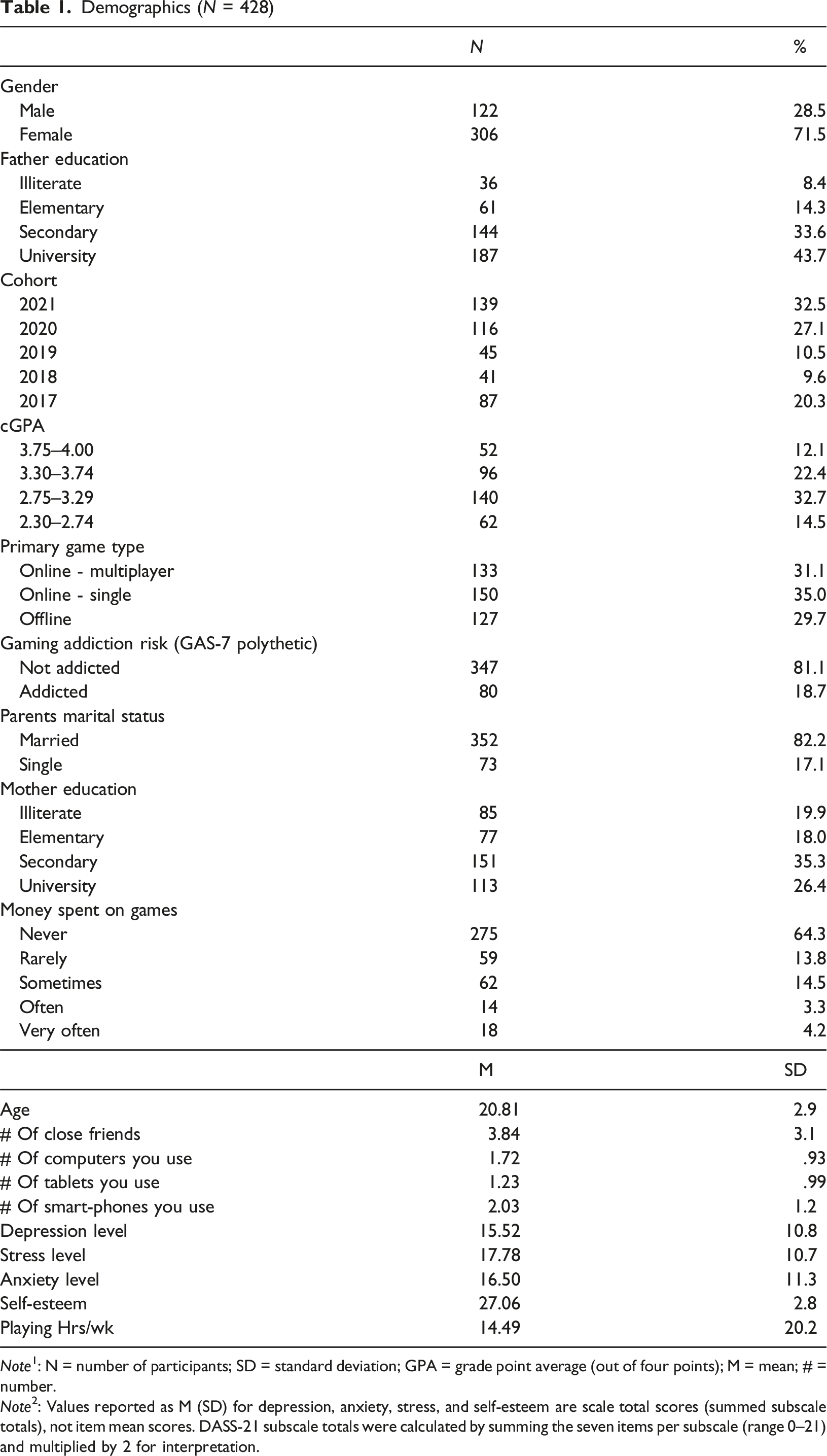
Note1: N = number of participants; SD = standard deviation; GPA = grade point average (out of four points); M = mean; # = number.
Note2: Values reported as M (SD) for depression, anxiety, stress, and self-esteem are scale total scores (summed subscale totals), not item mean scores. DASS-21 subscale totals were calculated by summing the seven items per subscale (range 0–21) and multiplied by 2 for interpretation.
Logistic Regression Analysis
Using binary logistic regression with gaming addiction risk (GAS polythetic; 0/1) as the dependent variable, we evaluated demographic, psychological, behavioural, and academic predictors of gaming addiction.
The final model was statistically significant compared with the null model, χ 2 (18) = 141.282, p < .001. The model showed good fit, as evidenced by a non-significant Hosmer-Lemeshow goodness-of-fit test (χ 2 (8) = 7.724, p = .461), suggesting no substantial discrepancy between observed and predicted classifications. The model explained approximately 47.5% of the variance in gaming addiction (Nagelkerke R 2 = .475) and 29.8% based on Cox and Snell R2. The model demonstrated excellent classification accuracy, correctly classifying 87.5% of the overall cases. Specifically, the model accurately predicted 96.6% of the students who were not addicted and 50.0% of the students who were addicted.
Depression (p = .003, OR = 1.095, 95% CI [1.03, 1.16]), gaming-related financial expenditure (p < 0.01, OR = 1.680, 95% CI [1.26, 2.22]), hours spent on gaming (p < 0.01, OR
Logistic Regression: Predicting Gaming Addiction Risk (GAS-7 Polythetic) Among University Students
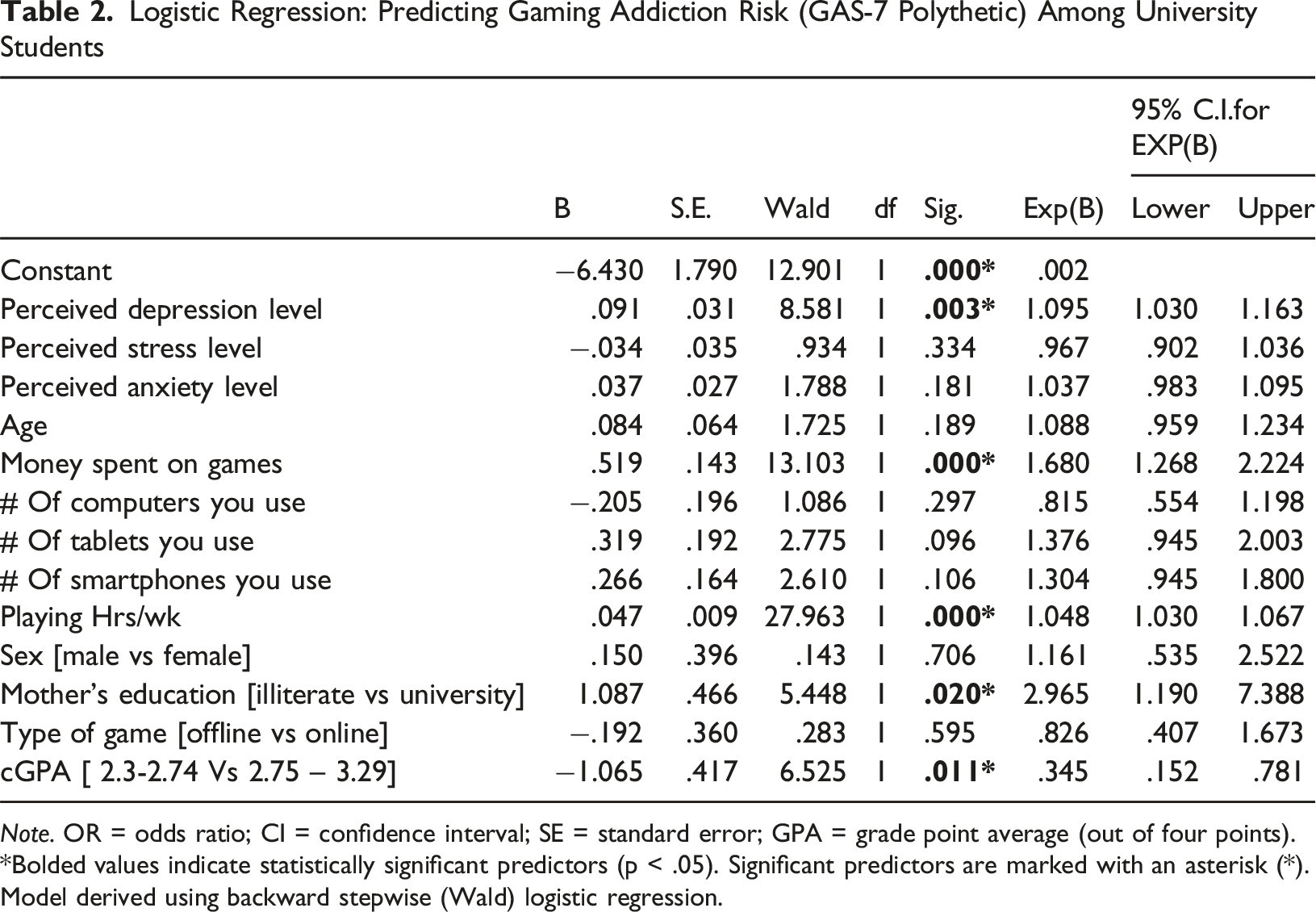
Note. OR = odds ratio; CI = confidence interval; SE = standard error; GPA = grade point average (out of four points).
*Bolded values indicate statistically significant predictors (p < .05). Significant predictors are marked with an asterisk (*).
Model derived using backward stepwise (Wald) logistic regression.
Discussion
This study investigated the prevalence of gaming addiction risk among university students and its associations with stress, anxiety, depression and self-esteem. The results suggest that around one in five students in higher education meet the criteria for gaming addiction risk. This rate is similar to results from a study conducted in the UAE (Verlinden et al., 2021), which reported a prevalence of 18.2% among female university students. It should be noted that the current sample was 71.5% female, which may influence prevalence estimates and limit the generalisability of findings. Future research could examine potential gender interactions to clarify these effects. However, it surpasses the percentage observed among university students in Saudi Arabia at 10.1% (Khrad et al., 2022). These findings highlight the need for targeted prevention and intervention efforts at university-level in Oman to address the risk of gaming addiction before it escalates further, particularly as digital engagement continues to rise among young people.
The prevalence of gaming addiction risk found in this study can be attributed to various factors. Figure 1 shows the significant and non-significant variables according to I-PACE domains (Person, Affect, and Execution/Behaviour). Higher depression scores were among the most significant factors associated with gaming addiction risk. In line with this, a Chinese study conducted by Liu et al. (2022) found that individuals with moderate to high depression had considerably higher odds 2.7–4.8 times of developing internet gaming addiction risk compared with students with low levels of depressive symptoms. Similarly, a UAE study found that university students above a gaming addiction risk cutoff were more than twice as likely to screen positive for depression (Verlinden et al., 2021). The same findings were reported in a Malaysian study (Idris et al., 2023). According to the I-PACE model, these findings align with the interaction of affective (depressive symptoms) and cognitive (using gaming to cope) components, highlighting how individual predispositions and mood states may reinforce addictive gaming patterns. This relationship can be bidirectional and rooted in coping behaviours. Based on the I-PACE model, students with depression who are confronted with real-life stressors may use gaming as an escape or mood-regulating method, which might perpetuate addictive play patterns (Kardefelt-Winther, 2014). Excessive gaming, however, may be associated with adverse mental health outcomes (for example, by disrupting sleep and increasing social isolation), potentially exacerbating depressive symptoms over time (Idris et al., 2023). In summary, the current data point to a significant positive association between depression and gaming addiction risk, emphasising the importance of addressing mental health in gaming-related prevention and intervention strategies. Conceptual mapping of study variables to the I-PACE framework and summary of multivariable findings. Note. *p < .05 in multivariable logistic regression. [+] significant positive association with gaming addiction risk after adjustment; [–] significant negative association after adjustment; [NS] not significant after adjustment. GAS = gaming addiction scale; GPA = grade point average; # = number (count of)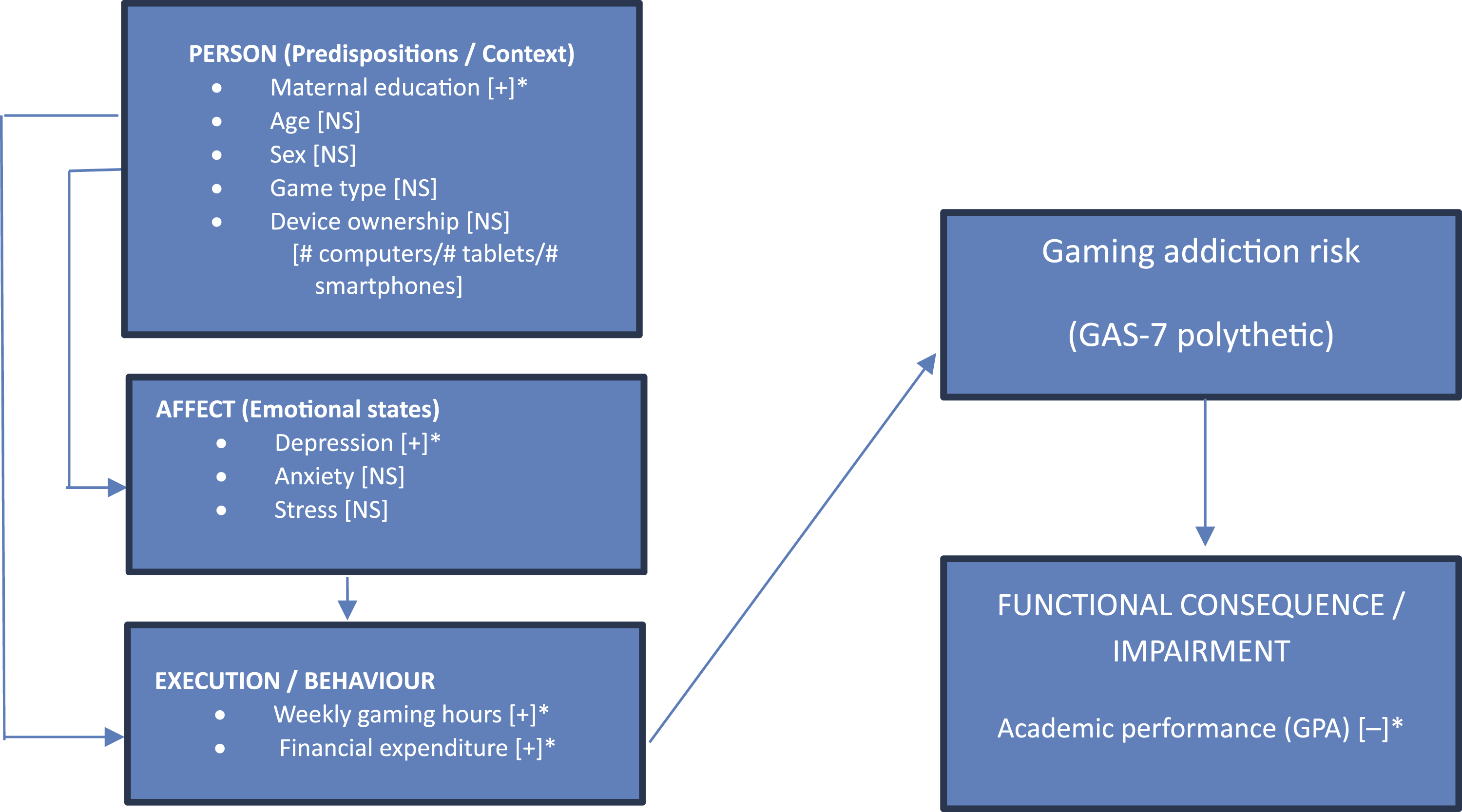
Though stress was not a significantly associated factor in this study, a growing body of research has highlighted a significant correlation between gaming addiction risk and stress among university students (Rajab et al., 2020). Younes et al. (2016) and Li et al. (2015) have demonstrated that heightened stress levels correspond to more pronounced gaming addiction symptoms. Although not significant in this study, self-esteem was found to be significant in previous studies. Yang et al. (2021) reported a significant negative correlation between GAS scores and self-esteem. Similar results occurred in a study involving international college students in the US (Koo et al., 2021). Within the I-PACE framework, self-esteem may reflect individual predispositions that influence coping strategies and the likelihood of using gaming for mood regulation. The most likely reason that stress, anxiety and self-esteem were not significantly associated factors in this study is the use of multivariate analysis. This approach enables the examination of variable relationships while controlling for other confounding factors. Furthermore, it is worth noting that all psychological factors in the study were recorded by self-report measures. Self-perception may not always precisely reflect an individual’s psychological state, particularly for categories such as anxiety, stress and self-esteem. Thus, the non-significant results may be attributed in part to participants’ limited self-awareness or social desirability bias. Future studies should consider combining self-report with clinician-administered assessments to better capture psychological characteristics relevant to gaming addiction risk.
Financial spending on gaming was another significantly associated factor, where higher expenditure frequency was linked to an increased risk of gaming addiction. This finding aligns with research indicating that financial engagement with gaming frequently demonstrates deeper psychological involvement and compulsive behaviour (Costes & Bonnaire, 2022; Lakić et al., 2023). It should be noted, however, that the expenditure item in the present study captured the frequency of spending rather than the actual monetary amount or currency, which limits precise economic interpretation. While comparable studies have reported that students who spend more than a specified monthly amount (e.g., US$13) demonstrate higher IGD scores (Bin Abdulrahman et al., 2025), such direct monetary comparisons cannot be made in the present study. From an I-PACE perspective, frequent financial engagement may still indicate behavioral reinforcement and increased salience of gaming activities. Increased spending frequency may reflect a stronger prioritisation of gaming over other activities, thus elevating addiction risk. However, some evidence suggests that spending behaviour alone may not always distinguish between recreational and problematic gamers (Bumozah et al., 2023). Monitoring spending patterns may therefore be useful for identifying at-risk individuals, although causality cannot be inferred from cross-sectional data.
In addition, this study reaffirmed the negative association between gaming addiction risk and academic performance, demonstrating that lower GPA was significantly associated with higher addiction risk. This finding is consistent with previous studies (Alzahrani & Griffiths, 2024) and a recent systematic review (Vahidi et al., 2021). Within the I-PACE framework, academic performance may represent functional impairment resulting from addictive behaviours and reduced executive control. As gaming becomes increasingly dominant, essential academic responsibilities may be neglected, leading to diminished performance. Universities may consider integrating academic counselling with digital wellness initiatives to support students experiencing gaming-related academic difficulties, although such recommendations should be interpreted cautiously pending longitudinal evidence.
The results also indicate that maternal university-level education, and ownership of multiple smart-phones were associated with increased gaming addiction risk. It is important to clarify that, despite earlier wording in the methods section, the present study sampled students from a single university, which may account for contextual differences when compared with multi-site studies. While one study identified higher maternal education as a protective factor (Bumozah et al., 2023), the current findings may reflect broader sociocultural or socioeconomic dynamics. For example, higher maternal education may be associated with earlier access to digital technologies or reduced parental monitoring due to professional commitments. Given the wide confidence interval and cross-sectional design, no causal inference can be made, and further qualitative research is recommended to explore these relationships.
From a practical standpoint, the model demonstrated high specificity (96.6%) but modest sensitivity (50%) in identifying students classified as addicted. This pattern suggests that the model is effective at correctly identifying students who are not at risk, but less effective at detecting all individuals who may be experiencing gaming addiction. In real-world screening contexts, this imbalance implies that while false positives are unlikely, a substantial proportion of at-risk students may remain undetected, limiting the model’s utility as a standalone screening tool. Consequently, such models may be best suited as an initial risk stratification step, to be supplemented with clinical interviews or follow-up assessments to improve identification and management of potential gaming-related harm.
Several methodological considerations should also be noted. Order effects may have influenced responses, as the fixed sequence of questionnaire items could have affected participants’ engagement or response accuracy, potentially impacting data quality. Additionally, gaming behaviour was assessed using a single-item measure, which may limit measurement precision. However, single-item measures offer practical advantages, including reduced respondent burden and lower attrition rates, particularly in large survey-based studies. Prior research suggests that well-designed single-item measures can demonstrate acceptable validity and reliability, especially for behavioural frequency assessments (Wang et al., 2019). Thus, the use of a single-item gaming measure represents a trade-off between measurement depth and feasibility, rather than a methodological flaw per se.
Based on the findings of this study, several recommendations are proposed to guide policy, practice and future research. It is important to emphasise that these recommendations are associative and hypothesis-generating rather than causal. First, targeted intervention programmes addressing gaming addiction and its psychological correlates should be developed within university settings. Early identification and management of depressive symptoms may help reduce gaming-related risks. Second, university counselling services may consider routine screening for depressive symptoms among students who report excessive gaming. Third, institutional policies promoting balanced digital engagement and responsible gaming practices should be encouraged. Fourth, parental and community awareness initiatives may help identify early warning signs and support timely intervention. Finally, longitudinal and multi-site studies are needed to clarify causal pathways and evaluate the long-term effectiveness of intervention strategies.
Limitations
A few limitations need to be considered. The cross-sectional design prevents drawing causal conclusions between gaming addiction and psychological factors. Additionally, the DASS-21 and Rosenberg Self-Esteem Scale are symptom screening tools rather than diagnostic measures, which limits clinical interpretation. Participants volunteered to take part in the study, which may have introduced self-selection bias; students who were more willing to disclose psychological symptoms or gaming behaviours may have been over-represented, potentially under-representing individuals less inclined to self-disclosure. Self-reported gaming hours and financial expenditure on gaming are also prone to recall bias, which may affect the accuracy of these measures. Moreover, gaming hours may have been under-reported due to stigma, guilt, or impression management, particularly in cultural contexts where gaming behaviours may be socially scrutinized.
In addition, students who were experiencing examination periods were excluded to minimize situational stress effects. While this decision was ethically appropriate, it may have introduced selection bias by omitting individuals who experience heightened academic stress, potentially influencing both gaming behaviour and psychological symptoms. As a result, the findings may underestimate gaming addiction risk or distress levels during high-stress academic periods.
Concentrating on a single university restricts the generalisability of the findings. Furthermore, the fixed order of questionnaire administration may have introduced order effects, such as response fatigue or priming, which could have influenced participants’ responses. Future studies should use longitudinal designs and involve a variety of educational institutions to improve the robustness of results.
Conclusion
This study provides clear evidence of the growing concern of gaming addiction among university students in Oman, with nearly one in five meeting the polythetic criteria. Factors associated with gaming addiction included perceived depression, financial expenditure on gaming, gaming time, maternal education, and academic performance, though findings on maternal education were mixed, reflecting the complex sociocultural dynamics influencing gaming behaviours. Consistent with the I-PACE model, results suggest that individual predispositions, affective states, cognitive responses, and executive control may interact to shape gaming behaviours, but causality cannot be inferred due to the cross-sectional design and the use of the GAS-7 screening measure. These findings are associative and context-specific; recommendations for interventions should be considered hypothesis-generating, pending longitudinal or diagnostic research. Overall, the study underscores the value of examining multiple psychosocial and contextual factors to guide future culturally sensitive research on gaming addiction risk.
Footnotes

Author Contributions
KA: Methodology, approving final draft, Oversight and leadership responsibility for the research activity planning and execution, including mentorship external to the core team OO: Methodology, Investigation and approving the final draft LA: drafting discussion section - Review & Editing JD: Formal analysis, Investigation AA: Writing - Review & Editing WR Investigation, Visualisation BA: Formal analysis, Investigation AY: Formal analysis, Investigation MB & AK: Writing - Original Draft, Investigation AA Writing - Original Draft, Investigation FH Writing - Original Draft, Investigation.
Funding
The authors received no financial support for the research, authorship, and/or publication of this article.
Declaration of Conflicting Interests
The authors declared no potential conflicts of interest with respect to the research, authorship and/or publication of this article.
Data Availability Statement
Data supporting this study are available by contacting the authors.