






Abstract
This research is an update of the systematic review conducted by Ni Chobhthaigh and Duffy in 2019, which included data up to 2017. The updated review covers a later period (2018–2023) and follows the updated PRISMA 2020 guidelines. The aim is to identify new evidence regarding the effectiveness of psychological interventions with adoptive parents on the well-being of their adopted children, and to provide an updated profile of the characteristics of effective interventions in this field.
The literature review was conducted across two relevant databases and grey literature sources. Documents published in English between 2018 and 2023 that reported on the effectiveness of psychological interventions delivered to adoptive parents, measuring psychological outcomes in their adopted children, were included. The design of the interventions had to be evaluative, empirical, and quantitative. In total, eleven studies with 748 adoptive families or individuals describing seven different types of interventions were included, and the risk of bias in each was assessed in accordance with the guidelines of the Cochrane Handbook for Systematic Reviews of Interventions.
Most interventions targeted adoptive families or adoptive parent couples. All interventions were based on attachment theory and measured the psychological well-being of adopted children (Cohen’s d range: nonsignificant to 1.2), as well as the parent-child relationship (Cohen’s d range: 0.21 – 0.97); in some cases, they also examined the behavioural functioning of the target population (Cohen’s d range: 0,45 – 0.68).
The findings from the two systematic reviews indicate promising results regarding the effectiveness of certain interventions based on the use of video feedback and the therapeutic effect of play. However, the high levels of risk of bias observed in some studies suggest caution when interpreting the findings.
Plain Language Summary
This study updates the 2019 systematic review by Ni Chobhthaigh and Duffy, which included research up to 2017, extending the analysis to 2018–2025 following best practice. Its aim was to identify new evidence on the effectiveness of psychological interventions with adoptive parents for improving adopted children’s well-being, and to provide an updated profile of effective intervention characteristics. The review searched different databases and grey literature, including studies published in English between 2018 and 2025. Eligible studies evaluated psychological interventions delivered to adoptive parents, measuring psychological outcomes in adopted children, and employed empirical, quantitative, and evaluative designs. Eleven studies, involving 748 adoptive families or individuals and seven types of interventions, were included. Risk of bias was assessed using the Cochrane Handbook for Systematic Reviews of Interventions. Most interventions targeted adoptive families or parent couples and were grounded in attachment theory. Outcomes measured included psychological well-being of adopted children (large changes), parent–child relationship and in some cases, behavioural functioning (in both cases, the changes vary from medium to large). Findings from both the original and updated reviews suggest promising effects of video feedback and play-based interventions. However, high levels of bias in several studies indicate results should be interpreted with caution.
Introduction
The role of caregivers in adoption is central, especially when children have experienced early adversity, discontinuity in care, or unstable relational environments (Fisher, 2015; Johnson, 2002; Sánchez-Vélez & Bolívar, 2023). Such experiences can affect the development of emotional bonds and regulation which helps explain why many adopted children present specific post-adoption needs or difficulties related to attachment (Cyr et al., 2010; Gibbs, 2010; Merchant et al., 2019). However, this does not imply an inability to form meaningful relationships later in life. The positive effects observed on physical and psychosocial development following adoption highlight the restorative potential of new caregiving environments (Duncan et al., 2021; Levy-Shiff, 2001; Palacios et al., 2011; Segatto & Dal Ben, 2013).
Despite this restorative potential, some pre-adoptive experiences may shape socialization, emotional regulation, or attachment strategies that were functional in previous contexts but require adjustment within the new family environment. This adaptation process emerges from a complex interaction between the child’s individual characteristics, early experiences, and the relational and contextual conditions following adoption (Dalgaard et al., 2022; Farr & Grotevant, 2019). In navigating this process, adoptive parents may face emotional and relational challenges, particularly when their initial expectations regarding adoption do not fully align with the realities of the adoptive experience (Goldberg & García, 2015; Lyttle et al., 2021).
In such cases, to prevent placement failure of the adopted child within the new family, adoptive parents often seek psychological interventions to help them manage frustration, parental stress, and to adapt their parenting model to the needs of their adopted children (Harris-Waller et al., 2016, 2018).
Numerous previous studies have described various interventions aimed at this group (Harris-Waller et al., 2018; Jones & Hackett, 2010; Ni Chobhthaigh & Duffy, 2019; O’Dell et al., 2015; Schwochow et al., 2023), focusing on the parent-child relationship (Carnes-Holt & Bratton, 2014) or the behavioural issues of their children (Prather & Golden, 2009). These interventions consistently demonstrate positive effects on the intersubjective parent-child relationship and family cohesion levels (Duncan et al., 2021). Therefore, it is deemed essential for adoptive families to have access to post-adoption support resources that facilitate relationship-building with their adopted children (Purrington, 2022).
To date, the only systematic reviews examining psychological interventions aimed at adoptive parents are those conducted by Harris-Waller et al. (2018) and by Ni Chobhthaigh & Duffy (2019). This systematic review, which synthesised 19 studies evaluating 15 interventions, reported preliminary evidence that programmes delivered to adoptive parents may improve adopted children’s emotional, behavioural, and relational outcomes. However, the authors highlighted substantial methodological limitations—including high risk of bias, limited use of robust control groups, small sample sizes, and considerable heterogeneity in study designs, outcome measures, and intervention components—which restricted the strength of the conclusions that could be drawn. Overall, they characterised the evidence base as promising yet still in its early stages, underscoring the need for more rigorous and up-to-date research.
Given the time elapsed since the publication of that systematic review, it is timely to update the available evidence to examine the influence of recent social and legislative changes. Since 2017, a range of policy and practice developments have reshaped the landscape of post-adoption support. Countries such as the United Kingdom and the United States have expanded access to post-adoption services and trauma-informed interventions, through national policies and specialized programs that seek to respond to the emotional and relational needs of adoptive families (Department for Education, 2022; Independent Care Review, 2020; Lindell et al., 2020; Pecora et al., 2019). International organisations including UNICEF, the World Health Organization, and the National Child Traumatic Stress Network have issued guidelines promoting trauma-informed, evidence-based support for children exposed to early adversity and for professionals who work with them (UNICEF, 2018, UNICEF, 2019, World Health Organization, 2017, World Health Organization, 2019; National Child Traumatic Stress Network, n.d.).
In parallel, adoption patterns have shifted markedly, with a sustained decline in international adoptions and a growing proportion of domestic placements involving children with complex histories of adversity (Selman, 2023). Although some innovative delivery formats – such as early tele-intervention models (e.g., Baker, 2012; Fukkink, 2008) – were already emerging at the time of the previous review, the period since then has witnessed a significant expansion and diversification of programmes, delivery modalities and evaluative studies. Recent years have brought a broader range of structured interventions, hybrid and online formats, and a more substantial evidence base supporting their implementation, which were not available or had not yet been consolidated during the earlier period (Aref-Adib & Hassiotis, 2021; McLean et al., 2021; Snoswell et al., 2023).
Moreover, considering Ni Chobhthaigh & Duffy’s (2019) assertion that the evidence base for interventions with adoptive parents was still in its infancy, it is important to assess whether this situation has evolved in recent years. From a scientific replicability perspective, updating the review also allows for an examination of the stability of previously reported findings and the identification of new evidence to inform the refinement and adaptation of interventions.
For these reasons, the present study updates the work of Ni Chobhthaigh & Duffy (2019) by reviewing empirical and quantitative studies published in English from 2018 onwards that evaluate theoretically grounded psychological interventions for adoptive parents, using standardised measures of psychological well-being, behavioural functioning, and family relationships, with the aim of improving adopted children’s well-being. Therefore, this study updates the systematic review by Ni Chobhthaigh & Duffy (2019) for the period 2018–2025, with the aim of identifying new evidence on psychological interventions with adoptive parents, evaluating their effectiveness in promoting the psychological, behavioural, and relational well-being of adopted children and adolescents, and describing the key characteristics of effective interventions.
Methodology
This review was conducted following the methodology proposed by Ni Chobhthaigh & Duffy (2019), the Cochrane Handbook for Systematic Reviews of Interventions (Higgins et al., 2023), and the updated guidelines of PRISMA 2020 Explanation and Elaboration: Updated Guidance and Exemplars for Reporting Systematic Reviews (Page et al., 2021).
Inclusion Criteria and Literature Search Process
The screening process for the articles included in this replication of Ni Chobhthaigh & Duffy’s (2019) systematic review was conducted with reference to the inclusion criteria detailed in Table 4 of Annex 1, which are based on the study’s delineated focus.
The systematic search for documents, concluded on December 2025, employed the following search string across all databases: (“adopted infant*” OR “adopted child*” OR “adopted adolescen*” OR “adoptee*” OR “adoptive parent*” OR “adoptive carer*” OR “adoptive famil*”) AND (“intervention” OR “therapy” OR “parenting program*” OR “parent* education” OR “parent* support” OR “parent* training”) in title, keywords, and abstract. We used this Population and Intervention (PI) search strategy, which is a modification of the standard PICO strategy (Richardson et al., 1995), to select any kind of intervention study in that population regardless of the type of treatment, comparison or outcome measured.
The following databases were consulted: ASSIA, CINAHL, Social Services Abstracts, and ProQuest (including ERIC, MEDLINE, PsycInfo, and ProQuest Dissertations & Theses Database). Additionally, reference lists of included documents were reviewed, along with two internationally recognised journals in the field: Adoption & Fostering and Adoption Quarterly. In replicating this systematic review, access to the original Embase database was restricted, so the PubMed database was used instead, providing comparable coverage of relevant literature. Similarly, the original grey literature databases, Grey Literature Report and OpenGrey, are now obsolete; instead, the databases Dissertations & Theses Database, Open Dissertations, and Psicodoc were used. Unlike the original review, direct expert consultation was not feasible due to time and resource constraints. To compensate for this deviation, we conducted a manual search of reference lists from all included studies and of two specialised journals in the field (Adoption & Fostering and Adoption Quarterly). Although this approach ensured a comprehensive screening of relevant sources, the absence of expert consultation remains a limitation of the updated review.
Information Organisation
Classification of Documents Included in the Update
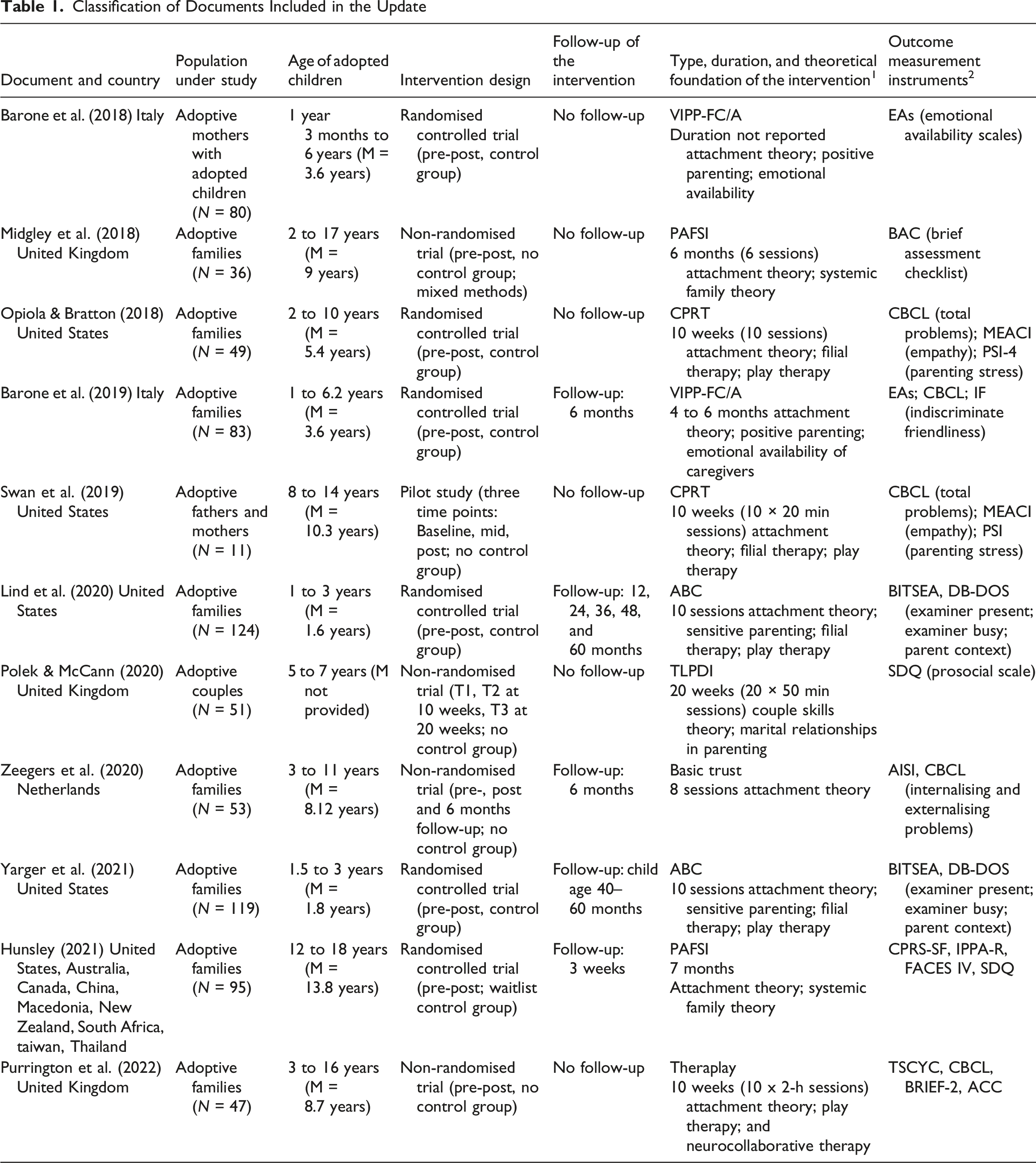
Once the final documents were selected, they were analysed based on study location, sample size, participant characteristics, research design, and measurement instruments used. The effect size, Cohen’s d, was subsequently calculated for the outcomes in emotional well-being, behavioural functioning, and parent-child relationships. For studies that did not report effect sizes, Cohen’s d was calculated using the following formula: Cohen’s d = (M1 – M2)/SD; where M1 and M2 are the means of groups 1 and 2, and SD the pooled standard deviation.
Risk of Bias Assessment
This review employed the recommended approach for assessing the risk of bias in studies, as outlined in Cochrane reviews. This tool evaluates five specific domains: sequence generation, allocation concealment, participant and assessor blinding, incomplete outcome data, selective outcome reporting, and other potential biases. These domains are rated as “high risk of bias,” “uncertain risk of bias,” and “low risk of bias” (Higgins & Green, 2011).
To assess the reliability of the risk-of-bias assessment, an external reviewer conducted a blinded evaluation of a random subsample of eight studies (73% of the included studies). The agreement between the author and the external reviewer was measured qualitatively, and any discrepancies were resolved through discussion until consensus was reached. A kappa statistic was not calculated, which represents a minor limitation in the reliability assessment.
Results
Study Characteristics
Figure 1, prepared as a PRISMA flowchart, details the process followed to identify articles and the resulting outcomes. As shown, this procedure concluded with a total of eleven identified documents.
Of the eleven documents analysed, four studies were conducted with adoptive families from the United States (Lind et al., 2020; Opiola & Bratton, 2018; Swan et al., 2019; Yarger et al., 2021), three in the United Kingdom (Midgley et al., 2018; Polek & McCann, 2020; Purrington et al., 2022), two in Italy (Barone et al., 2018, 2019), one in the Netherlands (Zeegers et al., 2020), and one involving adoptive families from various countries (doctoral thesis by Hunsley, 2021).
Regarding participant characteristics, nine studies included adoptive families as the intervention group, whereas the remaining two focused exclusively on adoptive parents. Sample sizes ranged from 11 (Swan et al., 2019) to 124 (Lind et al., 2020). A clear concentration of interventions was observed in early childhood.
Most studies (n = 9 of 11) included infants or young children under the age of six, either exclusively or as part of broader age ranges. Four interventions were directed exclusively at children under six years old (Barone et al., 2018, 2019; Lind et al., 2020; Yarger et al., 2021), while five additional studies included young children alongside school-aged children (Midgley et al., 2018; Opiola & Bratton, 2018; Polek & McCann, 2020; Purrington et al., 2022; Zeegers et al., 2020). Only one study focused exclusively on school-aged children (Swan et al., 2019), and a single study specifically addressed adopted adolescents (Hunsley, 2021). These findings highlight the prevailing emphasis in the literature on early interventions, with limited representation of programmes targeting adolescents.
Across studies, recruitment was typically conducted through adoption agencies, clinical services, or voluntary participation, reflecting convenience sampling procedures.
In terms of intervention design, five studies employed randomised controlled trials with two conditions (experimental and control), using pre-post intervention assessments (Barone et al., 2018, 2019; Lind et al., 2020; Opiola & Bratton, 2018; Yarger et al., 2021). One additional study followed a similar structure but implemented a waitlist control group (Hunsley, 2021). Four studies adopted quasi-experimental, within-subject designs without a control group, including two with pre-post assessments (Midgley et al., 2018; Purrington et al., 2022) and two with multiple time points, incorporating follow-up evaluations (Polek & McCann, 2020; Zeegers et al., 2020). One study was structured as a pilot with a single group and three measurement points (Swan et al., 2019). This variation reflects a notable degree of heterogeneity across the included interventions.
Effect Sizes of the Results
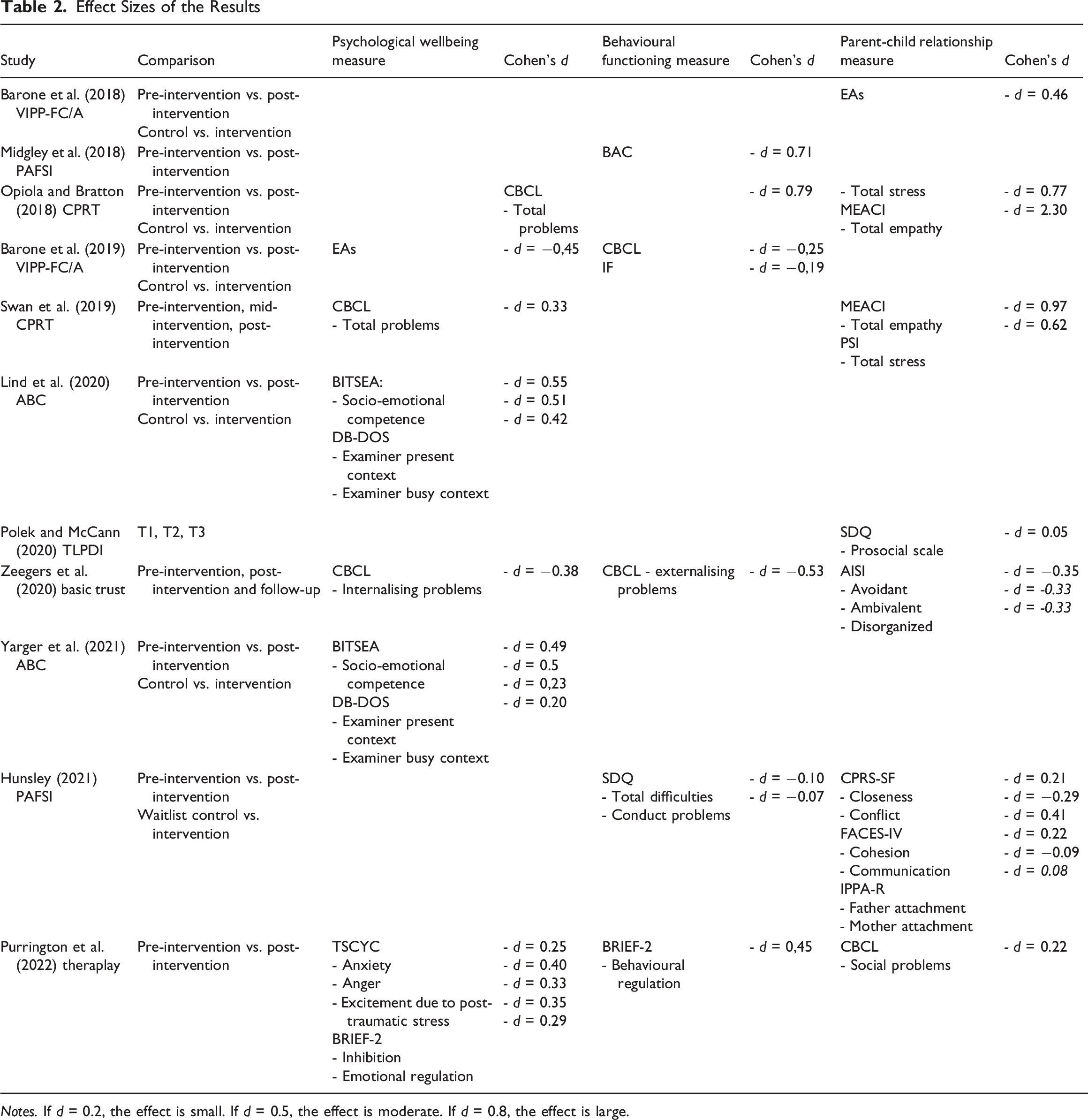
Notes. If d = 0.2, the effect is small. If d = 0.5, the effect is moderate. If d = 0.8, the effect is large.
In two studies, the Child Parent Relationship Therapy (CPRT) was used, based on filial therapy and play therapy (Opiola & Bratton, 2018; Swan et al., 2019). Another study focused on the adoptive couple with a time-limited psychodynamic intervention (TLPDI) (Polek & McCann, 2020), which centred on developing couple and marital skills for parenting. Of the two remaining studies, one used Basic Trust Intervention, based on attachment theory (Zeegers et al., 2020); the final intervention, Theraplay, was play-based and emphasised neuro-collaborative therapy (Purrington et al., 2022). Intervention durations ranged from 8 weeks (Zeegers et al., 2020) to 7 months (Hunsley, 2021).
Consistent with the original review, most studies relied on general measures of child functioning (e.g., CBCL, BITSEA, SDQ). Only a small number used adoption-specific tools such as the AISI (Zeegers et al., 2020), the BAC (Midgley et al., 2018), or the ACC (Purrington et al., 2022).
A breakdown of the outcomes assessed shows that psychological wellbeing was examined in 8 of the 11 studies (72.7%), a proportion identical to that observed for behavioural functioning, which was also assessed in 8 studies (72.7%). Aspects of the parent–child relationship were likewise evaluated in 8 studies (72.7%), although only one study assessed all three domains simultaneously (9.1%). Most studies examined two domains (63.6%), while three focused exclusively on a single domain (27.3%).
Across these domains, a wide range of instruments was employed. Psychological wellbeing was primarily assessed through measures of emotional availability, socio-emotional competence and child symptomatology, including the EAs, CBCL, BITSEA, DB-DOS, TSCYC and BRIEF-2. Behavioural functioning was captured through tools targeting behavioural adjustment and regulatory capacities, such as the BAC, CBCL, IF, SDQ and BRIEF-2. Parent–child relationship outcomes were evaluated using measures of emotional availability, parental stress, empathy, attachment and family functioning, including the EAs, PSI-4, PSI, MEACI, SDQ, AISI, CPRS-SF, FACES-IV, IPPA-R and, in one study, the CBCL Social Problems scale.
The following sections summarise the effects of the interventions on psychological wellbeing, behavioural functioning and parent–child relationships. Results are presented by thematic patterns.
Across studies, psychological wellbeing outcomes tended to improve most consistently in interventions grounded in parental sensitivity and attachment-based feedback (e.g., VIPP-FC/A, ABC), which showed medium to large effects on socio-emotional competence and emotional availability. Play-based interventions (CPRT, Theraplay) also demonstrated improvements in children’s emotional expression and regulation, as well as reductions in parental stress. Systemic or family-focused programmes (PAFSI, TLPDI) produced more modest but still positive changes, particularly in family cohesion and relational functioning.
Overall, psychological wellbeing outcomes showed a pattern of medium-to-large improvements, although effect sizes varied substantially across studies depending on intervention type, child age, and measurement tools.
Across studies, behavioural functioning showed improvements primarily in interventions that incorporated structured parent–child interaction components or targeted regulatory capacities (e.g., ABC, CPRT, Theraplay). These programmes tended to reduce externalising behaviours, improve behavioural regulation and decrease indiscriminate friendliness, with effect sizes generally in the small-to-medium range. However, results were more variable than in the psychological wellbeing domain, with some studies reporting limited or domain-specific changes, particularly when baseline behavioural difficulties were mild or sample sizes were small.
Interventions focusing on parental sensitivity, reflective functioning and relational attunement (e.g., VIPP-FC/A, CPRT, PAFSI) consistently reported improvements in parent–child relationship quality. These included increases in emotional availability, parental empathy and perceived attachment security, as well as reductions in parenting stress. Effects were generally medium to large, although the magnitude varied depending on the specific relational construct assessed and the measurement tools used. Overall, relational outcomes showed some of the most robust and consistent improvements across the included interventions.
Across domains, improvements in children were primarily observed in socio-emotional competence, behavioural regulation and emotional availability. In contrast, effects on parents were most evident in reductions in parenting stress, increases in parental sensitivity and empathy, and improvements in perceived relationship quality. These two domains did not always change in parallel, suggesting that child and parent outcomes may respond differently depending on the intervention components.
Risk of Bias in Interventions
Riesgo de Sesgo de Las Intervenciones Analizadas
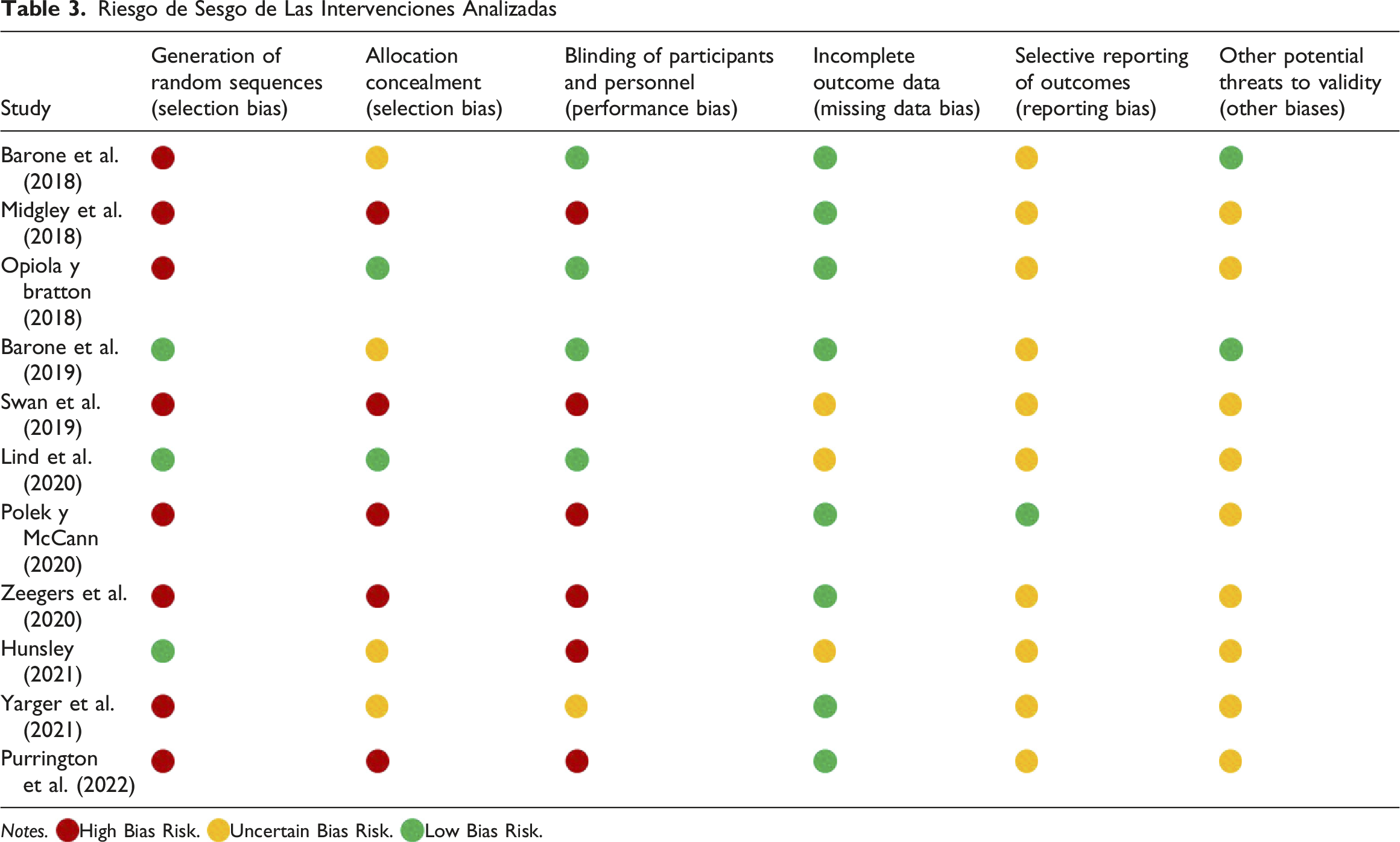
Notes.  High Bias Risk.
  Uncertain Bias Risk.
  Low Bias Risk.
Most of the included studies did not provide sufficient information to allow for an adequate assessment of risk of bias related to random sequence generation. Regarding random sequence generation, only three of the eleven studies (27%) used appropriate randomisation procedures and were rated as low risk (Barone et al., 2019; Hunsley, 2021; Lind et al., 2020). The remaining studies were judged as a high risk either due to insufficient information (Barone et al., 2018; Opiola & Bratton, 2018; Yarger et al., 2021) or because no control group was included, making randomisation unnecessary (Midgley et al., 2018; Polek & McCann, 2020; Purrington et al., 2022; Swan et al., 2019; Zeegers et al., 2020).
Allocation concealment was explicitly reported in only two studies, which were therefore rated as low risk (Lind et al., 2020; Opiola & Bratton, 2018). Four studies did not provide sufficient detail and were rated as unclear (Barone et al., 2018, 2019; Hunsley, 2021; Yarger et al., 2021), while the remaining studies were classified as high risk due to the absence of randomisation (Midgley et al., 2018; Polek & McCann, 2020; Purrington et al., 2022; Swan et al., 2019; Zeegers et al., 2020).
Performance bias was low in four studies where blinding procedures were clearly described (Barone et al., 2018, 2019; Lind et al., 2020; Opiola & Bratton, 2018). One study lacked sufficient information and was rated as unclear (Yarger et al., 2021). The remaining studies were judged as high risk due to participant awareness of intervention condition (Hunsley, 2021) or the absence of a control group (Midgley et al., 2018; Polek & McCann, 2020; Purrington et al., 2022; Swan et al., 2019; Zeegers et al., 2020).
Outcome data bias was generally low, as most studies reported no missing data or appropriately addressed missingness (Barone et al., 2018, 2019; Midgley et al., 2018; Opiola & Bratton, 2018; Polek & McCann, 2020; Purrington et al., 2022; Yarger et al., 2021; Zeegers et al., 2020). Three studies did not provide sufficient information and were rated as unclear (Hunsley, 2021; Lind et al., 2020; Swan et al., 2019).
Selective reporting bias was mostly rated as unclear due to limited information on prespecified outcomes (Barone et al., 2018, 2019; Hunsley, 2021; Lind et al., 2020; Midgley et al., 2018; Opiola & Bratton, 2018; Purrington et al., 2022; Swan et al., 2019; Yarger et al., 2021; Zeegers et al., 2020). Only one study was rated as low risk Polek & McCann (2020).
Other potential additional sources of bias were judged as low in four studies (Barone et al., 2018, 2019; Lind et al., 2020; Opiola & Bratton, 2018), while the remaining studies were rated as unclear due to insufficient information (Hunsley, 2021; Midgley et al., 2018; Polek & McCann, 2020; Purrington et al., 2022; Swan et al., 2019; Yarger et al., 2021; Zeegers et al., 2020).
Effects of the Interventions
The results are presented by outcome domain to facilitate comparison across interventions and to highlight common patterns in their effectiveness.
Psychological Wellbeing
The effects on psychological wellbeing varied considerably across studies. Among attachment-based interventions, findings were inconsistent. In VIPP-FC/A, Barone et al. (2018) reported a small effect on emotional availability compared with the control group (EAs, d = 0.46), whereas the subsequent study showed a negative pre–post change (d = −0.45; Barone et al., 2019). The ABC interventions yielded more stable results, with moderate improvements in socio-emotional competence (BITSEA, d = 0.55) and in the examiner-present context of the DB-DOS (d = 0.51; Lind et al., 2020), replicated with similar effect sizes in a later study (BITSEA, d = 0.49; Yarger et al., 2021). Basic Trust also demonstrated small-to-moderate reductions in internalising (d = −0.38) and externalising problems (d = −0.53; Zeegers et al., 2020). Among play-based interventions, CPRT showed a large effect on CBCL total problems in the controlled comparison (d = 0.79; Opiola & Bratton, 2018), although the pre–post design yielded only a small effect (d = 0.33; Swan et al., 2019). Theraplay produced small-to-moderate improvements in anxiety, anger, post-traumatic stress-related arousal, and emotional inhibition (d = 0.25 - 0.40; Purrington et al., 2022). In contrast, PAFSI did not show meaningful changes in psychological wellbeing (SDQ, d = −0.10 and −0.07; Hunsley, 2021), and TLPDI did not assess this domain.
Behavioural Functioning
Several interventions demonstrated moderate effects on behavioural functioning. ABC again showed consistent improvements across DB-DOS contexts (d = 0.20 - 0.50) and in socio-emotional competence (BITSEA, d = 0.49; Yarger et al., 2021). Theraplay also produced a small-to-moderate effect on behavioural regulation (BRIEF-2, d = 0.45; Purrington et al., 2022). CPRT displayed a dual pattern, with a large effect in the controlled comparison (CBCL total problems, d = 0.79; Opiola & Bratton, 2018) and a small effect in the pre–post design (d = 0.33; Swan et al., 2019). PAFSI showed a moderate improvement in behavioural adjustment (BAC, d = 0.71; Midgley et al., 2018). Basic Trust also reported reductions in externalising and internalising problems (d = −0.53 and −0.38; Zeegers et al., 2020), consistent with the improvements observed in psychological wellbeing.
Parent–Child Relationship
The strongest effects in the relational domain were found in interventions targeting parental sensitivity and emotional attunement. CPRT showed particularly large improvements in parental empathy (MEACI, d = 2.30 and 0.97) and moderate reductions in parental stress (PSI-4 and PSI, d = 0.77 and 0.62; Opiola & Bratton, 2018; Swan et al., 2019). PAFSI also produced small-to-moderate improvements in cohesion, communication, and closeness (d = 0.21 - 0.41), together with a reduction in conflict (d = −0.29; Hunsley, 2021), although attachment-related outcomes were minimal (IPPA-R, d = −0.09 and 0.08). VIPP-FC/A showed a small effect on emotional availability (EAs, d = 0.46; Barone et al., 2018). Basic Trust demonstrated small reductions in attachment insecurity across avoidant, ambivalent, and disorganised dimensions (d = −0.33 to −0.35; Zeegers et al., 2020). Theraplay yielded a small effect on social problems (CBCL, d = 0.22; Purrington et al., 2022), whereas TLPDI showed a minimal change in prosocial behaviour (SDQ, d = 0.05; Polek & McCann, 2020).
Discussion and Conclusions
Discussion of Results
This updated systematic review synthesised eleven studies evaluating seven psychological interventions delivered to adoptive parents. Although several interventions reported improvements in children’s psychological well-being, behavioural functioning, or parent–child relationships, the evidence base remains highly heterogeneous. Effect sizes ranged from negligible to very large, and benefits were inconsistent across outcomes, intervention types, and developmental stages. Combined with small samples and high or unclear risk of bias, this variability limits the strength of the conclusions that can be drawn.
These inconsistencies continue the trend already identified by Ni Chobhthaigh and Duffy (2019), and mirror broader findings in the adoption and early adversity literature, where intervention effects often vary depending on baseline risk, developmental timing, and the specific mechanisms targeted (Finet et al., 2020; Gunnar & Reid, 2019; Hornfeck et al., 2019).
The interventions varied substantially in duration, intensity, and theoretical orientation. While all were grounded in attachment theory, many incorporated additional frameworks such as filial therapy, play therapy, systemic approaches, or positive parenting. This reflects broader developments in parent–child intervention models, which increasingly emphasise relational attunement, co-regulation, and interactional processes. Such trends are consistent with contemporary evidence from attachment-based and interaction-focused programmes in foster care and high-risk dyads (Dozier & Bernard, 2019). However, such heterogeneity complicates direct comparison and limits the identification of active components.
Methodological limitations identified in the original review persist. Few studies controlled for placement timing or used adoption-specific outcome measures, despite evidence that adoption-related histories shape symptom presentation. Although over half of the studies employed randomised designs, risks of selection, performance, and reporting bias remain due to limited transparency regarding allocation, blinding, and fidelity procedures.
These methodological weaknesses are consistent with recent systematic reviews highlighting similar challenges in post-adoption and foster-care intervention research (Harris-Waller et al., 2018). To improve clarity, these methodological issues are further elaborated in the subsection ‘Strengths and Limitations’.
Beyond extending the time frame, this review examined whether the quality and scope of the evidence have evolved since 2017. Some improvements are evident: several recent studies used stronger designs, including RCTs with follow-up assessments, and some interventions incorporated elements consistent with trauma-informed practice (e.g., emphasis on safety, predictability, and co-regulation). However, none of the included studies explicitly described their programmes as trauma-informed or evaluated trauma-specific mechanisms. Despite these developments, no new categories of interventions have emerged, and the overall pattern of findings remains similar to the previous review, suggesting slow progress in innovation despite policy and practice developments.
The proportion of studies assessing parent–child relationship outcomes was comparable to the earlier review, indicating continuity rather than expansion in relational measurement. This stability aligns with broader evidence emphasising parental sensitivity and emotional availability as central mechanisms supporting adopted children’s adjustment. Recent work continues to highlight these mechanisms as key drivers of change across diverse caregiving contexts (Meléndez et al., 2024).
Notable gaps remain. Nine of the eleven studies targeted children under six years old, with only one study focusing on school-aged children and one on adolescents. This imbalance limits the generalisability of findings to older adopted populations, whose developmental needs and identity-related challenges may differ substantially. The heterogeneity of designs and outcome measures prevented meaningful comparison of effect sizes by developmental stage. This gap is particularly relevant given emerging evidence that trauma-informed and relational interventions may require adaptation for older children and adolescents (Lo et al., 2024).
The included studies did not consistently report key implementation characteristics such as delivery modality, provider qualifications, or adoption-related contextual factors (e.g., type of adoption, age at placement). This limitation in the systematic reporting of the interventions has been noted in other reviews in the area (Schwochow et al., 2023). This lack of standardised reporting prevented a comparative analysis of intervention components or delivery features. Recruitment was typically based on convenience sampling, introducing potential selection bias. Greater transparency in implementation reporting has been identified as a priority in recent methodological guidance for family-based interventions (Li & Beets, 2023; Pfledderer et al., 2024).
Strengths and Limitations
This review has several strengths. First, it updates and extends previous work by incorporating studies published since 2017, allowing for a more contemporary assessment of the evidence base. Second, the review applies a systematic and transparent methodology, including duplicate screening and structured data extraction, which enhances reliability. Third, the inclusion of diverse intervention models—ranging from attachment-based programmes to systemic and play-based approaches—provides a broad overview of current practices in post-adoption support. Fourth, it offers a detailed and reproducible risk of bias assessment that informs conclusions.
However, several limitations must also be acknowledged. At the study level, methodological weaknesses remain common. Many studies relied on small samples, convenience recruitment, or lacked adoption-specific outcome measures, limiting generalisability. Reporting of key implementation characteristics (e.g., provider qualifications, delivery modality, adoption context) was inconsistent, hindering meaningful comparison across intervention components. Although more than half of the studies used randomised designs, risks of selection, performance, and reporting bias persisted due to limited transparency in allocation procedures, blinding, and fidelity monitoring.
At the review level, limitations include the exclusion of qualitative studies and single-case designs, which may have omitted valuable contextual insights. Language restrictions may have led to the omission of relevant non-English evidence, and the absence of expert consultation may have reduced the identification of grey literature. Additionally, although some studies reported variables such as child age or time in placement, reporting was inconsistent and did not allow for systematic analysis of their influence on outcomes.
Together, these strengths and limitations provide important context for interpreting the findings of this review and highlight priorities for future research, including improved reporting standards, greater methodological rigour, and the development of interventions tailored to the needs of older adopted children and adolescents.
Conclusions
In conclusion, this updated systematic review provides an integrated and contemporary synthesis of psychological interventions delivered to adoptive parents, highlighting both areas of progress and persistent gaps in the evidence base. Although several interventions demonstrated benefits for children’s socio-emotional functioning and parent–child relationships, the overall pattern of findings remains characterised by substantial heterogeneity and methodological limitations, which constrain the strength of the conclusions that can be drawn.
Compared with the previous review, this update offers a clearer understanding of how recent studies align with broader developments in the fields of attachment, early adversity, and parent–child intervention research. The inclusion of newer studies with stronger designs, as well as the identification of emerging elements consistent with trauma-informed practice, provides a more nuanced picture of current approaches to post-adoption support. However, the absence of explicitly trauma-informed frameworks, the limited attention to older adopted children and adolescents, and the inconsistent reporting of implementation characteristics indicate that the field has progressed slowly in terms of conceptual and methodological innovation.
Taken together, the findings underscore the need for more rigorous, theory-driven, and developmentally sensitive research, particularly studies that examine mechanisms of change, incorporate adoption-specific measures, and evaluate interventions tailored to diverse age groups and family contexts. Strengthening reporting standards and expanding the evidence base through mixed-methods and longitudinal designs will be essential for advancing knowledge and informing practice. By clarifying these priorities, this review contributes to shaping future directions for research and intervention in adoptive family support.
Footnotes

Funding
The authors received no financial support for the research, authorship, and/or publication of this article.
Declaration of Conflicting Interests
The authors declared no potential conflicts of interest with respect to the research, authorship, and/or publication of this article.