






Abstract
The Life Force community paediatric palliative care team offers support to children and young people with complex health needs and their families. The team supports them during their end-of life period, as well as bereavement support after a child has died. This article discusses the development of Memory Days, a yearly event where a child or young person cared for by the team is remembered by their family. The article describes how these Memory Days are set up and facilitated and describes three of the specific memory activities the team has offered. These creative activities are completed in a group setting which affords families who can feel isolated through grief, the opportunity to connect with others and find solidarity. One of the families describes what the days mean to them.
Plain Language Summary
Memory Days are special events to remember children that have died. This paper describes how they were set up for a service in London that offers care to children with life-threatening conditions and their families. It talks about the rationale for these events and the background theory, as well as the process of running the events. The paper includes the views of a family who have attended the events.
Introduction
Our Context
As advancements in medical treatment and care develop, seriously ill children are living for longer and there are a growing number of children living with ‘life-threatening’ and ‘life-limiting’ conditions (Together For Short Lives, 2018; University of York, 2020). Paediatric Palliative Care services attend to the wellbeing of children with such conditions and their families, including their ‘mind, body and spirit’, with multidisciplinary approaches that intend to alleviate physical, psychological and social distress (World Health Organisation (WHO), 2023). The support is provided across the child’s life, including during the end-of-life phase of care. It can also include providing bereavement support for family members following the death of a child or young person with a life-limiting condition, as recommended by NICE (National Institute for Clinical Excellence, 2019).
Life Force is a community paediatric palliative care and bereavement team set up in 2003 working across the London boroughs of Camden, Haringey, and Islington. The team consists of Specialist Paediatric Palliative Care Nurses, Respite Nursery Nurses, Play Specialist/Youth Worker, Psychologists, and a Paediatric Palliative Care Consultant. The team’s aim is to provide choice in place of care whether that be hospital, home, or hospice. The level of support depends on the needs of the child and family. The service provides respite to allow parents to rest or to spend time with their other children, and a Play Specialist/Youth Worker to help the child cope with aspects of their treatment and support their siblings. Support for the parents is provided by the Nurses and where necessary, by a Clinical Psychologist. Nurses, together with the Consultant, also provide symptom management for the child/young person as needed.
Over the past 20 years (2004-2023), Life Force has supported 190 children at the end of their life. This means that on average, Life Force supports around 10 children a year who are at the end of life. Following the death of the child, a period of bereavement support is offered to every family, so there has been an ever-increasing need for bereavement support. This could be in the form of a follow up by the specialist nurses, sessions for the siblings, support for the parents, or family work (delivered by a Play Specialist or Psychologist). The team became concerned that we were not meeting the needs of the growing number of bereaved families, due to the more immediate demands of addressing the needs of the currently sick children on our caseload.
Additionally, there was a growing awareness that different families required different support at different times. This connects with contemporary models of grief, which offer an alternative to more linear understandings of the grieving process, such as the stages of grief model (Kübler-Ross, 1969), and suggest this process requires flexible approaches. For example, the Dual Process Model (Stroebe & Schut, 1999), which suggests that people move between loss-oriented positions, where they engage in grief work and a focus on the person who has died, and restoration-oriented positions, where they continue with life more broadly. Within this understanding, we thought families might find it helpful to have a place to be with their grief, at a specific time, which would act as a focus for remembering together.
We also had some concern that families felt if bereavement support was not taken up immediately, they may feel the team were no longer available, so wanted to create a reconnection point.
Many of our families choose to have their end-of-life period at home. This can make it an isolating experience. After the death the family have no ‘place’ to return to meet the team who supported them at that significant time. A common theme we hear from the parents we work with is when their child dies, they lose their child, their job, which was caring for the child, and their work colleagues, who are those that have supported them at that significant time.
With these factors in mind, we thought about how we could extend our bereavement support and re-connect with the families that had been known to the team.
Memory Days - Our Concept, Theoretical Ideas and Intentions
Background
We were aware that hospitals and hospices hold yearly memory events and started to consider holding a Life Force memory day. We explored what other services were doing and at that time could not identify another paediatric palliative care team running a memory day in the community. Discussions were held with ward staff, local hospice and Life Force team members, as well as a bereaved parent. We heard that families were keen to have a space to remember their child and staff were keen to re-connect with families that they had previously supported. 1 We also reflected on the mix of skills and number of professionals in the Life Force team - nursing, medical, play, respite and psychology - and realised we had a huge resource to run a specific bereavement event and draw on some different ideas to ground the day. Life Force has now facilitated 18 Memory Days. These are run annually; the set up and process of these events is described below.
Theoretical Ideas and Initial Intentions
One idea that informed the intention of the day was the concept of ‘saying hullo again’ as described within Narrative Therapy literature by Michael White (1988). This suggests that ‘saying goodbye’ to a loved one too quickly following their death, a pressure towards ‘getting over’ which can be expected by society, often leads to distress and emotional difficulties. Our event would be an opportunity to ‘say hello again’ through remembering and celebrating the child or young person, inviting a new and different relationship with the loved one (Hedtke, 2000). The concept of ‘continuing bonds’ (Klass & Steffen, 2018), enables people to think about the child as an ongoing presence in their life and/or someone with whom they have a continuing relationship. We intended to create a space and/or activity at the event where the child or young person could be thought about by their family members in this way.
Bereaved parents have often experienced challenging times with people in their lives being unsure how to talk with them, leading to relational distance, or even others responding in unhelpful or insensitive ways (Tonkin, 2008). There was a sense that families value the chance to meet others who ‘just get it’ and have had similar experiences. We therefore felt it was important to have a relational aspect to the event, where we could bring people together to connect with others that had similar experiences and possibly counter isolation. Our hope was that it would be an event where people would arrive into the space and recognise there is a community of allies and they are not alone.
Another intention for our event was to reconnect the family with the Life Force team and offer bereavement support, in terms of a specific intervention to help with the emotional aspects of the grief experience for families whose children were known to the team. Our hope was this familiarity would create a safe place to do remembering together, often with staff who knew their child and had journeyed alongside the family and their child during a significant and particularly difficult part of their lives.
We had also noticed that on occasion families try to protect each other emotionally through not speaking about potentially distressing topics, which can inadvertently lead to emotional distance at times of profound grief; this process has been termed a ‘protection racket’ (McParland et al., 2023; Portnoy & Stubbs, 2012). Our invitation for this event was that families would attend together and join in a discussion with a facilitator about the child who has died, acknowledging the possibility of upsetting emotions arriving and thinking carefully about how to attend to this for families. For example, as the discussion could bring up emotionally charged memories, we made sure that a facilitator was available to support the activity. We also invited families to only talk about as much as felt comfortable and helpful. We would not steer away from memories and would listen out for what was the important meaning for families and how these had impacted their lives. This connects with the concept of re-membering conversations, also informed by Narrative Therapy (White, 1997), where space is made for bereaved people to discuss and honour the significant contributions of the person that has died. Through an activity we hoped to bring forth these contributions through questions about special memories, stories, qualities, skills and abilities.
As children and young people would also be invited to our event as family members, we were keen that they would feel welcome and able to participate in a creative, developmentally accessible and enjoyable activity, with the intention to help facilitate a continuing bond (Stokes, 2004). Memory activities were considered that would involve arts and crafts and give opportunities to bring forth memories in playful ways for children; play therapy approaches have been found useful for children following a death (e.g. Boyd Webb, 2011; Chen & Panebianco, 2018). Our hope was that participating in the memory activity would give families an opportunity to discuss special memories together and help to strengthen those memory connections and bonds. Additionally, doing a creative play therapy inspired activity, with freedom about how it is completed or what memories and other individual aspects are represented, would enable families to incorporate their family and community beliefs, potentially increasing acceptability and effectiveness (Boyd Webb, 2011). As the activity would involve creating something personalised and special, which they could take away as they continue to hold their loved one in mind. This could also acknowledge the importance of the relationship and act as a prompt for further conversations (Stokes, 2004).
Memorial-type events often invoke religious and spiritual ideas and although our event was intended to be non-denominational, we appreciated that people may connect such an event with their individual or family spirituality. We therefore wanted to make space at the event for people to have freedom to express and honour important spiritual meanings and understandings, as these beliefs can anchor and sustain people through such extremely challenging emotional experiences (Griffith & Griffith, 2002).
Practicalities
One of our main challenges as a community-based organisation was to find an appropriate independent building to hold the event, with easy accessibility for all attending from the three London boroughs. Also, through the information gathering we realised that many of the families did not want to return to a hospital environment where their child had been treated or for some, had died. The venue needed to be accessible for those with disabilities and ideally would be a non-religious affiliated building, i.e. not a place of worship, so it felt inclusive for all attendees. There needed to be appropriate space at the building for a large group of people (up to 100), including chairs and tables on which we could complete the memory activity. As well as creating opportunities for people to connect with others, part of looking after themselves emotionally may be having a quiet moment alone, so we required breakout spaces. To support parents engaging with the memory activity, we thought it would be helpful to have a staffed creche area for younger children, as well as an area for older children to play. We would provide lunch as part of the day.
Intentions
The team has facilitated 18 Memory Days, and while planning each yearly event, we hold onto the following principles and intentions for the day: • To support the growing number of bereaved families whose children were cared for by the Life Force team. • To offer families a protected space to remember their child. • To create a context where families can meet others that have also experienced the death of a child, building a sense of community and countering isolation. • To offer a memory activity, informed by ideas of continuing bonds and remembering practices, which celebrates special memories and qualities connected to the child that has died, as well as the significant contributions and impact they had on the family members lives. • For the activity to be creative and accessible for people of all ages. • For families to have an opportunity to reconnect with members of the Life Force team, who knew their child. • To offer a different sort of bereavement support to families than 1:1 work. • To provide a non-denominational event, which also made space for people to honour spirituality and religion. • To offer signposting to further grief and loss resources (if these are required).
The Annual Memory Days
Before the Day
Planning starts 4 months in advance for our memory days. We set a budget for the day, to cover venue hire, refreshments, lunch, materials for memory activity, candles, tree tags and invitation postage costs. We choose a date (a Saturday) which is usually in the same month each year to allow families to plan and we find an independent, non-hospital venue, with easy accessibility to the three boroughs our team covers and is close to our Tree (see below).
Our team keeps a database of all the families supported by the Life Force team. We take people off this spreadsheet if we have not heard from them for 5 years and if they request to be removed when called to be invited. We also only invite families once it has been at least 6 months since their child died; based on our clinical experience, we feel that it may be too soon to attend such an event prior to the 6-month point. We design an invitation which gives a brief outline of activities for the day, which is sent to families and followed up with a phone call at least a month before the day, to confirm the number of people attending.
There is an hour allocated to the memory activity in the plan and each year we plan a new activity. One of our intentions is to offer an activity that attendees can do individually or as a family, as well as creating something that they can take home. Activities are playful, enjoyable, on a small scale and allow all ages to engage; however, they are also significant, meaning-full and representative of very important relationships, invoking the title of this article: ‘Big thoughts in little jars’.
Prior to the day we develop a plan and allocate responsibilities to team members. The Team undertake the chosen memory activity, so they are clear in the process, and identify adjustments that need to be made to ensure they are confident the activity will work for the families. The team on the day includes additional volunteers who are part of the planning.
Different Parts of Day
• Setting up
On the day itself, we meet a few hours ahead of families arriving in order to set up the space. We need to ensure enough seating for attendees and also having tissues to hand as there may be tears. We have a briefing with the staff and volunteers facilitating the day, where we go through the outline. • Arrival
As people arrive, there are often hugs (if initiated by attendees) and laughter as we reminiscence with families who appreciate seeing familiar faces amongst the staff. We take a register to ensure we have recorded the names of children for the later candle lighting ceremony, alongside who has attended for later follow up and evaluation purposes. We encourage attendees to make themselves comfortable. We invite attendees to place a photo of their child on a table, if they would like to. • Welcome
We begin with an introduction to our intentions for the day. We share the timings and advise people to say as much or as little as they’d like to during the day. Staff introduce themselves and then if attendees are comfortable to, they can introduce themselves, who they are here with and who they are there to remember. • Activity
We start by introducing and explaining the memory activity. To prepare and warm the context for the activity (Burnham, 2005), we connect people with the concept there are different types of memories. Using the metaphor of stones as representing memories, we hold up three different types of pebble (see Stokes, 2021 for further description of ‘Memory stones’). One is a smooth, rounded pebble which lies comfortably in your hand; these ordinary stones represent those everyday memories about the person who has died. The second stone is a textured, rough pebble, which does not feel easy to hold; this represents those awkward, sad and painful memories about the person, which are upsetting to recall. The third type of stone might be a colourful gemstone or sparkling crystal; these more appealing stones denote those special memories, enjoyable shared moments or unique qualities and interests of the person. Although we are making space for all different types of memories and acknowledge that memories are often more complex than simply ‘good’ or ‘bad’ (Fareez, 2016), we suggest that the day is about particularly focusing on those special memories and unique aspects of the person they are there to remember. We then introduce the memory activity for the day and show a few examples of a completed version.
Below, we describe three previous memory activities: 1. Memory Jars
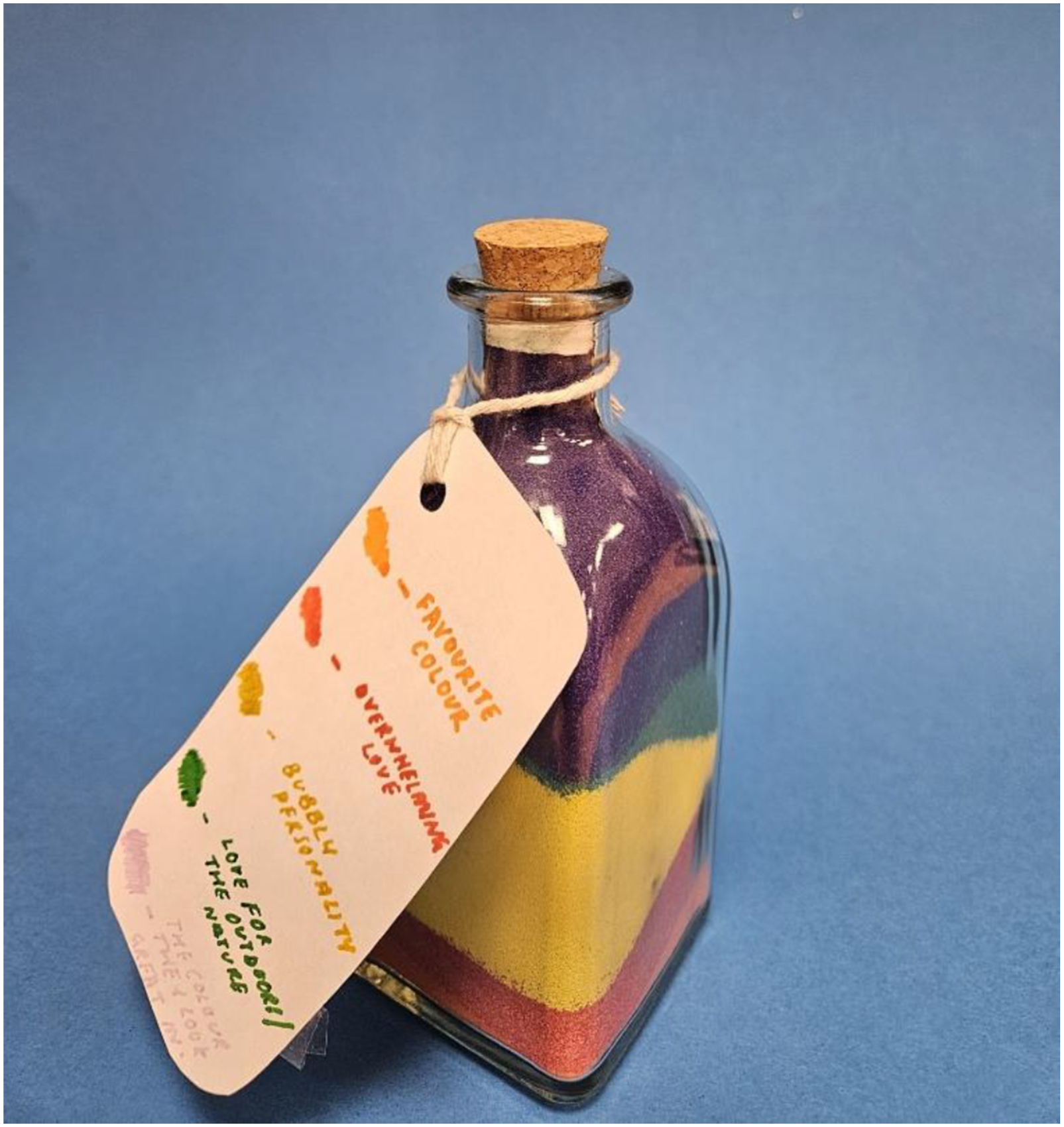
During this activity, attendees use chalk to colour portions of salt which are then added to a glass jar (see Crossley, 2001; Stokes, 2004, for a fuller description of creating salt jars). Attendees are invited to choose colours which represent things they remember about the child that has died, for example special memories, their qualities and what was important to them. There is a meditative aspect to rubbing the salt with the chosen colours and memories often come forth as people speak with fondness about their loved one. We invite people to record what each colour represents on a small tag which is added to the jar as a key. Once the jars are filled, the lid is firmly secured to ensure the salt remains inside and colours do not mix (see Figure 1). The jars look different, depending on your perspective; indicative of the person being remembered and how people show different aspects of themselves more prominently at different times (Stokes, 2004). 2. Memory Trees Completed salt jar
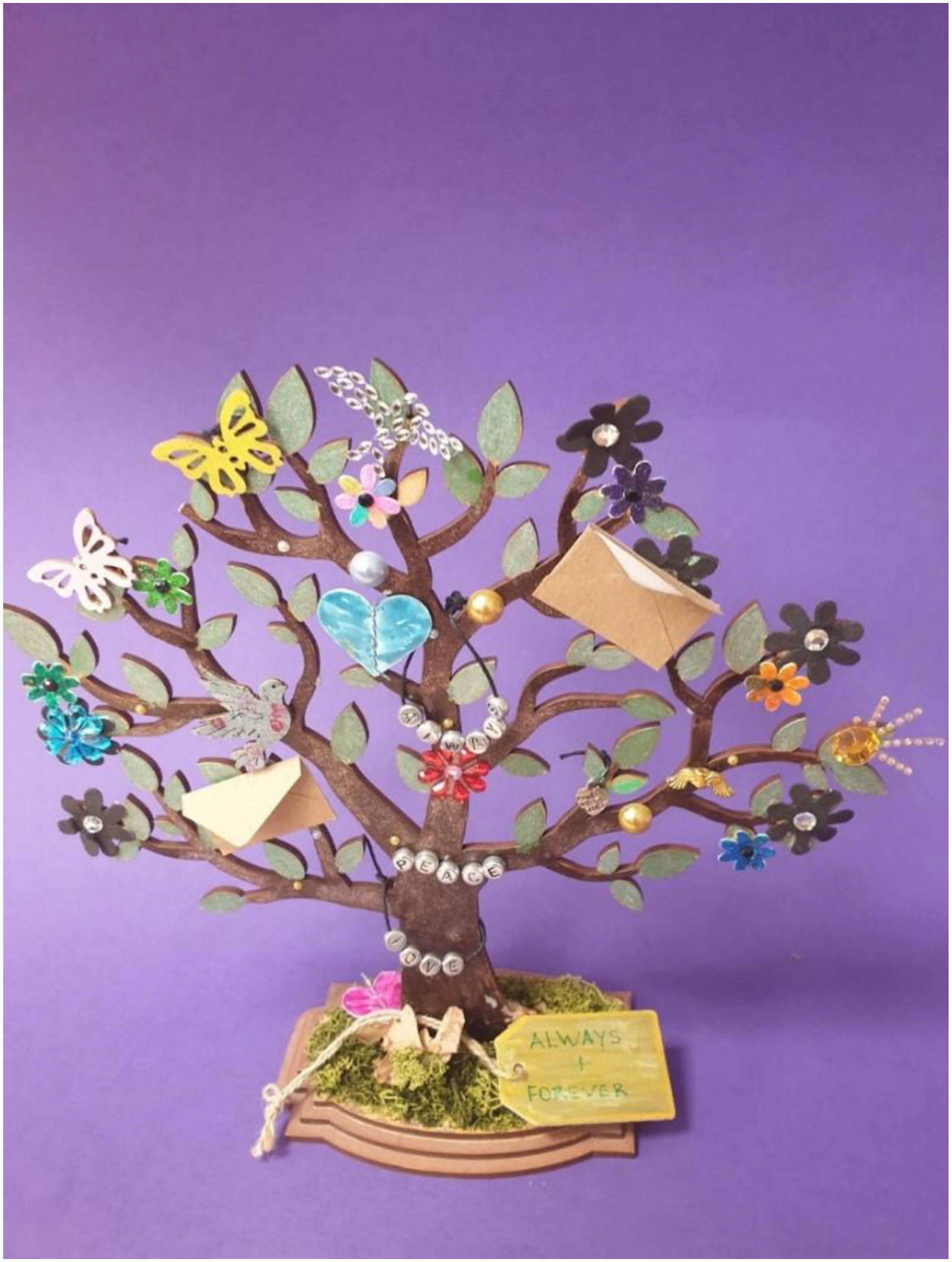
During this activity we decorated small wooden trees (about 15 cm height). These ‘Memory Trees’ became a representation of the child that had died, including special words, things that were important to them or associated with the child, and visual signifiers of special memories; it was also a reflection of the actual Life Force tree we visit during the day (see below). We provided materials to decorate the tree including stickers (flowers, birds, stars, etc) and mossy material to put around the base of the tree. Also, we gave different colour paints and glitter to use, as well as small paper tags to write words and messages that could be hung on the trees (see Figure 2). Once people had completed their trees, we gathered them all together, which gave the sense of a forest of trees. This powerful moment of togetherness honoured the children we were there to remember, while also illustrating the sense of a community of families with similar experiences that are not alone with their grief; this is similar to the planting of a communal ‘forest of life’ completed in Tree of Life groups (Ncube, 2006). 3. Memory Stones Completed memory tree
This activity involved using acrylic paint pens to draw on small washed pebbles (roughly 10 cm diameter). Attendees were invited to bring to mind memories of the person they were there to remember. Then, they were invited to use the paints to make marks and designs representing these memories on the stones, encouraging attendees to be as literal or abstract as they liked (see Figure 3). We are aware that inviting people to ‘draw’ can be a word loaded with expectations of artistic skill and we want the activity to be as inclusive as possible across age and drawing ability. For example, we suggested they could draw literal pictorial representations of these memories, or draw special symbols representing them, or simply choose colours or shapes which have a meaning; our intention being to give value to all types of artistic expression. These ‘memory stones’ could be placed in their home or garden, or even at the Life Force memory tree which some attendees visited later on in the day. Completed stones
During the Activity
Attendees sit at tables to complete the memory activity. A staff member joins each table to facilitate the discussion and ask questions to bring forth memories. The questions asked vary depending on the activity, but some example questions are below: Are there any particular colours that remind you of the person? Are there any colours that are connected with particular memories? Any words that you might want to write? Any symbols? Any special memories that you might want to depict? It could be a pattern, a scene.
Throughout, facilitators offer guidance and support where it is needed. Attendees may talk to each other during this activity, but we also acknowledge that it is OK if people are not talking, as they may just like to do the activity on their own. • Lunch
Eating lunch together gives an opportunity for families to connect more informally. We appreciate the isolation that families can feel in relation to the death of a child, so invite people to talk with others that have had similar experiences, sharing their hard-won knowledges of living alongside grief. Appreciating that the day can be emotionally intense, we provide ‘breakout’ spaces for families too, as some may like to have a moment to themselves away from the hubbub. This includes accessible outdoor spaces for a breather and a place for children to play.
As a team we are conscious to circulate amongst the families who attend. We are also careful to monitor our colleagues throughout the day to ensure they are coping with what can be quite an emotionally-charged day. • Candle lighting
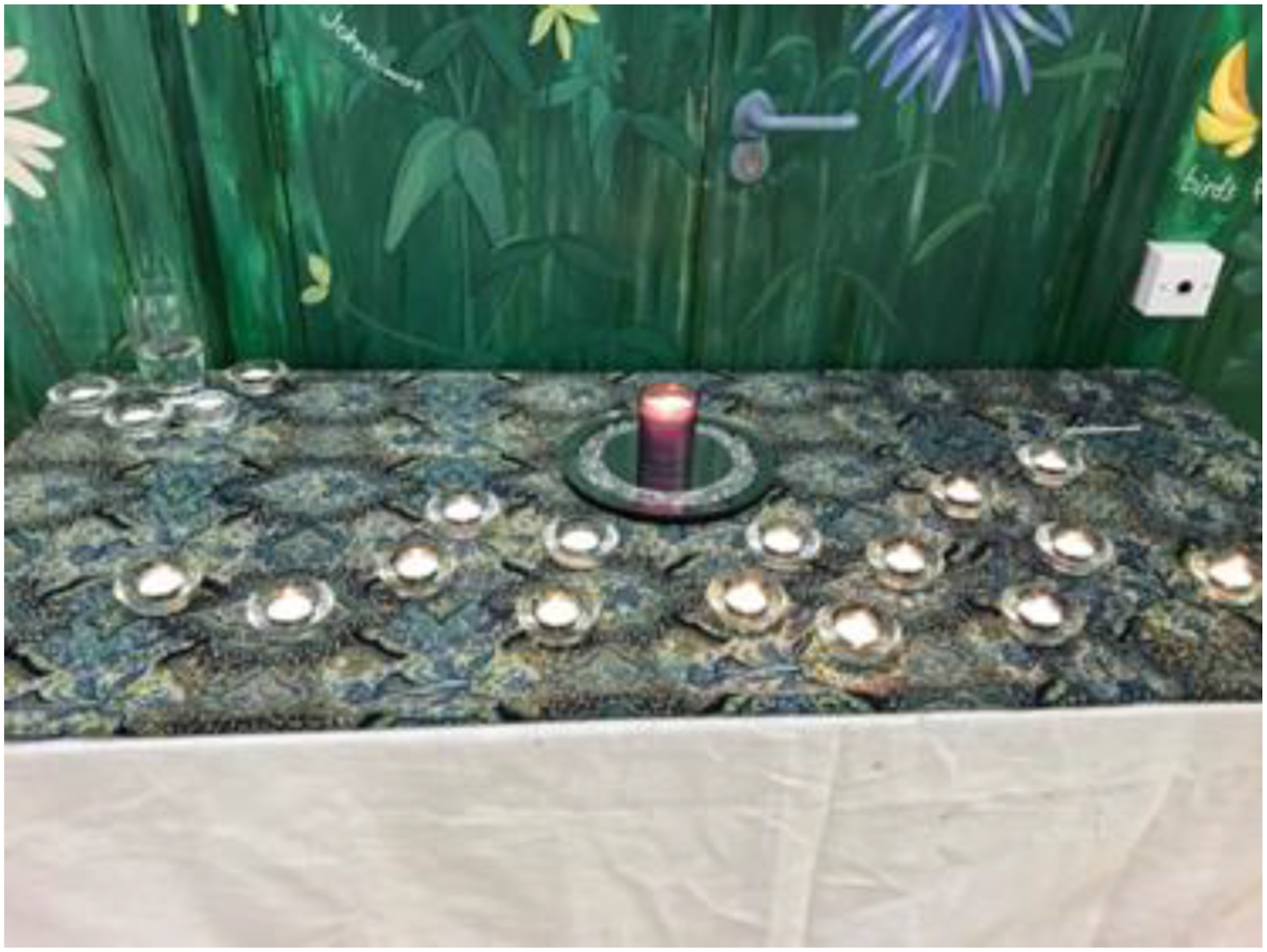
This is a non-denominational ceremony to light a candle of remembrance for the child that has died, however parents often make reference to their spirituality or religious connections during this part of the day. It has previously been led by a multi-faith chaplain or a member of the Life Force Team. The name of each child is read out and the attendees are given an opportunity to share some words if they would like to as a small candle is lit. We often hear more about some of the special memories at this moment or families discuss their appreciation of the team’s support. An organisation called ‘SLOW’ (Surviving the Loss of Our World), which offers bereavement support for parents and siblings (www.slowgroup.co.uk) are invited to the day and at this point often explain their service. We light a large central candle to represent a shared loss, or to recognise we are all there to remember the young children supported by Life Force (see Figure 4). • Life Force Tree and bench Candle lighting ceremony
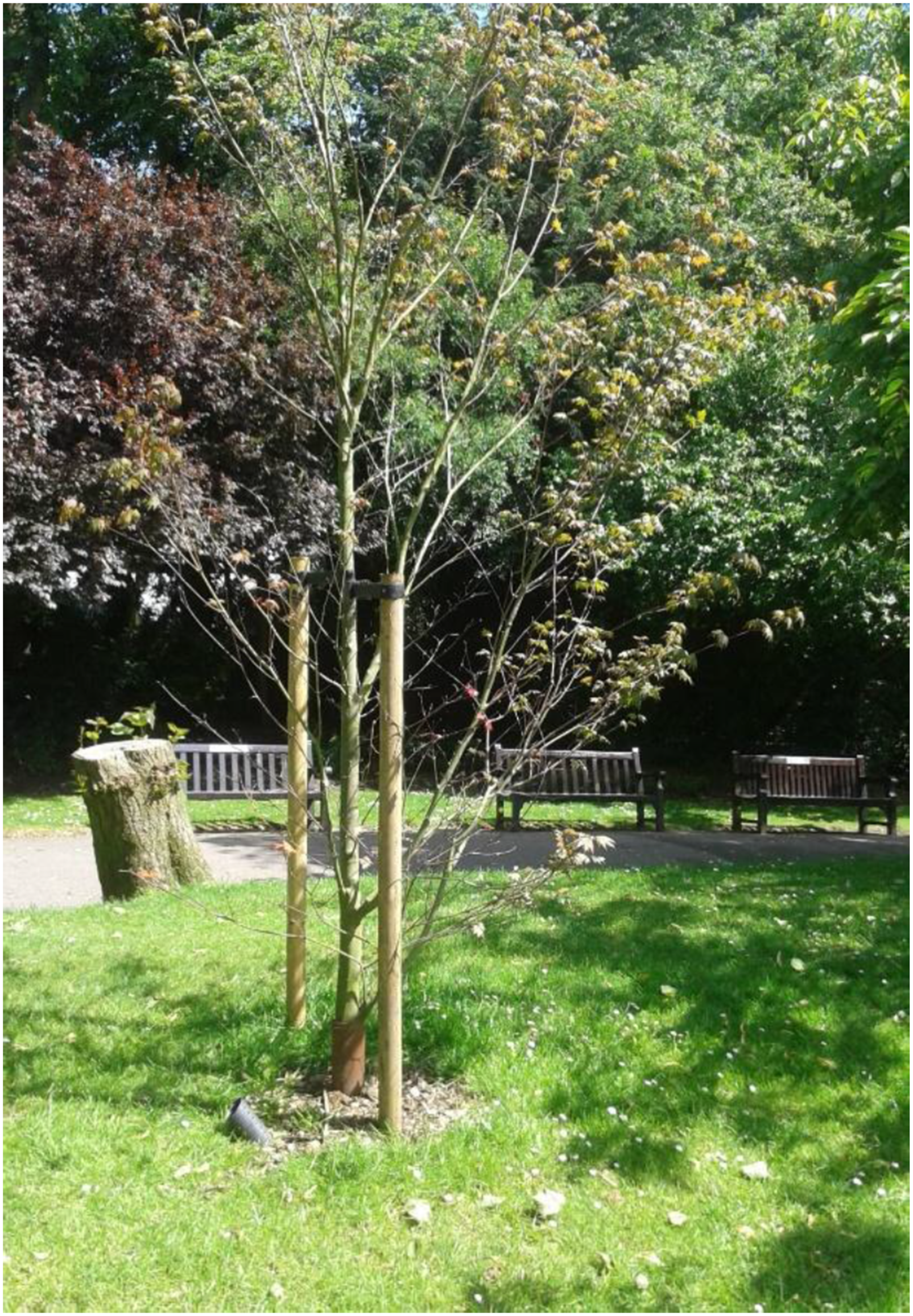
Before setting off for the tree, we invite families to write a message to their loved one on a luggage label; these messages are then tied to the tree. Our Life Force tree is located within a public park at the intersection of the three London boroughs covered by the team (see Figure 5). Parents and siblings of children looked after by the team had let us know that they wanted a physical memorial for their loved ones. There is a nearby bench opposite the tree with a plaque identifying it as connected to the team. These provide a consistent place for our families to come and remember, even after the memory day has finished. Whilst around the tree we release bubbles and read out a poem on the theme of grief which marks the conclusion of our Memory Day. • Debrief Life force memory tree
This is a protected space facilitated by our psychologists to reflect on the often emotional events of the day. We think about what has worked well and what we might need to amend for future events. We also discuss whether there may need to be follow up contact made to any attendees, for example, if they have requested additional psychological support.
Recent Developments
The Covid-19 pandemic had a significant impact on bereavement and mourning, including on access to social networks and usual coping practices (Harrop & Selman, 2022). To counter this and continue to offer an opportunity for bereaved families to access support and connect, we decided to run our Memory Day online in 2020 using a video conferencing platform. This event involved the ‘Memory Stone’ activity described above. As people were attending remotely, we hand delivered the materials for the activity across the 3 boroughs. An online event afforded the opportunity for people to attend from further afield who may have otherwise been unable to attend, including people joining from other parts of the United Kingdom and elsewhere in the world. We created breakout rooms for the activity part of the day, which allowed families to connect while completing the activity, including family members joining from different locations. Further adaptations for an online event included welcoming people on screen and allowing them to each speak and introduce who they were here to remember. We live streamed the candle lighting ceremony onscreen and attendees were given a tealight to simultaneously light at home; we also livestreamed video from the Memory Tree and some attendees made their way to the tree for this part of the day.
In 2021, we delivered a further online day with a similar ‘hybrid’ element where attendees were able to join staff at the Memory Tree for the final part of the day as it was an outside space. In 2022 we resumed in-person events and maintain the possibility of remote attendance for future events if required.
Outcomes
Our Memory Events are well attended each year, with a mixture of first-time attendees and returning families. We have included figures below which indicate how many families attended to remember a child, as well as attendees in total, across two recent yearly Memory Days.
2022 - 17 families, 47 attendees.
2023 - 16 families, 45 attendees.
Two family members, ‘ES’ and ‘LS’, have attended every year since the Memory Day started, remembering their son and brother ‘A’. They generously share their experience of the days below:
What Does the Memory Day Mean to You?
LS - We always look forward to the day and extended family come as well. The main thing that stands out is the activity because you always bring a new thing. It makes us excited! ES - It’s not that we don’t remember A often, it’s just that the day is dedicated to him. It’s his day to remember everything about him and I think that’s really nice. We can feel however we want to feel, get emotional if we have to. It can be nice to spend that day thinking about him, with other families as well, so you don’t feel left out. Earlier on it was like a taboo, you don’t say the person’s name, you just don’t say it. Whereas now we confidently say it. We say it with pride. We had pride before, but now its feeling comfortable with being able to say it and also share the experiences with the youngest in our family. It is a day to remember your loved ones without having any interruption from your daily lives. Being able to feel how you want to and act upon as you may need. LS - I get a sense of relief, sense of warmth and comfort. Like when putting messages on the tree, I feel they’ve reached A. I don’t want to let that kind of thing go. It provides more time to connect with parents, we know they’re in the same boat, we hear their stories. It provides a moment of reflection. ES - It gives me a proud sister moment, going to read his name reminds me I’m his sister and he’s my guardian angel.
What Might You Say to Another Family Who is Thinking About Attending or a Service That is Considering Offering Memory Days?
ES - We would reassure another family that the Memory Day is nothing like a classic bereavement day. You can laugh without being scared. You’re allowed to laugh, celebrate life, fun and enjoy things, it’s not only a sad moment. This is a chance to be with all your different feelings. With Life Force there is no judgement, people can come as they are. The day allows us to be OK and see that our life has moved, but we are still carrying the loss. You can share your feelings – other families have been through the same thing and you’re not alone. It helps to have people to relate to - no one else in our family has gone through anything like this. You can join different parts of the day, when you feel comfortable, arrive and leave when you want if it feels overwhelming. I’d recommend it any day. LS - Definitely go! Meet other families, share your feelings. Other families have been through things the same way. The days are full of memories. It’s good remembering, it brings things out. Also, the different activities - we’ve made a cushion, a drawing – I always find a place to put these somewhere, as they are important to me.
Each year we receive feedback and comments from families that have joined the Memory Day (O’Gorman et al., 2019). People have let us know that it feels special to be part of the day and that they experience it as a lovely tribute to their loved one. They appreciate that the events involve dedicated time to do remembering together and be with the memories of their child. Also, the context of togetherness provided by a group setting provides a counter to the isolation of grief experiences. The promising feedback aligns with evidence suggesting the benefits of narrative therapy approaches to grief when combined with creative and artistic means of expression, particularly within a group setting (Nelson et al., 2024).
Conclusion
It can seem daunting to begin planning a Memory Day and each year as we start the process, we are aware of the extra work. We also know that careful planning is essential for the day to run smoothly. We have continued to run Memory Days for the past 18 years because despite it being time-consuming, it is worthwhile.
From the feedback from the families that attend we are aware how much they benefit from the day. We are also aware that as a staff team we benefit. Many members of the team do not see families beyond a few months following the death of their child. For these staff it is sustaining to be able to see families reach a place where grief is less raw and that they are able to live alongside it. As a team member, being alongside a family who experience the death of a child can invite hopelessness. Kaethe Weingarten (2010) talks about “reasonable hope” being something that is sensible and moderate, you do with others, and sees the future as open and influenceable. The Memory Day offers a way of the team doing ‘reasonable hope’ together with the families they have cared for; the children are never forgotten (Figure 6). We also offer a continuing connection to the families, with whom we have shared a significant period of their lives. The families can choose to end this connection in their own time. Life force tile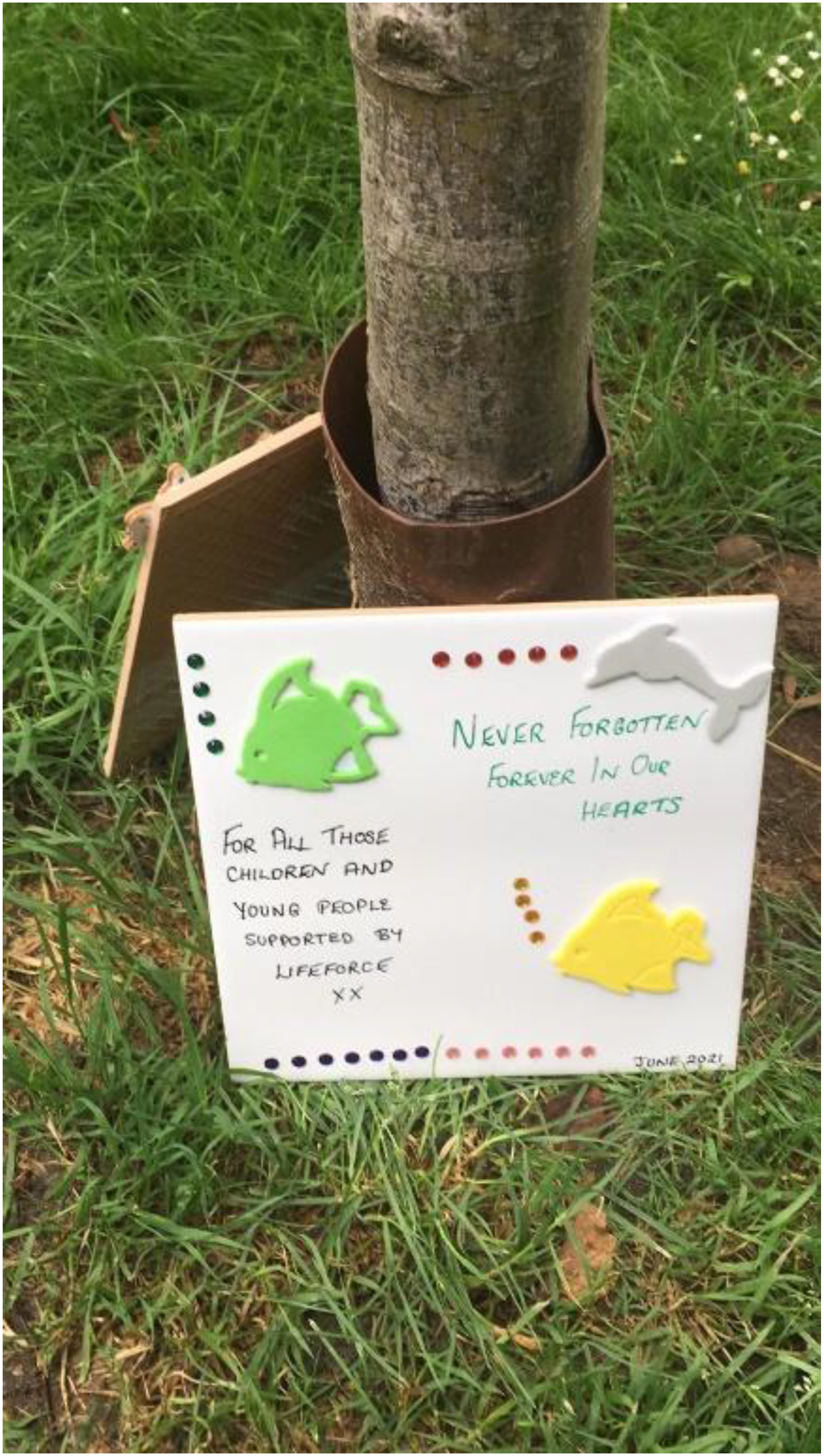
Our days involve a creative activity, and the metaphor of craft feels particularly reasonant. This reflects the agency, creativity, skill, and commitment families show in crafting responses to significant grief (Hedtke & Winslade, 2017); as a team, we are struck by the incredibly hard work this involves and attempt to create spaces for this process to be supported. We hope this article has sparked some new ideas of what may be possible to offer families in your care.
Footnotes
Acknowledgements
We would like to acknowledge all the children, young people and families that have accessed support from Life Force over the years. It has been a privilege to journey alongside them as they have welcomed us into their lives - thank you. We would like to thank all the Life Force team members past, present and future, for their contributions to the Memory Days, as well as volunteers that have joined us to help. Thank you to our colleague Bergen for generating the title of this article – ‘Big thoughts in little jars’ - to describe the salt jar activity. Thank you also to the family who contributed their experience to this article (ES and LS).

Ethical Considerations
This paper did not require ethical approval.
Consent for Publication
Our contributing service users provided written consent for their words to be included and their initials stated.
Funding
The authors received no financial support for the research, authorship, and/or publication of this article.
Declaration of Conflicting Interests
The authors declared no potential conflicts of interest with respect to the research, authorship, and/or publication of this article.