






Abstract
Background
Loneliness during adolescence has increased worldwide in recent years and has been consistently associated with a broad range of adverse psychosocial outcomes. The availability of valid and reliable measures is essential for the early identification of loneliness and for the rigorous evaluation of intervention effectiveness. Nevertheless, multidimensional, psychometrically validated instruments for assessing loneliness in Greek adolescents remain limited.
Objective
The aim of the present study was to examine the psychometric properties of the Greek version of the Relational Provisions Loneliness Questionnaire (RPLQ; Hayden-Thomson, 1989), which assesses social and emotional dimensions of loneliness (i.e., integration and intimacy) within family and peer relationships.
Methods
The sample consisted of 503 students aged 13–14 years, recruited from secondary schools through stratified random sampling. The factor structure was tested via Confirmatory Factor Analysis, while internal consistency, validity evidence, and measurement invariance across gender were examined.
Results
The four-factor model demonstrated the best fit (CFI = .997, TLI = .997, RMSEA = .032, SRMR = .050) and yielded high standardized factor loadings (λ = .63–.93). Internal consistency was high across all dimensions (ω = .87–.92), and convergent, discriminant, and concurrent validity were supported. Measurement invariance across gender was supported at the configural, metric, and scalar (threshold) levels.
Conclusions
The Greek version of the RPLQ is a valid and reliable instrument for the multidimensional assessment of adolescent loneliness, supporting its use in research and prevention efforts.
Plain Language Summary
Loneliness during adolescence can take different forms and occur in different relationships. For some young people, it may mean not feeling close to their family. For others, it may mean feeling excluded by friends or not fully accepted in their everyday relationships. A measure designed for adolescents therefore needs to capture these different experiences, rather than treating loneliness as one general feeling. In Greece, however, there are still few validated tools that assess different forms of loneliness in this age group. This study examined the Greek version of the Relational Provisions Loneliness Questionnaire, a self-report questionnaire that adolescents complete on their own. It focuses on two important relational contexts -family and peers- and, within each context, on two aspects of loneliness: lack of emotional closeness and lack of inclusion and connection in everyday relationships. The study included 503 students aged 13-14 years in Greek secondary schools, who responded to a set of statements about their family and peer relationships. The findings supported the Greek version of the questionnaire. It measured four related but distinct kinds of loneliness -emotional and social loneliness- each in the context of family and of peers. The responses within each part were consistent with one another, and the questionnaire reflected loneliness in the way it was expected to. It also performed in a similar way for boys and girls. These results suggest that the Greek version of the questionnaire can be used by researchers and practitioners to better understand how adolescents experience loneliness with family and peers.
Keywords
Introduction
Loneliness is a negative and unpleasant experience that emerges when an individual perceives a discrepancy between actual and desired social relationships, in terms of quality and/or quantity. It is therefore conceptualized as a subjective experience that is distinct from objective social isolation, in so far as it reflects the perceived inadequacy of an individual’s intimacy and/or social ties (Cacioppo et al., 2006; Perlman & Peplau, 1981).
Adolescence is a critical period marked by the formation and reconfiguration of social identity; adolescents are called upon to negotiate competing developmental needs. Within this context, heightened and often unrealistic interpersonal expectations, experiences of rejection, challenges in establishing social roles, and restrictive parenting practices have been associated with elevated loneliness (Heinrich & Gullone, 2006; Larson et al., 1996; Qualter et al., 2013, 2015; Van Rode et al., 2015). Twenge et al. (2021), based on Programme for International Student Assessment (PISA) data across 37 countries, documented an increasing trend in students’ reported loneliness within the school setting between 2000 and 2018. In Greece, the proportion of students reporting loneliness increased from 8.96% in 2003 to 24.16% in 2018. Although gender differences have been examined extensively, empirical findings remain inconsistent (Maes et al., 2017). Notably, a meta-analysis of 638 studies indicated no statistically significant gender differences overall (Maes et al., 2019).
Intense and chronic experiences of loneliness render adolescents particularly vulnerable (Hawkley & Cacioppo, 2010; Heinrich & Gullone, 2006), with long-term adverse effects on physical and mental health (Mahon et al., 2006; Qualter et al., 2010), academic performance (Benner, 2011; Eccles et al., 2021; Jefferson et al., 2023), and career outcomes (Maes et al., 2022). Consequently, the accurate identification of adolescents experiencing loneliness and the rigorous evaluation of interventions aimed at reducing its negative effects require valid and reliable measurement of the phenomenon (Goossens & Beyers, 2002; Maes et al., 2022).
Loneliness can be conceptualized as either a unidimensional or a multidimensional construct. The unidimensional approach views loneliness as a relatively homogeneous experience that is assumed to be similar across individuals, regardless of circumstances, causes, or relational domains, and thus is assessed via a single measure. In contrast, the multidimensional framework posits that loneliness can take different forms, vary in intensity, and differ as a function of specific social contexts, relationship types, and antecedent conditions (Goossens et al., 2009; Houghton et al., 2014; Maes et al., 2022; Ribeiro et al., 2019). This multidimensional perspective is grounded in Weiss’s (1973) social provisions theory, which proposes that different types of social relationships fulfil distinct social needs. The degree to which these needs are met determines the specific form(s) of loneliness experienced (Galanaki, 2014; Maes et al., 2017).
A central distinction discussed in the literature is that between emotional and social loneliness. Emotional loneliness can be defined as the absence of positive experiences derived from close affective bonds, such as emotional support, love, and intimacy. On the other hand, social loneliness denotes the perceived lack of a network of social relationships which facilitate social integration and a sense of belonging. Emotional loneliness is typically associated with the abrupt disruption of an attachment relationship, whereas social loneliness usually emerges gradually in response to the absence of a social network. These forms of loneliness are considered distinct yet complementary rather than mutually exclusive, as adequacy in one relation domain does not compensate for deficits in another (Galanaki, 2014; Maes et al., 2022; Weiss, 1973). Moreover, both forms may vary by relational context. Current theoretical perspectives define adolescent loneliness as a multidimensional construct comprising social and emotional loneliness within salient relational contexts, particularly relationships with parents and peers (Goossens et al., 2009; Houghton et al., 2016; Maes et al., 2016).
Various instruments have been developed to assess loneliness, which either focus specifically on children and adolescents or have been adapted for use with these populations. Frequently cited measures include the Children’s Loneliness Scale (Asher et al., 1984), the Loneliness and Aloneness Scale for Children and Adolescents (Marcoen et al., 1987), the Peer Network and Dyadic Loneliness Scale (Hoza et al., 2000), the UCLA Loneliness Scale (Russell et al., 1980), and the Relational Provisions Loneliness Questionnaire (Hayden-Thomson, 1989). Each instrument has its own characteristics, advantages, and limitations (see Maes et al., 2022 for a comprehensive overview). Consequently, instrument selection should be guided by the specific research aims, the loneliness dimension of interest, and the relational context under investigation (Maes et al., 2022).
In the Greek context, the availability of psychometrically robust instruments for assessing loneliness in children and adolescents remains limited, and extant studies often report only basic reliability indices without comprehensive validation. One instrument that has been used in Greek research is the Children’s Loneliness Scale (Asher et al., 1984), adapted by Galanaki and Kalantzi-Azizi (1999). However, this instrument primarily captures the social dimension of loneliness and does not adequately assess emotional loneliness within peer relationships (Maes et al., 2022). Another instrument used with Greek samples is the UCLA Loneliness Scale (Russell et al., 1980), adapted in the Greek context by Anderson and Malikiosi-Loizos (1992). The measure is unidimensional and was originally developed to assess subjective feelings of loneliness and social isolation in adults (Maes et al., 2022).
The Relational Provisions Loneliness Questionnaire (RPLQ), developed by Hayden-Thomson (1989) in Canada, constitutes a multidimensional instrument intended for children and adolescents. The instrument is grounded in Weiss’s (1973) social provisions framework. The items assess loneliness across social and emotional dimensions within two primary relational contexts, namely peers and family. Specifically, the RPLQ comprises four dimensions: Lack of peer-group integration, Lack of peer-personal intimacy, Lack of family-group integration, and Lack of family-personal intimacy. The instrument has been translated into multiple languages and used in various countries, including Belgium, Portugal, Australia, and Greece.
Ribeiro et al. (2019) replicated the four-factor structure in Portuguese adolescents aged 12–15 years. Confirmatory factor analysis results showed excellent fit to the data (χ2/df = 2.69, CFI = .99, RMSEA = .05, MECVI = .26). In Belgian adolescents of comparable age, Maes et al. (2017) reported acceptable fit for the two-factor model (CFI = .911, RMSEA = .081, SRMR = .067) when using peer-related social and emotional loneliness. Similarly, Goossens and Beyers (2002) provided support for a two-factor model of loneliness distinguishing family- and peer-related loneliness, based on confirmatory factor analysis across several loneliness measures; however, their analyses did not explicitly evaluate the four-factor structure of the RPLQ.
With respect to interrelations among the RPLQ dimensions, Ribeiro et al. (2019) observed moderate correlations between Lack of peer-group integration and Lack of family-group integration (r = .44), and between Lack of peer-personal intimacy and Lack of family-personal intimacy (r = .31), suggesting related yet distinct constructs across contexts. Within the peer context, the association between Lack of peer-group integration and Lack of peer-personal intimacy was relatively strong (r = .58), whereas within the family context the correlation between Lack of family-group integration and Lack of family-personal intimacy (r = .79) was notably higher. A similar pattern was reported by Goossens and Beyers (2002), who found low-to-moderate correlations between Lack of peer-group integration and Lack of family-group integration (r = .34) and between Lack of peer-personal intimacy and Lack of family-personal intimacy (r = .27). Likewise, the correlation between Lack of peer-group integration and Lack of peer-personal intimacy (r = .51) was relatively high, whereas the correlation between Lack of family-group integration and Lack of family-personal intimacy (r = .70) was high. Consistent evidence was also provided by Maes et al. (2017), who found moderate-to-relatively high correlations between Lack of peer-group integration and Lack of peer-personal intimacy (r = .59). Overall, these findings suggest that adolescents may differentiate more clearly between integration and intimacy within peer relationships, whereas in the family context these relational provisions may overlap (Hayden-Thomson, 1989; Ribeiro et al., 2019).
Regarding internal consistency, the RPLQ subscales typically yield reliability coefficients ranging from acceptable (>.70) to excellent (>.90) (Galanaki et al., 2012; Goossens & Beyers, 2002; Maes et al., 2017; Ribeiro et al., 2019; Terrell-Deutsch, 1999). Measurement invariance across gender has been supported at the configural, metric, and scalar levels for the four subscales in Portuguese adolescents (Ribeiro et al., 2019), and at the metric and scalar levels for peer-related loneliness dimensions in Belgian adolescents (Maes et al., 2017). These findings indicate that boys and girls interpret the items in equivalent ways, permitting meaningful gender comparisons.
Despite evidence supporting the adequacy of RPLQ’s factor structure, internal consistency, and measurement invariance across gender, the broader empirical base remains limited given the relatively infrequent use of the instrument, highlighting the need for further validation research (Maes et al., 2022). Moreover, Greek literature lacks a psychometrically validated instrument for children and adolescents that adequately captures both social and emotional loneliness across the primary relational contexts in which loneliness is experienced, namely family and peers. From this perspective, the RPLQ offers a substantive methodological advantage by enabling a more comprehensive assessment of loneliness in youth.
The purpose of the study was to evaluate the psychometric properties of the RPLQ in a sample of Greek early adolescents. Specifically, the study examined the structural, convergent, and discriminant validity of the instrument, as well as the internal consistency of its dimensions. The concurrent validity of the instrument was assessed by examining associations between RPLQ dimensions and students’ sense of community in the school, a construct that has been consistently linked to lower loneliness (Cicognani et al., 2014; Pretty et al., 1994, 1996; Prezza et al., 2007). Finally, measurement invariance across gender was tested to determine whether the RPLQ functions equivalently for boys and girls.
Method
Participants
The sample included 503 secondary school students aged 13–14 years, of whom 275 (54.7%) were girls and 228 (45.3%) were boys. The majority of participants (n = 464; 92.2%) were Greek, whereas 39 students (7.8%) reported a different nationality. Stratified random sampling was used to enhance representativeness of the student target population. Data were collected from 20 public schools located within the metropolitan area of Thessaloniki, with an equal distribution across the western (n = 10) and the eastern (n = 10) sectors, thereby ensuring balanced geographical coverage in terms of school placement.
Measures
The Greek version of the instrument, translated and culturally adapted by Galanaki et al. (2012) for students aged 10–11 years, was administered with permission from the original developers. Prior to the main data collection, a pilot study was conducted with a small group of students aged 13–14 years (N = 22), to test the item comprehension and linguistic appropriateness. No modifications were deemed necessary.
Procedure
Ethical approval was obtained from the Research Ethics Committee of the University of the Aegean, and the study was conducted in accordance with the ethical principles of the Declaration of Helsinki (2025). Subsequently, formal authorization was secured from the relevant Regional Education Authority and participating school administrations.
During the initial school visit, students received sealed envelopes containing an information letter and a parental consent form. In the subsequent phase, students for whom parental consent had been obtained completed the questionnaires via a paper-and-pencil format. Administration occurred collectively within the classroom during regular instructional time and was supervised by a member of the research team. Students were informed about the purpose of the study, the confidentiality of the data, the anonymous and voluntary nature of participation, and their right to withdraw at any stage. Data collection took place between February and April 2025.
Statistical Analysis
Data were analyzed using IBM SPSS Statistics (version 26) and R (version 4.5.1), specifically the lavaan and psych packages.
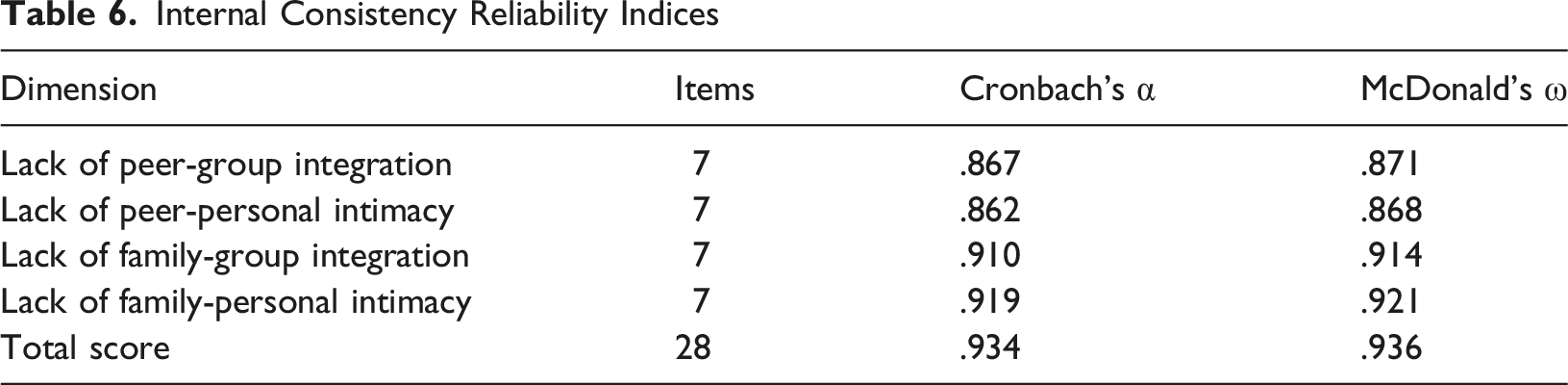
Missing data were examined prior to analysis. The distribution of missing values showed no evidence of a systematic pattern, and the proportion of missing values was low (<2%); therefore, no missing-data handling procedures were applied. Given that the sample was drawn from multiple schools, the Intraclass Correlation Coefficient (ICC) was calculated to assess potential clustering effects. The ICC value (.017) indicated a negligible clustering effect and did not warrant multilevel modelling. Descriptive statistics were computed for each subscale and for the total scale. Internal consistency was examined using Cronbach’s alpha (α) and McDonald’s omega (ω) reliability coefficients. The latter does not require the assumption of tau-equivalence and is thus considered more appropriate for multidimensional scales (Dunn et al., 2014). Values exceeding .70 indicate acceptable reliability (Awang, 2012).
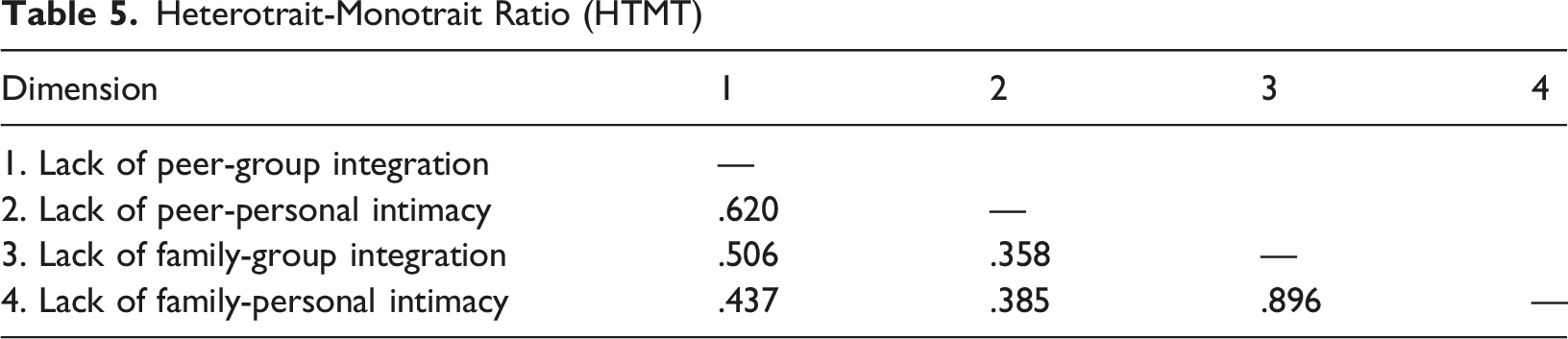
Confirmatory factor analysis (CFA) was selected as the most appropriate method for examining structural validity, given that the RPLQ is grounded in a well-defined theoretical framework (Weiss, 1973) and has been documented as a four-factor instrument (Hayden-Thomson, 1989), with subsequent support across different sociocultural contexts (Goossens & Beyers, 2002; Ribeiro et al., 2019; Terrell-Deutsch, 1999). CFA models were estimated with the Weighted Least Squares Mean and Variance Adjusted (WLSMV) estimator, which is appropriate for Likert-type ordinal data, does not assume multivariate normality, and yields robust parameter estimates, standard errors, and model fit indices (Brown, 2015; Park, 2023). Three competing models were examined. The first was a unidimensional model, with all items specified to load on a single general loneliness factor. The second was a two-factor model organized by relational context. In this model, the items from the Lack of peer-group integration and Lack of peer-personal intimacy dimensions were specified to load on a Peer-related loneliness factor, whereas the items from the Lack of family-group integration and Lack of family-personal intimacy dimensions were specified to load on a Family-related loneliness factor. The third was the four-factor model, which corresponded to the four RPLQ dimensions described in the Measures section. Model fit was evaluated using the Comparative Fit Index (CFI ≥.90), Tucker-Lewis Index (TLI ≥.90), Root Mean Square Error of Approximation (RMSEA ≤.08, with 90% confidence interval), and Standardized Root Mean Square Residual (SRMR ≤.08) (Hu & Bentler, 1999; Kline, 2016). Convergent validity was assessed via standardized factor loadings and Average Variance Extracted (AVE) as an additional indicator of construct validity. Factor loadings greater than .50 and AVE values greater than .50 were taken as evidence of convergent validity (Brown, 2015; Rönkkö & Cho, 2022). Discriminant validity was examined through latent factor correlations and the Heterotrait-Monotrait ratio (HTMT). Latent correlations lower than .85 between factors, while HTMT values lower than .90 were interpreted as evidence of adequate discriminant validity (Henseler et al., 2015; Kline, 2016; Rönkkö & Cho, 2022).
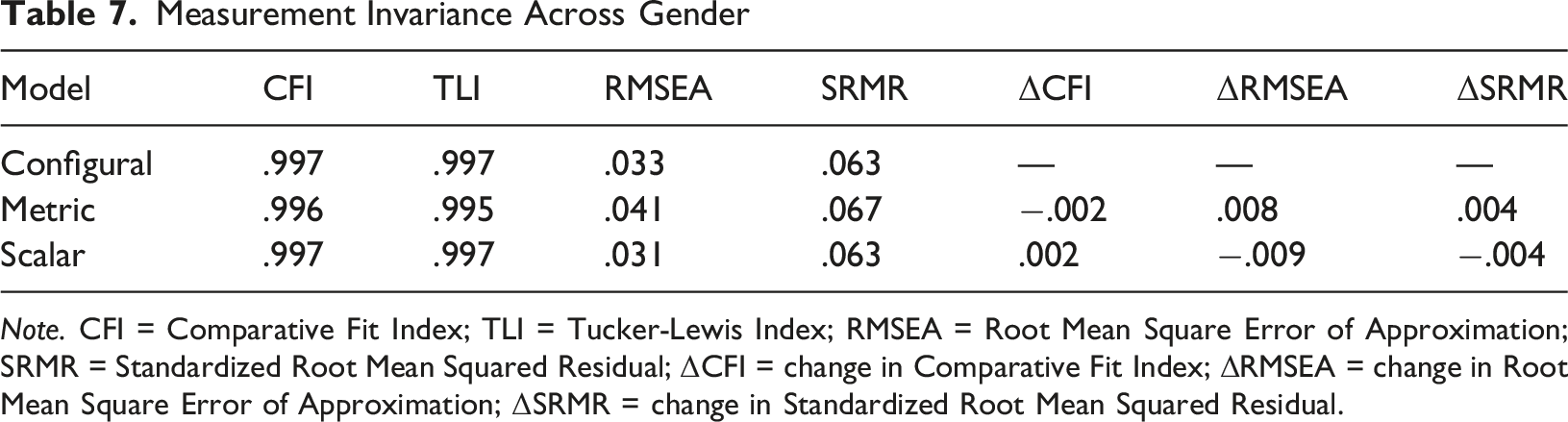
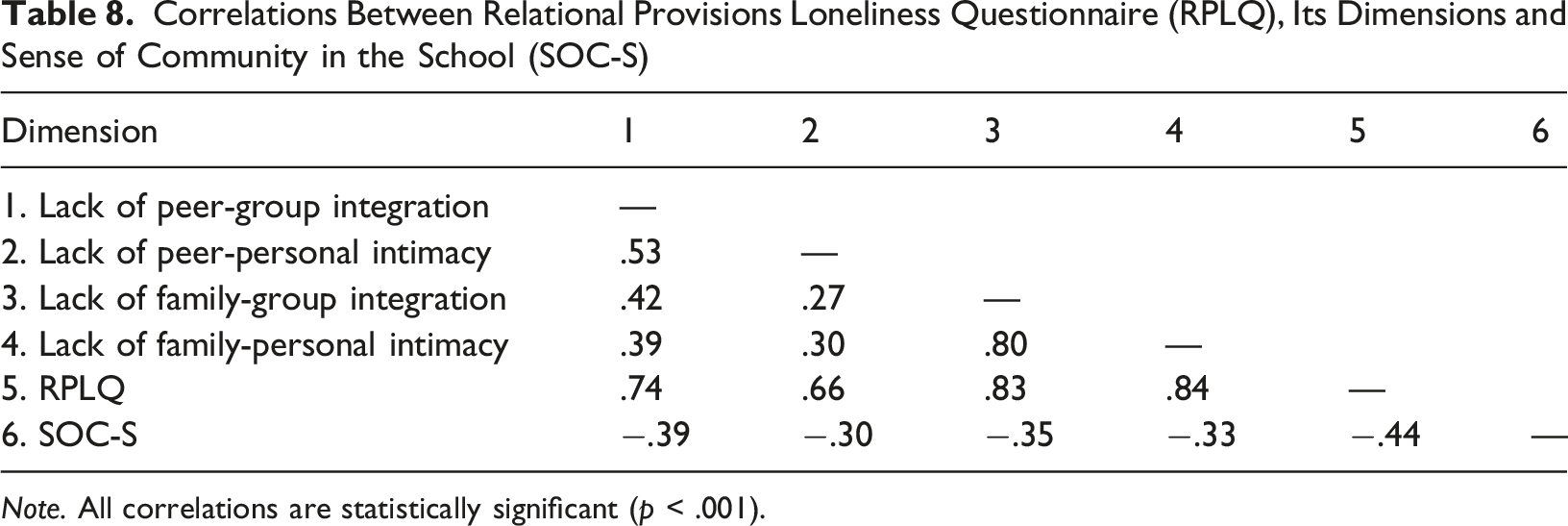
Measurement invariance across gender was tested using multi-group confirmatory factor analysis (MG–CFA) with the WLSMV estimator at the configural, metric, and scalar (threshold) invariance levels to examine measurement equivalence between boys and girls. Invariance decisions were based on changes in fit indices, using ΔCFI ≤.010, ΔRMSEA ≤.015, and ΔSRMR ≤.030 as criteria for metric invariance, and ΔSRMR ≤.010 for scalar invariance (Chen, 2007). Independent samples t-tests were conducted to examine gender differences in subscales and total scores, facilitating comparability with prior research. Concurrent validity was evaluated using Pearson’s r correlations among the RPLQ subscales, the RPLQ total score, and the Sense of Community in the School scale, which is theoretically expected to be inversely associated with loneliness (Cicognani et al., 2014; Pretty et al., 1994).
Results
Descriptive Statistics
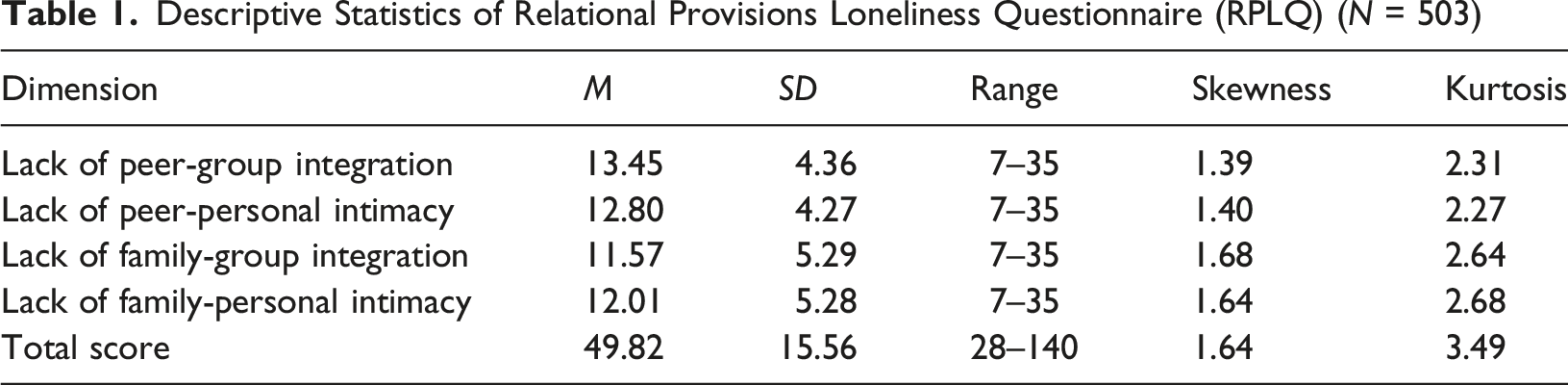
Descriptive Statistics of Relational Provisions Loneliness Questionnaire (RPLQ) (N = 503)
Confirmatory Factor Analysis
Model Fit Indices for Confirmatory Factor Analysis Models
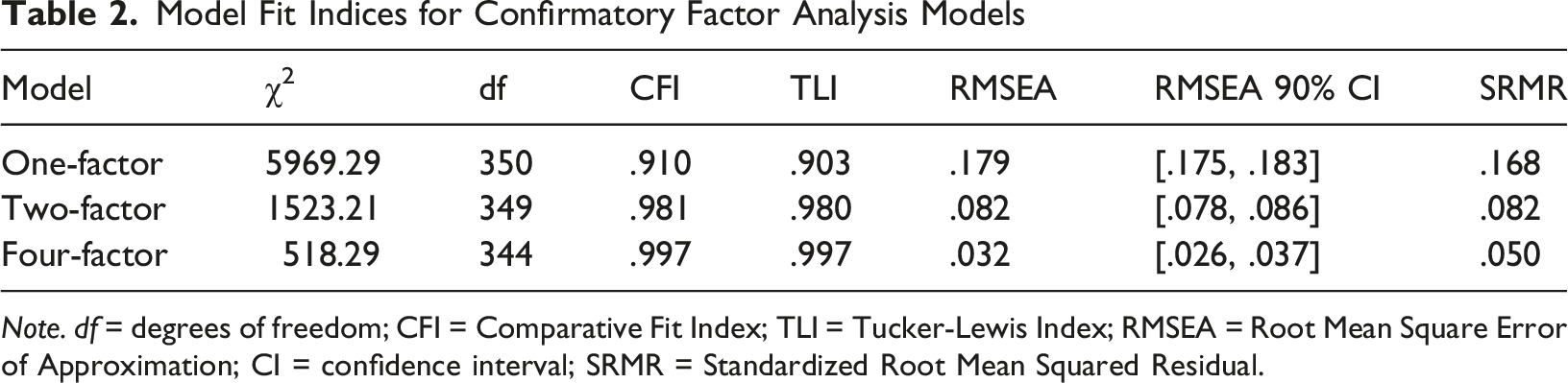
Note. df = degrees of freedom; CFI = Comparative Fit Index; TLI = Tucker-Lewis Index; RMSEA = Root Mean Square Error of Approximation; CI = confidence interval; SRMR = Standardized Root Mean Squared Residual.
Standardized Factor Loadings for the Four-Factor Model
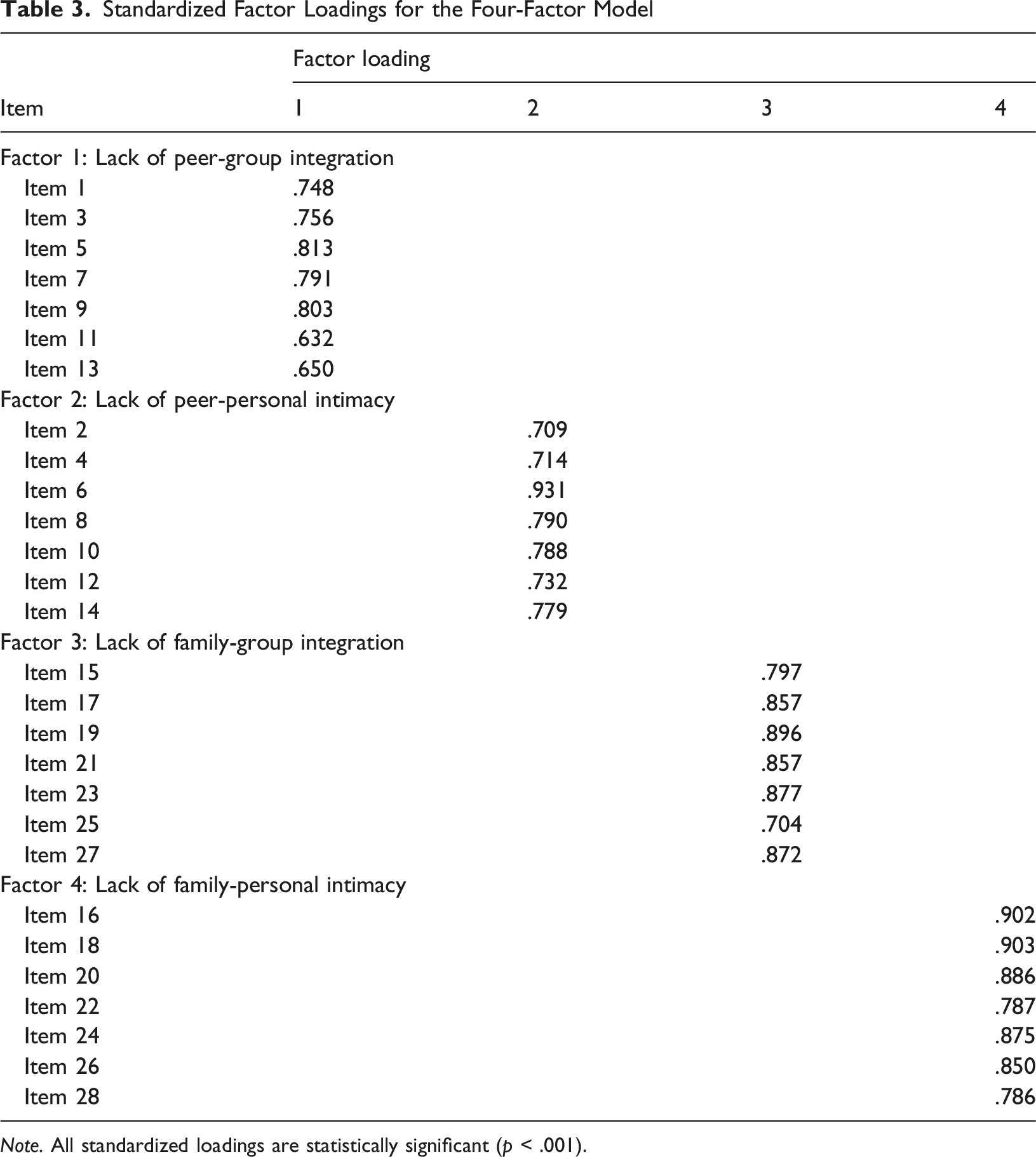
Note. All standardized loadings are statistically significant (p < .001).
Convergent validity was additionally assessed using the Average Variance Extracted (AVE) index. The AVE values for the four latent factors were .56, .61, .71 and .74, all exceeding the conventional criterion of .50 (Brown, 2015; Rönkkö & Cho, 2022). These findings indicate that each factor accounts for a satisfactory proportion of variance in its observed indicators, further supporting the convergent validity of the RPLQ.
Latent Factor Correlations
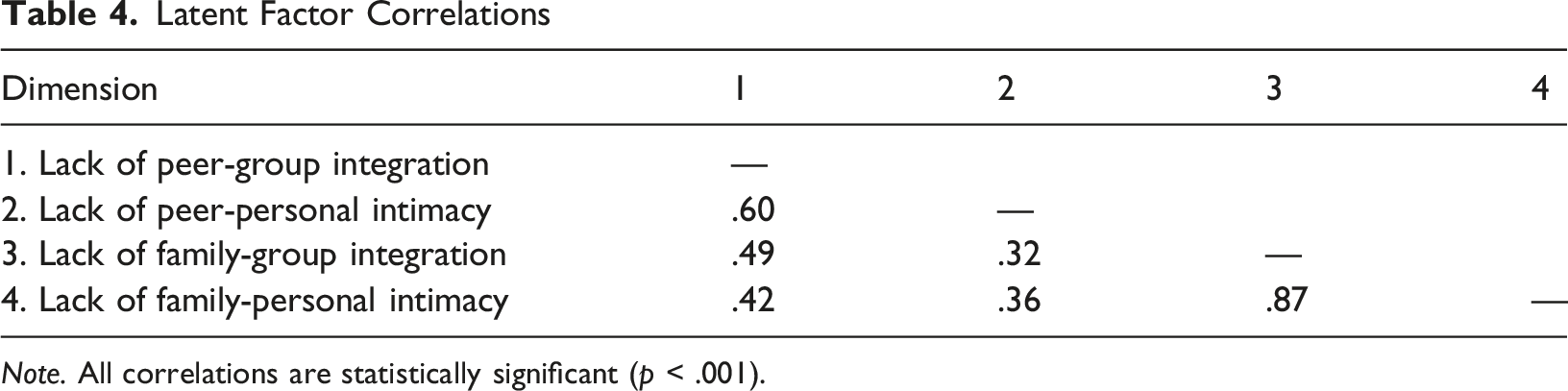
Note. All correlations are statistically significant (p < .001).
Heterotrait-Monotrait Ratio (HTMT)
Internal Consistency Reliability
Internal Consistency Reliability Indices
Measurement Invariance Across Gender
Measurement Invariance Across Gender
Note. CFI = Comparative Fit Index; TLI = Tucker-Lewis Index; RMSEA = Root Mean Square Error of Approximation; SRMR = Standardized Root Mean Squared Residual; ΔCFI = change in Comparative Fit Index; ΔRMSEA = change in Root Mean Square Error of Approximation; ΔSRMR = change in Standardized Root Mean Squared Residual.
Independent-samples t-tests were then conducted to examine gender differences in the observed scores. Girls reported significantly higher levels of loneliness than boys in Lack of peer-group integration (t(501) = −2.99, p = .003) and Lack of family-group integration (t(501) = −3.32, p = .001). No significant gender differences were observed for Lack of peer-personal intimacy (t(501) = 1.65, p = .100) and Lack of family-personal intimacy (t(501) = −1.68, p = .093). At the total-score level, girls also reported significantly higher loneliness than boys (t(501) = −2.08, p = .038).
Concurrent Validity
Correlations Between Relational Provisions Loneliness Questionnaire (RPLQ), Its Dimensions and Sense of Community in the School (SOC-S)
Note. All correlations are statistically significant (p < .001).
Discussion
The lack of a psychometrically validated multidimensional instrument for assessing loneliness in Greek adolescents – one that captures both social and emotional dimensions across the family and peer relational contexts – constituted the primary rationale for the present study. Additionally, given the relatively limited use of the Relational Provisions Loneliness Questionnaire (RPLQ) in prior research, further investigation of its psychometric properties was warranted.
Accordingly, the purpose of the study was to evaluate the psychometric properties of the RPLQ in a sample of Greek early adolescents, including its factorial structure, internal consistency, convergent, discriminant, and concurrent validity, as well as its measurement invariance across gender.
Consistent with Weiss’s (1973) theoretical framework and prior empirical findings supporting the four-factor model structure of the instrument (Goossens & Beyers, 2002; Hayden-Thomson, 1989; Ribeiro et al., 2019), confirmatory factor analysis was employed as the most appropriate method for evaluating the latent structure. The results indicated that the four-factor model, comprising Lack of peer-group integration, Lack of peer-personal intimacy, Lack of family-group integration, and Lack of family-personal intimacy, demonstrated the best fit to the data relative to the unidimensional and two-factor models, in line with the above studies. Standardized factor loadings were uniformly high and statistically significant (.63–.93), and Average Variance Extracted values exceeded the recommended threshold of .50 for all latent factors. These findings provide evidence supporting the convergent validity, as the items of each factor represent the latent dimensions. Overall, the CFA fit indices in combination with the high standardized factor loadings and the Average Variance Extracted values indicate that the four-factor model, which differentiates the dimensions of integration and intimacy across peers and family contexts, represents the optimal psychometric structure of the instrument in the examined sample. Importantly, this structure is consistent with Weiss’s (1973) conceptualization of loneliness as a multidimensional phenomenon that varies according to both the nature of relational provisions (integration versus intimacy) and the relational domains in which deficits occur (family versus peers).
Discriminant validity was assessed through latent factor correlations and the Heterotrait-Monotrait ratio (HTMT). Correlations between peer and family dimensions were moderate (.32–.49), indicating that, although loneliness experiences across contexts are associated, they remain conceptually distinct. These correlations document that elevated loneliness in one relational context does not entail comparable loneliness in the other. Within the peer context, the moderate to relatively high correlation (.60) between the dimensions of integration and intimacy suggests that they are related, although they capture distinct aspects of adolescents’ loneliness. The differentiation between peer-group integration and close peer emotional bonds provides support for the multidimensional nature of loneliness. Given that adolescents spend a substantial portion of their daily lives in the school environment – the primary setting for peer interaction – they may experience a sense of belonging without necessarily developing dyadic relationships, and vice versa (Goossens & Beyers, 2002; Maes et al., 2017; Zissi & Chiou, 2017). By contrast, a high correlation (.87) was observed between the dimensions of integration and intimacy within the family. This association does not necessarily indicate conceptual overlap; rather, it is consistent with theoretical expectations regarding the structure of family relationships, wherein integration and intimacy frequently co-occur and reinforce one another, as the family simultaneously functions as a primary context of both attachment and belonging (Hayden-Thomson, 1989; Ribeiro et al., 2019; Weiss, 1973). From a methodological standpoint, this interpretation aligns with the caution articulated by Rönkkö and Cho (2022), who argue that latent correlations should be interpreted as indicators of construct relatedness rather than as definitive evidence of construct non-distinctiveness. Additionally, HTMT values for all factors did not exceed the recommended threshold (<.90) (Henseler et al., 2015; Kline, 2016; Rönkkö & Cho, 2022). Taken together, the findings support the discriminant validity of the measure.
Concurrent validity was supported through statistically significant, negative, and moderate correlations with Sense of Community in the School. Specifically, students who reported higher levels of loneliness also reported lower levels of sense of school community, a finding consistent with previous research (Cicognani et al., 2014; Pretty et al., 1994; Pretty et al., 1996; Prezza et al., 2007). The direction of the correlations is consistent with theoretical expectations that loneliness is associated with social integration in the school context, whereas the moderate magnitude is compatible with the view that loneliness is a subjective and contextually embedded experience shaped by multiple determinants beyond sense of community at school alone.
Cronbach’s alpha and McDonald’s omega indicated high internal consistency reliability for each dimension and for the overall scale (α, ω > .80). This pattern replicates findings reported in prior studies using the RPLQ in various sociocultural contexts (Galanaki et al., 2012; Goossens & Beyers, 2002; Maes et al., 2017; Ribeiro et al., 2019; Terrell-Deutsch, 1999).
Measurement invariance across gender was supported at the configural, metric, and scalar levels, indicating that the measure functions equivalently for boys and girls and enabling meaningful comparisons of latent means and observed scores. In the present study, statistically significant gender differences were found, with girls reporting higher loneliness in the integration dimensions within both peer and family contexts, as well as on the total scale. This pattern is congruent with some prior evidence suggesting higher reported loneliness among girls (Goossens & Marcoen, 1999). A plausible explanation for these differences concerns gender-differentiated relational orientations, whereby girls may place greater emphasis on emotional closeness and relational quality, whereas boys may prioritize broader group-based affiliation (Maes et al., 2017). However, it is important to note that the broader literature on gender differences remains inconsistent, with meta-analytic evidence indicating mixed findings across studies (Maes et al., 2019).
Several limitations of the current study should be acknowledged. First, the sample was drawn from a single geographical region of Greece and from a specific age group, thereby constraining the generalizability of the findings to other sociocultural contexts and developmental periods. Second, concurrent validity was assessed using a single external criterion, and temporal stability of the measure was not examined. Future research should therefore test the instrument across different age groups as well as more diverse geographical and sociocultural contexts. Third, the validation evidence could be strengthened by incorporating additional external criteria, including alternative loneliness measures and theoretically relevant constructs. Finally, the assessment of test-retest reliability would provide evidence of measurement stability over time.
In conclusion, the Greek version of the RPLQ appears to constitute a valid and reliable instrument for assessing loneliness in early adolescence. Its multidimensional structure permits the differentiation between integration and intimacy dimensions of loneliness across family and peer contexts, thereby providing a more nuanced understanding of adolescents’ loneliness experiences. In this regard, the instrument addresses a substantive methodological gap in the Greek literature and may also contribute to the broader international evidence base, given the instrument’s relatively limited use. The measure may facilitate the early identification of adolescents experiencing loneliness and inform the design and evaluation of interventions aimed at reducing its adverse effects.
Footnotes
Acknowledgements
The authors are grateful to the participating schools, students, and their families for their contribution to this research.

Ethical Considerations
All procedures performed in this study were approved by the Research Ethics Committee of the University of the Aegean (Approval No. 28599/31-08-2023) and were conducted in accordance with the ethical principles of the Declaration of Helsinki. The necessary permissions were also obtained from the relevant Regional Education Authority of the Greek Ministry of Education, Religious Affairs and Sports (Approval No. 26382/29-12-2023).
Consent to Participate
Written informed consent was obtained from the parents or legal guardians of all participating students prior to data collection. Students also provided their informed assent.
Author Contributions
K.V. conceived the study, conducted the statistical analyses, and drafted the manuscript.
A.Z. supervised the study and contributed to the conceptualization and revision of the manuscript.
E.G. contributed to the interpretation of the findings and critically revises the manuscript.
All authors read and approved the final version of the manuscript.
Funding
The authors received no financial support for the research, authorship, and/or publication of this article.
Declaration of Conflicting Interests
The authors declared no potential conflicts of interest with respect to the research, authorship, and/or publication of this article.
Data Availability Statement
The datasets generated during and/or analyzed during the current study are available from the corresponding author on request.