







Abstract
This study examined the roles of grandparent-child cohesion and friendship quality in left-behind children’s positive and negative affect compared with non-left-behind children. Data from 557 participants indicated that grandparent-child cohesion and friendship quality predicted children’s emotional adaptation. Friend trust and support and intimate exchange had a stronger predictive effect on positive affect among non-left-behind children. Moreover, the interaction effects between grandparent-child cohesion and friendship quality on children’s positive affect supported the reinforcement model, while the interaction effects on negative affect supported the reinforcement model among left-behind children but supported the compensation model among non-left-behind children.
Keywords
Introduction
Globally, in hopes of increasing family income and improving the circumstances of their families and children, large numbers of laborers who originate from low-income or middle-income regions have migrated to developed regions looking for employment opportunities (Fellmeth et al., 2018). Millions of children are thus left behind by their migrated parents. In recent years, parental absence caused by internal or international migration has become a worldwide phenomenon, which occurs predominantly in developing countries (Wen and Lin, 2012). In China, the number of people in the migrant population has increased to 244 million, and most of them have moved from the countryside to cities (National Bureau of Statistics of China et al., 2017). Due to financial constraints and the institutional policy of urban-rural separation in China, the number of left-behind children aged 17 years or younger has reached approximately 40.51 million in the rural areas of China (Dai and Chu, 2018; National Bureau of Statistics of China et al., 2017). Although left-behind children may obtain better economic support from their parents, most of them live in disadvantaged situations lacking parental supervision, support, and guidance (Wen and Lin, 2012), which increases the risk of experiencing emotional maladaptation. Rural left-behind children were more likely to suffer from emotional maladaptation than non-left-behind children (Wang and Mesman, 2015; Wang et al., 2019; Wu et al., 2019; Zhao and Yu, 2016).
According to the risk and resilience framework (Corcoran and Nichols-Casebolt, 2004), identifying protective factors that improve wellbeing may be particularly important for left-behind children. Although growing attention has been given to left-behind children’s emotional adaptation and protective factors against vulnerable situations, the literature is mainly based on the independent role of protective factors from different systems. However, children’s adaptation in disadvantaged situations depends on multiple interacting systems, which is a growing international interest in the resilience approach (Masten, 2014; Masten and Cicchetti, 2016). Exploring the interactions of protective factors from different systems would be helpful in understanding protective mechanisms that improve the wellbeing of left-behind children. Thus, based on the comparison with non-left-behind children, this study was designed to examine the interaction effects of protective factors embedded in the family system (i.e. grandparent-child cohesion) and the peer system (i.e. friendship quality) on left-behind children’s positive and negative affect.
Grandparent-child cohesion and positive/negative affect of left-behind children
In the context of parental absence, emotional maladaptation is common among left-behind children. Although the outcomes of previous studies are somewhat mixed, most studies lend support to the negative effects of parental absence on children’s emotional adaptation. Compared with non-left-behind children, left-behind children had higher levels of depression, loneliness, and anxiety and lower levels of happiness (Dai and Chu, 2018; Faisal and Turnip, 2019; Lan et al., 2019; Su et al., 2017; Zhang et al., 2020). However, most of the studies have focused on left-behind children’s pathological outcomes, such as depression and anxiety, and there has been a dearth of work on the positive and negative affect of left-behind children in their daily lives. In this case, an important purpose of this study was to explore the variation of daily emotions (i.e. positive affect and negative affect) between left-behind children and non-left-behind children.
Grandparent-child cohesion, an important indicator reflecting the quality of the grandparent-child relationship, is considered to have a significant impact on left-behind children’s emotional adaptation (Li et al., 2021; Song et al., 2018, 2021; Zhao et al., 2016; Zhou et al., 2021). According to the intergenerational solidarity theory (Bengtson and Roberts, 1991), positive cohesion with grandparents may positively influence children’s daily emotions. In migrant-parent families in rural China, grandparents may compensate for the parents’ absence by providing companionship and emotional and instrumental support for left-behind children. Grandparent-child cohesion, which involves the high levels of emotional connection between left-behind children and their grandparents, could further encourage children to seek help from grandparents when they suffer from emotional maladaptation. Limited existing studies have found that grandparent-child cohesion relieves the consequences of parental absence for left-behind children. For example, Li et al. (2021) and Zhao et al. (2016) found that higher levels of grandparent-child cohesion reduced depression in left-behind children. Although a few studies have confirmed the relationship between grandparent-child cohesion and pathological outcomes such as depression, the association between grandparent-child cohesion and left-behind children’s daily emotions is much less clear. This study explored the effect of grandparent-child cohesion on left-behind children’s positive affect and negative affect in their daily lives based on a comparison with non-left-behind children.
Friendship quality and positive/negative affect of left-behind children
Friendship quality also plays an important role in left-behind children’s daily emotions. With development processes, friends have been found to be essential for children’s lives and become important nonfamily figures because of children’s cognitive independence from their parents (Wen and Lin, 2012). Sullivan’s interpersonal relationship theory (Sullivan, 1953) pointed out that high-quality friendship plays a potentially important role in individual development under adverse circumstances. In the context of long-term parent-child separation, children not only acquire trust, support, and companionship but also have intimate exchanges with their friends, which may become an important resource for left-behind children’s daily emotions. Indeed, studies have shown positive functions of friendship quality on the emotional adaptation of left-behind children. For instance, Peng (2020) found that friendship quality was positively associated with positive affect among left-behind children. Sun et al. (2010) and Zhao et al. (2015) also found significant negative associations between friendship quality and left-behind children’s loneliness.
However, as a multidimensional variable, friendship quality needs to be considered from many aspects, including trust and support, companionship and recreation, validation, intimate exchange, and conflict and betrayal (Parker and Asher, 1993; Zou et al., 1998). In several empirical studies, researchers found that different dimensions of friendship quality may play different roles in children’s emotional adaptation. For example, Festa and Ginsburg (2011) found a negative association between children’s anxiety and friend validation, but not with intimacy. Wang et al. (2011) found associations between friend helping and supporting, friend conflict and adolescents’ emotional problems, while no association existed between intimacy from friends and adolescents’ emotional problems. Exploring the impact of the dimensions of friendship quality on left-behind children’s daily emotions is not only beneficial for understanding the protective effect of friendship quality but also essential for designing effective targeted interventions or prevention programs. However, limited existing studies have mainly focused on the overall effect of friendship quality, relatively ignoring the impacts of different dimensions of friendship quality on left-behind children’s emotional adaptation, especially on their daily emotions. In this case, the current study extended previous literature by exploring the impact of different dimensions of friendship quality on left-behind children’s positive affect and negative affect.
Patterns of interplay between grandparent-child and friendship quality
As significant protective factors in family and peer systems, grandparent-child cohesion and friendship quality not only exert independent effects on children’s daily emotions but also interact to influence their daily emotions. For left-behind children from both-parent-migrant families, grandparents as primary caregivers not only played the role of grandparents but also assumed parental functions in daily life (Zhao et al., 2016). Thus, the patterns of interaction between grandparent-child cohesion and friendship quality may be unique in daily emotions among left-behind children. While the research on the interaction between grandparent-child relationships and friend relationships is limited, encouraging clues were obtained from the research on the interaction between parental and friend relationships. Three models, derived from empirical research, have been proposed regarding the interactions of the family system and the peer system (Helsen et al., 2000; Zhang et al., 2018): the reinforcement model, the compensation model, and the additive model.
The interpretation of the reinforcement model is that a mutual reinforcing effect of the family system and peer system exists. This suggested that good family relationships have stronger protective effects among children who have better friend relationships, and vice versa (Helsen et al., 2000; Zhang et al., 2018). This synergy between family and peer systems conforms to the empirically observed pattern of the reverse stress-buffering model, which found that the protective effect of family and friends weakened in the face of stress (Rueger et al., 2016). Since poor relationships with grandparents or friends can cause stress for left-behind children, having a suboptimal relationship with grandparents or friends may weaken the protective effect of another relationship on children’s daily emotions. In contrast, children who had good relationships with both their grandparents and friends were expected to adjust considerably better. As such, the theory leads to the prediction that it would not be enough to have a good relationship with grandparents or friends, and children must have good relationships with both their grandparents and their friends to have good emotional outcomes.
The compensation model refers to the idea that good relationships with family or friends would compensate for the negative impact of another poor relationship (Zhang et al., 2018). As the social provision theory points out (Furman and Buhrmester, 1985), both family and friends are important social provisions in children’s adaptation, and one relationship may become an increasingly important provisional resource when the other relationship is poor. In this vein, the emotional maladaptation of children who had poor relationships with family would be overcome by building good relationships with friends. In contrast, those who experience poor relationships with their friends would probably turn to their family for such support. Specific to the current study, a positive relationship with either grandparents or friends would be sufficient for children’s emotional adaptation, while negative emotional outcomes occurred only when neither a relationship with grandparents nor a relationship with friends was optimal.
Regarding the additive model, the family system and peer system provide their own separate contributions to child development (Helsen et al., 2000). Different from the reinforcement model that underlined that the total effect of the family and friend relationships is greater than the sum of its parts, the additive model emphasizes that family and friends both have an influence on children but in different situations (Helsen et al., 2000; Zhang et al., 2018). Specific to the current study, grandparent-child cohesion is independent of friendship quality, and there should be no statistical interaction between the effects of these two relationships on children’s emotional outcomes.
Since the three discussed models could occur at the same time (Zhang et al., 2018), it is not surprising that several existing studies, to a certain degree, have provided support for these models (Mak et al., 2021; Raboteg-Saric and Sakic, 2014; Sentse and Laird, 2010; Zhao et al., 2015). Thus, the patterns derived from these models are used as alternative hypotheses. Notably, even though several researchers have explored the interactions between family and peer systems on various indicators of emotional functioning, knowledge of the protective interaction among left-behind children remains limited. Moreover, the systematic understanding of the role of grandparents in left-behind children’s daily emotions remains rather limited, to say nothing of the interaction between the grandparent-child relationship and friendship quality. The current study extended previous studies by exploring the patterns of interaction effects between grandparent-child cohesion and friendship quality on left-behind children’s positive and negative affect compared with non-left-behind children, which is crucial for providing useful guidance to design effective interventions targeting left-behind children’s emotional adaptation. In addition, due to the differences of family’s natural functions between left-behind children and non-left-behind children (Zhao et al., 2019), it is expected that the patterns of interaction effects between grandparent-child cohesion and friendship quality on daily emotions may vary across left-behind status.
The current study
In summary, the aims of this study were to examine the variation in children’s positive and negative affect between left-behind children and non-left -behind children in rural areas of China. The effects of grandparent-child cohesion and friendship quality and their interactions on children’s positive affect and negative affect were also explored. It was anticipated that (a) left-behind children had more negative affect and less positive affect than non-left-behind children; (b) grandparent-child cohesion was more positively correlated with positive affect and more negatively correlated with negative affect among left-behind children; (c) the predictive effect of friendship quality on children’s positive and negative affect varied with different dimensions; and (d) the patterns of interactions between grandparent-child cohesion and friendship quality among left-behind children are different from those among non-left-behind children.
Method
Participants
The participants were recruited from five junior high schools in Shandong Province, which has a large labor migration population in rural China. A total of 568 children were invited, and 11 children who returned incomplete questionnaires were excluded. Therefore, the final data analyses consisted of 557 children (Mage = 14.27 years), including 310 children (162 boys and 148 girls) from both-parent-migrant/grandparent caregiver families and 247 children (113 boys and 134 girls) from nonmigrant families.
All the participants were from families with two biological parents, and none of the participants had physical or developmental illnesses. Among the left-behind children, 86.6% of the fathers and 91.9% of the mothers had a junior high school education or less, and others had a high school or secondary technical school education. Most of their parents were unskilled workers, such as building workers and factory workers. Among the non-left-behind children, 84% of the fathers and 90.1% of the mothers had a junior high school education or less, and others had a high school or secondary technical school education. Most of their parents were peasants.
Procedures
The study was approved by the Institutional Review Board of Shandong Normal University. Informed consent forms were distributed to all students and their guardians. Psychology graduate students provided verbal and written instructions for the questionnaire. The students took approximately 30 minutes to complete the questionnaire and were told that there were no right or wrong answers. They were then asked to complete the questionnaire on their own without discussing their answers with others.
Measures
Demographic information
The participants were asked to provide data on their date of birth, sex, father’s and mother’s educational levels (elementary school or below, middle school, high school, college, undergraduate or higher) and occupations, family migrant status (nonparent migrant family, both-parent migrant family), and current parental conditions (passed away, divorced).
Grandparent-child cohesion
Grandparent-child cohesion was measured using the cohesion subscale of the Chinese version of Family Adaptation and Cohesion Evaluation Scales II Inventory (Olson et al., 1979; Wang and Zhang, 2007). On a scale ranging from “almost never” (1) to “almost always” (5), the children answered 10 items, such as “I feel very close to her/him”. The average scores of their responses to the 10 items were calculated, with higher scores indicating higher levels of grandparent-child cohesion. The internal reliability of the scale was 0.70 in the present study.
Friendship quality
Friendship quality was measured using the Chinese version of the Friendship Quality Questionnaire to assess children’s perceptions of various qualitative aspects of their best friendship (Parker and Asher, 1993; Zou et al., 1998). The measure included five subscales: “trust and support” (e.g. “Does not tell others my secrets”), “companionship and recreation” (e.g. “Do fun things together a lot”), “validation” (e.g. “Tells me I am pretty smart”), “intimate exchange” (e.g. “Tell each other secrets”) and “conflict and betrayal” (e.g. “Fight a lot”). The children answered these items on a scale ranging from “not at all true” (1) to “very true” (4). The average scores of their responses were calculated for each subscale, with higher scores indicating higher levels of friendship quality. In this study, the Cronbach’s alpha coefficient of each dimension ranged from 0.64 to 0.82, and the total reliability coefficient of the scale was 0.91.
Positive/negative affect
Positive/negative affect was measured using the Chinese version of the Positive and Negative Affect Scale for Students (Bradburn, 1969; Chen and Zhang, 2004). This instrument consisted of six items for negative affect (e.g. “Very lonely or remote from other people”) and eight items for positive affect (e.g. “Proud because someone complimented you on something you had done”). The children answered 14 items on a scale ranging from “almost never” (1) to “almost always” (4). The average scores of their responses were calculated for each dimension, with higher scores indicating higher levels of positive affect or negative affect. In this study, Cronbach’s alpha coefficients of positive and negative affect were 0.80 and 0.75, respectively.
Plan of analysis
Analyses were carried out with SPSS 23. A series of t-tests and Pearson correlation coefficients were calculated to investigate the possible relationships between study variables. Then, a series of regression analyses were conducted to examine the independent and interactive associations separately for left-behind children and non-left-behind children. Sex and age were entered as control variables in the first step, and grandparent-child cohesion, the dimensions of friendship quality and left-behind status were entered in the second step. The two-way interaction terms were entered in the third step and the three-way interaction terms were entered in the fourth step.
For significant interactions, simple slopes were calculated using the interaction utility (Preacher et al., 2006). Simple slopes represent the association between grandparent-child cohesion and positive/negative affect at the lower (−1 standard deviation) and higher (+1 standard) levels of the dimensions of friendship quality.
Results
Preliminary analyses
Means and standard deviations among primary study variables are presented in Table 1. A series of t-tests indicated that left-behind children reported higher levels of intimate exchange than non-left-behind children, and there were no significant differences between left-behind children and non-left-behind children in the mean positive affective, negative affect, grandparent-child cohesion, or other dimensions of friendship quality.
Mean differences among primary study variables for left-behind children and non-left-behind children.
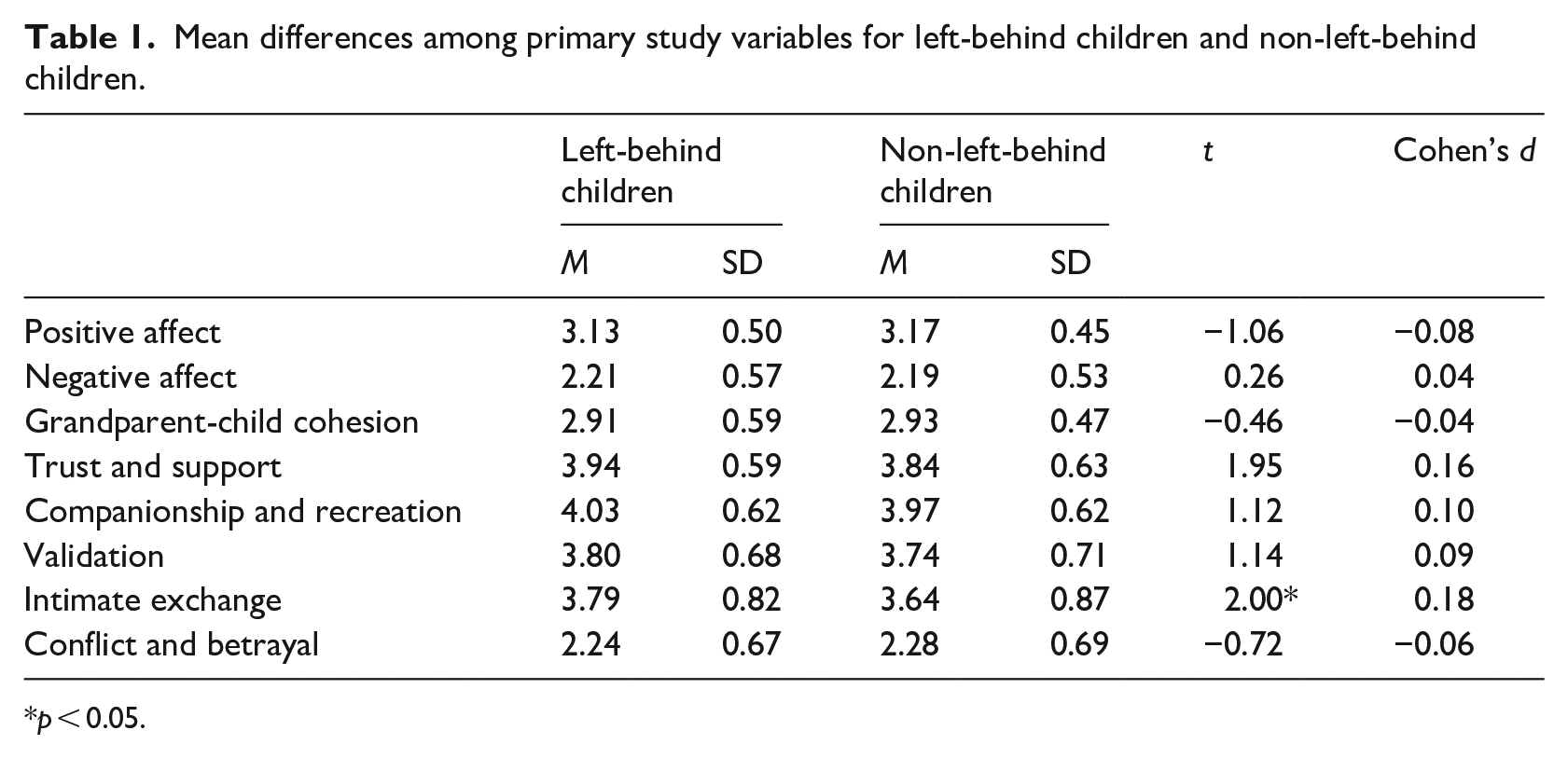
p < 0.05.
Correlations among primary study variables are presented in Table 2. As shown, for both left-behind children and non-left-behind children, grandparent-child cohesion was positively correlated with positive affect and negatively correlated with negative affect. In addition, friend trust and support, companionship and recreation, and validation were positively correlated with positive affect and negatively correlated with negative affect. Friend intimate exchange was positively correlated with positive affect. The dimension of friend conflict and betrayal was negatively correlated with positive affect and positively correlated with negative affect.
Correlations among study variables for left-behind children and non-left-behind children.
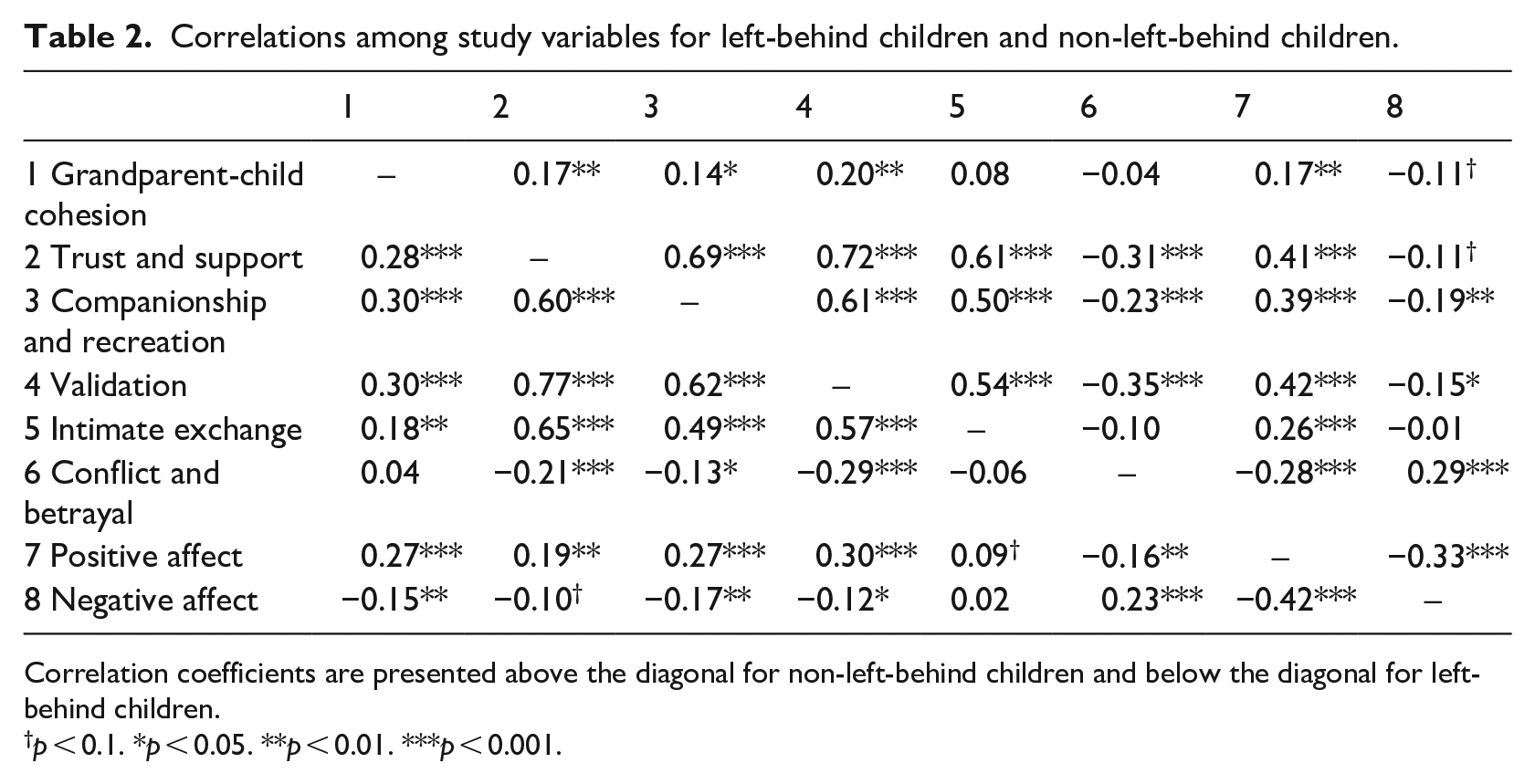
Correlation coefficients are presented above the diagonal for non-left-behind children and below the diagonal for left-behind children.
p < 0.1. *p < 0.05. **p < 0.01. ***p < 0.001.
Predicting negative affect
Hierarchical regression analyses were conducted to examine the independent and interactive associations linking grandparent-child cohesion, friendship quality, and left-behind status with negative affect. As shown in Table 3, grandparent-child cohesion negatively predicted negative affect. Friend companionship and recreation and validation negatively predicted children’s negative affect, while friend conflict and betrayal positively predicted children’s negative affect. The three-way interactions of grandparent-child cohesion, trust, and support and left-behind status, and grandparent-child cohesion, validation, and left-behind status could significantly predict negative affect. Other interaction terms were not significant.
Summary of the hierarchical multiple regression analyses of negative affect.
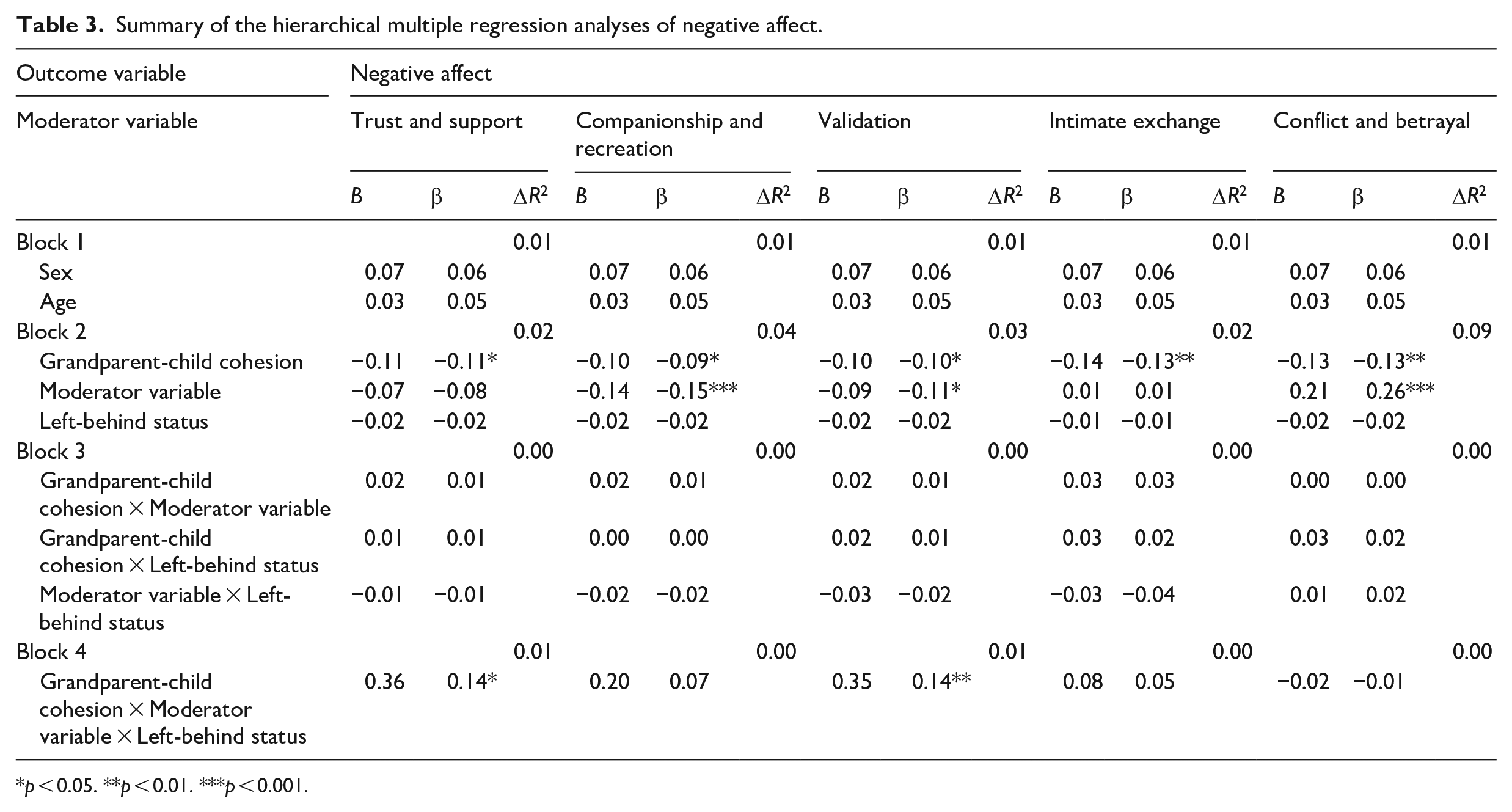
p < 0.05. **p < 0.01. ***p < 0.001.
Follow-up analyses (see Figure 1) indicated that grandparent-child cohesion was significantly associated with lower levels of negative affect for left-behind children who had high trust and support (simple slope = −0.18, t = −2.59, p < 0.05) or high validation (simple slope = −0.18, t = −2.30, p < 0.05). No association emerged among left-behind children who had low trust and support (simple slope = −0.03, t = −0.35, p > 0.05) or low validation (simple slope = −0.03, t = −0.37, p > 0.05). Furthermore, grandparent-child cohesion was significantly associated with lower levels of negative affect for non-left-behind children who had low trust and support (simple slope = −0.22, t = −2.39, p < 0.05) or low validation (simple slope = −0.25, t = −2.37, p < 0.05). No association emerged among non-left-behind children who had high trust and support (simple slope = 0.07, t = 0.60, p > 0.05) or high validation (simple slope = 0.09, t = 0.85, p > 0.05).
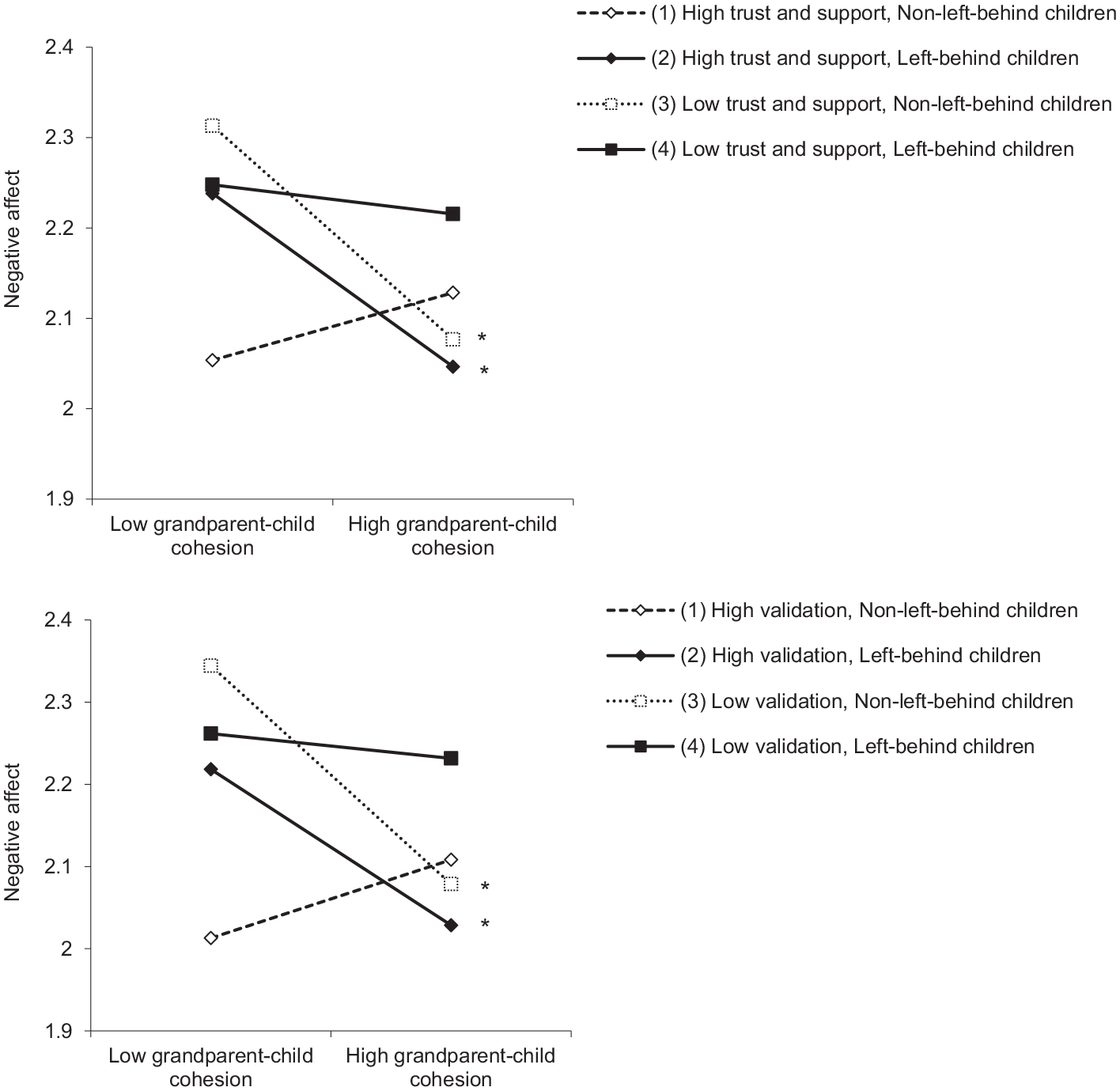
The associations between grandparent-child cohesion and negative affect by trust and support (a) and validation (b) among left-behind children and non-left-behind children. Low designates −1 SD on the scale; High designates +1 SD on the scale.
Predicting positive affect
Hierarchical regression analyses were conducted to examine the independent and interactive associations linking grandparent-child cohesion, friendship quality, and left-behind status with positive affect. As shown in Table 4, grandparent-child cohesion positively predicted positive affect. Friend trust and support, companionship and recreation, validation, and intimate exchange positively predicted children’s positive affect, while friend conflict and betrayal negatively predicted children’s positive affect. The two-way interaction between grandparent-child cohesion and intimate exchange could predict children’s positive affect. In addition, the two-way interaction between trust and support and left-behind status, and intimate exchange and left-behind status could predict children’s positive affect. Other interaction terms were not significant.
Summary of the hierarchical multiple regression analyses of positive affect.
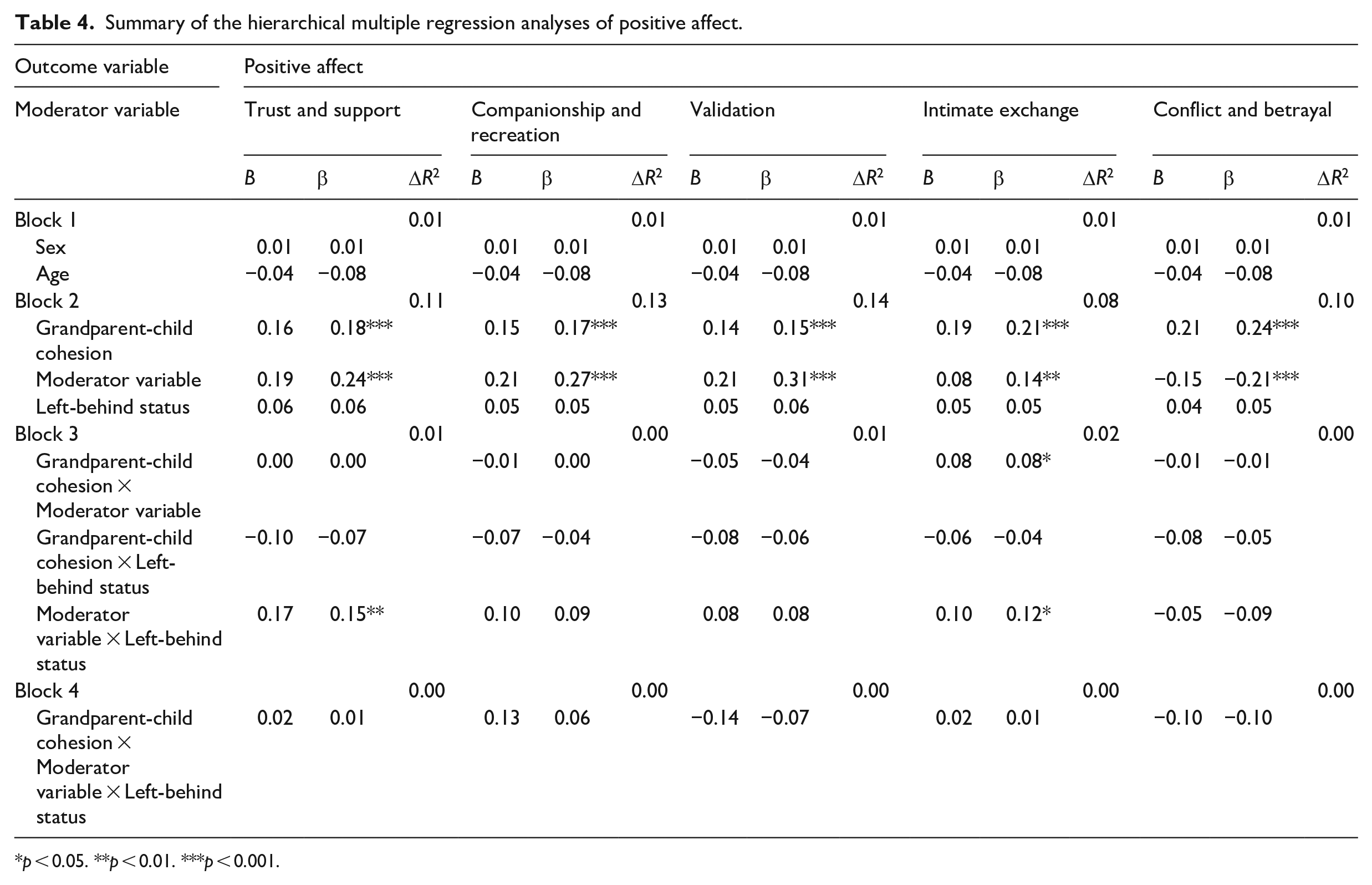
p < 0.05. **p < 0.01. ***p < 0.001.
Follow-up analyses (see Figure 2) indicated that grandparent-child cohesion was significantly associated with higher levels of positive affect among children who had high intimate exchange (simple slope = 0.28, t = 5.45, p < 0.001) and low intimate exchange (simple slope = 0.15, t = 2.94, p < 0.01), and the predication power was stronger for children who had high intimate exchange. In addition, (see Figure 3), trust and support were significantly associated with higher levels of positive affect among left-behind children (simple slope = 0.11, t = 2.37, p < 0.05) and non-left-behind children (simple slope = 0.28, t = 6.26, p < 0.001), and the predication power for non-left-behind children was stronger than for left-behind children. Intimate exchange was significantly associated with higher levels of positive affect among non-left-behind children (simple slope = 0.13, t = 4.14, p < 0.001) but not among left-behind children (simple slope = 0.04, t = 1.14, p > 0.05).
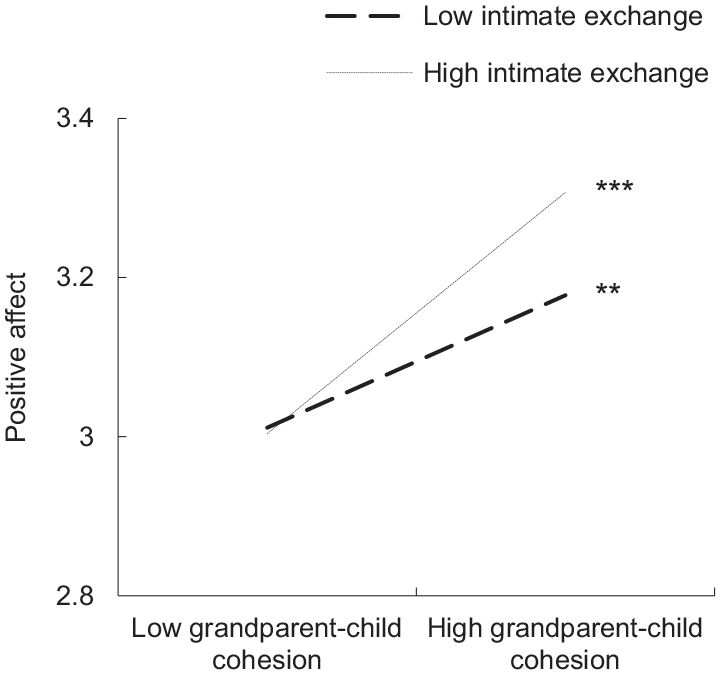
The two-way interaction of grandparent-child cohesion and intimate exchange on positive affect. Low designates −1 SD on the scale; High designates +1 SD on the scale.
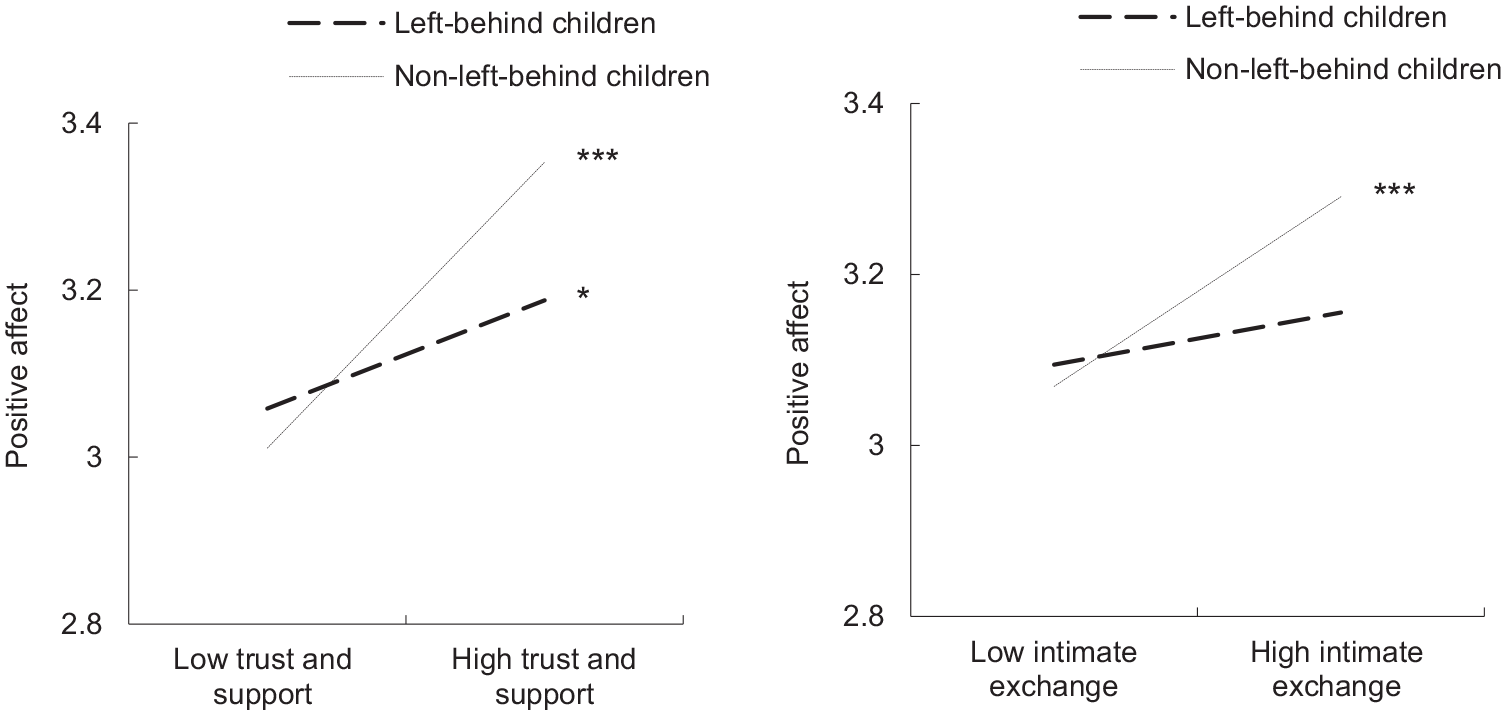
The two-way interaction of trust and support, intimate exchange, and left-behind status on positive affect. Low designates −1 SD on the scale; High designates +1 SD on the scale.
Discussion
Although it is known that protective factors are critical to the development of left-behind children in rural China, the interactions of protective factors from multiple systems that help these children avoid maladaptation are much less clear. Based on the comparison with non-left-behind children, the present study particularly examined the interaction effect of protective factors embedded in family (i.e. grandparent-child cohesion) and peer (i.e. friendship quality) systems on left-behind children’s daily emotions. High levels of grandparent-child cohesion and friendship quality were both important for children’s daily emotions, while the patterns of interactions differed as a function of children’s emotional outcomes and left-behind status.
Contrary to the hypothesis, the present study found no significant differences in positive or negative affect between left-behind children and non-left-behind children. This finding suggests that parental absence caused by parental migration may not make a difference in children’s daily emotions. These findings are consistent with some existing empirical findings, which found no significant differences in the levels of loneliness and depression between left-behind children and non-left-behind children (Wang et al., 2011; Zhao et al., 2019). One possible explanation may be attributed to the fact that children spend much of their time in school and quite a few junior high students board at school (Liu and Villa, 2020; Wen and Lin, 2012). Even if parental migration did occur, left-behind children had similar school experiences to non-left-behind children in their daily lives. Another possible explanation may be that protective factors may buffer the injurious effect of parental absence caused by prolonged parents’ migration. This reflects the importance of exploring the roles of protective factors in left-behind children’s daily emotions.
As hypothesized, grandparent-child cohesion was beneficial for lessening children’s negative affect and for increasing children’s positive affect. These findings further echoed the intergenerational solidarity theory (Bengtson and Roberts, 1991), which emphasizes the positive functions of emotional cohesion with grandparents on children’s development. However, contrary to expectations, no difference was found between left-behind children and non-left-behind children in the impact of grandparent-child cohesion on positive or negative affect. This is not surprising, given that China has long held a tradition of intergenerational coresidence and that people usually live in a multigenerational family home, particularly in rural areas (Silverstein et al., 2006). As expressed in a popular Chinese saying, “closeness skips a generation”; it is common for grandparents to take care of children and maintain more frequent interactions and emotional connections with them. In this case, both left-behind children and non-left-behind children could benefit from good relationships with their grandparents in rural areas.
Friendship quality, another protective factor examined in this study, also played an important role in children’s daily emotions. Positive dimensions of friendship quality, such as validation, companionship, and recreation, were beneficial for increasing children’s positive affect and lessening their negative affect, while negative dimensions of friendship quality, such as conflict and betrayal, had negative effects on children’s daily emotions. However, the effects of friendship quality on children’s positive affect varied according to dimensions and left-behind status. As this study demonstrated, the association between friend trust and support and positive affect was weaker for left-behind children than for non-left-behind children, and the association between friend intimate exchange and positive affect was significant among non-left-behind children but not among left-behind children. These findings are consistent with a limiting previous study showing that the predictive effect of friendship quality on loneliness among left-behind children was weaker than that among non-left-behind children (Sun et al., 2010). The reason for this phenomenon may lie in Sullivan’s (1953) interpersonal relationship theory, which emphasizes that children’s developmental tasks during childhood may influence their developmental tasks during adolescence. In this theory, childhood is a critical period for children to establish trust, support, and intimate relationships with their parents, and adolescence is a time of establishing these relationships with their friends. For left-behind children, long-term parental absence in childhood may disrupt parent-child bonding (i.e. trust, support, and intimate relationships) with their parents (Wang and Mesman, 2015; Wen and Lin, 2012), which may exert a negative influence on their friendship quality or the function of the friendship in adolescence.
Additionally, the findings of this study provided clear support for the hypothesis that the protective factors embedded in family (i.e. grandparent-child cohesion) and peer (i.e. friendship quality) systems interact to influence children’s development (Helsen et al., 2000; Zhang et al., 2018), and the patterns of interactions varied across the emotional outcomes and left-behind status. For children’s positive affect, the pattern of interactions between grandparent-child cohesion and friendship quality supported the reinforcement model, and there was no difference between left-behind children and non-left-behind children. Specifically, compared with children who had low levels of friend intimate exchange, children who had high levels of friend intimate exchange had a stronger association between grandparent-child cohesion and positive affect. These results added to our understanding of the interactions of protective factors and highlighted that grandparent-child cohesion and friendship quality, as important protective factors, were vital for positive affect, regardless of whether they were left-behind children or non-left-behind children.
For negative affect, we found that the patterns of interactions between grandparent-child cohesion and friendship quality varied across left-behind status. For left-behind children, the results supported the reinforcement model. It was found that left-behind children with higher levels of grandparent-child cohesion and friendship quality (high friend trust and support or high friend validation) would have less negative affect, suggesting that the combination of high grandparent-child cohesion and high friendship quality may be necessary to reduce negative affect for left-behind children. For non-left-behind children, however, the results supported the compensation model. It was found that a high level of friendship quality (high friend trust and support or high friend validation) buffered the negative effects of poor grandparent-child cohesion on the negative affect of non-left-behind children. This phenomenon, in which the patterns of interactions between grandparent-child cohesion and friendship quality varied across left-behind status, seems to result in part from the difference in families’ natural functions (Zhao et al., 2019). Although grandparents and friends may be beneficial for children’s emotional adaptation in both-parent-migrant families, grandparents, as the primary caregivers, cannot completely replace parents and parental absence actually reduces the functions of friendship quality (Dunifon, 2013; Li et al., 2021; Zeng and Xie, 2014; Zhao et al., 2016), which is harmful for left-behind children. Thus, only when grandparent-child cohesion and friendship quality showed high levels did lower levels of negative affect emerge among left-behind children. However, children from nonparent migrant families may not only enjoy better functions of friendship quality as a result of good parent-child bonding but may also benefit from the care of their grandparents. In this case, friendship quality is enough to compensate for the effect of poor cohesion with grandparents who are not primary caregivers. Future studies are needed to further explore the precise mechanisms behind these findings as well as their implications for left-behind children.
The limitations of this study should be noted. First, although this study explored the protective effect of grandparent-child cohesion and friendship quality on children’s daily emotions, the conclusions of this study need to be further explored by using longitudinal designs to test the long-term effects among these variables. Second, participants were selected with a nonrandomized sampling method in this study, and they all came from Shandong Province in China, so caution is necessary when extending these conclusions to left-behind children in other provinces and cities. Third, the study of key variables was limited to self-reporting. Collecting data from multiple providers, such as parents or teachers, could improve the quality of the data and validity of the results. Fourth, it should be noted that some important confounding factors, such as resilience and parent-child communication frequency, have a greater impact on the stability of results, which may cause bias (Ai and Hu, 2016; Zhao et al., 2019). In future studies, these variables should be included as controls to further understand the emotional adaptation of left-behind children.
Despite these limitations, this study enhanced our understanding of the emotional adaptation of left-behind children in rural China and provided guidance for intervention and prevention programs to promote the emotional adaptation of these children. First, this is the first study, to our knowledge, to examine the role of interaction patterns of protective factors embedded in family and peer systems in left-behind children’s daily emotions. Second, given the different effects of dimensions of friendship quality on left-behind children’s daily emotions, intervention programs may be more beneficial in increasing left-behind children’s positive affect if they improve friend trust and support and friend intimate exchange and may be more helpful in reducing negative affect if they improve friend trust and support and validation. Third, the current study extended the previous literature and found that the patterns of interactions between grandparent-child cohesion and friendship quality varied across left-behind status, which suggested that prevention programs to improve left-behind children’s emotional adaptation may be more effective if they are tailored to target the differences pertinent to left-behind status. Fourth, it was also found that the patterns of interaction effects between grandparent-child cohesion and friendship quality on positive affect are different from those on negative affect, indicating that the reduction of negative affect does not equal the improvement of positive affect. Thus, attention should be given not only to reducing the negative affect of left-behind children but also to improving their positive affect.
Research Data
sj-docx-2-hpq-10.1177_13591053211049941 – for Grandparent-child cohesion, friendship quality, and left-behind children’s positive/negative affect in rural China
sj-docx-2-hpq-10.1177_13591053211049941 for Grandparent-child cohesion, friendship quality, and left-behind children’s positive/negative affect in rural China by Jingxin Zhao, Jing Ge and Qianyu Li in Journal of Health Psychology
Research Data
sj-docx-5-hpq-10.1177_13591053211049941 – for Grandparent-child cohesion, friendship quality, and left-behind children’s positive/negative affect in rural China
sj-docx-5-hpq-10.1177_13591053211049941 for Grandparent-child cohesion, friendship quality, and left-behind children’s positive/negative affect in rural China by Jingxin Zhao, Jing Ge and Qianyu Li in Journal of Health Psychology
Research Data
sj-pdf-4-hpq-10.1177_13591053211049941 – for Grandparent-child cohesion, friendship quality, and left-behind children’s positive/negative affect in rural China
sj-pdf-4-hpq-10.1177_13591053211049941 for Grandparent-child cohesion, friendship quality, and left-behind children’s positive/negative affect in rural China by Jingxin Zhao, Jing Ge and Qianyu Li in Journal of Health Psychology
Research Data
sj-sav-1-hpq-10.1177_13591053211049941 – for Grandparent-child cohesion, friendship quality, and left-behind children’s positive/negative affect in rural China
sj-sav-1-hpq-10.1177_13591053211049941 for Grandparent-child cohesion, friendship quality, and left-behind children’s positive/negative affect in rural China by Jingxin Zhao, Jing Ge and Qianyu Li in Journal of Health Psychology
Research Data
sj-spv-3-hpq-10.1177_13591053211049941 – for Grandparent-child cohesion, friendship quality, and left-behind children’s positive/negative affect in rural China
sj-spv-3-hpq-10.1177_13591053211049941 for Grandparent-child cohesion, friendship quality, and left-behind children’s positive/negative affect in rural China by Jingxin Zhao, Jing Ge and Qianyu Li in Journal of Health Psychology
Footnotes
Acknowledgements
The authors are grateful to all the children, parents, and teachers who participated or contributed to this project.
Data sharing statement
All of the individual participant’s data collected during the study, after de-identification. Study Protocol, Statistical Analysis Plan, and Analytic Code are also available. These files are all available in the Figshare repository and as Supplemental Material via the SAGE Journals platform.
Declaration of conflicting interests
The author declared no potential conflicts of interest with respect to the research, authorship, and/or publication of this article.
Funding
The author(s) disclosed receipt of the following financial support for the research, authorship, and/or publication of this article: This study was supported by Social Science Planning Project in Shandong Province (Project No. 20BJYJ02); National Natural Science Foundation of China (Project No. 32071077); and Natural Science Foundation of Shandong Province (Project No. ZR2020MC219).

References
Supplementary Material
Please find the following supplemental material available below.
For Open Access articles published under a Creative Commons License, all supplemental material carries the same license as the article it is associated with.
For non-Open Access articles published, all supplemental material carries a non-exclusive license, and permission requests for re-use of supplemental material or any part of supplemental material shall be sent directly to the copyright owner as specified in the copyright notice associated with the article.
