







Abstract
This systematic review aims to examine the characteristics of psychological interventions that aim to enhance positive outcomes, such as wellbeing, post-traumatic growth, or hope in cancer caregivers. Studies published until December 2023 were searched on PubMed, Scopus, PsycINFO, WOS, PsycARTICLES and were included when examining interventions targeting positive outcomes with adult cancer caregivers. Of the 1424 articles retrieved through the databases, 16 studies were eligible for inclusion in this review, targeting 908 caregivers (70.2% female; Mage = 53.5). A narrative synthesis was used to describe the interventions, which were based on a variety of approaches such as psychoeducation, mindfulness, or Existential Behavioral Therapy, and reported positive gains for the positive outcomes. The results show few randomized controlled trials published to date, highlight the contrast between the focus shift towards these outcomes and the need for systematic testing of the interventions, to be able to inform evidence-based service delivery.
Introduction
Being diagnosed with cancer, a disease that causes high mortality, is a very stressful event for the patients and their families (Bergerot et al., 2015). Family members and friends of cancer patients, defined as caregivers, face constant psychological distress related to the caregiving demands (Kim et al., 2016). A cancer diagnosis also affects caregivers’ quality of life (Wadhwa et al., 2013), as they are expected to provide complex care at home, most of the times with little preparation or support (Van Ryn et al., 2011). Data from a wide national survey in the US showed that, on average, cancer caregivers spend 8.3 hours per day on care activities (Yabroff and Kim, 2009), involving the provision of emotional, instrumental, tangible, and medical support to the patient. The burden experienced by caregivers is multifaceted, as they not only face challenges such as the physical and emotional demands associated with caregiving, but they are also deprived from the emotional support they received by the patients before the illness through mutually caring relationships (Francis et al., 2010).
In fact, caregivers experience a range of psychological difficulties (Higginson et al., 2010), including fear, hopelessness, and mood disturbances (Dumont et al., 2006). However, positive outcomes may also emerge from the traumatic experience of caring for someone with cancer, defined as the “positive affective or practical returns experienced as direct result of becoming a caregiver for cancer patients” (Li and Loke, 2013: 2400). These outcomes reflect subjective experiences and include resilience (Palacio et al., 2020), hope (Kenny et al., 2023), post-traumatic growth (PTG), self-compassion (Hsieh et al., 2019), and well-being (Cormio et al., 2014) among others. Resilience in the cancer caregiving context refers to a process of dealing with adverse experiences and engage in positive meaning making (Hwang et al., 2018), whereas hope is considered intrinsic and refers to a desire to overcome obstacles related to the cancer prognosis and effective illness management (Olver, 2012). Post-traumatic growth refers to a feeling of growth experienced by the person as a result of a traumatic experience (i.e. cancer of a loved one), expressed through changes to the person’s self-perception, relationship with others and life philosophy (Tedeschi and and Calhoun, 1996) and self-compassion refers to the ability to treat oneself with kindness and acceptance when going through difficult life events (Neff and Dahm, 2015) Finally, well-being is a multidimensional term including emotional, physical and spiritual aspects, such as having one’s own and their loved one’s emotional needs addressed, having adequate nutrition and exercise habits, and finding a meaning in life (Jolliffe et al., 2018).
To explain the dualism of the caregiving role resulting both in distress and positive outcomes, the stress and coping framework (Lazarus and Folkman, 1984) has been used in the literature (Young and Snowden, 2016), upon incorporating the “benefit finding” element (Cassidy, 2013). According to this framework, the person’s levels of distress increase when the environment poses threats that are considered non manageable, such as cancer and the caring burden. However, when a person experiences great distress, they proceed to a cognitive reframing of their experience that helps them reconsider it as a means to strengthen the self, resulting in growth arising from adversity. This “benefit finding” may attenuate the distress caused by the caring burden, enhance the carers’ resilience, optimism and self-compassion, and contribute to their post-traumatic growth and well-being (Cassidy, 2013).
Therefore, a service addressing the caregivers needs to adopt a holistic approach to their experience. Thus, when designing an intervention, it is essential to identify and incorporate strategies that enhance the positive aspects of caring and target the caregivers’ wellbeing. There is an increasing number of studies that propose tailor-made interventions for caregivers (Ugalde et al., 2019), however, previous attempts to synthesize the findings on psychological interventions report limited evidence on their effectiveness (Treanor et al., 2020), and focus on caregivers’ distress. Importantly, a meta-analysis of interventions based on CBT (O’Toole et al., 2017) suggested that CBT interventions are not effective for caregivers, thus, alternatives should be examined. Following the recommendations from a large European study on 36,908 caregivers, one feasible alternative may be interventions targeting positive outcomes instead of distress (Maguire et al., 2019). Interventions that adopt this perspective shift the focus towards the positive potentials of negativity, by considering distress and disorder as a starting point for reaching fulfillment (Linley and Joseph, 2004; Wong, 2011). Examples of such interventions include counting blessings (Otake et al., 2006), practicing kindness, setting personal goals (Cuijpers et al., 2010), expressing gratitude and using personal strengths to enhance well-being (Sheldon et al., 2002). Their ultimate aim is to cultivate positive feelings, thoughts and behaviors that enhance well-being and personal strengths (Sin and Lyubomirsky, 2009). Two previous meta-analyses indicated that mindfulness-based interventions may be beneficial for caregivers, resulting in better overall well-being (Daken and Ahmad, 2018; Jaffray et al., 2016). However, their focus was limited only to mindfulness and only to well-being as an outcome, leaving aside important positive outcomes for caregivers, such as post-traumatic growth, resilience, optimism and hope, amongst others.
Therefore, given the lack of recent attempts to systematize information around this topic, the present systematic review aims to answer the research question around the specific characteristics of interventions that address outcomes for cancer caregivers that go beyond distress reduction. Specifically, in conducting this review, we aimed to systematically describe the interventions that address positive outcomes for cancer caregivers such as resilience, post-traumatic growth, optimism, self-compassion, hope, gratitude, well-being and life satisfaction as reported in studies with either quantitative or qualitative design.
Methods
Search strategy
To prepare this review we adhered to the PRISMA guidelines (Page et al., 2021) and the protocol was registered on PROSPERO (CRD42022303228). The search was performed in PubMed (including Medline), Scopus, PsycINFO, Web of Science, and PsycARTICLES. Hand reference check of relevant articles and related systematic reviews was also performed. All eligible primary studies published until December 2023 were included.
Search strategy combined terms related to cancer, terms describing caregivers, interventions-related terms and terms referring to positive outcomes. The databases were searched separately for title and abstract using the following keywords: “cancer” AND (“carer” OR “caregiver” OR “family”) AND (“psychotherapy” OR “psychological therapy” OR “psychological intervention” OR “program”) AND (“post-traumatic growth” OR “posttraumatic growth” OR “post traumatic growth” OR “personal growth” OR “post-loss growth” OR “post loss growth” OR “resilience” OR “resiliency” OR “hope” OR “wellbeing” OR “well-being” OR “optimism” OR “gratitude” OR “positive affect” OR “positive emotion” OR “self-realization” OR “ self-realisation” OR “purpose in life”). Results were limited to adults (above 18 years old). See Supplemental Material S1 for the search strategy used in each database.
Inclusion and exclusion criteria
Papers were considered eligible for inclusion if they a) were published as an original, peer-reviewed journal article; b) included an intervention for adult unpaid caregivers of adult cancer patients; c) described positive outcomes such as well-being, post traumatic growth, resilience, hope, and optimism among others. Joint interventions for patients and caregivers were included when reported outcomes related to caregivers separately. We excluded studies that did not include primary data and those that focused on caregivers under the age of eighteen or described interventions with caregivers of children with cancer. Studies exploring interventions with paid caregivers were also excluded. All study designs and intervention types (group/individual) were included in the review and there was no restriction for language or year of publication.
Screening procedures and data extraction
One reviewer (LC) removed duplicates. Two reviewers (LC, PP) accessed abstracts and titles and identified papers that were eligible for full text screening. Full texts were then accessed, and eligible papers were identified. In case of any discrepancies those were discussed with the third reviewer (EP). Reference lists of full texts were also screened to search for eligible articles.
One reviewer (LC) extracted data from each study. Data included participant’s characteristics, study design, intervention aims, components, type (group/individual) and duration, and outcomes assessed. All raw data are available upon request by the first author.
Quality assessment
Two reviewers (LC, EP) independently assessed the quality of the included studies using the Quality Assessment Tool for Quantitative studies by the Effective Public Health Practice Project (EPHPP; Thomas et al., 2004) and the Critical Appraisal Skills Program (CASP, 2018) Checklist for qualitative studies. For the EPHPP, a paper is considered of strong quality according to the following criteria: selection bias, when the population is considered representative of the target population; design, when the study is an RCT or controlled trial; confounders, when they are controlled; blinding, when participants/clinicians are not aware of the research question; withdrawals and drop-outs, when those are reported and low. For the CASP, sections evaluate the validity of the research, its results, and their applicability locally and there is no overall score.
Data analysis
A narrative approach was used to synthesize the characteristics of the interventions following the guidelines developed by Popay et al. (2006). Firstly, we developed a framework including aims, type of intervention, intervention characteristics and outcomes and then we classified the interventions based on their outcomes.
Results
Study inclusion
The PRISMA diagram reflects the study selection process (Figure 1). Across the five databases, 1424 articles were retrieved, with no further papers found through references hand-check. Four hundred ninety-five duplicates were removed. The remaining 929 articles were then screened by title and abstract for eligibility, and 879 articles were removed due to ineligibility. Full text was retrieved for 50 articles with 34 articles not meeting the criteria, for reasons explained in Figure 1. Finally, 16 studies were included in this review.
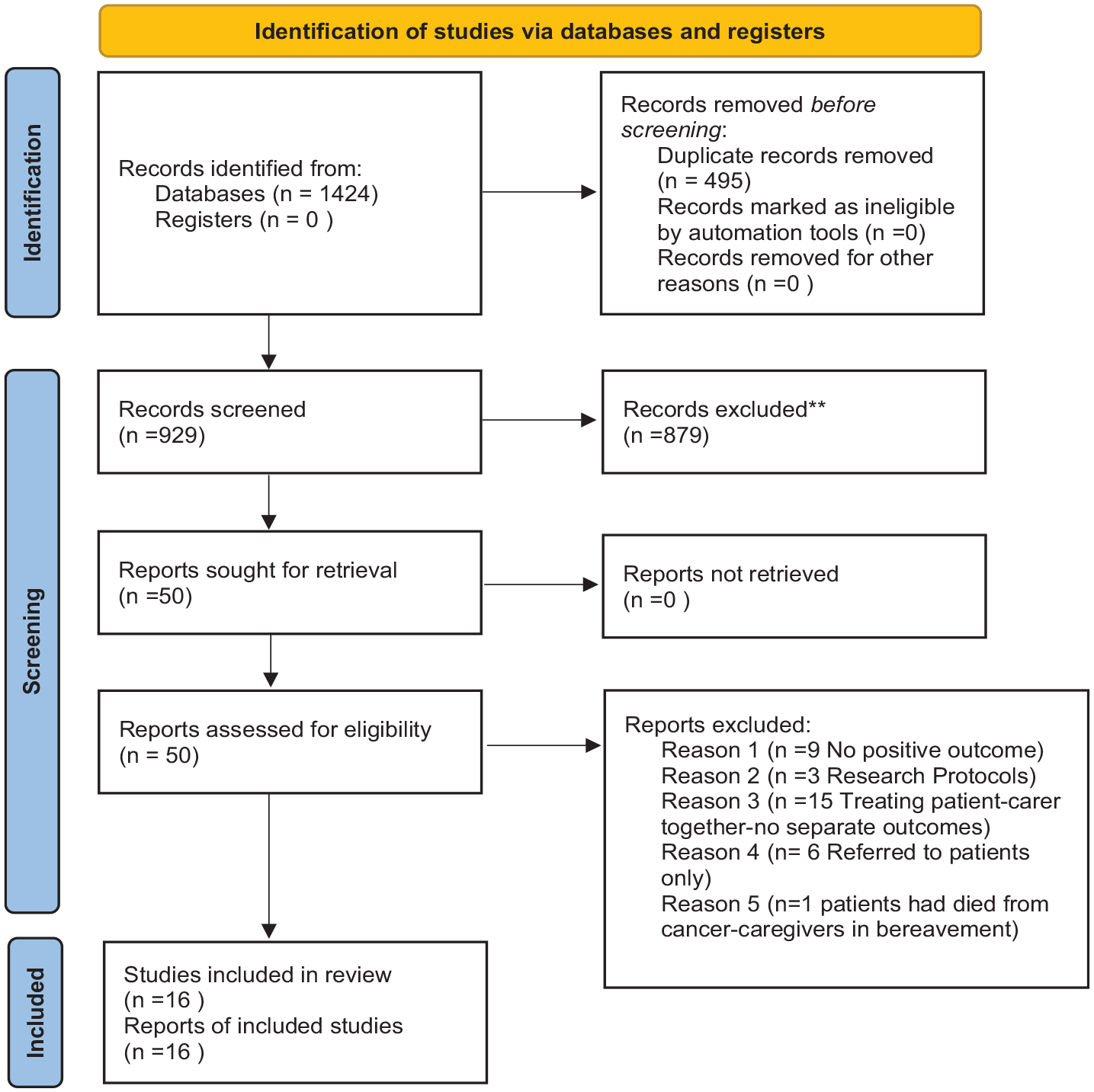
PRISMA 2020 flow diagram for new systematic reviews which included searches of databases and registers only.
Caregiver characteristics
The 16 studies included 908 caregivers. Most participants were female (70.2%) with a mean age of 53.5 (SD = 8.021), 76.05% were married, 60.7% were caregivers to their spouses or partners, while 11.4% were parents and 29.2% were children of patients. The majority of studies (n = 13) focused on various cancer types such as kidney, head and neck, hematological, gynecologic, breast, prostate, lung, colorectal, thyroid, ovarian, testicular, stomach, sarcoma, and adenocarcinoma; one study included only caregivers of patients with hematological cancer, one study only on caregivers of patients with head and neck cancer, one on caregivers of patients with glioblastoma multiforme, and another focused only on caregivers of lung cancer patients. Twelve studies focused on caregivers of patients with any stage of cancer, three studies focused on caregivers of advanced cancer patients, and finally one included caregivers of patients being at stages one to three.
Study quality
Most quantitative studies were of moderate quality (n = 11), with only two being of strong quality and one of them considered weak. The weakest element of almost all studies was related to selection bias, with relatively low participation rates of eligible participants. When it comes to the qualitative studies, one study was positively rated across all the qualitative elements assessed, whereas the other had some flaws related to ethical aspects and analysis (Table 1).
Quality assessment of included papers.
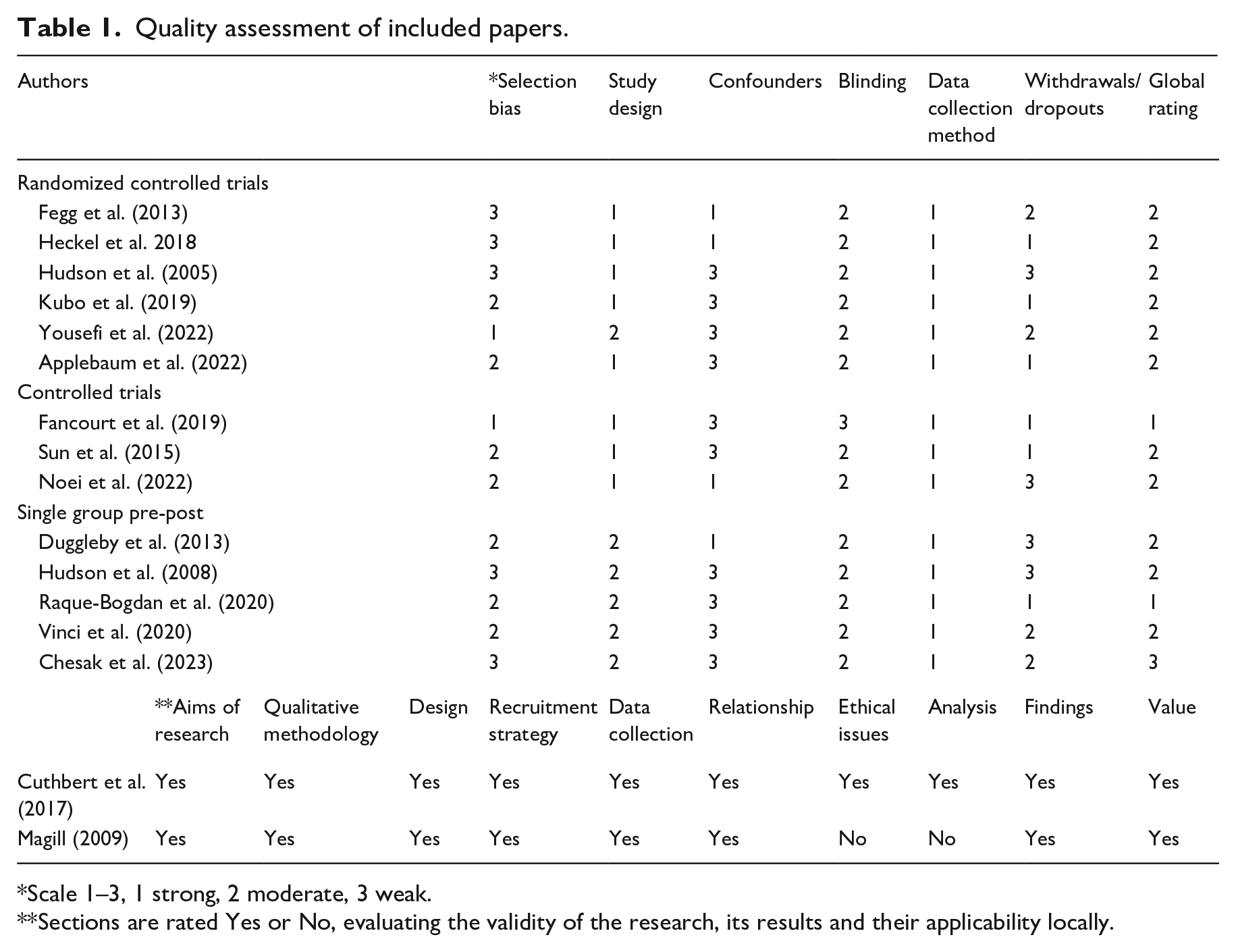
Scale 1–3, 1 strong, 2 moderate, 3 weak.
Sections are rated Yes or No, evaluating the validity of the research, its results and their applicability locally.
Design and format of interventions
Of the 16 studies reviewed, there were only six studies using a RCT design, three controlled trials, five studies used a single group design and two studies used qualitative methodology (see Table 2 for details).
Characteristics of the included studies.
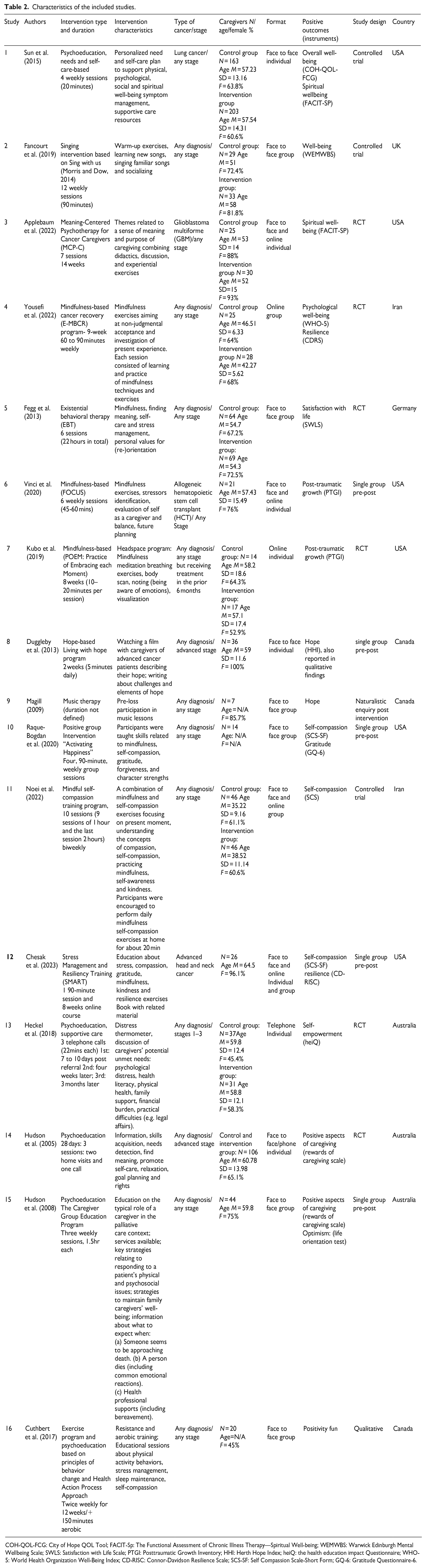
COH-QOL-FCG: City of Hope QOL Tool; FACIT-Sp: The Functional Assessment of Chronic Illness Therapy—Spiritual Well-being; WEMWBS: Warwick Edinburgh Mental Wellbeing Scale; SWLS: Satisfaction with Life Scale; PTGI: Posttraumatic Growth Inventory; HHI: Herth Hope Index; heiQ: the health education impact Questionnaire; WHO-5: World Health Organization Well-Being Index; CD-RISC: Connor-Davidson Resilience Scale; SCS-SF: Self Compassion Scale-Short Form; GQ-6: Gratitude Questionnaire-6.
Six studies were undertaken in the USA, three in Australia, three in Canada, two in Iran, one in the United Kingdom and one in Germany. Most studies (n = 13) recruited only caregivers, and the remaining (n = 3) recruited both patients and caregivers but treated them separately. Seven interventions were conducted individually, eight were in a group format and one combined both individual and group sessions. Eight studies included face to face interventions, two included online sessions, one was conducted through telephone, four combined face to face with online sessions, and one combined face to face sessions with phone and email. The number of sessions ranged from one to twenty-four.
Interventions targeting well-being
Intervention models
Four interventions targeted well-being among caregivers of cancer patients, with the first providing psychoeducation, the second based on singing, the third adopting a meaning-centered approach and the fourth based on mindfulness. The first two interventions were conducted face to face, while the third had a hybrid format, combining face to face and online sessions and the fourth was fully online. Two were offered in individual and two in a group format.
The psychoeducational study of Sun et al. (2015), examined the effectiveness of a palliative care intervention for caregivers of patients diagnosed with lung cancer at any stage. This was a controlled study, comparing the usual care group with the intervention group. Caregivers in the intervention group participated in interdisciplinary care meetings, on a weekly basis for 4 weeks, during which they received recommendations aimed to fulfill their needs and concerns related to their role as caregivers. The recommendations were based on individual assessments prior to their participation. In addition, they received four educational sessions, averaged at 28 minutes, during which they were taught about the importance of physical, psychological, social, and spiritual well-being. Participants in the usual care group had supportive and palliative care services available but did not receive any specific intervention.
Fancourt et al. (2019), conducted a controlled study to test a group singing intervention with adult caregivers caring for a spouse. The aim was to compare the well-being levels of those who received the intervention with the caregivers of a control group that continued with life as usual. The intervention was based on the idea that singing is a psychosocial activity that increases positive emotions and included a 90-minute choir session each week during 12 weeks. The first 60 minutes involved singing popular songs, and the remaining 30 minutes focused on socializing with each other. The choir was established specifically for people that were affected by cancer in some way.
Applebaum et al. (2022) examined the effectiveness of a meaning-centered psychotherapy for increasing spiritual well-being and decreasing distress through an RCT with caregivers of patients with glioblastoma multiforme, at any stage of their illness. Participants in the intervention arm received seven individual sessions (once every 2 weeks) in a combined face to face and online format focusing on meaning-making processes of their role as caregivers. Participants in the control arm received enhanced usual care, consisting of distress assessments followed by referrals to specific services (i.e. social work, family clinic, etc.) in case of need.
Yousefi et al. (2022) in their RCT examined the effects of a mindfulness-based intervention on the wellbeing of caregivers of patients with cancer at any stage. The intervention consisted of nine weekly group online sessions that included mindfulness exercises and practice of focusing on the present moment adopting a non-judgmental stance. Participants in the control group received a single debriefing session on psychological issues related to living with cancer.
Targets and results
All interventions seemed to have a positive effect on well-being. Sun et al. (2015), assessed overall well-being using the COH-QOL-FCG (Ferrell et al., 1995). The results showed that caregivers in the intervention group significantly improved their social well-being compared with those in the usual care group) The results of Fancourt et al. (2019), showed that the singing intervention had a positive effect on well-being of the participants in the intervention group measured with the WEMWBS (Tennant et al., 2007) compared to the control group. Similarly, in the study of Yousefi et al. (2022) using the WHO-5 Well-being Index (Topp et al., 2015)participants in the intervention group showed increased well-being levels compared to those in the control group. However, when focusing on spiritual well-being using the FACIT-Sp (Peterman et al., 2002) results were mixed. Sun et al. (2015) showed that caregivers in the usual care group had significantly higher scores in spiritual well-being, compared with those in the intervention group, whereas Applebaum et al. (2022) in their RCT showed clear improvements in the intervention group compared to the usual care group, and the improvements were maintained 2 months after the intervention.
Intervention targeting life satisfaction
Intervention model
Fegg et al. (2013) performed an RCT to examine the effectiveness of Existential Behavioral Therapy (EBT) on caregivers of patients in the last stage of life. The intervention consisted of six face to face group sessions and included elements of mindfulness, bereavement, self-care, personal values and stress management, and a CD containing mindfulness material. Participants in the control group did not receive any type of intervention.
Targets and results
There was an increase in life satisfaction measured through the SWLS (Diener et al., 1985) for caregivers that underwent the EBT intervention, as compared to those in the control group.
Interventions targeting post-traumatic growth
Intervention models
Two of the studies examined the effectiveness of interventions on post-traumatic growth and both were based on mindfulness. Vinci et al. (2020) conducted an intervention targeting caregivers of allogeneic hematopoietic stem cell transplant patients. This was a single group study with no control group. The intervention included six individual sessions delivered face to face and through videoconference. Each session combined mindfulness exercises such as the body scan and meditation, discussions around coping strategies, and evaluation of self and emotional expression around the caregiver role. On the other hand, Kubo et al. (2019) conducted an RCT to examine the effectiveness of a digital mindfulness intervention. The participants were caregivers of patients with cancer, who were currently receiving or had received chemotherapy in the prior 6 months. Participants in the intervention arm used the Headspace, a self-paced program of guided mindfulness meditation via a website or mobile application during 8 weeks. Participants in the control group did not receive any intervention.
Targets and results
Both studies showed an increase in post-traumatic growth of the caregivers who participated in the intervention group, as measured by the PTGI (Tedeschi and Calhoun, 1996). However, participants in the Kubo et al. (2019) study showed improvements in overall post traumatic growth and the domains of new possibilities and personal strength, while improvement in the domains of spiritual change, appreciation of life and relating to others was marginal compared to the control group.
Interventions targeting hope
Intervention models
Two studies examined possible benefits of interventions in terms of hope, and both were single group studies. Duggleby et al. (2013) conducted a single group study with pre-post assessment, to examine the Living with Hope intervention with caregivers of patients with any cancer diagnosis at advanced stage. This was a face to face individual intervention and participants were firstly asked to watch a film, called “Living with Hope,” and then they were involved in a 2-week hope activity. The activity included free writing about challenges in their role and about elements that they perceived as hope instigators. Magill (2009) examined the impact of music therapy sessions on bereaved caregivers using qualitative inquiry. The participants took part in music therapy sessions together with patients and after the loss of their loved ones they were interviewed on the perceived intervention benefits.
Targets and results
Participants in the Duggleby et al. (2013) study reported an increase in hope after taking part in the Living with Hope Program, as measured by the HHI (Herth, 1992), compared to their pre-intervention hope levels. Increased hope also emerged as a theme by the caregivers that participated in the music therapy intervention (Magill, 2009).
Interventions targeting self-compassion
Intervention models
Three studies focused on the increase of self-compassion levels for the caregivers, two had a single group pre-post design and one was a controlled trial. The study by Raque-Bogdan et al. (2020) targeted caregivers of patients of any cancer diagnosis, at any stage, and consisted of four face to face weekly sessions. The sessions focused on applying a positive psychology perspective on cancer-related aspects combining didactic and experiential components related to mindfulness, self-compassion, gratitude, forgiveness, and character strengths. Another study combined a positive intervention approach focusing on similar elements with a psychoeducational component on stress, using a single group design (Chesak et al., 2023). Participants were caregivers of patients with advanced care cancer and were provided with a face to face group session and online exercises during 8 weeks. Finally, the study by Noei et al. (2022) followed a mindful-based approach, with the participants attending group sessions for one and a half hours bi-weekly, most of the sessions being online. The sessions were offered to caregivers of patients of any stage and combined mindfulness exercises with self-compassion elements. The control group did not receive any intervention.
Targets and results
Caregivers in all three studies reported significant improvements in self-compassion measured by the SCS-SF (Raes et al., 2011). Importantly, in the study of Noei et al. (2022) the control group that received no intervention did not show any improvement, suggesting that the interventions have indeed an effect on self-compassion.
Interventions targeting resilience
Intervention models
Two studies also included resilience in their outcomes (Chesak et al., 2023; Yousefi et al. 2022). As described above, Chesak et al. (2023) applied an intervention combining psychoeducation and positive elements, whereas Yousefi et al. (2022) used a mindfulness-based approach.
Targets and results
In both studies resilience was measured using the Connor-Davidson Scale (CD-RISC; Connor and Davidson, 2003). The findings suggest that the mindfulness-based approach (Yousefi et al. 2022) had a significant positive effect on resilience levels, while this was not the case for the intervention combining psychoeducation and positive elements (Chesak et al., 2023).
Interventions targeting other positive outcomes (self-empowerment, optimism, positivity, and gratitude)
Intervention models
Five of the studies included in the systematic review targeted several positive outcomes other than those mentioned above. Three of them were based on psychoeducation, one was based on physical exercise, and one was based on positive psychology.
Heckel et al. (2018) performed an RCT targeting caregivers of newly diagnosed patients. The intervention group received a psychoeducation-based intervention that consisted of three telephone calls that focused on the needs of caregivers that may arise during the care of a cancer patient. The control group received the same number of telephone calls, but without any guidance or support. On the other hand, Hudson et al. (2005) conducted an RCT which targeted caregivers of patients receiving palliative care at home. They applied a psycho-educational intervention aimed to guide and prepare the caregivers on their new role and to promote the importance of self-care. The intervention was delivered individually and consisted of two home visits and a follow-up phone call. The control group received usual care which included telephone advice or emergency visits when necessary. The same authors (Hudson et al., 2008) expanded their findings by applying a single group pre-post assessment of a psycho-educational program, involving caregivers of patients with advanced cancer. In this case the intervention was delivered in face to face group format for 3 weeks and included a more comprehensive approach to the previously mentioned targets (i.e. caregiver role, self-care, preparation for the imminent death of their loved ones).
Cuthbert et al. (2017) examined the perceived benefits of a 12-week structured exercise intervention based on Bandura’s principles of behavioral change. The caregivers were trained twice per week in a group format and were encouraged to engage in aerobic exercises of their choice for a total of 150 minutes per week. Additionally, caregivers were offered educational sessions around the importance of stress management, sleep maintenance and self-compassion. Finally, the study of Raque Bogdan et al. (2020) described above included several positive-psychology elements and was offered in group format.
Targets and results
The results of the studies examining the effects of psychoeducational programs varied based on the outcome assessed. In the study of Heckel et al. (2018) there were no differences between the caregivers that received the intervention and those that did not in terms of self-empowerment as measured by the heiQ (Osborne, 2007). The results of Hudson et al. (2005) showed an increase in the perception of positive aspects related to the caregiver role, for participants that received the psychoeducational intervention in comparison with those that did not. The same findings were also confirmed in their 2008 study. However, caregivers did not seem to improve their optimism levels after the intervention measured by the LOT (Archbold et al., 1990) compared to their baseline levels (Hudson et al., 2008).
The exercise intervention by Cuthbert et al. (2017) seemed to increase the sense of fun and positivity of the participants. Finally, caregivers that participated in the positive intervention (Raque-Bogdan et al., 2020) did not report any significant improvements in gratitude as measured by the GQ-6 (McCullough et al., 2002), compared to their pre-intervention levels.
Discussion
The present review aimed at systematically synthesizing the available evidence regarding existing psychosocial interventions that are applied to caregivers of cancer patients, and that target positive outcomes. The review included 16 studies, of which six were RCTs and the rest followed a variety of quantitative, mixed, and qualitative designs. The described interventions were based on a variety of approaches such as psychoeducation, mindfulness, music therapy, Existential Behavioral Therapy, meaning center therapy, exercise and hope techniques. Almost all studies indicated improvements of positive outcomes, such as well-being, life satisfaction, post traumatic growth, hope, positivity, perception of positive aspects related to the caregiver role, fun and self-compassion. However, there was no evidence for significant positive changes in gratitude, optimism, and self-empowerment and there was mixed evidence for resilience; this suggests that further exploration of alternative psychological interventions for improving these outcomes is necessary. Importantly, the findings highlight the need for testing new interventions that are based on robust experimental designs, in order to further investigate the potential benefit for caregivers.
To our knowledge, this is the first systematic attempt to examine the specific characteristics of interventions addressing outcomes for cancer caregivers that go beyond distress reduction and its impact. Previous research has primarily focused on outcomes targeting psychological burden, distress, depression and anxiety, coping abilities, self-efficacy, or quality of life (Ahn et al, 2020; Fu et al., 2017; Kedia et al., 2020; Lei et al., 2023; Waldron et al., 2013). All the studies included in our review were published after 2005, which shows a clear shift of focus in the last 20 years towards achieving more positive outcomes for the caregivers. Importantly, this dearth of focus on positive outcomes observed until recently is common across caregiving populations, such as those looking after people with dementia, stroke, or older adults (Godwin et al., 2013; Hopwood et al., 2018; McKechnie et al., 2014; Panzeri et al., 2019).
Overall, there seems to be an increase in the recognition of the importance of self-care and unmet needs, as these are elements included in the majority of the interventions of this review. The importance of educating caregivers on how to recognize their own needs and how to make some space and time for themselves has been highlighted in previous research (Carlander et al., 2011; Kim et al., 2019; Stenberg et al., 2012), as it is considered essential for the caregivers’ wellbeing (Chopko and Schwartz, 2009).
In line with this, service designers seem to presently acknowledge the need for inclusion of positive outcomes in the design of psycho-educational programs, as this type of intervention was one of the most frequently examined across the included studies. This is important, as psychoeducation is widely used with cancer caregivers and forms part of the routine services offered in the clinical care of patients with cancer. Our synthesis showcases promising results for some, but not for other outcomes. Specifically, psychoeducation seems to improve well-being, the perception of positive aspects related to the caregiver role, the sense of fun and positivity, as well as self-compassion. However, it does not seem to improve optimism and self-empowerment. Through psychoeducation, caregivers are informed about essential aspects of the illness, the impact of illness on patients’ life, and palliative care plans. Furthermore, they are also equipped with strategies for tackling caregiver burden and pursuing self-care (Cheng et al., 2022), as means of addressing their major unmet needs (Chambers et al., 2012). Such elements provide them with a sense of control over the situation and make them feel more confident, which may explain the improvement in well-being, positivity, and self-compassion. On the other hand, psychoeducation does not seem to be suitable for enhancing optimism and self-empowerment, with other interventions focused on emotional expression and trauma coping such as the Best Possible Selves (Loveday et al., 2018) showing more efficacy for such outcomes. Nevertheless, these types of interventions have not been tested yet with caregivers of patients with cancer.
Together with this, mindfulness-based interventions were the second most frequent type of interventions examined in the studies included in this systematic review. The benefits of these interventions for increasing post traumatic growth expand previous evidence on the benefits of mindfulness for caregivers (Jaffray et al., 2016) and suggest their suitability for caregivers of patients with cancer. Participants engaged in mindfulness exercises pay attention and become aware of their present moment rather than focusing on the past or future concerns; through this process, they accept and experience thoughts and feelings without judging them. Being more focused and aware of the present moment and more willing to make meaning out of traumatic experiences is key for boosting post traumatic growth development (Williams et al., 2021).
Considering our findings, it is notable that although there is an increased interest in positive outcomes as observed across almost all psychology fields, this is not currently translated into more studies in the area of caring for the caregiver. To date there are only two, recently published, studies that was explicitly designed based on a positive psychology rationale (Chesak et al., 2023; Raque-Bogdan et al., 2020). Together with the typical elements of positive interventions such as gratitude and character strengths, these interventions incorporate elements of psychoeducation and mindfulness and offer encouraging results for the caregivers’ self-compassion enhancement. However, both require further replication and validation of its components and outcomes through robust implementation of Randomised Controlled Trials.
Limitations and strengths
Our review has several strengths. Firstly, we performed a comprehensive search of five different databases to increase the possibilities of including all eligible studies. Secondly, we did not limit the search in regard to any particular intervention, year or language, allowing for all studies performed with cancer caregivers and focusing on positive outcomes across the globe to be included, thus increasing the sensitivity of our findings. Thirdly, the included samples were caregivers offering their support to patients with different types of cancer and at different stages of the disease, increasing the generalizability of our findings. However, the review does not come without limitations. The small number of eligible studies and the lack of RCTs, did not allow for performing a meta-analysis of the data. Most of the included studies were of moderate quality, calling for caution when interpreting their results. Also, eligible studies included a variety of interventions based on different theoretical backgrounds and applying different techniques to target positive outcomes. Therefore, although the findings suggest that specific positive outcomes do improve in caregivers independently of the intervention applied, it is not possible to extract conclusions on which approach is the best, in what format, and for how long it should be offered to the caregivers for achieving these outcomes.
Practical implications
The finding that there are relatively few interventions targeting positive outcomes, causes concerns, as caregiver well-being is linked with care provision (Litzelman, 2019). Those in a good physical and emotional health are able to provide better care to patients, whereas high levels of burden experienced by caregivers may challenge the quality of care they provide to patients (Wen et al., 2019). Caregivers’ wellbeing is often neglected; therefore, it is important to design interventions and offer resources for them to resume the human experience of enjoying life, despite the burden caused by their caregiving role. Reinforcing wellbeing, hope, self-compassion, or posttraumatic growth in caregivers may help them cope with their multiple roles as caregivers, avoid distress, burnout, and feelings of being overwhelmed, and in turn, increase their capacity to provide care. Henceforth, further clinical research focused on these results is needed, including more carefully designed interventions. Considering these findings together with those from a literature review on the small effect of interventions on caregiver burden (Treanor, 2020), there is a great need for further randomized controlled trials to specify the impact of psychosocial interventions on caregivers and determine what works for which outcome, exploring for instance the impact of incorporating mindfulness exercises to accept the present moment in the context of caregiving, self-care techniques to enhance self-compassion, and meaning-making processes for coping with the caregiver role.
Conclusion
The small number of interventions included in this review may limit the conclusions that can be drawn. Nonetheless, the majority of studies reported positive outcomes on caregivers of cancer patients, therefore offer initial insight on the components that services targeting this population of caregivers should include. Alternative interventions (or intervention components) specifically based on positive psychology should be tested to examine the most cost-effective solution for these services.
Supplemental Material
sj-doc-1-hpq-10.1177_13591053241236254 – Supplemental material for Psychological interventions to enhance positive outcomes in adult cancer caregivers: A systematic review
Supplemental material, sj-doc-1-hpq-10.1177_13591053241236254 for Psychological interventions to enhance positive outcomes in adult cancer caregivers: A systematic review by Loukas Christodoulou, Panagiotis Parpottas and Eleni Petkari in Journal of Health Psychology
Footnotes
Data sharing statement
Data are available upon request.
Declaration of conflicting interests
The authors declared no potential conflicts of interest with respect to the research, authorship, and/or publication of this article.
Funding
The authors received no financial support for the research, authorship, and/or publication of this article.

Supplemental material
Supplemental material for this article is available online
References
Supplementary Material
Please find the following supplemental material available below.
For Open Access articles published under a Creative Commons License, all supplemental material carries the same license as the article it is associated with.
For non-Open Access articles published, all supplemental material carries a non-exclusive license, and permission requests for re-use of supplemental material or any part of supplemental material shall be sent directly to the copyright owner as specified in the copyright notice associated with the article.
