






Abstract
The prevalence of mental health disorders and low referral rates for mental health care indicate the need for a clinically relevant scale for symptom screening and measurement for cancer survivorship. The Center for Epidemiologic Studies Depression Scale 10-item Boston Version (CESD-10 B), which contains multiple dimensions, was designed for low-burden usability. This study (N = 200) aimed to evaluate the structural validity of CESD-10 B among cancer patients. Confirmatory factor analysis was applied to compare (1) a single-factor model and (2) a four-factor model. Internal consistency was also evaluated. The four-factor model fit the data significantly better than the single-factor model (p < 0.001) with a Cronbach’s alpha of 0.74. The CESD-10 B was confirmed for its four domain structure. The domain of Interpersonal Problems in the CESD-10 B is a major clinical indicator of the need for mental health care.
Keywords
Introduction
By 2040, a predicted 26 million cancer patients will be living in the United States (Bluethmann et al., 2016). Compared with age- and biological sex-matched controls, patients who were diagnosed with cancer were 28% more likely to be diagnosed with mental health disorders (95% CI = 1.14–1.45; Vehling et al., 2022). However, only 10% or fewer of cancer patients with emotional distress are referred for mental health care (Henry, 2022). In 2023, the American Society of Clinical Oncology (ASCO) updated its depression and anxiety management guidelines (Andersen et al., 2023), in which the treatment of depressive symptoms has been identified as a priority. The care map for depression begins with screening depressive symptoms at the initial diagnosis and at the start of treatment. A clinically relevant scale for depressive symptom screening and measurement is important for cancer survivorship.
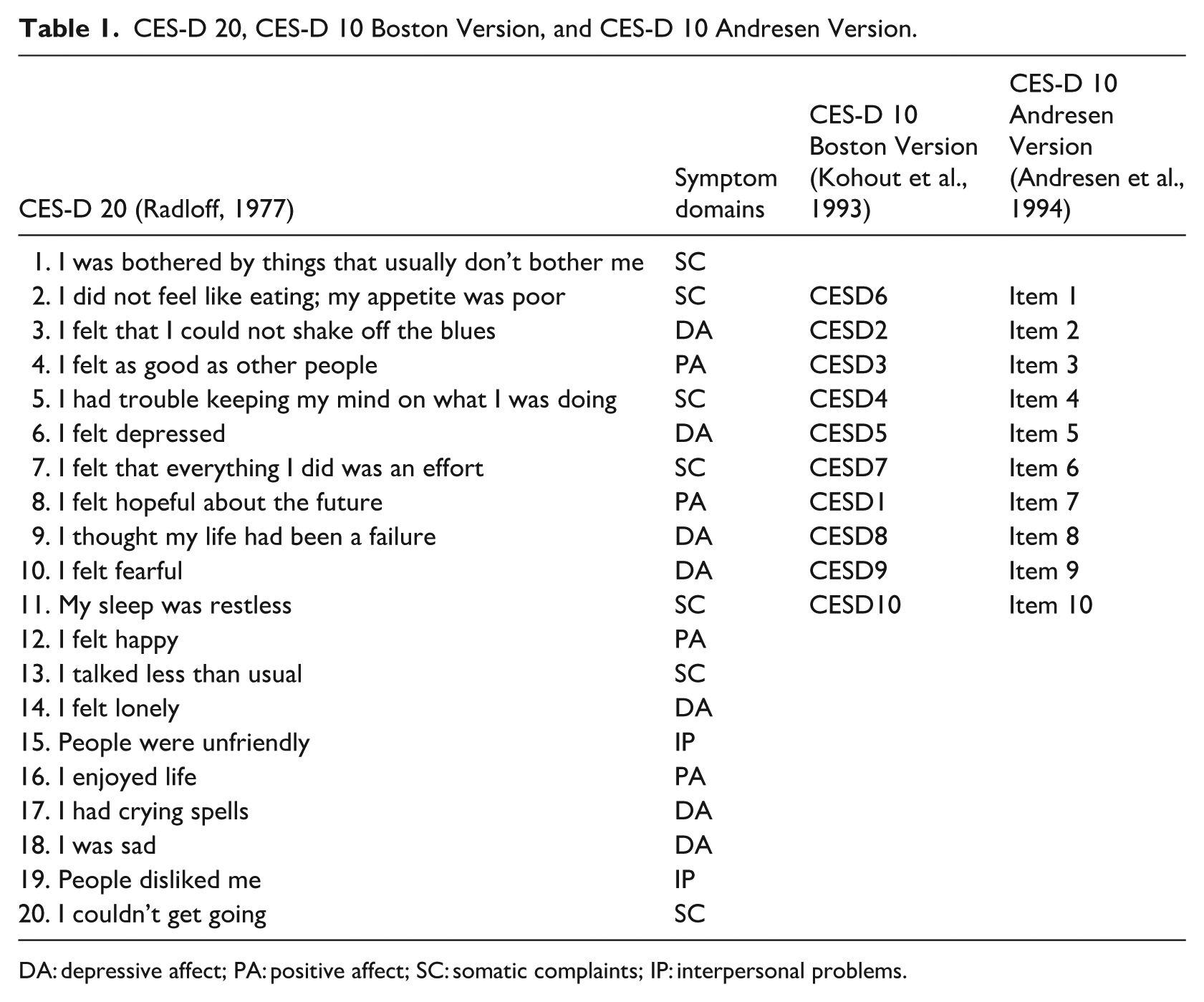
The Center for Epidemiologic Studies Depression Scale 20-item instrument (CESD-20) was created to measure the level of depressive symptomatology in the general population (Radloff, 1977). Items in the CESD-20 describe symptoms that occurred in the previous week, with response options from 0 to 3 to rate the frequency of symptoms. CESD-20 items represent multiple symptom domains (Table 1). Psychometrically, the CESD-20 has established a four-factor model in community older adults, capturing (a) depressed affect, (b) positive affect, (c) somatic complaints, and (d) interpersonal problems (Cosco et al., 2020). In addition, a shorter scale, the CESD 10-item Boston Version (CESD-10 B), was developed to relieve respondent burden (Kohout et al., 1993; Table 1). Its items were extracted from each of the four domains in the CESD-20, and its response options are dichotomous (yes/no). The total proportion of variance explained by the four factors was greater for the CESD-10 B than for the CESD-20 (61.1% vs 46.5%).
CES-D 20, CES-D 10 Boston Version, and CES-D 10 Andresen Version.
DA: depressive affect; PA: positive affect; SC: somatic complaints; IP: interpersonal problems.
Using the COnsensus-based Standards for selecting health status Measurement Instruments (COSMIN) checklist (Mokkink et al., 2006, 2010a, 2010b), our study team evaluated the methodological quality of studies of the psychometric properties of CESD-10 B, which was initially developed for older adults in the community (Irwin et al., 1999; Kohout et al., 1993). Clinical usability for CESD-10 B was supported by an average administration time of 2.1 minutes among older adults (⩾ 65 years old; Kohout et al., 1993). The CESD-10 B uses a dichotomous response (i.e. yes/no), which reduces the cognitive demand of quantifying the depressive symptoms described in each instrument question. It contains depressive symptom items from four constructs/dimensions/factors (i.e. negative mood change, positive mood change, somatic symptoms, and social challenge) to capture a comprehensive set of manifested indicators of depression (Kohout et al., 1993). It is important to test whether the CESD-10 B could remain a four-factor model in the cancer population, because it might be an excellent alternative for the clinical screening of depressive symptoms in this population; however, studies evaluating its structural validity have not yet been applied in cancer patients (Irwin et al., 1999; Kohout et al., 1993). This study’s research question was how well the data from the cancer patients could fit the four-factor model of CESD-10 B. To answer this question, we needed to test the internal structure of CESD-10 B statistically (i.e. construct validity; Tavakol and Wetzel, 2020). Confirmatory factor analysis (CFA) could test this, resulting in the maximum likelihood estimation and evaluation of the suitability of the constructs by comparing the data with a set of criteria. Therefore, the study aimed to evaluate the construct validity of CESD-10 B by performing CFA among cancer patients. We also tested the reliability of CESD-10 B to evaluate the statistical quality of the four-factor model from the CFA.
Methods
This methodological research evaluated the internal structure of CESD-10 B. Baseline data from a cancer symptom trial (Patient-Centered Outcomes Research Institute [PCORI, CE-12-11-4025]; PI: McMillan S. C.; Badana et al., 2019) were used in the current analysis.
Participants
In the parent study (Badana et al., 2019), inclusion criteria were diagnosis of cancer, at least 18 years of age, fluent and literate in English, and receiving chemotherapy or/and radiation at the time of recruitment. Exclusion criteria included cancer patients who were within 6 weeks after surgery, were unable to return to a Cancer Center for study follow-up, were enrolled in hospice care, and were estimated to have a ⩽ 3-month life expectancy. While the end-of-life period is commonly considered the last 6 months of life, the parent study was designed to be implemented over a 3-month period; therefore, we chose this exclusion criterion. Participants were also excluded if their Mental Status Questionnaire score (Pfeiffer, 1975) was greater than or equal to 8 or their Eastern Cooperative Oncology Group (ECOG) Performance Status Scale (Oken et al., 1982) was greater than or equal to 3.
Participants gave consent for their participation in the parent study and their data for use in research. In the current study, following approval by the University Institutional Review Board, we extracted baseline data from the 200 participants in the parent study who had completed the CESD-10 B.
Instruments
Center for Epidemiologic Studies-Depression 10 items, Boston version (CESD-10 B)
The CESD-10 B contains 10 statements; responses are dichotomous (yes = 1; no = 0; Kohout et al., 1993). Table 1 shows CESD-10 B items and their symptom domains: Depressive Affect, Positive Affect, Somatic Complaints, and Interpersonal Problems (Radloff, 1977). Items in CESD-10 B include CESD1 = I enjoyed life, CESD2 = I felt everything was an effort, CESD3 = My sleep was restless, CESD4 = I felt happy, CESD5 = I felt lonely, CESD6 = I felt depressed, CESD7 = People were unfriendly, CESD8 = I was sad, CESD9 = People disliked me, CESD10 = I couldn’t get going (Kohout et al., 1993). Two items are reverse scored: I enjoyed life and I felt happy. The total score ranges from 0 to 10, with greater scores indicating greater severity of depressive symptoms. The validity and reliability of the CESD-10 B were originally examined in older adults (⩾65 years old) in the U.S (Kohout et al., 1993). The total variance explained by the four factors was 66.3%, with a Cronbach’s coefficient of 0.80.
Demographic survey
Data from the parent study’s demographic survey were extracted. Selected variables included age, education, gender, racial/ethnic background, and marital status.
Data analysis
SPSS software version 24.0 was used to describe sample characteristics and compute CESD-10 B scores. The reliability analyses included the evaluation of internal consistency (Cronbach’s alpha) and analysis of item reliability (item-total correlation; Cook and Beckman, 2006). To assess CESD-10 B structural validity, we employed the statistical software package LISREL 9.2 for CFA. Due to the dichotomous items in the CESD-10 B, a matrix of polychoric correlation coefficients was recommended as the input for the factor analysis (Enzmann, 2021). We assessed the adequacy of the polychoric correlation matrix for CFA using the following criteria (University of California, Los Angeles (UCLA) Advanced Research Computing, 2024): determinant values ≠ 0, the Kaiser-Meyer-Olkin Index of Sampling Adequacy > 0.6, and Bartlett’s Test of Sphericity p-value <0.05. To evaluate the CFA models, we relied on several goodness of fit tests: Root Mean Square Error of Approximation (RMSEA), Standardized Root Mean Square Residual (SRMR), Comparative Fit Index (CFI), Goodness of Fit Index (GFI), and Adjusted Goodness of Fit Index (AGFI). Criteria for a relatively good-fitting model included cutoff values as follows: RMSEA ⩽ 0.05, SRMR ⩽ 0.08, CFI ⩾ 0.95, GFI ⩾ 0.90, and AGFI ⩾ 0.90 (Ximénez et al., 2022). The CFA was used to confirm the latent constructs and their latent variables. We also calculated heterotrait-monotrait ratios of correlation (HTMT) to assess the discriminant validity of the latent variables (Henseler et al., 2015). HTMT ⩽ 0.90 was the criterion used to determine whether a construct was problematic.
For the CFA, a widely accepted sample size ratio is 10 participants per item (Kyriazos, 2018; Nunnally and Bernstein, 1967). In the current study, after the dataset was cleaned for missing data and outliers, we analyzed data from the 200 participants, which is an acceptable number for the 10 items of the CESD-10 B.
Results
Sample characteristics
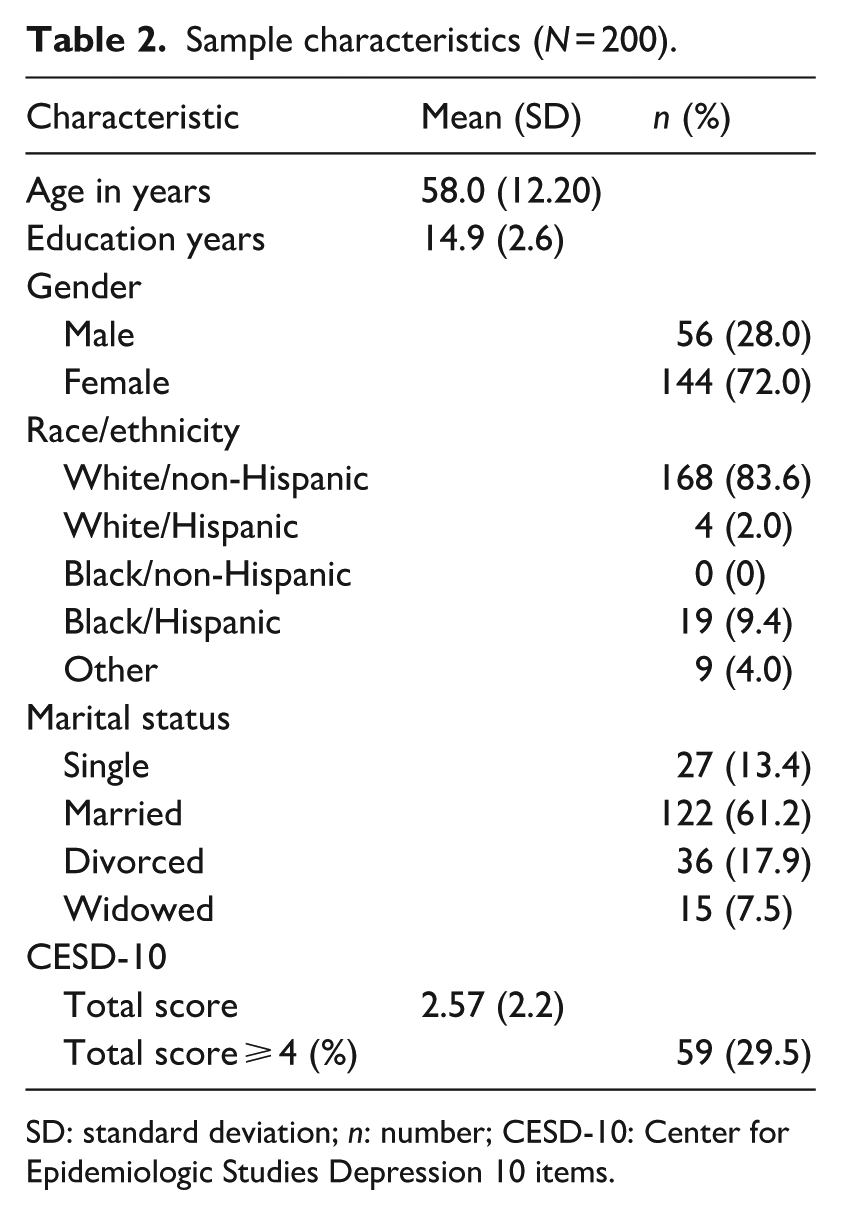
Sample characteristics are summarized in Table 2. The average age was 58.0 years (SD = 12.20), and the majority of participants were female (72.0%), non-Hispanic White (83.6%), and married (61.2%). Mean years of education were 14.9. The mean CESD-10 B score was 2.57 (SD = 2.2). Overall, 29.5% of the participants had a score ⩾ 4, which is the CESD-10 B cutoff score suggestive of major depression (Irwin et al., 1999).
Sample characteristics (N = 200).
SD: standard deviation; n: number; CESD-10: Center for Epidemiologic Studies Depression 10 items.
Reliability
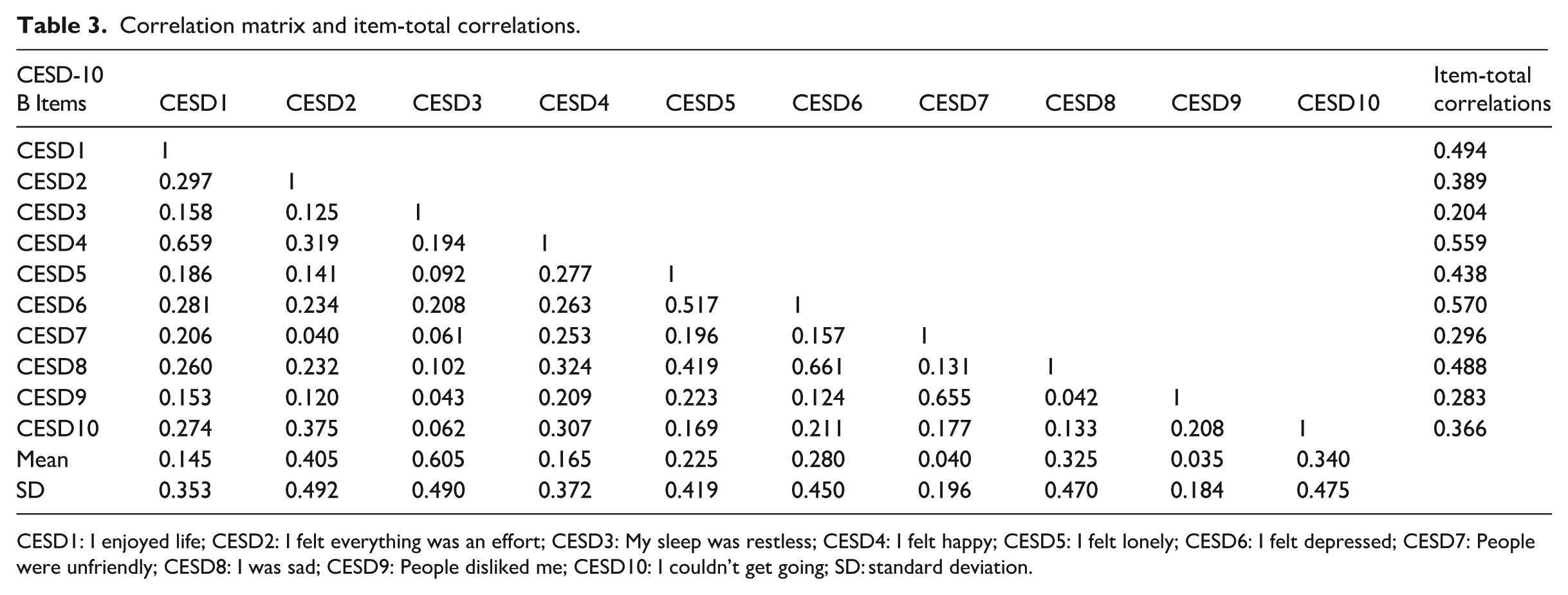
In the correlation matrix (Table 3), the average inter-item correlation was 0.233. The inter-item correlation for the factor of Interpersonal Problems (CESD7 and CESD9) was 0.655, and inter-item correlations for the Depressive Affect factor (CESD5, CESD6, and CESD8) ranged from 0.419 to 0.661. The inter-item correlation for the Positive Affect factor (CESD1 and CESD4) was 0.659, and those for the Somatic Complaints factor (CESD 2, CESD3, and CESD10) ranged from 0.062 to 0.375. Table 3 shows item-total correlation coefficients, ranging from 0.204 (CESD3, My sleep was restless) to 0.570 (CESD6, I felt depressed). The Cronbach’s coefficient of internal consistency was 0.74.
Correlation matrix and item-total correlations.
CESD1: I enjoyed life; CESD2: I felt everything was an effort; CESD3: My sleep was restless; CESD4: I felt happy; CESD5: I felt lonely; CESD6: I felt depressed; CESD7: People were unfriendly; CESD8: I was sad; CESD9: People disliked me; CESD10: I couldn’t get going; SD: standard deviation.
Construct validity
Prior to conducting the CFA, we examined the data to determine suitability for analysis. First, the mean of inter-item correlation coefficients within the scale was 0.233. Second, the determinant of the correlation matrix was 0.060, and the Kaiser-Meyer-Olkin Index of Sampling Adequacy was 0.691. Third, Bartlett’s Test of Sphericity was significant (χ2 = 546.75, df = 45, p < 0.001). Based on these parameters, we deemed the polychoric correlation matrix adequate for factor analysis (UCLA Advanced Research Computing, 2024).
We compared two potential models: (1) a single-factor model to evaluate unidimensionality and (2) a four-factor model. These models were specified to include Lambda-X, Phi, and Theta-Delta matrices, and both models were fit to the data. The goodness of fit indices of the single-factor model (χ2 = 265.06, df = 35) were not within an acceptable range (RMSEA = 0.18, SRMR = 0.11, CFI = 0.55, GFI = 0.79, and AGFI = 0.67). The four-factor model was fit to the data (χ2 = 37.01, df = 29) within an acceptable range (RMSEA = 0.04, SRMR = 0.04, CFI = 0.98, GFI = 0.97, and AGFI = 0.93).
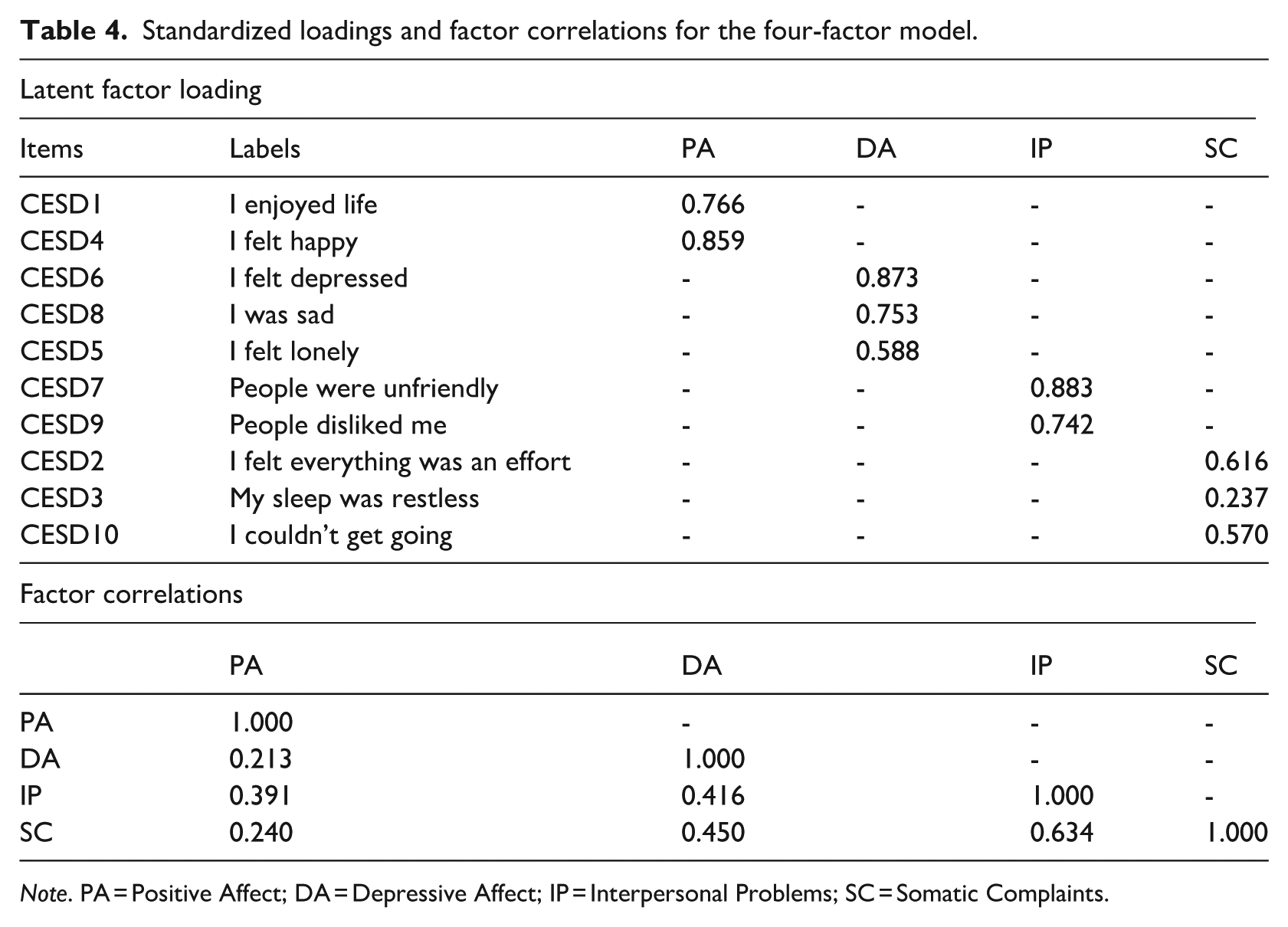
A comparison of the single-factor model with the four-factor model resulted in significance (χ2 = 227.988, df = 6, p < 0.001). The four-factor model fit the data significantly better than the single-factor model. The parameter estimates from the four-factor model are displayed in Table 4. All factor loadings were statistically significant. Standardized factor loadings ranged from 0.237 to 0.883. CESD3, My sleep was restless, had the lowest loading (0.237), and CESD7, People were unfriendly, had the highest loading (0.883). The pattern of each factor loading was as follows: Positive Affect (CESD1, CESD4), Depressive Affect (CESD5, CESD6, CESD8), Interpersonal Problems (CESD7, CESD9), and Somatic Complaints (CESD2, CESD3, CESD10). The highest factor correlation was between Interpersonal Problems and Somatic Complaints (0.634). Most of the factor correlations were modest in size, but Positive Affect had weak correlations with other factors (0.213–0.319).
Standardized loadings and factor correlations for the four-factor model.
Note. PA = Positive Affect; DA = Depressive Affect; IP = Interpersonal Problems; SC = Somatic Complaints.
The analysis results for discriminant validity showed that all HTMTs were less than 0.90, with one value being slightly higher (i.e. 0.905) for the comparison between Positive Affect and Somatic Complaints (Table 5). The item My sleep was restless had the lowest loading in the four-factor model. However, when we removed it from the CESD-10 B, the HTMTs of the Somatic Complaints factor with three other factors exceeded 1, which failed to meet the established discriminant validity. Thus, the item My sleep was restless was retained in the CESD-10 B.
The Heterotrait-Monotrait ratios of correlations (HTMT).
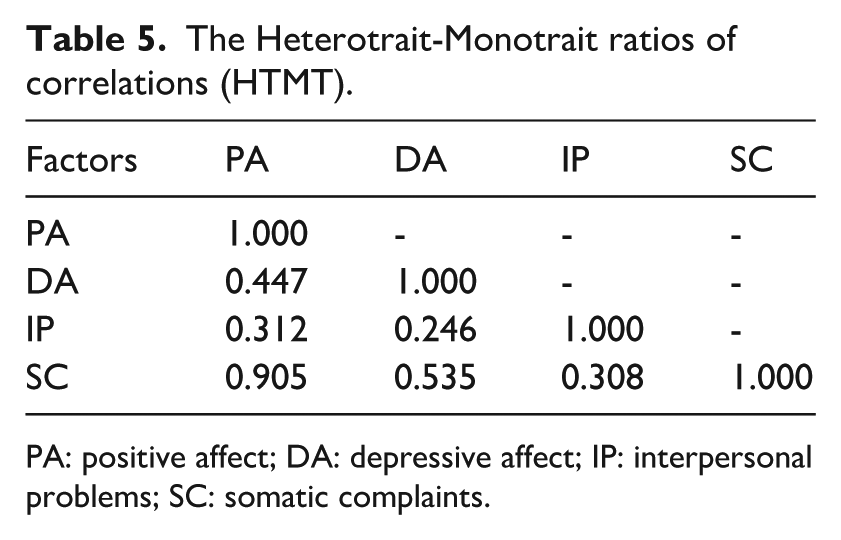
PA: positive affect; DA: depressive affect; IP: interpersonal problems; SC: somatic complaints.
Discussion
Our study is the first to evaluate the CESD-10 B’s (Kohout et al., 1993) psychometric properties in cancer patients. The results of this secondary data analysis showed a statistically supported four-factor model with satisfactory reliability. Ten (10) items, each of which was assigned to one of the four symptom domains in the original CES-D 20, matched the factors of the CFA in our study. Our analysis did not merely support a model-fit four-factor model, but also showed that the four-factor model was significantly different from the one-factor model. The discriminant validity was appropriate. The Crobach’s coefficient was acceptable, with moderate strength (α = 0.74).
Quality of reliability
Calculating Cronbach’s alpha is common practice when multiple-item measures of a concept of the construct are employed (Tavakol and Dennick, 2011). The CESD-10 B in our study had an alpha value of 0.74, which is considered acceptable and is in line with the previous CESD-10 B study (Kohout et al., 1993). An alpha value is typically affected by test length and dimensionality (Tavakol and Dennick, 2011). The CES-D 10 B’s short test length and multiple dimensionality—10 items based on a four-factor model—were appropriate and did not impact the quality of its reliability. The item-total correlations in the study were all above 0.20. Although the recommended range of item-total correlations is from 0.30 to 0.70 (Ferketich, 1991), others suggest that items with item-total correlations between 0.20 and 0.40 could add reliable variance to a scale (how2stats.net, 2011). In our study, items with item-total correlations between 0.20 and 0.40 were primarily in two symptom domains, Interpersonal Problems (CESD7, CESD9) and Somatic Complaints (CESD2, CESD3, CESD10).
Quality of validity
We questioned whether the item My sleep was restless would be an appropriate item for cancer patients in the CESD-10 B, as it had the lowest loading in the four-factor model compared to other items. While this sleep item was considered under Somatic Complaints both conceptually and operationally in the CESD-10 B, it was possible that it might be due to medical conditions (i.e. cancer) irrespective of any feelings of depression. In the DSM-IV diagnostic criteria for depression, Insomnia or Hypersomnia is considered one of the depressive symptoms (Kroenke et al., 2001). The nine depressive symptoms in the DSM-IV diagnostic criteria were operationalized into PHQ-9, another depression screener. The sleep item in the PHQ-9 was also shown to load onto the somatic factor (Boothroyd et al., 2019; Hinz et al., 2016; Park et al., 2024). A study tested the diagnostic accuracy of PHQ-9 on major depressive disorder using the Youden Index (sensitivity + specificity − 1) in cancer patients (Grapp et al., 2019). The sleep item had an adequate Youden Index score of 0.54 (cutoff ⩾ 0.40). In the current study, we also used the HTMT testing to support the importance of the sleep item in reducing the threat to the established construct validity with the four-factor model. When we removed the sleep item from the CESD-10 B, the HTMTs between the Somatic Complaints factor and three other factors exceeded 1. This meant that the construct of Somatic Complaints would lose its unique influence in the variation of measuring depressive symptoms in cancer patients, which created threats to discriminant validity (Henseler et al., 2015). Therefore, we suggest that the item My sleep was restless be retained in the CESD-10 B when it is used in cancer patients.
The CESD-10 B in the current study was likely the first to be evaluated by CFA in cancer patients. Andresen et al. (1994) proposed another popular 10-item CESD, called CESD-10 Andresen Version (CESD-10 A). Items selected for this CESD-10 A were from three symptom domains: Depressive Affect, Positive Affect, and Somatic Complaints (Table 1). The CESD-10 A uses 0–3 scales, which indicate the frequency of symptom occurrence for item responses. Greater scores indicate greater frequency/severity of depressive symptoms. Table 6 summarizes eight studies (Amtmann et al., 2014; Cheng et al., 2006; Chen and Mui, 2014; González et al., 2017; Lee, 2019; Mohebbi et al., 2018; Mueses-Marín et al., 2019; Ramírez-Vélez et al., 2023) that used CFA to evaluate the factor structure of the CESD-10 A in three studies conducted in community older adults (Cheng et al., 2006; Chen and Mui, 2014; Mohebbi et al., 2018), one study in adults with multiple sclerosis (Amtmann et al., 2014), one in adults with HIV/AIDS (Mueses-Marín et al., 2019), one in patients with persistent COVID-19 (Ramírez-Vélez et al., 2023), one in the Hispanic population (González et al., 2017), and one in Korean women living with their children in English-speaking countries (Lee, 2019). Sample sizes ranged from 105 to 19,114. Mean age ranged from 40 to 73.10 years old. These studies using CFA identified the CESD-10 A as a single-factor model (Amtmann et al., 2014; González et al., 2017; Mohebbi et al., 2018; Mueses-Marín et al., 2019), two-factor model (Chen and Mui, 2014; Lee, 2019), or three-factor model (Cheng et al., 2006; Ramírez-Vélez et al., 2023). The two-factor model included a negative factor (Depressive Affect and/or Somatic Complaints (eight items)) and a positive factor (Positive Affect (two items)). The three-factor model had Depressive Affect (four items), Somatic Complaints (four items), and Positive Affect (two items). The factors assigned to the items in the three-factor model corresponded to those in the original CESD-20 (Radloff, 1977). However, the CESD-10 A lacks a fourth factor, Interpersonal Problems.
Studies using confirmatory factor analysis to evaluate CESD-10 Andresen Version.
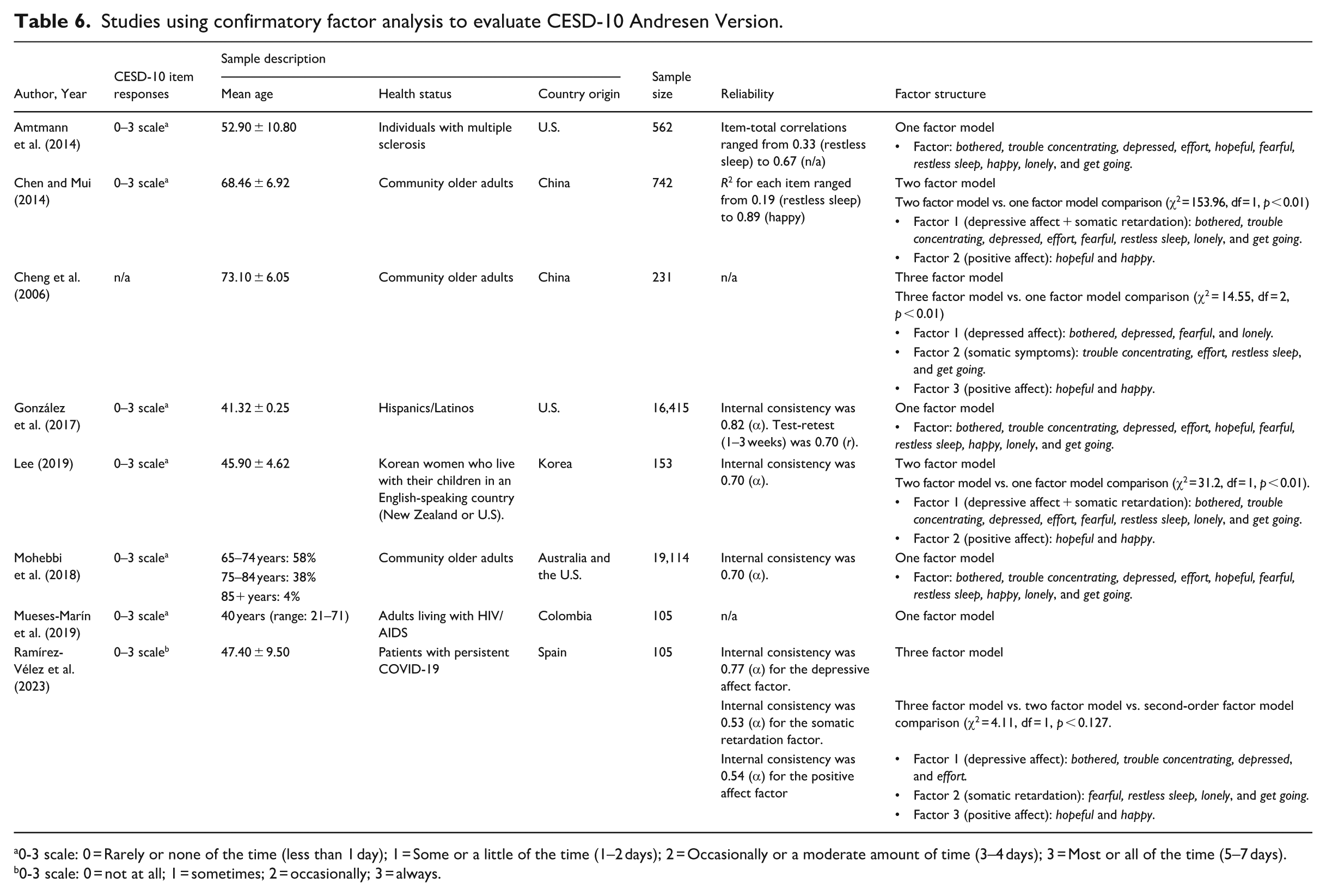
0-3 scale: 0 = Rarely or none of the time (less than 1 day); 1 = Some or a little of the time (1–2 days); 2 = Occasionally or a moderate amount of time (3–4 days); 3 = Most or all of the time (5–7 days).
0-3 scale: 0 = not at all; 1 = sometimes; 2 = occasionally; 3 = always.
The CESD-10 A (Andresen et al., 1994) may not be clinically relevant for screening or measuring depressive symptoms because it lacks items related to the factor of Interpersonal Problems. In contrast, our study demonstrates that the CES-D 10 B consists of a four-factor model that includes Interpersonal Problems. An interpersonal problem is a major complaint among patients who seek psychotherapy (Horowitz et al., 1988), and individuals with more depressive symptoms have more interpersonal problems than those with fewer depressive symptoms (Triscoli et al., 2019). A disturbed environment from inevitable stressors leads to negative changes in the interpersonal environment. The individual, therefore, manifests depressive symptoms and symptoms related to interpersonal problems. Although the stressors are primarily from disease and its treatment, cancer patients often tend to blame themselves for interpersonal problems. Psychotherapy can help them to resolve these interpersonal problems and develop a social support system (Markowitz and Weissman, 2004). Treatment strategies include engaging in empathic communication, helping them feel understood, arousing affect, presenting a clear rationale and treatment ritual, and yielding a successful experience. The content of these strategies is built on two principles: (a) depression is a treatable medical illness, and (b) depressive mood and life events are related. A meta-analysis study has shown that psychotherapy can improve interpersonal problems, with a large effect size (g = 0.74, 95% CI = 0.56–0.93; McFarquhar et al., 2018). Therefore, the two items, People were unfriendly and People disliked me, included in the Interpersonal Problems factor of the CESD-10 B, have significance for clinical screening and treatment of depression.
A factor analysis sample of 50 is considered as very poor, 100 as poor, 200 as fair, 300 as good, 500 as very good, and 1000 as excellent (Comrey and Lee, 1992). For the CFA, a widely accepted sample size ratio is 10 participants per item (Kyriazos, 2018; Nunnally and Bernstein, 1967). The Monte Carlo simulation showed that a sample size of less than 100 caused convergence failures and improper solutions in models with two items per latent variable (Anderson and Gerbing, 1984). A sample size of 200 or greater with three items per latent variable led to almost 0 convergence failures and no improper solutions. Our sample size was 200 with no missing data. Each latent variable was considered as continuous for the level of measurement and had two or 3 items. All of these factors (i.e. no missing data, continuous variables, and strong reliability) might allow reduction of the required sample size (Kyriazos, 2018); therefore, our sample size was adequate.
Study strengths and weaknesses
This study is innovative because it provides sufficiently strong evidence to challenge clinical practice paradigms and may allow researchers and clinicians to use a novel instrument (i.e. CESD-10 B) in oncology populations. The CESD-10 B was initially developed especially for older adults (Kohout et al., 1993). With its convenient usability, the CESD-10 B may be an excellent alternative for depressive symptom screening in geriatric cancer patients. However, the current study also has notable weaknesses. The current research methodology is not robust, as a secondary analysis with a limited number of participants was conducted. Our cancer participants were predominantly White/non-Hispanic, well-educated, and partnered; therefore, they might not be representative of minority populations or cancer patients with disadvantaged social determinants of health. Data collected from more diverse cancer populations are needed. Furthermore, future evaluations of convergent and discriminant validity with quality of life or function measures are warranted.
Conclusion
Our study supported the four-factor model of CESD-10 B to measure depressive symptoms in cancer patients. Similar constructs have been developed to assess depressive symptoms in populations with chronic conditions, such as vital exhaustion in individuals with increased risks of cardiovascular disease (Deshotels et al., 2024). The characteristics of vital exhaustion, similar to depressive symptoms with both somatic and affective manifestations, include excessive fatigue, demoralization, and irritability. The leading cause of vital exhaustion is prolonged and chronic psychological stress (Schoch et al., 2018), which is different from the stressors in cancer patients, such as fear of recurrence, uncertainty of disease trajectory, and side effects from the treatment (Wu et al., 2022). Therefore, clinicians and researchers need to carefully select the measure (i.e. construct) to evaluate the mental health of cancer patients.
From the clinical standpoint, our study supports the use of the CESD-10 B with cancer patients. The CESD-10 B has 10 items, four domains, and a low cognitive burden, and is convenient to implement. Its criterion validity also indicates a cutoff point of 4 as suggestive of major depression, with a high sensitivity of 97%, specificity of 93%, and a positive predictive value of 85% (Irwin et al., 1999). The CESD-10 B’s domain of Interpersonal Problems is a major clinical indicator of a need for psychotherapy. Clinicians can easily use the measure as a screening tool for depression in cancer patients with the cuff-off point (⩾4) and items in the domain of Interpersonal Problems as references for a psychotherapy referral. Therefore, CESD-10 B may potentially eliminate barriers to mental health referrals in cancer patients.
For oncology researchers, the use of CESD-10 B can reduce measurement burden and evaluate depressive symptoms that span multiple dimensions. This is especially important when the research is testing the effectiveness of treatment (or non-pharmacological interventions) on depressive symptoms. The four-factor model of CESD-10 B will allow researchers to identify the inter-individual variability of treatment responses among those four dimensions. Therefore, treatment can be personalized based on the specific dimension deficit.
Footnotes
Author contributions
All authors listed met the ICMJE authorship criteria: (a) substantial contributions to conception and design, acquisition of data, or analysis and interpretation of data; (b) drafting the manuscript or revising it critically for important intellectual content; (c) final approval of the version to be published; and (d) agreement to be accountable for all aspects of the work in ensuring that questions related to the accuracy or integrity of any part of the work are appropriately investigated and resolved. Specifically, all authors were involved with the following: (1) Conceptualization; (2) Writing (original draft), and (3) Writing (review and editing).

Ethical considerations
The University of South Florida Institutional Review Board (IRB) approved the data usage (STUDY001267).
Consent to participate
Participants were informed about the study and gave consent for their participation.
Consent for publication
Consent for publication was not applicable for this article as it contains no identifiable data.
Funding
The authors disclosed receipt of the following financial support for the research, authorship, and/or publication of this article: This work was supported by the Patient-Centered Outcomes Research Institute (PCORI, CE-12-11-4025, Dr. S. C. McMillan), the National Institutes of Health (T32CA261787, Dr. S. F. Abduljawad), the National Cancer Institute (R01CA244947, Dr. H. Wang) and Oncology Nursing Foundation (RE42, Dr. H. Wang).
Declaration of conflicting interests
The authors declared no potential conflicts of interest with respect to the research, authorship, and/or publication of this article.
Data availability statement
Data supporting the findings are available through the corresponding author upon reasonable request.
Trial registration number/date
ClinicalTrials.gov ID: NCT02288169/2019