






Abstract
This study investigated the association between sports fandom, hope, and treatment adherence in patients with cancer. A total of 306 patients with solid tumors receiving chemotherapy or immunotherapy completed the State Hope Scale, Patient Adherence Scale, and questionnaires assessing team support and the perceived impact of team performance on morale. Patients who supported a sports team and reported a positive emotional impact from team success demonstrated higher hope and treatment adherence scores. Multivariate analysis identified team support, perceived impact of team success, team loyalty, and cancer type as independent predictors of hope levels. These findings suggest that sports fandom may represent a form of social belonging associated with greater hope and improved treatment adherence in cancer patients.
Introduction
In cancer patients, the treatment process is influenced not only by physical factors but also by psychosocial aspects. Patients’ morale, hope, and psychosocial support play a decisive role in treatment adherence, quality of life, and overall survival (Montazeri, 2009). In this study, “hope” is conceptualized as a future-oriented cognitive construct measured by the State Hope Scale, whereas “morale” is used as a broader indicator of general psychological well-being and is considered an indirect and less specific construct compared to hope. It has been shown that when patients exhibit higher levels of hope, social connectedness, and perceived support, their adherence to treatment improves, while their levels of depression and anxiety decrease (DiMatteo et al., 2000). Morale and psychosocial well-being are directly associated with motivation to continue treatment, quality of life, and survival duration (Ungvari et al., 2025). In one study, depressive and anxiety symptoms were identified in approximately 30%–40% of cancer patients, and this condition was reported to significantly reduce treatment adherence (Pinquart and Duberstein, 2010). Identifying factors that enhance morale and future-oriented hope, as well as those that facilitate treatment adherence among cancer patients, holds significant clinical importance. In this context, certain elements of social identity may positively influence morale and hope by fostering a sense of belonging and social connectedness. Sports, as an integral component of social life both globally and in our country, provide individuals not only with physical activity but also with a strong sense of social identity and belonging. In particular, supporting a sports team establishes long-term social bonds and group identity among individuals. From the perspective of social identity theory, individuals derive psychological benefits not only from sports fandom but from belonging to meaningful social groups more broadly. Supporting a sports team may represent one such form of group identification, characterized by emotional engagement, continuity, and shared meaning (Wann et al., 2011). However, similar psychosocial processes may also arise from other forms of social belonging, such as family, community, or religious affiliations. In this context, sports fandom can be considered a culturally salient and readily observable example of social identity, rather than a uniquely distinct psychosocial construct.
Patients and methods
This study was designed as a cross-sectional, survey-based investigation. The study included patients diagnosed with solid tumors who were actively receiving chemotherapy or immunotherapy at our center. The inclusion criteria were being 18 years of age or older, having a histopathologically confirmed malignancy, and volunteering to participate in the study. Patients who were unable to complete the questionnaire due to cognitive impairment or who refused to respond to the survey questions were excluded. During the study period, patients with metastatic carcinoma receiving active chemotherapy or chemoimmunotherapy in the chemotherapy unit were randomly selected and invited to participate. A total of 350 eligible patients were approached, and 306 agreed to participate in the study. Participation was voluntary, and written informed consent was obtained from all participants.
Sociodemographic characteristics (age, sex, educational status, marital status), clinical data (year of diagnosis, cancer type, treatment process), and information regarding participants’ sports team allegiance were collected using a structured data collection form. Patients were asked which sports team they supported, regardless of the branch of sport, and the three teams with the highest number of supporters were coded as A, B, and C to avoid any ethical concerns. Sports fandom-related variables were operationalized using structured survey questions. Participants were first asked whether they supported a sports team (yes/no). Those who responded affirmatively were asked to specify the team they supported and whether their team’s success affected their morale (yes/no). Team allegiance was treated as a categorical variable, and the perceived impact of team success on morale was included as a binary variable in subgroup and regression analyses. A questionnaire form, which included the validated and reliable Turkish versions of the State Hope Scale and the Patient Adherence Scale in their complete forms, was administered to the participants (Gözübüyük, 2025; Tarhan and Bacanlı, 2015). The State Hope Scale, developed by Snyder et al. (1996), consists of 12 items rated on an 8-point Likert scale (eight substantive items and four filler items). The Patient Adherence Scale, developed by Hausman (2001), consists of five items rated on a 5-point Likert scale. In the present sample, the internal consistency of the State Hope Scale was acceptable (Cronbach’s α = 0.73), and the internal consistency of the Patient Adherence Scale was 0.69, which is considered acceptable but borderline.
Data analysis
Continuous variables were summarized as mean ± standard deviation or median (interquartile range), while categorical variables were presented as frequencies and percentages. The normality of total hope and treatment adherence scores was assessed using the Kolmogorov–Smirnov and Shapiro–Wilk tests, as well as skewness and kurtosis analyses. Hope and treatment adherence scores were compared between participants who supported a sports team and those who did not, using the independent samples t-test or Mann–Whitney U test, as appropriate. Categorical variables were analyzed using the chi-square test. To identify independent factors influencing hope levels and treatment adherence, a multivariate linear regression analysis was performed, including variables such as age, sex, educational status, cancer type, treatment type, and sports team allegiance. Variables included in the model were selected based on theoretical relevance and prior literature on psychosocial factors associated with hope and treatment adherence, as well as their clinical plausibility (Ullmann et al., 2024). All analyses were conducted using SPSS version 27.0, and a p-value of <0.05 was considered statistically significant.
Ethical considerations
Ethical approval for this study was obtained from the Non-Interventional Clinical Research Ethics Committee.
Findings
A total of 306 patients who were actively receiving chemotherapy or immunotherapy for any cancer diagnosis at our hospital were included in the study. The mean age of the patients was 58.9 ± 10.7 years. Female patients were significantly younger than male patients (54.9 ± 10.2 vs 63.2 ± 9.2 years, p < 0.001). The demographic characteristics of the patients are presented in Table 1.
Clinical and demographical features of patients.
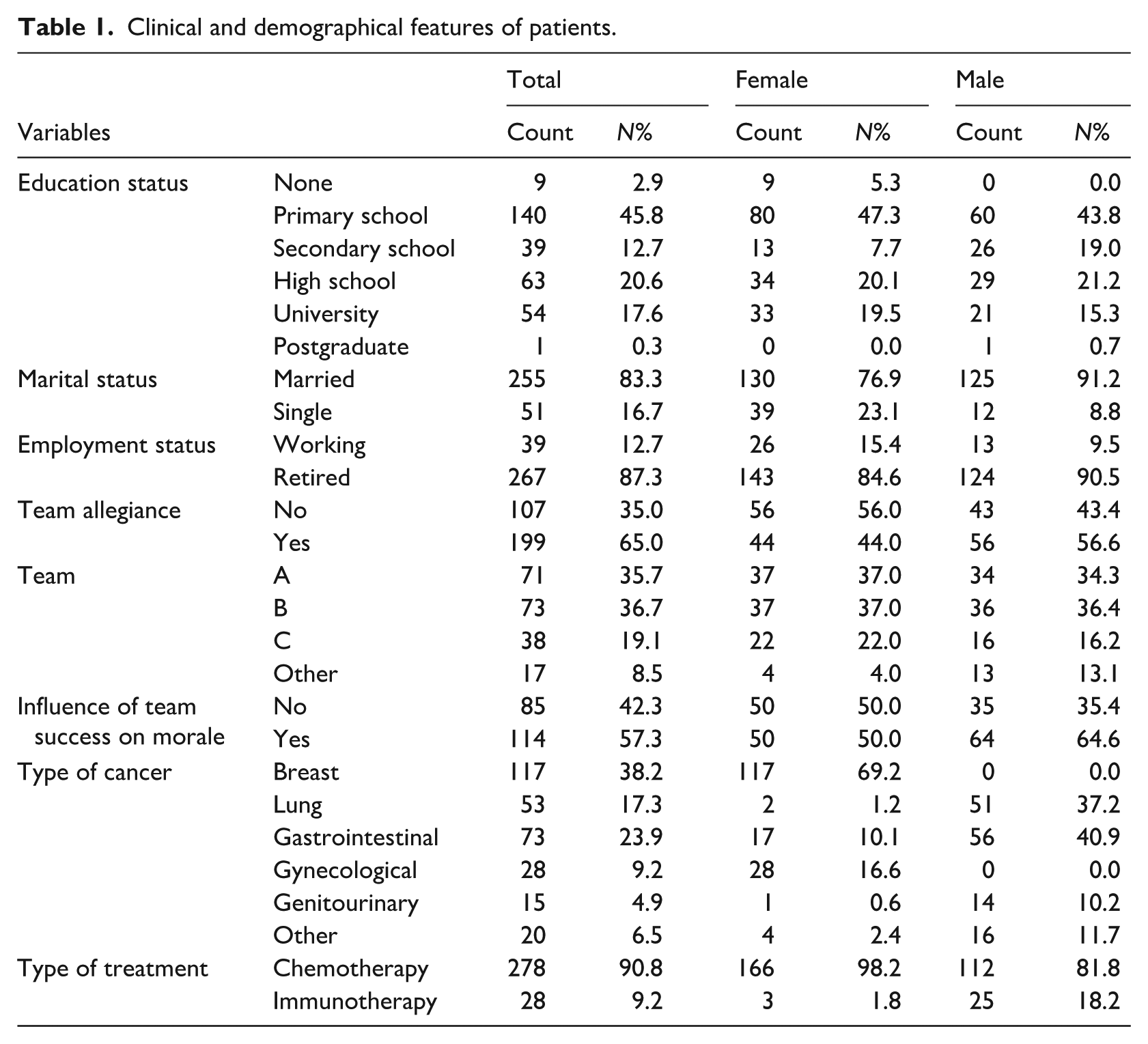
The mean total hope score was 22.14 ± 2.4 for male patients and 21.38 ± 2.5 for female patients (p = 0.007). There was no statistically significant difference in mean total treatment adherence scores between male and female patients (22.4 ± 2.3 vs 22.08 ± 2.4, p = 0.21).
When comparing patients who supported a sports team with those who did not, the mean total hope score was 22.01 ± 2.7 among team supporters and 21.19 ± 1.9 among non-supporters (p = 0.002) (Figure 1).
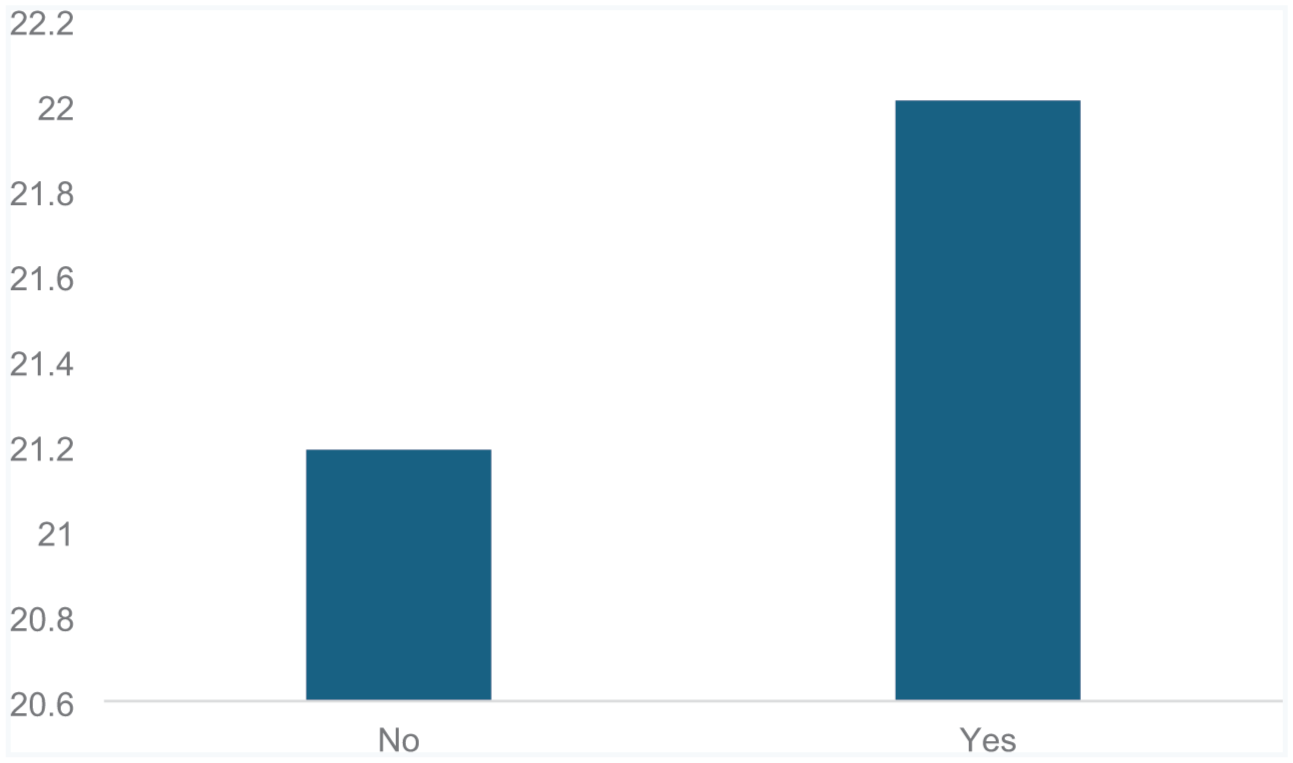
Mean total hope scores of patients who supported a sports team versus those who did not, showing a statistically significant difference between groups.
For these groups, the mean treatment adherence scores were 22.39 ± 2.4 and 21.93 ± 2.1, respectively (p = 0.100). In subgroup analyses, patients who reported that their team’s success affected their morale had a mean total hope score of 23.29 ± 2.01, whereas those who stated that their team’s success did not affect their morale had a mean score of 20.28 ± 2.5 (p < 0.001). When treatment adherence scores were compared between these two groups, the mean values were 23.24 ± 2.1 and 21.25 ± 2.4, respectively (p < 0.001).
When patients supporting different teams were compared, no statistically significant difference was observed among groups in terms of mean total hope scores (p = 0.106) (Figure 2).
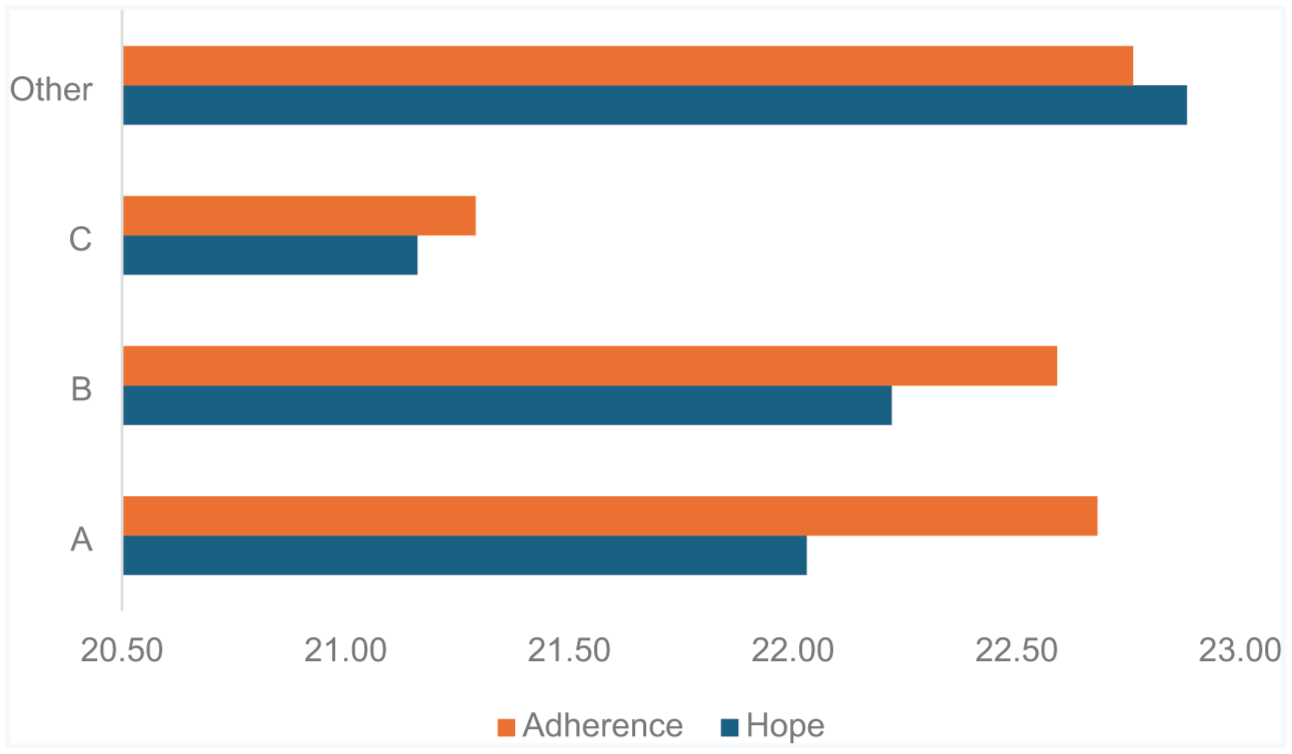
Distribution of mean total hope and treatment adherence scores according to supported teams, showing no statistically significant differences between groups.
In the analyses conducted according to cancer type, no significant differences were observed in hope or treatment adherence scores among patients with different cancer diagnoses (p = 0.15 for mean total hope score, p = 0.49 for mean total treatment adherence score). The distributions of patients’ hope and treatment adherence scores by cancer type are presented in Figure 3.
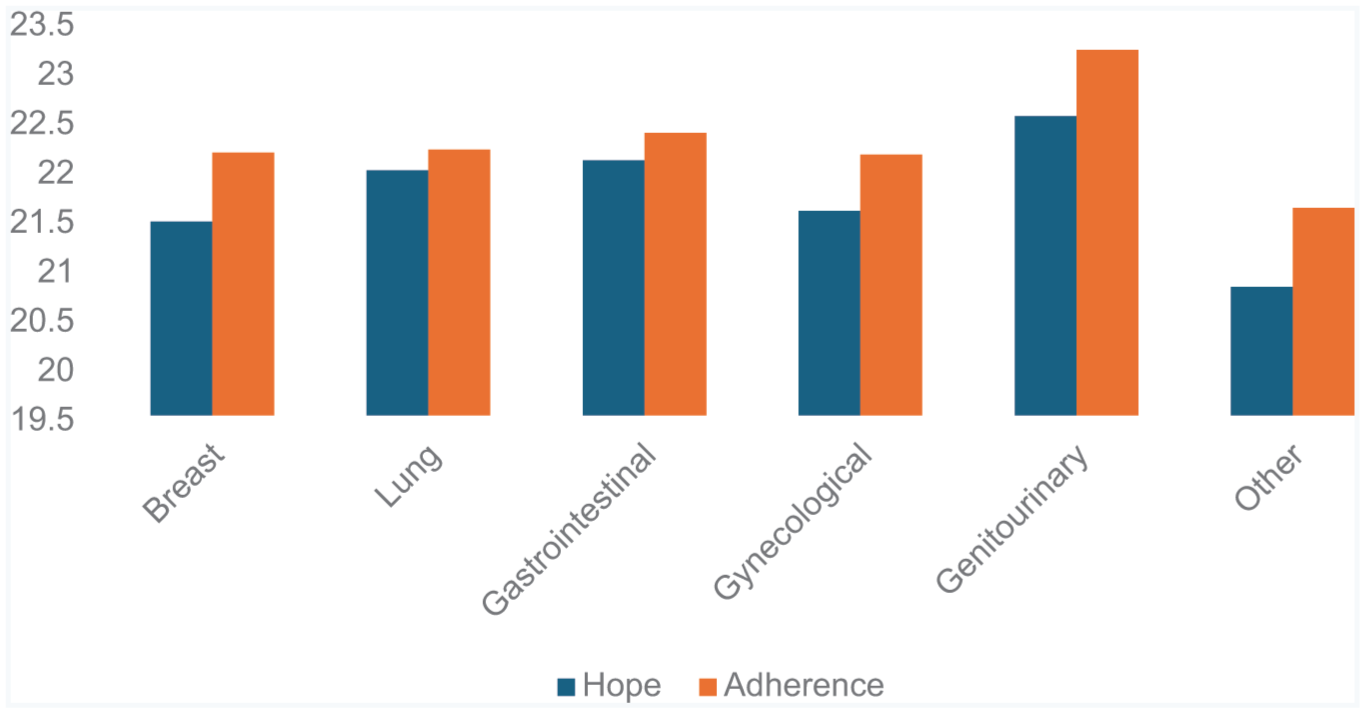
Distribution of mean total hope and treatment adherence scores according to cancer type, showing no statistically significant differences between groups.
In the multivariate linear regression analysis, the overall model was found to be significant (p < 0.001). Sports team allegiance, the perceived effect of team success on morale, and the level of commitment to the supported team remained significant predictors of hope scores. The gender variable lost its significance, whereas the variable representing different cancer types gained significance and was identified as an independent predictor of hope scores (Table 2). The overall regression model was statistically significant (F(11,187) = 11.71, p < 0.001) and explained 40.8% of the variance in hope levels (R2 = 0.41; adjusted R2 = 0.37). Collinearity diagnostics indicated no evidence of multicollinearity among predictors (VIF range: 1.03–1.64). In terms of effect size, the perceived influence of team performance on morale showed the strongest association with hope (β = 0.62, p < 0.001), followed by team loyalty (β = −0.26, p < 0.001) and cancer type (β = −0.16, p = 0.013).
Multivariate linear regression analysis for hope level.
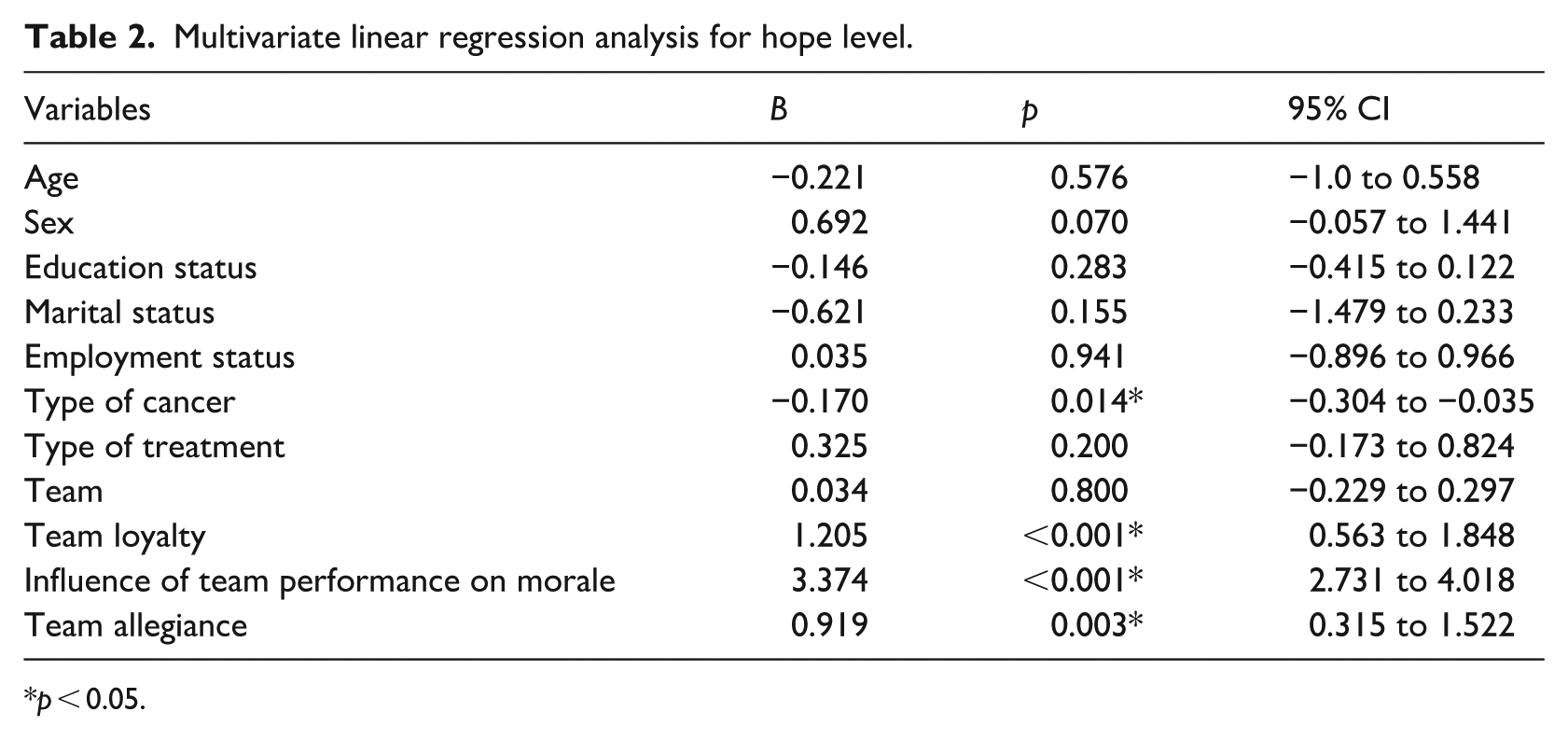
p < 0.05.
Discussion
Our study, which examined the effects of psychosocial factors on hope (as an indirect indicator of morale) and treatment adherence in patients actively receiving chemotherapy or immunotherapy for cancer, provides clinically important findings with its large and heterogeneous sample. The evaluation of 306 patients undergoing treatment at our hospital enhanced the reliability and generalizability of the results. By investigating hope and treatment adherence in relation to demographic characteristics such as age and sex, as well as elements of social belonging, this study offers a novel contribution to the psycho-oncology literature.
The State Hope Scale and the Patient Adherence Scale were used in the present study. These scales have been widely applied in numerous international studies, and their validity and reliability have been well established. For instance, Ekqvist and Kuusisto (2020) used the State Hope Scale in a clinical sample to evaluate changes in hope during substance use treatment, supporting its applicability in health-related populations. Similarly, Zhang et al. (2019) employed a five-item adherence measure derived from Hausman’s Patient Adherence Scale to assess patient compliance behaviors in a healthcare setting. These examples further support the appropriateness of using these instruments in clinical research contexts.
According to our findings, patients who reported supporting a sports team had significantly higher levels of hope compared with those who did not, although no significant difference was observed in treatment adherence levels. Subgroup analyses revealed that male patients exhibited higher hope levels than female patients, and those who stated that their team’s success affected their morale had significantly higher scores for both hope and treatment adherence. The literature strongly emphasizes that social support, hope, and psychosocial factors positively influence the quality of life, treatment adherence, and psychological well-being of cancer patients (Marzorati et al., 2025). Our findings are consistent with previous research and suggest that sports fandom may be associated with higher levels of future-oriented hope and treatment adherence, warranting further investigation in clinical contexts.
In our study, male patients demonstrated significantly higher levels of hope compared with female patients; however, this significance was lost in the regression analyses. This finding is consistent with previous literature indicating that gender may influence psychosocial adjustment and quality of life. Studies have reported that female cancer patients are at a higher risk for depression and anxiety, whereas males tend to rely more on problem-solving strategies and external support mechanisms when coping with stress (Linden et al., 2012). In the subgroup analysis, the rate of sports team allegiance was higher among male patients than female patients (72% vs 59%), suggesting that the sense of belonging and social support provided by fandom may serve as an important factor in strengthening hope and morale toward the future. Conversely, some studies have reported that men experience higher levels of stress compared with women (Goldzweig et al., 2009). Although the referenced study was limited to patients with colorectal cancer, which restricts the generalizability of its findings, its results are consistent with and supportive of the findings of our study. These findings may also be interpreted within the framework of social identity theory, as prior research suggests that men may be more likely to engage in group-based or externally oriented coping strategies, which could be associated with forms of social identification such as sports fandom.
One of the most striking findings of our study is that patients who reported supporting a sports team had significantly higher levels of hope compared with those who did not. However, no significant differences in hope or treatment adherence were observed among groups supporting different teams. This finding may indicate that the observed association is related less to team success itself and more to the sense of belonging generated by supporting a team. This result aligns with the social psychology and psycho-oncology literature, which emphasizes that a sense of belonging to social groups positively influences morale and psychological resilience. Previous research has shown that social support enhances morale and quality of life, and that patients with strong social networks demonstrate greater psychological resilience (Nørskov et al., 2021). In our study, no significant difference in treatment adherence was observed between patients who supported a sports team and those who did not. A meta-analysis demonstrated that social support enhances treatment adherence, showing that patients receiving family or group support have approximately twice the adherence rate compared with those without such support (DiMatteo, 2004). In this context, sports fandom does not appear to directly influence treatment adherence, No mediation or causal pathway analysis was conducted; therefore, these associations should be interpreted as non-causal and exploratory. While there are no studies directly examining the psychosocial effects of fandom among cancer patients, our findings suggest that sports fandom functions not merely as a “sporting preference,” but as a source of collective belonging and social support. This indicates that the strong sense of affiliation with sports clubs, which may be particularly prevalent in our cultural context, could represent a hypothesis-generating observation that warrants further investigation in psychosocial care settings. In the subgroup analyses conducted among patients who supported a sports team, those who reported that their team’s success affected their morale had significantly higher hope and treatment adherence scores compared with those who stated that their team’s success did not influence their morale. However, considering that not all teams were successful during the study period, this finding may be attributed not to actual athletic success but rather to the sense of social identity and collective belonging derived from team affiliation. According to social identity theory, individuals’ identification with groups to which they feel they belong serves as a strong psychosocial resource that enhances morale. There is substantial evidence indicating that interventions aimed at fostering social identity are effective in promoting quality recovery, psychological well-being, and stress reduction (Steffens et al., 2021). A previous study strongly supported the positive effect of social support on morale among cancer patients through structural equation modeling (Pasek et al., 2021). A study conducted among geriatric cancer patients demonstrated that identity-based belonging significantly enhanced psychological resilience and morale (DeSilva et al., 2024). Another meta-analysis qualitatively demonstrated the increase in belonging, morale, and hope levels provided to members of cancer support groups, emphasizing the strength of group processes in enhancing psychosocial support (Jablotschkin et al., 2022). Accordingly, sports fandom may serve as a psychosocial resource that goes beyond the mere act of following a team’s success, fostering a sense of collective belonging and social support among individuals; however, this interpretation should be considered contextual and requires further empirical validation. Higher levels of morale and hope were associated with more favorable treatment-related attitudes, suggesting a potential association with adherence that warrants longitudinal investigation. The multivariate regression model demonstrated a satisfactory explanatory capacity, accounting for approximately 41% of the variance in hope levels. Notably, the perceived influence of team performance on morale emerged as the strongest predictor of hope, indicating that identity-related emotional engagement may play a more prominent role than traditional demographic or clinical variables. Taken together, these findings support a social identity interpretation, suggesting that sports fandom may function as a culturally embedded psychosocial resource in cancer care by providing continuity, belonging, and future-oriented motivation. Although the cross-sectional design prevents causal conclusions, the results highlight the potential relevance of identity-based forms of social connection within psycho-oncological research contexts.
Importantly, the associations observed in this study should not be interpreted as specific only to sports fandom. Rather, they likely reflect broader social identity and group belonging processes. In this context, sports fandom can be seen as one example of how identification with a meaningful group may be associated with higher levels of hope and psychological well-being. The reason for focusing on sports fandom in this study is that it is a common, emotionally engaging, and relatively stable form of group identity in our population. Future studies should examine other types of group belonging, such as family, community, or religious groups, to determine whether similar associations are observed. In our study, although the initial analyses revealed no significant differences in hope and treatment adherence scores among patients with different cancer types, regression analysis identified cancer type as an independent predictor of hope levels. This finding suggests that hope, morale, and treatment adherence are shaped not merely by the biological nature of the disease but also by individual, social, and psychosocial factors. The literature indicates that psychosocial burden may vary across different cancer types. One study reported that the trajectories of anxiety and depression differ among patients with breast, gastrointestinal, and gynecological cancers (Linden et al., 2012). The results obtained in our study also support the notion that certain cancer types may impose an additional burden on morale and psychological resilience. This finding highlights the need for psycho-oncological support strategies to be designed with sensitivity not only to elements of social belonging but also to the cancer type-specific psychosocial needs of patients.
Strengths and limitations
One of the main strengths of our study is its large sample size, which included patients from diverse demographic backgrounds. This enhances the generalizability and reliability of the findings. Additionally, the simultaneous evaluation of hope (as an indirect indicator of morale) and treatment adherence, and the exploration of their relationship with sports fandom, a relatively unexplored psychosocial variable in the literature, distinguish this study from similar research in the field. Educational status was also assessed, and the majority of participants were found to be primary school graduates. This finding is noteworthy as it underscores the potential importance of social belonging and fandom in treatment processes, particularly among patients with lower educational levels.
However, our study has several limitations. First, its single-center and cross-sectional design limits the ability to draw causal inferences from the results. Furthermore, although patients were randomly selected from those receiving treatment during the study period, participation was voluntary, and not all eligible patients agreed to take part. This may have introduced selection bias, as patients who were more willing to participate could have differed systematically in psychosocial characteristics such as motivation, social engagement, or overall well-being. Consequently, the levels of hope and adherence observed in our sample may not fully represent those of the broader metastatic cancer population. Moreover, hope and treatment adherence were evaluated through self-report scales, which may be subject to response biases. The predominance of participants with low educational attainment may also restrict the direct generalizability of the findings to populations with higher education levels. In addition, other potentially influential factors such as economic status, psychiatric comorbidities, and existing social support systems were not controlled for in this study. One important limitation is the simplified measurement of sports fandom. Fandom was assessed using binary and self-reported items, which may not fully reflect its multidimensional structure. More comprehensive and validated measures could provide a more accurate assessment. Future studies should use validated multidimensional scales of fandom and social identity to improve construct validity and comparability with existing literature. Finally, the use of the validated Turkish versions of the State Hope Scale and the Patient Adherence Scale, selected to ensure cultural appropriateness within the context of our country’s sociocultural characteristics, may limit the global generalizability of our findings. Therefore, future multinational, multicenter, prospective studies with more heterogeneous sociodemographic samples are needed to provide a more comprehensive evaluation of these relationships.
Overall, the present study should be considered exploratory and hypothesis-generating. Although significant associations were observed, the cross-sectional design precludes conclusions regarding directionality or causality. It is possible that individuals with inherently higher resilience, broader social engagement, or better psychological adjustment may be more likely both to support a sports team and to report higher hope levels. Future prospective and longitudinal studies are needed to clarify underlying mechanisms and causal pathways.
Implications for psychosocial providers
The findings of this study suggest that social belonging and group identity may represent meaningful dimensions to consider within comprehensive psychosocial care for cancer patients. Psychosocial providers may benefit from being attentive to patients’ existing sources of social connection, such as sports fandom or other forms of collective identity, as potential resources associated with morale and hope. Rather than proposing specific interventions, these results should be considered exploratory and hypothesis-generating, highlighting the potential value of exploring culturally relevant social affiliations as part of a holistic psychosocial assessment. Supporting patients in maintaining meaningful social connections or group identifications may be associated with enhanced psychological well-being and treatment engagement; however, these observations should be interpreted with caution given the cross-sectional design of the study. Further prospective and interventional research is needed to determine whether and how such identity-based factors can be systematically incorporated into psycho-oncological support strategies.
Conclusion
Our study demonstrates that treatment adherence, future-oriented hope, and morale among cancer patients are shaped not only by individual psychological factors but also by social belonging and group identity. Sports fandom, as one example of a broader social identity process, may be associated with enhanced morale and hope levels and may be associated with treatment adherence. These findings highlight the importance of considering social belonging in psycho-oncological support strategies and open new avenues for future multicenter prospective research.
Footnotes

Ethical considerations
Ethical approval for this study was obtained from the Dr. Abdurrahman Yurtaslan Ankara Oncology Training and Research Hospital Non-Interventional Clinical Research Ethics Committee (Approval Number: 2025-10/156).
Consent to participate
Informed consent was obtained from all participants prior to their inclusion in the study.
Consent for publication
Consent for publication is not applicable to this article as it does not contain any identifiable data.
Funding
The authors received no financial support for the research, authorship, and/or publication of this article.
Declaration of conflicting interests
The authors declared no potential conflicts of interest with respect to the research, authorship, and/or publication of this article.
Data availability statement
The data that support the findings of this study are available from the corresponding author upon reasonable request.