






Abstract
Meaning in Life has been a suggested contributor to burnout, both in prevention and acceleration. Meaning in Life is comprised of presence (having meaning) and search (seeking meaning), and these two facets may operate independently of each other. This study explores the relationship between meaning in life, measured by the Meaning in Life Questionnaire, and burnout, measured by the Bergen Burnout Inventory, across time. Longitudinal data from an initial cohort of 1239 frontline workers (baseline) in the UK and Ireland were collected from March 2020 to May 2023 to examine within- and between-person differences in presence and search, their interaction, and their relationship to burnout and its dimensions. The findings demonstrate that presence and search for meaning operate differently in relation to burnout. Interactive effects were found: for overall burnout and cynicism, search for meaning was associated with poorer outcomes especially among those with low presence of meaning.
Keywords
Introduction
Burnout is a key occupational health marker that has been researched substantially in the last few decades. However, important questions remain regarding the factors associated with who will experience it, when, and under what conditions. Burnout is an occupational stress syndrome characterised by a continued development of three key factors: emotional exhaustion, a lack of personal accomplishment, and increasing depersonalisation (sometimes referred to as cynicism; Maslach, 1993). In recent years, this tripartite classification has been refined by other researchers in response to concerns with the dimension of personal accomplishment, which has been criticised for issues with conceptual clarity (Bianchi et al., 2024; Schaufeli and Enzmann, 1998), A more recent conceptualisation of burnout replaces personal accomplishment with the behavioural element of “inadequacy” to address issues of conflation of personal accomplishment with affective concepts such as self-esteem (Feldt et al., 2014; Salmela-Aro et al., 2011). This operationalisation of burnout frames the three dimensions of burnout as being rooted in affective (emotional exhaustion), cognitive (cynicism), and behavioural (feelings of inadequacy) components. Whilst it is well understood that certain occupations, such as those involving supporting or assisting people, are associated with burnout, not all individuals in these roles will experience burnout, and amongst those that do, different experiential trajectories exist (Maslach, 1993; Maslach and Leiter, 2016, 2017).
Meaning in life is known to be associated with wellbeing in a variety of ways, including to burnout, both in having meaning in life (perceived meaning “presence”) and seeking it (meaning “search”; Steger, 2009). However, the interplay between these two forms of meaning is less well understood. Whilst the experience of meaning in life (presence) is related to greater wellbeing and more positive outcomes, the contribution of search for meaning has been described as positive, negative, or potentially both depending on context. From the existentialist perspective, searching for meaning is understood to be generally positive and enhancing, with those continually striving to seek meaning in their lives enjoying greater wellbeing (Frankl, 1946). However, other theories posit that search for meaning can have negative connotation outcomes, where the individual is seeking to redress an absence or deficit (Baumeister, 1991). Some theories view search as potentially being both positive (life-affirming) and negative (from the perspective of compensating for deficit) depending on the motivation for the search for meaning (Reker, 2000), suggesting a unique role for the relative presence:search balance. The originator of the predominant measure of meaning in life, Michael Steger, developed this scale by establishing that search for meaning is associated with both positive and negative personal cognitive styles and traits (Steger et al., 2008), suggesting that search for meaning may operate in either way depending on the individual and their current context. Despite these different points of view, little research has been conducted to tease out the nuances of search for meaning.
Specifically, research has made limited progress in terms of understanding how search for meaning may relate to individual experiences of meaning (presence), and whether the differential between the two remains fixed over time or may be dynamic. The debate surrounding whether search for meaning is a positive or a negative thing could indeed rest on how much presence of meaning someone feels—with lower presence indicating the deficit model and a higher presence perhaps indicating the enhancing model. Recent empirical work has demonstrated that whilst presence of meaning was observed to change across the course of a 12 month period, search for meaning did not (Sumner and Kinsella, 2022), suggesting that the two dimensions of meaning in life can operate independently of each other, and may therefore have differential relationships to overall wellbeing.
Meaning in life has been described to be a fundamental element involved in the progress of burnout in both philosophical literature (Längle, 2003) and qualitative explorations (Arman et al., 2011), yet despite this, little quantitative research has been conducted to understand the depths of the relationship between meaning and burnout, and how and why meaning may operate in the trajectory of burnout. The present research aims to address, in part, this gap.
In the context of occupational wellbeing, meaning in life has been proposed to buffer burnout (Krok, 2016), and instigate more resilient and positive adaptations in the face of adversity, such as post-traumatic growth (Zeligman et al., 2019). The existential theory of burnout (Pines, 1993) posits that burnout occurs as a direct response to being unable to fulfil a need for meaning in life that is derived through work. This perspective particularly resonates with the element of burnout associated with feelings of inadequacy (or lack of personal accomplishment), as a result of the social context within which the worker operates (Leiter, 1993). This existential viewpoint suggests that burnout may be particularly likely in those individuals who enter a particular profession motivated with high goals and expectations for that role, and may ultimately fail to accomplish those goals or otherwise feel unable to make the contribution that they had originally intended (Pines, 1993). These ideas have been further developed with relevance to the pandemic context where the labelling of frontline workers as “essential” and as “heroes” augmented feelings of meaning associated with the work role (e.g. Sumner and Kinsella, 2021b). Unfortunately, when public and political solidarity with frontline workers and their efforts decreased, there was a steeper drop in meaning in life and a subsequent acceleration into burnout was observed (Sumner and Kinsella, 2023).
Existing analyses examining meaning in life and its association with burnout are limited. While meaning derived from work is arguably a crucial context in understanding burnout, many aspects of one’s role or occupation reflect values and sources of meaning that extend beyond the specific domain of work life (Steger et al., 2019). Of those studies that have looked at the more holistic concept of meaning in life, an examination of burnout in firefighters found that those with higher levels of presence of meaning reported more favourable outcomes across the three burnout dimensions. However, in that same study, search for meaning was only negatively associated with personal accomplishment with no associations to the other dimensions (Krok, 2016). Other studies have found associations between meaning and burnout in psychiatric hospital staff in Iran (Heydari et al., 2023), rural primary healthcare nurses in Poland (Mazur et al., 2018), doctors in Pakistan (Iqbal, 2022), and in one study examining hospice nurses, that meaning enhances feelings of self-esteem to help protect against burnout (Barnett et al., 2019).
In the Covid-19 pandemic, prior work with frontline workers demonstrated that meaning in life (both presence and search) was associated with greater resilience and wellbeing, and lesser burnout in the first surge of infections and deaths (Sumner and Kinsella, 2021a). In these analyses, presence appeared to buffer against burnout, and search was associated with higher burnout. Subsequent to this, as time continued through the pandemic and frontline workers began to see fractures appear in the prevalent “in this together” narrative and pandemic response from government leadership and the public, they reported a decreased sense of meaning, and consequent increase in their feelings of exhaustion, stress, and overwhelm (Kinsella et al., 2022; Sumner and Kinsella, 2021b). Importantly, longitudinal research also demonstrated that participants reported lower presence of meaning across the first 12 months of the pandemic, but were apparently not compensating for this at this time with an increased search for meaning (Sumner and Kinsella, 2022). This finding advanced the existing literature, which posited that meaning in life in both its composite forms remain relatively stable across a 12 month period in otherwise normal circumstances (Steger and Kashdan, 2007). Moreover, prior work has suggested that the two facets of meaning in life would retain a relative balance, with the decrease in one being accompanied by a compensatory increase in the other (Steger et al., 2008). The addition to this knowledge from our recent findings (Sumner and Kinsella, 2022) highlights dynamic shifts in the trajectories and interplay between presence of and search for meaning, that are both of interest in themselves as indicators of overall wellbeing in this population of workers, and also as potential predictors of burnout as a particularly important negative outcome of these sustained efforts.
The present research
The present research aimed to explore the dynamics of meaning in life and how the interplay between its two facets—presence and search—relates to different dimensions of burnout. Specifically, we sought to understand how the presence and search for meaning are associated with burnout and its individual components, and whether the impact of one facet (e.g., search) varies depending on levels of the other (e.g., presence), and vice versa.
To provide a robust understanding of the relationship between meaning and burnout, we examined these relationships at both the between- and within-person levels. This approach was grounded in the rationale that such relationships may differ not only across individuals but also within individuals over time, depending on their personal psychological contexts. This distinction is particularly important given that theories of burnout and meaning in life tend to postulate within-person psychological processes (e.g., people who experience a period of low perceived meaning in life experience poorer well-being), whereas most research on these variables has examined them at the between-person level (e.g., people whose perceived meaning in life is low compared to others experience also poorer well-being than others (e.g. Li et al., 2021).
Testing the link between meaning in life and burnout both within and between persons is also important given that as associations at the between-and within-person level do not have to be identical, and can even be opposite in direction (Snijders and Bosker, 2011). By examining how presence and search for meaning differentially relate to burnout and its specific dimensions, we aimed to gain deeper insight into how meaning in life may influence the development and progression of burnout (in line with Leiter, 1993). We hypothesised that there would be both between- and within-person differences in relationships between meaning presence and search and burnout.
Method
Participants
The present analyses utilised data from the CV19 Heroes Project, 1 a longitudinal project that has been collecting data from frontline workers since the beginning of the Covid-19 pandemic. The project has collected data from participants in the UK and Republic of Ireland working in frontline roles across a variety of sectors including health and social care, essential retail, and frontline protective services. The project was initially advertised for recruitment in March 2020, where targeted online advertising was conducted to recruit an opportunity sample inclusive of as many demographics as possible within working roles that were designated as frontline or keyworkers during the time. The present study is based on data collected at baseline (BL: March to April 2020, N = 1239), year 1 follow-up (Y1: March to April 2021, N = 417), year 2 follow-up (Y2: March to April 2022, N = 261), and year 3 follow-up (Y3: March to May 2023, N = 286). Existing papers from this project have not assessed burnout longitudinally, and the present work builds on observations from a prior analysis that uncovered differential changes in presence of and search for meaning in life over time (Sumner and Kinsella, 2022). All data will be made publicly available at the OSF on completion of the project and can be accessed at https://osf.io/nm83c/.
Measures
Demographic variables
All participants were asked to provide basic demographic data at study entry. These background data included: age, occupational sector, country of residence, partnership status, caring status, and the number of hours they have worked during a typical week at that time.
Psychological variables
Meaning in life
Meaning in life was measured at each time point using the Meaning in Life Questionnaire (MLQ: Steger et al., 2006). The MLQ comprises of 10 questions measuring both the perceived presence of (MLQ-P) and search for (MLQ-S) meaning in life, with five questions asked for each. The questions were averaged for each subscale, after reversing a single contra-indicative item for MLQ-P. Example questions in this scale are “I understand my life’s meaning” (MLQ-P item) and “I am always searching for something that makes my life feel significant” (MLQ-S item). The questionnaire provides excellent internal consistency at each of the survey time points (BL MLQ-P: α = 0.87, MLQ-S α = 0.89; Y1 MLQ-P α = 0.89, MLQ-S α = 0.90; Y2 MLQ-P α = 0.91, MLQ-S α = 0.91; Y3 MLQ-P α = 0.92, MLQ-S α = 0.92).
Burnout
Burnout was measured at each time point using the Bergen Burnout Inventory (BBI: Salmela-Aro et al., 2011). This is a nine-item scale that measures burnout in totality as well as each of the composite facets of burnout: emotional exhaustion (BBI-E), feelings of inadequacy (BBI-I), and cynicism (or depersonalisation, BBI-C). Each of these burnout dimensions are conceptualised in negatives (with inadequacy replacing the Maslach Burnout Inventory’s “accomplishment”), such that higher scores in either the total or subscale scores denote a greater degree of negative burnout symptomatology. Respondents are asked to consider their responses to each statement with relevance to their experiences in the prior month. Examples of items on the scale are “I am snowed under with work” (BBI-E), “I frequently question the value of my work” (BBI-I), and “I feel dispirited at work and I think of leaving my job” (BBI-C). This particular scale was chosen for its brevity in order to provide good quality data within the context of a large longitudinal survey. The scale is calculated by summing the scores and taking a mean value either for the total or for each of the subscale burnout facets.
One of the key differences with this scale, compared to the Maslach Burnout Inventory (Maslach et al., 1997) is that the BBI asks respondents to report the intensity of experiencing each of these dimensions, rather than the frequency of their occurrence (Feldt et al., 2014). This scale has been validated across different national and occupational populations, demonstrating a stable three-factor structure and factorial invariance across these populations (Feldt et al., 2014). The BBI conceptualisation centres on understanding that the dimensions of exhaustion, cynicism, and inadequacy are closely inter-related and jointly reflect an underlying work-related strain state (i.e., burnout), rather than a sequential process of different stages that must be interpreted separately. Consistent with this, the BBI-9 permits the use of a composite burnout score as a summary indicator of overall burnout severity, particularly for group-level or epidemiological research, while also retaining the three dimensions as theoretically meaningful components of the underlying syndrome (Feldt et al., 2014; Salmela-Aro et al., 2011), Accordingly, the present study utilises the total score as an index of burnout severity alongside the three dimensions. Whilst the BBI-9 has been validated, each dimension subscale consists of three items only, which necessarily imposes limits on precision. The three subscale scores are therefore interpreted as complementary indicators to the total score, rather than as standalone measures, and results are considered at the group level, in line with the intended use of the scale and its validation evidence (Feldt et al., 2014; Salmela-Aro et al., 2011). The scale provided good internal consistency at each time point for this study (BL BBI α = 0.86, BBI-E α = 0.65, BBI-C α = 0.79, BBI-I α = 0.73; Y1 BBI α = 0.89, BBI-E α = 0.74, BBI-C α = 0.85, BBI-I α = 0.76; Y2 BBI α = 0.89, BBI-E α = 0.78, BBI-C α = 0.83, BBI-I α = 0.69; Y3 BBI α = 0.89, BBI-E α = 0.75, BBI-C α = 0.85, BBI-I α = 0.73).
Procedure
Participants were recruited via social media advertising and snowball sampling over two waves of recruitment in 2020. The participants were initially recruited using online advertising via social media and were asked if they wished to have their contact details retained for re-surveying in the future. Those that consented to being contacted were emailed at each survey juncture and invited to take part in the survey (for an overview of data collection see: Sumner and Kinsella, 2021a). At each survey point, participants were provided with the opportunity to choose not to respond, to not answer items, and to opt out of further communications and invitations from the project. The study was initially ethically approved by the University of Gloucestershire School of Natural & Social Sciences Ethics Committee (NSS/2003/003) and subsequently approved by the Cardiff Metropolitan School of Sport & Health Sciences Ethics Panel (Sta-5476).
Analysis
We set out to test if burnout and its components—exhaustion, cynicism, and inefficacy—related to both the perceived presence and search for meaning in life. We also examined if these relationships were interactive rather than merely cumulative; we tested if the association between perceived meaning in life and burnout varied across levels of meaning search, and vice versa. If so, then this would indicate that the link between burnout and meaning may be best understood through the specific combination of meaning search and presence levels.
We analysed these data with random intercept multilevel regression models that accommodate nested data and offers decomposition of between and within-participant variances. We tested our predictions for both levels. Specifically, we examined if differences in meaning presence and search relative to others was associated with burnout (between people) and examined if variability in meaning presence and search relative to participants’ own average level was associated with elevated or reduced burnout (within persons). To facilitate this, we represented each of the predictor variables (meaning presence and search) by (1) their person-mean centred scores, capturing within person differences, and (2) the grand-mean centred average person scores, capturing between person differences. Two meaning presence by meaning search interaction terms were added—defined as the product of the above two sets of variables—representing between and within person interaction terms. We ran the multilevel models using restricted maximum likely estimation in R (R Core Team, 2021), with the lme4 package (Bates et al., 2015). We used lmerTest to approximate significance levels through the Satterthwaite’s degrees of freedom method (Kuznetsova et al., 2017).
Results
Descriptive statistics
The sample
There was significant attrition of the sample over time, with gradual reduction at each time point (Y1: 68.24%; Y2: 80.12%; Y3: 78.2%; relative to baseline). This is perhaps understandable given the context in which the study was carried out. Whilst significant portions of the baseline sample were lost to follow-up over time, the presenting sample at each time point were similar in constitution. The sample were overwhelmingly female (N = 1086, 87.4% at baseline; N = 179, 62.8% at Y3), from white backgrounds (N = 1274, 95.3% at baseline; N = 274, 96.1% at Y3), and from the health and social care sectors (N = 1040, 79.8% at baseline; N = 243, 85.9% at Y3). The mean age increased over time slightly beyond the expected incremental increase in such a time period (43.4 ± 10.91 at baseline; 48.8 ± 10.018 at Y3). The sample showed marked burnout, both in terms of total mean scores and the mean scores of each of the dimensions of burnout, at each time point compared to population norms (Total mean scores 2.56, Exhaustion 2.79, Cynicism 2.26, Inadequacy 2.66: Feldt et al., 2014). An overview of the sample at each survey point is provided in Table 1.
Demographic description of study samples per data collection year.
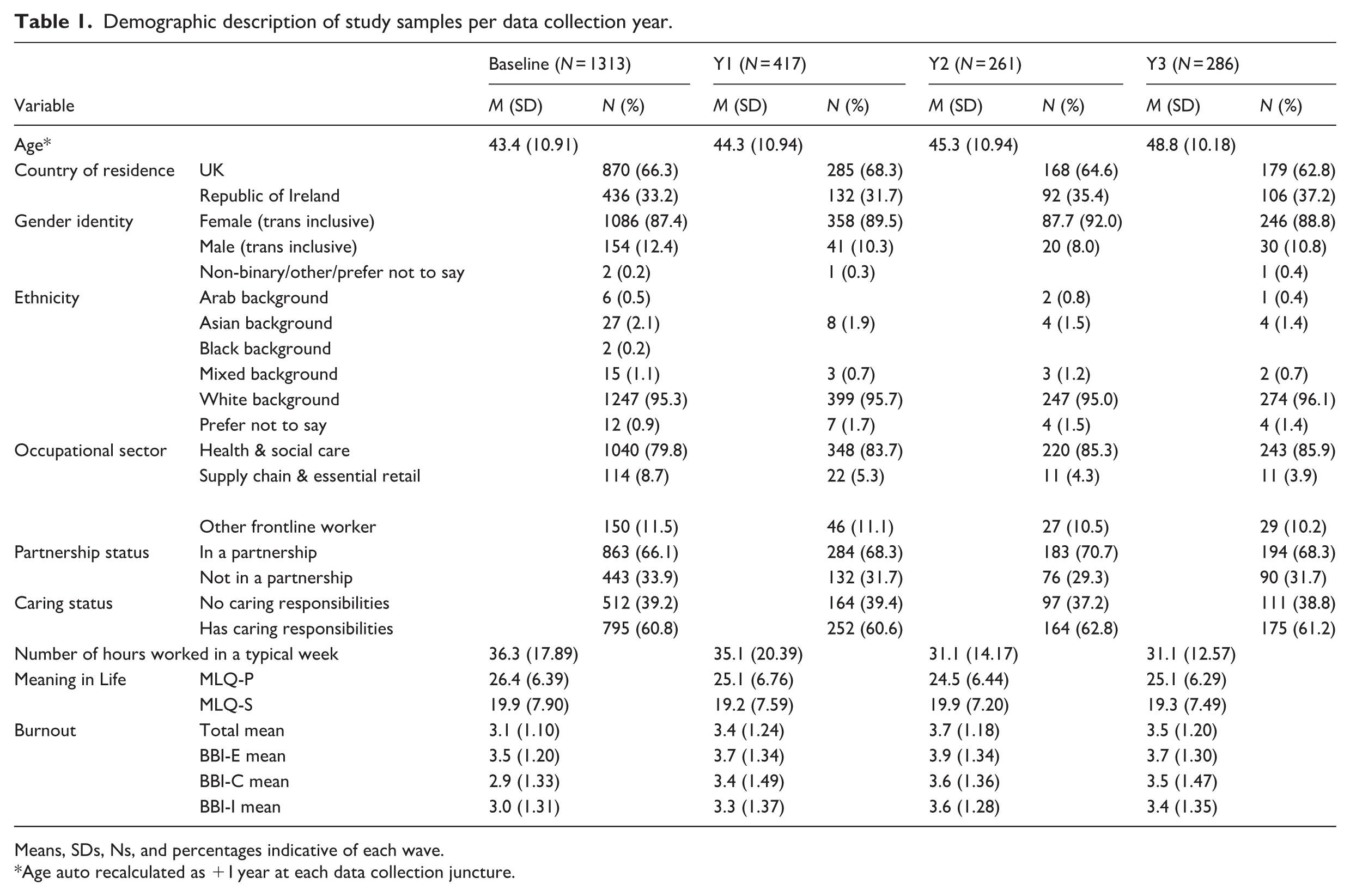
Means, SDs, Ns, and percentages indicative of each wave.
Age auto recalculated as +1 year at each data collection juncture.
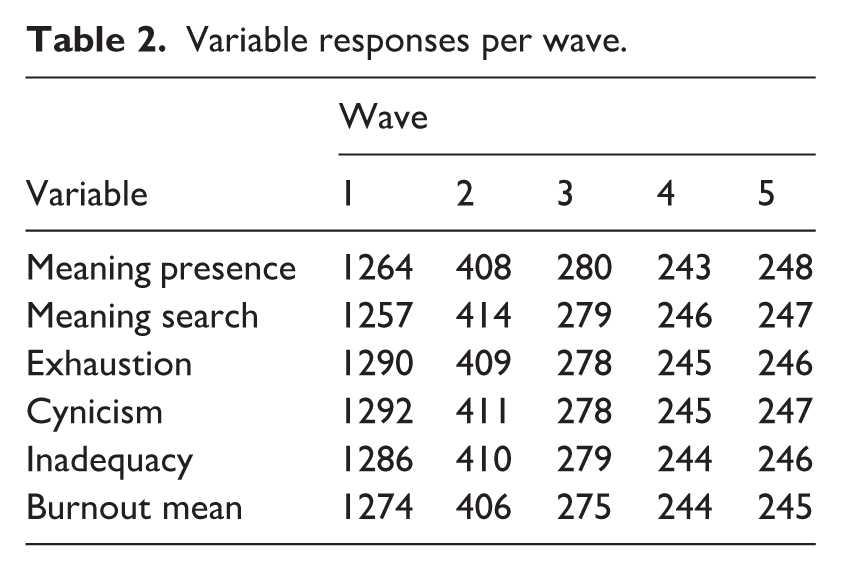
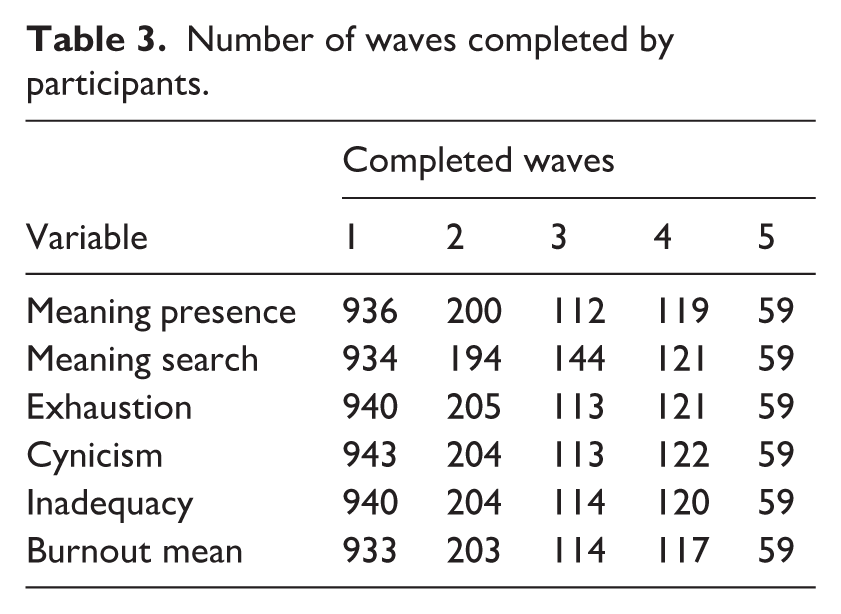
Before testing our hypotheses, we examined the number of new and reoccurring participants that produced data across the five waves for the variables of interest (Tables 2 and 3). These frequencies show that most participants completed the first wave and a single wave, with approximately 35% of participants contributing to more than one wave.
Variable responses per wave.
Number of waves completed by participants.
Burnout
First, we tested if mean burnout scores varied as a function of meaning in life presence, search, and their interaction, at within and between person levels. Burnout served as the criterion variable in the multilevel regression analysis, with a random intercept assigned to participants. Person-mean centred MLQ-P, person-mean centred MLQ-S, and their interaction served as within person predictors; grand-mean centred versions of participants’ average levels of MLQ-S and MLQ-P, and their interaction, served as between persons predictors. Table 4 contains the results, and Figure 1 displays the within and between person interactions, for MLQ-S levels at –1, 0, and +1 SD of its centre. 2
Within and between person associations between meaning and burnout.
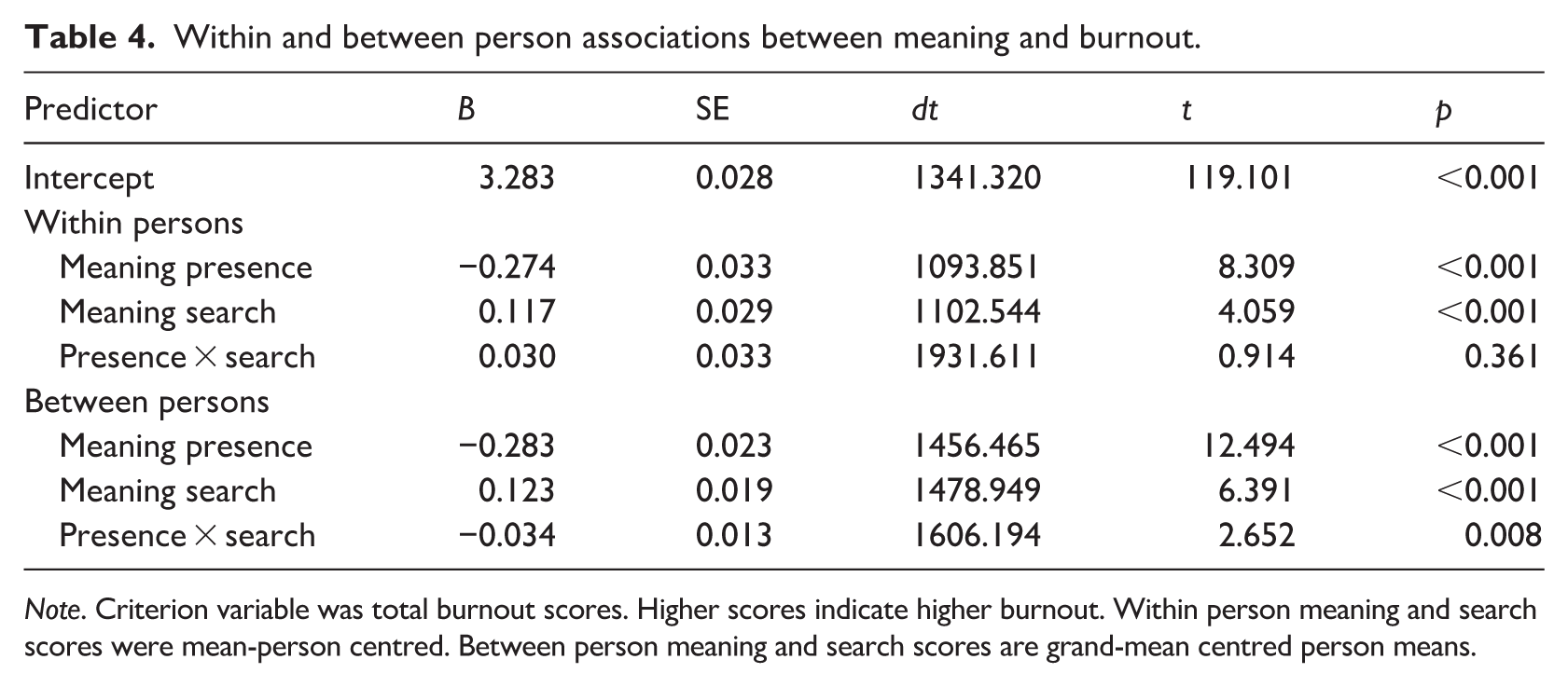
Note. Criterion variable was total burnout scores. Higher scores indicate higher burnout. Within person meaning and search scores were mean-person centred. Between person meaning and search scores are grand-mean centred person means.
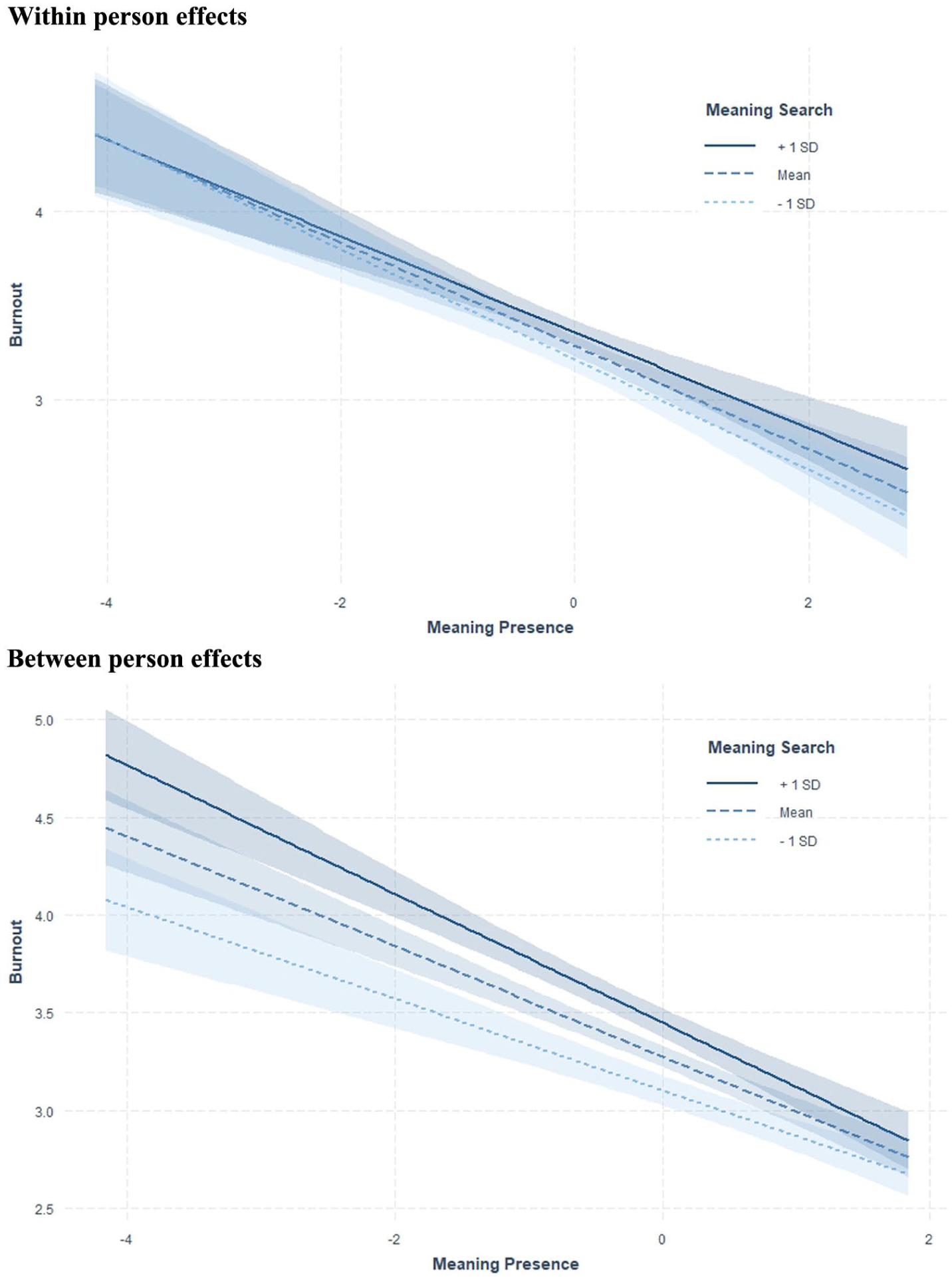
Within and between person associations between meaning and burnout.
These results showed that perceiving life to be more meaningful is associated with lower burnout, both relative to others who perceive life as less meaningful and relative to occasions where one perceived their own life as less meaningful. The opposite pattern applies to search for meaning in life, which at higher levels was associated with more burnout at both between-and within-person levels. Importantly, a significant interaction at the between-person level suggests that the undesirable role of meaning search in the context of burnout is exacerbated when perceived meaning is low; while those who search more strongly for meaning in life report higher burnout scores generally, this is especially the case when life is simultaneously perceived as lacking meaning, placing those who both search for and lack meaning in life in a particularly precarious position.
Exhaustion
Next, we probed each of the components that constitute burnout, starting with exhaustion. We ran the same analysis as above, this time with mean exhaustion as criterion variable. Table 5 contains the results, and Figure 2 displays the within-and between-person interactions.
Within and between person associations between meaning and exhaustion.
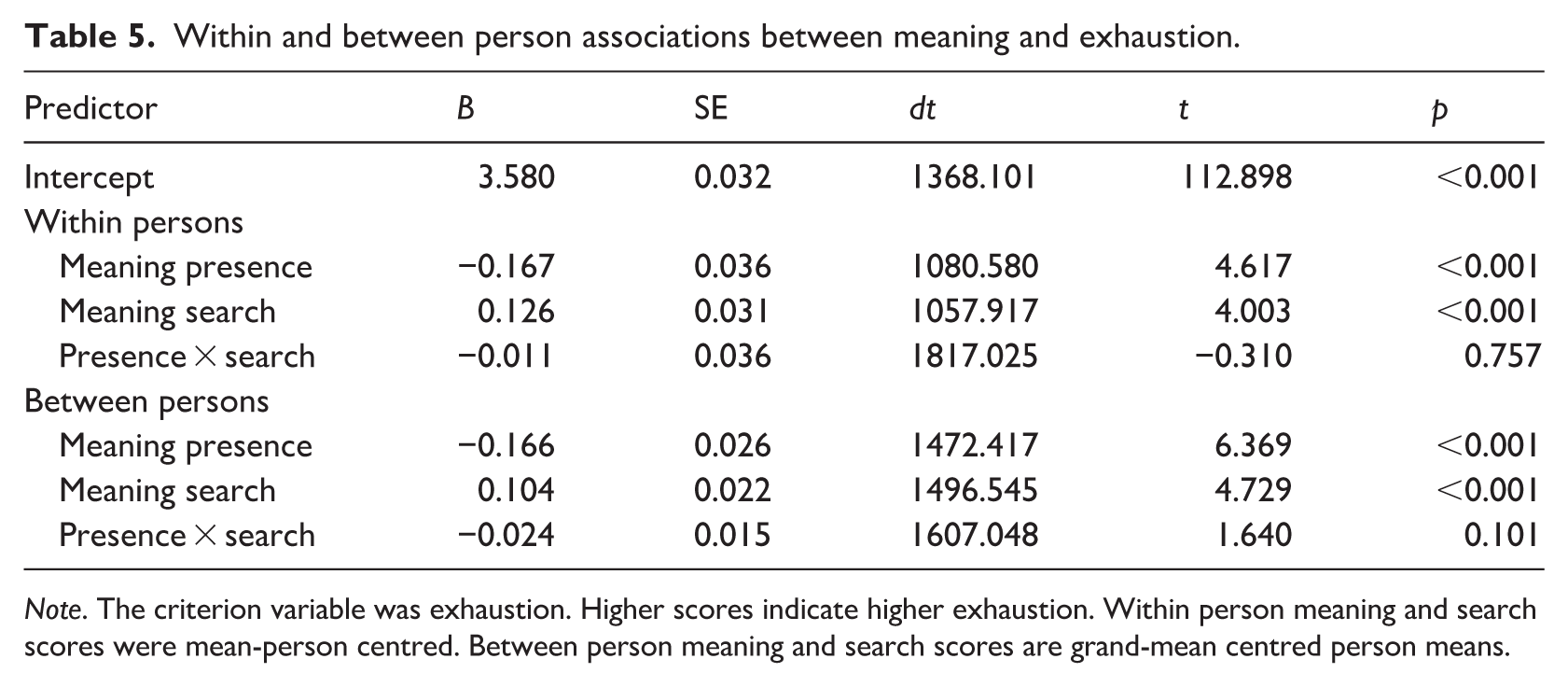
Note. The criterion variable was exhaustion. Higher scores indicate higher exhaustion. Within person meaning and search scores were mean-person centred. Between person meaning and search scores are grand-mean centred person means.
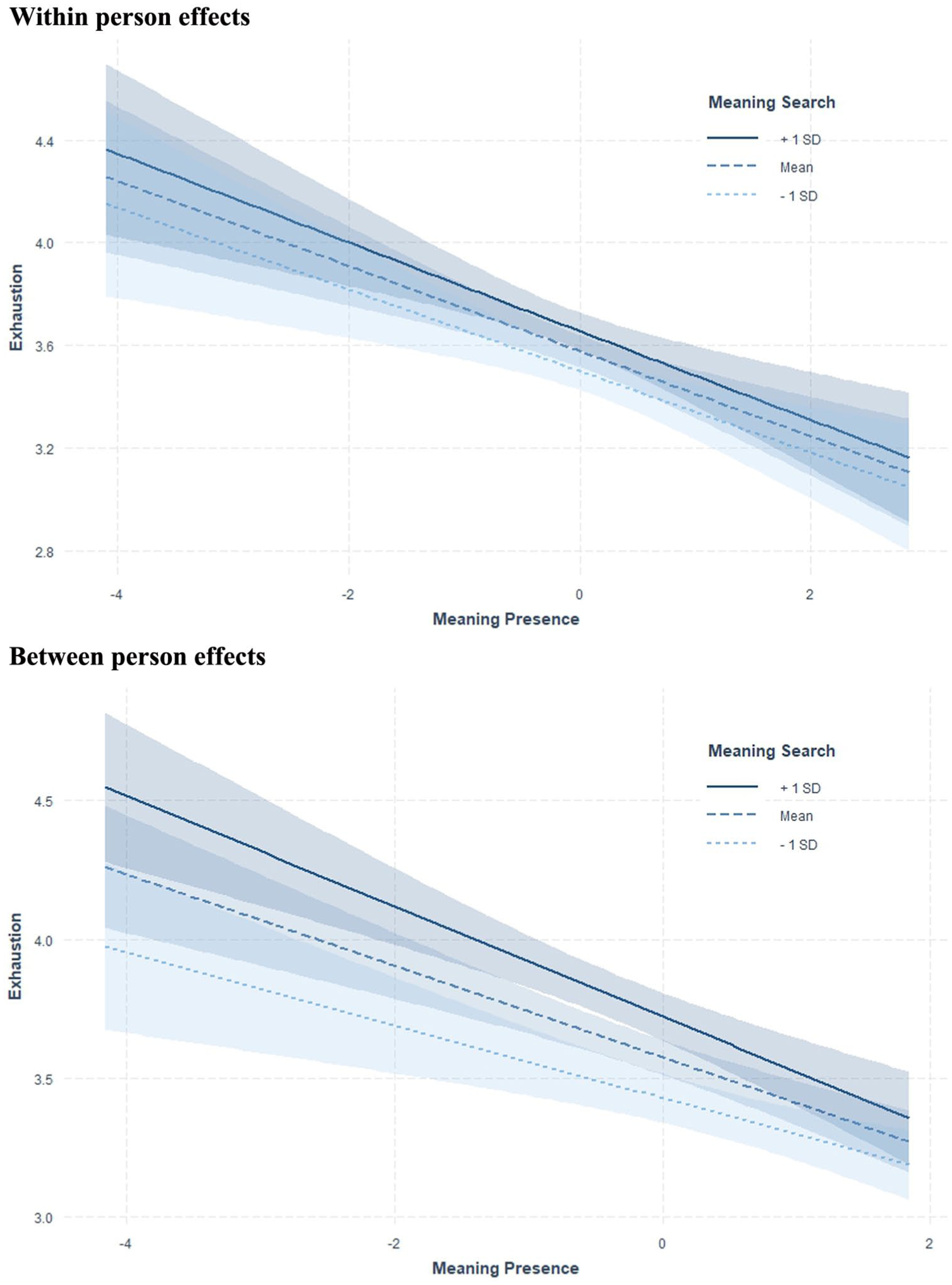
Within and between person associations between meaning and exhaustion.
Consistent with the overall results for burnout scores, the exhaustion was lower for people and occasions that featured comparatively high perceived meaning in life. Further, a stronger search for meaning was associated with higher exhaustion at both within and between person levels. No significant interactions were present, suggesting that the associations of meaning presence and search with exhaustion are mostly cumulative rather than dynamic; elevated exhaustion levels are more prominent among those who lack meaning regardless of how strongly they search for meaning, and those who search more strongly for meaning report higher exhaustion regardless of how much meaning they perceive to be present in their lives.
Cynicism
We ran the same analysis again, but this time with mean cynicism scores as the criterion variable. The results are presented in Table 6, and within-and between-person interactions are displayed in Figure 3.
Within and between person associations between meaning and cynicism.
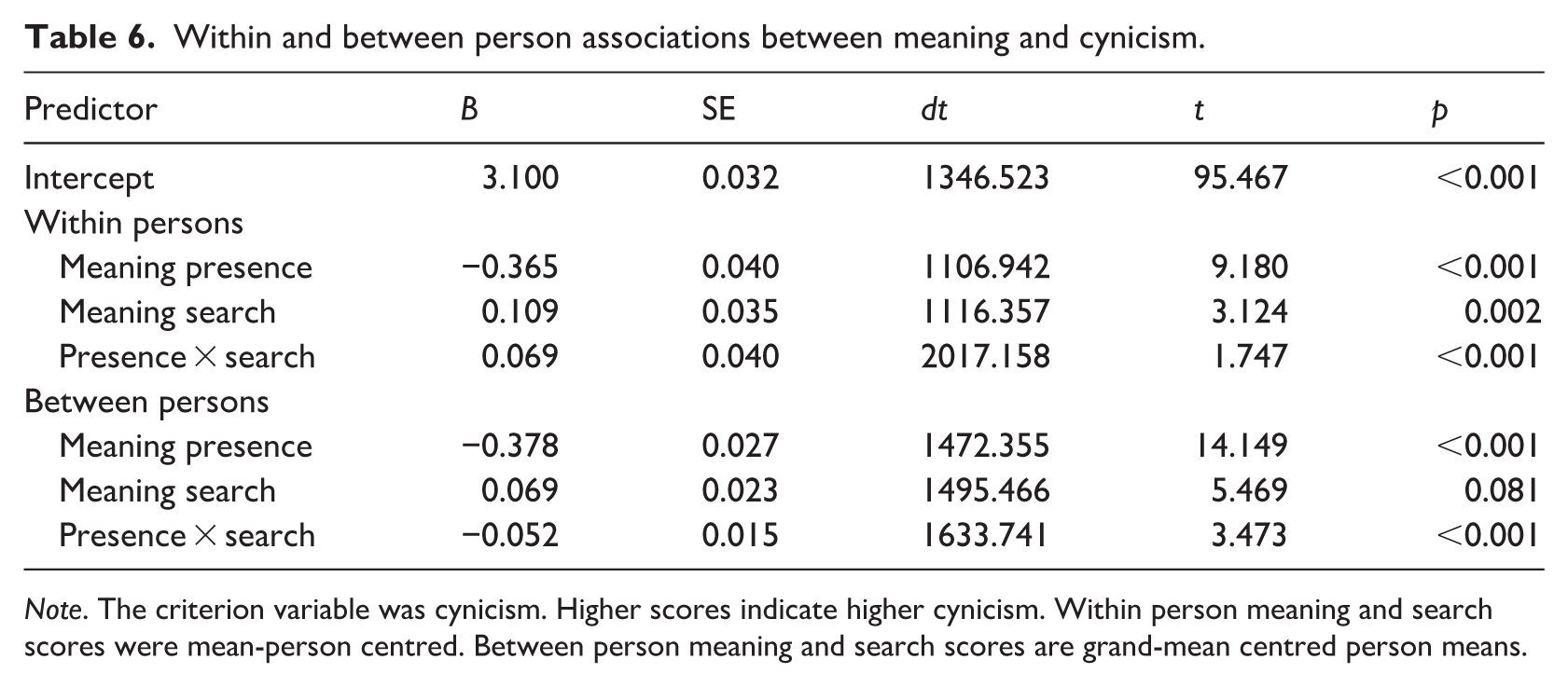
Note. The criterion variable was cynicism. Higher scores indicate higher cynicism. Within person meaning and search scores were mean-person centred. Between person meaning and search scores are grand-mean centred person means.
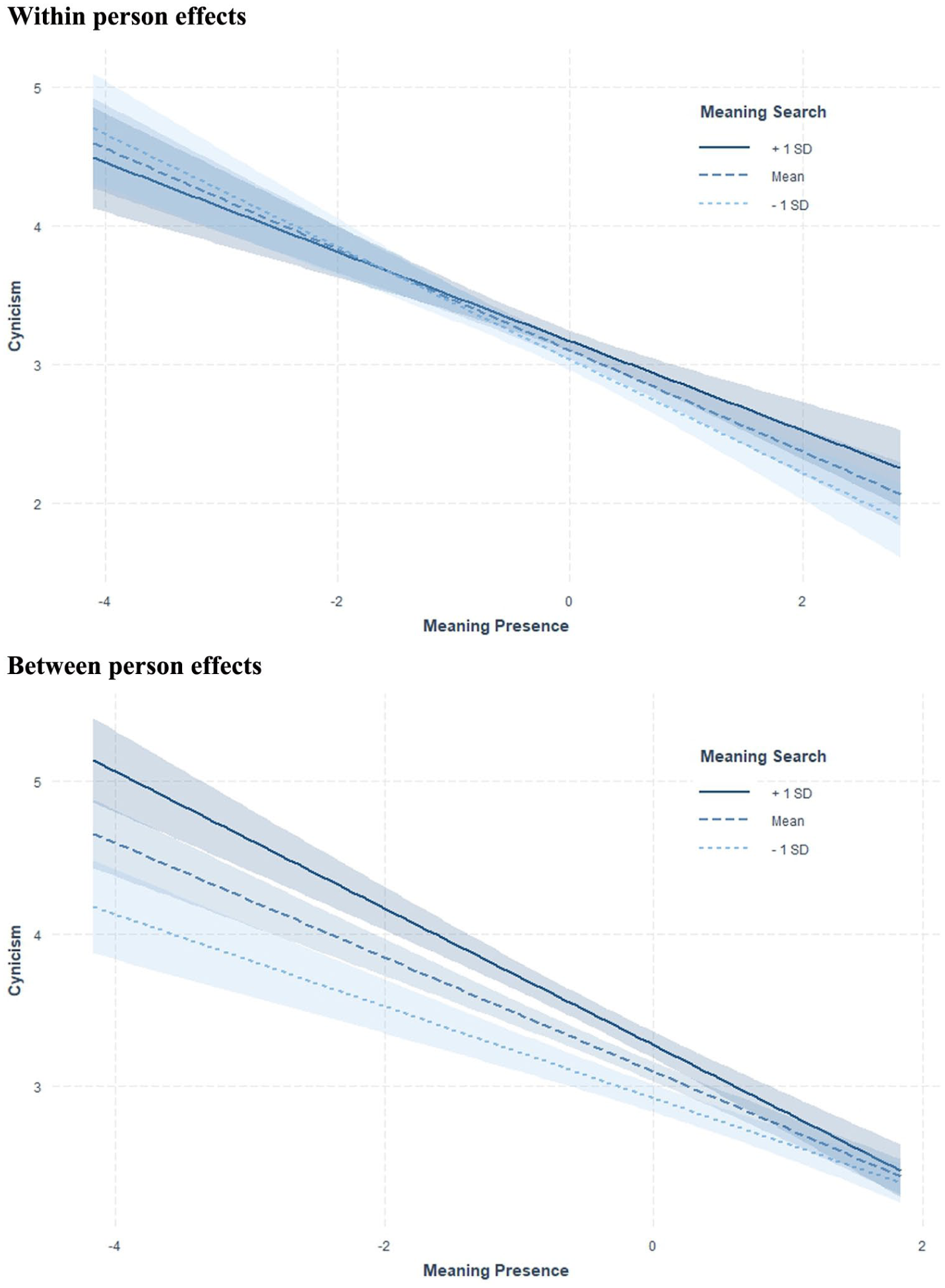
Within and between person associations between meaning and cynicism.
Once again, the perception of meaning in life played a positive role both within and between persons, with cynicism scores falling as meaning presence increased. Also, the negative role of search for meaning re-emerged, with higher levels of meaning search being accompanied by higher cynicism. A prominent interaction at the between-person level surfaced, indicating that a comparative lack of perceived meaning in life aggravated the already undesirable role of meaning search; while those who search more strongly for meaning in life report higher cynicism scores generally, this was even more strongly the case for those who considered life to be comparatively meaningless, suggesting that people who long for meaning in its relative absence tend to be especially cynical.
Inadequacy
The final analysis featured inadequacy as the criterion variable, again using the otherwise identical statistical model as above. Table 7 contains the results of this analysis, and Figure 4 shows the interactions between meaning presence and search at the within-and between-person level.
Within and between person associations between meaning and inadequacy.
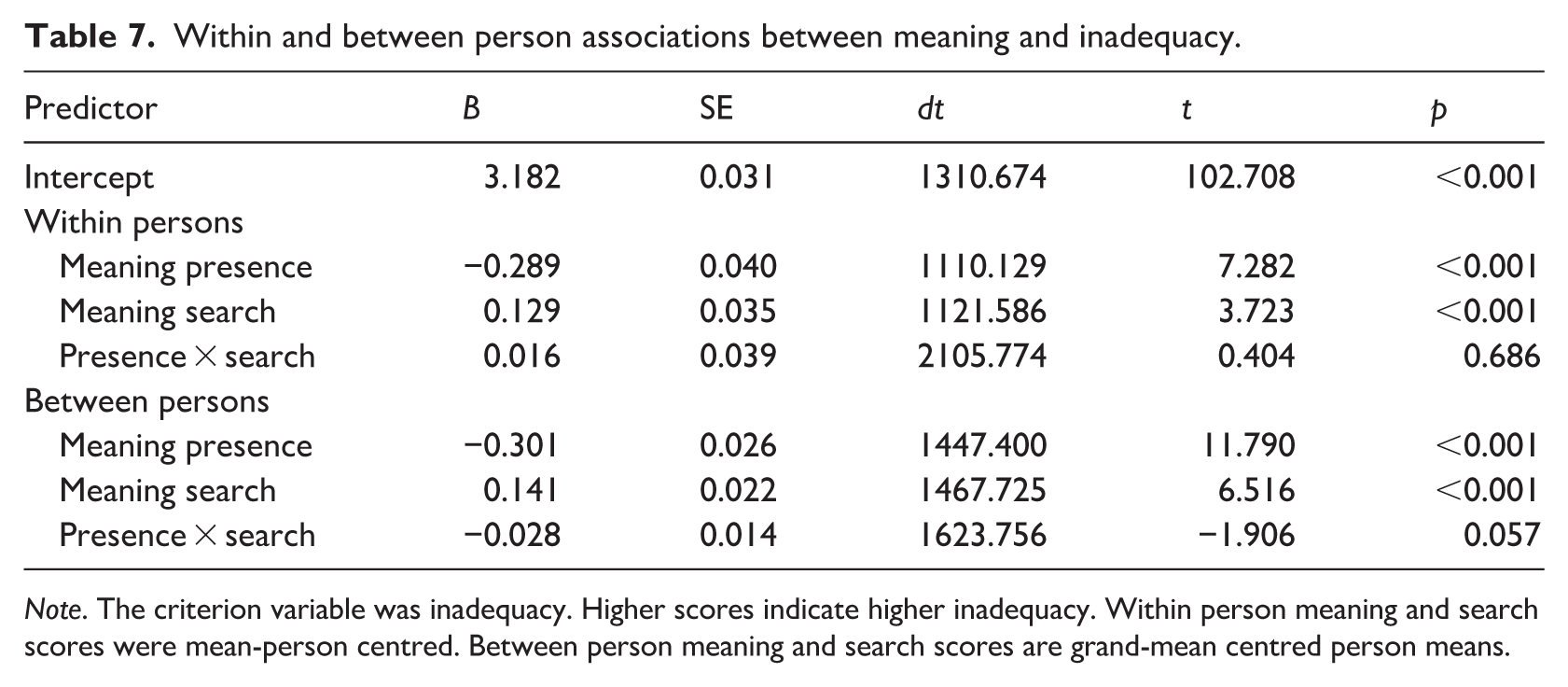
Note. The criterion variable was inadequacy. Higher scores indicate higher inadequacy. Within person meaning and search scores were mean-person centred. Between person meaning and search scores are grand-mean centred person means.
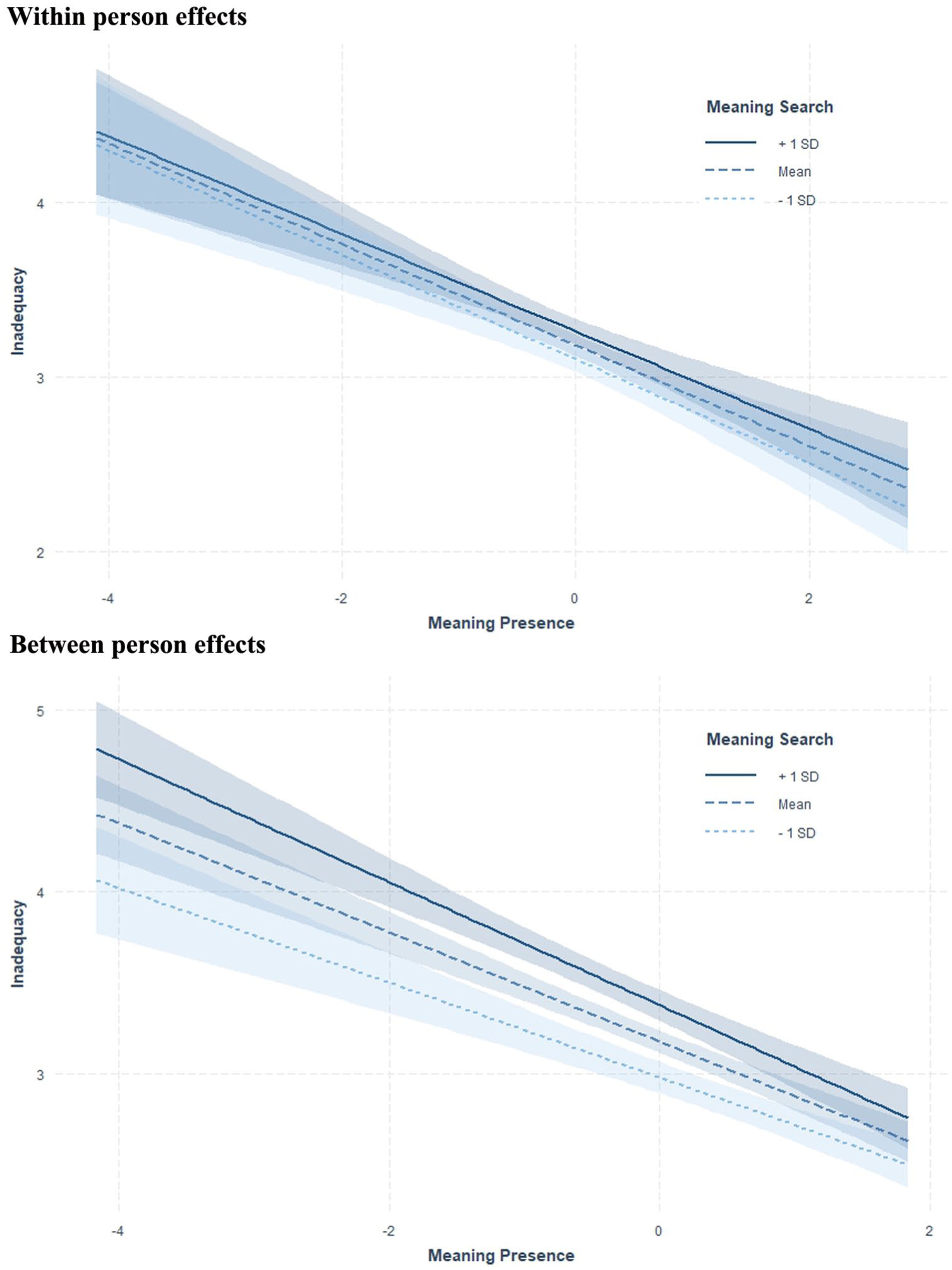
Within and between person associations between meaning and inadequacy.
The inadequacy results mimics those for exhaustion. As before, the perception of meaning in life played a positive role both within and between persons, as inadequacy was lower the more meaning people reported. The more pronounced people’s search for meaning was, the more inadequate they felt, both at within and between person levels. No significant interactions emerged, indicating that meaning presence and search yielded cumulative relationships with inadequacy. Inadequacy appeared higher for those lacking perceived meaning or searching for meaning, independently.
Discussion
This study set out to understand whether the two facets of meaning in life, presence and search, may operate independently of each other and interactively in relation to burnout and its composite dimensions. It has been understood for some time that meaning in life is associated with burnout, but prior studies have simply assessed whether either meaning presence or search, regardless of the corresponding levels of the other, may be associated with burnout outcomes. Using longitudinal data from the ongoing CV19 Heroes Project, the present analyses sought to understand whether meaning’s relationships to burnout may be differ depending on the relative proportions of presence and search. Utilising multilevel model methods that accounted for both within- and between-person differences in burnout over time, we sought to understand how presence of meaning, search for meaning, or their interaction were related to overall burnout and its composite dimensions: exhaustion, cynicism, and inadequacy. For overall burnout and each of its dimensions, higher presence of meaning is protective, and higher search for meaning the inverse. However, when the interaction between the two facets is examined, it appears that search is particularly injurious with regard to overall burnout and its cynicism dimension when presence of meaning is low. For exhaustion and inadequacy, search for meaning appears to be harmful regardless of whether or not an individual feels their life has meaning. These findings have relevance to both the literature on meaning and that on burnout.
Regarding the debate that exists between existential and deficit frameworks of understanding the search for meaning, the present analyses more roundly support the latter. However, this does not mean to say that the search for meaning always exists in absence of presence; evident from the modest negative correlation between MLQ-P and MLQ-S, high and low levels of search for meaning can exists across the continuum of presence of meaning. Here, the search for meaning in relation to all domains of burnout is uniformly negative. For overall burnout and for cynicism, the search for meaning is particularly negative in the context of low presence of meaning; for exhaustion and inadequacy, search for meaning is harmful regardless of whether the individual has a strong presence of meaning. Examining the role of search for meaning, Steger et al. (2008) posited two models for relative presence to search: the Presence to Search model, where individuals will increase search to compensate for loss of presence of meaning; and the Search to Presence model, where seeking meaning results in greater presence of meaning. These models were tested cross-sectionally, and the authors found stronger support for the Presence to Search model, finding that the negative relationship between MLQ-P and MLQ-S was stronger in individuals with relatively lower psychological strengths such as lower autonomy and higher rumination.
The finding that search for meaning is uniformly negative for burnout outcomes supports the defecit model of burnout (Baumeister, 1991). This is particularly the case when considering the dimension of inadequacy, where the very naming of this dimension within the BBI used herein, rather than the prior conceptualisation of inefficacy (the inverse of the positively valenced “efficacy” of the Maslach Burnout Inventory: Maslach and Jackson, 1981), is more suggestive of an existential deficit, where the individual does not feel that they can be or do enough to meet the needs of their work, which has been echoed in qualitative explorations (Arman et al., 2011). It is possible that a search for meaning may be a resilience process in response to burnout beginning to manifest, but without further longitudinal investigations into the ways that burnout and dynamics in presence of/search for meaning co-evolve, it is difficult to ascertain which may presage which.
Interestingly, the lack of requirement for presence to be low in order for search to be harmful for both exhaustion and inadequacy in the present analyses is notable. This is important, as a call for greater understanding into the precursors for inadequacy has been made (Leiter and Maslach, 2016), as this dimension has been less reliably understood in comparison to the other two burnout dimensions in past work, yet is posited to be a central aspect of the burnout experience. Further, while an understanding of a developmental model of the tripartite conceptualisation of burnout is not yet fully clear, it is understood to start with exhaustion (Leiter, 1993), which herein is negatively associated with higher search for meaning regardless of presence. In this developmental framework, cynicism and inadequacy are viewed as being inter-related and possibly developing in tandem after exhaustion has manifested. Given that our findings suggest that higher search is associated with both higher exhaustion and inadequacy regardless of presence of meaning, it is possible that these may occur before loss of meaning, and that when loss of meaning occurs, this is when cynicism may be particularly affected.
Within the context of frontline working during the pandemic where our research has demonstrated a loss of presence of meaning over time (Sumner and Kinsella, 2022), and our participants have attributed this to a lack of solidarity from policymakers and the wider public (Kinsella et al., 2023; Sumner and Kinsella, 2021b), there is a clear indication that when such critical workers have their sense of meaning undermined that this may be the “final straw” for burnout to manifest. It is not yet known whether this may be particularly relevant to a context of very publicly visible and responsibility-laden work, where individuals’ roles transcend their usual day-to-day and become a symbol of a country’s response to a crisis (Sumner and Kinsella, 2023), or whether this may be a factor that is relevant to all types and contexts of work. Further work is required to fully understand how the dynamics of meaning over time, and their inter-relationship, may function in the trajectories of burnout more broadly. Practically, these insights may serve to guide efforts and interventions aimed at bolstering meaning in life among frontline workers, offering a pathway to reduce burnout and enhance wellbeing in high-stress occupations. At a policy level, these findings underscore the need for governments and organisations to maintain supportive environments that reinforce meaning in the working context, ensuring better mental health outcomes and sustained motivation across essential sectors during challenging times.
Limitations and future directions
One of the main strengths of the present work is its longitudinal nature, however there was significant attrition observed over time. This attrition may be hiding a more substantial issue with burnout, as it is likely that a portion of those who were lost to follow-up were so because they were exhausted and burnt out. We analysed the longitudinal data using random-intercept multilevel modelling, where we examined how changes in meaning within persons and between persons related to burnout, and such analyses are increasingly common in longitudinal studies (e.g. Tam et al., 2023). This approach is suitable for longitudinal data with comparatively high attrition as it does not rely on complete or near-complete cases. Analyses that examine changes or associations over time, such as latent growth models or cross-lagged panel models, on the other hand, are more suitable when attrition is comparatively low. Thus, while the current findings offer important insights into how within-person and between-person changes in meaning relate to burnout, complementary work is warranted that looks at trend predictions over time.
The demographic composition of the present sample, whilst remaining reasonably stable over time, is very limited and non-diverse. Whilst this may be common for opportunity sample studies, it is a substantial limitation in the transferability and generalisability of the findings. It is clear that more detailed work needs to be done in order to understand how meaning changes, and how these changes may be related to negative occupational outcomes in underserved groups. It is also unclear, despite the longitudinal nature of these data, how the changes in meaning may impact the development of burnout, and which phenomenon may drive changes in the other, or—indeed —whether they have reciprocal relationships over time.
Conclusion
The present study provides a novel way of understanding the dynamics of presence of and search for meaning in life in relation to occupational burnout. The analyses are the first, to our knowledge, to assess meaning in life in a cohort for such a long period of time and add evidence to the growing literature on how meaning in life operates both at the between-person level and within-person level. The findings have demonstrated that search for meaning appears to be uniformly harmful with relation to overall burnout and its composite dimensions. When coupled with a low presence of meaning, it seems particularly injurious to experiences of cynicism and to overall burnout. Understanding the specific causes of changes to presence of and search for meaning is a key future direction for burnout research, as it is possible that sustaining presence of meaning in the workforce may be protective. It is hoped that operationalising the two dimensions of meaning in life in this way, with further assessment and refinement, may prove to be a useful application of the MLQ for future research seeking to understand the dynamics of health and wellbeing, both in occupational contexts and beyond.
The present research contributes to the growing body of evidence on frontline work during the pandemic by demonstrating the utility of a novel approach to conceptualising meaning in life and its role in the progression of burnout among these critical workers. Our earlier research showed that at the beginning of the pandemic, presence of meaning in life was a protective factor against burnout (Sumner and Kinsella, 2021a). However, as the pandemic progressed, frontline workers increasingly reported a decline in perceived social solidarity from both the public and political leadership, which in turn diminished their sense of meaning (Kinsella et al., 2023; Sumner and Kinsella, 2021b). The present analyses add to this growing corpus of evidence to show that these workers experience differential losses and increases in presence of and search for meaning in life over time, and that attempts to conceptualise those dynamics appear to independently predict burnout outcomes whilst controlling for known burnout modifiers. In the context of frontline workers’ loss of meaning over time, this serves as a stark warning to policymakers, who play a critical role in shaping the social tone during crises. It underscores the need to ensure that this tone adequately acknowledges and protects those on the front lines in any future emergency.
Footnotes
Acknowledgements
The authors wish to extend their thanks to the participants of the CV19 Heroes Project, who have continued to support their efforts in creating a record of the impact of the pandemic on frontline workers for many years. This work, the new findings it uncovers, and the meaning this holds for others in their circumstances would not be possible were it not for their continued generosity of their time and the sharing of their experiences.

Ethical considerations
The present work was provided with ethical approval by the University of Gloucestershire School of Natural and Social Sciences Research Ethics Panel (NSS/2003/003) and subsequently approved by the Cardiff Metropolitan School of Sport and Health Sciences Ethics Committee (Sta-5476).
Consent to participate
Participants indicated informed consent after reading the information sheet within the online survey, by selecting options indicating their understanding of the study and what their tasks would be. This included confirming of their acceptance of their data contributing to the writing of a published journal article, with anonymised data being shared alongside this.
Consent for publication
Consent for publication is not applicable to this article as it does not contain any identifiable data.
Author contributions
Conceptualisation: RCS, ELK. Data Curation: RCS. Formal Analysis: WAPvT, RCS. Funding Acquisition: RCS, ELK. Investigation: RCS, ELK. Methodology: WAPvT, RCS. Project Administration: RCS, ELK. Resources: RCS, ELK. Software: WAPvT. Supervision: RCS, ELK. Validation: WAPvT. Visualisation: WAPvT. Writing – Original draft: RCS, WAPvT. Writing – Review and editing: RCS, WAPvT, ELK.
Funding
The authors received no financial support for the research, authorship, and/or publication of this article.
Declaration of conflicting interests
The authors declared no potential conflicts of interest with respect to the research, authorship, and/or publication of this article.