






Abstract
The COVID-19 pandemic posed a significant psychological challenge for university students, with elevated levels of stress and anxiety reported across countries. This study examined the role of resilience in the relationships among COVID-19–related stressors, anxiety, and subjective well-being. A cross-sectional study was conducted with a convenience sample of 685 university students from Andorra, Mexico, and Spain, who completed validated measures of anxiety (GAD-7), perceived stress (PSS), resilience (CD-RISC-10), and well-being (SWLS, SHS), together with a measure of COVID-19 impact. Structural equation modelling indicated that resilience partially mediated the association between COVID-19 impact and subjective well-being via reduced stress and anxiety, and also had a significant direct positive effect on subjective well-being (β = 0.72, p < 0.001). The model showed invariance across countries, suggesting consistent relationships across cultural contexts. Although the cross-sectional design limits causal interpretation, the findings highlight resilience as an important protective factor for student mental health during periods of crisis.
Introduction
The COVID-19 pandemic created an unprecedented global crisis and had a substantial impact on physical health, mental health, and everyday functioning (Bogolyubova et al., 2021; Cheng et al., 2020; Luchetti et al., 2020). Measures introduced in many countries, such as stay-at-home orders, confinement, and physical distancing, were necessary to reduce the spread of infection, but they also altered routines, reduced social interaction and increased uncertainty, both of which have been linked to poorer mental health outcomes during the pandemic (Daly and Robinson, 2021). These changes were associated with higher levels of psychological distress, including anxiety, stress, and depressive symptoms, as well as lower levels of well-being (Blasco-Belled et al., 2020; Bogolyubova et al., 2021; Daly and Robinson, 2021; Zhang et al., 2020). Among the groups particularly affected by the pandemic were university students. In addition to general public health concerns, students experienced abrupt changes in teaching delivery, assessment procedures, social relationships, and career expectations (Sahu, 2020). Face-to-face learning was rapidly replaced by online instruction, while many students also faced financial insecurity, reduced employment opportunities, and uncertainty regarding academic progression (Bell et al., 2020; Bogolyubova et al., 2021; Chi et al., 2021). For individuals in a key developmental stage marked by identity formation, autonomy, and future planning, these disruptions represented an important source of strain. Previous studies have consistently shown that university students reported elevated anxiety and stress during the pandemic, alongside declines in subjective well-being (AlAteeq et al., 2020; Arslan and Allen, 2022; Blasco-Belled et al., 2020; Garbóczy et al., 2021; Sheroun et al., 2020; Wang and Zhao, 2020; Yan et al., 2021; Yu et al., 2022). Although a growing body of literature has documented the psychological consequences of COVID-19 among students (Dhar et al., 2020; Laranjeira et al., 2021; Maia and Dias, 2020; Sahu, 2020; Sood and Sharma, 2020), fewer studies have simultaneously examined how multidimensional COVID-19-related impacts may be linked to subjective well-being through psychological distress and resilience within a single explanatory model. To address this gap, the current study examined the impact of COVID-19 (financial, psychological, and educational) on psychological distress (anxiety and perceived stress) and subjective well-being among university students, while considering resilience as a protective factor.
According to Sahu (2020), university closures required a rapid adaptation to online classes, assessment procedures, and new academic demands. These abrupt changes increased uncertainty and psychological strain among university students. Previous studies have also suggested that distress during the pandemic was associated with poorer academic performance and lower life satisfaction (Kokkinos et al., 2022). In addition, financial insecurity and hardship were linked to lower levels of well-being during this period (Rogowska et al., 2020; Sood and Sharma, 2020).
The COVID-19 pandemic has been perceived by many people as a stressful situation. Stress can be understood as an individual’s adaptive response to internal or external threats (Liu et al., 2021). Perceived stress is a global subjective evaluation that results from a person’s appraisal of a stressor as threatening or non-threatening, as well as from one’s own perceived ability to cope with it (Yan et al., 2021). According to Zhao et al. (2021), anxiety tends to emerge when life circumstances are appraised as threatening or stressful. Previous literature has shown that anxiety levels may increase after exposure to stressful events such as pandemic-related situations. There is also evidence of a close relationship between perceived stress and anxiety, with higher anxiety commonly associated with higher levels of perceived stress. Conversely, both stress and anxiety have been negatively associated with well-being (Arslan and Allen, 2022).
Subjective well-being (SWB) is considered an important indicator of mental health and psychological functioning (Diener et al., 2018). SWB refers to a person’s appraisal of their life from both a cognitive and affective standpoint (Diener et al., 2002). The cognitive component is determined by an overall evaluation of the person’s life, whereas the affective component is reflected in pleasant emotional experiences (positive affect), often conceptualised as subjective happiness (Blasco-Belled et al., 2020; Diener et al., 2002, 2018; Szczygieł and Mikolajczak, 2017). Based on this conceptualisation, satisfaction with life (cognitive component) and subjective happiness (affective component) are among the components most frequently used to evaluate SWB (Szczygieł and Mikolajczak, 2017). The outbreak of the COVID-19 pandemic was associated with lower levels of SWB (Kokkinos et al., 2022; Sood and Sharma, 2020; Tan et al., 2020). Similarly, some scholars (Kokkinos et al., 2022; Sood and Sharma, 2020; Tan et al., 2020) have explored the psychological, academic, and financial consequences of COVID-19 on students’ life satisfaction (the cognitive component of SWB) and found significant associations between these factors and life satisfaction. Although situations of this kind are often associated with adversity and psychological distress, which may negatively affect subjective well-being, they may also create opportunities for constructive development and for the use of coping mechanisms such as resilience (Yu et al., 2022).
Resilience is commonly defined as the capacity to adapt positively, recover, or maintain functioning when facing adversity, trauma, or major stressors (Ryff and Singer, 2003; Yıldırım and Arslan, 2022). Contemporary perspectives increasingly view resilience not only as an internal characteristic, but also as a dynamic process influenced by personal, interpersonal, and contextual resources (e.g. family support, peer relationships, and institutional environments; Masten et al., 2021). In the present study, resilience was operationalised at the individual level as a psychological resource that may support adaptation during difficult circumstances (Ogińska-Bulik and Zadworna-Cieślak, 2018; Satici et al., 2023; Yu et al., 2022; Yuan et al., 2018; Yıldırım and Arslan, 2022). Previous research has shown that higher resilience is associated with lower anxiety and stress, as well as better mental health and greater well-being during the pandemic (Ran et al., 2020; Satici et al., 2023; Zhang et al., 2020).
Furthermore, Kong et al. (2021) supported the findings of previous studies suggesting that resilience may be considered an important mediating mechanism. Several scholars have also indicated that resilience is positively associated with higher levels of subjective well-being (SWB; Kong et al., 2018, 2021). Previous studies analysed the role of SWB during COVID-19 (Wang et al., 2021), whereas others examined the relationship between SWB and resilience during the pandemic (Kimhi et al., 2020; Metin et al., 2021). However, relatively few studies have directly examined the mediating role of resilience in the associations between COVID-19 impact, psychological distress, and SWB. In the current study, we consider three different countries: Andorra, Mexico, and Spain. In each of these contexts, similar measures were implemented to manage and prevent the spread of the virus, circumstances that may have contributed to increased levels of anxiety and stress (Alzueta et al., 2021; Kowal et al., 2020; Moret-Tatay and Murphy, 2022). Although similar public health restrictions and educational adaptations were implemented across Andorra, Mexico, and Spain during the pandemic, these countries also differ in their social, cultural, and educational contexts. Examining the proposed model across these settings may facilitate a better understanding of whether the relationships among COVID-19 impact, resilience, psychological distress, and subjective well-being remain stable across different national contexts. This comparison may facilitate a better understanding of the relationship between the impact of COVID-19, resilience, psychological distress, and SWB, and may also improve our interpretation of previous findings.
This study aimed to assess the role of student resilience as a protective factor in the relationship between the impact of COVID-19, psychological distress (perceived anxiety and perceived stress), and students’ subjective well-being. It also aimed to examine the influence of COVID-19 impact on students’ subjective well-being through the mediating role of anxiety and perceived stress. Specifically, the proposed model assumes that higher perceived COVID-19 impact would be associated with higher anxiety and perceived stress, which in turn would relate to lower subjective well-being. Resilience was also expected to operate as a protective factor, being associated with lower distress and higher subjective well-being. Therefore, Figure 1 integrates both risk and protective pathways. Accordingly, we developed a model based on the literature and previous empirical studies (see Figure 1), which includes three hypotheses: (H1) Resilience is expected to mediate the associations between COVID-19 impact, psychological distress (anxiety, and perceived stress), and students’ SWB. (H2) Resilience will have a significant positive effect on SWB. (H3) The measurement weights of the model will remain invariant across the three contexts analysed (Andorran, Mexican, and Spanish).
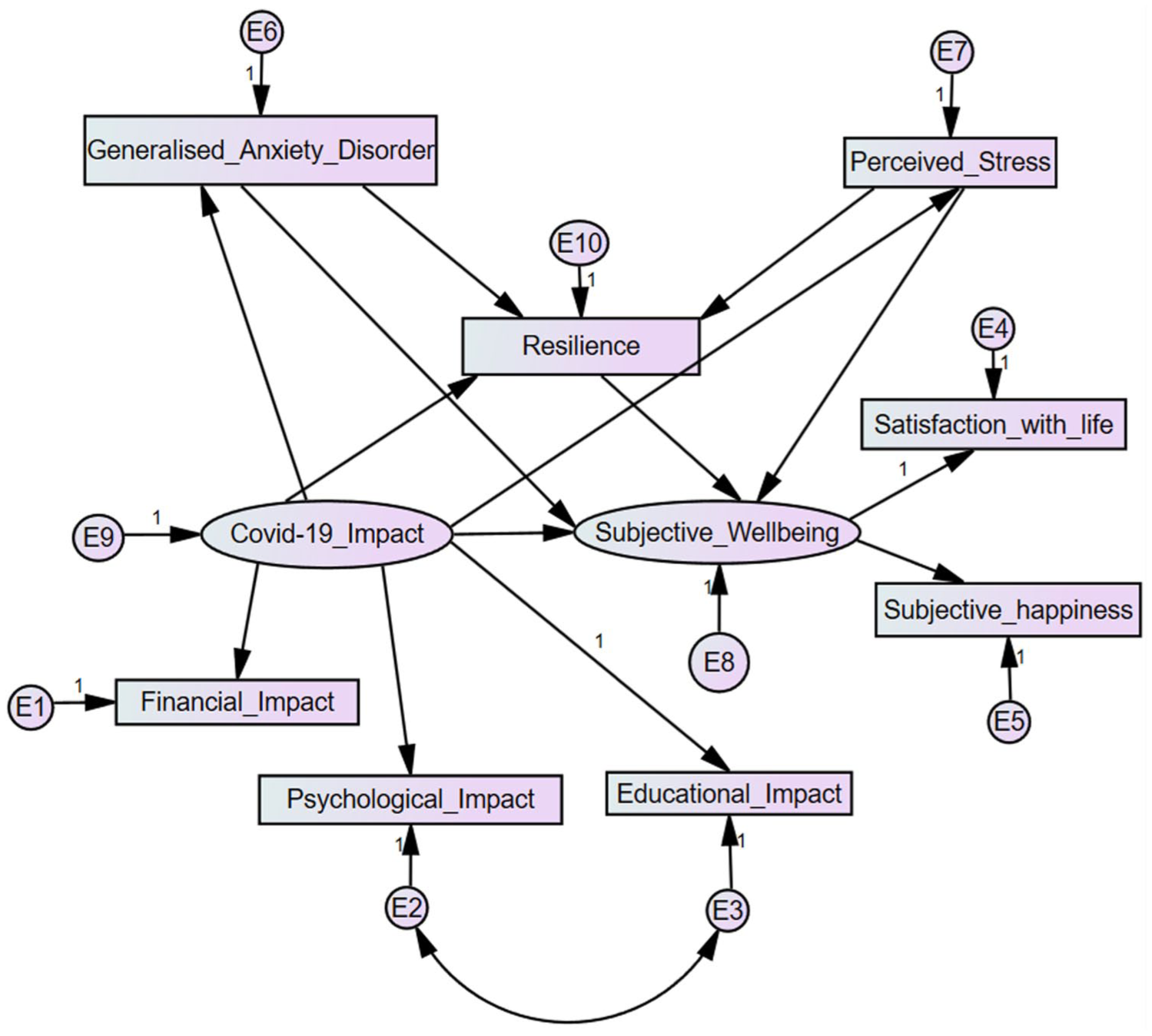
Hypothetical model of COVID-19 impact on students’ well-being.
Method
This study used a quantitative, non-experimental, and cross-sectional design. An online questionnaire was administered to university students from three different national contexts to collect data from participants enrolled in different institutions during the COVID-19 pandemic. The study was approved by the Academic Board of the University of Andorra, which acted as the institutional ethics committee, in December 2020. All procedures were conducted in accordance with the principles of the Declaration of Helsinki and institutional guidelines.
Participants and procedure
A total of 685 university students (79% women) aged between 18 and 66 years (M = 21.97; SD = 4.72) from three countries participated in the study (8% Andorra, 48% Mexico, 44% Spain). A non-probabilistic convenience sampling method was used. Participants took part voluntarily and could withdraw from the study at any time without further explanation. Partial responses (not finishing the instruments) were excluded. The mean time spent completing the survey was approximately 7 minutes. No missing data were recorded because all questionnaire items were mandatory. Data were collected between November 2020 and March 2021, during an active phase of the COVID-19 pandemic in which restrictions and educational adaptations were still present across the three countries. Given the wide age range of the sample, age was considered an important descriptive demographic characteristic. However, age was not included as a covariate in the present structural model and should be examined in future research.
Measures
The scale adaptation process was conducted according to previously established guidelines of the International Test Commission (2017). The English versions were independently translated into Catalan and Spanish by two native translators. The obtained translations were discussed among a group of experts to obtain the first version of the scales. These versions were then back-translated into English by two native English translators without prior knowledge of the original versions. The translations and back translations were discussed in a second consensus panel to obtain the final versions.
The Coronavirus Impact Questionnaire (Conway et al., 2020) is composed of three subscales (Financial Scale, Resource Scale and Psychological Scale) each consisting of three items (one reversed-scored item in each scale). It also includes an Educational Impact scale composed of 10 items distributed across three subscales (Learning Behaviours, Academic Performance, and School Satisfaction and Motivation). In this study, we used the psychological, financial and educational impact scales. Participants rated the impact of COVID-19 on a 7-point Likert scale (1 = not true of me at all to 7 = very true of me). The internal consistency for each subscale was acceptable. A sample item is “I have become depressed because of the Coronavirus (COVID-19).” The internal consistency in the Financial Scale was α = 0.87; in the Educational Impact Scale was α = 0.84; and in the Psychological Scale was α = 0.84.
The Generalised Anxiety Disorder (GAD-7; Spitzer et al., 2006; Spanish version García-Campayo et al., 2010) is a seven-item, self-report questionnaire that assesses anxiety symptoms (0 = not at all to 3 = nearly every day). The items assess the degree to which participants have been bothered by feeling nervous or anxious, not being able to stop or control worrying, having trouble relaxing, worrying too much about different things, being so restless that it is hard to sit still, becoming easily annoyed, and feeling afraid as if something might happen during the last 2 weeks. The internal consistency was α = 0.91. A sample item was: “Feeling afraid as if something awful might happen.”
The Perceived Stress Scale (Cohen et al., 1983; Spanish version Remor, 2006) is a 10-item self-report scale that evaluates the global perceptions of stress during the last month. These items are rated on a 5-point Likert scale ranging from 0 = never, to 4 = very often. The scale is scored by reverse coding the positive items and summing all the responses. The scale showed good internal consistency α = 0.90. A sample item is: “In the past month, how often have you felt upset because something unexpected occurred?”.
The Satisfaction with Life Scale (SWLS; Diener et al., 1985; Spanish version by Vázquez et al., 2013) is a five-item questionnaire that evaluates the degree of satisfaction with life as a whole. Participants are asked to rate their satisfaction with life on a 7-point Likert scale (1 = strongly disagree to 7 = strongly agree). The reliability estimate was good α = 0.85. A sample item is: “So far I have gotten the important things I want in life.”
The Subjective Happiness Scale (SHS; Lyubomirsky and Lepper, 1999; Spanish version by Extremera and Fernández-Berrocal, 2014) is a four-item questionnaire (one reversed-scored item) in which participants rate the extent to which they agree with happiness statements on a 7-point Likert scale, considering the definition of happiness from the respondent’s perspective. The internal consistency was acceptable for adults (α = 0.81). A sample item is: “Compared with most of my peers, I consider myself. . ..”
Psychological Resilience (CD-RISC-10; Connor and Davidson, 2003; Spanish version by Notario-Pacheco et al., 2011) is a self-administered questionnaire composed of 10 items designed as a Likert-type additive scale with five response options (0 = never; 4 = almost always), and it showed a single dimension in the original version. The internal consistency was acceptable for adults (α = 0.85). A sample item is: “I can deal with whatever comes.”
Data Analysis
The collected data were analysed using SPSS v23 and AMOS v23 software. Dataset is publicly available through the Open Science Framework at http://doi.org/10.17605/OSF.IO/FXUQZ. Data screening showed no missing data. Univariate analyses indicated the non-normality of the data; therefore, the analyses were conducted accordingly. First, we analysed the reliability of the scales in order to ensure that the internal consistency of the different measures was adequate in the present sample. Cronbach’s alpha was used for this purpose. Second, a Structural Equation Model (SEM) was estimated based on the study aims and the hypothesised model. The SEM was used to test the proposed relationships among the factors and to evaluate the fit of the theoretical model. This analysis allowed us to test H1 and H2. To analyse the goodness-of-fit of the model, we used the indices and cutoff criteria recommended by Byrne (2016) such as: CMIN/DF (<3), RMR (⩽0.05), CFI (⩾0.95), NFI (⩾0.95), RMSEA (<0.05). Because the data were non-normal, the estimation method used was the Asymptotically Distribution-Free (ADF) technique (Huang and Bentler, 2015). Once the best-fitting model was identified, we tested the invariance of the model across country groups (Andorran, Spanish and Mexican) using a multigroup analysis approach. This procedure allowed us to test H3. We adjusted the measurement weights of the models and analysed the nested model comparison. We also compared the goodness-of-fit indexes for both the unconstrained and constrained models. Model invariance was supported when the fit of both models did not differ significantly.
Results
Descriptive statistics and correlations among the study variables are presented in Table 1. After confirming the non-normal distribution of the data, we tested the hypothesised model presented in Figure 1 using the analyses described in the previous section.
Descriptive statistics and correlations.
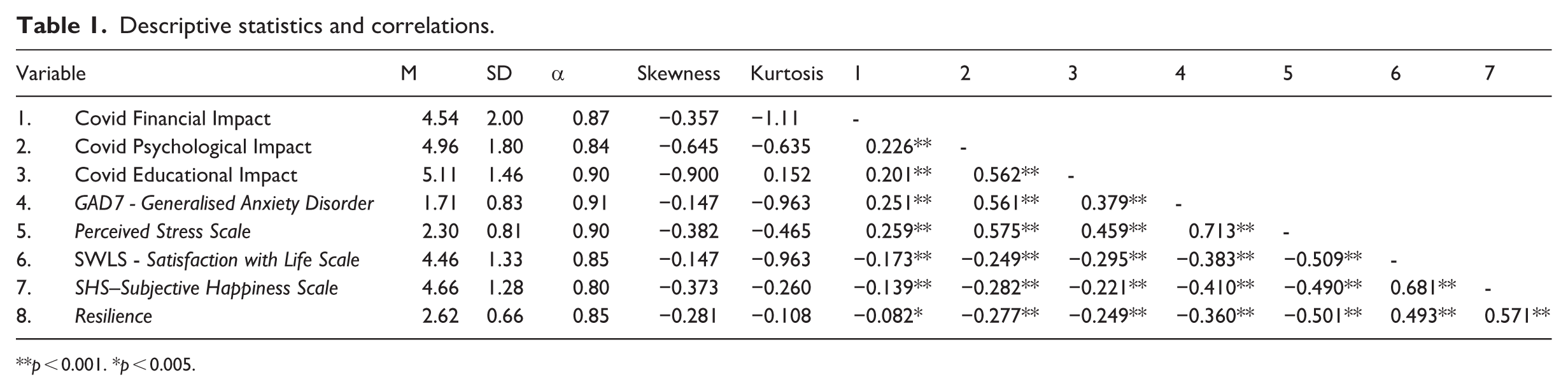
p < 0.001. *p < 0.005.
In order to examine the relationship between COVID-19 impact, psychological distress, and SWB, we first tested a model without resilience (model A). Model A included 7 observed variables and 11 unobserved variables. Two latent factors represented the COVID-19 impact (financial, psychological, and educational impact) and the subjective well-being (satisfaction with life and subjective happiness), together with the corresponding error terms. The model showed adequate fit to the data: CMIN = 2.718, RMR = 0.056, CFI = 0.974, NFI = 0.960, and RMSEA = 0.050; (95% CI [0.025−0.073]). These results indicated that the model adequately represented the relationship between COVID-19 impact and students’ subjective well-being through perceived anxiety and stress. Modification indices suggested correlating some error terms; however, based on the parameter change values, goodness-of-fit indices, and the lack of theoretical justification, the model was retained in its original form. Table 2 presents the regression weights and Table 3 shows standardised direct and indirect effects. Figure 2 presents Model A with standardised estimates.
Regression weights Model A.
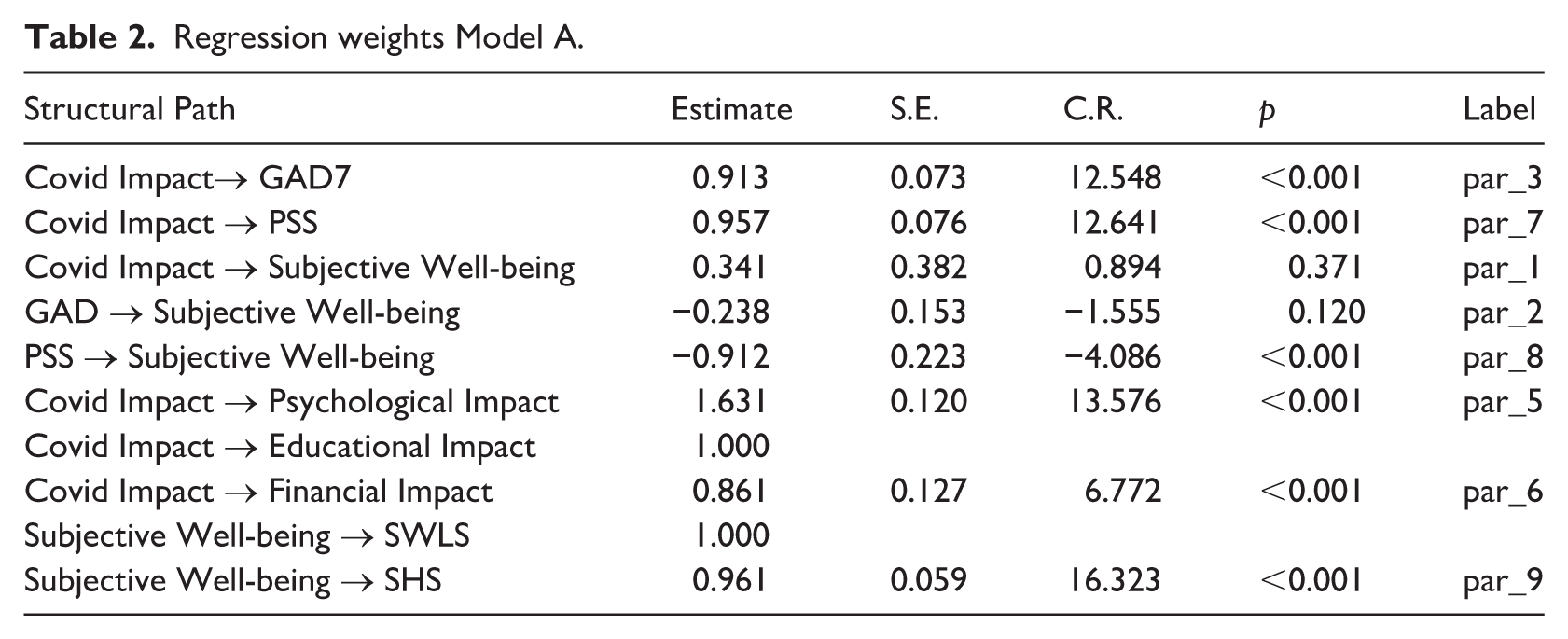
Standardised direct and indirect effects Model A.
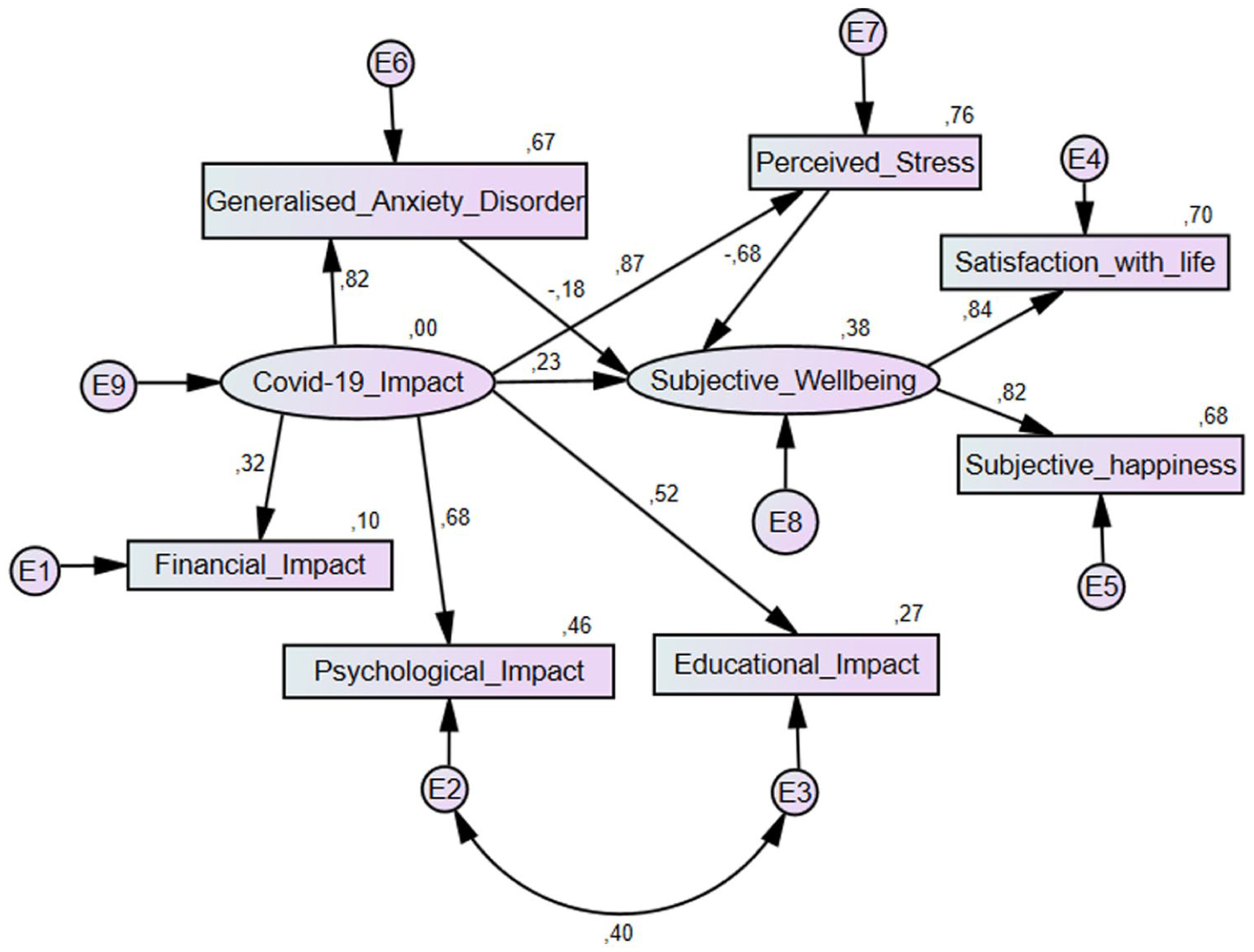
Model A explores the influence of COVID-19 impact on students’ subjective well-being using students’ perceived anxiety and stress as mediators.
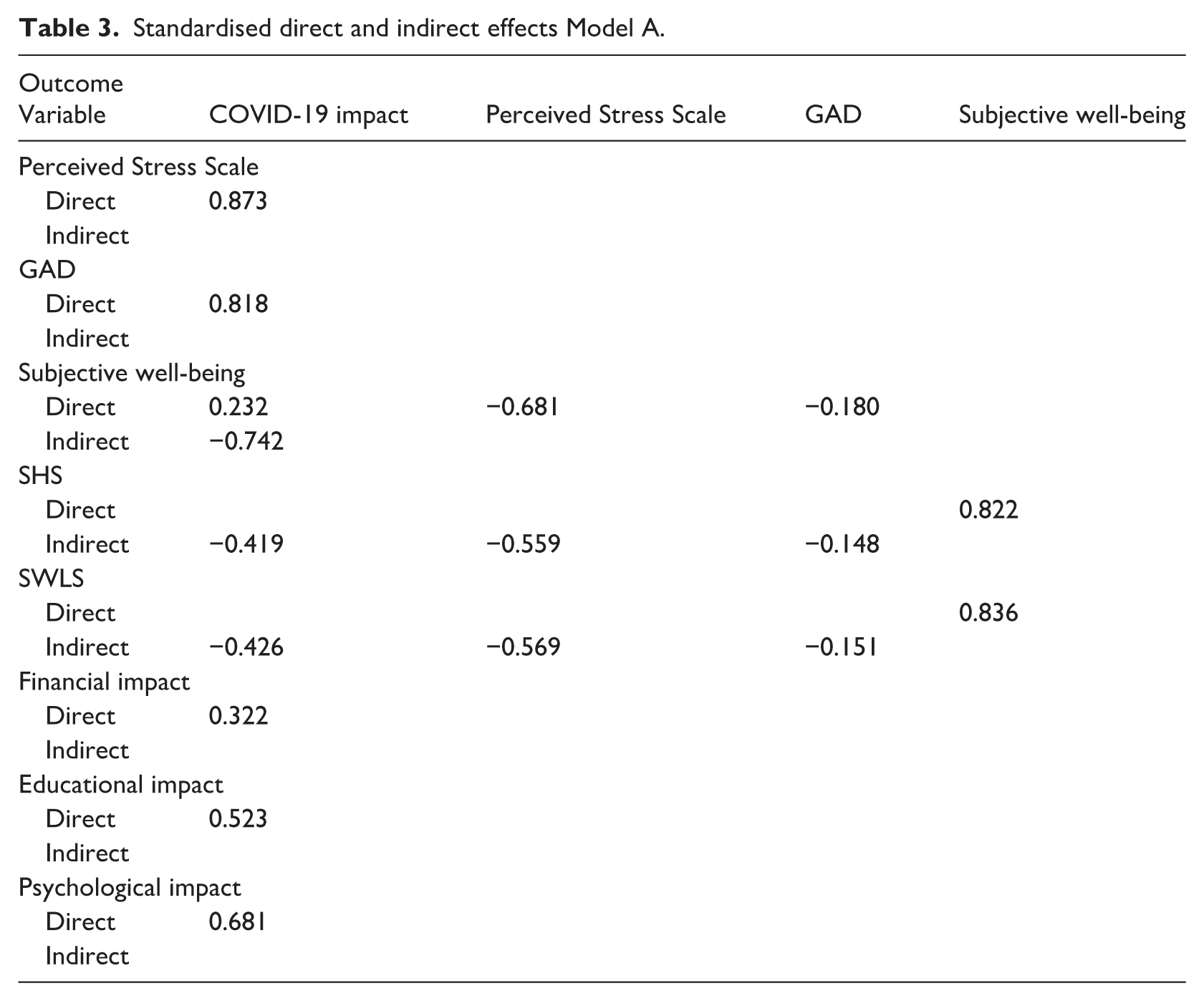
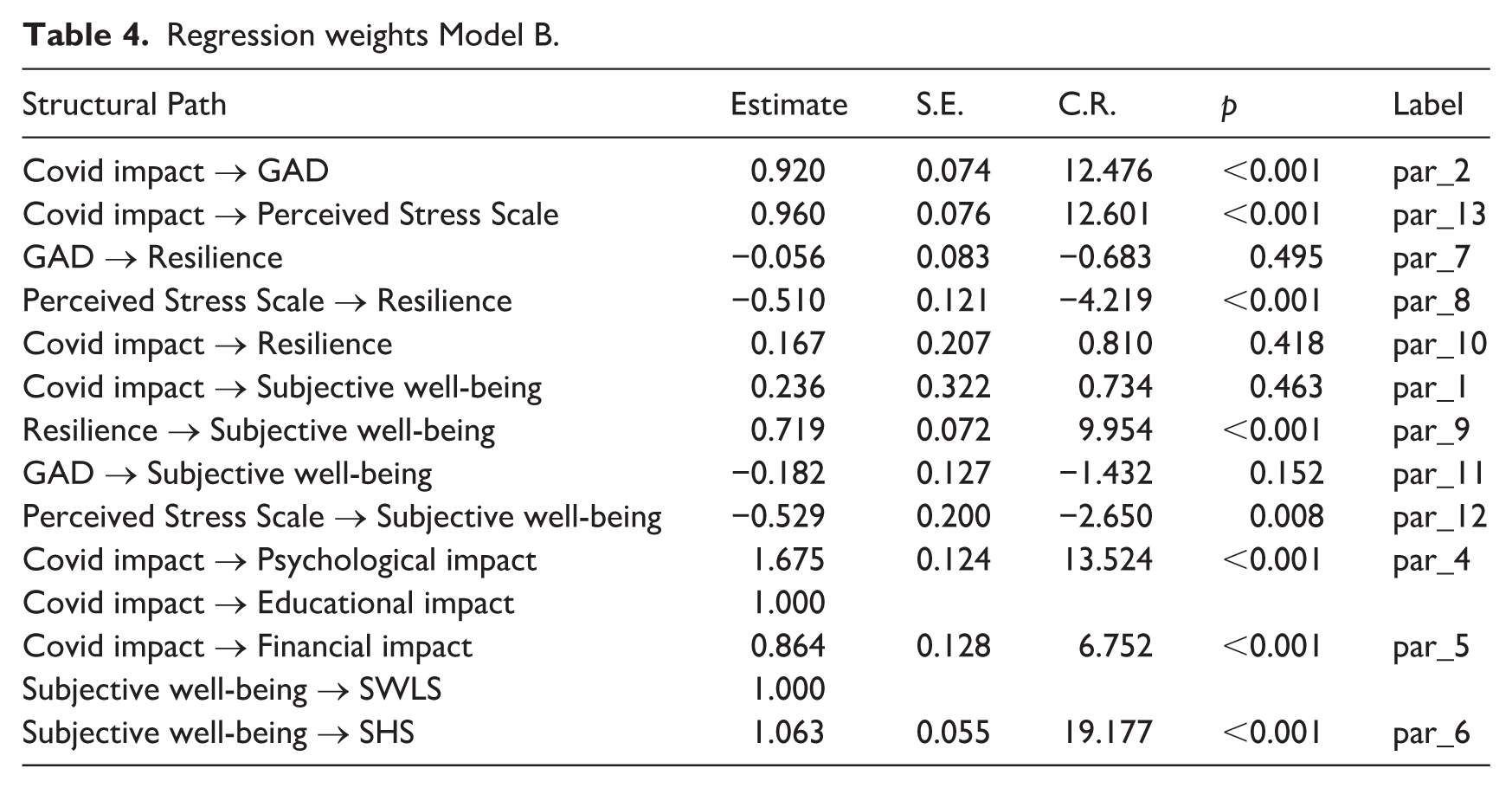
Because one of the aims of the study was to examine the role of resilience, a second model (Model B) was tested including resilience as a mediator between COVID-19 impact, perceived anxiety, perceived stress and students’ subjective well-being. Model B also allowed us to test H1, which proposed that resilience mediates the relationship between COVID-19 impact, psychological distress, and SWB. Model B included 8 observed variables and 12 unobserved variables. The model showed an adequate fit to the data: CMIN = 2.963, RMR = 0.057, CFI = 0.965, NFI = 0.949 and RMSEA = 0.054; (95% CI [0.034− 0.074]). As in model A, modification indices suggested correlating some error terms; however, based on the parameter change values, goodness-of-fit indices, and the lack of theoretical support, the model was retained in its original form. Table 4 presents regression weights and Table 5 shows direct and indirect effects among the variables. Furthermore, resilience showed a significant positive direct effect on subjective well-being (β = 0.72, p < 0.001), thereby supporting H2.
Regression weights Model B.
Standardised direct and indirect effects Model B.
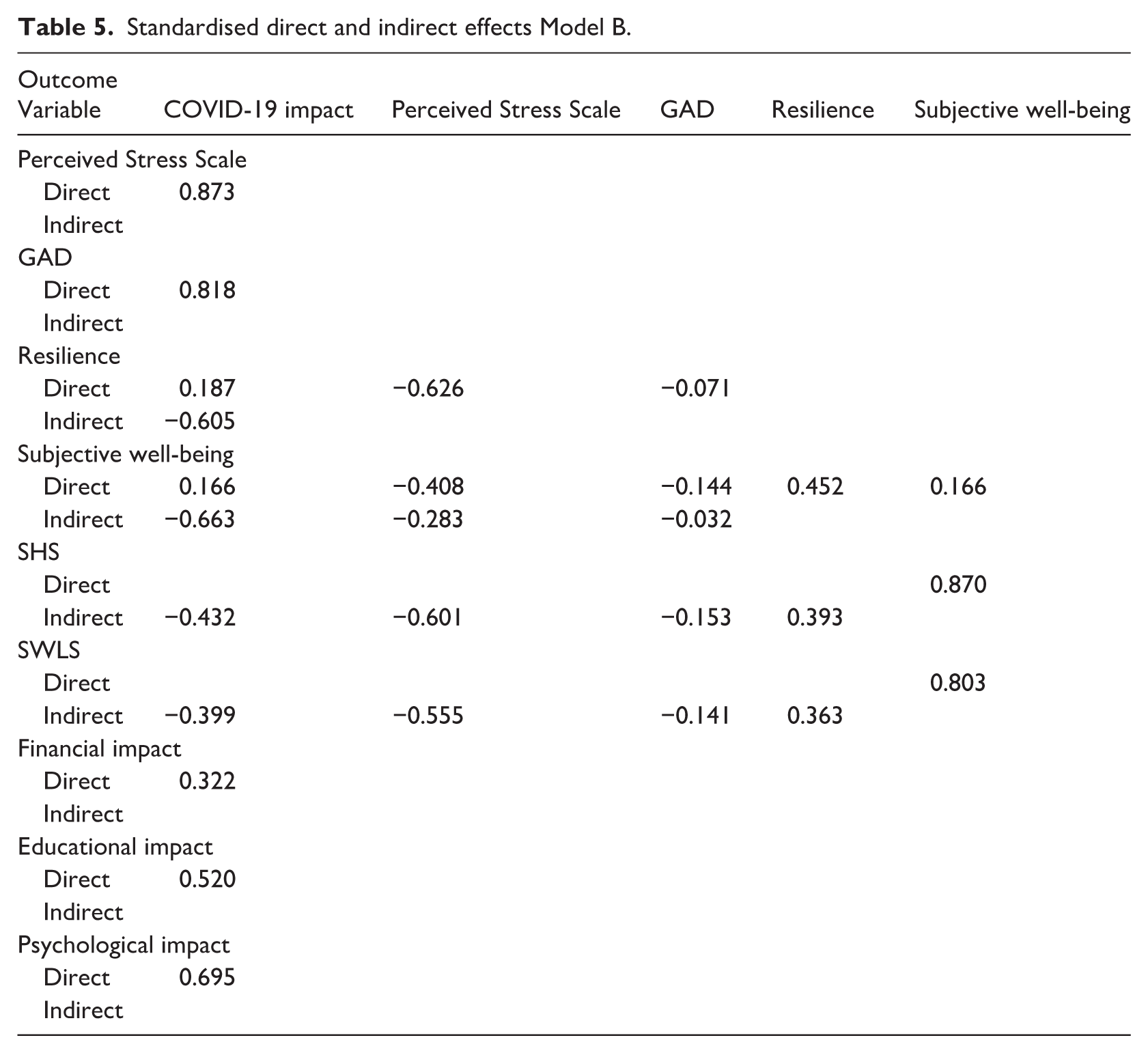
Based on the direct and indirect effects, resilience was associated with reduced negative effects of COVID-19 impact on SWB, and also mediated the relationship between perceived anxiety, stress and SWB. These findings suggest that more resilient students were better able to cope with the adverse psychological consequences associated with the pandemic, while reporting lower levels of anxiety and stress. Overall, the results support our first hypothesis (H1), which proposed that resilience has a mediating role in the relationship between COVID-19 impact, anxiety and stress, and students’ SWB. Figure 3 presents Model B with the standardised values.
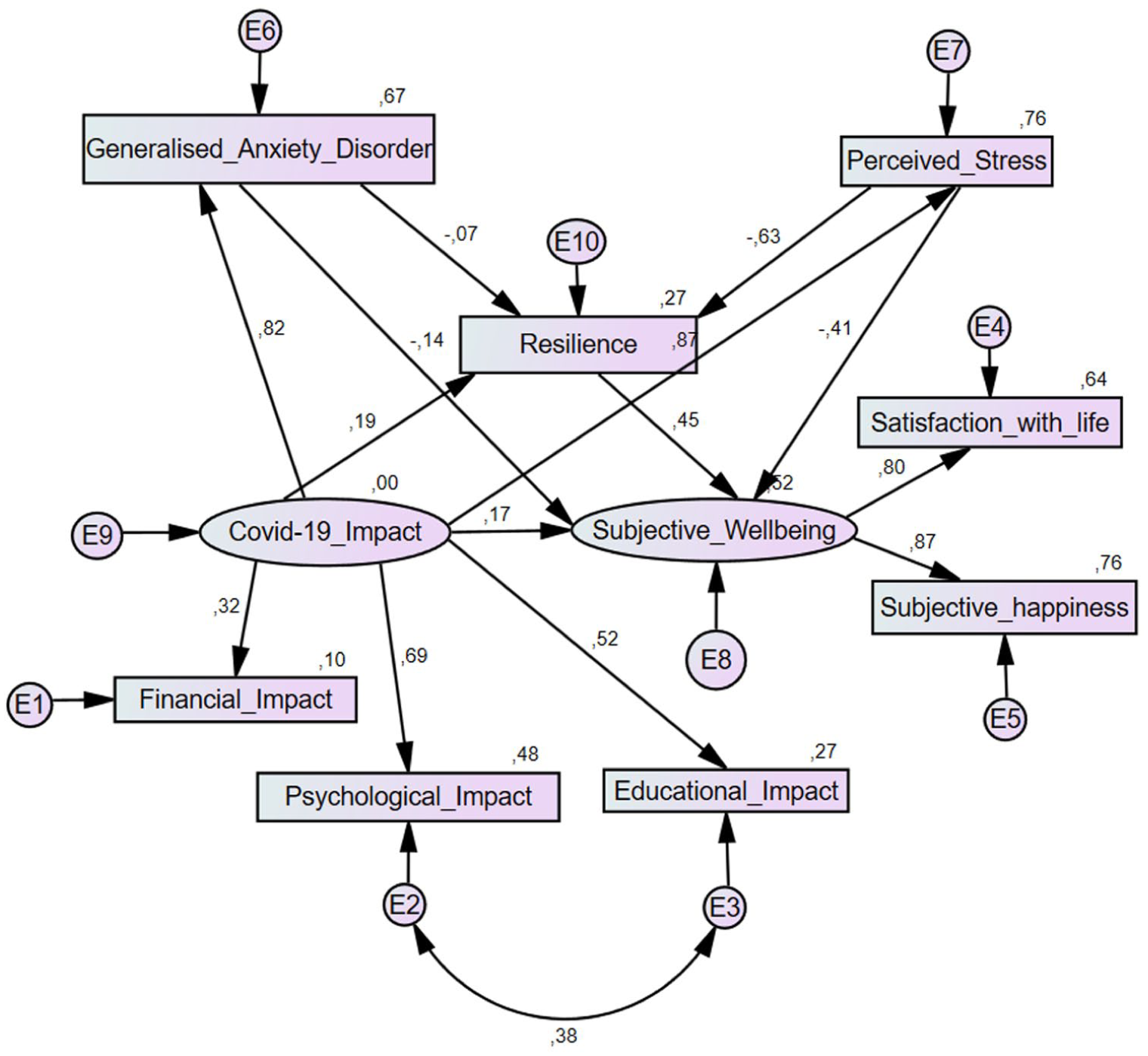
Structural model including resilience as mediator (Model B), showing how resilience may reduce perceived anxiety and stress associated with COVID-19 impact while supporting students’ subjective well-being.
To conclude, we tested our third hypothesis: (H3) which proposed that the measurement weights of the model would remain invariant across the three contexts analysed (Andorran, Mexican and Spanish). This hypothesis was intended to examine whether model B could be cross-validated across the three contexts in which data were collected. To do so, we tested the invariance of Model B. Table 6 presents the model fit summary of the unconstrained model (free estimation of measurement weights) and the constrained model in which measurement weights were fixed across groups. Results suggest that the model fit remained adequate, and improved in most of the indices.
Model fit comparison between unconstrained and constrained model B based on measurement weights.
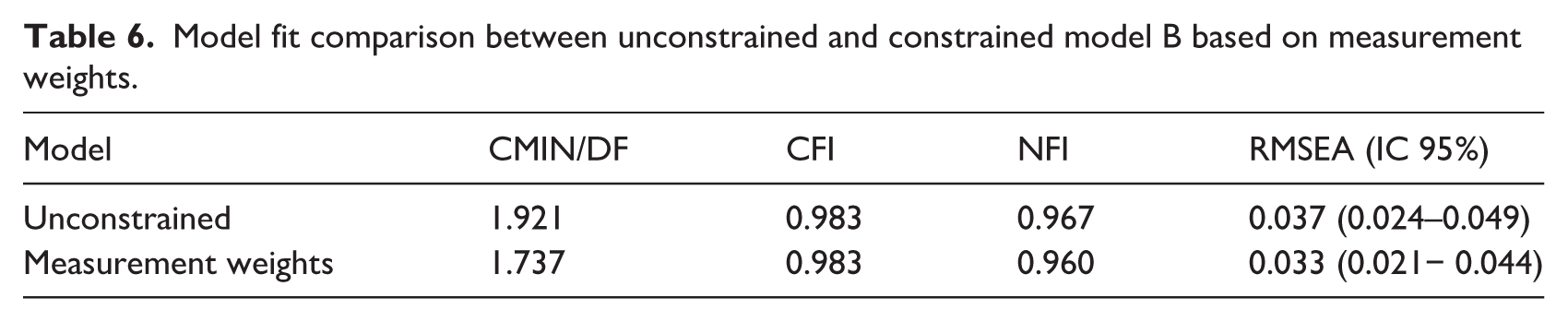
We also examined the nested model comparison assuming that the unconstrained model was correct (see Table 7). Results indicated that the change in CMIN was non-significant (p = 0.321). Based on these findings, we can conclude that Model B remained stable across the three contexts when measurement weights were constrained, which supports our third hypothesis (H3). Therefore, Model B may be applicable across the three contexts analysed.
Nested model comparison assuming model unconstrained to be correct.

Discussion
The findings of the present study provide further empirical evidence regarding the impact of COVID-19 on university students’ SWB and highlight the role of resilience as a protective factor during the pandemic. Moreover, our results are consistent with previous studies showing the negative impact of COVID-19 on different areas of university students’ lives across the world (Alzueta et al., 2021; Kokkinos et al., 2022; Rogowska et al., 2020; Sood and Sharma, 2020). Alzueta et al. (2021) examined the effects of COVID-19 on mental health in the general population and showed that anxiety and stress increased during this period. More specifically, Rogowska et al. (2020) examined university students’ levels of anxiety, stress, and life satisfaction, demonstrating how the pandemic severely affected their psychological adjustment. Additionally, Li et al. (2020) reported increased levels of anxiety, stress, and poorer mental health during the pandemic, whereas Son et al. (2020) identified anxiety and stress as important emotional threats to college students and also reported negative consequences for academic performance, particularly during the transition to online classes. Overall, studies conducted during COVID-19, together with more recent large-scale evidence, suggest that university students were a particularly vulnerable group with regard to mental health difficulties (Paiva et al., 2025).
Accordingly, previous evidence suggests that depression and anxiety symptoms were common psychological responses during the early stages of the COVID-19 pandemic across different world regions (Lima et al., 2020; Rajkumar, 2020). These psychological responses were also associated with lower levels of SWB (Kokkinos et al., 2022; Sood and Sharma, 2020; Tan et al., 2020). Increased uncertainty, anxiety, and stress in response to the abrupt changes experienced by university students (Bell et al., 2020; Blasco-Belled et al., 2020; Bogolyubova et al., 2021; Chi et al., 2021; Kokkinos et al., 2022; Sahu, 2020; Sood and Sharma, 2020; Tan et al., 2020) may help explain students’ lower perceived SWB (Arslan and Allen, 2022; Blasco-Belled et al., 2020; Bogolyubova et al., 2021; Chi et al., 2021). In this sense, our findings add further evidence to the literature on well-being by showing that, in crisis contexts, it is essential to consider psychological resources such as resilience, understood as the capacity to recover from difficult or traumatic life events and to adapt to unfavourable circumstances (Ogińska-Bulik and Zadworna-Cieślak, 2018; Ryff and Singer, 2003; Satici et al., 2023; Yu et al., 2022; Yuan et al., 2018; Yıldırım and Arslan, 2022).
As expected, the results of the present study support the hypothesis that resilience mediates the relationship between COVID-19 impact, anxiety, stress and students’ subjective well-being. Furthermore, the results also supported H2, showing that resilience had a significant positive direct effect on students’ subjective well-being. This finding suggests that resilience not only buffers distress, but also contributes directly to greater life satisfaction and happiness. Thus, university students with higher resilience appear to be better equipped to cope with the negative consequences of COVID-19 and maintain their well-being, while also reporting lower levels of perceived anxiety and stress (Ogińska-Bulik and Zadworna-Cieślak, 2018; Satici et al., 2023; Yu et al., 2022; Yuan et al., 2018; Yıldırım and Arslan, 2022). These findings are consistent with recent research by Quintiliani et al. (2022), who found that resilience may help university students safeguard their mental health. Along the same lines, Valladolid (2021) reported that resilience contributes to maintaining well-being of college students, and Labrague (2021) reinforced the importance of strengthening resilience in students in order to sustain their mental health and increase life satisfaction.
Moreover, these findings contribute to a better understanding of resilience and its potential to operate as a protective factor in adverse situations. Individuals with higher resilience may be better able to manage challenging circumstances and respond adaptively to psychological difficulties. Previous studies have also suggested that resilience, together with other psychological resources such as humour, gratitude, optimism, and mindfulness may reduce psychological distress (Bono et al., 2020; Vos et al., 2021). Given these results, it seems important to strengthen such positive psychological resources, as they may lessen the impact of distress. Therefore, the development of interventions or training programmes aimed at fostering resilience may help students regulate emotions and apply more adaptive coping strategies in future challenging situations (Sholichatun et al., 2025).
Finally, previous research examining the impact of measures introduced to control and prevent the spread of COVID-19 suggests that, although these measures were implemented in different cultural contexts, anxiety and stress levels increased while well-being levels decreased across contexts (Alzueta et al., 2021; Kowal et al., 2020; Moret-Tatay and Murphy, 2022). In line with this evidence, we found that the model including the mediating role of resilience in the relationship between COVID-19 impact, anxiety, stress, and SWB remained invariant across the three national contexts analysed (Andorran, Mexican, and Spanish). In cross-cultural research, resilience has often been conceptualised as the opposite of vulnerability (Panter-Brick, 2015). Accordingly, these findings suggest that resilience may operate as a broadly relevant protective factor for mental health, regardless of cultural, social, or geographic context.
From an applied health psychology perspective, these findings highlight the relevance of resilience-focused interventions within university health and counselling services (Sholichatun et al., 2025). Integrating resilience promotion programmes into university mental health and wellbeing initiatives may help reduce anxiety and uncertainty while supporting students’ subjective well-being during periods of crisis. Given the protective role of resilience observed in the present study, universities may benefit from incorporating resilience-focused initiatives into existing mental health and wellbeing programmes. Such initiatives could include mindfulness-based activities, peer-support programmes, psychoeducational workshops focused on coping skills and emotional regulation, or academic counselling services aimed at facilitating adaptation to challenging circumstances. These strategies may contribute to reducing psychological distress and promoting subjective well-being among university students (Labrague, 2021).
Limitations and future avenues
Despite the strengths of the present study (e.g. the cross-cultural design and the multivariate methodology), some limitations should be acknowledged. First, a non-probabilistic sample was used, and all data were collected through self-report instruments. In addition, because questionnaire responses were mandatory, some common method variance or response bias may have been introduced. Therefore, caution is warranted when generalising the findings to wider student or adult populations. The broad age range of participants may also have introduced heterogeneity in life stage, academic experience, and coping resources, which may have influenced the relationships among resilience, stress, and well-being. As age was not included in the present model, future studies should examine these possible differences more directly. Nevertheless, the inclusion of larger and more balanced samples, together with data from multiple sources, would strengthen the generalisability of findings regarding the impact of COVID-19 and the role of resilience in well-being during future periods of crisis.
Comparing psychological symptoms across different cultures and countries presents important methodological challenges (Moret-Tatay and Murphy, 2022; Van Bavel et al., 2020), and these findings should therefore be interpreted with caution. In addition, the distribution of participants across countries was uneven, with a smaller subsample from Andorra. Although the invariance analyses supported the stability of the model, the reduced Andorran sample may have limited the statistical power of country-specific comparisons. Therefore, although the invariance analyses supported the stability of the model across countries, these findings should be interpreted with caution until replicated in samples with a more balanced distribution of participants across national contexts. In addition, the predominance of women in the sample may limit the generalisability of the findings to the wider university student population. Future studies could also include age as a covariate or moderator in order to determine whether the relationships among COVID-19 impact, resilience, psychological distress, and subjective well-being differ across age groups. Furthermore, the pandemic evolved rapidly and asynchronously across countries, which may have influenced participants’ experiences and perceptions. Furthermore, previous research has shown that the severity of mental health difficulties may be associated with prolonged periods of isolation and uncertainty (Allegrante et al., 2020; Carvalho et al., 2020; Haider et al., 2020). To examine the effects of COVID-19 on well-being across different stages of the pandemic, future studies should employ longitudinal designs. Future research should also consider additional factors related to well-being, such as social support, coping strategies, anxiety management, and other cognitive resources.
Finally, given the positive effects of resilience found in the present study, it would be valuable for future research to examine whether students’ perceptions of the impact of COVID-19 on their well-being may be improved through intervention programmes designed to strengthen resilience and coping mechanisms. It may also be useful to compare students from different academic sectors or age groups.
Conclusions
The present study highlights several relevant conclusions. First, significant relationships were found between COVID-19 impact and students’ subjective well-being through the mediating role of perceived anxiety and stress. Second, resilience mediated the relationship between COVID-19 impact, anxiety, stress, and students’ SWB (H1), and also showed a significant positive direct effect on SWB (H2). Third, the proposed model remained stable across the three contexts analysed (H3), suggesting that it may be applicable to similar contexts.
These findings contribute to broader and more comprehensive explanations of well-being in pandemic contexts. They also provide a better understanding of how individuals respond emotionally to stressful situations, how they perceive their well-being under adverse circumstances, and how they adapt to difficult life events.
From a practical perspective, the results may help in the design of more effective measures aimed at improving students’ well-being by taking into account the mediating role of resilience. In addition, these findings may assist educators and mental health professionals in better supporting and guiding students’ learning and psychological adjustment during crises and periods of uncertainty.
Footnotes
Acknowledgements
The authors wish to thank the GRIE research group of University of Andorra for their help and assistance in the creation of the project.
ORCID iDs

Ethical considerations
The study was approved by the Academic Board of the University of Andorra, acting as the institutional ethics committee, in December 2020. All procedures were conducted in accordance with the principles of the Declaration of Helsinki and institutional guidelines. Participation was voluntary and anonymous. The study involved non-invasive, online self-report questionnaires and posed minimal risk to participants.
Consent to participate
All participants were adults (18 years or older) and provided informed consent prior to participation.
Author contributions
Conceptualisation: C.T.N.; Methodology: C.T.N. and C.Q.P.; Formal analysis: C.T.N. and C.Q.P.; Investigation: C.T.N. and C.Q.P.; Project administration: C.T.N., A.S., and B.S.; Resources: C.T.N., A.S., B.S., and C.Q.P.; Data curation: C.Q.P.; Writing – original draft: C.T.N., C.Q.P., P.E.R.G., and S.A.; Writing – review and editing: C.T.N., C.Q.P., P.E.R.G., and S.A.; Supervision: C.T.N. and C.Q.P. All authors have read and agreed to the published version of the manuscript.
Funding
The authors received no financial support for the research, authorship, and/or publication of this article.
Declaration of conflicting interests
The authors declared no potential conflicts of interest with respect to the research, authorship, and/or publication of this article.
Data availability statement
The datasets generated during and/or analysed during the current study are available from the corresponding author on reasonable request.*