






Abstract
The Musée des Colonies was founded in 1931 in the Palais de la Porte Dorée, built for the Colonial Exhibition in Paris. Over the century, the lasting nature of the architecture has stood in counterpoint to the changing orientations of the museum as an institution, from arts to immigration. To what extent does the building continue to bear the stamp of its origins? Is a reversal of colonial material culture possible? This ethnography provides accounts of institutional discourses and employees’ memories collected by the authors, who have been conducting fieldwork on the site for 15 years. In focusing on permanent material culture (the building housing the museum) rather than on the circulation and changing status of collections, the authors provide an original take on colonial remains in France. They also set milestones on the specificities of permanency and monumentality in material culture approaches.
Introduction
On a cold Tuesday evening in February 2011, we arrive at the Palais de la Porte Dorée for the opening of an exhibition mounted by the Museum of the History of Immigration in Paris (Figure 1). The building is surrounded by police vans. On this winter night, police patrol the perimeter of the old colonial museum and monitor its entrance gate. They filter visitors, who are required to show their invitation – an open-sesame. We enter the building even though we are intimidated by this procedure. The director of the institution welcomes us. When we express our surprise, he tells us that the police are there to prevent the return of the protesters who occupied the premises for nearly four months. These ‘undocumented workers on strike’, most of them immigrants from West Africa, struggle for their regularization on French territory, using this symbolic site as their base (Figure 2). As we are leaving at the end of the evening, we discuss the ways in which, in the French context, immigration issues always seem to come back to the question of the colonies. As ethnographers studying the place on a long-term basis, we see the situation as a concrete demonstration of the ambiguities that the building and its history embody. 1 Indeed, the recent academic and political debates on ‘colonial fractures’ show that these ambiguities are central to self-understandings as well as understandings of colonial history in France – and of its consequences in contemporary society. 2
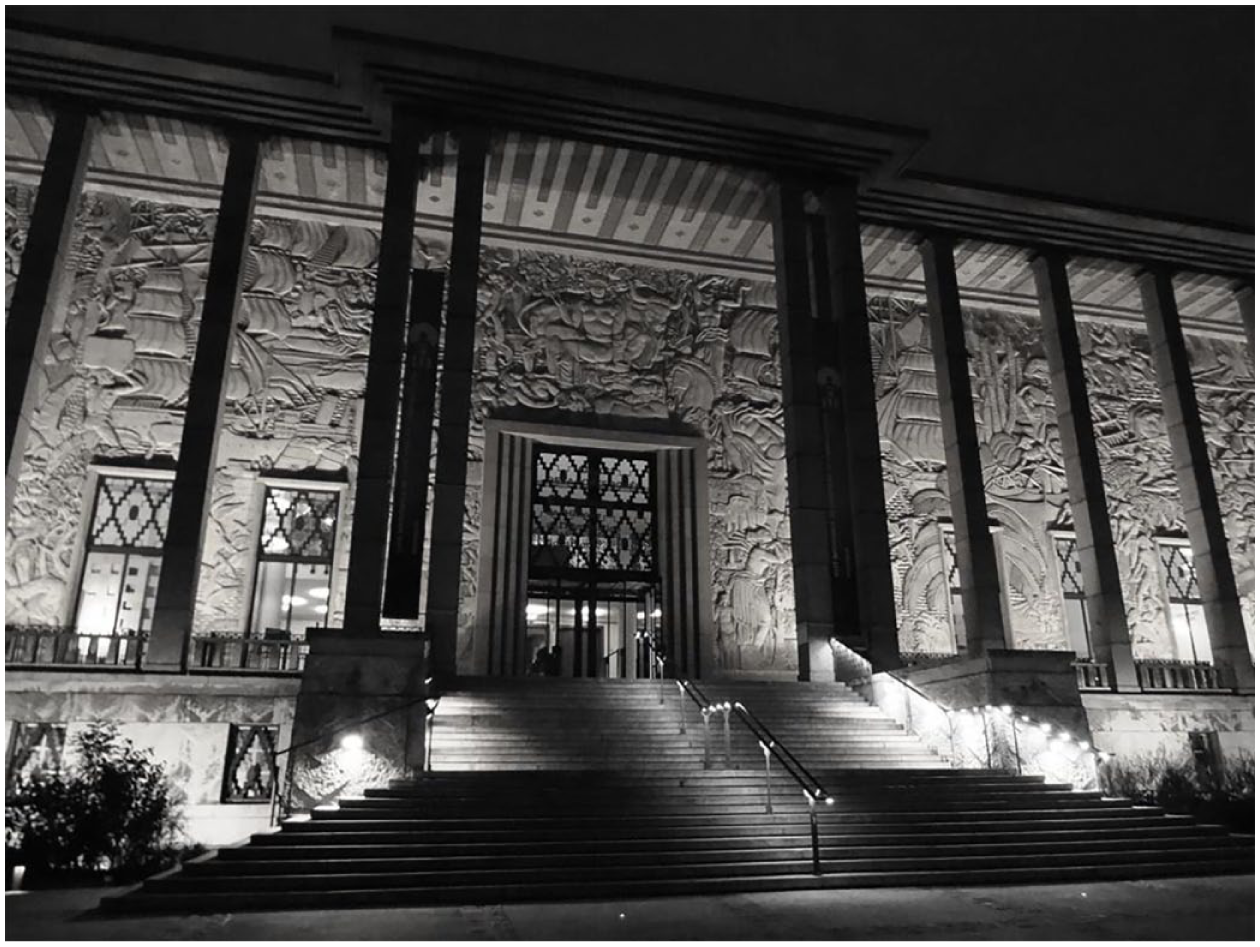
Night view of the Palais de la Porte Dorée (2013). © Photograph: Mélanie Roustan.
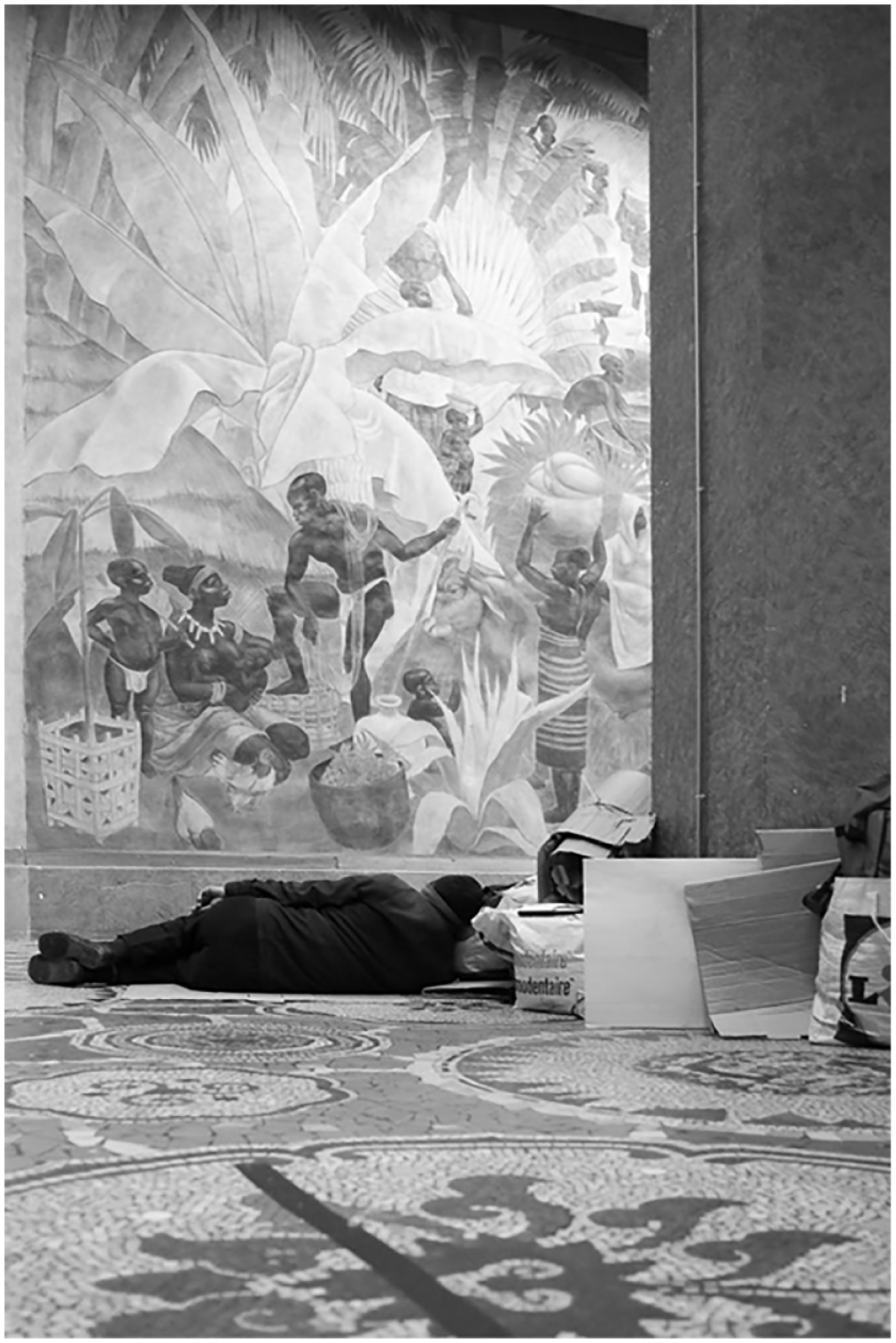
The Salle des Fêtes of the Palais de la Porte Dorée during the sit-in of migrant protesters fighting for regularization (2011). © Photograph: Bruno Combes.
Various researchers – in history, the history of art, architecture, anthropology and cultural studies – have studied the Palais de la Porte Dorée: either as a ‘vestige of the colonial empire’ (Aldrich, 2004; Lebovics, 2004; L’Estoile, 2007) or as one ethnographic museum among others, in the context of ‘museums in postcolonial Europe’ (Thomas, 2012) or in France (Dias, 2000; Ford, 2010; Mazé et al., 2013). Anthropologists have mainly focused on the movement and successive reinterpretations of the ethnographic collections it has held, especially during the ‘moment du Quai Branly’ (Le Débat, 2007; Ethnologie française, 2008). In this article, the approach is reversed: instead of an analysis of the movement of collections and new forms of ‘packaging’, we will examine an immobile and unchanging space: the building itself. For over 80 years the Palais has been home to institutions that testify to the ideological shifts of France in relation to otherness. This choice leads not only to an original approach to colonial remains, but also sets milestones on the specificities of permanency and monumentality in material culture approaches, at a theoretical level.
On 5 November 1928, French President Gaston Doumergues laid the cornerstone of the Palais de la Porte Dorée building. Originally built as the headquarters for the 1931 Colonial Exhibition, it subsequently became a Musée permanent des Colonies (Permanent Museum of the [French] Colonies), including an historical gallery, a socio-economic section, orientalist arts and literature, indigenous arts and crafts and primitive arts, ethnographic collections and an exotic aquarium (Figure 3). Next, it became the Musée de la France d’Outre-mer (Museum of French Overseas Territories). In 1960, with the independence of many former colonies on the horizon and the creation of the French Ministry of Cultural Affairs, it was re-founded as a museum dedicated to African and Oceanic Arts (MAAO). 3 This museum was closed in 2003 (at which time its collections were bequeathed to the nascent Musée du Quai Branly) until 2007, when the Palais re-opened its doors as a Museum of the History of Immigration. 4
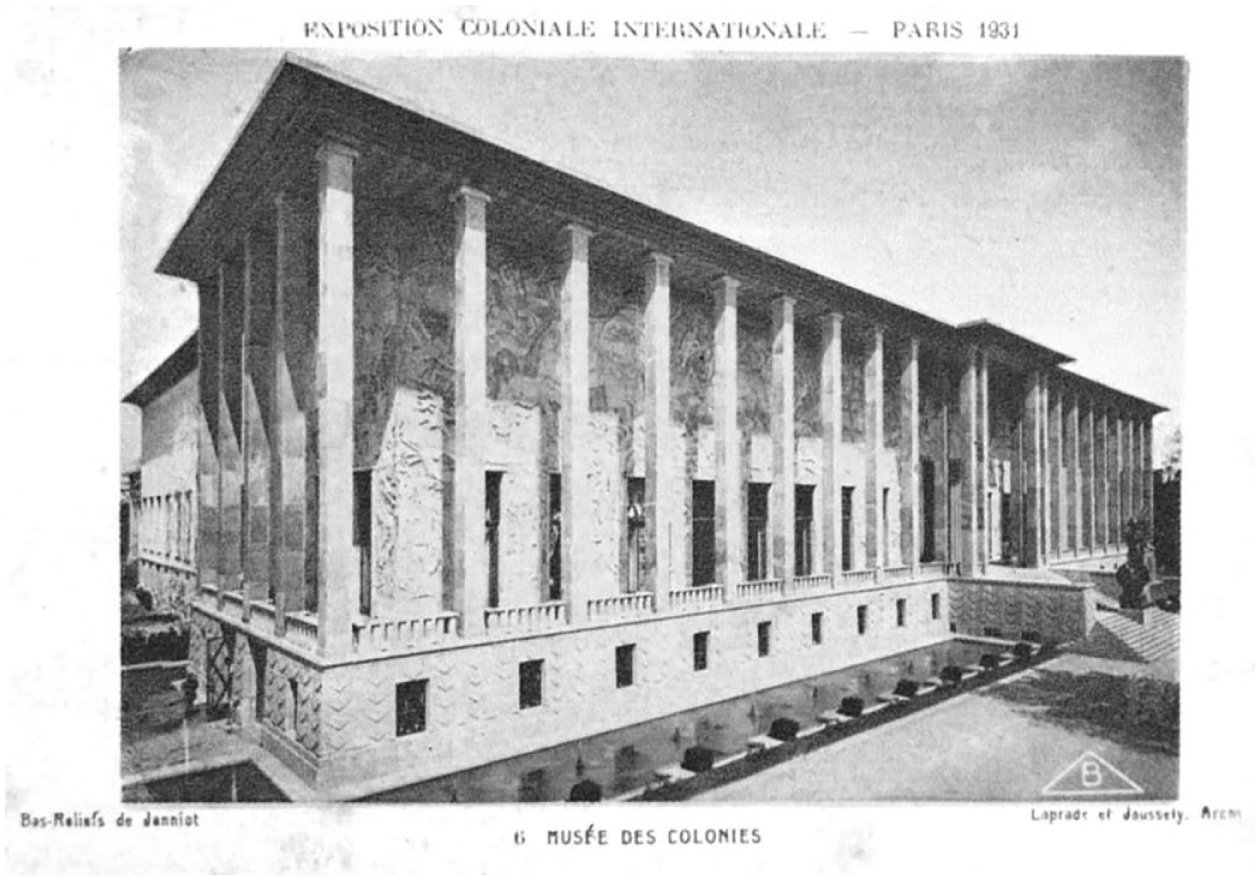
Postcard of the Palais de la Porte Dorée as Colonial Museum (1931).
In the context of the latest French colonial exhibition (Hodeir and Pierre, 1991), the link between the Palais’ heritage function (including its tropical aquarium) and France’s colonies is made explicit. 5 On the one hand, the (hi)story of colonialism is portrayed as a centuries-old cultural legacy dating back to the crusades and worthy of commemoration; and on the other hand, indigenous cultures are put forward as part and parcel of a French national heritage. When the Palais was first built, architecture, interior design, museography and collections all combined to extol the virtues of the colonial enterprise (Le Palais des Colonies: histoire du musée des arts d’Afrique et d’Océanie, 2002); Murphy, 2009). And yet, the Palais can also be considered as one of the ‘hybrid modernities’ that question the boundary between the figures of colonizer and colonized (Morton, 2000).
In this article, we will examine the Palais de la Porte Dorée as material culture: a building, its architectural and decorative elements (Figure 4), and even its furniture (we also touch on the destiny of the objects exhibited here in 1931). ‘Heritage’ in this context is seen not as a fixed categorization of objects, but rather as a dynamic social process closely linked to politics (Poulot, 1997). Our specific aim is to question material culture from a sensitive, subjective point of view. We focus both on materiality and on words related to materiality. The fieldwork we began in the late 1990s has led us to examine objective changes to the Palais, and to gather discourses ‘from the inside’: institutional texts and publications (museum guides for instance), but also interviews with people who have worked there (curators, guardians and others) 6 – providing a sort of personal, multilayered memory of its history – perspectives from within.
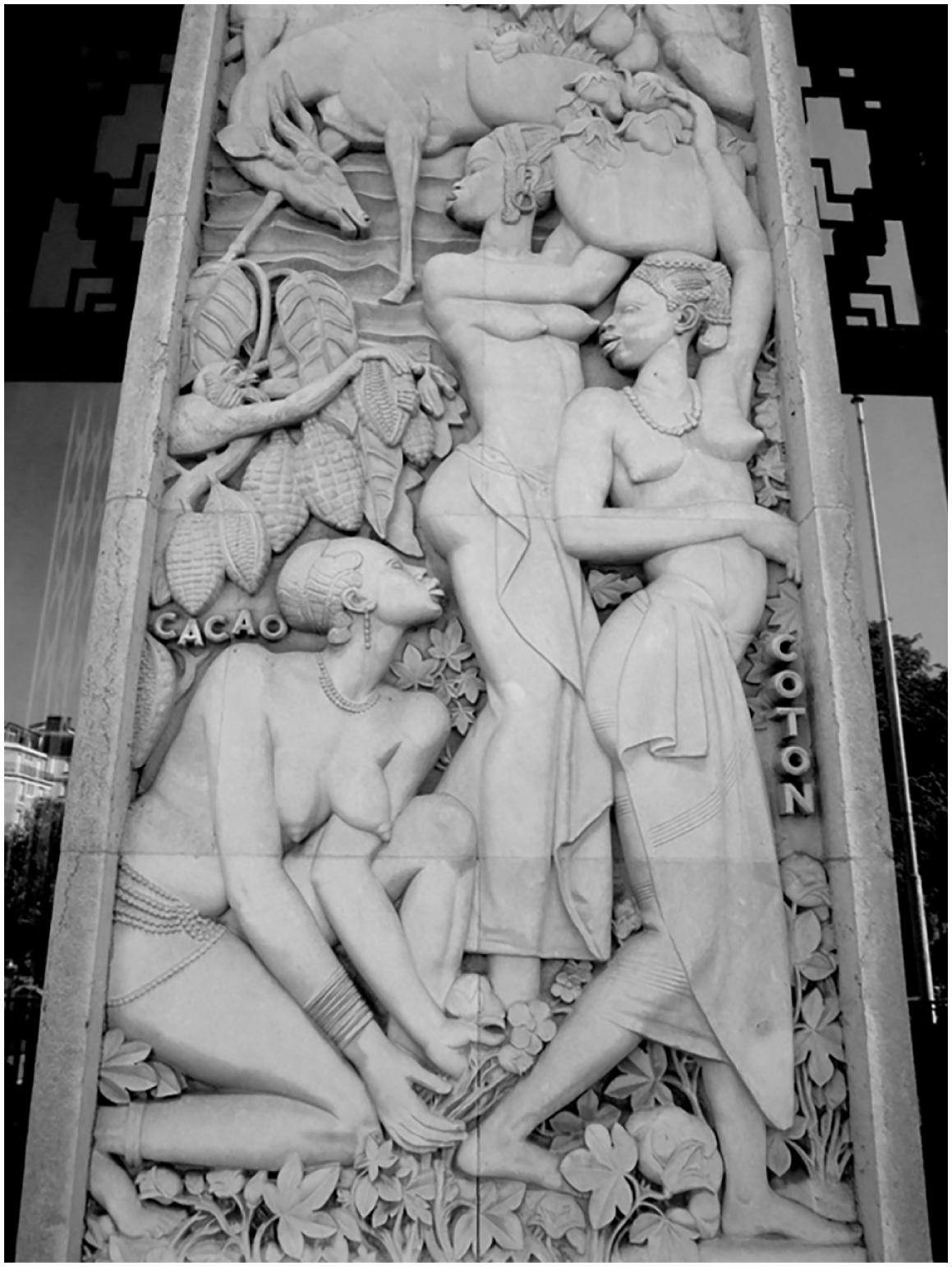
Detail of the façade of the Palace: bas-relief of Alfred Auguste Janniod, representing the contributions of the colonies to France (2011). © Photograph: Mélanie Roustan.
What do official and unofficial discourses reveal about the place? In what way, and according to what processes, has it constantly been (re)interpreted? What do these hallmarks of colonial material culture mean today?
From its initial context to its current circumstances, from the rhetoric of colonialism to one of the arts and then of immigration, this article explores how heritage dynamics have served both to transform and to preserve the architectural features and the use of this space (as a museum).
1. From colonies to exotic arts (1930s–1970s)
Among older generations, there is still a certain attachment to the Colonial Museum: ‘That museum! It was suddenly like Africa was right here!’ says a visitor to the 1931 Colonial Exhibition (visitor, interview, 2002). A former curator, who worked in the museum from 1958 to 1992, remembers the museography of these decades (including the dioramas):
It was amazing! … There was what France brought to the world – culture, civilization, arts, armies and law – and then, what other countries brought to us: okay, it was kind of all about bananas and coffee … But still, that was some museum! (former curator, interview, 2002)
In contrast, a young curator recalls this period with a certain critical distance: ‘In what was called the retrospective section – which became the historical gallery – there were these kinds of panegyrics about all the figures of the French conquistadores since the crusades’ (curator, interview, 2002). The history of the place is so loaded that it seems necessary to move beyond it: ‘The architecture is incredible, but it’s also burdensome in a way … There are still people who call this the “Museum of the Colonies”! I think that some day, at some point, we’ll have to move away from this aspect’ (curator, interview, 2002).
In the early 1960s, with the beginning of the process of French decolonization, the former Colonial Museum (then called the Overseas Museum) became an art museum (Figure 5). The birth of the MAAO is intimately linked in people’s memories to the famous author André Malraux, the first French minister of cultural affairs. People we spoke to systematically mention his name, and sometimes emphasize his personal involvement in the reorganization of the museum: ‘What Mr. Malraux wanted was not an ethnographic museum like the Musée de l’Homme, but an art museum, with three sections: North Africa, Black Africa and Oceania’ (former curator and director, interview, 2002); ‘I really understand Malraux’s desire to carry history forward … At that time, there was a need for the museum to renew itself as a kind of display case [for the nation]’ (former curator, interview, 2002). A former close assistant of Malraux gives us a more realistic view of his involvement in the project: ‘Well, you know, when Malraux trusted people, he didn’t handle anything himself anymore!’ (former assistant, interview, 2002).
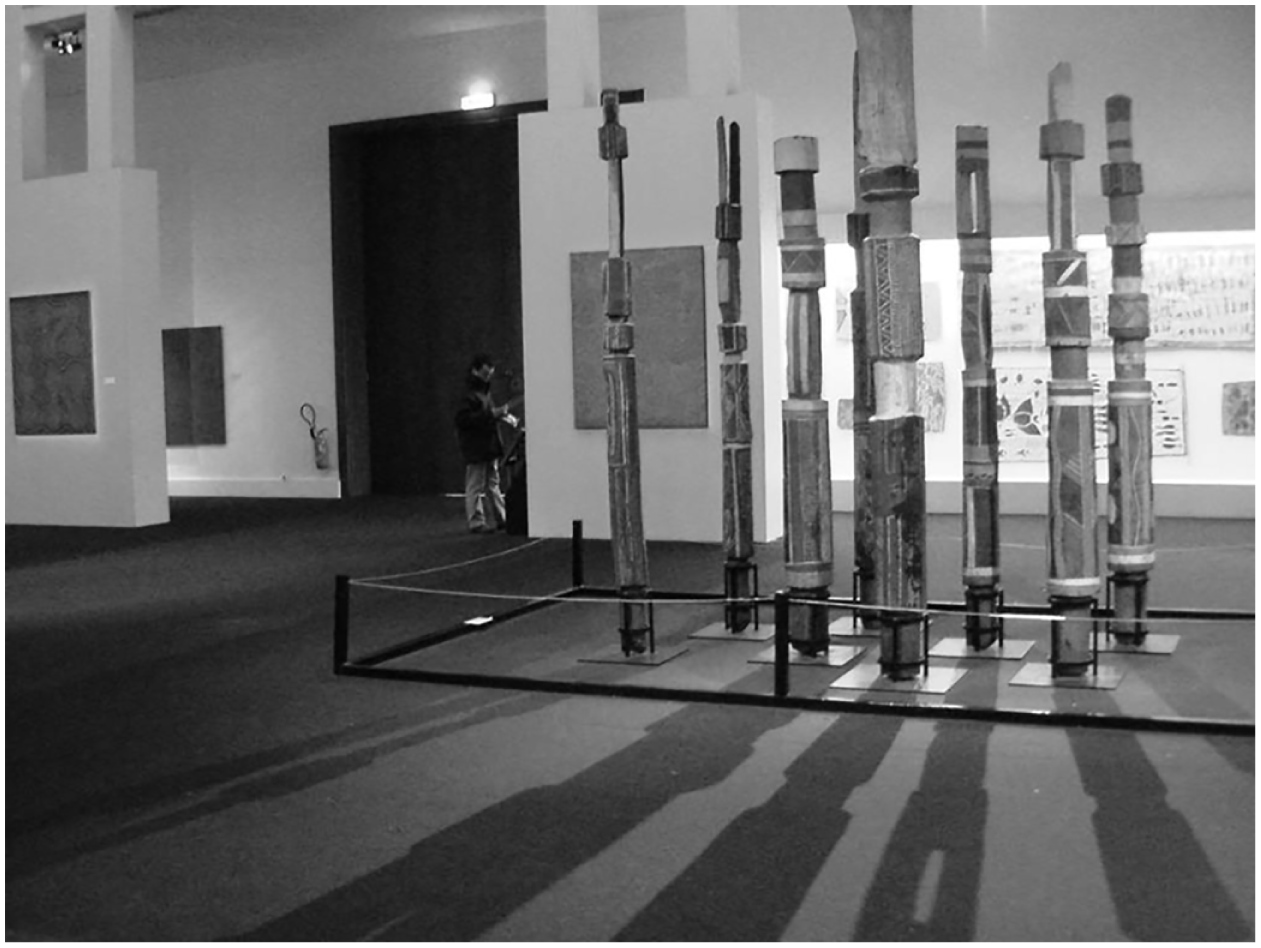
The Museum of African and Oceanic Arts (MAAO), permanent exhibition (2002). © Photograph: Mélanie Roustan.
During this period, museum staff reconsidered the status of objects and reoriented the policies of collecting or acquiring them – but the museography remained unchanged, even if some rooms were closed. Certain objects, presented as indigenous crafts in the 1930s, were ‘transformed’ into exotic primitive art:
7
The interesting part of the museum’s initial focus was its curiosity about indigenous arts, certainly under the influence of the Parisian avant-garde who advocated for an aesthetic recognition of African arts and crafts. The MAAO was born out of this impulse – shelving all the other things indefinitely. (curator, interview, 2002)
Certain other objects, previously considered as artistic portraits – either of military figures or racial types (in plaster) – began to be an embarrassment:
In the 1960s, this part of the collection passed into disuse. They closed the ‘historical gallery’ where it was exhibited. They didn’t know what to do with it, since the museum’s focus had totally changed! Some pieces were given to the Musée de l’Homme, some others were loaned to museums in the area. And what stayed here was later renamed an ‘historical bequest’. (managing staff, interview, 2001)
Visitors had no access to these galleries any more, but their museography remained untouched. A former museum employee gives us his reflection on the museum in 1977:
In the colonial historical galleries, there were costumes and plaster models from the 1930s, flags from the armies that fought in the Indies under the reigns of Louis XVI and XIV… I found the museum rather out of date and compared it to Tintin comic strips! (former employee, interview, 2002)
Some important rooms, such as the central Salle des Fêtes, were simply used as disorganized storage areas. A former employee confesses that aquarium staff used to talk about the museum staff as ‘dealers in antiques and bric-a-brac’ (former employee, interview, 2002). Thus, there was no sudden radical change in the Palais, but rather a slow evolution. The 1987 museum guidebook explains that at the time, ‘the colonial past coexisted with the decolonized present.’
2. The Palace as Art Déco heritage (1980s–1990s)
During the 1980s and the 1990s, the professionalization of the museum happened in parallel with the renovation and ‘heritagization’ of the Palais – in the sense of development of heritage status. These were the years of a rise in heritage sensitivity concerning the building and its architecture, design and furniture.
Various works of renovation took place over two decades, ‘from the basement to the roof’ (former night attendant, interview, 2002). The need for renovation of the storage rooms, along with increased attention to the physical presence of material objects and their showcasing, led to a reorganization of several spaces: ‘We were in charge of new storage rooms dedicated to Africa and Oceania, conceived in 1982 and set up in 1983. The work began with the first big exhibition held here, “Le musée imaginaire des arts d’Océanie” (former restorer, interview, 2002). Previously, the Salle des Fêtes was used as a storage space, a ‘jumble of clutter’, according to some of the museum staff we interviewed (2002). A former curator recalls:
When I arrived in 1982, the Salle des Fêtes was dark, with a corridor alongside the frescoes and collections stored in the middle of the room … Pigeons were coming in through broken windows! But that didn’t last too long … In 1984, we used it to mount a temporary exhibition. (former curator, interview, 2011)
The Salle des Fêtes was re-opened to visitors that year, becoming the focal point of the building. The frescoes were once again visible to the public.
The Salons were also re-opened (Figure 6), largely because of the higher profile of the Art Déco movement in the 1980s and the concomitant increase in its symbolic and ‘real’ value on the art markets. Within this context, the notion of conservation was of major importance. The two oval salons are a particularly striking example of this double phenomenon. They do not seem to have declined at all since the early 1930s, looking so pristine today as to seem nearly untouched. Yet they were closed for many years, and it was only because of the shift to consider the building and its interior as (artistic) heritage, which occurred in the early 1980s after the decolonization process, that they were re-opened to the public. The 1987 museum guide specifies that they were ‘reconstituted’ a posteriori, not exactly as they were originally (this is explained by a lack of sources from the period), the stated aim being to ‘revive a certain atmosphere’. In different ways and for a variety of reasons, heritage preservation and social memory combined to restore the Palais to its origins. The institutional heritage process tends to freeze a site in a particular time and/or place, seemingly erasing the years that have elapsed since construction began, skimming over the potential controversies that may have been at play in its various lifecycles. 8
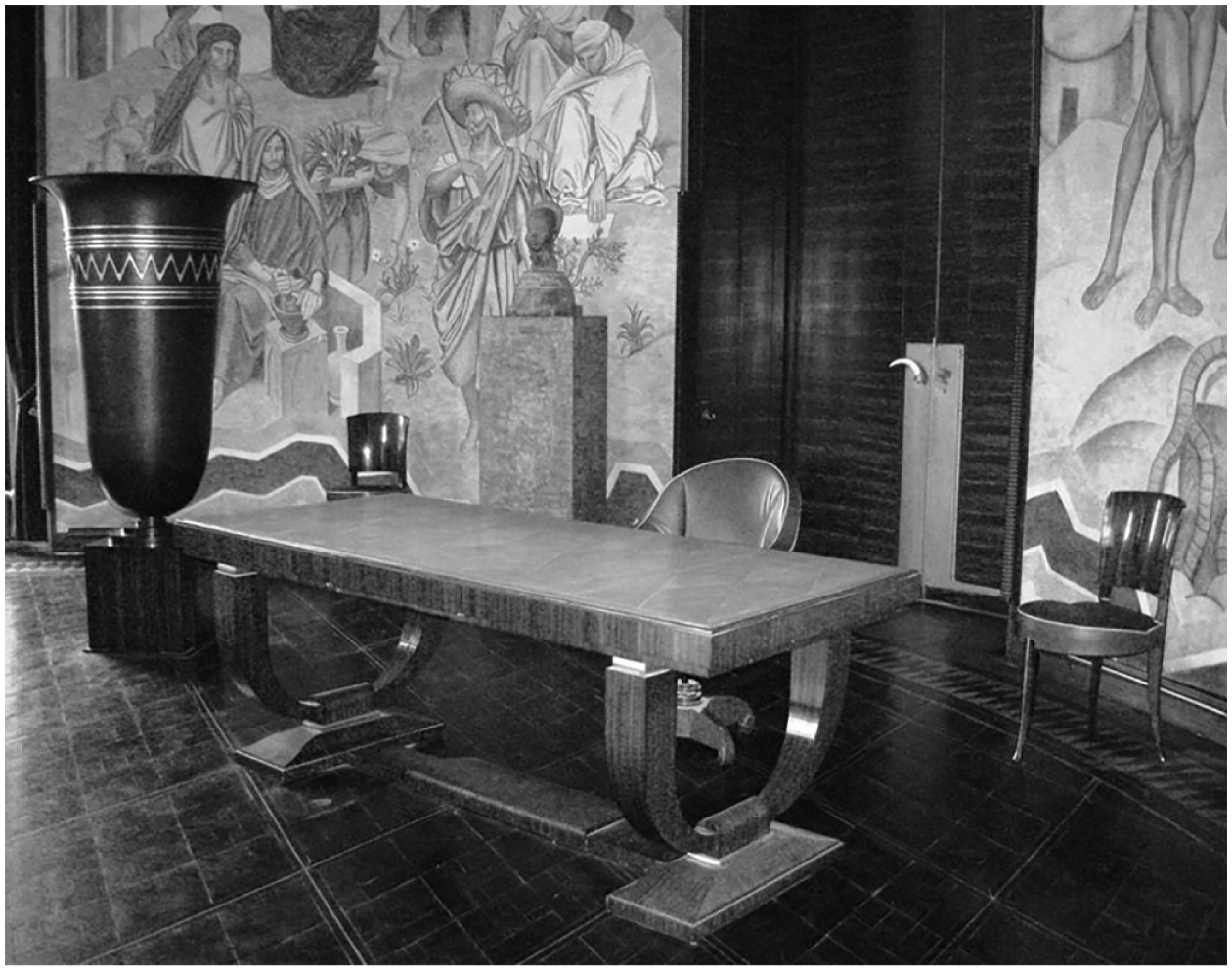
The Salon Reynaud, with French Art Déco Ruhlmann furniture, said to be unchanged since 1931 (2009). © Photograph: Anne Monjaret.
However, the staging of the salons sparked in-house debates, and people questioned the legitimacy of this twofold choice – to both preserve and restore:
The director before me set everybody against him in declaring that he would suppress the two salons. It was a real mistake. My opinion has always been, on the contrary, that we should affirm the patrimonial aspect of the building and its importance in the history of our relationships with Africa and colonialism. Trying to erase material pieces of history, you just don’t do that in a museum! (former director, interview, 2002) I was up against an institutional hierarchy that was trying to restore the building in aesthetic terms. Even if they didn’t say it, re-opening the salons was a way of rehabilitating the project the State had had … Because I think people find it fascinating to see objects put back in context, especially in a monument such as this one. (curator, interview, 2002)
This example highlights the tensions underlying heritage preservation, between a material artefact that must be preserved – in this case for its visual artistic qualities and its place in the history of interior design – and the social and cultural memory that is carried within it. This underlying tension pervades the building as a whole. Indeed, the incremental importance given to its architecture and design from the end of WWII up to the 1990s can be seen as a way of tentatively dealing with the historical legacy (these elements are based on), one that is too shameful and painful to be confronted head on.
The symbolism of this legacy, through the various social, political and cultural changes of the 20th century, came to be increasingly burdensome, while at the same time its perceived artistic value was on the rise. The architectural quality and interior furniture were both sought after: Ruhlmann and Printz, for example, were stars of their epoch who caused a sensation at the International Exhibition of Modern Industrial and Decorative Arts in 1925. However, the artistic value inherent in the building and its furnishings was only gradually perceived as such – in inverse proportion to the deterioration, at first gradual and then sudden, of the (perceived) value of colonial ideology. In this light, it is interesting to compare two museum guides, one post-WWII and the other after the wave of decolonization. In 1956, the guide to the Musée de la France d’Outre-mer devotes a few paragraphs to the actual building, which, it states: ‘marked a particularly important stage in the development of modern architecture’. However, it situates the building in a long-term chronology focused on the historical development of French monuments:
Set behind a light colonnade, the back wall boasts a huge bas-relief, carved by Alfred Janniot, and which revives the stone-carving traditions of Romanesque art … As in the tympanii of Moissac and Vézelay, the third dimension is absent and the characters blend into the wall itself.
At the time the guide was produced, the heyday of colonialism was already in the past. Yet the neutral tone in the pamphlet belies the strong political undercurrents inherent in the space. In 1987, the guidebook to the Musée des Arts africains et océaniens refers to a ‘major testimony to the architecture of the inter-war years’, but also highlights the fact that the Palais stands as the ‘sole survivor of the Colonial Exhibition’. Even though reference to the ‘colonies’ is no longer taboo, and the perception of its historical value lies just beneath the surface, the passage nonetheless centres on the building’s artistic merit. For example, the Palais is described as a ‘brilliant synthesis of the pure modernism of Bauhaus lines with neoclassical traditions and their propensity for classical architecture. These two currents come together in an evocation of (French) Outre-mer’. Comparing these two guidebooks allows us to gauge the changes in discourse around the building according to the museums it has housed. In 1956, the guidebook text sets the building in the context of a long line of French monuments. In 1987, the emphasis is on the originality of the architectural style of the time. The memory-value ascribed to the space moves from being a commemoration of colonial heritage to a focus on the building and its interior as heritage. In order for this to happen, the monument must be placed within a long-term historical perspective and the focus must shift to the architectural style as worthy of interest in its own right; 1987 was the apex of the long process of recognition of the Palais’ artistic value – the year in which the building was listed as a French Historical Monument. The Art Déco furniture was granted the highest status and level of conservation. 9 Thus, the artistic quality of the 1930s furniture took pride of place, over and above the quality of the space as marker of a past ideology, or as an expression of a (counter)colonial memory.
Is this why the museum’s official discourse at the time tended to promote the overall architecture in its most ornamental aspects? Jean-Hubert Martin, the museum director who prefaced the 1999 guide, focuses heavily on the architectural ‘shell’ and the fact that it testifies to ‘great daring in terms of innovation’ rather than to the colonial past (which he does not, however, deny). The chapter dedicated to the ‘architectural décor’ (interior as well as exterior) makes mention of the leading figures who contributed to this Art Déco work, but does not dwell on the fact that, in this context, the art form was used as a vehicle for the promotion of colonial propaganda. A didactic game for children developed by the cultural department in December 1999 was devoted to the building. After a brief introduction to the Colonial Exhibition, the focus shifts to the purely architectural aspects: bas-reliefs, murals, the wrought-iron gate and the items of furniture, all the while showering praise on the artists and artisans who created them.
The early 1990s marked a new direction for the museum in terms of a more ambitious project, new acquisition policies and a renewed interest in contemporary art. Some of its directors tried to give the place a new feel by introducing contemporary pieces, some of which came from Africa. These artists, ‘ex-colonized people or immigrants’, tended ‘to consider the place as a colonial monument’ through ‘a game of re-appropriation’ which ‘causes a museum that had been stuck in colonial ideology (because of its décor) to come back to life’ (curator, interview, 2002). The idea, then, was to link ‘the historical approach’ to the introduction of a ‘contemporary gaze’ on the societies that produced these pieces – ‘to show that these societies have a history’ despite the ‘primitive’ aspect of their material production (former director, interview, 2002). A new policy was adopted: ‘It was only in 1992 that a cultural project per se, which defined the museum as a locus for a “dialogue between cultures”, was developed in coordination with all the people involved’ (Taffin, 1999: 126). This idea of a ‘dialogue between cultures’ would become the slogan of the Musée du Quai Branly, which opened in 2005 and showcased collections from the MAAO and the Musée de l’Homme.
3. The end of the MAAO: Colonial Exhibition furniture as historical collection (1990s–2000)
The end of the 1990s and the beginning of the 2000s were marked by this institutional reorganization: the MAAO closed in 2002 and the Musée du Quai Branly opened three years later.
At the time of the closure of the MAAO, the status and localization of these objects from the colonial era was under negotiation: ‘This historical collection is the most significant collection, with more than 20,000 objects … In my opinion, it should move with the rest of the MAAO collections, because all together they form a whole’ (General Secretary of the MAAO, interview, 2001). Although they used to be inextricably linked, the museum and the building now became independent from each other. The collections of works of art left the Palais. The destiny of the antique photographs and original furniture (desks, chairs, display cases, bookshelves) became problematic: ‘Questions were raised about certain elements: were they part of the Palais’ heritage, or were they part of the collections?’ (former curator, interview, 2011). Discussions were initiated and the work of sorting was begun – to decide what would be thrown out and what would be kept, what would go and what would stay:
Curators were involved, as were inspectors from the ministry … There was a real in-depth consideration of what should be done … With this double constraint that there was not a lot of space and, at the same time, there was the desire to keep the maximum number of traces of the building’s heritage. (former curator, interview, 2011)
Select objects were kept as museographic samples and were added to the historical collection that went to the Musée du Quai Branly – although certain pieces of furniture remained in the Palais (Figures 7 and 8).
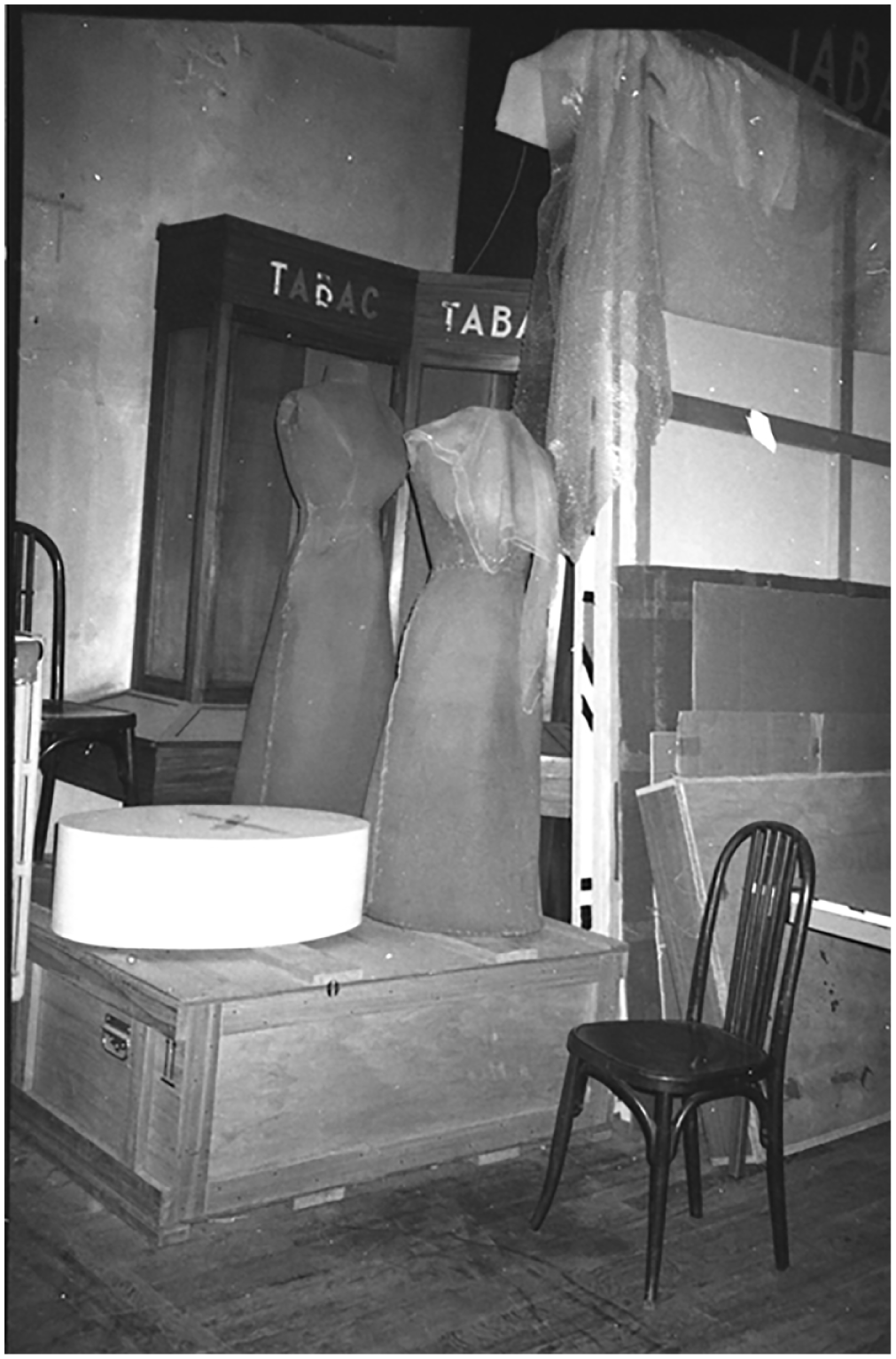
Storage of 1930s furniture and dioramas (2002). © Photograph: Mélanie Roustan.
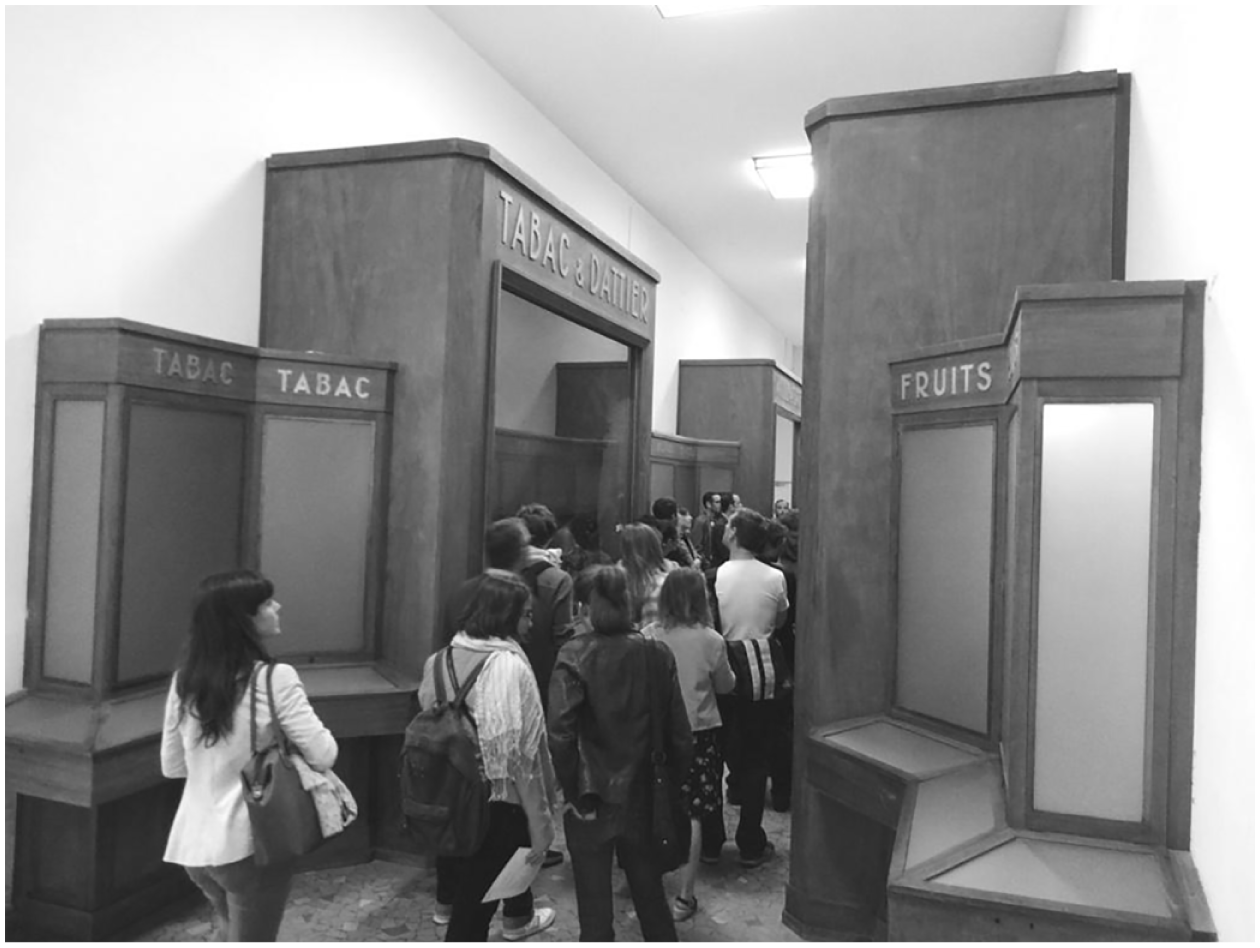
Rearrangement of 1930s furniture and dioramas, shown as testimonies of the former Colonial museum during the Heritage days (2013). © Photograph: Mélanie Roustan.
According to the accounts we gathered, this kind of question was not even considered a few decades earlier: ‘The reserves in the 1960s were made up of odds and ends, with salvaged shelving and old display cases from the Colonial Exhibition. Only a few new cabinets were purchased’ (restorer, interview, 2002). The building and furniture were used for their functional aspects, apart from any colonial, historic, artistic or scientific value. At the time, there was less sensitivity to heritage content and the institution had significant economic constraints. In addition, a former curator believes that this lack of a heritage consciousness was due to the political aspect of the collection:
I am in charge of a collection that was put on a back shelf for forty years because it is problematic for the French nation … French colonial history is embarrassing for all politicians, whether they are left or right-wing. (curator of the historic collection, interview, 2002)
This remark could be applied to the whole building, whose destiny was as yet unresolved. The MAAO came to an end, leaving the Palais de la Porte Dorée, with its décor and salons, in its wake. Even before the close of the museum, there was some hesitation as to what form any conversion of the building would take. Some staff members and former visitors of the MAAO, nostalgic at the idea of a permanent closure of the space, expressed a wish to see it turned into a museum of the colonies – not a replica of the erstwhile Musée permanent des Colonies – rather, a museum of that museum:
Two possibilities were put forward: a museum of the 1930s, in reference to the building and its furniture, or a museum of the history of the colonies. This would have been good, but clearly, politically speaking, it was not yet the time. (former curator, interview, 2002)
In other words, the idea was to commemorate the first museum ever to occupy the Palais’ walls – as heritage in and of itself. The Palais cannot be seen as an empty, or neutral ‘shell’, needing only fire safety upgrading in order to be put on the market. The MAAO teams, who were for the most part quite attached to their workplace, focused on enhancing the building (the pace of renovations was stepped up): ‘the last thing I want is for people to feel that this space is being abandoned’ (former director, interview, 2001).
It was in this liminal phase, on the cusp between different histories and contrasting interpretations of the building, that the decision was made to make it the site of a museum of immigration.
4. The opening of the Museum of Immigration (2000–2010s): Towards an architectural inversion?
The most striking event of the 2000s was the opening of the Museum of the History of Immigration within the Palais. While it had long been ignored by the Ministry of Culture, this new development allowed the Palais to effect a historic reversal, to go against the grain of its symbolism and to keep intact its material fate as a museum (Figure 9).
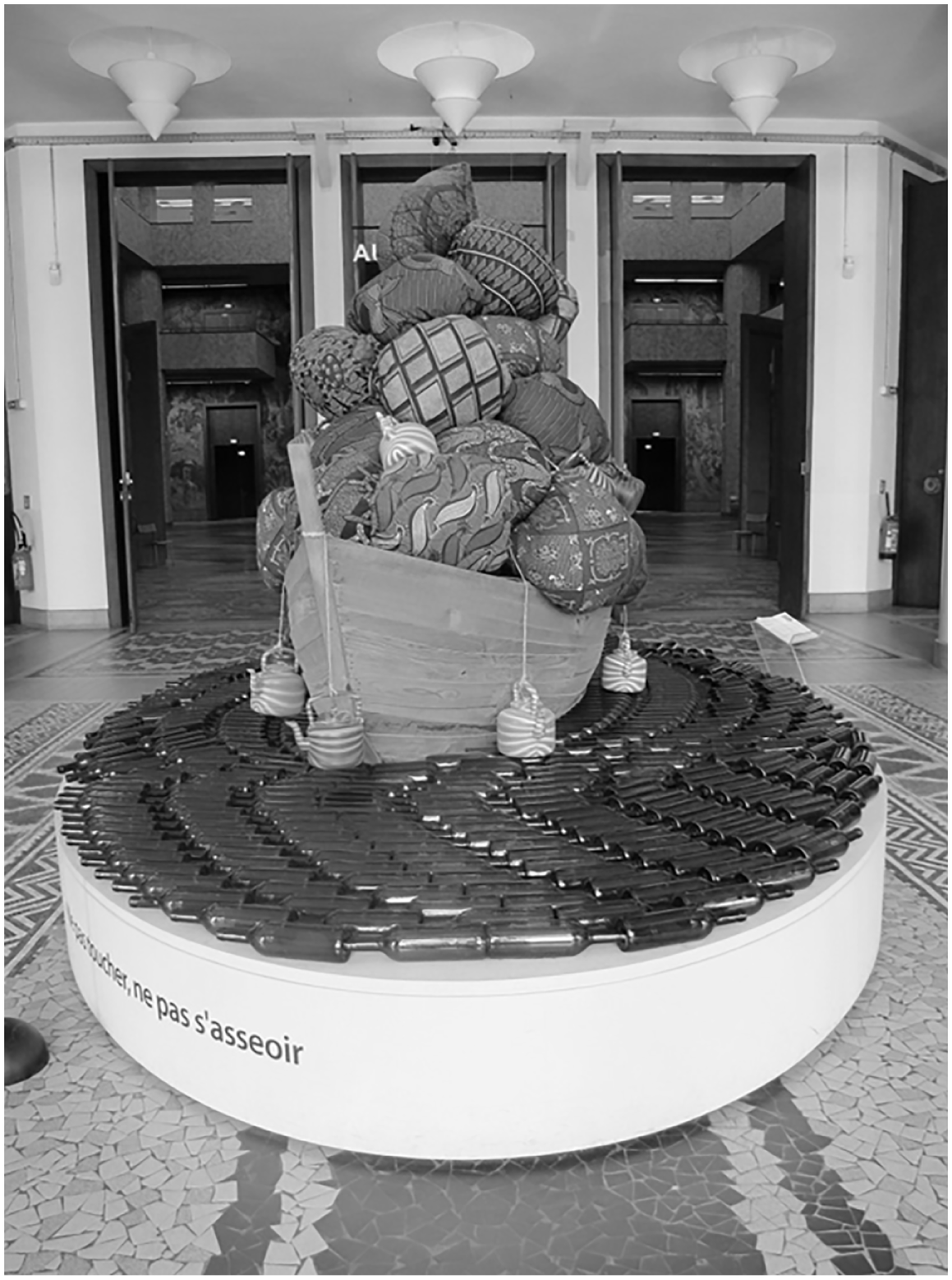
Contemporary art in the Palace (‘Aqua Vitalis’, from Barthélémy Toguo), now welcoming the Museum of the History of Immigration (2015). © Photograph: Anne Monjaret.
The members of the Scientific Council in charge of the attribution of the palace debated mostly on two topics: part of the discussion addressed the practical value of the building – why spoil such a good museum building? – while another questioned its symbolic dimension, with a focus on its redemption potential.
From museum of the colonized – or rather, of the colonizer – the shift was made to a museum devoted to the history and cultures of immigration and immigrants (Figure 10). The choice of this particular site was questioned, even contested. The enduring nature of the Palais’ symbolism stands in the way of any attempt to reverse it. Furthermore, the links between colonization and immigration are not necessarily a given (Cohen, 2007). 10 According to Bancel and Blanchard (2007: 119), ‘this question of location is not only a rhetorical device – it implies an in-depth reflection on the incarnation of history.’ The issue at hand (the link between colonies and immigration) is embodied by the Palais, its symbolism and meaning: will this entail a shift in meaning, a contradiction in terms or – instead – a continuity? Academics focus on the difficulty of ‘symbolic reversibility’ – some argue the ‘incompatibility’ of a move from colonies to immigration; others see it as ‘reductionist to confuse colonial heritage with immigration’ (L’Estoile, 2006: 12). In contrast, this new museum suggested that the building was capable of breaking down the stereotypes inherited from colonization. Two architects were commissioned to plan the new layout of the space – Patrick Bouchain and Loïc Julienne. For them, the history of the Palais could be likened to that of colonized peoples who then became immigrants: ‘the building was also abandoned, and then taken over by people who had experienced the same fate’ (quoted by Poinsot, 2007: 56). The idea was to perform an ‘architectural reversal’, to ‘turn the symbols on their heads’ and, in this way, to ‘reorient the building away from its original purpose’. The idea, according to press coverage at the time, was ‘to subtly refurbish’ (Le Figaro, 8 October 2007) without inherently altering Albert Laprade’s initial work. Patrick Bouchain, the architect responsible for the renovation of the Palais, wanted to remain loyal to the original plans of his mentor, the same man who had handed him his architecture diploma in 1966. In his view, the building should be seen as a memorial and an historical object and, as such, its architectural principles should be respected, even furthered.
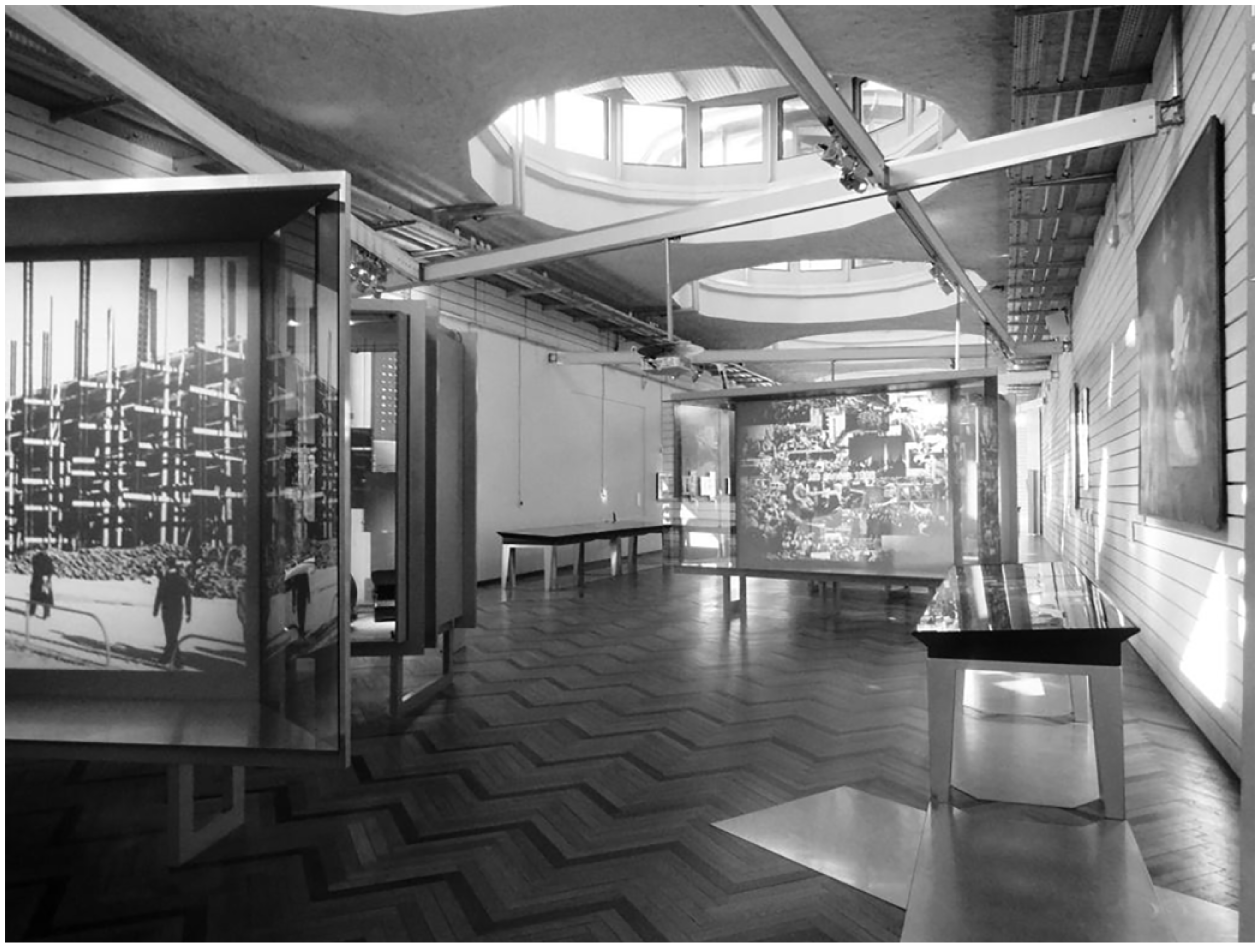
Permanent exhibition of the Museum of the History of Immigration (2015). © Photograph: Mélanie Roustan.
The same paradox had to be confronted by the museum teams who decided to create an historical circuit to educate visitors about the building’s various phases: how to present an architecture that is partly valued for its ‘unchangingness’ (it has remained the same since 1931), while at the same time proposing an historical distance in regard to its interpretation? Already in 2008, the first exhibition in the new institution focused on the 1930s and the Colonial Exhibition of 1931. Although it did not touch on the way foreigners were often treated at the time, this temporary exhibition showed the building’s original context. A few years later, an historical consciousness about the building became part of the museum’s objectives. This would include the history of the place and its institutional and museographic evolution. It would also allow for a
link between the history of the colonies and the history of immigration, complete with chronologies, a few specific facts about archival photos and objects chosen sparingly … small objects that would become examples … we also contacted the Musée du Quai Branly for a number of objects that they had in storage. (curator, interview, 2011)
In January 2012, the director of the institution insisted on the necessity for an ‘interpretive circuit’ because, in his view, ‘what people need is to be able to understand the place where they are.’ He stressed that ‘there are historical links between colonization and immigration, and these need to be made explicit rather than covered up, as has been the practice up until now’ (director, interview, 2012). When it opened in September 2013, the ‘interpretive circuit’ retraced ‘the Palais’ four lives’. In his inauguration speech, the director spoke about the continuity of the building’s history despite its many transformations; of a coherence ‘linked to its architecture, which has remained essentially unchanged since it was first built’, as well as a coherence linked to ‘its successive uses, that each tell, in their own way, the story of France’s relations with the world’ (excerpt from speech, 11 September 2013).
But the most striking element of continuity is the way in which social movements have appropriated the building and its surroundings. Since it was bombed in 1983, the monument in honour of the ‘Congo-Nile’ expedition that stands directly opposite the museum has been regularly covered with graffiti. From the surrealist manifesto launched by André Breton in 1931 calling for a boycott of the Colonial Exhibition – including the Musée Permanent des Colonies – to the recent and recurrent demonstrations of undocumented immigrants (known in France as sans-papiers), the building has never ceased to embody a dark side of the history of France, since colonial propaganda can be seen as a negative counterpart to the humanistic values born during the French Revolution. The ‘popular’ social uses of the space act as a constant reminder of this dark side. In 2002, the sans-papiers occupied the building (Figure 11) and one of their slogans was ‘Yesterday’s colonized in the south, today’s slaves of the north’. This was uttered again during the long occupation in the winter of 2010–2011 (Monjaret and Roustan, 2012), and some more intimate experiences were also expressed. An employee of the museum tells us that one of the strikers told [him] he recognized himself in a photograph in the museum, and said to [him]: ‘Look, they came to my village ten years ago and took this photograph.’ And that’s why they feel they own what is in this building. (museum employee, interview, 2011)
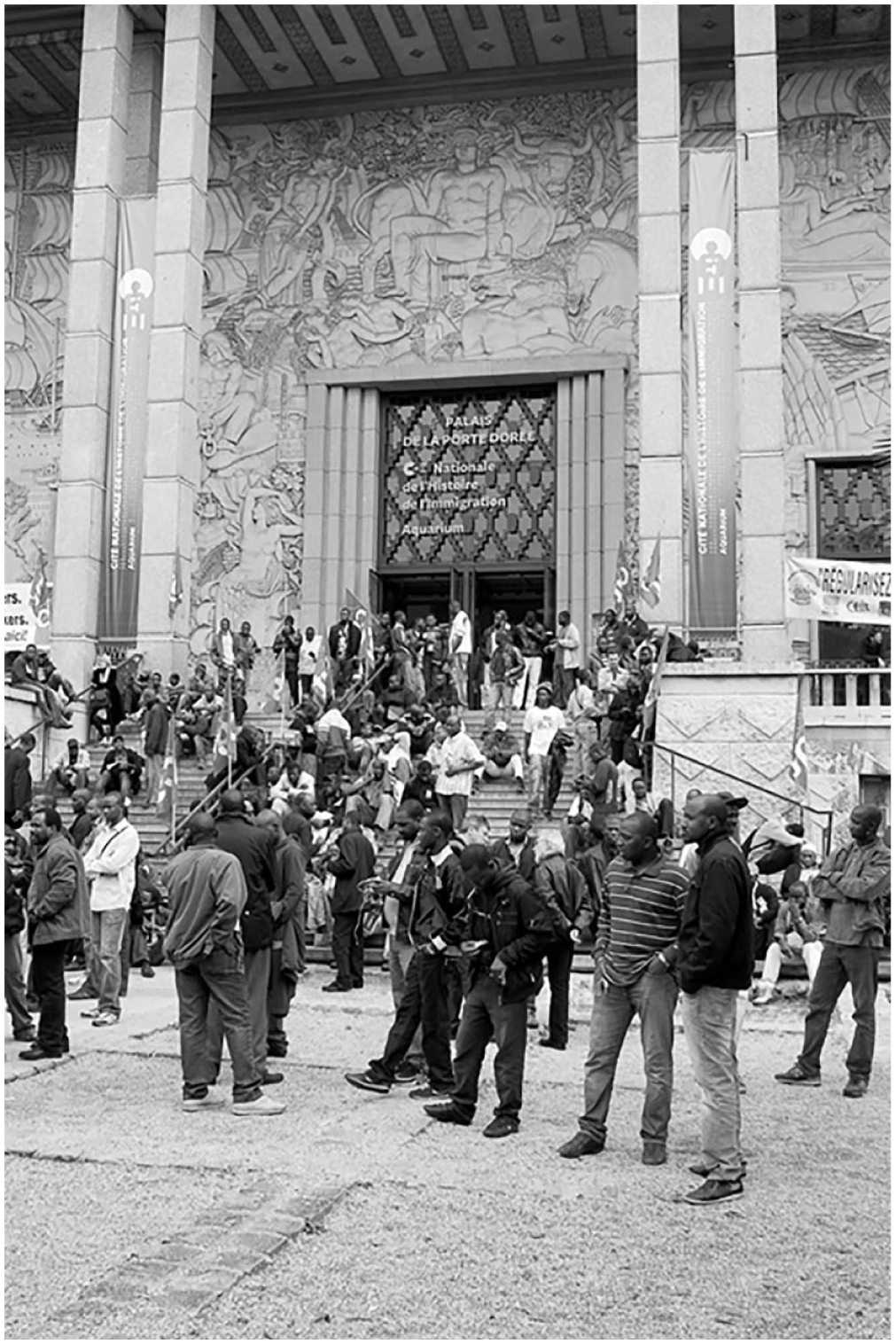
Demonstrations of undocumented immigrants (2011) © Photograph: Bruno Combes.
A former employee of the museum (when it was a museum of African and Oceanic arts) comments:
Putting this museum (of history of immigration) in this building was a bad idea … The relationship is very ambiguous, complex and problematic between France as a former colonial power and its immigrants, most of them coming from former French colonies. (former employee, interview, 2011)
The link between colonizer/colonized and immigrant comes back constantly as an echo, as though to recall, insistently, the political consequences of imperialist France.
Conclusion: From colonial monument to a testimony of French history
It is not that simple for the building–monument that is the Palais de la Porte Dorée to free itself from colonial traces and the shackles of its history. As such, it has always been the object of institutional reinterpretation, debate, controversy and protests. Each period has been characterized by particular official and unofficial debates, as a way of coming to terms – or not – with this colonial material culture. Nonetheless, there are breaks in the institutional continuity: the change of trusteeship – from Ministry of the Colonies to that of Overseas and then Culture, coinciding with the advent of independence for the former French colonies; or, more recently, the shift from exotic art to immigration. On the other hand, because of its architecture, which is characterized by permanence, the building’s colonial past is constantly being referred to in informal discourse. Whether or not there is a desire to operate an ‘architectural reversal’ or ‘turn the symbols on their heads’ changes nothing; the space itself holds a strong social memory around the representations of a ‘subaltern’ Other. Employees and protesters alike persistently use the register of memory to resituate it in its original context, to return it to its original aims. A reflection on the heritage aspect of the Palais reveals its dark side, which bears witness to a shady past, filled with the violence of domination, both physical and symbolic. This domination in all its forms has shaped and continues to shape the dialogue of cultures in France. The wound is still raw and, to a large extent, its history still remains to be written.
In focusing on permanent material culture (the building housing the museum), rather than on the circulation and changing status of collections, we provide an original take on how France has attempted – and still tries – to come to terms with its colonial past and legacy. This way of envisaging material culture, via monument and architecture, also has consequences in terms of how to characterize material culture – on a more theoretical level. What does ‘permanent’ then mean? In formulating such a question, we contribute to addressing ‘the complex immaterialities and absences yet to be brought into … theoretical paradigms’ of material culture studies (Geismar et al., 2016: 5). Permanency characterizes all types of ‘heritagized’ elements of material culture, whose definition as heritage includes being supposedly preserved forever. But choosing a building instead of collections to address a museum case study allows a décalage (displacement): a building does not move, cannot be manipulated – this Palace is furthermore literally untouchable in the name of memory. An abundant literature has arisen from the founding works of Appadurai (1986) on the ‘social life of things’. In this context, how could we then rethink the power of action of such permanent things?
Footnotes
Acknowledgements
Thanks to all people who have accepted to be observed and interviewed during the different phases of our fieldwork in the Palais de la Porte Dorée. Thanks to Karen Twidle and Jessica Moore for translation and editorial support.
Funding
This research received no specific grant from any funding agency in the public, commercial, or not-for-profit sectors but is partially based on interviews and observations made during other research projects that have benefited from the support of the French Ministry of Culture and Communication.