






Abstract
The last decade has witnessed an increased interest in outer space among non-expert citizens of London; many astronomical societies have expanded, and telescopes and astronomical magazines have experienced pronounced growth in sales. Anthropology, as a discipline focused on the study of human culture, has recently provided new insights into the cultural dimensions involved in contemporary experiences of the universe. After spending two months among amateur astronomers at two London astronomical societies, I argue that pictures – understood from a material culture perspective – play a key role in shaping people's relationship with the universe. This relationship is currently influenced by new technologies that offer more accessible ways to capture and share pictures of the skies. Simultaneously, new social media apps have opened new digital platforms for sharing outer space pictures, introducing innovative visual ways to engage with it.
Introduction
Mark, a dedicated member of the Flamsteed Astronomical Society situated at the iconic Greenwich Observatory in London, has a penchant for capturing celestial snapshots on his mobile phone. To him, these images serve as portals to both the mysteries of the universe and cherished memories of shared stargazing experiences with friends, an enthusiasm shared by countless amateur astronomers who find themselves captivated by the allure of outer space imagery. What becomes evident when speaking with Mark and other amateur astronomers is that beyond mere visual aids, these cosmic snapshots serve as catalysts for social connection, vessels of personal narrative, and gateways to crafting cosmological insights, embodying multifaceted roles in the lives of enthusiasts like Mark (Figure 1).
Departing from the affection and closeness felt towards pictures by amateur astronomers, this article explores the role of photographs in mediating the relationship between people and the universe. Drawing on Alfred Gell's (1992, 1998) Theory of Agency, I adopt a material and performative approach to understand the effects of astronomical images on people. I start by exploring the personal values that amateur astronomers associate with celestial bodies, often humanising them through animated descriptive concepts such as potentiality, creativity, and will. Secondly, celestial objects are anchored in a scientific explanatory framework that mobilises a broader cosmological understanding; in other words, images portray a particular order of things shaped by explanations disseminated by scientific institutions through the media. Finally, current technical developments make it easier to capture and share pictures of outer space, also paving the way for online interactions. These new developments inform innovative ways in which amateur astronomers engage with the universe through the digital circulation of images.
In order to address such different elements, this article is structured into four sections. Beginning with the methodology, the first section offers insights into the considerations guiding the ethnographic fieldwork. The second lays a theoretical foundation, delving into the core aspects under scrutiny such as Visual Culture Studies, the Theory of Agency, and Media Studies. The third embarks on an exploration of the captivating process through which celestial objects are captured and endowed with agency. The fourth analyses the cosmological notions embedded within pictures of the stars and the complexities surrounding their configurations. Finally, the article concludes by unravelling the social implications of groundbreaking digital astrophotography techniques and their intersection with social media interactions.
Methodology
The central research question guiding this article is how Londoners conceive the universe in a contemporary world shaped by increased interest in astronomy, new photographic techniques, and digital interactions. Motivated by the growing prevalence of James Webb Telescope images on social media, I harboured a preliminary suspicion regarding the role of images in shaping our understanding and emotional connection to the universe. To delve into this inquiry, I conducted ethnographic fieldwork at two societies: the Flamsteed Astronomy Society based at the Royal Observatory in Greenwich and the Loughton Astronomical Society in Theydon Bois, between May and June 2023. During this period, I engaged with both societies one to three times per week, attending presentations, lectures, organizational meetings, pub gatherings, and public celestial viewings. In all these contexts, amateur astronomers interact with what they call outer space: ranging from nearby objects like the Moon and the Sun to the more distant, such as galaxies and various nebulae. I documented the activities of both societies through video recordings and conducted a total of 16 personal interviews, four of which were online. While the interviews explored a wide variety of aspects including emotions, religious beliefs, personal biographies, scientific explanations, and more, conversations frequently revolved around the significance of images in these domains. Employing, in some cases, a technique known as ‘photo-elicitation,’ which involves inserting a photograph into a research interview to prompt discussion and reflection (Allain, 2013: 21, quoting Pink, 2001: 70), I sought to explore how images influence the participants’ understanding and emotional connection to the universe.
As Victor Buchli (2020: 18–31) based on Madaniou and Miller (2012), underscores, ethnographies of outer space need to be contextualised within polymedia environments. These environments encompass both human and non-human elements, which form an intricate network of sites and objects through which the experience of outer space unfolds. Whether in specific rooms, parks, museums, or through interactions on platforms like Facebook and WhatsApp, the engagement of amateur astronomers spans a diverse array of digital and non-digital spaces. Despite this rich diversity of places, the human composition of both societies appears to be clear and homogeneous, largely comprising white men in their sixties or older, who often attribute this demographic makeup to their belonging to a generation that witnessed the televised moon landing in 1969 and/or actively participated in the astronomical culture that thrived in the subsequent decades, epitomised by programms such as Patrick Moorés TV show Sky at Night (1957–2012), as well as popular sci-fi TV series such as Star Trek (1966) and movies like Star Wars (1977).
When I commenced my fieldwork, my outsider status and background in the humanities (rather than physics and astronomy) made my involvement in the early stages of the research largely passive. However, due to the warmth and hospitality of the members of both societies, I was swiftly integrated into their activities. Through their gracious introductions, I soon found myself engaged in their conversations, personal anecdotes, theoretical discussions, and the intricacies of astrophotography techniques.
Pictures, agency, outer space, and media
Throughout history, numerous disciplines have grappled with the significance of images. From filmmakers to visual artists, psychologists to political scientists, and more recently, computer scientists (Manovich, 2017: 13–27), scholars have endeavoured to understand the values, techniques, and meanings behind pictures. Within this diverse array of approaches, Visual Culture Studies has focused on a specific relationship: the one between pictures and culture (Pinney, 2004, 2006, 2011). David Freedberg (1989: 1), for instance, has elicited a range of effects that images provoke in their viewers, from tears, laughter, and sexual arousal to piety, anger, kisses, and fires. This performative perspective leads Freedberg (1989: 1) to urge us to move beyond a purely static photographic view and to understand images for the effects that can actively alter, influence, and shape social life.
A perspective that ultimately allows to understand pictures from their agency, aligning with an analytical tradition that emphasises the performative aspects of visualising images, where the focus shifts from how images “look” to what they can “do” (Pinney, 2004: 8). According to Mitchell (2005: 6–7), in all their shapes, mediums, and historical moments, images participate in processes that integrate them into social life, they acquire “agency, motivation, autonomy, aura, fecundity”, becoming live beings capable of socially influencing others. As a seminal figure in the study of agency, Alfred Gell (1992, 1998) contends that pictures undergo embellishment to captivate viewers, and once enchanted, they become integrated into social settings (Gell, 1998: 5). They merge with and symbolise human agents and/or other supernatural agencies, acquiring anthropomorphic vitality through the agency of significant human actors (Campbell, 2020: 118).
Expanding upon the significance of images in shaping perceptions, Shirley Campbell (2020: 120) emphasises the capacity of images to influence modes of perception. Specifically, Campbell (ibid) suggests that the Western notion of beauty, often perceived as an intuitive assessment of our environment, actually conceals “unities which impose meaningful design upon the face of culture” (Thompson, 1973: 19). Therefore, images, in their myriad forms, dictate ways of seeing; they are not merely random amalgamations of colours and shapes but intricate amalgamations of values and perspectives.
This argument holds particular relevance when examining images of outer space. Investigating how these images compose and configure shapes and colours involves understanding how they construct modes of perception. Elizabeth A. Kohonen (2017) elucidates this point when analysing the public dissemination of Hubble Telescope images. Departing from the assumption that each image of outer space is the result of an interpretation of non-primarily visual waves captured by telescopes (such as Hubble and the James Webb Telescope), she specifically explores how such images are meticulously crafted by teams of astronomers who make deliberate choices regarding colours, contrast adjustments, and composition (ibid: 5) to create an official visual representation from those wavelengths (an image) that constructs “a particular way of seeing the cosmos” (ibid). This analysis aligns with a recent yet expansive line of inquiry (Kohonen, 2017; Vertesi, 2011) focused on deconstructing the cultural, political, and scientific processes involved in shaping the aesthetics of the universe. Such investigations tend to unveil the ideas, perspectives, and cosmologies underlying images of outer space.
It is relevant to mention that the construction of those modes of cosmic perception is determined by a context of technical development that enables the emergence of a particular field of visual experience. Favero (2016: 210–215), for example, shows how new photographic techniques, exemplified by devices like the GoPro camera, can reshape our modes of perception, introducing new angles and possibilities to our visual engagement with the environment. In the realm of astronomical photography, recent examples include the fascinating James Webb Telescope, which is capable of capturing wavelengths beyond the human visible spectrum, thus opening new possibilities to observe new cosmic objects and forms.
In the same vein, contemporary digital techniques allow amateur astronomers to capture images of celestial objects from their own backyards and share them online, democratising a social experience of outer space that was previously limited to passively observing pictures produced by international institutions such as NASA. This evolution aligns with the emergence of a new digital rhetoric, as described by Manovich (2017: 16), wherein discrete digital applications have streamlined a previously complex array of cameras, professional equipment, and editing processes. This shift has also inaugurated a new dynamic in the appreciation of images characterised by immediacy, non-uniqueness, rapid circulation, and public dissemination. Thus, images of outer space, as they circulate online, have become intertwined with this rhetoric of immediacy, blending into the stream of millions of photos that traverse social media platforms daily.
This contemporary phenomenon has given rise to new anxieties and concerns about the potential for endless alterations of images, as well as optimism regarding new, more accessible methods of capturing and sharing pictures. Ultimately, this new digital reality presents unique challenges in fully comprehending how the universe is experienced in the present. My participants, as individuals immersed in the digital era, serve as reliable witnesses to how outer space images exert a distinct agency through, and thanks to, digital technologies.
The universe being socialised
Nearly all of my participants express profound delight in viewing pictures of outer space. Bobby, for instance, is deeply moved by James Webb Telescope images, often translating his emotional response into his own artistic representations on canvas. At the same time, he accompanies these visual movements with nominative labels that situate the same objects within a scientific discourse, while also revealing the personal dimension of the relationship he establishes with them (Figure 2).
Such reactions can be understood under Alfred Gell’s (1992: 46–49) concept of the “Halo effect”, which highlights the difficulty in containing images “in an intellectual rather than a material sense” (ibid: 72), prompting viewers to take tangible actions to capture or retain what they have observed. While Bobbýs case is particular because his movement is physically evident, personal descriptive labels added by the vast majority of amateur astronomers can easily be interpreted in the same line: amateur astronomers are constantly channeling the powerful effects of images by supplementing them with words that explain, animate, and stabilize what they see.
Now, these supplementations are based on previous scientific conventions. Science consistently endeavours to capture, retain, standardise, and stabilise visual experiences of the universe by configuring pictorial frames coupled with specific descriptive language to elucidate and universalize what we are observing. For example, the term “nebula” encompasses a visual frame that, disseminated through various media, validates and standardizes the existence of a particular celestial object in a specific manner (particular colours, shapes, and scientific explanations). By delineating the contours of contrasting shapes and colours, these images make the object visually present, endowing it with recognizability and uniqueness, and ultimately shaping its identity as a more or less stable entity—from which contemplation, explanations, and speculations can proceed. For example, consider the popular image of Saturn as a sphere surrounded by a ring, where the frame allows us to individualise it, situate it visually in a space, and thus generate descriptions and speculations about it. This frame, which differs from the visual centrality of constellations in the Greeks’ spatial-temporal order, enables the placement of distinct, self-contained entities that contribute to our understanding of the cosmos and also allow us to experience it in a particular way.
It is intriguing to consider Elizabeth Edwards’ (1998) assertion that scientific configurations of images not only serve to verify the object that is capturing but also have the capacity to reveal a “structure of feeling” within science itself (ibid: 134). Within the ostensibly purely physical and objective realm of scientific explanation contained in scientific images, different meanings, gestures, and emotions coalesce, giving rise to a different conceptual framework and experiential field. For instance, Bobby’s description, informed by scientific knowledge, illustrates this phenomenon, as it encompasses statements that situate the object within its scientific context while also imbuing it with a more humanistic “structure of feeling” (ibid), allowing it to place its naming in a more personal sphere of interactions with the celestial object itself. For instance, the notion of nebulae as places where stars are born – something Bobby mentions when describing the Pillars of Creation – gently aligns celestial objects with reproductive processes involving humanity. In this way, what is perceived as static and framed acquires movement and vividness, emerging as dynamic and full of potential.
These utterances ultimately render the celestial object comprehensible within the same framework as human interactions. Science thus operates under what Pareyon (2016: 60) describes as intersemiotic synecdoche, modelling a relationship of “an undetermined proportionality” (ibid: 60) between “the ontology and its perceived and appreciated qualities” (ibid: 58), thereby connecting systems of signs belonging to different cognitive domains. Thus, a closer examination of the movements made by science reveals how a description that appears purely non-human incorporates human porosities, which allows it to be imbued with movement and agency and integrates the images and their contents into a context of human interactions. It is these very core movements in the configuration of science that also enable amateur astronomers to articulate more personal and affective interpretations of what they see.
Semiotic concept such as birth, potentiality, and creativity – all mentioned by Bobby when discussing stars – gently frame celestial objects within a more humanistic context, bringing stars closer to their field of social interactions. Amateur astronomers draw from the same scientific discourse but also inject personal conceptions, categories, and descriptions that enable them to inscribe a distinct and personal discourse of affection and relationship with celestial objects that exceeds the static and purely materialistic frameworks set by science. For example, Sam – member of the Loughton Astronomical Society – characterises celestial objects as “old friends” that “come around every year and give you a show.” Thus, amateur astronomers mobilise personal characterisations of celestial objects, imbuing them with personhood, identity, and social agency, which allows them to be embedded in a social sphere where the generation of personal connections and affections is possible.
Scientific explanations, cosmologies, and neoliberalism freedom
As emphasised in the previous chapter, stars are intricately connected to more humanistic concepts through synecdochic operations. At the same time, other non-human explanatory frameworks are applied to these images; strictly scientific explanations place photographs within a broader context based on specific notions of space, time, and material components. Indeed, many descriptions of astronomical images provided by amateur astronomers - such as the Deep Field Image or Edwin Hubble's photograph of the Andromeda Galaxy -reveal underlying connections in which the images and their elements (shapes, colours, dots) become intertwined with broader cosmological perspectives.
Such associations reflect a continuous dynamic in which astronomy repeatedly employs a framework of perspectives when sharing pictures on media. For instance, consider the following NASA Instagram post, which illustrates classifications highlighting the aesthetic qualities of celestial objects. As indicated in the post´s caption, associations are drawn between the blue zone of the picture and a specific material: gas (ionized hydrogen). Here, the aesthetics of the picture become intertwined with concrete scientific materials, which are simultaneously encompassed within a broader order of natural phenomena. In this order, a variety of materials and their physical implications compose an order of things. The periodic table serves as the closest example of such a composition, illustrating the diverse elements that, according to science, compose the universe (Figure 3).
To better understand the interrelation between outer space pictures and the wider order of things, Yuk Hui (2017: 322) proposes the concept of “Cosmotechnics,” which elucidates how cosmological orders are manifested in the use of objects and how the use of objects is grounded in a cosmological order.
When understood from their material aspects, photographs can be approached through their purely objectual characteristics. Shireen Walton (2020: 219–220) refers to the “objectual turn” to highlight the transition proposed by Elizabeth Edwards and Janice Hart (2004) in the study of images (as noted by Walton, 2020: 220). This transition involved shifting from a semiotic approach to an “objectual-focused” one. This shift emphasises the physical properties of photographs as central to their “objecthood” and facilitates various analytical approaches to their study, such as exploring their performative effects in cosmological terms—a topic astutely addressed by philosopher Yuk Hui (2017).
Situated within the discourse on transcending the dichotomies of nature-culture and technology-culture, as discussed by Philippe Descola (2013) and Gilbert Simondon (2012, 2014), respectively, Yuk Hui (2017: 319–322) introduces the concept of “second nature” to detach from the notion of a pristine, pure, and innocent first nature—one that is considered the origin of everything and to which everything should revert. This concept challenges the radical distinction in the triad of culture-nature-technology, emphasising a “being-in-the-the world” where no prior nature exists independently of an action in the world grounded in a specific interpretation of the environment, or in other words, a cosmology.
In this framework, cosmologies are not merely theoretical constructs but ontologies with material and moral implications in real life. Hui (2017) argues that “cosmologies are not only schemas that define the modes of participation but also correspond to the moral grounds of such participation” (322). A relevant and illustrative example of this assertion can be found in the Polynesian gift economies studied by Marcel Mauss, where moral obligations of reciprocity are articulated according to a cosmological order. Thus, from Hui's (2017) perspective, “A particular form of participation is only justified insofar as it meets or enlightens the moral - which doesn’t necessarily mean harmony, but rather the codes and beliefs that constitute the dynamics of both individual and communal life” (322). It is only through a cosmology – that is, the establishment of orders and exclusions- that such modes of participation emerge.
In summary, the connection between environment-behaviour-cosmology, sustained by the concept of “being-in-the-world,” reveals that all material, moral, and behavioural aspects (in relation to the ways of engaging with the material world) within a culture are inseparable from an interpretation of nature. This understanding forms the basis for Hui's (2017) concept of “cosmotechnics,” defined as “the unification of cosmic order and moral order through technical activities. Human activities, which are always accompanied by technical objects such as tools, are in this sense always cosmotechnical” (p. 322). According to Hui (2017), the use of objects reveals a cultural interpretation of nature in which moral participation occurs: “every technical and objectual practice (…) is anchored in a cosmological and moral order; a way of ‘being-in-the-world'” (ibid: 321). Thus, every object mobilises, actualises, and is framed within a cosmological order when used. This perspective underscores the intrinsic connection between the material world and cultural interpretations, suggesting that the manner in which objects are employed reflects broader cosmological frameworks.
What is particularly interesting about this approach is its application to the circulation of astronomic images. While Hui's (2017) argument suggests that all moral and technical actions are linked to a cosmological order, the circulation of photographs—understood as objects—serves as a primary and direct example of this principle; a specific object (astrophotographs) directly refers to an interpretation of nature that by circulating across various media platforms, establishes, disseminates, and updates the fixation of orders and exclusions that define the limits of possibilities (or modes of participation) in the environment. Essentially, Hui's (2017: 322) concept of “cosmotechnics” allows us to frame photographs as objects that endorse a particular order of things, where an interpretation of nature is both expressed and sustained, making a mode of participation in it possible.
For instance, the Instagram post mentioned earlier demonstrates the inherent synecdoche in science, where a coloured shape is linked to a material and then embedded within a physical interpretation corresponding to a broader cosmic order defined by science. By observing and interacting with these images digitally, pictures and their explanations establish and promote a specific order of things, or cosmology. Moreover, shapes and colours, associated with notions of time, place, and materiality, undergo aesthetic transformations that often redefine their meanings or relationships. As can be seen in a new Instagram post, the use of new techniques leads to aesthetic changes and subsequent updates in explanation: “Webb's found potential evidence of a companion star that may be shaping layers of cosmic material cast” (Nasahubble, 2023). The object, thus, is perceived as undergoing a process of becoming, where aesthetic variations imply a reconfiguration of explanations. Now, all these operations align with Pareyon's (2016) assertion that “physics is mainly constructed by the systematic identification of matrices and patterns interpreted as a symbolic correspondence with reality” (ibid: 62). Such interpretations are disseminated through photographs that represent reality (Figure 4).
Returning to Hui's (2017: 321) connection between cosmology and moral-economic behaviour in the case of Polynesian cultures studied by Marcel Mauss, it is plausible that Western physical cosmology underpins current capitalist material relations. Although a more comprehensive and nuanced study is needed, it is essential to consider how contemporary cosmologies function—following the insights of Abramson and Holbraad (2014: 1–30)—within the neoliberal context. Currently, there appears to be no homogeneous cosmology permeating various layers of society. Instead, there seems to be predominant sense of freedom and fragmentation in the formulation of cosmologies. This aligns with the freedom experienced by amateur astronomers, who, for example, as formulate particular connections when engaging with the universe (what we refer to as the “Halo Effect”) personalizing their interactions with celestial objects as discussed previously.
Specifically, Abramson and Holbraad (ibid: 12) argue that neoliberalism has introduced a sense of living in a new fluid phase characterized by a feeling of freedom and being “thrown into a world” without limits, as described by Heidegger (1962). In this new context, traditional structures such as the State and the Nation no longer provide the same sense of security and definition, and the social realm becomes part of an indefinable, fluid infinity that can be interpreted in various ways. This fluidity is evident in the rise of new religions that mobilize diverse elements drawn from multiple sources (Panagiotopoulo and Roussou, 2022). Similarly, the perspectives of individual amateur astronomers can be understood within this framework, as they often articulate their views through a fluid combination of elements from various registers. These may include personal spiritual feelings, references to other cultures’ imaginations, allusions to pop culture, diverse religious beliefs, and elements borrowed from different religions such as Catholicism and Islam, which often translate into personal relationships with celestial objects as initially mentioned.
According to Abramson and Holbraad (ibid), what appears to be a fragmentation of cosmological narratives in the contemporary world is more accurately described as an illusion of dispersion. Rather than a genuine cosmological disintegration, this phenomenon reflects an integration of cosmology into the logic of consumption, characterized by flexibility and the notion of freedom of choice. The recent surge in the purchase of telescopes and astronomical magazines in the United Kingdom exemplifies what Abramson and Holbraad term an “explicit production and consumption of cosmology per se” (14). In this context, consumption practices do not stand in opposition to science but rather bolster astronomical knowledge by creating opportunities to attract people and introduce science into the market. By engaging with telescopes, magazines, TV programs, and especially photographs, individuals actively participate in scientific discourses, navigating the conceptual framework offered by astronomy to view the cosmos.
Thus, cosmology appears to align with the operational principles of modern consumption, which creates an impression of freedom of choice while integrating specific models of material, individual, and communal relationships into different contexts and circumstances. Indeed, the opening of physical cosmology to be freely and individually formulated under the framework of relationships with various elements by amateur astronomers serves to expand, affirm, and attract people to a specific scientific interpretive framework of reality. This framework—returning to Yuk Huis idea of second nature (2017)—underpins our material (capitalist) actions in the world (a specific range of material components organizing reality, their interrelations through specific physical laws, and certain manipulation methods).
Nevertheless, photographs enter the realm of consumption to support and disseminate the cosmological model that driving specific interpretations of reality and the environment, which ultimately underpins the modes of participation prevalent in capitalism. To reinforce this idea, Yuk Hui (2017), in his discussions on the concept of “cosmotechnics,” refers to Levi-Strauss's (ibid: 326) argument that “the introduction of new objects and technologies can silently homogenize different cosmological relations into one compatible with modern technology.” Thus, it is understandable how objects (in this case, photographs), when shared, can mobilize broader meanings and contribute to the expansion of cosmological perspectives. Consequently, outer space photographs—operating as consumable objects in the digital realm—cross numerous boundaries daily, disseminating associated meanings and contributing to the propagation and reinforcement of particular cosmological interpretations. As we will see in the following section, this more theoretical reflection aligns with the phenomenon of digital image circulation by amateur astronomers.
Amateur astrophotography in the digital era
As previously discussed, the online dissemination of outer space imagery has been significantly facilitated by recent technological advancements. These innovations enable amateur astronomers to capture photographs of celestial phenomena from the comfort of their homes or local parks using relatively accessible equipment. Typically, this involves a small to medium-sized refracting or reflecting telescope connected to a DSLR or CCD camera, supported by a stable equatorial mount, a tripod, a telescope guiding system, and image-processing software such as Adobe Photoshop, GIMP, or specialized astrophotography programs. These technological components collectively enhance the practice of astrophotography for amateurs.
The advent of digital technology has also enabled amateur astronomers to receive guidance on capturing images, precisely locating celestial objects, and optimising exposure settings to effectively record them. This development has been further accelerated by the widespread adoption of social media, particularly during the pandemic, which has markedly transformed visual engagement with outer space. Hannah, a member of the Flamsteed Astronomical Society, notes that many individuals turned to Facebook groups during the pandemic to connect with like-minded enthusiasts. Consequently, outer space images are now experienced through both online and offline interactions, fostering a sustained sense of presence. Sam, a member of the Loughton Astronomical Society, asserts that sharing and discussing pictures on platforms such as Facebook or WhatsApp fosters a continuous connection to their interests and to other individuals engaged in similar pursuits. Indeed, within both societies, relationships are “created, developed, and sustained” (Miller, 2016: 100) at the nexus of online and offline realities (Figure 5).
Nevertheless, despite the accessibility of astrophotography and the positive sense of presence engendered by online interactions with space images, concerns and tensions persist among amateur astronomers regarding astronomical digital photography. The incorporation of images into immediate and public circulation raises critical questions about the validity and repercussions of sharing such images online. Despite the meticulous and controlled visual decisions made by scientists during the capture, composition, and dissemination of astronomical photographs, these images are prone to extensive alterations and reinterpretations in digital spaces. Once these images are uploaded to digital platforms, they become susceptible to varied interpretations and modifications by numerous individuals (see Burgess and Vivienne, 2013; McKay, 2010; Van Dijck, 2008; and others). This issue presents significant challenges within the scientific community, which aims to uphold a consistent and unequivocal perspective of the cosmos. The proliferation of altered and misinterpreted images in digital contexts can potentially compromise the integrity of scientific findings and the accurate transmission of astronomical knowledge.
Conversely, the dispersion of photographs might be interpreted not as a loss or corruption of the original image's aura, but as a means of propagating the aura of the initial image. This perspective that challenges Paul Virilio's (1986, 1991) view of digital movements as inherently destructive to human presence and experience, is defended by Shireen Walton (2020: 229), who suggests that digital circulation, despite the lack of singularity, can foster social engagement by connecting diverse groups across various contexts. Although Walton's (ibid) argument primarily addresses the social impact of “strictly social” images on contemporary social media, it provides valuable insights into the aesthetic and symbolic significance of photographs. Walton (ibid) argues against the notion that the absence of singularity in digital images diminishes their presence. Instead, she posits that it is through the traces left by images in multiple contexts that they effectively foster engagement and interest. The recent global impact of images from the James Webb Telescope exemplifies this phenomenon. As amateur astronomers maintain, the widespread circulation of these images on social media has generated significant public interest in astronomy. These observations reinforce Levi-Strauss's (Hui: 326) assertion that objects circulated within society have the capacity to homogenize diverse cosmological perspectives.
Extremely interesting is the role that amateur astronomers play in this circulation of images. They, in particular, illustrate how “observers/consumers/participants” can contribute to preserving the primordial aura of photographs. As they themselves mention, they remain vigilant regarding the authenticity of images, maintaining respect for official photographs while engaging in rigorous discussions about fidelity—even in their personal reproductions made at home—to the aesthetic standards set by institutions such as NASA. They recognize that the effectiveness of global circulation relies on adherence to established photographic standards. Given that responsible use that distinguishes the real from the false is possible, amateur astronomers generally perceive online photographs as contributing to rather than impeding the visual and cosmological culture of astronomy. Thus, the interpretation of the amateur astronomers themselves would coincide with the ideas of Lévi-Strauss (Hui:326) mentioned earlier, according to Yuk Hui (ibid.), that an object has the ability in its circulation to expand a cosmological order. Interesting, in complementing the idea of the “aura” in circulation in digital spaces defended by Walton (ibid.), is the role that consumers/observers—in this case, amateur astronomers—can play in “protecting” or “enhancing” the aura of the original capture. By encouraging its global circulation and simultaneously protecting the cosmological meanings added to the photographs, amateur astronomers expand its original sense, as proposed by astronomical institutions, spreading it among themselves, adding new participants to their societies or to the general public who encounter astronomical photos on the internet.
Conclusion
The relationship between culture and outer space is profoundly influenced by the pivotal role of images in shaping our perceptions, emotions, and thoughts about the universe. In today's world, telescopes, cameras, and the careful selection of colours and frames have become instrumental in defining how we experience the stars. From the personal attachment individuals feel towards specific images to the sense of social connection fostered when observing the sky with others, images facilitate a wide range of experiences. Moreover, these images contribute to the construction of cosmological narratives that underpin scientific explanations of nature, further highlighting their significant role in conveying various meanings. Overall, the interplay between culture and outer space is intricately intertwined with the visual representation of celestial bodies, illustrating the profound impact that images have on our understanding and appreciation of the cosmos.
In this context, the effects of outer space imagery on individuals, as observed through the experiences of amateur astronomers, have been described and analysed in previous sections. First, both scientific and amateur perspectives attribute multiple layers of meaning to celestial objects once they are captured photographically, contextualizing them within humanistic frameworks that foster a sense of intimacy and connection. These descriptions serve as testimonies to the deeply personal relationships individuals cultivate with the stars. Second, these images influence cosmological perspectives, as official images disseminated by international institutions provide explanations and concepts that contribute to a collective understanding of the universe. This, according to Yuk Hui's (2017: 319–322) framework, aligns with a moral and technical approach to engaging with the world. The connection between cosmology and neoliberalism elucidates this notion of freedom, wherein individuals formulate their own interpretations of the universe, including personal affective interpretations. Ultimately, however, these interpretations are apparent from the moment they function as technologies that engage observers within a specific interpretative framework of the cosmos, thereby shaping the current understanding of our environment. Through online circulation, we can understand outer space images function as commodities that facilitate the dissemination of scientific knowledge and perspectives to a broader audience. It is noteworthy how amateur astronomers contribute to this dissemination process through their active role in preserving official aesthetics and addressing “fake” content, thus navigating potential tensions and contributing to scientific ways of seeing.
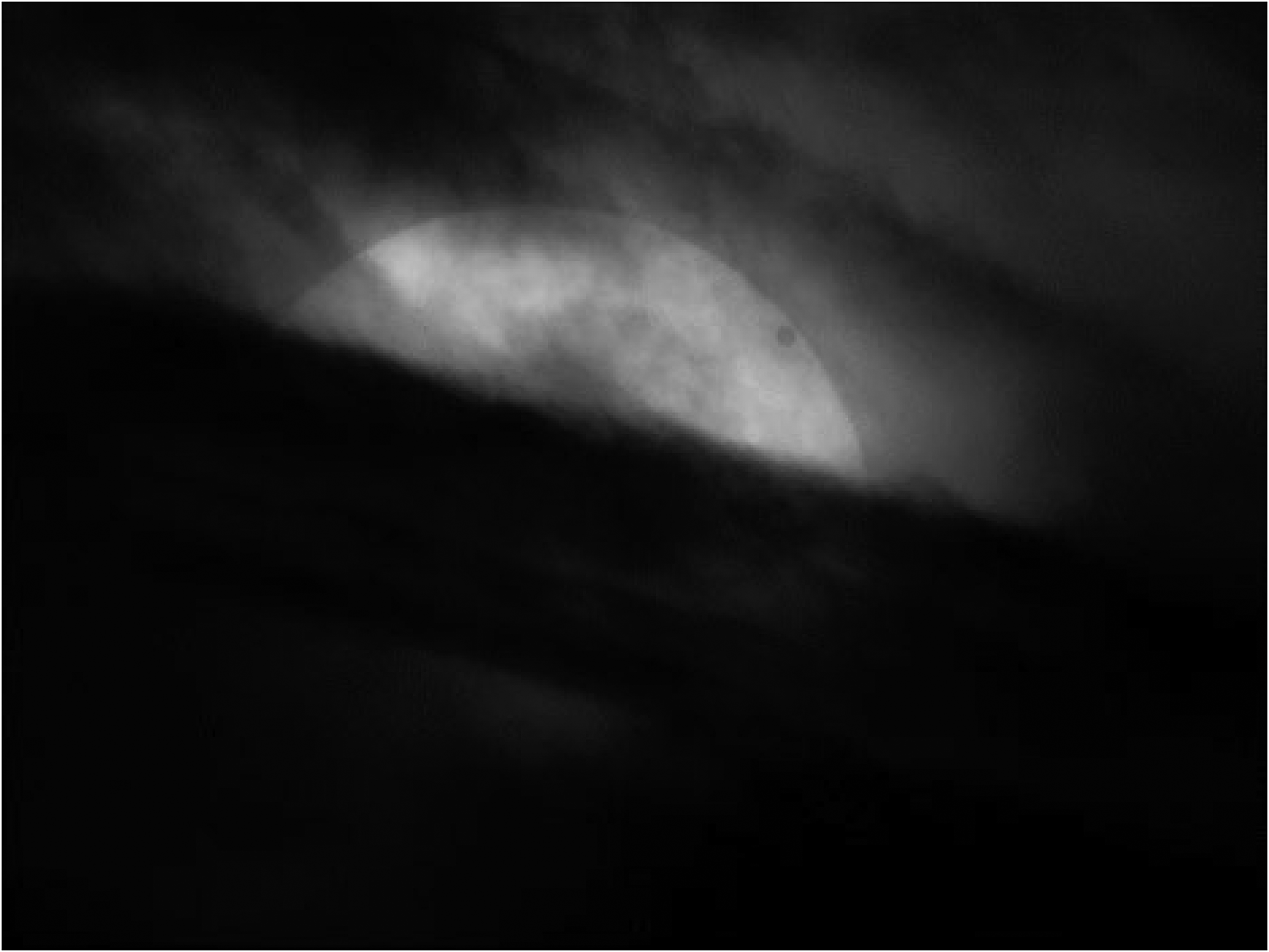
Venus transiting over Venus. One of Mark's phone picture. Source: Personal archive of Flamsteed Society Member. July 2022.

Painting “The Great Conjunction” made by Bobby Manoo. Source: https://bobby.bpmanoo.co.UK/the-great-conjunction. January 2021 archive. Used with permission.
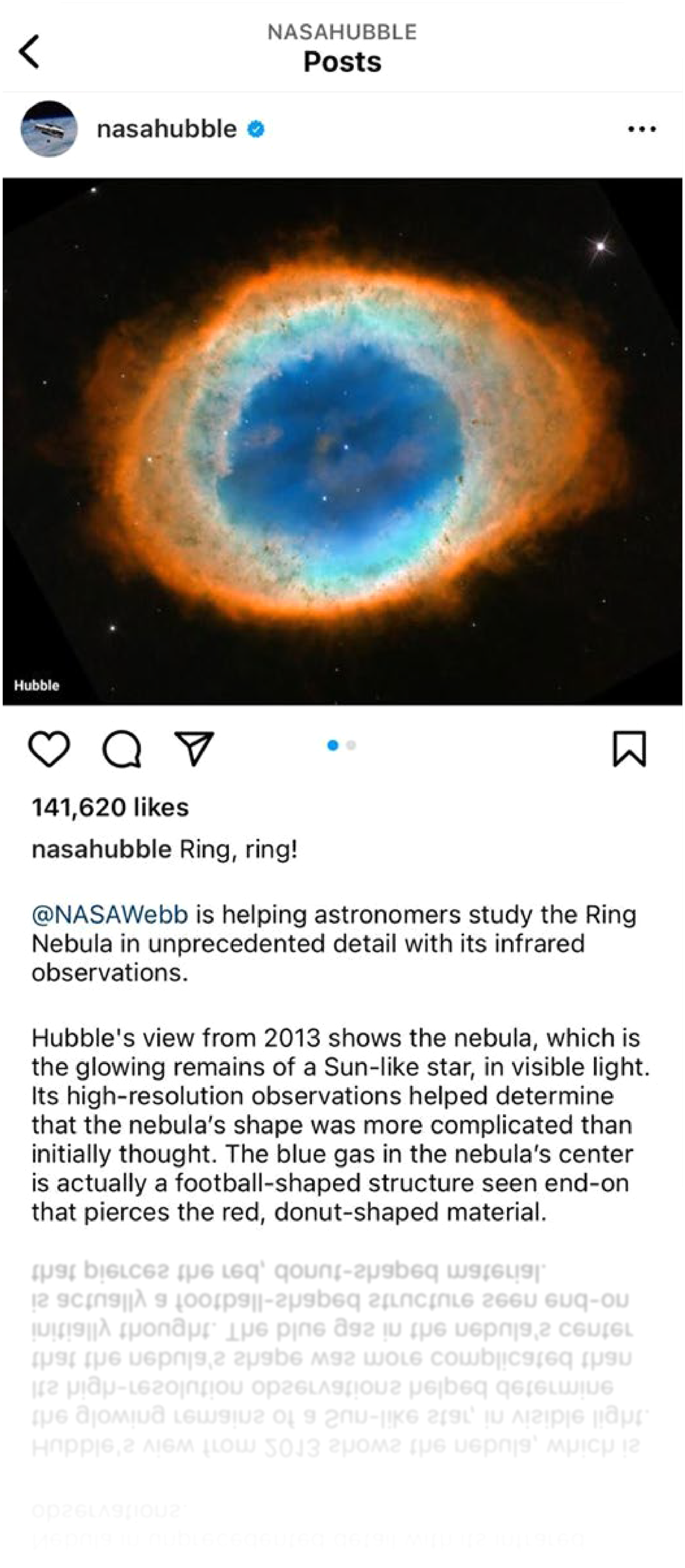
Hubble Space Telescope Instagram Post (1). Source: https://www.Instagram.com/p/CwN7wW5uMXC/?img_index=1. August 2023.
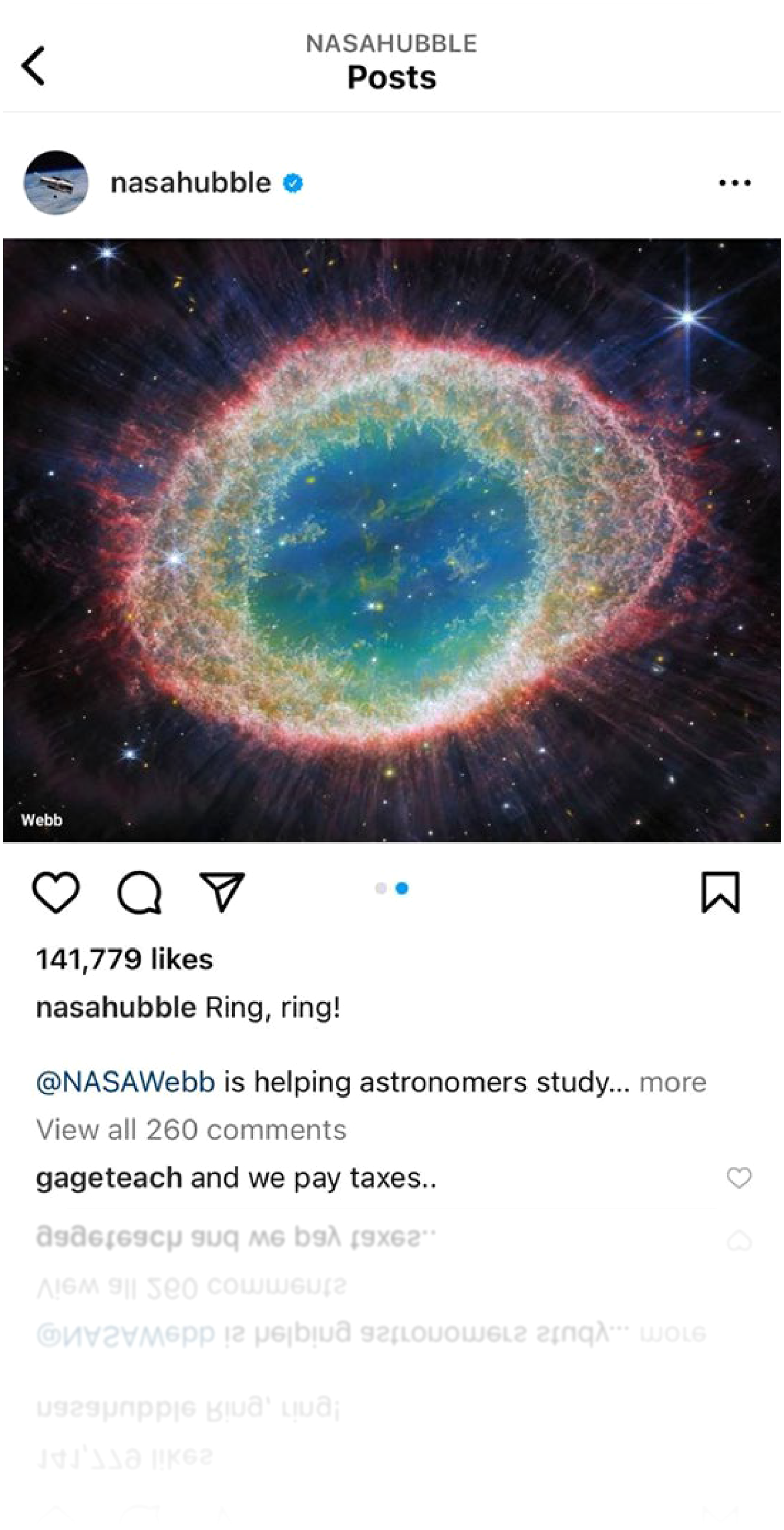
Hubble Space Telescope Instagram Post (2). New techniques, mean an aesthetic change and an actualisation of the explanation under the idea of discoveries. Source: https://www.Instagram.com/p/CwN7wW5uMXC/?img_index=1. August 2023.
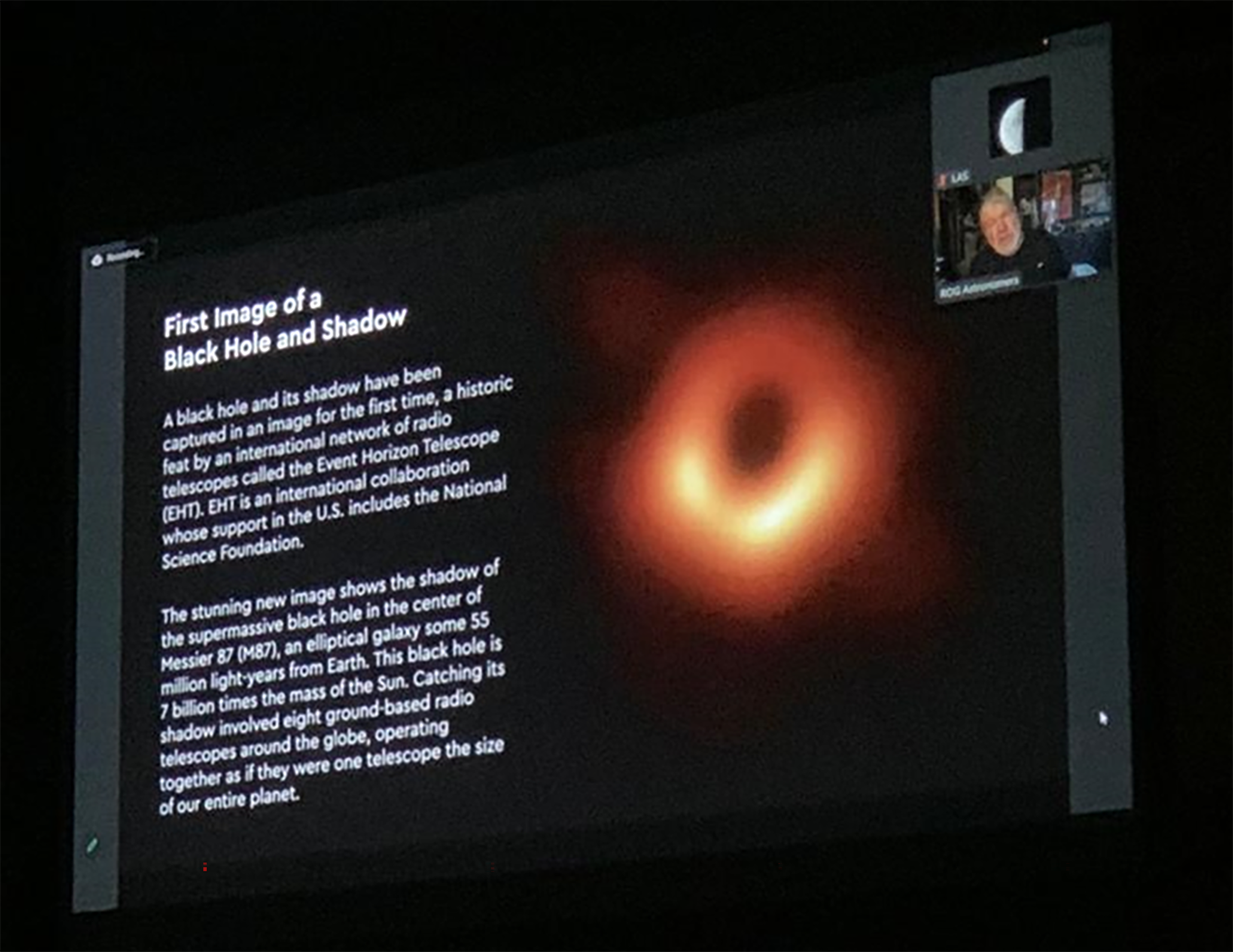
Video call presentation in front of around twenty people gathered at a Laughton Astronomical Society room. Source: Personal Archive. June 2023. Used with permission.
Footnotes
Acknowledgements
I am thankful to my supervisor, Ludovic Coupaye, at the Department of Anthropology at University College London for guiding me through my master's dissertation, and to Diana Espirito Santo for her support throughout the submission process. Finally, I appreciate my brother, Martin, for his conversations regarding the discussions raised.
Declaration of conflicting interests
The author declared no potential conflicts of interest with respect to the research, authorship, and/or publication of this article.
Funding
The author disclosed receipt of the following financial support for the research, authorship, and/or publication of this article: This work was supported by the Government of Chile - Postgraduate Scholarship - National Agency for Research and Development.
