







Abstract
This article discusses Turkish women workers’ experiences in Turkey’s growing call centre sector, focusing on the emotional labour they perform in relation to job satisfaction and gendered work patterns within the Turkish labour market. The study uses both quantitative and qualitative data generated from six Turkish cities. Our findings demonstrate that pecuniary emotional labour is a large requirement of women employees in the call centre business, and that performing such labour under time constraints harms their well-being. Low material rewards and lack of support in their relations with customers make it even more difficult to deal with the stress of emotional labour and lowers job satisfaction. Employees’ capacity to resist the negative aspects of work are largely limited by the conditions in Turkey such as high rates of unemployment, extensive employee circulation and lack of job security.
Introduction
This article discusses the experiences of women workers in Turkish call centres that provide various customer care services. It focuses on the emotional labour performed by women call centre workers across six locations in Turkey, the determinants of job satisfaction and gender-specific issues within the Turkish labour market context. Using both a survey and qualitative interviews, this study 1 investigates women in call centre work, one of Turkey’s highly feminized areas of employment (Basi, 2009). The study focuses on the employees’ perspectives therefore most of the data were generated from the employees. Employer representatives were also interviewed to gain general insight about the working conditions.
Call centres deal with calls from any customer through telephone, email and fax. This is a growing sector with nearly 10 million call tables worldwide as part of global division of labour. The global north outsources these services to the global south where mostly women take up these jobs, which intensifies existing gender hierarchies (Mirchandani, 2005). In countries such as India the workers’ ability to speak fluent English 2 makes this possible and the sector becomes a potential avenue to absorb the mass of educated unemployed (D’Cruz and Noronha, 2008). Both the market share and the number of employees in the sector have been increasing in Turkey. While the number of call centres in Turkey in 2007 was 250, this increased to 940 in 2008, employing 35,000 workers and with a market share that rose to 250 million dollars (Man and Selek-Öz, 2009: 85).
Women in Turkey’s labour market
The high concentration of women employees in this sector, which has attracted scholarly attention (Ng and Mitter, 2005), is particularly striking in Turkey, where the overall rate of female employment is much lower (31.1% in 2017) than in Organisation for Economic Co-operation and Development (OECD) countries, where the average rate of employment for women is 60.2% OECD, 2017). Over the past few decades, due to several drivers, including a sharp increase in girls’ educational attainment and changing values that approve of women’s work outside the home, female labour force participation has increased in OECD countries (Thévenon, 2013).
In Turkey, although women’s work outside the home is widely accepted, female labour force participation remains low. One study on Turkish people’s social attitudes shows that 59% of men and 75% of women support the idea that women should be more active in work life. Yet 69% of men and 57% of women still think that women should get men’s consent to work (Ipsos, 2012). Women’s employment is mainly regarded as supplementing the family budget rather than a means of self-actualization. In addition, although female labour force participation has increased globally since the 1980s, it has decreased in Turkey (Buğra and Yakut-Cakar, 2010). One of the reasons for women’s high unemployment rate is the gender gap in education (Buğra and Yakut-Cakar, 2010; Gök, 2016), which leads to unemployment or compels women to accept low-paying jobs. Apart from structural factors leading to female unemployment, Turkey’s gendered cultural norms constitute one of the biggest barriers to women’s career development (Aycan, 2004). Moreover, Turkey’s welfare regime is highly gendered because it assumes that women’s employment is secondary to that of men’s (Buğra and Yakut-Cakar, 2010).
Turkish women need to negotiate with a patriarch in a country where patriarchal gender norms are stronger among men from lower socioeconomic strata, and who define a successful marriage in terms of their ability to exert control over family members (Sancar, 2009). Low socioeconomic status and religiosity correlate positively with men’s disapproval of their wives’ employment (Bolak-Boratav et al., 2017). Moreover, Islamic religiosity in Turkey consolidates women’s role as housewives and mothers first (Arat, 2010). Under patriarchy the unequal division of household labour also constrains women’s career opportunities and paid employment in itself does not reward women.
Analyses of modernization during the early Republican era, which began in 1923, show that Turkish women were ‘emancipated but not liberated’ (Kandiyoti and Kandiyoti, 1987). The state-led modernization project made women equal citizens by law and enjoy rights to education, political participation and employment. However, these developments neither fully transformed gender relations nor liberated most Turkish women (Gündüz-Hoşgör and Smits, 2008; Kandiyoti and Kandiyoti, 1987). Instead, gender roles and norms of conduct have remained considerably conservative, with patriarchal attitudes that confine women to housework and childcare remaining stronger than the liberating effects of modernization. In short, while legal parity was established relatively easily by Turkey’s state elite, social norms have been slow to catch up.
Emotional labour and worker resistance
In addition to the changes in gender composition, other conditions in the labour market are also transforming. Service sector becomes more dominant and requires active display and control of emotions. This global phenomenon has attracted Turkish scholars’ attention (Emirgil, 2010; Keser, 2006a, 2006b; Man and Selek-Öz, 2009; Yücesan-Özdemir, 2014). Hochschild (2012) defined emotional labour as the sum of all emotions that service sector employees use in their interactions with customers, including facial gestures, tone of voice and body language. She estimates that nearly one-third of American workers’ jobs demand emotional labour, and that this is more likely for female workers. As power and authority are distributed unequally in society, managing acts are also unequal for different groups of people. Some studies find that women are affected more deeply by the negative consequences of emotional labour (Man and Selek-Öz, 2009; Van Jaarsveld and Poster, 2013), while others found that men and women had similar experiences in terms of emotional labour, nevertheless, women are more likely to be employed in such jobs (Erickson and Ritter, 2001).
Call centre work is commonly seen as ‘women’s work’ both because good service on the telephone has been associated with supposedly feminine traits, such as being kind and comforting, even when dealing with infuriated customers (D’Cruz and Noronha, 2008; Hochschild, 2012; Mirchandani, 2005), and because women are regarded as more manageable, better at communication (Dursun and Bayram, 2014), and more chatty, lively and tolerant (Belt et al., 2000). These qualities are simply accepted as innate personality traits, although they are largely socially acquired; this understanding ensures that emotional skills remains non-skill while the absence of concrete criteria to measure these skills renders them invisible (Bolton, 2004).
The term ‘emotional labour’ has been used for various aspects of emotion management so theoretical clarification is necessary. While Hochschild (2012) differentiates between commercial and social emotional labour, Bolton and Boyd (2003) argue that there may be emotions in the workplace that are not commercially motivated and they distinguish between pecuniary (commercial and instrumental), prescriptive (professional or organizational), presentational and philanthropic (social) emotion management. Among these, pecuniary emotional labour involves a profitable product of creating client contentment in the case of call centres. This type of emotional labour evokes more negative feelings in employees and causes burnout (Bolton and Boyd, 2003; Erickson and Ritter, 2001). Lewig and Dollard (2003) have found that the most stressful aspect of work in call centres is dealing with difficult customers and the dissonance between felt and displayed emotions.
New perspectives have come to acknowledge that employees are active agents in the workplace who develop coping strategies (Ashforth and Humphrey, 1993; Bain and Taylor, 2000; Bolton and Boyd, 2003). We argue, however, that the emphasis on the workers’ agency obscures the conditions that affect their position within the labour market, especially in areas with high rates of unemployment, extensive employee circulation, insufficient economic rewards, lack of job security and insufficient investment in human capital. Our findings demonstrate that the employees’ chances of resistance to work are severely restricted by their working conditions. In addition due to gender norms in Turkey, women are expected to be caring and compliant, which makes their resistance to work less likely. Although Turkey is regarded as more of a collectivist culture (Pasa, 2000) than Western Europe and North America, the principles of capitalism and neoliberalism still affect the labour market to a degree that collectivist cultural relations cannot balance these principles. The market conditions, along with gender norms, seriously limit the employees’ possibility to display agency.
It is important to recognize the multitude of emotions and ways to deal with them. We argue that insisting that workers use agency in these interactions, as in the case of sexualized emotional labour (Warhurst and Nickson, 2009), and that organizational actors are knowledgeable agents (Bolton, 2004; Bolton and Boyd, 2003), prevent us from seeing the restrictions on them that result from an extreme customer orientation in the service sector (Dormann and Zijlstra, 2003). In addition, time is a significant concern for call centre employees. According to a study of the UK telecommunications sector, a one-second reduction in call time per agent has been estimated to save a business two million sterling (Miozzo and Ramirez, 2003). Pressure to take many calls, electronic monitoring and the fear of losing their jobs present serious challenges for workers trying to display resistance strategies in the workplace.
New technologies have made it possible to monitor employees’ activities based on concrete criteria such as number of calls taken and the amount of break times. However, it would be too simplistic to assume that the availability of surveillance technology means that management exerts total control over the workers. Bain and Taylor (2000) argue that managers do not enact disciplinary power constantly and that collective resistance exists along with the monitoring of actions.
Exercising power and resistance are interwoven and workers’ have rich and diverse experiences. However, focusing on the micro-politics of resistance has led to the romanticizing and naming of all individual attempts to deal with power relations as ‘resistance’ (Mirchandani, 2004: 149). It is vital to understand the variety of the ways in which call centre employees deal with their working conditions, but it is equally important to see what motivates or limits this capacity.
Work as it is organized today has been socially constructed as a consequence of capitalist production relations (Fleming, 2014). In late capitalism, work has become scarce yet employees develop strategies to escape from it. Worker resistance has diverse forms. In its extreme, there is stoppage and strike action, while individualized versions are sabotage, theft, work avoidance (Roscigno and Hodson, 2004), bluffing or telling customers to call again in 48 hours to stall them (Mirchandani, 2004), misbehaviour (Van Den Broek and Dundon, 2012) cynicism and distancing oneself from the job (Fleming and Spicer, 2003).
Roscigno and Hodson (2004) found that union presence and significant interpersonal conflict with the managers and supervisors are the primary factors that motivate strike and other forms of resistance. Positive relations between the employees and management can help mitigate the conflicts and contentious actions (Roscigno and Hodson, 2004). Contrary to the managers’ conception of the work as an employment opportunity, the employees find the work repetitive and tiring and preventing skill development (Mirchandani, 2004).
Aims and methodology
Our study, which focuses on women call centre workers in Turkey, aims to place emotional labour into context by looking into the physical working conditions and various other aspects of job satisfaction. A mixed-methods research design was ideal for this study because we aimed to contextualize emotional labour and determine the factors that influence job satisfaction to gain a better understanding of the research participants’ perspectives. Quantitative data came from questionnaires with 1448 women employees from six Turkish cities (Ankara, Erzurum, Istanbul, Izmir, Kocaeli and Samsun) completed between 11 November and 10 December 2014. These provinces were chosen in order to reflect Turkey’ geographical and socioeconomic diversity: Istanbul, Ankara and Izmir are Turkey’s three largest cities, Kocaeli is a growing industrial area close to Istanbul, and Samsun and Erzurum are much smaller cities with fewer job opportunities. The research participants, whose average age is 26.8 years, work in either the public or private sector, mainly in telecommunication, finance and logistics.
In search for research participants we approached the employers by stating that our research is funded by the World Bank and Turkish Ministry of Family and Social Policies and asked them for permission to conduct research. We told them that we would share the research report, which they may use in order to identify and work on problems in the work place. Self-completion questionnaires have been used in the research. Since the employers did not want the work to be interrupted, we gave out the questionnaire forms to the research participants and explained them that their answers will be confidential. We placed closed boxes in certain contact points in each call centre and collected the questionnaire forms later.
The sample size correlated with the number of call centre employees in each city. Response rate was 68.7%. The questionnaire included questions on the employees’ overall satisfaction with the firm and an evaluation of their jobs in terms of various factors, such as work environment, opportunities for self-development, supervisors, payment policies, cooperation and communication, performance, relations with the management and the company’s reputation. The questionnaires also included some open-ended items to determine their demands for improvement.
The margin of error was calculated for this study with the trust level measured as 95%. Closed-ended questions were asked using a Likert-type scale with options ranging from 1 (least suitable/least successful) to 5 (most suitable/most successful). Item wording was arranged so that higher scores indicate higher satisfaction.
After completing an extensive quantitative study of general issues in the sector, we conducted three focus groups with a total of 24 female employees and in-depth interviews with 16 employer representatives in Istanbul. These interviews were sufficient to provide theoretical saturation. Since Istanbul is Turkey’s largest and most diverse city in terms of its residents’ geographical, socioeconomic and cultural background, we conducted the interviews in Istanbul. We chose one person from each call centre in Istanbul that is included in this study to reflect different workplaces. The focus group discussions lasted 2 hours on average and the in-depth interviews lasted between 1 and 1.5 hours. The focus groups were conducted in a quiet office outside the workplace, while interviews with the employer representatives were conducted in their own offices. These were all recorded and transcribed and were subjected to thematic analysis, which is a process of encoding qualitative information using a list of themes that can be complex models, indicators or causally related qualification (Boyatzis, 1998). The interviews covered reasons for working in the sector, job satisfaction, working conditions, relations between workers and management, solidarity and problems experienced. The most important insights about the gendered conditions of workplaces and the emotional labour experiences of employees were revealed through the qualitative data.
Findings
Job satisfaction in call centres
The findings in this section are based on the quantitative data gathered from 6 cities, and it is found that the material rewards for working in a call centre are limited, although the jobs are physically and emotionally demanding. Therefore, the employees reported low levels of job satisfaction, with an overall score of 2.94 out of 5, which corresponds to slightly less than moderately satisfied. While only 22.2% of the respondents are satisfied with their jobs (total percentage of satisfied and very satisfied), 42% were somewhat satisfied and 30% were unsatisfied (total percentage of unsatisfied and very unsatisfied). Respondents from Erzurum were the most satisfied, scoring 4 out of 5, whereas the least satisfied group was Ankara, with 2.66 out of 5.
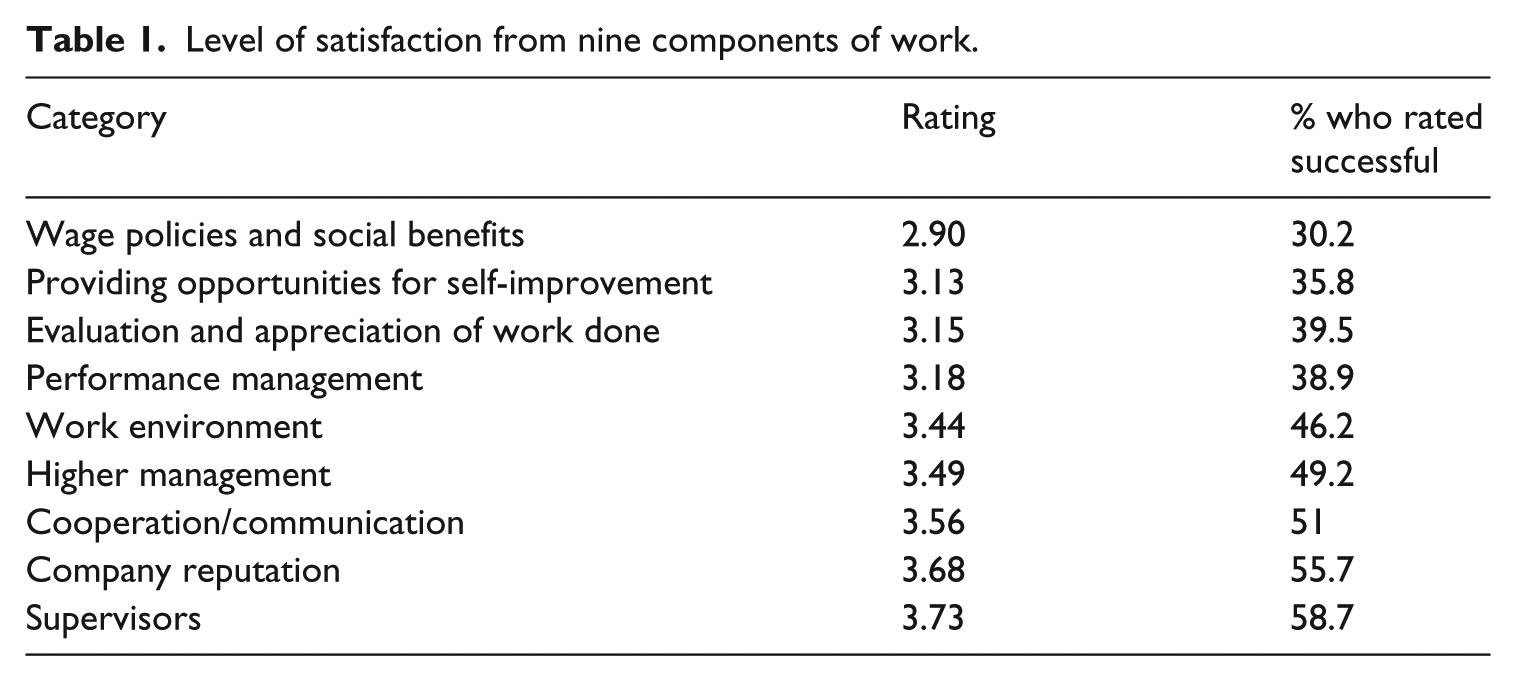
The study measured various aspects of job satisfaction. Table 1 presents how each category was rated by the respondents and the total percentage of respondents rating each category as successful and very successful.
Level of satisfaction from nine components of work.
Below, the most problematic three categories regarding job satisfaction are presented in further detail.
Wage policies and social benefits
Wage policies and social benefits were rated the least successful, with only 30.2% of participants finding the wages and benefits in their company either successful or very successful, and an average satisfaction rating of 2.90, lower than the overall satisfaction level.
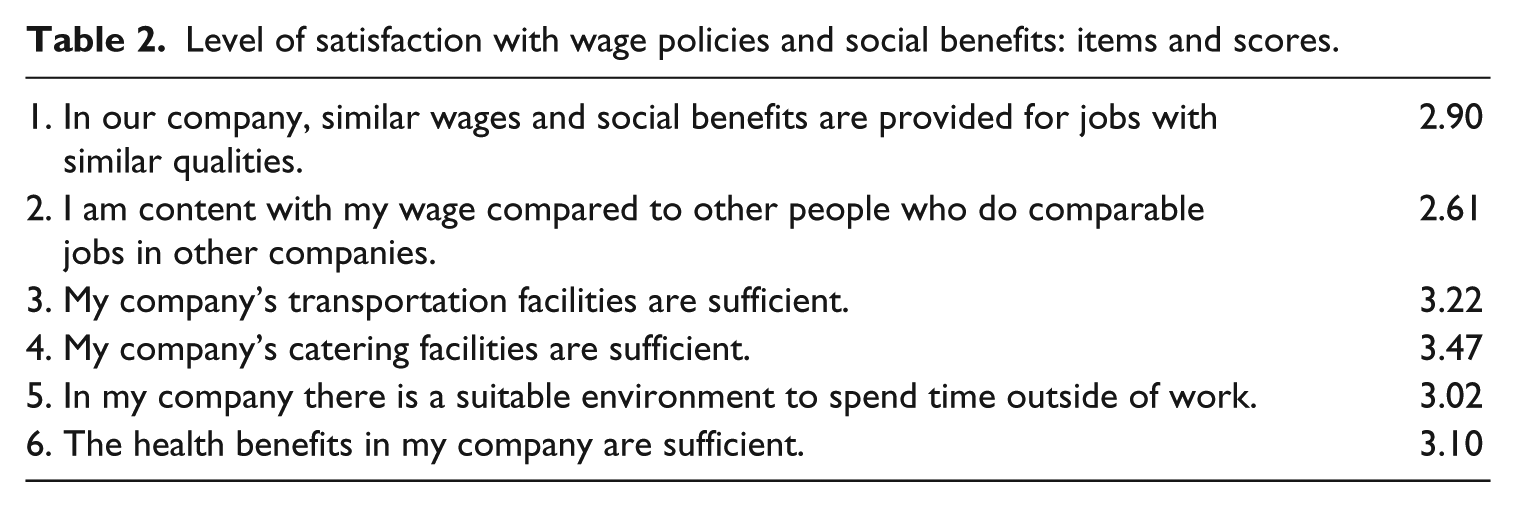
The workers regard the wage and social benefit policies as their biggest problem. A closer look at the individual items shows that comparison with other employees, either with similar jobs in other companies (item 2) or within the company (item 1), creates discontent. They find that the wages do not compensate for the intensity of the work. In addition, since most of the respondents have at least high school education, their expectations from the job are also higher. There is therefore an imbalance in the effort-reward mechanisms, which harms employee well-being (de Jonge et al., 2000; Wieclaw et al., 2005). As of 2014, the average wage of the research participants was 1086 TL (approximately 500 USD), which was slightly above the minimum wage at the time of data collection (891 TL in 2014). Both the absolute wages and the relative conditions decrease job satisfaction among the call centre workers. Table 2 shows each individual item and its satisfaction score:
Level of satisfaction with wage policies and social benefits: items and scores.
Providing opportunities for self-improvement and promotion
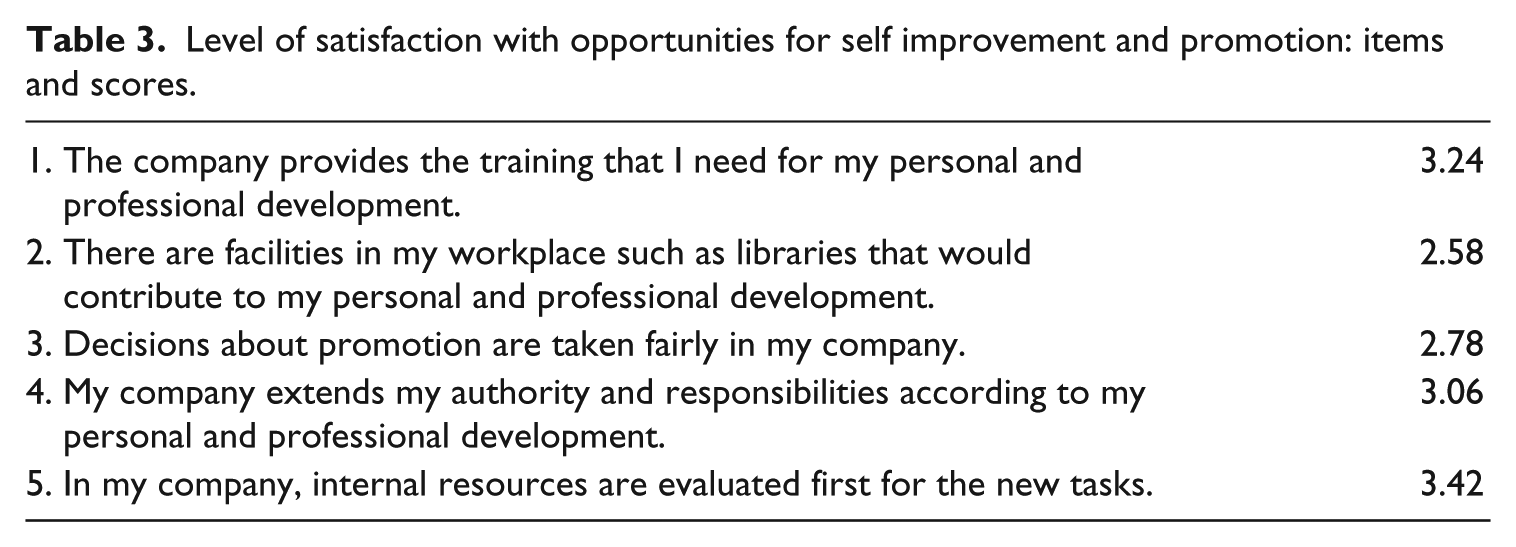
This category was rated as the second least successful, only 35.8% of respondents finding their company’s opportunities for self-development either successful or very successful, while the average satisfaction score was 3.13. These employees value self-improvement and extending their knowledge. Given that over half of the participants have either college, university or higher degrees, they expect their work environment to provide them with in-job training, facilities for self-development and opportunities for promotion after successful completion of the first two. Thus, categories 1 and 2 are interrelated regarding income. Moreover, there is a gender dimension: mainly women are recruited in call centres for their assumed communication skills; however, the highly standardized and controlled nature of the job constrains their chances of developing these skills further (Belt et al., 2002; Table 3).
Level of satisfaction with opportunities for self improvement and promotion: items and scores.
Evaluation and appreciation of the work done
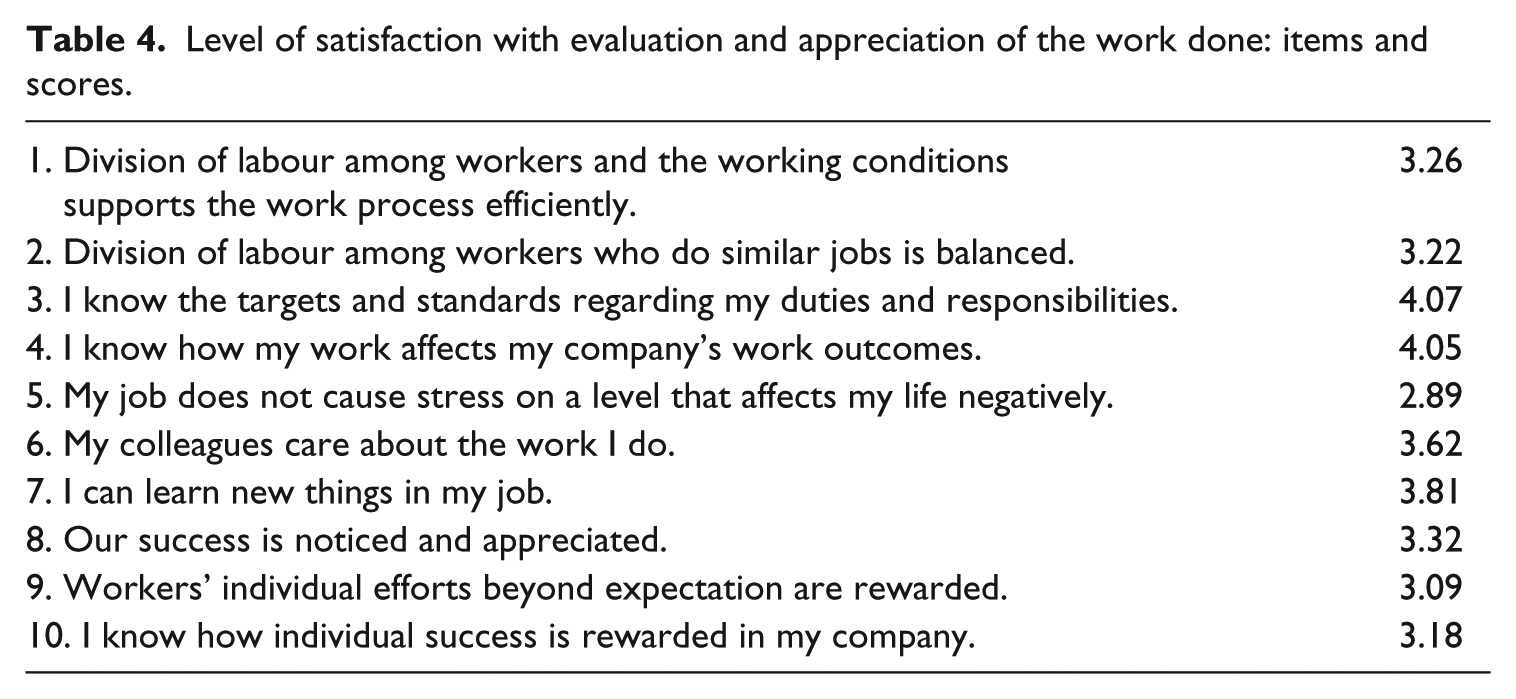
This category was rated 3.15, with a significant percentage (39.5 %) of respondents finding their company successful or very successful in terms of evaluation and appreciation of the work done. The lowest marked item in this category was item 5, which shows that these employees work under stress. The next lowest marked items concern the reward mechanisms for individual success and the division of labour among the employees doing similar jobs (Table 4).
Level of satisfaction with evaluation and appreciation of the work done: items and scores.
While the material rewards were the most problematic issue in this sector, relations with co-workers and management were rated more positively because respondents think that the problems are general difficulties within the sector regardless of the management.
General conditions of work
A detailed examination of the working conditions and regulations reveal the shortcomings of working life under the neoliberal regime. We see the interplay of gender and economic situation, whereby women are concentrated in jobs with low material rewards.
The overall satisfaction level of 2.94 out of 5 in this study helps us understand which aspects of the job are more or less satisfying for employees. While relations with supervisors and managers and the company reputation were rated more positively, issues directly affecting the job process and rewards, such as wages, in-job training facilities and performance evaluation, were the least satisfactory items. Two main factors increase the workers’ expectations: first of all working in call centres is physically and psychologically tiring so workers demand either higher wages or shorter shifts; second, the employees’ education level increases their expectations so they value the rewarding of individual progress and opportunities for self-development. When their expectations are not fulfilled, their satisfaction decreases.
The working conditions are both physically and emotionally challenging. Shifts last 9 hours on average, including working at nights, with 11.3% of respondents working from 12.00 till 22:00 or later. The lack of transportation for night shift workers is therefore a big problem as 76.2% of respondents are provided travel expenses all the time but 4.5% only when they work overtime; 10% do not get their transportation costs covered at all while 8.1% did not answer the question. This issue is especially challenging for women both in terms of safety and due to conflicts with the gender norms.
Call centre workers need to take regular breaks in order to avoid damaging their health. In addition to an hour lunch break, respondents have an average of just 12.8 minutes of additional rest time. The break time is vital and needs to be arranged according to the workers’ needs. Yet some employees skip the already short breaks in order to achieve their targets and perform better, as it is discussed in the following section.
The workers’ opinions about their jobs change with time as their knowledge about their company and the sector increases. The duration of employment in the company has a negative effect on job satisfaction. Table 5 shows that average ratings for satisfaction drop over time in both the overall and individual categories.
Level of satisfaction with work over the years: items and scores.
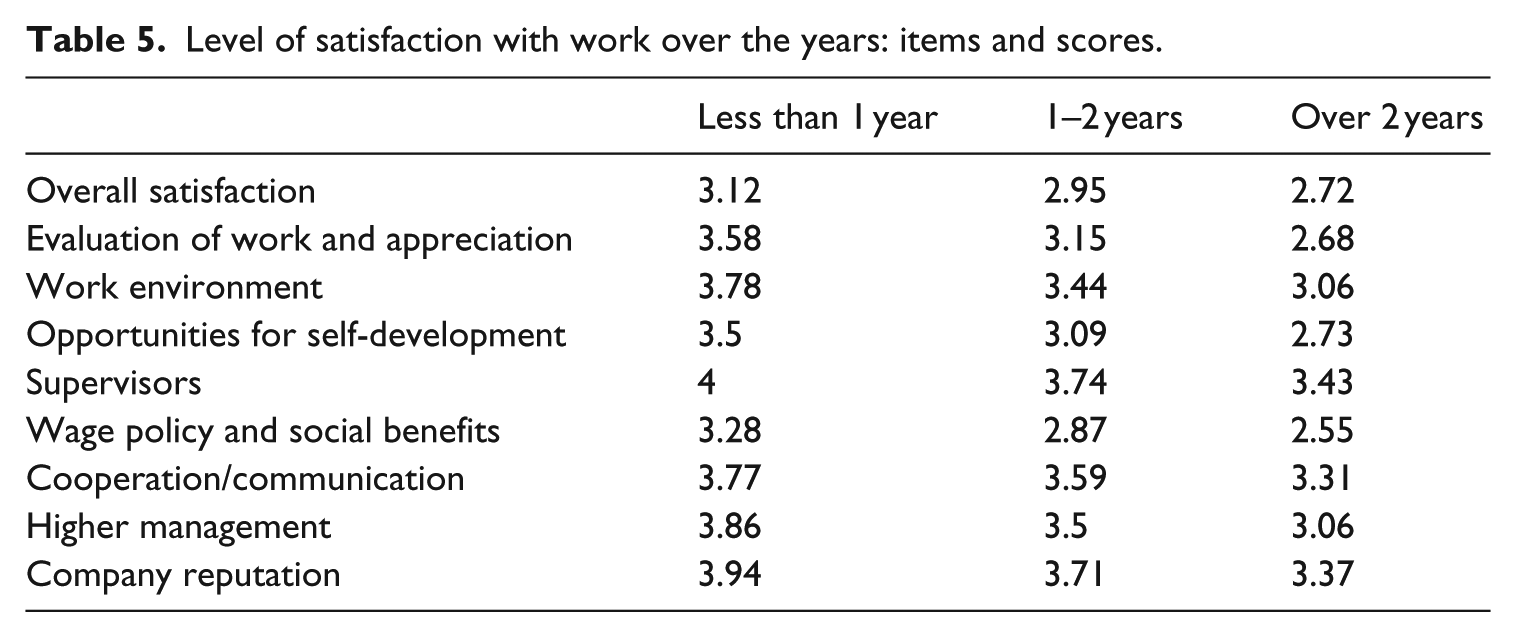
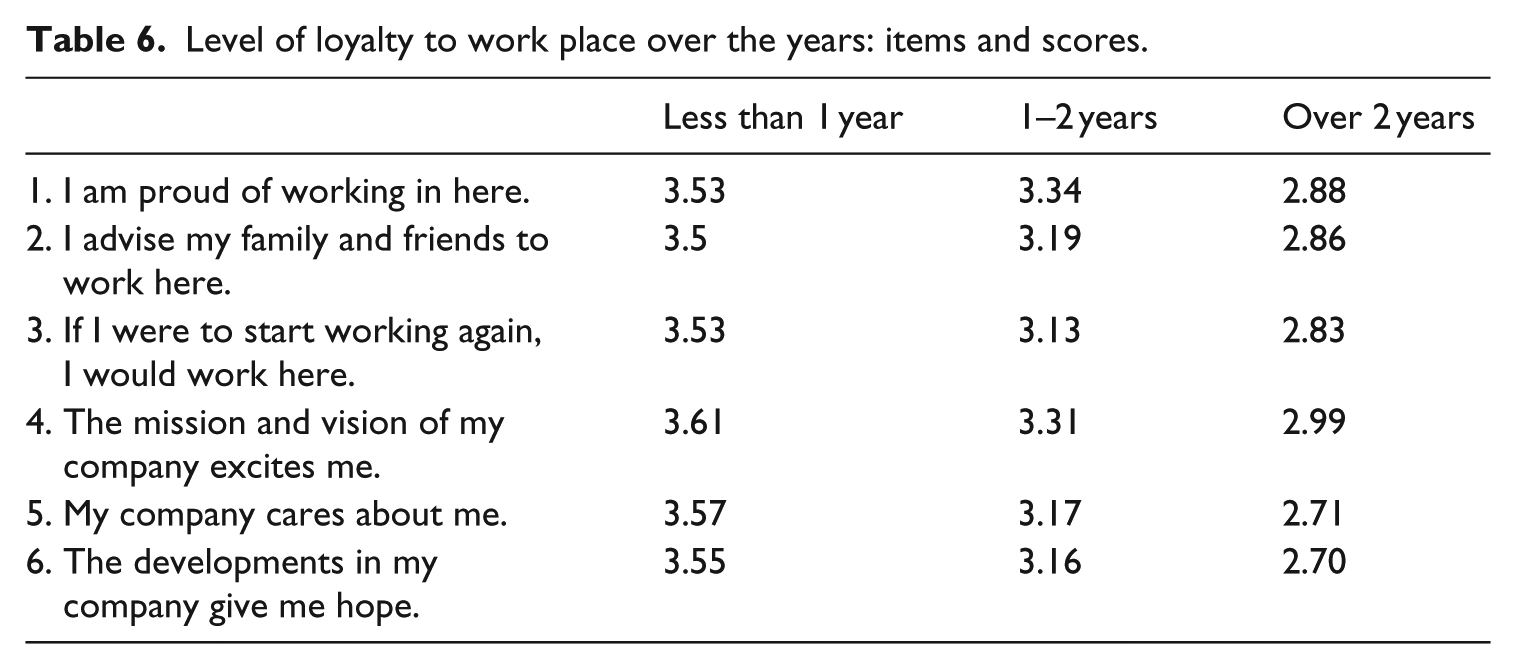
The employees are aware of the difficulties associated with the physical attributes of the work place, the low pay and lack of prospects for improvement in employees’ professional qualifications, which reduce job satisfaction over time. Employees were moderately satisfied in terms of their loyalty to their workplaces and jobs. The lack of reward for individual achievements and the company’s success does not have a large impact on employees’ well-being. However, the longer they work in the company, the less loyal they feel (Table 6).
Level of loyalty to work place over the years: items and scores.
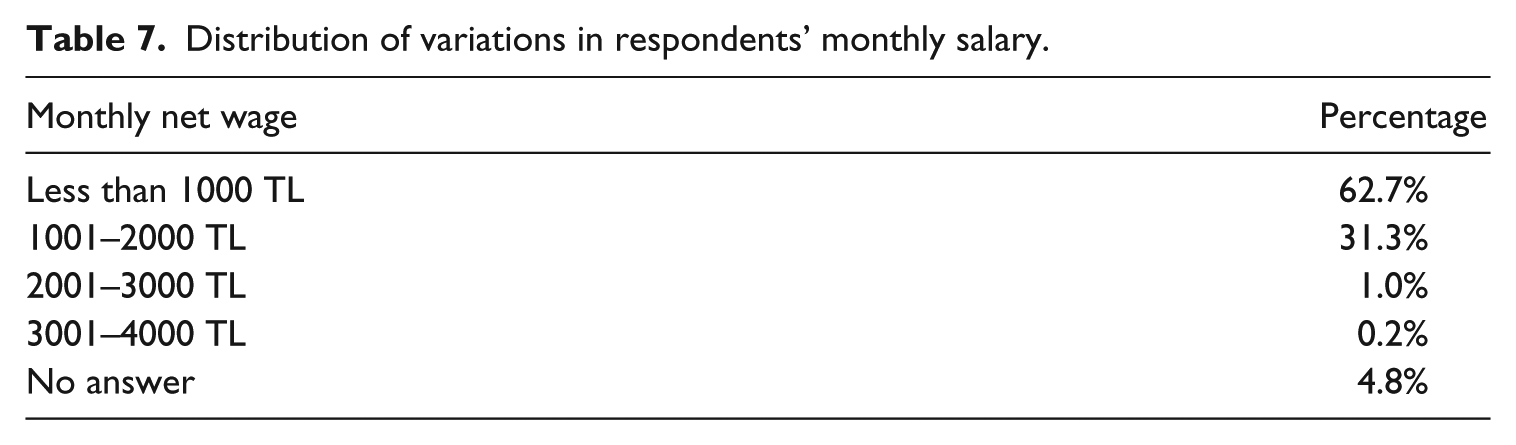
Distribution of variations in respondents’ monthly salary.
The most visible decrease in the rankings is in item 5 (my company cares about me) with a 0.86 decrease and 6 (developments in my company give me hope) with a 0.85 decrease. This alarming drop indicates that, as employees get more familiar with the job, they become less loyal. Call centre workers deal with a wide range of customers and can experience very negative situations, such as insults or sexual harassment. In the absence of material rewards to compensate for these difficulties, they feel less committed to their company.
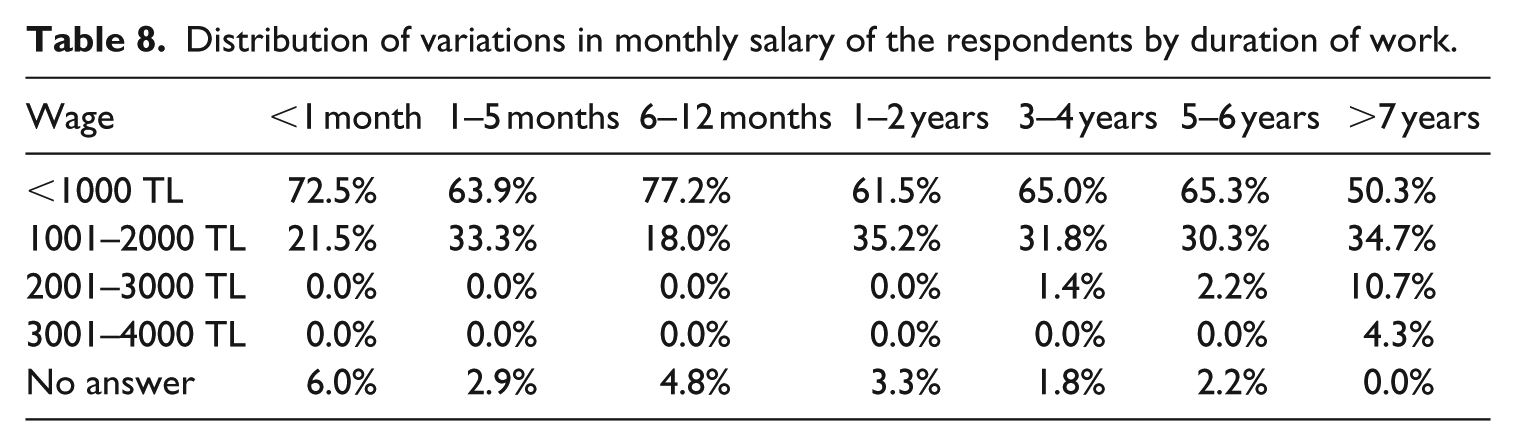
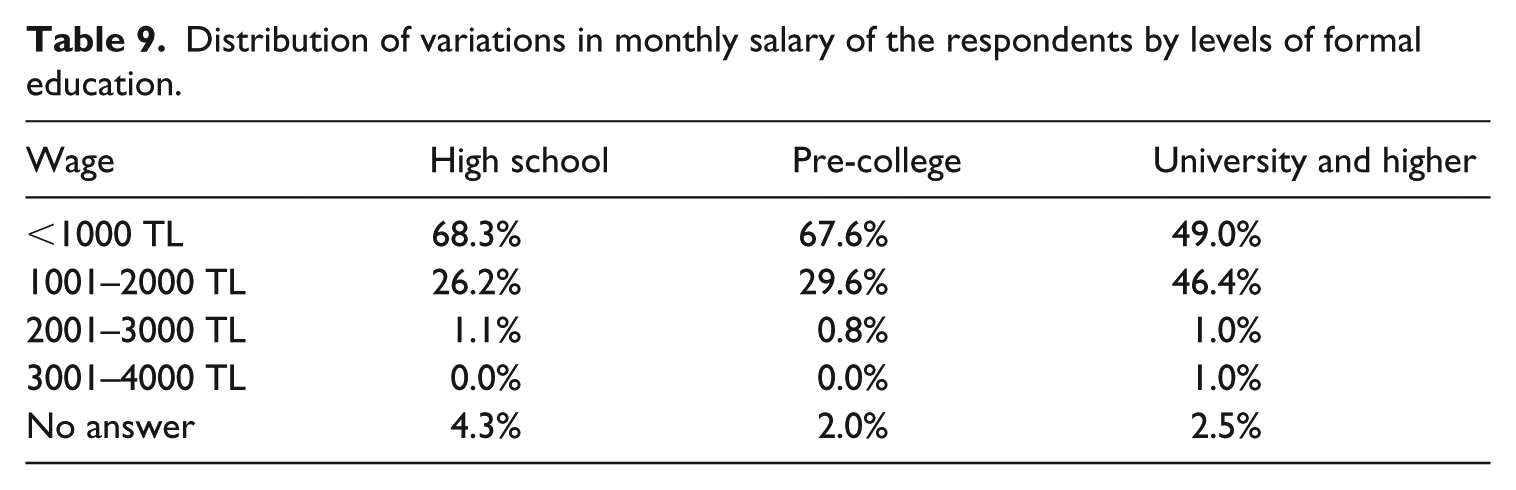
The wages and other social benefits of the job give us hints about the participants’ dissatisfaction. Wages are not only low but have also stagnated over the years. Moreover, neither work experience nor higher levels of education leads to a significant rise in their salaries (Tables 8 and 9).
Distribution of variations in monthly salary of the respondents by duration of work.
Distribution of variations in monthly salary of the respondents by levels of formal education.
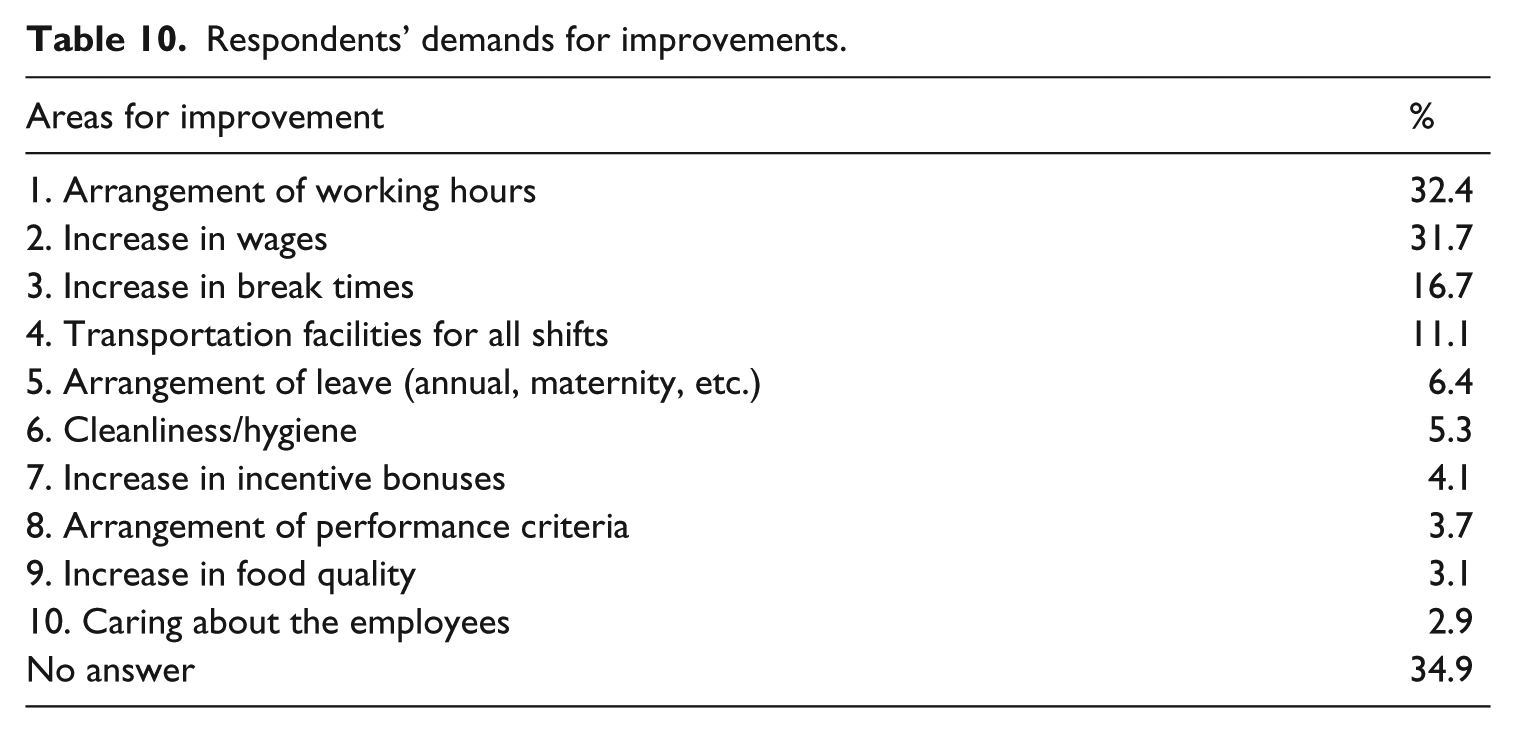
In the surveys, the respondents were asked to name the first three issues that need urgent improvement. The most frequent 10 answers are presented in Table 10. Specifically, the participants demanded urgent improvements in wages, working hours and the physical conditions of work.
Respondents’ demands for improvements.
Emotional labour and employee resistance in call centres
Most research participants regarded working in call centres as a temporary phase until they could find a more suitable job. During this active waiting, which consists of anticipating, preparing for opportunities and dealing with financial risks, they work rather than stay at home. Despite the low pay, long shifts and little prospect for future improvement, satisfaction comes from merely being employed, bearing in mind that Turkey’s high level of unemployment 3 is one of the determinants of low wages (Ilkkaracan and Selim, 2003). This creates a vicious circle: the material rewards are so low that workers regard the job as temporary while employers feel no obligation to improve these conditions. The interviewed employer representatives acknowledged that, considering the nature of the job, employees are not paid what they deserve. Yet, due to the high demand for jobs, they can easily replace the work force.
The respondents’ lack of attachment to the job, the low wages and lack of prospects for self-improvement all decrease their motivation. The contemporary focus on self-development and living one’s life as a project (Dale, 2012) also increase employees’ expectations from their jobs in that they give importance to improving their skills and knowledge through the work, which is not encouraged in the sector. Almost all the qualitative focus group participants said that they do not plan to remain in their current job for too long nor do they advise their family members and friends to work in this sector. As one participant put it, When I first started the job, I knew it would be intense but I applied anyway so that I wouldn’t be unemployed. The stress level is beyond what I expected. I will keep going until I find another job; otherwise I might have mental problems. (Employee, university graduate) When work is over, I want to run to home and lock myself in a quiet room. Sometimes I hate hearing a human voice. (Employee, university graduate)
Another participant stated her concerns about unemployment: I am sort of satisfied working here. Thank God I have a job, I am working. Even though I have a hard time, at least I am not unemployed. There are many unemployed people around me. If I had a better job opportunity, of course I would evaluate that’. (Employee, high school graduate)
The participants suggested the following improvements would encourage them to remain in this sector: preventing noise by enlarging each person’s working area and providing better noise insulation; shortening shifts to 4–5 hours or at least doubling the wages if shifts cannot be shortened; providing reasonable break times at suitable points if shifts cannot be shortened; arranging shifts according to the workers’ preferences; making overtime work and night shifts optional. The main problems are not peculiar to their workplace but prevalent in the sector, therefore satisfaction from the current work place was relatively higher than the satisfaction from working in this sector. Maintaining good relations with supervisors and co-workers helps them to cope with their problems and prevents resistance and conflict (Roscigno and Hodson, 2004).
As Korczynski (2003) argues, the individualization of stress and coping strategies in today’s labour market makes it difficult to see that stress has collective and social roots. The current organization of work also promotes an individualized understanding of coping with the difficulties of the job and pushes the pathologies of contemporary work onto employees themselves, internalizing these as ‘personal demeanours and characteristics that must be “worked through” in team meetings, development assessment seminars and “self-help” consumption in the private sphere’ (Fleming and Spicer, 2003). Despite the individualization of work, most participants mentioned having one or two friends in their workplace as a sign of solidarity. Solidarity with the colleagues is a source of motivation, yet the heavy work load and restrictions on talking with co-workers during work deny them opportunities for building a culture of solidarity. There is evidence of collective action when there is injustice in the workplace. Employees explain this as such: I love my friends very much. If somebody has a problem, everybody tries to help. We support each other against the managers. (Employee, college graduate) One of our friends was treated unjustly. We all slowed down the work on purpose. We didn’t take any calls. (Employee, university graduate) When they don’t keep their promises, we take long breaks. The work is delayed. The managers notice it too. (Employee, university graduate)
The solidarity among workers and their capacity to resist together is a source of motivation for them despite the low pay and stressful work place. Korczynski (2003) argues that, despite management efforts, workers develop ‘communities of coping’ in service workplaces, which constitutes an act of resistance. In Turkey, these workers build friendship and solidarity despite being isolated from their co-workers and discouraged from socializing with them. However, all micro-level coping mechanisms cannot be categorized as resistance (Mirchandani, 2004). The employees in call centres still have to comply with the company rules in the overall (Fleming and Spicer, 2003). The research participants follow strict rules of conduct when dealing with the customers and have to manage their emotions in the right way. Their resistance is limited because the material rewards depend on their performance so they cannot avoid work for too long.
The employer representatives admitted how they are watchful and warn employees who take long breaks or chat during the work. Yet the breaks are barely enough to fulfil the most urgent needs, while some employees report having to work during even this limited break time to meet their targets. The employer representatives state that they can measure the employee’s performance with the help of electronic surveillance mechanisms. This way they can prevent work avoidance.
The participants stated that their jobs are very challenging due to unrealistic targets that directly affect their performance evaluations, which increases the pressure and compels the employees to work non-stop. Call centre workers have to be polite and pleasant during their interactions with customers and have to be timely to take as many calls as possible (D’Cruz and Noronha, 2008). The research participants in this study also feel that their performance is evaluated unjustly because, even if they use some of their break time for taking extra calls, they still cannot manage to reach the targets. Research participants explain this as such: I eat my lunch very quickly in order to reach the given target. I don’t leave the desk. Still I haven’t ever managed to reach it. (Employee, high school graduate) We have daily and weekly targets. Even when we work without leaving the desk, it is impossible to reach the target. They give incentives based on the targets. So they kind of deceive us. (Employee, high school graduate)
The employees in this study are also concerned with the working conditions that cause them back and neck problems due to constant sitting, hearing problems because of background noise, and vocal cord nodules generated by long hours of talking; consequently, like many in the sector, they tend to leave the job once they find a better option, which leads to a high circulation of workers, as the employer representatives admitted.
While the same working conditions apply to all workers, the late-night shifts and flexible working schedules are more problematic for women particularly because social norms and physical work conditions conflict. In her book on Indian call centre workers, Patel (2010) discusses the difficulties women workers face daily while working the night shift. She finds that patriarchal regimes of surveillance are recodified and stricter regimes of surveillance are used on working women by their male relatives. The research participants in this study also find themselves stuck between patriarchal norms and the financial pressure to work. Interviewees explained the difficulties facing them: I don’t know when I’ll work. I may get a call from the job any time so I can’t make any plans about my personal life. (Employee, high school graduate) I don’t like the shift work but our job requires this. For now, my father doesn’t mind it but I know from my friends that their fiancés, boyfriends and husbands mostly don’t want them to work at night. (Employee, middle school graduate) I’m engaged; my fiancé says that when we get married, he doesn’t want me to work here due to shift work. I need to earn money too, I don’t know what to do. It is a huge problem for me. (Employee, high school graduate)
Research participants not only must deal with the stress and negative emotions directed at them during the work, but they are also constrained by gender role expectations from their family members and significant others. Their fears demonstrate how their social environment shapes their opinions about various aspects of their lives, including work. We investigated these fears through an open-ended question in the questionnaires, which revealed valuable information that can be directly connected to their work life. For instance, the respondents’ biggest fears were dark and deserted places, which are scenes of crime and male violence, such as mugging, harassment and rape. In a country with high urban crime rates and frequent violent crimes committed against women, their fear is grounded in their experiences. Fear of crime, especially of sexual assault, is a common issue among women in Turkey (Özaşçılar and Ziyalar, 2015; Zeybek-Kabakçı, 2012) so we can see why they are extremely concerned about their security. Underlying issues, such as being afraid of one’s boss, father or spouse, also indicate the strong patriarchal culture that some of these women are embedded in.
Women’s entry to the workforce without transforming the social norms and gendered workplace restricts their empowerment potential. Gök (2016) argues that a politics of difference is necessary for social groups who have been embedded in inequality for too long. Entry to paid employment without transforming the gender attitudes does not bring about the desired empowering outcomes for women. The working conditions in the Turkish labour market are difficult due to long shifts, especially in the informal sector, so it is a challenge to reconcile work and family life (Buğra and Yakut-Cakar, 2010). Where traditional gender norms are even supported by increasing conservative attitudes in contemporary Turkey, working women end up with a heavier workload and cannot enjoy the liberating effects of paid employment.
Call centre work reproduces gender norms through its extreme control of emotions, especially such as anger and frustration, which are not associated with femininity. They do not have the freedom to act genuinely in their interactions with customers, which may even extend to their personal lives. Consequently, despite the possibility of some resistance within the workplace, performing emotional labour has an intense and draining effect on the employees that extends to other spheres of life. Though a necessary part of social life, excessive management of emotions can be costly, causing ‘a sense of being phony or insincere’ (Hochschild, 2012). The call centre workers in this study also experience similar situations, which requires a systematic suppression of the real self and deepens the individual’s subordination and commodification (Brook, 2009). This comes with the cost of feeling insincere: It’s like there is always a fake expression on my face. Even now I feel I have to be smiling all the time. I find myself behaving like this to my family and friends too. (Employee, high school graduate)
Another research participant states that although she is happy to have a job, emotional labour challenges her: Of course I am satisfied, I earn my money. Every job is difficult, I know this, but this place is not suitable for my character. I get angry very quickly. Otherwise I would not think of leaving here. (Employee, high school graduate)
These call centre workers have limited control over the actual work process and they have to follow strict rules during their interactions with the customers. There is an asymmetrical communication between the employee and the client: while the former has to follow a script, the latter is free (Bolton, 2004). This becomes more obvious during interactions with difficult customers: We are exposed to various kinds of violence: curses, insults. People even flirt with us, give compliments … We got used to it, we just laugh. Sometimes in my private life, if someone raises their voice to me, I notice that I don’t say anything back. (Employee, university graduate) Our job is really difficult. Some people around me despise it. There are people (customers) who insult or swear. We don’t have the right to raise our voice or be angry. What would you do, if they insult you although you have no fault? (Employee, university graduate)
The employer representatives argue that the same conditions apply to both male and female workers. They admit that the problems are prevalent in this sector and that the working hours and psychological problems caused by being insulted by customers are workers’ biggest problems. They also admit that night shifts, long work days and being unable to take leave challenge women more than men. However, instead of questioning why these conditions are more difficult for women, the employer representatives hide behind the gender neutrality argument. They also claim that woman employees find it harder to work with woman supervisors, implying that the ideal employee is a woman who is polite and non-threatening while the ideal supervisor is a man who is good at managing and leading people.
Discussion and conclusion
Our findings confirm previous research findings on this sector: call centre labour is feminized, involves physical, mental and emotional tasks, requires intense control and management of emotions and poses health challenges to the workers (D’Cruz and Noronha, 2008; Hochschild, 2012; Mirchandani, 2005). Although same conditions apply to male and female workers, women’s concentration in call centres and gender norms bring additional challenges for women. Female call centre workers must cope and bargain with patriarchy and male control over women. They also face structural discrimination as they are poorly paid and their overall job satisfaction was lower than moderate. Survey items directly related to material rewards and working conditions emerged as the most important problems for the workers. That is, these workers find themselves trapped between the often-conflicting demands of the material need to work and bargaining with Turkey’s patriarchal mentality.
Our findings reveal that having to provide emotional labour and the related challenges are not the only problems in call centres; an additional difficulty is the absence of compensation for these challenges. When material rewards are low, as it is in Turkey, these workers do not even have an instrumental attachment to work, as we see from the decreasing level of loyalty to the workplace.
Moving on from Hochschild’s contribution to emotional labour, this study indicates that this contribution should be taken further. Instead of depoliticizing these efforts by emphasizing the employees’ capacity to manage multitude of emotions and display agency, we need to acknowledge the limitations on them due to structural conditions of the labour market. Worker resistance is possible yet not viable due to concerns about unemployment and the ease of hiring and firing employees. These limitations compel them to suppress their negative emotions, such as frustration, when dealing with an insulting customer, or to smile and be polite even if they do not feel like it.
Building friendship and solidarity in the workplace helps to reduce the effects of burnout and give the workers a sense of control over the work process, yet they are not supported in their one-to-one relations with customers. In a customer-oriented system, assuming that service sector workers display a multitude of emotions and employ different strategies only makes their problems invisible. Our findings demonstrate that pecuniary emotional labour is a large requirement of their job, having to perform it in a time constraint negatively affects employees’ well-being, and their position in the labour market is an important consideration to understand resistance to work and emotional labour.
Moreover gender norms affect female employees’ experiences: despite a history of state-led modernization, patriarchal norms prevail in Turkey. Low levels of female employment and male relatives’ control over working women create an unpleasant environment and women accept the working conditions, believing that unpleasant employment conditions are still better than unemployment.
In conclusion, it is necessary to empower female employees so that they can enjoy the positive outcomes of paid employment. In addition, given the future prospects for this type of work in Turkey and in developing countries, more state attention is needed to prevent industrial diseases and burnout problems.
Footnotes
Funding
The author(s) received no financial support for the research, authorship, and/or publication of this article.
