







Abstract
This study examines the impact of social structures on economic outcomes, with a focus on norms, ties, structural holes, and social embeddedness. Using a mixed-methods approach, the research explores new data and findings related to the digital transformation of the economy during the COVID-19 pandemic. The pandemic has accelerated the integration of technology into daily life, enabling merchants to conduct economic activities and consumers to fulfill their daily needs online. The digital transformation is observed across the distribution, production, and consumption sectors, driven by heightened demand for essential goods, including clothing from textile and garment products. This research contributes to the literature on the intersection of social structures and economic outcomes in the context of the digital economy.
Introduction
The COVID-19 pandemic created a profound disruption to the socioeconomic structure of Tanah Abang Market, which represents the vulnerability of Indonesia’s urban landscape. Social distancing policies disrupt traditional economic activities by reducing consumer demand and decreasing the number of visitors (Hariyanto et al., 2023; Junaedi et al., 2022). It also forces a switch to virtual networks, creating a gap in adaptation among traders. While some have successfully transitioned to digital platforms, others continue to face difficulties that exacerbate economic inequality (Sakapurnama, 2023). This situation created a crisis, which, on the one hand, exposed the fragility of the informal sector within Indonesia’s social protection system. However, on the other hand, it also reflects the transformation of social interactions, trust, and institutional dynamics in the post-pandemic situation (Barbosa and Pradilla, 2021; Guy, 2023). The legacy of social distancing policies reshapes state-citizen relations, affirming that traditional markets are complex social negotiation arenas reflecting broader structural vulnerabilities in Indonesia’s urban governance.
Tanah Abang Market has been a major contributor to Indonesia’s economy and is the largest textile and garment market in Southeast Asia. Understanding the social structure of garment traders in this market can offer valuable insights into industry dynamics and help identify opportunities and challenges to improve economic outcomes (Hazym et al., 2023; Nurhaida et al., 2023). Trade activities run conventionally (direct transactions) and using applications from e-commerce. This allowing competition is open from the side quality, design, and innovation across all types of textiles and garments either directly or through applications, serving all customers. Large, small, and specialized manufacturers vie for market space within Tanah Abang Market. This market has become a central point in the national textile and garment trade circulation, regionally managed by Pasar Jaya (Trading Company). This dynamic contributes to more significant transactions, including inter-provincial deliveries and trade with several Southeast Asian countries.
Most of the pattern of economic interaction in Tanah Abang Market remains traditional, where buyers and sellers engage in direct communication, price negotiation, and transactions. This is evident among some garment traders at Tanah Abang Market, who still see product quality as important. But some other traders do not share this virtue, as they prioritize selling the products at a low price. This indifference to product quality leads to customer dissatisfaction. The situation in Tanah Abang Market reflects a significant shift, namely the weakening of direct economic interactions between sellers and buyers. The decline in direct economic interactions during the pandemic also influenced changes in the social structure among traders, subsequently impacting shape of social networks (Scott and Carrington, 2015).
Loss or new growth of social networks will affect the processes and outcomes of the economic activities generated by garment traders. In the context of the prolonged post-pandemic period, social structures tend to change, aligning with shifts in societal behaviors during the pandemic. This undoubtedly influences interactions within social structures, social networks, information dissemination, the ability to impose sanctions or provide rewards, trust, political institutions, and economic outcomes (Gupta et al., 2020; Ogibayashi, 2022). This study aims to examine how the changes in social structure unfold among garment traders in Tanah Abang. Theoretical shifts in social structure have a significant impact on economic outcomes, influencing rent, prices, productivity, and innovation. These factors play a crucial role in determining the resilience and sustainability of garment traders’ economic endeavors. Based on this explanation, the research question in this article is:
Q1: How do the changes in social structure among garment traders in Tanah Abang influence the form of economic outcomes?
Q2: How do strong and weak networks impact the sustainability of garment traders’ businesses in Tanah Abang Market in the post-pandemic period?
Given ongoing changes, mapping the existing social structure among Tanah Abang garment traders is essential. The research was conducted at the meso level, focusing on group and community analysis as a bridge between the micro and macro levels to produce contextual findings. It had a broader empirical scope and an in-depth theoretical analysis. Such analysis is vital for informing effective post-pandemic recovery policies. Without objective mapping, interventions risk being misdirected or ineffective (Gupta et al., 2020; Nurhaida et al., 2023).
The research described above holds significant importance in mapping the intricate interplay between social structure, networks, and economic outcomes amid dynamic societal shifts (Kortesoja, 2023; MacGillivray, 2018). Anchored in Granovetter’s theoretical framework, it delves into the nexus of social networks and economic activity, emphasizing norms, tie strength, structural holes, and social embeddedness (Burt, 2015; Granovetter, 2020). By examining the evolving patterns of economic interaction, particularly in the context of the post-pandemic timeline, this study sheds light on the social fabric of garment traders in Tanah Abang Market, elucidating their roles and dynamics within the broader economic landscape.
Literature review
The research is grounded in Granovetter’s social structure and network theory, which is pivotal for understanding how economic and non-economic factors shape social structures and impact economic outcomes (Granovetter, 2020; Kortesoja, 2023). This framework offers valuable insights for post-pandemic economic recovery policies in Indonesia, highlighting the importance of norms, network density, information, and ideas (Meikle, 2024). Norms, as shared behavioral ideas, enforce denser networks, making deviations harder to conceal. Higher-density networks facilitate more frequent discussion and application of behavioral ideas, making collective actions against deviations feasible (Kumar and Lobo, 2022). Thus, cohesive norms can mitigate ‘free riders’ crucial in shaping effective economic policies.
Granovetter’s framework distinguishes strong and weak ties not only by relational closeness (e.g. frequency of interaction or emotional intensity) but also by social homophily. Strong ties typically exist among actors with similar social positions (e.g. kinship, ethnicity), which fosters trust and cohesion but limits the dissemination of novel information. Weak ties, conversely, often bridge heterogeneous groups (e.g. traders from different regions or sectors), enabling access to non-redundant information and opportunities – what Burt (2015) terms bridging capital.
In Tanah Abang’s context, weak ties via digital platforms (e.g. Palugada) connect traders to dissimilar actors (e.g. international buyers), demonstrating how structural holes between diverse social positions catalyze innovation and market expansion. Strong ties denote close, frequent interactions among socially similar actors (e.g. family or ethnic groups), which foster trust but limit information diversity. Weak ties, conversely, connect dissimilar actors across structural holes, enabling access to novel information and bridging capital (Burt, 2015; Granovetter, 2020).
Building on this distinction, the structural configuration of social networks – whether densely interconnected or loosely bridged – shapes how norms are enforced, trust is cultivated, and information flows, particularly regarding behaviors such as freeriding and the diffusion of novel opportunities. In tightly knit networks, norms against free riding are strong, although family-based free riders are often tolerated under the assumption of equal treatment. Larger groups have lower density, making norm enforcement less effective. Weak ties are crucial for accessing new, non-redundant information, as acquaintances connect individuals to broader circles despite limited personal investment. This reflects Granovetter’s concept of the ‘strength of weak ties’. Burt (2015) emphasizes that bridging structural holes – gaps between disconnected groups – offers strategic advantages. Finally, when economic and non-economic actions intersect, social factors shape costs and behaviors, a concept known as ‘social embeddedness’ in economics (Kumar and Lobo, 2022).
The concept of embeddedness in Tanah Abang Market traders serves as an analytical lens that uncovers how economic practices are shaped, forming three essential structures: norms that influence transaction ethics, digital infrastructure that transforms distribution patterns, and state regulations post-pandemic. Through the dynamic interaction of these three elements, the Tanah Abang case study not only confirms Granovetter’s theory but also expands on it by showing how traditional market economies are reconfigured through the confluence of socio-cultural values, technology, and state policies in the Indonesian context.
The argument carries broader implications. When everyone is closely connected and familiar, they form strong relationships. When they interact with others, they form weaker connections distinct from the strong ones. From an ‘aerial/antenna’ perspective of social networks, if these new connections click and interconnect among weak ties, they determine how information spreads on a large scale. In the scientific realm, this facilitates more efficient dissemination of new information and ideas through weak ties. Social networks typically contain more weak ties than strong ones, and most ties convey little significant details. However, what is crucial is that these ties are more likely than strong ties to transmit unique and non-repetitive information across disconnected segments in the social network (Kortesoja, 2023; Scott and Carrington, 2015).
Expansion occurs when economic actions depend on non-economic institutions, influencing their content, goals, or processes. Sociology identifies various forms of embeddedness – social, cultural, political, and religious – that shape economic behavior. For example, corruption culture increases costs through ‘off-the-book’ transactions, reflecting negative social embeddedness or ‘rent-seeking’. Conversely, economic efficiencies arise when actors use non-economic channels. Employers hiring through kinship networks avoid fees and build trust, expecting mutual support. These efficiencies arise from obligations rooted in social ties, rather than market logic, revealing how non-economic motivations can yield unintended economic benefits (Engels, 2021; McDonough, 2021).
The use of non-economic resources to gain cost advantages in producing goods and services raises critical questions often overlooked in social theory on the intersection of economics and social institutions. This practice resembles ‘arbitrage’, where actors exploit extra-economic resources for added benefit (Biegert, 2023). Like traditional arbitrage, such advantages are uneven – if universally accessible, they would lose value. Efficiency is thus key to minimizing costs. When arbitrage occurs within established markets, it becomes indistinct, as leveraging extra-economic resources enhances efficiency without bridging institutional domains (Ofolsha et al., 2022).
Scholars argue that economic activities are increasingly permeating and reshaping social life. MacGillivray (2018) noted, for instance, that capitalism reduces family and friendship bonds to a ‘cash nexus’. While social networks and the economy remain distinct, norms often encourage their integration (Scott and Carrington, 2015). For example, when economic actors exchange political influence, it blurs institutional boundaries – a practice frequently criticized as ‘corruption’ that violates norms of political accountability to constituents.
Method
Sequential explanatory design offers the deeper understanding of complex phenomena by letting researchers investigate both what happens and why. This mixed-methods approach involves gathering and analyzing quantitative data first, then collecting and examining qualitative data to clarify the quantitative results. It is often used when the main hypothesis is quantitative, but additional insights are needed to fully interpret the findings. By combining the strengths of both qualitative and quantitative methods, mixed-methods research provides a more complete and nuanced view of the research problem. The steps in a sequential explanatory design include collecting and analyzing quantitative data, such as through surveys, experiments, or observational studies. The aim is to test a hypothesis or answer a research question using statistical techniques.
Once the data have been collected, they are analyzed using statistical methods to identify patterns, trends, and relationships. Based on the quantitative findings, the researcher identifies areas where additional insight or explanation is needed. The researcher then collects qualitative data, such as through interviews, focus groups, or observations, to gain a deeper understanding of the quantitative findings. The qualitative data is analyzed to identify patterns, themes, or categories (Cresswell and Cresswell, 2018). The final step is for the researcher to integrate the quantitative and qualitative findings to provide a more comprehensive understanding of the research question and hypothesis.
Researchers collected data on the impact of the social structure of garment traders in Tanah Abang Market to enhance economic outcomes using survey techniques. This technique enables researchers to collect a representative sample of the population. Researchers can collect statistical analysis data, such as correlation and regression analysis, to test hypotheses and for structural equation modeling (SEM), which is used to test and measure the relationship between variables. SEM is a multivariate statistical method used to test and develop complex conceptual models. SEM can combine factor analysis and path analysis within a broader framework. This PLS-SEM method is often used to test the relationship between latent variables and measure the quantity of these variables (Hair and Alamer, 2022).
Referring to the explanation above, this research conducted field data collection through non-participant observation and in-depth interviews with several garment traders in some block area of Tanah Abang Market. The SEM analysis (β = 0.87, p < 0.01) confirms that network density correlates with collective resilience. FGDs elaborate on how Block B traders institutionalized norms: ‘We created WhatsApp groups to share customer complaints–no one wants bad reviews’ (FGD3). Quantitative data show that groups with these norms had a 23% faster pandemic recovery. The researcher employed convenience population with 4800 garment traders. Cresswell and Cresswell (2018) explain that convenience sampling involves subjects who voluntarily represent their group based on convenience and willingness, facilitating the researcher’s access and data collection. Individuals included in this study must meet the following criteria: (a) the informant is a garment trader, (b) can speak Indonesian fluently, and (c) the informant’s age is above 30 years (more than 5 years in Tanah Abang).
Secondary data research was conducted through discussions with stakeholders, including garment traders, government officials, and traders’ groups/associations. In-depth interviews assisted the researcher in identifying information related to dimensions influencing the formation of social structures, mapping actors with various characteristics, relationships with their dynamics, the interconnection between economic and non-economic dimensions, and the financial outcomes resulting from the relationships among dimensions in the existing social structure (Bicchieri and Funcke, 2018; Scott and Carrington, 2015).
To support these interviews, focus group discussions (FGDs) were conducted using open-ended questions to gain deeper insights into a predetermined topic, aligning with the goals and purposes of the interviews. The aim was to explore the informants’ opinions and perspectives in addressing a particular issue. The open-ended interview activities in these FGDs were conducted with various actors, including garment traders from Tanah Abang. Informants were categorized based on several criteria, including those directly involved in existing policies, economic and social institutions, and economic actors (garment traders), distinguished by product type and business scale, see Table 1 above:
Operationalizing social ties in economic research.
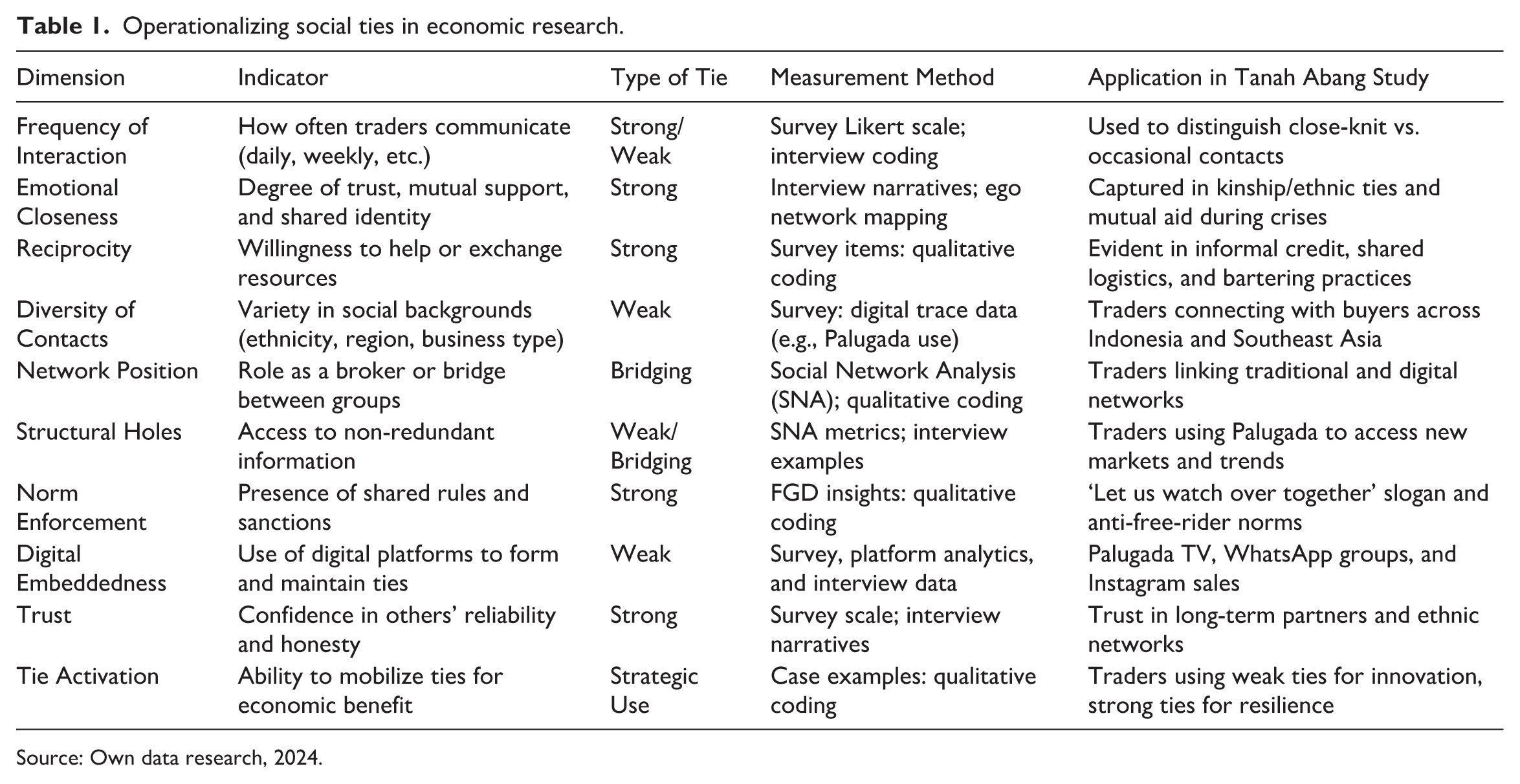
Source: Own data research, 2024.
Population and sampling
This study analyzed the social structure of garment traders in Tanah Abang Market with an emphasis on their relationships, interactions, and networks. The formal and informal bonds formed by each trader shape the social order of the market, influencing the distribution of resources, the flow of information, and the decision-making process. Social dynamics, including trust, cooperation, and competition, have a direct impact on productivity, profitability, growth, and market resilience. To ensure accurate data representation, this study employed a sampling technique based on the Slovin Formula. With a 95% confidence level (α = 0.05) from a population of 4800 traders, a sample size of 370 respondents was obtained, which was then distributed to various stalls in Tanah Abang Market. Then the number of respondents, 370, was distributed to several stalls in Tanah Abang Market as shown in Table 2.
Sampling distribution of garment traders in Tanah Abang market (pasarjaya.co.id, 2024).
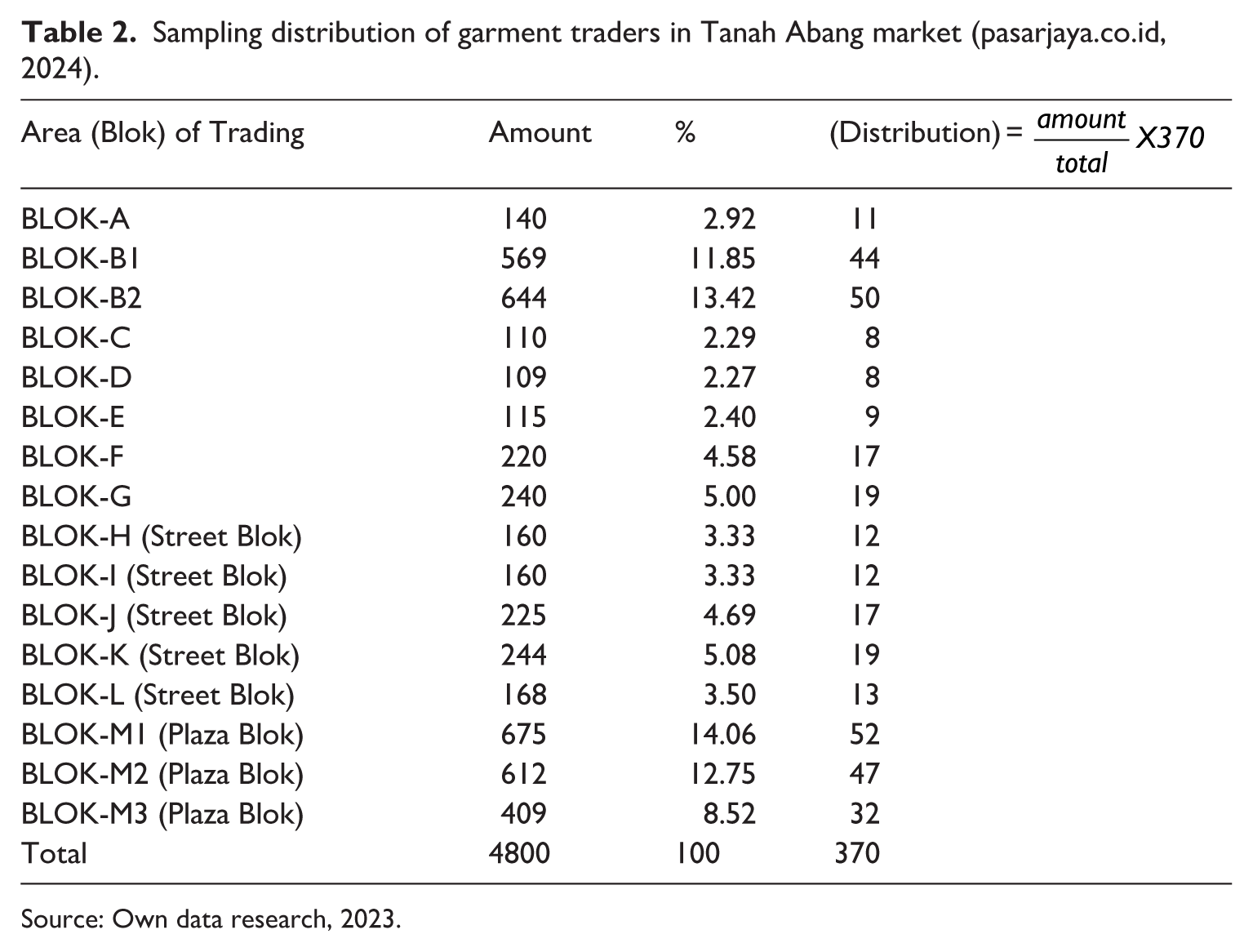
Source: Own data research, 2023.
Hypothesis
Hypothesis (H1 > 0): How does the social structure of Tanah Abang garment traders affect the shape of economic outcomes?
Theoretical hypothesis: The social structure of Tanah Abang Market garment traders, characterized by strong networks, bridging individuals, and embeddedness in the community, significantly influences their economic outcomes. These factors foster trust, facilitate information exchange, promote resource access, and enhance adaptability, thereby increasing the resilience and vibrancy of the market ecosystem. By facilitating the sharing of resources, Knowledge, and best practices; reducing uncertainty; and promoting innovation, the social structure enables traders to capitalize on market opportunities, strengthen their competitiveness, and respond effectively to changing conditions. Consequently, the social structure of garment traders in Tanah Abang Market plays a crucial role in shaping their economic outcomes.
Hypothesis (H2 > 0): How do strong networks and weak networks affect the business sustainability of Tanah Abang Market garment traders during the post-pandemic period?
Theoretical hypothesis: Strong and weak networks play complementary roles in enhancing the business sustainability of Tanah Abang Market garment traders in the post-pandemic period. Strong networks, characterized by close-knit relationships, provide traders with a support system for sharing resources, knowledge, and best practices, ensuring resilience in the face of challenges. Meanwhile, weak networks, comprising loose connections, enable traders to access a broader range of information, opportunities, and innovations, fostering adaptability and growth. Together, these networks facilitate a diverse and interconnected ecosystem that enhances business sustainability by promoting stability, innovation, and competitiveness in the ever-evolving market landscape.
To test this hypothesis, a mixed-methods approach was employed, allowing for a comprehensive understanding of how social structures influence economic outcomes in the context of the Tanah Abang Market.
Operationalization of variables
The independent variable of social structure refers to recurring, patterned arrangements and relationships among actors or social entities that shape their interactions, behaviors, and opportunities. Several indicators can be used to identify and analyze social structure:
- Social positions: roles, statuses, and identities of individuals or groups within a social system.
- Social roles: expectations and norms associated with specific social positions, defining the behaviors, rights, and responsibilities of individuals or groups.
- Social networks: web of relationships and connections among actors, characterized by the flow of resources, information, and support.
- Social institutions: established and organized patterns of social behavior, such as families, schools, religions, and economies, that shape the values, beliefs, and practices of a society.
- Social norms: the unwritten rules and expectations that guide and regulate the behavior of individuals or groups within a social system.
- Power relations: distribution and exercise of power and authority within a social system, shaping the ability of individuals or groups to influence outcomes and control resources.
- Social inequality: unequal distribution of resources, opportunities, and life chances among individuals or groups based on factors such as race, gender, class (scale of business), and age.
- Social change: transformation of social structures over time, driven by factors such as technological advancements, demographic shifts, and globalization (international market).
- Social cohesion: degree of solidarity, trust, and shared values among individuals or groups within a social system, fostering stability, and resilience.
- Cultural values and beliefs: shared attitudes, customs, and ideologies that underpin a social system, influencing the behavior, decision-making, and interactions of individuals or groups.
Dependent variables of economic outcomes refer to the measurable factors that are influenced or determined by other independent variables in a study. In the context of Tanah Abang Market garment traders, the following indicators can be used to assess the dependent variables of economic outcomes:
- Sales revenue: total income generated from the sale of garments, which reflects the traders’ ability to attract and retain customers, as well as competitiveness in the market.
- Profitability: the difference between the total revenue and the total costs incurred in producing and selling garments, which reflects the traders’ ability to manage resources and optimize their production efficiently.
- Market share: proportion of the total market controlled by Tanah Abang Market garment traders, which reflects competitiveness and ability to attract and retain customers.
- Business growth: the increase in the size, scale, and scope of the garment trading businesses over time, which reflects the traders’ ability to adapt, innovate, and expand in response to market opportunities and challenges.
- Employment generation: number of jobs created by Tanah Abang Market garment traders, which reflects the contribution to the local economy and community.
- Innovation: development and adoption of new products, processes, and technologies by Tanah Abang Market garment traders, which reflects the ability to stay competitive and respond to changing market conditions.
- Customer satisfaction: the level of satisfaction and loyalty of customers, which reflects the traders’ ability to meet needs and expectations, as well as their reputation and brand image.
- Resilience: the ability of Tanah Abang Market garment traders to withstand and recover from external shocks, such as pandemic, economic downturns, technology changed, natural disasters, or market disruptions, reflects adaptability and sustainability.
- Social impact: the positive effects of Tanah Abang Market garment traders on the local community, such as poverty reduction, social cohesion, and community development, which reflect contributions to the broader social and economic fabric.
- Financial sustainability: the ability of Tanah Abang Market garment traders to maintain and grow their financial resources over time, which reflects long-term viability and resilience in the market.
Validity and reliability
Before analyzing the relationship between social structure and economic achievement, this study first verifies the quality of the measuring instruments through validity and reliability tests. The test results demonstrated that all indicators accurately measured the intended construct with a high degree of accuracy (value > 0.70) and that there was no overlap between variables. Further findings reveal an excellent level of reliability, with a reliability coefficient ranging from 0.90 to 0.95, indicating optimal measurement consistency. Based on this methodological verification, it can be concluded that the research instrument satisfies the strict standards of accuracy and reliability, enabling the results of advanced analysis and hypothesis testing to be scientifically validated.
Partial least squares structural equation modeling
Convert path diagram into structural model: Partial least squares structural equation modeling (PLS-SEM) as shown in Figure 1:
- Independent variables: Social Structures (SS)
Social Positions (X1) = αX1 SS+ β1 Social Roles (X2) = αX2 SS + β2 Social Networks (X3) = αX3 SS+ β3 Social Institutions (X4) = αX4 SS + β4 Social Norms (X5) = αX5 SS + β5 Power Relations (X6) = αX6 SS + β6 Social Inequality (X7) = αX7 SS + β7 Social Change (X8) = αX8 SS + β8 Social Cohesion (X9) = αX1.9 SS + β9 Cultural Values and Benefits (X10) = αX1.10 SS + β10 αXn = Coefficient SS β1-n = Residual
- Dependent variables: Economic outcomes (EO)
Sales Revenue (Y1) = δX1 EO+ ε1 Profitability (Y2) = δX2 EO + ε2 Market Shares (Y3) = δX3 EO + ε3 Business Growth (Y4) = δX4 EO + ε4 Employment Generation (Y5) = δX5 EO + ε5 Innovation (Y6) = δX6 EO + ε6 Customer Satisfaction (Y7) = δX7 EO + ε7 Resilience (Y8) = δX8 EO + ε8 Social Impact (Y9) = δX1.9 EO + ε9 Financial Sustainability (Y10) = δX1.10 EO + ε10 δXn = Coefficient EO ε1-n = Residual
- Structural relationships (inner model)
The main structural models hypothesized in PLS-SEM notation
Economic Outcomes(EO) = f(Social Structures) + ζEO = γ × SS + ζ
- Conceptual interpretation: 1) Theoretical assumptions: - Causal relationships: social structures influence economic outcomes - Formative model: both constructs (SS and EO) are formed by their indicators - Multidimensionality: each construct has multiple dimensions 2) Parameters to be estimated: - α₁ to α₁₀: Weights for SS indicators - δ₁ to δ₁₀: Weights for EO indicators - γ: Path coefficient between SS → EO - β₁ to β₁₀ & ε₁ to ε₁₀: Residual/error terms 3) Methodological implications: Evaluate the formative model: - Converge validity through redundancy analysis - Significance weights (bootstrapping) - Collinearity indicators Structural model evaluation: - R² for EO - Effect size (f²) - Predictive relevance (Q²)
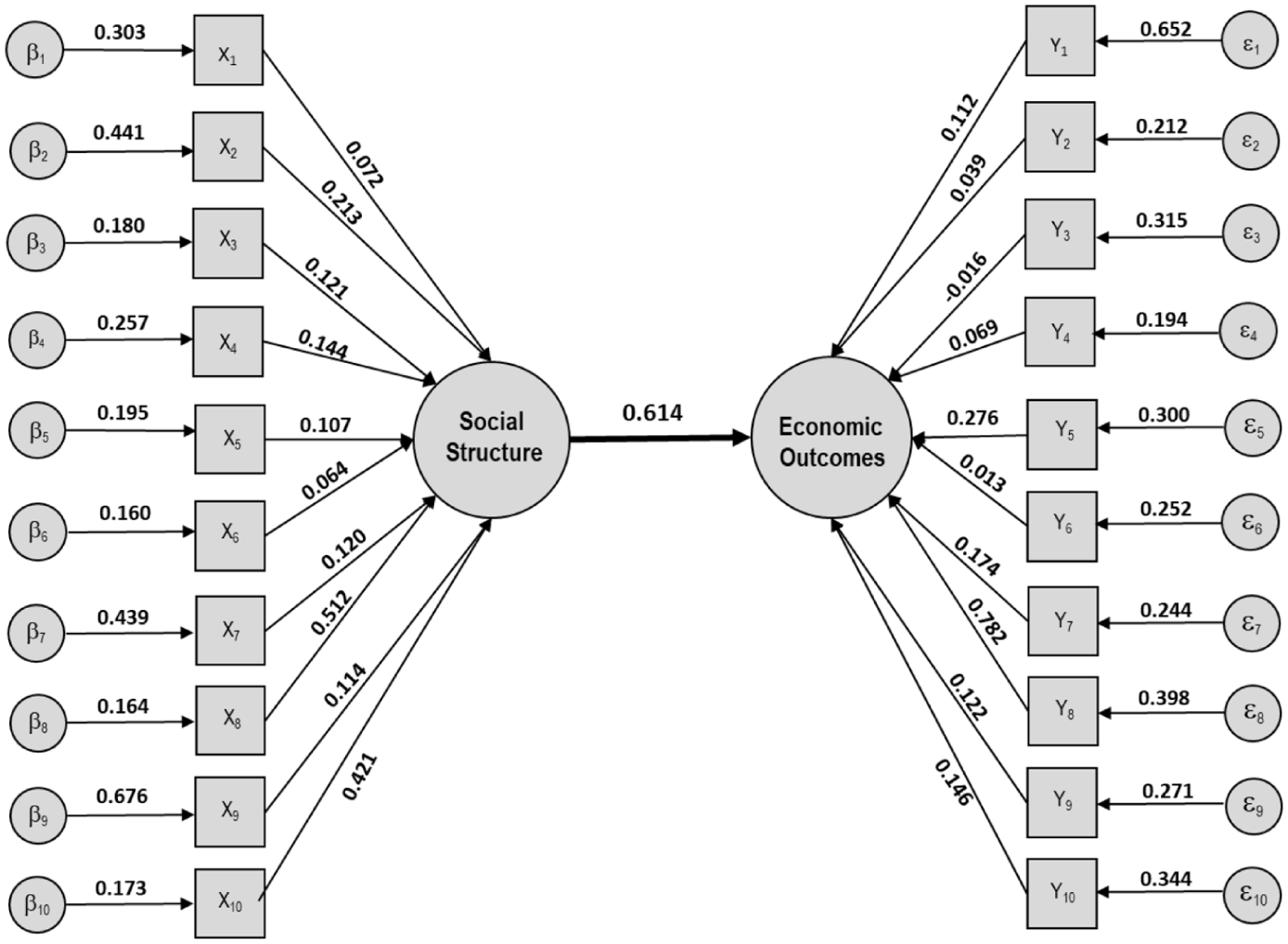
Linkages PLS-SEM model measurement for the influences of social structure (SS) on economic outcomes (EO) in garment traders of Tanah Abang Market (Statistic Analysis Result, 2024).
Hypothesis test
The next step is to perform a t-test and obtain a p-value of 0.01. Because the value ρ < α = 0.05, H0 is rejected, and Ha is accepted. This indicates a significant difference in the impact of social structure (SS) on economic outcomes. Based on structural analysis, Social Structure (SS) has a very strong influence on Economic Outcomes (EO), with a strength reaching 97.4%. This means that changes in SS variables can explain nearly all variations in EO. The relationship is reinforced by significance values well below the standard threshold, indicating that it is genuine and not due to chance. To ensure analytical accuracy, data patterns were examined, and extreme values identified. After removing unnatural residuals through data cleaning, the distribution was deemed suitable for further analysis. This testing confirmed that there were no outliers, with all values within reasonable limits. Thus, as the calculation results in Table 3, the data meet statistical requirements, and the SS–EO relationship is proven to be substantial.
Outlier test results (Statistics Analysis Result, 2024).
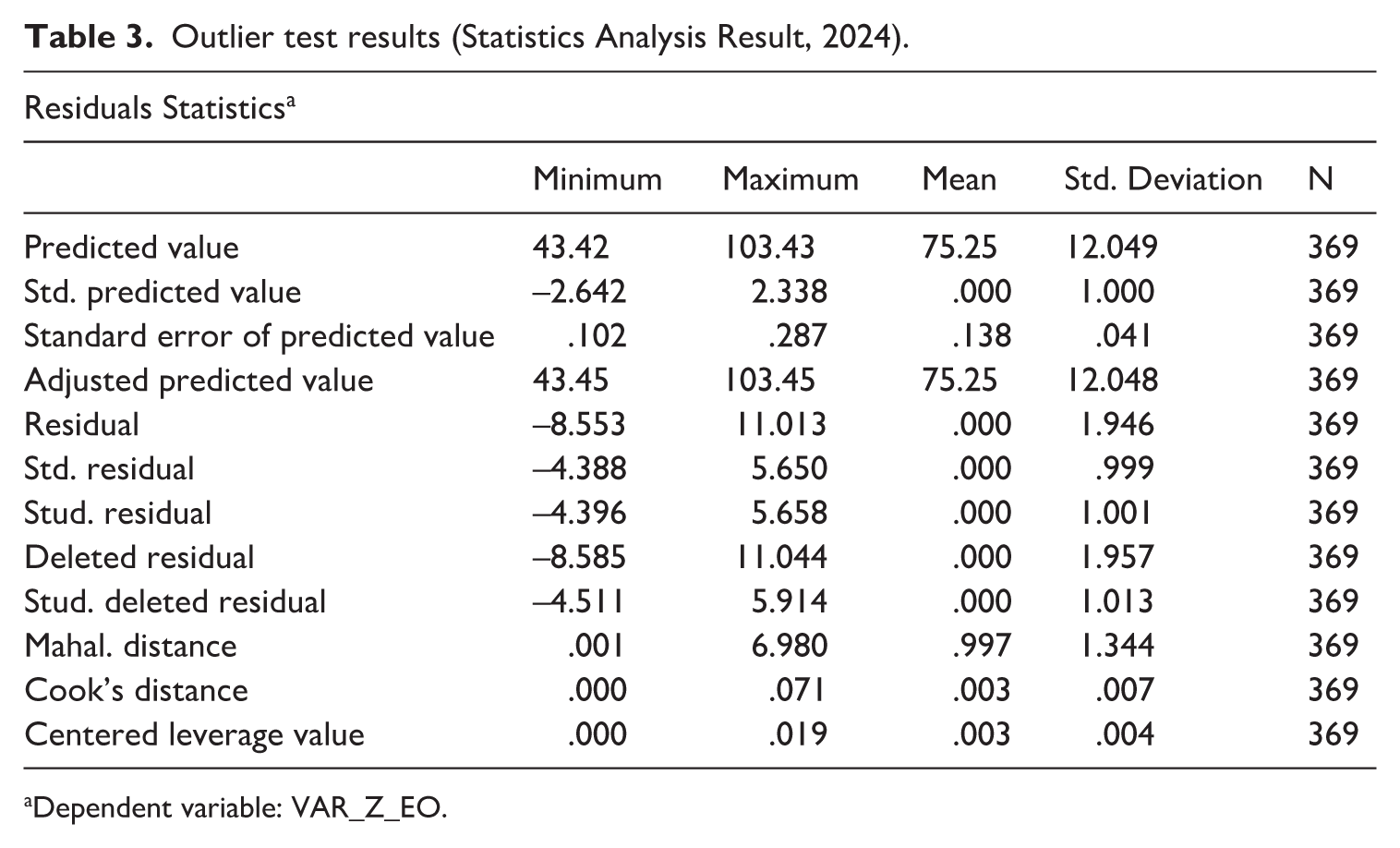
Dependent variable: VAR_Z_EO.
Results and discussion
This section initiates a dialogue between the empirical findings and the theoretical framework of social embeddedness and network theory. By applying Granovetter’s (2020) distinction between strong and weak ties, Burt’s (2015) concept of structural holes, and Portes’s (1998) emphasis on the mobilization of social capital, the study contributes to extant research by demonstrating how hybrid social structures – rooted in both traditional kinship networks and digitally mediated weak ties – shape economic outcomes in informal market settings. The findings from Tanah Abang not only confirm the relevance of these theories in Indonesia and also a Southeast Asian context but also extend them by showing how digital platforms like Palugada reconfigure the boundaries between bonding and bridging capital in post-pandemic economies see (Figure1).
Structural changes in trader networks
The COVID-19 pandemic transformed Tanah Abang’s social structure, as social distancing policies disrupted face-to-face interactions and accelerated a shift to virtual networks, altering network density and function. PLS-SEM analysis confirmed these changes significantly impacted economic outcomes (R² = 0.975, β = 0.987, p < 0.001). FGDs revealed that younger traders led digital innovation, boosting competitiveness. Palugada, a trader-led platform, exemplified this shift by expanding market reach through weak ties (Granovetter, 2021) and by bridging structural holes (Burt, 2015). These digital networks enabled access to diverse information and opportunities, illustrating how the pandemic catalyzed a hybrid model combining strong kinship ties with digitally mediated weak ties.
The social structure of Tanah Abang garment traders plays an important role in shaping the region’s economic outcomes. If the social structure of Tanah Abang garment traders influences the shape of the economy, factors that foster trust, exchange of information, access to resources, and the ability to adapt will also increase. The close-knit community of traders, most of whom are from the same ethnic group and share similar cultural and religious backgrounds, has created a unique social dynamic that influences the local economy in several ways see Table 3 above:
The close social network among the traders of Tanah Abang Market has created a resilient informal economic ecosystem, supported by three main pillars. First, collaborative economic practices such as unsecured credit systems, barter, and resource exchange not only expand economic access but also strengthen the social cohesion of communities (Sanz-Blas et al., 2021; Xie et al., 2023). Second, this solidarity gives birth to a collective protection system through the collection of shared resources that function as a safety net during economic crises (Guy, 2023). Third, this culture of trust extends to form strong and sustainable merchant-consumer relationships (Horan, 2022). This reality shows that the community has developed as a collaborative entrepreneurial ecosystem where knowledge exchange, business opportunity identification, and product innovation take place collectively. This pattern of interaction creates a cycle of continuous competitiveness enhancement that is a distinctive strength of traditional markets in the midst of global challenges.
The following is a summary of key findings from the FGD regarding the impact of changes in the social structure of Tanah Abang Market on economic outcomes: One significant change is the increasing involvement of younger generations in this business. They bring fresh ideas, utilize technology for product marketing, and update business strategies. This has enhanced the overall competitiveness of the market. As the initiators of Palugada Tanah Abang, efforts have been made to make Tanah Abang traders digitally savvy in selling their products and to strengthen the spirit of traders in restoring Tanah Abang Market’s reputation as the largest textile wholesale centre in Southeast Asia. The primary goal is to provide a solution that connects wholesale traders with potential buyers from all regions of Indonesia, as well as internationally, including Malaysia, Singapore, the Philippines, and Vietnam. [Informant] This year will see the launch of Palugada TV (the context of Tanah Abang Market traders, the idea and initiation of social media accounts collectively through Palugada ‘anything you want, I have it’ are noteworthy), the YouTube channel that reviews wholesale stores in Tanah Abang, covering fashion trends and flagship products. The target for 2023 is to have 2,000-3,000 active traders. Since its establishment in July 2020, the sales system involves providing contact information to the stores, the funds go directly to the seller’s account, and Palugada does not charge any fees. They serve as a platform for the sellers. Revenue is generated through exclusive advertisements in stories, with charges ranging from 30,000 to 40,000 per appearance. It is important to note that Palugada does not handle transactions. [Informant] The economic growth around Tanah Abang is closely linked to social changes in the market. The greater the involvement of business players, the more significant the contribution to the local economy. Furthermore, improved collaboration among traders and the community’s role in supporting small businesses also accelerates economic growth. [Informant] So far, the government has provided quite substantial support. They have opened opportunities for training and mentoring for small business actors, provided adequate infrastructure, and created a conducive business environment. However, there are still some obstacles that need to be addressed, such as licensing and bureaucracy, which sometimes still impede the process. With continued attention to the social structure of the market, coupled with sustained government support, traders believe that Tanah Abang Market will continue to develop into a stronger economic center. This not only benefits the traders but also the surrounding community, who will experience its positive impact in the form of job opportunities and more inclusive economic growth. [Informant] At the individual trader level, our survey data (N = 370) reveal that 68% maintained strong ties with family suppliers, while 72% established new weak ties through digital platforms. Qualitative interviews contextualize these numbers, with one trader noting: ‘My cousins give me credit when sales are low (strong tie), but Instagram buyers bring new designs (weak tie) ’ [Informant]
The dense networks among Tanah Abang traders are upheld by enduring and emerging norms of mutual assistance, which transcend individual backgrounds and sustain economic outcomes amid evolving social structures. A shared awareness to guard against free-rider interests – external actors who benefit without contributing – has become a critical norm (Deng et al., 2023; Sanz-Blas et al., 2021). Palugada’s participation rules, limited to verified stallholders, reinforce this norm by protecting traders from fraud. These mechanisms institutionalize collective integrity, ensuring that the benefits of digital platforms remain within the community and reflect a deep commitment to safeguarding shared economic interests.
With this change (utilizing digital marketing), collective rules or norms in the market also transform, becoming more open and inclusive. Traders are more willing to share knowledge and experiences, fostering a spirit of mutual assistance and collaboration that, in turn, enhances productivity and collective progress. Tanah Abang traders are familiar with diverse customs, religions, and ethnicities; all share a strong commitment to peace. This value underlies the establishment of norms to safeguard and avoid conflicts with the slogan, ‘Let us watch over together, ’ ensuring that no one exploits our accounts for their benefit, to the detriment of us, the Tanah Abang traders themselves. The approach involves collective monitoring, preventing individuals with the potential to harm the reputation of the Tanah Abang market from taking advantage. For instance, many foreign’ shops pay us well the first or second time, but then default. It is a pity, not only losing profits but also the capital. Therefore, it is now agreed upon that both foreigners and locals should make cash purchases. [Informant] Commitment and awareness of common interests have become strong norms, serving as the foundation for penalties in the event of potential deviations. At the very least, the commitment to these norms acts as a filter, making deviations from existing norms more challenging to execute or conceal. [Informant] Social networks play a crucial role in the success of this market. Weak ties help expand market reach and acquire up-to-date information. On the other hand, strong ties, such as close relationships among traders, can form robust alliances to face business challenges and collectively share resources. [Informant] The role of individuals or groups acting as bridges between traders or filling structural holes is crucial. They can connect people, information, resources, or business opportunities that might not have occurred without their involvement. This creates a healthy dynamic in the market. [Informant] Attachment to the community or the surrounding environment is highly significant. Traders who feel well-connected to their surroundings tend to be more concerned about social and economic issues. This fosters a more stable and sustainable economic sustainability because they are not only focused on personal gain but also collective well-being. [Informant]
Tanah Abang Market’s historical diversity fosters both lasting and changing norms rooted in traditional values. Ethnic groups support each other by resisting municipal enforcement (civil service police unit), thereby strengthening unity. Collective actions based on shared norms effectively solve free-rider problems through internal agreements mediated by social media, where equality is key (English et al., 2023; Sanz-Blas et al., 2021; Wang and Ma, 2022). Social media broadens trader networks, providing more opportunities, but it also decreases network density, weakens connections, and increases vulnerability to misinformation and fraud (English et al., 2023; Granovetter, 2021). These dynamics influence economic outcomes, especially during the COVID-19 pandemic.
Economic outcomes shaped by social ties
Regression analysis confirms that social structure variables – such as norms, cohesion, and network strength – strongly predict profitability, innovation, and customer satisfaction (p < 0.01). Strong ties, rooted in ethnic, familial, and religious homophily, provided emotional support, trust, and informal credit, enabling resource pooling during the pandemic. Meanwhile, weak ties offered access to non-redundant information and broader markets, as seen in traders using Palugada to reach buyers in Malaysia, Singapore, and Vietnam. Informants emphasized this duality: strong ties ensured resilience, while weak ties enabled adaptability. Together, bonding and bridging capital sustained traders’ economic viability amid crisis and opportunity.
This study distinguishes traditional strong ties – kinship-based, high-trust relationships (Granovetter, 2020) – from modern weak ties formed via digital platforms, which offer informational diversity. Tanah Abang traders use strong ties for crisis resilience (e.g. resource sharing) and weak ties for innovation and market expansion (e.g. Palugada). This duality extends Granovetter’s theory by showing how socio-technological shifts reshape informal economies. However, as Portes (1998) notes, social capital depends not just on access but on practical use. Some ties remain inactive due to barriers, while others lack complementary value. Successful traders strategically activate both ties through trust and reciprocity.
This study hypothesizes that the sustainability of garment traders’ businesses in Tanah Abang Market is supported by synergy between two types of social networks. A strong network, in the form of close and intensive relationships, provides a foundation of resilience through the support of reliable resources and knowledge. While the network is weak, it consists of wider connections, opening up access to fresh information, new opportunities, and innovation. The combination of these two forms of networking creates an optimal balance between stability and adaptability, allowing traders to not only survive amid market uncertainty but also continue to thrive through continuous increased competitiveness. In other words, a strong network helps Tanah Abang garment traders survive the post-pandemic market through resource sharing and collaboration (Aripin et al., 2018; Gao and Kuah-Pearce, 2015). While weak networks provide access to new information, innovation, and diverse stakeholders (Gupta et al., 2020). The combination of the two increases competitiveness and adaptability in a changing market.
The interplay between traditional and digital embeddedness
Tanah Abang traders integrate traditional and digital social capital for business resilience. Trust-based networks remain the pillars of the crisis, while digital platforms such as WhatsApp and Palugada TV are used for promotion and coordination. The Palugada verification system ensures security while expanding market reach. This synergy supports Portes’s theory of the strategic use of social capital. The digital connection through Palugada represents Granovetter’s ‘bridging capital’ that connects traders with new information and opportunities, in line with Burt’s theory of innovation through bridging structural gaps.
Technology intermediaries allow Tanah Abang traders to build cross-regional and international networks through social media and virtual groups, helping them overcome uncertainty by relying on diverse networks (Deng et al., 2023). Although the enforcement of norms such as the prevention of free riding is a challenge, the developing network actually allows the flow of information through weak ties. Weak bonds are a valuable resource for finding new opportunities outside of familiar groups (Deng et al., 2023; Qin et al., 2023). In a dynamic network, traders access vital information through a bond with a remote trader, illustrating Granovetter’s ‘weak bond strength’ (Su et al., 2023). Although less emotionally intense, this bond disseminates more information between disconnected groups. From an ‘antenna-aerial’ perspective, weak bond connections increase large-scale knowledge flow more effectively than strong bonds (Lawless, 2025; van Stekelenburg et al., 2023), making them essential for market innovation and responsiveness (see Figure 2).
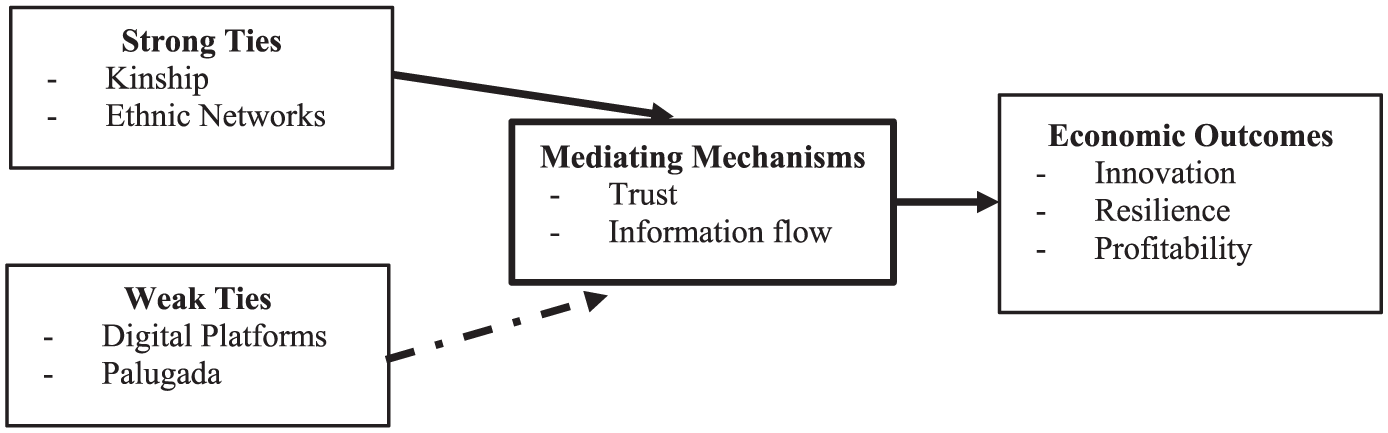
Thematic model of social structure influences on economic outcomes among Tanah Abang garment traders.
This diagram illustrates the integrated influence of social structure dimensions – such as social norms, networks, and embeddedness – on economic outcomes including innovation, resilience, and profitability. It reflects the dual role of strong and weak ties, showing how traditional and digital networks interact to shape trader sustainability in the post-pandemic context. The model synthesizes both quantitative (PLS-SEM) and qualitative findings into a cohesive framework. Research so far tends to reveal the positive aspects of hybrid networks (combined traditional-digital) during and after the pandemic, with a focus on the success of traders surviving through mutually supportive strategies.
However, this criticized narrative often ignores the group of traders who are actually thrown out of the hybrid network system. In times of crisis such as the pandemic, solidarity and collective resilience do seem more prominent. It is precisely in stable economic conditions that more complex dynamics need to be examined – how competition strengthens, networks weaken, and social exclusion mechanisms work in hybrid ecosystems. It is important now to divert research focus on how the stable economic condition will reveal the dark side of hybrid networks that have been neglected.
Conclusion
This study demonstrates that the transformation of social structures among Tanah Abang garment traders significantly influences their economic outcomes, especially in Indonesia’s post-pandemic recovery. Organized into three thematic levels – network transformation, economic outcomes, and hybrid embeddedness – the findings reveal how social capital operates in informal economies. The COVID-19 pandemic accelerated a shift from kinship-based strong ties to digitally mediated weak ties, expanding market access and information flow. Platforms like Palugada exemplify how weak ties bridge structural holes and foster innovation. Quantitative analysis confirms a strong relationship between social structure and economic outcomes (β = 0.987, R² = 0.975, p < 0.001). Strong ties offered resilience through trust and mutual aid, while weak ties enabled adaptability and growth. This coexistence forms a hybrid model where traditional norms of solidarity align with digital norms of openness. The study advances network theory by showing how bonding and bridging capital can be strategically combined to enhance resilience, innovation, and sustainability in dynamic market environments.
Footnotes
Acknowledgements
The author gratefully acknowledges Universitas Nasional for institutional support provided during the research and writing of this article. Appreciation is also extended to the informants whose insights contributed to a clearer understanding of the subject. The author further thanks Bhakti Nur Avianto for assistance with data processing and technical support. The contributions of all parties made this article possible.
Data availability statement
The data supporting this study’s findings were collected through surveys, interviews, and focus group discussions with garment traders in Tanah Abang Market, Jakarta, Indonesia. Due to confidentiality agreements with participants and ethical considerations, the raw data are not publicly available.
Funding
The authors received no financial support for the research, authorship, and/or publication of this article.
