







Abstract
Task repetition facilitates learners’ performance, at least temporarily: Since learners are already familiar with the content of the task at the initial enactment, they are capable of focusing their attention on linguistic form during the following enactment. However, the analysis in previous studies treated various aspects of ‘form’ as one package. This study examined learners’ attention shifts during repeated task engagement by methodological triangulation. The experiment required 28 Japanese learners of English to perform narrative tasks twice. Learners’ performance was analysed, and the protocol data elicited by stimulated recall were coded along their attention orientations. The result partially supported the form-focused effects of task repetition: learners focused more on the syntactic encoding process and less on the conceptualizing process at the second task enactment when they engaged in the same task twice. Possible theoretical and pedagogical implications are discussed.
I Introduction
The effect of repeated task engagement on learners’ performance has been investigated in many previous studies (e.g. Ahmadian & Tavakoli, 2011; Bygate, 1996; Gass, Mackey, Alvarez-Torres, & Fernández-García, 1999). The first performance in task repetition is considered to be preparation for a subsequent performance, and task repetition is said to be useful in facilitating learners’ performance at the second enactment. Learners familiarize themselves with content at the initial task performance, and this frees up their attentional resources that would otherwise be focused on the content. As a result, learners have more processing space available for formulating the language to accomplish the task in the second performance (Gass et al., 1999; Bygate, 2001; R. Ellis, 2003). Thus, learners are able to pay attention to linguistic form at the second performance, which results in an increase of measured performance scores.
The logic underlying this explanation is largely based on Levelt’s (1989) speech production model for monolingual speakers. According to Levelt, the language production system is composed of the relationships among three distinct specialists: the conceptualizer, the formulator, and the articulator. First, the conceptualizer generates the communicative intentions. Here, communicative goals/intentions are elaborated. The speaker selects the information to be encoded and decides on the order in which this information will be conveyed. Then, the speaker decides on the perspective that they need to take in conveying message. The former process is called macroplanning, and latter is called microplanning. The outputs of the conceptualizer, preverbal messages, are sent to the formulator. The preverbal messages contain all the information that is necessary to convert meaning into language. The preverbal message is converted into a phonetic plan in the formulator by selecting the appropriate lexical units and applying grammatical and phonological rules. Grammatical encoding involves lexical encoding and syntactic encoding. Here, a speaker accesses the mental lexicon, which consists of two lexical entries: lemmas that contain syntactic information about the lexical entry, and lexemes that store information about the morphophonological form of the lexical entry. Finally, the articulator encodes and articulates linguistic units as a sound.
Kormos (2006) developed a speech model for second language (L2) speakers, and maintains that ‘there is a common episodic and semantic memory for L1 [first language] and L2, a shared store for L1 and L2 lemmas and lexemes’ (2006: 167). She emphasizes the necessity to postulate L2 specific knowledge, which is a declarative memory of grammatical and phonological rules. Proficient L2 learners do not rely on the separate declarative knowledge. However, low proficiency learners tend to use the declarative knowledge of grammatical and phonological rules consciously. For fluent language use, L2 learners have to automatize processes such as grammatical and phonological rule operations and lexical retrieval.
On the basis of this theoretical rationale, Bygate (1996) maintains that learners are primarily concerned with the conceptualizing process at initial task performance. They focus on content rather than form at the initial performance, and this phase allows learners to familiarize themselves with the content of the task. Bygate and Samuda (2005) postulate that ‘part of the work of conceptualization, formulation and articulation carried out on the first occasion is kept in the learners’ memory store and can be reused on the second occasion’ (2001, p. 29). That is, task repetition is useful for learners not only to familiarize themselves with the content of the task, but also to reuse the previous linguistic work via memory retrieval. This reuse of the work of processing at the initial enactment results in the freeing-up effect at the following enactment. Related to this perspective, task repetition is also considered to be effective for automatization (Date, 2013; De Jong & Perfetti, 2011; Suzuki & DeKeyser, 2013) through the repetition of speakers’ selection of words, morphemes, and grammatical structures. The repeated retrieval process in the formulator module can be expected to push L2 dependency on declarative knowledge to procedural knowledge.
Task repetition is also mentioned in connection with attention to linguistic form. As noted previously, learners have enough spare capacity to focus their attention on form at the second task enactment. Skehan (1998), and Skehan and Foster (2001) also argue that cognitive demands on content result in less attention being available to be devoted to the language because simultaneously focusing attention on meaning and form results in cognitive overload for L2 learners (McLaughlin, Rossmann, & McLeod, 1983; VanPatten, 1990). This is documented as ‘trade-off hypothesis’ (e.g. Skehan, 1998), which maintains that learners have limited attentional capacity and must prioritize where they allocate their attention. The priorities are considered to be manipulable by repetition, pre-task planning, and manipulating the task takers’ familiarity and strength of tasks’ story line (e.g. Bygate, 1996, 1999; Foster & Skehan, 1996; Skehan, 1998; Skehan & Foster, 1999; Tavakoli & Foster, 2008). As for task repetition, learners tend to pay attention to meaning at first, but the freeing-up effect induced by task repetition allows learners to switch their attention to the monitoring and selection of appropriate language production in the repeated task (Bygate, 1999). Hence, from this point of view, easing cognitive demands on content by task repetition is considered to be useful for successful grammar instruction.
However, a temporal increase in learner performance alone, such as in complexity, accuracy, and fluency (CAF), cannot prove L2 acquisition or improvement of the interlanguage system, as R. Ellis (2005) argues. That is, changes of CAF in a one-shot performance do not indicate learning or homeostatic development of learners’ performance. Also, the analysis of learners’ performance still does not make clear whether learners can actually focus their attention on linguistic form during their speech production. However, previous task-repetition studies have used performance analysis to discuss attention orientation during task performance, and argued that attention during task performance was the determinant variable in learner’s linguistic development. This is often shown in not only studies in task-repetition (e.g. Bygate, 1996, Gass et al., 1999), but also studies related to task based language teaching (TBLT; e.g. Ellis & Yuan, 2005; Fujita, 2011; Yuan & Ellis, 2003). For example, previous studies on task repetition (e.g. Bygate, 1996, Gass et al., 1999) attempted to investigate the effects of task repetition on attention to linguistic form empirically. Bygate (1996), which is the first study to explore the effect of task repetition on L2 cognitive processing, required L2 learners to watch a short video (about 90 seconds) and then immediately narrate it. Learners engaged in this task twice. The results of the study supported the effectiveness of task repetition on attention to linguistic form because learners produce more complex speech at the second enactment than the initial one, and they reuse certain phrases. In a similar manner, Gass et al. (1999) conducted an experiment involving 104 Spanish language learners. This study also required learners to narrate a short video, but asked to engage in the tasks four times. The results showed the increase of overall proficiency, of accuracy in morphosyntax, and of using less common words (increase of lexical variety). Thus, attention shifts in repeated task enactment have been observed by performance analysis.
Admittedly, measuring attention through performance analysis is a commonly used method in task-based language teaching research (e.g. Foster & Skehan, 1996, 1999; Robinson, 1995; 2001). It is a broadly accepted notion that fluency reflects the learners’ focus on meaning, and attention to form can be observed by measuring performance, such as the complexity and accuracy of learners’ production. Hulstijn and Hulstijn (1984), for example, show that attention to form positively affects learners’ accuracy. However, the opposite remains unproved. That is, there has been very limited evidence that learners’ accuracy guarantees that they pay attention to form. Fukuta and Yamashita (2014) shows the differences between the analysis of performance data (in terms of CAF) and of protocol data extracted by stimulated recall, and indicates the difficulty of identifying learners’ attention orientation by performance analysis. They argue that analysis of CAF has too poor resolution as a measure of attention to form because it is impossible to determine whether the increase of accuracy score is the result of attention to linguistic form or due to avoidance of that which is not well known and thus that might provoke errors.
In reaction to the difficulty of measuring attention, Izumi and Bigelow (2000) suggested the implementation of methodological triangulation. Therefore, the present study attempts to combine the use of performance (CAF) analysis and a retrospective interview (stimulated recall) as methodological triangulation.
Specifically, this study attempts to examine the effects of task repetition on learners’ attention orientation by comparing data of attention shifts during repeated task engagement. The differential effects of performance of the same task (the experimental group) and a new task of the same type (the comparison group) are also compared.
Perspectives from the experiment will complement findings form longitudinal task-based language teaching exploring facilitative effects on learners’ linguistic development; more specifically, we can judge whether attention is actually induced by repeated task engagement. The research questions in the present study are as follows:
1. In what way does task repetition influence attention orientation?
In order to answer this question, I set the following detailed research question:
2. What is the difference in attention orientation between learners who perform the same task twice and learners who do a new task of the same type?
II Method
1 Participants
There were 28 participants in this study, who were undergraduate and postgraduate students, aged 22 to 24. All of the participants had learned English as a foreign language, began studying English in junior high school, and were formally instructed in Japanese at junior and senior high school. Their academic majors included international development, economics, law, and international communication. Fifty percent of the participants (n = 14) were male, and 50% were female. Their proficiency levels were estimated from the reported score of TOEIC (M = 821.75, SD = 65.95, Minimum = 655, Maximum = 935). This score showed that the participants had an upper-intermediate proficiency level of English (B2), according to the Common European Framework of Reference (CEFR). Some of them had experience studying abroad (0 to 12 months, M = 4.25; SD = 5.20) in the Australia, the UK and the USA.
2 Procedures
For each recording and activity, the participants individually met a researcher in a quiet room. All participants engaged in narrative tasks of six-frame cartoons. The tasks used in the present study were extracted from Heaton (1997), ‘A surprise’ and ‘The chase’. The two cartoons have similar structures (both have six frames and a clear punch line), and the topic was different. Therefore, the two tasks were regarded as the same type, but as different tasks.
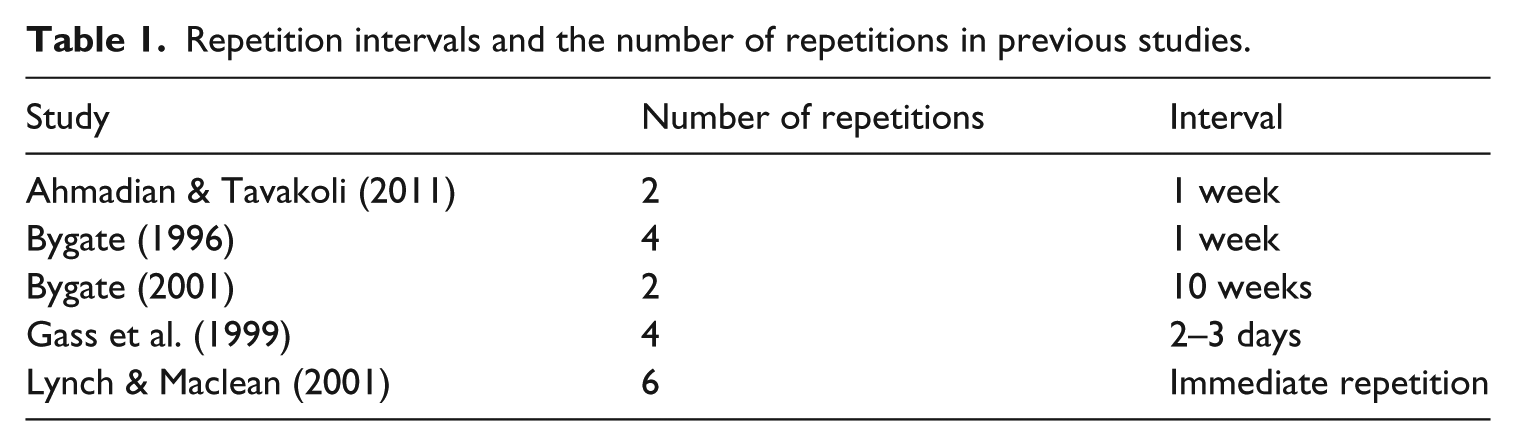
In terms of repetition intervals and numbers of repetitions, previous studies varied considerably (Table 1). The present experiment was conducted twice with a one-week interval. This was because many college courses have one class a week, so this interval is comparable to practical reports by language teachers in universities.
Repetition intervals and the number of repetitions in previous studies.
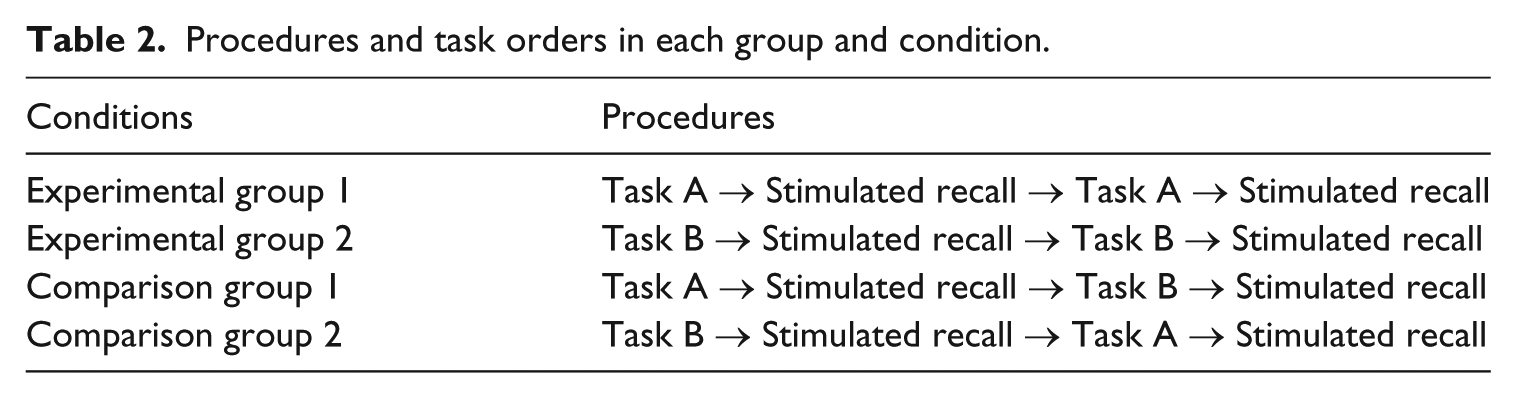
There was a comparison group and an experimental group. The participants were randomly assigned into one of these groups. They were required to provide narration to accompany each picture in order. They were instructed to ‘narrate the story so that even someone who has not seen the cartoon could understand the story’, and the same instruction was used in both the first and second enactment. Immediately after the speech production, retrospective interviews (stimulated recall) were conducted along with listening to their own speech production. 1 This recall was prompted at the time when participants produced an Analysis of Speech Unit (AS-unit; Foster, Tonkyn, & Wigglesworth, 2000), which included disfluency markers. These retrospective interviews were conducted in their native language, Japanese. (All transcribed data shown in the article were translated to English). One week later, the participants in the experimental group were shown the same task as they had performed in the first trial, and asked to describe the cartoon in the same manner. The participants in the comparison group were given the same type of task with a different picture. The experiment was conducted twice with a one-week interval in between. Since it has been acknowledged that topic of tasks strongly affect learners’ performance such as lexical variety (Vermeer, 2000), task orders and task types were counterbalanced as in Table 2.
Procedures and task orders in each group and condition.
3 Scoring and analysis
In terms of performance data, the degrees of speech complexity, accuracy, and fluency were analysed. In this study, the following commonly used indices were chosen:
syntactic complexity: clauses per AS-unit;
accuracy: the percentage of error-free AS-units;
fluency: pruned words per minute;
lexical variety: Guiraud Index.
The statistical test was conducted and the effect size was also considered, in terms of Cohen’s (1988) criteria: small: r = .10; medium, r = .30; and large: r = .50.
AS-unit was developed from T-unit (minimally "terminable unit" for written production) or c-unit (communication unit) for analysis of speech production (Foster et al., 2000). The AS-unit is defined as ‘a single speaker’s utterance consisting of an independent clause, or sub-clausal unit, together with any subordinate clause(s) associated with either’ (Foster et al., 2000, p. 365). A clause per AS-unit is calculated using the total number of clauses divided by the total number of AS-units. This index refers to the number of clauses included in an AS-unit, and has been considered to be a measure of syntactic complexity. This study assessed fluency by pruned words per minutes. ‘Pruned words’ is the number of words excluding self-repaired words or words that the speaker repeated, as defined by Foster et al. (2000). Lexical aspects produced by the learners were assessed by Guiraud Index (GI). GI is considered to reflect one’s lexical variety (Biber, 1988) and calculate as the number of word types over the square root of the word tokens. The Guiraud Index is relatively insusceptible to text length, which possibly distorts some other indices of lexical variety. The retrospective interview data were basically coded in terms of a coding scheme proposed by Fukuta (2014), and identified the attention orientation (conceptual, syntactic, phonological, and lexical aspects).
First of all, five disfluency markers (false starts, repetition, pause, filler, and self-repair) were identified from the learners’ speech production. From the retrospective interview data corresponding to each disfluency marker, specialists (Levelt, 1989) in the process of speech production were identified. The specialists consist of conceptualizing, formulating, and monitoring processes. Examples are as follows:
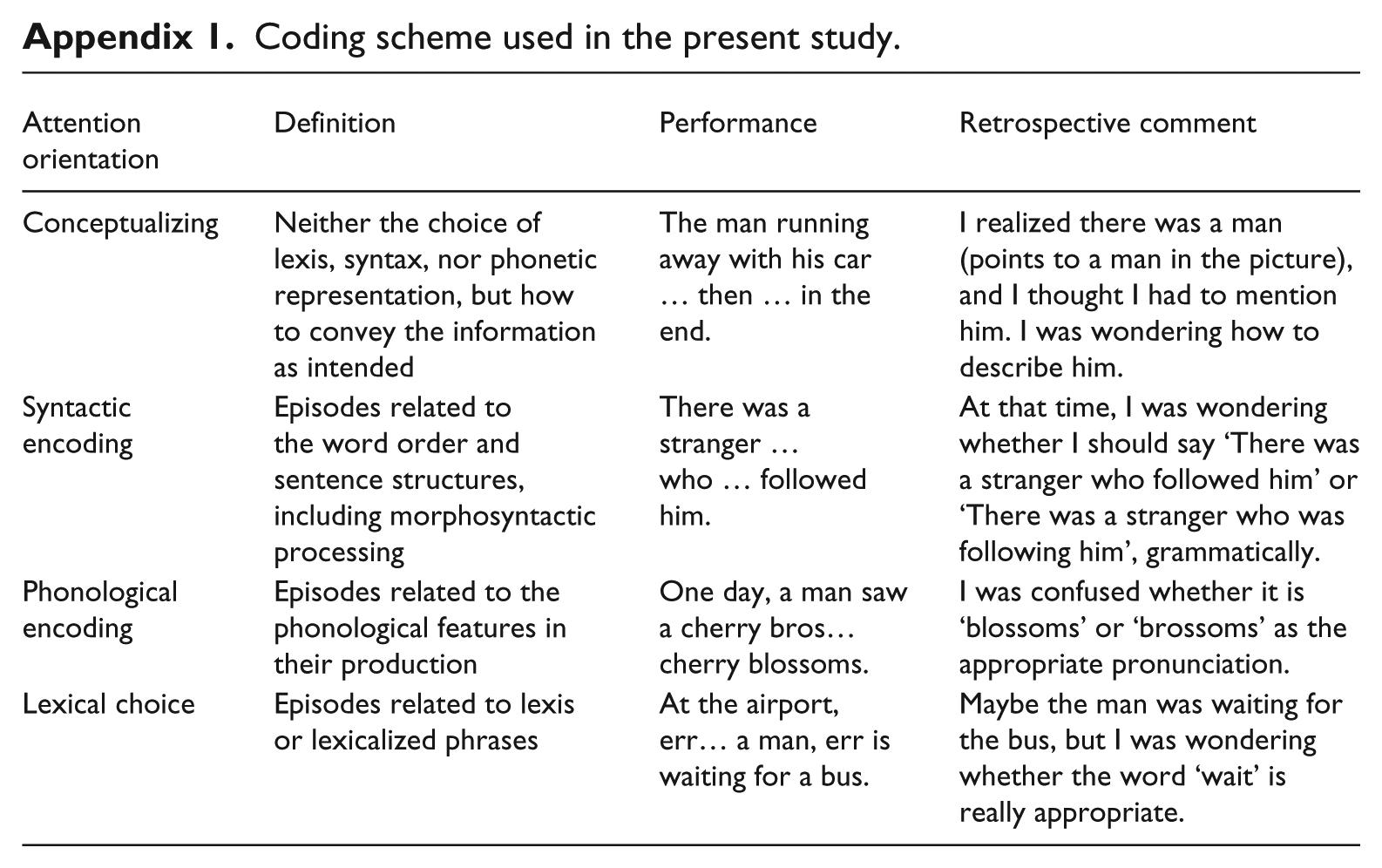
Example 1: The man running away with his car … then … in the end. [Retrospective comment]: I realized there was a man (points to a man in the picture), and I thought I had to mention him. I was wondering how to describe him. (Conceptualizing process) Example 2: The boy … suddenly noticed the man … who … followed him. [Retrospective comment]: At first, I said ‘the boy noticed the man,’ and after that, I wanted to explain that a man followed him, so I put ‘who’ after the first sentence, and thought about word order for an appropriate expression. (Formulating process)
The participant in Example 1 was wondering what to say to describe the picture in the task. This is what Levelt (1989) called ‘microplanning’. At that time, the speaker intended to describe other things in the picture, but the speaker was thinking about what they had to say next, and was elaborating their communicative intention by selecting the information whose expression may realize the communicative goals. In this case, the speaker was thinking of neither the choice of lexis, syntax, nor phonetic representation, but how to convey the information as intended. Therefore, the episode in Example 1 was coded as a conceptualizing process.
As Levelt (1989) pointed out, each process for language production overlaps more than a little, and therefore it is not easy to distinguish the conceptualizing and formulating process. The present study coded an episode as formulating process when the episode was related to formal manipulation for language production, even if conceptualizing-like processes were included. The participant in Example 2 was thinking about what they had to say to express their communicative intention in a similar manner as the participant in Example 1, but Example 2 showed the participant also syntactically manipulated word order. Hence, the episode was coded as a formulating process.
Subsequently, episodes of the formulating process were classified in detail. In this phase, attention focused on three components, namely, syntactic encoding, phonological encoding, and lexical choice, was also identified.
Example 3: There was a stranger … who … followed him. [Retrospective comments]: At that time, I was wondering whether I should say ‘There was a stranger who followed him’ or ‘There was a stranger who was following him,’ grammatically. (Syntactic encoding) Example 4: At the airport, err… a man, err is waiting for a bus. [Retrospective comments]: Maybe the man was waiting for a bus, but I was wondering whether the word ‘wait’ is really appropriate. (Lexical choice) Example 5: One day, a man saw a cherry bros… cherry blossoms. [Retrospective comment]: I was confused whether the appropriate pronunciation is ‘blossoms’ or ‘brossoms’. (Phonological encoding)
Episodes related to word order and sentence structure, including morphosyntactic processing, were classified into ‘syntactic encoding’ (Example 3). If episodes were related to lexis or lexicalized phrases like Example 4, they were coded as ‘lexical choice’. If learners referred to phonological features in the production, as in Example 5, episodes were categorized as ‘phonological encoding’. Finally, episodes of the following type were coded as ‘others’.
[Retrospective comment]: Umm… I cannot remember what I was thinking at that time.
Example 6 is a case in which the learner cannot recall what they thought because time had passed since engaging in the task activity. Since such episodes cannot be categorized as attention to form or meaning, this episode was coded as ‘others’ and excluded from the analysis. By this analysis, the orientations of learners’ attention allocation (i.e. to lexical, phonological, and syntactic aspects) were identified and analysed. Ten percent of all the episodes induced by the method were analysed by a second coder and obtained 90.4 percent agreement. After the discussion to resolve disagreement, the first author analysed all the data.
III Results
1 Performance analysis
Table 3 shows the descriptive statistics of each performance measure. The scores at the first and second performances were subjected to Welch’s t-test. 2 Concerning the fluency scores, the difference between the first and second enactments in the experimental group was larger than that in the comparison group. However, t-test showed that the differences of fluency scores were not statistically significant, with small effects in both groups (Experimental: t [13] = 1.03, p = .31, r = 0.28; Comparison: t [13] = 0.78, p = .44, r = 0.21).
Descriptive statistics of the measures of fluency, complexity, and accuracy in each group in the initial (first) and following (second) trials.
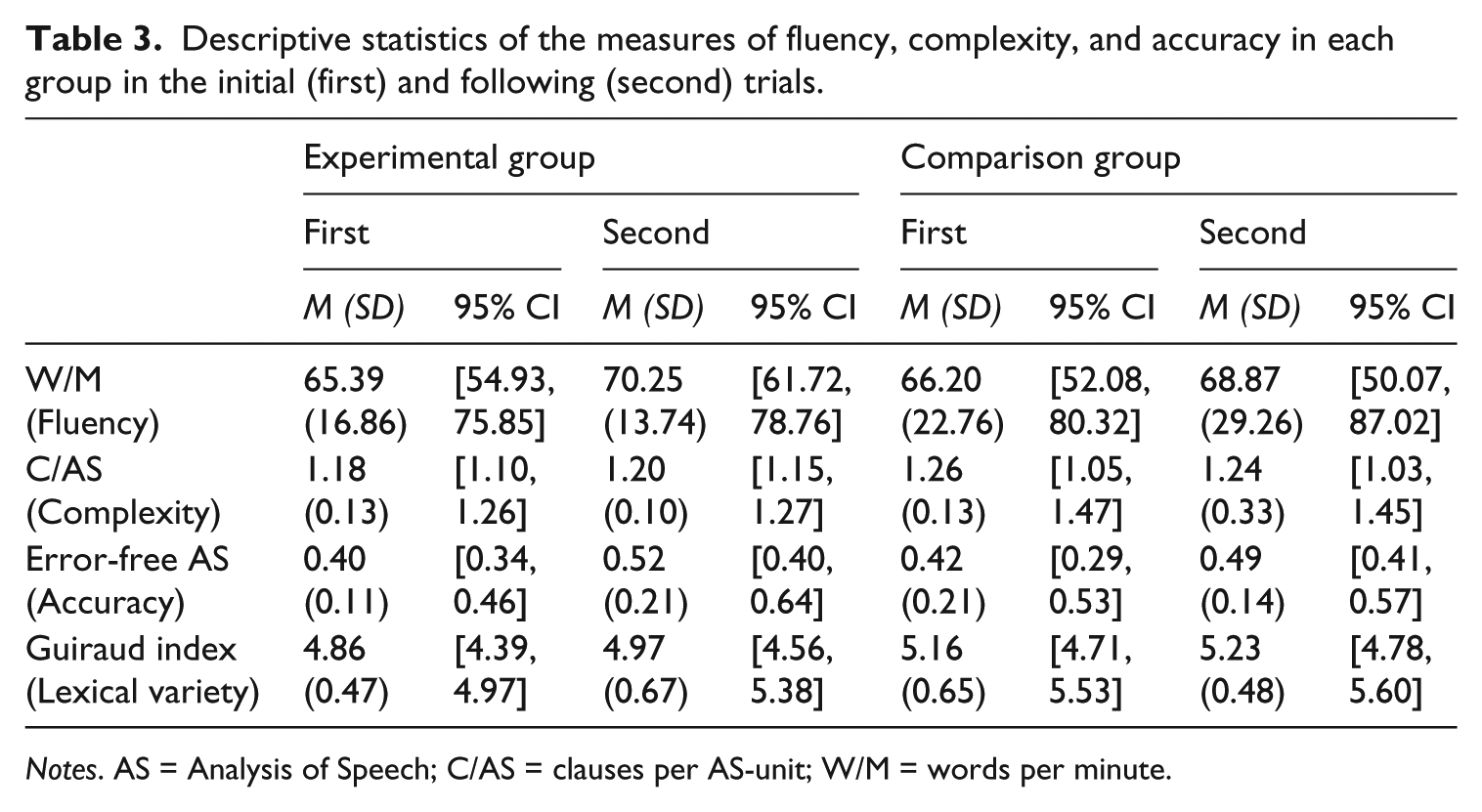
Notes. AS = Analysis of Speech; C/AS = clauses per AS-unit; W/M = words per minute.
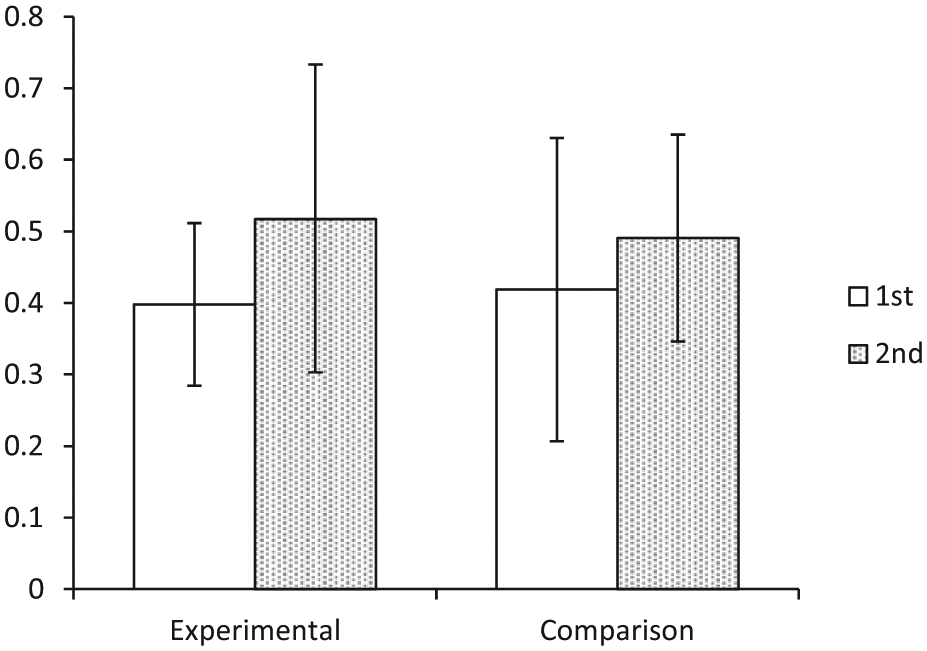
As for the syntactic complexity, the second enactment in both groups demonstrated improved performance over the first enactment. However, the differences in both groups showed small effects and were not statistically significant (Experimental: t [13] = 0.51, p = .62, r = 0.14; Comparison: t [13] = 0.44, p = .66, r = 0.12).
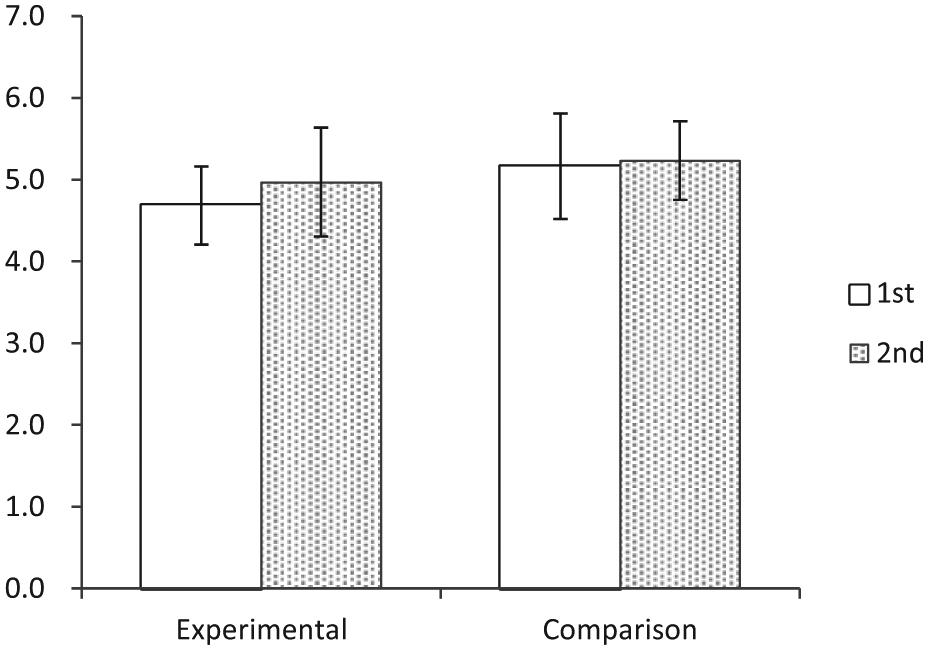
In contrast to fluency and syntactic complexity, the difference of accuracy scores in the experimental group was statistically significant, with a large effect. The comparison group showed an effect of intermediate size, but without significance (Experimental: t [13] = 2.75, p = .017, r = 0.61; Comparison: t [13] = 1.52, p = .15, r = 0.39).
In a similar manner, the difference of lexical variety in the experimental group was statistically significant, with a large effect, whereas that of the comparison group was not significant, with a small effect (Experimental: t [13] = 2.82, p = .014, r = 0.62; Comparison: t [13] = 0.37, p = .72, r = 0.10). 3 See Figures 1–4.
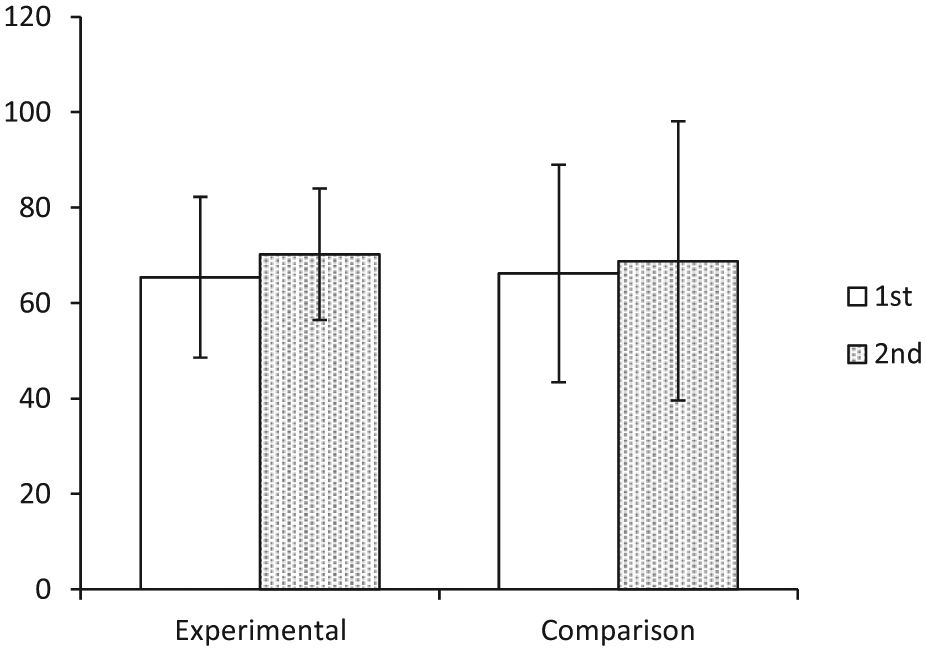
The scores of fluency measures of each group at the 1st and 2nd enactments.
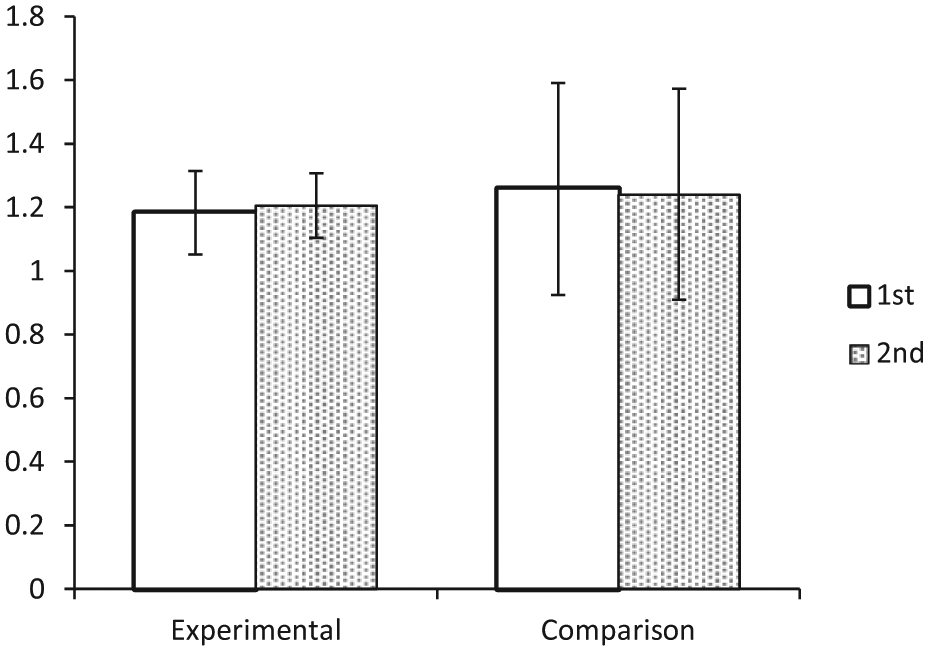
The scores of complexity measures of each group at the 1st and 2nd enactments.
The scores of accuracy measures of each group at the 1st and 2nd enactments.
The scores of lexical variety measures of each group at the 1st and 2nd enactments.
2 Protocol analysis
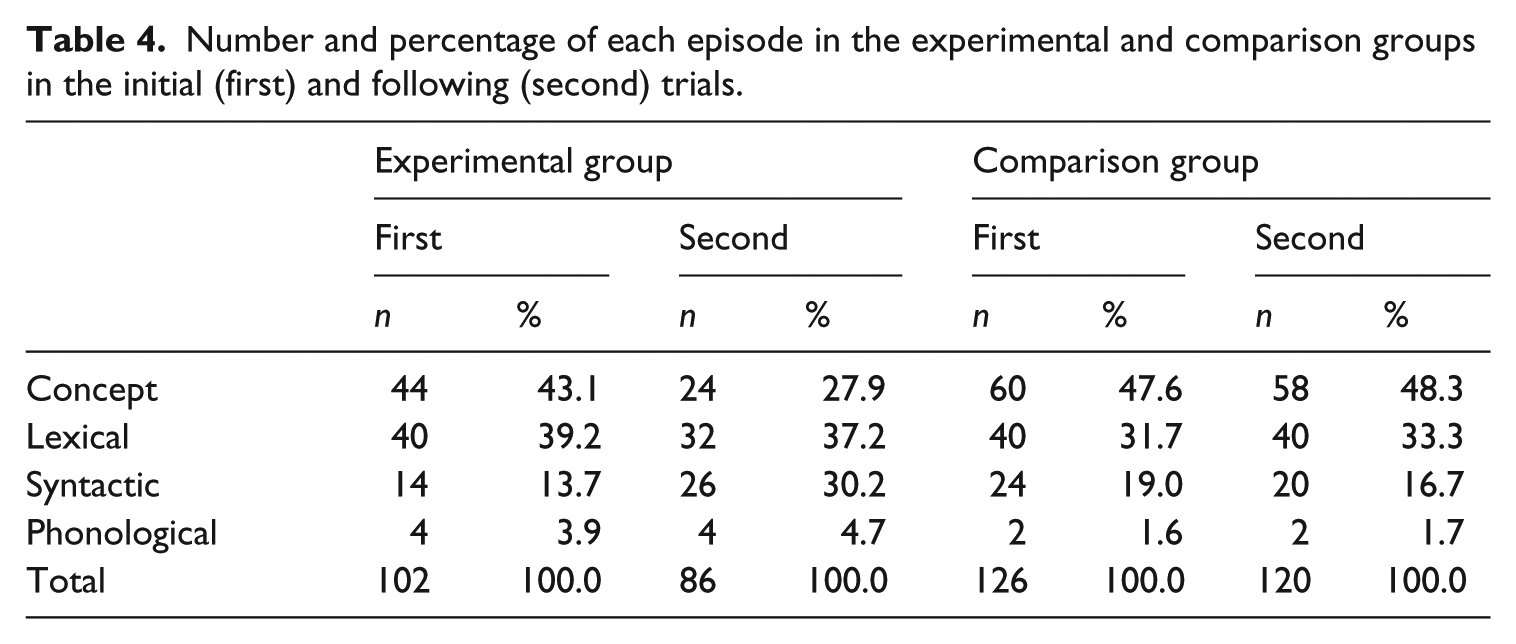
To investigate attention orientation to syntactic encoding, lexical choice, and phonological encoding, the occurrence of each episode related to them in the learners’ protocol data was also examined. Table 4 shows the descriptive statistics of the coding data. 4 The frequency and percentages of each episode are shown in this table. In the comparison group, there are no apparent differences between the first and second enactments. This means that learners’ attention orientation did not change through task repetition. On the other hand, participants in the experimental group showed noticeable change (Figures 5 and 6). Although attention to lexical choice and phonological encoding did not show apparent differences, even in raw frequency data their attention to the syntactic aspect increased. In parallel, attention to conceptual aspects decreased.
Number and percentage of each episode in the experimental and comparison groups in the initial (first) and following (second) trials.
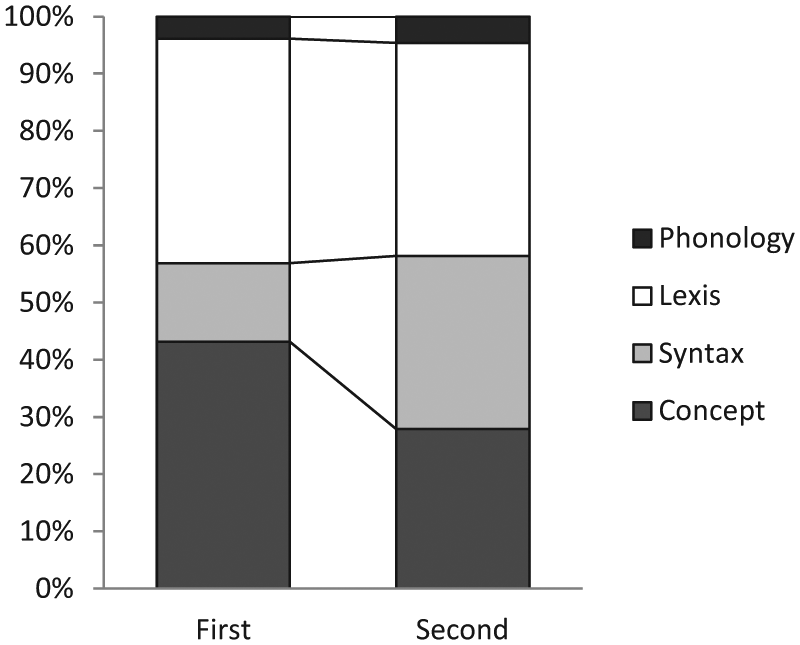
The ratio of attention orientation of the experimental group by the analysis of protocol data.
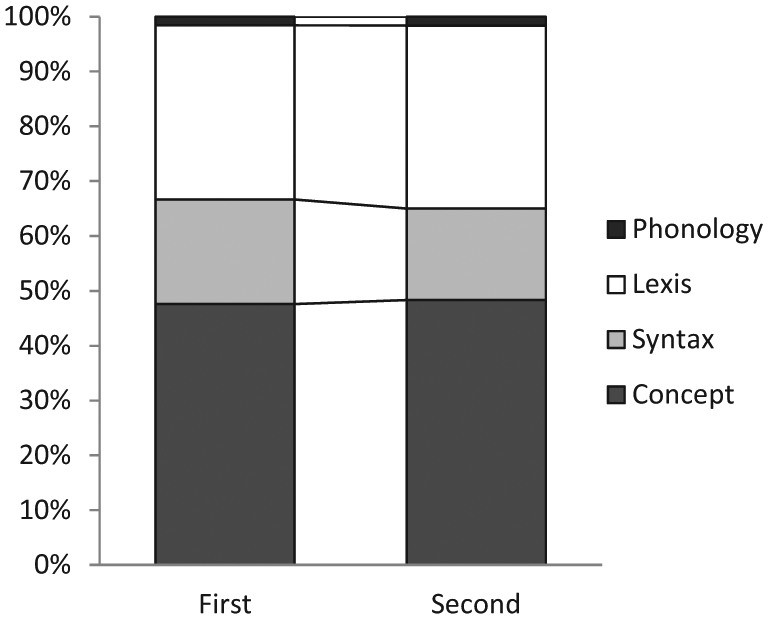
The ratio of attention orientation of the comparison group by the analysis of protocol data.
Since the percentage scores of each episode were originally obtained from a count with different denominators, and to ensure a normal distribution, the data were subjected to arcsine transformation. Then, the transformed scores of each episode at the first and second performances were also submitted to Welch’s t-test. The result showed that the differences in all aspects of attention in the comparison group were not statistically significant, with small effects (Concept: t [13] = 0.53, p = 0.59, r = 0.15; Lexical: t [13] = 0.67, p = 0.51, r = 0.18; Syntactic: t [13] = 0.35, p = 0.73, r = 0.10).
In contrast, the differences in attention to conceptual and syntactic aspects of processing in the experimental group between the first and second enactments were statistically significant, with large effects, whereas differences in attention to conceptual and lexical aspects were not statistically significant, with small effects (Concept: t [13] = 2.49, p = 0.02, r = 0.57; Lexical: t [13] = 0.11, p = 0.90, r = 0.03; Syntactic: t [13] = 4.96, p < 0.01, r = 0.81). Unfortunately, learners’ episodes related to attention to phonological encoding were very limited. Therefore, I did not conduct any statistical hypothesis testing to evaluate the differences.
Since the counted scores from protocol data was extracted from small sized samples and had large variance, the samples were not normally distributed and it led to concerns about the effect of individual differences. Hence, this study conducted further analysis by ‘robust statistics’ (Larson-Hall & Herrington, 2010; Plonsky, Egbert & LaFlair, 2014), namely, bootstrapping, 5 which ‘randomly resamples from an observed data set to produce a simulated but more stable and statistically accurate outcome’ (Plonsky et al., 2014, p. 1). The method is able to function well with symmetrically distributed moderately small samples (Larson-Hall & Herrington, 2010).
The population means and their 95% confidence intervals (CIs) were estimated to evaluate the effects of task repetition by the use of a bootstrap method. One thousand bootstrap replications were run within each bootstrap calculation for each of the subsamples with the numbers of bootstrap sample size, which was the same as the original sample size (bootstrap sample size = 14). The results are shown in Table 5 and Figures 7 and 8. In terms of the comparison group, 95% CIs of each score largely overlapped between the first and second trials. However, 95% CIs of the experimental group did not show overlaps, except for the lexical aspect. The results support the consideration maintained above: learners focus more on the syntactic process and less on the conceptual process during the second trial than during the first one.
Descriptive statistics for population mean estimates, using bootstrap method.
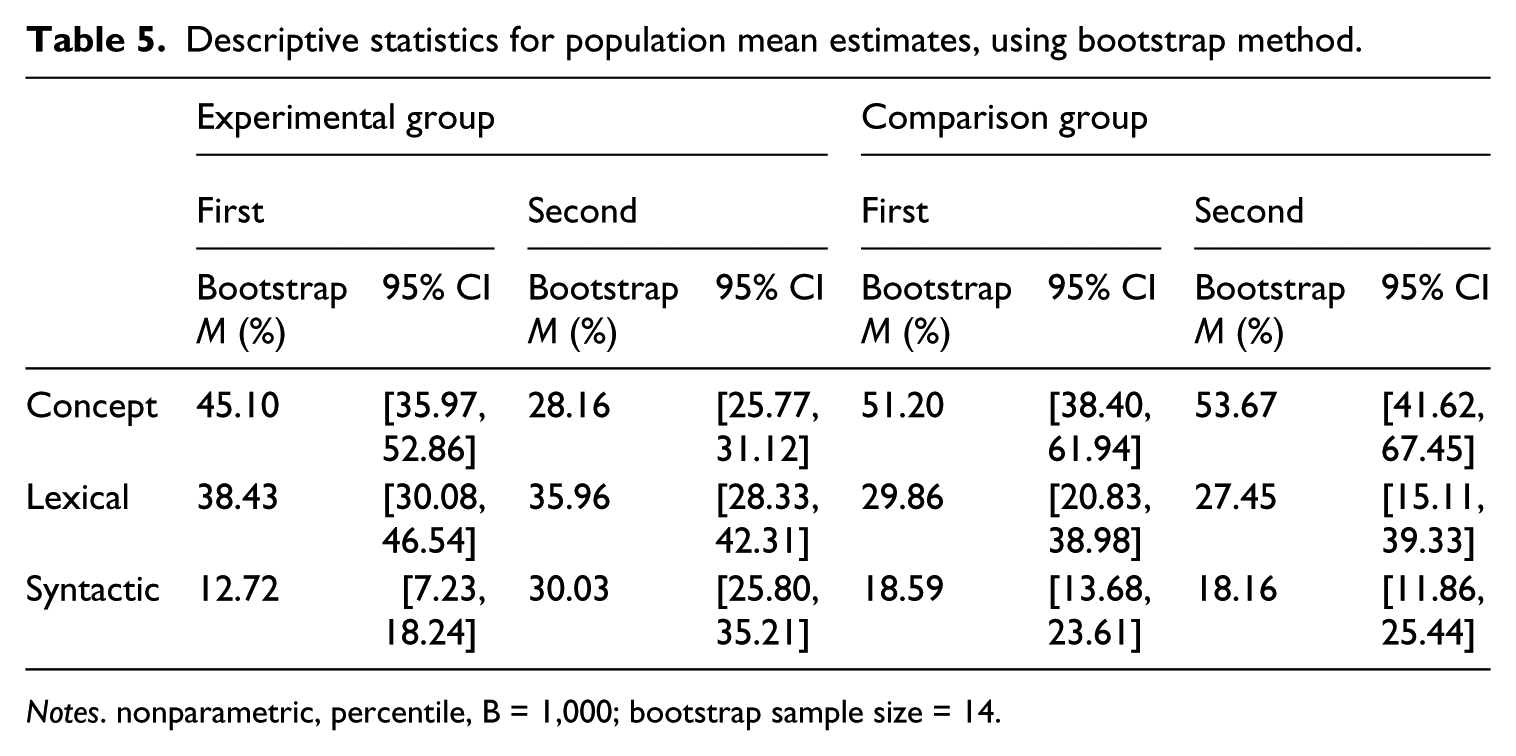
Notes. nonparametric, percentile, B = 1,000; bootstrap sample size = 14.
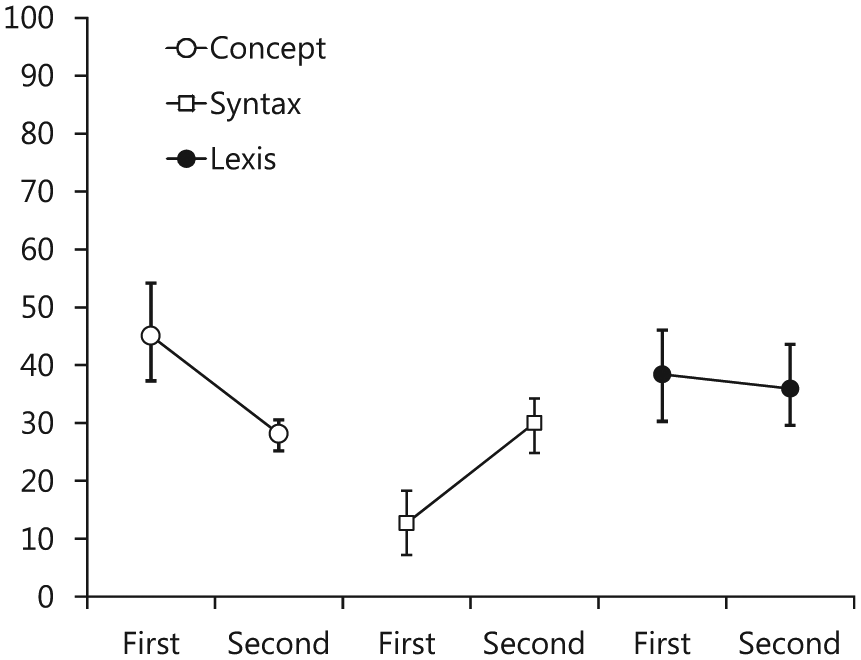
The population mean estimates and 95% CI of the experimental group, using a bootstrap method.
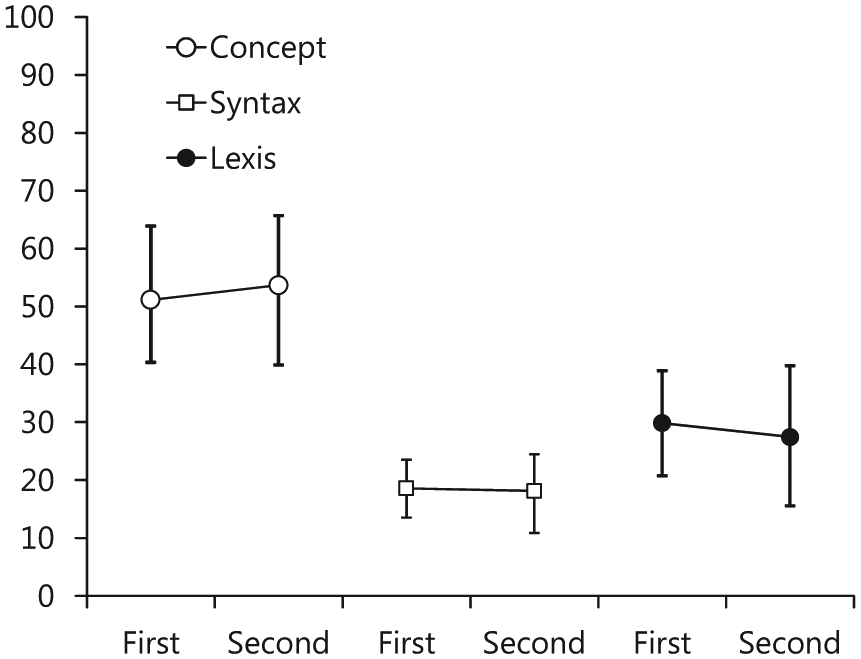
The population mean estimates and 95% CI of the comparison group, using a bootstrap method.
IV Discussion
Performance analysis showed that although there were slight rises in most indices, the differences were not statistically significant. This slight change may be because learners familiarize themselves with the task format, providing narration of the six-frame cartoon. The participants in the comparison group were given the same type of task but with completely different pictures. Therefore, learners in the comparison group could not reuse the previously-conceptualized information or the previously-encoded syntactic structure and lexical items. As a result, they could not free up their attentional resources away from focusing on the content.
In the experimental group, the findings on performance analysis of syntactic complexity and fluency were not statistically significant, whereas there were remarkable changes in terms of accuracy and lexical variety. This result is explainable by Skehan’s limited-resource model. The model predicts that L2 learners cannot pay attention simultaneously to all aspect of production such as complexity, accuracy, and fluency because of their limited attentional capacity. Even though participants focus more on form in second enactment than in initial enactment, they may not draw their attention simultaneously to complexity and accuracy. Additionally, although attention to form can be expected to automatize L2 learners’ processing, only two repetitions were not sufficient to encourage automatization. As a result, accuracy and lexical variety may have been improved by the task repetition in this study, but complexity and fluency may not.
Previous studies showed that fluency and complexity would be facilitated by task repetition (Ahmadian & Tavakoli, 2011; Bygate, 2001, 1996). The gap between previous studies and the present study could be caused by factors such as repetition interval, the number of repetitions and the limited treatment given in the present study. This experiment involved a one-week interval between the enactments, and each participant engaged in the tasks only twice, with each trial lasting five minutes. For example, the participants in previous studies repeated more times (twice in Ahmadian and Tavakoli, 2011 and four times in Bygate, 1996) than the present study. It is possible that this factor affected the results of the analysis. If so, this possibly indicates the differences of temporal increase of awareness to the formulating process and development of performance. It is impossible to develop participants’ performance by only one repetition, but some repeated engagement can move their performance onto higher developmental stages. Studies on the numbers of repetition and performance development should be explored in the future.
The proficiency level of participants also may have affected the changes of CAF. In the present study, relatively highly proficient learners engaged in the narrative-task activity. The narrative task used in this study was possibly very easy for the participants to accomplish. This ease of accomplishment may have allowed the participants to use complex enough production to convey messages that they want to express even during the first task enactment. Therefore, the participants may not have needed to complexify their production in the repeated task. On the other hand, perfectly accurate language production is quite difficult even for highly proficient learners. It is reasonable that unlike complexity, accuracy benefited from the freeing-up effect and form-focused effect induced by task repetition.
The result showed that learners’ scores of accuracy and lexical variety improved during the second enactment in the experimental group. From this fact, the following question arises: was the increase of accuracy score the result of attention being focused on linguistic form?
Protocol analysis also showed that the comparison group did not have apparent shifts of attention orientation. On the other hand, participants in the experimental group focused more attention on syntax and less on conceptual aspects at the second enactment. This suggests that task repetition has form-focused effects at the second performance. 6
However, the result of the protocol analysis differs from the performance analysis. That is, lexical variety was facilitated in terms of the performance score, but attention to lexis did not show a noticeable difference. One likely explanation for this is that task repetition is useful for learners to reuse the previous lexical encoding process via memory retrieval (Bygate & Samuda, 2005). That is, the learners could utilize vocabulary accessed once before during the following performance and, in addition, they could pay additional attention to new vocabulary choice. As a result, they may have been able to widen their lexical variety at the second performance.
Moreover, the conceptual process and lexical choice (especially content words) include more meaning aspects than syntactic encoding (N. Ellis, 2005), and semantic information is more salient than formal information (Derwing, 1976). Therefore, conceptual and lexical aspects may be more memorable for learners than formal aspects and the semantic information may relatively easily carry over to the following task. If so, this result can be deeply related to repetition interval. If the interval had been very short, such as one hour or one day, the result would possibly have changed.
In summary, this study partially confirmed the freeing-up effect of learners’ attentional resources and the following form-focused effect when learners perform the same task twice. This also coincides with Skehan’s trade-off hypothesis: learners are not capable of allocating attentional resource to the formal aspect of processing at the initial enactment because the initial task demands a great amount of attention to its content, and, therefore, attention to the formal aspect is not sufficient. The priority is then appropriately manipulated by task repetition, from meaning to form in the following enactment.
V Conclusions
This study examined the effects of task repetition on learners’ attention orientation by comparison to the effects of the performance of the same task and a new task of the same type. The main findings are summarized as follows: First, the form-focused effects of task repetition were partially supported by the findings of the present study. At least, the participants focused more on the syntactic encoding process in the second task enactment when they were engaging in the same task for a second time. Second, freeing-up effects of task repetition were also supported. That is, the participants could utilize the meaning aspect of information, at least the conceptual process, in the second performance and could perform better than in the initial performance, even if they focused less on these aspects. Thus, the data from this study adds a finding to a previously unresolved issue, that is, whether learners actually focus their attention on linguistic form during speech production, not due to avoidance of structures that might provoke errors. Hopefully, this perspective obtained by the present study will contribute to the discussion of pedagogical research in the future.
This study also has some limitations and implications for further research. First, the small sample size may lead to concerns about the effect of individual differences, such as learning background or experience, and beliefs and attitudes towards language learning. Thus, additional research with a larger sample size would be preferable in the future.
Second, the tasks of the present study were narrative tasks with six-frame cartoons. The results cannot be generalized to other types of task, such as argumentation tasks or information-gap tasks. Replications making up for this limitation should reveal the kinds of task and treatment that trigger attention to linguistic form.
Third, as mentioned previously, each participant engaged in the tasks only twice, with less than five minutes for each trial in the present study. Moreover, the learners engaged in the tasks with a one-week interval. The result of the present study should be replicated with respect to this limitation, using perspectives from studies of memory and learning, such as distributed vs. massed practice (Bird, 2010; Rohrer & Pashler, 2007; Suzuki & DeKeyser, 2013).
Fourth, learners’ individual factors should be considered in further studies. For example, learners of different proficiency levels can perform differently in task repetition. As noted previously, there are probably strong interactions between learners’ proficiency levels and ease of tasks, and those factors will affect complexity and accuracy of learners’ performance. Additionally, future studies should investigate the participants’ background. The present study attempted to investigate the behavior of Japanese EFL learners. They are said to tend to pay more attention to accuracy than learners of English as a second language (ESL) because of their experience of formal instruction. Therefore, the present study cannot generalize its results to ESL learners.
Related to the task interval and individual differences, it has recently been proposed that the abilities of memory and language analysis influence the effectiveness of learning linguistic knowledge differently for different intervals of practice (Suzuki & DeKeyser, 2013). This line of studies will shed light on the issues the interaction between cognitive aptitude and the effects of different instruction methods (Cronbach & Snow, 1977). Although the data of the present study showed a trend of the group using the performance and protocol analysis with robust statistics, the data and analysis do not tell us about individual variation. Therefore, future studies which take this into account are clearly needed.
Finally, the kinds of knowledge facilitated by this attention are largely unexplored. Some specific structures might be facilitated by attention as dealt with in the present study, but some might not. Further study on this issue will serve as a useful point of departure for planning and developing further experimentation for effective approaches for second-language learning.
Footnotes
Appendix
Coding scheme used in the present study.
| Attention orientation | Definition | Performance | Retrospective comment |
|---|---|---|---|
| Conceptualizing | Neither the choice of lexis, syntax, nor phonetic representation, but how to convey the information as intended | The man running away with his car … then … in the end. | I realized there was a man (points to a man in the picture), and I thought I had to mention him. I was wondering how to describe him. |
| Syntactic encoding | Episodes related to the word order and sentence structures, including morphosyntactic processing | There was a stranger … who … followed him. | At that time, I was wondering whether I should say ‘There was a stranger who followed him’ or ‘There was a stranger who was following him’, grammatically. |
| Phonological encoding | Episodes related to the phonological features in their production | One day, a man saw a cherry bros… cherry blossoms. | I was confused whether it is ‘blossoms’ or ‘brossoms’ as the appropriate pronunciation. |
| Lexical choice | Episodes related to lexis or lexicalized phrases | At the airport, err… a man, err is waiting for a bus. | Maybe the man was waiting for the bus, but I was wondering whether the word ‘wait’ is really appropriate. |
Acknowledgements
An earlier version of this paper was presented at the 39th Annual Conference of Japan Society of English Language Education (JASELE 2013), Hokkaido, Japan. I would like to express my gratitude to Kunihiro Kusanagi, Junko Yamashita, Masatoshi Sugiura, Masanori Matsumura, Katsumasa Shimada, Daisuke Abe, and Hiroaki Maeda for their insightful comments. I also would like to thank the editor, Hossein Nassaji, and the anonymous reviewers of Language Teaching Research for their invaluable comments on earlier versions of this article. Any errors that may remain are, of course, my own.
Funding
This research was supported in part by a Grant-in-Aid for Fellows of the Japan Society for the Promotion of Science (13J00724).