







Abstract
This study examines common claims associated with shadowing. Studies in Japan conclude that shadowing is effective for improving learners’ listening skills. Two common claims are that shadowing is effective for lower-proficiency learners and that it enhances learners’ phoneme perception, thus improving listening comprehension skills. The former notion lacks sufficient research and the latter empirical data. Therefore, this study explores these claims by examining whether shadowing training improves learners’ phoneme perception and listening comprehension skills, and whether its effectiveness is limited to lower-proficiency learners. Participants comprised 43 Japanese learners of English as a foreign language (EFL) from a Japanese national university. Nine lessons were conducted using an EFL textbook, following the teaching procedures outlined by previous studies. The pre- and post-tests utilized part of Japanese standardized tests for English listening (22 questions) and a 20-item dictation cloze test. Students were divided into low- and intermediate-proficiency groups using the listening pre-test results. Statistical analyses indicated that phoneme perception was enhanced in both groups, but only low-proficiency learners improved their scores for high-school level listening questions. Accordingly, language instructors may wish to use shadowing to improve learners’ foreign language skills, especially for bottom-up processes in listening.
I Shadowing in theory
1 Shadowing
Learners of English as a foreign language (EFL), especially Japanese EFL learners, commonly face listening comprehension problems: they are unable to recognize target words or sentences when listening, despite knowing the words or sentences. Though several factors contribute to the difficulty of listening comprehension for Japanese EFL learners, the initial bottom-up process, that is, the phonological identification of each word, is one of the fundamental problems due to the great language distance between Japanese and English (e.g. in terms of phonology, distinguishing /b/ and /v/, /l/ and /r/, /t/ and /tʃ/ is a challenge; Avery & Ehrlich, 1992).
Given these circumstances, a teaching technique for listening skills known as ‘shadowing’ has become popular in Japan. Shadowing was initially used to train beginner interpreters who needed to learn how to listen and speak simultaneously in their target language before attempting to interpret from one language into another. Lambert (1988, p. 266) defined shadowing as ‘a paced, auditory tracking task which involves the immediate vocalization of auditorily presented stimuli, i.e. word-for word repetition in the same language, parrot-style.’ In contrast, recent applications of shadowing have led to an improvement of learners’ listening skills in an EFL context; Tamai (1997), one of the pioneers of shadowing research in EFL contexts, defined it as an active and highly cognitive activity in which learners track the speech that they hear and vocalize it as clearly as possible while simultaneously listening. Shadowing involves an on-line process, which requires learners to vocalize the speech that they hear, with little time to access meanings while shadowing; on the other hand, oral-reading or rote repetition involves an off-line process, which allows silent pauses for cognitive activities, such as accessing meanings, before learners reproduce the perceived sounds (Kadota, 2007). In other words, learners are required to store the input temporarily when repeating, while they have little time to store it when shadowing. The following examples are based on Murphey (2001).
Shadowing (on-line)
Model: Boston is in America, in the north-east part of America.
Learner: Boston is in America, in the north-east part of America.
Repetition (off-line)
Model: Boston is in America, in the north-eastLearner: Boston is in America in the north-east
A quick look at shadowing reminds us of pattern practice in the audio-lingual method, and the application of elicited imitation (EI), which is a procedure used to measure implicit grammatical knowledge (Tomita, Suzuki, & Jessop, 2009). Although shadowing associates the passive drill of pattern practice, it differs in the sense that learners actively engage in the process, thus enhancing the function of the phonological loop in working memory (see Section I.2 below). In addition, learners concentrate on meaning in EI, while phonology is the focus in shadowing. Hence, EI and shadowing are fundamentally different.
Pioneered by Tamai (1992), several studies have been conducted in an EFL setting (e.g. Commander & Guerrero, 2013; Hamada, 2011a; Kato, 2009; Kuramoto, Shiki, Nishida, & Ito, 2007; Miyake, 2009; Mochizuki, 2006; Mori, 2011; Murphey, 2001; Nakayama, 2011; Nakayama & Suzuki, 2012; Oki, 2010; Tamai, 1997). The results of these studies on shadowing conducted over many years show that it is effective for improving listening skills. Similarly, there are two widely accepted beliefs: one is that shadowing theoretically enhances learners’ phoneme perception, leading to improved listening skills, and the other is that it is effective for low-proficiency learners. However, the former notion lacks sufficient research, and the latter lacks empirical data. Given that the mechanism of shadowing is increasingly known by researchers (for more details, see Sections I.2 and I.3), research should now focus on how it is effectively applied to pedagogy. Therefore, this study focuses on pedagogical shadowing in an EFL context by concentrating on the two commonly accepted concepts.
2 Mechanism of shadowing in second/foreign-language acquisition
While it may appear to be a simple passive activity, even reminiscent of the standard audio-lingual method of rote repetition, shadowing actually involves a complex active process. The function of shadowing is theoretically explained through Baddeley’s (2007) multi-component working memory model, which consists of a phonological loop, visuo-spatial sketchpad, episodic buffer, and central executive (Kadota, 2007, 2012). Among these four elements, the function of the phonological loop plays a prominent role in listening to the target language. The phonological loop consists of phonological store, which temporarily retains phonological information and the articulatory (subvocal) rehearsal, which actively rehearses the phonological information. It processes and stores incoming information by retaining phonological information for approximately two seconds in phonological short-term store and repeats it in the subvocal rehearsal (Kadota, 2007).
The phoneme perception of most EFL learners, especially Japanese learners, is not automatized, which disturbs the appropriate processing of the phonological loop. Because of the immature phoneme perception, EFL learners often have problems in recognizing the incoming words that they hear. This limits the amount of information that can be retained in the phonological store, which also limits the amount of information that can be rehearsed in the subvocal rehearsal. Therefore, the phonological loop does not function as efficiently as expected. Due to the lower function of the phonological loop, the working memory cannot function properly, which hinders second-language acquisition (SLA).
Shadowing, the act of rehearsing information one hears in a visible way, which is normally done in an invisible way in the subvocal rehearsal, is considered to strengthen the function of the phonological loop. Through the process of trying to reproduce perceived speech simultaneously and correctly in a visible way, phoneme perception improves, and the amount of information absorbed increases eventually; therefore, more information is stored in the phonological store and retained in the subvocal rehearsal. This helps the phonological loop process more information effectively, thus contributing to better listening performances.
3 Shadowing in first and foreign languages
In bottom-up and top-down listening processes, learners must first identify the phonemes of the incoming information. Using the cohort model (Marslen-Wilson & Welsh, 1978), Taft and Hambly (1986, p. 260) state that ‘a word is recognized via successive reduction in the number of possible word candidates as each phoneme is perceived. When only one phoneme remains in the cohort of possible words, the word is recognized.’ For example, when learners hear the word ‘November’, they recognize the word upon hearing /novem/. They do not yet recognize the word when hearing the phoneme /nove/, because several word choices still exist, such as ‘novel’, ‘November’, and ‘novella’. In other words, if learners fail to identify incoming phonemes, especially the initial ones, there is a higher chance that the heard words will not be recognized. Thus, learners’ incomplete phoneme perception skills will affect the subsequent listening processes in a negative way.
Shadowing in first and foreign languages fundamentally differs in terms of phoneme perception, especially when the ‘language distance’ (relative degree of similarity between two languages; Richards & Schmidt, 2010, p. 317) is large. Shadowing in the first language does not hinder understanding (Carey, 1971, cited in Lambert, 1992) because phoneme perception is already automatized; however, this does not apply to the shadowing in a foreign language. When listening, learners use their cognitive resources and working memory capacity to treat the various aspects of the incoming sounds, beginning with the phonological level, and then proceeding to syntactic, semantic, and pragmatic levels. However, because of their undeveloped phoneme perception, their attention is absorbed exclusively in recognizing sounds, and few cognitive resources are left for other processes. Therefore, shadowing in a foreign language has the disadvantage of being unable to make full use of contextual information, compared to shadowing in a first language. Furthermore, the more different the phonological systems of the two languages are, the more difficult shadowing in the foreign language becomes. For instance, Swedish and English share the same roots, namely Germanic, but Japanese and English do not have such commonality (Algeo & Pyles, 2005). Compared to Swedish speakers’ shadowing of English, Japanese speakers’ shadowing of English is more difficult because Swedish and English have certain common linguistic features, but Japanese and English are fundamentally different in terms of phonology. The improvement of phoneme perception is of great importance for those whose first language is not alphabetic, such as Japanese, Korean, and Chinese. To avoid any terminological confusion, when shadowing is hereafter mentioned, it refers to its use in a foreign or second language.
II Shadowing research
1 Past studies
Research approaches for shadowing generally fall into two categories: shorter laboratory-type experimental studies investigating its simple effects (e.g. Nakayama & Suzuki, 2012; Oki, 2010; Shiki et al., 2010) and longer classroom-based experimental studies applying to classroom pedagogy (e.g. Hamada, 2011a, 2012; Kato, 2009; Mochizuki, 2006) (Table 1). While the former type is conducted in a 90-minute lesson in most cases, the latter ranges from one week to several months. For the first case, Nakayama and Suzuki (2012) compared the effects of the use of different learning strategies on shadowing performance improvement among 35 university students. When shadowing, learners cannot simultaneously monitor their performance because of its very nature, notably on-line. The authors compared the effects of self-monitoring, in which students recorded their own voices when shadowing, and pair-monitoring, by checking performance based on a partner’s monitoring. The results revealed that learners’ shadowing performance improved when they practiced shadowing by monitoring themselves. Shiki et al. (2010) compared the effects of shadowing and repetition on reproduction rate among 48 university students. One group attempted shadowing, while the other repeated the model stimuli six times. The repetition group outperformed the other in terms of reproduction rate only at the first trial, while both groups stopped improving after the fourth or fifth trial. The results suggest that five to six times of shadowing and repetitions may be sufficient when using the same stimuli. Oki (2010) examined the relationship among latency levels (i.e. the time lag between aural input and the shadower’s reproduction) with 81 high-school students. The participants shadowed six sentences once and then were categorized into three types: close (latency less than 820 ms), middle (821 to 999 ms), and distant (longer than 1000 ms) shadowers. Oki identified that close shadowers tended to repeat pseudo-words exactly as they heard them compared to the other groups, while no consistent evidence was in the error rates of reproduction. In brief, although shadowing performance was reported to improve after a one-off short experiment, the extent of the improvement observed in performance level still needs to be examined over a longer training period. Furthermore, in terms of the classroom application, its effectiveness on listening skills needs to be studied.
Examples of shadowing research.
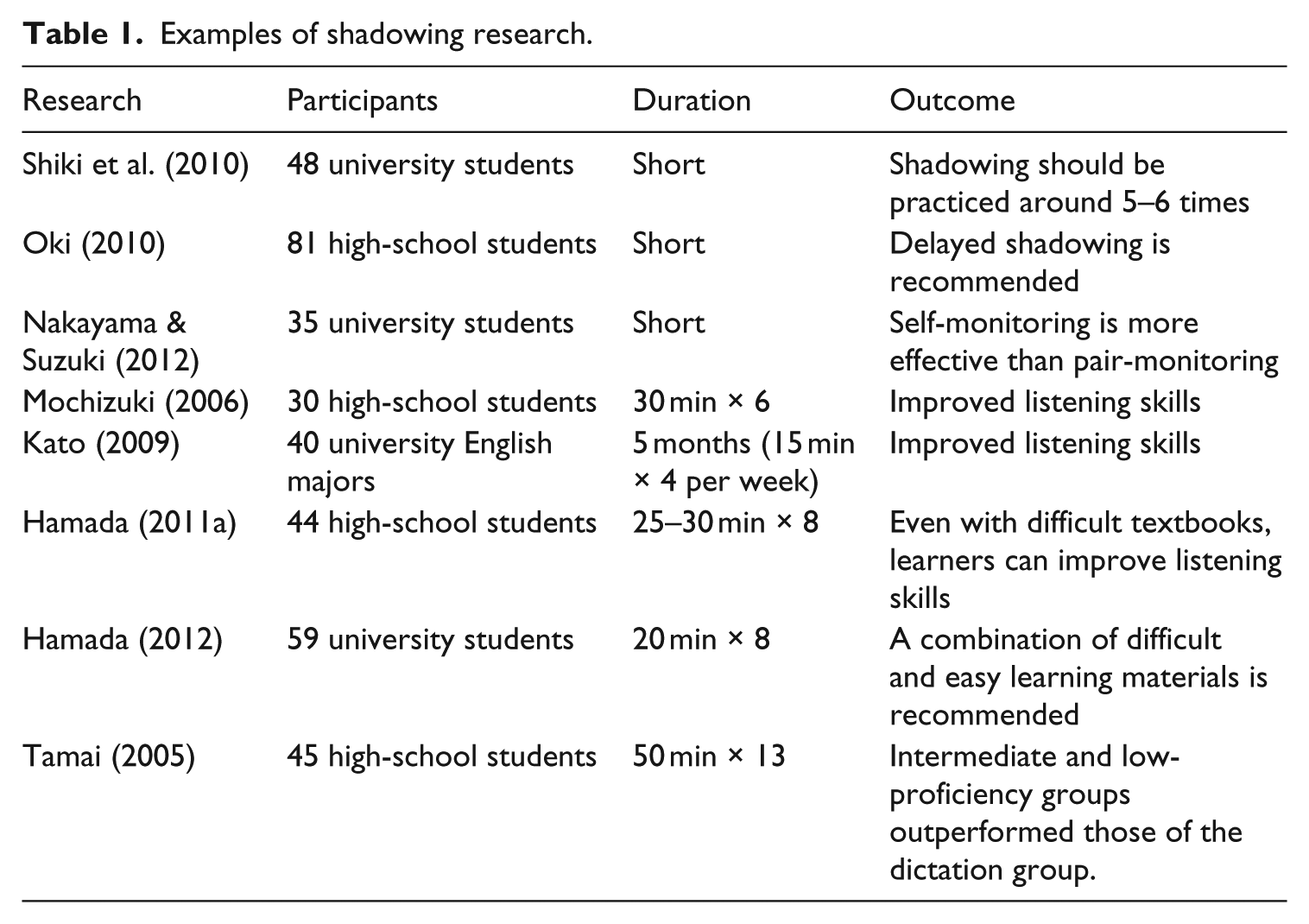
In the classroom application of shadowing over a longer duration, Mochizuki (2006) examined its effectiveness on listening comprehension skills by giving six shadowing-based lessons to 30 high-school students using an EFL textbook designed for Japanese students; the participants subsequently improved their scores in selected sections of Eiken tests, Japanese standardized proficiency tests of English, which consist of seven levels (grade 5, 4, 3, pre-2, 2, pre-1, and 1), with grade 1 being the highest and grade 5 the lowest (Eiken, 2013a). Kato (2009) conducted a 5-month longitudinal study with 40 students aged 19 to 22 years. A weekly 15-minute shadowing training session using a variety of materials was shown to be effective for improving scores in the TOEIC listening practice tests. Hamada (2011a) similarly gave shadowing-based lessons to 23 high-school students using a well-known high-school textbook that was rather challenging. After eight lessons, the students showed an improvement in their listening comprehension skills in the Eiken listening tests. Hamada (2012) then gave eight shadowing-based lessons to 29 university students using both difficult and easy textbooks, and 30 university students using only similar difficulty levels of textbooks. The combination of difficult and easy materials was more effective than the other in terms of improving listening comprehension skills in a TOEIC listening practice test. These studies therefore reveal that shadowing can be used effectively in various classroom situations to improve learners’ listening comprehension skills.
Certain research hints that the types of learners who benefit the most from shadowing are limited although the number of studies that have investigated this issue is quite small. Tamai (2005) reported a stronger influence of shadowing training on low-proficiency learners. With 45 secondary school students respectively in a shadowing and dictation group, the author gave 13 shadowing-based lessons (50 minutes each). He divided the learners into three levels based on their scores on the Secondary Level English Proficiency Test, with the results showing that intermediate- and low-proficiency shadowing group outperformed those of the dictation group. The reliability of dividing 45 learners into three levels is indeed questionable, particularly given the classification of the advanced learners (e.g. initial score for the advanced learners was around 50 out of 75). Next, Kato (2009) reported that low-proficiency learners improved more than high-proficiency learners, after receiving a weekly 15-minute shadowing training session. Since she divided the 40 learners into high- and low-proficiency groups with a mean score of 13.05 out of 30, once again, labeling the learners as highly proficient may be misleading. These two studies at least suggest that low-proficiency learners will benefit more from shadowing training, especially in listening comprehension. However, whether the participants’ phoneme perception improved was unclear. Thus, to confirm the results of these studies, further research is necessary.
In summary, phoneme perception is of great importance for word recognition (Rost, 2011), and shadowing is considered to improve learners’ phoneme perception, which leads to better comprehension skills. The past research indicates that shadowing is effective for improving learners’ listening comprehension skills but it also assumes that it is effective for low-proficiency learners, although a further and detailed examination is required in this respect.
2 Arguments based on previous findings and research questions
The research conducted to date arrives at several common points of agreement regarding the effectiveness of shadowing, but a review of past studies reveals that two commonly accepted concepts are still debatable due to a lack of empirical data. First, as explained above, how learners’ listening skills improve may be theoretically explained (i.e. phoneme perception is enhanced, leading to better listening skills); however, this theory lacks empirical data to the author’s knowledge. Second, the effectiveness of shadowing on listening improvement is considered to be limited to low-proficiency learners, but this notion requires greater empirical research. Therefore, this study examines whether shadowing training improves learners’ phoneme perception and listening comprehension skills (RQ1), and whether its effectiveness is limited to low-listening proficiency learners (RQ2).
III Methods
1 Participants
A total of 43 freshmen (26 males and 17 females), majoring in health, education, and engineering at a Japanese national university participated in the experiment. Since no one majored in English or international communication studies, this compulsory English class was considered to be the only English language exposure during the one-month training period. In order to examine the effectiveness of the shadowing training according to their listening proficiency level, the 43 learners were divided into two groups based on the pre-test listening (22 items from the Eiken test) results: a low-proficiency group with 25 students (19 males and 6 females) and an intermediate group with 18 students (6 males and 12 females). The initial study group consisted of 60 freshmen, but 17 were excluded from data analysis for the following reasons: not working on the task or taking the tests sufficiently seriously, skipping classes, being absence from tests, or not receiving a full education in Japan.
2 Materials
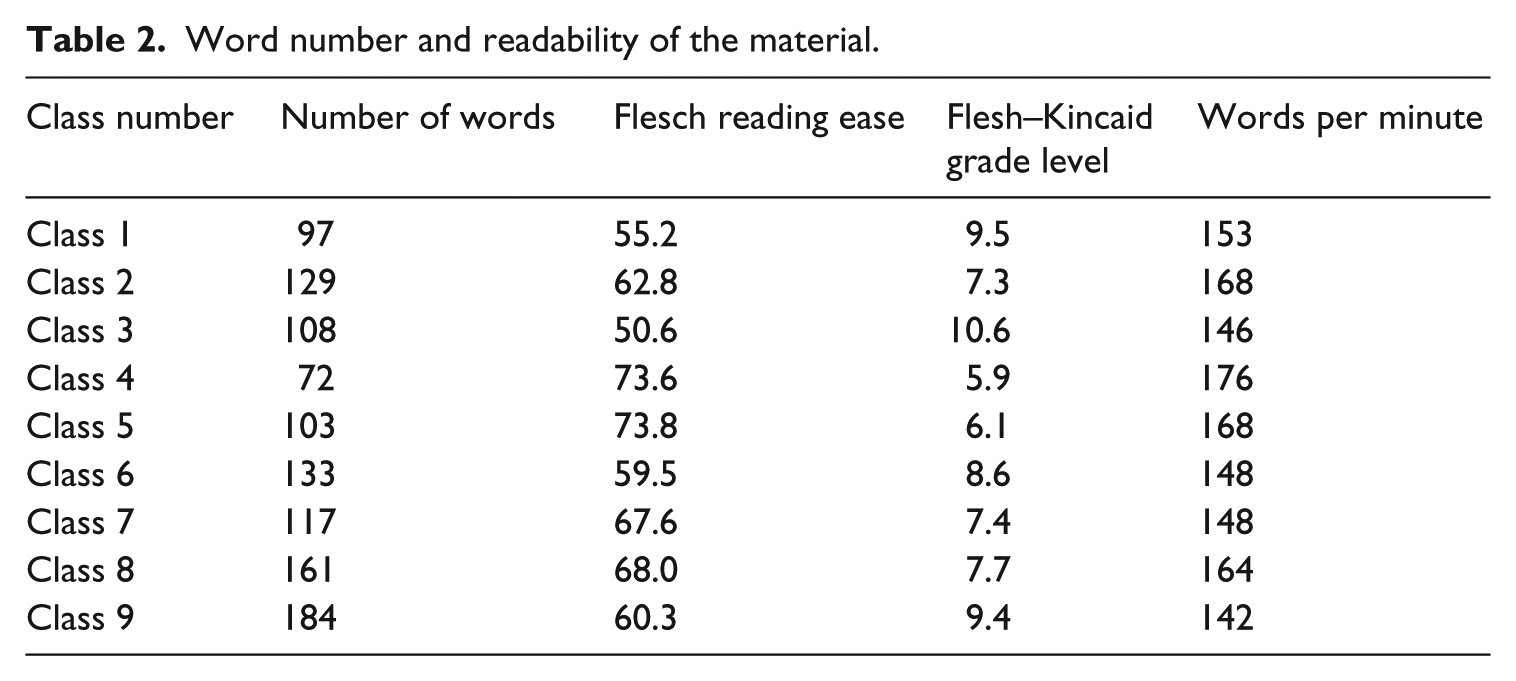
This study used the EFL textbook Reading Explorer 2 (CEF: B1–B2 level) (MacIntyre, 2009), which is used by all freshmen at the university. Rather than strictly controlling the textbook for this experiment, an ordinary textbook was chosen, because the effectiveness of shadowing is generally assured regardless of textbook difficulty (Hamada, 2011a). Three stories were selected from the textbook and divided into nine passages. The number of words in each passage and its readability are summarized in Table 2. Flesch Reading Ease indicates how easy the selected reading is (i.e. the higher the score, the easier), with 100 being the maximum score. Flesch-Kincaid Grade Level is an index that is based on school grades in the USA, wherein 10th means the 10th grade. According to the readability and CEF level, the passages used in this study were considered challenging for participants. However, students are able to improve their listening comprehension skills even by practicing with difficult materials (Hamada, 2011a). Hence, the difficulty of the materials as a negative influence on the results was disregarded. The average speed of the audio-recording was 157 words per minute, so it was read at a relatively fast pace.
Word number and readability of the material.
In relation to the improvement of phoneme perception, a 20-item dictation cloze was used. Dictation-cloze questions were previously used in another shadowing study to measure learners’ phoneme perception (e.g. Kuramoto et al., 2007). The passage used in this experiment was taken from the Voice of America (VOA) Special (VOA Special, 2011), read at approximately 127 word per minute, since materials in the VOA Special are adapted to EFL learners. A total of 20 parts of function words, such as articles and prepositions, were duplicated with blanks to best reflect an improvement in phoneme perception. The aim was for participants to be less influenced by the context and to test words known by all learners so as to eliminate differences in their vocabulary. If content words were included, it would test word recognition skills, possibly influenced by differences in vocabulary knowledge as well. For example, the majority of blanks were ‘a’ and ‘the’ in order to test participants’ phonological perception rather than word recognition, which may have required knowledge of other factors, such as lexical, syntactic, and semantic features. Additionally, so as not to allow the participants to predict the answers from the context, they listened to the audio once and, the moment they finished, they had to stop answering. Due to the language distance between Japanese and English previously mentioned, predicting the target function words from the context was considered to be quite difficult. The perception of articles is affected by participants’ first language differences (Pierce & Ionin, 2011), but this concern was disregarded because they all were native Japanese speakers.
To examine learners’ listening comprehension skills, two types of listening tests were selected from the Eiken pre-second grade Part II (10 questions; Eiken, 2013b), and Eiken pre-first grade Part I (12 questions; Eiken, 2013c). Eiken pre-second grade is a mid-level test for high-school level, while pre-first grade is the second highest test for mid-university level (Eiken, 2013a). Learners are supposed to select the best answer from among the four choices written in the booklet after listening to a short dialog lasting 30–40 seconds (for an example, see Appendix). This question type was selected because it tests the ability to understand the short speech with relatively easy expressions, which are theoretically most likely to reflect an improvement in listening comprehension skill through phoneme perception.
3 Procedures
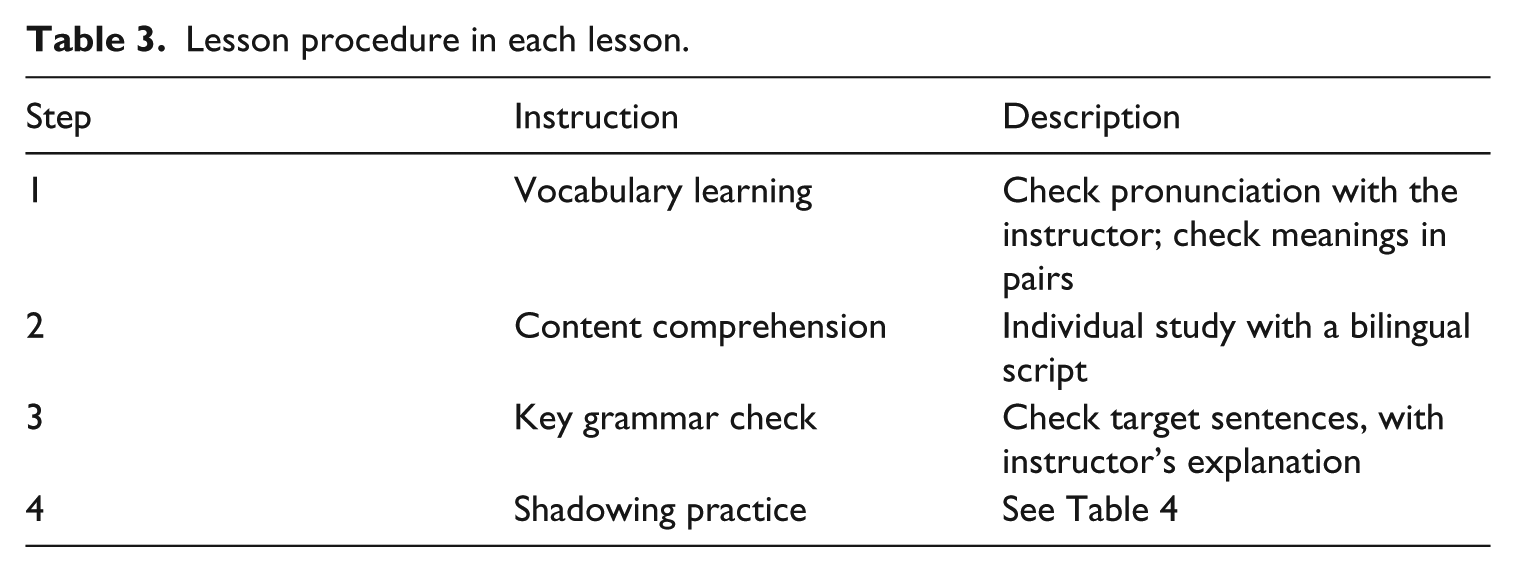
Participants were given shadowing-based lessons twice a week for a month (nine times in total) by following the procedures that previously showed their positive effectiveness on learners’ listening comprehension improvement (see Tables 3 and 4; for more details, see also Hamada, 2014). The first 50–60 minutes of the lesson were dedicated to learning the target contents. Learners were engaged in vocabulary learning, collaborating with their partner, worked on comprehension checks with a bilingual script, and then reviewed target sentences that contained complex grammatical items or sentences that were difficult to interpret, with the assistance of the instructor.
Lesson procedure in each lesson.
Shadowing procedure used in the experiment.
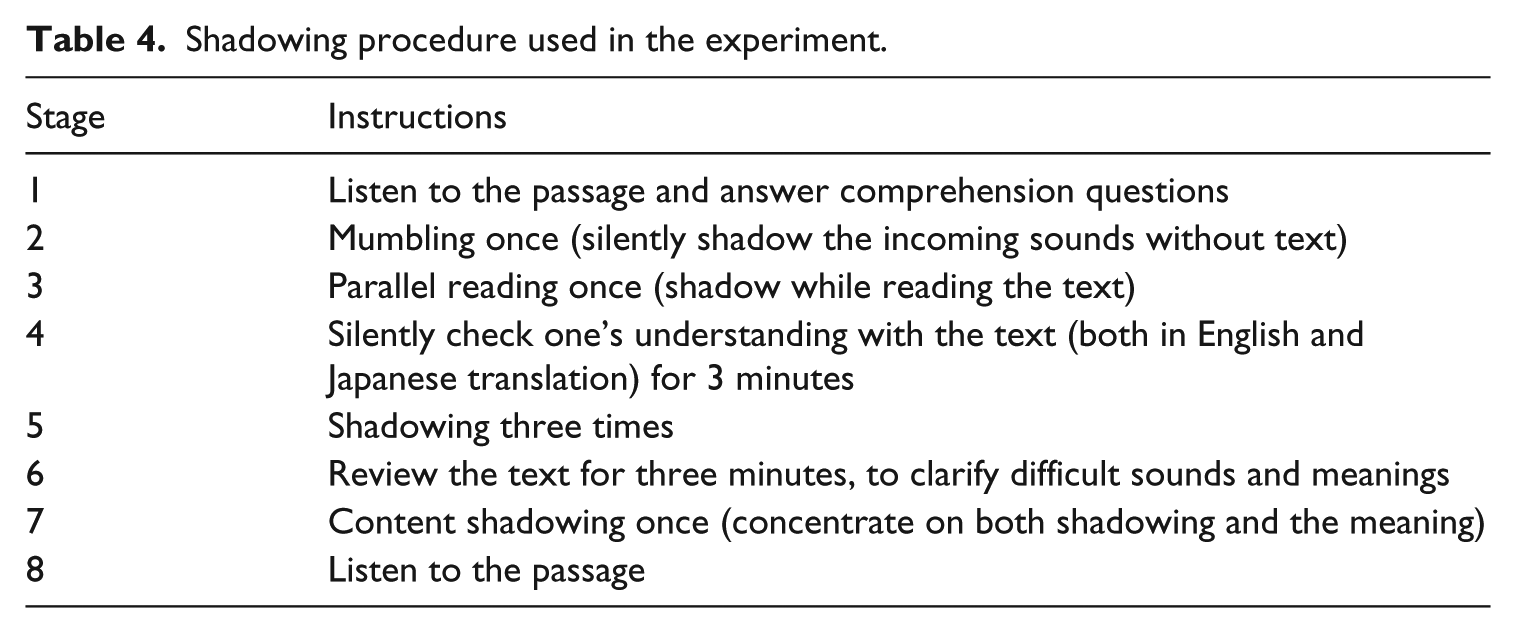
After learners finished learning the content, each lesson was followed by shadowing training, lasting 15–20 minutes. Participants practiced shadowing based on a set of recommended procedures (Table 4) (Kadota & Tamai, 2004), which was recommended both theoretically and practically. Theoretically, the adequate number of times to shadow the same passage was to be considered to be five or six, because learners’ reproduction rate was reported to plateau after the fifth time (Shiki et al., 2010). Learners thus practiced shadowing five times according to this procedure (steps 2, 5, and 7). At every stage, when students were engaged in shadowing, they worked on shadowing the entire target passage without pauses. The instructor played the audio stimuli (CD), and all participants continuously shadowed, no pair work being involved. A sample of the practice is as follows:
In the service of Kublai Khan, “the most powerful man in people and in lands
In the service of Kublai Khan, “the most powerful man in people and in lands
and in treasure that ever was in the world,” Marco was able to learn and
and in treasure that ever was in the world, “Marco was able to learn and
experience many things that were new to Europeans.
experience many things that were new to Europeans.
Note: The entire target passage was played, not sentence by sentence. S= Student
The pre-tests for listening and phoneme perception were conducted prior to the experiment, with the post-tests being held afterwards. Although there remains the possibility of practice effects, the same tests were used in the pre- and post-tests to minimize the risk of reliability when using two different assessment materials. Past studies showed that shadowing improves listening comprehension skills, and that phoneme perception also improves theoretically. Thus, the improvement observed in this study would result from shadowing training. To minimize the disadvantage of the test–retest method, after the pre-tests, all test papers with the questions were collected, while approximately one month elapsed between the pre-test and post-tests; learners received no explanation about the test content after the pre-test.
4 Data analysis
Data were analysed in the following manner. First, to divide learners into intermediate- and low-proficiency groups, the listening pre-tests were used. The cut-off line was drawn between 10 and 11 based on the mean score of 10.44 and maximum score of 22 (total number of questions). Learners with total scores of 10 or less were categorized as low-proficiency learners, while those with 11 or more were categorized as intermediate learners. The upper half of the participants was labeled not as the high-proficiency group but rather as the intermediate group so as to avoid the misrepresentation of the two extremes as low and high proficiency. Some studies classify two groups as high and low, but the upper half in this study was not necessarily highly proficient, since their mean score was just 13.42 out of 22 (61%). On the other hand, the mean score for the low-proficiency group was 8.24 (37%), which is certainly low.
Second, descriptive statistics were used to describe the main features of the collected data. For a clearer data presentation, scatter plots of the pre- and post-test scores were created. Then, to compare the improvement of each group for high-school-level and university-level questions, and phoneme perception, a mixed-design of two-way analysis of variance (ANOVA) was employed for each. Proficiency was the between-participants factor, and time the within-participants factor.
IV Results
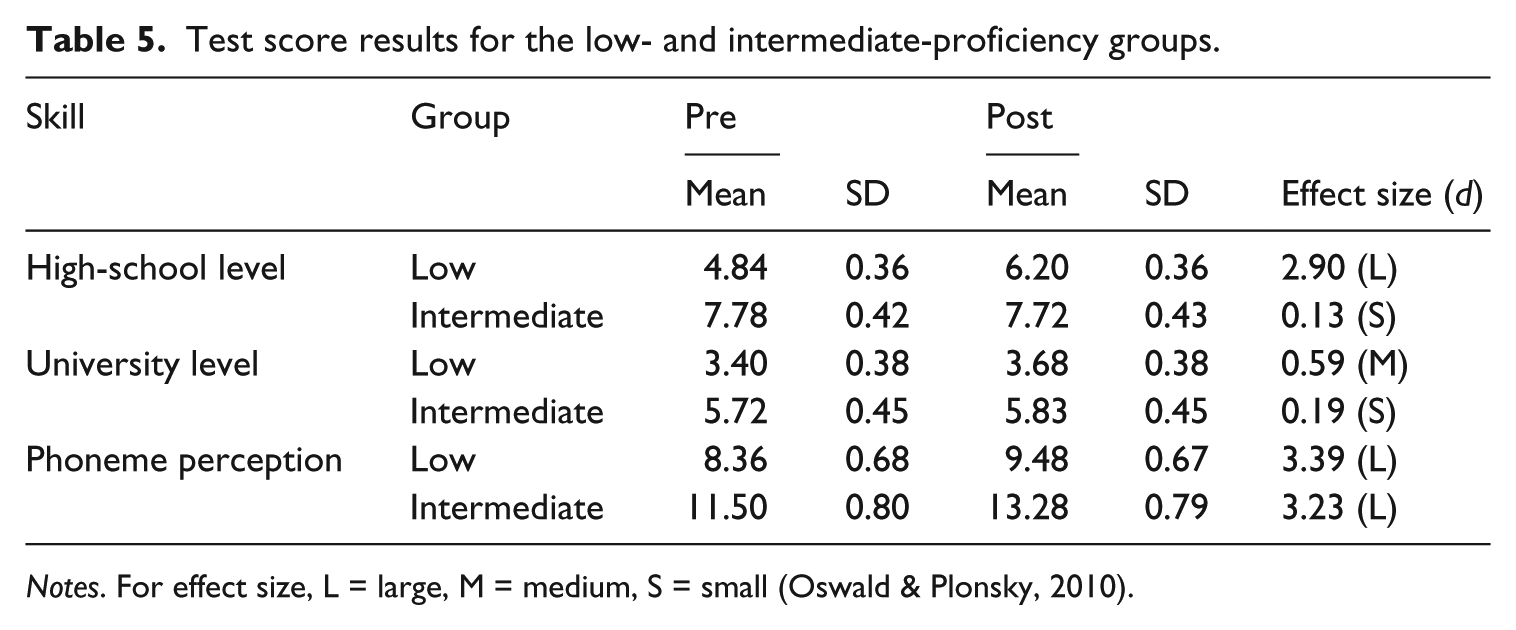
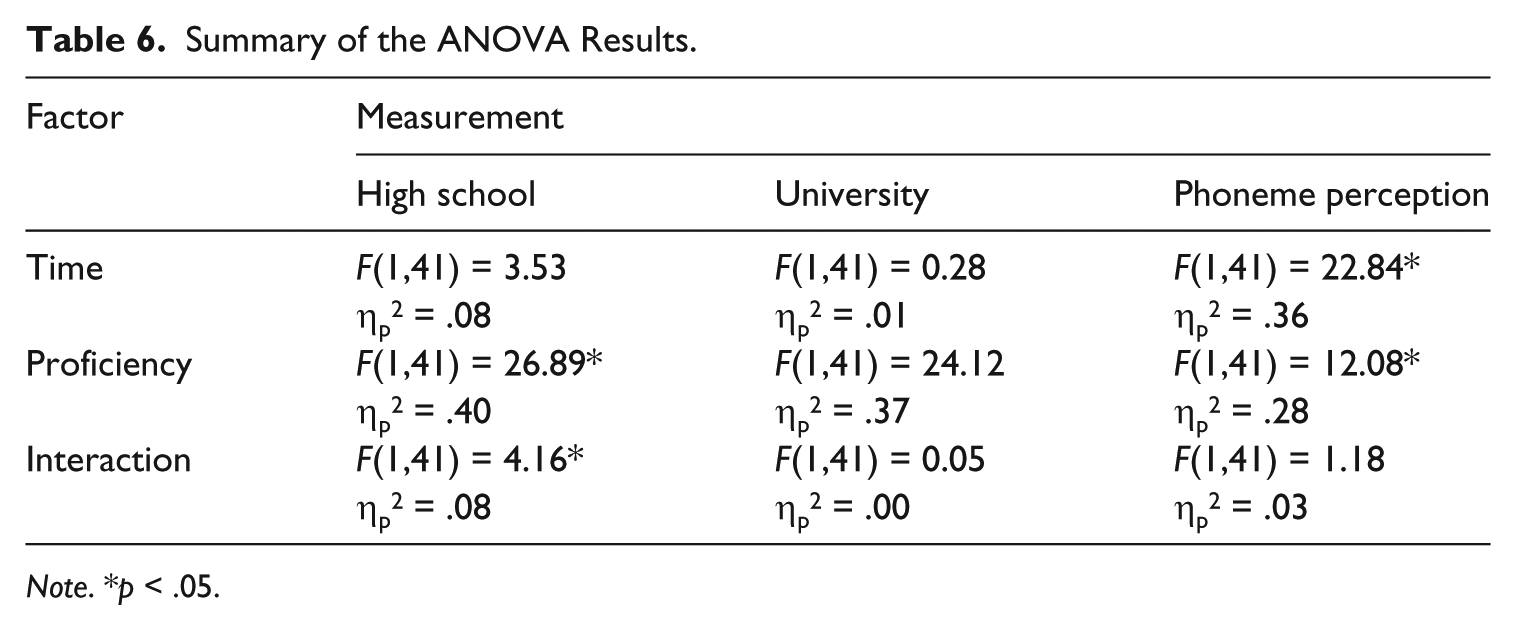
Regarding phoneme perception (the 20-item dictation test), both groups showed an improvement with the mean increasing by 1.12 from 8.36 to 9.48 in the low-proficiency group, and by 1.78 from 11.50 to 13.28 in the intermediate group (Tables 5–6 and Figure 1). The learners showed a similar pattern of improvement (Figure 1). A mixed-design of two-way ANOVA showed a statistically significant difference for time [F (1, 41) = 22.84, p =< .01, ηp2 = .36] and proficiency [F (1, 41) = 12.07, p =< .01, ηp2 = .23]; however, no significant difference was observed for interaction [F (1, 41) = 1.18, p = .28, ηp2 = .03] (Table 6). The large effect sizes (d = 3.29 and 3.23 for low and intermediate groups, respectively) along with these results indicate that both groups improved their phoneme perception skills to a similar degree.
Test score results for the low- and intermediate-proficiency groups.
Notes. For effect size, L = large, M = medium, S = small (Oswald & Plonsky, 2010).
Summary of the ANOVA Results.
Note. *p < .05.
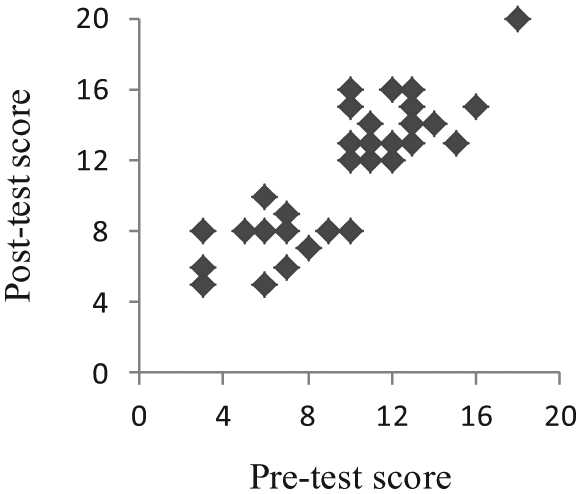
Learners’ phoneme perception.
Regarding the high-school-level questions (the 10-item Eiken listening test), only the low-proficiency group improved their scores, with the mean score increasing by 1.36 from 4.84 to 6.20, compared to a decrease of 0.06 from 7.78 to 7.72 in the intermediate group (Table 5 and Figure 2). Unlike phoneme perception, a clear linear line was not observed in Figure 2 because those with lower scores in the pre-test showed a greater improvement compared to those with higher initial score. In particular, those with quite low scores in the pre-test, that is, less than 3.00, showed a great improvement in the post-test. A mixed-design of two-way ANOVA showed a statistically significant difference for interaction [F (1, 41) = 4.16, p < .05, ηp2 = .08]. The simple main effect of time was statistically significant in the low-proficiency group [F (1, 41) = 9.17, p < .05], but not in the intermediate group [F (1, 41) = 0.01, p>.05]. The simple main effect of proficiency for the pre-test showed a statistically significant difference [F(1, 41) = 28.82, p < .01] as did the post-test [F(1, 41) = 7.44, p < .01] (Table 6). The large effect sizes, d = 2.90, for the low proficiency group and the minimal one, d = 0.13, for the intermediate proficiency group, along with these results, suggest that only the low-proficiency group improved their scores for the high-school questions.
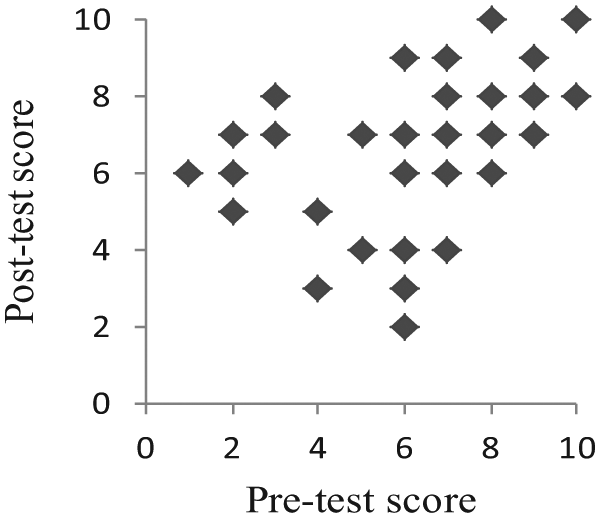
Learners’ listening scores for high school level.
As to the university-level questions (the 12-item Eiken listening test), no major improvement was observed in either group. The mean score increased by 0.28 from 3.40 to 3.68 in the low-proficiency group (d = 0.59) and by 0.11 from 5.72 to 5.83 in the intermediate group (d = 0.13) (Table 5 and Figure 3). A mixed-design of two-way ANOVA did not show any statistically significant differences for time [F (1, 41) = 0.28, p >.05, ηp2 = .01], proficiency [F(1,41) = 24.12, p>.05, ηp2 = .37], or interaction [F (1, 41) = 0.05, p >.05, ηp2 = .00]. The results therefore did not reveal any improvement in the university-level questions for either group (Table 6). However, considering that the low-proficiency learners showed a medium effect size with some individuals improving, there still remains a possibility for low-proficiency learners to improve even with university-level questions.
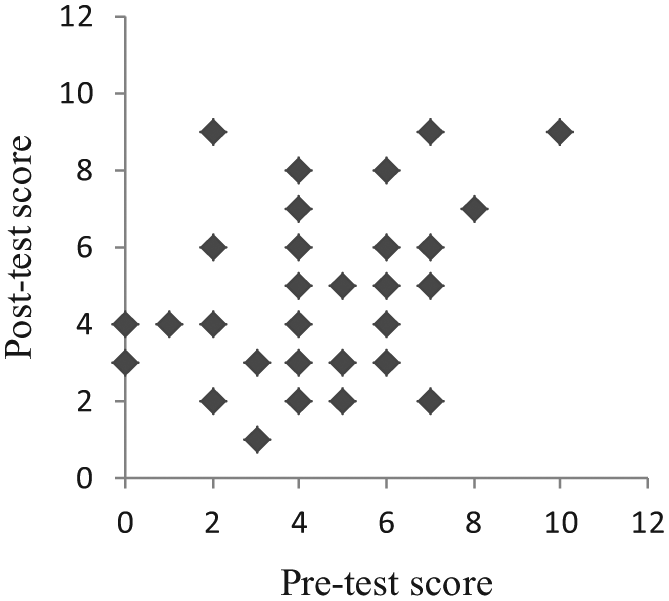
Learners’ listening scores for university level questions.
In summary, both groups improved in terms of phoneme perception. Only the low-proficiency group improved their scores in the high-school-level questions, while both groups showed little improvement for the university-level questions.
V Discussion
This study examined whether shadowing training improves learners’ phoneme perception skills and listening comprehension skills, and whether its effectiveness is limited to low-proficiency learners. Overall, the results show that the shadowing training was effective for improving phoneme perception skills regardless of listening proficiency level. However, for basic listening comprehension skills, it was only effective for low-proficiency learners. For advanced listening skills, it was not effective in either group.
The first finding of this study is that both groups improved their phoneme perception skills. This result supports the theoretical assumption that shadowing enhances learners’ speech perception (Kadota, 2007, 2012). Intensive shadowing training is considered to allow learners to fill the gap between the phonologically coded version of words and their actual pronunciation, especially in cases of weakened function words (Nakayama & Suzuki, 2012). In short, shadowing training generally assures the improvement of learners’ phoneme perception skills.
The second finding is that the listening improvement for high-school-level questions was limited to the low-proficiency group. In other words, the widely accepted notion that shadowing improves learner’s listening skills appears to be partly assured. For Japanese learners, aurally recognizing even known words proves difficult due to their inadequate listening skills; word recognition thus plays a crucial role in listening (Nakayama & Suzuki, 2012). Based on the theory of the cohort model (Marslen-Wilson & Welsh, 1978), whereby learners need to identify the initial phoneme of each word, an improvement in phoneme perception through shadowing training helps low-proficiency learners recognize more words than before training. As the high-school-level questions consist of fairly easy vocabulary and expressions, phoneme perception improvement was simply reflected in the score increase in this section. On the other hand, the scores for the high-school-level questions in the intermediate group were originally high, and the score remained high. In consideration of these two facts, these results suggest that the intermediate group already had sufficient skills to answer high-school-level questions, while shadowing training helped the low-proficiency group to approach the initial level of the intermediate group. This interpretation generally corresponds to that of Tamai (2005) and Kato (2009), mentioned above, who claimed that low-proficiency learners improved their listening comprehension skills more than advanced students who already had a relatively high level of listening comprehension.
Notwithstanding the interpretation above, there still exists a certain additional perspective that attributes the participants’ listening improvement to other English exposure the participants had received. The other non-shadowing activities the participants experienced in the class (e.g. a reading activity to comprehend the target passage) may have affected the results. In addition, the basic English skills that the participants had received during at least six years of English education before entering the university may have played an important role. The cohort model, mentioned above, works because they already have lists of words in their mind. Shadowing helps learners listen to words that they know and can read but cannot comprehend (Nakayama, 2011). If learners did not know the words in the first place, shadowing would not be effective. Shadowing does help learners improve their listening skills, but other training and exposure that learners have experienced are also possibly contributing to their listening skill improvement, along with shadowing training.
In addition, a minimal improvement for university-level questions was observed in the two groups, even though the phoneme perception of both improved. As an exception, those with quite low scores in the pre-test did improve to some extent; this is probably because the enhanced phoneme perception helped them to respond to a few more questions. In brief, these results indicate that learners need more listening skills in addition to the phoneme perception skills developed in the shadowing training.
In summary, the results of this study emphasize that shadowing improves learners’ phoneme perception regardless of their listening proficiency level; after training, low-proficiency learners approached the initial level of the intermediate group in terms of phoneme perception and listening comprehension. This explains why the improvement of basic listening comprehension skills appears only in the low-proficiency learners. The intermediate-proficiency learners already possess sufficient skills to answer the basic questions before training, while the low-proficiency learners gained these skills through training. However, this skill alone, enhanced by improved phoneme perception, was not enough to respond to the university-level questions. In short, those without basic listening skills benefited the most from shadowing.
In terms of the listening process, the above argument provides a new insight into the limited effectiveness of shadowing training for listening comprehension skills. As Shiki et al. (2010) found, shadowing target sentences or passages around five times is sufficient in terms of effectiveness, as shadowing is cognitively heavy, and learners’ perception of it is rather simple (Hamada, 2011b). Increasing the amount of shadowing practice in one lesson or training period is thus questionable. When listeners’ bottom-up processes do not properly function, they need to rely more on top-down processes (Rost, 2011). Consequently, the bottom-up processes remain immature. Therefore, low-proficiency learners should gain a certain level of phoneme perception skills, and then work toward improving their top-down skills to acquire higher listening comprehension skills so that they can increase their scores in more advanced tests. Because both processes work interactively for listening comprehension, once the learners’ bottom-up process is improved (i.e. phoneme perception is strengthened or automatized through an intensive training), the learners should then focus on top-down processes for holistic listening.
VI Study limitations
Despite the findings, three issues limit the interpretation of the results in this case study. First, although the purpose of the study was to compare the effectiveness of shadowing training on low- and intermediate-level learners, the findings would be more convincing if compared with data from a control group. Although previous studies have already confirmed the effectiveness of shadowing on listening skills, concluding that the improvement found in this study is directly attributable to the shadowing training may not be possible at this stage. The possibility still remains that other non-shadowing activities the learners had experienced in the class and in their experience prior to entering the university may have affected the results; hence, a replication of this type of research is necessary to make a stronger conclusion. Second, the participants were divided into two groups using the pre-test based on the Eiken test because limited time was available to assess them through a strictly designed curriculum. By the same token, this study did not include an advanced group. To obtain more reliable data, including participants from larger and more varied samples using another official criterion-referenced English proficiency test, would be ideal. In this scenario, a more appropriate categorization of learners (i.e. basic, intermediate, and advanced) would be possible. Lastly, there remain potential practice effects of the test–retest method. Although this method was considered to possess more advantages than weaknesses, the data would be more convincing if an additional measurement that would not reflect a practice effect were to be used.
VII Conclusions
Shadowing is effective for improving phoneme perception regardless of listening proficiency level. However, since phoneme perception among low-proficiency learners is low, short-term shadowing training helps them to quickly approach the level of intermediate learners. In other words, regardless of the initial level, shadowing is considered to improve learners’ phoneme perception and basic listening skills up to a certain level. One pedagogical implication of this study is that shadowing should be used to enhance foreign language learners’ phoneme perception, especially those whose target language does not have similar phonological rules. Once their bottom-up listening process improves to a certain level, learners should work on the top-down process as well. Although this study compared shadowing effectiveness by group, individual differences among learners should be acknowledged as a few learners in both groups showed a different pattern of improvement. As data on shadowing are still limited, I hope that this study will trigger further research.
Footnotes
Appendix
Transcriptions of the sample questions of the Eiken listening tests.
Acknowledgements
I would like to show my greatest gratitude to the reviewers and the editors.
Declaration of conflicting interests
The author declares that there is no conflict of interest.
Funding
This work was supported by JSPS KAKENHI grant number 24720247.