






Abstract
This article presents the findings of a study measuring perceptions of teacher autonomy of practitioners of English as a foreign language (EFL). This study also sought to identify areas in which Indonesian secondary schools need to improve to enable teachers to enjoy a greater degree of freedom while completing teaching-related activities. Additionally, it aimed to explore correlations between practitioners’ perceptions of teacher autonomy and their gender, school location, school status and teaching experience. This was a mixed-methods study comprising a sequential explanatory design with two consecutive stages: quantitative and qualitative. The data were gathered using two instruments: a closed-ended questionnaire and a focus group. The sample consisted of 185 (74 male and 111 female) Indonesian secondary school EFL teachers, recruited using convenience sampling. The findings indicated that teachers’ sense of autonomy in relation to seven specific areas of their work was relatively high. Specifically, they perceived themselves to have a considerable amount of autonomy with respect to teaching methodology, instructional materials, course content, assessment, and, more recently, lesson planning. However, they expressed disappointment at being excluded from the decision-making process regarding the school curriculum. The findings also revealed that teachers expected more school support in relation to teaching facilities and professional development. The article concludes by considering several key implications for school management teams regarding the need to foster teacher autonomy among English language practitioners.
I Introduction
Although the concept of teacher autonomy (TA) has been discussed to varying degrees in the literature since the early 1990s, it has now become overshadowed by the notion of learner autonomy. One reason for this is that language educators have never reached a consensus on a precise definition of TA that would guide subsequent educational debates (Pearson & Moomaw, 2006). The absence of such conceptual clarity has had inevitable consequences for the theoretical understanding of TA as well as its consistent utilization in educational discourse and, most importantly, its implications for educational research, schooling and school stakeholders (Wilches, 2007).
Empirical studies focusing on TA in the field of TESOL (Teaching of English to Speakers of Other Languages) are generally scarce because TA has previously been considered a primarily theoretical construct. However, it is now being researched more widely in diverse contexts and the findings are feeding into, and thus enhancing, English language teacher education programmes. Despite this, the situation remains far from ideal in a large number of countries. It is therefore vital for TA to be acknowledged as a prominent educational goal worldwide and, consequently, for teacher education programmes to produce teachers who demonstrate autonomy in teaching and professional learning while nurturing it in their students. Teachers need the freedom to select, plan, implement and evaluate their own ideas to ensure their classroom instruction is engaging, innovative, successful and sustainable, and that it meets students’ needs, wishes and wants.
The context for the current study is Indonesia where, for decades, teachers had been given little freedom in how they conducted their classroom practice. They adhered to the top-down model of education and were influenced by centralized educational policies, both of which impeded autonomy in the classroom. Additionally, the centralized system promoted exam-oriented education which resulted in negative washback. Classroom practice essentially involved teaching to the test, which eradicated creativity and innovation from the teaching-learning process (Sulistyo, 2007). Teachers’ classroom routines and teaching-oriented activities were also clearly defined and inspected by external bodies. For example, teachers, regardless of career stage, were required to design detailed and multi-component lesson plans for every lesson they taught. In practice, these were simply administrative tick-box exercises that were far removed from classroom reality (Hairunisya, 2018; Turi et al., 2017).
However, the system of education in Indonesia is now changing (Kusumarasdyati & Retnaningdyah, 2019). For instance, TA has recently been given high priority by the government and has been promoted through a variety of measures. These include granting schools greater power in decision-making processes relating to instruction and assessment to ensure the needs of both teachers and students are met (Heyward et al., 2011; Sofo et al., 2012). Additionally, the recent policy of ‘Merdeka Belajar’ (Freedom of Learning) developed by the Ministry of Education and Culture (Circulars No.14, 2019, on Simplified Lesson Planning and No.1 2020 on Assessments for Graduation and Student Admissions) and the ‘Guru Penggerak’ (Teacher as Catalyst) programme offer teachers more freedom in relation to classroom practices. Although some of these innovations were introduced some time ago, no significant changes have been observed thus far at school level. This may be ascribed to the fact that a substantial number of Indonesian teachers have a limited understanding of TA and the new opportunities such innovations grant them. It may also be a consequence of the decades of centralized education and the culture of obedient civil servants this created. This view is endorsed by Bjork (2004), who stated that the role of teachers as educators is secondary to that of teachers as civil servants. Because they are unprepared to quickly exercise control or introduce a change in their schools or in their professional development (Bjork, 2004, 2006; Lubis, 2018; Sofo et al., 2012), teachers tend to wait for clear directives from their superiors.
Current levels of teacher self-esteem and TA are low (Cirocki & Farrell, 2019). This may be attributable to the bureaucratic culture of schools and the top-down approach to education, both of which may have produced teachers who are not only resistant to change, they also lack the confidence and readiness to face the challenges the 21st century will bring (Lubis, 2018). To address these issues, it is hoped that the Ministry of Education and Culture will review current English language teacher education programmes and professional development provision. It is vital that this revamped provision continues to focus on content and pedagogical knowledge, and, additionally, prioritizes independence, creativity and a high level of English language proficiency among Indonesian teachers (Basikin, 2019; Cirocki & Farrell, 2019).
Against this background, the current article begins by defining the construct of TA and presenting a profile of an autonomous teacher. This is followed by an overview of existing TA empirical projects. Finally, it presents the findings of a mixed-methods study investigating Indonesian secondary school teachers’ awareness of the amount of autonomy they have while teaching EFL courses. Perceived autonomy is measured in relation to seven areas of teachers’ work: instructional materials, course content, teaching methodology, assessment, classroom management, lesson planning and school curriculum. For the sake of clarity, the scope of the current study is limited to practitioners’ individual TA as opposed to the collective autonomy that exists among teachers as members of professional communities.
II Literature review
1 Defining teacher autonomy and the autonomous teacher
A review of the literature reveals that TA means different things to different people (Lamb & Reinders, 2008; Teng, 2019; Wermke & Salokangas, 2015). The plethora of available definitions demonstrates that this concept is multifaceted in nature and broad in scope. These definitions can be categorized into three groups in which TA is variously perceived as: (1) the capacity for self-directed professional teaching, (2) the capacity for self-directed teacher learning, and (3) teachers’ freedom from control by others in relation to either professional teaching or professional learning (Smith & Erdoğan, 2008). To make things even more complicated, some definitions cover more than one of these aspects.
In the first group, the definitions focus on exercising autonomy in teaching (Hyslop-Margison & Sears, 2010; Pearson & Moomaw, 2006; Vieira, 2006). For example, Little (1995, p. 179) emphasizes that autonomous teachers exhibit not only ‘a strong sense of personal responsibility for their teaching’, but also ‘the highest degree of affective and cognitive control of the teaching process’ as a result of critical reflection. This definition aligns strongly with Aoki’s (2002, p. 111) view of TA as the ability and/or ‘responsibility to make choices concerning teaching’. More recently, TA has been defined as a practitioner’s potential to engage in self-directed teaching, which may be supported by general professional autonomy (teachers’ professional tasks), collegial professional autonomy (teachers’ collective decisions regarding pedagogical practice) and individual autonomy (teachers’ individual choices with respect to classroom instruction). More detailed information about these forms of TA can be found in Jumani and Malik (2017).
The second group includes definitions that present TA as the capacity for self-directed professional learning (Dierking & Fox, 2013; Gu, 2014; Huang, 2005). For example, McGrath (2000, p. 109) refers to TA as ‘self-directed professional development’, which includes teacher engagement in classroom-based enquiry and, more broadly, reflective practice. Nakata (2009, p. 210), however, argues that: In the development of teacher autonomy . . . teachers set professional autonomy as their lifelong professional goal, and then start the endeavor to improve ‘self’ toward that goal – of becoming truly autonomous professionals – in their own way and at their own pace.
Nakata’s definition enriches the concept of TA by positioning practitioner engagement as part of a lifelong learning process. From this perspective, teacher learning is understood as a process in which practitioners stimulate and enhance their reflective thinking and professional knowledge while ensuring their pedagogical practice is critically informed, attractive and current. Additionally, teachers undertake this type of learning in order to ‘[improve] knowledge, skills and competences within a personal, civic, social and/or employment-related perspective’ (European Commission, 2001, p. 9).
It is also important to stress that learning is a social activity mediated by interaction, language and context (Cirocki & Golombek, 2020; Lantolf, 2000). It is therefore a dynamic and constructive process whereby contributions from participants result in the acquisition of new information based on teachers’ lived realities. It rests on teachers’ awareness and understanding of their schools, the teaching profession, and the various socio-political factors affecting their professional learning and pedagogical practice (Cirocki, Madyarov, & Baecher, 2019).
The third group of definitions – teachers’ freedom from control by others in relation to either professional action or professional development – centre on teachers’ rights within the education system. As Crabbe (1993, p. 443) notes, teachers have ‘the right . . . to exercise [their] choices in [teaching and] learning,’ and therefore cannot become ‘[victims] of choices’ made by others. Because teachers’ work is highly dependent on collective decisions that affect individual choices, it is imperative that a degree of individual freedom is permitted within the overall constraints imposed by the education system and its various institutions (Benson, 2001, 2010; Freire, 1970).
Teachers must therefore face no restrictions on the extent to which they can take control over their own teaching and professional learning (Benson, 2001). They need to feel confident about making informed choices regarding their classrooms and be able to ‘freely direct the course of [their professional lives]’ (Young, 1986, p. 1). Any control exercised by other teachers, administrative staff, management and the educational system should therefore be minimal. Instead, teachers should be encouraged to make their own decisions and enact change in the classroom. It is crucial for teachers to develop and apply their own theories based on their professional competences, resourcefulness and confidence (Kumaravadivelu, 2001).
The definitions presented above reveal that autonomous teachers have complex personality profiles, and thus complex professional identities. In their teaching they are expected to be independent, responsible, reflective, creative, intrinsically-motivated, confident, logical, analytical, curious, cooperative, decisive and strategic. Additionally, autonomous teachers perceive themselves as lifelong learners, monitoring and critically assessing both their own learning and that of others.
All these perspectives are extremely important and should be integrated into a comprehensive definition of TA. The working definition that follows aims not only to guide the empirical project in the second part of this contribution, but also to shape further debates on TA in the wider context of TESOL. This definition is as follows: TA is the teacher’s capacity to willingly and freely engage in: (1) self-directed teaching, where teachers plan, deliver and evaluate their pedagogical practice in seven areas: instructional materials, course content, teaching methodology, assessment, classroom management, lesson planning and school curriculum with a view to making the teaching-learning process attractive, effective and sustainable; and (2) self-directed lifelong professional learning, where teachers choose and participate in activities that enhance their pedagogical skills and content knowledge in relation to the seven areas listed, each of which directly affects student learning and achievement.
For reasons of space, the study reported in this article focuses only on the first part of this definition, namely, Indonesian teacher’s self-directed teaching.
2 Research on teacher autonomy
Despite the various definitional issues, extensive research has been conducted on autonomy in education. Although a number of these studies relate to TESOL, rigorous research focusing on TA is rather infrequent and is substantially outnumbered by empirical projects on learner autonomy. The same applies in the Indonesian context – the focus of the empirical project presented in the second part of this contribution. Consequently, more in-depth studies are required to further explore the concept of TA, both in the field of TESOL in general and in Indonesian schools more specifically; the current project therefore constitutes a response to this need.
Existing research on TA can be divided into two strands: (1) studies focusing on factors influencing its development as a professional attribute and (2) studies investigating the contribution of teacher educational practices to the development of TA. Research in the first category locates TA within the framework of teacher affect (attitudes, emotions, values) and is inextricably linked to such concepts as teacher beliefs, anxiety/stress, satisfaction, burnout and identity. Research in this category includes studies by Javadi (2014), Long (2014), Esfandiari and Kamali (2016), and Roohani and Dayeri (2019). Because the current project is not related to teacher affect, these studies fall outside the scope of this article and will not be reviewed.
The second strand of research focuses on the interplay between teachers’ educational practices and TA, thus reflecting the working definition proposed previously. The interplay between TA and pedagogical practice has been captured in several studies. For example, Benson (2010) explored constraints on TA in English language teaching in four Hong Kong secondary schools. This interview-based collective case study demonstrated that teachers’ everyday decisions with respect to the teaching-learning process in their classrooms were largely shaped by the schemes of work operating in these schools. The participants also reported that these schemes, as well as systems of workplace supervision and surveillance, impeded their capacity to make their own decisions. Despite this constraint, the teachers managed to find and create spaces for autonomy by interpreting and manipulating the tasks promoted by the schemes of work, or by occasionally disregarding them.
The literature also shows that reflective practice develops teachers’ capacity to take responsibility for the instructional process and supports learner autonomy (Camilleri Grima, 1999; Osterman & Kottkamp, 2004). Various tools exist to promote reflective practice among teachers, including journals, collaborative blogging, post-observation conferences and peer sharing (Cirocki & Farrell, 2017a). In a similar vein, Cakir and Balcikanli (2012) employed the European Portfolio for Student Teachers of Languages (EPOSTL) to promote TA at a Turkish university. Their study consisted of four stages: (1) familiarizing student teachers with the EPOSTL, (2) eliciting student teachers’ expectations about the new tool, (3) using the EPOSTL in practice, and (4) interviewing student teachers and teacher trainers about the EPOSTL experience upon completion of the project. The findings revealed that student teachers and mentors alike found the EPOSTL useful. Its benefits were particularly noticeable in areas such as teacher reflection, self-assessment, and awareness of their teaching as well as professional learning. More detail on other research projects employing portfolios to promote TA can be found in Burkert and Schwienhorst (2008), Yildirim (2013) and Gámiz-Sánchez et al. (2016).
A discussion on research that links TA and reflective practice would not be complete without considering projects that focus on developing professional autonomy through engagement in classroom-based research. As the literature reveals (Atay, 2008; Banegas et al., 2013; Burns, 2014; Çelik & Dikilitaş, 2014), a key form of classroom-based research, action research, encourages teachers to partake in a process of critical reflection and enhance their professional development by increasing their knowledge of pedagogical practices, ensuring they develop a deeper awareness of the requirements of their students, and enhancing their autonomy as professional teachers.
Utilizing qualitative methodology, Wyatt (2011) conducted a longitudinal case study to assess the accomplishments of four teachers partaking in action research while studying at a university in the Middle East. This process enabled the participants to reflect on the advantages of conducting their own research on their teaching and learning practices. The teachers were observed on 5–6 occasions and interviewed 7–8 times. Wyatt also analysed written work submitted by the teachers on the topic of planning and taking part in action research. The results indicated that the participants perceived classroom-based action research to be extremely valuable in that it enabled them to become autonomous and more effective as teachers and to develop their research skills.
Finally, as a component of the Evaluation of Teaching Practice course at a Turkish university, Cabaroglu (2014) invited her students to take part in a series of action research projects. The sample for this mixed-methods study comprised final-year EFL student teachers (N = 60) undertaking a four-year full-time BA programme. The participants were asked to generate a sizeable corpus of data through self-efficacy scales, reflective journals and course evaluation forms. The aims were twofold: to identify the teaching goals participants stated they wished to address using action research and to determine whether their beliefs about teaching efficacy had changed after taking part in such research. A subsidiary aim was to explore participants’ views of action research with respect to their professional development. The results indicated that the teachers perceived their teaching efficacy and problem-solving skills to have increased and that they felt they had greater autonomy as learners.
The interplay between TA and pedagogical practice has been equally indisputable in studies focusing on perceptions. Although rather scarce, these studies are crucial for the current contribution as the empirical project presented in later sections reports on secondary school EFL teachers’ perceptions of TA in Indonesia. First, however, three other projects are summarized to provide a comparative background.
In the first project, Gabryś-Barker (2017) recruited 28 pre-service teachers of English from a Polish university. The following five inductive categories were identified in the dataset: (1) definitions of TA, (2) a profile of an autonomous teacher, (3) relations between teacher and learner autonomy, (4) constraints on TA, and (5) self-assessment of the degree of autonomy. The qualitative analysis revealed that the participants were cognisant of what TA entailed, and that their perceptions of the concept were positive. They perceived independent practitioners as ‘fully competent, motivated by having a calling and a positive attitude to his or her students, which allows him or her to facilitate the learning process by creating a favorable classroom atmosphere’ (Gabryś-Barker, 2017, p. 175). The results also indicated that certain character traits, particularly self-esteem and self-confidence, contributed to teacher autonomy. The participants believed that autonomy came with experience and perceived it to be a longitudinal process.
The other two projects focused on EFL teachers in Turkey and Iran. The first study sought to examine the perceptions of TA held by both Iranian and Turkish secondary school EFL practitioners (N = 360). The focal points of Khezerlou’s (2013) investigation were: (1) the choice of teaching methods, strategies and techniques along with curriculum implementation, (2) teacher engagement in decision making, and (3) teachers’ initiatives to solve work-related issues. The results revealed that the TA perception scores of Turkish teachers were higher than those of Iranian teachers [Pedagogical Curriculum Evaluation (t = −5.337; p = .000, p < .05), Decision Making (t = −4.901; p = .000, p < .05) and Problem Solving (t = −3.114; p = .002, p <. 05)]. Furthermore, the TA perception scores of male practitioners and master’s degree holders were higher than those of female teachers and bachelor’s degree holders, respectively. Khezerlou concluded that the Decision-Making dimension was the strongest predictor of TA in both teacher cohorts.
In a sample of EFL teachers working in Turkish schools, Khalil and Lewis (2019) examined the comprehension and subsequent exhibition of TA among participants along with the mechanisms underpinning these processes. Analysing a range of disparate data, they found that the participants generally exhibited considerable autonomy while teaching, even though pressure was placed on them by both the parents and school managers. The participants also felt they were included in school decision-making processes but stated firmly that they anticipated being given greater freedom with respect to professional development.
The emerging picture reveals that the various aspects of TA need further exploration. The results are inconclusive and in the majority of cases apply to specific contexts due to distinct samples or particular research methods. This Indonesian project is a response to this pressing need and brings novelty to the existing research in several ways. For example, it brings a new teaching context to the current educational debate. Little is known regarding the extent of autonomy EFL teachers have in secondary schools in Indonesia. Although the various projects discussed focused on Asian countries, including Hong Kong (Benson, 2010) and Turkey (Cabaroglu, 2014), none relate to the Indonesian context. Another shortcoming of the studies reviewed was that they mainly investigated TA qualitatively, more often than not adopting a case-study design (Benson, 2010; Wyatt, 2011). By contrast, the current project, to provide a deeper understanding of the concept in question, adopted a mixed-methods approach as did Cabaroglu (2014) and Khalil and Lewis (2019) in Turkey. In this way, the present study provides greater richness compared with either quantitative or qualitative methods alone, stronger evidence through the convergence and collaboration of findings, and a more accurate interpretation.
In contrast to studies (Gabryś-Barker, 2017; Khalil & Lewis, 2019; Khezerlou, 2013) that investigated EFL teachers’ understanding of TA in general or in relation to decision making or problem solving more specifically, the current project measures Indonesian EFL practitioners’ perceptions of autonomy in relation to seven specific areas of pedagogical practice: instructional materials, course content, teaching methodology, assessment, classroom management, lesson planning and school curriculum. To the best of our knowledge, no such research exists in the Asian context. Finally, the perceived autonomy of Indonesian EFL teachers is elucidated through a complex analysis of four variables – teacher gender, school location, school status and teachers’ work experience – that previous studies have never examined simultaneously.
The study addressed three research questions:
How much freedom to engage in self-directed teaching do EFL teachers perceive they have in Indonesian secondary schools?
Does Indonesian secondary school EFL teachers’ perceived autonomy vary according to gender, school location, school status and work experience?
What possible improvements related to teacher autonomy would these teachers like to see in their schools?
III Research methods
1 Research design
The empirical part of this article describes a mixed-methods project conducted in East Java, Indonesia. There were three reasons for combining quantitative and qualitative methods: to ensure a strong grasp of the studied phenomenon, to increase the quality and explicative power of the collected data, and to increase the trustworthiness of the study (Bryman, 2006; Creswell & Plano Clark, 2011). The study followed a sequential explanatory design, with the data gathered in two consecutive stages: quantitative and qualitative. The purpose of the former was to collect, analyse and discuss numerical data to estimate the extent of freedom EFL teachers perceived they had to engage in self-directed teaching in Indonesian secondary schools and assess how perceived autonomy varied according to gender, school location, school status and work experience. The latter, by contrast, sought to collect, analyse and discuss textual data regarding Indonesian teachers’ perceptions of TA in relation to their own pedagogical practice along with possible improvements Indonesian teachers would like to see in their schools in relation to TA. Thus, the quantitative stage generated data that were utilized to answer the first two research questions, whereas the qualitative stage generated data that were utilized to answer the first and the third research questions. It is important to clarify that the findings from the quantitative analysis of the questionnaires were used to inform the focus group interviews. This contributed to both the complementarity of the two research stages as well as the trustworthiness of the data generated.
2 Participants
This study recruited 185 Indonesian EFL teachers, comprising both males (n = 74) and females (n = 111). The participants worked in urban (n = 99) and rural schools (n = 86), which were classed as either state (n = 108) or private (n = 77) institutions. In terms of teaching experience, the participants were divided into two groups: novice (n = 26) and experienced (n = 159) teachers. The entire sample (N = 185) took part in the quantitative stage and 30 participants volunteered to participate in the qualitative stage.
Convenience sampling was employed to recruit all participants. This means the participants were selected on the basis of their availability (Weathington et al., 2010).
3 Research instruments and procedure
Two instruments were utilized to collect the data: a questionnaire and a focus group interview, both of which were translated into the participants’ native language (Bahasa Indonesia) to ensure full understanding. The subsequent translation was performed by the native researcher who conducted the study. This was then cross-checked for accuracy by two independent native colleagues.
The first instrument was employed in the quantitative stage to measure teachers’ perceived autonomy in relation to seven areas of pedagogical practice: (1) instructional materials, (2) course content, (3) teaching methodology, (4) assessment, (5) classroom management, (6) lesson planning and (7) school curriculum. In total, the questionnaire consisted of 49 items that were responded to on a 6-point Likert scale, ranging from 1 (strongly disagree) to 6 (strongly agree). The items were prepared specifically with the Indonesian context in mind through a two-stage process. Initially, they were prompted by important literature on teacher autonomy and previous research (e.g. Lamb & Reinders, 2008; Manzano Vázquez, 2018; Olufunmilayo Diyan & Adeyemi Adediwura, 2016; Pearson & Moomaw, 2006). The items were then analysed through the lens of Indonesian classroom/school and recent educational policies. Those that best reflected the situation in Indonesia were then included in the questionnaire.
The next step was to assess reliability and validity of the questionnaire. In terms of overall reliability, the Cronbach’s alpha was .80, suggesting high internal consistency. The questionnaire was therefore suitable for measuring the concept of TA. To ensure content validity, several experts in the field were consulted to evaluate its accuracy. All the items included in this instrument were collectively negotiated and agreed upon by all the invited experts.
Once the numerical data had been gathered, the qualitative stage began. This comprised the use of five focus groups. Thirty teachers took part in these groups (six per group). The focus group interview consisted of questions relating to the following two themes: (1) workplace autonomy of Indonesian EFL teachers and (2) ways of improving TA in the school. Open-ended questions (e.g. ‘To what extent do you agree that you are given enough independence/autonomy with regard to teaching in your school? To what extent do you agree that your school could do something to make its English teachers/yourself more independent/autonomous?’) were deliberately selected to encourage detailed responses that revealed participants’ thought processes, creativity and resourcefulness (Mackey & Gass, 2005). They were especially useful for eliciting detailed information on the feelings and opinions of both groups and individuals. The length and level of probing among participants varied. In general, the participants were talkative and had interesting things to say, although sometimes it was necessary to ask additional questions to ensure clarity and/or precision of the data.
4 Data analysis
The quantitative data were analysed using descriptive statistics and independent sample t-tests. These were used primarily to determine how much freedom Indonesian EFL secondary school teachers had in their pedagogical practice and whether there was any variation across gender (i.e. male, female), school location (i.e. rural, urban), school status (i.e. state, private) and teaching experience (i.e. novice, experienced). Prior to data analysis, the participants’ responses to 16 items with a negative meaning (i.e. 12, 14, 20, 24, 25, 26, 27, 28, 29, 31, 37, 39, 43, 44, 48, 49) were reverse-scored to enable a joint analysis with the positively worded items. This means that in positively worded items, the numerical scoring scale looked as follows: strongly disagree = 1, disagree = 2, somewhat disagree = 3, somewhat agree = 4, agree = 5 and strongly agree = 6. However, in the negatively worded items, the numerical scoring scale ran in the opposite direction, meaning that ‘strongly disagree’ attracted a score of 6 and ‘strongly agree’ equalled 1. Means and standard deviations of the individual questionnaire items were then calculated and presented in descending order to indicate the pedagogical practices in which teachers enjoyed high, moderate and low levels of autonomy. To facilitate this, participants’ responses were categorized into three levels of perceived autonomy using equal cut-off points on the scale: low (1.00–2.70), moderate (2.71–4.40) and high (4.41–6.00).
The qualitative data were analysed using thematic coding, the purpose being to ‘identify, analyse and report [themes] within data’ regarding possible improvements Indonesian secondary schools should implement with regard to TA (Braun & Clarke, 2006, p. 79). Because five groups of participants contributed to the qualitative stage, codes were applied to ensure a clear presentation of the data. For example, in FG2T1, FG2 = focus group number 2 and T1 = teacher number 1.
IV Results and discussion
This section analyses and discusses the data in two separate subsections. The first subsection answers the first two research questions by presenting quantitative data in conjunction with qualitative evidence. The second subsection focuses purely on qualitative data and seeks to answer the third research question.
1 Perceived autonomy of EFL teachers in Indonesian secondary schools
The purpose of this section is to answer the first two research questions. The first question reads as follows: ‘How much freedom to engage in self-directed teaching do EFL teachers perceive they have in Indonesian secondary schools?’ As the statistical analysis revealed (Figure 1), the overall level of autonomy perceived by Indonesian teachers while teaching English in secondary schools was moderate, as indicated by the mean score of 4.21. A total of 167 teachers reported moderate autonomy in teaching, with means ranging from M = 2.73 to M = 4.39. Only 18 teachers enjoyed high levels of autonomy in teaching, with means ranging from M = 4.45 to M = 5.04.
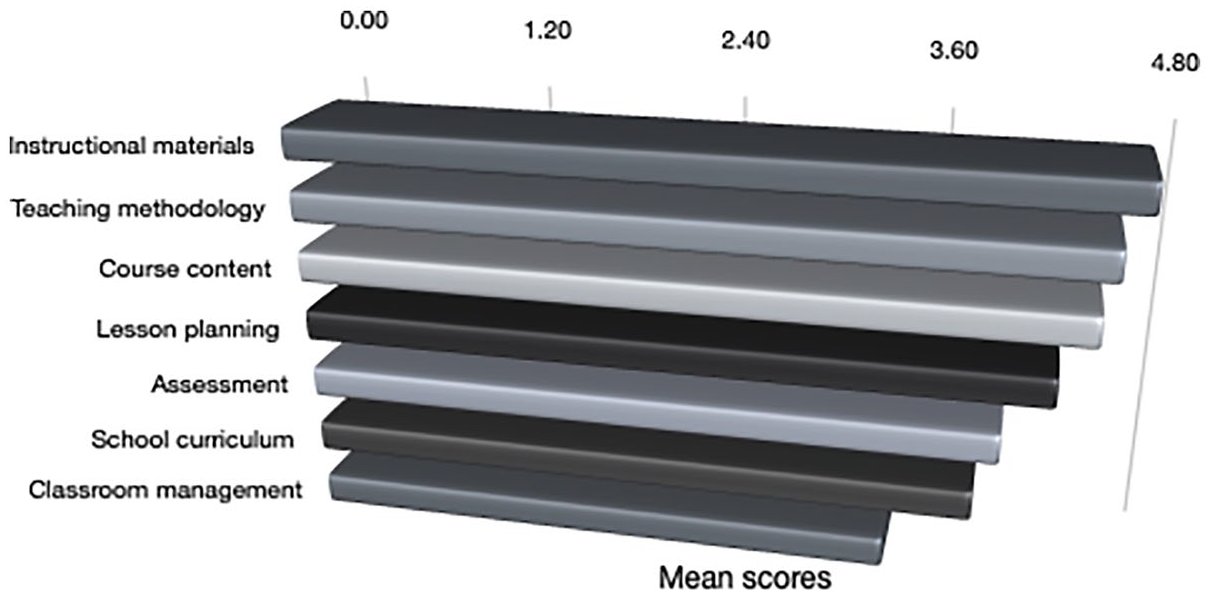
Indonesian teachers’ perceived autonomy in seven areas of pedagogical practice.
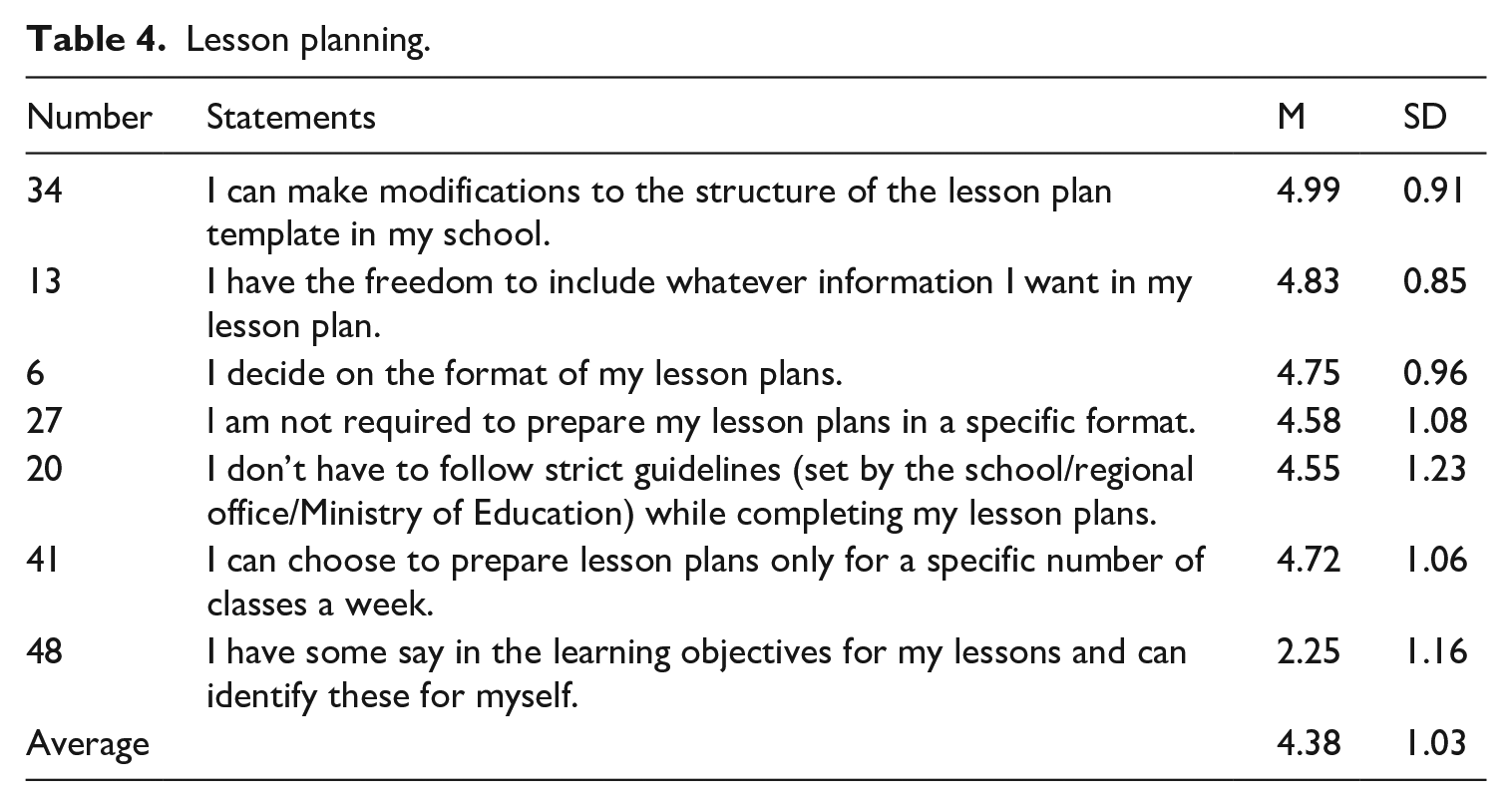
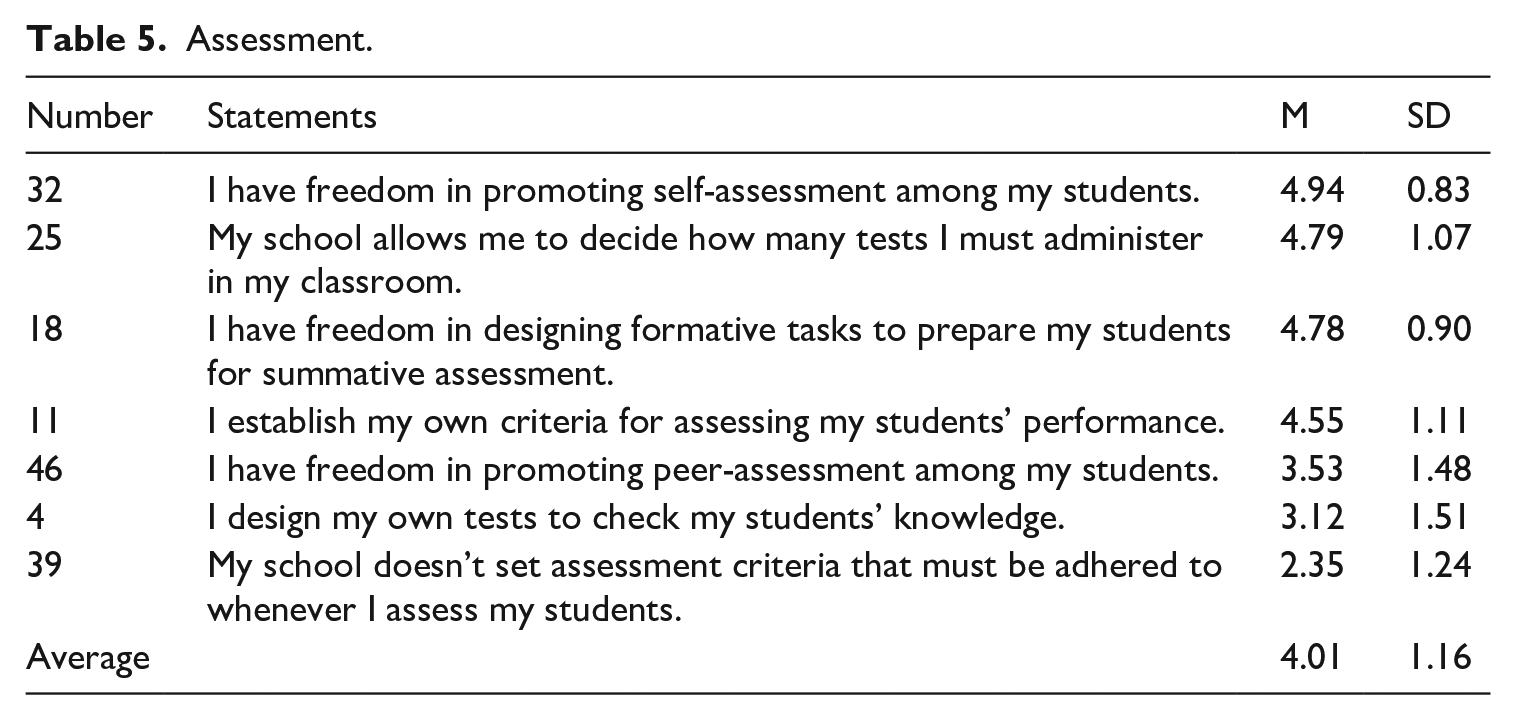
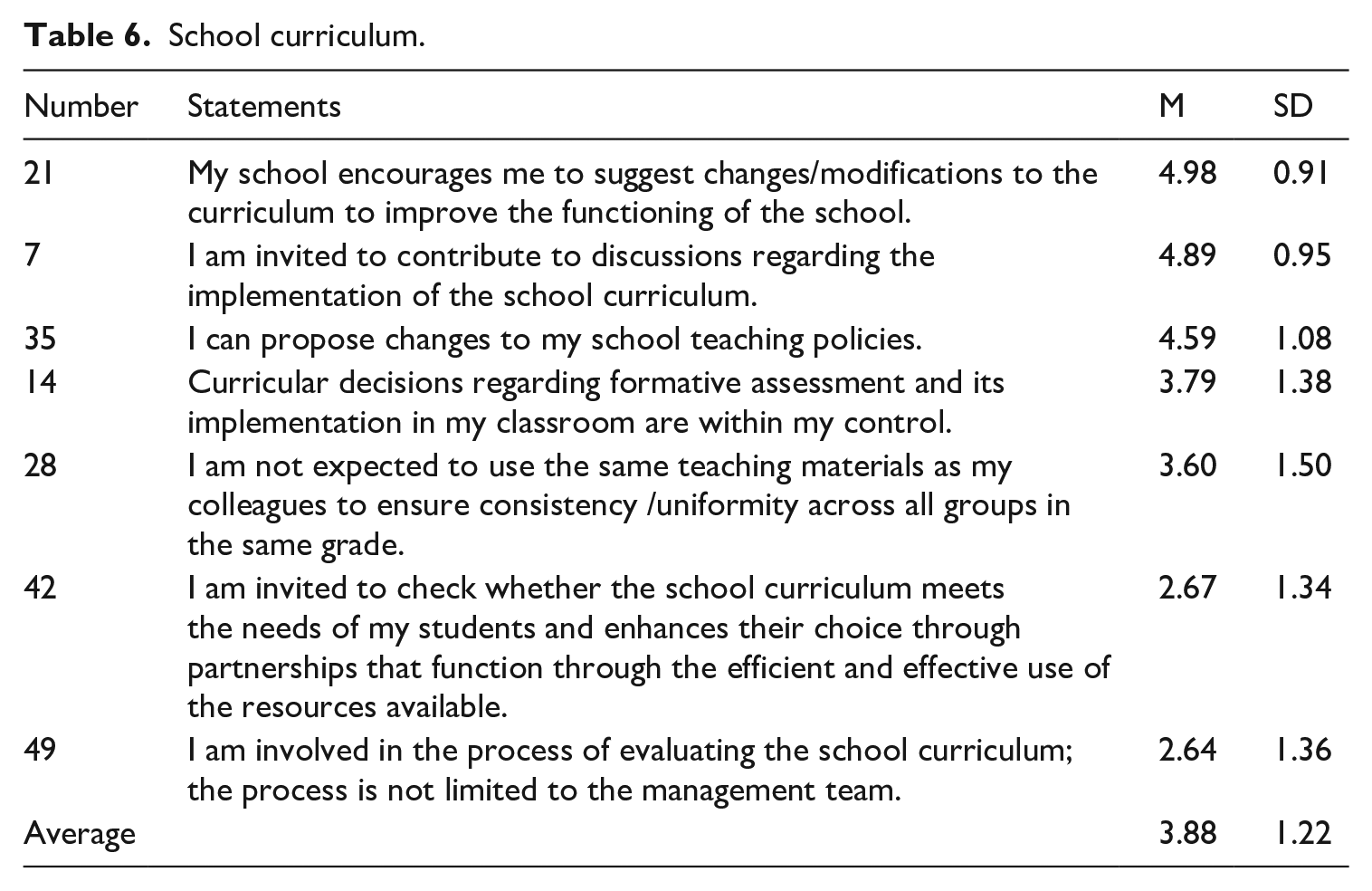
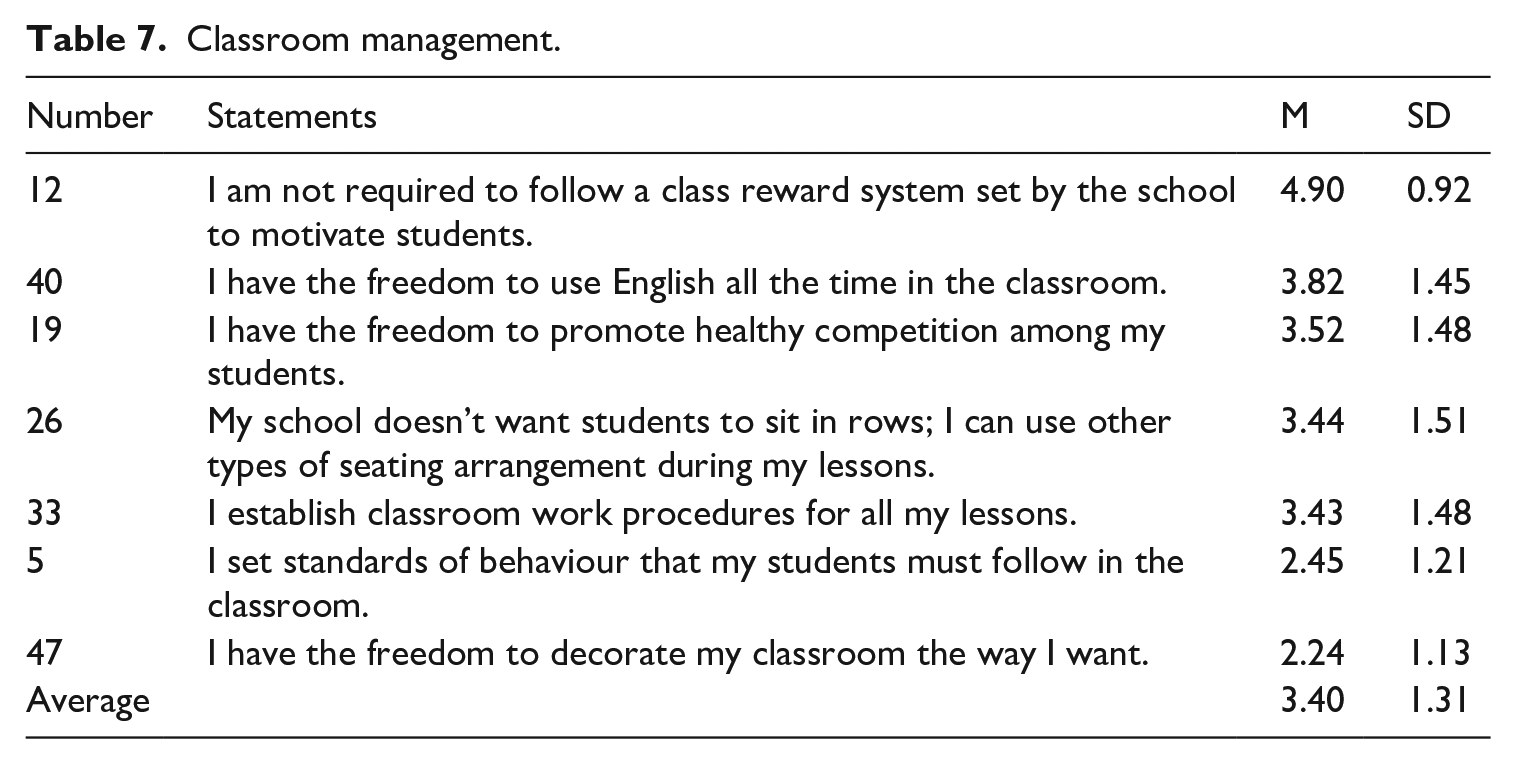
The teachers reported high levels of perceived autonomy in only two areas of teaching. In all other cases, the levels were moderate. In descending order, the means were as follows: instructional materials (M = 4.67), teaching methodology (M = 4.54), course content (M = 4.47), lesson planning (M = 4.38), assessment (M = 4.01), school curriculum (M = 3.88) and classroom management (M = 3.40).
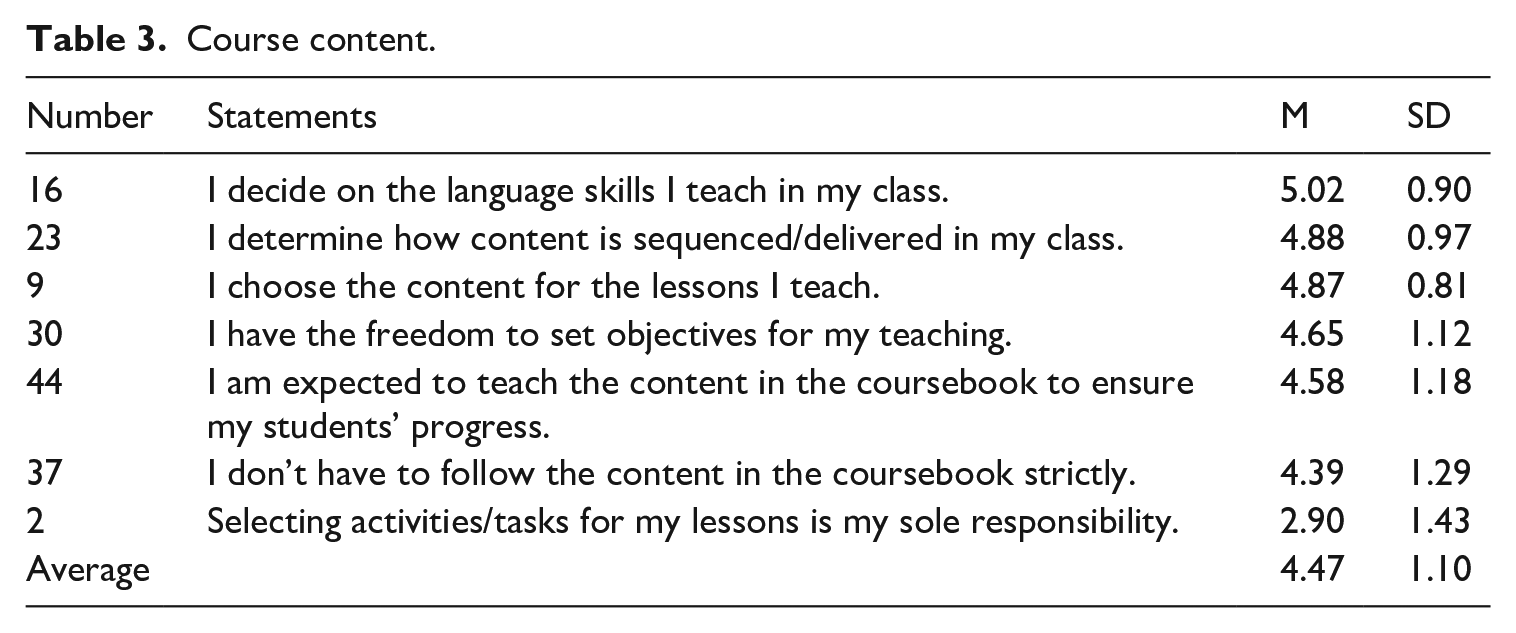
The scores for individual items within each of the seven areas of pedagogical practice are presented in descending order in Tables 1–7. The statistical analysis is now supported by qualitative data as the focus groups elicited extremely similar responses in relation to the seven areas of pedagogical practice. More specifically, the purpose of including the qualitative data is to illustrate and expand the results of the statistical analysis. For instance, the teachers stated that ‘in the past two years’ (FG1T6), their schools had given them ‘a fairly reasonable amount of freedom’ (FG1T3). This independence was primarily related to the areas presented in Tables 1–7 and included: teaching methodology, instructional materials, course content, assessment and, more recently, lesson planning. For example, teachers said their schools encouraged them to ‘employ methods and approaches to teaching [they found] useful’ (FG3T3) and also to ‘use educational technology as often as possible’ (FG5T6). The teachers were made ‘responsible for the content of [their] lessons’ (FG2T4; FG2T6) and how it was sequenced and delivered in the classroom. Additionally, they were allowed to ‘use a wide range of materials’ (FG1T3) ranging from coursebooks through songs and games to self-developed activities that ‘accelerate student learning’ (FG4T5). These findings concur with those of Khalil and Lewis (2019), who reported that Turkish EFL students enjoyed similar autonomy while teaching and assessing their students. However, the scope of the current study was much broader and presented the process of teaching as multi-dimensional through its examination of seven specific categories.
Instructional materials.
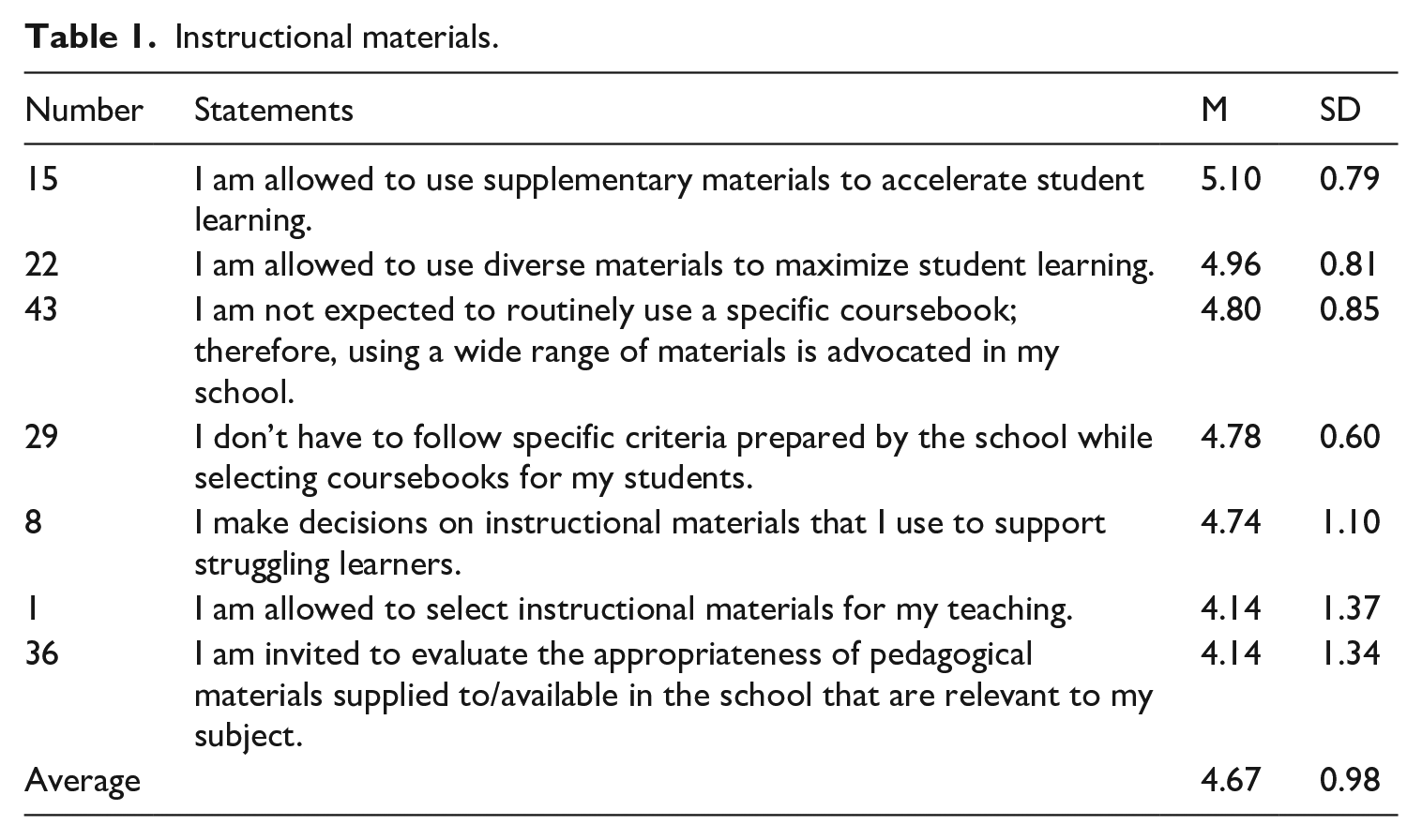
Teaching methodology.
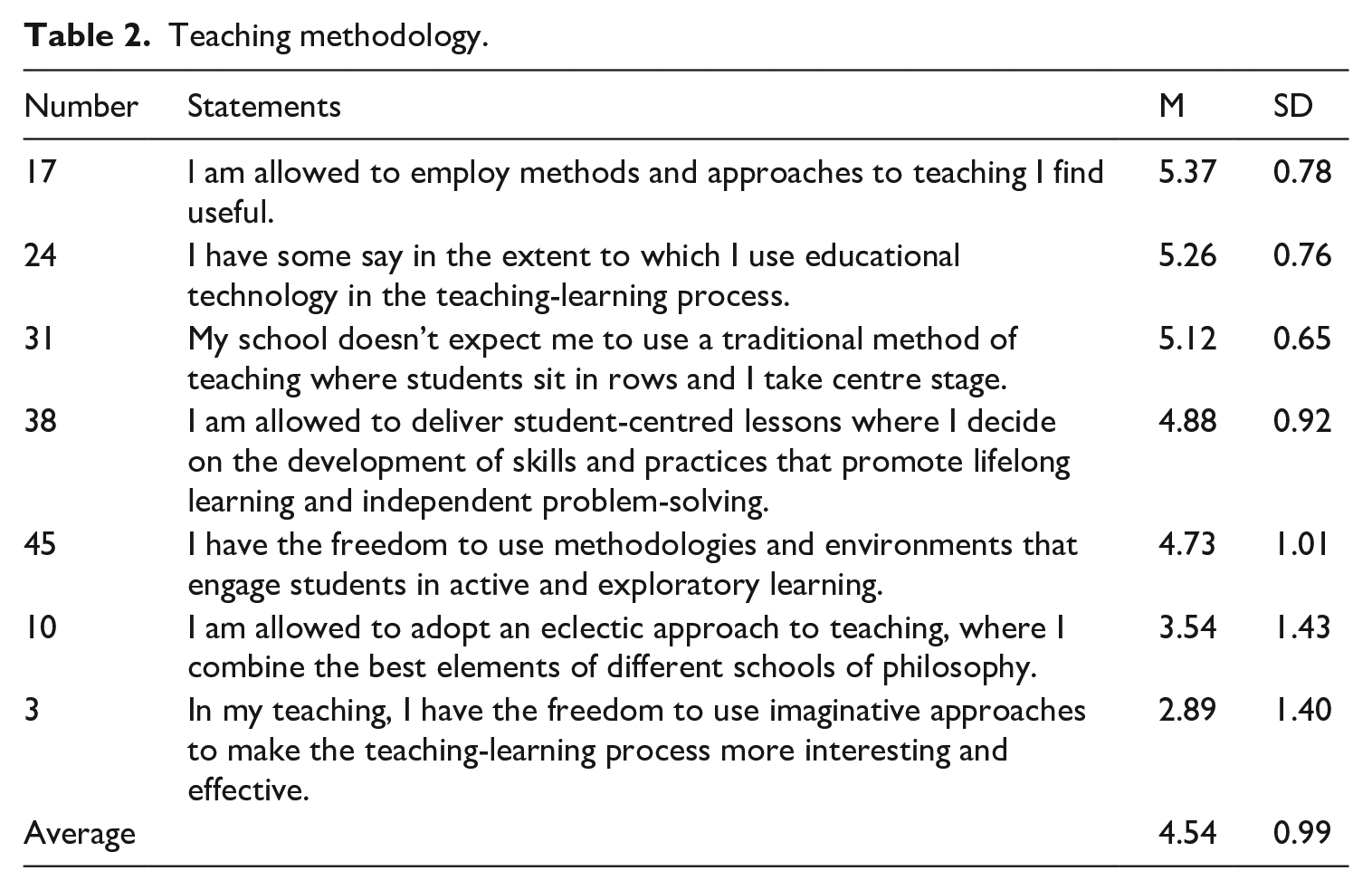
Course content.
Lesson planning.
Assessment.
School curriculum.
Classroom management.
Another notable finding was that the teachers in Indonesia did not complain about their lesson plans as historically they might have done. This is the result of a new policy introduced in late 2019. Under the old system, Indonesian teachers were required to produce lengthy lesson plans that adhered to a specific format, as noted in another empirical project conducted in Indonesia (Cirocki & Farrell, 2019). They wrote these lesson plans because they had to; however, they bore little resemblance to what actually took place in the classroom. Under the new policy, teachers ‘complete a shortened version of a lesson plan’ (FG1T4) and the process of ‘lesson planning is useful and teacher-friendly’ (FG5T2) – teachers remarked that ‘lesson plans are finally guides that facilitate teaching’ (FG4T6) and ‘keep teachers away from the past bureaucratic tick-box exercise’ (FG1T6).
In addition to the various positives, the teachers also expressed considerable disappointment about some aspects of their work, including having virtually no say about the school curriculum. They expressed concern that they were hardly ever ‘invited to participate in discussions regarding the implementation of such components of the school curriculum as expected learning outcomes, consistent assessment procedures, or student learning experience’ (FG2T5). Likewise, they thought ‘school management could include their ideas’ (FG3T6) while ‘mak[ing] changes to school teaching policies’ (FG3T4). Teachers felt this would enable them to help enhance the functioning of their schools. Several teachers also felt they were ‘excluded from the evaluation of the school curriculum’ (FG6T2), which was reported to be ‘reserved for the management team’ (FG6T4). These findings, corroborating the results in Table 6, indicate that Indonesian teachers are keen to participate in decision-making processes – a characteristic feature of autonomous teachers. This extremely positive sign links directly to empirical evidence from the comparative study by Khezerlou (2013), who concluded that decision making was the strongest predictor of TA in his Iranian-Turkish sample.
Classroom management also appeared to be a somewhat problematic area in this study. As the statistical analyses indicated, classroom management scored rather low (Table 7). This area was therefore probed a little further during the focus-group stage. Although teachers revealed they had quite a lot of freedom in this area, their knowledge of classroom management was rather limited. They thought of it only in terms of ‘keeping discipline in the classroom’ (FG1T1, FG4T1). Consequently, very few teachers thought of establishing classroom work procedures for their lessons, promoting healthy competition among students, or using anything other than row-based seating arrangements in the classroom. Likewise, engaging students in planning and delivering classes or promoting peer teaching (i.e. top performers teaching underachieving students) was not considered by the majority of participants. This somewhat narrow perspective indicates that Indonesian teachers lack an understanding of the theoretical frameworks that could guide them in how to manage students. It also suggests they are unaware of the extent to which they can influence the behaviour of their students in the classroom. However, Indonesian teachers are not an exception as researchers in Australia made similar observations in their projects (Lewis & Burman, 2008; Roache & Lewis, 2011). Moreover, Marzano (2011) states that many teachers struggle with classroom management and suggests that effective classroom management warrants successful teaching and learning.
Having examined how much freedom teachers felt they enjoyed in the seven different areas of their work, and thus answered the first research question, a series of independent sample t-tests was conducted to identify any significant differences in teacher’s perceptions of autonomy in terms of their gender, school location, school status and teaching experience. These four variables formed the second research question, which stated: ‘Does Indonesian secondary school EFL teachers’ perceived autonomy vary across gender, school location, school status and work experience?’ Notably, except for gender, the ensuing findings have not been the focus of any previous studies. Therefore, as a new contribution, these results need to be treated with caution.
As Appendix 1 indicates, female teachers reported having greater autonomy in relation to instructional materials, school curriculum, assessment, teaching methodology and course content than male teachers. There were no significant differences between male and female teachers in two areas – classroom management and lesson planning. These results, however, seem to contradict the findings from Khezerlou’s (2013) study, which indicated that the scores of male teachers with respect to perceived autonomy were higher than those of female teachers.
Regarding school location, there were no significant differences between teachers from urban and rural secondary schools in their perceptions of autonomy when planning and delivering their teaching. The only observed difference was in the instructional materials area, where urban secondary school teachers perceived they had greater autonomy than rural teachers, t(183) = −4.292, p = .000 with an eta squared of .09, which was moderate.
Independent sample t-tests were also conducted to determine whether there were any significant differences with respect to school status. The results indicated that public school teachers enjoyed higher levels of autonomy in relation to instructional materials (t(183) = 2.569, p =. 01), classroom management t(183) = −3.1396, p = .002, school curriculum (t(183) = −2.046, p = .00 and assessment (t(183) = −2.965, p = .00) than their private school counterparts. However, the differences ranged from .02 to .05, which were small. No significant differences in relation to other aspects of their work were observed.
Notably, the t-test results revealed small differences between the perceived autonomy of experienced and novice teachers. Specifically, experienced teachers felt that their schools offered them more autonomy in the school curriculum (t(183) = 2.201, p = .03) and assessment (t(183) = 2.306, p = .02), with slight effect sizes as indicated by the eta squared. In all other cases, there was widespread agreement regarding the amount of freedom both cohorts of teachers enjoyed in their pedagogical practice.
2 Improving teacher autonomy in Indonesian secondary schools
The purpose of this section is twofold: (1) to answer the third research question: ‘What possible improvements related to teacher autonomy would these teachers like to see in their schools?’ and (2) to expand on the topic of teacher engagement in self-directed teaching, thus providing a link between the first and the third research questions. The qualitative stage clearly demonstrated that many East Javanese teachers knew what TA was and what it entailed. In general, their perceptions of autonomous teacher reflected the descriptions provided by Polish teachers in Gabryś-Barker’s (2017, p. 175) study: ‘competent, [intrinsically] motivated by having a calling and a positive attitude to his or her students, which allows him or her to facilitate the learning process by creating a favorable classroom atmosphere’ (p. 175). This heightened awareness of TA can be ascribed to the Freedom of Learning policy introduced by the Indonesian Ministry of Education and Culture in 2020. The numerous workshops that have taken place in East Java since 2018 may also have been an influence as their purpose was to raise EFL teachers’ awareness of both learner and TA. As some participants in the current study stated, the ‘workshops on learner and teacher autonomy run by Andrzej Cirocki [had been] very informative’ (FG4T3) and ‘impactful’ (FG1T2, FG3T6, FG4T1). They had ‘encouraged secondary school teachers to exercise autonomy’ (FG4T4) not only ‘to become better teachers’ (FG5T2), but also ‘to be more engaged in school processes’ (FG5T4).
The results relating to the first research question indicated that EFL teachers enjoyed autonomy in various aspects of their work to differing degrees. However, they also reported there was ‘room for improvement’ (FG3T2). For instance, the majority thought it would be useful if their schools offered them ‘more opportunities to attend ELT workshops/seminars’ (FG5T1), preferably run ‘by foreigners’ (FG2T6, FG3T1), to help them to reflect on their own practice and become familiar with and ‘more effective in promoting current, more Western, trends in teaching’ (FG5T1) and ‘assessing students’ (FG4T6). In particular, they wished to reflect on and examine ‘learner-centred pedagogies’ (FG3T3), ‘formative assessment practices’ (FG5T3), ‘technology-enhanced instruction’ (FG2T6), and most importantly, they wanted to learn how to integrate these ‘in a more autonomous way’ (FG5T5). As noted earlier, reflective practice encourages teachers to take responsibility for their teaching (Cirocki & Farrell, 2017b; Osterman & Kottkamp, 2004) and enables them to investigate classroom processes in greater depth; for example, through action research, as promoted by Banegas et al. (2013), Burns (2014), or Çelik and Dikilitaş (2014) in earlier research.
Additionally, teachers hoped that their schools would become ‘more flexible about allowing teachers to use different seating arrangements’ (FG2T1). The teachers would like to make decisions on how to arrange their students in the classroom to promote ‘more collaborative and interactive work’ (FG2T5). This finding relates directly to Benson’s (2010) project in which Hong Kong teachers stated that workplace supervision and surveillance made it extremely difficult for them to make their own decisions. Regarding technology-enhanced instruction, the teachers expected ‘more equipment [e.g. interactive whiteboards, OHPs, tablets, laptops] at schools’ (FG6T2) and, most of all, much ‘better broadband speed’ (FG3T6). The latter was deemed crucial for presenting YouTube clips, online games, virtual tours, to list but a few.
Regarding classroom management, the teachers stated that ‘it required more attention’ (FG4T4). They hoped their schools would help them to ‘explore online resources to find ideas as to how [they] could become more effective in managing students’ (FG4T1). They were particularly interested in examining such strategies as setting ground rules, negotiating different types of classroom interaction, giving responsibilities to students, walking about the classroom with plenty of eye-contact to monitor student learning, and being more authoritative in both their speech and body language (Harmer, 2015; Scrivener, 2012; Ur, 2012). Additionally, the teachers wanted to put more effort into ensuring students were perceived not only as learners of English, but also as ‘interesting individuals’ (FG5T5) with vibrant lives outside of school. In particular, the teachers wished to utilize this personal information to manage students better in the classroom.
The other area in which Indonesian teachers would like to contribute more was the school curriculum, where they expected a significant improvement. In particular, they hoped their schools would create ‘a lively community’ (FG1T6, FG4T3) where they were involved in making decisions with regard to ‘curriculum objectives, content’ (FG3T1), ‘experience [i.e. instructional strategies and methods] and evaluation [i.e. formal determination of quality, effectiveness or value]’ (FG5T4). In essence, the teachers expected their schools to promote a flexible and consultative curriculum that would be subject to ongoing revision. They also expected to act ‘as primary agents of curricular modifications’ (FG6T5) to ensure their schools promoted both ‘active and meaningful learning, and holistic development of all students’ (FG3T5). The teachers believed that developing professional autonomy was ‘a long process’ (FG4T2) and that ‘teachers became more autonomous with time and considerable classroom experience’ (FG5T6). This is in full agreement with the findings of Gabryś-Barker (2017).
V Delimitations and future research
There are a number of delimitations in this research that must be addressed. First, due to the small sample size (N = 185) and the non-probability sampling technique employed, the findings in the quantitative stage should be treated with caution as the sample does not accurately represent the research population. Statistical analyses require much larger sample sizes if they are to be regarded as representative of a population. Second, the findings that emerged from the qualitative element are not generalizable as they only apply to East Java, the area from which the participants came. Although the design of the study was robust, its overall impact may therefore be minimal. Third, existing empirical research on perceptions of autonomy among EFL teachers is extremely rare in Indonesia. Consequently, it is hard to fully comprehend and scrutinize the findings with respect to the existing situation in the country. Finally, the data were self-reported and therefore may have been subject to forms of bias such as exaggeration, attribution errors, telescoping (i.e. inaccurate memories) and selective memory.
To address these delimitations, future studies should enlarge the sample size and include participants from other parts of Indonesia to facilitate generalization of the findings. These studies could be conducted at different educational levels to measure how English language teachers’ perceived autonomy at different stages of their career alters over time and in relation to teaching experience.
VI Conclusions and implications
The purpose of the current study was threefold: (1) to measure how much freedom Indonesian secondary school EFL teachers perceived they had in their pedagogical practice, (2) to examine whether their perceived freedom was related to gender, school location, school status and work experience, and (3) to identify areas in which Indonesian secondary schools should improve with regard to TA so that teachers can enjoy greater degrees of freedom while completing teaching-related activities. The findings from both quantitative and qualitative stages indicated that the practitioners demonstrated relatively high levels of perceived TA in seven specific areas of their work. In particular, the teachers no longer felt they were subject to restrictions when designing lessons and teaching as they were able to utilize diverse materials and methods to make the teaching-learning process more engaging and interesting. However, they wanted more freedom to actively participate in curricular decision making. The teachers also expected more school support with respect to teaching facilities and professional development.
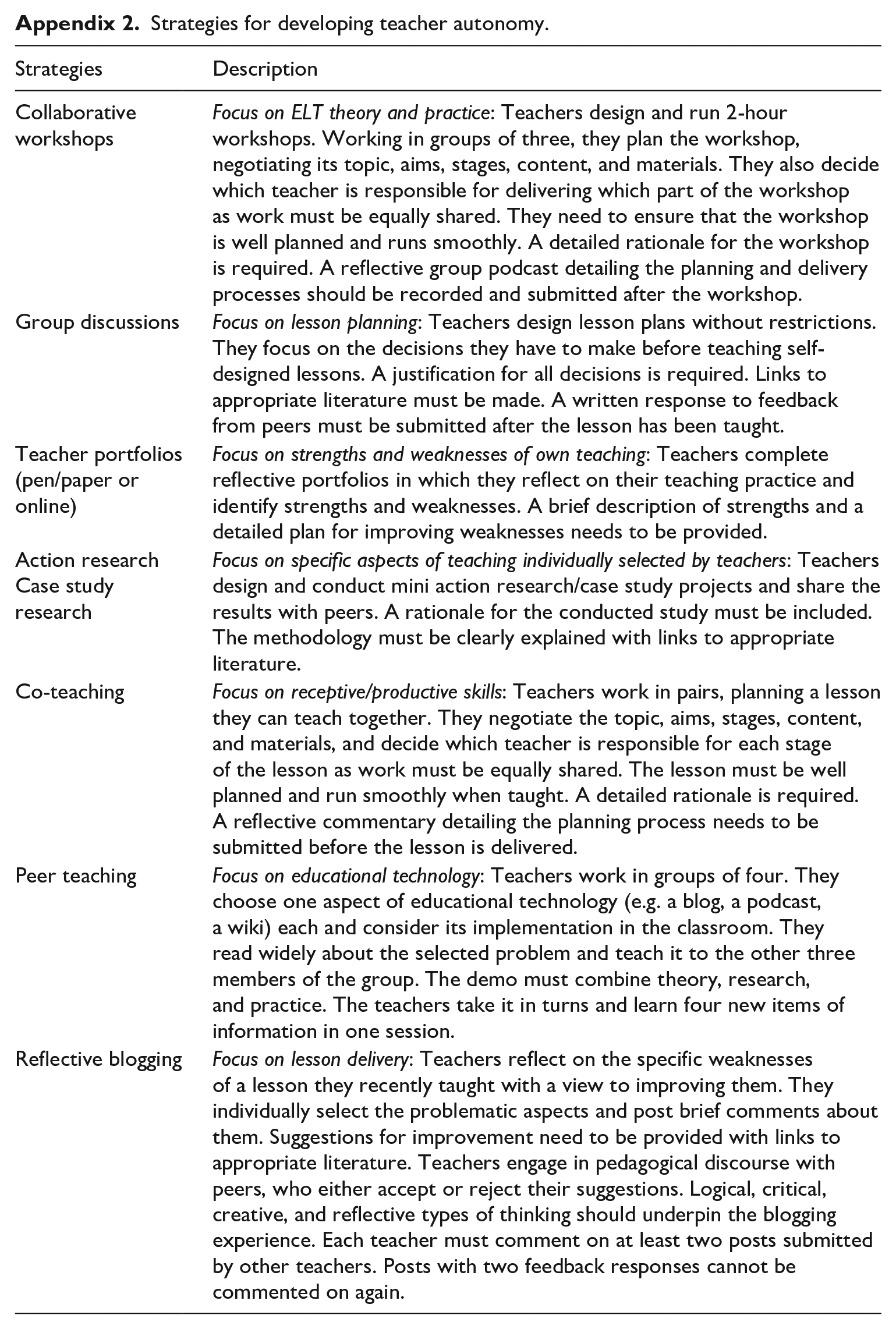
The findings of the present study have strong implications for management teams in Indonesian secondary schools. First, it is essential to develop TA by ensuring teachers are offered effective forms of professional development. This would involve them taking part in Scholarship of Teaching and Learning (SoTL) and/or Exploratory Practice (EP) that enhances their skills in decision making, risk taking, leadership and goal-directedness while nurturing their reflexivity and creativity. SoTL is research-led and encourages teachers to reflect upon and change their pedagogical practices. This will help shape school policy and practices with regard to acknowledging and promoting excellence in teaching. Conversely, EP focuses on enabling teachers to understand the areas they wish to know about in greater depth in accordance with their own requirements. This does not need to be focused on striving for change, it simply requires teachers to employ instructional practices as tools for exploration so that understanding becomes a component of teaching rather than simply an adjunct. This should be a process that can be maintained in the long term while avoiding burnout and enhances teaching and learning while supporting individual and collective professional development (Allwright, 2003). More information on SoTL and EP can be found in Hutchings et al., 2011; Bishop-Clark & Dietz-Uhler, 2012; Hanks, 2017; Slimani-Rolls & Kiely, 2019. Useful strategies for promoting teacher autonomy during SoTL- or EP-oriented professional development events can also be found in Appendix 2.
Second, teachers need to be actively involved in organizing professional development events so that these satisfy their needs, stimulate their interests, and remain consistent with their attitudes, beliefs and expectations. Such active involvement contributes to the formation of a school culture that strives to develop professional, collegial professional and individual forms of autonomy. Endowing teachers with greater autonomy is extremely beneficial as it means they will: be innovative in testing novel approaches to pedagogy, including the utilization of technology; adapt the curriculum so that it meets the needs of students; and logically structure their professional development so that it enhances their knowledge and skills. This will yield improvements among both individuals and schools that will enhance the academic performance of students.
Third, management teams must strive to build collaborative environments to increase the level of autonomy of both pre- and in-service teachers. To support this process, autonomous teachers could work with those who have less autonomy on peer-teacher-learning activities that facilitate mutual learning. These activities could be based around the four formats proposed by Little (1990): (a) storytelling and scanning for ideas, where teachers informally share stories; (b) aid and assistance, where teachers support each other when asked to do so; (c) sharing, where teachers provide materials to each other; and (d) joint work, where teachers collaborate and build on each other’s expertise.
Finally, school management must ensure EFL teachers are involved in the development and assessment of the school curriculum. This is essential because teachers possess extensive knowledge of their students, classrooms and the wider school environment. This means they are well placed to identify problems and deficiencies in the curriculum, and to propose effective remedies for these.
Footnotes
Appendix
Strategies for developing teacher autonomy.
| Strategies | Description |
|---|---|
| Collaborative workshops | Focus on ELT theory and practice: Teachers design and run 2-hour workshops. Working in groups of three, they plan the workshop, negotiating its topic, aims, stages, content, and materials. They also decide which teacher is responsible for delivering which part of the workshop as work must be equally shared. They need to ensure that the workshop is well planned and runs smoothly. A detailed rationale for the workshop is required. A reflective group podcast detailing the planning and delivery processes should be recorded and submitted after the workshop. |
| Group discussions | Focus on lesson planning: Teachers design lesson plans without restrictions. They focus on the decisions they have to make before teaching self-designed lessons. A justification for all decisions is required. Links to appropriate literature must be made. A written response to feedback from peers must be submitted after the lesson has been taught. |
| Teacher portfolios (pen/paper or online) | Focus on strengths and weaknesses of own teaching: Teachers complete reflective portfolios in which they reflect on their teaching practice and identify strengths and weaknesses. A brief description of strengths and a detailed plan for improving weaknesses needs to be provided. |
| Action research Case study research | Focus on specific aspects of teaching individually selected by teachers: Teachers design and conduct mini action research/case study projects and share the results with peers. A rationale for the conducted study must be included. The methodology must be clearly explained with links to appropriate literature. |
| Co-teaching | Focus on receptive/productive skills: Teachers work in pairs, planning a lesson they can teach together. They negotiate the topic, aims, stages, content, and materials, and decide which teacher is responsible for each stage of the lesson as work must be equally shared. The lesson must be well planned and run smoothly when taught. A detailed rationale is required. A reflective commentary detailing the planning process needs to be submitted before the lesson is delivered. |
| Peer teaching | Focus on educational technology: Teachers work in groups of four. They choose one aspect of educational technology (e.g. a blog, a podcast, a wiki) each and consider its implementation in the classroom. They read widely about the selected problem and teach it to the other three members of the group. The demo must combine theory, research, and practice. The teachers take it in turns and learn four new items of information in one session. |
| Reflective blogging | Focus on lesson delivery: Teachers reflect on the specific weaknesses of a lesson they recently taught with a view to improving them. They individually select the problematic aspects and post brief comments about them. Suggestions for improvement need to be provided with links to appropriate literature. Teachers engage in pedagogical discourse with peers, who either accept or reject their suggestions. Logical, critical, creative, and reflective types of thinking should underpin the blogging experience. Each teacher must comment on at least two posts submitted by other teachers. Posts with two feedback responses cannot be commented on again. |
Funding
The author(s) received no financial support for the research, authorship, and/or publication of this article.
