







Abstract
Despite the numerous attempts to characterize Content and Language Integrated Learning (CLIL), the specialized literature has shown a dearth of cross-contextual studies on how stakeholders conceptualize classroom practice. This article presents the results of a two-phase comparative quantitative study on teachers’ views on CLIL design, implementation and results in two different contexts, Scotland (n = 127) and Spain (n = 186). The first phase focused on the creation, pilot-testing and validation of the research tool. The second phase consisted in administering the final questionnaire and analysing the results. The primary goals were (1) to ascertain whether practitioners’ perceptions on CLIL effects and classroom practices match the topics addressed by research; and (2) to analyse and compare teachers’ views in the two contexts. The study offers interesting insights into the main challenges in integrating language and content. Besides providing a conceptual framework for identifiable classroom practice, findings revealed that both cohorts shared broadly similar perceptions, although the Spanish respondents showed more positive views and significantly higher support for this approach.
I Introduction
Content and Language Integrated Learning (CLIL) is the term coined in Europe to refer to an approach to bilingual education in which an additional language is used as a vehicle to learn non-language curricular content (Nikula, 2017). Its implementation has become the keystone of educational change all around European countries, building on two main aspects: on the one hand, a reconceptualization of language learning, in which language is integrated in the broad curriculum (Coyle et al., 2010); and, on the other hand, an innovative remodelling of pedagogical practices (San Isidro, 2018) based on teachers’ collaboration and a less compartmentalized view of education.
CLIL theoretical conceptualization, however, has been roller-coastering for two and a half decades. Although it was initially embraced, on the grounds of learners’ language gains, as a ‘well-recognized and useful construct’ (Cenoz et al., 2013, p. 16) for foreign language learning through content teaching, it was later deemed too vague or heterogeneous because of the alleged lack of distinct differences with regard to previous immersion programmes along with a range of purportedly multifaceted problems in its implementation (Bruton, 2013, 2015), such as the lack of qualified teachers, students’ self-selection, or educational policies targeting academically gifted students. These arguments, nonetheless, have been refuted in a number of response articles (Hüttner & Smit, 2014; Pérez Cañado, 2020).
Interestingly, in recent years, whilst becoming mainstream and due to the European kaleidoscopic language landscape, CLIL has been identified as a ‘language-diversity-oriented approach’ (San Isidro & Lasagabaster, 2019a) able to adapt itself to a myriad of linguistically diverse educational contexts. However, it is precisely this multicontextual factor that makes it difficult to generalize stakeholders’ views on the concept (Dalton-Puffer & Smit, 2013), which are dependent on the disparate socio-cultural settings and the various educational policies in the different countries.
Despite the challenges in its characterization (Pérez Cañado, 2016; San Isidro & Lasagabaster, 2019b), CLIL has undergone an exponential growth and has been regarded as ‘an important instrument to foster European citizens’ bi- and multilingualism’ (Nikula, 2017, p. 111), widely endorsed by policy-makers and practitioners (San Isidro & Lasagabaster, 2019a). Also despite the challenges and difficult as it might seem, from its very inception, CLIL implementation has been identified as a set of pedagogical practices that involve curriculum integration along with an emphasis on content-based tasks through the use of additional languages (Coyle et al., 2010). However, its adaptation to linguistically diverse countries over the years has gradually led teachers to use more flexible and fluid linguistic practices in classroom settings influenced by the multilingual turn (Conteh & Meier, 2014; Karabassova & San Isidro, 2020) – ecological understanding of multilingualism acknowledging the value of broad linguistic repertoires – which has made CLIL incorporate translingual practices as part and parcel of its pegadogy (Karabassova & San Isidro, 2020; Nikula & Moore, 2019). ‘Translanguaging’ and ‘translingual practices’ are used interchangeably throughout the article, in the same vein as Lee (2015) and Chang (2019). Translingual practices (translanguaging) are related to the teachers’ and students’ systematic use of and change between the different languages in connection with the flexible linguistic practices multilingual individuals engage in when interacting (García & Li Wei, 2014). Translanguaging is also understood within the learners’ development of multilingual subject-related literacies, i.e. pluriliteracies. CLIL scenarios are now considered to be content-learning and language-rich settings targeting the development of students’ pluriliteracies (Otto & San Isidro, 2019), an approach to teaching for learning that puts subject literacy development in more than one language at the core of learning with a view to developing deep learning and transferable skills (Meyer, 2016).
This article is organized as follows. First, an overview of the research literature is provided, followed by the principal characteristics of the study and the discussion of the findings. In the final section, some conclusions and pedagogical implications are drawn based on the results.
II Previous research
In addition to reviewing the previous literature, the author developed the constructs for the present article’s research instrument based on the preliminary results of an ongoing research project that identified and quantified published studies on CLIL. The first stage of the project consisted in a bibliometric analysis of the main CLIL-related research topics from 1996 to 2019 using metadata from Google Scholar. A systematic search was conducted using the syntax ‘CLIL’ or ‘Content and Language Integrated Learning’ in the fields ‘Anywhere in the title’ and ‘Anywhere in the article’. Articles were then quantified and classified according to their topic in order to determine the areas most looked into by research. Although the results were preliminary, they were used as a source of information to complement the design of the research instrument in the present study. However, due to the phenomenal number of studies and the possible mismatches between the different websites of comprehensive citation databases, the project is still ongoing in its second stage of development using metadata from Scopus and Web of Science combining the Boolean operator ‘OR’ and the topics identified in the previous stage. Figure 1 shows the topics identified in Google Scholar arranged in percentages.
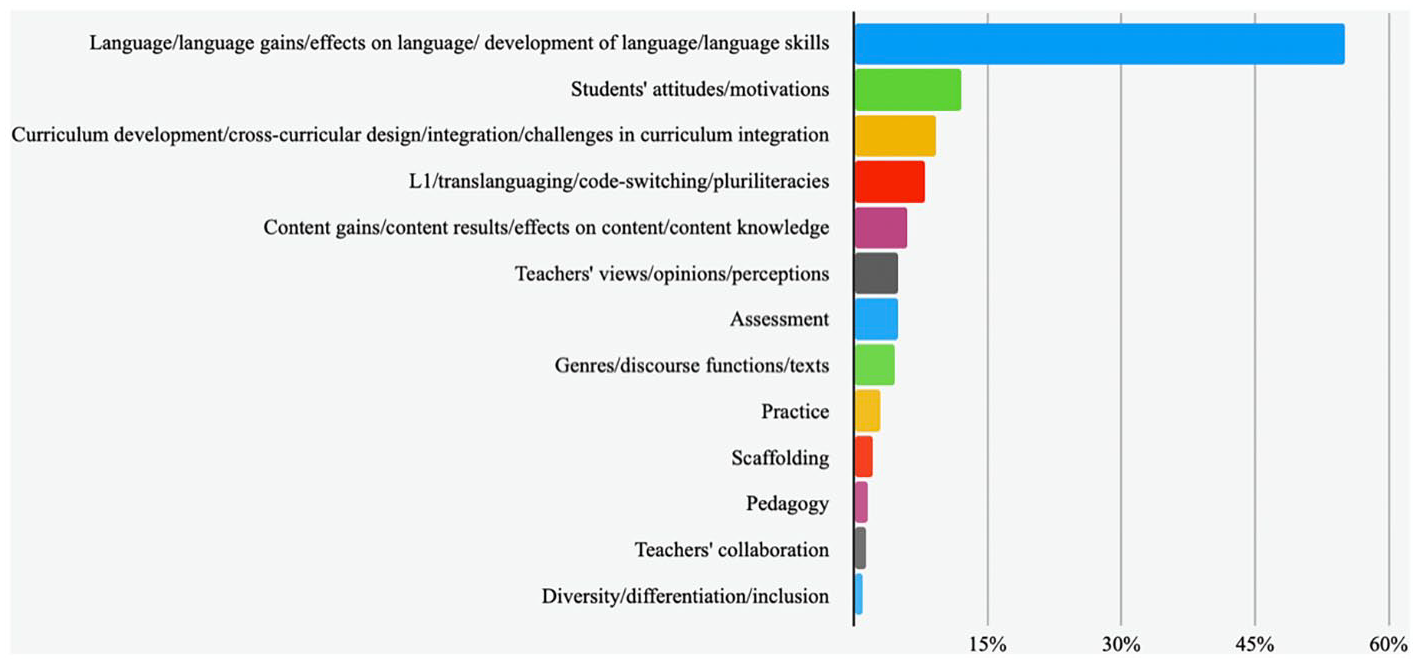
CLIL-related research topics from 1996 to 2019.
Previous research conducted on CLIL has meandered through the multi-faceted effects of this approach on students’ results to a much higher extent than on teacher pedagogy, classroom praxis or how practitioners conceptualize this approach. The thrust of the arguments in the majority of these studies is that CLIL students are more motivated and usually outstrip their non-CLIL counterparts in additional language learning without first language (L1) and content learning being affected. The literature in the field has thus focused largely on the evaluation of CLIL programmes in terms of foreign or second language gains (Ackerl, 2007; Dalton-Puffer, 2011; Pérez Cañado, 2018a; San Isidro & Lasagabaster, 2019a), attitudes and motivation (Ackerl, 2007; Czura et al., 2009; Lasagabaster, 2011; Doiz et al., 2014; Lasagabaster & Doiz, 2017; Merisuo-Storm, 2007; San Isidro & Lasagabaster, 2020a; Seikkula-Leino, 2007), the question of curriculum integration (Llinares, 2015), effects on the students’ first language (Airey, 2010; Gablasova, 2014; Merisuo-Storm, 2007; San Isidro & Lasagabaster, 2019a), and content learning outcomes (Admiraal et al, 2006; Fernández-Sanjurjo et al., 2019; Piesche et al., 2016; San Isidro & Lasagabaster, 2019a; Seikkula-Leino, 2007). To a somewhat lesser degree, research has also given attention to classroom discourse in a CLIL context (Dalton-Puffer, 2007; Nikula, Dalton-Puffer & Llinares, 2013), assessment (Otto, 2017), or translingual practices (Coonan, 2007; Gierlinger, 2015; Karabassova & San Isidro, 2020; Nikula & Moore, 2019).
Nonetheless, although some studies on theory-driven effective practice have been undertaken (De Graaff, Koopman, Anikina & Westhoff, 2007; Escobar, 2013; San Isidro & Lasagabaster, 2020b), there is still a dearth of research specifically dealing with pedagogy and classroom practice. To this we should add the fact that studies conducted on practitioners’ perceptions have mainly focused on the teachers’ level of motivation, commitment and engagement (Ackerl, 2007; Coonan, 2007; Lasagabaster & Doiz, 2017; Mehisto and Asser, 2007; Pladevall-Ballester, 2015; Wiesemes, 2009) rather than on their own pedagogical construct of the approach. Some research, interestingly, has been undertaken to identify methodological commonalities in CLIL scenarios (Czura & Papaja, 2013; Czura et al., 2009), all of them concluding that there is a lack of clear-cut guidelines in implementation in the different contexts, something that might be related to the lack of a theoretical framework widely accepted by practitioners underpinning the pedagogical premises on which CLIL is implemented. Interestingly, the specialized literature has also raised controversy over a number of aspects, such as how practitioners perceive the use of L1 and translanguaging in CLIL scenarios, the questionable quality of content learning, the lack of teacher collaboration, or the specific lack of teacher training on methodological grounds (San Isidro, 2019; San Isidro & Lasagabaster, 2020b).
Looking into educational research analysing practitioners’ views in the two contexts of our investigation, some studies on methodology (Fernández & Halbach, 2011; Lancaster, 2016; Lorenzo et al., 2010; Pena Díaz & Porto Requejo, 2008), have mainly centred on the identification of strengths, weaknesses, opportunities and threats (SWOT) in the Spanish context. Few studies, however, have put the spotlight on what teachers’ views are on the practical side of things, i.e. on the ‘on the ground’ classroom practices that make CLIL identifiable as the set of pedagogical practices which are inherent in the application of this student-centred approach – such as curriculum integration, teachers’ collaboration, multilingual practices, the use of text genres, or scaffolding (Barrios & Milla Lara, 2020; Barreiro & San Isidro, 2009; Calvo & San Isidro, 2012; Pavón et al., 2014; Pérez Cañado, 2018b; San Isidro & Lasagabaster, 2019b) – something that is particularly important now due to two major reasons. One of them is that, after years of implementation, CLIL is becoming mainstream and there is an urgent need to know about how teachers cope with mixed-ability classrooms and develop social justice and inclusion-oriented pedagogies (Pérez Cañado, 2018b). Since its appearance, CLIL was deemed as an elitist approach as it drew on self-selected and typically academically gifted students (San Isidro, 2016). This made some voices raise against CLIL experiences, which were reported in the literature as favouring more able learners and thereby privileging high achievers (Paran, 2013). The second reason has to do with the fact that research is starting to focus on how pluriliteracies contribute to the development of deep learning and transferable skills in CLIL scenarios (Coyle et al., 2018; Meyer, 2016; Meyer et al., 2018; Morton, 2018).
With regard to the other context of our study, Scotland, considering that CLIL is implemented in an experimental and limited manner, research on the field is non-existent. Nonetheless, there are a number of studies on the use of Scottish Gaelic as a medium of instruction, mainly focused on explaining the organization of this type of programme (MacNeil, 1994) as well as on learning outcomes (O’Hanlon et al., 2013). Teachers’ views and perceptions have also been analysed in terms of both the resources needed to implement bilingual programmes and language and methodology-oriented needs (MacNeil, 1994). Andrew (2018) concluded that teachers, despite gaining a deeper understanding of how bilingual education programmes are organized, perceive the need to improve their language proficiency to teach content as the main caveat for implementation.
III Justification of the investigation
As seen above, research has been trying to keep track of the phenomenal growth of CLIL programmes, which has made the literature on the topic increase significantly, both adapting to a range of aspects across different contexts and considering the deficiencies in previous research. It is precisely the cross-contextual factor that has put CLIL at a crossover point, both geographically – as it is now being globally embraced as the master key ‘to move from monolingual education systems into bilingual ones’ (Lasagabaster & Doiz, 2017, p. 1) – and conceptually, as stakeholders’ views on this approach (Dalton-Puffer & Smit, 2013) are now dependent on contextual nuances. The review of the literature has revealed that there is a dearth of multi-contextual research dealing with teachers’ views not only on their satisfaction, commitment and SWOT identification but also on their conceptualization of the approach and on their perceptions of design, implementation and results. Besides the cross-contextual factor, the analysis of the literature has shown that there is also a blatant lack of studies comparing teacher cohorts with different profiles – language or content – from all educational levels – higher, secondary and primary – in different contexts. Furthermore, the fact that CLIL is becoming mainstream has been at the centre of controversy in some places, in terms of the potential impact it can make on the whole educational systems of the countries developing it (San Isidro, 2019). It is important to elicit what is education professionals’ take on it. This would provide a more complex yet more accurate picture of practitioners’ perceptions. This study aims to fill this gap.
IV Research study
1 Context
With this research background in mind, this article focuses on the analysis and comparison of teachers’ opinions on CLIL implementation in Spain and Scotland. The reason for the comparison is not a random one. It is due to the organization of a webinar on CLIL aimed at scholars and practitioners in Scotland and Spain (explained in the section describing the sample below), which gave the author the opportunity to undertake the present study. The different nature of both contexts, in terms of educational language policy and practice seemed to be a perfect case scenario to look into the views of teachers, with different degrees of expertise and experience. Scotland and Spain are at two entirely different stages regarding bilingual education in general, and CLIL in particular.
For more than two decades, Spain has been facing the challenge of combining preservation-focused language policies aimed at the use and the standardization of minority languages with the new needs related to multilingualism (San Isidro & Lasagabaster, 2019a). The implementation of CLIL started at the end of the 1990s with no national provision and through different directives in both the monolingual and bilingual regions. Its exponential growth, a number of CLIL-oriented teacher training programmes and the massive uptake on the part of schools and students has made Spain become one of the leading countries in both CLIL implementation and practice (Coyle, 2010). CLIL has become one of the cornerstones to both support multilingualism and enhance the learning of foreign languages. However, the overall picture is quite varied as each region can regulate and design (Guillamón-Suesta & Renau, 2015) its own provision – based on its needs and interests, usually related to a utilitarian view of foreign language learning, namely English – provided that it complies with the requirements in the legal framework set by the state educational law (Lasagabaster & Ruiz de Zarobe, 2010).
Scotland, on the other hand, has also been implementing bilingual education – Gaelic-medium programmes – for years (Scottish Government, 2005). However, it makes an utterly different case as language policy lacks the utilitarian view that can be found in the European context. Only a few schools have started piloting CLIL-oriented projects in Spanish and French (San Isidro, 2015) within the framework of the document Language Learning in Scotland: A 1+2 Approach (Scottish Government, 2012), which, as distinct from other parts of the United Kingdom, set the year 2020 as the one by which all primary schools would offer two foreign languages along with the possibility of interdisciplinary learning. Specific training including CLIL has been taking place in different councils and universities in a limited manner.
2 Focal areas, goals and research questions
The broad objective of this research is to conduct a comparative quantitative study on higher, secondary and primary language and content teachers’ views on CLIL characterization, design, implementation and results in two different European contexts. The study aims, on the one hand, to ascertain whether scholars and practitioners’ degree of agreement on conceptualization and concerns match the ones for researchers in the field, analysed in the introduction above; and, on the other hand, to compare them in two utterly different contexts. The review of the literature, the bibliometric analysis, and the adaptation of previous research tools (Barreiro & San Isidro, 2009; Calvo & San Isidro, 2012) made it possible to identify four focal areas for comparison of views, each of them linked to a specific research goal and every goal to two research questions:
Focal area 1: Challenges in curriculum development: Goal 1: Analyse and compare teachers’ views on curriculum development integrating content and language considering the following factors: anticipation and selection of subject-related language; selection, adaptation and production of materials; use of the additional language as a language of instruction; alignment of assessment criteria; and design of tasks integrating content and language. Research question 1: What are teachers’ views on integrating language and content in a CLIL curriculum? Research question 2: Are there any statistically significant differences between Scottish and Spanish teachers’ views on curriculum design regarding content and language integration?
Focal area 2: Students performance in CLIL settings: Goal 2: Analyse and compare teachers’ views on students’ performance in CLIL scenarios considering factors such as motivation, development of language skills and communicative strategies, development of L1 and learning of content. Research question 3: What are teachers’ views on students’ performance in CLIL settings? Research question 4: Are there any statistically significant differences between Scottish and Spanish teachers’ views on students’ performance in CLIL scenarios?
Focal area 3: Pedagogy and collaboration: Goal 3: Analyse and compare teachers’ views on pedagogy and collaboration in CLIL settings considering the following factors: the importance of text genres, the use of scaffolding in meaning-making, attention to diversity, language and content teachers’ tandem work, the role of language teachers as mentors, and the use of the students’ whole linguistic repertoire and their development of pluriliteracies. Research question 5: What are teachers’ views on pedagogy and collaboration in CLIL settings? Research question 6: Are there any statistically significant differences between Scottish and Spanish teachers’ views on pedagogy and collaboration?
Focal area 4: Teacher training needs in CLIL scenarios: Goal 4: Analyse and compare teachers’ views on training needs related to language along with methodology and pedagogy. Research question 7: What are teachers’ views on training needs? Research question `8: Are there any statistically significant differences between Scottish and Spanish teachers’ views on training needs?
3 Sample
In March 2018, a webinar on CLIL for Scottish and Spanish teachers was organized by the Spanish Embassy Education Office in Scotland and an international publisher specialized in language learning and CLIL educational materials. The reasons underlying such a training event were making the Spanish CLIL model known to the Scottish practitioners at the same time as opening the possibility of introducing Spanish as a vehicular language in Scotland, considering the above-mentioned 1 plus 2 Approach (Scottish Government, 2012).
The 6-hour webinar was structured around three thematic blocks:
Theme 1: Foundations of bilingual education and CLIL theoretical frameworks: monoglossic and heteroglossic approaches to bilingual education; CLIL fundamentals; the 4Cs Framework and the CLIL Pyramid; translanguaging and pluriliteracies in CLIL scenarios.
Theme 2: CLIL curriculum planning, the question of integration and a multilingual approach to lesson planning: curriculum planning: integrating language and content; CLIL pedagogy; how to design cross-curricular and translingual CLIL lessons.
Theme 3: CLIL implementation and examples of good practice.
The webinar was advertised and marketed as a free event and the uptake from professionals was considerably high. The participants were (1) language teachers in higher, secondary and primary education; and (2) content teachers in secondary and primary education involved or interested in bilingual education in general, and CLIL in particular. After the webinar, the 453 participants were asked whether they would take part in a pilot study to test a questionnaire on CLIL implementation. They were also informed about the purposes of the study and the risks and benefits of participation, as well as their rights, withdrawal, and confidentiality procedures. A large proportion of teachers – 43.48% of the total – registered and sent their consent forms. Out of the 197 teachers willing to take part, 167 completed the survey and the final number of questionnaires correctly filled in was n = 150 (96 Spanish teachers and 54 Scottish teachers). This was the sample used for piloting with a view to validating the tool.
The same webinar was held in January 2019 targeting the same profiles of teachers. 648 professionals took part and were asked if they would be willing to participate in a research project on CLIL implementation through completing a questionnaire. After receiving all the information about the study, a larger proportion than in the pilot test registered (56.01% n = 363) and sent their consent forms. 313 questionnaires were completed correctly. The final sample, which was the one used in the present research study, was then n = 313:
Scottish teachers (n = 127: 30 university professors, 30 language secondary teachers, 28 language primary teachers, 14 content primary teachers, 25 content secondary teachers). The Scottish respondents had all previously participated in either bilingualism or CLIL-related training and only 6% of the participating secondary teachers had piloted some CLIL-related projects and 5% of the primary teachers were implementing Gaelic-medium programmes. Regarding university teachers, none of them had conducted research specifically related to CLIL or bilingual education.
Spanish teachers (n = 186: 36 university professors, 50 language secondary teachers, 27 language primary teachers, 23 content primary teachers, 50 content secondary teachers). The Spanish cohort had all previously taken part in either bilingualism or CLIL-related training. 17% of the language teachers had mentored content teachers to integrate the language component into their content lessons. 23% of the primary and secondary content teachers had taken part in CLIL programmes for at least two years. The university cohort had been involved in research related to multilingualism and CLIL.
4 Data collection
a Pilot testing and instrument validation
With a view to using a validated tool, an initial online questionnaire – based on the theoretical constructs from the analysis of the previous literature and the bibliometric identification of the most important topics for research through Google Scholar metadata, as well as on the instruments used for previous studies (Barreiro & San Isidro, 2009; Calvo & San Isidro, 2012) – was specifically designed for pilot testing. Prior to piloting, the tool was tested for validity through a peer review. Four reputed professors in the field agreed on the face and content validity of the instrument, although they recommended the rewording of four of the items. The questionnaire comprised closed-ended items which could be scored using a 6-point Likert scale, ranging from 1 (strongly disagree) to 6 (strongly agree). This variation was used because it forces choice and reports higher convergent validity coefficients (Chang, 1994). It was administered in May 2018, after the first webinar.
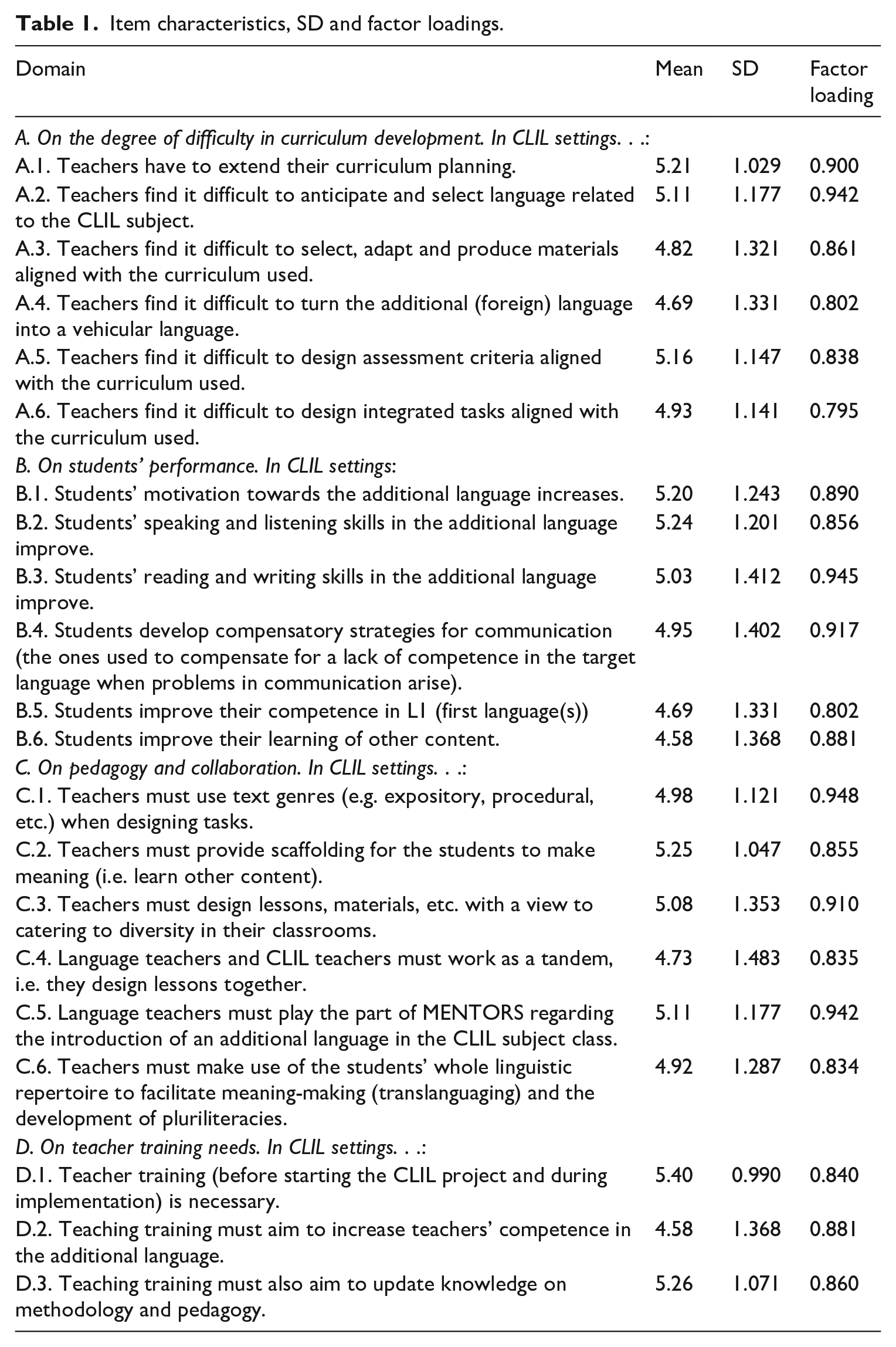
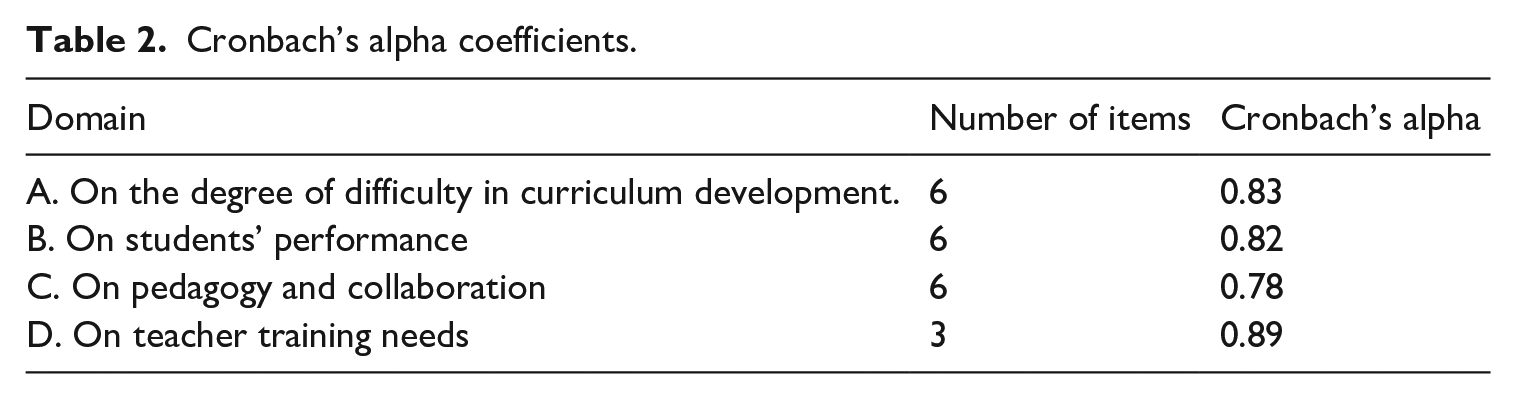
After the piloting, item means and standard deviations were calculated and Cronbach’s alpha was used for testing internal consistency and reliability. Finally, structural equation modelling was used to determine interdependence between items and constructs through factor analysis. Items were rated on a 6-point Likert scale. Item characteristics are provided in Table 1. The mean scores ranged from 4.58 (item D.2) up to 5.40 (item D.1). Factor loadings varied from 0.795 (item A.6) to 0.948 (item C.1). Cronbach’s alpha coefficients ranged from 0.83 to 0.89, indicating a high internal consistency in all subdomains (Table 2).
Item characteristics, SD and factor loadings.
Cronbach’s alpha coefficients.
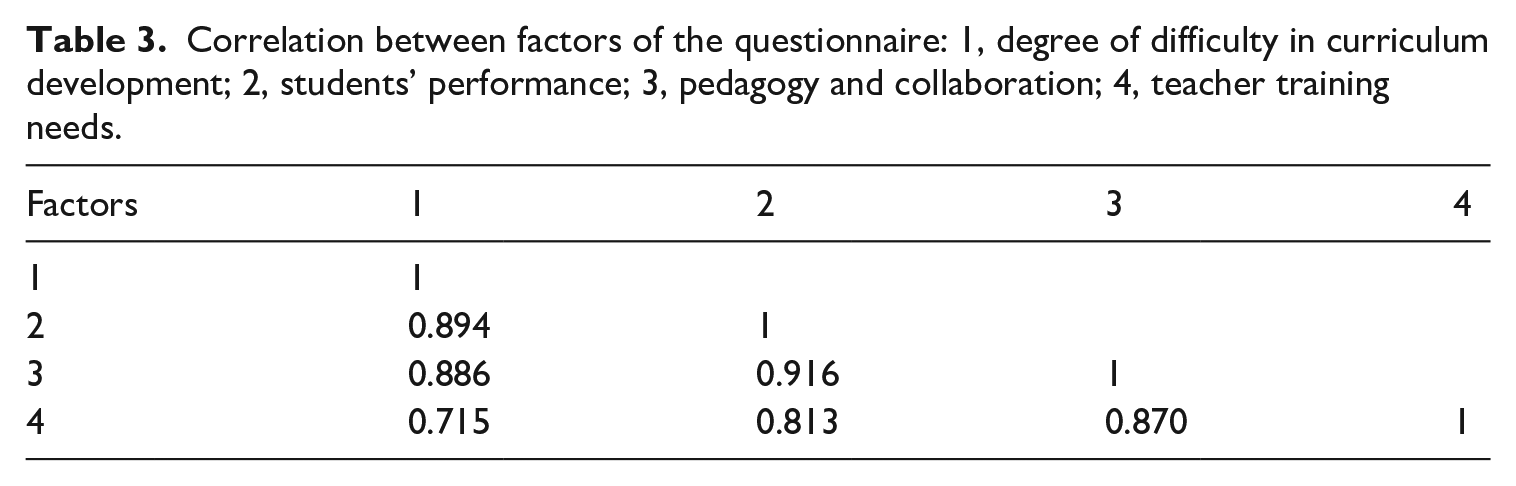
The examination of the factorial structure of the questionnaire using confirmatory factor analysis resulted in a satisfactory model-fit. The correlations between the factors varied from 0.715 to 0.916 (Table 3).
Correlation between factors of the questionnaire: 1, degree of difficulty in curriculum development; 2, students’ performance; 3, pedagogy and collaboration; 4, teacher training needs.
b The final tool
The questionnaire used for our research study was the one validated in the pilot test. It comprised the four focal areas identified previously. Respondents had to choose one of the given alternatives in a 6-point Likert scale. Teachers completed it in March 2019. The questionnaire was made up of two main parts:
The first one included information such as gender, age, teaching experience, region/council, profile (university language teachers, secondary/primary language teachers, secondary/primary other content teachers), participation and number of years in bilingual/CLIL programmes (only content teachers), coordination of bilingual/CLIL programmes (only language teachers), participation in training programmes and research conducted on CLIL or multilingualism (only for university teachers).
The second part comprised 21 items related to the teachers’ views on the four focal areas above.
V Findings and discussion
The SPSS program was used to analyse the data elicited from the questionnaire. The Kolmogorov–Smirnov and Shapiro–Wilk tests with Lilliefors significance correction were used to test whether the data were normally distributed. Both tests failed normality in all the cases, and thus the Wilcoxon rank-sum test was used to identify statistical significance when comparing (1) the whole Scottish and Spanish cohorts (all the teachers: AT); and (2) the different types of teachers by country: university teachers (UT), secondary language teachers (SLT), secondary content teachers (SCT), primary language teachers (PLT) and primary content teachers (PCT). The effect size formula from Field (2009) was used to identify variance:
r = .10 (small effect): in this case the effect explains 1% of the total variance;
r = .30 (medium effect): the effect accounts for 9% of the total variance;
r = .50 (large effect): the effect accounts for 25% of the variance.
Figures 2–7 show the histograms comparing the different cohorts after calculating mean ranks and sum of ranks. The analysis and discussion of the findings are presented following the four dimensions of the theoretical construct used to design the questionnaire.
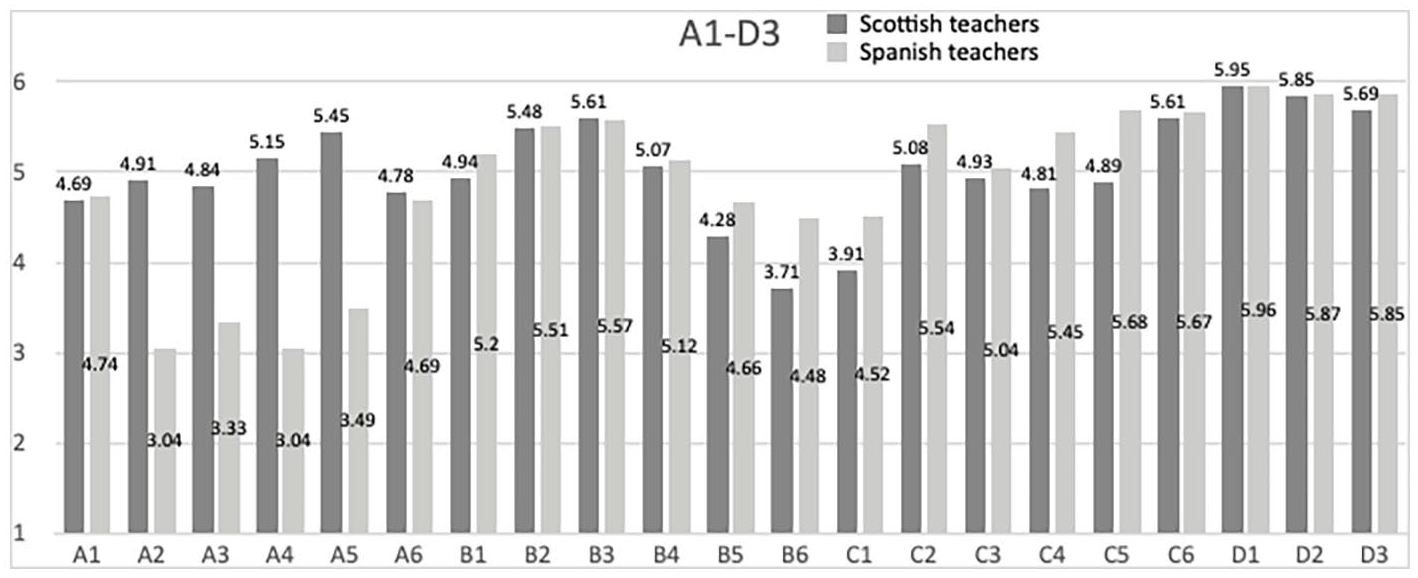
Comparison of the AT cohorts.
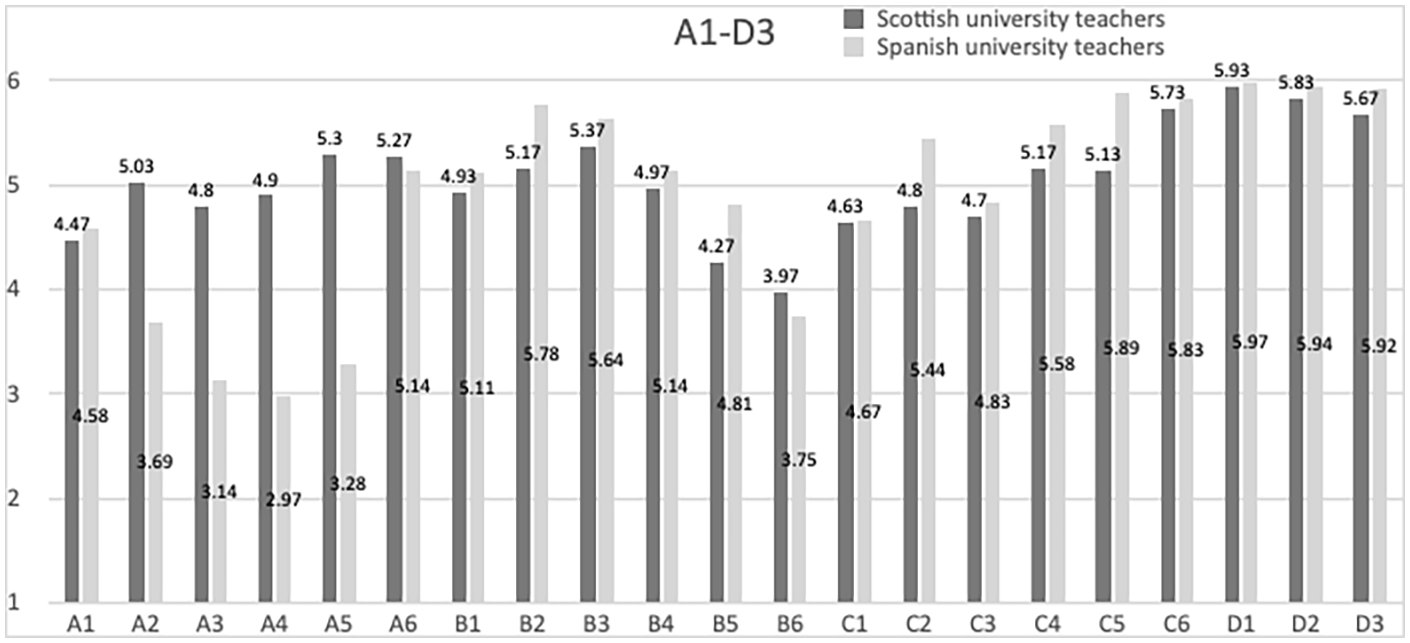
Comparison of the UT cohorts.
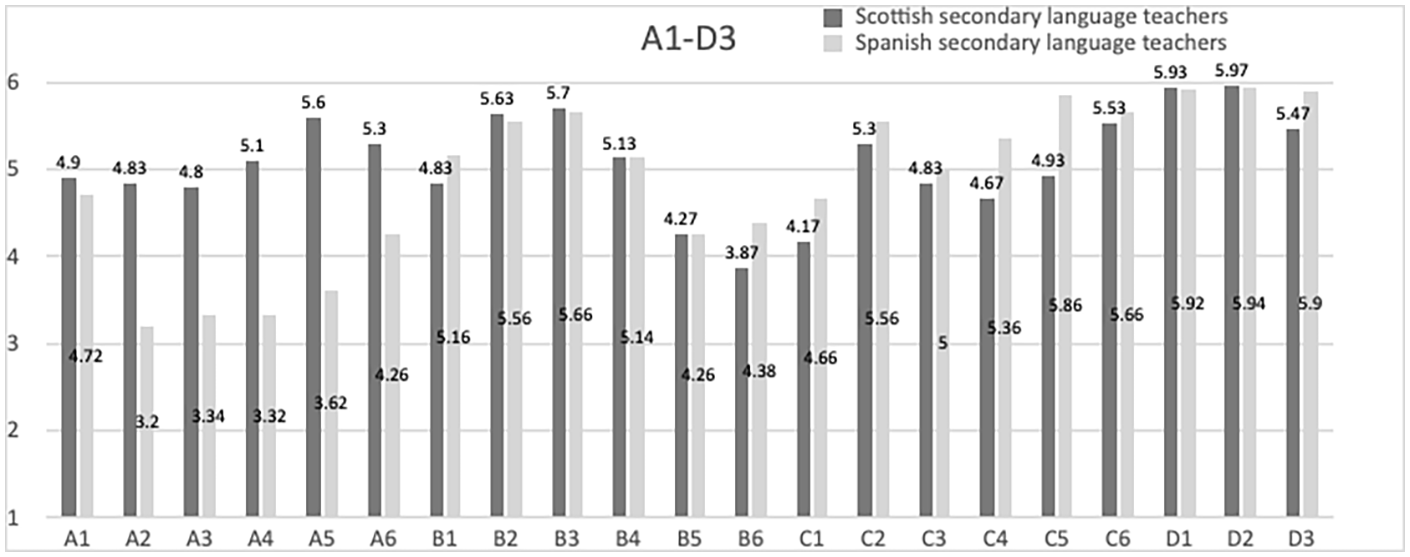
Comparison of the SLT cohorts.
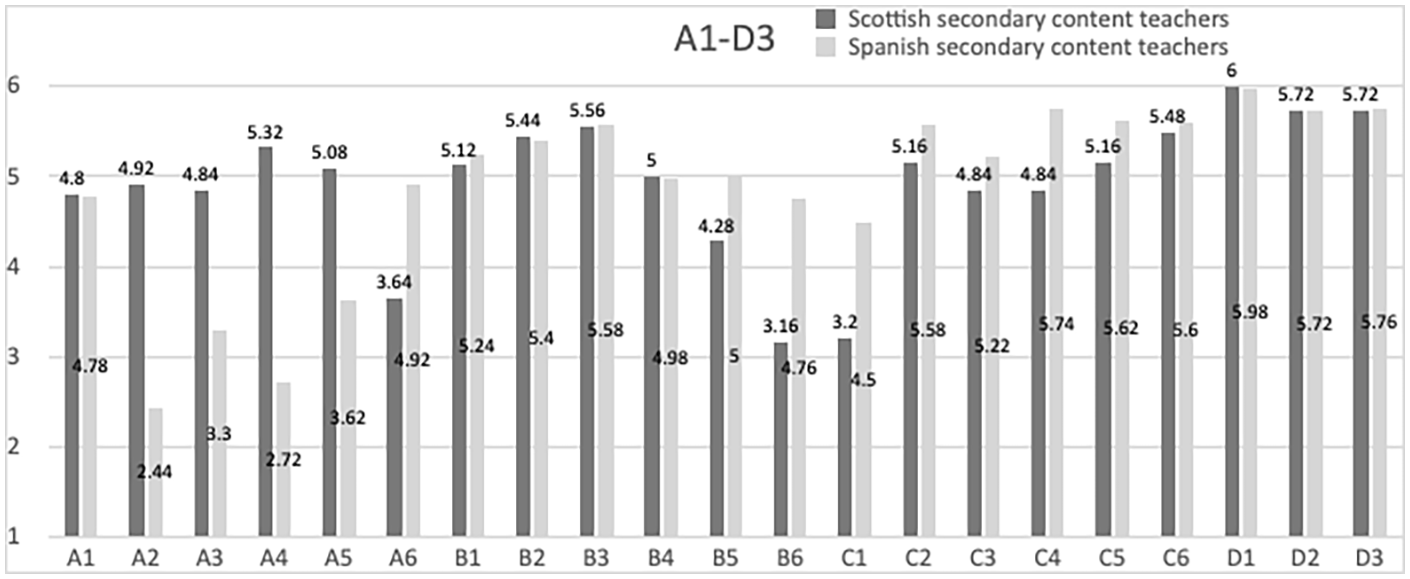
Comparison of the SCT cohorts.
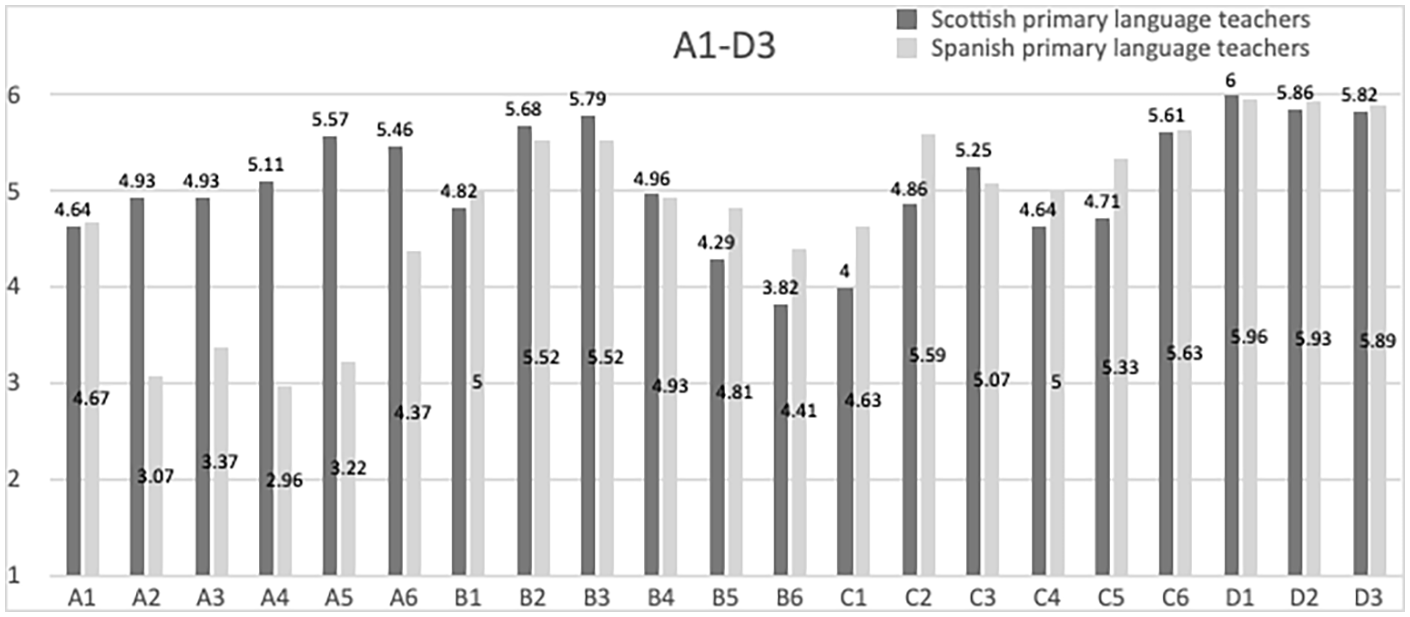
Comparison of the PLT cohorts.
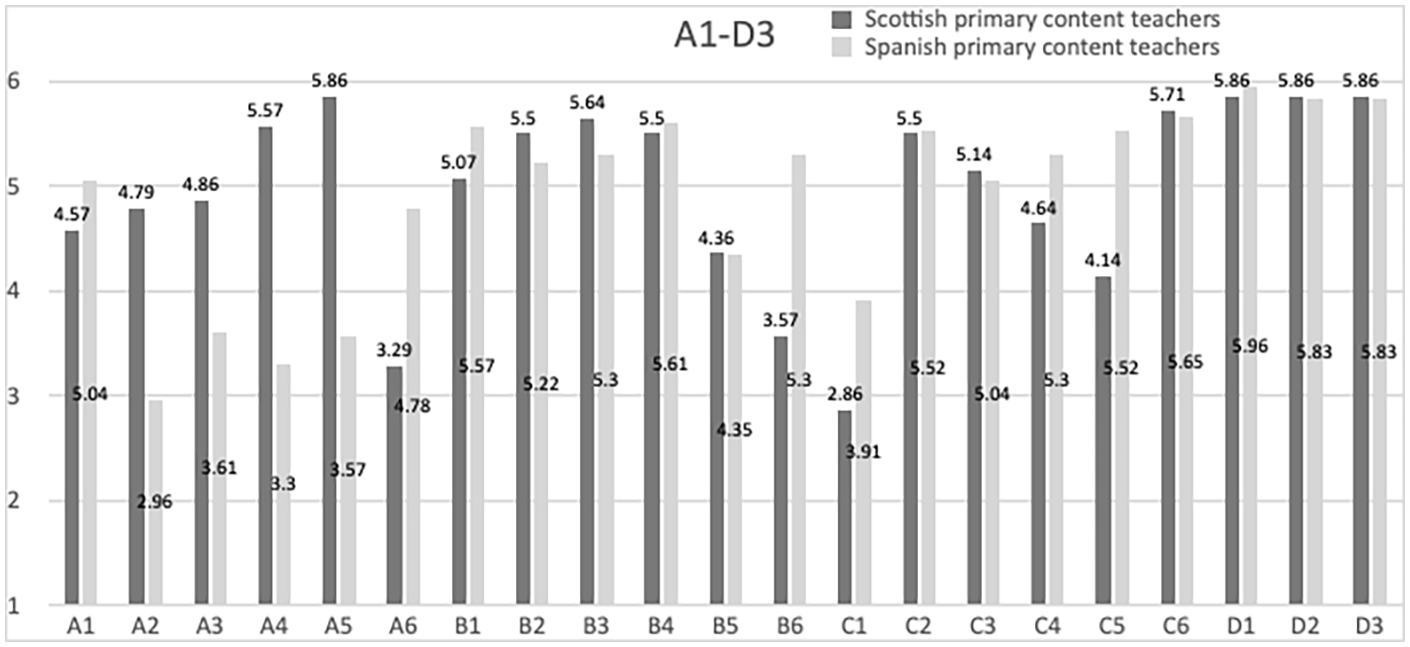
Comparison of the PCT cohorts.
1 On the degree of difficulty in curriculum integration
In the first part of the questionnaire, the polled teachers had to assess the degree of difficulty in how to develop an integrated curriculum. The question of language and content integration was by far the one showing more differences across groups. Considering the answers to item A.1, the majority of the Spanish and Scottish respondents unanimously agreed on the fact that CLIL teachers would have to extend their curriculum planning due to language and content integration. The Wilcoxon rank-sum test did not show any statistically significant differences in any of the comparisons regarding item A.1 (AT, UT, SLT, SCT, PLT and PCT). These perceptions tally with the ones in previous studies (Barreiro & San Isidro, 2009; Calvo & San Isidro, 2012), in which the majority of the participating teachers stated that they had to extend their syllabi when using an additional language as a medium of instruction for teaching other curricular content. Conversely, when comparing results from items A.2, A.3, A.4 and A.5 considering teacher types in both countries, findings revealed statistically significant differences with regard to their opinions on how difficult CLIL teachers would find:
to anticipate and select language related to the CLIL subject (item A.2): AT (Ws = 19179.000, z = −13.229, p < .001, r = −.74), UT (Ws = 801.000, z = −5.435, p < .001, r = −.67), SLT (Ws = 1433.500, z = −6.137, p < .001, r = −.69), SCT (Ws = 1294.500, z = −7.052, p < .001, r = −.81), PLT (Ws = 445.000, z = −5.420, p < .001, r = −.73) and PCT (Ws = 292.000, z = −4.866, p < .001, r = −.80);
to select, adapt and produce materials aligned with the curriculum used (item A.3): AT (Ws = 20071.500, z = −12.021, p < .001, r = −.67), UT (Ws =773.500, z = −5.764, p < .001, r = −.71), SLT (Ws =1457.000, z = −5.899, p < .001, r = −.66), SCT (Ws =1391.500, z = −5.967, p < .001, r = −.69), PLT (Ws = 468.000, z = −5.032, p < .001, r = −.68) and PCT (Ws =322.500, z = −3.743, p < .001, r = −.62);
to turn the foreign language into a vehicular language (item A.4): AT (Ws = 18452.000, z = −14.016, p < .001, r = −.79), UT (Ws = 747.000, z = −6.061, p < .001, r = −.75), SLT (Ws = 1434.000, z = −6.079, p < .001, r = −.68), SCT (Ws = 1275.500, z = −7.443, p < .001, r = −.86), PLT (Ws = 402.500, z = −6.128, p < .001, r = −.83) and PCT (Ws = 279.500, z = −5.216, p < .001, r = −.86); and
to formulate assessment criteria aligned with the curriculum used (item A.5): AT (Ws = 18805.000, z = −13.587, p < .001, r = −.76), UT (Ws = 729.500, z = −6.289, p < .001, r = −.77), SLT (Ws = 1293.000, z = −7.538, p < .001, r = −.84), SCT (Ws = 1489.500, z = −4.782, p < .001, r = −.55), PLT (Ws = 391.000, z = −6.366, p < .001, r = −.86) and PCT (Ws = 280.000, z = −5.166, p < .001, r = −.85).
While the majority of the Scottish teachers found these four questions challenging, the opinion of the Spanish cohort was rather neutral. The comparison between the different groups revealed that opinions might be conditioned by experience in both research and implementation. On the one hand, as explained previously, both the general cohorts (Scottish vs. Spanish teachers) are in different stages regarding implementation of bilingual education. Although there were some teachers implementing different types of bilingual programmes, the majority of the respondents from Scotland, although interested, were inexperienced. A larger number of Spanish content teachers, however, had been implementing CLIL and/or other bilingual programmes for at least two years. The statistically significant difference between both cohorts might be explained by the very lack of experience in implementation on the part of the Scottish respondents. On the other hand, regarding higher education and research, most of the Scottish UT informants had not conducted research specifically related to CLIL and bilingual education, whereas the majority of the Spanish UT cohort had carried out a great deal of research on the field. This could also explain statistical significance in items A.2 to A.5.
Regarding item A.6, respondents in both the AT cohorts seemed to concur with the assumption that teachers might find it difficult to design integrated tasks aligned with the curriculum used. The Wilcoxon rank-sum test showed no statistically significant difference between both groups. However, the comparison between the types of teachers showed a mixed picture. On the one hand, there was no difference between the UT respondents as both groups seemed to unanimously agree on how challenging it can be for practitioners to align curriculum and task-designing. On the other hand, the difference in the opinions of the groups of practitioners compared showed statistical significance. Interestingly, the language teachers cohorts showed similar views. In the SLT (Ws = 1594.000, z = −4.483, p < .001, r = −.50) and the PLT groups (Ws = 526.000, z = −4.093, p < .001, r = −.55), the majority of the Scottish informants strongly supported the statement that alignment of curriculum design and classroom practice is challenging, whereas the Spanish counterparts’ views were just above neutral on the scale. Conversely, content teachers’ views were significantly different in both the SCT (Ws = 501.000, z = −5.261, p < .001, r = −.61) and PCT (Ws = 149.500, z = −3.789, p < .001, r = −.62) groups. While the Spanish teachers agreed on the difficulty of alignment, the Scottish participants’ views were broadly neutral. These differences might be explained by various reasons. First, the fact that university teachers might have based their opinion on their knowledge of research would explain their unanimous answer. Second, the Scottish language teachers had not implemented the mentoring component in a CLIL scenario and this was possibly the reason for the weighted average score of their opinions to be between a 5 and a 6 on the scale. With an overall means above neutral – 3 on the scale – a number of Spanish language teachers, however, had put into practice the collaborative element, which would have possibly made them aware that tandem work minimizes the difficulty in translating curriculum into implementation. Third, the fact that content teachers are the ones in charge of integrating content and language in the curriculum to then translate it into implementation might explain why the more experienced Spanish content teachers perceived alignment of curriculum and practice as a challenging task, showing an average score of 5 on the scale. The Scottish content teachers’ lack of experience, on the other hand, might be the reason for their neutral opinion.
2 On students’ performance
The second part of the questionnaire aimed to elicit teachers’ views on students’ performance. Comparing the AT groups, answers to items B.1 to B.4 showed what the respondents thought about the effect of CLIL on students’ motivation, skills and strategies. Both cohorts seemed to concur with the premise that CLIL makes students both develop a higher degree of motivation towards the additional language and improve their oral and written skills. Teachers also seemed to agree on the students’ positive development of compensatory strategies for communication, i.e. communication strategies used by learners to make up for limitations in their language (Dörnyei, 1995). These results match the findings shown in previous studies focused on teachers’ views (Calvo & San Isidro, 2012; Pérez Cañado, 2018a). Statistical comparison across AT cohorts regarding items B.1 to B.4 only yielded significance in item B.1, as the Spanish respondents showed more positive views (Ws = 18011.000, z = −2.729, p < .001, r = −.15). Average scores for items B.5 and B.6 related to the beneficial effects of CLIL on the development of the students’ first language and content learning revealed that the teachers’ views were, in general terms, less enthusiastic. Statistical significance in the comparison of both items (B5: Ws = 17048.500, z = −3.992, p < .001, r = −.22; B6: Ws = 14950.500, z = −6.691, p < .001, r = −.37) showed that the Spanish cohort had a slightly more positive opinion on these questions.
Vis-à-vis the comparison across teacher types by country, results showed an overall slightly more positive picture on the part of the Spanish teachers. However, statistical comparison only yielded significance in: (1) item B.5: UT (Ws = 805.500, z = −2.806, p < .001, r = −.35), SCT (Ws = 664.000, z = −3.401, p < .001, r = −.39) and PLT (Ws = 652.000, z = −2.420, p < .001 r = −.33); and (2) item B.6: SLT (Ws = 938.000, z = −2.968, p < .001, r = −.33), SCT (Ws = 130.000, z = −4.544, p < .001, r = −.75), PLT (Ws = 668.500, z = −2.081, p < .001, r = −.28) and PCT (Ws = 130.000, z = −4.544, p < .001, r = −.75). The Spanish teachers’ views – between 4 and 5 on the Likert scale – on the positive effects of CLIL on students’ L1 tally with some of the research seen above (Airey, 2010; Gablasova, 2014; Merisuo-Storm, 2007; San Isidro & Lasagabaster, 2019a). As to content learning, in general terms, the Scottish participants showed more neutral views, while Spanish opinions were more positive. Interestingly, both the UT cohorts showed rather neutral views on the topic. This matches empirically substantiated research, which, with rare exceptions (Piesche et al., 2016), has mostly shown either neutral or positive results regarding content learning (Admiraal et al., 2006; San Isidro & Lasagabaster, 2019a; Seikkula-Leino, 2007). Concerning practitioners, experience might be a determining factor in explaining these differences.
3 On pedagogy and collaboration
The third part of the questionnaire was focused on classroom practices – use of text genres, scaffolding, attention to diversity, translanguaging and pluriliteracies – and teachers’ cross-curricular collaboration in integrating language and content when planning lessons. In general terms, the findings revealed that all cohorts agreed on the conceptual framework of what CLIL practices should be (De Graaff et al., 2007; Escobar, 2013; Pavón et al, 2014; San Isidro & Lasagabaster, 2020b), something logical considering that all respondents had taken part in a training webinar dealing with CLIL theory and implementation as a prior step to completing the survey. However, the degree of agreement on the part of the Spanish teachers was higher. The Wilcoxon rank-sum test revealed significance in the comparison of teachers’ views on items C.1, C.2, C.4 and C.5.
As regards item C.1, with the exception of both UT cohorts, who unanimously concurred with the need for using text genres in CLIL implementation, the comparison of the rest of the groups yielded statistical significance: AT (Ws = 15592.500, z = −6.021, p < .001, r = −.34), SLT (Ws = 911.000, z = −3.424, p < .001, r = −.38), SCT (Ws = 462.500, z = −5.940, p < .001, r = −.69), PLT (Ws = 614.000, z = −3.124, p < .001, r = −.42), and PCT (Ws = 181.000, z = −2.755, p < .001, r = −.45). While the Scottish respondents showed a neutral opinion on the importance of text genres when teaching content through an additional language, the Spanish teachers were more favourable to the attention to text genres when designing tasks. Although several studies (Llinares & Whittaker, 2009; Llinares et al., 2012) have reported on how the genre-based approach to CLIL is being implemented, this topic has not had a substantial presence in the research literature. However, the more experienced practitioners in the present study acknowledged the need for the use of genres in classroom practice.
Although all the teachers polled supported scaffolding as a necessary CLIL-related pedagogical practice, the analysis of results related to item C.2 showed that the different Spanish teacher groups held stronger views than their Scottish counterparts about the need to provide students with scaffolding in order to facilitate meaning-making (Mahan, 2020). Significance, however, was only revealed in the comparison of the AT (Ws = 15991.000, z = −5.531, p < .001, r = −.31), UT (Ws = 767.000, z = −3.280, p < .001, r = −.40), SCT (Ws = 743.500, z = −2.608, p < .001, r = −.30) and PLT (Ws = 580.000, z = −3.710, p < .001, r = −.50) cohorts.
Items C.4 and C.5 specifically referred to the collaboration between language and content teachers and, within the collaborative cross-curricular work, the role of language teachers as mentors in the introduction of an additional language as a medium of instruction in a CLIL classroom setting. The majority of teachers agreed on the need for joint work and the role of language teachers as mentors, although the level of agreement was higher for the Spanish cohorts, as shown in the statistical significance tests comparing all the groups: AT (item C.4: Ws = 13955.500, z = −8.466, p < .001, r = −.47; item C.5: Ws = 13980.500, z = −8.413, p < .001, r = −.47), UT (item C.4: Ws = 809.000, z = −2.836, p < .001, r = −.35; item C.5: Ws = 725.000, z = −4.333, p < .001, r = −.53), SLT (item C.4: Ws = 795.000, z = −4.772, p < .001, r = −.53; item C.5: Ws = 756.500, z = −5.395, p < .001, r = −.60), SCT (item C.4: Ws = 498.500, z = −5.691, p < .001, r = −.66; item C.5: Ws = 715.500, z = −2.995, p < .001, r = −.35), PLT (item C.4: Ws = 674.000, z = −2.180, p < .001, r = −.29; item C.5: Ws = 658.000, z = −2.238, p < .001, r = −.30) and PCT (item C.4: Ws = 179.500, z = −3.136, p < .001, r = −.52; item C.5: Ws = 136.000, z = −4.308, p < .001, r = −.71). Teachers’ views are coincidental with previous research considering collaboration as the sine qua non in this approach (Pavón et al, 2014; San Isidro & Lasagabaster, 2020b).
The Wilcoxon rank-sum test did not show statistically significant differences between any of the cohorts compared regarding items C.3 and C.6, which referred to the need for attention to diversity and the approach to translanguaging/pluriliteracies, respectively. Now that CLIL is both becoming mainstream as much as a global phenomenon, both topics have surfaced as a major challenge for practitioners. This is why it does not come as a surprise that an overwhelming majority of respondents acknowledged their importance. Nonetheless, despite practitioners’ unanimous supportive views on the pivotal role of pluriliteracies and diversity in CLIL-related practice, the question of inclusion-oriented pedagogies (Pérez Cañado, 2018b) and the analysis of fluid multilingual practices developing subject-related literacies are still thin on the ground (Karabassova & San Isidro, 2020; Morton, 2018), as shown in the analysis of the literature above.
4 On teacher training needs
In the last part of the questionnaire, the polled teachers had to assess the need for teacher training. Results showed that an overwhelming majority of teachers, in all the cohorts compared, supported training before and during the implementation of a CLIL project. Teachers also considered that training should be focused on improving not only the teachers’ language skills in the additional language but also their knowledge of methodology/pedagogy, something revealed in previous research (Calvo & San Isidro, 2012; Pérez Cañado, 2018a). Although results showed a high level of agreement, the different Spanish cohorts showed higher scores. However, statistical tests only showed significant differences in groups AT, UT and SLT regarding item D.3: AT (Ws = 18251.500, z = −3.086, p < .001, r = −.17), UT (Ws = 870.000, z = −2.523, p < .001, r = −.31) and SLT (Ws = 980.000, z = −3.279, p < .001, r = −.37).
VI Conclusions and implications
The dichotomy between CLIL conceptual vagueness (Bruton, 2013) or amalgamation (San Isidro, 2019, p. 34) versus its being considered a clear-cut concept has been in the literature in the field since its very beginning. In the course of the years, the attempts to analyse the research foci and provide conclusive evidence of whether this approach is a panacea, or simply whether and how this approach affects learning have added fuel to the debate. As analysed in the literature review, a good number of research studies have shown positive effects regarding foreign language learning along with neutral or positive effects in relation to the first language, or the learning of other content. However, the specialized literature in different countries has also raised controversy on its way to becoming mainstream over a number of aspects, such as the use of L1 and translanguaging in CLIL scenarios, the questionable quality of content learning, the lack of teacher collaboration, or the specific lack of teacher training on methodology, to name a few (San Isidro, 2019; San Isidro & Lasagabaster, 2020b).
In the present study the intention was to go beyond the analysis of students’ results and, instead, listen to the teachers’ voices and elicit their take on it. Their views could pave the way to identifying the real issues or key points in the classrooms. The analysis of their level of agreement on the different topics has taken the author to conclude that scholars and practitioners, no matter their teaching profile, where they are or how controversial some classroom issues are, tend to agree on a majority of things. The interesting thing is that, given the different backgrounds, experience and expertise of the informants, they would be entirely expected to disagree on many of the questions. However, this was not the case, in general terms. A parsimonious interpretation of the analysis is that there is not a large degree of variation in the results, and this is exactly the surprising thing about the study. Considering that the contexts compared are different on a large number of aspects, the findings could yield unknown or uncalculated variables to justify a statistical comparison, such as the utilitarian aspects of the introduction of CLIL in Spain as opposed to the motivations that could underlie the introduction of CLIL in Scotland; or the development of language preservation policies in both countries (Scottish Gaelic in Scotland, and Basque, Catalan or Galician in Spain). Nonetheless, the general idea behind this research project was just to compare different profile teachers’ views in two contexts after their being trained on the fundamentals of bilingual education in general, and CLIL in particular – whether they were taking part in bilingual programmes or not. As a matter of fact, despite the Spanish content teaching cohort being more experienced, only 23% of them had implemented any approach of bilingual education before the training, versus 11% of the Scottish cohort.
Despite the differences, scholars and practitioners from both contexts showed a high level of agreement with and support for CLIL programmes. In broad terms, as emerged from the research, the main challenge in design and implementation seems to be quality-oriented teacher training and the so-called curriculum integration, related to a range of cross-curricular and translingual practices. It transpires from the findings that educational policy-making still seems to rely too much on a compartmentalized view on education. In the present study, teachers seem to find difficulty in aligning curricula with an integration-oriented task-designing approach. Their stance on CLIL seems to be rooted in a global approach to learning, in which content and language are inextricably connected.
This section addresses the conclusions and implications that can be gleaned from our study, which are now presented considering the four focal areas.
Focal area 1
It is a given that CLIL curriculum design remains one of the potential roadblocks for teachers involved in bilingual programmes (Pavón & Rubio, 2010), because it requires both theoretical and practical understanding of the complex interrelationship of content learning and language learning. The question of integration has been extensively dealt with in the literature (Nikula et al, 2016), and, according to Dalton-Puffer (2018, p. 386), ‘we have made some headway in honing more complex conceptualizations of the meaning of ‘integration’ of language and content’.
When analysing practitioners’ views on design, nonetheless, their understanding of the concept is usually linked to practicalities (Calvo & San Isidro, 2012; Pérez Cañado, 2018b), such as the need for extending curricula when integrating the language component, or the difficulties in anticipating subject-related language, adapting materials, or designing tasks aligned with the curriculum used.
In this study, although all types of teachers in both contexts unanimously concurred with the need for extending their curriculum design when integrating language, the comparison regarding focal area 1 showed statistically significant differences among the groups. The neutral views of the Spanish teachers – in all groups – on the challenges of curriculum integration contrasted with how the Scottish cohorts perceived integration as challenging. The findings revealed that the differences in the informants’ views might be conditioned by their experience in both research and implementation.
Focal area 2
Research literature has shown teachers’ positive views regarding CLIL students’ motivation and language gains (Calvo & San Isidro, 2012; Czura et al., 2009; Wiesemes, 2009). The findings in the present study tally with previous empirical research, as both cohorts seemed to support the premise that CLIL makes students develop a higher degree of motivation towards the additional language, improve their oral and written skills, and develop compensatory strategies for communication. Differences empirically substantiated were only revealed regarding practitioners’ views on motivation in the comparison of the AT cohorts. The Spanish respondents’ views were significantly more positive. Regarding the beneficial effects of CLIL on the development of L1, the Scottish groups showed more neutral views, although significance was only revealed among the UT, SCT and PLT respondents. This might point to the Spanish secondary and primary education groups’ being more used to resorting to translingual practices (San Isidro & Lasagabaster, 2019a); and the UT cohorts being more aware of research devoted to the effects of CLIL on L1. The fact that teachers agreed on the use of L1 and translingual practices in an approach that has been accused of promoting monolingualism-oriented – English-only as a medium (San Isidro, 2016) – is surprising, to say the least.
As regards content-learning, statistical differences were found in all groups except the UT informants. Spanish secondary and primary education practitioners showed more positive views about the effect of CLIL on content learning. Experience might be a determining factor in explaining these differences. Both the UT cohorts, however, were less enthusiastic and showed more neutral views possibly due to their knowledge of research on the topic. The findings tally with previous research, which has mostly shown either neutral or positive results regarding content learning (Pérez Cañado, 2018a; San Isidro & Lasagabaster, 2019a).
Focal area 3
Despite some research still referring to CLIL as a methodology (Pérez Cañado, 2018b; Barrios & Milla Lara, 2020), from the very outset of its implementation it has been conceptualized as a student-centred learning approach based on axioms from a number of methodologies (Coyle et al., 2010; Nikula, 2017; San Isidro & Lasagabaster, 2019b, 2020b), ranging from communicative language teaching, or methodologies related to the specific areas, to some task-based learning (TBL) and project-based learning (PBL) practices, which have proved to be commonplace in different contexts. In addition to this, teachers’ collaboration has been considered to be the sine qua non (Pavón et al, 2014) to develop the cross-curricular and translingual synergies that take place in a learning situation that integrates language and content.
Our findings revealed that all cohorts agreed on the conceptual framework of what CLIL classroom practice should be – the use of a genre-based approach, scaffolding, managing diversity, cross-curricular tandem work, language teachers as mentors, use of translanguaging and development of pluriliteracies – and this is a logical outcome considering that all the respondents had taken part in a webinar on CLIL theory and practice before the actual participation in this research. For the participants, collaborative cross-curricular and translingual practices seemed to be at the core of pedagogy. The Spanish informants, however, showed higher scores. The statistical differences among the groups might be attributed to the practitioners’ first-hand experience and knowledge.
Vis-à-vis the questions of diversity, translanguaging and pluriliteracies, they surfaced as a major challenge for the respondents, who unanimously acknowledged their importance. As shown in the review of the literature and the bibliometric Google metadata analysis, these topics (Pérez Cañado, 2018b; Karabassova & San Isidro, 2020; Morton, 2018) are still thin on the ground. However, the education professionals who took part in this study seemed to have realized how important these questions are in a gradually more mainstream CLIL implementation.
Focal area 4
Previous research has revealed that CLIL-related teacher professional development is usually focused on improving language competence (Calvo & San Isidro, 2012; Pérez Cañado, 2018a). In this study, an overwhelming majority of the polled teachers concurred on the need for honing teacher training – both prior and during implementation – which is something shown by previous research literature (Barreiro & San Isidro, 2009; Barrios & Milla Lara, 2020; Calvo & San Isidro, 2012; Pérez Cañado, 2018a; Pladevall-Ballester, 2015). Although the Spanish groups showed higher scores, statistical differences were only shown regarding the need for training aiming to update practitioners’ knowledge on methodology/pedagogy. Although educational authorities have put every effort into developing teachers’ language skills, the literature in the field has shown that teacher professional development has disregarded teachers’ pedagogical needs, i.e. the practitioners’ lack of expertise in embedding the language component across the curriculum (San Isidro & Lasagabaster, 2019b). And this is something the present study also seems to confirm.
As explained above, the controversy surrounding CLIL becoming mainstream has to do with the multifaceted potential impact on the whole educational systems of the countries developing it. Multifaceted because it involves curriculum development, school organization and teacher training. Listening to the professionals’ take on it can help policy-makers design programmes that may lead to effective teaching practice, high standards and successful learning. Transpiring from the scholars and practitioners’ voices in our study, despite the conceptual roller-coastering over the years, there seems to be a consensus on what CLIL classroom practice is or should be like: the use of a genre-based approach, scaffolding, managing diversity, cross-curricular tandem work, language teachers as mentors, use of translanguaging and development of pluriliteracies. Scholars and practitioners seem to agree with the positives of CLIL only as long as there is both theoretical and practical understanding of the complex interrelationship of content learning and language learning through a multilingual perspective; along with a clear connection between teacher training and implementation.
The main limitation of this research study is its cross-sectional and self-reported data, which could have been ideally triangulated with longitudinal classroom observations and interviews. On the one hand, the self-selection of respondents might have reduced any differences across national contexts. On the other hand, all respondents were recruited from a professional development event on CLIL, and this may also have minimized the differences between the cohorts. Despite its limitations, the purpose of this study has been to contribute to the conceptualization of CLIL through practitioners’ views across contexts, who put teacher training alongside collaborative cross-curricular and translingual practices at the core of teaching and learning.
