






Abstract
Teachers’ proactive and reactive classroom management strategies are a significant component of teaching effectiveness. Teachers need to develop such strategies to structure a positive classroom environment. In addition, teachers’ self-efficacy beliefs concerning their classroom management strategies are equally significant. This research aimed to identify the teachers’ effective proactive and reactive classroom management strategies. It also sought to investigate the obstacles that inhibit proactive classroom management use and identify the association between teachers’ self-efficacy and classroom management practices. The research adopted a mixed-methods paradigm, consisting of two tools: a questionnaire and semi-structured interviews. The sampling included 80 Saudi teachers of English as a foreign language (EFL) participated in the survey and eight teachers participated in the interviews. The results showed that EFL teachers find proactive classroom management strategies more effective than reactive strategies. In addition, there was a difference between novice and experienced teachers’ effective classroom management strategies, in which experienced teachers found proactive strategies more effective. The findings also indicated that there are four types of obstacles that hinder proactive classroom management strategies. System-related obstacles (subject-centered curriculum and institutional rules), system/teacher related obstacles (institutional rules and teachers’ predispositions concerning e-tools), teacher-related obstacles (lack of understanding of the discipline plan), and student-related obstacles (unmotivated students). The final finding cited the positive association between teachers’ high self-efficacy and proactive classroom management application.
Keywords
I Introduction
1 Background of the study
Classroom management (CM) has a pivotal role in teaching. Teachers need to possess both proactive and reactive skills and strategies to structure a positive classroom environment. In addition, teachers’ self-efficacy (TSE) is equally significant. According to existing research, the self-efficacy (SE) level is a common indicator of effective classroom teaching, and this is due to the motivational nature of the teachers’ perspective of their own self-confidence and capabilities (Ashton & Webb, 1986; Gordon, 2001). Numerous studies have tackled the subject of classroom management strategies (CMS). For instance, Glasser’s (1999), Olafson and Schraw (2006), Canter (2001) all proposed that CMS are control-based, and the teacher needs to take reactive measures to manage the class. Whereas other researchers such as Gordon and Burch (2003), Clarke-Stewart et al. (2006), and Martin and Sass (2010) advocate for less control in the classroom and more proactive preventative strategies. Classroom management, as a concept, went through different phases. It started as keeping organization, structure, and confrontational response to misbehavior. Then, it developed into a preventative process that values students’ individual growth and input into their learning.
2 Statement of the problem
The shift from control-based (reactive) CMS to more preventative (proactive) CMS is relatively recent, which resulted in the lack of detailed investigation of CMS proactive preventative approach. In addition, it is not clearly understood how elements such as experience, training, obstacles, effectiveness, and self-efficacy affect teachers’ CM practice. Moreover, previous research has dealt with teachers’ self-efficacy concerning educational realm aspects such as experience, students’ outcomes, and professional development. However, little published data address the relationship between CMS and English as a foreign language (EFL) teachers’ TSE. The aim of this study is to explore the relationship between teachers’ self-efficacy levels, and their proactive and reactive classroom management strategies. It is hoped that this research can bridge the informational gap between CMS practice and TSE beliefs and provide findings of value in the proactive classroom management field in general to inform policy-makers and teachers in the Saudi context in specific.
3 Research questions
This research investigates the following questions:
What are the EFL teachers’ practices of effective proactive classroom management strategies (PCMS) and reactive classroom management strategies (RCMS)? Which of the proactive and reactive classroom management strategies do teachers find more effective? Is there a difference between novice and experienced teachers in what they perceive to be effective classroom management strategies? What are the factors that affect EFL teachers’ use of proactive classroom management strategies?
What is the relation between Saudi EFL teachers’ self-efficacy and their proactive and reactive classroom management practices?
II Literature review
1 Classroom management (CM)
Classroom management is an umbrella term that includes discipline, yet it is not limited to it. According to Martin and Yin (1997), discipline is restricted to monitoring students’ behavior through rules and regulations. Whereas, classroom management is a wide-ranging term that involves teachers’ attempts to administrate several classroom activities while supervising students’ learning, behaviors and social interactions. Correspondingly, Sass, Lopes, Oliveira, and Martin (2016) describe CM as teacher’s efforts to oversee students’ actions, learning, and social activities. They further explain that CM extends to enclose teacher’s instructional practices as well as disciplinary skills. Winter (1992) also argues that CM is multidimensional in nature. In his study, he investigates teachers’ perception of CM, he requests teachers to give their own perception and, as a result, four dimensions were present:
Teacher’s pedagogy and teaching methodology, which include strategies that the teacher implements to carry out class activities.
The smoothness of the teaching/learning process during class, which manifests in a steady operation of the class from the beginning until the end.
Classroom environment, which consists of disciplinary rules as well as the presentation of the content.
Classroom physical environment, which covers seat and desk arrangements, learning material, and class time.
Martin and Baldwin (1993) also uphold a similar notion about CM being multifaceted; in fact, they provide a comprehensive definition of CM in which they state that ‘classroom management style is defined as a multi-faceted construct that includes three broad independent dimensions instructional management, people management, and behavior management’ (p. 7). Therefore, one might say that the term classroom management is an overall term that encompasses discipline, instruction, teacher-student rapport, and physical environment. In comparison, discipline is a teacher-directed process that aims to correct and guide students’ disruptive behavior (Rogers, 2011).
2 Classroom Management strategies
a Reactive classroom management
Classroom management strategies include discipline to help the teacher manage students’ misbehavior in the classroom. In addition, most of the disciplinary strategies practiced by teachers are rooted in behaviorism; and it is well known that behaviorism, as suggested by Skinner (1938), is one of the earliest theories practiced in classroom management. Various studies indicate that teachers apply at least one of the many techniques behaviorism entails (Altman & Linton, 1971; Çoban, 2015; Clarizio & Yelon, 1967; Maag, 2001).
b Reactive classroom management strategies types: The five behavioral operations
In this study, the term reactive classroom management strategies (RCMS) refers to classroom management strategies that the teacher utilizes to intervene in disruptive situations to control, condition, adapt, and correct students’ behavior, either to eliminate misbehavior or maximize good behavior. Behaviorist approaches to classroom management usually include one or a combination of five behavioral techniques. Landrum and Kauffman (2006) state that there are mainly five behavioral operations that educators usually select from when they apply behavioral CM practices. These include; negative reinforcement, positive reinforcement, response cost punishment, extinction, and punishment with aversive.
These five behavioral procedures divided into two categories:
Aims to increase desired behavior occurrence (negative reinforcement and positive reinforcement).
Aim to decrease undesired behavior (extinction, response cost punishment, and punishment with aversive).
According to Alberto, Troutman and Axe (2003), negative reinforcement is the removal of negative stimuli to increase positive behavior, e.g. the teacher promises students if they answer the question correctly, the teacher will not give them homework. On the other hand, positive reinforcement is strengthening a desired behavior via stimulus, whether this stimulus is tangible such as gifts, desired activity such as leaving class early, or a social gesture such as praise (Evertson & Weinstein, 2013). Landrum and Kauffman (2006) define extinction as the decrease of undesired behavior by removing the reinforcement that maintains it, also called planned ignoring. According to Walker, Shea, and Bauer (2007), response cost punishment is withdrawing or downgrading positive reinforcements that the student earned earlier to eliminate misbehavior. Punishment with aversive usually comes next after response cost punishment fails to prevent misbehavior; this procedure refers to subjecting students to negative stimuli to reduce the likelihood of misbehavior (Landrum and Kauffman, 2006).
c The teacher role: Corrective discipline
Corrective discipline, according to Rogers (2011), ‘is concerned with teacher actions – what we say and do to correct distracting, disruptive, antisocial or deviant behavior’ (p. 3). He goes on to explain that corrective discipline operates through certain techniques, these techniques are tactical ignoring, verbal cueing (works best with a student whom the teacher has a rapport with), public and private rule affirmation, the conditional direction also called ‘the if dynamic’, giving direct choices, and directing misbehaving student away from the group. Similarly, Bayraktar and Dogan (2017) believe that corrective discipline is a set of classroom management strategies that help the teacher amend and condition misbehavior as it happens.
d When to use RCM: Hierarchy of interventionist strategies
In the same vein Garrett (2014) discussed reactive strategies to deal with misbehavior and called them interventionist strategies. He further explains that what makes a strategy effective is using a hierarchy of responses to misbehavior. To better understand the hierarchy in responses, he divided interventionist strategies in response to misbehavior from non-verbal interventions moving to verbal interventions (Figure 1). He claims that the purpose of the hierarchy of responses is to allow the teacher to be consistent yet considerate regarding each situation and student.
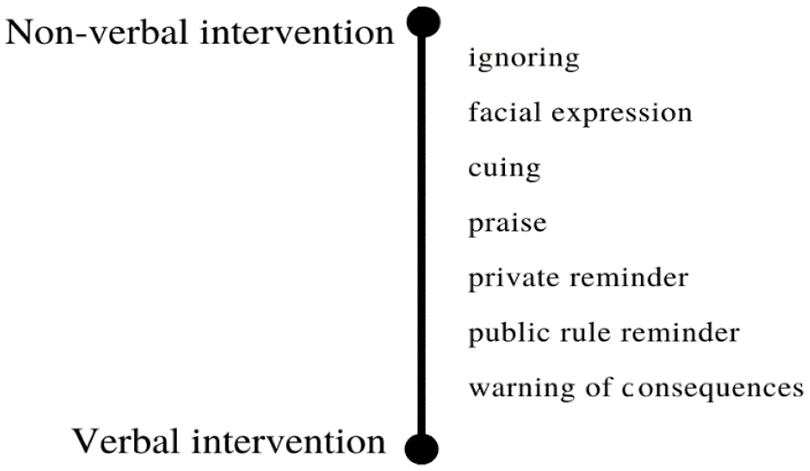
Hierarchy in responses to misbehavior.
Thus, one might say that behaviorist approaches are reactive in nature because they involve direct interference with the disruptive action, as it happens to shape it into the desired behavior.
e Proactive classroom management
As opposed to behaviorism, constructivism emerged advocating for learners’ active involvement in the learning process (Fox, 2001). As a result, there was a rapid growth of student-centered teaching approaches, which maximize teachers’ role as facilitator (Alfieri, Brooks, Aldrich & Tenenbaum, 2011). Therefore, the shift in teachers’ role prompted the change in teachers’ classroom management methods from reactive interventionist strategies to interactionist and proactive strategies (DeLong & Winter, 2001; Debs et al., 2019). A proactive classroom management approach relies heavily on all the steps the teacher takes before resorting to discipline. Garrett (2014) stated that an effective classroom management process starts with the teachers taking proactive steps such as; ensuring an organized physical design, establishing clear rules and routines, forming positive relationships with students, administering engaging instruction, and disciplining. Likewise, other studies reported that managing a classroom proactively placed an immense significance on social, physical, instructional aspects before practicing disciplinary actions (Beaty-O’Ferrall, Green & Hanna, 2010; Maeng & Bell, 2015; Martell, 2013).
According to the definitions mentioned earlier, one might say that proactive classroom management strategies consist of three main components: physical, instructional, and social.
f The physical component
The classroom physical environment refers to seating arrangements, time management and the artifacts used inside the class, such as books, whiteboard and projectors. Recent evidence in CM research suggests that an effective classroom management process must include physical structure and desk arrangements to promote collaborative interaction (Van den Berg & Cillessen, 2015). Moreover, time-management ensures a good classroom flow that fosters good behavior and optimal learning (Egbert, 2004). Thumas and Magilvy (2011) study indicates that what marks a successful class is a combination of maintaining a structured pace and diverse use of resources available. The resources used in the classroom are not only limited to tangible ones; they also include online resources. Mohammadi et al. (2015) stated that using web-based tools positively influences the classroom environment as well as teachers’ instruction. Moreover, Studies on organized physical design of the classroom showed that it had a positive impact on teachers’ performance and students’ behaviors as well as learning outcomes (Gaias et al., 2019; Joe, Hiver, & Al-Hoorie, 2017; Wubbels, 2011).
g The instructional component
Engaging instruction has a fundamental role in learning and effective classroom management. According to Garrett (2014), engaging instruction represents those teaching techniques and methods that increase learners’ motivation to learn and eliminate misbehavior before it starts. Merril (2002) upholds a similar idea regarding instruction being engaging. However, he explains that instruction is engaging and promotes learning when:
The learner is engaged in real-world problem solving.
Prior knowledge is used as a base to obtain new knowledge.
The new knowledge is demonstrated to the learner.
The learner applies new knowledge.
The new knowledge is integrated into the learner’s life.
Davis (2018) also states that effective instruction should cater to learner’s preferences and individual differences, and effective classroom managers uphold a constructive view when it comes to students’ different abilities; they also incorporate differentiation in their instruction. Furthermore, it is noteworthy that engaging pedagogy is established by facilitating student motivation. For example, Suryasa, Prayoga, and Werdistira (2017) reported that highly motivated students interact positively in instructional situations, while unmotivated students show an unwillingness to participate in educational activities (Bassett et al., 2017; Di̇şlen et al., 2013).
In addition, researchers believe that cooperative and collaborative learning increase students’ motivation and engagement in the instructional process (Dellatola et al., 2020; Laal & Laal, 2012). Nonetheless, there is a difference between collaborative and cooperative learning. According to Falcione et al. (2019), collaborative learning is a student-structured process in which the students synchronize their individual work to fulfill a certain goal, complete a task or solve a problem. Whereas cooperative learning is teacher-structured, the teachers assign tasks to students and decide the sources and the materials used to fulfill the task, and the students work collectively to accomplish the task (Johnson & Johnson, 1999). Incorporating collaborative and cooperative learning strategies facilitate effective teaching and learning (Retnowati, Ayres & Sweller, 2017; Veramuthu & Shah, 2020), it also, raises the students’ satisfaction with the content learned and elevates their motivation levels (So & Brush, 2008), which creates a positive, engaging classroom environment (Jones & Jones, 1981).
Moreover, previous research has established that effective instruction that grasps learners’ attention and facilitates engagement includes the use of e-learning strategies (Conteh, 2020; Soh, Khandaker & Jiang, 2008). E-learning is those teaching practices delivered using electronic technologies and digital content, where pedagogy and technology integration is essential (Ahmed, Hussain & Farid, 2018; Moore, Dickson-Deane & Galyen, 2011). The most prevalent platform of e-learning is mobile learning. Qiu et al. (2018) described it as ‘a new form of learning that uses wireless mobile communication network technology and wireless mobile communication equipment (such as mobile phones), personal digital assistants to obtain educational information’ (p. 1098). Researchers believe that mobile use in the classroom promotes individualized instruction and subside disturbance, which contributing to creating an effective classroom environment (Hockly, 2013; Kim, Pederson & Baldwin, 2012; Wilden, 2017).
Furthermore, there is a strong relationship between effective, engaging pedagogy and descriptive feedback and corrective feedback (Rodgers, 2006; Sato & Loewen, 2018). Teachers who provide corrective feedback; their students develop a better understanding of the content and higher motivation levels (Al-Saleh, 2018; Bitchener, 2017; Noureen, 2013). Thus, providing effective clear feedback is extremely crucial and ineffective feedback might cause a lack of motivation (Raphael, Pressley & Mohan, 2008). Teachers’ experience and training influence teachers’ ability to provide an effective corrective feedback. According to Kartchava et al. (2018), novice teachers’ lack of experience had a negative impact on their feedback practices. However, this finding is different from that of Junqueira and Kim (2013), who argue that experienced and novice teachers display the same amount of corrective feedback; the only difference is that experienced teachers display a diverse variety of corrective feedback.
Overall, it can be argued that a discipline plan is a lens through which proactive classroom management strategies (PCMS) are applied. It is also a key component of successful classroom management and teaching practices for all teachers, whether they are novice or experienced (Garrett, 2014; Wong et al., 2012). Rogers (2011) defined discipline plan as ‘using appropriate discipline interventions in a least-to-most intrusive manner as the circumstance or situation necessitates’ (p. 99). Blandford (2003) identified discipline plan elements as:
Responding to students in proactive manners.
Developing rules and regulations.
Stating expected behavior and misbehavior as well as the appropriate response.
Identifying students’ needs and identifying managerial roles before, during, and after the tasks.
The implementation of discipline plan varies according to experience. Putman (2009) in his study indicated that preservice teachers tend to have an inconsistent application of classroom management plan. On the contrary, Monroe, Blackwell, and Pepper (2010) examined novice teachers who underwent CM training programs and found that they exhibit a better understanding and usage of the discipline plan.
h The social component
The social component refers to the teacher and student relationship. Several researchers assert that establishing a good rapport with students has a number of benefits. It helps teachers administrate less intrusive disciplinary responses (Rogers, 2011). In addition, it helps teachers create engaging and positive learning environment (Garrett, 2014). Furthermore, students tend to respond better to the teachers whom they have a good working relationship with (Arslan & Karamese, 2018). There are several ways to build positive teachers and student rapport, Richmond et al. (2016) state that using student-centered teaching approaches is linked strongly with positive rapport. Furthermore, teachers who use strategies that communicate care, such as greeting, learning students’ names and extracurricular activities, have better relations than those who do not (Webb & Barrett, 2014).
Drawing upon the literature above, it can be noted that the term proactive classroom management strategies refers to the preventative strategies that contain physical, instructional, and social components, which help create an effective positive classroom-learning environment. In addition, this term will be utilized in this research to refer to preventative CMS.
3 Self-efficacy
a Definition and importance
Bandura (1977) first introduces the concept of self-efficacy (SE) as the evaluations of one’s abilities to obtain a certain performance level at a predictable endeavor. He insists that one’s own belief about his abilities has a powerful influence on intrinsic motivation more than one’s own skills and actual abilities. Moreover, he further explained that the setting, enactment, and the attainment of a certain goal is mainly associated with one’s self-efficacy and it is subjected to different factors, which affects how self-efficacy is manifested. Lippke (2017) illustrated the factors affecting self-efficacy processes (Figure 2).
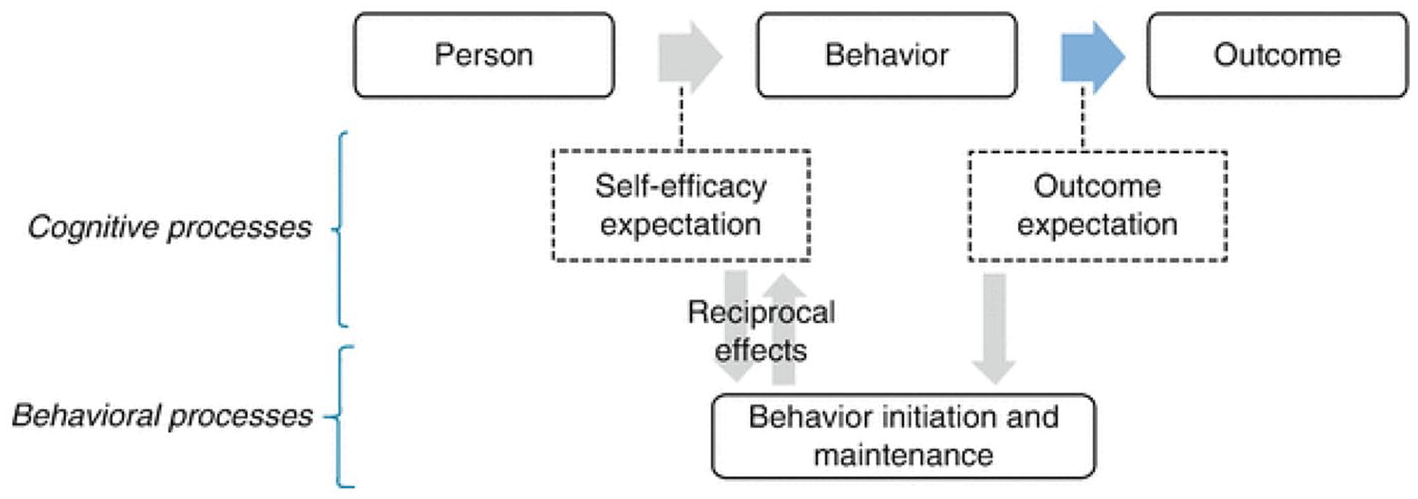
Self-efficacy model.
However, Bandura’s definition of self-efficacy is rather broad when it comes to teaching; therefore, some educational research scholars came up with more field-specific definitions. For example, Guskey and Passaro (1994) tackled the concept of teachers’ self-efficacy (TSE) and defined it as teachers’ belief that they are able to teach and influence students’ learning, even the unwilling students. Likewise, Fives and Gill (2015) state that TSE is relying on implicit and explicit beliefs to guide and direct their classroom practices. In addition, teachers’ beliefs can either facilitate or hinder their instructional practices.
Existing research acknowledges the critical role played by TSE. Researchers such as Tschannen-Moran and MacFarlane (2011), asserted that teachers who display high SE levels and believe that they can deliver instruction effectively to the students, end up to be successful at the teaching process, as they put more effort into teaching troublesome students and cultivating teaching techniques to their students’ needs. Furthermore, teachers with high SE, positively influence students’ learning outcomes and academic achievements (Achurra & Villardón, 2013; Tschannen-Moran & Barr, 2004). Accordingly, high self-efficacy teachers display higher planning ability, organization, and teaching persistence, and adapt innovative preventative teaching strategies (Tschannen-Moran, Woolfolk Hoy & Hoy, 1998).
b Self-efficacy in relation to classroom management
Teachers’ self-efficacy has been of great interest in the educational research field, the vast majority of research discussed the dimensions of teachers’ self-efficacy concerning students’ outcomes, teachers’ burn out, and professional development. However, there is a lack in TSE research in relation to classroom management strategies (Byrne, 2017). Considering the recent literature on TSE, many researchers acknowledged the significant effects of teachers’ preconceived notions of their abilities, and these notions might hinder their classroom practices. Fives and Gill (2015) took notice of the effect of high SE levels on teachers’ dispositions towards implementing new CMS. They point out that teachers with a strong sense of efficacy are open to incorporating new classroom management techniques and strategies. Additionally, researchers investigated teachers’ perception of implementing new pedagogical practices, and they found that self-efficacy is a predominant factor that influences teachers’ receptivity of using a new strategy. Aloe, Amo, and Shanahan (2014) called the integration between CM and TSE; classroom management efficacy (CME), which refers to teachers’ belief in their own ability to employ classroom management practices to ensure a fruitful learning environment.
Some Scholars, such as Fives and Gill (2015), examined the relationship between classroom management strategies and teachers’ self-efficacy; they revealed several factors that affect the relationship between CMS and TSE, some are internal, and others are external. Fives and Gill (2015) identified the factors that either support or hinder teachers’ ability to enact their instructional beliefs in the classroom (Figure 3), these elements act as the mediator that connects teachers’ pedagogical ability and beliefs to their classroom practices. Internal factors include teachers’ beliefs, experience, knowledge, and self-awareness. On the other hand, the external factors contain classroom context factors and school context factors.
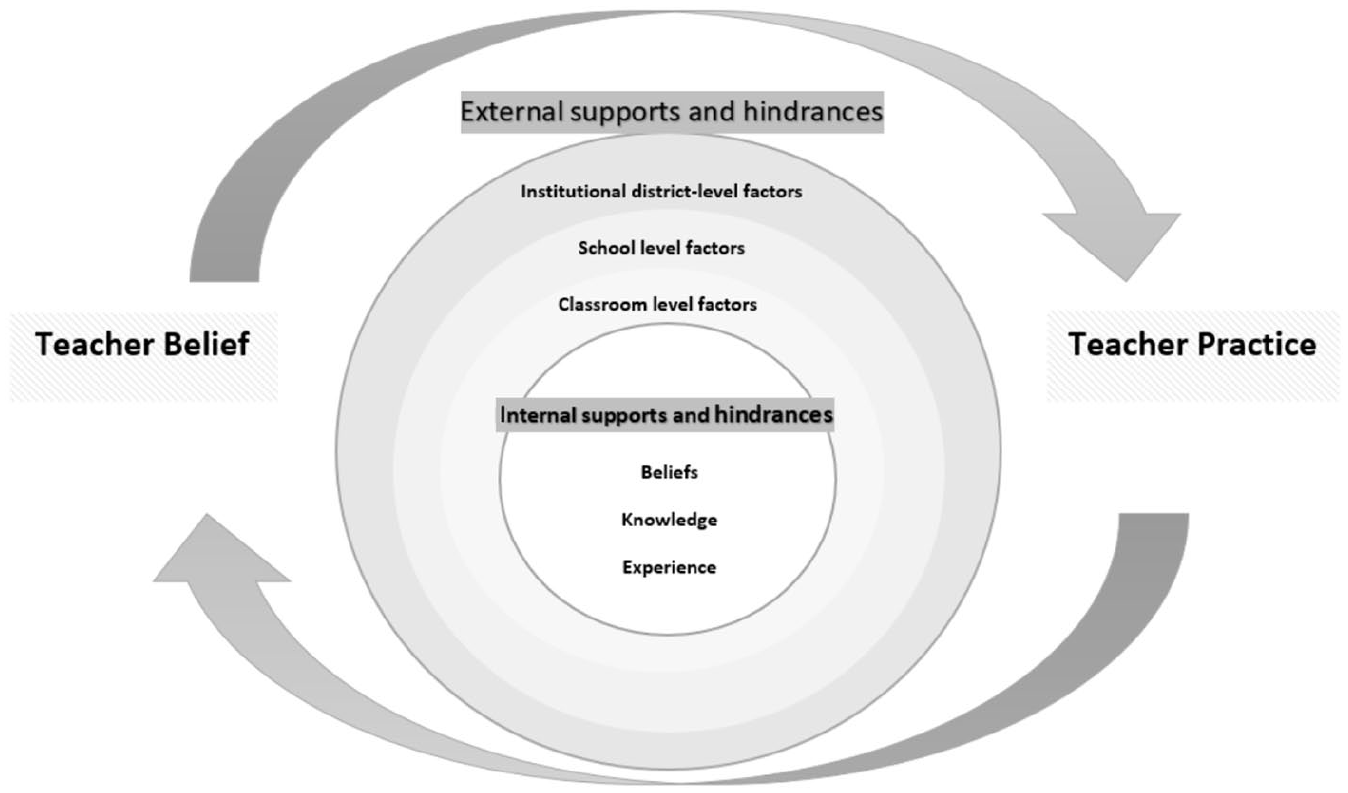
Relationship between teachers’ beliefs and classroom practices.
c Internal factors
The internal factors stem from within the teacher, and it encompasses several elements. The first element is ‘teachers’ belief’; according to Tang and Chun (2012), teachers’ belief refers to the teacher’s inner certainty level about educational content and their own capability to perform instructional practices. Fives and Gill (2015) uphold a similar notion that teachers’ self-efficacy beliefs serve as mediators that connect their content knowledge to their teaching practices. In addition, teachers’ beliefs about students’ motivation, needs, and abilities are influential to teachers implementing a new practice (Mouza, 2009).
The second element is ‘teachers’ knowledge’. Possessing efficient content knowledge about executing a certain teaching strategy elevates teachers’ self-efficacy level and helps teachers act on their beliefs about teaching. Recent studies conclude that the lack of pedagogical knowledge results in teachers’ inability to align their pedagogical beliefs to their instructional practice, and having difficulties in employing new teaching strategies (Bray, 2011; Liu, 2011; Teague et al., 2012). The third element is experience; some researchers believe that teachers with little experience like preservice teachers display lower efficacy levels; they also face difficulties in connecting their self-efficacy belief with their practice (Ogan-Bekiroglu & Akkoc, 2009). Likewise, in their paper, İnceçay and Dollar (2012) found that inexperienced teachers encounter obstacles that affect procedural knowledge and teaching strategies application. The most predominant obstacle is the mismatch between their perceived and actual ability to administrate instructional strategy. Ma and Cavanagh (2018) reported similar results that indicate that preservice teachers have low self-efficacy levels compared to experienced teachers, which can contribute to the lack of teaching experience and teacher education programs. On the other hand, some researchers found a clear difference in novice teachers’ self-efficacy level concerning their practice; they reported that inexperienced teachers exhibited high classroom efficacy-level (Gurcay & Gulbas, 2015; Patterson & Farmer, 2018). However, it should be noted that inexperienced teachers self-efficacy increased with experience and training (Patterson & Farmer, 2018).
d External factors
According to Turner, Warzon and Christensen (2011), external factors are those that stem from the environment surrounding the teacher; these factors work as mediators between teachers’ self-efficacy and their actual classroom management practices. External factors are composed of three levels that vary in degree starting from the classroom immediate environment, to the school factors, to institutional district-level factors. Classroom level factors include students’ abilities and attitudes (Blazar & Kraft, 2017; Nagel, 2018). Students’ attitudes, whether positive or negative influence teachers’ self-efficacy beliefs about teaching. For example, some studies reported that students’ misbehavior during class represents an obstacle for teachers’ implementation of their own teaching beliefs; it also hinders their enactment of new effective instructional practices (Kulinna, Cothran & Regualos, 2006; Savasci & Berlin, 2012; Teague et al., 2012). Another factor is classroom management skills (Hernández, 2018); teachers who are well equipped with CM strategies and skills are more likely to show higher self-efficacy. Chao et al. (2017), suggest that teachers who undergo a focused CM training course display a stronger conviction and confidence in their CM beliefs and skills.
Additionally, classroom size is a pivotal factor that regulates teachers’ classroom management self-efficacy (Uzuntiryaki et al., 2010). Small classroom size enables teachers to experiment teaching methods in a safe, easily controlled environment (Bolden et al., 2019). Whereas large classroom size is known to be linked to students’ increased problematic behavior, it also places physical constraints on teachers’ instructional creativity (Rissanen, 2018; Sawang, O’Connor & Ali, 2017). In short, classroom size is a strong contributor to teachers’ assurance of their ability to use new or different classroom practices.
Moreover, school-related factors play a significant role in teachers interpreting their own educational beliefs into practice. Those factors include administration, availability of resources, relationships with colleagues, and professional development (Cohen et al., 2009; Woods et al., 2019). Bullock (2011) believes that any lack or absence of any of the factors mentioned earlier might hinder teachers’ success in implementing teaching strategies. However, he also noted that teachers’ awareness of the constraints they might face gives them a broader vision to explore other instructional options that helps them act on their instructional beliefs.
To sum it up, teachers’ well understanding of the interrelated nature of the internal and external factors greatly affect their CM self-efficacy, as well as their depiction of their own self-efficacy beliefs within external factors restrictions (Bullock, 2011).
III Methodology
This study proposed two main research questions. The first question elicits a description of teachers’ proactive and reactive CMS practices, followed by three sub-questions that explain these practices in terms of the efficacy of PCMS and RCMS, the difference between novice and experienced teachers CMS, and the obstacles that hinder CMS. The second research question explores the relationship between teachers’ CMS practices and their self-efficacy. Furthermore, the questions’ nature combines both aspects: descriptive quantitative and explanatory qualitative, which required this study to adopt a mixed-method paradigm to address the research questions. The mixed-method paradigm implemented in this study provides quantitative data as a context for elaborating qualitative data. The researcher also incorporated a descriptive, explanatory approach to data collection and analysis, which encompassed descriptive and inferential statistics to analyse the data.
1 Participants
The sampling process was convenience sampling. The participants were Saudi EFL teachers working at an English language institute (ELI) at a Saudi University, in Jeddah, Saudi Arabia. In addition, the participants were 80 teachers, 35 were novice teachers and 45 were experienced ones. Furthermore, the number of participants in the interview was eight, four were novice and the other four were experienced. In fact, participants in the interviews were selected based on their accumulated degrees and years of experience.
2 Instruments
To answer the research questions, this study utilized two questionnaires and semi-structured interviews (Figure 4). The instruments will be listed below according to the chronological order they have been used in the course of the study.
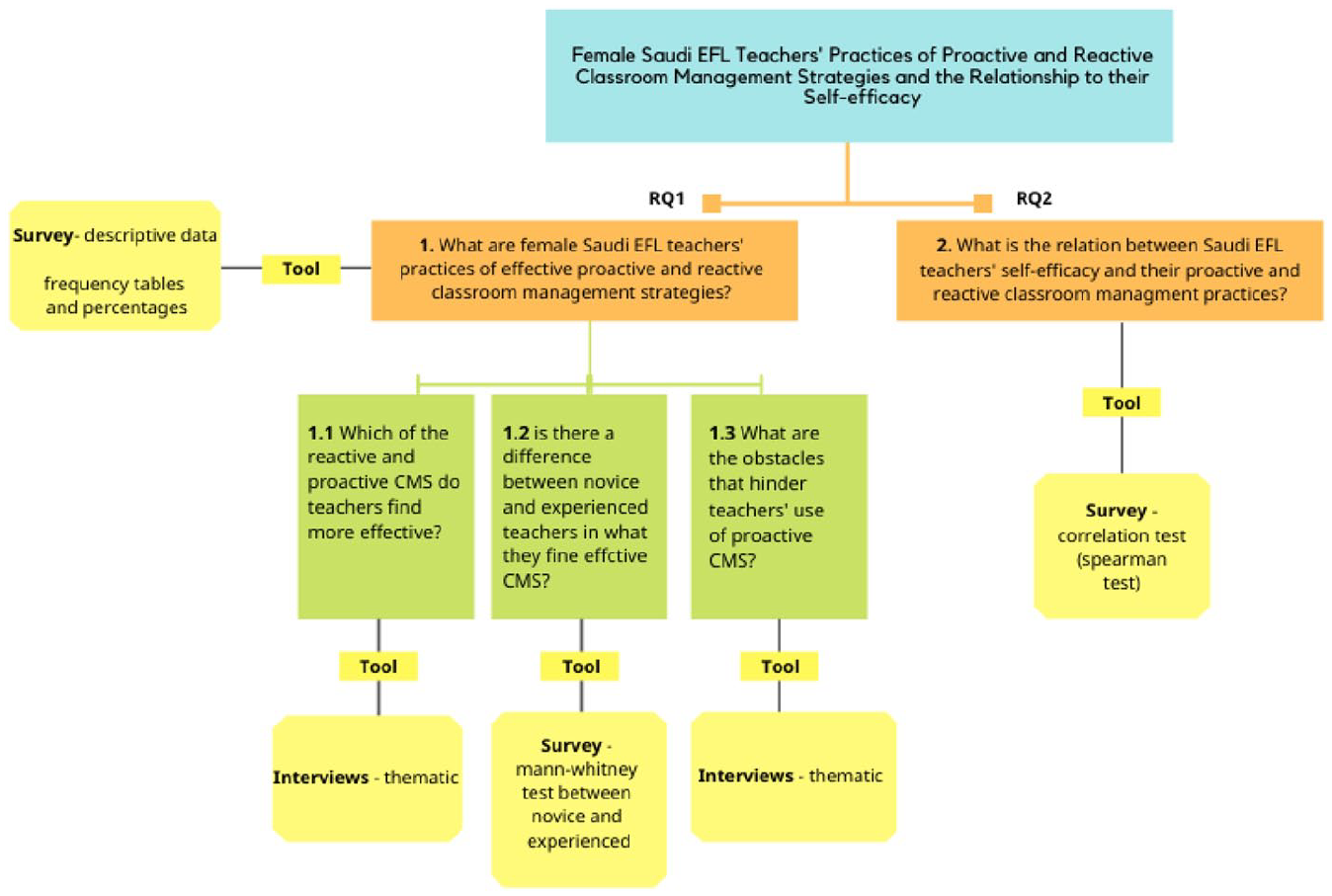
Mindmap of methodology tools and research questions.
a Proactive and reactive classroom management practices (PRCMP) questionnaire
The questionnaire initial structure was elicited from Martin and Sass (2010) behavioral and instructional management scale; however, it was modified to fit the study’s scope. It consisted of two major categories; proactive classroom management strategies and reactive classroom management strategies. The proactive construct included four subscales; rules and routines formulation, physical engagement, instructional strategies, and teacher-student rapport. Whereas the reactive construct included six subscales; nonverbal discipline, private discipline, conditioning, rules enforcement, positive reinforcement, and punishment. In addition, it contained 31 items on a 5-point Likert scale that ranges from always to never.
b Teacher sense of efficacy scale (TSES)
The questionnaire was adapted from Tschannen-Moran and Woolfolk Hoy (2001) teachers’ sense of efficacy scale. The questionnaire aimed to measure teachers’ efficacy in three domains; student engagement, instruction, and classroom management. It also consisted of 14 items on a 4-point Likert scale, 1 being strongly disagree and 4 being strongly agree.
c Interviews
Semi-structured interviews were designed to collect qualitative data. The interviews contained ten questions. The first two questions were demographic questions regarding experience and training. The second two questions aimed to discover the effective CMS that teachers prefer. The other six questions targeted the obstacles that affect proactive and reactive CMS and explored the relationship between SE and CMS. These questions aimed to get an in-depth perspective on the data obtained from the TSE survey.
3 Reliability and validity
The reliability and validity of the quantitative instruments were checked before utilizing them. To find out the reliability of the first questionnaire PRCMP, a Cronbach’s alpha test was applied. The test score was α = .825, which is high and indicates internal consistency (see Table 1).
Reliability of the PRCMP survey and TSES survey.
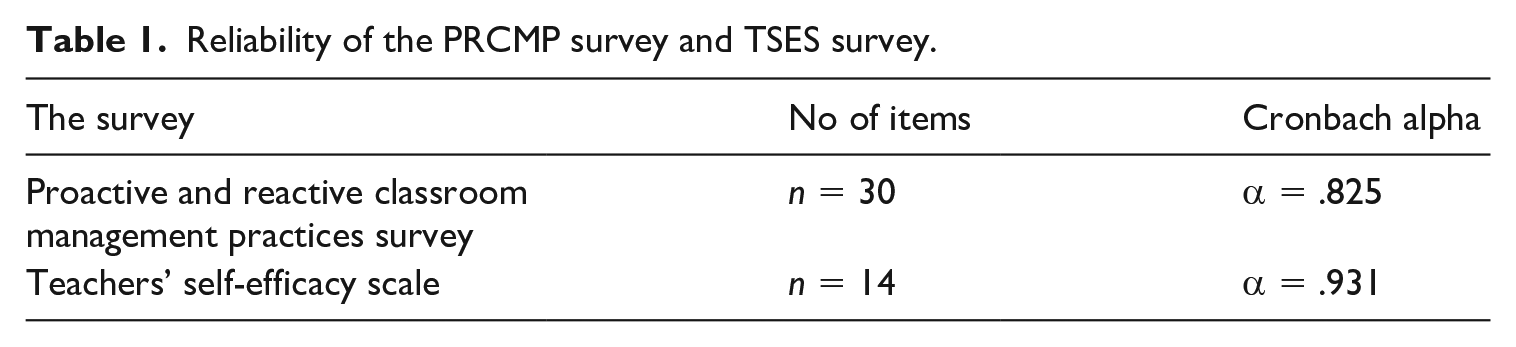
On the other hand, Tschannen-Moran and Woolfolk Hoy (2001) already established the second instrument’s (TSES) reliability in the guide they provided for the researcher. Nonetheless, due to the researcher alteration to the questionnaire items, it was preferred to run a reliability test. A Cronbach’s alpha test used and the test value was α = .931, which reassures the questionnaire items’ reliability (see Table 1). Regarding the questionnaire validity, the researcher applied jury validity, and two experts in the field reviewed the questionnaire items. In addition, they recommended eliminating some repetitive items; also, they advised the researcher to rearrange some items.
As for the qualitative instrument, which is semi-structured-interviews, the researcher used three separate steps to ensure the trustworthiness of the interviews’ questions. The interview questions were first presented to two judges, who were experts in the qualitative methodologies. Their feedback suggested deleting some unnecessary questions and adding some examples to the questions to elicit detailed answers. Second, the researcher piloted the questions on two teachers and then modified some of the questions in terms of clarity and style. Third, the researchers eliminated bias by avoiding directing interviewees to say certain things and asking them to reiterate their answers to prevent misinterpretation from both the interviewer and interviewees (Cohen, Manion & Morrison, 2007). The next section gives a thorough account of the results obtained from the research tools.
IV Data analysis and results
Results of research question 1
Research question 1: What are the EFL teachers’ practices of effective proactive and reactive classroom management strategies?
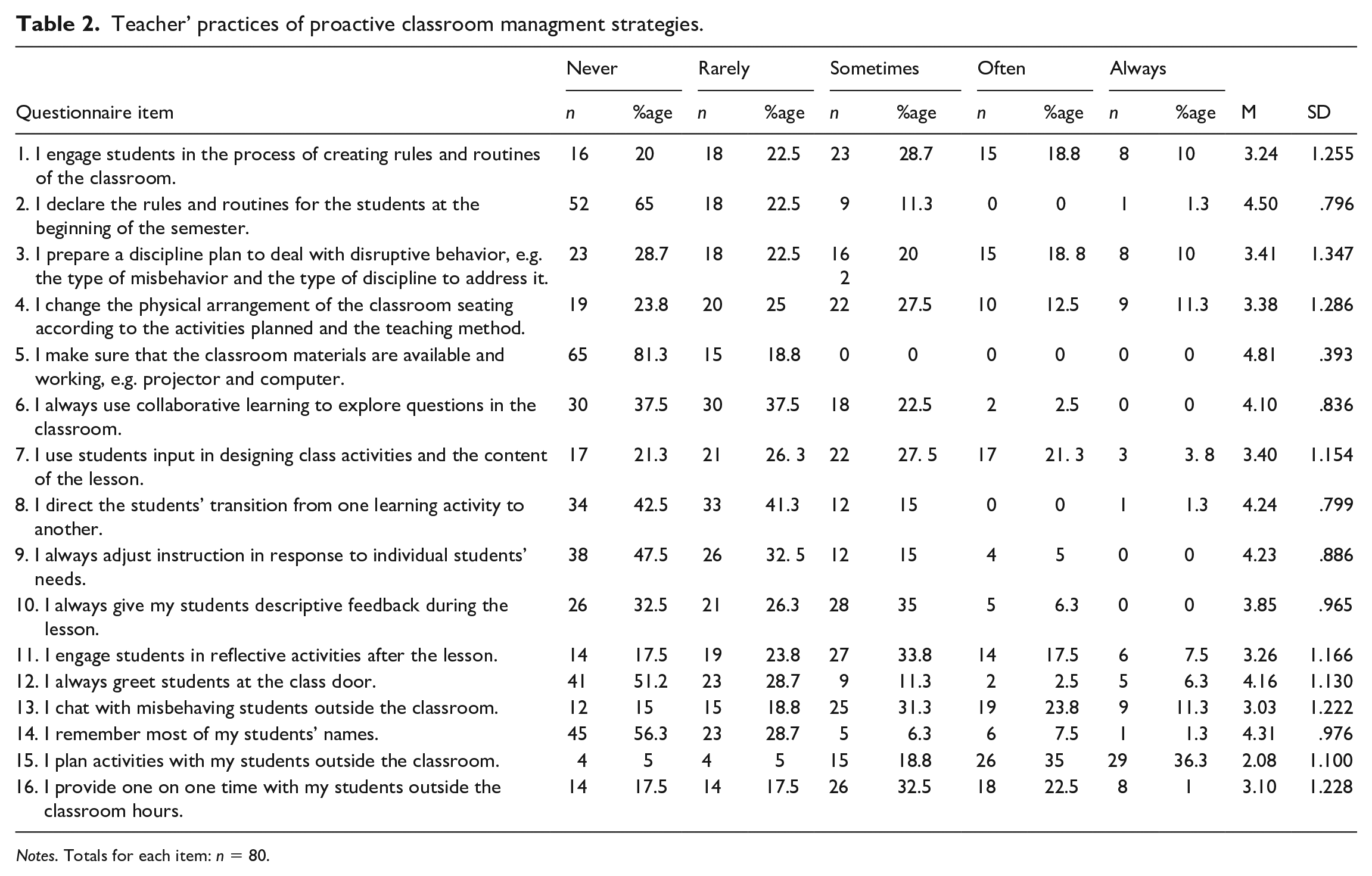
To answer this question, this has been done quantitatively and frequency tables were utilized to analyse the PRCMP survey data, the results are also categorized into two main sections: proactive classroom management practices and reactive classroom management practices (see Table 2).
Teacher’ practices of proactive classroom managment strategies.
Notes. Totals for each item: n = 80.
As seen in Table 2, regarding proactive CMS practices, the majority of teachers 81.3% engaged in the classroom’s physical environment and always checked the availability of classroom materials and resources. In addition, 65% focused on rules formulation by always declaring classroom rules and regulations at the beginning of the module. Slightly more than half (56.3%) of the teachers always made sure that they remember their students’ names. Equally, (51.2%) of the teachers greeted students at the classroom door. Also, almost half (47.5%) of the participants adjusted their instruction to cater for students’ individual differences.
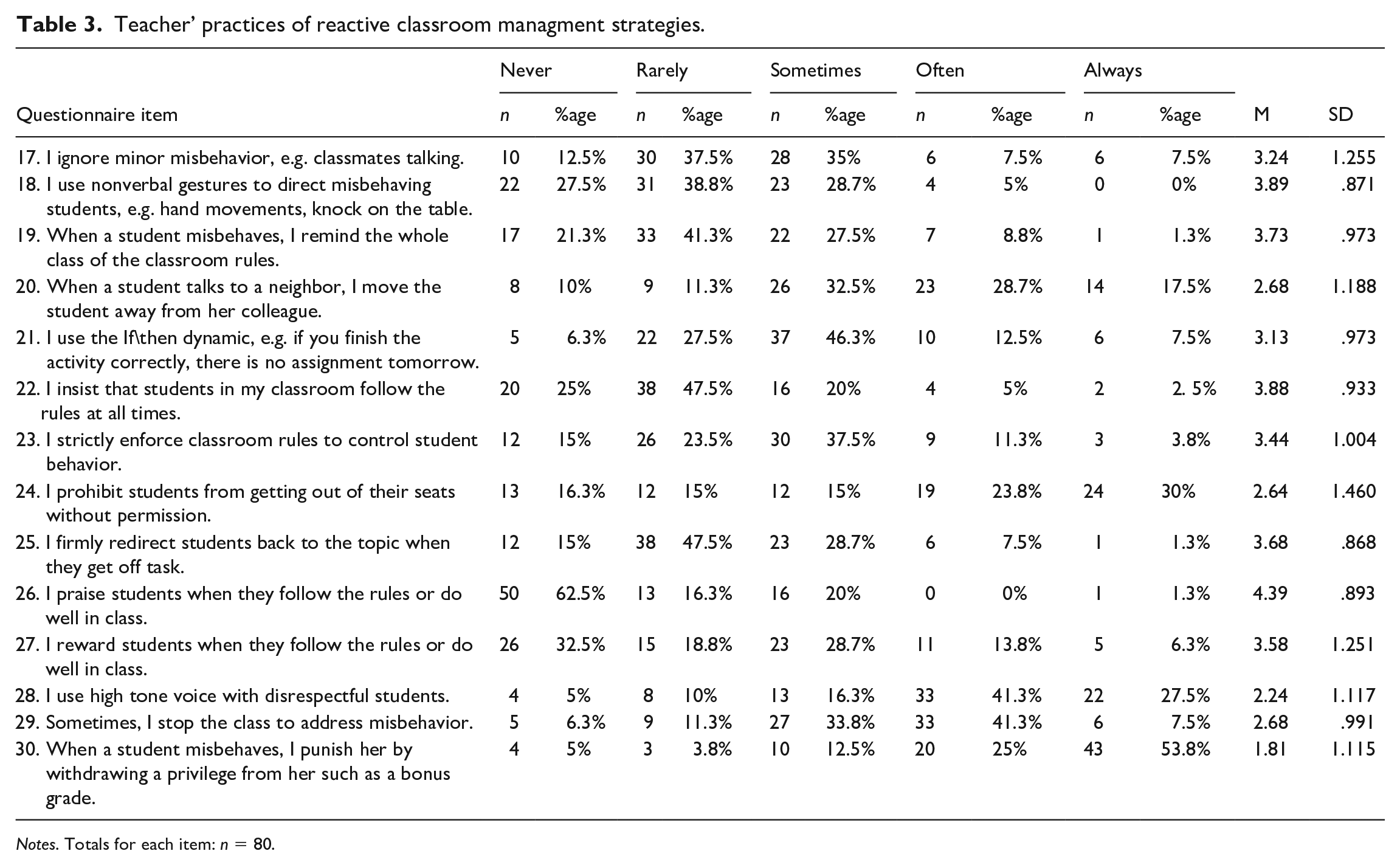
As far as reactive CMS practices, Table 3 shows that 62.5% of teachers always use praise as a form of positive reinforcement with students who follow the rules. In addition, almost half the teachers, 47.5%, reported that they often insisted that the students follow the rules all the time. The same percentage of participants, 47.5% often firmly redirected students when they got off-topic. Moreover, 41.3% often used public discipline when students misbehave to remind the entire class of the rules. On the other hand, 53.5 % of teachers indicated that they never punish students by withdrawing grades or privileges.
Teacher’ practices of reactive classroom managment strategies.
Notes. Totals for each item: n = 80.
Results of research question 1a
Which of the proactive and reactive classroom management strategies do teachers find more effective?
To answer the question a number of semi-structured interviews were conducted with eight Saudi EFL teachers that included the following questions:
What are the strategies that you find most effective in managing your classroom? Why?
When a student becomes disruptive during class, what are the strategies you usually use to control misbehavior?
Table 4 summarizes the findings. It has been found that teachers find both reactive and proactive classroom management strategies rather effective. When Teacher 1 was asked about effective CMS, she mentioned facilitating student engagement by involving them in rule generating: The students can communicate their needs well regarding the rules because they will have ownership to follow the rules.
Interviews themes matrix: effective classroom management strategies.
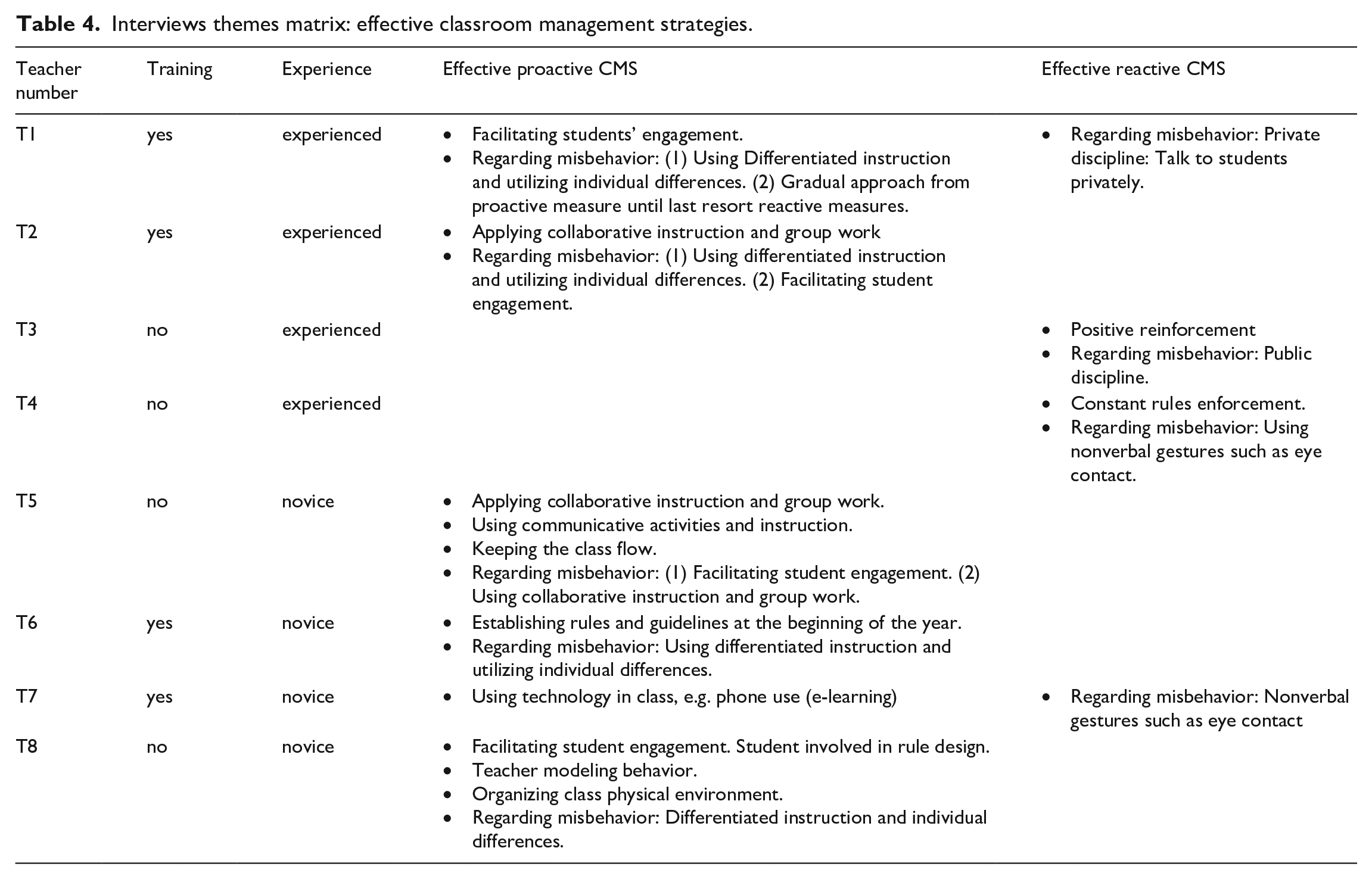
When the same teacher was asked about effective discipline strategies she believed that misbehavior may stem from misunderstanding of the content, therefore she applies gradual approach from using proactive differentiated instruction moving to reactive private discipline as last resort: I often feel that they are disruptive because they are bored or they don’t understand. So I try to address the misunderstanding and help explain the difficulties. If she finishes the task already I try to give her something extra to do or if she does not understand I try to you know focus on that and pay more attention to her if it continues I’d probably talk to her outside of class and ask privately. (Teacher 1)
Teacher 7 also highlighted the application of proactive and reactive classroom management approaches. She believed that the use of e-learning is greatly effective in which she utilized the use of phones inside the class: I like using the phone for learning purposes in the English classroom for example a translator or something like that is very helpful.
Additionally, regarding misbehavior, she stated that nonverbal gestures are very convenient; nonetheless, she also believes in the gradual approach to discipline: I use eye contact to let her know that I don’t accept this behavior and she will get my message if she insisted on her misbehavior I might tell her I’m going to cut marks, but I think eye contact is the best for me! I don’t like to embarrass my students.
Results of research question 1b
Is there a difference between novice and experienced teachers in what they perceive effective classroom management strategies?
The Mann–Whitney test indicated that there are differences between novice and experienced teachers’ effective CMS. In addition, these differences appeared in five items, three of which relate to proactive CMS (3, 10, 11), and two relate to reactive CMS (26 and 27), as seen in Table 5.
Differences between novice and experienced teachers.
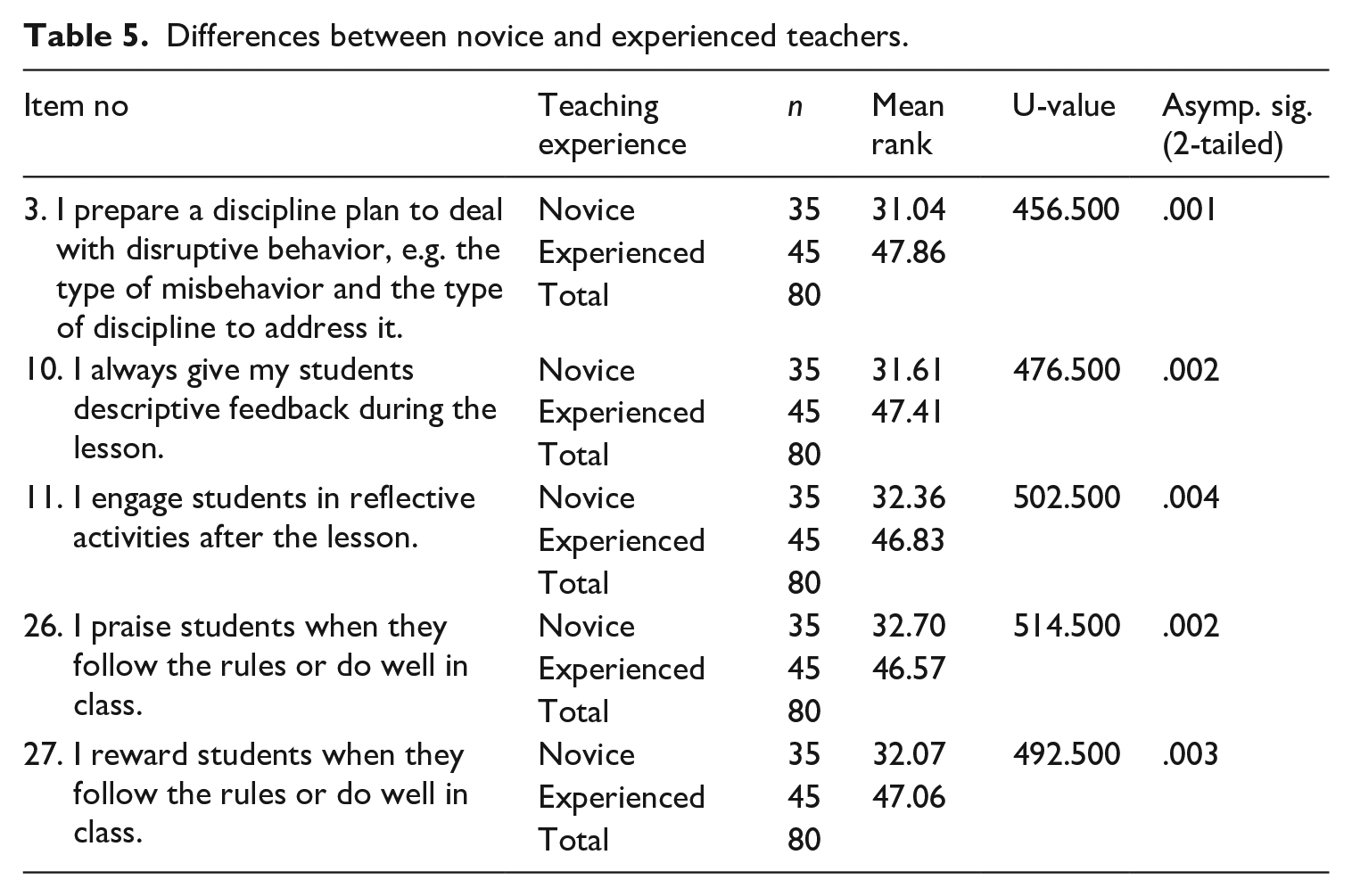
As shown in Table 5, in item 3, experienced teachers (mean rank = 47.86), who find preparing a discipline plan effective, are more than novice teachers (mean rank = 31.04), U = 456.500, p = .001. In addition, this difference is significant because the p-value is less than .05, which indicates that there is a statistical difference between the two groups of teachers. In item 10, evidence shows that a higher number of experienced teachers (mean rank = 47.41) believed that descriptive feedback is efficient, whereas fewer number of novice teachers (mean rank = 31.61) held the same belief, U = 476.500, p = .002. In item 11, also higher number of experienced teachers (mean rank = 31.61) conducted reflective activities compared to novice teachers (mean rank = 32.36), U = 502.500, p = .004.
The previous three items explain differences in effective proactive CMS; the following items demonstrate differences in reactive CMS. As shown in Table 5, item 26 revealed that experienced teachers (mean rank = 46.57) used praise more than novice teachers did (mean rank = 32.70), U = 514.500, p = .002. Similarly, in item 27, experienced teachers scored higher number (mean rank = 47.06), regarding the use of reward strategy, whereas novice teachers scored lower (mean rank = 32.07), U = 492.500. p = .003.
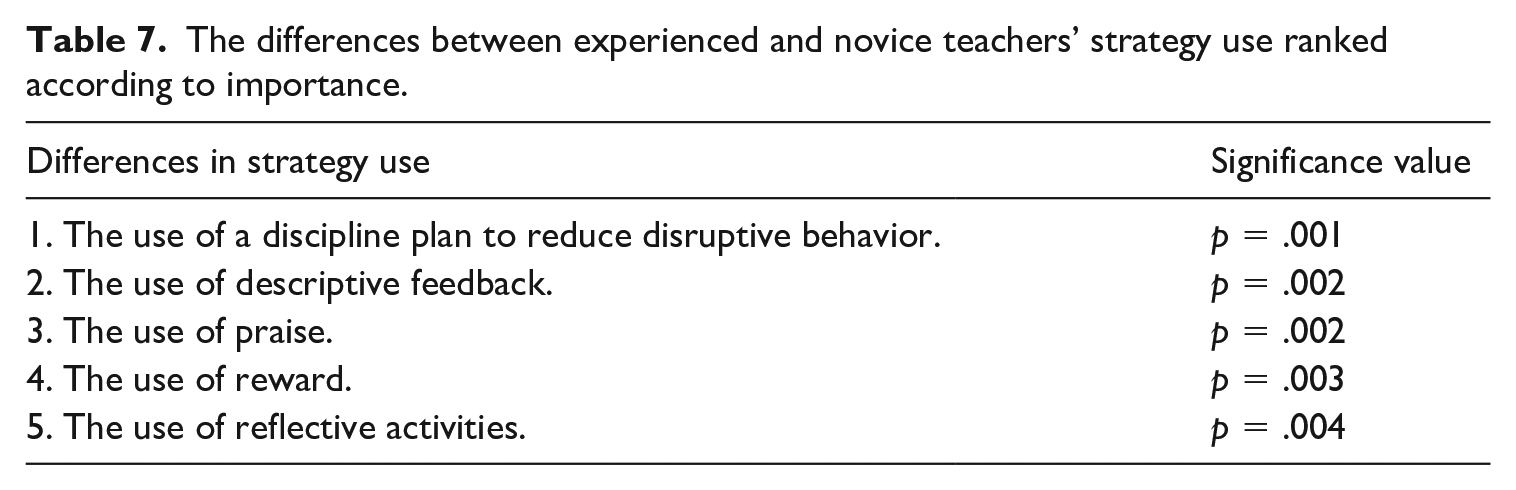
According to the data shown in Table 5, it can be noticed that there are differences between experienced and novice teachers effective CMS in favor of experienced teachers. Furthermore, the differences can be ranked according to importance as in the following.
Results of research question 1c
What are the obstacles that hinder EFL teachers’ use of proactive CMS?
To address this research question, a thematic analysis of the interviews was conducted and the themes and findings identified are presented in Figure 5. To understand the obstacles teachers face regarding PCMS use, the researcher asked teachers if they use certain proactive strategies. Furthermore, upon examining teachers’ responses regarding the obstacles that neglect PCMS application, the researcher identified four major themes: System-related obstacles (subject-centered curriculum and institutional rules), system/teacher related obstacles (institutional rules and teachers’ predispositions concerning e-tools), teacher-related obstacles (lack of understanding of the discipline plan), and student-related obstacles (unmotivated students).
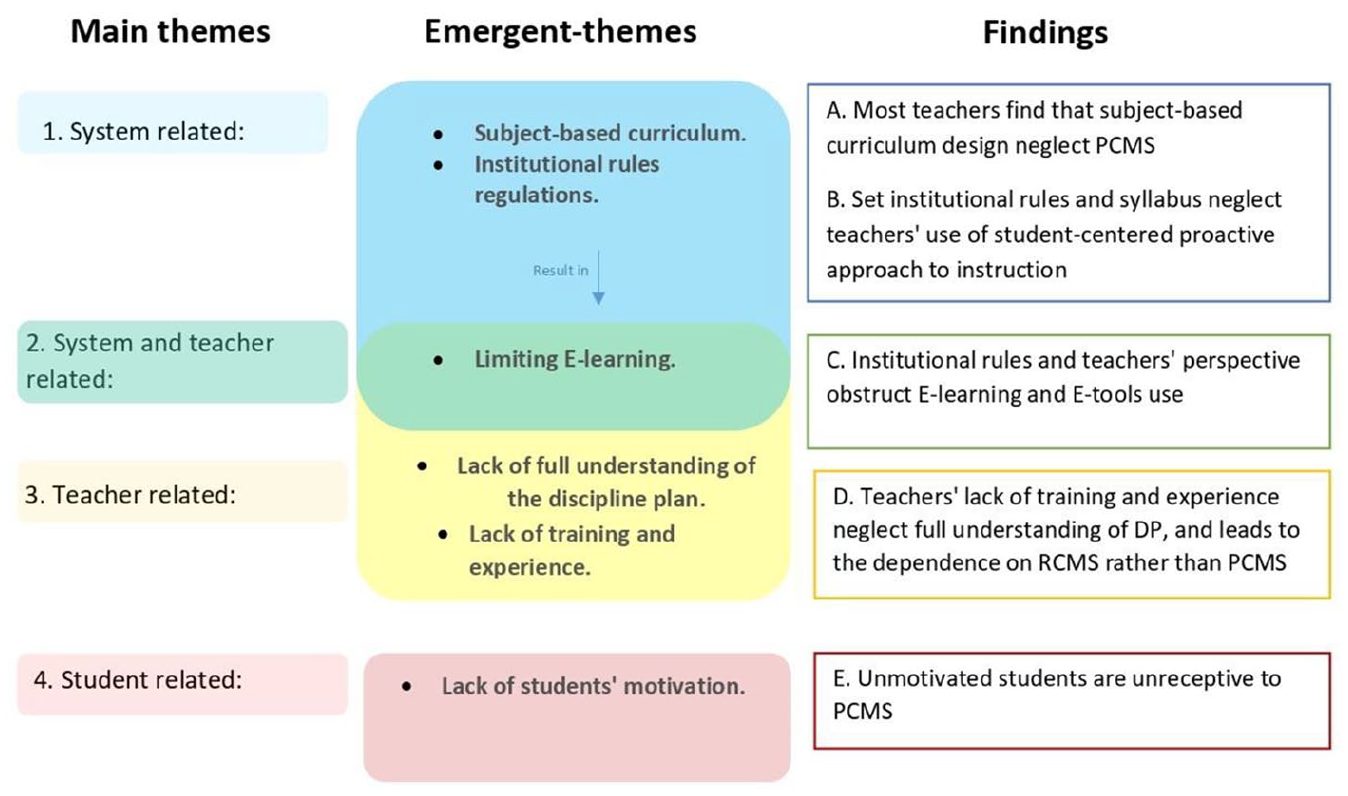
Themes and findings of research question 1c.
a Most teachers find that subject-based curriculum design neglect PCMS
Regarding subject-based curriculum, teachers were asked if they consider the students’ input when designing an activity or choosing a topic for the lesson, and most teachers reported that they don’t because of the subject-based curriculum. They also explained that this type of curriculum design is rather limiting because it marginalizes students’ voice regarding the content they learn.
We have a set curriculum and set lessons that is done by other people and it is very limited, my preference though to have more authority to make decisions, you can ask them what they need and tailor it to the topics they are interested in and tailor the whole course around their interest. (Teacher 1) All the activities are pre-planned, so the students have no input in deciding the activities they will take, also we are limited by the ELI curriculum. (Teacher 2) It is still limited due to the curriculum topics. (Teacher 3) The curriculum of the ELI follows the backwards design where we design activities and task prior, so there is no room for students to choose. (Teacher 4)
b Set institutional rules and syllabus neglect teachers’ use of student-centered proactive approach to instruction
In addition, teachers were asked about incorporating students’ opinions in rule generating, and most teachers expressed that they do not include students in this process because the rules and regulations are already set by the institution and are unamendable.
Students don’t have input, and that’s because we have to abide by the rules provided to us from the ELI. (Teacher 2) No usually it is already set and done before I come to class. (Teacher 3) I never talked or discussed the rules during class, we have to go by the rules provided by the ELI. (Teacher 6) I don’t really involve students in rule making because we need to abide by the ELI rules and I can’t change the rules neither do students. (Teacher 8)
c Teachers’ lack of training and experience neglect full understanding of DP, and lead to the dependence on RCMS rather than PCMS
When teachers were asked about their knowledge concerning the discipline plan and if they think it is necessary, most teachers realize the necessity to set a discipline plan.
I think yes it is important because it’s kind of naïve to expect that you don’t need a plan and if you don’t have a plan you just end up reacting to things and you might not make good decisions on the spot where as if you have a plan things can be consistent. (Teacher 1) It is really necessary, to create rules and abide by them and take into consideration. (Teacher 2) However, the majority of teachers (seven out of eight) have a clear idea regarding what DP entitles, they mostly reported discipline plan as only dealing with misbehavior or rule enforcement. To be honest discipline plans can be effective with common misbehavior, e.g. using phone can be planned beforehand. But other situation occurs at the moment and requires immediate response. (Teacher 5) A discipline plan is how to make the students obey the rules. (Teacher 7) In addition, almost half the teachers (thee out of eight) reported that they sometimes use a discipline plan, whereas some teachers reported that they never heard of DP. To a certain extent sometimes I do discipline plan. (Teacher 4) It is really hard for me to say that I have a discipline plan. Consequences should be stated, e.g. you will have extra work to do or, minus one mark, but no specific plan. (Teacher 6) I honestly haven’t really heard of discipline plan before but I think it’s like a system of let’s say the rules that you have for the classroom. (Teacher 8)
In addition, another teacher-related obstacle is the lack of experience and training that lead teachers to adopt more reactive classroom management strategies.
As novice teacher I used high tone but after experience and learning I learned to be fixable. (Teacher 5) I believe they use these extreme methods before trying anything else because they don’t have the patience and they don’t have the adequate knowledge or training to deal with the new generation. (Teacher 6) I think that most of the teachers use behaviorism because they were taught using this method, and they often have not acquired new methods through professional development. (Teacher 7)
d Unmotivated students are unreceptive to PCMS
Teachers reported that sometimes students refrain from participating and are unmotivated to partake in rule making.
But they were not interested and they did not care to be honest, and I have done this process at least 2 or 3 times during the 3 years’ experience but it did not work. (Teacher 5)
Results of the research question 2
Research question 2: What is the relation between Saudi EFL teachers’ self-efficacy and their proactive and reactive classroom management practices?
Due to the quantitative data’s non-parametric nature, the researcher used Spearman rank correlation coefficient test to determine the relationship between teachers’ self-efficacy and PCMS and RCMS, followed by semi-structured interviews to get an in-depth understanding. The following is an account of the quantitative data.
The data presented in Table 6 reveal a significant correlation between teachers’ self-efficacy levels and their proactive classroom management strategies with a significance value of p = .000, and correlation coefficient value of rs = .650. In addition, this result is significant on the 0.01 level, that indicates a positive association. Turning to the other result, Table 7 also shows a significant correlation between teachers’ self-efficacy and reactive classroom management strategies with a significance value of P = .004, and correlation coefficient value of rs = .323. Similarly, this result indicates a positive association because its significance is on the 0.01 level. However, comparing the two results shows that teachers’ SE association with their PCMS is higher than their SE association to their RCMS.
Spearman correlation coeffecient test.
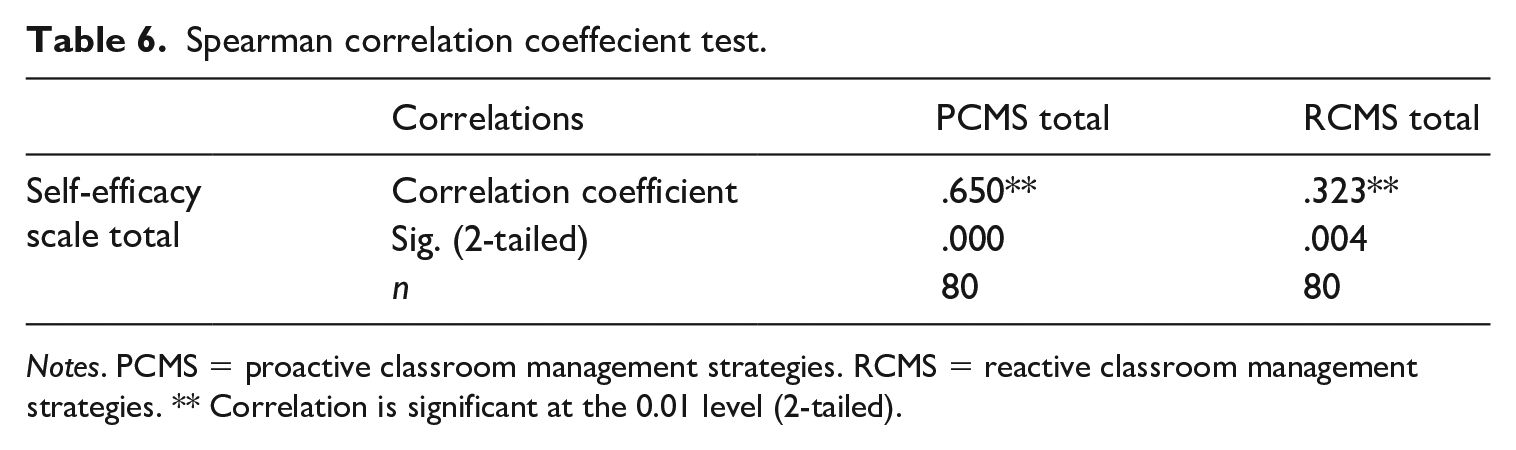
Notes. PCMS = proactive classroom management strategies. RCMS = reactive classroom management strategies. ** Correlation is significant at the 0.01 level (2-tailed).
The differences between experienced and novice teachers’ strategy use ranked according to importance.
V Discussion
It has been found that EFL teachers practice both proactive and reactive CMS in their classrooms. In addition, the proactive strategies those teachers reported to be effective represented three-domains, which were identified by Garrett (2014) as the component of effective classroom management, such as: physical domain; about 81.2% of teachers apply the strategy of checking the physical environment of the classroom (see Table 2). This result goes with Garrett (2014) and (Van den Berg & Cillessen, 2015) definition of an effective CM.
Regarding the instructional domain, 65% of teachers focused on rules formulation and stating expected behavior (see Table 2). This finding is consistent with that of Blandford (2003) and Brooks, Ffolliott and Magner (2012), who believed that setting rules and expected behaviors are a significant component of effective CM as a part of the discipline plan. Also, 47.5% of the participants catered their instruction according to students’ individual differences. This result confirms that there is an association between individuated instruction and effective proactive classroom management (Davis, 2018).
Moving to the social component, teachers practiced two strategies: which are memorizing students’ names and greeting students at the beginning of the class. Both are proactive social strategies that are effective in creating rapport with students’. This finding incorporates Webb and Barrett (2014) ideas, who suggested that teachers who use strategies such as learning students’ names and greeting them, have a better relationship with their students, therefore one might say that students tend to respond better to teachers inside the classroom when applying such strategies. This finding also correlates with Arslan and Karamese (2018) that creating a good working relationship with students results in an effective classroom management process.
Concerning reactive CMS, it is found that 62.5% of teachers always use praise to motivate students who follow the rules (see Table 3). This finding supports the work of Hart (2010), who stated that positive reinforcement is an effective reactive misbehavior strategy and most effective misbehavior management techniques are reactive in nature. The previous finding could also explain teachers’ tendency to use praise a lot in their classes, and it could be attributed to the effectiveness of such strategy. This study also found that 47.5% of teachers insisted that students follow the rules. They also redirect students back to the topic if they wander off-topic. These are two verbal interventionist strategies that teachers preferred to use to subside misbehavior. This result reflects those of Koutrouba et al. (2018), who also found that teachers utilize an interventionist approach to manage behavior inside the classroom. In addition, 41.3% of teachers used public discipline; this finding broadly supports other studies in this area, linking public rule affirmation to reactive misbehavior management (Garrett, 2014; Rogers, 2011).
However, there are differences between experienced and novice teachers’ effective CMS, and these differences are in favor of experienced teachers. The differences are using a discipline plan to reduce disruptive behavior, providing descriptive feedback, praise, reward, and reflective activities. It should also be noted that these differences are ranked according to importance (see Table 7). This study reveals that teachers vary in their approach to CMS and a possible explanation for this variance is the role of experience. Glock and Kleen (2019) also acknowledged the role of experience in teachers’ variance regarding preventative proactive discipline. In addition, the current finding shows that experienced teachers practiced discipline plan to manage their class more often than novice teachers did (see Table 5). This result supports those of Putman (2009), who stated in his study that novice teachers with less experience lack consistency regarding their discipline plan application.
In addition, it has been found that most teachers believe that subject-based curriculum, and institutional rules neglect teachers’ use of student-centered proactive approach to instruction. Almost all teachers reported a subject-based curriculum to be an issue when it comes to practicing proactive CMS, and they described the curriculum as rather rigid and not student-centered (see Figure 5). This result could partly be explained by the fact that a subject-based curriculum focuses on the content itself and builds the curriculum activities around it, disregarding any input from the teachers or the learners. Therefore, teachers are left with no voice in curriculum formation. Regarding the previous result, Richard (2013) found that backward-design curriculum promotes teacher-centered reactive teaching methods. It also inhibits the application of proactive teaching methods.
Furthermore, the current study shows a positive relationship between teachers’ self-efficacy levels and their application of proactive and reactive classroom management strategies; however, teachers’ SE association with PCMS is higher than RCMS (see Table 6). The higher teachers’ self-efficacy becomes, the more likely they attend to proactive strategies in classroom management. This finding supports those of Tschannen-Moran et al. (1998), in which they indicate that teachers with high self-efficacy levels lean towards adapting innovative proactive teaching strategies. The qualitative data also show that most teachers believe in their capability to practice a new proactive strategy in their classroom. Nonetheless, it is noteworthy that almost all the teachers who believed so are experienced. Again, experience plays a key role in teachers’ self-efficacy, and classroom practice; Ogan-Bekiroglu and Akkoc (2009) highlight the relationship between these two concepts in their study in which they noticed inexperienced teachers’ tendency to display less SE levels. Similarly, İnceçay and Dollar (2012) and Ma and Cavanagh (2018) found that the lack of experience is highly connected to low teachers’ self-efficacy level.
In brief, this section highlighted the findings in the light of the theoretical framework; in addition, it drew the connection between the findings, creating a structured argument in answering the research questions.
VI Conclusions and contribution to knowledge
This research aims to determine EFL teachers’ practices of proactive and reactive classroom management strategies; it is also set to understand teachers’ perspectives of effective CMS and the role that experience plays in forming believes about their SE. It also aims to identify the relationship between teachers’ self-efficacy and their proactive and reactive CMS.
The findings of this research revealed that EFL teachers tend to practice proactive CMS more than reactive. This research also revealed that teachers perceive proactive CMS to be more effective than reactive CMS in general. The main finding is that experience is associated with proactive CMS practices, and it has a defining impact on teachers’ CMS approach. In addition, the results of this research show that four main obstacles hinder teachers’ proactive CMS application. These include system-related obstacles, teacher-related obstacles, and student-related obstacles. The most repetitive and constant obstacles are subject-centered or backward-design curriculum, and institution’s rules and regulations; and this is because the subject-centered curriculum alongside the systematic rules provided by the ELI created restrictions that limited teachers’ instructional choice, such as: e-tools (mobile) application, and students’ input and ownership of their learning. Moreover, other obstacles include teachers’ own dispositions towards e-learning, lack of discipline plan, and lack of training. The second major finding is that there is a significant positive association between teachers’ high self-efficacy and proactive CMS. Also, it has been found that experienced teachers display higher TSE.
These findings contribute to existing knowledge of classroom management by providing a deeper contextualized insight of the nature of proactive and reactive CMS that EFL Saudi teachers practice, illuminating proactive CMS as an effective CM approach based on EFL teachers’ input. This research also contributes to recent debates concerning experience role in teachers’ CM practices by proving experience’s impact on CMS. Prior to this study, it was not easy to make predictions about how self-efficacy relates to EFL teachers’ classroom management strategies. Nonetheless, the findings from this research prove a positive association between PCMS and SE; therefore, it fosters an opportunity for teachers’ professional development. It is hoped that this research can provide an evidence that could be beneficial in improving classroom management quality and developing a proactive CM and SE professional development plan for teachers.
1 Limitations
This research was limited by teachers’ reluctance to corporate and their busy schedules. An additional uncontrolled factor is the technical delays getting the survey responses. In addition, to fit this research’s scope, some of the research collected data were not used, which cost the researcher time, material and effort.
2 Implications and recommendations
A major implication of this research is for policy-makers to foster teachers’ choice and voice in curriculum design, advocating for student-centered curriculum and syllabus that involve students’ input and promote proactive teaching and learning. Moreover, providing training programs that target discipline plan development and application; to bridge the gap between novice and experienced teachers’ CM performance and teaching self-efficacy levels, are also recommended.
Also, it is suggested for teacher educators to grasp a holistic understanding of all participants involved in the educational process. Furthermore, different researchers are advised to conduct further experimental studies to assess the effects of training programs in aiding teachers’ discipline plan as a proactive preventative strategy to diminish misbehavior.
Supplemental Material
sj-docx-1-ltr-10.1177_13621688211046351 – Supplemental material for Teachers’ practices of proactive and reactive classroom management strategies and the relationship to their self-efficacy
Supplemental material, sj-docx-1-ltr-10.1177_13621688211046351 for Teachers’ practices of proactive and reactive classroom management strategies and the relationship to their self-efficacy by Nada Jaber Alasmari and Abeer Sultan Ahmed Althaqafi in Language Teaching Research
Supplemental Material
sj-docx-2-ltr-10.1177_13621688211046351 – Supplemental material for Teachers’ practices of proactive and reactive classroom management strategies and the relationship to their self-efficacy
Supplemental material, sj-docx-2-ltr-10.1177_13621688211046351 for Teachers’ practices of proactive and reactive classroom management strategies and the relationship to their self-efficacy by Nada Jaber Alasmari and Abeer Sultan Ahmed Althaqafi in Language Teaching Research
Supplemental Material
sj-docx-3-ltr-10.1177_13621688211046351 – Supplemental material for Teachers’ practices of proactive and reactive classroom management strategies and the relationship to their self-efficacy
Supplemental material, sj-docx-3-ltr-10.1177_13621688211046351 for Teachers’ practices of proactive and reactive classroom management strategies and the relationship to their self-efficacy by Nada Jaber Alasmari and Abeer Sultan Ahmed Althaqafi in Language Teaching Research
Footnotes

References
Supplementary Material
Please find the following supplemental material available below.
For Open Access articles published under a Creative Commons License, all supplemental material carries the same license as the article it is associated with.
For non-Open Access articles published, all supplemental material carries a non-exclusive license, and permission requests for re-use of supplemental material or any part of supplemental material shall be sent directly to the copyright owner as specified in the copyright notice associated with the article.
