







Abstract
Despite growing criticisms of native-speakerism in English Language Teaching (ELT), the ‘native speaker’ concept is still used in the recruitment of teachers (Mahboob & Golden, 2013; Ruecker & Ives, 2015). This study critically evaluates the impact of native-speakerism on ELT hiring practices in the United Arab Emirates (UAE). To identify qualifications desired by employers and to document the role of the ‘native speaker’ criteria, 53 online job advertisements are analysed. The data are analysed using Legitimation Code Theory (LCT) to understand what characteristics, knowledge, and skills are discursively legitimized in the advertisements. Our results suggest that the ‘native speaker’ is indeed used as a model against which ELT applicants in the UAE are benchmarked. Because native-speakerism reflects a knower code orientation, which downplays specialized knowledge and skills, we argue that to challenge discriminatory hiring practices, employers should place more emphasis on teachers’ language proficiency and relevant knowledge and skills.
Keywords
I Introduction
There has been a body of recent research addressing the issue of the bias against the non-native speaker teacher in hiring practices (Alshammari, 2020; Mahboob & Golden, 2013; Rivers, 2016; Ruecker & Ives, 2015; Selvi, 2011). Despite the efforts of promoting fair approaches to this large EFL/ESL community by researchers and social justice advocates the trend is persistent in several contexts around the world. The current study is concerned with the context of the United Arab Emirates (UAE) in which bias to English ‘native speaker’ teachers is evident in the discourse of job advertisements. This problem calls attention to a broader embrace of the imperialist influence, including linguistic imperialism, at the political, social and economic levels in the UAE. In our analysis of the discourse employed in hiring ads by several UAE schools and colleges, we shed the light on the social inequality explicitly pronounced in this genre by adopting a Legitimation Code Theory approach to the data. The goal is to present a scientific exploration of evidence in the UAE that brings this cause to fore; hence, chances for solutions may open up.
More specifically, for key ELT stakeholders, the principles that govern teacher recruitment may not be equally or clearly visible. However, these assumptions about ideal teachers are both reflected in and reinforced by online job advertisements, a genre that ‘has been identified as a prominent channel through which institutions are able to transmit an array of information to a public audience’ (Rivers, 2016, p. 71). Consequently, in our study we collected and analysed 53 online job advertisements from the UAE to identify recurring trends, such as the use of the ‘native speaker’ qualification in selecting candidates. As a theoretical framework, we used Legitimation Code Theory (LCT) to understand how ideal candidates are construed in the advertisements. As we demonstrate, LCT offers a novel and coherent perspective on knowledge-building in education and society that not only reveals the often hidden assumptions about English teachers and teaching, but also suggest ways to challenge dominant ideologies. Finally, we decided to consciously use the inherently problematic (Davies, 2004) labels ‘native speaker’ and ‘non-native’ speaker in commas, as per Lowe and Kiczkowiak’s (2016) suggestion, because these very labels are commonly used in the job advertisements and because it is by scrutinizing these terms through LCT that we attempt to offer a criticism of and an alternative to ‘native-speakerism.’
II An overview of the UAE context
1 The status of English in the UAE
The role of English has been expanded in the UAE due to the British colonial influence on the region dating back to the 18th century (Esseili, 2020). Apparently, the imperialist influence has still been present even after the withdrawal of Britain from the Gulf area during the mid-twentieth century. English has long been the only foreign language taught as a mandatory subject at public schools and colleges in the UAE. Nowadays, with a population of around 10 million (Baker, 2017), Emiratis comprise only 11.6% of the current population, while the overwhelming majority are expatriates from 200 nationalities (Peterson & Crystal, 2019). The number of expatriates is continuously growing. Unsurprisingly, a lot of them work in companies that are primarily based in countries of economic and political power, such as the US, Great Britain, New Zealand and Australia. Therefore, English is dominant as a means of communication between the employees of diverse first languages (Troudi & Al Hafidh, 2017). These changes enhanced the role of English as a lingua franca in the UAE, which is largely influenced by the demographic shifts and growing numbers of expatriates.
Currently, at the global level the prevalence of English is going side by side with the process of globalization. English has become not only a common means of communication in the contemporary world, but also the language of technology, knowledge, culture and education. As Phillipson (2009) suggests, this dominance is viewed as a manifestation of neoimperialism in the age of post-colonialism, particularly through the work of the British Council which promotes such hegemony through cultural and educational conduit. In particular, the British Council has a great impact on education in the UAE. Recently, job and college applicants in the UAE have been required to take the International English Language Testing System (IELTS) exam conducted by the British Council (Troudi & Al Hafidh, 2017). Additionally, the British Council-based CELTA, a certification course for prospective English teachers, is sometimes stated explicitly as a requirement in job advertisements. Furthermore, the UAE now hosts branches of several international universities that have headquarters in the countries of the ‘center’ (Phillipson, 2009), such as the USA, Britain, Canada and Australia.
On the whole, the powerful role of English in the UAE has apparently been influenced by a complex of demographic, historical, cultural, political and economic factors. As in other countries, in the ‘periphery’ (Phillipson, 2009), the linguistic hegemony has influenced practices endorsed by the community, language policy makers and employers. For example, privileging English at the expense of other languages has led to debates over the inequalities caused by the pre-eminence of English in communication and education, and the monopoly of knowledge production, to mention a few (Hamel, 2007; Phillipson, 1992).
2 The educational context in the UAE
The educational sector has gone through several changes since the establishment of the state in the early seventies, but in the interest of exploring current trends in language teaching recruitment policies we focus on the most recent changes that likely have had the most profound impact on hiring trends.
In 2009, The Abu Dhabi Educational Council (ADEC) launched an educational ‘reform plan’ that aimed at improving the quality of K-12 public education (Ridge, Kippels, & Farah, 2017). The New School Model, regarded as the foundation for an improved educational system, was a major part of that plan. Policy makers believed that the whole educational system needed to be ameliorated at the curriculum, staff, and leadership levels (Abu Dhabi Educational Council, 2018). Specifically, much attention was given to bilingual education, seen as central to meeting international standards that are widely associated with English language literacy. The goal of bilingual literacy was described in the plan as a ‘key element’ and a ‘key objective’ of the New School Model (Abu Dhabi Educational Council, 2018).
In addition, tertiary institutions partnered with ADEC and created foundation programs to boost students’ performance in multiple areas, including the English language. Consequently, colleges and universities started to offer various courses in English language, e.g. communication, and writing. Also, university applicants are required to take the International English Language Testing System (IELTS) exam. In other words, a minimum level of English language proficiency is required to pursue a tertiary degree, even if the primary language of instruction in that program is not English. These changes highlight the extent to which English has penetrated schooling and education, which is part of the country’s drive towards globalization, industrialization, and greater presence on the international arena. This has, in turn, paved the way for a flourishing ‘ELT industry’. According to Karmani (2005), it became evident ‘to the key players (e.g. British Council, AMIDEAST, Longman, Cambridge University Press, Heinle & Heinle, etc.) that “English” had now truly usurped an unwittingly powerful stake in the future development of the entire region’ (p. 92).
In response to this trend and at a fast pace, a large number of teachers has been hired to teach students at the K-12 and college levels, as well as to train those who need to prepare for the IELTS, which has recently become a requirement not only for a teaching license, but also for a variety of non-teaching jobs in the UAE. The growing demand for English teachers has thus triggered ‘waves’ of recruitment in the country. Expectedly, most of these teachers were from countries of the ‘center’. By the beginning of the 2010 school year alone, around 1,000 teachers from the USA, New Zealand, UK, and South Africa arrived in the UAE ‘as part of an innovative education initiative’ (Pennington, 2017). Although this group included teachers of subjects other than English, the large number points to a macro trend that celebrates a set of privileges such as the ‘native-speaker’ privilege and the ‘Western’ privilege, to mention a few, ‘by hiring a community of largely white, Western, “native-speakers” of English . . .’ (Karmani, 2005, p. 93). The preference to recruit teachers from these locations was likely informed not only by academic standards, but also by the growing prestige of English and Western educational norms in the UAE (Esseili, 2020; Karmani, 2005; Troudi & Al Hafidh, 2017; Weber, 2011), as well as by the key stakeholders’ – including government officials’, educational institutions’, and students’ – perceptions of what makes a good English language teacher. These perceptions are continuously reinforced in the dominant rhetoric shaping social norms, a native-speaker based ELT industry and the job market.
III Literature review
1 Native-speakerism in English language teaching
Holliday (2006) defines ‘native-speakerism’ as ‘the belief that ‘native-speaker’ teachers represent a ‘Western culture’ from which spring the ideals both of the English language and of English language teaching methodology’ (p. 385). As a result, a teacher who identifies as or is perceived by others as a ‘non-native’ speaker may face ‘language of exclusion’ (Butcher, 2005, p. 13) in his or her professional life, which can in turn influence his or her professional identity and self-efficacy (Bolton, 2009; Kasztalska, 2018).
Moreover, native-speakerism can also serve as a more socially-acceptable guise for racist attitudes and practices in TESOL (Karmani, 2005; Mahboob, 2009). At its core, then, native-speakerism is an essentializing ideology that divides language teachers into two camps based on qualities that are inborn and unchangeable, such as place of birth, race, and the language they were exposed to during childhood. Besides the fact that the ‘native-speaker’ concept rests on problematic assumptions (Davies, 2004), many scholars have argued that using it as a benchmark for assessing an individual’s teaching abilities is a deeply misguided practice since a successful teacher is someone who above all has ‘complex pedagogical preparation and practice’ (Canagarajah, 1999, p. 80). Yet, according to Phillipson (1992), the privileging of ‘native speakers’ – which he refers to as the ‘native speaker fallacy’ (p. 185) – reflects a deeply-rooted and systematic problem in the ELT industry.
The ‘native’/‘non-native’ binary, as well as the belief that ‘native speakers’ by default make for better teachers, have both been denounced by World Englishes scholars and other scholars who question the long-held adherence to ‘native speaker’ and inner Circle models in ELT (Alghofaili & Elyas, 2017; Kachru & Nelson, 2006; Widdowson, 2003). Some have even argued that as the numbers of ‘non-native’ English speakers are growing worldwide, ‘native speakers are no longer the sole judges of what is intelligible in English’ (Smith & Nelson, 1985, p. 333). Professional organizations in the field of ELT have similarly voiced objections to native-speakerism. Most notably, in a 2006 statement, the TESOL organization strongly condemned native-speakerism as a ‘long-standing fallacy’ that is largely based on an ‘oversimplified’ understanding of language users that can lead to ‘discrimination’ against ‘non-native’ speakers of English. Recently, Marek Kiczkowiak also founded TEFL Equity Advocates & Academy (https://teflequityadvocates.com/about), whose aim is to raise awareness about and to challenge discriminatory practices in the industry.
The current study is meant to add a humble contribution to this body of literature that makes native-speakerism more visible as a fallacy in a context that has scarcely been researched.
2 Native-speakerism in job advertisement discourse
Over the last decade, a growing body of research has aimed to understand the real-world effects of native-speakerism on the hiring practices of English language teachers by examining ELT recruitment discourse – usually, online job advertisements (Alshammari, 2020; Esseili, 2020; Karmani, 2005; Mahboob & Golden, 2013; Rivers, 2016; Ruecker & Ives, 2015; Selvi, 2010). Recently, Fithriani (2018) analysed four articles published on this topic and concluded that ‘nativeness’ and nationality are among the most common candidate selection criteria listed in ELT job advertisements. Likewise, in a study of advertisements from Japan, Rivers (2016) found that 63% sought ‘native speakers.’ Moreover, Ruecker and Ives (2015) examined websites recruiting teachers for language schools across Southeast Asia; 81% of these websites required teachers to be ‘native speakers,’ while only 14% desired prior teaching experience. Furthermore, the authors report that the websites tended to frame the advertised positions as opportunities for foreign applicants to travel and gain exciting new experiences, rather than develop professionally, and that they ‘delimit[ed] who qualifies as a native speaker through the use of repeated images of White teachers and text demanding that teachers produce passports from a list of predominantly White, inner-circle countries’ (p. 751). The preference for both ‘native speakers’ and for candidates from inner circle countries is also reported by Lee (2014), who examined job advertisements from China and South Korea.
One of the few studies of job advertisements from the Middle East was conducted by Selvi (2010), who included advertisements from a variety of countries, including some from the Gulf. Selvi’s findings offered further evidence that most job recruiters privileged ‘native speaker’ candidates from inner circle countries, which Selvi regards as ‘a second or even third degree of discrimination’ (p. 167). Interestingly, some of the advertisements did not even list teaching experience or educational background as a selection criterion. The results of the study led Selvi to conclude that ‘the native speaker fallacy is a practical reality’ (p. 174) in that inner circle candidates who speak traditionally defined ‘native’ varieties of English are still widely perceived by recruiters as better candidates than ‘non-native’ applicants.
While Selvi’s (2010) study does not provide insights into regional differences in job advertisements, such a perspective is offered by Mahboob and Golden (2013), who examined job advertisements from East Asia and the Middle East. Their results suggest that both the ‘nativeness’ and nationality qualifications are widely used in Middle Eastern advertisements, although the researchers found that Middle Eastern advertisements more frequently included professional criteria, such as education and experience. Mahboob and Golden hypothesized that the higher emphasis on training and experience in Middle Eastern advertisements might be due to the fact that the region has attracted a lot of Outer Circle migrants (an idea the authors attribute to Butler, 2007).
As we hoped to show in this literature review, native-speakerism can have real-life impact on job recruitment practices in ELT, but very little research to date has examined advertisements from the Middle East or attempted to describe the organizing principles of discourses that privilege native-speakerism.
IV Theoretical framework
In our analysis and discussion of job advertisements, we use Maton’s (2014) Legitimation Code Theory (LCT). In developing LCT, Maton was motivated by what he saw as ‘the knowledge paradox’ (p. 3) in educational research. While much research has focused on understanding how people learn and/or how knowledge influences power relations in society, very little attention has been given to understanding ‘the organizing principles of (or ‘relations within’) different forms of knowledge’ (p. 10) or understanding how knowledge is constructed, (re)organized, and reproduced in different fields of practice.
A core facet of LCT is that society is ‘a series of relatively autonomous social fields of practice. . . characterized by their own ways of working and their own resources and forms of status’ (Maton, in press, p. 2). Knowledge is socially produced and each social field, in turn, is governed by a distinct system of legitimation whose organizing principles are conceptualized through legitimation codes. To participate in a field, actors must follow explicit or implicit codes or rules that determine the kinds of claims and types of actors that are regarded as legitimate. In revealing which codes are valued over others and in making explicit the underlying ‘rules’ that govern knowledge-building in a field, LCT is motivated by social justice because its findings can be used to challenge dominant codes and ideologies as well as give access to new kinds of knowers.
The legitimation systems in LCT can be analysed through the dimension of Specialization, which determines the epistemic relations (ER) and social relations (SR) within a field, or ‘what can be legitimately described as knowledge’ and ‘who can claim to be a legitimate knower’ (Maton, 2014, p. 29). Maton has identified four specialization codes that can be dominant in a field, based on how much importance (represented through +/–) is placed on achieving legitimation through either specialized knowledge or individual characteristics:
knowledge codes (ER+, SR–), where possession of specialized knowledge of specific objects of study is emphasized as the basis of achievement, and the attributes of actors are downplayed;
knower codes (ER–, SR+), where specialized knowledge and objects are less significant and instead the attributes of actors are emphasized as measures of achievement, whether these are viewed as born (e.g. ‘natural talent’), cultivated (e.g. artistic gaze or ‘taste’) or socially based (e.g. the notion of gendered gaze in feminist standpoint theory);
élite codes (ER+, SR+), where legitimacy is based on both possessing specialized knowledge and being the right kind of knower (here, ‘élite’ refers not to social exclusivity but rather to possessing both legitimate knowledge and legitimate dispositions); and
relativist codes (ER–, SR–), where legitimacy is determined by neither specialist knowledge nor knower attributes – a kind of ‘anything goes’ (pp. 30–31).
The aforementioned codes can determine the kinds of knowledge and knowers that are considered legitimate and illegitimate in a given field. According to Maton (2014), in fields dominated by knowledge codes, emphasis is placed on acquiring specialized knowledge, which means that any actor could claim legitimacy because his or her individual characteristics or dispositions are not considered important. In contrast, in fields dominated by knower codes, legitimacy is granted primarily based on actors’ inborn, social, or cultivated attributes or dispositions so as to ‘give voice to’ (p. 33) knowers. Finally, fields with dominant élite codes place equal emphasis on knowledge and personal attributes, while fields with relativist codes are guided by neither. Importantly, these codes are not mutually exclusive or categorical; rather, a field may be characterized by relatively stronger or weaker emphasis on knower codes or knowledge codes, and furthermore, different codes may dominate different contexts or practices within the same field. Finally, codes may even clash when different beliefs about legitimacy are striving for recognition and dominance.
To date, LCT has been applied in various contexts and for different purposes, such as understanding why few students decide to pursue music education (Lamont & Maton, 2008), how knowledge claims are made in different subfields of sociology (Luckett, 2012), what types of knowledge and knowers are valued in assessing engineering students (Wolff & Hoffman, 2014), and what jazz students consider to be the basis of achievement in their field (Martin, 2016). In using LCT to analyse ELT job advertisements from the Middle East, this theoretical framework is applied to a new educational context that involves a number of key stakeholders, including teachers, educational institutions, and more indirectly, students. Additionally, our research extends the analytical potential of LCT, which has so far largely focused on studying knowledge structures in sites where knowledge is either produced (such as research), recontextualized (curriculum development), or reproduced (teaching). By analysing ELT job advertisements, we examine a distinct yet important site, in which powerful stakeholders and gatekeepers can control actors’ – above all, ‘non-native’ English-speaking teachers’ – access to full participation in all three stages of knowledge-building.
V Methodology
The following research questions guided the research:
What candidate qualifications are most frequently listed in ELT job advertisements from the UAE?
How prevalent is the ‘native speaker’ as a recruitment criterion?
What specialization codes – types of knowers and types of knowledge – are legitimized in the job advertisement discourse?
To answer these questions, we examined 53 online job advertisements from the UAE, which were posted online between January and the middle of May, 2019. This particular timeframe was chosen because it is usually during this period that UAE employers start hiring for the following academic year. Among the 53 advertisements (we deleted any clear duplicates), which were for full-time or full/part-time positions, 38 sought K-12 teachers, four were college instructor positions, and 11 sought trainers for private language centers that help students prepare for standardized English tests, like the IELTS, or that work with corporate clients (Figure 1). On the other hand, we excluded a few advertisements because they did not specify a concrete educational level and thus defied our classification. To maximize our dataset, we collected advertisements from a number of different websites, including internationally known recruitment repositories (such as TESOL.org, Dave’s ESL Café, Indeed.com, Google Careers, LinkedIn), as well as less-known and local websites (such as TeachAnyWhere.com, WisdomJobsGulf.com), and websites of some local universities (Higher Colleges of Technology, United Arab Emirates University).
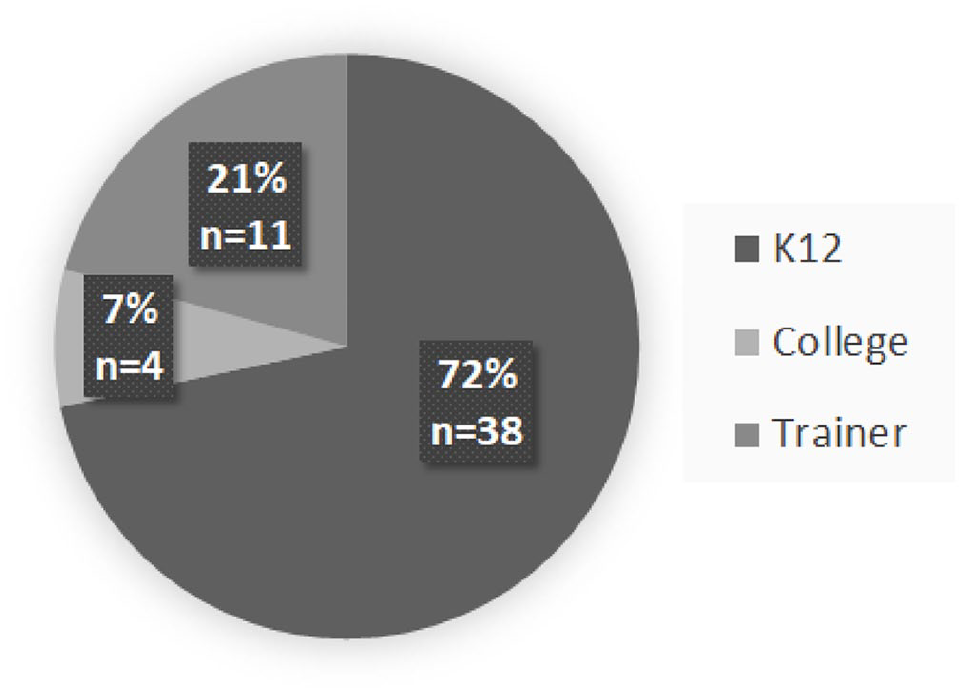
Distribution of educational levels represented in the job advertisements.
Next, we examined the selection criteria, or the characteristics and qualifications of ideal candidates, listed in the advertisements. Using LCT, we developed our own ‘translation device’ (Maton & Doran, 2017), reproduced in Table 1, and modeled our analysis after the procedures laid out in Lamont and Maton (2008). ). These researchers developed a simple translation device to analyse the four specialization codes in England’s national music curriculum. To do so, they first determined what it would mean for each Specialization code to be dominant in the curriculum documents; in other words, they defined the expected discursive manifestation of each code for their specific dataset. This entailed determining which skills, knowledge, dispositions, and attitudes would be emphasized or downplayed in the curriculum documents. Finally, the table offered examples of realizations of the codes within the actual dataset (p. 272).
Discursive manifestations of specialization codes in the job qualifications.
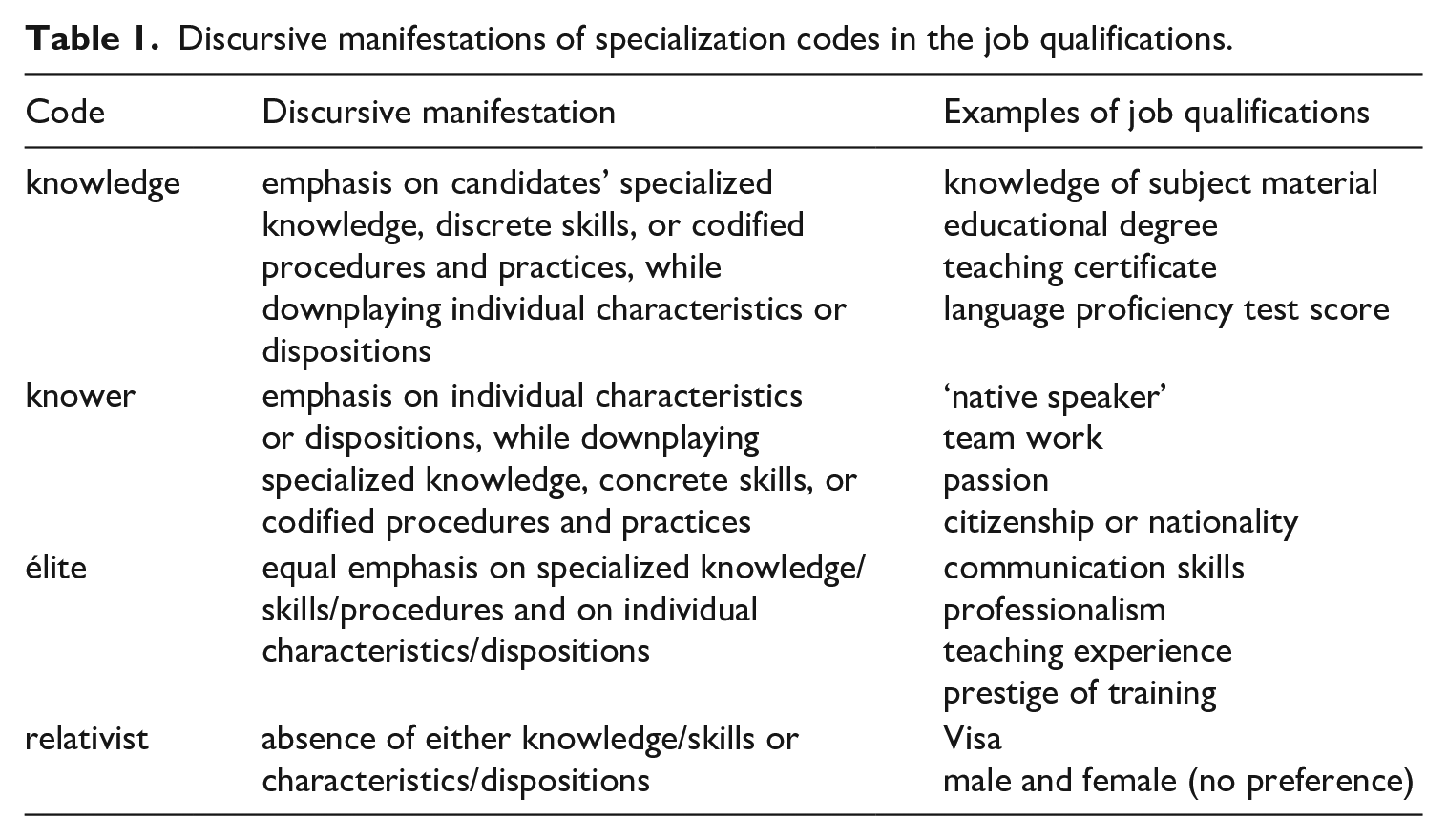
Similarly, to develop our ‘translation device,’ we first described how each of the four specialization codes (knowledge, knower, élite, relativist) would be discursively manifested in the candidate qualifications listed in ELT job advertisements. In essence, the specialization codes place varying degrees of emphasis on epistemic relations and social relations, and these relations are in turn manifested in the job advertisements through explicit references to either the candidate’s specialized knowledge and skills (epistemic relations) and/or their individual characteristics or dispositions (social relations). Because Specialization is actually a cline rather than a set of discrete categories, we examined each selection criterion listed in the job advertisements to determine whether it placed more emphasis on specialized knowledge and procedures or on personal characteristics, or on both/neither. Based on this analysis, we were able to categorize each qualification as reflecting either a knowledge code, knower code, élite code, or relativist code. It should also be mentioned that in our LCT coding we categorized the ‘native speaker’ qualification as reflecting a knower code because it grants legitimacy based on an individual’s place of birth and their participation in a particular linguistic community as a child. However, as we will argue in the Section VI, the ‘native speaker’ concept is in many ways contradictory and problematic.
Having coded the data, we examined how frequently the specialization codes and the ‘native speaker’ selection criterion appeared in the dataset and across individual advertisements. Finally, we qualitatively analysed the data to identify any other relevant and insightful trends or idiosyncrasies in the dataset. Our results are discussed in the following sections.
VI Results
1 Overview of codes
First, we calculated the total number of references to qualifications (n = 362) that occurred in the dataset, which comprised 53 job advertisements. Operationally we subscribed to the definition of ‘qualification’ as any quality, characteristic, skill, education or experience listed as a requirement for the job or as an advantage to the applicant.
As shown in Figure 2, knowledge codes made up 32% (n = 115) of all qualification instances, while knower codes made up another 44% (n = 159). Of all knower code instances, the ‘native speaker’ was listed a total of 35 times. Moreover, élite codes accounted for 21% (n = 76) of all references to qualifications, while relativist codes accounted for 3% (n = 12).
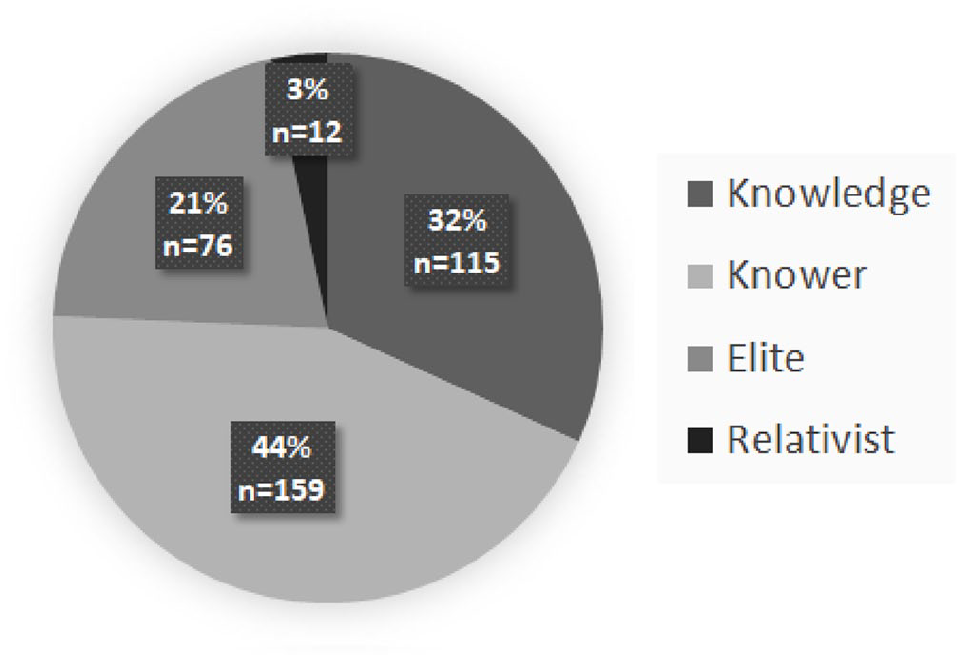
Distribution of specialization codes among all references to qualifications in the dataset.
2 Knowledge codes
In this and the following sections, we set out to find how many advertisements listed particular qualifications. Here, we only counted a qualification once per advertised position, no matter how many instances there were of this qualification in the same advertisement. In doing so, we wanted to shift focus and examine the dataset from the perspective of a potential job candidate, who is more interested in knowing how many positions require qualifications that make him/her a candidate or that exclude him/her.
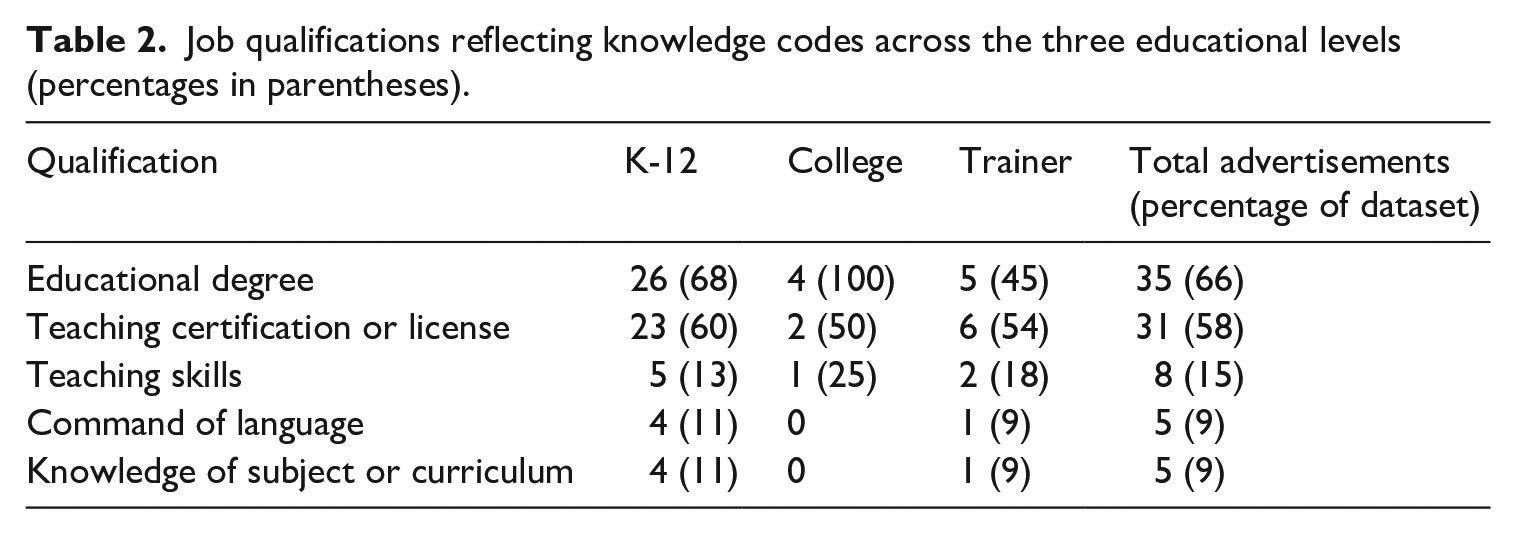
Through this analysis, we found that the most frequently listed knowledge code qualification, which emphasizes codified and specialized knowledge and skills, was educational degree (Table 2). This qualification appeared in 66% (n = 35) of advertisements. Of these, most K-12 positions sought candidates with a BA or a BEd, college-level positions required an MA or PhD, while test trainer advertisements listed a variety of educational requirements. The second most frequently listed qualification was teaching certification or license, such as DELTA, CELTA, or PGCE (Postgraduate Certificate in Education), which was included in 58% (n = 31) of advertisements. The next qualification was teaching skills, both general (such as classroom management skills) and more specific (such as the ability to teach particular courses); these appeared in 15% (n = 8) of advertisements, while command of language – conceptualized here as the ability to use the language (Oxford Learner’s Dictionary, n.d.) – was listed in 9% (n = 5) of advertised positions. Moreover, knowledge of the subject (presumably, English) and familiarity with the curriculum was listed in 9% (n = 5) of advertisements, while technology skills were listed in 7% (n = 4 each), and test scores in 6% (n = 3).
Job qualifications reflecting knowledge codes across the three educational levels (percentages in parentheses).
Further analysis of the data revealed that some advertisements also sought candidates with non-local knowledge: One position required ‘familiarity with the National Curriculum of England,’ four sought applicants with foreign educational qualifications (such as ‘Western Educated’ or ‘a Master’s degree from a recognised international university’), and a total of 15 advertisements listed a foreign teaching license, certification, or other qualification. Among these foreign qualifications, a few were phrased generally, such as ‘fully qualified from the UK,’ but most advertisements explicitly listed British qualifications, e.g. the Postgraduate Certificate in Education (PGCE), Qualified Teacher Status (QTS), and CELTA/DELTA, developed by the University of Cambridge.
3 Knower codes
Knower codes, which emphasize a person’s internal attributes and dispositions or their relationships to others, were also common (Table 3). Above all, the ‘native speaker’ qualification was listed as a requirement or preference in 58% of advertisements (n = 31), but it occurred most frequently in K-12 positions, 63% of which sought ‘native speaker’ candidates. Next, flexibility and/or adaptability was listed in 18% (n = 10) of advertisements, while ability to work as part of a team was listed in 16% (n = 9) of the advertised positions. Citizenship or nationality was used as a selection criterion in 12% (n = 7) of advertisements, and the listed countries were all in the inner circle; this qualification was phrased either directly, as in ‘Citizen of: US, UK, CAN, IRE, AUS, NZ, SA,’ or using the ‘native speaker’ qualification as a proxy for nationality, as in ‘Native English speaker (US, CAN, UK, IRE, SA, AUS, NZ).’ Interestingly, some advertisements also required candidates to submit copies of their passports or passport photos, and two stated that job interviews would be conducted in the UK or Ireland.
Job qualifications reflecting knower codes across the three educational levels (percentages in parentheses).
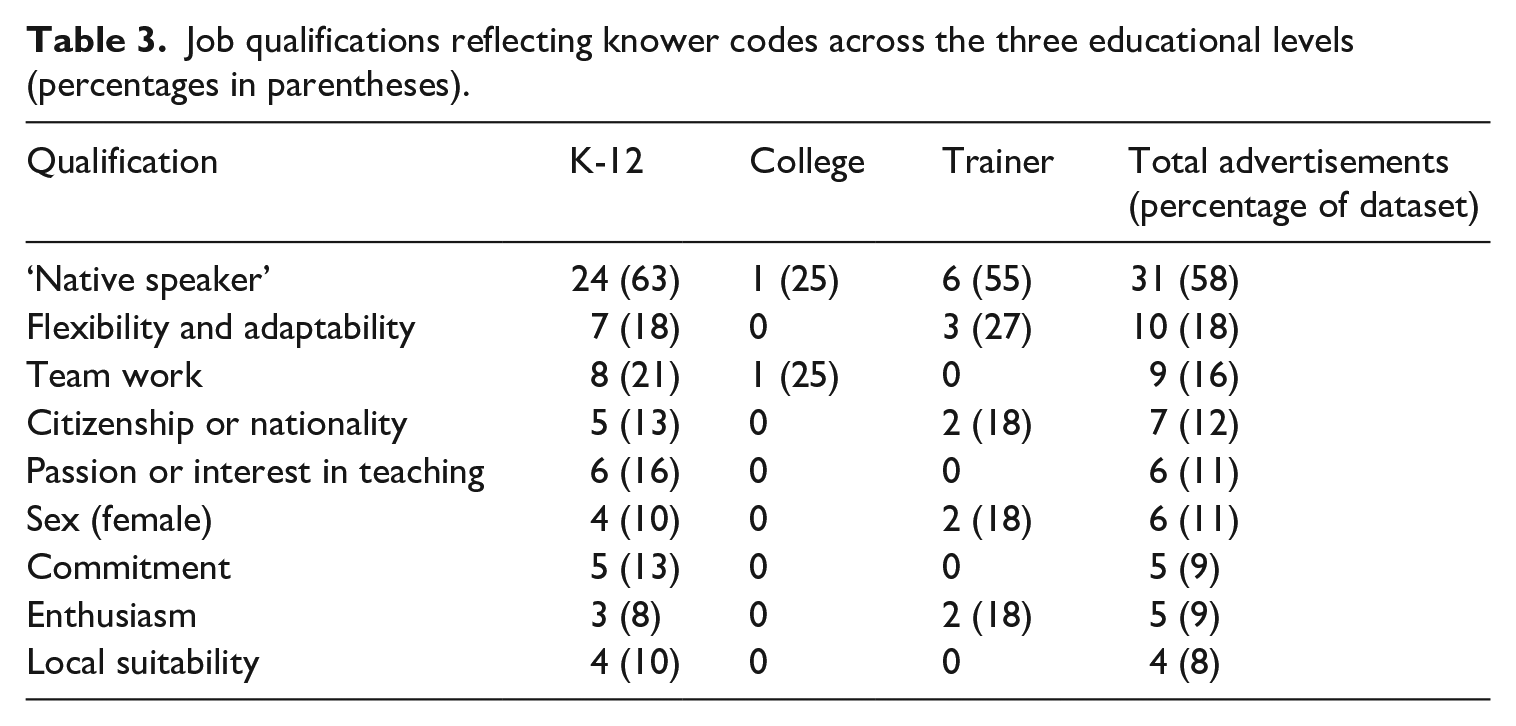
Moreover, passion for and interest in teaching appeared in 11% (n = 6) of advertisements, and another 11% of advertisements sought female candidates only. Finally, commitment and enthusiasm each occurred in 9% (n = 5) of advertisements, and suitability to work in the educational and cultural context of the UAE – such as ‘an aptitude to work with Arab youth’ or ‘awareness of and sensitivity to Islamic culture’ – appeared in 8% (n = 4) of advertisements.
4 Élite codes
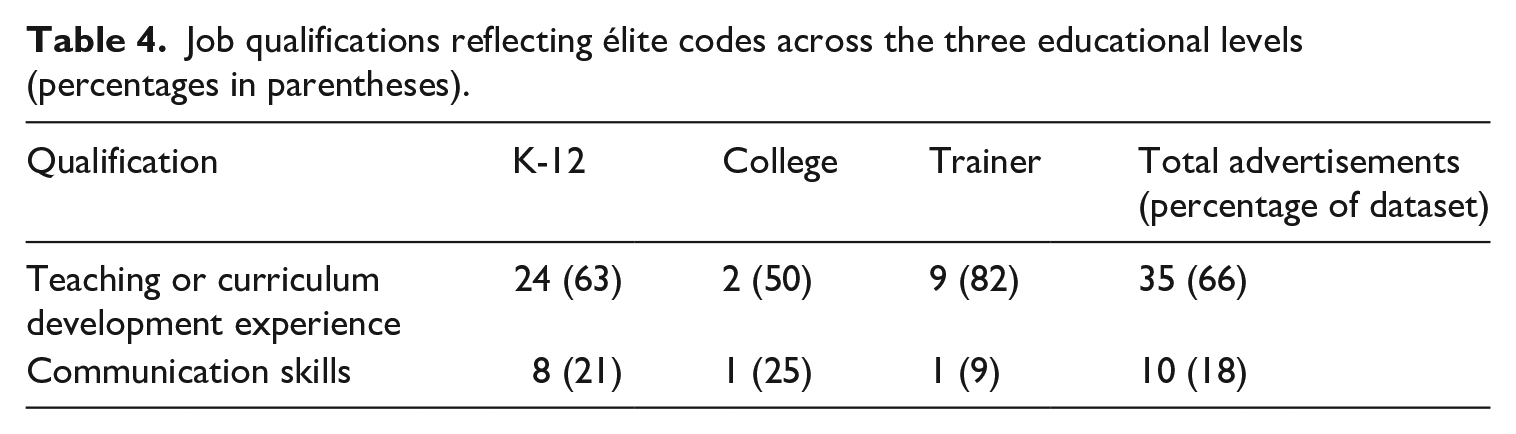
As shown in Table 4, the dataset included two recurring qualifications that we classified as élite codes, because they equally emphasized knowledge and candidate characteristics or relationships to others. First, teaching and curriculum development experience appeared in 66% (n = 35) of advertisements; nine of these positions also sought candidates with teaching or curriculum development experience from outside the UAE. For instance, the ads included ‘experience in a Native English speaking country,’ or ‘experience teaching in a British curriculum school.’ In contrast, only one advertisement desired candidates with prior teaching experience in the UAE. Besides prior experience, communication skills appeared in 18% (n = 10) of advertisements.
Job qualifications reflecting élite codes across the three educational levels (percentages in parentheses).
5 Relativist codes
Relativist codes, which emphasize neither relevant knowledge nor knower characteristics, appeared in 3% (n = 12) of advertisements. Examples of selection criteria reflecting these codes were criminal checks or the ability to withstand high temperatures, as well as Visa requirements. While a Visa can in some ways reflect an individual’s social status or place of birth and thus could be classified as a knower code, we regarded this qualification as irrelevant to the candidate’s teaching abilities and thus an example of a relativist code.
VII Discussion
Our results reveal several noteworthy trends. As outlined in Section VI.1, when counting all references to qualifications in the 53 advertisements, we found that knower codes appeared more frequently (44%) than knowledge codes (32%), élite codes (21%), or relativist codes (3%). This distribution of the four specialization codes suggests that ELT job advertisements place more emphasis on a candidate’s personal attributes, dispositions, and interpersonal relations than on specialized knowledge, procedures, or skills. To better understand this finding, it is useful to examine how many advertisements in the dataset included specific selection criteria, which we overviewed in Sections VI.2–VI.5.
Our analysis found that the most frequent job qualifications reflecting knowledge codes were the educational level (66% of advertisements) and teaching certification or license (58%). This finding echoes Mahboob and Golden’s (2013), who reported that job advertisements from the Middle East tend to include more and higher professional requirements than advertisements from East Asia. At the same time, other qualifications that emphasized knowledge were much less common in our dataset: For example, teaching skills appeared in only 15% of advertisements, subject/curriculum knowledge in 9%, and command of language in 9%. This finding is rather surprising, as it is reasonable to expect instructors at all educational levels to possess key teaching skills and knowledge of the subject and, in the case of English language teachers, a strong command of the target language. One explanation for these results is that employers regard mastery of subject content and teaching skills as demonstrated indirectly through other qualifications, such as educational degree and teaching license, respectively. In addition, command of language can be assessed through scores on language proficiency tests, but these were only included in 6% of advertisements.
Moreover, we found that the advertised positions placed more emphasis on non-local than on local qualifications. In particular, some advertisements sought candidates who were familiar with British schools, who had foreign educational degrees, or who had a teaching license or other qualifications from the UK, the West, or from a list of acceptable inner circle countries. These trends can be in part explained by the fact that many of the advertised K-12 positions were at schools and colleges that used a British or a US curriculum or that were described as ‘international,’ ‘global,’ or as using a ‘Western curriculum.’ Further evidence of this preference for foreign qualifications can be found by examining the types of prior teaching and curriculum experience desired by employers. Because experience reflects an élite code, it suggests that a candidate is legitimized based on both personal/interpersonal criteria (interaction with key stakeholders, e.g. students and other teachers) and on the possession of relevant knowledge and skills (presumed to have been acquired through interacting with key stakeholders). Thus, examining the types of stakeholders and skills mentioned alongside this selection criterion can reveal employers’ assumptions about how a teacher is socialized into their community of practice, and where and with whom such socialization should ideally occur. In our dataset, teaching or curriculum development experience appeared in 66% of advertisements, or in 35 different job postings. Of these 35 postings, nine specifically sought out candidates with experience from outside the UAE, while only one advertisement out of the 53 listed teaching experience in the UAE as a desired qualification. Nonetheless, the fact that the majority of the advertisements sought candidates with prior experience further demonstrates that the selection criteria are higher in the Middle East than they are in East and Southeast Asia; in Ruecker and Ives’ (2015) study, for example, only 14% of recruitment websites listed teaching experience as a qualification.
Besides knowledge codes and élite codes, knower codes also revealed employers’ reliance on foreign qualifications. First, 58% of all advertisements required or preferred ‘native speaker’ candidates; 63% of K-12 positions included this selection criterion, as did 24% of college and 55% of trainer positions. Moreover, 12% of all advertisements required candidates to be citizens or residents of inner circle countries. Interestingly, even those advertisements that did not explicitly seek ‘native speakers’ sometimes included ‘a second or even third degree of discrimination’ (Selvi, 2010, p. 167), like citizenship status or the requirement to submit copies of passports or passport photos. In addition, two advertisements that did not explicitly list citizenship or ‘native speaker’ qualifications stated that job interviews would be conducted in the UK or Ireland, which presupposes that the applicant must be residing in or able to travel to these locations. Indeed, one advertisement encouraged candidates to apply ‘if [they] are interested in the opportunity to move to UAE,’ suggesting that the applicant would be relocating to the UAE from another country. Interestingly, only 8% of advertisements listed local suitability – such as awareness of local cultural and professional norms – as a desired qualification.
The prevalence of foreign qualifications and of the ‘native speaker’ qualification in the ELT job advertisements we examined confirms previous studies, which found that the ‘native speaker’ qualification is frequently listed in job advertisements in various countries (Alghofaili & Elyas, 2017; Alshammari, 2020; Esseili, 2020; Fithriani, 2018; Karmani, 2005; Mahboob & Golden, 2013; Rivers, 2016; Ruecker & Ives, 2015; Selvi, 2010). The trends in our study can be partially explained in light of the recent push toward Arab–English bilingual education and literacy in the UAE (Abu Dhabi Educational Council, 2018) and, more globally, the growing prestige of Western, inner circle linguistic and educational models (Phillipson, 1992; Weber, 2011). Thus, by hiring foreign, inner circle teachers, UAE institutions may be attempting to increase their prestige, and key stakeholders – including employers and students – may indeed perceive foreign, ‘native speaker’ teachers as better equipped to teach English than ‘non-native’ teachers. Clearly, schools using British or international curricula may expect teachers to be familiar with or have experience with these curricula, however, we argue that the ‘native speaker’ requirement listed in 58% of the advertised positions is based on flawed assumptions. Such assumptions do not exist in a vacuum, but rather they are informed by a broadly trending ELT industry that is ‘heavily centralised and firmly rooted in the core English-speaking countries of the West’ (Karmani, 2005, p. 93). What is more alarming is that ‘it (the West) exclusively determined which language components got taught, which approaches were best, what the language learner was required to do, which textbooks were appropriate and so forth as if local and regional Arab populations had virtually no idea at all’ (p. 93).
As revealed by Legitimation Code Theory, the ‘native speaker’ qualification demonstrates a knower code orientation used by ELT job recruiters, because it legitimizes a teacher by virtue of being born into an English-speaking community; because of this geographical happenstance, the individual is presumed to have acquired tacit knowledge of the language, such as the ability to make grammatical acceptability judgments – often called ‘intuition’ – as well as the ability to seamlessly produce fluent speech. However, as Davies (2004) points out, the distinction between ‘native’ and ‘non-native’ speakers is circular because it posits that a ‘native speaker’ is someone who acquired a special kind of competence in their language as a child, and the only thing that makes this competence special is that it is acquired in childhood. Evidence in support of Davies’ argument is found in both anecdotal and empirical observations (Birdsong, 1992) which suggest that some ‘non-native’ speakers are able to pass for ‘native’ speakers. Consequently, childhood acquisition cannot be a precondition for acquiring what is traditionally regarded as ‘native’ competence, which means there is no empirical foundation for the claim that a ‘native speaker’ is by default a superior user of the language than a ‘non-native’ speaker.
The reason that we sometimes ‘cannot finally and absolutely distinguish non-native speakers from native speakers except by autobiography’ (Davies, 2004, p. 438) is because the commonly accepted distinction relies solely on a psycholinguistic understanding of language acquisition and misconstrues language competence as an inborn or genetic ability – a knower code. It is this definition of linguistic competence that informs the native-speakerist belief, which by default casts a ‘native speaker’ as a more legitimate knower and user of the language than a ‘non-native speaker.’ In contrast, language acquisition according to Davies always has a sociolinguistic or cultural component, because it is through exposure to the target language that an individual, no matter their age, learns the language. In other words, linguistic competence is ultimately learned, just like other types of knowledge. Thus, based on our LCT analysis we argue that it is more accurate to conceptualize linguistic competence as a type of knowledge code, to emphasize that it does not depend on an individual’s personal characteristics or inborn attributes.
In contrast, when linguistic competence is conceptualized as a knower code, certain kinds of knowers who are not regarded as legitimate can be excluded from participating in the field. Because knower codes base legitimacy on an individual’s attributes, they inherently emphasize differences rather than similarities between people and can lead to the kind of binary, excluding terminology that has long characterized the field of ELT (Butcher, 2005; Menard-Warwick, 2008) and that, in effect, prevents a large group of teachers and practitioners from being regarded as legitimate due to circumstances of their birth. This contributes to promoting discrimination against and marginalizing of ‘non-native’ English teachers who mostly belong to the local and Arab population. Furthermore, Maton (2014) cautions that the dominance of knower codes can potentially lead to ‘ever-smaller categories of knowers’ (p. 39) within a field – like when ideal teacher candidates in ELT job advertisements are also expected to be citizens of a small number of countries, which recruiters can then use to presume a candidate’s ‘native speaker’ status or lack thereof (Lowe & Kiczkowiak, 2016). In sum, we argue that the ‘native speaker fallacy’ (Phillipson, 1992, p. 185) is problematic in evaluating an English language teacher’s effectiveness because the ‘native’/‘non-native’ distinction reflects a knower code orientation that erroneously construes language competence as a psycholinguistic or biological trait, rather than a type of knowledge that can be learned by anyone.
Even though previous research has shown that many students value and enjoy courses taught by ‘non-native’ English speakers (Ling & Braine, 2007; Mahboob & Golden, 2013), the findings of our study suggest that many employers in the UAE still insist on listing the ‘native speaker’ as an important qualification in screening ELT job candidates. There is growing evidence in research that these trends reflect linguistic imperialism, neocolonialism, marginalization and inequity which are reinforced by several fallacies, including the ‘native speaker’ fallacy and a problematic distinction between ‘native’ and ‘non-native’ speakers (Alshammari, 2020; Esseili, 2020; Karmani, 2005; Phillipson, 2016). This binary thinking about language users reflects a knower code orientation that erroneously construes language competence as an inborn characteristic, rather than a type of knowledge, and consequently, is not an accurate representation of a language teacher’s effectiveness. At the same time, our results also indicate that employers in the UAE tend to look for candidates with higher professional qualifications – such as educational degree, teaching license, and teaching experience – than employers in other regions, notably East and Southeast Asia (Mahboob & Golden, 2013; Rucker & Ives, 2015). Despite all, this is an encouraging finding, as raising the minimal qualifications for potential candidates helps challenge the image, reinforced by some advertisements and recruiters in Asia, that ideal ELT candidates are ‘young, inexperienced, and enthusiastic’ (Rucker & Ives, 2015, p. 744).
Whether framed as an ideology or social problem, native-speakerism can potentially encourage practices that marginalize and stigmatize a large group of qualified teachers, which in turn reinforces social injustice and inequality in education. To challenge these practices, we argue that key ELT stakeholders, including the hiring committees at educational institutions in the UAE and elsewhere, should adopt a knowledge code orientation that evaluates English teachers’ qualifications based on criteria other than their place of birth, including proficiency in the target language and pedagogical expertise. Indeed, many ‘non-native’ English-speaking teachers justify their legitimacy by emphasizing the knowledge of the target language that they had to explicitly learn and that, they argue, makes them qualified to teach English (Braine, 2010; Joseph & Ramani, 2006; Kasztalska, 2018). Thus, job advertisements should place more emphasis on qualifications like command of language or measurable assessments of language proficiency – and ideally, these should also take into consideration local linguistic and sociolinguistic norms, as per the recommendations of World Englishes scholars (Jenkins & Leung, 2017). In addition, we believe that effective teachers of any subject should also possess relevant teaching skills and strategies, which job recruiters should also deem as important in evaluating candidates. After all, Canagarajah (1999) reminds us that language teaching is not just an art, but in many ways also ‘a science, and a skill that requires complex pedagogical preparation and practice’ (p. 80).
VIII Limitations
In an attempt to maximize our dataset, we spent several months collecting the job advertisements from a number of different websites. As a result, although we removed any clear duplicates from our final dataset, there was increased likelihood of duplicates, especially since some advertisements used very similar, generic-sounding language. Although we made sure that all advertisements in the dataset clearly differed in terms of candidate requirements, we cannot fully discount the possibility of duplicates. Another limitation of this study is the relatively small dataset, which was due to the small number of advertised ELT positions in the UAE that met our criteria, but at the same time the current study is contextualized within the broader literature on this topic and indeed supports a lot of the research on ‘native-speakerism’ in ELT job recruitment discourse. The final limitation of this study is that both of the authors had limited prior experience in using LCT for research purposes. Although we had closely studied the available LCT literature, to ensure the soundness of our translation device and of our analysis, we consulted outside experts at different stages of our research and used their feedback in refining our methodology.
IX Conclusions
It is important to discuss the implications of native-speakerism on the UAE educational system. First, students who identify or are perceived as ‘non-native speakers’ may refrain from pursuing English language teacher preparation programs, because native-speakerism makes it impossible for them to achieve the highest competence in English through formal college education. A personal observation of one of these authors indicates that student enrollment is indeed decreasing in some English university programs in the UAE. Second, the wider significance of job recruitment discourse should not be overlooked, because this discourse in particular can play a crucial role in constructing knowledge across society (Pandey, 2000, as cited in Rucker & Ives, 2015). In particular, native-speakerism in job advertisements may be a reflection of not only the local job market demand but also local and global socio-political ideologies that shape this demand, including linguistic imperialism, which ‘serves to establish inequalities between native speakers of English and speakers of other languages, and teachers from different backgrounds, irrespective of their qualifications’ and is ‘clear evidence of linguicism structurally and ideologically’ (Phillipson, 2016, p. 86). Thus, the prevalence of the ‘native speaker’ qualification, as demonstrated in our dataset, can, in effect, normalize discriminatory hiring practices in the UAE and beyond, as suggested by Rivers’ (2016) recent research of job advertisements from Japan. As Rivers reports, the ‘native speaker’ qualification was expressed using ‘simplified discursive reference,’ which ‘implies that the native-speaker criterion requires no additional description, definition or clarification’ (p. 77) and thus reinforces the perceived naturalness of the ‘native’/‘non-native’ speaker distinction.
As far as LCT is concerned, more recently Maton (2018) suggested that there can be struggles between agents over which specialization codes are active in a specific phenomenon; a situation that can lead to ‘code match’ or ‘code clash’ (p. 2057). Besides, it is possible to see a ‘code shift’ in which a dominant code in a certain situation changes over time. This raises the question whether employment policies in the ELT field will be geared toward a code shift that brings in justice to all agents. Such a code shift can be brought about through a collective action that should be taken by policy makers, ELT professionals, employers, and social justice advocates with the goal of changing not only top-down, institutional discourses and practices, but also the misconceptions held by other key stakeholders, including students (Fithriani, 2018).
In conclusion, the ELT job recruitment discourse echoes ideologies, be it social, political, or economic, that shape the industry. Such ideologies mirror the extent to which the hegemony is well embraced broadly in the UAE context where countries of the ‘center’ are regarded to be superior linguistically, politically, and otherwise. As researchers, we attempt to challenge such ideologies by revealing what is invisible through adopting novel theories, evidence and analysis. Given the growing evidence from research that job advertisements may promote discriminatory and unjustified hiring practices, changing this discourse is only one step in challenging these unfair practices.
X Recommendations
We argue that English language teaching should include a stronger knowledge code orientation or even an élite code perspective, and recognize that teaching is in large part composed of (though not necessarily reduced to) discrete knowledge and identifiable skills that can, and indeed should, be explicitly learned and honed by teachers, as well as evaluated by employers. ELT job advertisements should therefore expect candidates to be familiar with research on best teaching practices and be able to demonstrate these practices in their own classrooms, be capable of designing effective course and managing classroom discussions, as well as have knowledge of the local educational and cultural contexts and norms. Not to do so risks further framing ELT as solely a knower code, which can lead not only to discrimination against qualified ‘non-native speaker’ candidates, but also to a cadre of individuals who were hired solely or primarily based on their place of birth and are professionally unprepared. This can, in turn, negatively impact not only students, who are not getting the best education, but can also put into question the existence of teacher education programs (Mahboob & Golden, 2013).
The results of the current study reveal one facet of a macro trend of linguistic bias traced back to the imperialist influence of socio-economic and political powers. A comprehensive panoramic view of the broader scene can be achieved through further research that elicits data directly from key stakeholders, such as education and language policy makers, school owners and principals, students and parents. Given the narrow scope of the current work, this was not possible, but such research is necessary to promote non-native speaker teachers’ advocacy, and raise awareness about the social injustice and inequity caused by linguistic hegemony.
