







Abstract
The past decade has witnessed a surge of research interest in diverse emotions that foreign/second language (L2) learners experience. However, research on L2 boredom is just starting. The current study focuses on foreign language learning boredom (FLLB) and foreign language enjoyment (FLE), and examines how they are associated with a wide range of learner-internal variables and teacher-centered variables. A total of 868 current university students in China studying English as a foreign language (FL) participated in a questionnaire survey. Correlation results show the following: (1) there was a strong negative correlation between FLE and FLLB; (2) FLE was positively linked to multiple learner-internal variables (self-perceived FL proficiency, relative standing among peers, attitudes towards the FL, the teacher, and FL-related culture) and teacher-related variables (the use of FL in class, enthusiasm, predictability, and friendliness), while negatively linked to learner age and onset age of FL learning; (3) these significant correlates of FLE were linked to FLLB in an opposite way. When the significant variables were entered into the regression models, attitudes toward the FL stood out as the strongest learner-internal predictor of both FLE and FLLB, while teacher friendliness was shown to be the strongest teacher-related predictor of both emotions. The findings show that FL emotions are contingent on the interplay between learners and teachers. In accordance with the findings, I recommend that enjoyment-boosting and boredom-reducing activities be incorporated into FL classrooms.
Keywords
I Introduction
Second Language Acquisition (SLA) was traditionally seen as a largely emotionless process driven by learners’ brains (Dewaele & Li, 2020; Prior, 2019). Although some researchers had skirted around the edges before 2012, attention to learner emotion had been limited to foreign language anxiety (Li, 2021a; MacIntyre, 2017). Other emotions were only considered as integral constituents of motivation and figured at item-level in the instruments. A more systematic exploration of the role of diverse learner emotions in SLA has only started since the introduction of positive psychology to SLA (Dewaele & MacIntyre, 2014; MacIntyre & Gregersen, 2012). Inspired by its foundation theory, the broaden-and-build theory (Fredrickson, 2003), a group of SLA researchers started to acknowledge the distinct functions of positive emotions and negative emotions in SLA (MacIntyre & Gregersen, 2012). It is argued that learner emotion should be investigated in its own rights rather than as a subsidiary to motivation (Dewaele & Li, 2020). In addition, a more holistic take is needed to include diverse emotions beyond foreign language anxiety (Dewaele & MacIntyre, 2016).
There is obviously a growing number of empirical investigations into a wider range of L2 emotions in response to the holistic view of emotions (Dewaele, 2019). Positive emotions empirically investigated include enjoyment, joy, pride, interest, hope and love, and negative emotions include anxiety, anger, boredom, guilt and shame (e.g. Elahi Shirvan & Taherian, 2021; Dewaele et al., 2018; Khajavy, MacIntyre & Barabadi, 2018; Li, Dewaele & Jiang, 2020; MacIntyre et al., 2019; Pawlak et al., 2020a; Teimouri, 2018).
However, despite the growing number of empirical investigations into learner emotions, attention has been focused on certain emotions, especially the combination of foreign language enjoyment (FLE) and foreign language anxiety (FLA), while other prevalent emotions including boredom remain to be explored in greater detail (Li & Dewaele, 2020; Pawlak et al., 2020a). Such research is vital because boredom permeates different educational contexts and has deleterious effects on SLA (Li & Han, 2022; Li & Wei, 2022). The present study is thus focused on foreign language learning boredom (FLLB), in combination with FLE, investigating their associations with a wide range of learner-internal variables and learner-external variables.
II Foreign language enjoyment
It is safe to say that FLE is the most extensively studied positive emotion in the field of SLA (Dewaele & Li, 2020). Inspired by the broaden-and-build theory (Fredrickson, 2003), MacIntyre and Gregersen (2012) argued that positive emotions and negative emotions coexist with each other, functioning differently, and thus should be examined holistically. In response, enjoyment was chosen as a positive counterpart of FLA because it constitutes the core element of flow, a foundation concept of positive psychology (Dewaele & MacIntyre, 2014). Enjoyment goes beyond a pleasant feeling of pleasure and relates to personal growth (Czikszentmihalyi, 1990).
In terms of the conceptualization of FLE, Dewaele and Li (2021) adopted the three-dimension taxonomy of academic emotions assumed by the control-value theory in educational psychology (Pekrun & Perry, 2014): (1) object focus (activity-related vs. outcome-related), (2) valence (positive/pleasant vs. negative/unpleasant), and (3) arousal (high vs. low). Specifically, FLE is a pleasant feeling that arises from ongoing FL activities or tasks and that activiates learners to be more engaged or more willing to participate in the learning environment. Concerning the measurement of FLE, Dewaele and MacIntyre (2014) developed the FLE Scale (FLES). It consists of 21 items capturing various aspects of enjoyment including fun, interest, creativity, sense of meaning, joy, pride and happiness in relation to learners, peers and teachers (Li et al., 2020; Zhang & Tsung, 2021). Based upon an international sample of 1,742 multilinguals, Dewaele and MacIntyre (2016) confirmed two factors underlying FLE, namely FLE-Social and FLE-Private. The FLES has been modified, validated and applied in various FL contexts (e.g. Botes, Dewaele & Greiff, 2021; Dewaele, Magdalena & Saito, 2019; Elahi Shirvan & Taherian, 2021; Li et al., 2020; Resnik & Dewaele, 2019; Saito et al., 2018). Li, Jiang & Dewaele (2018), for example, shortened the FLES to 11 items and confirmed three factors underlying the construct of FLE, namely FLE-Private, FLE-Teacher, and FLE-Atmosphere based on the data obtained from a sample of 1,718 Chinese secondary students. Qualitatitive analysis of 64 participants’ responses to open questions further supported the three factors. FLE was found to occur when an individual achieved something, pushed his or her limits, experienced something novel, challenging or made positive changes. FLE also occured when an individual felt recognized and supported by the teacher or felt appreciative of certain pedagogical practices, especially in an engaging, positive atmosphere with cooperative peers. All these studies converge to indicate that FLE is co-shaped by learner-internal as well as learner-external factors at the conceptual level (Li et al., 2018).
III Foreign language learning boredom
Boredom is an unpleasant emotional or psychological state associated with ‘an inner sense of emptiness, apathy and lack of purpose’ (Zawodniak, Kruk & Chumas, 2017, p. 426). It is one of the most commonly experienced academic emotions in schools (Goetz & Hall, 2014). Interestingly, it is a silent emotion that teachers have not paid much attention to. This may be because boredom does not cause disciplinary problems or misbehaviors as other emotions do, for example, anger and anxiety (Macklem, 2015). The prevelance of boredom has been documented in educational research (Nett, Goetz & Hall, 2011). In a context of English as a foreign language (EFL) in China, Li, Dewaele & Hu (2021a) found that 610 out of 659 (92.6%) university students reported their boredom experiences induced in relation to English learning. Despite the prevelance of boredom, compared to FLE and FLA, research interest in boredom is just starting (Li, 2021b; Pawlak et al., 2020a). Relevant studies have been conducted mainly in two FL populations, namely English majors in Poland and Iran (Derakhshan et al., 2021; Kruk, 2022; Kruk et al., 2021; Pawlak et al., 2020a, 2020b, 2020c, 2020d; Pawlak et al., 2021; Zawodniak et al., 2017) and non-English majors in China and Thailand (Dewaele & Li, 2020; Li, 2021b; Li & Dewaele, 2020; Li et al., 2021a; Li & Han, 2022; Nakamura, Darasawang & Reinders, 2021).
As opposed to offering an operational definition of boredom, Li et al. (2021a) adopted the three-dimension taxonomy of the control-value theory (Pekrun & Perry, 2014) to conceptulize ‘foreign language learning boredom’ (FLLB) along three dimensions, namely object focus, valence, and arousal. More specifically, the qualitatitive data of Chinese university students showed that FLLB is a negative academic emotion which deactivates them from ongoing FL learning activities which are typically viewed as over-challenging, under-challenging, uninteresting, irrelevant, unimportant, dull or tedious. Notably, we should try to avoid an over-simplistic understanding of its dimensionality. For example, regarding the arousal of boredom, Davies and Fortney (2012) also argued that one can force himself/herself to stay activated and engaged in a highly boring activity or task, if he/she perceives it as worth doing.
Based on this three-dimension conceptualization of FLLB, Li et al. (2021a) further develeped and validated the Foreign Language Learning Boredom Scale (FLLBS) with two samples of 808 and 2,223 Chinese non-English majors. Seven factors were uncovered including ‘(1) Foreign Language Classroom Boredom, (2) Under-Challenging Task Boredom, (3) PowerPoint Presentation Boredom, (4) Homework Boredom, (5) Teacher-Dislike Boredom, (6) General Learning Trait Boredom, and (7) Over-Challenging or Meaningless Task Boredom’ (p. 15). These factors suggest that FLLB concerns both general trait-like boredom in relation to FL learning (e.g. Factors 1 and 4) and state boredom in various learning situations including boredom arising both in and out of the classrooms (e.g. Factors 3 and 4). Like FLE, the conceptual factors also indicate that FLLB is subject to both learner-internal and learner-external variables.
IV Foreign language (learning) enjoyment and boredom
A number of studies have connected FLE to FLA, confirming that they are negatively related to each other in various FL contexts (Dewaele et al., 2018, 2019; Li & Xu, 2019; Li et al., 2020; Resnik & Dewaele, 2019). They were even metaphorically called the ‘emotional feet’ of every language learner (Dewaele & MacIntyre, 2014; 2016). However, little is known about how FLE is linked to other negative emotions such as FLLB. Notably, in a recent study, Li and Han (2022) found that the relationship between FLLB and FLE (r = −.534, p < .001) was much stronger than that between FLA and FLE (r = −.299, p < .001) in a context of online EFL learning at the tertiary level in China. The contrast was explained by their conceptual structures. According to three-dimension taxonomy of the control-value theory, Li and Han (2022) argued that FLLB is a better negative counterpart of FLE than FLA. More specifically, both FLE and FLLB are achievement emotions with an object focus on ongoing activities, while FLA has an object focus on achievement outcomes. The conceptual contrast necessitates further empirical explorations of FLE and FLLB in a single study.
V The person-environment interaction view in psychology and SLA
In the past decade, a growing number of researchers in personality psychology and social psychology have moved beyond the decades-long ‘person–environment debate’ to the dedication of person–environment interaction and integration (e.g. Donnellan, Lucas & Fleeson, 2009; Funder, 2008; Krueger, 2009). According to this interactive view, an individual’s dispositions and characteristics are interconnected and interacting with the environment, affecting his or her behaviors and psychological experiences. It can be thus inferred that an individual’s emotional experiences of interest are contingent on a non-additive combination of person-environment attributes (Funder, 2008).
Influenced by the postmodernism, SLA research has experienced a similar shift from the traditional context-independent focus on individual difference (ID) factors to an ID-environment interaction view (Dewaele, 2009; Dörnyei & Ryan, 2015; Ushioda, 2009). Such an interaction view is crucial in investigating how learner emotions are co-shaped by learner-internal as well as learner-external variables (Gkonou, 2017; Li, Huang & Li, 2021b).
VI Learner-internal and learner-external factors of foreign language enjoyment
Echoing this person-environment interaction view, Dewaele et al. (2018) took the initiative to investigate the predictive effects of both learner-internal and learner-external factors of FLE, along with FLA, based on a sample of 189 high school students in Greater London with different FLs. The independent variables of both emotions were a variety of learner variables (i.e. age, gender, multilingualism, FL level, relative standing in FL class, attitude towards FL, and attitude towards FL teacher) as well as teacher-related variables (e.g. FL use frequency by FL teacher, proportion of time spent on listening, speaking, reading, and writing, and teacher predictability). In terms of learner variables, age predicted the positive emotion of FLE in a non-linear way but not FLA. Female participants were found to experience high levels of both emotions. Self-perceptions of one’s own English proficiency level and relative standing among peers in English class were found to be linked to higher levels of FLE and lower levels of FLA. Participants’ attitudes towards the FL and the FL teacher were found to be positively related to the level of FLE, while only the former predicted FLA negatively. In terms of teacher variables, none of them predicted FLA. By contrast, significant teacher-related predictors for FLE included FL use frequency in FL classes, time spent on speaking as well as teacher predictability. Generally, those teachers who were more favored, used FL more frequently in class, and spent more time in speaking tended to induce more pleasant emotions of FLE, while those who were more predictable in class tended to arouse less FLE.
In a similar vein, Jiang and Dewaele (2019) investigated FLE, FLA and their links with a variety of learner and teacher variables based on a sample of 564 first-year undergraduate students in China. In terms of learner-internal variables, quantitative results showed that gender had no effect on either FLE or FLA, while English proficiency level, relative standing among peers, as well as attitude towards English were all significant predictors for both emotions. More specifically, those participants who perceived themselves as more proficient in English or/and ranking higher in English among peers, or/and had more positive attitudes towards English (teacher) were more likely to experience higher levels of FLE and lower levels of FLA. The following teacher variables were found to be significantly related to both emotions, namely teacher strictness, teacher friendliness, and teacher joking. Specifically, those participants who perceived their English teacher as more favorable, less strict, friendlier and more humorous tended to report higher levels of FLE and lower levels of FLA. Interestingly, different from the findings in the study by Dewaele et al. (2018), Jiang and Dewaele (2019) revealed in the Chinese EFL context that teacher predictability was negatively related to FLA, while not significantly related to FLE. In addition, Jiang and Dewaele (2019) concluded that FLE tended to be induced by teacher-centered variables, while FLA was more likely to be evoked by learner-internal variables.
In another study, Dewaele et al. (2019) also revealed a set of teacher variables as significant predictors for both emotions among a group of 210 EFL learners within the Spanish classroom context. Specifically, FLE was positively linked to teacher friendliness, teacher age, and FL use by the teacher, while negatively linked to teacher accent. In contrast, FLA was found to be positively related to teacher strictness, while negatively related to FL use by the teacher. No significant correlation was found between the two emotions and teacher gender as well as the status of the English teacher as L1 or LX user of English.
Based on a sample of 1,718 Chinese secondary school students and a sample of 1,295 Chinese university students, Li, Huang and Li (2021b) examined the predictive effects of classroom environment and individual trait emotional intelligence on FLE and FLA. The quantitative results in both EFL contexts showed that those participants perceiving themselves as more emotionally competent and/or learning in a more positive and engaging classroom environment tended to feel more FLE and less FLA. Furthermore, in both samples, FLE had a stronger link with classroom environment, while FLA had a stronger link with trait emotional intelligence.
VII Learner-internal and learner-external factors of foreign language learning boredom
There are a few recent studies investigating the sources of FLLB. Zawodniak and Kruk (2018), for example, found in a group of 15 Polish English majors that their boredom was evoked in response to both individual predispositions and varying situational factors. Specifically, learner-internal factors inducing boredom concerned an individual’s interest, need, learning autonomy or physical state. For example, if an individual’s need or interest was not satisfied, he/she may feel bored easily. Teacher characteristics triggering boredom included monotony, repetitiveness, lack of feedback or energy/enthusiasm for teaching, limited repertoire of teaching tools, and undesirable personalities (e.g. controlling style in class). Finally, task-related factors for boredom related to the usefulness, difficulty, relevance, and novelty of the assigned tasks and the time allotted to them. For example, if a learner found the task useless, overwhelmingly difficult or too easy, repetitive or lasting too long, he or she may feel bored easily. In another investigation into boredom sources among 11 Polish English majors, Pawlak et al. (2020c) also found that their boredom experiences were shaped by the interplay between individual dispositions (e.g. boredom proneness and FL proficiency) and environmental factors (e.g. teacher characteristics including teaching style, skill, repertoire, and personality).
Li (2021a, 2021b) is among the very few large-scale investigations into boredom and its antecedents using a mixed methods approach. Quantitative data of 2,002 Chinese non-English majors and interview data from 11 students and 11 English teachers showed that boredom was evoked when FL learners perceived the language learning tasks or activities at hand as over-challenging or under-challenging, or as inherently uninteresting, meaningless, irrelevant or useless for language development or academic success. However, the large-scale study is solely focused on how individual appraisals are related to boredom, neglecting learner-external variables.
Based on the same dataset, Dewaele and Li (2021) further focused on the effect of teacher enthusiasm on students’ enjoyment and boredom. The large-scale quantitative results show that students’ perceptions of teacher enthusiasm predicted student enjoyment positively (r = .613, p < 0.001) and student boredom negatively (r = −.247, p < 0.001). The results indicate that teacher emotion is contagious, affecting student emotion.
Extant studies indicate that FLLB is orchestrated by the interplay of a constellation of learner-internal factors and learner-external factors, mirroring the findings about factors of FLE and FLA (Dewaele et al., 2018; Dewaele et al., 2019; Jiang & Dewaele, 2019; Li et al., 2021b). However, existing evidence on the learner-internal and learner-external factors of boredom has been primarily based on qualitative data or/and quantitative data obtained from very small samples (Nakamura et al., 2021; Pawlak et al., 2020a, 2020c, 2020d). In addition, most of such investigations into boredom sources were conducted in a single FL context, namely the learning of English for English majors in Poland, pointing to the need to include other FL populations (e.g. non-English majors from other contexts) with larger sample sizes. Lastly, although the independent effects of learner-internal factors and learner-external factors on FLLB have been addressed, it remains to be explored in what way these factors are combined to co-predict FLLB.
VIII The present study
Informed by the literature, the present study seeks to investigate the two prevalent academic emotions of FLE and FLLB, tapping into how they are shaped by learner-internal as well as teacher-related factors based on a relatively large sample in the context of EFL learning at the tertiary level in China. This may provide a deeper understanding of foreign language learning emotions and their causal relationships. More specifically, the present study proposes to answer the following questions:
What is the relationship between FLE and FLLB in a Chinese EFL context at the tertiary level?
To what extent are FLE and FLLB associated with learner-internal variables (i.e. age, gender, age of onset of FL learning, FL proficiency level, relative standing in FL class, attitude towards the teacher, attitude towards the FL, and attitude towards the FL culture)?
To what extent are FLE and FLLB associated with teacher variables (i.e. gender, FL use, time spent on listening, speaking, reading, and writing, predictability in class, teacher enthusiasm, strictness, and friendliness)?
How do these significant correlates identified co-predict FLE and FLLB?
IX Methodology
1 Participants and demographics
A convenience sampling was adopted in the study. The author uploaded the questionnaire to an online survey server (https://www.wjx.cn/) and sent the survey request to colleagues from affiliations located in different regions in China. Twelve of them agreed to help and to recruit their students as participants during class breaks. Students were well informed of the nature, purpose, and significance of the study, the proximal time to complete the questionnaire, the anonymity of their identity as well as their right of non-participation or withdrawal from the survey at any time without any negative consequences. Individual consent was obtained at the very beginning before they proceeded to the questionnaire part. A total of 868 students constituted the final sample. Only 49 of them had the experience of traveling in English-speaking countries. A total of 729 participants were freshman, three sophomores, one senior, 130 first-year MA students, two second-year MA students, and three third-year MA students. When the questionnaire survey was conducted, all the participants were learning English in a formal class. Detailed background information is presented in Table 1.
Participants’ demographic information (N = 868).
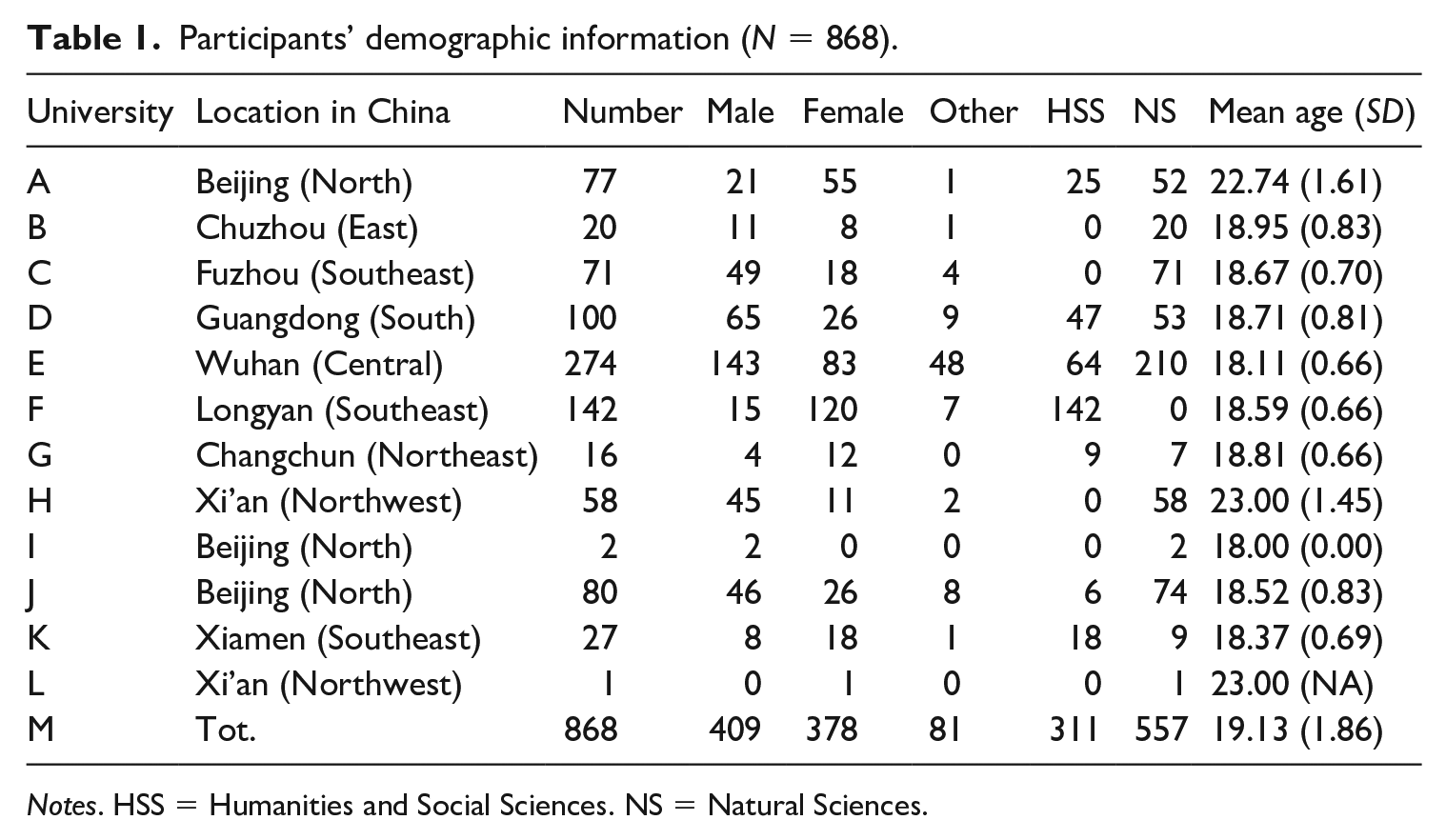
Notes. HSS = Humanities and Social Sciences. NS = Natural Sciences.
2 Instrument
The questionnaire consisted of two parts concerning dependent variables and independent variables.
3 Independent variables
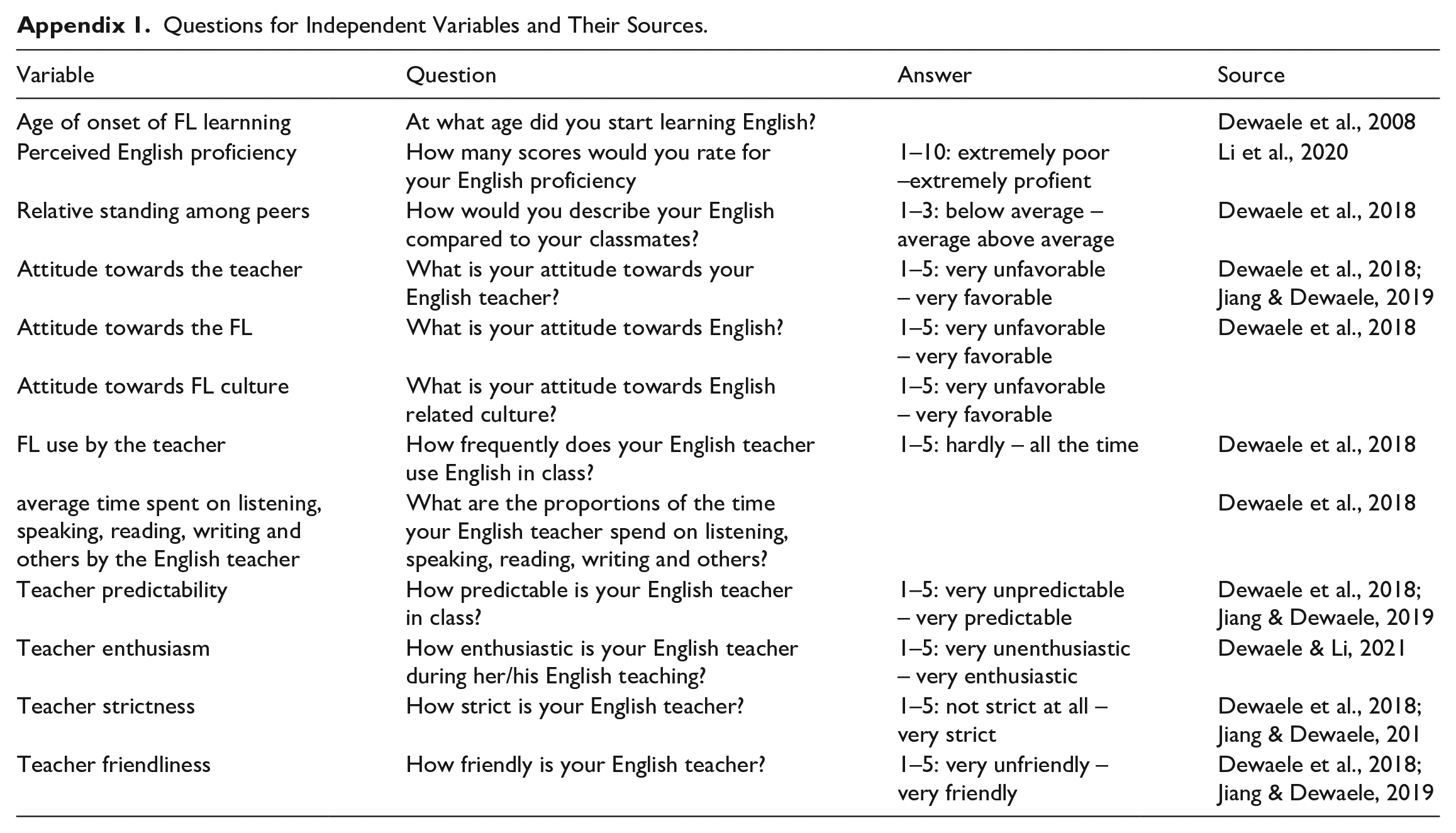
Following relevant extant literature (e.g. Dewaele et al., 2019; Jiang & Dewaele, 2019; Dewaele & Li, 2021), the independent variables under discussion were learner-internal variables (age, gender, age of onset of FL learning, self-perceived FL proficiency, relative standing in FL class, attitude towards the target FL, attitude towards the FL teacher, and attitude towards FL-related culture) and teacher-related variables (gender, FL use frequency in FL class, time spent on listening, speaking, reading writing, and other language domains, enthusiasm, predictability, friendliness, and strictness).
The composite questionnaire started with several questions about these independent variables. Regarding teacher-centered variables, if they have more than one English teacher, they were required to recall consistently the one who forwarded the current questionnaire to them. The detailed questions and answer options were included in Appendix 1.
4 Dependent variables
The dependent variables were the two emotions under investigation.
5 Chinese Version of the Foreign Language Enjoyment Scale (CFLES)
Participants’ enjoyment was assessed with the Chinese Version of Foreign Language Enjoyment Scale validated by Li et al. (2018) in a Chinese EFL context at the senior secondary level. The CFLES is a modified version of the original Foreign Language Enjoyment Scale (Dewaele & MacIntyre, 2014). The CFLES consists of 11 items measuring three factors, namely FLE-Private, FLE-Teacher, and FLE-Atmosphere. They are arranged on a 5-point Likert scale ranging from ‘1’ (‘strongly disagree’) to ‘5’ (‘strongly agree’). The items are concerned with both FL-learning-general enjoyment and FL-classroom-specific enjoyment.
In the current study, the CFLES was found to be psychometrically sound, showing high validity as well as reliability. For instance, the construct validity was excellent (χ2 = 547.494, df = 41, CFI = .96; TLI = .95; SRMR = .047; RMSEA = .075). The Cronbach’s Alphas for the global CFLES as well as its subscales were as high as .859, .865, .903, and .819 respectively.
6 Foreign Language Learning Boredom Scale (FLLBS)
The levels of boredom that the participants experienced were measured with the Foreign Language Learning Boredom Scale developed by Li et al. (2021a). The FLLBS was developed in a similar Chinese EFL context among more than 3,000 university students. It consists of seven factors, namely:
Foreign Language Classroom Boredom (eight items);
Under-Challenging Task Boredom (five items);
PowerPoint Presentation Boredom (three items);
Homework Boredom (four items);
Teacher-Dislike Boredom (four items);
General Learning Trait Boredom (five items); and
Over-Challenging or Meaningless Task Boredom (three items).
The 32 items are responded to on a 5-point Likert scale ranging from ‘1’ (‘strongly disagree’) to ‘5’ (‘strongly agree’).
In the current study, the FLLBS showed excellent construct validity (χ2 = 3950.297, df = 443, CFI = .93, TLI = .921, SRMR = .045, SRMR = .045, RMSEA = .06) and the Cronbach’s Alphas for the global FLLBS as well as the seven subscales were as high as .952, .943, .893, .754, .873, .879, .909, and .734 respectively.
7 Data analysis
Descriptive statistics and normality tests were conducted first. Then, in accordance with the first research question, a Pearson correlation analysis was conducted to detect the relationship between FLE and FLLB. As for the second and third research questions, a series of Pearson correlation analyses were conducted to identify the relationships between FLE and FLLB and a set of learner-internal variables and teacher variables. As for the effects of gender on both emotions, two independent t-tests were conducted. In terms of relative standing among peers in English class, one-way ANOVAs were conducted to test its effects on both emotions. Regarding the last research question, stepwise regression analyses were conducted to check how these significant correlates identified in previous correlation analyses were combined to co-predict FLE and FLLB.
X Results
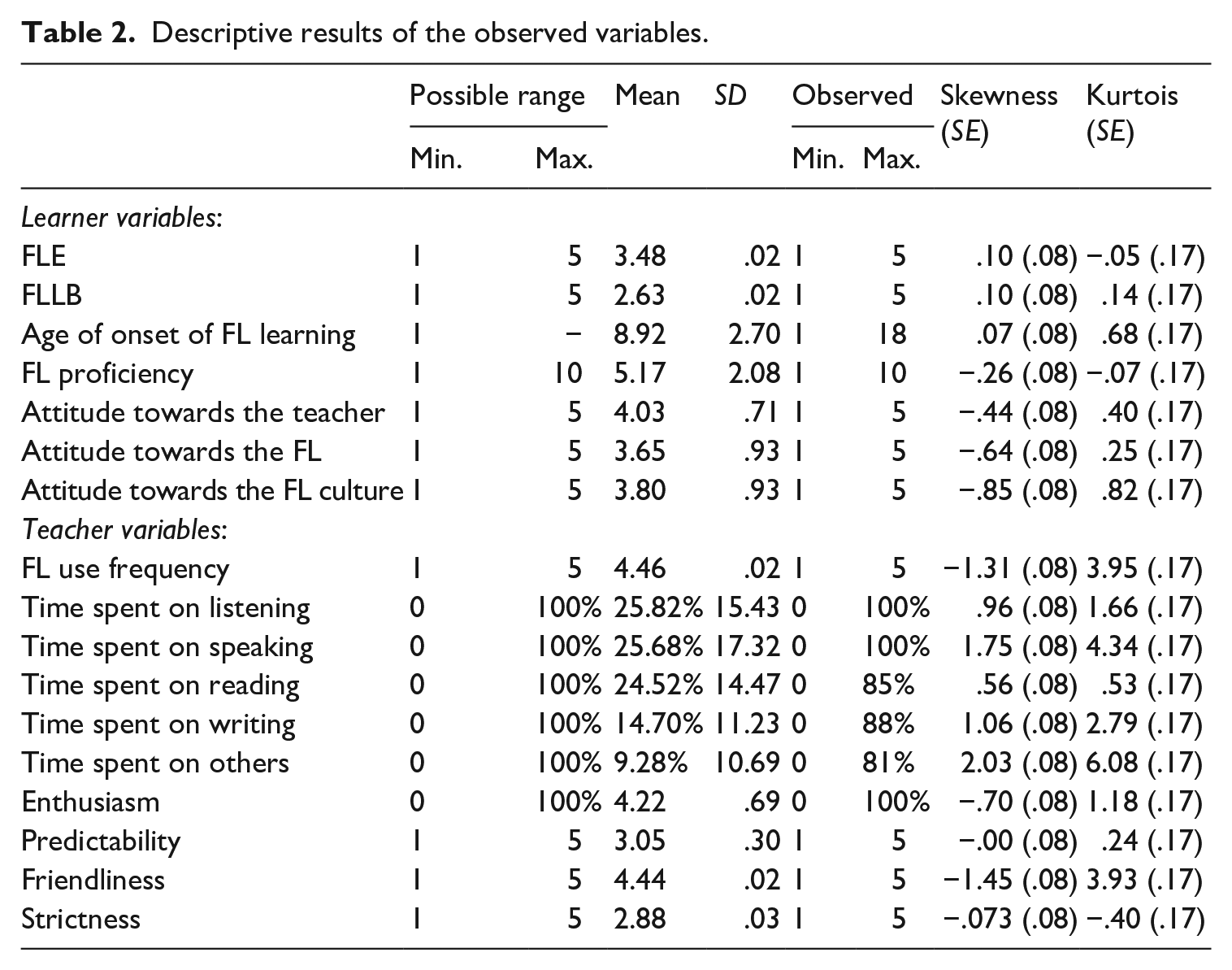
Descriptive results are presented in Table 2. The Skewness and Kurtosis suggested that both dependent variables (FLE and FLLB) were normally distributed, allowing for subsequent parametric statistics. Besides the results displayed in Table 2, regarding the gender of the participants’ FL teachers, 703 (80.99%) were females, and 165 (19.01%) were males.
Descriptive results of the observed variables.
1 Foreign language learning boredom and enjoyment
Pearson correlation analysis revealed a strong negative relationship between FLLB and FLE (r = −.671, p < .001, n = 868), according to the benchmark proposed by Cohen (1988). This indicates that higher levels of FLE were linked to lower levels of FLLB, and vice versa, explaining 45.02% of variance.
2 The correlations between learner-internal variables and FLE and FLLB
The results about the relationships between learner-internal variables and the two emotions are summarized in Table 3. Pearson correlation results are as follows:
Overview of the correlations between learner-internal variables and FLE and FLLB (N = 868).
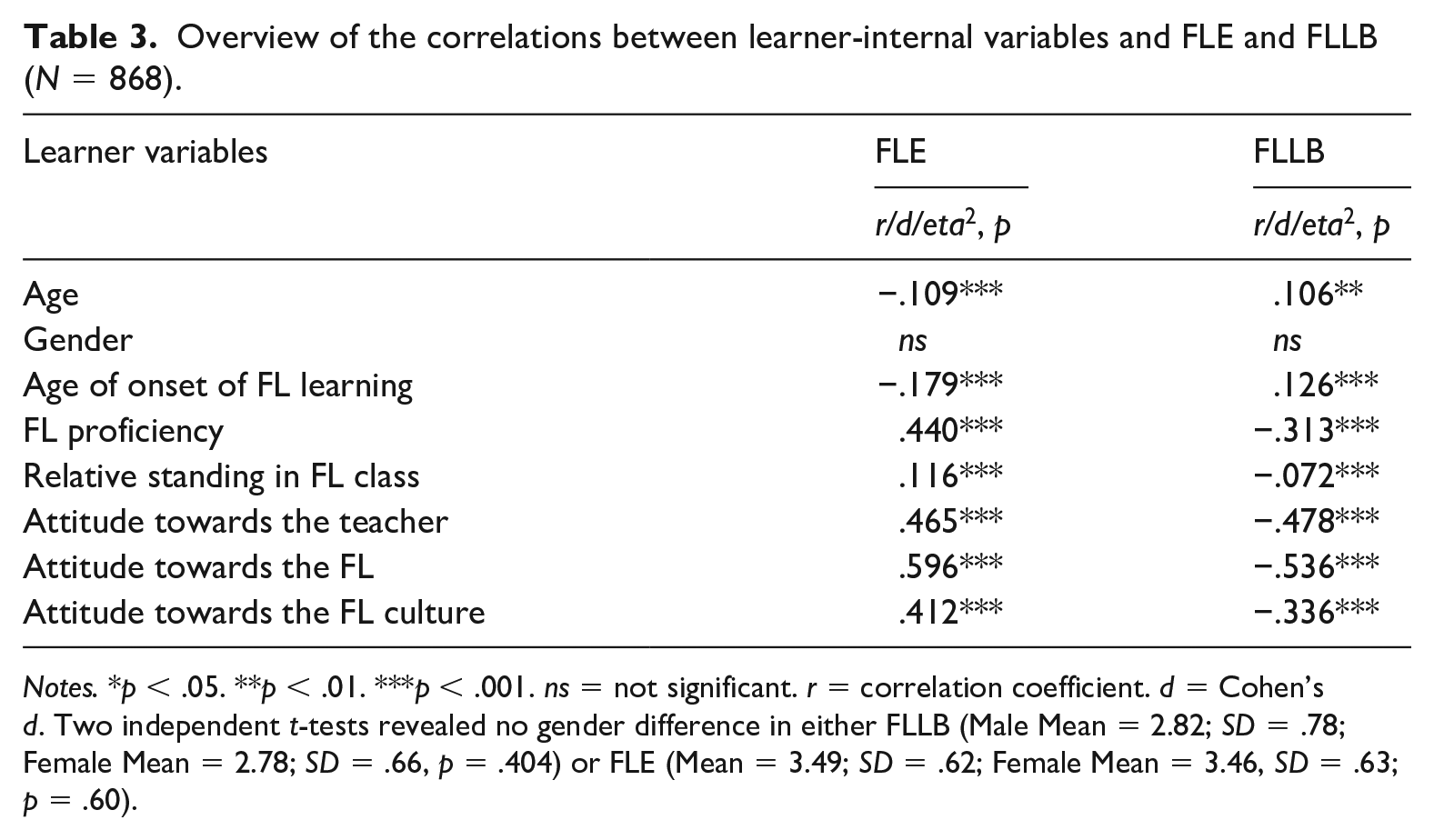
Notes. *p < .05. **p < .01. ***p < .001. ns = not significant. r = correlation coefficient. d = Cohen’s d. Two independent t-tests revealed no gender difference in either FLLB (Male Mean = 2.82; SD = .78; Female Mean = 2.78; SD = .66, p = .404) or FLE (Mean = 3.49; SD = .62; Female Mean = 3.46, SD = .63; p = .60).
There was a significant positive correlation between age and FLLB (r = .106, p = .002), while a negative one between age and FLE (r = −.109, p = .001).
The age of onset of English learning was positively related to FLLB (r = .126, p < .001), while negatively related to FLE (r = −.179, p < .001).
Self-perceived English proficiency was found to be positively related to FLE (r = .440, p < .001), while negatively related to FLLB (r = −.313, p < .001).
Attitude towards the English teacher was found to be positively linked to FLE (r = .465, p < .001), while negativly linked to FLLB (r = −.478, p < .001).
Attitude towards English was found to be positively linked to FLE (r = .596, p < .001), while negatively linked to FLLB (r = −.536, p < .001).
Attitude towards English culture was found to be positively linked to FLE (r = .412, p < .001), while negatively linked to FLLB (r = −.336, p < .001).
One-Way ANOVAs revealed that relative standing among peers in class had a significant effect on both emotions (see Figure 1). Those who perceived themselves as more proficient in English reported significantly higher levels of FLE (df (3, 864), F = 38.009, p < .001, eta2 = .116, small effect size) and lower levels of FLLB (df (3, 864), F = 38.009, p < .001, eta2 = .072, small effect size). Post-doc Bonferroni tests showed significant differences in the levels of FLLB between those who perceived themselves as below average and average (p < .001), and below average and above average (p < .001). Only a marginal significant difference was found between those who perceived themselves average and above average (p = .055). In terms of FLE, post-doc Bonferroni tests showed significant differences between each two groups (p < .001).
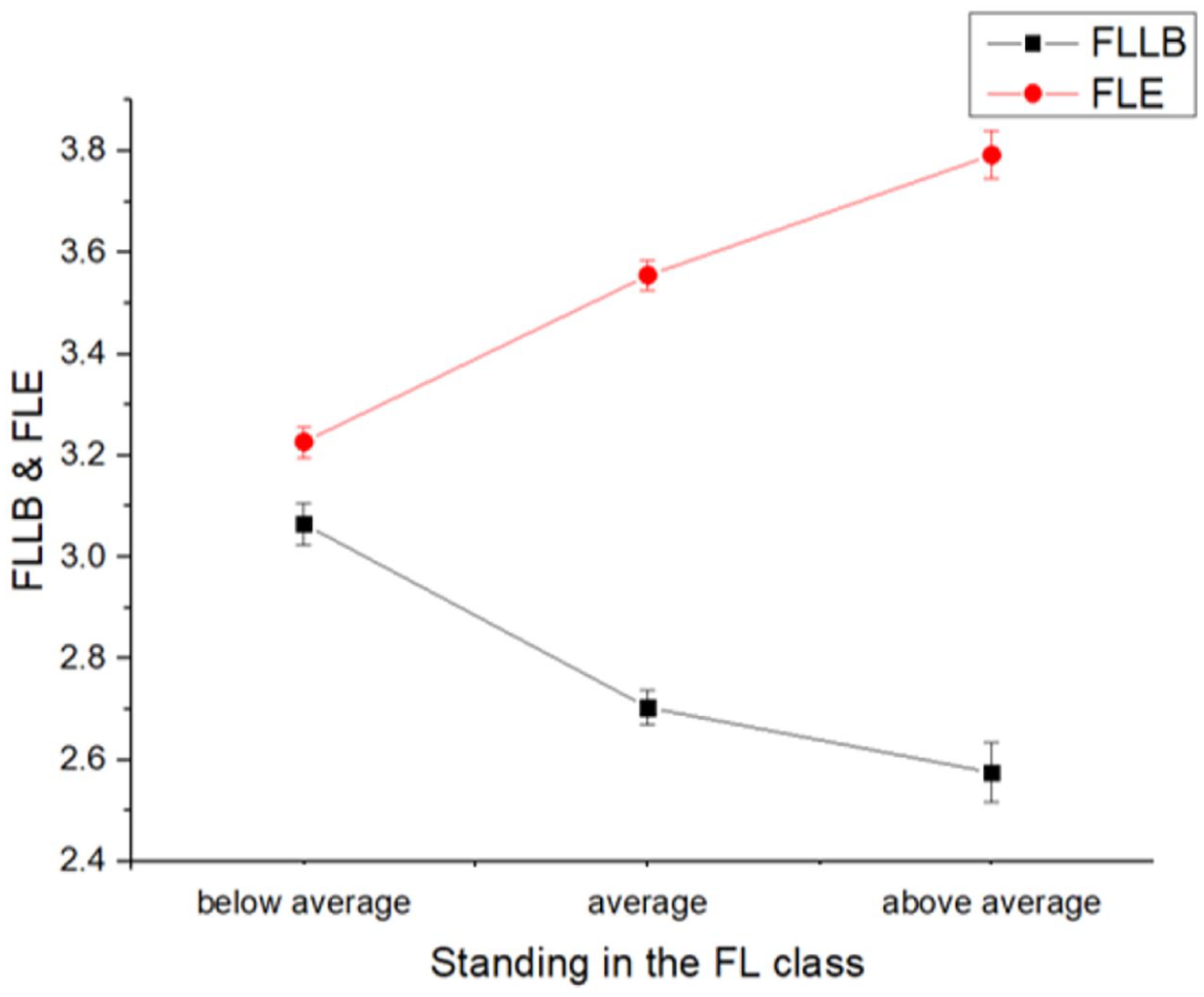
Effect of relative standing among peers in the English class on FLLB and FLE.
3 The correlations between teacher variables and FLE and FLLB
The results concerning the relationships between teacher-related variables and the two emotions are summarized in Table 4. Two independent t-tests revealed that teacher gender had no significant effect on FLE (Male Mean = 3.52, SD = .66; Female Mean = 3.47, SD = .59; p = .33), while a significant effect on FLLB (Male Mean = 2.68, SD = .76; Female Mean = 2.83, SD = .71; p = .018, Cohen’s d = −.20, r = −.10).
Overview of the correlations between teacher-centered variables and FLE and FLLB (N = 868).
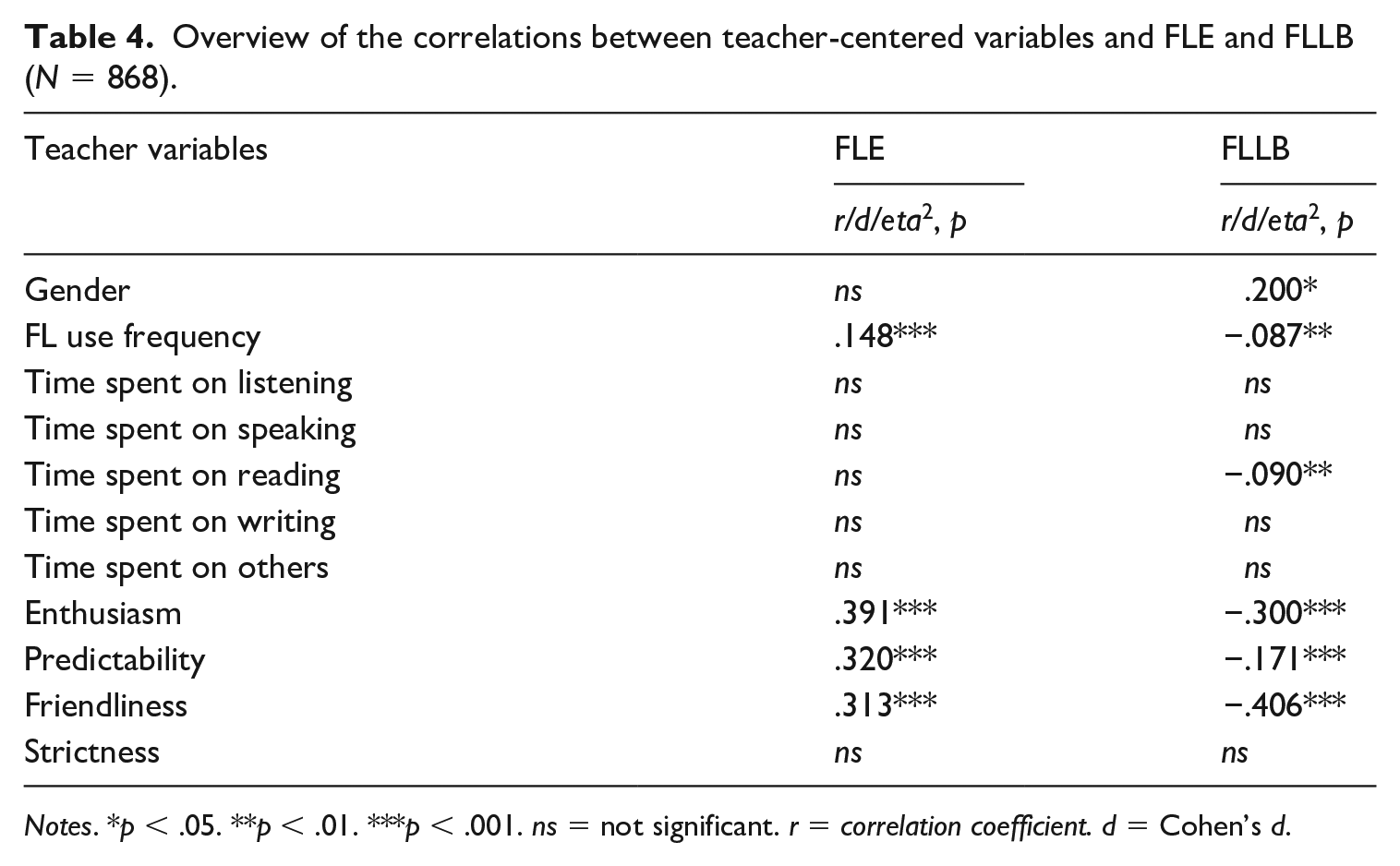
Notes. *p < .05. **p < .01. ***p < .001. ns = not significant. r = correlation coefficient. d = Cohen’s d.
Pearson correlation results are as follows:
L2 use frequency by the teacher in the class was positively linked to FLE (r = .148, p < .001), while negatively to FLLB (r = −.087, p = .011).
There was no significant relationship between the level of FLE and the proportion of time that the English teacher spent on listening (p = .055), speaking (p = .201), reading (p = .120), writing (p = .364), and others (p = .074). For FLLB, only the proportion of time spent on reading was found to be a significant negative correlate (r = −.090, p = .008), with a very small effect size, while the proportions of time spent on other domains were all insignificant correlates.
Teacher enthusiasm had a positive coorelation with FLE (r = .391, p < .001), while a negative effect on FLLB (r = −.300, p < .001).
Teacher predictability was positively linked to FLE (r = .320, p < .001), while negatively to FLLB (r = −.171, p < .001).
There was no significant correlation between teacher strictness and the two emotions (FLE: p = .959; FLLB: p = .067).
Teacher friendliness was found to be positively linked to FLE (r = .313, p < .001), while negatively to FLLB (r = −.406, p < .001).
4 The joint effects of significant learner-internal variables and teacher variables
The significant correlates of FLE and FLLB identified in the previous correlation analyses were further entered into two regression models to test whether and how they were combined and co-predicted both emotions. Stepwise regression results are summarized in Table 5 and Table 6.
The co-predictive effects of learner-internal and teacher-centered variables on FLE.
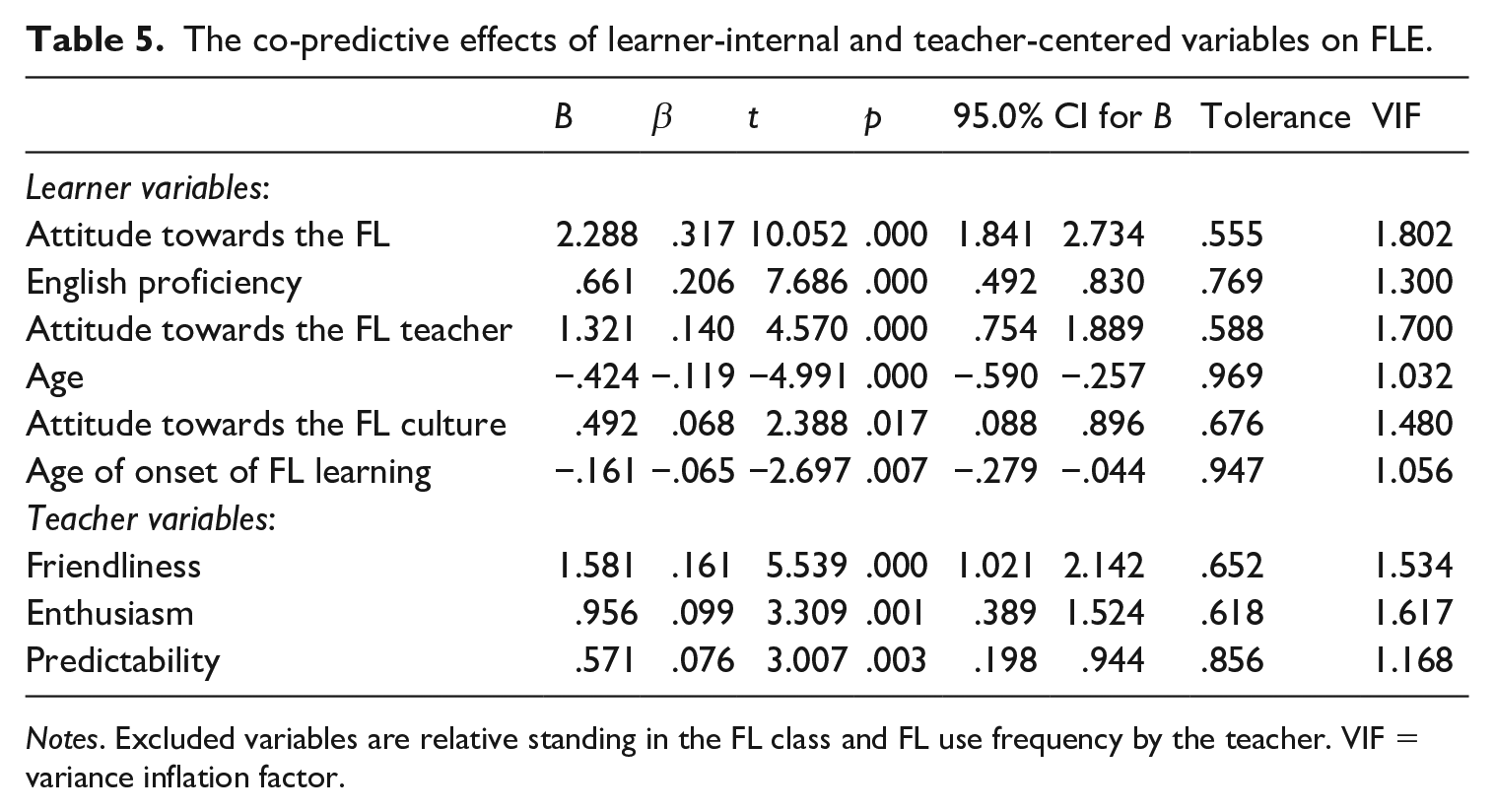
Notes. Excluded variables are relative standing in the FL class and FL use frequency by the teacher. VIF = variance inflation factor.
The co-predictive effects of learner-internal and teacher-centered variables on FLLB.
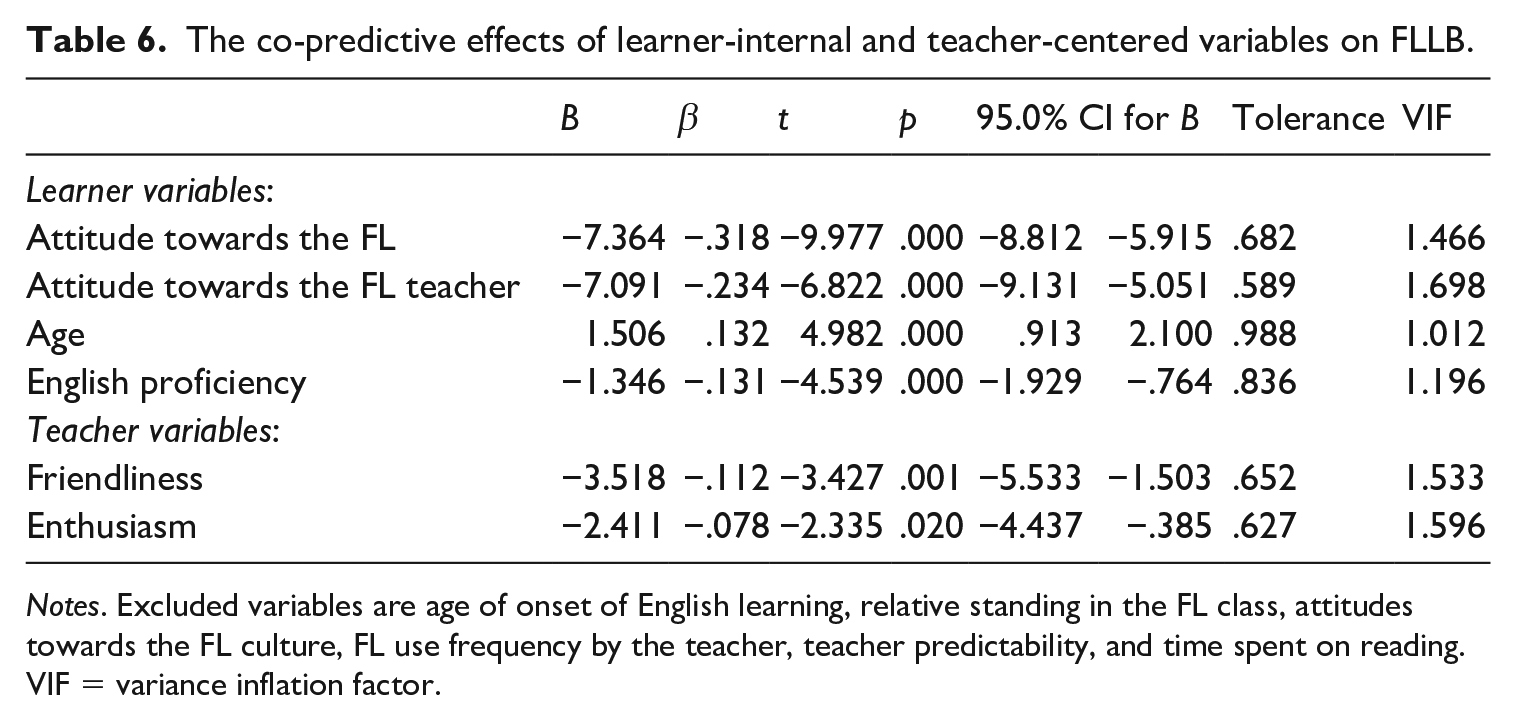
Notes. Excluded variables are age of onset of English learning, relative standing in the FL class, attitudes towards the FL culture, FL use frequency by the teacher, teacher predictability, and time spent on reading. VIF = variance inflation factor.
According to Table 5, the proposed model fit the data well (R = .725, adjusted R2 = .521, F = 105.601, p < .001), with the effects of all the learner predictors (except relative standing among peers) and the teacher predictors (except teacher FL use) remaining significant. The two largest predictors of FLE were attitude towards the FL (β = .317) and perceived FL proficiency (β = .206 respectively), with a medium-to-large effect size (0.30–0.50) and a small-to-medium effect size respectively (0.10–0.30) (Cohen, 1988), followed by teacher friendliness (β = .161), attitudes towards the teacher (β = .140), and learner age (β = −.119). Other significant predictors included teacher enthusiasm (β = .099), teacher predictability (β = .076), attitude towards FL culture (β = .068), and the age of onset of learning English (β = −.065), all with very small effect sizes (< .10) (Cohen, 1988).
As shown in Table 6, the proposed model fit the data well (R = .634, adjusted R2 = .402, F = 96.501, p < .001). Among the significant learner-internal variables and teacher-related variables of FLLB identified in previous correlation analyses, the effects of the following variables became insignificant when entered into the regression model: age of onset of FL learning, relative standing in the FL class, attitude towards the FL culture, FL use frequency, FL teacher predictability, and teacher strictness. The largest two predictors of FLLB were attitude towards the FL (β = −.318) and attitude towards the teacher (β = −.233), with a medium-to-large effect size (.30 – .50) and a small-to-medium effect size respectively (.10–.30; Cohen, 1988), followed by learner age (β = .132), perceived English proficiency (β = −.131), teacher friendliness (β = −.112), and teacher enthusiasm (β = −.078).
XI Discussion
1 Foreign language learning boredom and enjoyment
The first research question concerned the relationship between FLE and FLLB. A strong negative correlation was found (r = −.671, p < .001), indicating that students with higher levels of enjoyment in learning English are less likely to experience boredom, and vice versa. In other words, the experience of enjoyment may prevent students from feeling bored.
The result confirms the findings Li and Han (2022) obtained in online EFL learning settings (r = −.534, p < .001). According to the author’s best knowledge, the effect sizes for the relationship between FLE and FLLB in these two studies were higher than the effect sizes for the relationship between FLE and FLA in any prior studies. As argued by Li and Han (2022), the contrast may be interpreted as a result of their conceptual similarities and differences as assumed by the three-dimension taxonomy (object focus, valence, and activation) of the control-value theory (Pekrun & Perry, 2014). Specifically, compared to FLA with an object focus on learning results, FLLB and FLE share the object focus on learning activities. The conceptual contrast suggests that more empirical studies should investigate FLE and FLLB as a pair of a positive emotion and a negative emotion in comparison to the large body of extant studies combining FLE and FLA. In addition, based on the multidimensionality of FLE and FLLB, it is crucial to point out that their negative relationship does not mean that they are the opposite poles of the same dimension. In other words, the absence of one does not necessarily means the presence of the other. This indicates that we need a more nuanced understanding of the links between the two emotions.
2 Learner factors and teacher factors of FLE and FLLB
The second and third research questions addressed the independent and joint predictive effects of learner-internal variables and teacher-centered variables on participants’ FLE and FLLB. A quick look at the overview in Table 3 and Table 4 shows that both emotions were linked to a range of learner-internal and external variables. Interestingly, the same learner-internal variables and teacher variables were correlated with FLE and FLLB in an opposite way.
2.1 Learner variables
Age was found to be a negative correlate of FLE, while a positive correlate of FLLB in the current study based in a Chinese EFL context. This indicates that younger learners may experience higher levels of FLE and lower levels of FLLB, while older learners may experience higher levels of FLLB and lower levels of FLE. This indicates that learners’ FLE may decline while their boredom may grow with age. By contrast, prior L2 studies situated in European contexts discovered that FLE was positively related to age (Dewaele & MacIntyre, 2014; Dewaele et al., 2018; Dewaele et al., 2019). That is, FLE grew with age. The explanation for the inconsistent findings may lie in the differences of participants’ FL learning contexts. It is thus suggested that the relationship between age and FLE may be moderated by contextual factors.
Gender was found to have no significant correlation with FLE or FLLB, replicating what Jiang and Dewaele (2019) uncovered about FLE among Chinese undergraduates. By contrast, Dewaele and MacIntyre (2014) and Dewaele et al. (2018) found in European L2 contexts that female participants reported higher levels of FLE than their male counterparts. The difference also points to the potential moderating effect of contextual factors on the relationship between gender and FL emotions.
With respect to the ‘history-of-learning’ variable, onset age of FL learning, participants who had started learning English at a younger age reported experiencing higher levels of FLLB and lower levels of FLE. This is reminiscent of the pattern Dewaele, Petrides & Furnham (2008) revealed for FLA: early starters reported feeling less FLA. With reference to FLA (Dewaele et al., 2008), the age of onset of FL learning might also not be automatically linked to FLLB. Instead, they may be indirectly linked via other learning aspects, which remains to be further explored.
FL proficiency was found to be linked to FLE positively while FLLB negatively, partially mirroring the findings on FL proficiency and FLE obtained in diverse contexts (e.g. Dewaele et al., 2018; Jiang & Dewaele, 2019; Li et al., 2020). The explanation is that FL proficiency may lead to self-appraisals of controllability of the target FL, which is further linked to subsequent achievement emotions, as assumed by the control-value theory (Pekrun, 2006). More specifically, higher FL proficiency may be linked to higher self-perceived controllability, which is assumed to predict positive achievement emotions such as enjoyment, while lower FL proficiency may be linked to lower self-perceived controllability, which is assumed to predict negative achievement emotions such as boredom and anxiety.
In terms of relative ranking, participants who ranked themselves higher in the FL class reported more FLE and less FLLB. The pattern for FLE resembles those obtained in Dewaele and MacIntyre (2014) and Jiang and Dewaele (2019). One possible explanation is that having a higher ranking than their peers maybe linked to a sense of pride or accomplishment, confidence, and a heightened extrinsic motivation to keep the momentum, thus further creating a source of enjoyment and helping to avert or alleviate boredom in the learning of the FL.
Regarding learners’ attitudes towards their FL teachers, those with more positive attitudes tended to enjoy more and feel less bored in relation to FL learning. This replicates the patterns identified for FLE (Dewaele et al., 2018; Jiang & Dewaele (2019) and may be explained via the construct of emotional engagement. More specifically, L2 learners’ perceptions of and connections to their teachers constitute a key aspect of the FL classroom environment, which is closely related to their affective engagement in the class (Sang & Hiver, 2021). Overall, experiences and expressions of positive emotions including enjoyment and enthusiasm reflect students’ affective engagement, while negative emotions including boredom, anxiety, and anger demonstrate emotional disengagement (Dewaele & Li, 2021).
In addition, participants who showed more positive attitudes towards English, and English-related culture reported higher levels of FLE and lower levels of FLLB. This replicates the pattern identified between attitude towards FL and FLE (Dewaele et al., 2018; Jiang & Dewaele, 2019). Attitudes towards FL and the FL community are linked closely to learners’ interest in learning and using the language (Gardner & MacIntyre, 1993). Interest, when talking about its essence or nature, we can think first of its affective dimension, which encompasses positive stimulating emotions including enjoyment, enthusiasm, and excitement (Sang & Hiver, 2021), suggesting its protective effects on negative deactivating emotions such as boredom.
2.2 Teacher variables
The study investigated the extent to which students’ perceptions of teacher characteristics accounted for variance in their emotions. A set of teacher variables were found to be significantly linked to FLE and FLLB.
Regarding teacher gender, it predicted FLLB but not FLE. Specifically, those students with female English teachers reported higher levels of FLLB than those with male teachers. The underlying reasons may be complicated and remain to be further explored. Notably, the finding should be interpreted with great cautions because the teacher participants in the current sample were far from being gender-balanced (ratio of females: males = 4.26:1).
FL use by the teacher was found to be linked to FLE positively and FLLB negatively, partially echoing what Dewaele et al. (2018) revealed for FLE. This may be explained via learner beliefs about L1 and L2 use in EFL classrooms. As found by Macaro, Tian and Chu (2020) in a Chinese university, students wanted more exposure to L2 and ‘wanted their lessons to be predominantly in L2 with use of L1 only where there is a breakdown of communication or lack of understanding’ (p. 17). Levine (2003) also found that some learners even preferred an L2-only classroom, where resorting to L1 use was regarded as a shortcoming or a lapse of serving their L2 improvement. Thus, it is not difficult to imagine that unpleasant feelings such as boredom or anger would arise if teachers’ linguistic practices are incongruent with students’ beliefs, and that pleasant emotions such as enjoyment would occur if their linguistic expectations are satisfied. However, it is also crucial to point out that L1 use in the L2 classrooms should not be excluded completely (Macaro et al., 2020). Instead, an occasional use of L1 is necessary and facilitates L2 learning (Dewaele et al., 2018; Nation, 2003), especially in those overwhelmingly difficult tasks whereby negative emotions such as boredom arises easily due to lack of controllability (Li, 2021b). The findings may also extend the literature about L1 and L2 use in English medium instruction (EMI) contexts, pointing to the need to include student emotion as an important dimension of their reactions to or outcomes of teachers’ language practices.
No significant relationship was found between FLE and the proportion of time teachers spent on different language domains, i.e. listening, speaking, reading, writing, and others. However, interestingly, participants experienced higher levels of FLLB if their English teachers spent more time on reading, reflecting the interview findings in Li (2021a, 2021b) where most students complained that L2 reading in the classrooms was the most boredom-provoking practice. The possible reason may be that L2 reading is the most ‘agreeable’ practice with visible and ‘silent’ materials provided at hands (Wang & MacIntyre, 2021). Specifically, first, L2 reading can be less stimulating and less cognitively demanding compared to productive skills of L2 speaking and writing (Tindle & Longstaff, 2015). Second, L2 reading is also less cognitively demanding compared to the receptive skill of L2 listening because readers have less difficulty controlling the speed of L2 input delivery (Wang & MacIntyre, 2021). Finally, L2 reading is mainly focused on the analysis of the ‘silent’ text, which is less interactive compared to L2 speaking accompanied by social interactions in the classrooms. It makes sense that boredom would be instigated more easily in less cognitively demanding, less stimulating , and less interactive situations.
Participants experienced more FLE and less FLLB with highly enthusiastic English teachers, confirming prior findings in the study by Dewaele and Li (2021). The possible explanation may be that enjoyment is the kernel part of enthusiasm, which is contagious and transmissible. As long established in human interactions, an individual becomes ‘infected’ with the emotion displayed by the person he or she is interacting with, which is termed as ‘emotional contagion’ (Wild, Erb & Bartels, 2001). This points to the importance of being a happy teacher and displaying enthusiasm in teaching (Dewaele & Li, 2021; Moskowitz & Dewaele, 2021).
Teacher predictability was found to be positively related to FLE and negatively to FLLB. The pattern for FLE differed from that Dewaele et al. (2018) identified in an international sample of participants, most of which were Europeans. The difference may be explained by the potential cultural differences in relation to students’ expectations or beliefs about teacher practice and style in the FL classroom. As argued by Jiang and Dewaele (2019), Chinese students appear to be more accustomed to certainty than uncertainty because the former makes them feel right on the track while the latter tends to trigger unpleasant feelings due to associated lack of psychological safety.
Teacher friendliness was found to be positively linked to FLE while negatively to FLLB. This corroborates the pattern Dewaele et al. (2019) revealed for FLE. Undoubtedly, teachers who are friendly to students are more likely to establish warm and congenial bonds with students and thus create a positive and relaxing classroom atmosphere (Dewaele & Li, 2021). In such atmosphere, students feel psychologically safer, positive emotions get nurtured and negative feelings get buffered or mitigated. By contrast, teacher strictness was found to have no significant effect on either FLE or FLLB. However, despite the results and the widely-held belief that teachers are strict for good reasons, it is still crucial to point out that overly strictness may make the class boring (Whitney et al., 2005).
3 The joint effects of significant learner and teacher predictors on FLE and FLLB
In response to the last research question, regression results in Table 5 and Table 6 show that these predictors could co-work with each other and had joint predictive effects. In other words, FLE and FLLB were susceptible to a wide range of learner-internal factors as well as teacher-centered factors.
Concerning learner-internal variables, both emotions were found to be predicted most by attitude towards the FL, attitude towards the FL teacher, and self-perceived English proficiency. Language attitude emerged as the largest predictor of both emotions after controlling the effects of the other learner variables and teacher variables, with similar medium-to-large effect sizes (β = .317. β = –.318) (Cohen, 1988). This indicates that compared to other variables, learners’ evaluative beliefs and emotional predispositions towards the target FL, which are relative stable, may be the proximal antecedents of their emotions such as FLE and FLLB. Students’ attitudes towards their FL teachers and their perceptions of their own FL proficiency also showed significant predictive effects on both emotions. These converge to support that the two emotions are constructed intra-personally as results of students’ cumulative evaluations of the target FL, of the academic self in the FL, and of the FL teacher.
Regarding teacher variables, teacher friendliness and enthusiasm stood out among other teacher characteristics (e.g. L2 practices and pedagogical practices) as significant predictors of both emotions. This points to the relative importance of students’ perceptions of their teachers’ interpersonal characteristics as triggers of their emotions in the classrooms (Mainhard et al., 2018), pointing to the social nature of student emotions.
Regarding the joint effects of the learner-internal factors and the teacher factors, it is not difficult to imagine that teachers’ interpersonal characteristics (e.g. friendliness and enthusiasm in teaching) could be linked to learners, affecting their attitudinal and evaluative processes in relation to their FL teachers, the FL, and themselves, which are further linked to their emotions. It is also not difficult to envisage that learners’ attitudes towards the FL and FL teachers could be perceived by the teachers, thus affecting teachers’ psychological states. For example, students’ expressions of negative attitudes towards the teacher or the FL may hamper teacher enthusiasm or friendliness in the classrooms, triggering negative emotional responses as the negative relationship effects. Thus, I argue that FLE and FLLB arise in person-environment interaction as a joint product of the intertwined perceptions and evaluations connected to the learner, the FL teacher, and the FL.
Of note, some variables had significant correlations with FLE (e.g. relative standing in FL class and FL use frequency by the teacher) and FLLB (e.g. the age of onset of English learning, relative standing in FL class, attitudes towards the FL culture, FL use frequency by the teacher, teacher predictability, and time spent on reading), while the relationships became insignificant when they were combined with other significant predictors. Although the underlying mechanism needs to be further explored, it is suggested that the effect of one variable in shaping student emotion is subject to the effects of other related variables.
Taken together, the findings support the person-environment interaction view in psychology and SLA (Dewaele, 2009; Funder, 2008; Dörnyei & Ryan, 2015). For L2 emotion research, a person-in-context approach should be adopted in empirical investigations into student emotions because they were shaped by the interplay of a wide range of learner-internal and learner-external factors (especially teacher factors).
4 Implications
The present study highlights that FLE and FLLB were contingent on a combination of learner-internal and teacher-centered factors. The findings have pedagogical implications. Specifically, besides using anxiety-reducing strategies in FL classrooms, which have been extensively studied and practiced, teachers should also incorporate enjoyment-boosting and boredom-reducing activities to enhance students’ emotional well-being. The findings show that teachers could devise ways on their own sides, for example, being friendlier to their students, displaying more enthusiasm and intrinsic enjoyment in teaching, establishing a more favorable self-image, and making the classroom environments predictable. In addition, they could also help their students develop more positive beliefs towards the target FL and FL-related culture. For example, teachers could provide their students with more opportunities to experience the target FL and FL-related culture in an authentic or natural way. Students are thus more likely to appreciate and enjoy a language which is perceived as useful, popular, interesting or elegant. Learning a language by using it and experiencing its related culture may also lead to a sense of challenge, novelty, playfulness, creativity, and accomplishment, which is central to the instigation of enjoyment (Dewaele & MacIntyre, 2014; Li et al., 2018).
5 Limitations
The study shows several limitations. First, online questionnaire was used to obtain data. As Dewaele (2018) pointed out, self-selected participants may be those who have more positive attitudes to FL learning and thus be more willing to spare time to fill in the FL learning-related questionnaire. Second, the independent variables were measured with a single item following extant relevant studies (e.g. Dewaele et al., 2018; Jiang & Dewaele, 2019), posing a threat to the reliability and validity of measurement. Nonetheless, the current study could be considered as tentative at best to provide a fuller emotional picture with a long list of learner-internal and teacher characteristics included. With an eye towards further replication studies and elaboration of such topics, scholars could first develop some tools to measure these predictors of interest with psychometric properties validated. Lastly, the current study adopted a non-experimental and cross-sectional research design. It is necessary to point out that the author has identified the predictive effects of a set of variables on FLE and FLLB without claiming causality. It can only provide a panorama or snapshot of a highly complex nomological network of learner emotions. Longitudinal and experimental designs are further needed to expound how these learner-internal factors and teacher factors interact to affect FLE and FLLB.
XII Conclusions
Research to date has shown that language learning psychology is shaped by a combination of person-environment attributes (e.g. Dewaele, 2009; Dörnyei & Ryan, 2015; Gkonou, 2017; Li et al., 2021b; Ushioda, 2009). The current study extended this line of work by the important addition of FLLB, a newly emerging construct in the field of SLA. The study is also among the very first attempts to combine FLE and FLLB, providing quantitative evidence that both emotions are shaped by the interplay of learner variables and teacher variables. Of note, learners’ attitude towards the FL was found as the strongest learner predictor of both emotions, and teachers’ friendliness was the strongest teacher predictor. In a word, a more enjoyable and less boring English class is contingent on both learners and teachers. Metaphorically put, ‘if emotions were music, teachers would be conductors, and students would be members of the orchestra’ (Dewaele, 2020, p. 8). To further extend the line of work on the effects of person-environment interaction in shaping language learning psychology, future research could include other learner-internal variables (e.g. grit and resilience) and learner-external factors beyond teacher-centered variables (e.g. peer-related variables).
Footnotes
Appendix
Questions for Independent Variables and Their Sources.
| Variable | Question | Answer | Source |
|---|---|---|---|
| Age of onset of FL learnning | At what age did you start learning English? | Dewaele et al., 2008 | |
| Perceived English proficiency | How many scores would you rate for your English proficiency | 1–10: extremely poor –extremely profient | Li et al., 2020 |
| Relative standing among peers | How would you describe your English compared to your classmates? | 1–3: |
Dewaele et al., 2018 |
| Attitude towards the teacher | What is your attitude towards your English teacher? | 1–5: very unfavorable – very favorable | Dewaele et al., 2018; Jiang & Dewaele, 2019 |
| Attitude towards the FL | What is your attitude towards English? | 1–5: very unfavorable – very favorable | Dewaele et al., 2018 |
| Attitude towards FL culture | What is your attitude towards English related culture? | 1–5: very unfavorable – very favorable | |
| FL use by the teacher | How frequently does your English teacher use English in class? | 1–5: hardly – all the time | Dewaele et al., 2018 |
| average time spent on listening, speaking, reading, writing and others by the English teacher | What are the proportions of the time your English teacher spend on listening, speaking, reading, writing and others? | Dewaele et al., 2018 | |
| Teacher predictability | How predictable is your English teacher in class? | 1–5: very unpredictable – very predictable | Dewaele et al., 2018; Jiang & Dewaele, 2019 |
| Teacher enthusiasm | How enthusiastic is your English teacher during her/his English teaching? | 1–5: very unenthusiastic – very enthusiastic | Dewaele & Li, 2021 |
| Teacher strictness | How strict is your English teacher? | 1–5: not strict at all – very strict | Dewaele et al., 2018; Jiang & Dewaele, 201 |
| Teacher friendliness | How friendly is your English teacher? | 1–5: very unfriendly – very friendly | Dewaele et al., 2018; Jiang & Dewaele, 2019 |
Funding
The author(s) disclosed receipt of the following financial support for the research, authorship, and/or publication of this article: The study is funded by the National Social Science Foundation of China (Grant No.: 19CYY017).
