







Abstract
Previous studies have recommended employing genre analysis as a supportive framework for English scientific content in the content and language integrated learning (CLIL) context. However, little is known about how CLIL teachers collaborate to co-create genre-based scaffolds and how they perceive the benefits and challenges of genre analysis for material development through interdisciplinary teacher collaborations. This study aims to fill these gaps by exploring how two physics teachers and two English teachers paired to co-create scaffolds to improve students’ comprehension of English scientific materials. This study also investigates the teachers’ perceptions of their genre-based scaffolding design experiences via interdisciplinary teacher collaborations. This study is a qualitative case study, collecting data from scaffolds in English scientific materials, reflective reports, and interviews. The findings show that the teachers developed explicit tutorials, color-marking, and comprehension questions to develop students’ genre knowledge, linguistic awareness, and content understanding. This study also reveals that the teachers gained insights into analysing English scientific texts through input processing techniques, thus developing their genre literacy and pedagogical knowledge through interdisciplinary teacher collaborations. This study contributes to the literature on genre-based pedagogy in the CLIL context by highlighting the use of input processing scaffolds to develop learners’ linguistic awareness about textual genres in English scientific materials.
Keywords
I Introduction
Content and language integrated learning (CLIL) is adopted as a curriculum strategy for teaching and learning a content subject through a foreign language. Having originated in Europe in the 1990s, CLIL is now considered a global phenomenon in bilingual language teaching (Llinares & Morton, 2017; Mehisto et al., 2008; Zarobe & Catalán, 2009). CLIL may sometimes inhibit students’ comprehension of disciplinary knowledge (Adams & Lim, 2020; Lo & Fung, 2020; Pun, 2019). The difficulties are exacerbated in fields such as science, where complex language patterns require the students to have a strong command of second language (L2; Yi Lo & Lin, 2019). This linguistic barrier results from the unique linguistic demands of curricular subject texts. It is suggested that CLIL pedagogy in science include scaffolding activities that are designed to raise L2 learners’ consciousness about specific linguistic challenges inherent in English scientific texts (Adams & Lim, 2020; Lo et al., 2018; Walenta, 2018).
Genre analysis serves as a critical tool in unpacking the linguistic complexities of English scientific texts (De Oliveira & Lan, 2014; Derewianka, 2015; Fenwick & Herrington, 2021; Lo et al., 2018; Nigro & Trivelato, 2012; Unsworth, 2001). In particular, Unsworth’s (2001) framework of genre analysis provides a structured framework that can enhance the comprehension of scientific content through identifying functional stages, logical reasoning structures, and nominalizations. However, the literature is limited regarding how genre analysis can help CLIL teachers raise their awareness about linguistic structures and features inherent in English scientific texts. To address this research gap, the present study aims to explore how science and language teachers could collaboratively employ genre analysis to make language and content salient in their material development.
In addition, content teachers may think they only have the role of teaching content, so they often fail to take on the responsibility of teaching language (Lo, 2014). Language teaching may be difficult for them due to a lack of pedagogical knowledge (Koopman et al., 2014). This difficulty may also be true for science teachers who would like to implement CLIL with teaching materials written in L2 that are rarely supported by scaffolds on language (Marongiu, 2019). However, it is important to recognize that language teachers, with their expertise in linguistic awareness, genre knowledge, and abstract language strategies, can help design scaffolds for L2-based learning (Gibbons, 2015; Li & Zhang, 2022). Thus, the interdisciplinary collaboration between content and language teachers is recommended to make language abstraction and information density more accessible to L2 students (García & Vázquez, 2012; Hu & Gao, 2018; Leow, 2019; Park et al., 2020; Rui et al., 2024).
The existing literature offers limited insights into how teacher collaboration can enhance their comprehension of the genre-based approach to developing scaffolds. As such, the present study intends to fill the research gaps by involving two physics teachers and two English teachers to co-create genre-based scaffolding activities which are used to help high school students gain a better understanding of English learning materials associated with quantum science. It is intended that the present study can shed light on how interdisciplinary collaborations can help both content teachers and language teachers apply a genre approach to scaffolding disciplinary learning materials for L2 students.
II Literature review
1 Theoretical underpinnings
Systemic Functional Linguistics (SFL), as proposed by Halliday (1993a, 1993b), is a theoretical framework that examines language to understand how meaning is created and communicated in academic contexts. The theoretical framework is essential for understanding and teaching genre in CLIL contexts (Llinares, 2015; Llinares & McCabe, 2023; Lorenzo, 2013; Rose & Martin, 2012). This approach can equip teachers with essential metalanguage and analytical tools to decode and instruct genre effectively (Rose & Martin, 2012). In CLIL settings, genre serves as a foundational element for organizing communication and fostering academic literacy (Llinares & McCabe, 2023). By employing genre-based methods rooted in SFL theory, teachers can utilize explicit instruction with scaffolding to enhance student learning (Brisk, 2014). Such strategies would enable learners to grasp academic discourse while simultaneously building their content knowledge and language proficiency, demonstrating the transformative impact of SFL-based genre pedagogy in CLIL education (Lorenzo, 2013).
2 Genre pedagogy in science teaching
In Halliday’s (1993a, 1993b) viewpoints, the way science is expressed depends on its language. From this perspective, learning science is nothing more than learning the language of science. Additionally, he states that the nature of science itself makes it difficult for students to learn science language. The difficulty lies in the subject matter itself. However, EFL students may benefit from being taught how to analyse and unpack science texts (Cervetti & Pearson, 2018). Accordingly, Unsworth (2001) provides a framework of how different types and language features are distinguished. Language analyses are reported in three aspects: specifying functional stages, indicating reasoning through conjunctive relations, and identifying nominalization, as shown in Figure 1.
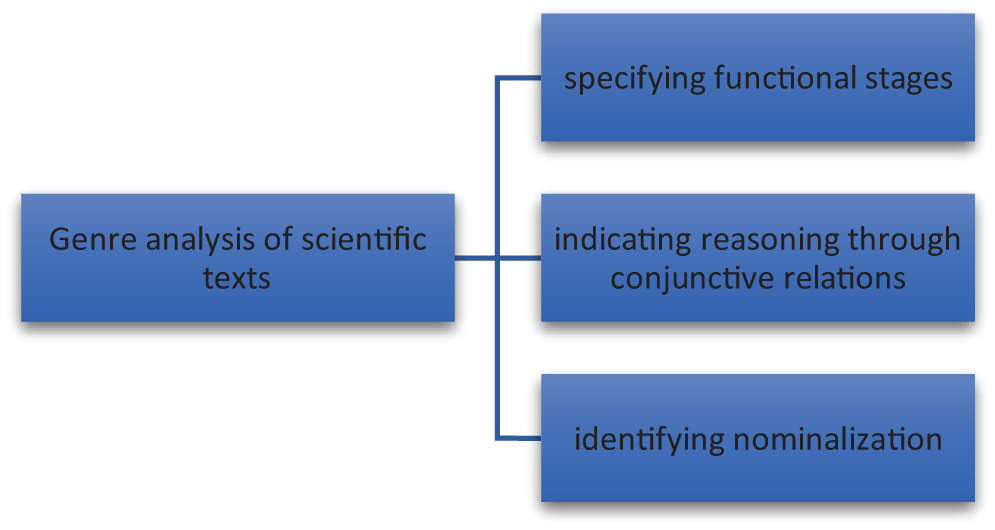
Unsworth’s genre analysis framework.
With regard to genre types and their functional stages, Unsworth (2001) suggests four types of genre: (1) information reports, (2) experimental accounts, (3) explanations, and (4) arguments. These genre types are characterized by distinct stages. Information reports consist of entity identification and description. Experimental reports include goals, methods, and results. Explanatory texts address phenomena and their implications. An argument includes a thesis, arguments, and discussion.
Logical reasoning in the text can be established through conjunctive words. Unsworth (2001) lists five types of conjunctive relations: temporal, consequential, comparative, additive, and locative. More specifically, temporal type can indicate simultaneous (As . . .) and successive relations (. . . before . . .); consequential type, manner (By . . .), consequence (. . . because . . .), condition (If . . .), concession (. . . However, . . .), and purpose relations (. . . in order to . . .); comparative type, similarity (Similarly, . . .), reformulation (. . . i.e. . . .), exemplification (For example, . . .), and contrast relations (. . . Conversely, . . .); additive type, addition relation (. . . and . . .); locative type, location relation (. . . where . . .).
Finally, Unsworth (2001) describes how Halliday’s (1993a) grammatical metaphor can be used to rephrase traditional writing expressions. This rewording is revealed in the following two sentences (Halliday, 1993a, p. 80). In the metaphorical version, the verbs ‘acted’ and ‘applauded’ have been replaced with nouns ‘acting’ and ‘applause’.
The cast acted [verb] brilliantly so the audience applauded [verb] for a long time.
The cast’s brilliant acting [noun] drew lengthy applause [noun] from the audience.
Unsworth (2001) argues that the language of these texts, crucial for apprenticing students to scientific English, is frequently problematic. For example, the complex and often implicit nature of consequential relations can pose challenges for students as they transition from everyday language patterns. Therefore, employing explicit teaching strategies for comprehension is advisable.
By deconstructing genres associated with school science, students can be guided to develop a more critical understanding of the subject (Rose & Martin, 2012). Previous studies have explored how the strategies of unpacking scientific texts are utilized to help students understand how language works (Adams & Lim, 2020; Fang & Schleppegrell, 2010; Lo et al., 2018). For example, Fang and Schleppegrell (2010) described how functional language analysis could help teachers teach students strategies for understanding and analysing complex texts at the high school level by focusing on the language itself.
Lo et al. (2018) reported that a university-school collaborative team designed and tested a set of materials to assist grade 8 students in Hong Kong with writing a sequential explanation text. The study showed how science teachers prepared students for an independent construction task by teaching language features of the genre, with some strategies employed, such as explicitly highlighting connectives and reinforcing language usage. These strategies illustrated how genre-based pedagogy could be used to help students comprehend science content and language simultaneously. The participating teachers found that the materials effectively drew students’ attention to language while they taught scientific concepts. In particular, the activity of rearranging jumbled sentences forced students to revisit articles and connectives that they had not cared about.
Similarly, Adams and Lim (2020) demonstrated how a functional literacy approach could be used to help teachers draw students’ attention to science language in the Singaporean classroom. The study was a collaboration between researchers with linguistic backgrounds and secondary school science teachers in Singapore. The participating teachers designed activities to support students in negotiating meanings and clarifying conceptual understandings as the latter constructed texts jointly. For example, one of the participating teachers consciously made the students identify the nominal groups required to describe the graphs. In a word, this study emphasized the importance of the functional literacy approach in teaching science.
Hu and Gao (2018) analysed the linguistic demands of science textbooks in English for EFL learners. The study revealed that science textbooks have linguistic demands, such as using abstract nouns, long complex noun phrases, and high information density, which could be difficult for EFL learners. To address these challenges, several strategies were proposed, including substituting nouns, implementing de-nominalization, and reducing information density to lower abstraction and complexity.
The previous studies have emphasized the value of a functional approach to science education, highlighting the classroom-based instructional techniques in relation to drawing students’ attention to linguistic features and structures. However, there is a gap in the literature on how English scientific materials can be scaffolded using genre analysis from the viewpoints of CLIL teachers, especially based on Unsworth’s (2001) framework that focuses on functional stages, conjunctive relations, and nominalization. Therefore, the present study seeks to explore how content and language teachers co-created scaffolds to enhance English scientific materials by addressing the functional stages, conjunctive relations, and nominalization of the genre, following Unsworth’s (2001) genre analysis framework.
3 Input processing in material development
Based on Vygotsky’s (1978) zone of proximal development, scaffolding is utilized to bridge the gap between learners’ current abilities and future self-sufficiency. It is a temporary support provided by teachers to help students master tasks independently (Gibbons, 2015). A range of studies have explored the use of scaffolding in bilingual and CLIL education and these studies collectively underscore the importance of scaffolding in facilitating students’ comprehension of content (Fernández-Fontecha et al., 2020; Li & Zhang, 2022; Lo et al., 2019; Lucero, 2014; Mahan, 2022; Monbec, 2020; Moore & Lorenzo, 2015; Pacheco et al., 2017; Symons, 2017). However, few studies have been conducted to address the role of input processing in CLIL material development. Input processing, developed by VanPatten (1996, 2015), is a theory about how language learners attend to and parse the input they encounter in their target language. Some techniques for enhancing input processing are recommended, such as processing instruction, structured input, input enhancement, input flooding, and noticing tasks (Wong & Barcroft, 2024). These techniques can help learners comprehend content better when they are combined or integrated optimally (Henry, 2024). In other words, input processing can enhance genre-based pedagogy in the context of CLIL by providing structured scaffolding that highlights the functional purposes of language forms within specific genres. This approach helps to draw learners’ attention to the relationship between linguistic structures and their communicative functions.
Concerning research on the use of input processing in CLIL instructional materials, some techniques have been employed and tested empirically. For example, Walenta (2018) proposed Content-based structured input (CBSI) as a method to enhance linguistic input. In a CLIL activity for architecture students, to learn about things like glass façades, they had to tell the difference between subject and object questions, as illustrated in What braces the glass fins? What do the glass fins brace? The questions were made so that learners had to pay attention to the grammar (subject/object difference) to answer the questions correctly. This method made learners rely on their knowledge of language structure to learn content.
As discussed in Section II.2, Hu and Gao (2018) devised a task for de-nominalization which involved converting concrete nouns back to their original verb or adjective states. This process aimed to diminish abstraction and the intensity of information in text, making technical language more approachable to students. For instance, the noun ‘pollution’ in ‘Pollution is caused by the large amount of harmful waste produced by human activities’ would be de-nominalized to ‘pollute’, as in ‘Some human activities produce harmful substances that pollute the environment.’ This de-nominalization can serve as a kind of ‘noticing task’, which is recommended by Wong and Barcroft (2024) as a technique of input processing.
The literature reviewed indicates that there is a scarcity of research on the application of input processing in CLIL material development. Moreover, although it is recognized that input processing can be more effective when paired with other form-focused instructional techniques, there is a dearth of studies investigating how CLIL teachers can incorporate these methods into material development. This study intends to fill these research voids.
4 Teachers’ perceptions of genre analysis on material development through interdisciplinary teacher collaborations
CLIL teachers face several significant challenges. One major difficulty is the dual role of teaching both content and language; however, content and language teachers often stick to their conventional teaching roles, which makes it harder to incorporate linguistic support into content instruction (Doiz et al., 2019; Lo, 2019; Pham & Unaldi, 2022). Specifically, the formal aspects of language learning are often overlooked in CLIL settings because content teachers tend to focus on content teaching rather than language teaching. Another obstacle is the lack of effective cross-curricular cooperation between content and language teachers, which is essential for successful CLIL implementation (García & Vázquez, 2012; Rui et al., 2024; Seguí, 2020).
Effective interdisciplinary collaboration allows lecturers to design lessons that address both language and content goals, thereby ensuring that students can develop their academic language skills while mastering subject matter content (García & Vázquez, 2012; Rui et al., 2024). In particular, such collaboration enhances content teachers’ language awareness and makes them consider the important role that language plays in their classes (Doiz et al., 2019; Lo, 2019). However, the collaboration between content and language teachers may confront challenges such as limited interdisciplinary communication and segregated working domains due to disciplinary cultures. These challenges can probably be tackled by implementing more structured professional development training (Doiz et al., 2019; Pham & Unaldi, 2022).
Pham and Unaldi’s (2022) study examined the informal and organic interactions between language teachers and content teachers in a Vietnamese CLIL program. The teachers acknowledged the importance of regular communication in supporting cross-curricular teaching by sharing pedagogical strategies and discussing lesson content informally. However, the collaboration lacked consistency and depth. Teachers viewed their pedagogical responsibilities rigidly within their disciplines due to their own beliefs and competencies. Their collaboration ended up with a strong focus on subject matter over language development, leading to a lack of comprehensive teaching strategies for language instruction. Since their personal teaching beliefs prioritized content over language, they were unable to adopt a dual-focused approach. Thus, it was recommended that more structured professional development was required to support the collaborative and interdisciplinary aspects of CLIL.
Material development competency is another skill that CLIL teachers should acquire, besides language competency (Seguí, 2020). Teacher-made CLIL materials are crucial for adjusting CLIL instruction. These materials are created by teachers to ensure that the content is suitable and comprehensible to the learners. The creation of such materials enables the scaffolding of both language and content learning in a way that is customized to the local context and the specific needs of the students (Banegas, 2022). However, there is a lack of empirical research to examine the benefits and difficulties that emerge when content and language teachers participate in creating scaffolds for English scientific materials, despite the acknowledged importance of teacher-made materials in CLIL. Seguí (2020) proposed that teacher collaboration could help teachers create and modify resources that are both pedagogically appropriate and contextually suitable, which would enhance student learning outcomes and the durability of CLIL programs.
Therefore, the present study aims to explore how content and language teachers viewed the development of genre-based linguistic supports on English scientific materials through structured interdisciplinary teacher collaborations, in which two physics teachers were paired respectively with two English teachers to co-create scaffolds under the guidance of professors. Specifically, a focus is given to the insights the teachers gained and the difficulties they encountered while developing scaffolding materials. In a word, the present study intends to explore how structured interdisciplinary teacher collaborations shaped the teachers’ perceptions with regard to their experiences in creating scaffolding for English scientific materials.
III Research questions
This study explores how content and language teachers co-created scaffolding activities to enhance English scientific materials by using genre analysis, especially Unsworth’s (2001) framework. This study also investigates the teachers’ perceptions of the genre-based scaffolding design via interdisciplinary teacher collaborations. This study aims to address the gap in the literature on how genre analysis can be applied to scaffolding English scientific materials from CLIL teachers’ perspectives. To this end, two research questions are proposed as follows:
Research question 1: How did content and language teachers create scaffolds to enhance students’ comprehension of English scientific materials?
Research question 2: How did the teachers perceive the genre-based scaffolding design experiences via interdisciplinary teacher collaborations?
IV Methodology
1 Participants
The study is situated within Taiwan’s bilingual education policy, which emphasizes the integration of English into subject matter teaching to enhance students’ language proficiency and content mastery. In order to create genre-based scaffolds for English scientific content on quantum science tailored for high school students, this study recruited two physics and two English teachers from senior high schools in Taiwan. All of the four participating teachers held master’s degrees in their respective fields, with the physics teachers specializing in physics and the English teachers in TESOL. Their ages ranged from 30 to 39 years, and all were female. While the physics teachers demonstrated a CEFR B2 level of English proficiency, the English teachers exhibited a CEFR C1 level. Both groups had substantial teaching experience, including bilingual instruction in CLIL contexts. Prior familiarity among the participants was established through a bilingual teaching certification program under Taiwan’s Ministry of Education, where the first author had served as one of the instructors. To foster interdisciplinary collaboration, pairs were formed by matching physics teachers with English teachers, enabling them to leverage their combined expertise in designing genre-specific linguistic scaffolds for scientific materials. This structured pairing aimed to enrich the collaborative dynamic and ensure a robust integration of content and language pedagogy.
When the teachers agreed to join this study, the participants were given information about the study’s details and their commitments via a consent form, which had been approved by the research ethics committee. These teachers were grouped into pairs: Physics teacher A was paired with English teacher A, and Physics teacher B with English teacher B. They all had previously earned certificates in bilingual teaching from the Ministry of Education in Taiwan, demonstrating their proficiency in CLIL or bilingual instruction. Together, they worked on developing scaffolds based on Unsworth’s (2001) framework for genre analysis, which includes functional stages, logical connectives, and nominalization techniques. The scaffolding they created aims to assist students in gaining a more comprehensive understanding of English scientific texts.
2 English scientific materials
The English materials for this study include two quantum physics guides, aligning with senior high school physics curriculum to enhance scientific literacy, logical thinking, and problem-solving skills. While the second and third authors developed these guides for 11th-grade students, the first author converted them into scaffolding materials.
The first manual, authored by the third contributor, provides an inquiry-based approach to learning about the wave and quantum phenomena of light polarization. It consists of three main sections: scientific principles, apparatuses, and procedures. The scientific principles section introduces the concepts and terminology related to light polarization and Malus’ law. The apparatuses section describes the components and assembly of the experimental setup, which involves a laser diode, a polarizer, an analyser, and a photoresistor. The procedures section guides the students through the steps of conducting the experiment, collecting and recording data, and verifying the physics model. The manual aims to enhance the students’ understanding of light polarization and its applications in science.
The second manual, authored by the second contributor, provides a comprehensive guide to understanding and utilizing the Kibble balance, an electro-mechanical device for mass calibration. It includes sections on background knowledge, the basic principles of the Kibble balance, and detailed instructions on assembling and operating the device in both static and dynamic modes. The manual also explains how to determine mass and highlights applications and references for further reading.
The manuals developed for this study – on light polarization and the Kibble balance – served as key texts for genre analysis. Specifically, these manuals were dissected using Unsworth’s (2001) framework to identify functional stages in particular genre types and linguistic features, such as logical connections and nominalizations. For instance, the wave and quantum phenomena manual on light polarization was analysed as an explanatory genre, which aims to describe and elucidate scientific principles and processes. The functional stages of this genre, including definitions, procedural steps, and interpretations of results, were highlighted and scaffolded to facilitate student comprehension.
3 Research procedures
To begin with, a three-hour face-to-face training workshop was conducted by the first author to orient the participating teachers towards genre analysis. They were guided in identifying social purposes, language functions, and key linguistic features in model texts. An emphasis was placed on Unsworth’s (2001) genre analysis framework, i.e. identifying functional stages, reasoning through conjunctive relations, and nominalization. By explicitly studying genre structures and features, the teachers would enhance their comprehension of different genre types found in scientific texts and the importance of linguistic elements within each genre. The genre analysis practice would make the teachers aware of the linguistic demands in science texts. After the training workshop, the teachers were paired to create scaffolds that could address the previous linguistic functions and features. Each pair consisted of a physics teacher and an English teacher.
Approximately one month was allocated for each duo of teachers to collaborate and develop genre-based scaffolds, adhering to Unsworth’s (2001) framework. This collaboration aimed to create scaffolds for the English scientific manual concerning inquiry practices related to light polarization and its wave and quantum phenomena, authored by a professor of physics, the third author. Upon completion, a meeting was held for the teaching pairs to present their scaffold results to both the aforementioned physics professor and an English professor (the first author). During this session, the teachers had the opportunity to exchange insights about their scaffolds, while the two professors provided feedback, seeking clarifications on any aspects of the scaffold designs that were not immediately clear or could be interpreted as ambiguous. The teachers would then refine their designs, integrating the insights gained from their interchange. This iterative process was also implemented for another inquiry-based manual on the topic of the Kibble Balance, produced by another professor in physics, the second author. Here again, the teacher pairs engaged in scaffold creation, shared their design insights, and addressed queries posed by the professors.
Beyond participating in the collaborative session, every teacher was asked to offer personal insights into their experiences of crafting genre-specific scaffolds. They had to consider (1) the rationale and process behind the scaffolds’ creation; (2) any challenges they faced during the development process; and (3) the ways in which the collaborative sessions contributed to their understanding or approach. Within a week following the session, each teacher had to provide a detailed reflection report to the first author.
4 Data collection
In response to research question 1, the data were gathered from three primary sources: the instructional scaffolds developed by the teachers, their reflective narratives, and two interviews conducted respectively with two teacher pairs. These scaffolds were examined to understand how they encapsulated functional stages, logical connections, and nominalizations in English scientific texts. Subsequently, the teachers contemplated their scaffold design choices, discussed the what, how, and why behind them, and shared their insights in reflective reports submitted to the first author. To facilitate critical reflection among the teachers, guiding questions were provided to help them focus on understanding the purpose and effectiveness of scaffolding. Additionally, these questions also aimed to assist them in evaluating how scaffolds can enhance students’ comprehension of linguistic features in scientific texts.
To further elucidate any uncertainties surrounding the collaborative design process and its intent to address specific genre-related scaffolds, each pair of teachers participated in a detailed interview session. The interview sessions were semi-structured in nature and conducted by the first author. Each session lasted approximately two hours, providing ample time for in-depth discussions. The questions posed during the interviews required the teachers to provide detailed explanations regarding their scaffolding design choices, the strategies employed to facilitate students’ comprehension of linguistic functions and features, and the efficacy of these approaches in improving student learning outcomes. The interview discussions were recorded for accuracy and transcribed word-for-word in preparation for thorough data examination.
In addressing research question 2, data were gathered from both the reflective reports (as earlier mentioned) submitted by teachers and the interviews conducted. The teachers needed to provide reflective reports, detailing their views on the development of genre-based scaffolding experiences through interdisciplinary teacher collaborations. They were given guiding questions to critically reflect on their collaboration gains and challenges in creating scaffolds for scientific materials in English.
Additionally, during the previously specified interviews, the first author inquired about any ambiguities or omissions observed in the reflection reports concerning their perceptions. Questions during the interviews would allow the teachers elaborate more on the benefits and difficulties encountered when creating genre-based scaffolding via interdisciplinary teacher collaborations. These interviews were audio-recorded and subsequently transcribed word for word to facilitate data analysis.
5 Data analysis
Regarding research question 1, the first author meticulously examined each of the scaffolds. The examination centered on the design elements of the scaffolds, specifically their functional stages, logical conjunctions, and nominalization. After the construction methods of the scaffolds were identified, the first author reviewed the teachers’ reflection reports as well as the transcripts from interviews to discern the teachers’ design rationale and motivations for scaffold configurations. The comparisons among multiple data sources revealed recurring patterns or themes. Theme development involved a systematic process of coding and categorizing data to uncover recurring patterns and themes, specifically including initial coding, grouping codes, refining themes, and finalization. During the theme identification process, certain complexities and ambiguities were encountered. For instance, some codes appeared to fit multiple themes. In such cases, further examinations were required to determine the most appropriate categorization. The reliability of findings was strengthened by cross-verifying data consistency across sources.
To address research question 2, the first author scrutinized the reflection reports and interview transcripts to understand the teachers’ perceptions of the genre-based scaffolding design experiences through interdisciplinary teacher collaborations. Through the constant comparative method (Strauss & Corbin, 1998), both data sets were examined for nuances. Subsequently, member checks were performed to ensure the accuracy of data interpretations and resolve any discrepancies in understanding (Creswell & Miller, 2000). Data triangulation and member checks ensured the reliability and validity of the analyses. The data analysis culminated with the identification of overarching themes. The identification of themes and the resolution of problematic issues were undertaken as described previously for research question 2.
V Findings
1 In light of genre analysis, how did the content and language teachers create scaffolds to enhance students’ comprehension of English scientific materials?
The scaffold-building approaches employed by the four teachers were organized into three steps: (1) developing students’ genre-based knowledge through explicit tutorials; (2) increasing students’ linguistic awareness through color-marking; and (3) fostering students’ understanding through comprehension checks.
a Developing students’ genre-based knowledge through explicit tutorials
To assist students in reading English experimental handbooks, the teachers believed it was essential to guide them toward specific linguistic structures and features. These include (1) identifying functional stages, (2) highlighting reasoning through conjunctive relations, and (3) pinpointing nominalization. Consequently, tutorials were developed to help students grasp these target linguistic elements. For instance, Physics teacher B and English teacher B offered a learning tip about nominalization, demonstrating its formation from a verb, an adjective, and a clause. This tutorial is screenshot in Figure 2.
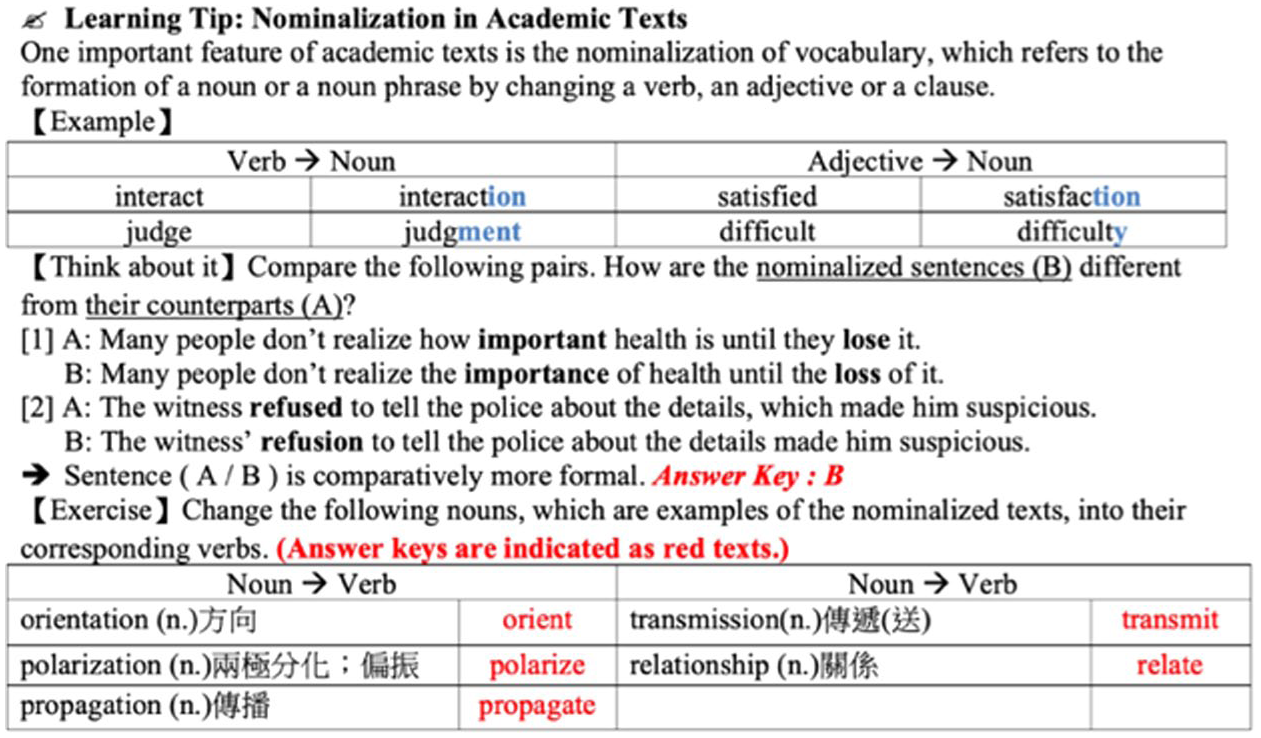
A tutorial on nominalization.
In this sense, English teacher A believed in the necessity of preparing students for a purposeful reading experience before delving into the text. To this end, students should be furnished with a foundational understanding through tutorials. The tutorials serve as an explicit scaffold, facilitating a quicker grasp of the material as students engage with the text, as shown in the interview transcript below.
We should prepare students for reading the text, so we first help students with the groundwork of reading strategies. Therefore, when designing this material, we would first introduce learning tips and provide some examples. You build this scaffold to help students so that when they read the text, they can get a quicker grasp. (English teacher A; interview)
b Increasing students’ linguistic awareness through color-marking
After the tutoring section, the teachers would utilize color marking to develop students’ awareness of target linguistic elements. By doing so, these specific linguistic features were emphasized to capture the students’ attention. For instance, Physics teacher B and English teacher B pinpointed the section on scientific principles associated with light polarization as an example of an information report. They facilitated students’ understanding of the functional stages by color-marking two paragraphs, each representing a distinct functional stage in an information report: identification and description, as shown in Figure 3. The first paragraph in light blue indicates how an electromagnetic wave is identified while the second paragraph in light green provides more details about electromagnetic waves.
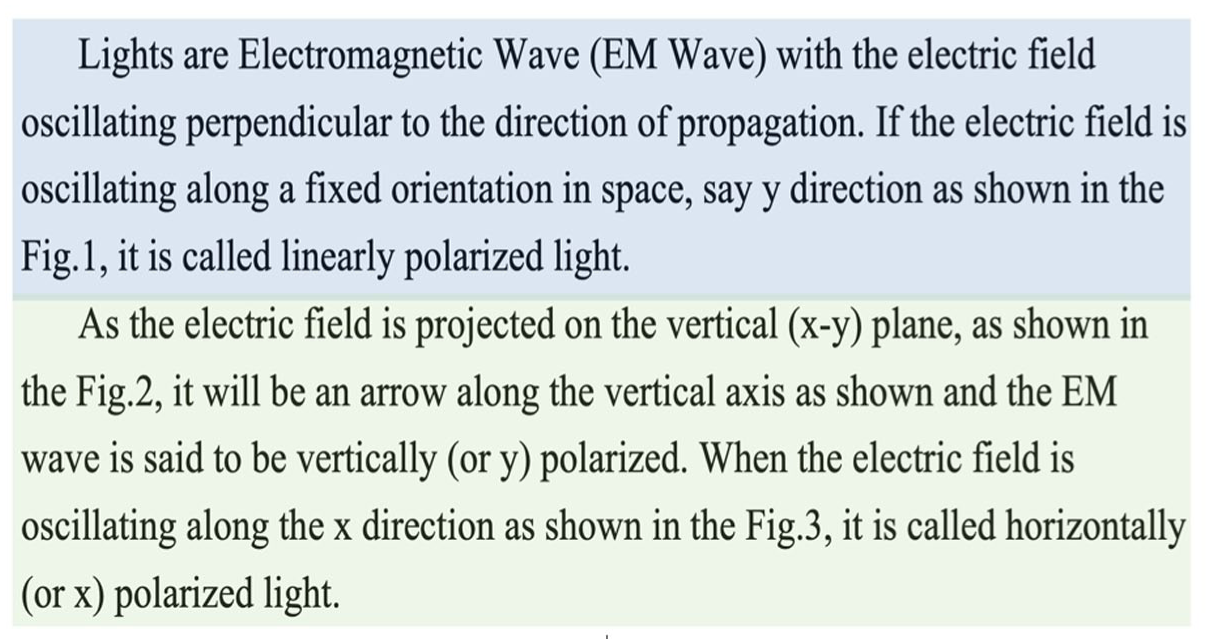
Color-marking the functional stages of an information report.
In this case, Physics teacher A thought students would probably encounter a challenge in discerning the conceptual linkage between paragraphs, which prevents students from reviewing the entire manual from a metacognitive standpoint. It is suggested that this issue be mitigated through scaffolds related to functional stages. This issue is revealed in the following excerpt from a reflection report.
The conceptual linkage between paragraphs is not easy to discern, making it difficult for students to review the entire experimental manual from a metacognitive perspective. This issue could be addressed through scaffold activities related to functional stages. (Physics teacher A; reflection report)
Similarly, while Physics teacher A and English teacher A were developing scaffolding for logical reasoning, they showcased five types of conjunctive relations, each distinguished by a unique color: red for temporal (e.g. as, before), yellow for consequential (e.g. by, because, if, however, in order to), green for comparative (e.g. similarly, i.e. for example, conversely), blue for additive (e.g. and), and pink for locative (e.g. where). Following this, they applied the color-marking to various conjunctive words found in English scientific texts concerning the Kibble balance, aiming to heighten students’ awareness of the logical flow within English scientific texts. The color marking is illustrated in Figure 4.
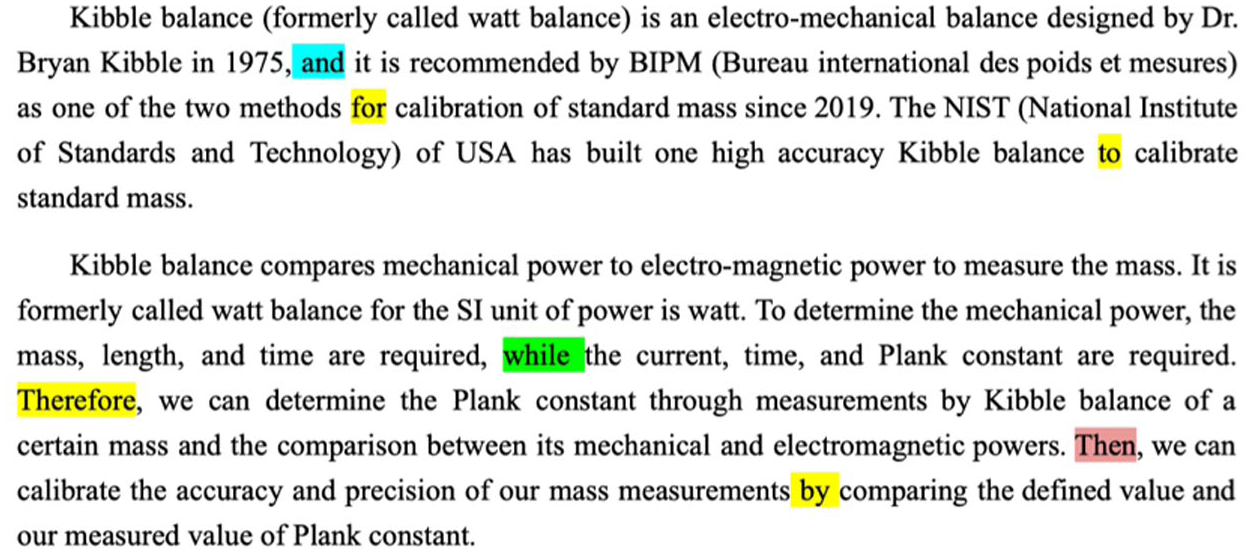
Conjunctive words color-coded in English scientific texts.
Specifically, English teacher B reflected that she would employ color-marking to emphasize words and phrases that express logical relations, thereby aiding students in deciphering the relationships among different pieces of information. This statement is elucidated: ‘Marking words expressing logical relations with different colors would help students understand the relationship between each piece of information’ (English teacher B; reflection report).
c Fostering students’ understanding through comprehension check
Concerning fostering students’ understanding through comprehension questions, both pairs of teachers devised questions tailored to the text. For instance, a paragraph about quantum science from the Kibble balance manual was selected by Physics teacher A and English teacher A. This paragraph could be analysed into three functional stages: the origin and development of the term ‘quantum’, the meaning of ‘quantum’, and examples illustrating ‘quantum’, as indicated in square brackets in Figure 5. The original paragraph does not include the square brackets. In this case, they crafted a question aimed at having students rearrange these stages in sequence. Figure 6 displays this comprehension check.
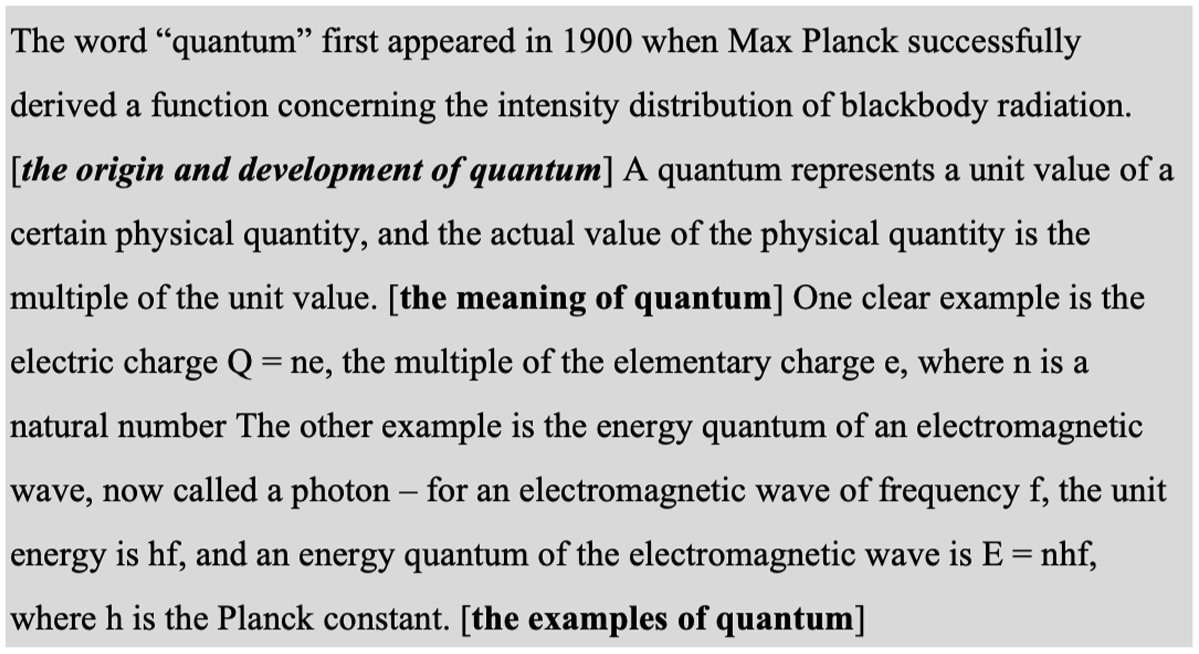
Introduction to the concept of quantum and its examples.
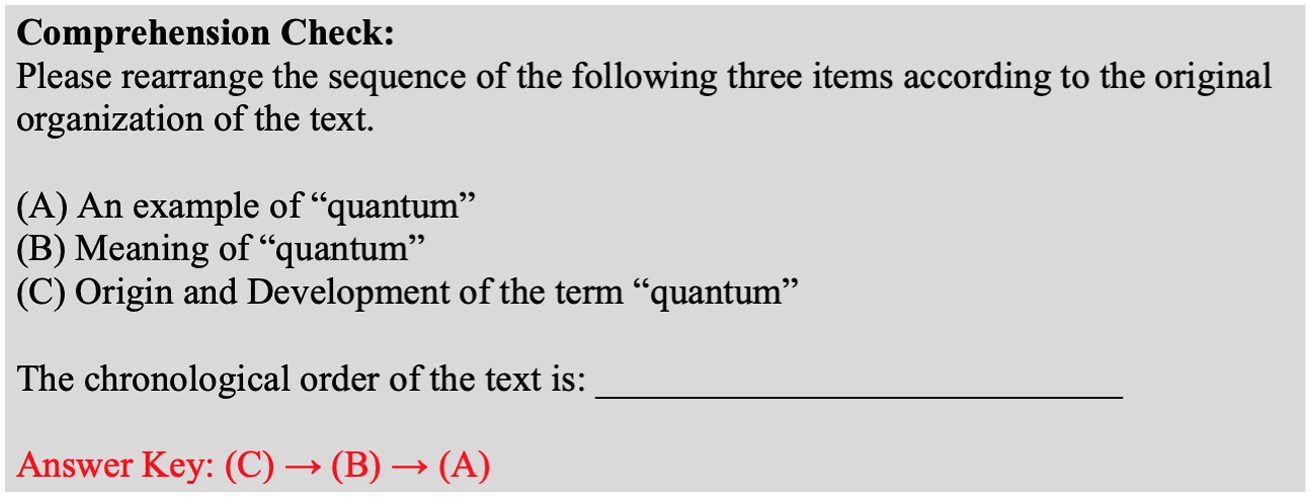
Comprehension check on functional stages.
Similarly, Physics teacher B and English teacher B formulated a question prompting students to practice de-nominalizing ‘reproduction’ and ‘calibration’, based on their understanding of two major advantages of a fundamental SI (Système international d’unités) unit in the form of nominalization. Figure 7 reveals this comprehension check. The four teachers stated that they extensively utilized comprehension checks to assess students’ understanding of the text content.
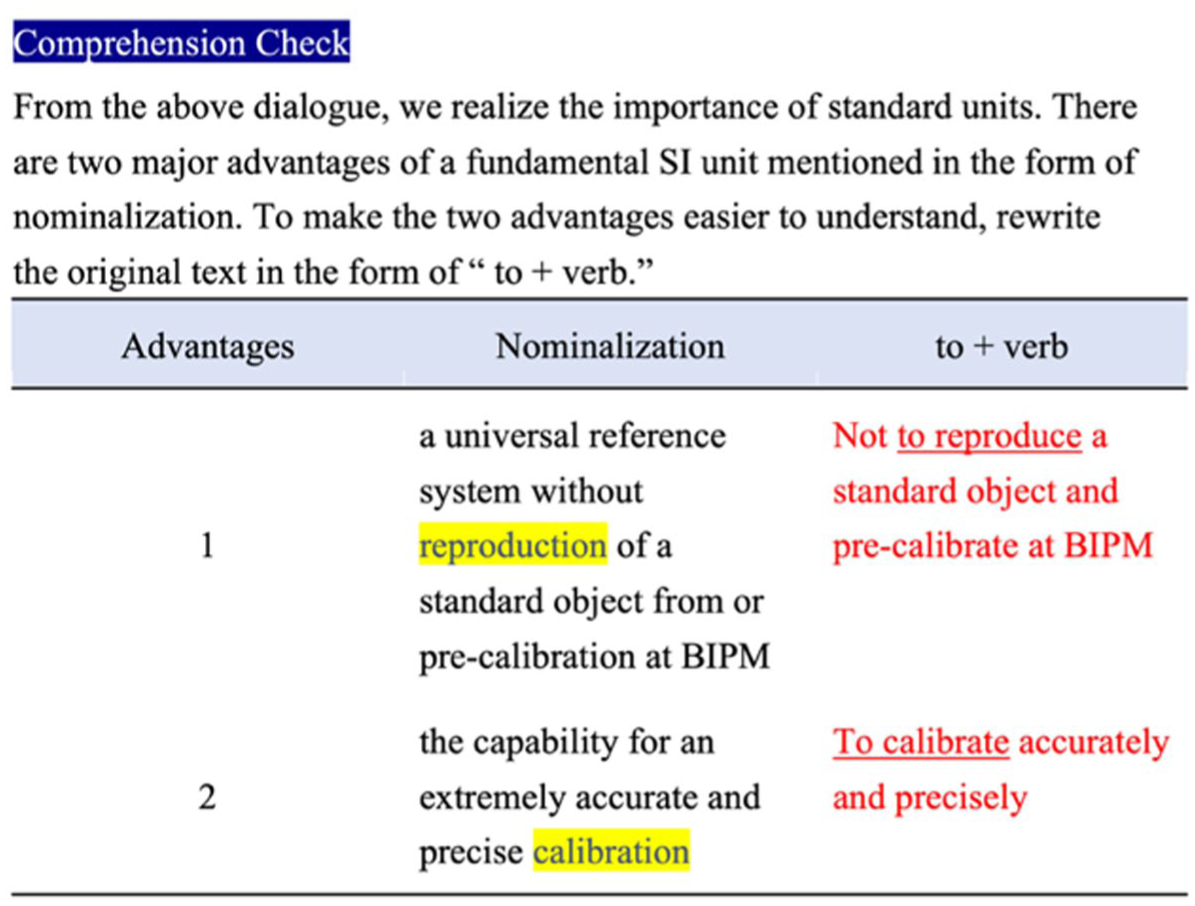
Comprehension check on nominalizations.
2 How did the CLIL teachers perceive the genre-based scaffolding design experiences via interdisciplinary teacher collaborations?
In the process of designing genre-based scaffolds for English scientific texts, the participating teachers encountered various challenges and gained new insights. Their perceptions of these design experiences in interdisciplinary teacher collaboration were characterized by (1) confronting challenges and (2) gaining new insights.
a Confronting challenges
When the participating teachers first encountered English scientific texts, their primary concern was what kind of learning scaffold students would need. For instance, Physics teacher A emphasized that the focus of scaffold design was entirely on subject knowledge and students’ learning capabilities. Initially, she was unclear about the linguistic functional structure and logical relationships of the scientific texts, as revealed in her reflection excerpt: When we first received this text, we were entirely thinking about what kind of learning scaffold students would need when they got this text. So, our focus was entirely on subject knowledge and the abilities students have learned in school. (Physics teacher A)
This problem also happened to English teacher B when she considered more about the potential content difficulties students might face rather than the linguistic functions of the text, as revealed in her account: ‘I first thought about the content difficulties students might encounter and then designed the scaffold activities.’
It was observed that the teachers were unfamiliar with genre analysis at the very beginning of designing language scaffolds. In particular, Physics teacher A and English teacher A initially felt confused and uncertain about the functional types of the text when analysing texts. Thus, designing appropriate linguistic scaffolding to help students understand the English text was challenging, as reflected in the following meeting records and reflection excerpts: I’m not very clear about the text structure and logical relationships. (Physics teacher A; interview transcription) The workshop explained that scientific texts often exhibit the phenomenon of nominalization and provided clear examples. However, since it was only a conceptual introduction, there remained a gap in understanding how to apply this concept to the design of scaffolding. (English teacher A; reflection report)
Furthermore, the teachers had a problem with identifying linguistic scaffolds. For example, English teacher A found it challenging to identify linguistic scaffolds, like distinguishing nominalizations such as ‘intensity’. In the sentence: ‘The term “quantum” was introduced in 1900 by Max Planck, who developed a function describing the intensity distribution of black-body radiation,’ she struggled to define ‘intensity’ as either terminology or nominalization. In fact, ‘intensity’ can refer to a specific scientific concept or abstract the adjective ‘intense’ into a noun, depending on context.
Similarly, English teacher B encountered difficulties in identifying typical examples of linguistic structures within scientific texts. For instance, in the Kibble balance manual, it was challenging to locate a section that explicitly demonstrated the ‘result’ component of an experimental report. This issue complicated the application of the categories she learned, as shown in her reflection report below: When reading the experimental procedures, besides knowing that the paragraph belongs to the ‘experimental account’ category, I would also pay special attention to the three elements within the paragraph: ‘goal’, ‘method’, and ‘result’. However, while analysing the text, I discovered that some paragraphs only contained a portion of these elements. For instance, in the Kibble Balance text, the ‘result’ of the experimental account could not be identified. (English teacher B; reflection report)
b Gaining new insights
Through interdisciplinary teacher collaborations, the teachers gained insights into analysing English scientific texts. For example, with the help of English teacher A, Physics teacher A came to realize linguistic features, uncovering texts’ underlying implications. She also discovered details associated with language learning, enriching her understanding of English scientific texts. This experience is described in a reflection report and an interview below.
Through the discussion process with the English teacher, I learned to pay extra attention to the related word connections beneath the surface of the text (conjunctions, verb tenses, etc.) and their functions, further seeing the hidden implications behind the text. (Physics teacher A; interview transcription) Often when I was thinking, I would approach it from my science learning perspective. Then English teacher A would provide input, for instance, considerations needed in designing an English question, which was not thought of initially . . . So there were some details about language learning that I hadn’t realized before. (Physics teacher A; reflection report)
On the other hand, English teacher A noted that sometimes, due to a lack of subject background knowledge, there was uncertainty about whether certain paragraphs belonged to information reports or experimental narratives. However, through collaborations with Physics teacher A, she was able to clarify these confusions and better understand the structure and content of the text. The exchange enhanced English teacher A’s understanding of English scientific texts, as revealed in the following interview excerpt.
We were a bit unsure about each paragraph, as to which one is classified as an information report. For instance, we didn’t know whether this sentence should be an identification, or if it’s describing characteristics. This uncertainty was partly due to a lack of subject background knowledge. However, through preparation with Physics teacher A, she explained this concept to me, and we together clarified whether this paragraph should be categorized as an experimental narrative or an informational text. (English teacher A; interview transcription)
Similarly, Physics teacher B and English teacher B established a collaborative model where the English teacher primarily deconstructed the text, and the subject teacher provided assistance to ensure a consistent understanding of linguistic functions. This collaborative model is highlighted in Physics Teacher B’s reflection report below.
Our understanding is that the English teacher plays the primary role in interpreting the text, while the subject teacher plays a supporting role. Therefore, our approach is that English teacher B first lists the linguistic functions and features of the text, and then we collectively confirm whether our understanding of the linguistic functions is consistent. (Physics teacher B; reflection report)
VI Discussions
1 How scaffolds were created in material development
The purpose of this study is to explore how the CLIL teachers who participated in the study created genre-based scaffolds related to identifying the linguistic structures and features of the texts, such as functional stages, conjunctive relations, and nominalization on English scientific materials. Three main steps are recognized: Enhancing students’ genre-based knowledge through explicit tutorials, raising students’ linguistic awareness through color-marking, and supporting students’ understanding through comprehension check. These findings can contribute to the literature on the importance of explicit teaching in CLIL by emphasizing how SFL-based genre pedagogy can help CLIL teachers develop students’ understanding of linguistic structures and features inherent in English scientific materials through input processing techniques.
As reported above, one of the findings about research question 1 is that the teachers developed explicit tutorials to help students understand the genre and the language of English scientific materials. The explicit tutorials serve as metalinguistic feedback, which involves providing learners with explicit information about linguistic forms, including explanations of why certain forms are used and how they function within the language (Henry, 2024). In this sense, the tutorials aimed to develop students’ genre-based knowledge in academic contexts in L2. This finding suggests that the tutorials can explicitly enhance students’ comprehension of the linguistic and rhetorical features of scientific texts. The study contributes to the field of CLIL by showing how CLIL teachers can create genre-specific tutorials to develop students’ scientific literacy in L2. This has implications for the design and implementation of genre-based scaffolding in CLIL classrooms.
Furthermore, the present study also found that the participating teachers designed scaffolds that highlighted specific linguistic features through color marking, such as functional stages, logical connectors, and nominalizations. The color-marking is an instructional technique about input enhancement (Henry, 2024). This finding adds to the literature on the genre literacy approach in science education, which has shown the benefits of drawing students’ attention to science language in the classroom, as reported in Adams and Lim’s (2020) study. A pedagogical implication of this finding is that teachers need to be aware of the potential of color-marking as a tool for enhancing students’ science literacy and to incorporate it into their material design and instruction.
Finally, with regard to research question 1, the present study also found how two pairs of teachers designed comprehension questions to foster students’ understanding of the content and language in CLIL materials. This finding aligns with Adams and Lim’s (2020) research, wherein they discussed a collaborative building exercise during which the educator employed questioning techniques to gauge pupils’ grasp of nominal groups. Comprehension questions form an integral part of input processing, as argued by VanPatten (2015). This concept is exemplified in other techniques such as content-based structured input (CBSI) by Walenta (2018), which employed the same lexical elements (i.e. the glass fins) in different questions like What braces the glass fins? and What do the glass fins brace?, encouraging students to pay attention to grammatical structures of subject and object while learning content knowledge.
In summary, this research contributes to the existing knowledge base by emphasizing the significance of scaffold design in creating materials for CLIL. Specifically, it reveals how the participating teachers created and integrated scaffolds they perceived as effective, i.e. metalinguistic feedback, input enhancement, and comprehension questions. These support strategies are in line with VanPatten’s (2015) techniques for input processing, which can develop learners’ linguistic awareness (Woll & Paquet, 2025). The present study suggests that teachers need to consider how input processing techniques can be applied to CLIL material development.
2 The teachers’ perceptions of genre analysis through interdisciplinary teacher collaborations
This study also emphasizes the role of the interdisciplinary collaboration between physics and English teachers in developing their genre literacy on English scientific texts. At first, the teachers faced difficulties in understanding the genre of scientific texts. Through the collaborative process, the teachers reported learning new perspectives on genre analysis and scientific language, which helped them develop their genre-based pedagogical knowledge and practices.
One of the main findings is that the structured teacher pairs, consisting of physics teachers A and B as well as English teachers A and B, developed a collaborative model that enabled them to deconstruct and comprehend the linguistic functions and features of the English scientific texts. This model contrasts with the informal and organic interactions reported by Pham and Unaldi (2022), where the teachers in a Vietnamese CLIL program did not share a consistent understanding of the genre and language of the scientific texts, and thus failed to adopt a dual-focused approach to teaching content and language. The present study suggests that the structured teacher pairs’ collaborations enhanced their genre literacy and pedagogical knowledge, which can benefit both the content and language learning of the students in the CLIL context. Specifically, the interdisciplinary teacher collaborations enabled Physics teacher A to learn more about language learning, enhancing her comprehension of English scientific texts and motivating her to ask for more assistance from the English teachers. The interdisciplinary teacher collaboration increases the linguistic awareness of content teachers, as argued by Doiz et al. (2019) and Lo (2019).
In addition, this study also reveals that the participating teachers thought that they had developed their genre literacy in reading and teaching English scientific texts. Specifically, this study contributes to the literature on CLIL by expanding the knowledge base of content and language teachers regarding the use of input processing techniques for genre analysis in CLIL material design, such as tutorials, color-marking, and comprehension questions. This contrasts with the general CLIL teachers who often lack linguistic support and awareness in content instruction, as reported by previous studies (Doiz et al., 2019; Lo, 2019; Pham & Unaldi, 2022). In addition, this study responds to the call for more effective cross-curricular cooperation in CLIL contexts, which has been identified as a major challenge by previous research (García & Vázquez, 2012; Rui et al., 2024; Seguí, 2020). By facilitating the exchange of expertise and resources between content and language teachers, the interdisciplinary teacher collaboration fostered a more integrated and coherent approach to teaching science through English. The findings suggest that such collaboration can enhance the quality of CLIL instruction and support CLIL teachers’ material development competency (Seguí, 2020).
VII Conclusions
This study explores how CLIL teachers created genre-based scaffolds for English scientific materials and how they perceived the role of genre analysis in their material development. The findings showed that the teachers developed explicit tutorials, color-marking, and comprehension questions to enhance students’ genre knowledge, linguistic awareness, and content understanding. Specifically, the study contributes to the literature by highlighting the use of input processing as a strategy to draw students’ attention to the linguistic features of scientific texts, such as functional stages, logical connectors, and nominalizations. Moreover, the study emphasizes the importance of the interdisciplinary collaboration between physics and English teachers in developing their genre literacy and pedagogical knowledge in the CLIL context.
Different from the traditional viewpoint of emphasizing implicit knowledge (unconscious, intuitive understanding of language) as the primary goal of language learning, this study echoes Suzuki and Crowther’s (2025) study, which highlighted the benefits of developing explicit knowledge through awareness-raising exercises that fostered learners’ metacognitive skills and deliberated language use for language learning and communication in the context of global Englishes. As such, the study contributes to the literature by promoting input processing as a strategy to draw students’ attention to the linguistic features of scientific texts, such as functional stages, logical connectors, and nominalizations. This experience with creating input processing tasks could help CLIL educators enhance their pedagogical understanding of genre analysis, making it less challenging for them to teach language in CLIL instructions, as remarked by Koopman et al. (2014).
In addition, this study also explores how the teachers perceived the role of genre analysis in their material development. This study emphasizes the importance of the interdisciplinary collaboration between physics and English teachers in developing their genre literacy and pedagogical knowledge in the CLIL context. This study supports Pham and Unaldi’s (2022) recommendation of genre-based collaboration, which advocated for a shared understanding and responsibility of teaching genre across the disciplines. Specifically, CLIL materials should outline common genres in both language and content subjects, providing support for teaching these genres effectively. This helps students understand and use the specific language features required in different academic disciplines, a process of unpacking scientific text that is advantageous to learners, despite the difficulty inherent in the subject content (Cervetti & Pearson, 2018).
However, there are limitations that suggest directions for future research. Firstly, the study only involved four teachers, which limited the generalizability of the findings. Future research can include more teachers from different disciplines to explore the diversity and complexity of genre-based scaffolding in CLIL. Secondly, the study only analysed the teachers’ reflections and interviews, which might not capture the full extent of their learning and challenges. Future research can employ more data sources, such as observations and surveys, to triangulate the findings and gain more insights into the teachers’ experiences and perceptions. Thirdly, the study primarily focused on teacher perceptions as anecdotal evidence regarding material design and development process. However, it did not investigate the actual implementation and evaluation of genre-based scaffolds in the classroom. Future research may investigate the impact of the input processing scaffolds on students’ learning outcomes. Including empirical data such as pre/post-test results or student feedback may offer useful information on the effects of these strategies on student learning.
Footnotes
Funding
The authors disclosed receipt of the following financial support for the research, authorship, and/or publication of this article: This work was supported by the National Science and Technology Council in Taiwan with grant number MOST 111-2410-H-003 -008 -MY2.
Ethics approval statement
The Research Ethics Committee at National Taiwan Normal University in Taiwan granted approval for this study with the REC number 202205HS034.
