







Abstract
Despite the wide recognition of the importance of parental involvement in children’s English learning, research in this area has only gained momentum since the last two decades. This article systematically reviews studies on parental involvement in children’s English learning from 2000 to 2025. Through a rigorous paper selection process, 67 empirical studies were included for final synthesis. The analysis identified three major themes: (1) parental beliefs and attitudes, (2) parenting practices, and (3) challenges and strategies of parental involvement. The findings reveal the dynamic and complex relationships among these aspects of parental involvement, highlighting their differential impacts on children’s English learning, which is often influenced by various individual and contextual factors. Based on these findings, the review proposes a tentative framework that outlines the processes and impacts of parental involvement in children’s English learning and offers actionable suggestions for parents and educators. Furthermore, the review identifies crucial gaps and suggests research agenda to advance future studies in this field.
I Introduction
Following the growing global dominance of English as a lingua franca (ELF), a fervent zest for English education has been energized across various countries and regions around the globe (C.C. Liu & Chung, 2024). In particular, the value placed on children’s English learning has markedly increased in English as a foreign language (EFL) and a second language (ESL) contexts, as the upstream effects of English in these contexts are far evident in putting individuals in more favorable positions in social class, employment market, higher education, and so forth (Y. Liu, 2022). However, it is noteworthy that children who are non-native English speakers may encounter considerable challenges and pressures when learning English, particularly in high-stakes academic environments (Choi et al., 2023; Mushi, 2002). Amid these challenges, the role of parents in facilitating children’s English language education has received increasing attention in the past two decades. In the wake of Bronfenbrenner’s (2005) bioecological theory which accentuates the significance of proximal process and daily interactions with caregivers in children’s language learning, the research interest in the role of parents in shaping children’s English learning achievement has been driven greatly. From a bioecological lens, language learning is a social process wherein parents and family serve as the immediate environment. Such a perspective points to the robust advantages of parents in children’s English learning.
Within the broader literature, research on family language policy (FLP) has emerged as a closely related field that also examines parental roles in children’s language development (Curdt-Christiansen & Palviainen, 2023). However, FLP studies largely focus on multilingual and immigrant contexts, often aiming to preserve heritage languages and navigate language ideologies in immigrant families and multilingual societies (e.g. Hollebeke et al., 2022). In contrast, research on parental involvement in children’s English learning typically fall within the domain of TESOL, focusing on non-native English-speaking parents and children in both EFL and ESL contexts. Therefore, while FLP research has significantly contributed to understanding parental agency and home language practices, especially in multilingual and immigrant contexts, it does not fully account for the specific indicators of parental involvement (e.g. parental beliefs and diverse practices) in the English learning of non-native English-speaking children. As such, despite the large body of review and empirical research on FLP, research on parental involvement in children’s EFL and ESL learning serves as an important complement to FLP literature by offering a more targeted and in-depth examination of how different indicators of parental involvement can shape children’s English-specific development, rather than broader multilingual development or ideological negotiation.
Parental involvement, broadly defined as parents’ participation in their children’s education to enhance academic achievement, is inherently multidimensional, encompassing both the socialization process (e.g. parental values and expectations) and explicit behaviors (e.g. homework monitoring) related to children’s learning (Arens & Jude, 2017). Adopting the domain-specific perspective (Smetana, 2017), this study acknowledges that the effects of parental involvement may vary across subjects, with unique implications for English learning. While English academic performance (e.g. proficiency) have been common outcome measures (Xu et al., 2020), broader indicators such as motivation and emotions also play critical roles in English development (Choi et al., 2023). Therefore, this study defines parental involvement in children’s English learning as parents’ engagement, either through socialization or explicit behaviors, aimed at supporting any aspect of children’s English learning.
Among the research into parental involvement in children’s English learning, most empirical studies have focused on overt parenting practices, with limited attention given to parents’ goals and beliefs (J. Wang & Bai, 2023). However, these internal dimensions are crucial, as they shape not only the extent and forms of parental involvement practices but also children’s English learning outcomes (Carmel, 2022; Lai et al., 2022; Zeng & Yung, 2024). Moreover, existing studies on parenting practices in children’s English learning have yielded mixed findings, indicating that parental involvement (e.g. parental controlled practices) can also backfire on children’s English learning outcomes unless certain essential requirements are fulfilled (Butler & Le, 2018). Additionally, recent studies have evinced that many parents, especially those who are non-native English speakers, encounter challenges in effectively participating in their children’s English learning due to a variety of factors, such as the increasing use of technology in home language learning and policy shifts like China’s Double-Reduction policy (Y. Chen et al., 2019; S. Chen et al., 2022; Zeng & Yung, 2024). Given the complexity of these issues, which cannot be adequately addressed by a single study, a systematic review of existing studies is necessary to understand the factors and indicators that influence the effectiveness of parental involvement in children’s English learning, as well as the barriers parents may encounter in these contexts.
Grounded in the applied linguistics tradition and extending beyond FLP scholarship, the current review focuses specifically on parental involvement in children’s English learning across EFL and ESL contexts where both parents and children are non-native English speakers. In doing so, we set out to critically examine relevant existing empirical studies published over the past two decades to identify the main themes and synthesize key findings. This review can offer valuable insights for equipping parents and intervention programs with strategies to promote children’s English development. Based on the synthesis and interpretations of previous studies and findings, the review also seeks to identify diverse indicators of parental involvement and their impacts, reveal the potential gaps in research scope and methodologies, and provide a timely and nuanced understanding of current practices, challenges, and future directions within applied linguistics and TESOL research. To achieve these goals and address the critical issues mentioned earlier, three questions were proposed to guide the review:
Research question 1: What are parents’ beliefs and goals regarding (their involvement in) children’s English learning, and how do these beliefs and goals affect parental involvement and children’s English learning?
Research question 2: What practices do parents engage in to support children’s English learning, and how are these practices associated with children’s English learning outcomes?
Research question 3: What challenges and barriers are identified in parental involvement in children’s English learning, and what coping strategies do parents exploit in response to these challenges?
II Methods
1 Literature search and study selection
Studies related to parental involvement in children’s English learning were identified through a search in the most commonly used digital databases for reviews: PsycINFO, ERIC, ProQuest, Google Scholar and Web of Science (Harari et al., 2020). Consistent with the aim of this review, the researchers conducted tailored keywords searches of databases in all fields (e.g. title, abstract, keywords, etc.) in April 2025, using linguistic variations of three groups of concepts ‘parental’, ‘involvement’ and ‘English learning’ (Table 1). Specifically, the final searches of literature were followed by queries of the combination of three categories of ‘parental’ (e.g. parental, family, home, etc.), ‘involvement’ (e.g. involvement, engagement, participation, support, etc.) and ‘English learning’ (e.g. English learning, English education, etc.). To locate more publications, we also looked up not only the references in the initial list of pertinent articles but also the high-quality journals in the field of language and education (e.g. Reading and Writing, Language Teaching Research, and TESOL Quarterly).
The combination of terms for literature search.
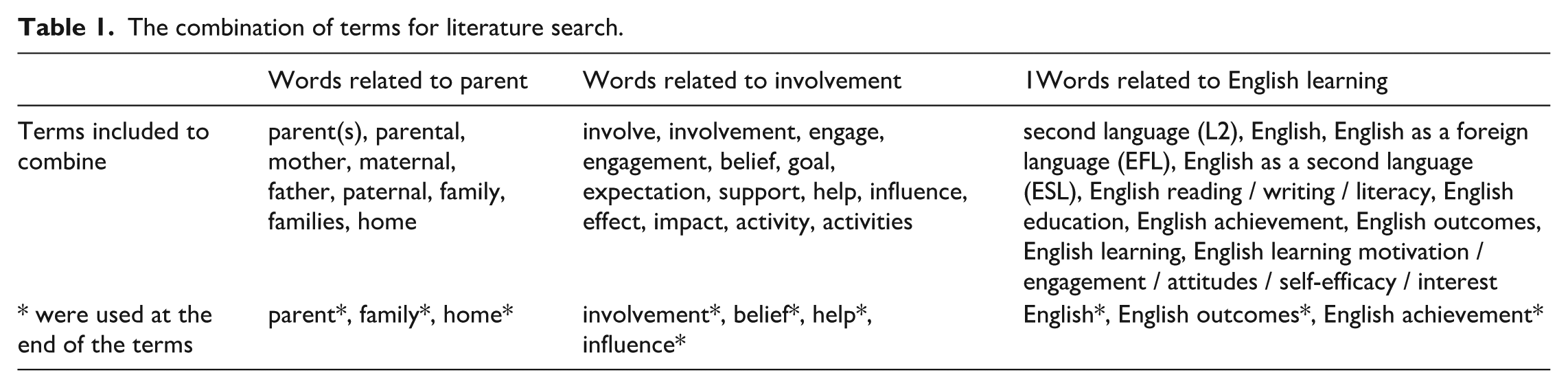
Through various combinations of descriptors employed in the original searches, more than 4,000 studies of different types were identified (e.g. books, journal articles, government reports, dissertations, conference proceedings, etc.). Thereafter, to ensure research quality and empirical relevance, only studies published in academic journals, books, edited volumes, or doctoral dissertations were considered (Ghamrawi et al., 2025; Petticrew & Roberts, 2008). Moreover, the publishing date range was restricted to the period between 2000 and April 2025. The rationale for focusing exclusively on research after 2000 stems from the reality that greater emphasis has been placed on parental involvement ever since that time due to relevant policies such as neoliberal policies of accountability in education (Nawrotzki, 2012; Reay, 2013). After the second selection based on these criteria, 1,615 articles were identified for further consideration.
2 Exclusion criteria
The process and criteria of excluding articles are illustrated in Figure 1. Among the 1,615 articles filtered from four digital databases (PsycINFO, n = 139; ERIC, n = 224; ProQuest, n = 175; Google Scholar, n = 812; Web of Science, n = 265), 67 were found to fit all inclusion and exclusion requirements. Specifically, of the 1,615 articles filtered and accessed in the four databases, 702 were duplicated. To ensure the quality of the study, studies that did not meet predefined research standards were excluded (n = 419), including those not published in referred journals, books, or doctoral dissertations, which are more likely to contain empirical findings based on rigorous methodology and design (Ghamrawi et al., 2025; Petticrew & Roberts, 2008). This step reduced the number of studies from 913 to 494. Then, to be eligible for inclusion in the review, studies pertaining to parental involvement in children’s general education, with English-related outcome not being part of the research question or without focusing on children who are non-native English learners (EFL/ESL learners), were removed (n = 309). Notably, to capture diverse perspectives on parental involvement, studies were not excluded based solely on data source, allowing retention of those using indirect measures such as child self-reports on perceived parental involvement, provided they met the empirical focus on EFL/ESL contexts. For the rest of the 185 articles, the age of children (during the period of past experience of parental involvement) were checked to identify whether the studies focused on children aged 0 to 18 years, leading to the exclusion of 92 articles that involve learners above 18 years old. Finally, aligning with the PRISMA 2020 guidelines, which emphasize the importance of including studies with empirical evidence to ensure transparency, reproducibility, and applicability of systematic reviews (Page et al., 2021), studies lacking empirical data were removed to enhance the methodological rigor and practical relevance of the review (n = 26). The final number of studies included in this study is 67.
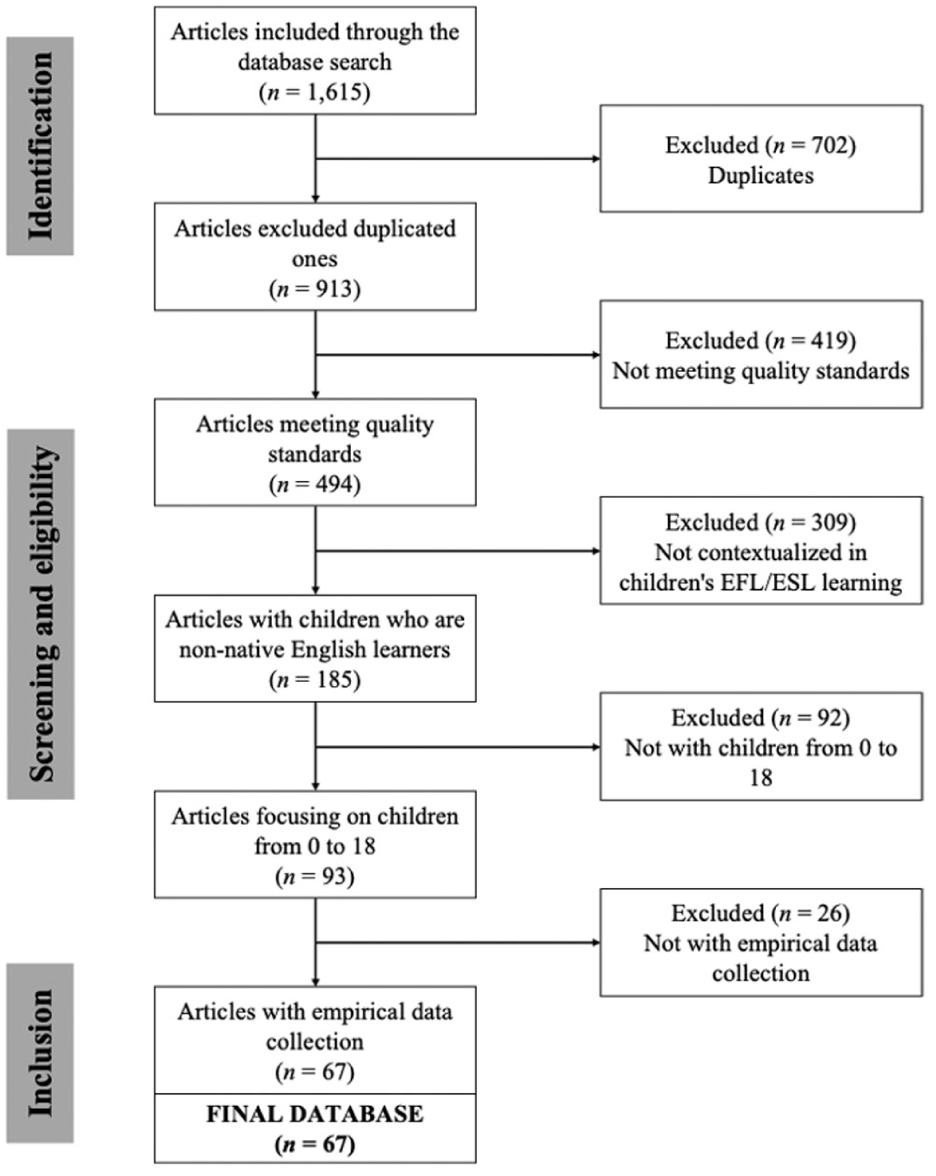
Flowchart of article selection process.
3 Data coding and analysis
A content analysis was adopted to synthesize the identified studies (Elo & Kyngas, 2008). Initially, we extracted the basic information about the studies (e.g. publication year, research context, and methodology) into an Excel spreadsheet (Table S1), which provides an overview of research on parental involvement in children’s English learning in diverse EFL and ESL contexts. Following this, a quality appraisal was conducted using a checklist (see Table S2) to assess each of the 67 studies for methodological rigor, including clarity of research design, risk of bias, and robustness of data collection and analysis (Tang et al., 2025). All studies met the quality appraisal standard for inclusion. Next, we employed an inductive coding approach to categorize the studies based on their foci, allowing themes to emerge organically from the data. This inductive, bottom-up thematic approach was chosen due to the relatively scant review work in this area. Adopting an explorative and data-driven nature can avoid over-fitting data to Bronfenbrenner’s (2005) general bioecological model, thus allowing for emergent patterns specific to parental involvement in children’s EFL/ESL learning. Particularly, the inductive coding approach was informed by two frameworks: (1) Bronfenbrenner’s (2005) bioecological theory, which highlights the multiple layers of mesosystem (e.g. the relationship between children’s parents and their school), exosystem (e.g. social settings like parents’ SES or community resources), and macrosystem (e.g. broader cultural context including societal beliefs and cultural norms); and (2) the multidimensional framework of parental involvement adopted in this review, including both the socialization process and explicit behaviors related to any aspect of children’s English learning (Arens & Jude, 2017).
Specifically, three authors independently coded the research findings, grouping them into different categories (subthemes), such as parents’ beliefs and goals regarding their children’s English learning and parenting practices in the digital era. Initial agreement was 85% across codes, indicating substantial agreement. Discrepancies were logged in a spreadsheet and resolved through collaborative discussions until consensus was reached. An audit trail was maintained via version-controlled coding documents to ensure transparency. Then, the similar categories were consolidated into overarching themes at a higher level. Through iterative coding and analysis, three major themes emerged in response to the research questions: (1) parental beliefs and attitudes; (2) parenting practices; and (3) challenges and strategies of parental involvement. Table 2 presents a detailed summary of the final coding results.
Data analysis results.
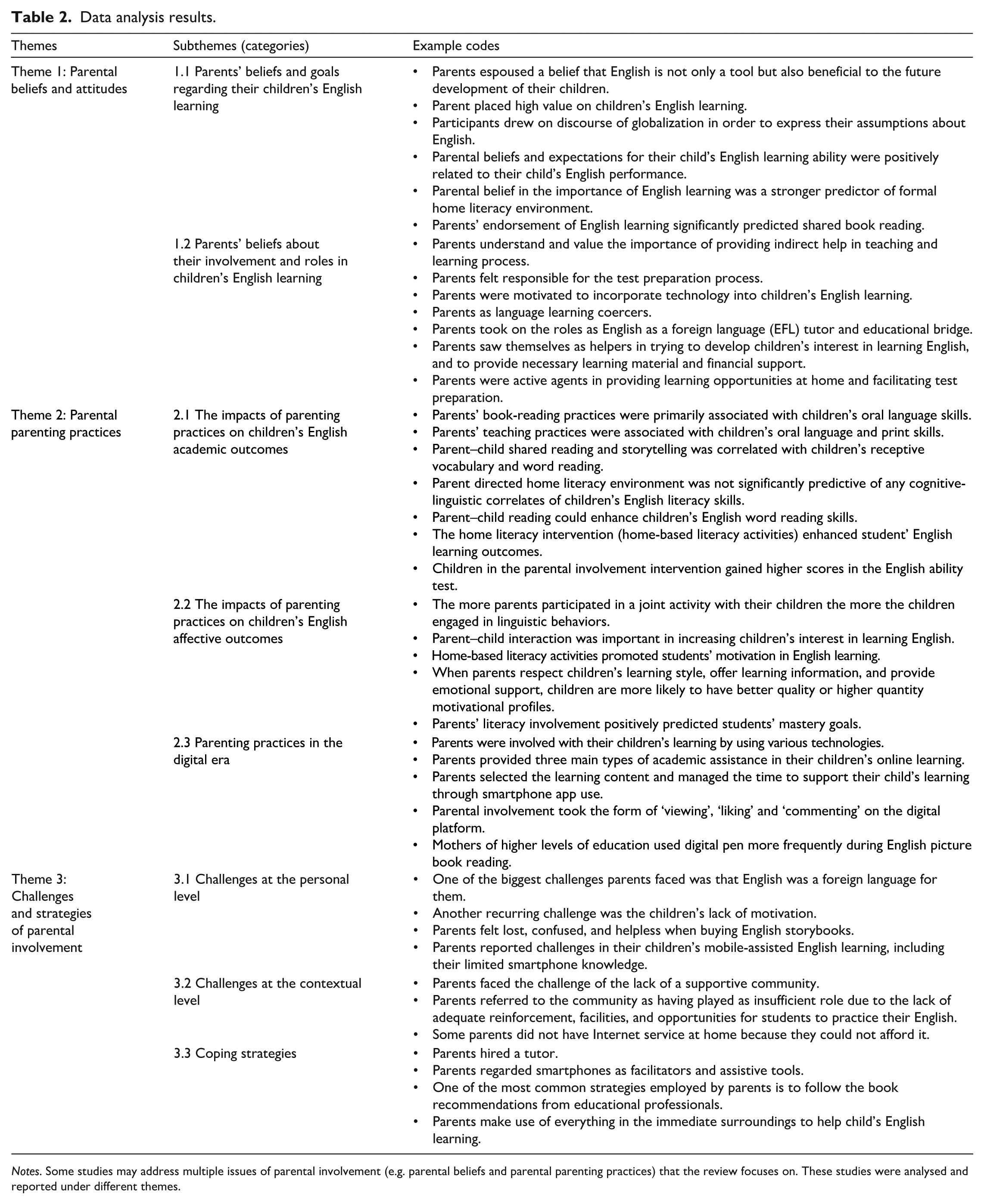
Notes. Some studies may address multiple issues of parental involvement (e.g. parental beliefs and parental parenting practices) that the review focuses on. These studies were analysed and reported under different themes.
III Findings
This section presents critical interpretations of existing research on parental involvement in children’s EFL or ESL learning, structured around three identified main themes.
Theme 1: Parental beliefs and attitudes
Research on this topic spans various geographic contexts, which can be further subsumed into two subthemes: parents’ beliefs and goals regarding their children’s English learning (Table S3) and parents’ beliefs about their involvement and roles in children’s English learning (Table S4).
a Parents’ beliefs and goals regarding their children’s English learning
Among the 15 empirical studies identified under this theme, most investigated parental beliefs and perceptions regarding the importance of English (e.g. H. Liu, 2024; Zeng & Yung, 2024). In general, these findings revealed that parents from various sociocultural backgrounds attach great significance to English and recognize multiple critical roles that English can play in their children’s future. These beliefs, in turn, were found to be associated with positive parental involvement beliefs. For instance, research in the Israeli (Carmel, 2022), Taiwanese (Lee, 2008), and Chinese (H. Liu, 2024; Zeng & Yung, 2024) EFL contexts found that parents believed English to be valuable for achieving children’s global aspirations and broadening their cultural horizons, and these positive beliefs about English motivated parents to proactively invest knowledge and economic resources into their children’s English education.
Beyond influencing parental involvement beliefs, parents’ beliefs about English are also linked to children’s English learning outcomes. Studies have shown that parental expectations and positive perceptions of their children’s English competence enhance children’s English motivation, self-perceived competence, and performance, especially as they progressed to higher grade levels (Butler, 2015; Butler & Le, 2018; Morris et al., 2013). Additionally, research has explored how different parental goal orientations shape children’s English learning approaches. While parental performance goals generally foster children’s performance-oriented goals, their effects on children’s mastery goals are mixed. Some studies report positive associations (He et al., 2015), while others reveal none (J. Wang & Bai, 2023). By contrast, parental mastery goals consistently support children’s mastery-oriented learning and reduce avoidance tendencies.
Parental beliefs about the importance of English also play a crucial role in shaping both direct and indirect parenting practices (Al Harthy, 2020), although the effects vary different parental behaviors. For example, parental positive beliefs can foster a positive home literacy environment, which supports children’s early English development (Lai et al., 2022). However, such beliefs do not influence all practices equally. While parental endorsement of English is linked to parent–child shared book reading, it shows no association with independent reading or storytelling (S. Chen et al., 2022). Similarly, Korean parents who value English may prioritize children’s English learning by investing in private tutoring, rather than cultivating an English-rich home environment (Seo, 2025). Differences in beliefs between spouses can further complicate practices, such as disagreements over providing error-free English input (Seo, 2022).
Overall, current studies on this topic have illustrated the impacts of parental beliefs and goals on: (1) parental attitudes towards their involvement; (2) children’s English learning; and (3) parenting actual investment and practices in this process. However, variations exist in the associations between parental beliefs about English and parenting behaviors, possibly due to differences in research contexts (e.g. EFL/ESL settings, primary/secondary schools), research methods (e.g. longitudinal quantitative studies, ethnographic case studies), and participants (e.g. boys’ reports, girls’ reports, parents’ reports; Arens & Jude, 2017).
b Parents’ beliefs about their involvement and roles in children’s English learning
Another line of research explored how parents perceive their involvement and roles in children’s English learning in different EFL and ESL settings, including Turkey, Oman, Nepal, and Canada. These studies revealed that parents generally hold positive attitudes towards involvement in children’s English learning, including homework assistance and parent–teacher partnership (Kalaycı & Öz, 2018), at-home literacy practices (Ladky & Peterson, 2008), English activities at school (Al Harthy, 2020), and English test preparation (Dawadi, 2020). Parents believed that their involvement could take both formal and informal forms (Ladky & Peterson, 2008), as well as direct and indirect approaches (Kalaycı & Öz, 2018). These active involvement beliefs have been linked positively with children’s English motivation via specific parenting behaviors (H. Liu, 2024).
The rise of educational technology has reshaped how parents perceive and engage in children’s English learning. In Y. Chen et al.’s (2019) study, while some parents, especially those with lower educational backgrounds, exhibited anxiety or technophobia when involved in children’s mobile-assisted English learning, most appreciated mobile devices for their accessibility and resourcefulness, which enhanced their enthusiasm and participation. Such variation in parents’ attitudes towards their involvement may be attributed to parents’ diverse race/ethnicity, educational levels, and socioeconomic and cultural backgrounds (Y. Chen et al., 2019).
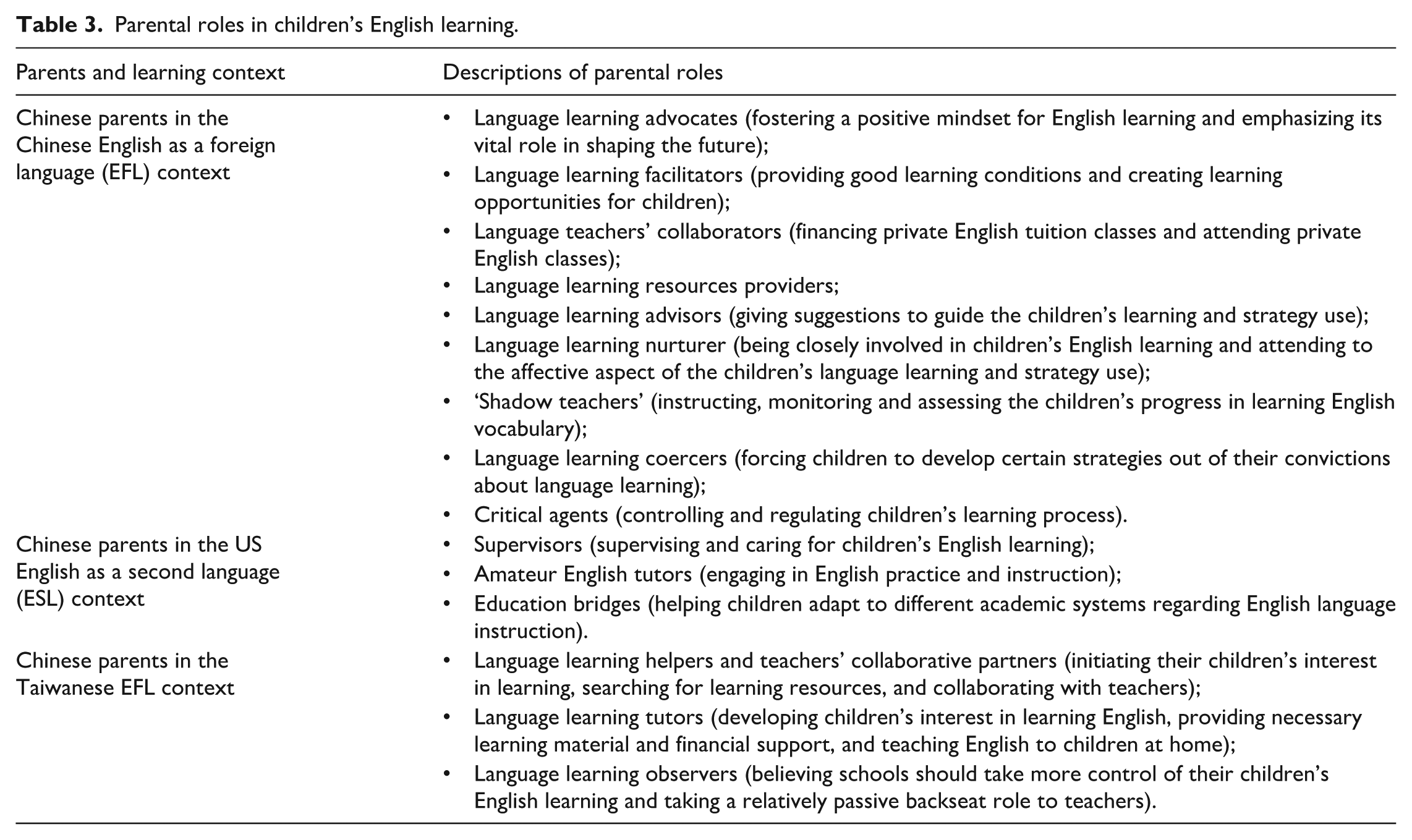
Beyond parental attitudes towards their involvement, extant studies have identified a range of roles that parents can play in their involvement in children’s English learning. Predominantly, this body of work, centered on Chinese parents, indicates that their perceived roles are generally positive yet exhibit variation across the contexts they are situated in, such as Chinese EFL and US ESL settings (Table 3). In Chinese EFL contexts, parents have been described as language facilitators, teachers’ collaborators, resource providers, learning advisors, and even coercers and critical agents who actively regulate and control their children’s learning processes (Gao, 2006, 2012; Zeng & Yung, 2024). By contrast, Chinese immigrant parents in US ESL contexts often take on roles as amateur tutors and cultural bridges, helping children adjust to new academic environments (Y. Huang et al., 2023). Variations also exist within similar contexts; for example, Taiwanese EFL parents with stronger English skills see themselves more as tutors, while others view themselves as helpers or motivators (Lee, 2010). However, these studies are often limited by small samples and a lack of depth in exploring the reasons behind such disparities. Importantly, parental roles are dynamic and can shift through targeted interventions. S. Huang’s (2013) study of a literacy bag project demonstrated that structured involvement opportunities can transform parents from passive supporters into active facilitators, boosting their confidence and promoting child-led learning. This adaptability opens up the possibility of activating parents’ positive and supportive roles through intervention projects.
Parental roles in children’s English learning.
By and large, existing studies indicate that parents’ beliefs about their involvement and roles in children’s learning vary based on different contextual and individual factors. This body of research is significant in that it offers empirical evidence of the associations between parental involvement beliefs, parenting practices, and children’s English learning, although the long-term impacts and causal relationships require further investigation.
Theme 2: Parenting practices
A range of studies have examined parents’ diverse practices in supporting children’s English learning and their impacts on children’s English development, including both academic (Table S5) and affective (Table S6) learning outcomes. Research in this area has also investigated parenting practices in the context of the digital revolution in English education (Table S7). These studies extend across multiple EFL and ESL contexts, such as China, Singapore, and the US.
a The impacts of parenting practices on children’s English academic outcomes
Research (n = 30) under this subtheme explores how diverse parenting practices contribute to various aspects of children’s English academic development. A substantial body of literature has examined the effects of home-based language practices and environments. However, the findings are inconsistent. On one hand, some studies have identified benefits of various parent–child language activities at home (e.g. parent–child shared reading, print teaching, and home literacy practice) on children’s English outcomes, including English school achievement (Arens & Jude, 2017; H. Wang et al., 2023), literacy abilities (Panferov, 2010), print skills (Kalia & Reese, 2009), receptive vocabulary and word reading (Lau & Richards, 2021), oral and expressive abilities (J.J. Chen & Ren, 2019; Dulay et al., 2019), as well as phonological awareness, alphabet knowledge, and reading development (O’Brien et al., 2020). On the other hand, some studies found no significant links between parents’ print teaching and children’s receptive vocabulary or phonological awareness (Kalia & Reese, 2009), nor between home literacy activities and children’s phonological awareness, vocabulary, or reading skills (Lau & Richards, 2021; C.C. Liu & Chung, 2024; O’Brien et al., 2020). These inconsistencies suggest that parental home literacy practices alone may not guarantee children’s enhanced English development. Notably, children’s motivation and autonomy during literacy activities appear as crucial moderators of these effects (e.g. C.C. Liu & Chung, 2024; Trainin et al., 2017). As C.C. Liu and Chung (2024) reported, child-initiated home literacy activities, instead of parent-directed instruction, predicted children’s stronger cognitive-linguistic skills, including phonological awareness, letter knowledge, and rapid naming.
In addition to parents’ home language practices, English exposure at home has been investigated as an important predictor of children’s English development. While it is commonly assumed that more home English input leads to children’s better English development (Paradis & Jia, 2017), existing research has revealed inconsistent results. Studies in Indian and US ESL contexts suggested that more English spoken at home effectively enhanced children’s phonological awareness (Kalia & Reese, 2009) and vocabulary development (S. Cheung et al., 2019). However, research in Canadian and US ESL contexts found no significant associations between English exposure at home and children’s English development, such as storytelling ability (Paradis & Kirova, 2014) and grammatical performance (Gutiérrez-Clellen & Kreiter, 2003). The contrasting effects may partly be explained by other parenting practices, such as book-reading activities, which can moderate the impacts of English exposure at home (Kalia & Reese, 2009).
Researchers have also examined the effects of parental creation of positive English learning environments. Some studies indicate that providing rich linguistic environments, through parental encouragement and the availability of learning resources, can foster children’s English development. For example, in the US ESL context, Trainin et al. (2017) reported that book availability at home was positively associated with Latino preschoolers’ oral language abilities. However, J.J. Chen and Ren (2019) found that among Chinese preschoolers in the US ESL context, the number of English books at home was not associated with children’s receptive and expressive oral abilities.
Besides correlational studies, several experimental studies have explored the effects of parenting practice interventions on children’s English development (Chow et al., 2010; Huennekens & Xu, 2010; Kessler, 2010; Roberts, 2008; St Clair & Jackson, 2006; St Clair et al., 2012; Tong et al., 2021; Wei & Zhou, 2012; Zhang et al., 2010). Conducted across various ESL and EFL contexts, including the US (n = 6), Hong Kong (n = 1), Canada (n = 1), and China (n = 1), these studies generally support the effectiveness of home literacy interventions in enhancing children’s reading skills, phonological awareness (Chow et al., 2010), utterance complexity (Huennekens & Xu, 2010), and vocabulary acquisition (Roberts, 2008; Tong et al., 2021; Wei & Zhou, 2012; Zhang et al., 2010). Some programs extended beyond parents’ literacy instruction to include homework assistance and provision of learning materials, which further promoted children’s English academic achievement (Kessler, 2010; St Clair et al., 2012). Admittedly, not all intervention programs yield positive outcomes. For instance, despite receiving eight weeks of family literacy training, Chinese children in Canada ESL contexts showed no gains in receptive vocabulary (Zhang et al., 2010).
In brief, research to date has demonstrated that demonstrated that particular parenting practices can positively influence children’s English development. However, inconsistent results exist, probably due to differences in research participants and contexts (e.g. preschoolers vs. primary school children, EFL vs. ESL), methodologies adopted (e.g. longitudinal quantitative study vs. qualitative case study), the specific English skills examined (e.g. literacy ability vs. vocabulary ability). Other influential factors may include the moderating effects of other parenting practices (e.g. book-reading activities, Kalia & Reese, 2009) and parenting styles (e.g. autonomy-supportive or authoritarian parenting styles, Butler & Le, 2018; Roopnarine et al., 2006). Moreover, while experimental studies generally affirm the benefits of parenting practice interventions in enhancing children’s English development, the focus and targets of these intervention programs influence their effectiveness in children’s English academic achievement.
b The impacts of parenting practices on children’s English affective outcomes
Beyond academic outcomes, a smaller body of research (n = 11) has explored the influences of parenting practices on children’s English affective outcomes, including learning interest, motivation, engagement, and goals. Although affective factors are widely recognized as crucial to children’s language learning (J. Wang & Bai, 2023), this area remains underexplored compared with academic outcomes, with studies conducted in diverse EFL and ESL contexts, such as China, South Korea, and the US.
Findings generally indicate that supportive parenting behaviors, such as encouragement, joint activities, home-based English practices, emotional support, and parent–child communication, positively affect children’s English learning interest, motivation, and engagement (e.g. Choi et al., 2020, 2022, 2023; Geng et al., 2023; Morris et al., 2013; Mushi, 2002; Tong et al., 2021; Zhang et al., 2024). Interestingly, while controlling parenting practices are often linked to reduced motivation and engagement (Joussemet et al., 2008), Butler’s (2015) study in the Chinese EFL context found such behaviors, such as imposing goals and making comparisons, did not undermine children’s self-confidence or motivation, potentially due to the Chinese cultural norms that children tend to internalize their parents’ goals as their own.
Some studies have also addressed the influences of parenting practices on children’s learning goals. For instance, parental literacy involvement, including book reading, word teaching, and parent–child English games, predicted children’s stronger mastery and performance-approach goals and fewer performance-avoidance goals (He et al., 2015), while parental assistance in English reading was linked to children’s increased reading amount through the mediation of children’s performance-approach orientation (Xu & Huang, 2020).
c Parenting practices in the digital era
With the digital revolution in language education, parents are increasingly involved in supporting children’s English learning through digital means. However, this area remains under-researched, with only five empirical studies, mostly qualitative, focusing on parenting practices in children’s technology-assisted English learning. Three case studies in Chinese EFL and US ESL contexts revealed both shared and context-specific parenting strategies in children’s digital English learning. Common practices included supervising online learning, setting screen time limits, and ensuring safe device use (Y. Chen et al., 2019; Tao & Xu, 2022; Xia & Gao, 2022). However, parents in the US ESL context tended to emphasize helping children develop digital literacy skills for autonomous learning (Y. Chen et al., 2019), while Chinese EFL parents primarily provided technology support, such as software use and device maintenance (Tao & Xu, 2022). Although small samples in these qualitative limit the generalizability, these differences suggest that parents adapt their practices in children’s technology-assisted English learning based on local educational norms and expectations.
Existing studies have also explored the impacts of digital tools on parenting practices and children’s English learning. In Hong Kong EFL context, the use of a digital platform enabled more active parental involvement in children’s writing, which in turn boosted children’s motivation (Moorhouse & Beaumont, 2020). Similarly, in South Korea, parental use of a digital pen during English reading increased children’s interest, though it did not affect the role of parent–child interaction in fostering children’s learning interest (Choi et al., 2020).
Taken together, current research suggests that digital tools can facilitate parental involvement and positively impact children’s affective outcomes in English learning, despite additional challenges and demands they may pose. Yet, research in this domain is still in its early stages, and more empirical research is needed to understand how parents can best leverage educational technologies to support their children’s English development.
Theme 3: Challenges and strategies of parental involvement
While the above-reviewed papers present parents’ general positive attitudes towards their involvement in children’s English learning, their actual involvement is often constrained by various factors. This body of studies (n = 15; Table S8), conducted in various geographic settings, has identified the challenges of parental involvement at both personal and contextual levels and examined a variety of coping strategies that parents exploit to navigate them.
a Personal factors
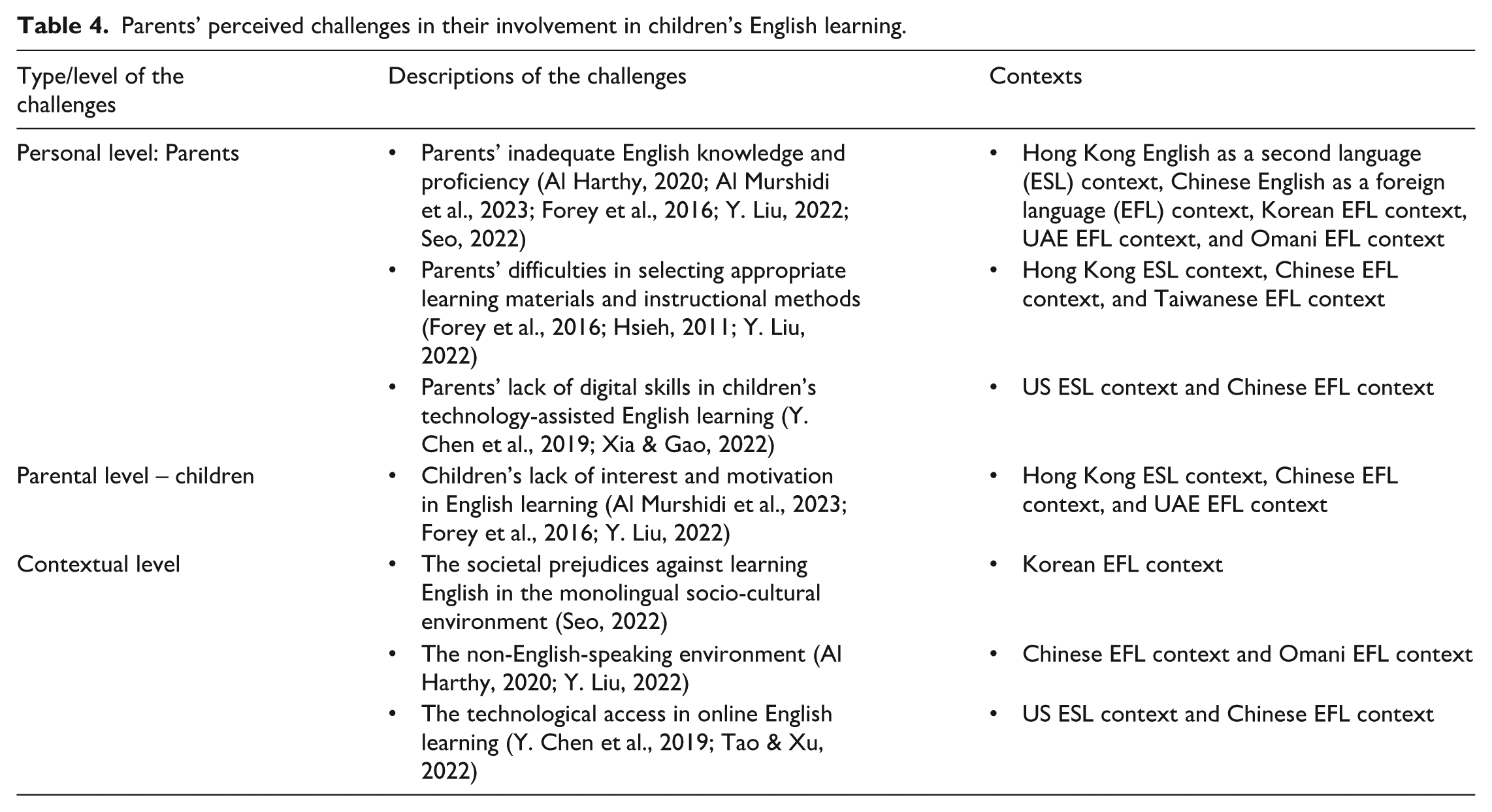
A key personal barrier is parents’ inadequate English knowledge and proficiency, which hinders their ability to provide authentic language input or facilitate English-related activities at home (Al Harthy, 2020; Al Murshidi et al., 2023; Seo, 2022). Beyond language proficiency, many parents also struggle to select appropriate learning materials or instructional methods, compared to their confidence in supporting their native language learning. For example, both Chinese EFL and Hong Kong EFL parents reported uncertainty in choosing suitable English books or literacy materials (Forey et al., 2016; Y. Liu, 2022). In Taiwanese EFL contexts, parents also reported uncertainty about the appropriate form of instruction to use at home (Hsieh, 2011).
Furthermore, parental lack of digital literacy presents another barrier to effective parental involvement, particularly in the context of children’s technology-assisted English learning. Several studies (Y. Chen et al., 2019; Xia & Gao, 2022) found that parents, especially those with lower educational backgrounds, lacked necessary skills to effectively use digital tools, leading to technical difficulties and reduced motivation to support their children’s English learning. These studies argue for the need to enhance both English proficiency and digital competencies among parents for their effective involvement in children’s digital English learning.
Notably, apart from parental factors, children’s lack of motivation is a significant constraint. For instance, Forey et al.’s (2016) research in the Chinese EFL context demonstrated that children’s lack of interest often leads in their disengagement from English storybooks and activities, thereby hindering effective parental involvement. This disengagement may be attributed to children’s unfamiliarity with the cultural content embedded in these materials, such as Western storytelling norms or themes (Y. Liu, 2022). Young children, in particular, may struggle to understand the importance of English learning and tend to prefer play over study (Al Murshidi et al., 2023), which further poses a challenge for effective parental involvement.
b Contextual factors
At the contextual level, unsupportive sociocultural environments and limited resources further restrict parental involvement. For instance, in South Korea EFL contexts, societal resistance to English learning in a monolingual context discouraged parental involvement (Seo, 2022). Similar issues were reported in Chinese and Omani EFL contexts, where the lack of an English-speaking environment and insufficient community resources impeded children’s learning interest and English exposure and, subsequently, diminished parental involvement (Al Harthy, 2020; Y. Liu, 2022). Technological access also appears as a critical issues. Parents from lower socioeconomic backgrounds in both Chinese EFL (Tao & Xu, 2022) and US ESL contexts (Y. Chen et al., 2019) reported difficulties in affording devices and internet connectivity, limiting their capacity to support children’s online English learning.
Overall, our review has identified various barriers that may hinder effective parental involvement in children’s English learning (Table 4). Despite the qualitative and context-specific nature of these studies, addressing these personal and contextual constraints, particularly those related to language proficiency, digital literacy, child motivation, and environmental support, is crucial for fostering more effective and inclusive parental involvement.
Parents’ perceived challenges in their involvement in children’s English learning.
c Coping strategies
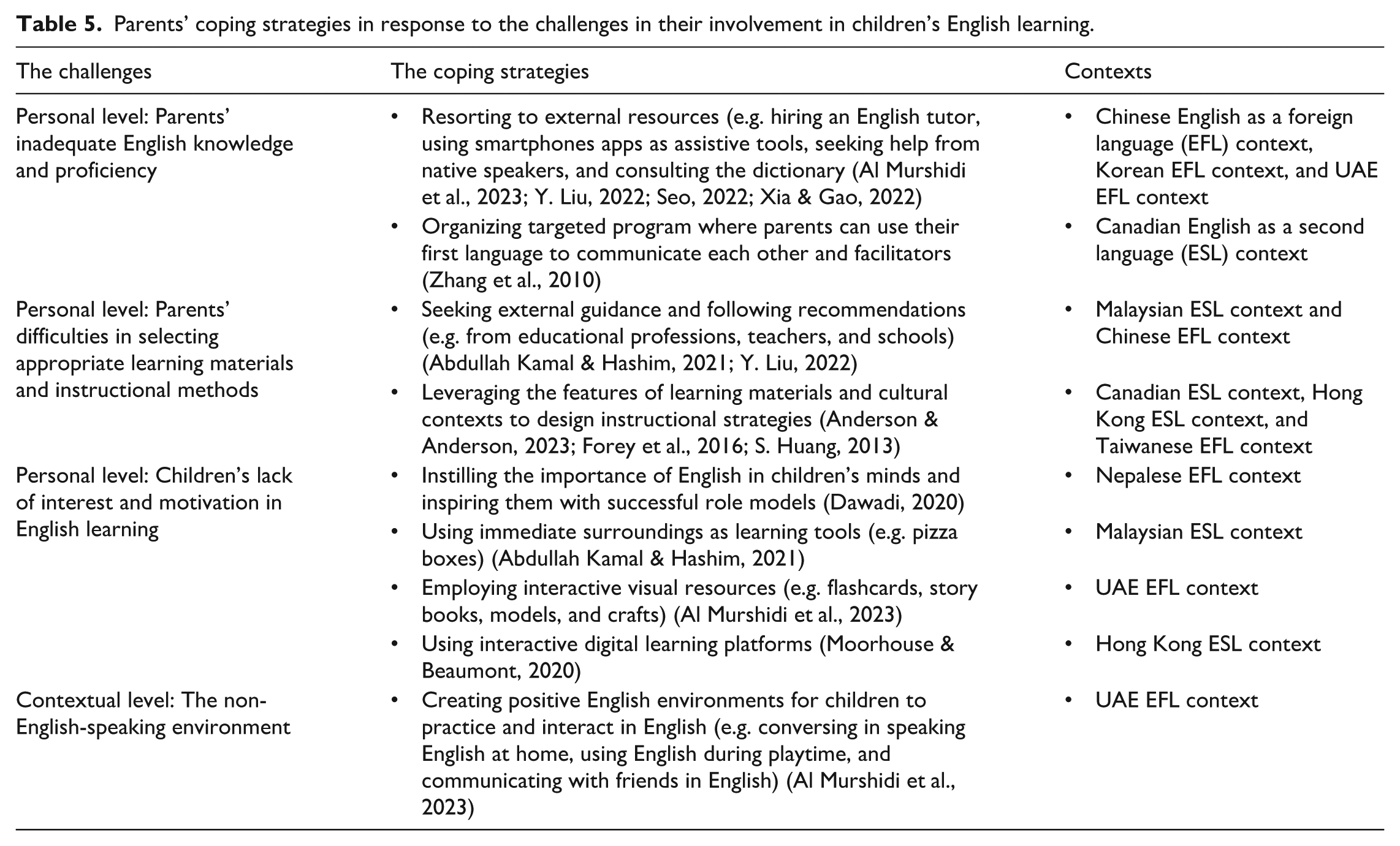
In response to these challenges, studies suggest that both parents and language researchers have developed a variety of coping strategies. One common approach to limited English proficiency is the use of external resources, such as hiring tutors, consulting dictionaries, seeking help from native speakers, and utilizing educational apps (Al Murshidi et al., 2023; Seo, 2022; Xia & Gao, 2022). In the Canadian ESL context, Zhang et al. (2010) highlighted the benefits of a literacy program that allowed parents to use their first language when discussing their children’s English development with facilitators, alleviating the pressure of limited English proficiency.
To navigate the difficulties of selecting appropriate materials or instructional strategies, parents often sought professional guidance or relied on school-provided resources (Abdullah Kamal & Hashim, 2021; Y. Liu, 2022). Moreover, Anderson and Anderson (2023) showed how an immigrant father effectively used multimodal features in picture books to teach vocabulary. Other parents adopted culturally familiar methods such as drilling and memorization (Forey et al., 2016), while experimental interventions like the ‘literacy bag’ approach guided parents toward more interactive strategies such as word games, questioning, and story mapping (S. Huang, 2013).
Regarding children’s lack of motivation, studies have identified effective strategies, including promoting the importance of English, providing role models (Dawadi, 2020), using immediate surroundings (e.g. pizza boxes) as learning tools (Abdullah Kamal & Hashim, 2021), employing interactive visual and tactile materials (Al Murshidi et al., 2023), and leveraging digital platforms (Moorhouse & Beaumont, 2020).
In brief, while existing studies (Table 5) have brought forth meaningful insights and implications into strategies that address individual-level challenges, limited research focuses on broader contextual issues. In fact, the challenges of parental involvement often extend to contextual levels, such as the unsupportive community atmosphere, non-English-speaking environments, and limited access to technology. However, only one (Al Murshidi et al., 2023) explored how parents strategically overcome the contextual challenges, noting how parents in non-English-speaking environment created outside-the-classroom English exposure through conversation, play, and peer interaction. This gap suggests more research on strategies that address broader environmental challenges, particularly those related to technological access and sociocultural constraints.
Parents’ coping strategies in response to the challenges in their involvement in children’s English learning.
IV Discussion and implications
As one of the first systematic reviews in this field, this study distinguishes itself from earlier reviews on parental involvement in children’s English learning. For instance, while Alias et al. (2024) reviewed theoretical perspectives and frameworks of parental involvement in children’s ESL learning, the current research extends beyond this by targeting specific indicators of parental involvement (e.g. parents’ beliefs and practices) among non-native English-speaking families. This approach enables a critical analysis of empirical studies over recent decades. Additionally, it differs from Riski et al.’s (2024) systematic review, which examined the impact on children’s English learning success with only 13 studies. Our study builds upon this by addressing multiple themes (e.g. challenges and strategies of parental involvement) with a larger corpus (n = 67). Given its timeliness, the review also captures recent trends not covered in previous studies, such as parenting practices in the digital era. These expansions facilitate a nuanced synthesis of research on parental involvement in children’s English learning across both EFL and ESL contexts.
Despite the great work in the reviewed studies, further research is necessary to offer insights into the complexities and dynamics of parental involvement in children’s English learning. Regarding the first theme, a dominant research focus has been identified in EFL contexts, particularly in the Chinese EFL context. It should be noted that such a geographic concentration has important implications for external validity, as culture-specific drivers in East Asian contexts, such as societal values emphasizing academic achievement and parental sacrifice, may shape parents’ beliefs and attitudes toward their children’s English learning and their perceived roles in ways distinct from non-East Asian regions. For instance, East Asian studies often reflect instrumental beliefs linking English proficiency to socioeconomic mobility (e.g. H. Liu, 2024), contrasting with non-East Asian contexts (e.g. Western ESL settings) where parents may emphasize cultural adaptation and integration (e.g. Y. Huang et al., 2023). This suggests that cultural norms in East Asia might foster a stronger sense of parental duty and role construction, potentially limiting the generalizability of findings to individualistic cultural contexts where such beliefs are less pronounced.
Given that parents’ beliefs and attitudes are socioculturally contingent, which are highly shaped by esteemed and valued socialization outcomes in the given societal contexts, more studies should extend to other non-East Asian contexts and explore how various cultural values distinctively influence parental goals, beliefs, and attitudes towards English learning, and how these values affect parental perceived roles and responsibilities across diverse contexts. Moreover, as cultural factors may also shape parenting practices (e.g. parents in collectivistic societies tend to adopt more inductive reasoning with children compared with those in individualistic societies, Shuster et al., 2012), exploring how these cultural beliefs may moderate the effects of parental (involvement) beliefs on parenting practices over time is a promising avenue for future research. Such an emphasis on socioculturally shaped parental beliefs and practices extends Epstein’s (2018) framework on school-family partnerships, underscoring the need for integrated, context-sensitive frameworks that inform policy on culturally tailored parental training programs in EFL/ESL contexts. Furthermore, beyond examining the effects of parental beliefs and expectations on children’s English proficiency, more empirical studies are needed to explore the impacts of parental beliefs and goals on children’s English affective outcomes, such as learning motivation, engagement, and burnout, over an extended time span.
As for the second theme, the reviewed studies primarily focused on parental home-based language practices and were conducted mainly in ESL contexts. Although Brasel’s (2008) study examined parental school-based practices, these were combined with home practices under the broader construct of parental involvement. Therefore, more empirical studies are needed to explore other contexts and examine how children’s English learning may be affected by specific school-based practices, such as parents’ communication with English teachers and participation in school English activities. Furthermore, most experimental studies on parenting training have focused on training parents to conduct language or literacy activities with their children and examining the effects of these interventions on children’s English development (e.g. Chow et al., 2010; Tong et al., 2021). Future research should investigate how factors at the institutional level, such as school and teacher support, can work in conjunction with parents to enhance their involvement and achieve greater gains in children’s English development. In addition, given the strong influence of sociocultural contexts on children’s interpretation of parental involvement (Garcia Coll et al., 1995), it is crucial to adopt a cultural relativistic perspective when examining the associations between parental involvement and children’s English learning, with a special focus on the specific sociocultural contexts.
Several critical yet underexplored issues also exist in the research on the challenges and strategies of parental involvement. The majority of research in this area were conducted in EFL contexts (e.g. Y. Liu, 2022; Seo, 2022; Tao & Xu, 2022). Given the distinct contextual factors between EFL and ESL settings, it is of great importance to explore whether and how they may differ in barriers in parental involvement. For instance, the societal bias against learning English in EFL contexts (Seo, 2022) may be less prevalent in ESL contexts where English is an official language (Carmel, 2022). Additionally, since research has primarily focused on coping strategies for personal-level challenges, there is a notable gap in addressing broader contextual-level challenges, which merits more research attention. Moreover, the reviewed studies under this theme show a strong reliance on parent-reported data, highlighting the need for diverse methodological approaches and data sources to capture a fuller picture of parental involvement dynamics.
The review enriches our understanding of the interrelationships between different elements in two key dimensions of parental involvement and how they shape children’s English learning. Despite substantial research in this area, a comprehensive theoretical framework that fully captures the process through which parental involvement impacts children’s English learning still remains absent. Based on the findings of the review, we propose a tentative framework that integrates all identified themes and illustrates the complex nexuses between different dimensions of parental involvement and children’s English learning (Figure 2). While the proposed framework draws on ecological perspectives common in FLP studies, it further differentiates itself by focusing specifically on indicators central to parental involvement (e.g. parental beliefs about children’s English and diverse parenting practices in children’s English learning) and English outcomes (e.g. children’s English academic and affective outcomes), elements that are typically underexplored in FLP models. Specifically, two primary elements of parents’ socialization process (i.e. parents’ beliefs and attitudes towards English learning and their involvement) can serve as critical predictors of children’s English development (e.g. H. Liu, 2024; Morris et al., 2013). Moreover, parents’ beliefs and attitudes towards English learning can influence their views on involvement and roles (e.g. Carmel, 2022; H. Liu, 2024). Another key dimension of parental involvement, parents’ explicit behaviors (i.e. parenting practices in Figure 2) can also directly lead to children’s English learning outcomes, including academic outcomes (e.g. J.J. Chen & Ren, 2019; H. Wang et al., 2023) and affective outcomes (e.g. Choi et al., 2020; Tong et al., 2021). Notably, parenting practices in children’s English learning can be shaped by parents’ socialization processes, including their beliefs and attitudes towards English learning (Al Harthy, 2020; Lai et al., 2022) and attitudes towards their involvement (Y. Chen et al., 2019). However, caution is warranted as some pathways in the framework were not supported by certain reviewed studies. For instance, the links between parents’ beliefs and attitudes towards English learning and children’s English learning (e.g. Butler, 2015), between parents’ beliefs and attitudes towards English learning and parenting practices (e.g. S. Chen et al., 2022), and between parenting practices and children’s English learning (e.g. Kalia & Reese, 2009; Lau & Richards, 2021) were revealed either marginal or absent. These inconsistencies may be attributed to variations in parenting practices, research methodologies, contexts, and participant demographics, which apparently needs further research attention. The proposed framework aligns with Curdt-Christiansen’s (2009) ideological factors in FLP for immigrant contexts in correlations between parental beliefs and practices, while extending it by incorporating certain pathways (e.g. the associations between parental attitudes towards English and parental attitudes towards involvement). As such, the study advances theory by offering a specialized, ecological lens for parental involvement in children’s English learning, with policy implications for designing interventions that target specific pathways and optimize parenting practices.
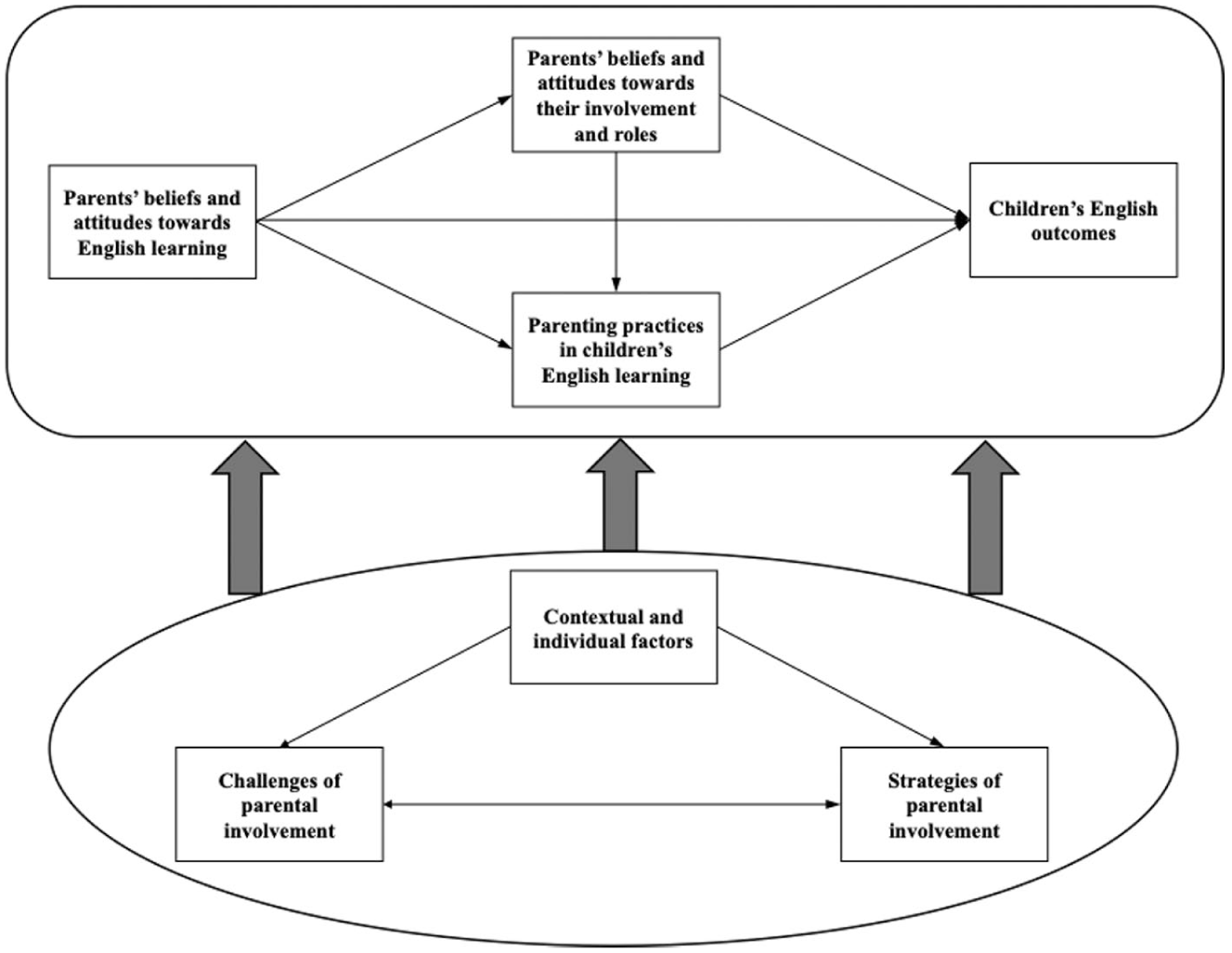
A tentative framework on parental involvement in children’s English as a foreign language (EFL) / English as a second language (ESL) learning process.
Beyond the complex associations between different dimensions of parental involvement and children’s English learning, behind them are the challenges parents encounter and the strategies they employ. The impact of parental involvement on children’s English learning is neither linear nor isolated, which should be understood and embedded in the specific context and environment. Specifically, parents may face various challenges and adopt diverse strategies to support their children’s English learning, depending on multiple contextual and individual factors. Each of these elements can reflect (and be reflected by) the dynamic process between parental involvement and children’s English learning. Notably, the advent of digital era further complicates these embedded contextual influences, shaping the interplay between parental involvement and children’s English learning, and highlighting the importance of integrating emerging technologies into the framework.
From a practical perspective, the review provides several actionable recommendations for parents and educators to enhance parental involvement in children’s English learning. First, the findings confirm the effectiveness of parental positive beliefs and parenting practices in improving children’s English development. Therefore, it is essential for parents to cultivate and maintain positive goals and attitudes towards children as competent English learners (Butler, 2015; H. Liu, 2024) and establish a supportive home environment through practices such as encouraging children (Choi et al., 2023) and engaging in joint English reading activities (Lau & Richards, 2021). Second, despite various challenges, the review highlights the value of multiple tools and resources that parents can leverage, such as mobile apps (Xia & Gao, 2022) and support from school teachers (Y. Liu, 2022). To address children’s disinterest in English learning, parents could adopt interactive and culturally relevant strategies that make learning more engaging and aspirational, such as incorporating everyday objects and visual aids (Al Murshidi et al., 2023) and introducing successful role models (Dawadi, 2020). These approaches not only motivate children to take an active interest in learning English but also empower parents to play a more active and supportive role, regardless of their own proficiency levels.
The review also points to the need for conducting targeted interventions for parents. We recommend that educators develop specialized training programs that provide guidance, scaffolding, and intervention to help parents maintain positive beliefs and attitudes towards children’s English learning and their own involvement competence, as supportive parental attitudes were found to enhance children’s English outcomes (H. Liu, 2024). Moreover, since findings identified technophobia and anxiety among parents with lower educational backgrounds when engaging in children’s technology-assisted English learning (Y. Chen et al., 2019), these programs should also provide resources tailored to equip parents with the necessary abilities such as language and technological skills. Additionally, given that school support and community resources could facilitate parental involvement and alleviate constraints faced by parents (e.g. Al Murshidi et al., 2023; Niehaus & Adelson, 2014), fostering collaboration between schools and communities could help create environments that are more supportive of parental involvement. This may include organizing community-based English activities to enhance engagement, improving access to affordable technology to bridge digital divides (as informed by the challenges in Y. Chen et al., 2019), and creating a supportive socio-cultural environment for English learning to counter biases in non-English speaking contexts (Seo, 2022). By doing so, parents, regardless of their socioeconomic or linguistic background, can not only engage more effectively in children’s English learning at home but, more importantly, have equitable opportunities to support children’s English development.
V Conclusions
The systematic review took stock of key empirical studies conducted between 2000 and 2025 on parental involvement in children’s English learning across contexts where both parents and children are non-native English speakers. It focused on two dimensions of parental involvement and their impacts on children’s English learning, as well as the challenges faced by parents and the strategies employed across diverse contexts. The findings yielded insights into the theoretical framework on parental involvement and children’s English learning. Practical implications were also offered to support parents to play a more active and positive role in the English learning of non-native English-speaking children. The review highlighted noticeable gaps in three major themes respectively, pointing out the directions for future research.
Given that the review exclusively focused on peer-reviewed empirical studies, research in other forms, such as non-empirical studies and conference papers, was excluded. Similarly, the selected articles were all in English, which limited access to relevant studies published in other languages (e.g. Chinese). Another limitation is that the review provided a systematic overview of parental involvement in children’s English learning. It would be a promising avenue to conduct a formal meta-analysis that reports and quantifies the effect sizes of identified studies, which contributes to a deeper understanding of how various forms of parental involvement relate to children’s English learning.
Supplemental Material
sj-docx-1-ltr-10.1177_13621688251395869 – Supplemental material for Parental involvement in children’s English language learning: A systematic review and future agenda
Supplemental material, sj-docx-1-ltr-10.1177_13621688251395869 for Parental involvement in children’s English language learning: A systematic review and future agenda by Chenggang Liang, Shulin Yu and Nan Zhou in Language Teaching Research
Footnotes
Authors’ Note
We affirm that the content of this article is original, and that all sources used in this study have been properly cited.
Funding
The authors received no financial support for the research, authorship, and/or publication of this article.

Supplemental material
Supplemental material for this article is available online.
References
Supplementary Material
Please find the following supplemental material available below.
For Open Access articles published under a Creative Commons License, all supplemental material carries the same license as the article it is associated with.
For non-Open Access articles published, all supplemental material carries a non-exclusive license, and permission requests for re-use of supplemental material or any part of supplemental material shall be sent directly to the copyright owner as specified in the copyright notice associated with the article.
