







Abstract
This study is theoretically grounded in interactional sociolinguistics, drawing specifically on speech act theory and politeness strategies to discuss how language choices negotiate social relations. It investigates classroom power dynamics by analyzing how teachers construct identities with directive speech acts. The research employs an ethnographic microanalysis to analyze discourse in a video-recorded interaction in a Portuguese as a foreign language (PFL) classroom for Chinese learners at a university in Macau. This methodological approach allows for a fine-grained examination of the linguistic design of directives and their impact on classroom interaction. The analysis reveals that the teacher strategically wields directives to enact interconnected identity positions, each shaping a distinct power dynamic: a negotiatory authority that mitigates institutional power by transforming directives into dialogic contracts; a collaborative facilitator that redistributes power by sharing epistemic authority and fostering co-participation; and an affective motivator that leverages relational power to build solidarity and ensure an emotionally safe environment. The study concludes that directives are a linguistic mechanism for the continuous recalibration of power in the classroom. Power is not merely asserted but is interactively negotiated through these identity positions, co-constructing specific classroom orders (e.g. collective responsibility, shared decision-making). This underscores that teacher identity is a pragmatic achievement with significant implications for fostering equitable and participatory learning environments.
Keywords
1. Introduction
This study investigates how teacher directives function as strategic tools for constructing teachers’ professional identities and enhancing collaborative dynamics in cross-cultural language classrooms. Grounded in interactional sociolinguistics – integrating speech act theory and politeness frameworks – we analyze empirical data from an A1/A2-level Portuguese classroom in Macau. Through micro-ethnographic discourse analysis of 750-minutes video recordings, we examine seven directive functions (command, invitation, prohibition, suggestion, permission, task guidance, and classroom organization) to address the core question: How do teachers’ directive acts construct interactionally their professional identities, under a power dynamics perspective, within Macau’s Portuguese as a foreign language (PFL) context?
Grounded in a social constructivist perspective of teacher identity, this study conceptualize identity not as a fixed role but as a dynamic, multi-dimensional process continually negotiated through discursive practices in social interactions (De Costa, 2025; Varghese et al., 2016). Within this framework, we specifically focus on the pragmatic identity that teachers construct through directive speech acts – that is, the dynamically chosen identity positions teachers adopt to achieve specific interactive goals (Chen, 2013). Interactional sociolinguistics provides the theoretical lens to examine how identities emerge and shift within the sequential organization of classroom discourse; speech act theory offers a typology to categorize directive functions as fundamental units of identity work; while politeness theory reveals how teachers strategically manage the inherent tension between institutional authority and interpersonal solidarity through their linguistic choices – a central dimension of identity negotiation.
By exploring classroom interactions, we discuss how teachers strategically use directives to negotiate institutional authority, collaborative participation, and affective alliances. This identity negotiation process responds to the cross-cultural pedagogical challenge of balancing directive coherence with student agency in linguistically diverse urban settings.
1.1. Language teacher identity construction
Teacher identity refers to an ongoing process that occurs through the continuous negotiation and integration of multiple self-positionings throughout one’s professional career, which seeks to provide the self with a sense of relative coherence and continuity across its various participatory activities and personal investments (Akkerman & Meijer, 2011). Identity is formed as teachers engage in sociocultural activities, practices, and relationships, where they interpret and negotiate sociocultural factors by mobilizing emotional experiences and agentic capacities, thereby (re)constructing their identity (Truong et al., 2025). The exploration of Language Teacher Identity began in the late 1990s (Duff & Uchida, 1997). As classroom research deepened, sustained scholarly discussions on this focus have given rise to multiple dimensions, including teachers’ professional development (Karimi & Mofidi, 2019), as well as the interrelationships among identity, emotions, and agency (Toker-Bradshaw & Tezgiden-Cakcak, 2025/2024). Adopting the research stance of ‘identity as pedagogy’ (Morgan, 2004), this study focuses specifically on the directive strategies employed by foreign language teachers in diverse interactive contexts according to pedagogical needs, and examines how these strategies are negotiated to construct corresponding micro-identities.
Contemporary research conceptualizes teacher identity as a dynamic and often contested site of negotiation, rather than a predetermined, stable entity. This negotiation is profoundly influenced by the interplay among teachers’ personal beliefs, professional agency, the institutional and sociocultural constraints and affordances present in their working contexts, and by the students (Tajeddin & Yazan, 2024). Within this framework, identity construction is not a smooth, cumulative process but is often characterized by tensions arising from competing demands and asymmetrical power relations – such as balancing institutional authority with collaborative pedagogy, or navigating between prescribed curricula and responsive teaching. These tensions compel teachers to engage in continuous reflection and decision-making to balance and address the multifaceted demands inherent in language education. As Tajeddin and Yazan (2024, p. 4) ‘conceptualize both language teaching practice and ongoing teacher learning as identity work. That is, both in the practice of teaching and learning to teach, teachers negotiate, construct, and enact identities.’
This process of navigating tensions is driven by the triadic relationship among identity, emotion, and agency (De Costa, 2025). Teachers’ emotional experiences – such as frustration, satisfaction, or vulnerability – are not peripheral but central to the formation of their identity. These emotions can either constrain or activate and reshape their professional agency – that is, their capacity to act in purposeful, reflective, and strategic ways (Truong et al., 2025). Consequently, the choices teachers make in the classroom, including how they realize directive speech acts, constitute concrete manifestations of their agency. These actions are both influenced by their evolving identity and emotional states and, in turn, contribute to the ongoing constitution of those very states.
In this study, classroom directives are regarded as a critical discursive site where the complex process of identity negotiation becomes visible. As speech acts inherently embedded in power relations, directives reveal the micropolitics of the classroom, illustrating how teachers simultaneously manage relational dynamics (e.g. authority and rapport), pedagogical objectives, and their own emotional positioning (Zembylas, 2003). Through the analysis of directives, we gain insight into the contextually shifting ways in which teachers enact their pragmatic identity – that is, the strategic, situated, and often hybrid professional selves they project to accomplish specific interactional tasks (Chen, 2013).
1.2. Interactional sociolinguistics, speech acts, and politeness
Interactional sociolinguistics (IS) is a vigorous research direction in sociolinguistics that typically focuses on face-to-face interactions, analyzing how social and linguistic knowledge intersect in the co-construction of meaning in discourse (Bailey, 2008; Rampton, 2019). It is characterized by focusing on interpersonal interactions at a micro level, in specific communities at the cultural crossroads (Pereira, 2002). According to Gumperz (2015, p. 309), ‘Interactional sociolinguistics (IS) is an approach to discourse analysis that has its origin in the search for replicable methods of qualitative analysis that account for our ability to interpret what participants intend to convey in everyday communicative practice.’ Language is understood as the site of human interaction. Schiffrin (1996, p. 307) defines IS as ‘a theoretical and methodological perspective on language use that is based in linguistics, sociology, and anthropology’. As an interdisciplinary approach, IS is rooted in various areas of academic research, including linguistics, anthropology, sociology, philosophy, social and cognitive psychology, considering the relationships between language, society, culture, and cognition (Jaspers, 2018; Pereira, 2002; Toomaneejinda & Saengboon, 2022; Wortham & Rymes, 2003)
When analyzing the language of specific groups, clearly defined structures are indispensable for the ethnographic study of speech. Hymes (1974) proposed three levels of analysis, namely speech situation, speech event and speech acts.
IS theory guides this study’s focus on the process of realizing the teacher’s directive in authentic interaction sequences, shifting the focus of our analysis from isolated sentences to the complete chain of issuance, response, and subsequent revision of directives. Specifically, it captures the dynamic and situational nature of identity. For instance, after a directive fails, the teacher must choose whether to repeat it, modify it, or abandon it. These decision moments within the interaction are precisely the critical junctures where their identity – whether as a patient guide or an assertive authority – is dynamically constructed and reshaped.
Speech Act Theory was first proposed by the British philosopher Austin (1962) and developed by Searle (1969) and others, such as Hymes (1974) and Stubbs (1976). This theory was the base of many contemporary approaches in pragmatics, discourse analysis, and gender studies, to quote some.
The central point of Austin’s speech act theory is the concept of language as a form of action. The meaning of a phrase or sentence should not be interpreted solely by analyzing each grammatical or vocabulary as structural elements. Instead, we should focus on how language is used. The meaning of a sentence is determined by the conditions of language use: the situation, purpose, method, and the participants involved. These factors impact the outcome and effect of sense of the language production. Therefore, in different circumstances, the same utterance can perform different actions and convey different information. Austin’s theory reveals that the nature of language is to perform acts. Language is a way of doing things. In addition to illustrating the nature of language, Austin’s major contribution is directing linguistic studies toward a new focus on interaction. In contemporary research, analyzing interaction involves considering the meaning of expressions based on the contextual conditions of the speech act and the elements related to the speech event.
Building on Austin’s work, philosopher Searle made significant developments in speech act theory. According to Searle (1969, p. 27), ‘speaking is a form of behavior governed by rules.’ He explains that speech acts include actions like affirming, criticizing, warning, ordering, commenting, requesting, and asking. A key concept he introduces is the principle of expressibility, which suggests that everything can be said, but not everything may be understood by the interlocutors. Searle (1969, p. 16) states, ‘All linguistic communication involves linguistic acts.’ The basic units of linguistic interaction are not words or sentences, but the actions performed through language. He emphasizes that studying sentence meaning is not distinct from studying speech acts. They are inherently linked since linguistic meaning arises from the acts that sentences perform. Therefore, in linguistic research, analyzing sentences alone is inadequate. Searle expands the study of speech acts from individual sentences to encompass human interaction.
The successful execution of a speech act hinges on the fulfillment of felicity conditions – criteria that must be met for an utterance to achieve its intended illocutionary force, which are necessary for the smooth or ‘happy’ functioning of a performative (Austin, 1962, p. 14). Performative utterances are neither true nor false but can be considered felicities or infelicities according to a set of conditions. When these conditions fail, the act becomes ‘infelicities’ rather than ‘false’.
Current research on speech acts is increasingly characterized by an interactive paradigm. This shift manifests in two key ways. On the one hand, the traditional categories of sender/receiver or speaker/listener are being reconceptualized as interactants or interlocutors, emphasizing their co-constructive roles. From the perspective of IS, we argue that language does not represent reality, language constructs reality. Similarly, we don’t work with the concept of speaker and listener as two separate entities. For us, speakers and listeners are co-participants of interaction who are always exchanging positions. On the other hand, context has become paramount for understanding interaction, displacing the prior focus on isolated sentences. Utterances are recognized as constituent elements of communicative interaction, requiring analysis within their broader context rather than in isolation. Accordingly, a deep and comprehensive understanding of speech acts necessitates integrating all linguistic, sociocultural, and other relevant dimensions into the contextual framework.
From our perspective, we prioritize analyzing the actualized speech and its effects (or perlocutionary consequences), over speculating about interlocutors’ intentions. These effects provide crucial insights into how the interlocutors interpreted the speech.
Searle (1969, 1979) expanded Austin’s Speech Act Theory into two distinct frameworks: the Theory of Illocutionary Acts and the Theory of Indirect Speech Acts. From the Theory of Illocutionary Acts perspective, Searle emphasizes the illocutionary force, distinguishing five types of illocutionary speech acts: assertive (representative), commissive, directive, expressive, and declarative. Within declarative acts, there is a special type called the assertive declarative.
Speech acts are complex human actions that cannot be defined simplistically. According to Searle (1979) and Searle and Vanderveken (1985), they can be classified as either direct or indirect. Direct speech acts occur when the speaker utters a sentence and means exactly and literally what they say. The speaker intends to produce a particular illocutionary effect on the listener by ensuring their intention is clearly and easily understood. In these cases, the literal meaning of the utterance directly corresponds to its illocutionary force. Indirect speech acts occur when the speaker utters a sentence, means what they say literally, but also conveys an additional meaning. Here, a sentence containing illocutionary force indicators for one type of act can be used to perform another type of illocutionary act as well. Consequently, the utterance possesses at least two simultaneous illocutionary forces. For instance, some sentences can function both as a report and an order, or a question can serve as a request. Austin’s Speech Act Theory has deeply influenced and served as a foundation for numerous contemporary language theories and frameworks. Similarly, the fields of discourse analysis and conversation analysis draw significant insights from Austin’s seminal work. Furthermore, within identity studies, feminist and poststructuralist scholarship has adapted the theory, notably manifested in Butler’s (1990) theory of performativity and Bourdieu’s (1979) concept of symbolic power. In the domains of artificial intelligence and human-computer interaction, Speech Act Theory provides a foundational framework for dialogue systems, operationalized through the conceptualization of user intent as illocutionary acts.
Speech act theory provides the tools for classifying and defining directive utterances in this study. Following Searle’s (1976) classification, we will distinguish between direct directives, indirect directives, and other types. In our analysis, different types of directive speech acts are regarded as the raw material or discourse carriers through which teachers construct identities. Refining the classification of directive types serves as foundational groundwork for subsequently linking discourse to identity.
However, the theoretical development within IS emerged precisely through critical engagements with Austin’s limitations. Scholars argue that classical speech act theory overlooks two crucial dimensions: (1) the dynamic nature of dialogue (e.g. organization of responses and interruptions), and (2) the constitutive role of speech acts in co-constructing the interaction floor. More fundamentally, IS emphasizes that the efficacy of speech acts is never context-free but is inherently mediated by societal power hierarchies – a dimension Austin’s original framework insufficiently addressed.
This focus on social context naturally aligns with Politeness Theory, which functions as a key mechanism for conflict mitigation and communicative cohesion (Al-Hindawi & Alkhazaali, 2016). Goffman (1955) conceptualized face as the positive social value individuals strive to maintain, emphasizing mutual face preservation through avoidance (e.g. evading sensitive topics) and corrective processes (e.g. apologies). Brown and Levinson (1987) expanded this by distinguishing positive face (desire for approval) and negative face (desire for autonomy), positing that most speech acts inherently threaten face (Face-Threatening Acts, FTAs) and require mitigation strategies (Sadeghoghli & Niroomand, 2016).
Grice’s (1975) Cooperative Principle (maxims of quantity, quality, relevance, and manner) underpins politeness strategies, with violations generating conversational implicatures. Brown & Levinson propose five FTA strategies: (1) Bald-on-record (direct, e.g. commands); (2) Positive politeness (solidarity-building, e.g. emphasizing shared goals); (3) Negative politeness (deference, e.g. indirect requests); (4) Off-record (implicature, e.g. irony); (5) Omitting the FTA. Strategy selection depends on sociological variables: Social Distance (D), Power (P), and Imposition Rank (R), quantified as Wx = D(S,H) + P(H,S) + Rx.
In classrooms, teacher directives often threaten students’ face (e.g. orders impinge negative face; criticism harms positive face). By adjusting strategies (e.g. using interrogatives like ‘Could we discuss quietly?’ instead of imperatives), teachers mitigate threats while achieving pedagogical goals. For instance, replacing ‘Be quiet’ with ‘Let’s lower our voices’ (negative politeness) preserves student autonomy. These adjustments align with facework principles, fostering cooperative learning environments and reinforcing teacher–student rapport through ritual equilibrium.
Politeness theory serves as one of the core lenses through which this study analyzes the dynamics of power and interpersonal relationships in teacher identity construction. From this theoretical perspective, directives are essentially FTAs that threaten the students’ negative face. Therefore, teachers’ choices of directive strategies – such as employing softening expressions, providing justifications, or using the collective pronoun ‘we’ – directly reflect their discursive negotiation between institutional authority and interpersonal rapport as two competing identity expectations. Through this theory, we can interpret the underlying identity tensions concealed behind directives.
Building upon the above discussion, this analysis further incorporates frame theory as a crucial analytical lens in IS. Gumperz (2015, p. 313) introduced the concept of contextualization cue to address the shift in focus for IS analysis towards questions such as ‘(1) how and by what signaling devices language functions to evoke the contextual presuppositions that affect interpretation, and (2) what presuppositions are at work in particular talk exchanges.’ Specifically, a contextualization cue refers to any sign which, ‘when processed in co-occurrence with symbolic grammatical and lexical signs, serves to construct the contextual ground for situated interpretation and thereby affects how constituent messages are understood’ (Gumperz, 2015, p. 315). Furthermore, drawing on Goffman’s theory, Tannen and Wallat (1987) defines the term frame as an interactive frame, that is, ‘what participants are doing their understanding of what is going on – in an interaction’ (Gordon & Tannen, 2023). Thus, when people engage in conversation, they use verbal, paralinguistic, and nonverbal cues to evoke specific frames, thereby transforming aspects of the scene that would otherwise be meaningless into meaningful things (Mirvahedi, 2021; Goffman, 1986). Indeed, language is deeply embedded in specific social contexts, both reflecting and shaping the meaning of the context. Therefore, focusing on contextualisation cues is key to addressing these questions and helps us to empirically examine how frames are invoked, re-negotiated, and established (Canagarajah, 2020).
1.3. Classroom discourse and directives
Classroom Discourse (CD) refers to the language and interactional patterns that occur within a classroom setting. It encompasses diverse forms of interaction, including directives, discourse structures, the encompassing social context, and multimodal communication (both verbal and non-verbal) among teachers and students as well as among students themselves. IS views discourse as analyzable social action enacted through talk, where detailed analysis generates corresponding explanations of social meaning (Philip, 2018). Therefore, from this perspective, CD is crucial for understanding how knowledge is constructed, how social relationships are formed, and how power dynamics play out in educational contexts. Analyzing classroom discourse helps educators improve teaching strategies and enhance student engagement and learning outcomes.
Teacher Talk (TT) constitutes the primary focus of our classroom interaction research. It is the strategically employed and pedagogically focused language used by teachers to effectively organize didactic activities and provide directives within the classroom. Specifically, the term teacher talk is defined in the Longman Dictionary of Language Teaching and Applied Linguistics as ‘that variety of language sometimes used by teachers when they are in the process of teaching. In trying to communicate with learners, teachers often simplify their speech, giving it many of the characteristics of foreigner talk and other simplified styles of speech addressed to language learners’ (Richards & Schmidt, 2010, p. 471).
The effective organization and utilization of teacher talk constitute a critical pedagogical tool, significantly influencing the success of educational activities. The structure, model, and quality of such discourse directly shape student learning efficiency and effectiveness. Consequently, the study of teacher talk, as an integral component of classroom discourse, aims to optimize directive processes and enhance learning outcomes. Cazden (1988) emphasizes the significance of visible classroom discourse, arguing that it fundamentally shapes the interactive dynamics among participants and, ultimately, their learning experiences.
While classrooms adopt various organizational approaches, the teacher typically maintains a position of centralized authority in more conservative sociocultural contexts, with students in subordinate positions. Cazden (1988) highlights the critical asymmetry in speaking rights between teachers and students. However, evolving educational concepts are reshaping students’ roles. In less conservative models, students and teachers share speaking opportunities during class. Foreign language instructors face the challenge of balancing power dynamics by providing high-quality target language input while creating ample chances for student language use. Achieving this balance involves effectively managing teacher–student speaking time.
Teachers’ talk in the classroom manifests in diverse forms, including questioning, correction, feedback, directives, and more. Each form fulfills a specific function in facilitating classroom interaction. Scholars like Almeida Filho (1992) and Cullen (1998) have attempted to systematize teacher talk based on different criteria. By considering communicative functions, we can categorize teacher verbal behavior into the following speech acts:
Eliciting questions;
Guiding tasks and actions;
Presenting, explaining, discussing, and expanding information;
Evaluating, correcting, and responding to student contributions;
Stimulating and rewarding;
Summarizing, paraphrasing, and clarifying information;
Giving directives and organizing classroom activities;
Greeting, dismissing, and managing communication.
Each type of teacher talk has distinct characteristics and fulfills specific roles. The organization of teaching activities should be viewed as a complex system, where effective classroom interaction relies on the collaboration of various components and the active participation of all individuals.
In foreign language teaching, language serves not only as the subject matter but also as the medium of directive (Seedhouse, 2004). For foreign language learners, the classroom represents a primary context for exposure to the target language. Despite Portuguese being the regulated official language in Macao’s Special Administrative Region (SAR), opportunities for verbal communication in Portuguese are limited outside the classroom. Thus, students experience relatively intense contact with the target language within educational settings.
Most studies on directives are based on speech act theory. In fact, there are several definitions of Directive established by researchers in the field (Richards & Schmidt, 2010; Tsui, 1994; Ur, 1996). According to Tsui (1994), a directive is usually given by a person who has the right to make the recipient comply. This is usually due to the power or authority he or she has over the latter, but it is not necessary. Ur (1996, p.16) states that, ‘the directions are given to introduce learning task which entails some measure of independent student activity.’ This definition indicates the tool-like nature of directives in the classroom. Searle (1979) examines the concept of directives within Speech Act Theory, particularly in relation to indirect speech acts. According to Searle (1979, p. 13), ‘The illocutionary point of these consists in the fact that they are attempts (of varying degrees, and hence, more precisely, they are determinates of the determinable which includes attempting) by the speaker to get the hearer to do something.’ It is worth noting that Searle (1976, 1979) argues that linguistic units can take on different functions. For example, a question can be used to seek answers, but also as a way of giving orders, making requests, etc. In such cases, a question functions as a directive. This will be discussed in depth in later analyses.
Furthermore, Searle’s framework specifies essential elements for the formation of directives: (1) a directive is a speech act, (2) one interlocutor possesses an intention to induce the other to perform an action, (3) the interlocutor considers it possible for the other to complete the directive, (4) directives are usually in the form of a request, demand, suggestion, among others, (5) the interlocutor considers that they have the authority and right to give directives to the other.
In essence, directives constitute a type of speech act in which one participant in a conversation attempts to induce another to perform a specific action. This core function of compelling the interlocutor to perform a specified action manifests particularly in educational settings. Teachers strategically employ didactic directives to fulfill multiple pedagogical functions: issuing directives, formulating requests, progressing directive sequences, and stimulating student participation, etc. As essential organizational tools, these directives facilitate the structuring and implementation of diverse teaching-learning activities. Importantly, their use represents a collaborative communicative process, with both teachers and students actively co-constructing the interactional dynamic.
To comprehensively explore how directives construct teacher identity, this study employs an integrated analytical framework that synergistically utilizes the aforementioned theoretical lenses. Rather than employing these theories in isolation, they are situated within a coherent, structured relationship to elucidate this multifaceted process in interaction.
2. Methodology
2.1. Research design and theoretical framework
This study adopts the qualitative research framework of the ethnographic microanalysis to systematically explore the form diversity and functional mechanisms of teachers’ directives in classroom interactions. Its main concern ‘is with the immediate ecology and micropolitics of social relations between persons engaged in situations of face-to-face interaction’ (Erickson, 1996, p. 283). As a qualitative research, it emphasizes the socially constructed nature of reality, the close relationship between the researcher and participants, and the contextual constraints shaping inquiry (Denzin & Lincoln, 2005). This approach, focusing in detail on verbal and non-verbal aspects in interactions, reveals the dynamic relationships between language, social structures and individual actions Therefore it is adequate to trace the co-constructive nature of identity and order.
2.2. Participants and context
The study was conducted in a second-year Portuguese language undergraduate course at a university in Macau. Participants included:
Students: 19 Chinese-speaking learners (Mandarin or Cantonese) with A1 or A2 (Beginner/Elementary) proficiency in Portuguese according to the Common European Framework of Reference for Languages (CEFR).
Teacher: A female Portuguese instructor with extensive experience in teaching Portuguese as a foreign language (PLE). Classes were conducted entirely in Portuguese, providing a context for analyzing directives.
Sociolinguistic Context: Macau’s multilingual environment (Cantonese, Portuguese, Mandarin, English) shapes classroom dynamics, with Portuguese serving as the primary directive language despite limited daily use in the broader community.
The choice of a beginner-level context is deliberate and theoretically significant. In such a setting, where learners’ linguistic resources are minimal, classroom communication relies heavily on teacher talk, repetitive routines, and multimodal resources (e.g. gestures, facial expressions). Consequently, directives become the primary interactional glue that structures activities and manages participation. This context amplifies the role and visibility of directives, making it an optimal site for observing the fundamental processes of how teacher identity and classroom order are co-constructed through the most basic speech acts.
2.3. Data generation
Data generation adhered to micro-ethnographic principles through naturalistic video recording and transcription analysis:
Recording Equipment: A Sony DV camera (fixed at the back of the classroom) and an Apple mobile phone (placed at the front) captured multi-angle interactions while minimizing observer interference.
Ethical Compliance: Informed consent was obtained from all participants (teacher and students), ensuring data confidentiality and exclusive use for academic purposes.
Class Samples: Recordings included 10 class sessions (75 minutes each, 750 minutes total) from the first semester of the 2018/2019 academic year.
2.4. Data processing and analysis
2.4.1. Transcription Protocol
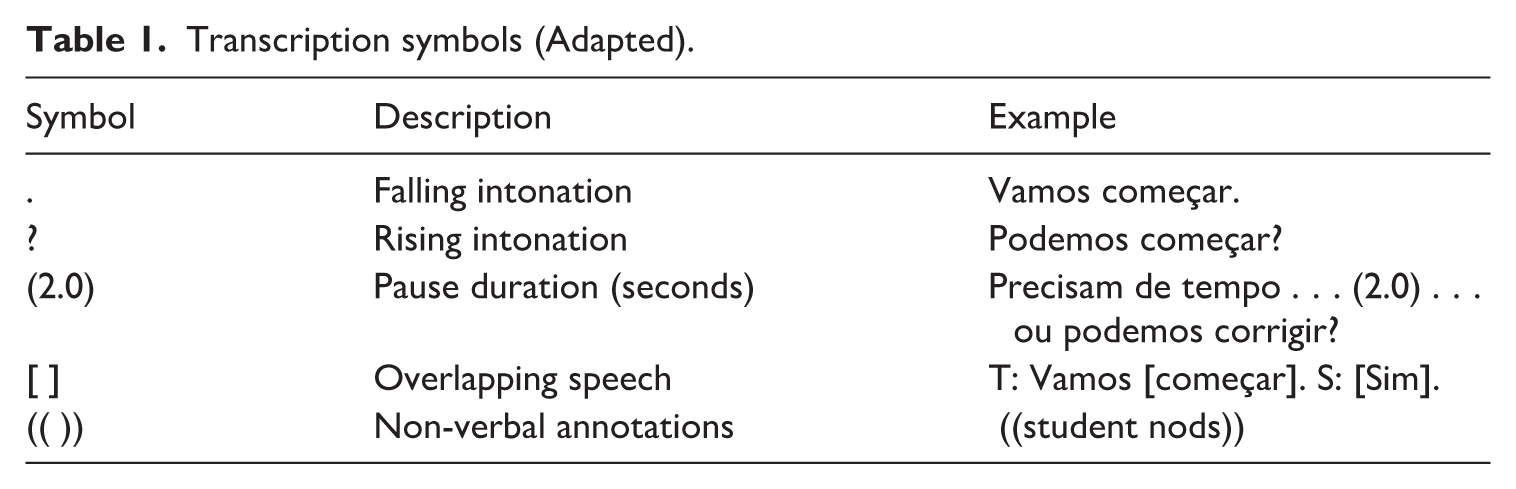
A modified conversation analysis system (Jefferson, 2004) was used to annotate prosodic features (e.g. intonation, overlapping speech), non-verbal behaviors (e.g. gestures), and temporal pauses (see Table 1).
Transcription symbols (Adapted).
2.4.2. Directive Identification Criteria
Classification based on speech act theory, focusing on pragmatic functions (e.g. commands, requests, negotiations).
Compound directives (e.g. pseudo-consultative questions with confirmation tags) were categorized by their core illocutionary force.
Case Selection: Representative, frequent, or structurally unique directives were prioritized for in-depth analysis to ensure theoretical saturation.
2.5. Ethical considerations and methodological reflections
The study adhered to strict ethical guidelines:
Informed Consent: Written agreements clarified data usage and confidentiality.
Anonymization: Transcripts omitted personal identifiers, labeling participants only as teacher (T) or student (S).
Data Security: Raw videos and transcripts were encrypted, accessible solely to the research team.
We acknowledge the observer’s paradox (Labov, 1972) inherent in video-based research, wherein the presence of recording devices may influence the naturalness of interaction. However, aligning with a contemporary critical perspective on the nature of data in qualitative inquiry, we follow Speer (2002) in questioning a rigid binary distinction between ‘natural’ and ‘contrived’ data. Speer (2002) argues that this distinction is not inherent in the data itself but is fundamentally contingent on the analyst’s approach. From this viewpoint, even data generated under systematic observation can be analyzed as authentic interaction, as participants engage with one another in a contingent, sequential manner, negotiating meaning in real time. The analytical focus thus shifts from the assumed a priori purity of the collection context to the detailed analysis of the interactional, functional, and sequential properties manifest in the data.
Anchored in this understanding, our methodological design aimed first to mitigate the most evident effects of the observer’s paradox and, subsequently, to enable an analysis that captures genuine interactional processes. To this end, strategically conceived procedural safeguards were implemented. First, to minimize intrusion, we employed a fixed camera setup (positioned at the front and rear of the classroom). This configuration eliminated the need for a camera operator, thereby removing a major source of social distraction and allowing interactions to proceed without direct human intervention. Second, recording commenced from the very beginning of the academic semester and spanned multiple consecutive weeks of regular pedagogy. This extended, routine recording protocol served a dual purpose: it allowed all participants to habituate to the equipment’s presence over time, reducing the novelty effect, and it aimed to capture the entrenched, recurrent patterns of classroom life rather than exceptional or performative episodes.
Crucially, while informed consent necessarily makes participants aware of observation, our resulting 750-minute video corpus contains a substantial volume of fine-grained, spontaneous interactional sequences. These include moment-to-moment negotiations, repairs, management, and affective exchange (as analyzed in Sections 4.1.1–4.1.7), which are inherently difficult to consciously sustain or artificially replicate over an extended duration. The prevalence of such authentic, contingent micro-interactions within the data supports our contention that, while the observer’s influence cannot be fully eradicated, our methodological design has effectively minimized its impact to a tolerable threshold. Consequently, the core interactive processes under investigation, namely, the dynamic co-construction of teacher identity and classroom order through directives, remain robustly accessible to micro-analytic inquiry.
3. Analysis and discussion
3.1. Functions of directives
Directives serve as crucial indicators and shapers of interpersonal relationships, capable of (re)producing either strictly hierarchical or more egalitarian dynamics. Within the classroom context, the types of relationships, responsibilities, and privileges negotiated through directives fundamentally contribute to a specific classroom order and culture. This is particularly salient in the foreign language classroom, where directive speech acts are intrinsically linked to teacher identity construction. Teacher directives serve not merely as tools for coordinating pedagogical activities but also as essential linguistic resources for negotiating identities and power relations. The diverse functional range of directives (e.g. commanding, prohibiting, negotiating, guiding) directly influences teacher–student interaction patterns. However, due to the dynamic and multifaceted nature of classroom activities, directive functions resist exhaustive categorization or uniform application.
As an illustrative case, we analyze a representative lesson (29/10/2018) from the transcribed material, of which the main interactive component is students’ oral presentations. In this lesson, the teacher had assigned a pre-class group task: selecting a famous figure, researching their biography, and compiling relevant information. During class, without mentioning the name, they orally present the information, prompting classmates to guess the identity of the figure. Groups completed this activity sequentially, with a new group commencing only after the previous one concluded.
This lesson provides a rich example of the combined use of directives. From these dialogues, we can isolate distinct directive structures and analyze their contextualized functions.
3.1.1. Command
Example 1:
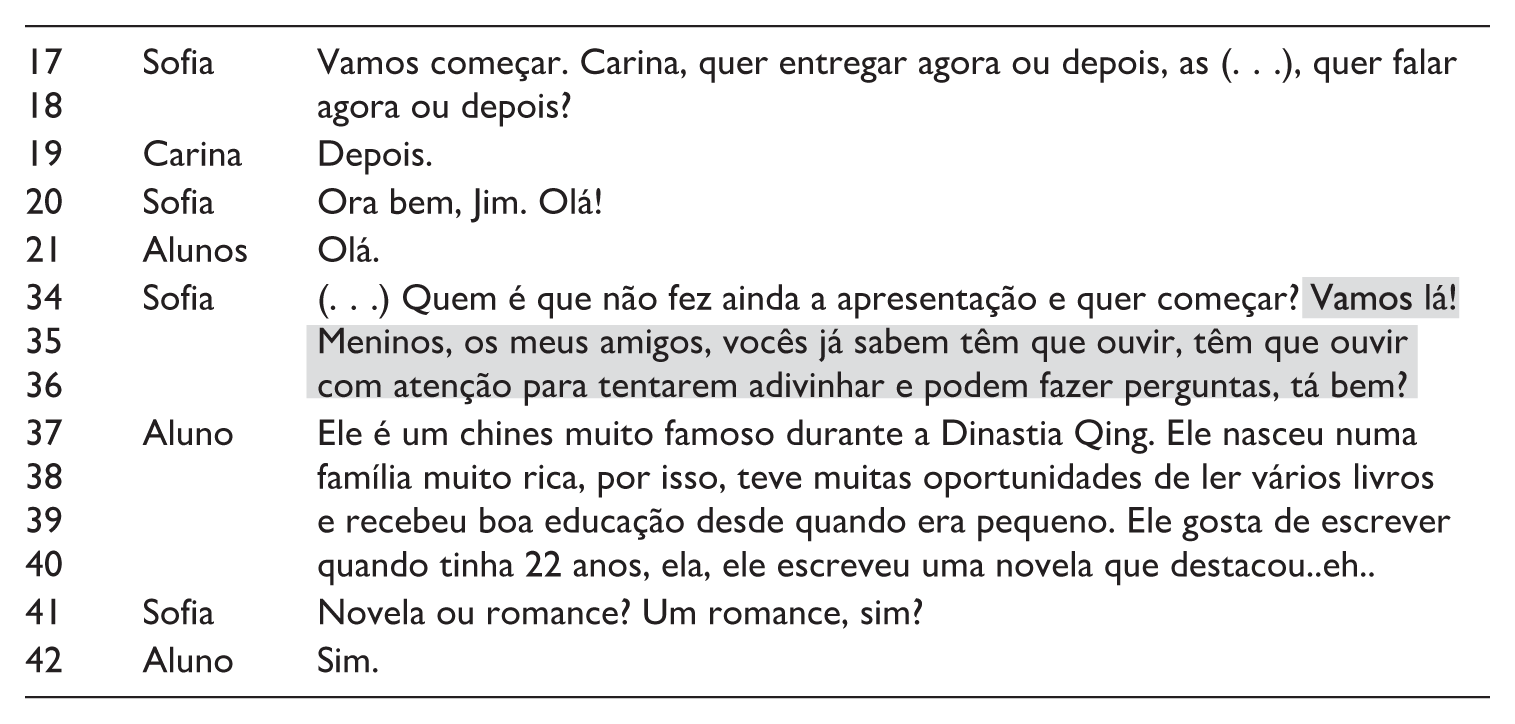
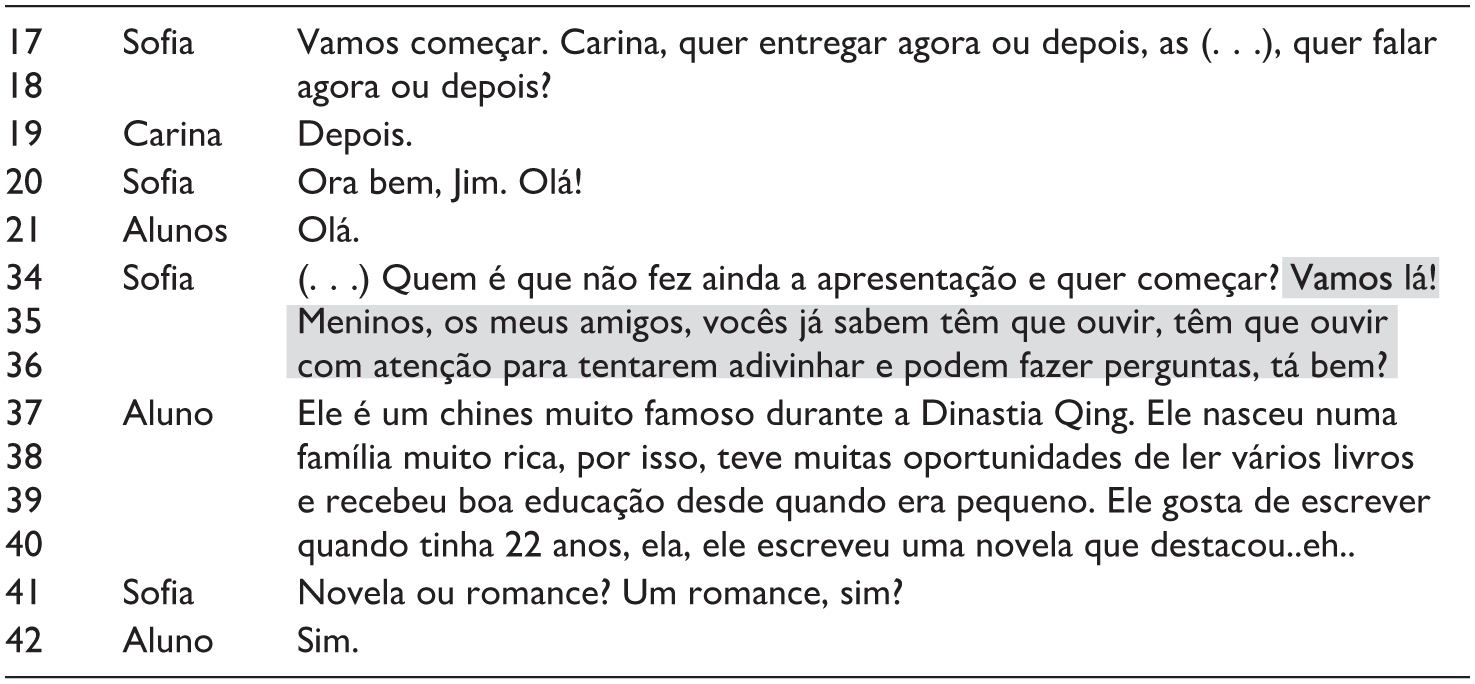
Lines 34–36: Let’s go! Kids, my friends, you already know, you have to listen, you have to listen carefully to try to guess and you can ask questions, okay?
The directive employs several simplification strategies characteristic of teacher talk for beginners: the use of a high-frequency chunk (Vamos lá! ‘Let’s go’), repetition of the core verb phrase (têm que ouvir ‘you have to listen’), and a tag question (tá bem? ‘okay?’) that serves as a comprehension check and invites consensus, thereby reducing the cognitive and pragmatic load on A1/A2 learners.
Use of double vocative (group address + intimate address) Meninos, os meus amigos (‘Kids, my friends’): increases closeness, softens the directive, and constructs an affective teacher identity. Vamos lá (‘Let’s go’): the first person plural imperative contains a teacher-student community, suggesting co-construction of knowledge, and weakening the unidirectionality of the directive.
Modal verbs such as têm que (‘have to’) + podem (‘can’) + tantarem (‘try’): (1) the obligatory verb têm que is more compulsory and reflects professional authority; (2) the permissive verb podem opens up room for negotiation and is less obligatory; (2) experimental verb tentarem gives students room to make mistakes and encourages them to participate in the interaction.
Tag question for consensus as tá bem? (‘okay?’): the tag question acts as a directive mitigator, transforming a one-way directive into a two-way confirmation, a form of negotiated request, without changing the content of the directive, showing respect to the students and, in this way, increasing the level of power balancing in the classroom and strengthening the teacher’s identity as a cooperative guide rather than an arbitrary administrator.
The teacher’s use of inclusive pronouns nós/vamos (‘we/let’s’) and the intimate address os meus amigos (‘my friends’) constitutes a refined power-softening strategy. Through this contextualization cue, she reframes her inherent institutional authority (the power to command) as a collective endeavor, thereby initiating a classroom order of ‘collective responsibility’. However, the obligatory modal verb têm que (‘you have to’) immediately reasserts her identity as the ultimate arbiter of rules within this order. The closing confirmation marker tá bem? (‘okay?’) is crucial, as it transforms a unilateral command into a contract requiring interactive ratification by the students. When students comply through silence or subsequent action, they co-participate in and reproduce this hybrid order that is both affiliative and authoritative. The teacher’s identity as a ‘negotiatory authority’ is thus established through initiating and maintaining this order. In this way, a balance is achieved between a high-intensity imperative directive and a weaker representation of authority.
This instance showcases a successfully ratified directive, which constructs and stabilizes the teacher’s identity as a negotiatory authority. However, it also reveals the latent tension between her institutional role (as classroom manager) and her pragmatic identity (as negotiator). The successful uptake here masks the underlying dynamism: had students remained unresponsive, the teacher’s subsequent move could have involved escalating toward a more controlling stance (e.g. a firmer repeated command) to fulfill her institutional duty, or shifting toward a more scaffolded, facilitative approach (e.g. rephrasing the directive as a guided question) to secure cooperation. Thus, the observed identity is not fixed but a provisional achievement, contingent upon student response and constantly negotiable at the edge of potential breakdown.
3.1.2. Invitation
Example 2:
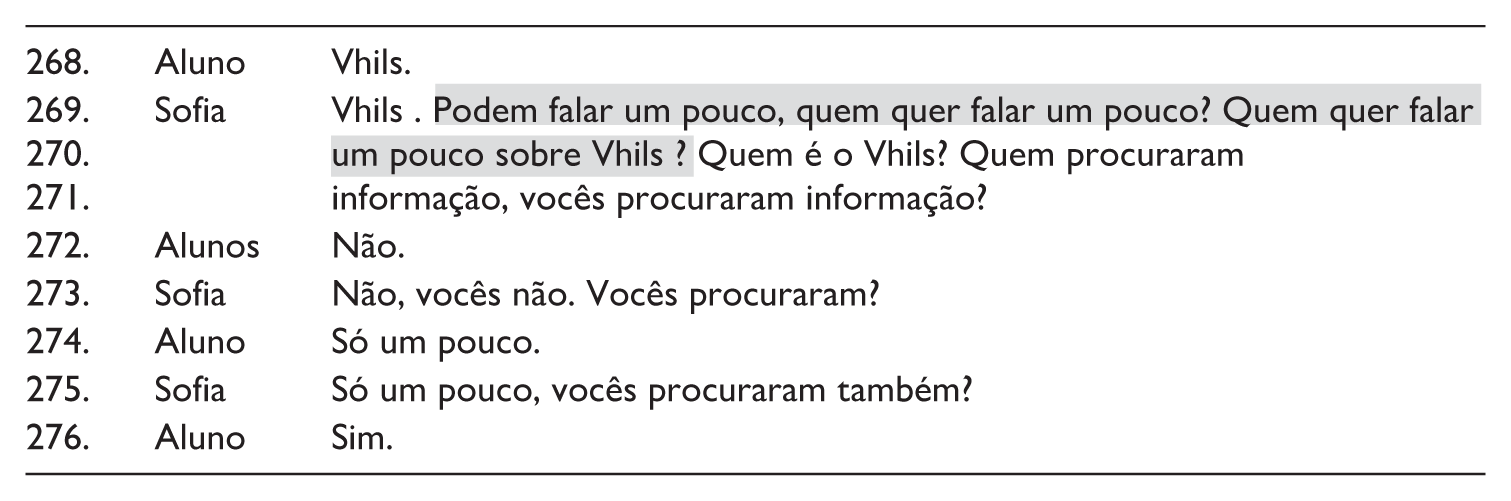
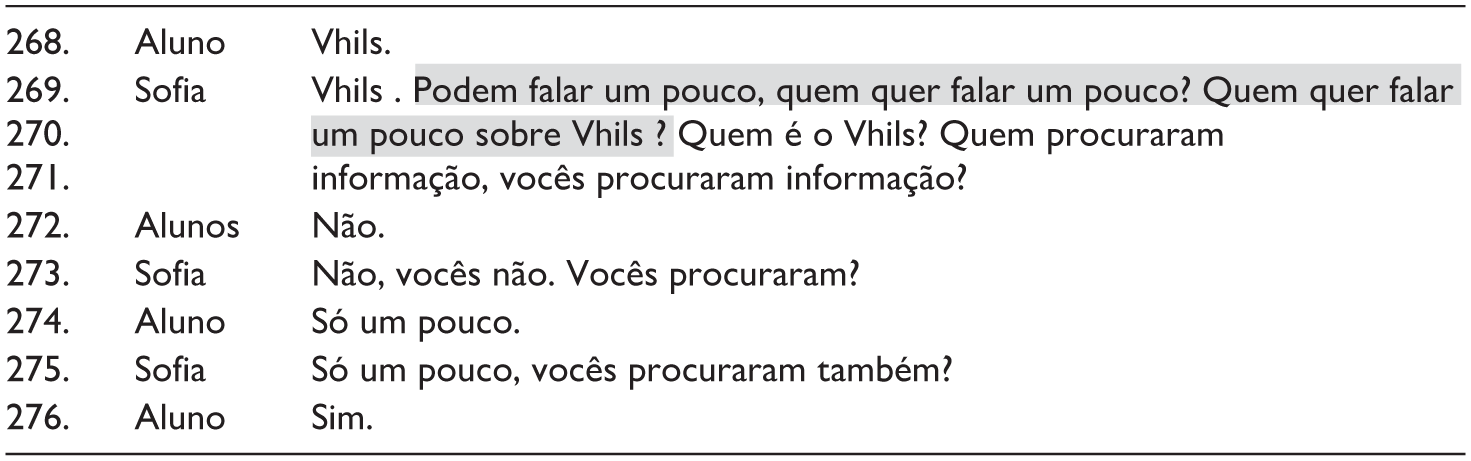
Lines 33, 34: Can you talk a little bit, who wants to talk a little bit? Who wants to talk a little bit about Vhils?
The formulation showcases input simplification through the modal verb podem (‘can’) to denote permission rather than obligation, and the minimizer um pouco (‘a little’) to reduce the perceived scope of the task, making the invitation less daunting for novice learners.
The modal verb podem (‘can’), in the second person plural: this strategy identifies the addressee of the directive and implies collective participation. At the same time, in terms of meaning, it can constitute a gentle directive rather than a mandatory command, which moderates the intensity of the directive.
Use of modifiers: repeating the expression um pouco (‘a little bit’) minimizes perceived effort by reducing the amount of the task, further mitigating the directive.
Interrogative form: the directive is transformed into an open invitation through a questioning structure, reducing the imposition of the directive.
Optionality: granting students autonomy through question quem quer . . . (‘who wants . . .’), invites classroom participation of all students.
The teacher’s use of the open-ended question Quem quer . . .? (‘Who wants . . .?’) is, in essence, a proposal for a new power-sharing order. The interrogative form itself serves as a powerful contextualization cue, signaling the teacher’s voluntary relinquishment of traditional control over turn-taking, reflecting a balanced power dynamic between teacher and student. Within this order, the agency to speak is transferred to the students. Any student response (or lack thereof) constitutes an acceptance or modification of this proposed order. Directives are embedded within the topic (talk about Vhils), merging directives with the co-construction of knowledge and portraying the teacher as a knowledge collaborator. In this case, the teacher transforms directives into negotiated invitations by employing questioning techniques, inclusive vocatives, and task-lightening strategies. This approach constructs an affinity-guidance multiple identity that not only upholds the pedagogical framework but also facilitates co-participation between teacher and student. The teacher’s identity as a collaborative facilitator is manifested within this decentralized decision-making order, where she exercises power by setting the meta-rules of who gets to decide.
3.1.3. Prohibition
Example 3:
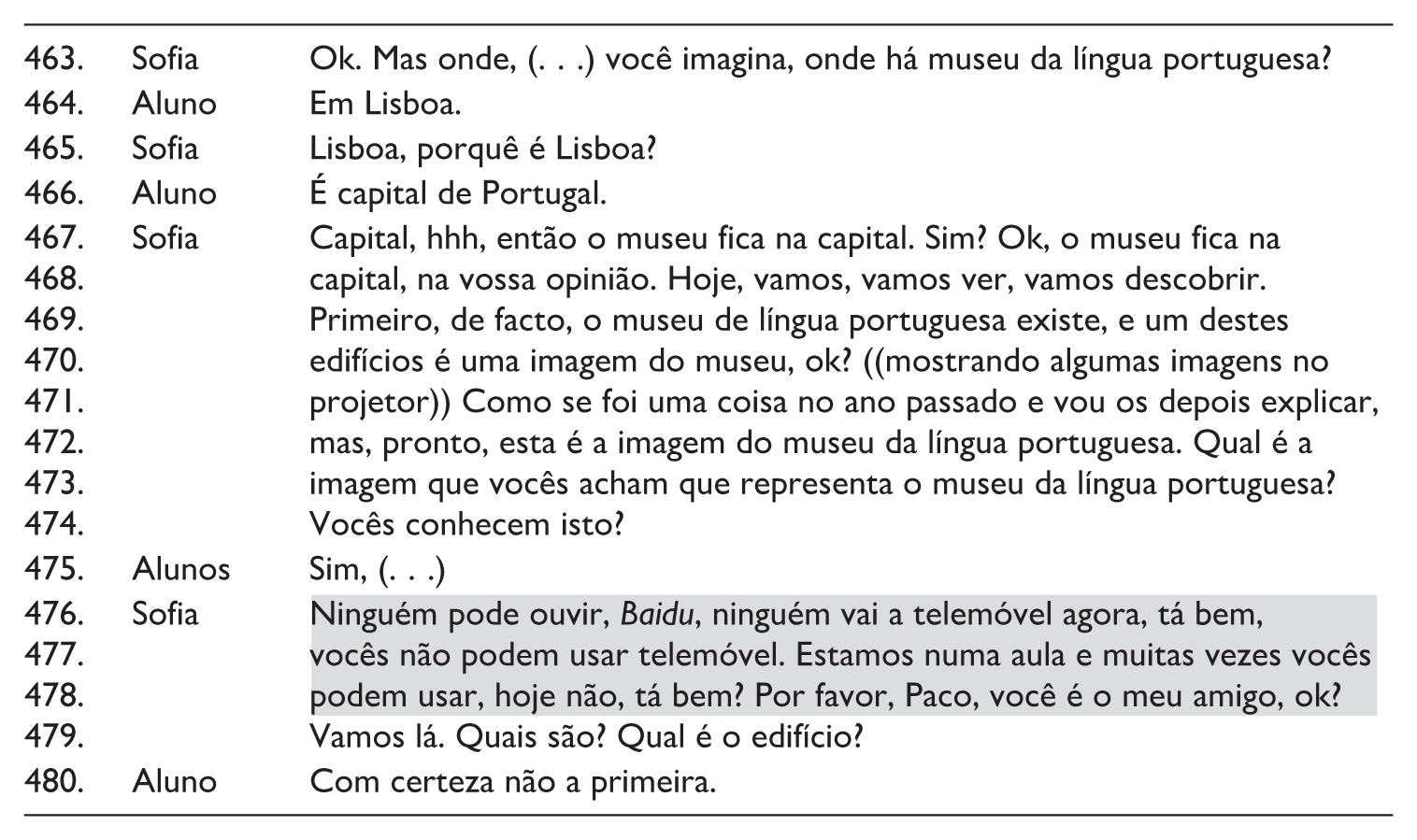
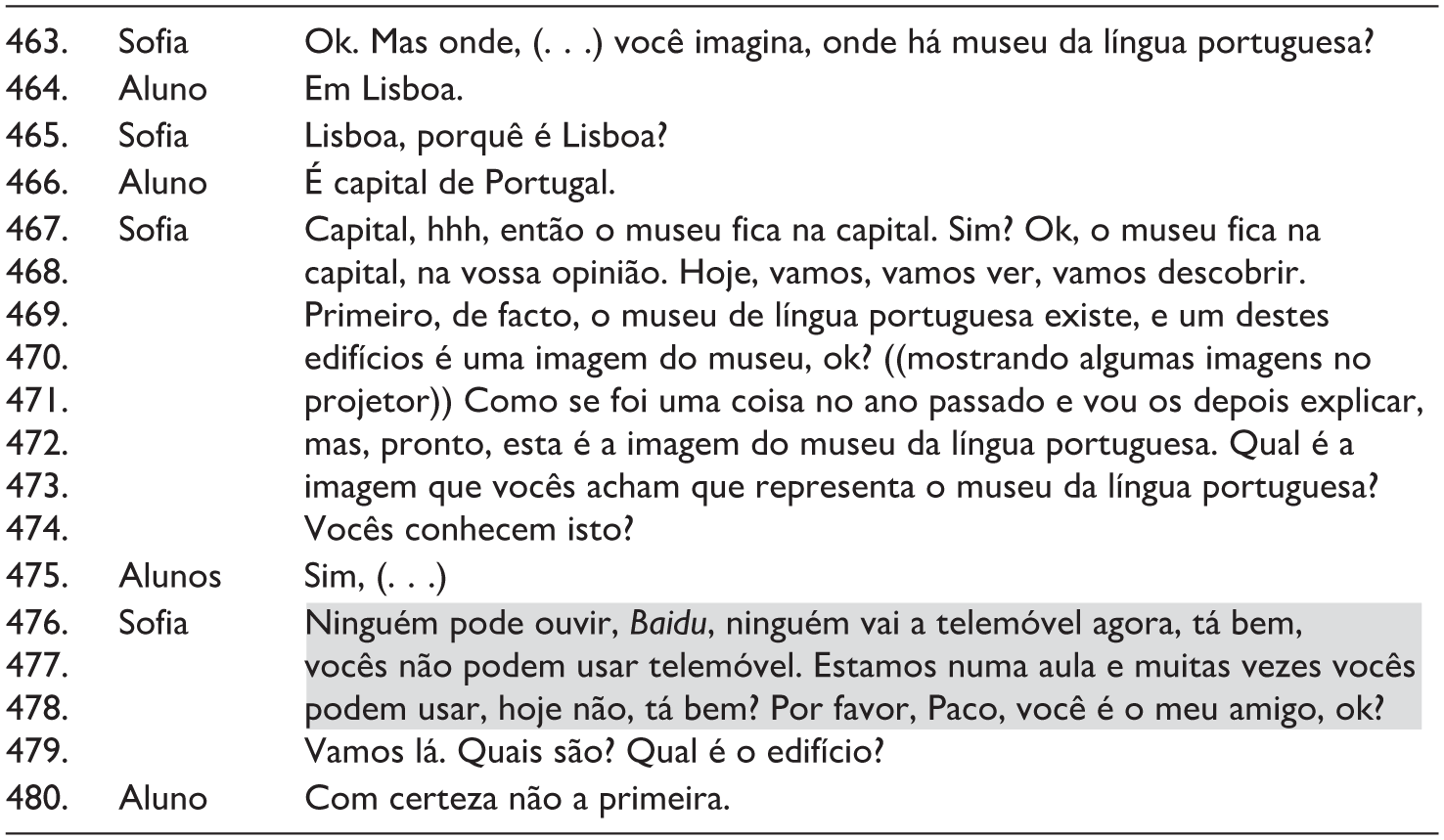
Lines 476–48: No one can listen, Baidu, no one is going to use the cell phone now, okay, you can’t use your cell phones. We’re in class and you can usually use them, but not today, okay? Please, Paco, you’re my friend, okay?
In this example, we see that the basic logical sequence of this combination of directives is to (1) issue and emphasize a universal directive prohibiting the use of cell phones, (2) explain that the classroom environment is different from regular situations, and (3) remind the students who violate the directive to follow the rules. The application of multiple directive strategies is reflected in this process.
Person pronoun strategies constructing collective identity: The teacher alternates between ninguém (‘no one’), nós (first person plural: ‘we’), vocês (second person plural: ‘you’), você (second person singular: ‘you’), dynamically adjusting the scope of power. The use of the negative personal pronoun in the expressions ninguém pode (‘no one can’) and ninguém vai a telemóvel (‘no one is going to use the cell phone’) expresses and emphasizes the universal applicability of the rule, transforming the prohibitive directive into a collective norm rather than an individual repression. Estamos numa aula (‘We are in class’) creates a community of teacher-students through the first person plural, implying the consistency of interests of teacher and students, followed by a shift to the second person plural vocês to specify the object of enforcement. The final words spoken to Paco, an individual student, using você, realize a shift from group constraints to individual concerns, creating a multidimensional framework for negotiation. This personification strategy both clarifies the boundaries of the rule (prohibited objects) and weakens the one-way authority (collective constraints).
Contextualizing directive rationality through spatiotemporal framing: the contrasting structure muitas vezes . . . hoje não (‘usually . . . not today’) anchors the prohibited behavior in a specific classroom space and time. This contextualization strategy transforms abstract rules into temporary contracts in concrete situations, weakening the absoluteness of the directive and enhancing the perception of synchronized negotiation between teacher and students.
Mitigation markers softening directive force: the tag question tá bem? (‘okay?’) and ok? as a discourse marker; the polite expression por favor (‘please’) and the intimate vocative meu amigo (‘my friend’) build an affective alliance, compensating for behavioral constraints through interpersonal emotional proximity while reinforcing negotiation with politeness strategies; the use of diverse forms of prohibition ninguém pode . . . não podem (‘no one can . . . you can’t’) reduces face-threatening by replacing individual condemnation with group constraints. Estamos numa aula (‘We are in class’) provides justification so that students can better understand the directives rather than rigidly demanding their implementation, which is part of the negotiation strategy.
The teacher’s elaboration of the cell phone prohibition is a complex practice of power legitimization and order maintenance. The example typifies the negotiatory authority model, which constructs the teacher’s identity as a guiding authority by transforming prohibitive directives from unidirectional control to a multifaceted process of negotiation with personal pronouns and mitigation strategies. This demonstrates how the teacher, as a manager of order, uses discourse to negotiate the acceptance of necessary power interventions.
3.1.4. Suggestion
Example 4:
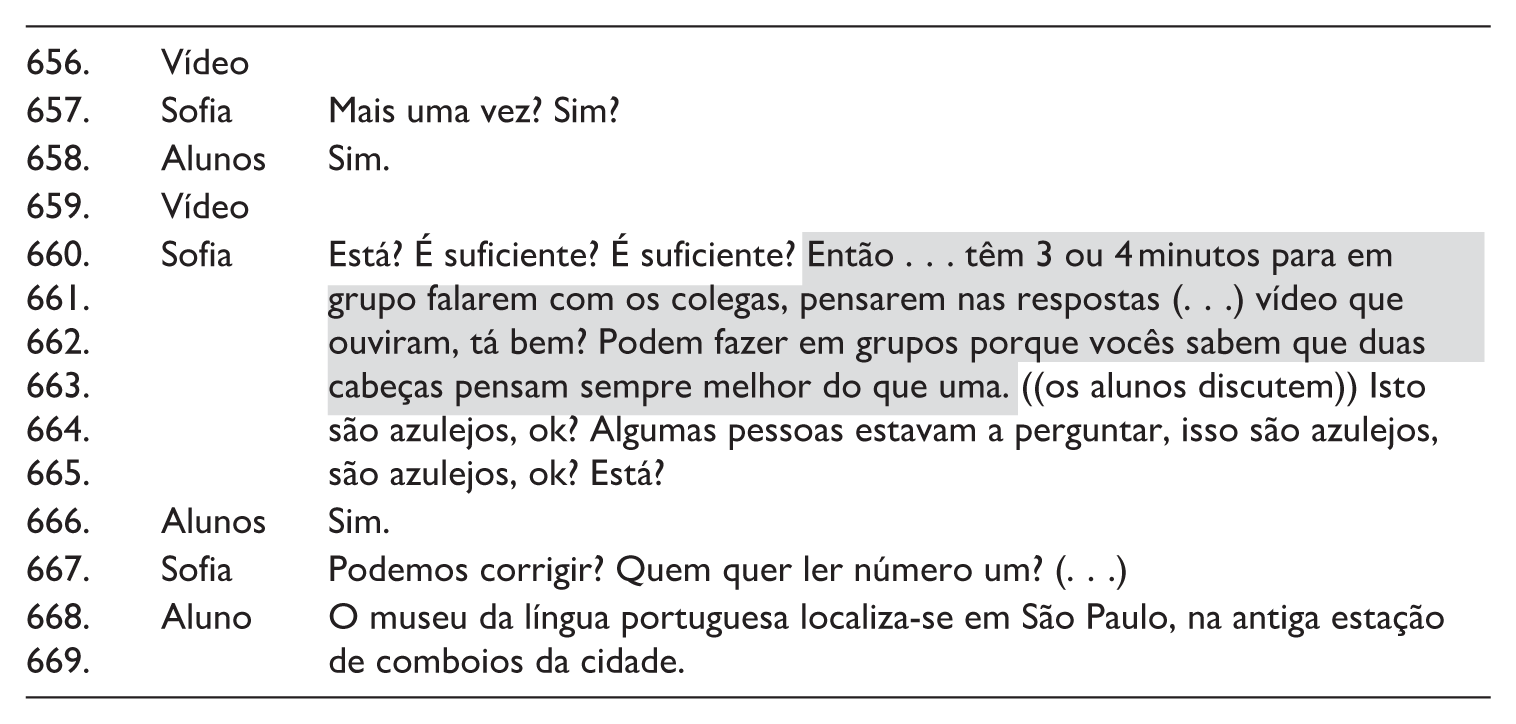
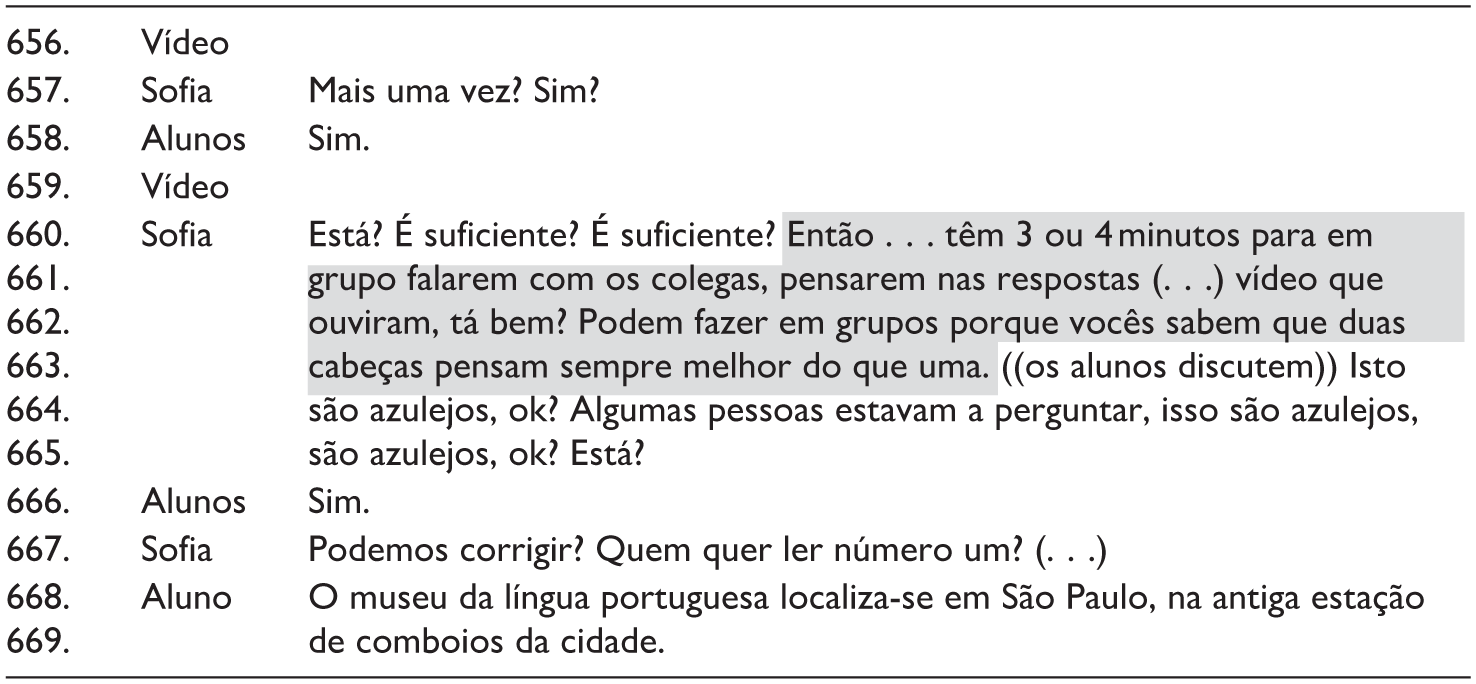
Lines 170–172: So . . . you have three or four minutes to talk to your classmates in groups, think about the answers (. . .) video you heard, okay? You can do it in groups because you know that two heads are always better than one.
Time frame and task structuring: the first half of the statement breaks down the directive into clear, manageable steps. It specifies a time limit of 3–4 minutes and encourages discussing the task with classmates and brainstorming answers. This step-by-step approach makes it easier to understand and follow the directive. The guided strategy presents the image of a professional classroom organizer and establishes the premise for suggestions of group discussion within the same framework.
Central directive and negotiatory identity: the phrase Podem fazer em grupos (‘You can do it in groups’), by using the modal verb poder (‘can/may’) instead of an obligatory one, the teacher transfers the choice of task execution method to the students. This is not an abdication of power but a shift from direct control to the design and control of the learning process framework. The justificative statement porque vocês sabem . . . (‘because you know . . .’) rationalizes the directive by invoking shared cognition, duas cabeças pensam sempre melhor do que uma (‘two minds are better than one’), constructing a collaborative image of co-construction of knowledge, and also making students internalize and endorse this rule of order.
Through this process, the teacher constructs a collaborative inquiry order, within which her identity shifts from ‘commander’ to ‘architect of learning experiences’.
3.1.5. Permission
Example 5:
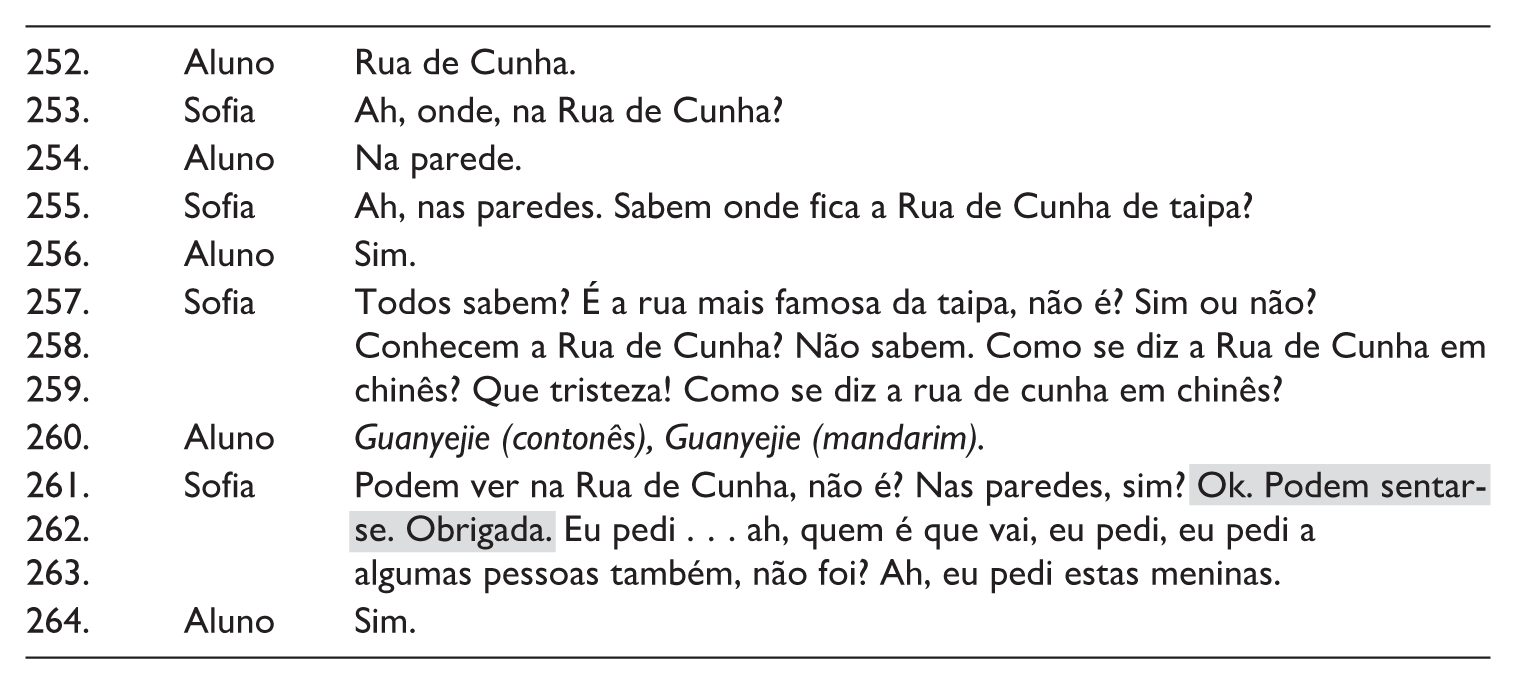
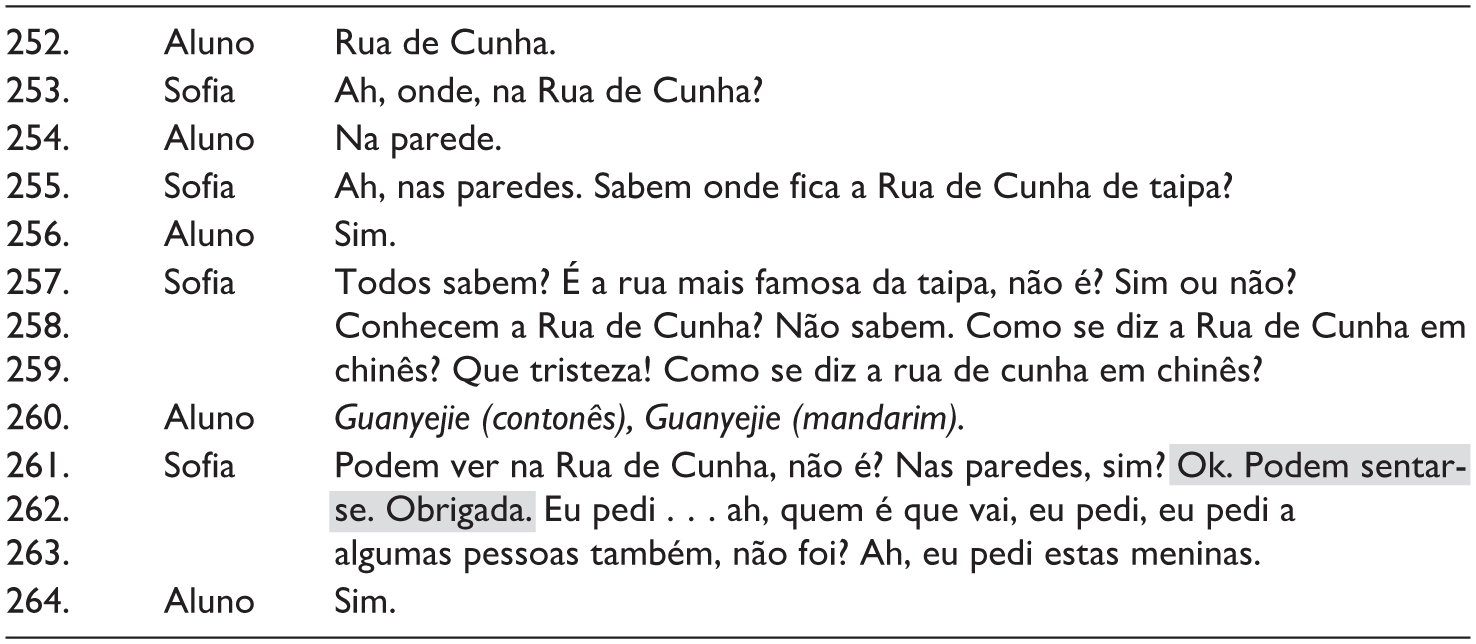
Lines 261–262: Okay. You may sit down. Thank you.
This example is a Permission Directive, whose function is to release students from standing (allowing them to sit down).
The use of the second person plural present tense of the modal verb podem (‘you may/can’) addresses the student directly but reduces the imposition of the directive by conveying a less compulsory meaning of permission, rather than using the imperative sentem-se (‘sit down’).
The polite expression: Obrigada (‘Thank you’) transforms the directive into a two-way interaction by acknowledging the students’ cooperative behavior and reinforcing the framework of student–teacher co-cooperation.
This type of directive is the most ritualized performance of institutional authority. The permission presupposes the speaker’s power to forbid. Thus, this seemingly simple speech act subtly represents and reinforces the asymmetry of the power relationship. However, the immediately following Obrigada (‘Thank you’) instantly reframes the nature of the interaction. It transforms a top-down granting of favor into an equal exchange of values: student cooperation is reciprocated with teacher gratitude. This discursive strategy transforms the teacher–student relationship from one of directive and submission to one of cooperation and recognition, softening the edge of power and overlaying a purely authoritative relationship with a veneer of interpersonal cooperative order. The teacher’s identity here is a subtle blend of holder of institutional authority and initiator of reciprocal cooperation.
3.1.6. Task guidance
Example 6:
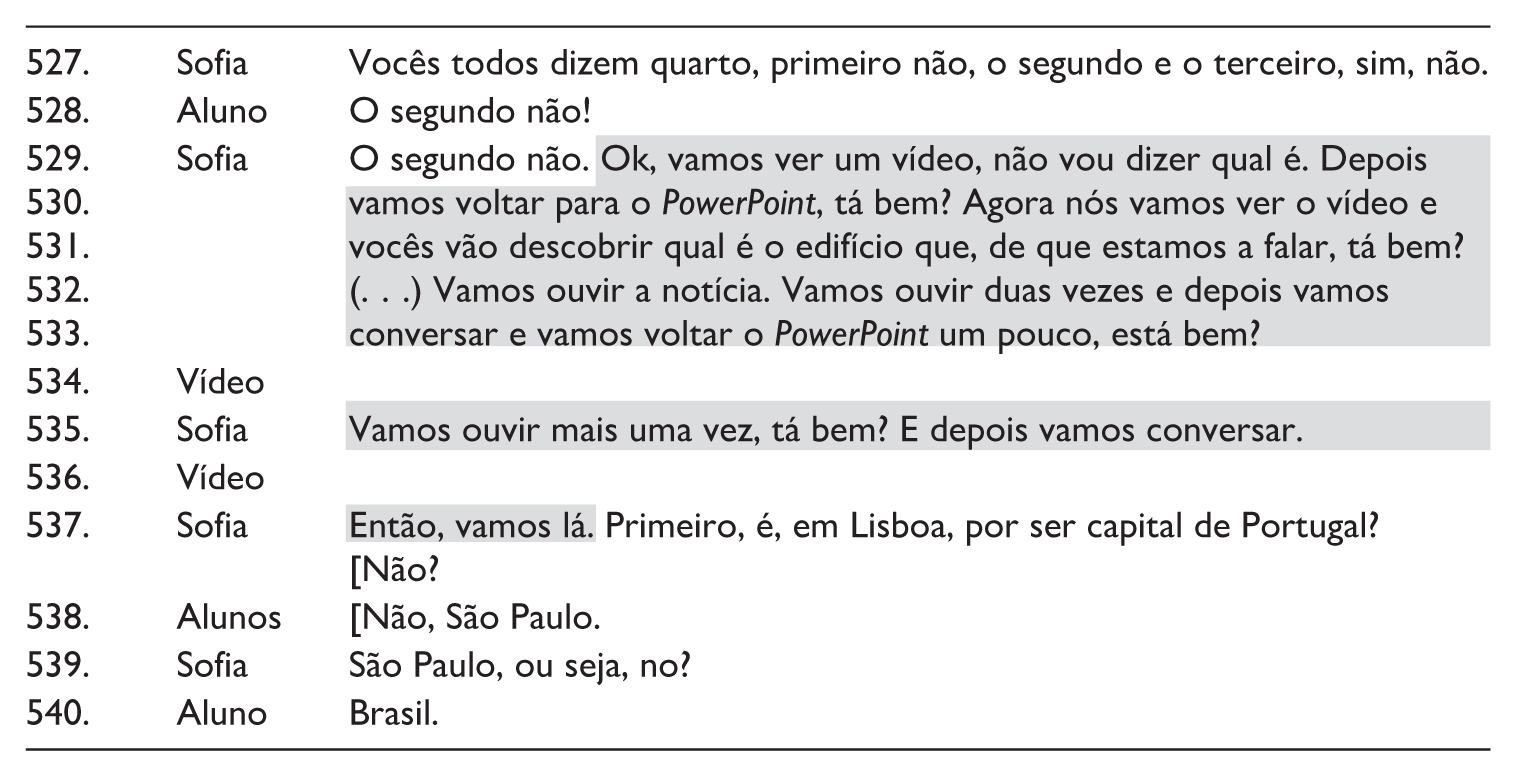
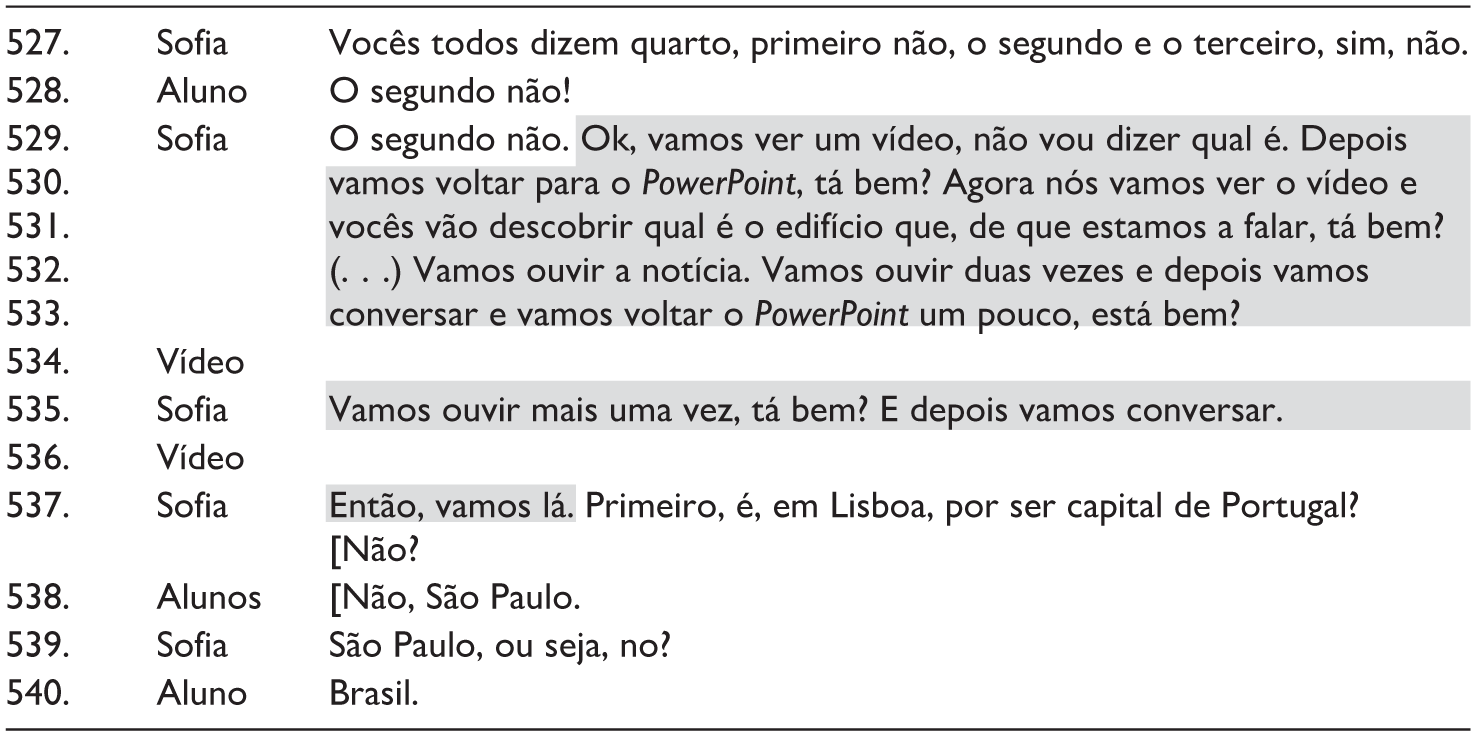
Lines 529–533: Okay, let’s watch a video. I’m not going to tell you what it is. Then we’ll go back to the PowerPoint, okay? Now we’re going to watch the video and you’ll find out which building we’re talking about, okay? (. . .) Let’s listen to the news. We’ll listen to it twice and then we’ll talk about it and go back to the PowerPoint for a bit, okay? Line 535: Let’s listen to it one more time, okay? And then we’ll talk. Line 537: So, let’s go.
Recurrent use of the plural first-person imperative nós/vamos (‘we/let’s’): blurring the power boundaries between teachers and students through collective pronouns, thereby framing task execution as a collaborative act. This directive strategy transforms the teacher’s role from a directive authority to a co-participant, facilitating the co-construction of the activity framework through shared participation.
In task guidance, the teacher, through structures like vamos . . . primeiro . . . depois . . . (‘let’s . . . first . . . then . . .’), acts as a scriptwriter and director of the interaction. She not only assigns tasks but, through temporal deictics, pre-constructs the cognitive map and interactional trajectory for students’ participation. This reduces the need for direct coercion, as the order is embedded within the very structure of the activity. The recurrent confirmation marker tá bem? (‘okay?’) functions not as a request for genuine consent but as an interactional and negotiatory punctuation mark, seeking the students’ ongoing ratification of the established order and the guiding role of the teacher at each step.
Through mitigating authoritative stances while clarifying task frameworks, the professional identity undergoes a paradigmatic shift from the conventional knowledge transmitter to a learning coordinator. These negotiatory strategies collectively construct a highly structured, predictable participation order, and the teacher’s identity as a collaborative facilitator is constituted precisely through the skillful management of this order.
3.1.7. Classroom organization
Example 7:
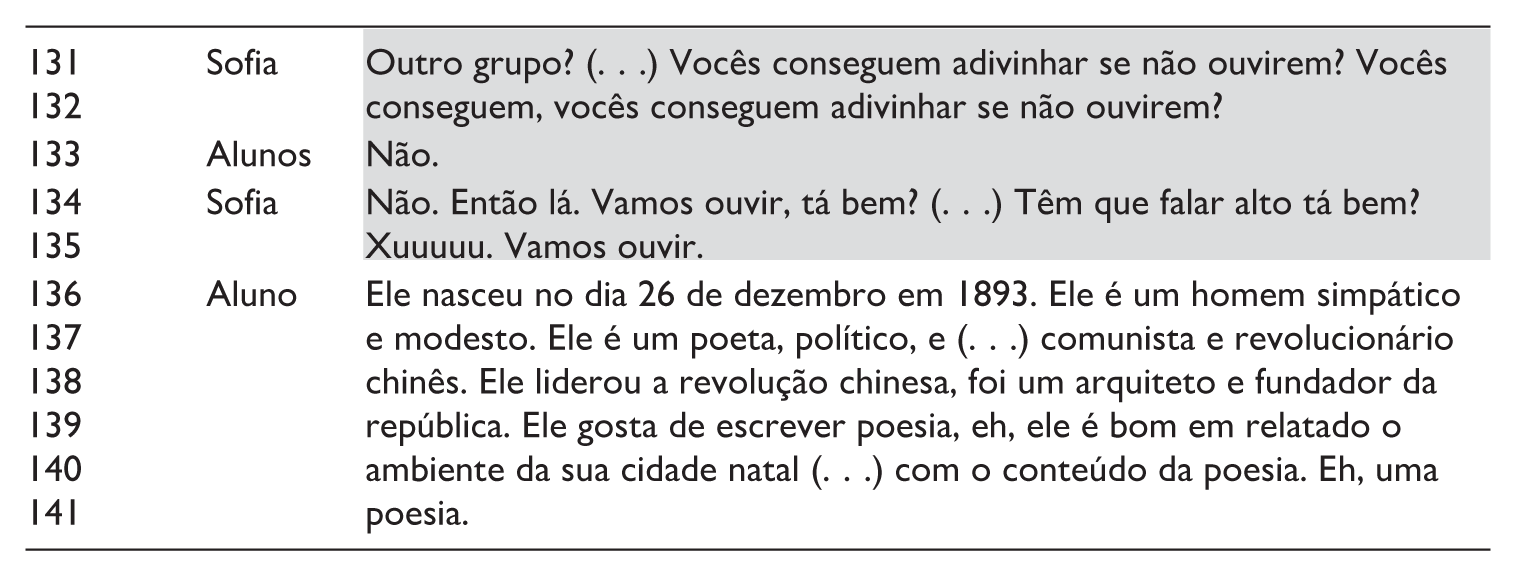
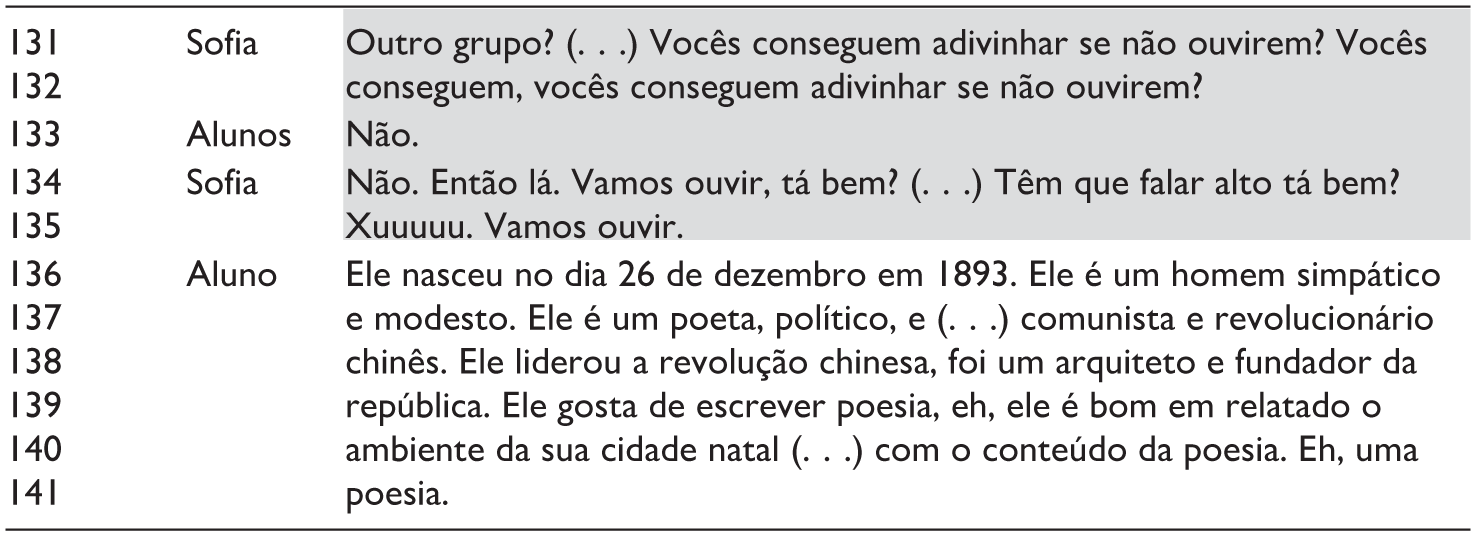
Lines 131–135: Sofia: Another group? (. . .) Can you guess if you don’t hear it? Can you, can you guess if you don’t hear it? Students: No. Sofia: No. So. Let’s listen, okay? (. . .) You have to speak loudly, okay? Xuuuuu. Let’s listen.
Beyond linguistic simplification, this example highlights the use of a non-verbal cue ‘Xuuuuu’ to manage classroom order. This shift from verbal to prosodic regulation can be seen as an adaptive strategy to the learners’ limited linguistic repertoire, conveying a clear directive without complex language.
The teacher creates a preface, a preparatory negotiation and justification strategy, to effectively implement the directive. By asking Vocês conseguem adivinhar se não ouvirem? (‘Can you guess if you don’t listen?’), the teacher leads the students to reflect on the necessity of action. After students give the negative answer, there is a naturally transition to the directive Vamos ouvir, tá bem? (‘Let’s listen, okay?’). Instead of issuing a direct command, she employs logical elicitation, guiding students to deduce for themselves the necessity of listening (the student’s inability to complete the task → the need to carry out the action). Consequently, this speech act transforms the teacher’s subjective directive into an objective and situationally logical imperative. This frames the students’ compliance with the subsequent directive to listen as an adherence to consensus rather than submission to authority.
The subsequent non-verbal cue ‘Xuuuuu’ further demonstrates that, upon this consensus, the order of quietness can be maintained in the gentlest, least confrontational way possible, reducing in this way face-threatening potential. Here, the teacher’s identity is that of a catalyst of consensus and an order-sustainer that minimizes coercion.
As a mediator and co-constructor of rules, the instructor employs prefatory rationalization, frame-shifting, and interrogative negotiation to transform organizational directives into collaborative processes. This approach emphasizes shared responsibility, avoiding authoritarian imposition of rules and repositioning the instructor as an initiator of negotiated norms rather than a unilateral authority. Simultaneously, explicit articulation of agency enhances directive clarity, enabling effective classroom management. This practice implicitly constructs the instructor’s identity as a facilitator of pedagogical flow rather than a commander, fostering co-construction of knowledge through collective participation.
The teacher’s use of a pre-sequence (‘Can you guess if you don’t listen?’) avoids the imposition of a direct command. By eliciting a collective ‘No’ from students, she frames the subsequent directive ‘Let’s listen’ not as an order, but as a collective logical necessity, thereby constructing the identity of a collaborative facilitator. The dynamic and co-constructed nature of this identity is evident: it is fully contingent upon and ratified by the students’ specific response. Had a student hypothetically countered ‘Yes, we can guess,’ the teacher’s interactional logic would have been disrupted, necessitating an immediate pragmatic shift, likely toward a more direct assertion of her institutional authority, to achieve the pedagogical goal. This contrast underscores that facilitative identities are not merely adopted but are precariously achieved through sequential negotiation.
Contrasting this with the direct command in Example 1 vividly illustrates the dynamism of pragmatic identity in response to situational demands. In Example 1, during a routine transition, she adopts a default identity of negotiatory authority, using an efficient, mitigated command that fulfills her institutional role. In Example 7, likely faced with the diminishing effectiveness of the directive, she strategically opts for the elaborate identity work of a collaborative facilitator, building consensus to achieve the same pedagogical end. This shift from a default institutional alignment to strategic facilitative construction demonstrates that her professional identity is not a static role, but a series of context-driven choices. She continuously negotiates the tension between institutional exigencies and pragmatic efficacy, selecting the identity position that best secures compliance and sustains the interactional order within the specific moment.
3.2. Co-construction of teacher identity by usage of directives
This study argues that teacher directives are not merely tools for constructing a multidimensional professional identity but are, more fundamentally, the very mechanisms for the dynamic co-construction of the classroom social order. Through strategic teacher talk choices, the teacher proposes, negotiates, and sustains distinct interactional orders, and the professional identities emerge as a function of her role within these orders – as a negotiatory authority, a collaborative facilitator, and an affective motivator.
As a negotiatory authority, the teacher transmutes institutional power into dialogic contracts. The command and prohibition directives, for example, represent institutional authority. These acts are foregrounded through obligation markers (têm que ‘you have to’) and universal prohibitions (ninguém pode ‘no one can’); however, they are also systematically mitigated by:
Tag questions (tá bem? ‘okay?’) inviting tacit consent;
Collective pronouns (nós/vamos ‘we/let’s’) framing rules as shared commitments;
Contextualized rationality (e.g. muitas vezes . . . hoje não ‘usually . . . not today’), transforming rigid rules into situational contracts.
The teacher’s frequent use of the inclusive pronoun nós (‘we’) and vamos (‘let’s’) is not merely about building community but constitutes a refined power negotiation strategy and a classroom order-building tactic centered on collective responsibility. Through this contextualization cue, the teacher reframes her institutional authority (the power to issue directives) as a collective endeavor: in this order, tasks are defined as a common enterprise for everyone, not as assignments imposed by the teacher. This essentially transforms a unilateral command into a shared goal, positioning students as active co-participants rather than passive subordinates. This democratization of power exercise mitigates the inherent face-threatening nature of directives, allowing the teacher’s authority to achieve greater acceptance and legitimacy within the interaction, thereby constructing an ‘authority-with-us’ identity. When students accept this contextualization cue and engage in the collective activity, they are not merely following a directive; they are jointly practicing and reinforcing this collectivist interactional order. The teacher’s authority is thus embedded within a shared frame of we-are-in-this-together, enabling the maintenance of a classroom order centered on collaboration.
The teacher can also be seen as a collaborative facilitator, co-constructing knowledge through task framing. Directives categorized as invitation, suggestion, and task guidance reveal the teacher’s role as a learning coordinator. Key strategies include:
Open-ended interrogatives (quem quer . . .? ‘who wants . . .?’) fostering student autonomy;
Temporal deixis (primeiro . . . depois ‘first . . . then’) scaffolding complex tasks;
Cognitive justification (duas cabeças pensam melhor ‘two minds think better’), invoking shared cognition to legitimize collaborative formats.
When the teacher gives the open-ended question of Podem falar um pouco, quem quer falar um pouco? (‘Can you talk a little bit, who wants to talk a little bit?’), she is proposing a power-sharing interactional order. The core rule of this order is that students have the power to autonomously choose whether and when to speak, which allows students’ opinions and pacing to legitimately enter the decision-making space traditionally monopolized by the teacher, through contextualized cues of interrogative, transferring the initiative to act to the students repositioning them from ‘command-waiters’ to ‘self-driven learners’. Each student response constitutes an acceptance and practice of this proposed order. Together, teacher and students conventionalize sequences from a teacher authorization-student activation into an anticipated interaction pattern. Through these strategies, the teacher does not abdicate power but exercises a guiding power, where her authority is manifested in scaffolding and empowering student agency, thereby precisely constructing the identity of a collaborative facilitator. In the process, a decentralized decision-making order is created in which the mentioned identity is reinforced.
As an affective motivator, the teacher builds alliances through proximity markers. The permission and classroom organization directives highlight this affective identity construction through:
Intimate vocatives (meus amigos ‘my friends’) reducing social distance;
Politeness strategies (obrigada ‘thank you’) reciprocating student cooperation;
Non-verbal cues (Xuuuuu) substituting confrontational commands with soft prompts.
Teachers soften the inherent power differentials between students and teachers through specific emotional labor, co-constructing an emotionally safe order of interaction. Instead of giving a direct and forceful command to students to be quiet, the teacher employs the non-confrontational vocal symbol ‘Xuuuuu’. This choice establishes a rule of order: classroom quietness can be achieved through gentle, almost playful reminders rather than stern reprimands. While reinforcing the cell phone prohibition, the teacher inserts por favor, Paco, você é o meu amigo, ok? (‘Please, Paco, you are my friend, okay?’). This utterance, while exercising institutional power (the ban), implants a rule of emotional compensation into the order, namely that behavioral constraints must be accompanied by interpersonal reinforcement. When students accept this mixed message and comply with the rules, they affirm and sustain this classroom order that binds emotional support with behavioral norms. Through this positive emotional exchange, both teachers and students work together to maintain a supportive learning environment. The teacher’s role as an affective motivator is a reflection of her role as a key maintainer of this emotional order.
The emotional labor invested by the teacher as an affective motivator must be understood within Macau’s distinctive cross-cultural teaching context. On one hand, her strategies (using intimate vocatives, non-confrontational prompts, and politeness expressions) resonate with the Portuguese educational tradition that values interpersonal rapport and minimizes authority distance. On the other hand, these strategies also sensitively respond to the cultural background and classroom expectations of her Chinese students; for instance, a preference for teacher-as-friend relationships and a greater willingness to participate within a collective atmosphere. Thus, the teacher’s affective motivator identity is, in essence, a practice of cross-cultural emotional mediation. Through verbal and non-verbal resources, she builds a bridge between the Western interactional mode of Portuguese language teaching and the East Asian classroom culture of her students, thereby co-constructing a classroom order that is both emotionally supportive and aligned with cross-cultural pedagogical goals.
In conclusion, the co-construction of teacher identity through directives is inextricably linked to the co-construction of the classroom’s social fabric. The identity dimensions – negotiatory authority, collaborative facilitator, affective motivator – are not isolated roles but are dynamically realized through the teacher’s initiation and the students’ ratification of corresponding interactional orders: the order of collective responsibility, the order of shared decision-making, and the order of emotional safety. It is within the framework of these co-constructed orders that power is renegotiated, participation is reshaped, and the teacher’s professional identity is performed.
3.3. The constraining and enabling role of A1/A2 proficiency
The foregoing analysis of directive functions and identity construction must be understood within the defining contextual constraint of the classroom: the learners’ beginner/elementary proficiency level (A1/A2). This factor acted not as a mere background condition but proactively shaped the teacher’s interactional strategies in two interdependent ways, serving as both a constraint and an enabler for the identity positions described.
On one hand, it compelled the simplification of verbal input, as illustrated throughout the directive examples. The teacher consistently relied on high-frequency chunks, repetition, modulated modality, and frame-building discourse markers to ensure comprehensibility. This simplified teacher talk is not a deficit but a fundamental pragmatic adaptation to the learners’ developmental stage, making the target language accessible and tasks achievable.
On the other hand, and crucially, the students’ limited verbal comprehension at the A1/A2 level meant that securing understanding and compliance could not rely on linguistic means alone. The extensive verbal simplification observed throughout our transcripts strongly implies that paralinguistic and non-verbal channels (such as prosody, gesture, and facial expression) must have played an indispensable, compensatory role. For instance, the prominent prosodic cue ‘Xuuuuu’ (Example 7) and the need to enact roles like collaborative facilitator or affective motivator suggest that the teacher’s identity work, while analyzable through speech acts and politeness, was supported and enriched by a necessary multimodal layer. Thus, the beginner-level context not only explains the observed simplification of teacher talk but also highlights the inherent multimodal demands of teaching in such settings, which is a key consideration for both pedagogy and future research.
4. Final considerations
The directive analysis substantiates the dynamic co-construction of identity within IS, where pedagogical roles are continually negotiated through discourse strategies that reconfigure power relations and epistemic positioning in classroom interactions.
Rather than perpetuating monologic authority, the teacher orchestrates a participatory ecosystem where institutional obligations, collaborative cognition, and affective alliances coexist through strategic directive choices. This identity matrix aligns with contemporary interactive language teaching paradigms that prioritize negotiated participation over hierarchical imposition.
Ultimately, the directive patterns construct a classroom ecology that mirrors real-world language use: project-oriented, interaction-driven, and identity-mediated. In this participatory ecosystem, directives constitute the primary sites for negotiating power and order. The teacher organizes not only activities, but also the fundamental rules of interaction, strategically sharing control over classroom discourse and decision-making. She thus emerges not merely as a ‘more capable peer’ (Vygotsky, 1978, p. 86) in a cognitive sense, but as a skilled architect of the classroom’s micro-political order, legitimizing authority by rendering it more collaborative and approachable. This identity negotiation process transforms the foreign language classroom into a microcosm of sociolinguistic reality, where language learning becomes inseparable from the continuous reconfiguration of participant roles and relational dynamics. Such interactional choices build environments to motivate students’ voice, agency, and participation – essential dimensions for knowledge co-construction and preparing engaged citizens for our contemporary world.
This study, through directive analysis, reveals how identity, power, and order are dynamically co-constructed through discourse in the classroom. This process not only confirms the basic tenets of IS regarding discourse and identity but also carries direct implications for pedagogical practice. Primarily, PFL teacher education should incorporate ‘directives as resources for identity construction’ into training content, helping teachers systematically understand how their linguistic choices influence classroom power negotiation. Training could involve analyzing typical directive cases to guide teachers in consciously designing more negotiated and inclusive directive speech to balance instructional authority and student participation. Furthermore, teachers can employ simple reflective tools (e.g. a self-assessment checklist on directive use) to consciously integrate the three identity dimensions identified in this study into their directive practices, especially in cross-cultural classrooms, flexibly adapting their roles among authority, collaborator, and affective supporter. Such awareness can help teachers transcend mere classroom management to become co-constructors of the micro-political order and facilitators of participatory learning.
The conclusions of this study are situated in a specific context and thus have limitations. The research focused on a single teacher and a single class of A1/A2 level learners. While its findings illuminate fundamental mechanisms of directive use and identity construction in beginner classrooms, they may not be directly generalizable to classrooms with different proficiency levels, teaching styles, or cultural backgrounds. Future research could compare directive strategies across classrooms of different proficiency levels (e.g. intermediate/advanced) or investigate how teachers from different cultural backgrounds construct identity through directives to further validate and extend the framework proposed here. Nevertheless, the microanalysis in this study offers valuable insights into the complex relationship between classroom discourse, teacher identity, and power dynamics.
Footnotes
Acknowledgements
The authors would like to thank the anonymous reviewers for their insightful comments and suggestions, which significantly helped improve the quality of this manuscript. This research also utilized data supported by the University of Macau research project ‘Language, Culture and Interaction: Traits Of The Portuguese Classroom In Macau And China’ (Ref: Myrg2018-00184-Fah).

Author Contributions
Conceptualization: Si Neng Kot; Data curation: Si Neng Kot, Roberval Teixeira e Silva; Formal analysis: Si Neng Kot, Roberval Teixeira e Silva; Methodology: Si Neng Kot, Roberval Teixeira e Silva; Writing: original draft: Si Neng Kot; Writing: review&editing: Si Neng Kot, Roberval Teixeira e Silva.
Funding
The authors received no financial support for the research, authorship, and/or publication of this article.
Declaration of conflicting interests
The authors declared no potential conflicts of interest with respect to the research, authorship, and/or publication of this article.
Data Availability Statement
Data provided by the authors and not publicly available.