







Abstract
Writing has long been seen as a challenging skill that language learners need to learn. In addition, by guaranteeing participant engagement in significant communication processes, visual methods such as photovoice can be utilized in language instruction to enhance language learning. Thus, the present study attempted to examine the effects of utilizing Photovoice as an innovative instructional method on Iranian intermediate English as a foreign language (EFL) learners’ writing skills. The study also examined the participants’ attitudes toward the implementation of photovoice in language learning. The research followed a mixed-methods design to collect and process the data. Sixty female intermediate learners from a private English language institute in Isfahan, Iran, were selected through convenience sampling and then randomly assigned into two equal groups: an experimental group and a control group. The Preliminary English Test was run to ensure the participants were homogeneous in terms of their level of proficiency in English. The experimental group received a photovoice method, while the control group received routine English language instruction. Triangulation was achieved through administering a pretest and posttest of writing, distributing an attitude questionnaire, and conducting an interview. The results of the paired-sample t-test and one-way ANCOVA revealed the outperformance of the experimental group over the control group. The results indicated that photovoice had a significant effect on enhancing writing skills, and learners had positive attitudes toward using photovoice in their writing classes. The findings could benefit language learners, educators, researchers, and curriculum designers by incorporating the photovoice method into English writing classes.
1. Introduction
Writing in English as a foreign or additional language is still one of the most challenging of the four language skills for learners, as they have to come up with ideas, organize them, and at the same time, use the language structures such as grammar and vocabulary correctly. Modern second language writing theories view writing as a process of creating meaning rather than a merely linguistic activity, thus emphasizing its cognitive, social, and affective aspects (Hyland, 2024; Sari & Sultan, 2022). Therefore, the goal of writing instruction goes beyond making the language more accurate, as it also helps the learners to share their beliefs, emotions, and perspectives in a way that others can understand.
For many teachers, the goal of teaching writing is to help learners share their beliefs, feelings, and thoughts and communicate efficiently by enabling them to make themselves understood. In English as a foreign language (EFL) contexts, particularly among intermediate-level learners, persistent difficulties in idea development and text organization often hinder effective written communication (Jayantini et al., 2022). In the Iranian EFL context, the writing instruction is mostly limited by exam-oriented curricula, short classroom time, and a focus on grammatical accuracy rather than meaning construction (Karimi et al., 2019). As a result, Iranian intermediate EFL learners often lack sufficient support for idea generation, self-expression, and meaning-focused writing. Teachers can address a variety of learning styles and foster a more inclusive learning environment by including visual components in language learning. Latest pedagogical frameworks emphasize the significance of multimodal and visually mediated learning environments for meeting diverse learner needs and ensuring that language classrooms are inclusive (Handayani & Pradana, 2025; Pournia et al., 2025). Within this pedagogical shift, the photo-based method of teaching writing skills has evolved as a result of the advancement of visual technology and multimedia, as well as the paradigm shift toward student-centered learning methods and the need to train students with 21st century skills.
The majority of teachers enter teacher education with preconceived notions that may influence their practice but may not always be beneficial for students due to their past experiences (Harahap & Fithriani, 2024). In Iran, the prevalent teacher-centered practices and the strict following of the textbook may lead to fewer chances for students to express themselves in the writing classes (Karimi et al., 2018). This highlights a weakness in contemporary teaching methods, which mainly lack learner-centered and participatory writing exercises.
The notion that people can use photos to successfully communicate their knowledge and opinions is supported by the visual qualities that are innate to photovoice. Photovoice is also grounded in participatory approaches in which participants make use of photographs to share their stories and thus can easily explain their experiences and ideas (Suprapto et al., 2020). In this regard, the interactive nature of the questions presented by the teachers can explain the relationship between teachers’ teaching practices and the development of the learners’ learning. Moreover, this method can be regarded as an interactive intervention that promotes learners’ engagement and understanding (Hayik, 2023; Syafi'i & Sudarso, 2022). Therefore, photovoice can address the shortcomings of current writing instruction by incorporating visual support, reflection, and learner agency, in contrast to traditional product-oriented approaches.
It has long been believed that learning to write is a difficult skill that students need to master. Since the students struggle to come up with ideas for their writing on the assigned topic, they frequently experience fatigue and confusion during the journey of writing (Sari & Sultan, 2022). Likewise, at different learning levels, students encounter a variety of writing challenges. These issues can usually be categorized into linguistic, psychological, cognitive, and pedagogical challenges (Fareed et al., 2016). Students often find it challenging to understand the structural components of the English language because of inadequately constructed materials, which ultimately impede their understanding and necessitate cognitive processing (Amalia et al., 2021; Yu, 2024). However, even if students have acquired syntactic, lexical, and grammatical mastery over text writing, an incoherent document fails to express concepts, which undermines learners’ confidence (Ahmed et al., 2024; Sa'adah et al., 2023).
These challenges are particularly evident among Iranian intermediate EFL learners, whose writing difficulties often persist despite years of formal instruction. The pressure of meeting institutional expectations and passing high-stakes tests in Iran usually leads to giving more importance to making the writing superficially accurate rather than more effective in communication; thus, the problems become even more serious. In an attempt to find a solution to these problems, the study used a photovoice-based model to develop Iranian EFL learners’ writing skills. To the best of the researchers’ knowledge, no similar study has been conducted to explore the effectiveness of photovoice-based teaching methods on Iranian intermediate EFL learners’ writing skills. Therefore, the study was an attempt to investigate the possible effects of Photovoice and teachers’ questions on EFL learners’ writing skills to fill this gap.
The significance of the present study can be multifold. Writing skills are worthy of attention and considering different methods and strategies to promote learners’ writing abilities as one of the most complex situations in foreign language instruction is necessary. In addition, despite photovoice's widespread use in the English language education field to document and showcase teachers' and students' learning experiences, its application to writing skills has rarely been examined and discussed in academic studies (Rosmawanty & Abdulrahman, 2021). Therefore, the objectives of this study were to examine photovoice as a participatory learning method in improving intermediate learners’ writing skills and their attitudes regarding learning experiences in the Iranian EFL context. By examining photovoice as a participatory, visually mediated practice, this study contributes to research on multimodal writing instruction and offers pedagogical insights for the Iranian EFL context.
2. Literature Review
2.1. Theoretical Background of the Study
Photovoice, the use of digital photography, refers to a cooperative approach to producing and disseminating a collective message through images (C. C. Wang, 2009). The basic tenet of the photovoice method may be summed up by the adage “A picture is worth a thousand words” which originates from Chinese culture (Krieg, 2009). Photovoice is a process in which individuals can analyze, demonstrate, and promote their society using a specific photographic method (C. Wang & Burris, 1997). In this regard, Strack et al. (2004) noted that in the photovoice process, individuals are asked to capture some photographs and answer some questions about them while they are reflecting on the issues captured. Based on Sa'adah et al. (2023), it goes beyond exploring the needs of the community, to reflect on issues and possible solutions, as well as to formulate the group’s message. In simple terms, the message is conveyed through pictures and brief written captions. Therefore, photovoice promotes more in-depth contemplation and analysis. From a theoretical perspective, photovoice is a method that relies on constructivist and sociocultural learning theories as its theoretical basis. These theories put the main emphasis on the ways people create meaning through social interaction, reflection, and by facing authentic experiences (Deci & Ryan, 2000; Juniarti et al., 2022; Vygotsky, 1978).
In the research context, photovoice entails photographic activity as a visual recording based on the participant’s perspective, followed by the photography and written text being merged to voice the photo’s meaning. It allows people to use photography as visual recorders tailored to their perspectives and experiences (Nisa, 2021). People from marginalized groups are given voice and agency through photovoice, enabling them to make sense of their circumstances, identify issues in their communities, carry out research, and promote social change (Ordem, 2023). Using the photovoice method, participants can express their experiences and take measures to address any concerns they may have. Put simply, the photovoice method extracts meaning from the pictures of the participants’ realities by illustrating their lives and experiences. Moreover, based on C. C. Wang (2009), photovoice allows people to express and record their concerns, increase critical knowledge of the important issue through small and large group discussions of a picture, and influence policymakers. Furthermore, to assist students in learning from their own experiences, the photovoice method can be included in project-based learning (PBL), which conforms to constructivist learning principles (Juniarti et al., 2022). Therefore, from a conceptual standpoint, photovoice can serve as a multimodal framework in EFL writing instruction that incorporates written production, guided questioning, visual input, and reflection.
Learners' thoughts, beliefs, and values regarding the language are referred to as the cognitive component, while their feelings regarding the language are referred to as the emotional component. In addition to cognitive and performance-based outcomes, affective variables, mainly learners' attitudes, have a major influence on language learning success (Chalak & Kassaian, 2010). The concept of language attitude is significant since it is essential to both teaching and learning languages.
Furthermore, attitude is connected to language learning procedures and methods since it influences the learner's motivations and the connection between language and culture, in addition to how they process information (Juniarti et al., 2022). In EFL settings, learners' attitudes toward instructional methods can significantly influence their involvement, motivation, and stamina in language activities. Likewise, previous studies on attitude and language learning showed that having a positive attitude toward innovative and participatory instructional practices in language and the learners' perceptions of the language can have a significant effect on how well they do in it (Chalak & Kassaian, 2010; Karimi et al., 2019; Sa'adah et al., 2023). Since EFL learners continue to struggle with developing ideas, making their writing coherent, and organizing it, there is a high demand for instructional methods that not only stimulate the students' cognitive engagement but also their affective engagement.
Visual and experiential methods such as photovoice, by nature, aimed to change learners' attitudes through features including self-expression, autonomy, and personal relevance. Photovoice, therefore, can be a source of more positive perceptions of writing activities and increased affective engagement as it allows learners to take from their real world and present the meaning through photos and reflective writing. Hence, it is quite reasonable from the theoretical point of view to study learners' attitudes toward the application of photovoice since attitudes serve as an affective mediator between instructional innovation and learning outcomes (Pournia & Chalak, 2024; Putri, 2018).
Reviewing the literature, photovoice protocols or models that provide detailed answers to specific questions have been utilized as a guide to writing a language. The SHOWeD model, developed by C. Wang and Burris (1997), involves students answering questions such as “What do you see?”, “What is happening?”, “How does this relate to our lives?”, “Why does this situation exist?”, and “What can we do about it?”. Moreover, drawing upon Graziano’s (2004) PHOTO model, the learners are required to answer some questions for each photograph. They will be encouraged to describe the photo, explain what is happening in the photo, and their reason for capturing the photo of this, what the photo tells them about their life, and how the pictures can generate opportunities for improving learners’ lives. In addition, Koltz et al.’s (2010) model of photovoice may be quite useful for a novice writer who is composing an exposition text. In this model, learners are required to write a photovoice text using the following moves: the setting in which the picture was taken, the motivations behind it, and the students' feelings during the writing process. Finally, in the 3Ws photovoice model of Mitchell et al. (2018), students will begin writing about their observations. It is about the occurrence being documented by the students, along with the motivation for taking the photo and the underlying causes of the phenomenon. According to the 3Ws photovoice model, answering these questions will prompt the students to brainstorm possible solutions or reactions. Such theories serve as a well-organized conceptual framework for supporting EFL students' writing development through the use of guided reflection and visual mediation (Mitchell et al., 2018).
2.2. Empirical Studies
Some empirical investigations have been carried out in recent years to investigate and confirm the potential effects of photovoice on language learning (Hidayat et al., 2019; Juniarti et al., 2022; Rosmawanty & Abdulrahman, 2021; Sa'adah et al., 2023). Three phases, including photo exploration, exposition investigation, and project execution, comprised the photovoice PBL approach. The goal of photovoice was to use images to depict societal challenges and occurrences and apply brainstorming strategies to facilitate language learning for learners. Performing a qualitative case study with 15 foreign language learners, Juniarti et al. (2022) investigated the role of photovoice as a PBL on improving language learners’ writing skills. They found that photovoice was put into practice through different stages. First, the teacher motivated the learners with photos to show them that the photos could voice a concept. Concerning the learners’ writing skills, they had improved in their schematic structure, coherence, and using language. In addition, they believed that photovoice had strengthened learners’ language learning creativity, spread their enthusiasm for language learning, and fostered their active involvement in the class. Likewise, using eight sessions in two classes as a sample, Hidayat et al. (2019) employed quantitative research methods. The outcome demonstrated that photovoice was not only beneficial to students but also piqued their interest in and motivation for learning to speak.
In addition, some qualitative researchers have emphasized the usefulness of visual tools, including photography, for knowledge development and comprehension of communication (Fadhilah, 2023; Gibbs et al., 2002; Putri, 2018; Wangdi & Shimray, 2022). Fadhilah (2023) focused on using the photovoice method to investigate the learning experience of the students. The study employed a qualitative research method to explore themes such as classroom environment, student–teacher interactions, peer collaboration, and language anxiety and confidence. It also provided valuable insights into the challenges and successes in English language learning among junior high school students in Indonesia. Moreover, Gibbs et al. (2002) established a connection between photography and social research. Photos need to be accompanied by several layers of experiences and materials that reinforce one another to improve proficiency in communicating with populations from different cultural backgrounds.
Furthermore, conversation is just as important as the captivating images on their own. Employing the qualitative descriptive method, Putri (2018) investigated the effect of photovoice on language learners’ developing speaking. He stated that the students’ images taken as part of the photovoice method gave them opportunities to practice effective communication in various settings. In a recent study, Wangdi and Shimray (2022) used the qualitative photovoice method to develop Thai university students' perceptions of the positive attributes of EFL English teachers. The study highlighted four core attributes of effective EFL teachers, such as instructional abilities, expertise in their subject, pedagogical understanding, and socioemotional skills.
A few studies on the use of teacher questions and questioning techniques to enhance teaching materials in English teaching classrooms have been carried out in the Iranian context (Banitalebi & Ghiasvand, 2023; Karimi et al., 2018, 2019; Khatib & Nourzadeh, 2015; Pournia & Chalak, 2024). The effect of photovoice on language learners’ cross-gender reflective thinking and intercultural sensitivity was investigated by Karimi et al. (2019). Utilizing a quasi-experimental design, they divided the 48 intermediate EFL students into two groups, including the photovoice group and the control group. They discovered that photovoice encouraged students to think critically and be sensitive to cultural differences. In addition, they stated that females benefited more than males from using the photovoice method. In another study, Karimi et al. (2018) found that teachers should not restrict their inquiries to subjects that require understanding. They should ask clarifying questions and produce more thorough and syntactically complex responses (Banitalebi & Ghiasvand, 2023). More recently, Pournia and Chalak (2024) conducted a photovoice study with 60 Iranian intermediate participants. The results of the covariance test analysis demonstrated that students' speaking abilities were enhanced via photovoice.
Regarding the studies mentioned above, while a large number of studies have looked at the usefulness of photovoice across different domains of study, there are relatively few academic studies that have examined the effect of photovoice-based instruction on the writing abilities of Iranian intermediate EFL learners. Furthermore, the researchers believe that photovoice is worth attempting to use in the classroom based on the advantages mentioned above. It was anticipated that using this method would enhance students’ writing abilities, which may lead to increased use in the classroom. Moreover, this approach as a method of teaching the English language was never applied in the context that the researchers selected. The research is novel in combining photovoice with teacher-guided questioning to enhance both writing performance and learner attitudes, thereby addressing a gap in current pedagogical practices and offering practical insights for EFL instruction in Iran. This study tried to investigate the following research questions to achieve the objectives of the research.
3. Methodology
3.1. Design and Context of the Study
The research followed an embedded mixed-methods design in which quantitative data and qualitative data were collected concurrently, with the quantitative data given priority. Moreover, if the researchers were short on time or resources, this was a wise choice (George, 2020). In addition, the researcher could use an embedded design to strengthen or supplement their conclusions from the primary type of research design (Creswell & Clark, 2018). In this study, the quantitative data played a major role in the overall design. Furthermore, a plan for allocating experimental units to treatment levels, along with the associated statistical analysis, is known as an experimental design (Kirk, 2013). This design helped the researcher evaluate the influence of photovoice in strengthening learners’ writing skills. In the current study, the independent variable was the photovoice method of instruction, while the dependent variable was writing skills. The research was conducted in a private English institute in Isfahan, Iran, during the academic years 2023–2024. The institute was chosen because one of the researchers taught at this language institute, which allowed the researcher to carry out the study. A questionnaire and semi-structured interviews with 30 EFL students in the experimental group were used to achieve methodological triangulation.
3.2. Participants
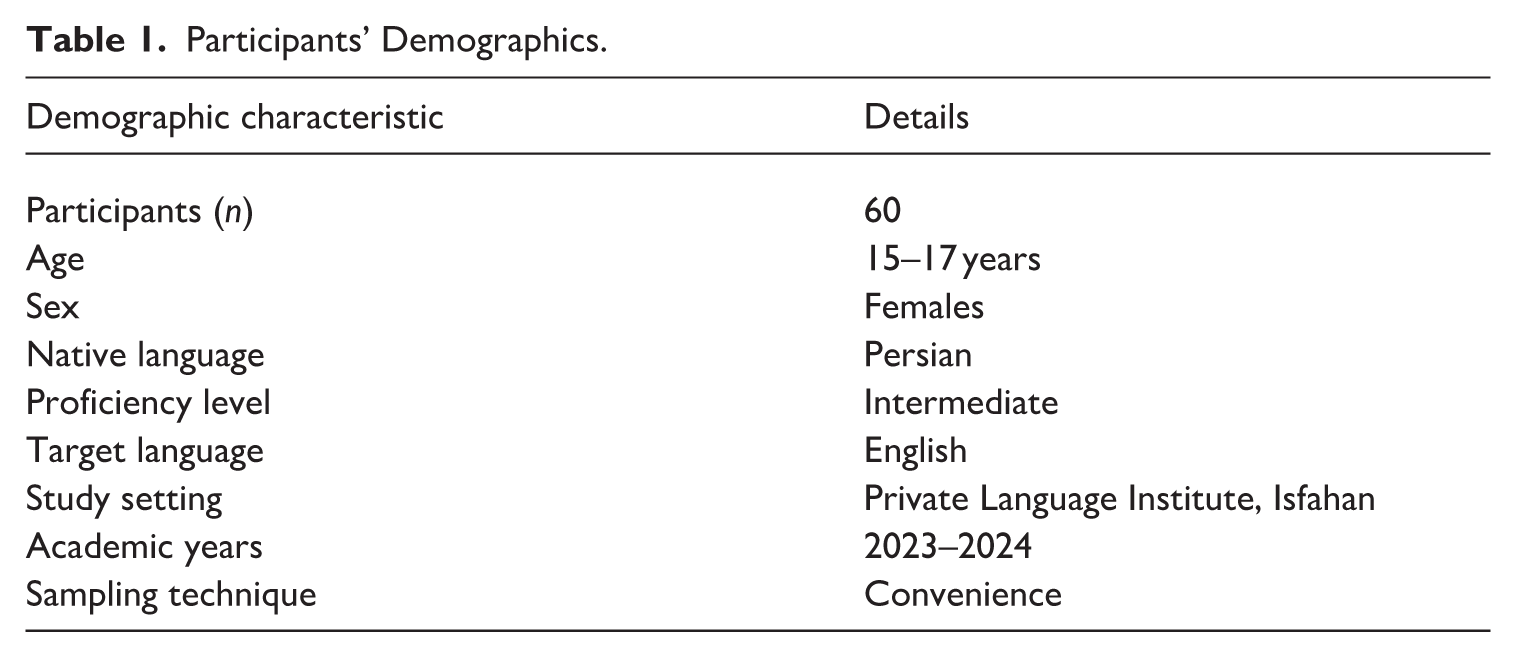
The participants of the current research were 60 intermediate EFL learners who were chosen through convenience nonrandom sampling from among a group of 150 language learners who were studying English in a private English institute in Isfahan, Iran. The Preliminary English Test (PET) results were used to establish their level of English language proficiency. The participants were between the ages of 15 and 17. All participants had a mean self-reported duration of English language study of 8 years. Utilizing a quasi-experimental design, 60 intermediate language learners were selected conveniently, and then randomly assigned into two groups comprising a control group (conventional intervention) and an experimental group (photovoice teaching method). Only female learners were selected for this study due to accessibility constraints in the participating classes. There were equal numbers of 30 learners in each group. This group size was idealized to conduct experimental investigations with the Photovoice method under the recommendations of Fraenkel et al. (2023) and Tritz (2011). Table 1 provides a quick overview of the participants' demographics.
Participants’ Demographics.
The participants’ privacy and confidentiality were also respected. Pandey (2024) asserted that ethical considerations played a critical role in research and supported researchers in making informed judgments on their findings. The participants were informed about the research project, and all gave their consent for recording and analysis of the data. First, they had to provide written consent to take part in the study. Then, during their study term, they were allowed to leave the study at any time.
3.3. Materials
The study utilized Saslow and Ascher’s (2015) Intermediate Top Notch 1B (3rd edition), which was the most popular foreign coursebook for intermediate learners at language schools in Iran. The study also used Zemach and Islam’s (2017) Paragraph Writing, because of its straightforward, clear instruction that breaks down the difficult process of writing into manageable parts, making it a great choice for intermediate EFL learners. By making the learning process both enjoyable and fruitful, the book’s realistic examples and useful suggestions helped to clarify the nuances of outstanding writing. A photovoice guidebook was also provided and translated into Persian to assist participants with research aims, requirements, and photo-taking tips. Teaching materials consisted of sample writing exercises, including paragraph writing on a specific topic, guided brainstorming, photo-supported idea generation, peer discussion, and reflective paragraph editing, aimed at clarifying the instructional content. The experimental group combined these exercises with photovoice assignments, while the control group completed comparable writing assignments without the use of pictures or visual cues.
3.4. Instruments
The study primarily relied on multiple data-collection instruments, namely the B1 PET for the participants’ general English language proficiency level, a pretest and a posttest of writing, a researcher-made attitude questionnaire, and a semi-structured interview. For the instruments, the calculated Cronbach's alpha values were (αPET = .78; αpretest = .88; αposttest = .86; αquestionnaire = .85).
3.4.1. Preliminary English Test
In the present study, the B1 PET was used to ascertain the participants’ proficiency level. It was conducted to guarantee that the participants’ overall proficiency in foreign languages was homogeneous. Table 2 summarizes the findings of the PET’s descriptive statistics.
PET Descriptive Statistics.
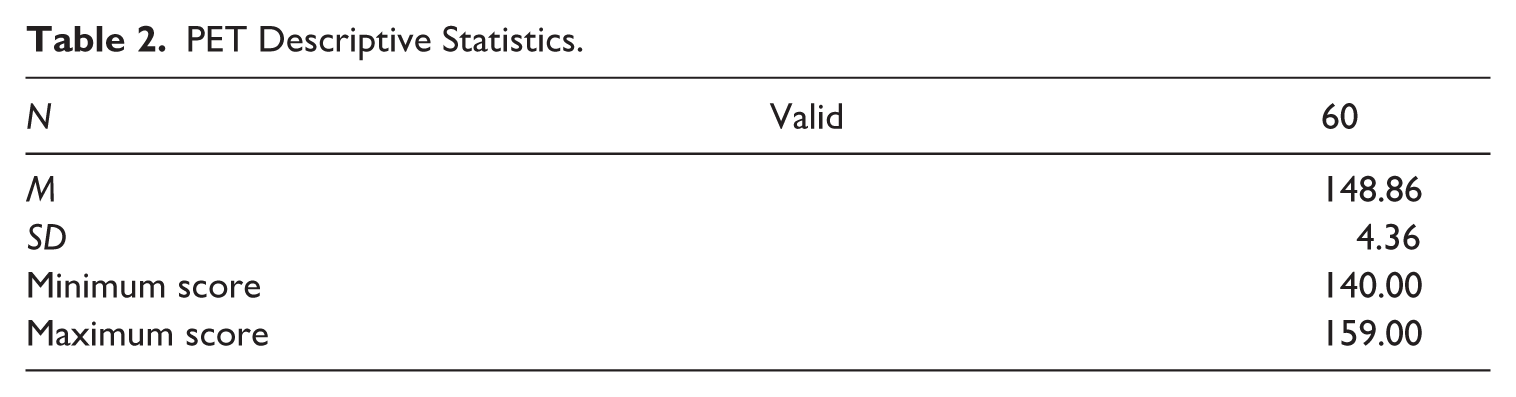
In the PET test, the mean result was 148.86, while the standard deviation was 4.36. Therefore, 60 participants in a homogeneous group made up the main sample for this investigation. In addition, the PET’s estimated reliability was .78, which was regarded as a “respectable” value based on DeVellis’ (2021) reliability standards.
3.4.2. Writing Pretest and Posttest
The researcher administered a writing pretest and posttest to measure the learners’ achievement in writing. The Test of English for International Communication (TOEIC) test was composed of 8 questions to measure the participants’ writing ability. The TOEIC writing test was chosen primarily because it was a standardized, predeveloped test with a unique evaluation framework and items categorized from easy to challenging (Schmidt, 2003). Based on the test guideline, in the first part of the test, for Questions 1–5, each participant was required to compose a single sentence based on the provided image. Their sentences were graded based on how well they used language and how well they related to the image. They had 8 minutes to finish this section of the exam. In the next part of the test, for Questions 6 to 7, the Participants were requested to send an email in response to the given situation. The evaluation criteria for this section included task fulfillment, clarity of message, grammatical accuracy, and appropriateness of language use. The participants had 10 minutes to read and respond to every email. In the third part of the test, for Question 8, the participants needed to produce an essay in answer to a question that requested them to articulate, clarify, and defend their viewpoint on a particular topic. The scoring of this assignment was based on content development, organization, coherence, grammatical accuracy, and relevance to the prompt. The participants had 30 minutes to plan, write, and revise their essays. The posttest was identical to the pretest except that the items were arranged differently.
Following Brown’s (2014) recommendation, the reliability of the writing tests was estimated by clearly limiting the writing topics and the allotted time for the learners to write. Moreover, it was requested that two raters take part in the TOEIC writing scoring procedure. The two raters were teaching English as a foreign language (TEFL) experts with experience in EFL writing assessment. They assessed the writing scores following the guidelines outlined in Educational Testing Service (2022). Cohen’s kappa coefficient was used to assess inter‑rater reliability and evaluate agreement between the two raters. The kappa value for the writing test scores was .97, indicating excellent inter‑rater reliability according to Cohen et al.’s (2018) guideline.
3.4.3. Attitude Questionnaire
A literature-based, researcher-designed questionnaire was utilized to evaluate participants’ attitudes toward the photovoice method. The questionnaire specifically focused on learners’ perceptions of learning to write through photovoice-based activities, rather than general writing attitudes. There were around twelve 5-point Likert scale items in the questionnaire, ranging from strongly agree (5) to strongly disagree (1). The items sought the participants’ attitudes toward the effects of photovoice on their self-confidence, motivation, overcoming their negative feelings while writing in English, learners’ autonomy, their desire to write in English, interactions with classmates and teachers, creativity in expressing their thoughts, collaboration with classmates, class participation, controlling anxiety while writing. These constructs were selected because they represent affective and cognitive outcomes theoretically associated with participatory and visually mediated learning, such as photovoice. The questionnaire was given in the form of paper and pencil, and only the participants in the treatment group answered it in about ten minutes. In the current study, the estimated reliability for the questionnaire came to .85, which is considered “very good” (DeVellis, 2021). In addition, a panel of five knowledgeable judges with over 15 years of experience instructing EFL students in English examined the questions to validate the questionnaires. The experts reviewed all types of validity, such as construct validity and content validity. All the experts confirmed the relevant and intended content. Furthermore, aligning items with theoretical frameworks and empirical data supported construct validity (Chalak & Kassaian, 2010; Dörnyei & Taguchi, 2010).
3.4.4. Interview
All 30 EFL students assigned to the experimental group took part in a semi-structured interview to understand more about their perspectives and what they felt about photovoice in their writing sessions. The interview aimed to elicit concrete examples of how photovoice influenced learners’ writing processes, engagement, and attitudes. Using expert judgment validity standards, the interview’s construct validity and content were verified (Creswell & Clark, 2018). The interview’s framework was derived from Dörnyei and Muir’s (2019) guidelines. The semi-structured interview questions were designed deductively, reflecting the theory of photovoice and research literature on multimodal writing and learner engagement (e.g., Dörnyei & Muir, 2019). During the interview, the participants were questioned about the benefits and drawbacks of using photovoice methods as well as recommendations for enhancing the educational effect of this medium. Participants were encouraged to refer to specific photovoice tasks, photographs, and classroom interactions when explaining their perceptions. The interview also inquired about participants’ level of satisfaction with the utilization of photovoice in their writing sessions. The duration of each interview was around 20–25 minutes. The language used for all of the interviews was English. They were then audio recorded, and transcriptions were made for the thematic content analysis. The interview’s common themes were coded with an intra-rater reliability of 95%. The interview data were analyzed using thematic content analysis, including transcription, coding, theme identification, and interpretation of the recurring patterns related to learners' engagement, writing processes, and perceptions of photovoice.
3.5. Data Collection Procedure
The study involved 60 intermediate EFL learners, randomly assigned to an experimental (n = 30) or a control group (n = 30). A TOEIC writing pretest assessed initial ability. The experimental group received photovoice instruction, while the control group followed conventional methods. During the first week of the study, the photovoice was introduced, and participants took photos. They were encouraged to photograph images based on their interest or their personal life. The participants were asked to bring their photos. In addition, the writing workshops and the principles of the writing process were presented to them. The students were instructed to write an explanation text consisting of three paragraphs of around 150–200 words. This type of text was a combination of thoughts and context. Therefore, the writer should organize the paragraph to answer the idea of “what, why, and how” of a phenomenon or topic (Jayantini et al., 2022).
Following Mickan’s (2017) writing framework, the first step in prewriting was gathering photos of any items that the students found interesting. Then, writing started by reporting the findings. The teacher asked questions about the pictures, and thus, the photos initiated an interaction between the teacher and the learners. The teacher monitored the learners’ progress weekly and sometimes accompanied them to take photos. Then, drawing upon Mitchell et al.’s (2018) PHOTO model, the learners were required to answer 3Ws for each photograph. Students began writing about what they saw in the photograph with the first “W” (what do you see?). It was about the phenomenon that the students were documenting. They were also asked to explain why they shot the picture and how the phenomenon happened in the next “W” (what does it signify to you?). The last “W” (what can you do about it?) asked them to come up with potential answers or responses. After that, the students were requested to proofread and double-check their work during the postwriting phase. The PHOTO model of instruction that was used for the treatment group included three main phases, namely teach, apply, and reflect.
All of the participants of the experimental group also answered an attitude questionnaire during the research process for about 10 minutes, and an interview was conducted with 30 EFL learners from the experimental group, which lasted for 20–25 minutes. Of course, at all phases of data collection, all the participants were told that they were being recorded, and it was done with their permission. Likewise, due to confidentiality concerns, while citing the participants' remarks, the researcher employed pseudonyms or codes instead of their real names.
In the control group, on the other hand, the teacher actively engaged in the classical method of language teaching. The classical method of teaching English was one of the most traditional forms of instruction, in which the instructor focused just on syllabus theory. Within this group, there was no photovoice task, and each of the students wrote about the topic introduced in the writing exercises in the textbook. To put it another way, students spent the first half of the lesson (about 35 minutes) learning traditional writing methods, while the second half of the class worked on conventionally producing language. Finally, after the treatment phase was completed, both groups received the TOEIC writing test posttest.
3.6. Data Analysis Procedure
The statistical analyses were performed utilizing version 26 of SPSS. The numerical data were summarized, and descriptive statistics were applied to the attitude questionnaire answers. Before doing the statistical analysis, the primary assumptions supporting parametric tests were created. Concerning the inferential statistics, paired samples t-tests were used to assess the participants’ progressive improvement in writing between the pretest and the posttest. As stated by Pallant (2020), a paired-sample t-test was employed when comparing the mean scores of the same group of individuals on two distinct occasions. Then, an analysis of covariance (ANCOVA) was run to answer RQ1. RQ2 was addressed using the findings of the thematic content analyses of the interviews and the descriptive statistics for the attitude questionnaire. The qualitative and quantitative findings were triangulated to demonstrate how learners’ perceptions were shaped by their direct engagement with photovoice activities and teacher-guided questioning. Finally, it is worth mentioning that the data from the test scores, participants’ attitude questionnaires, photographs, and interviews were cross-checked.
4. Results
A statistical analysis was performed on the test results and an attitude questionnaire. For the interview, a thematic content analysis was conducted. The section that follows contains the results. The results of the statistical analyses address RQ1 and RQ2 and test the hypotheses regarding the effectiveness of photovoice in language learning. It was followed by inferential statistics, namely an ANCOVA and t-tests, to identify the significance of the observed effects.
4.1. Checking the Assumptions of ANCOVA
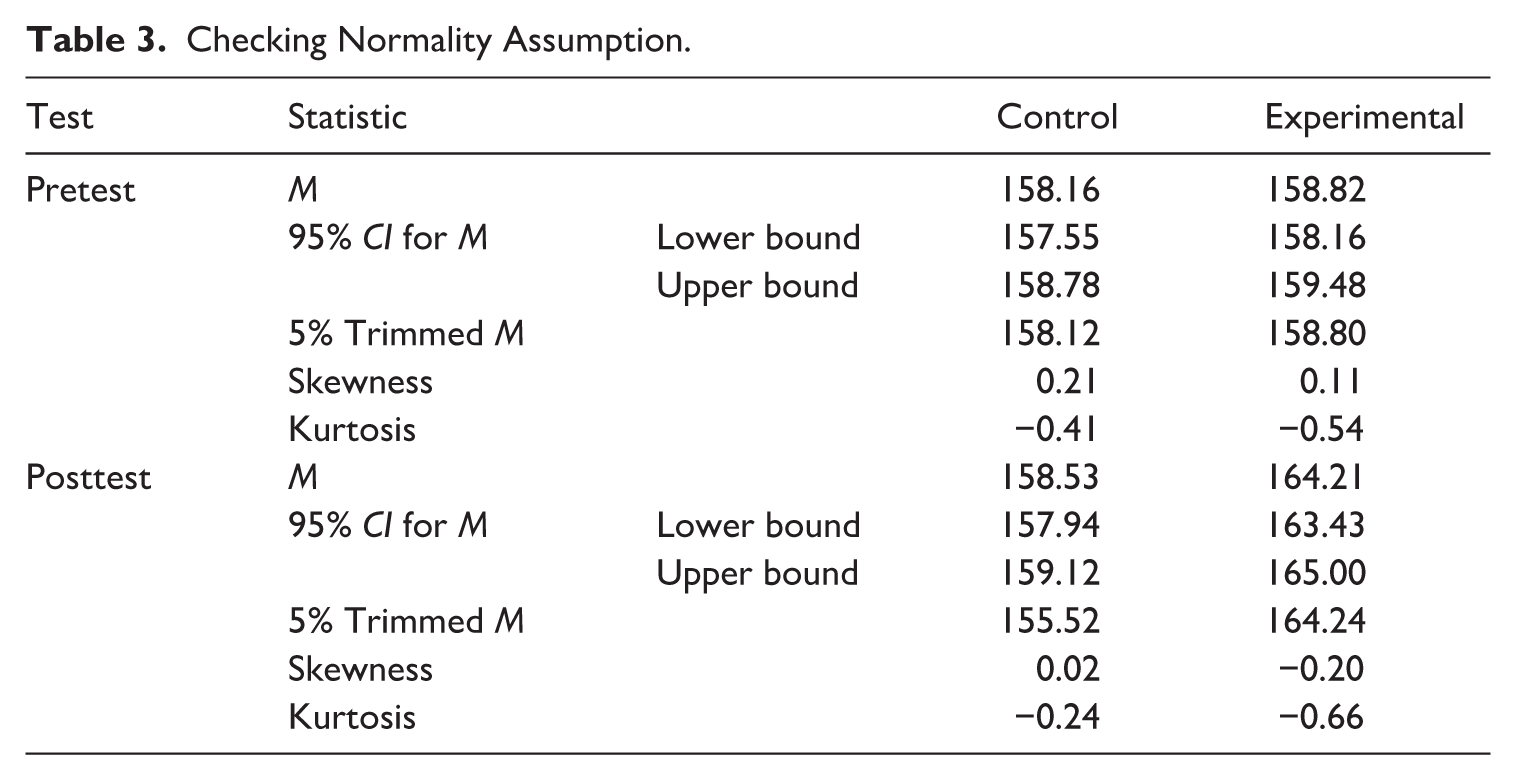
The main assumptions of ANCOVA were verified before the primary analysis. The normality assumption was investigated using skewness analysis and trimmed means. As indicated in Table 3, the skewness and kurtosis values were within the +2 range, showing that the data matched the normality assumption proposed by Tabachnick et al. (2013). Furthermore, the trimmed means were inside the 95% CI lower and upper bounds for the mean. Consequently, the results showed that the pretest scores were distributed normally.
Checking Normality Assumption.
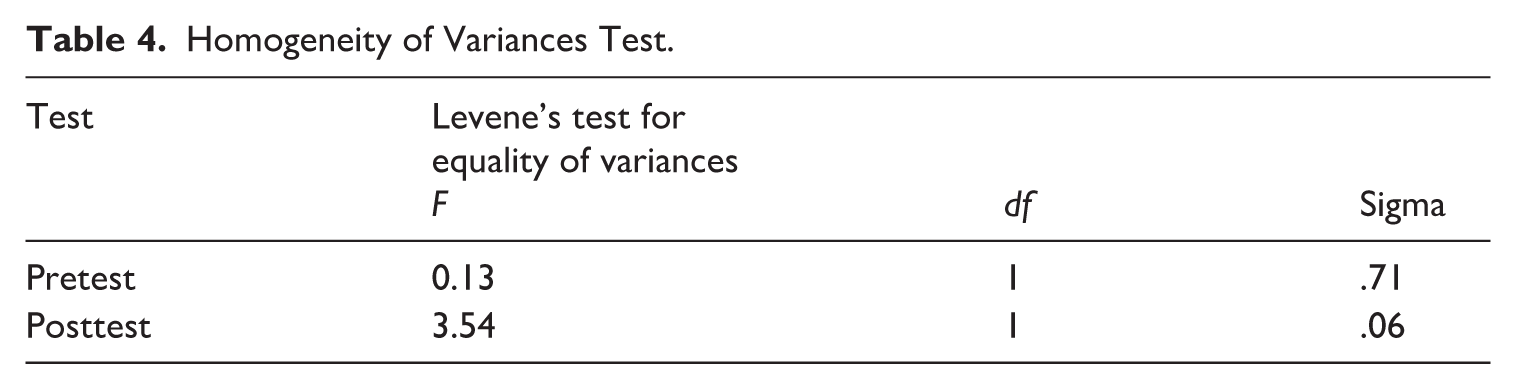
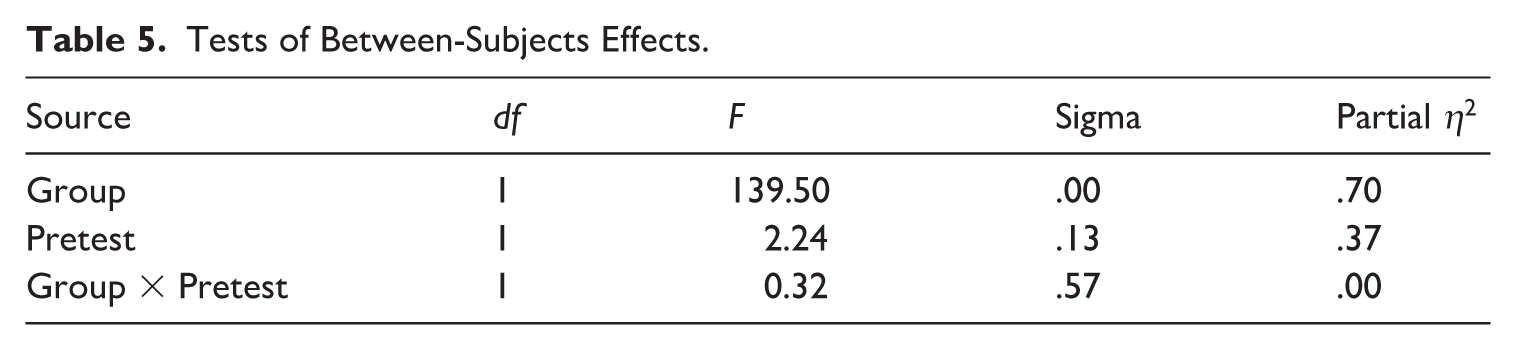
Upon normality assumption verification, the linearity assumption was also checked. According to the following scatterplot, the dependent variable has a linear connection with the pretest (see Figure 1). The study’s design makes clear that the samples were independent, and the groups were chosen at random. Next, the assumption that the variances were equal for each group was evaluated using Levene’s F test (Table 4). The two independent groups were shown to have nearly identical variances (p > .05). In addition, the results of the between-subjects effects tests, which are presented in Table 5, showed that the covariate and posttest scores had an interaction with a probability value of .57, which was more than .05, and suggested that the regression slopes were homogeneous.
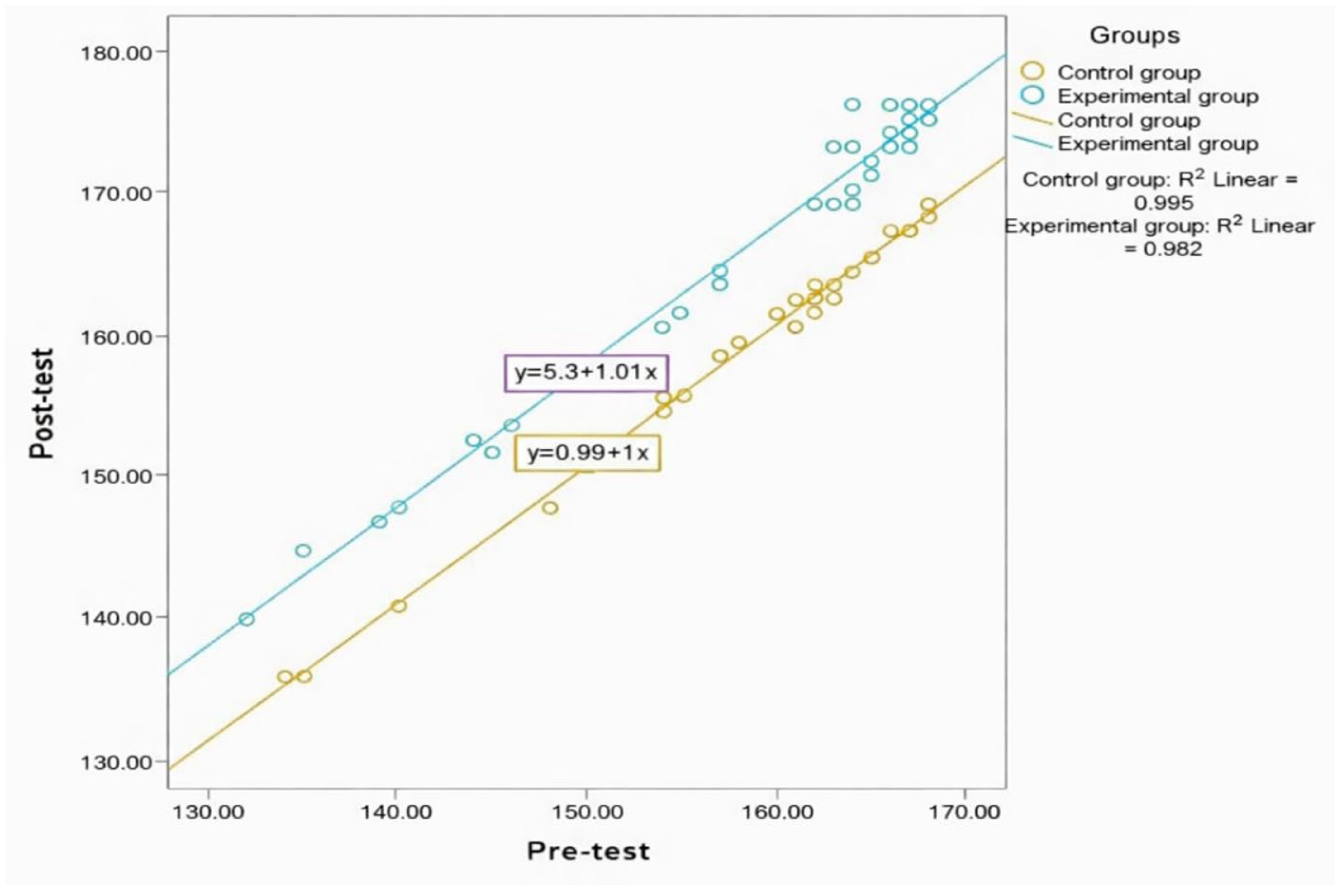
Scatter plot for the covariate and the dependent variable.
Homogeneity of Variances Test.
Tests of Between-Subjects Effects.
4.2. Descriptive Statistics of the Writing Pretest and Posttest
Descriptive statistics were generated to create a summary of the test results once the assumptions of normality, homogeneity of variances, and homogeneity of the regression slopes were established. The statistics for the writing skills pretest and posttest for the control and experimental groups are presented in Table 6.
Descriptive Statistics for the Pretest and Posttest Scores of Writing Skills.
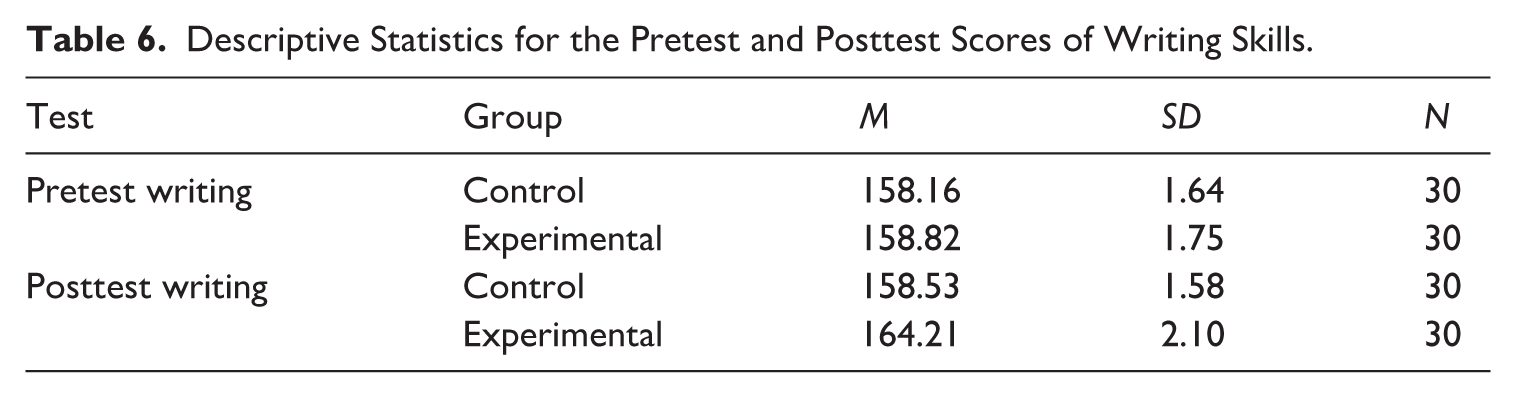
In the pretest, the mean difference between the two groups was simply 0.66 points, which was very small. In the posttest, the experimental group showed a great increase in their writing scores, while the control group demonstrated only a small improvement. The control group’s mean score was 5.68 points smaller than the mean of the experimental group that received the photovoice intervention.
4.3. Inferential Statistics of the Writing Pretest and Posttest
One-way ANCOVA was used to adjust for any potential pre-existing distinctions between the groups and compare their posttest results appropriately. In other words, one-way ANCOVA was conducted to examine how mediations related to photovoice affect learners’ writing skills. The results of this analysis can be found in Table 7.
Results of One-Way ANCOVA for Comparing the Posttest Scores.
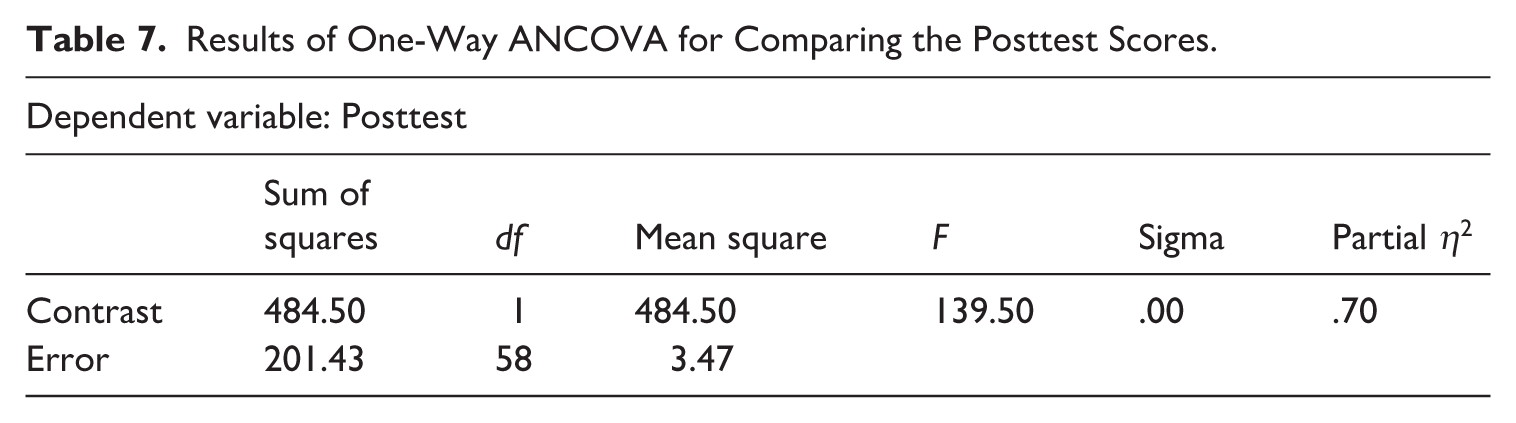
The results of ANCOVA showed that after adjusting for the covariate, there was a statistically significant difference between the two groups on the posttest. To put it simply, the p-value here was larger than the alpha level of significance (p > .05). There was not much within-group heterogeneity and the error terms were comparatively minor. The postintervention writing skills of the experimental group were shown to be significantly better than those of the control group. The photovoice intervention significantly improved the participants' writing abilities, as seen by the partial η2 values, which showed a substantial effect size. A paired-sample t-test was also used to confirm the performance of both groups from the pretest to the posttest (Table 8).
Paired Samples t-Test Results.
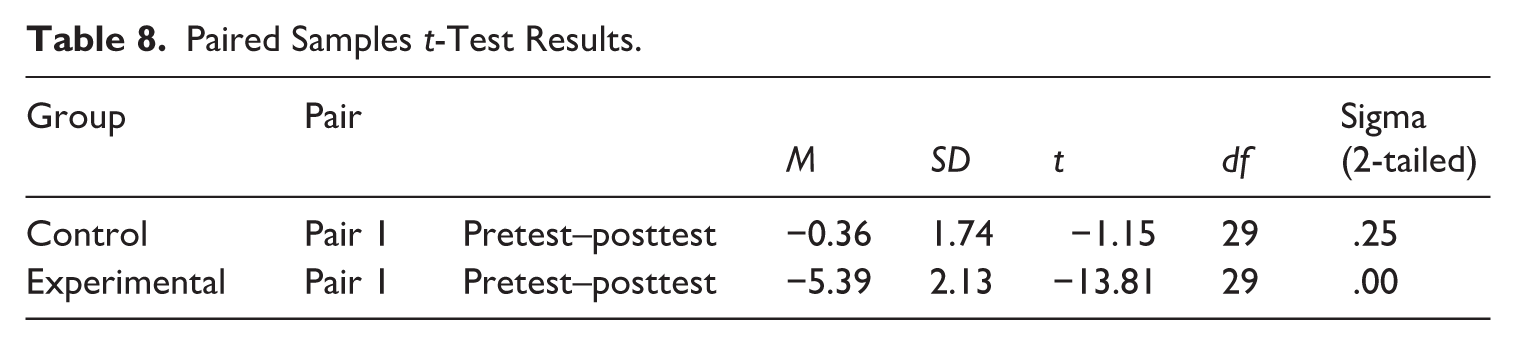
At the end of the research, both groups had shown growth in their writing abilities. The mean difference between the pretest and the posttest for the control group was only .36 points. On the other hand, the experimental group had a mean difference of 5.39 points between the pretest and posttest. The paired-sample t-test indicated that this improvement was statistically significant only for the experimental group (p ⩽ .01). As a consequence, the photovoice intervention improved learners’ writing abilities in a statistically meaningful way (see Figure 2).
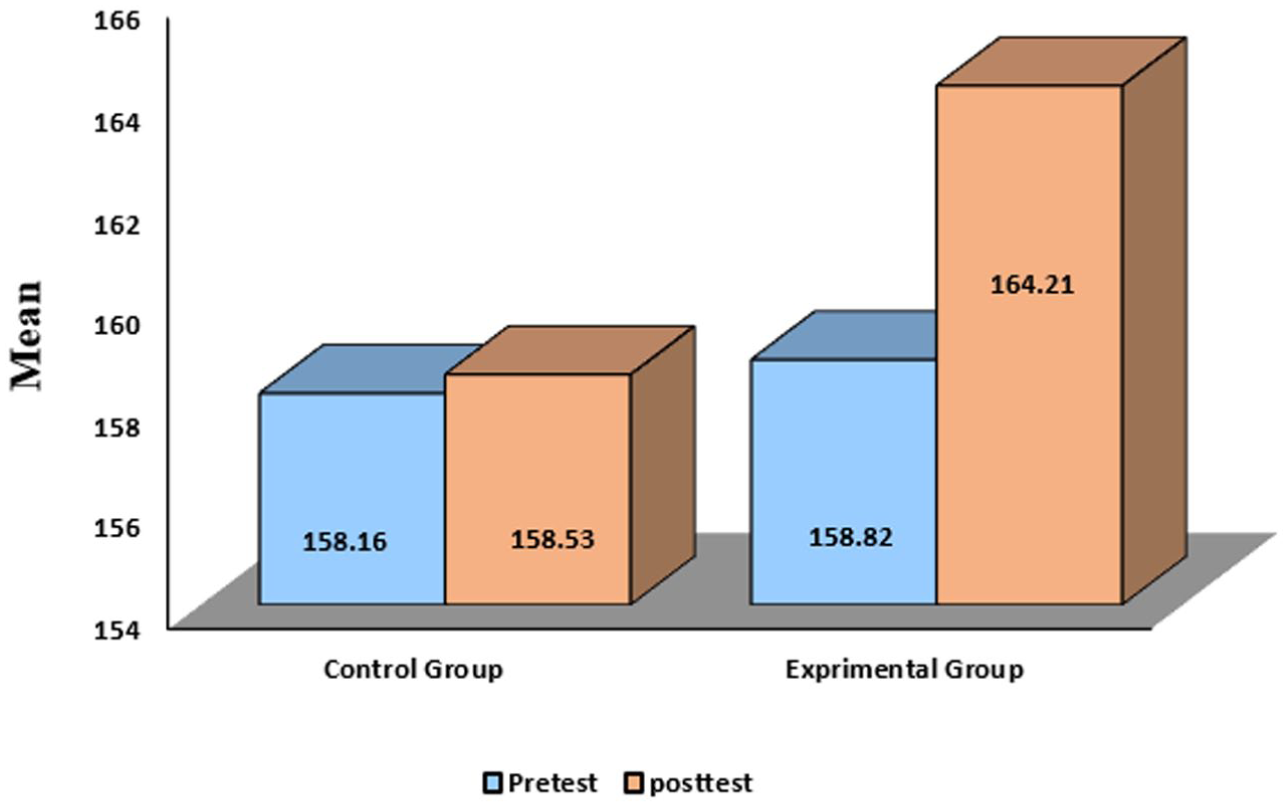
Pretest–posttest writing performance of the groups.
Descriptive results, including means and standard deviations, were computed for the items of the attitude questionnaire to present a summary of the participants’ attitudes towards the implementations of photovoice in their writing class. The participants’ attitudes were evaluated concerning different aspects to investigate the effect of photovoice on students’ writing attitudes and their overall writing experience (Table 9).
Item Statistics for the Questionnaire.
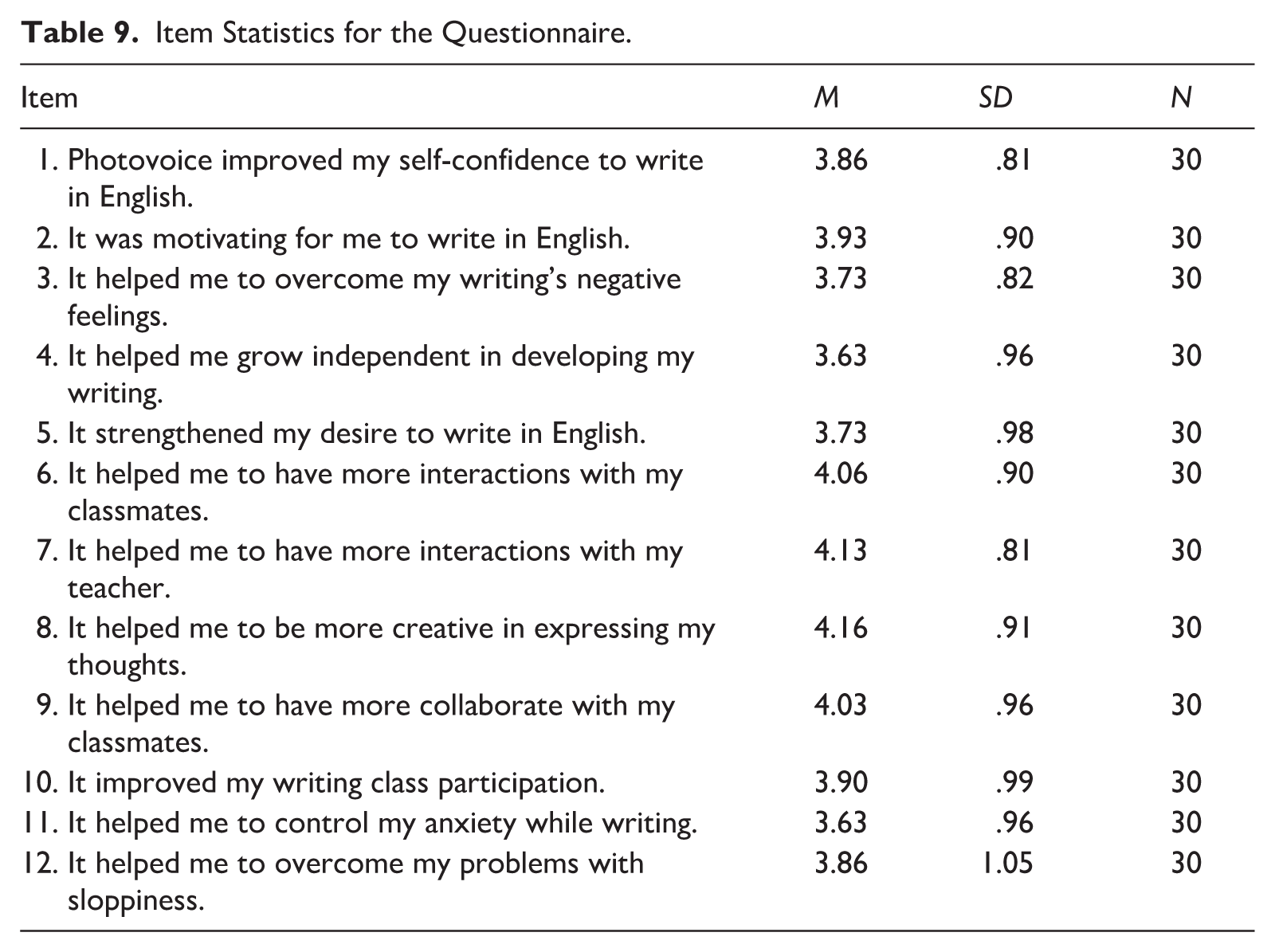
The scores showed that photovoice helped the participants communicate their ideas more creatively. They were allowed to take photos that openly expressed their opinions and worldviews. In addition, the degree of interaction between the students and the teacher that photovoice fostered was much appreciated by the participants. On the other hand, Items 4 and 11 received the lowest ratings from the participants. The results indicated that even after photovoice was implemented, the participants continued to feel uncomfortable while writing in English. From the responses, it was clear that the participants still experienced negative feelings while writing in English even after utilizing photovoice.
The thematic content analyses of the interview revealed that the participants had positive attitudes toward the potential of photovoice to evolve and be appropriate for language education. They suggested it as a valuable method for developing students’ creativity, enhancing their engagement, and improving their writing skills in different classroom settings. While participants acknowledged both the benefits and challenges of using the photovoice method in their writing classes, there was an agreement on its potential to transform language education by integrating visual storytelling with traditional writing assignments. Table 10 summarizes the main themes and their descriptions.
The Participants’ Attitudes toward the Photovoice.
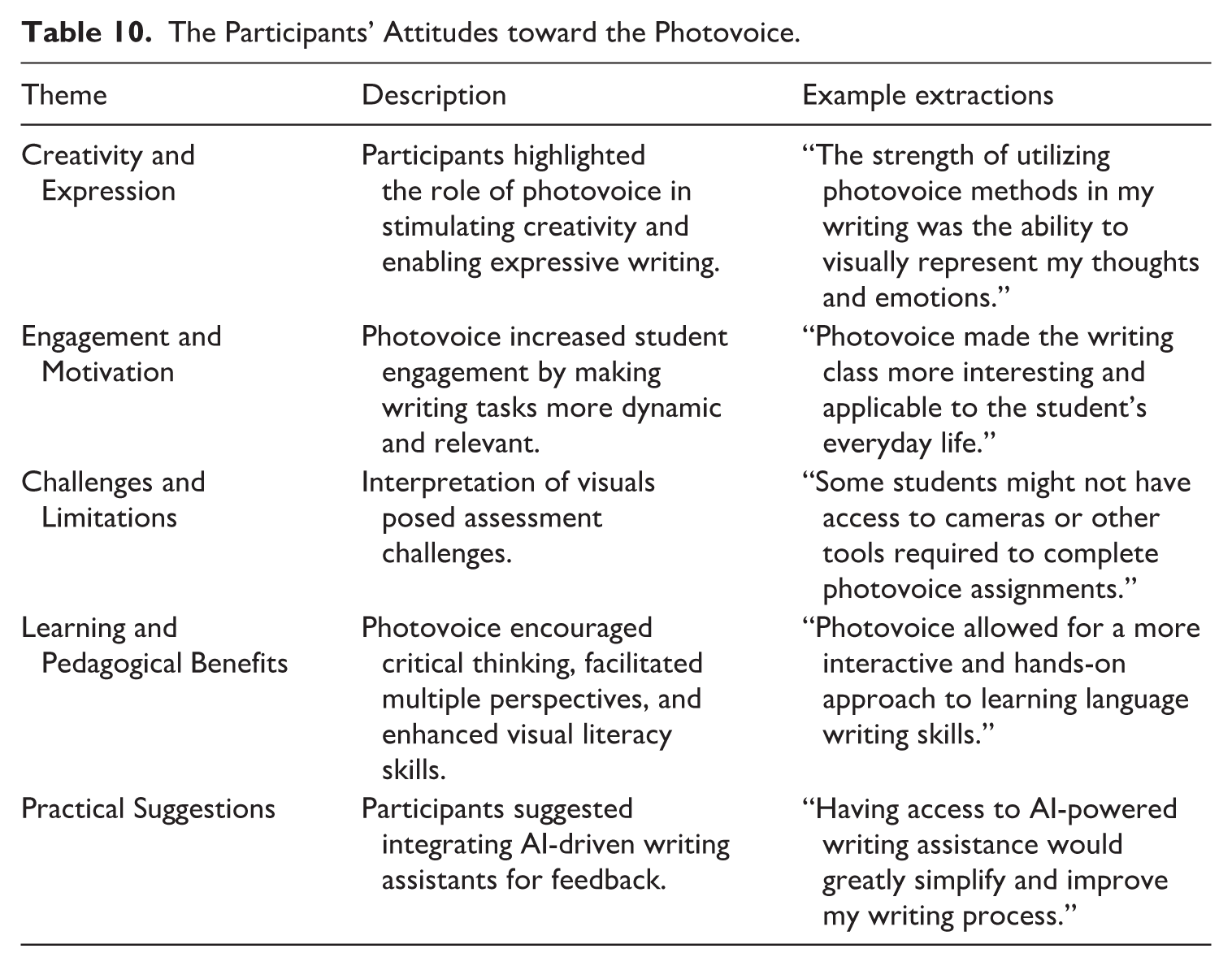
Based on the responses, it was found that there were different attitudes toward using photovoice in writing classes. Many participants highlighted the strengths of photovoice in enhancing creativity, critical thinking, and visual expression in writing. However, there were also concerns, including potential difficulties in effectively using visual and written components and ensuring a clear and effective message. Some students also mentioned the need for better access to resources and guidance to fully engage with photovoice assignments.
5. Discussion
This study attempted to examine the effects of photovoice on learners’ writing skills. The researchers proposed photovoice as a method to promote learners’ writing skills. In addition, the study investigated the perspectives of the participants concerning the usage of photovoice in language instruction. Interview and questionnaire findings showed positive attitudes toward photovoice among Iranian intermediate EFL learners.
The findings can be explained, in theory, by sociocultural theory, which highlights the use of mediational tools and social interaction for language development (Vygotsky, 1978). In the current study, images were regarded as semiotic tools that facilitated the generation of ideas, making meanings, and the conversion of personal experiences into written form. After reviewing the relevant literature, the results of this study support the findings of the study by Juniarti et al. (2022), who believed that using photovoice as a PBL method helped students express their ideas and opinions about social phenomena in their environment more creatively and communicatively. The outcomes are consistent with those of Schell et al. (2009), who pointed out that photovoice helps students develop critical thinking abilities by allowing them to explore their surroundings and get fresh perspectives on the world. The findings also support Nisa’s (2021) and Fadhilah’s (2023) assertions that photovoice promotes self-reflection and positively influences the classroom environment, student–teacher interactions, peer collaboration, and students' language anxiety and confidence.
According to the constructivist view, involving learners in the selection and interpretation of visual data makes them active knowledge constructors (Juniarti et al., 2022). This might explain why their writing skills, particularly in developing ideas and organizing content, have improved. In line with previous studies (e.g., Jayantini et al., 2022; Juniarti et al., 2022; Sa'adah et al., 2023), the findings showed that photovoice encouraged individuality in learners’ writing progress. The participants’ capacity to confidently prepare, compose, and modify their writings was indicative of their autonomy and independence. Moreover, in the same line, Karimi et al. (2019) proposed that the photovoice method of instruction might transform teacher-centered or teacher-static writing courses into more dynamic, student-centered ones. The results also supported Juniarti et al.’s (2022) findings, which showed that the students responded well to photovoice as a PBL activity by becoming engaged and enthusiastic in the class. In addition, they acknowledged that using photovoice allowed students to share thoughts and opinions about social problems more creatively and effectively. These positive attitudes might also be understood in terms of the self-determination theory (Deci & Ryan, 2000). Photovoice encourages autonomy and competence as it allows learners to have meaningful control over the content and the way they express themselves, thus increasing intrinsic motivation.
All in all, reviewing the related literature, some studies indicated that utilizing photovoice is an effective way of instruction (Fadhilah, 2023; Juniarti et al., 2022; Nisa, 2021; Ordem, 2023; Sa'adah et al., 2023; Wangdi & Shimray, 2022). The positive results of the studies validated photovoice’s capacity to make a substantial contribution to individual and collective development, which made it an appealing approach for future projects that foster useful abilities. However, the results of this study contradicted the findings of some other studies (Allen, 2012; Catalani & Minkler, 2010; Creighton et al., 2018). These studies indicated that although photovoice was designed to empower participants through active engagement, involvement in the research design, and the generation of information, there were instances where this method might inadvertently lead to disempowerment. In other words, while photovoice might be an engaging process that led to useful insights, it was also known to be time-consuming.
6. Conclusion
The present study attempted to examine the effects of utilizing photovoice as an innovative instructional method on Iranian intermediate EFL learners’ writing skills. The results indicated that incorporating photovoice in language classes improved writing skills in a significant way. Furthermore, the study looked at the participants’ attitudes about the use of photovoice in language teaching. The majority of learners expressed improved motivation, confidence, and satisfaction in their language learning experience. With its encouraging and less-threatening atmosphere, photovoice was seen as an enjoyable and significant change from a conventional method of teaching to a dynamic and innovative method of instruction for improving writing skills. In other words, photovoice had the potential to transform teacher-centered, static English language classes into more dynamic, student-centered ones. The dynamic activities of photovoice participants remarkably influenced their sentence constructions.
Photovoice, built on a concept of cooperation, empowerment, and creative self-expression, was a method that offered possibilities and chances for language teaching and learning. In addition, photovoice, as an innovative method of English language instruction, incorporates visual, reflective, and collaborative elements, which makes it appropriate for diverse groups of learners. It allowed students to use a camera to express their ideas and significantly improved students’ writing skills. They all shared a positive outlook on photovoice participatory learning. Thus, it might be used as an effective pedagogical tool for instructing writing in an EFL context.
This study offers both conceptual and pedagogical contributions to English language teaching. At the macro level, the findings may contribute significantly by highlighting a major and useful role for policymakers, curriculum designers, and material developers. By utilizing photovoice, curriculum designers and material developers can connect procedural practices with underlying theoretical principles and offer teachers and learners a productive environment where they can carry out in-depth tasks, engage in critical interaction, and gain information. At the micro level, integrating photovoice in TEFL may significantly influence the growth of productive skills, and regular classroom activities. Teachers may also use photovoice as an innovative method to help students become more proficient writers.
Due to the nature of the study, some limitations were imposed on the research that should be taken into consideration. The sample included only female students, which may limit the generalizability of the findings to other Iranian students and EFL learners. The language test was also designed for professional English, which may limit its validity for young learners. Moreover, a key constraint was that involvement demanded a time commitment that might be difficult, especially for individuals who struggled to devote a long time to a project. Furthermore, the majority of participants found it difficult to devote the necessary time to creating a significant, thought-provoking image. They might become exhausted as a result of the extended involvement, which could lower the caliber and consistency of their contributions. In addition, taking a detailed look at matters of personal or societal concern using photovoice could occasionally arouse unfavorable emotions, which might affect participants’ mental health and willingness to participate completely in the project.
Further research should be required to examine students’ experiences using photovoice in various situations and nations, as these could differ between institutions and between nations and sociocultural contexts. Moreover, expanding the number of participants might aid in verifying the findings’ generalizability to a larger demographic. Future studies should go deeper into the function of photovoice in cultivating variables such as students’ degree of self-assurance in verbal communication or other proficiencies such as listening, reading, and lexicon expansion. Despite careful interpretation of the qualitative data, some bias might have unavoidably crept into the results. As a result, the findings are specific to this context, and the authors bear full responsibility for any inaccuracies or limitations.
Footnotes

Funding
The authors received no financial support for the research, authorship, and/or publication of this article.
Declaration of Conflicting Interests
The authors declared no potential conflicts of interest with respect to the research, authorship, and/or publication of this article.