






Abstract
This study examined variation in learners’ individual differences in data-driven learning, including foreign language enjoyment and anxiety, engagement, and autonomy, as well as learners’ writing quality and the impact of these individual differences on writing quality. Using a longitudinal mixed-methods design, this study tracked changes in the individual differences and writing quality of 15 English-major English-as-a-foreign-language undergraduates across 3 time points. Quantitative data were analyzed using linear mixed-effects models and post-hoc pairwise comparisons, while qualitative data were examined through thematic analysis. The results showed that the data-driven-learning approach contributed to a significant increase in learning autonomy and writing quality. Furthermore, learners’ foreign language enjoyment, behavioral engagement, and autonomy were found to be significant predictors of their writing quality in the data-driven-learning instruction. Findings in this study could enrich the understanding of how individual differences function in a data-driven-learning context, enabling teachers to develop more tailored data-driven-learning instructional strategies.
1. Introduction
Data-driven learning (DDL) is defined as “an inductive approach that utilizes the tools and techniques of corpus linguistics for instructional objectives” (Zare et al., 2022, p. 2). This exploration is viewed as an active learning process in which learners analyze a large amount of authentic language data, extracte typical language patterns, and improve their proficiency (Römer, 2024). Recent decades have seen the rapid development of DDL, and its implementation in language classrooms worldwide (Alsehibany & Abdelhalim, 2025; Pérez-Paredes, 2022). DDL has been shown to be an effective pedagogical approach that is positively received by learners (Boulton & Cobb, 2017; Dong et al., 2023; H. Lee et al., 2019), especially in the context of second language (L2) writing (M. Chen & Flowerdew, 2018a). A plethora of empirical studies have also provided strong evidence for the benefits of DDL for L2 writing, such as writing fluency, accuracy, and word choice (e.g., M. Chen & Flowerdew, 2018b; Muftah, 2023; X. Sun & Hu, 2023; Zhao & Dong, 2026; Zhao et al., 2026).
An emerging strand of research in DDL has examined individual difference factors both as predictors of DDL effectiveness and as outcomes influenced by DDL interventions. “Individual difference” is an umbrella term including age, gender, personality, autonomy, affective attitudes, motivation, and learning strategies (Griffiths & Soruç, 2020). Previous studies have identified the role of individual differences as independent variables in predicting the effectiveness of DDL interventions. For instance, H. Lee et al. (2020) explored the impact of learners’ working memory on the effectiveness of DDL in vocabulary learning, and found that working memory significantly facilitated learners’ vocabulary acquisition. Meanwhile, a growing body of research has explored individual differences as dependent variables shaped by DDL, such as foreign language enjoyment and anxiety. Foreign language enjoyment refers to a positive affective attitude that reflects learners’ desire for success when engaging with novel or unexpected challenges (J. M. Dewaele & MacIntyre, 2016), and foreign language anxiety is defined as “the worry and negative emotional reaction” learners experience during language learning (MacIntyre, 1999, p. 27). In this line of research, Zare et al. (2022) examined the impact of DDL on English-as-a-foreign-language (EFL) learners’ foreign language enjoyment and anxiety, and found that learners who experienced DDL instruction reported significantly lower enjoyment, while both groups exhibited similar levels of anxiety. Despite growing interest and notable findings in DDL, limited research has investigated how learners’ individual differences evolve in DDL and how these factors influence writing quality.
Therefore, this study set out to examine the impact of DDL on learners’ individual differences and how these factors influenced learning outcomes. A longitudinal mixed-methods design was adopted, measuring three key dimensions of individual differences, including affective attitudes toward foreign language learning, engagement, and autonomy, over the course of a semester. The findings of this study could inform the research and practice of DDL regarding the interplay between individual differences and learning outcomes, offering practical implications for the adjustment of pedagogical strategies of DDL.
2. Literature Review
2.1. DDL and Individual Differences
Over the past decades, DDL has received increasing attention in second/foreign language learning (Boulton & Cobb, 2017; H. Lee et al., 2019). DDL involves “the use of corpus tools and techniques for pedagogical purposes” (Boulton & Vyatkina, 2021, p. 68). This approach encourages language learners to explore, observe, and analyze language data through the use of corpora (i.e., collections of texts assumed to be representative of a given language, dialect, or other subset of a language) to acquire language patterns (Sinclair, 2004).
The growing attention to DDL research is grounded in several major theories of second language acquisition (SLA). From the perspective of constructivism, the corpus explorations conducted by language learners reflect inductive learning, which is a “natural process (that) reduces the cognitive load of processing, freeing up resources” in the process of knowledge construction (Boulton & Cobb, 2017, p. 350). In this context, the interactions with corpus data facilitate learners to become “more involved, more active and, ultimately, more autonomous in the learning process” (Gilquin & Granger, 2010, p. 359). The second theoretical principle behind DDL is Krashen’s (1985) input hypothesis, which posits that language acquisition involves repeated exposure to linguistic forms to establish form-meaning connections. Input flooding, as an approach in DDL, aligns with this theory, as corpora can provide learners with abundant examples of authentic language use, increasing exposure to target features and serving as rich language input (Cotos et al., 2017; Saeedakhtar et al., 2020). DDL also draws upon Schmidt’s (2001) noticing hypothesis, which proposes that a certain level of conscious awareness of target forms is a prerequisite for language acquisition. DDL aligns with this theory by providing input enhancement, which aims to increase the saliency of target features through bolding, underlining, or highlighting (Zare et al., 2024). Specifically, corpus search tools allow for the retrieval of these examples in keyword-in-context (KWIC) format, in which the target form is centered and highlighted.
A cumulative number of empirical studies have showcased that DDL is a “proven-to-be-effective teaching approach” (Römer, 2024, p. 8). For instance, a meta-analysis by Boulton and Cobb (2017) evaluated the effectiveness of DDL approaches in L2 acquisition. The study synthesized data from 64 studies and found that DDL approaches contributed to larger positive effects on language learning than traditional instruction. H. Lee et al. (2019) examined the impact of corpus use on L2 vocabulary learning in a multilevel meta-analysis of 29 studies and found a medium-sized positive effect for both short-term and long-term vocabulary learning.
Prior research has shown that the effectiveness of DDL might interact with various individual difference factors. Among them, several studies have treated individual difference factors as independent variables that predict the effectiveness of DDL. For instance, Mizumoto and Chujo (2016) explored the effects of learners’ inductive or deductive learning styles on the task value of DDL, and the analysis showed that learning styles weakly influenced task value. Later, H. Lee et al. (2020) investigated how learners’ working memory impacted the effectiveness of DDL. Using a mixed-methods approach, this study found that learners’ working memory significantly influenced vocabulary acquisition and retention.
Meanwhile, another strand of studies has explored individual difference factors as dependent variables that were shaped by DDL instruction. For instance, Zare et al. (2024) investigated the impact of DDL form-focused tasks on the task engagement of EFL learners, and found that DDL enhanced learners’ task engagement in the short term. Zare and Aqajani Delavar (2024) examined how DDL impacted EFL learners’ task motivation, and reported that DDL enhanced students’ overall, intrinsic, and identified motivation. In contrast, Zare and Karimpour (2022) found no significant impact of DDL on students’ L2 motivational self-system.
Overall, these findings suggest that individual differences can serve both as dependent variables influenced by DDL instruction and as independent variables affecting the effectiveness of DDL. This highlights the complex interaction between individual differences and instructional approaches, suggesting that individual differences are not merely static predictors of learning outcomes but are also dynamically shaped by learners’ instructional experiences (J. M. Dewaele, 2012). Although a growing number of studies have explored the role of individual differences in DDL, this line of research remains insufficient, as most work has focused on isolated variables. Recent studies have therefore emphasized the need to expand investigations by examining affective attitudes, engagement, autonomy, and other key learner variables simultaneously to better understand how they together shape learners’ performance in L2 contexts (Albert & Csizér, 2022). Moreover, research on how such individual differences develop under different instructional approaches, and how they influence learning outcomes such as writing quality, remains limited.
2.2. Individual Differences and Their Relation to Achievements
2.2.1. Foreign Language Enjoyment and Anxiety
Foreign language enjoyment and anxiety have received growing attention in SLA research, with a plethora of empirical studies showing their strong predictability for language learning outcomes (e.g., N. Chen et al., 2025; J. M. Dewaele et al., 2025; Shao et al., 2020). Drawing upon the control-value theory (CVT; Pekrun, 2006), foreign language enjoyment and anxiety are directly related to language learning, which arise from learners’ perceptions of control and value on learning tasks. These foreign language affective attitudes can significantly influence learners’ cognitive, motivational, and behavioral processes, further affecting their engagement and learning outcomes (J. M. Dewaele et al., 2025; Trevors, 2021; Zare et al., 2022). Therefore, examining foreign language enjoyment and anxiety within pedagogical interventions is essential for understanding how instruction shapes learners’ affective and learning processes.
Foreign language enjoyment and anxiety are multidimensional, involving the object focus (i.e., an activity or its outcome), valence (i.e., positive or negative quality of performance), and activation (i.e., level of arousal). According to these dimensions, foreign language enjoyment is an activity-related positive affective attitude; that is, foreign language enjoyment emerges when learners are involved in specific learning tasks (Li et al., 2025). Foreign language anxiety, on the other hand, is an outcome-related negative affective attitude that responds to future results such as fear of failure in future learning outcomes. Foreign language enjoyment and anxiety, as the focuses of this study, can be recurrently activated through repeated learning experiences and may evolve over extended periods of time (J.-M. Dewaele & Li, 2020). Thus, the repeated exposure to a particular pattern of emotional experience becomes a trait-like affective attitude, which is “long-lasting and often lingered” (X. Wang et al., 2024, p. 8). Adopting this perspective, recent research has shown that foreign language enjoyment and anxiety may build progressively through ongoing classroom experiences and fluctuate over time in response to meaningful engagement and instructional environments (Horwitz, 2017; Saito et al., 2018).
Foreign language enjoyment refers to a positive emotional reaction resulting from students’ experiences in foreign language learning environments (Elahi Shirvan et al., 2024). Foreign language enjoyment enhances learners’ noticing, raises their awareness of linguistic features, and helps them consciously attend to, process, and learn language more effectively (J. M. Dewaele & Alfawzan, 2018; J. M. Dewaele & MacIntyre, 2016). As CVT posits, learners who experience foreign language enjoyment often have a higher sense of control over their learning process, which in turn contributes to greater persistence, focus, and effort, all of which have the potential to enhance writing quality (Fredrickson, 2001). Previous studies have provided evidence for the positive relationships between foreign language enjoyment and language achievement. For instance, Jin and Zhang (2018) explored this relationship in high school students’ language achievement via a data triangulation of surveys, classroom observations, and test scores, and found a positive relationship between foreign language enjoyment and their test scores. Similarly, Y. Guo (2021) conducted a longitudinal study to explore how foreign language enjoyment impacted language achievement and reported that students with greater foreign language enjoyment had higher performance. Similarly, Mierzwa (2018) found a positive relationship between university students’ foreign language enjoyment and their language achievement; that is, learners with higher levels of foreign language enjoyment produced higher-quality essays and demonstrated greater fluency in oral presentations.
Foreign language anxiety is an emotional response characterized by feelings of tension, apprehension, and worry experienced in the context of foreign language learning (Horwitz et al., 1986). From the perspective of CVT, learners experiencing high foreign language anxiety may feel a reduced sense of control over the learning process, especially when faced with tasks they perceive as overwhelming or beyond their capabilities. This perception of lack of control leads to a fear of failure, which can impair cognitive resources by consuming working memory and attention, leaving fewer cognitive resources available for task processing. This may further lead to avoidance behavior, where learners disengage from tasks due to anticipated failure, further impacting their writing performance (Heckel et al., 2021).
A number of studies have shown that language achievement is negatively affected by foreign language anxiety (e.g., Teimouri et al., 2019; X. Zhang, 2019). A meta-analysis by Teimouri et al. (2019) found a moderate negative correlation between foreign language anxiety and language achievement. This result was supported by another meta-analysis by X. Zhang (2019), which found that foreign language anxiety limited learners’ active learning and learning outcomes. Recent chronological studies in language learning also showed that the relationship between foreign language anxiety and achievement was curvilinear (Horwitz, 2017). The findings of these studies showed that foreign language anxiety could have dynamic effects on learners’ language acquisition, depending on its intensity and context (Bosmans & Hurd, 2016). Despite this, several studies have reported positive findings that foreign language anxiety may also facilitate language achievement to some extent (e.g., Sajedi, 2016; Salmani Nodoushan, 2015).
2.2.2. Behavioral, Cognitive, and Emotional Engagement
Engagement is defined as “the extent to which students contribute to activities” (Huang et al., 2022). It is widely recognized as a critical component of the learning process, encompassing active participation in educational activities, collaboration with peers, seeking guidance from instructors, and engaging in self-directed learning (Alsowat, 2016; L. Ding et al., 2017). Engagement is closely associated with self-determination theory (SDT), which posits that only when learners’ basic psychological needs are satisfied can they pay attention to and devote meaningful effort to learning tasks, thus contributing to greater performance (Ryan & Deci, 2017). Previous research has shown that learner engagement is a multidimensional construct, involving behavioral, cognitive, and emotional engagement (Ellis, 2010). Within the EFL classroom context, the three dimensions of engagement function as interrelated components that facilitate language development and achievement. Specifically, behavioral engagement refers to students’ observable behaviors in academic, social, and extracurricular activities, including attendance, effort, and persistence (Jelas et al., 2016; Kim & Kim, 2020). In the EFL context, students with high behavioral engagement are more likely to actively participate in classroom tasks such as peer feedback tasks and group discussions, thereby increasing their opportunities for language practice and feedback (Y. Ding & Zhu, 2025). Cognitive engagement refers to the level of investment in learning, including willingness and strategies for metacognitive and self-regulated learning, which improves learners’ understanding and promotes the internalization of language skills (Buil et al., 2020; Christenson et al., 2012). Emotional engagement involves the degree to which students react emotionally to the learning process, including interest, boredom, happiness, anxiety, and other feelings about their learning experience, and positive emotional engagement could promote sustained motivation and persistence (Jelas et al., 2016). Thus, behavioral, cognitive, and emotional engagement complement each other to increase active involvement, motivational effort, and the use of effective learning strategies, all of which facilitate learners’ language achievement (Fredricks et al., 2004; Y. Liu et al., 2024).
Previous findings suggest that engagement is positively associated with achievement. For instance, Bråten et al. (2022) examined how behavioral engagement enhanced comprehension performance. Using a sample of 116 Norwegian undergraduates, this study found that behavioral engagement significantly predicted comprehension performance. Liu et al. (2024) explored the relationship between engagement and achievement among Chinese high school EFL learners and university students and found a significant positive relationship between engagement and language achievement. This indicates that students who are behaviorally, emotionally, and cognitively engaged in language learning tasks are more likely to achieve greater learning outcomes.
2.2.3. Autonomy
Autonomy is defined as “the ability to take charge of one’s own learning” (Little, 2007, p. 15), which entails making informed choices and effectively managing resources to support learning. Based on SDT theory, autonomy influences L2 performance primarily by fostering learners’ autonomous learning behaviors (Hu & Zhang, 2017; Ryan & Deci, 2017). Specifically, when learners perceive a sense of psychological ownership over their learning, they are more likely to make independent choices about their learning activities, take initiative in seeking out language practice opportunities, and make decisions that align with their personal interests and values. These autonomous learning behaviors foster a greater willingness to participate, more active involvement in language learning tasks, and sustained efforts to learn, which ultimately support improved language performance. L. Chen (2023) explored the relationship between autonomy and English learning achievement among 291 Chinese undergraduates, and found that autonomy directly improved achievements and reduced foreign language anxiety. Hu and Zhang (2017) implemented a one-year action program in a Chinese university to examine how autonomy-driven teaching impacted English proficiency, and found positive effects of enhancing learners’ autonomy on their language skills.
Considering the crucial role of individual differences in foreign and L2 learning and teaching, it is important to investigate how different instructional contexts impact these factors. Currently, research on learners’ individual differences in DDL contexts is still limited, and few studies have simultaneously examined how these individual differences evolve within instructional contexts (as dependent variables) and influence learning outcomes (as independent variables). Examining individual differences from both perspectives is valuable, as individual differences are not only dynamically shaped through the instructional process but also can be stable predictors of learning outcomes (Parrott & Hertel, 1999). Therefore, this study aims to examine the dynamic trajectories of learners’ individual differences and writing quality under DDL instruction, as well as the relationship between individual differences and writing quality. Specifically, it investigates: (a) how learners’ individual differences evolve over time in a DDL context; (b) how learners’ writing quality develops over the same period; and (c) how individual differences are associated with variation in writing quality. This study addressed the following research questions:
How did students’ individual differences change in DDL instruction?
How did students’ writing quality change in DDL instruction?
How did students’ individual differences impact their writing quality in DDL instruction?
3. Methodology
3.1. Research Design
This study employed a longitudinal design with a mixed-methods data triangulation model (Hyland, 2016). The purpose of the longitudinal design was to examine the dynamic trajectories of learners’ individual differences over time under DDL instruction. According to the perspective in previous research that individual differences could be viewed as both traits that affected learners’ writing performance and states that fluctuated within an instructional context (Csizér & Albert, 2021; Steyer et al., 1999), this study operationalized individual differences, including foreign language enjoyment and anxiety, engagement, and autonomy, from these two complementary perspectives. In addressing research question 1, individual differences were treated as state-like dependent variables that fluctuated over time. Research question 2 examined how learners’ writing quality developed over time under DDL instruction. In addressing research question 3, the same individual differences were measured as trait-like characteristics that influenced learning outcomes.
3.2. The Course and Participants
This study was conducted in a “Basic English Writing” course at a public university in China. The course lasted 17 weeks in a semester, with each week containing a 2-hour session. The participants were 15 undergraduate students (8 females, 7 males), aged 18 to 21 (M = 19, SD = 0.6), with Mandarin Chinese as their first language (L1) and English as their L2. They were all English major students who had studied English for at least 6 years. Based on their scores in the Test for English Majors Band 4 (TEM-4), a criterion-referenced exam designed for university undergraduates majoring in English language and literature in China (T. Liu & Gablasova, 2025), participants’ English proficiency corresponded approximately to the B2 level according to the Common European Framework of Reference for Languages (CEFR; Council of Europe, 2001). All the participants signed consent forms, and the names mentioned in this study were all pseudonyms.
3.3. Teaching Procedure
In DDL instruction, corpus-based searching activities were conducted during the second half of each session. Target vocabularies were selected from the textbook and validated collaboratively by the first author and an academic writing instructor with over 10 years of teaching experience, based on their relevance to expository writing and frequency in academic contexts. The corpus tool used in this study was SKELL (Sketch Engine for Language Learners), a corpus-based learning platform offering automated outputs such as word sketches, example sentences, and similar words to help learners explore lexical patterns and usage (Kilgarriff et al., 2015). SKELL draws on a one-billion-word English corpus that covers different genres of texts, including academic, formal, and professional language use (Kilgarriff et al., 2015), and has been widely used and attested as effective in improving English for Academic Purposes (EAP) learners’ academic vocabulary learning (Frankenberg-Garcia et al., 2019). At the beginning of the activities, the instructor provided learners with worksheets to guide their corpus-based exploration. Each worksheet included prompts encouraging students to analyze target word usage, identify collocations, and reflect on similar words. In each session, students worked in small groups to search for 8-10 vocabulary items using SKELL, and recorded their findings on the worksheet. At the end of each session, each group presented their findings to the class.
During the corpus search process, we adopted the following instructional method. First, a vocabulary-centered approach was implemented, in which students were guided to search for lexical items that are commonly used in expository writing. Second, students were encouraged to observe the concordance lines and authentic contexts in which the lexical items occur. This enabled them to analyze how these lexical items were used within larger lexico-grammatical patterns and discourse structures. For example, by searching the target word contrast, students observed its use in both noun and verb forms (e.g., contrast, contrasts, contrasting) across a range of sentences. They also identified their common patterns like in contrast, contrast between, and contrast with, and rhetorical functions such as introducing opposing viewpoints informed by the surrounding contexts. Such corpus-based activities enabled learners to acquire lexical knowledge and facilitated their overall writing proficiency. The target vocabulary used in the instruction is available in Appendix A , and the details of the instruction are presented in Appendix B .
3.4. Data Collection
3.4.1. Quantitative Data Collection
Data were collected in three waves (time points), that is, before (Week 1), mid (Week 8), and after (Week 17) instruction. Students’ writing samples were collected at three waves to assess their writing quality. Topics for the essays were “How to ride a motorcycle,” “The influence of childhood experiences on adult behaviors,” and “The application of technology in education.” All three writing prompts were adapted from the course textbook Writing Critically: Expository Writing 2, which aims to develop learners’ expository writing skills through different rhetorical modes. The first task aligned with process analysis, the second reflected cause and effect, and the third focused on classification and exemplification, all of which were development patterns for writing expository essays. A detailed description of the writing prompts is presented in Appendix C .
In order to capture learners’ individual differences (i.e., foreign language enjoyment and anxiety, engagement, and autonomy), three questionnaires were administered at each wave. Questionnaires were distributed via social media, allowing students to access them conveniently by scanning a QR code shared in a group chat. All questionnaires were completed in class. The first survey also included a demographic questionnaire.
Specifically, the first author translated the questionnaires into Chinese, and the accuracy was checked against the original materials by the second author. Several items were rephrased to ensure cultural relevance and clarity for Chinese EFL learners, and checked by an expert in translation. For example, we rephrased the item “I use online English resources such as YouTube or English forums” to “I use online English resources such as English forums or English learning platforms,” as YouTube is not generally accessible to students in the Chinese EFL context.
3.4.1.1. Foreign Language Enjoyment and Anxiety
To assess learners’ class-related foreign language enjoyment and anxiety, we adopted the class-related subscales of the questionnaire developed and validated by Bieleke et al. (2021). The questionnaire included eight items and employed a 5-point Likert scale ranging from 1 (strongly disagree) to 5 (strongly agree). The total score for each factor was 20. Cronbach’s alpha in this study was 0.92, indicating high internal consistency. By adopting this questionnaire, this study conceptualized foreign language enjoyment and anxiety both as trait-like independent variables that predicted learning outcomes and state-like dependent variables that fluctuated during the teaching process. This was consistent with the design rationale of the questionnaire, in which foreign language enjoyment and anxiety were conceptualized in two forms, including traits that were habitual and recurred across learning contexts, and states that were momentary and tied to specific situations (Pekrun, 2006; Pekrun et al., 2011), both of which could be measured by the questionnaire through adjusting the instructions accordingly (N. Chen et al., 2025). This questionnaire has been extensively applied in previous research, which operationalizes affective attitudes toward foreign language learning as trait-like individual differences that affect learning outcomes (N. Chen et al., 2025), and as state-like individual differences that change across multiple time scales (e.g., Kruk et al., 2025; Z. Zhang et al., 2021).
3.4.1.2. Engagement
To measure learners’ engagement, we adapted the scale developed by Deng et al. (2020). The scale comprised nine items on a 6-point Likert scale (e.g., “I was inspired to expand my knowledge in this DDL class”). The questionnaire focused on three dimensions of learning engagement: behavioral, cognitive, and emotional engagement (Zou et al., 2023), with each dimension having a total score of 18. The reliability and validity of the original scale were established by Deng et al. (2020), and Cronbach’s alpha for this study was 0.90.
3.4.1.3. Autonomy
Students’ autonomy was measured using the 11-item scale developed and validated by L. X. Zhang and Li (2004). This scale assessed a series of general self-directed learning behaviors, such as learning habits (e.g., “I preview materials before class”), time management (e.g., “I find that I can finish my tasks on time”), and active participation both inside (e.g., “During the class, I try to catch chances to participate in activities such as pair/group discussion, role-play, etc.”) and outside the classroom (e.g., “I make good use of my free time for English study”). The questionnaire employed a 5-point Likert scale ranging from 1 (never) to 5 (always), yielding a total score of 55. The Cronbach’s alpha for this scale in this study was 0.84.
3.4.2. Qualitative Data Collection
One-on-one semi-structured interviews were conducted in Mandarin with three students. Participants were randomly selected to reduce potential selection bias, following previous L2 studies (e.g., De Saint Léger & Storch, 2009; Geluso & Yamaguchi, 2014). Each interview lasted approximately 30 minutes and was audio-recorded with the participant’s consent. The purpose of these interviews was to explore the reasons behind the observed changes in learners’ foreign language enjoyment and anxiety, engagement, and autonomy, and to understand their perceptions of how these changes impacted their writing quality during the semester. Each interview began with a brief introduction explaining the aims of the session, followed by a series of open-ended questions such as:
1. What do you think contributed to the changes in your foreign language enjoyment and anxiety, engagement, or autonomy throughout the course?
2. How did these changes influence your ability to write expository essays?
3. Were there specific features of the corpus-based activities that you felt supported or hindered your learning?
In addition, participants were encouraged to elaborate on their experiences, share challenges, and give suggestions for the instructional activities.
Classroom observations were conducted by the authors during three sessions (Weeks 1, 8, and 17) to explore students’ interactions with the SKELL while completing collaborative vocabulary-focused tasks. To reduce researcher bias, the following steps were adopted (Bell et al., 2019). First, prior to the observations, a structured observation protocol was developed by the two observers based on the research question, including: (a) search behaviors; (b) extraction of information from concordance lines; (c) difficulties encountered and coping strategies; (d) collaboration within groups; and (e) classroom reporting. Second, during each observation lesson, the observers took field notes independently, recording the salient behaviors or interactions listed in the protocol without influencing classroom proceedings. Third, following each observation session, the two observers met to review and compare their field notes in detail, in which they discussed the discrepancies in interpretation and jointly clarified ambiguous observations. Finally, both observers wrote observation logs, integrating their notes and reflections to capture both the observed events and their analytical insights.
3.5. Data Analysis
This study employed a mixed-methods approach to analyze learners’ questionnaire responses, writing samples, interview data, and classroom observation notes. The specific data analysis procedures are elaborated below.
3.5.1. Quantitative Data Analysis
The essays were evaluated using the analytical scoring rubric of expository writing developed by Kang (2020, 2022), which contains four categories: content, vocabulary, grammar, and organization (see Appendix D ). The justifications for this scoring method are as follows. First, this approach could capture students’ overall writing performance, and is therefore commonly used in educational research (Jonsson & Svingby, 2007). Second, DDL instruction may improve learners’ overall writing performance; thus, analytical scoring was used to assess learners’ progress across different dimensions of writing, following previous practice in DDL (e.g., Dong & Wang, 2025; Muftah, 2023). Third, to meet the class requirement of enhancing students’ overall writing performance, we used analytical scoring in the assessment. Two experienced EFL writing teachers (one rater was the course instructor, and the other was one of the authors) independently evaluated the essays based on this rubric. Prior to grading, a training session was conducted during which the raters thoroughly reviewed the rubric and discussed the rating procedures. Following this, all essays were anonymized and presented in randomized order, with the raters independently assigning scores to each essay. Essays were scored on a 100-point scale. Discrepancies in scores were resolved through a series of follow-up meetings. If the scores for any category differed by more than 2 points, the raters revisited their scores until full agreement was achieved or the difference was reduced to within 1 point. Inter-rater reliability was calculated using Pearson’s correlation coefficient, showing a high level of agreement (Pearson’s r: total score = .97; content = .94; vocabulary = .91; grammar = .90; organization = .92).
Statistical analyses were conducted in sequential steps. First, basic descriptive statistics for all constructs were examined across three waves. For the descriptive interpretation of the absolute levels of questionnaire scores, mean values were interpreted relative to the theoretical midpoint of each summed scale, following previous research (e.g., Kruk, 2018). Then, for determining the changes, a series of linear mixed-effects (LME) models were conducted in R (R Core Team, 2021) using the lmerTest package (Kuznetsova et al., 2017). LME has been attested to be “flexible and suitable for SND [small-N designs] and can provide standardized effect sizes and measures of statistical significance” (Wiley & Rapp, 2019, p. 1), and has been widely used in L2 research with small sample sizes (e.g., Brysbaert, 2025; Duan & Shi, 2024; Kyle et al., 2021). The summed score of all items for each scale was calculated to represent each individual difference factor. In the models addressing research question 1, each individual difference variable (e.g., foreign language enjoyment and anxiety) was entered as the dependent variable, time was entered as a fixed effect, and participants were included as random effects with random intercepts. The analyses provided estimates of variance explained by fixed and random effects, along with p-values to report the significance of the results. For the LME models, model-level effect sizes were reported by calculating R²c and R²m values using the MuMIn package, following Nakagawa and Schielzeth (2013). This approach was adopted in line with recent studies in language research (e.g., Kim & Lu, 2024; Monteiro & Kim, 2020). R²m reflects the variance explained by the fixed effects only, whereas R²c reflects the variance explained by both fixed and random effects combined.
In addressing research question 2, the same model equation was applied, while the dependent variable was set to learners’ scores and the independent variable was time. Additional post-hoc pairwise comparisons among scores were conducted using the emmeans package (Lenth et al., 2018), and the effect sizes were computed using Cohen’s d (Cohen, 1988), following Diez-Ortega and Kyle (2024). The thresholds follow Plonsky and Oswald (2014), which classify values of d = .6 as small, d = 1.0 as medium, and d = 1.4 as large.
For research question 3 to examine the impact of individual differences on writing quality, a series of LME models were constructed. Writing scores were entered as the dependent variable, individual difference factors were entered as fixed effects, and participants were included as random effects with random intercepts. Effect sizes were reported by calculating R²c and R²m values.
3.5.2. Qualitative Data Analysis
Thematic analysis was adopted to analyze students’ interviews and classroom observation data in sequential steps to reduce researcher bias (Braun & Clarke, 2006). The interview data and classroom observation notes were first transcribed and translated into English. Informed by the research questions, the first and second authors first familiarized themselves with the data by independently reading through each transcript and classroom observation notes. During initial coding, these excerpts were open-coded, capturing changes in learners’ foreign language enjoyment and anxiety, engagement and autonomy, the underlying reasons, and the impact of these factors on writing improvement, as well as learners’ behaviors in classes. This was followed by the two authors’ collaborative iterative phases of reading and re-reading the transcripts for categorization, axial coding, detecting recurrent keywords, and identifying and unifying themes relating to the phenomenon under study. The inter-coder reliability was high (Pearson’s r = .90), suggesting a high level of consistency. The coding discrepancies were resolved through discussions. In order to represent each theme, we reported its frequency of supporting quotes, following previous research (e.g., Lawless & Chen, 2019; Pizarro Milian, 2017).
4. Results
4.1. Trajectories of L2 Students’ Individual Differences
Table 1 presents descriptive statistics of the mean values and standard deviation values of all individual difference factors and writing scores in three waves. Figures 1-6 show the trajectories of each individual difference factor for learners, with the mean curves shown in bold blue lines. Each participant’s trajectories (identified by their IDs) across three waves are plotted and presented in Appendix E .
Descriptive Statistics of Individual Differences Factors and Scores.
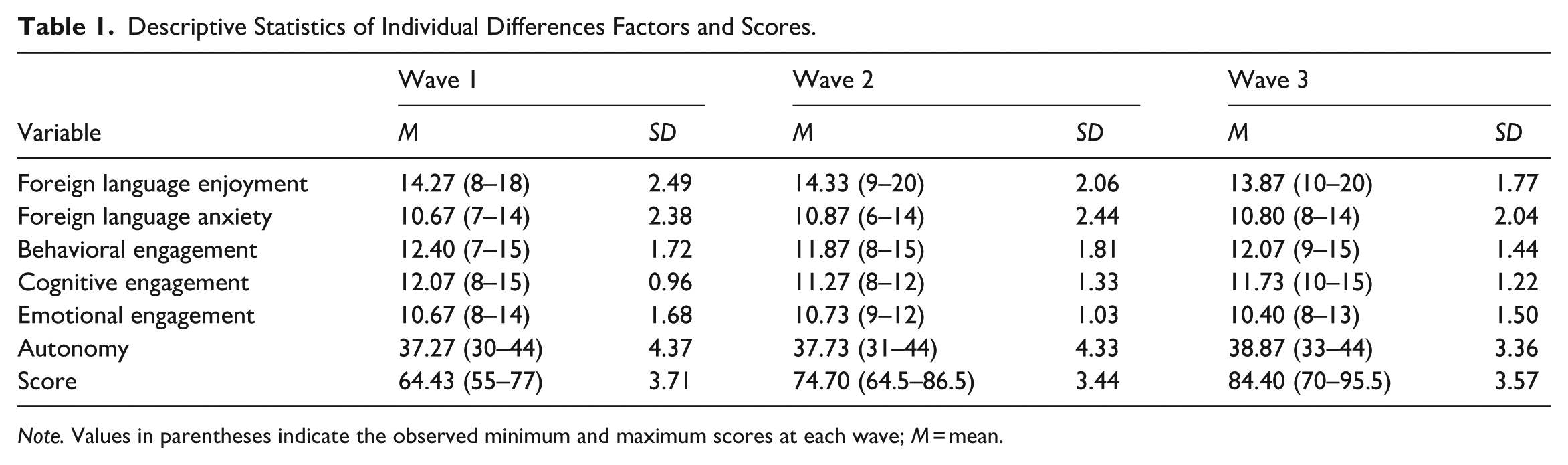
Note. Values in parentheses indicate the observed minimum and maximum scores at each wave; M = mean.
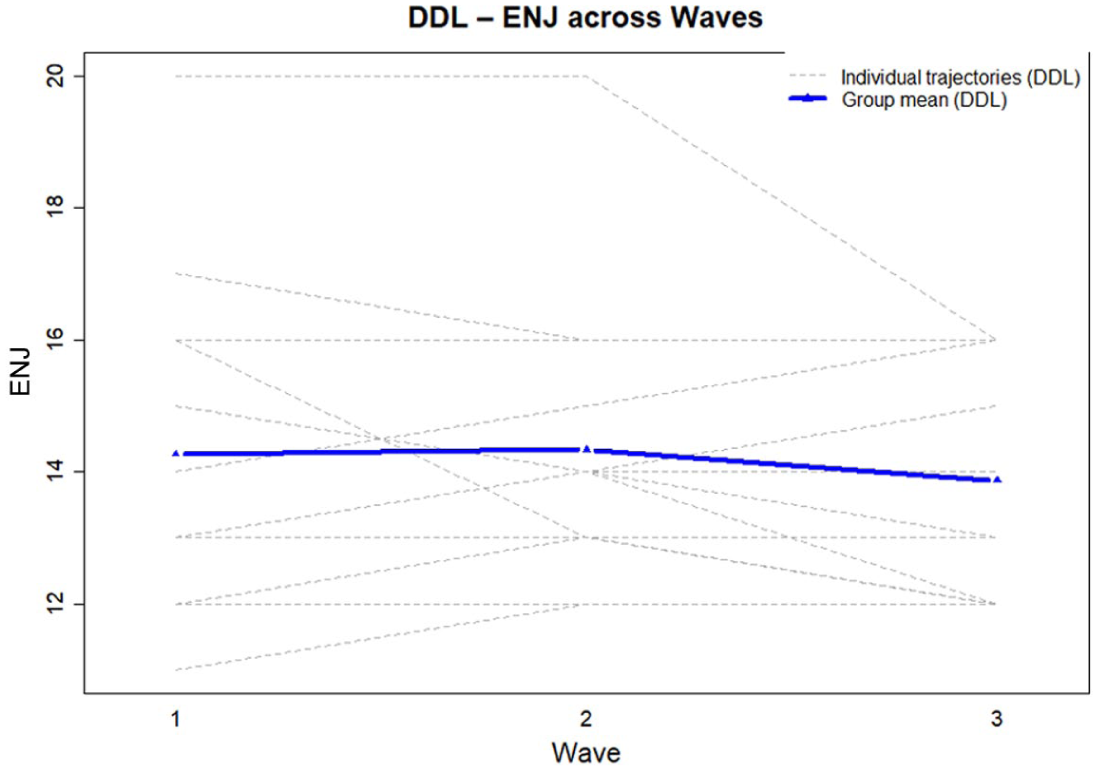
Inter-individual differences in enjoyment over time.
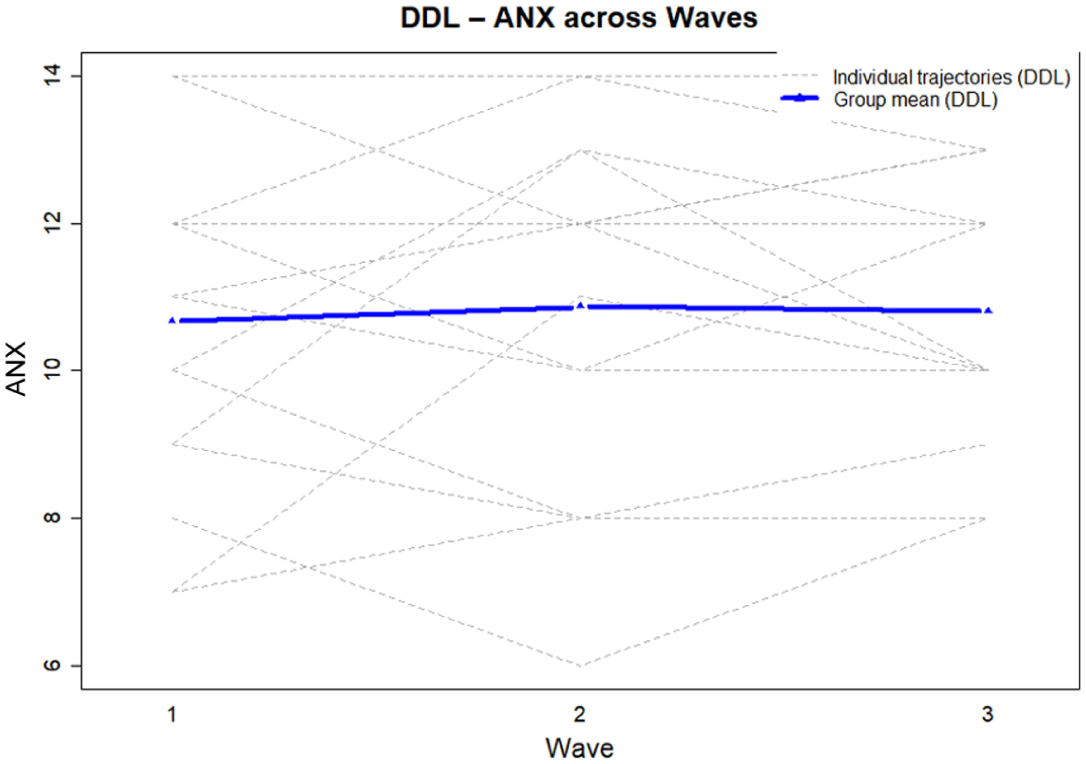
Inter-individual differences in anxiety over time.
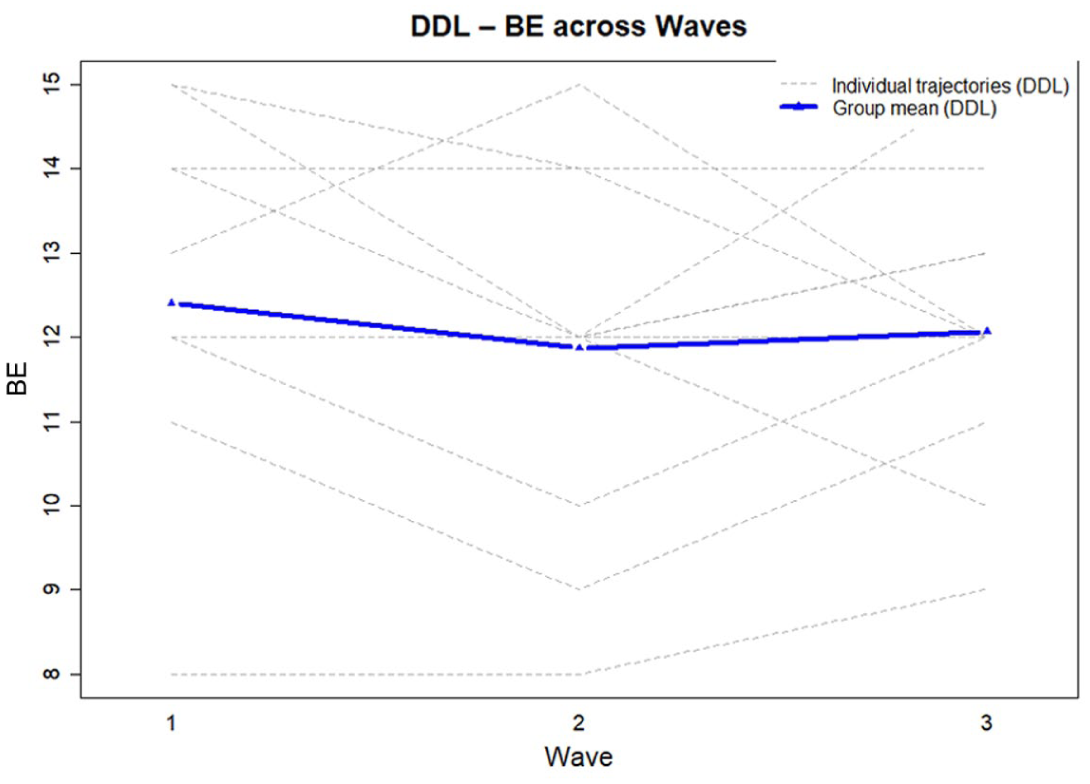
Inter-individual differences in behavioral engagement over time.
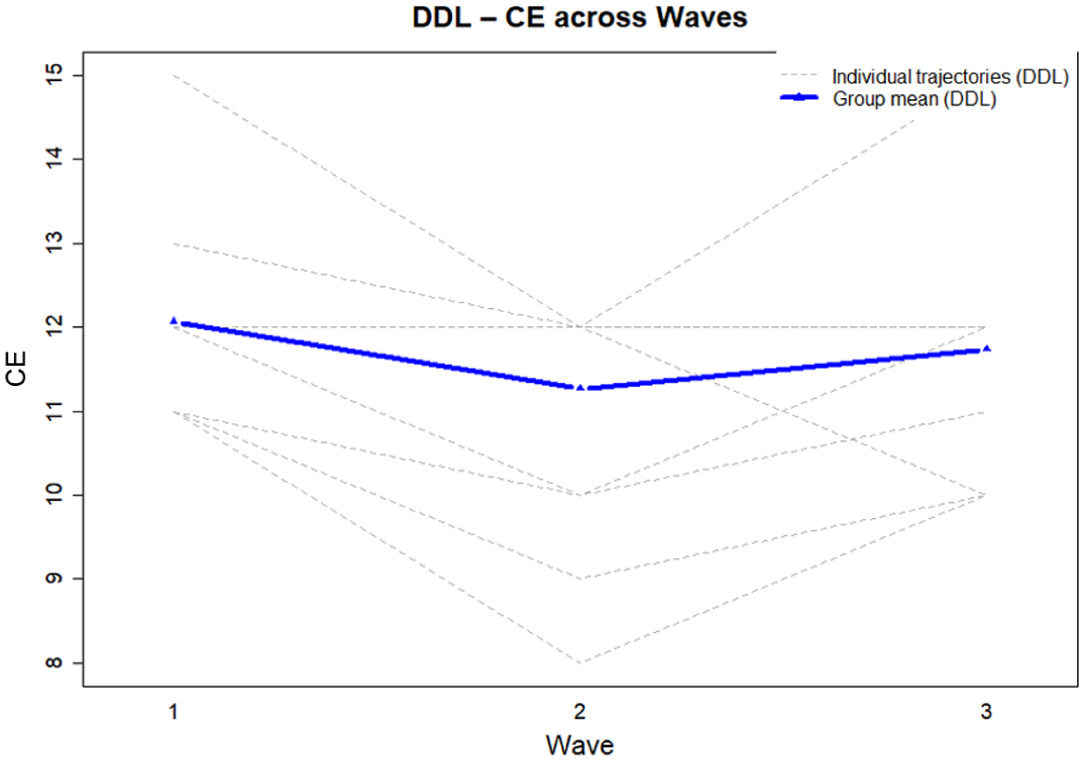
Inter-individual differences in cognitive engagement over time.
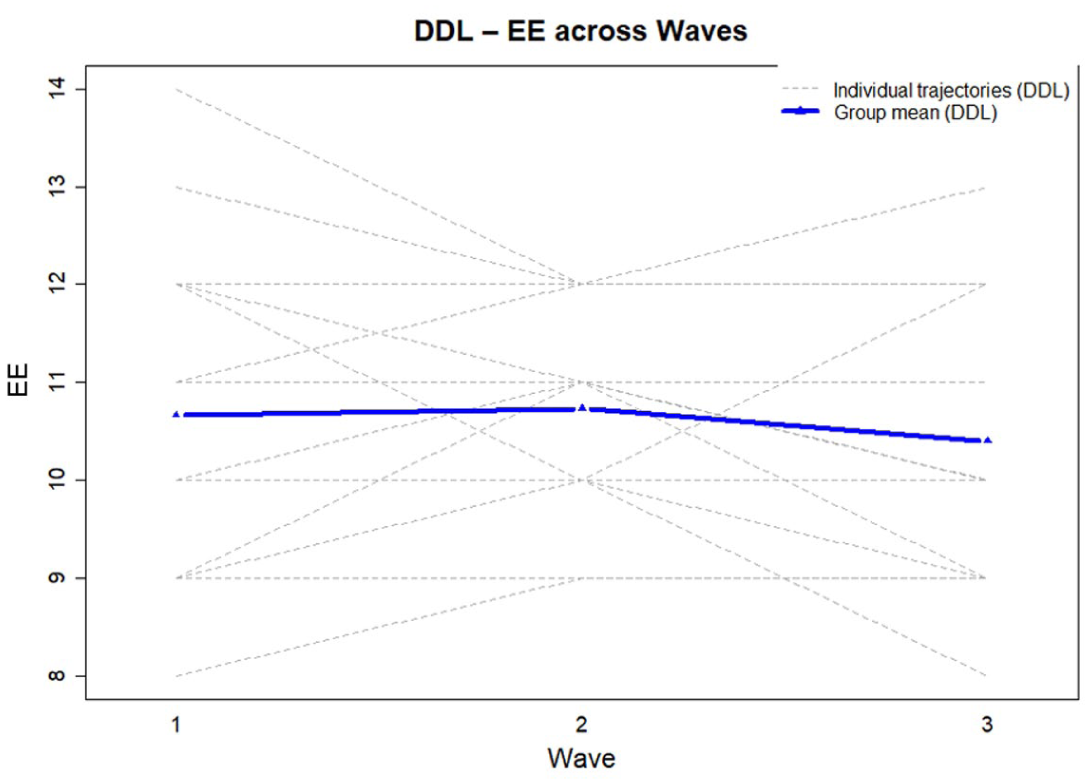
Inter-individual differences in emotional engagement over time.
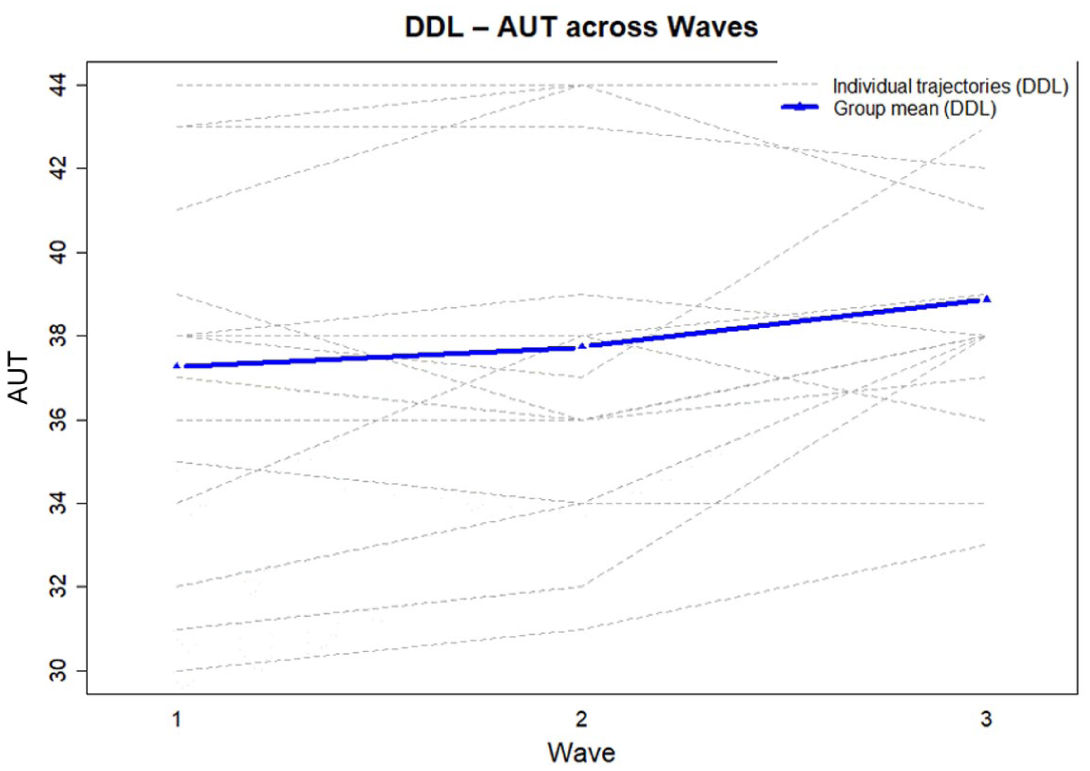
Inter-individual differences in autonomy over time.
4.1.1. Foreign Language Enjoyment and Anxiety
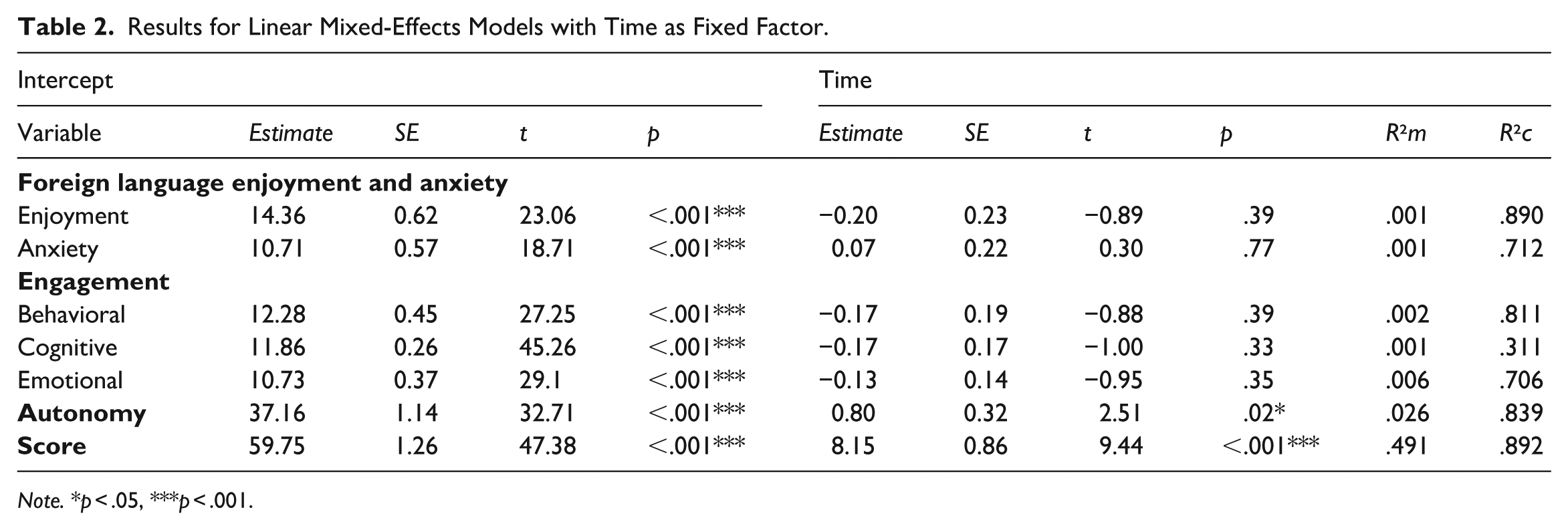
Table 2 lists the results of the LME models. No significant change over time was observed for foreign language enjoyment (estimate = −0.20, p = .39). In this model, time only explained a minor proportion of variance in enjoyment (R²m = .001), whereas the combination of fixed and random effects explained 89.00% of the variance (R²c = .890). Likewise, anxiety did not show significant changes over time (estimate = 0.07, p = .77). This model reported a R²m of .001 in anxiety, while the full model explained 71.2% of the variance (R²c = .712). The flat trajectory of the bold blue lines (Figures 1 and 2) indicated that learners who experienced DDL instruction maintained stable foreign language enjoyment and anxiety.
Results for Linear Mixed-Effects Models with Time as Fixed Factor.
Note. *p < .05, ***p < .001.
The thematic analysis identified three themes influencing students’ emotional experiences: sense of control over the learning process (one quote), perceived value of acquired knowledge (one quote), and collaborative learning (one quote). First, participants’ stable level of foreign language anxiety could be attributed to their sense of control over the learning process. One student explained that she used to feel much more anxious when the teacher asked her questions in the classroom, because she was not sure if her answers were correct. After using the corpus, she felt more prepared and less anxious in answering teachers’ questions. She attributed this to the benefits of corpus use, particularly that the corpus could provide authentic language examples quickly. This suggested that using a corpus could reduce learners’ sense of uncertainty in classroom interactions, which allowed anxiety to remain at a manageable level: Excerpt 1. Answering questions in class used to make me more anxious because I was never sure if what I said was correct. After learning how to use the corpus, I started checking how native speakers actually use certain words. I felt more confident, and my anxiety was relieved. (ID: 6, Linda)
Regarding foreign language enjoyment, a theme that explained learners’ fluctuations was the perceived value of the knowledge gained during the corpus activity. Although the overall level of foreign language enjoyment did not show a significant change, a few individual learners showed increased enjoyment over time in their descriptive scores. Interview data further suggested that this increase was associated with corpus use, particularly because it exposed learners to varied usage patterns. As shown in Excerpt 2, when asked to explain the reasons for this increase, the learner noted that corpus use enabled her to move beyond the limited, fixed expressions typically encountered in class and to identify new and varied usage patterns. She reported that this discovery process enhanced her interest in learning. This suggested that recognizing broader lexical patterning through corpus searches enhanced the perceived value of learning, thereby contributing to a sense of progress and fostering greater enjoyment: Excerpt 2. Before the course, I only knew one or two common ways to use a word, like the fixed phrases we learned in class. But with the corpus, I started noticing new and different patterns, which made me more interested in learning. (ID: 7, Sara)
In addition, peer support in collaborative learning emerged as another main source of foreign language enjoyment. As illustrated in Excerpt 3, Sara emphasized how group discussions during the corpus searching activities helped her feel relaxed. This might be attributed to the sense of community and peer support that she received in collaborative learning, as working in groups allowed her to share ideas, clarify doubts, and learn from others: “In the corpus activity, discussing with my groupmates made me feel really happy” (ID: 7, Sara).
4.1.2. Engagement
Figures 3-5 illustrate the trajectories for behavioral, cognitive, and emotional engagement. As shown in Table 2, all three dimensions of engagement remained stable across the semester (p > .05; behavioral engagement: R²m = .002, R²c = .811; cognitive engagement: R²m = .001, R²c = .311; emotional engagement: R²m = .006, R²c = .706). This suggested that learners who experienced DDL instruction maintained their engagement across the semester.
The results suggested that the stability of learner engagement was related to the type of classroom interaction. In particular, learners’ behavioral engagement was sustained through hands-on interactions with corpora in DDL activities. As illustrated in Excerpt 4, by interacting with the corpus, Linda was motivated to actively participate in corpus-searching activities: “Using the corpus felt interactive because we could search and discuss examples in real time” (ID: 6, Linda).
4.1.3. Autonomy
The analysis revealed that learners receiving DDL instruction had a statistically significant increase over time (estimate = 0.80, p = .02). This model reported a R²m of .026 and a R²c of .839. As shown in Figure 6, the level of learner autonomy experienced a steady increase from Wave 1 to Wave 2, and a faster increase from Wave 2 to Wave 3, despite variation in individual trajectories. The results indicated that learners under DDL instruction consistently enhanced their autonomy throughout the course. A closer examination of the reported questionnaire results showed learners increased autonomous learning behaviors, including independently selecting learning materials, setting personal study goals, and engaging in self-directed learning activities.
The classroom observations further reinforced the quantitative results of autonomy by observing the progression in students’ independent use of corpus tools. In the first classroom observation, students relied heavily on peers and dictionaries to navigate corpus tools, often pausing to consult others and seeking advice from the teacher. In the second observation, students demonstrated improved corpus skills by quickly inputting keywords and selecting appropriate corpus modules. In the final session, most students exhibited purposeful and autonomous use of the corpus, effectively collaborated, and confidently shared findings.
The thematic analysis identified a primary theme influencing learners’ autonomy during the study; that is, opportunities for independent learning (three quotes). First, abundant learning resources in corpora increased opportunities for independent learning, which in turn supported the development of learner autonomy. One student mentioned that the use of corpora transformed her learning approach from passively relying on teachers’ instruction to more active exploration (see Excerpt 5). She believed that corpora provided abundant language input and allowed her to explore word collocations independently, thus reducing the reliance on teacher guidance. This result demonstrated that corpora could enable students to actively manage their learning process, thereby promoting greater learner autonomy: Excerpt 5. I used to rely on passive learning, but now I’m much more proactive. The corpus website provided abundant content, allowing me to select collocations to improve my writing instead of waiting for the teacher’s feedback. This is a shift from the instruction I received previously, especially in my high school. (ID: 7, Sara)
Second, hands-on explorations contributed to learners’ independent learning, thus enhancing autonomy. As illustrated in Excerpts 6 and 7, students pointed out that they were required to engage in hands-on explorations and take ownership to solve problems. This active participation encouraged students to develop their independence of learning: Excerpt 6. We needed to extract information applicable to expository writing from different corpus modules. Each of us had different tasks, and we needed to find ways to solve different problems independently. (ID: 6, Linda) Excerpt 7. Using the corpus gave me the opportunity to find answers on my own. (ID: 13, Leo)
4.2. Trajectories of L2 Students’ Writing Quality
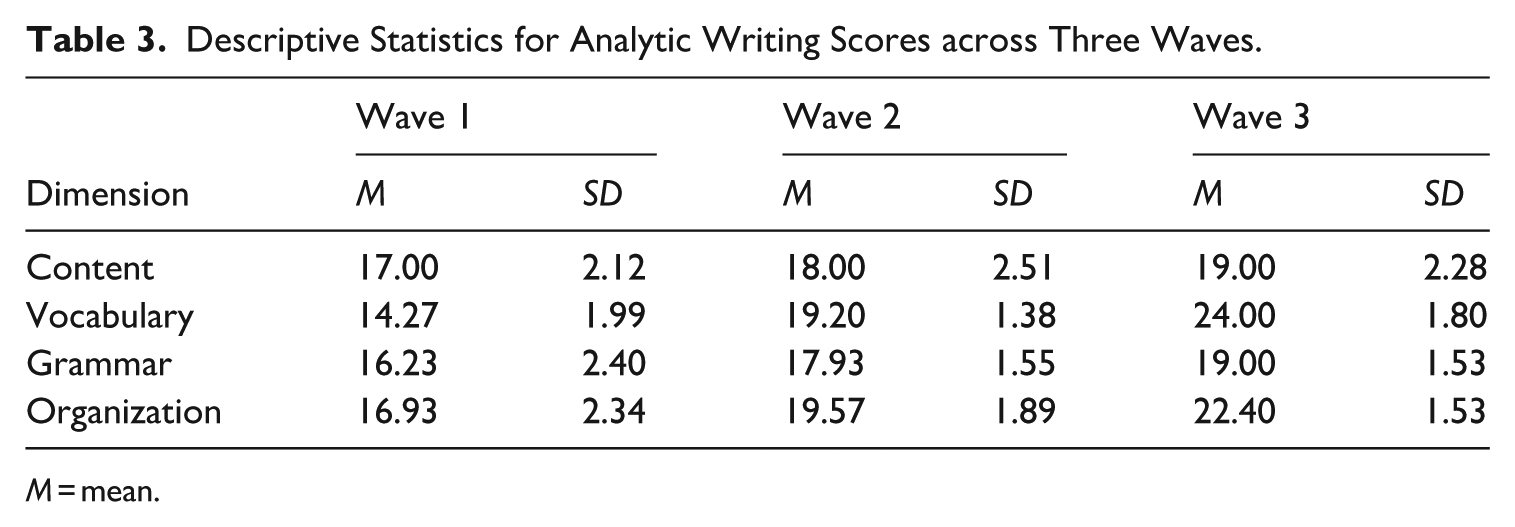
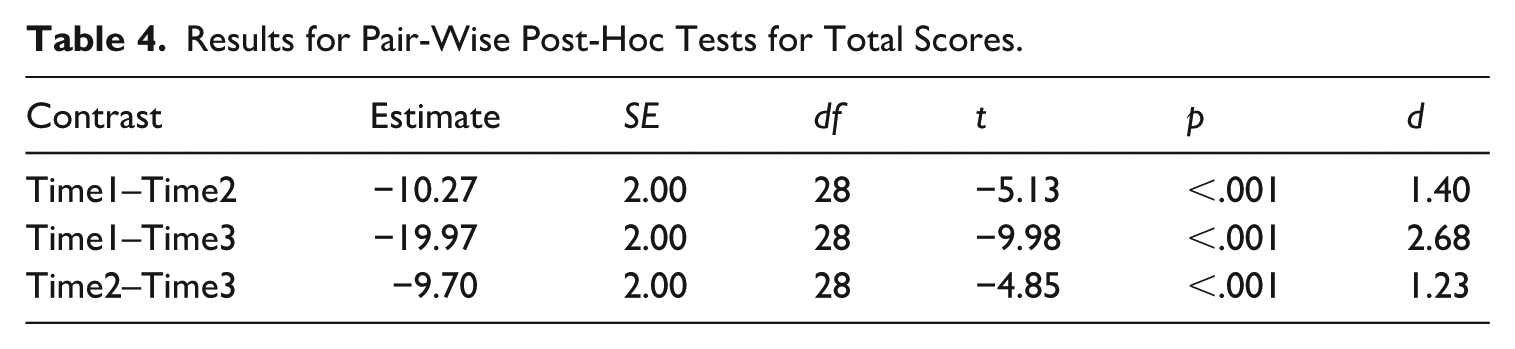
Table 3 displays the descriptive statistics for the analytic writing scores across the three waves. The results of the LME models showed significant writing improvement (total writing scores as dependent variable) for learners who experienced DDL instruction (estimate = 8.15, p < .001). This model reported a marginal R² of .491 and a conditional R² of .892. The writing improvement was further confirmed by the results of the pair-wise post-hoc tests (see Table 4). The trajectories of writing scores are visualized in Figure 7.
Descriptive Statistics for Analytic Writing Scores across Three Waves.
M = mean.
Results for Pair-Wise Post-Hoc Tests for Total Scores.
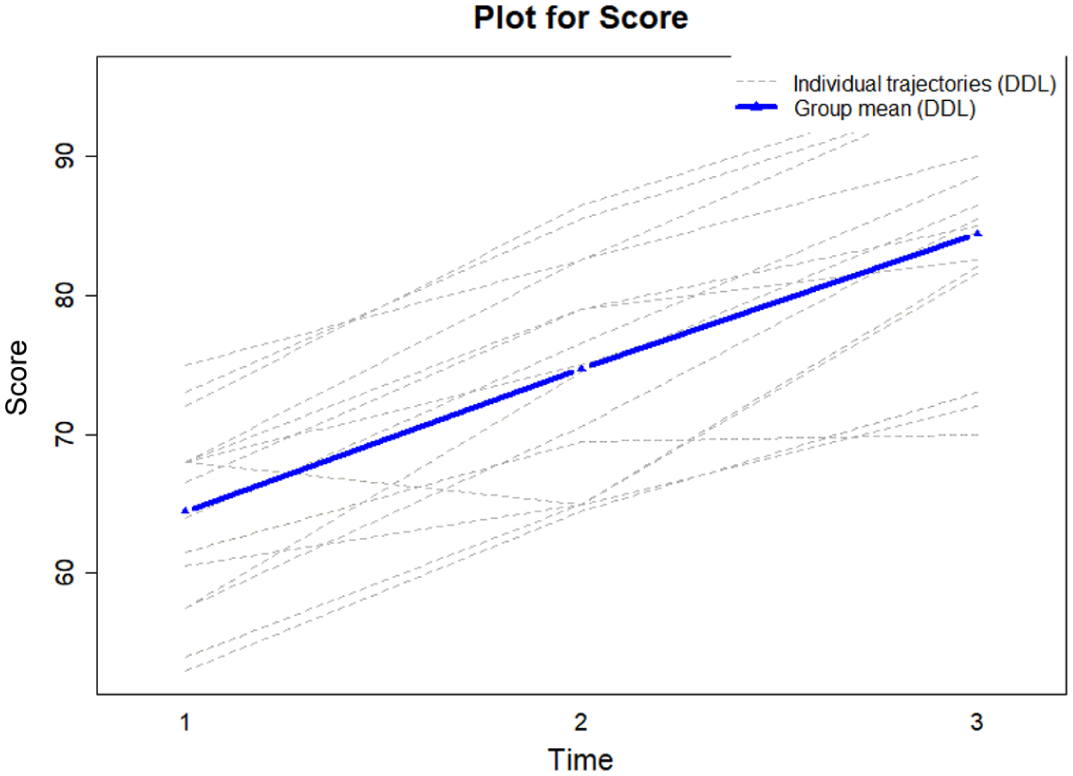
Inter-individual differences in scores over time.
Specifically, the results indicated a significant increase in writing scores from Wave 1 (M = 64.43, SD = 3.71) to Wave 3 (M = 84.40, SD = 3.57). The pairwise post-hoc analysis showed that the increase from Wave 1 to Wave 3 was statistically significant, with a large effect size (p < .001; d = 2.68). The effect size for the comparison between Wave 1 and Wave 2 (M = 74.70, SD = 3.44) was also large (p < .001, d = 1.40). The writing improvement continued to be reflected in the change between Wave 2 and Wave 3, where the effect size was medium (p < .001, d = 1.23). The findings suggested that learners under DDL instruction continued to show improved writing quality over the course. The analytical scores in Table 3 further showed that vocabulary had the largest increase across the three waves, rising from Wave 1 (M = 14.27, SD = 1.99) to Wave 3 (M = 24.00, SD = 1.80).
The analysis of interviews further supported the improvement of their writing proficiency. For instance, the student in Excerpt 8 reported that working with corpora helped her notice specific functions of vocabulary and phrases in authentic contexts, which in turn made it easier for her to construct clearer and more coherent arguments in writing. Additionally, the student stated that DDL activities improved her ability to identify typical usage patterns and apply them accurately in writing, as shown in Excerpt 9: Excerpt 8. After going through lots of concordance lines for words, I didn’t just get their meanings. I also figured out how they connect ideas in a paragraph. Now my writing is more organized because I can pick the right words to link my viewpoints. (ID: 7, Sara) Excerpt 9. When I learned the typical patterns of target words from the corpus, I got a clear picture of what correct usage looks like. That’s why my sentences sound way more natural now, and I even find out my own grammar mistakes. (ID: 6, Linda)
4.3. Impact of L2 Students’ Individual Differences on Writing Quality
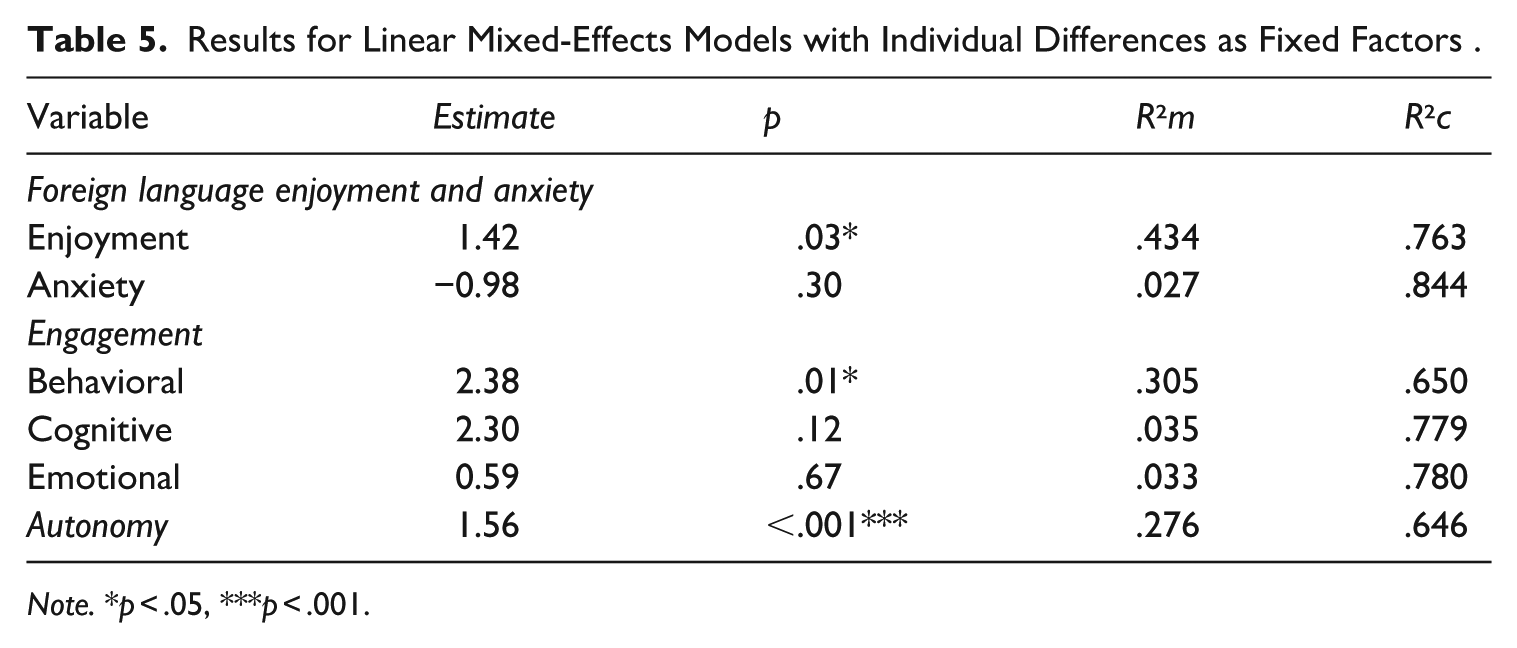
Table 5 presents the results of the effects of individual differences, as independent variables, on learners’ writing quality in DDL instruction. Among the emotional variables, the results indicated that foreign language enjoyment (estimate = 1.42, p = .03) showed significantly positive effects on writing quality (R²m = .434; R²c = .763), whereas there was no significant effect of foreign language anxiety (estimate = −0.98, p = .30; R²m = .027; R²c = .844). For engagement, behavioral engagement showed a significant positive impact (estimate = 2.38, p = .01; R²m = .305; R²c = .650), whereas cognitive engagement (estimate = 2.30, p = .12; R²m = .035; R²c = .779) and emotional engagement (estimate = 0.59, p = .67; R²m = .033; R²c = .780) did not show significant effects. Additionally, autonomy was found to be a significant positive predictor for writing quality (estimate = 1.56, p < .001; R²m = 0.276; R²c = .646).
Results for Linear Mixed-Effects Models with Individual Differences as Fixed Factors .
Note. *p < .05, ***p < .001.
The results of the thematic analysis were consistent with the findings of the quantitative data, which highlighted key individual differences that influence writing quality. The main theme explaining learners’ writing improvement was the motivated learning behaviors (3 quotes), driven by enhanced enjoyment, engagement, and autonomy. A student reported that positive affective attitudes like foreign language enjoyment were closely linked to improved writing quality, as they enhanced the learning behaviors and enthusiasm during learning activities. As stated in Excerpt 10, when Leo searched target words in SKELL and discovered useful collocations, he felt enjoyment and carefully recorded the examples, which facilitated the understanding of the usage of the target words and enabled him to apply these expressions in his own writing: “When we searched words in SKELL, I felt excited to see so many natural examples. I really enjoyed comparing collocations and wrote them down carefully. I think this helped me improve my vocabulary use in writing” (ID: 13, Leo).
Behavioral engagement was also considered as a facilitator for writing quality, due to their enhanced learning behaviors in classrooms. As reported in Excerpt 11, the learner actively participated in classroom activities and exercises, which helped them to generate and refine ideas for writing: “I think the Word Sketch module in the corpus really helps me organize my language better. I’ve learned a lot of collocations from it, which makes my writing sound more natural” (ID: 6, Linda).
Autonomy facilitated improving students’ writing quality by promoting students’ extra learning time beyond the classroom settings. The student who took ownership of their learning demonstrated greater initiative in applying strategies to their writing (Excerpt 12): “I believe my writing progress comes from actively using the corpus after class. By consistently refining my word choices through it, I can feel my improvement” (ID: 7, Sara).
5. Discussion
5.1. Trajectories of L2 Students’ Individual Differences
5.1.1. Foreign Language Enjoyment and Anxiety
The students in DDL instruction maintained a stable level of foreign language anxiety throughout the semester. Regarding practical meaningfulness, anxiety remained below the midpoint of the Likert scale across waves, indicating a low to moderate level of anxiety. The negligible effect size suggested that the change in anxiety over time was minimal, indicating that anxiety remained stable over time. This was consistent with Pawlak et al. (2025), who suggested that corpus-based activities may help learners maintain stable levels of affective experiences over time. As shown in the results (Excerpt 1), the immediate feedback provided by corpus tools allowed her to independently validate her understanding, which may have helped her manage the uncertainty associated with teacher evaluation. This sense of control over the learning process appeared to be a key mechanism for the stabilization of foreign language anxiety. In addition to the affordances of corpus tools, instructional support from the teacher may have contributed to the emotionally supportive learning environment observed in DDL contexts. In this study, the teacher guided learners throughout the learning process by first modeling the use of corpus tools using sample words, encouraging the group discussions, and providing feedback at the end, which might have created a pleasant and comfortable learning environment. During the DDL activities, students were also provided with downloadable worksheets, which were considered effective tools to maximize the teacher’s investment of time and effort and relieve learners’ cognitive load (Boulton, 2010; Johns, 1991; Lenko-Szymanska & Boulton, 2015).
In terms of foreign language enjoyment (the dependent variable for research question 1), learners showed no significant changes. Enjoyment was maintained at a moderate level across the semester. The minimal effect size indicated that time contributed only minimally to changes in enjoyment, indicating that enjoyment remained relatively stable across the semester. This supported the findings in J. M. Dewaele et al. (2018, 2025) that foreign language enjoyment was “trait-like” (J. M. Dewaele et al., 2025, p. 39). One possible explanation might be the complex nature of foreign language affective attitudes, which could be influenced by a diverse range of social, contextual, and psychological factors. Also, the characteristics of DDL activities may have helped sustain learners’ initial positive affective attitudes across the semester. This aligned with previous research suggesting that learners benefited from a “friendly atmosphere” and were “comfortable with the corpus technology and enjoyed discovery learning” (M. Chen & Flowerdew, 2018b, p. 108), as well as feeling “happy with the new skills they had acquired” (Cortes, 2011, p. 76).
In this respect, analysis of the students’ interviews indicated important contributors to the overall maintenance and individual fluctuation of these emotional experiences, including perceived control over the learning process and perceived value of acquired knowledge. Specifically, the DDL approach contributed to a sense of control over the learning process and perceived value of acquiring new knowledge by providing them with direct access to resources. The inclusion of collaborative learning may also have helped learners manage anxiety by providing peer support. This might be attributed to the fact that learners felt supported and connected during DDL activities, which fostered a sense of belonging and helped them manage the emotional burden of performing under pressure (Horwitz, 2017). This finding was consistent with CVT (Pekrun, 2006), which suggested that perceived control and value could foster positive emotional states.
5.1.2. Engagement
It was found that DDL helped learners maintain their engagement to some extent in classroom activities across the semester. In terms of practical meaningfulness, the three dimensions of engagement remained at a moderate level across the semester, with mean scores slightly above the midpoint of the scale. The small effect size values indicated that time explained only a small proportion of the variance, suggesting that engagement remained relatively stable across the semester. Previous research consistently showed that declines in engagement were a persistent issue in L2 language learning, and this pattern of decline in engagement was observed both in formal classroom settings and outside them (Elaish et al., 2019; He & Loewen, 2022); however, in DDL, learners’ engagement was sustained over time. This finding aligned with Zare et al. (2024), who reported that learners under DDL instruction maintained their engagement over the long term. The finding also provided support for the impact of DDL on sustaining learner engagement across time, consistent with previous studies showing that DDL could “engage them in active processing of the words” (Daskalovska, 2015, p. 138) and transform learner’s passivity into active engagement (Lin, 2016). From the perspective of SDT, this sustained engagement might be explained by the way DDL activities provide meaningful tasks, foster learner autonomy and support from peers, thereby meeting learners’ basic psychological needs and promoting continued classroom involvement (Fryer & Oga-Baldwin, 2019; Phung et al., 2021).
Analysis of the students’ interviews revealed the importance of the interaction with corpus data in maintaining engagement in DDL. This finding supported prior research emphasizing the benefits of DDL in fostering the involvement of learners in the active and independent explorations of linguistic patterns through corpus consultation (Chambers, 2019; Charles & Hadley, 2022; T. Liu & Gablasova, 2025). This aligned closely with a key characteristic of DDL, namely its inductive and discovery-oriented nature, which could help EFL learners engage in the learning process (Gilquin & Granger, 2010). First, DDL requires learners to directly engage with authentic corpus data, promoting active discovery and exploration and fostering deeper cognitive involvement (Boulton & Cobb, 2017). Second, DDL positions learners as active researchers and makes the learning process interactive and dynamic (Bernardini, 2004). Third, the inductive nature of DDL stimulates curiosity by challenging learners to uncover rules and structures themselves, making it an engaging and meaningful learning experience (O’Keeffe, 2023).
5.1.3. Autonomy
The analysis showed that learners’ autonomy significantly increased during a semester-long course under the DDL approach. The mean values of autonomy were at a medium-to-high level and demonstrated a clear upward trend across waves. The small effect size indicated that time explained a limited proportion of the variance in autonomy, suggesting limited practical change over time. This might be attributable to learners’ relatively high initial level of autonomy, which left limited room for further improvement, as well as the small sample size in this study. The development of autonomy has been repeatedly pointed out as an important long-term benefit of DDL (e.g., Chambers & O’Sullivan, 2004), where learners acted as researchers and the teacher acted as a facilitator (O’Keeffe et al., 2007). As previously mentioned, DDL provided learners with abundant resources. This was consistent with the constructivist view of learning, which viewed it as a dynamic process driven by the learner’s active explorations of language data (Flowerdew, 2015). DDL also enabled learners to engage in hands-on explorations, which required learners to adopt higher-order cognitive skills such as hypothesis formation, testing, and reasoning (Boulton, 2010; P. Lee & Lin, 2019; Zare et al., 2023). This empowered learners to take responsibility for their learning, thus remembering and internalizing language rules (Ellis, 2003).
The results of this study showed that after the corpus-based activities, learners demonstrated improvements in time management, self-regulation, and autonomous learning behaviors. This suggested that DDL not only maintained students’ engagement in the classroom but also contributed to the development of their long-term autonomous learning. This might be attributed to the task design of DDL, as it required learners to independently explore language resources and solve problems, thereby promoting higher-level cognitive skills (Gilquin & Granger, 2010). These acquired skills could thus be internalized and applied to other learning contexts outside the classroom. This finding was consistent with Benson’s (2013) description of learner autonomy, which refers to learners’ ability to actively regulate their learning processes both inside and outside the classroom. From a broader perspective, this also implied that the autonomy acquired in the DDL activities in class could be transferred to unstructured learning contexts, thereby supporting lifelong learning (Looi et al., 2025).
5.2. Trajectories of L2 Students’ Writing Quality
The quantitative results showed that learners who experienced DDL instruction had significant improvements in writing quality over time, which suggested a positive impact of DDL on learners’ writing improvement. Specifically, learners’ vocabulary scores achieved greater improvement than other dimensions of writing. This was also reflected in students’ interview data, in which they reported improvements in vocabulary use, accuracy, and coherence as a result of corpus-based searching activities. The positive effectiveness of DDL echoes the findings of previous studies that DDL promoted learning performance in EFL contexts (e.g., Alsehibany & Abdelhalim, 2025; P. Lee & Lin, 2019; T. Liu & Gablasova, 2025). The improvement in writing quality could be explained by the following factors. First, DDL in KWIC format provided learners with a large amount of authentic language data. This aligned with the “long-term effects of presenting learners with multiple corpus examples” (Frankenberg-Garcia, 2014, p. 142). Through condensed exposure to certain vocabulary, learners may become more aware of the target items and summarize the language patterns by themselves (Pérez-Paredes, 2010). Second, DDL promoted vocabulary learning by engaging learners in discovery-based activities. In corpus searching, learners acted as travelers, researchers, or detectives (Bernardini, 2001; Johns, 1997). This engaging process fostered autonomous learning and active participation, making language acquisition effective (Boulton, 2017). Third, learners’ continuous reading and understanding of corpus data contributed to their growth in vocabulary knowledge unconsciously (Muftah, 2023). Through this, learners’ writing quality was enhanced based on their expanded vocabulary breadth.
5.3. The Impact of Individual Differences on Learners’ Writing Quality
Results of the quantitative analyses indicated that individual differences, as independent variables, including foreign language enjoyment, behavioral engagement, and autonomy, had significantly positive effects on L2 learners’ writing quality. The finding that foreign language enjoyment positively influenced writing quality aligned with previous research (e.g., J. M. Dewaele & Alfawzan, 2018; J. M. Dewaele & MacIntyre, 2016; Y. Guo, 2021; Jin & Zhang, 2018; Li & Wei, 2023; Mierzwa, 2018). As previously suggested, students with high levels of foreign language enjoyment exhibited a strong sense of control over their language learning process (Pekrun, 2006) and tended to be “more resilient in the face of various challenges in the instructional context” (Y. Wang et al., 2021, p. 2). Thematic analysis revealed that when students found the learning process rewarding, they felt enjoyment, and became more focused, motivated, and enthusiastic. This finding aligned with H. Wang et al. (2023), who identified enjoyment as a positive predictor of learning achievement, mediated by increased motivation.
The lack of significance for foreign language anxiety in predicting writing quality aligned with previous findings, which suggested that foreign language anxiety did not necessarily influence long-term language achievement (e.g., Peng & Wang, 2024; Sparks & Alamer, 2024). One possible reason was that anxiety reflected learners’ insecurity at the early stages of learning rather than an independent variable that predicted subsequent improvement in writing quality. This further consolidated the findings in J. M. Dewaele and Dewaele (2017) and MacIntyre (2017), who found that the effects of foreign language anxiety on learning performance were dynamic and context-dependent, influenced by changing classroom environments, individual learner differences, and interactions with other emotions and variables.
The findings further supported the arguments made in previous studies regarding behavioral engagement as a strong predictor of learners’ performance (Bråten et al., 2018, 2022; Du & List, 2020; Kammerer et al., 2021). As suggested by previous studies, successful learners exhibited higher levels of engagement in both short- and long-term learning activities (P. P. Sun & Zhang, 2024). One possible explanation was that behavioral engagement more directly shaped how learners participate in instructional activities and worked with course materials, thereby supporting stronger academic performance (Al-Shabandar et al., 2018; Rajabalee et al., 2019; Zhou et al., 2023). This interpretation was further supported by qualitative evidence from learners, who reported how active engagement in DDL activities helped them stay focused and organized during writing tasks.
The results of this study showed that emotional engagement did not significantly predict writing quality, which was consistent with previous studies (e.g., Y. Guo et al., 2023; Jiang & Peng, 2025). One explanation might be that this construct reflected learners’ “affective responses” and “how they manage those responses”, such as interest and happiness (Finkenstaedt-Quinn et al., 2024, p. 2), rather than sustained effort directly tied to learning outcomes. As these responses were specific to classroom context and to some extent temporary, emotional engagement lacked the stability and direct relevance to goal-oriented learning behaviors required to predict achievement (J. P. Guo et al., 2022). Similarly, cognitive engagement was not a significant predictor of writing quality, which was consistent with findings in previous research (e.g., Xu & Feng, 2024). This might be attributed to the characteristics of cognitive engagement, which was operationalized as “action taken to optimize one’s thinking processes” and involved the use of deep-processing strategies such as task concentration, problem-solving, critical thinking, and analytic reasoning (Reeve et al., 2020, p. 2). Therefore, cognitive engagement might have contributed to improvements in writing performance when it was translated into sustained and concrete learning actions or when it interacted with other psychological constructs such as resilience and mindsets (Xu & Feng, 2024). Furthermore, considering that language learning was a “long-term and continuous process” (Xu & Feng, 2024, p. 1), the limited out-of-classroom learning opportunities might also have impeded EFL learners’ progress in writing.
The finding that autonomy positively influenced writing quality aligned with prior research emphasizing its significant role in foreign language achievement (e.g., L. Chen, 2023; Hu & Zhang, 2017). Based on SDT, L2 learners with higher levels of autonomy were thought to be more likely to engage actively in language learning, even when facing challenges and obstacles (Zare et al., 2024). The results of qualitative analyses showed that students who took ownership of their learning, such as exploring corpus tools independently, reported a higher ability to apply strategies and achieve higher writing quality. This aligned with the findings in L. Chen (2023) and Hu and Zhang (2017), which highlighted the importance of autonomy in fostering learner initiative and resilience.
6. Limitations
It is necessary to acknowledge that this study has several limitations, which may be addressed in future research. First, since this study was limited to a relatively small sample size, it may reduce the statistical strength and the generalizability of these findings. Future studies may consider including a larger sample size in order to test the generalizability of the findings. The second limitation concerned the possible presence of a novelty effect (i.e., the temporary impact of a new instructional tool on learners’ performance). Given that DDL was new to participants, enhanced performance might be attributed to this novelty to some extent. Future longitudinal studies might consider controlling for the novelty effect by extending the duration of intervention and evaluating the persistence of initial performance achievement. Third, the present study did not investigate learners’ perceived effectiveness or attitudes toward DDL. Future studies may consider including learners’ perceptions to triangulate the effects of DDL on writing improvement. Fourth, this study examined the dynamic changes in learners’ individual differences in DDL contexts without directly comparing the effectiveness of DDL and other types of instruction on these variables. Future research may include group as a factor to specify how different teaching approaches influence the development of learners’ individual differences. Fifth, this study adopted the analytical scoring rubric according to the teaching requirement, which may not correspond well to the vocabulary-centered DDL instruction. Future studies could designing more targeted assessments in order to evaluate the effectiveness of DDL for particular aspects of learners’ English proficiency. Lastly, although the writing prompts were designed within the expository genre, the differences in topics and focal vocabulary may be an additional confounding factor. Future studies might further refine task design by standardizing topic familiarity and lexical requirements across writing prompts.
7. Conclusion
This study examined the changes in learners’ writing quality and individual differences, namely foreign language enjoyment and anxiety, engagement, and autonomy across a semester under the DDL instruction, and explored how such individual difference factors significantly affected learners’ writing quality. The results showed that learners’ autonomy significantly increased, and foreign language enjoyment, anxiety, and engagement remained stable throughout the DDL instruction. The thematic analysis revealed several factors that contributed to learners’ learning experience, including perceived control over the learning process, collaborative learning, and hands-on explorations. Additionally, the analysis showed that learners’ foreign language enjoyment, behavioral engagement, and autonomy significantly impacted their writing quality. Analysis of students’ interview data further revealed the mechanism of how foreign language enjoyment, engagement, and autonomy improved their writing quality.
This study contributes to our understanding in the following aspects. First, it conducted a “direct exploration” of a set of “long-term, higher-level, non-language skills,” including engagement and autonomy, addressing key concerns raised in previous DDL research (Boulton & Vyatkina, 2021, p. 83). By focusing on the longitudinal trajectories of these individual difference factors, the findings provide new insights into these “major advantages that are generally attributed to DDL,” enriching the understanding of DDL as an effective pedagogical approach (Boulton, 2012, p. 86). Second, it helps fill the gap of “theoretical underpinnings in DDL to position it more firmly within the field of second language acquisition” (Boulton & Vyatkina, 2021, p. 67). By integrating CVT with the characteristics of DDL, this study helps explain how learners’ perceptions of control and value may shape foreign language enjoyment and anxiety in corpus-based learning and how these factors are associated with learners’ writing development, thus contributing to the theoretical grounding of DDL intervention design and interpretation. Third, this study makes a contribution to the study of individual differences in L2 writing by examining the links between individual differences and writing achievement in DDL contexts. This examination helps understand the associations between learner-related factors and writing achievement in corpus-assisted writing development.
Pedagogically, the findings suggest several implications for DDL teachers and practitioners. First, learner autonomy may need to be treated as an explicit instructional goal in DDL, with tasks designed to encourage learners to search for, compare, and evaluate language patterns independently. Second, sustained engagement across the semester in DDL depends on clearly sequenced tasks, hands-on corpus exploration, and regular opportunities to apply corpus findings in writing. Finally, teachers may consider conducting corpus-based tasks from simpler searches to more demanding ones, providing timely modeling and feedback, and embedding collaborative support throughout the process to help learners maintain positive affective attitudes and manageable levels of anxiety during DDL instruction.
Supplemental Material
sj-docx-1-ltr-10.1177_13621688261449333 – Supplemental material for A Diachronic Investigation of Individual Differences and Writing Quality in Data-Driven Learning
Supplemental material, sj-docx-1-ltr-10.1177_13621688261449333 for A Diachronic Investigation of Individual Differences and Writing Quality in Data-Driven Learning by Yanan Zhao, Siqi Cao and Jihua Dong in Language Teaching Research
Footnotes
Acknowledgements
We would like to acknowledge our appreciation for the support received from the Shandong Provincial Key Teaching Reform Project (No. Z2022151) and the Shandong Provincial Youth Innovation Team Project (No. 2021RW017).

Ethical Considerations
The experiment was approved by Shandong University (approval number ECSFLLSDU2024-19) and was run in accordance with the Declaration of Helsinki.
Consent to Participate
The participants provided their written informed consent to participate in this study.
Author Contributions
Conceptualization: Dong & Zhao; Methodology: Dong, Zhao, & Cao; Data collection and formal analysis: Zhao & Cao; Writing—original draft preparation: Zhao & Cao; Writing—review and editing: Dong; Supervision: Dong. All authors read and approved the final version of the manuscript.
Funding
The authors disclosed receipt of the following financial support for the research, authorship, and/or publication of this article: The authors received financial support for the research from the Shandong Provincial Key Teaching Reform Project (No. Z2022151) and the Shandong Provincial Youth Innovation Team Project (No. 2021RW017).
Declaration of Conflicting Interests
The authors declared no potential conflicts of interest with respect to the research, authorship, and/or publication of this article.
Data Availability Statement
Data will be made available on request.
Supplemental Material
Supplemental material for this article is available online.
References
Supplementary Material
Please find the following supplemental material available below.
For Open Access articles published under a Creative Commons License, all supplemental material carries the same license as the article it is associated with.
For non-Open Access articles published, all supplemental material carries a non-exclusive license, and permission requests for re-use of supplemental material or any part of supplemental material shall be sent directly to the copyright owner as specified in the copyright notice associated with the article.
