






Abstract
Evidence has mounted for the effectiveness of second language pronunciation instruction. Given the critical role instructors play in implementing effective instruction, one line of inquiry has been to better understand instructors’ beliefs and practices as they relate to second language pronunciation teaching and learning. A critical gap, however, is that such research has focused primarily on English, with only limited focus on languages other than English. Amongst languages other than English, there remains next to no emphasis on less commonly taught languages. Such languages should be of interest given a well-documented dearth of quality instructional materials. This study investigated less commonly taught language instructors’ perspectives on and incorporation of pronunciation instruction in the language classroom. A total of 169 less commonly taught language instructors of Arabic (n = 30), Japanese (n = 54), Korean (n = 38), and Russian (n = 47) from medium to large public universities in the United States completed an online survey during spring and fall 2024. The survey featured four primary sections: classroom practices, teaching beliefs, pronunciation acquisition/learning beliefs, and participant background. Findings indicated that less commonly taught language instructors were highly qualified and experienced, more so than previously reported findings for those who teach French, German, or Spanish. Although instructors believed pronunciation could indeed improve, they showed ambivalence regarding the effects of instruction. Additionally, instructors reported that on average 19% of class time was spent teaching pronunciation, despite limited pre-existing materials and a lack of confidence in developing their own. Although slightly nuanced differences were identified, major trends were generally stable across less commonly taught languages.
Keywords
1. Introduction
Research investigating second language (L2) pronunciation teaching and learning has seen an increase over the last 20–30 years, resulting in the establishment of L2 pronunciation proficiency frameworks (e.g., Saito & Plonsky, 2019), a more primary focus on pronunciation in instructed second language acquisition (SLA) research (Crowther & Loewen, 2025), and a distinct L2 pronunciation field centrally interested in acquisition and pedagogy (Huensch et al., 2026). Simultaneously, evidence has been mounting for the beneficial learning outcomes of explicit pronunciation instruction (e.g., Lee et al., 2015; Thomson & Derwing, 2015). Given the critical role teachers play in implementing effective instruction, one productive line of inquiry has been to better understand the beliefs and practices of instructors as they relate to pronunciation teaching and learning in order to gain insights into how we can better prepare and equip classroom teachers (e.g., Buss, 2016; Foote et al., 2011). Although the L2 pronunciation field has made substantial gains over the years, a critical gap is that work in this area is almost exclusively based on the teaching and learning of English as a second language (ESL)/English as a foreign language (EFL) contexts, which is concerning as it limits the generalizability of findings to other languages/contexts (Chau & Huensch, 2025; Crowther & Isbell, 2024). This is true for L2 pronunciation research generally, but even more so regarding work investigating the beliefs and practices of instructors. The little information we do have about languages other than English (LOTEs) focuses on commonly taught languages such as Spanish and German (e.g., Huensch, 2019a) and/or focuses on learner beliefs and perceptions as opposed to instructors (Huensch & Thompson, 2017; Martin & Sippel, 2022; Shehata, 2024). Thus, one particularly underrepresented context concerns less commonly taught languages (LCTLs). Given recent calls to expand investigations to LOTEs (Crowther & Isbell, 2024; Levis, 2021) and the potentially interesting and unique contribution of doing so with LCTLs, the current study examined the pronunciation beliefs and practices of instructors of Arabic, Japanese, Korean, and Russian.
2. Background
2.1. Pronunciation Teaching Beliefs and Practices
Pioneering work examining the beliefs and practices of ESL/EFL instructors as regards pronunciation instruction indicated that although teachers valued pronunciation skills, they felt they lacked the training and materials necessary to address students’ needs in their classrooms (Buss, 2016; Foote et al., 2011). This is unlikely to be the result of an overall lack of preparation given that instructors in surveyed populations typically held formal certification in English language teaching in the form of Bachelor’s and/or Master’s degrees (Breitkreutz et al., 2001; Foote et al., 2011). Although instructors indicated a desire for more training opportunities, they simultaneously reported feeling confident in their ability to teach pronunciation (Breitkreutz et al., 2001; Kirkova-Naskova et al., 2013). Nevertheless, most instructors reported spending only a limited amount of time on pronunciation in their classes. For instance, ESL instructors reported spending only 6% of class time on pronunciation teaching in Foote et al. (2011), and these self-reports were corroborated by classroom observations in Foote et al. (2016). This lack of focus may be a remnant of early communicative approaches to language teaching, which treated pronunciation as an element to be developed implicitly through interaction; on the other hand, it may also reflect instructors’ difficulty in covering the range of skills in more skill-integrated classrooms. More recently, investigations of pre-service EFL teachers have uncovered interesting relationships among teaching experience, pronunciation teaching beliefs, and assessments of learner speech (Tsunemoto et al., 2023). Specifically, participants who were more experienced overall (i.e., those with more prior teaching experience, experience studying abroad) at the same time held relatively weaker beliefs in comparison with those with less experience when asked to rate statements such as English pronunciation can be taught and With effort, learners can modify their English pronunciation even if they’ve been pronouncing things a certain way for a long time. Tsunemoto et al. (2023) hypothesized that this skepticism from those with more experience might be the result of the challenges they encountered with their own learning difficulties. As a solution, the authors suggested that teacher educators should foster more positive views on the learnability of pronunciation “by shifting [pre-service teachers’] attention away from L2 accent and toward communicatively oriented dimensions of L2 speech, including L2 intelligibility and comprehensibility” (p. 132). Thus, another important question to examine in teacher cognition studies is related to the goals and outcomes of pronunciation – whether they are focused on accent reduction or increasing comprehensible speech.
We do have some information about the pronunciation beliefs and practices of instructors teaching LOTEs, but studies have mostly focused on L2 Spanish (e.g., Delicado Cantero & Steed, 2015 in Australia; Nagle et al., 2023 in the United States). Investigations of these LOTE contexts demonstrate commonalities to the ESL/EFL literature but also unique aspects. Regarding commonalities, one similarity appears to be that instructors in both contexts note a lack of training opportunities for gaining skills in L2 pronunciation teaching while at the same time stating their desire to have access to such training (Huensch, 2019a; Murphy, 2014). Another similar finding across these bodies of work is related to approaches to teaching pronunciation, with a reliance on using repetition and drill-like activities in comparison with activities that are more open-ended or communicative (Baker, 2014; Nagle et al., 2023). This is likely related to the findings regarding lack of specific training in pronunciation teaching such that instructors have to rely on the limited resources at their disposal. Yet a third commonality is that pronunciation instruction comprises only a limited amount of classroom instruction time. For instance, Huensch (2019b) observed 22 hours of introductory French and Spanish language classes at a large public university and reported only one instance of pre-planned pronunciation teaching in the entire sample.
Despite multiple points of overlap within these contexts, findings from the LOTE literature have also revealed unique considerations distinct from ESL/EFL contexts. One point of difference reported in the literature is related to the background/teaching experience of the instructors. For instance, Huensch (2019a) surveyed instructors of introductory French, German, and Spanish in U.S. higher education and reported that more than 50% of her sample had no formal language teaching certification which, when compared with the 2%–10% in ESL/EFL contexts who lacked such training, indicated that these instructors were comparatively less experienced. This finding was explained by the fact that many of the LOTE instructors were graduate student teaching assistants pursuing postbaccalaureate degrees. Another point of difference is related to the learning goals or outcomes prioritized by instructors and is connected to ongoing conversations about prioritizing making speech comprehensible in contrast to focusing on accent reduction (Derwing & Munro, 2015; Levis, 2020). For example, Huensch (2019a, 2019b) reported a tension regarding pronunciation teaching and learning goals: On the one hand, instructors held strong beliefs about the purpose of pronunciation instruction being to make learners comfortably intelligible. At the same time, these instructors held a somewhat contradictory view of pronunciation instruction as being synonymous with accent reduction and therefore not aligned with or appropriate for communicative language teaching.
2.2. LCTLs
Research considering LOTE instructors’ L2 pronunciation practices and beliefs has focused almost exclusively on languages generally considered to be commonly taught languages (CTLs), at least in the U.S. context. These languages, such as Spanish and French, stand in contrast to languages such as Arabic, Japanese, Korean, and Russian, all of which may be considered as LCTLs. Admittedly, there is some discussion on which languages are considered LCTLs and which are not. The National Council of Less Commonly Taught Languages (NCOLCTL) highlights how ~91% of Americans who formally study (i.e., in the classroom) foreign languages do so with a focus on French, German, Italian, or Spanish. They thus treat any language within the additional 9% as a LCTL (National Council of Less Commonly Taught Languages, n.d.). The Modern Language Association (MLA) is more conservative in their treatment, considering all languages beyond the 15 most commonly taught in the United States to be LCTLs (Looney & Lusin, 2021). As such, many languages considered as LCTLs by NCOLCTL are not considered as such by MLA. Such differences can be accredited to the continuously shifting role of different languages in different regions of the United States (and the world more generally), as discussed in Winke and Koné (2025). In bridging the differences between NCOLCTL and MLA views, Winke and Koné (2025) note how enrollment trends in certain languages do not always lead to swift changes in institutional considerations, such as the number of instructional positions available. In redefining LCTLs, Winke and Koné (2025) put forth the following 3 criteria.
1. LCTLs have low enrollment compared with commonly taught languages.
2. LCTLs are (or have generally been) under-supported and under-resourced in given educational contexts.
3. LCTLs lack educators (within a given faculty) with formal training in applied linguistics.
With LCTL enrollment varying across different regions of the United States, we here focus on Criteria 2 and 3, with a particular emphasis on L2 Arabic, Japanese, Korean, and Russian instruction in the United States.
As is clear in Criteria 2 and 3, a key concern with LCTLs is a documented dearth of both quality instructional materials and instructors trained in applied linguistics (e.g., Gor & Vatz, 2009; Wang, 2009). As previously highlighted, even for CTLs (including English), concerns exist regarding limited instructor preparedness, which can trickle down into the amount of time spent on pronunciation in the classroom. We might expect such concerns to be exacerbated for LCTLs, where training appears to be less common and materials less available. However, research into the role of pronunciation in LCTL instruction is highly limited, though one study that focused on two Arabic instructors reported similar findings in terms of limited training and few pronunciation teaching moments in the classroom (Shehata, 2017). Although L2 pronunciation instruction has been shown to be effective (Crowther & Loewen, 2025), the extent of such effectiveness is dependent on a range of factors (e.g., age, motivation, length/type/focus of instruction, context). The learning of a LCTL brings additional considerations; for example, heritage learners of a LCTL, with their range of prior exposure to the language, may differ substantially from non-heritage learners (e.g., Kondo-Brown, 2005). Although much consideration has been given to this difference in L2 Spanish learning (e.g., Amengual, 2016), limited focus has been given to this relationship in LCTLs. We might also consider psychotypological concerns (e.g., Nelson et al., 2021), or whether learners perceive LCTLs as being more distant from their first language or L2 than more CTLs. Relatedly, some LCTLs involve learning new writing and orthographic systems which might provide both challenges and support for L2 pronunciation learning (Gor & Vatz, 2009). Following increased interest in instructor beliefs and practices in L2 pronunciation instruction in both English and LOTEs, it seems logical to continue the discussion into LCTLs.
2.3. Current Study
The current study investigated LCTL instructors’ perspectives of and practices in L2 pronunciation instruction. Given the particularities of LCTLs, compared with English and CTLs, investigating to what extent and in what ways instructors address pronunciation in the L2 classroom would seem a necessary step in furthering our knowledge of and extending our instructional approach for LCTLs. We do so by addressing the following research questions.
RQ1. What are LCTL instructors’ perspectives on pronunciation instruction, specifically regarding their beliefs, attitudes, confidence, and perceived training needs?
RQ2. How do LCTL instructors report incorporating pronunciation instruction into their classroom practices?
3. Methodology
Study materials, data, and analysis code are available at https://osf.io/g83z7/overview.
3.1. Participants
The current study sought to better understand the beliefs and practices related to pronunciation instruction of LCTL instructors. Multiple considerations were the basis of selecting the four languages that are the focus of the current study. First, in order to gather a more representative sample, it was important that multiple languages were selected as opposed to just a single language. At the same time, in order to be able to compare trends across the LCTLs, we needed roughly comparable group sizes; therefore, we opted to limit the number of languages to four as opposed to surveying instructors of any/all LCTL languages. Next, languages were selected that would have large enough populations such that we could be relatively confident of ensuring adequate survey participation for analysis (e.g., we did not include instructors of languages such as Quechua or Irish). We also took into consideration access by selecting languages that represented larger programs at the authors’ institutions. Finally, we included languages that represented variety in terms of writing systems and orthographies. As a result, we settled on the following languages: L2 Arabic, Japanese, Korean, and Russian.
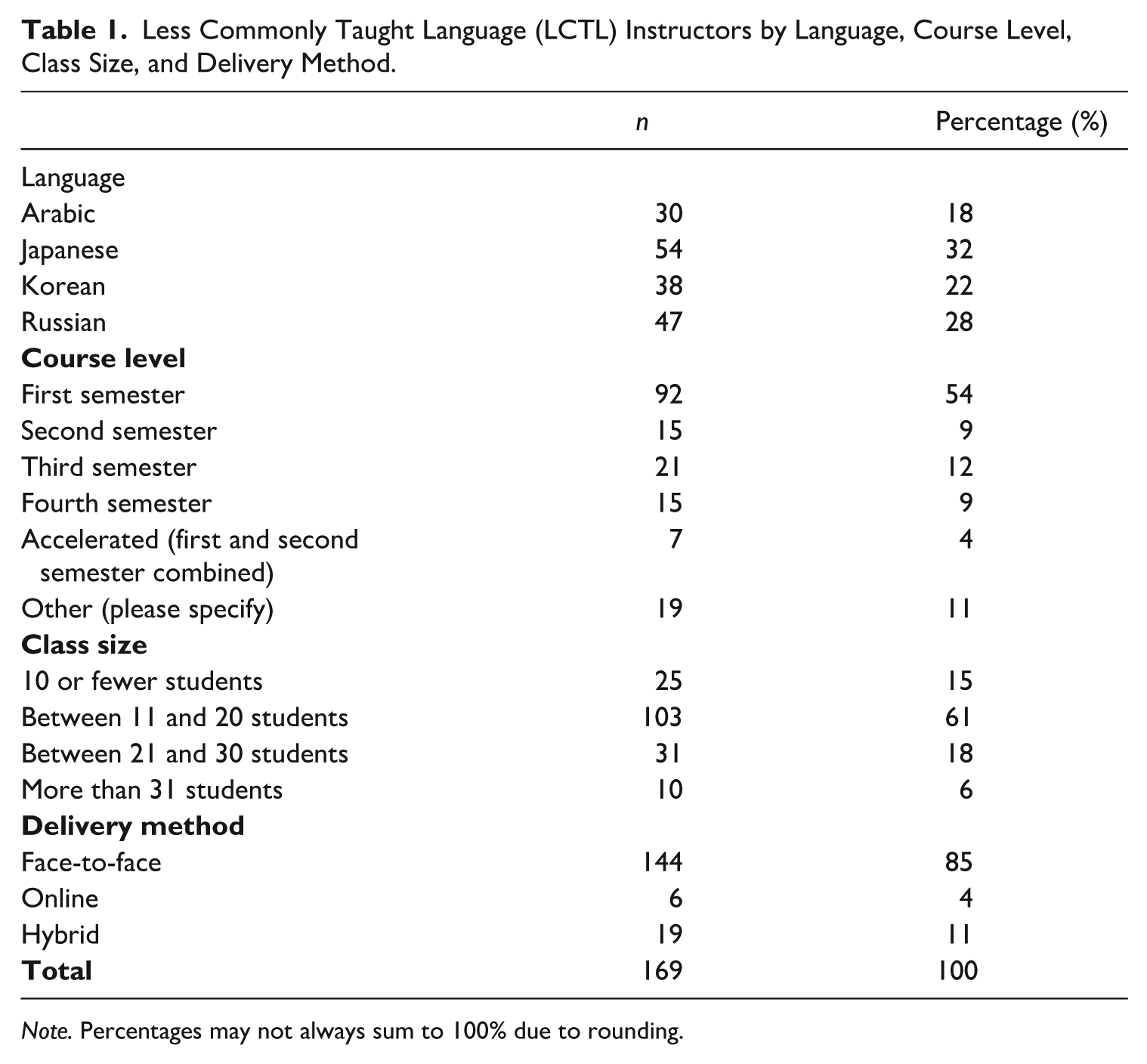
A total of 1,261 instructors of Arabic (n = 251), Japanese (n = 473), Korean (n = 266), and Russian (n = 271) from medium to large (10,000+ students) public universities in the United States were invited via email to participate in the survey. From this group, 262 participants initially responded to the survey. Participants who completed the survey received a $10 Amazon gift card. To ensure data quality and relevance, data cleaning was conducted in several key steps. First, duplicate entries (n = 5) were removed to maintain data integrity (one individual provided all multiple entries. In this case, the first submission was kept, and all subsequent entries were excluded). Second, responses lacking substantive data (n = 3) were excluded (i.e., those with identical responses across all items without textbox input). Third, responses submitted related to a language other than Arabic, Japanese, Korean, and Russian were removed (n = 1). Fourth, responses were checked for survey completion to ensure that a majority of questions were answered (n = 84 respondents excluded). Finally, personally identifiable information was deleted to protect participant anonymity. Table 1 presents the distribution of the 169 LCTL instructors included in the final dataset after data cleaning, categorized by the languages they teach, the course levels in which they have the most teaching experience, the typical class sizes they reported, and their primary course delivery methods.
Less Commonly Taught Language (LCTL) Instructors by Language, Course Level, Class Size, and Delivery Method.
Note. Percentages may not always sum to 100% due to rounding.
The number of participants in each language group was comparable, although there was some slight variation in size. The largest proportion of participants were Japanese instructors (n = 54, 32%), followed by Russian (n = 47, 28%), Korean (n = 38, 22%), and Arabic instructors (n = 30, 18%). The majority (54%) reported having the most experience teaching first-semester courses, followed by third-semester (12%) and second- or fourth-semester courses (both at 9%). Regarding the class size, the majority of participants (61%) indicated that their classes typically have between 11 and 20 students, making this the most common class size range. A smaller proportion (18%) reported teaching classes with 21 to 30 students, and only 15% of participants taught classes with 10 or fewer students. Most participants (85%) reported teaching face-to-face courses, whereas 11% indicated using a hybrid format.
3.2. Survey
The online survey was a modified version of the survey used in Huensch (2019a, available on IRIS; https://www.iris-database.org/details/GyDUs-8tyc6) to explore pronunciation teaching practices of instructors of French, German, and Spanish. The survey was revised to focus on instructors of Arabic, Japanese, Korean, and Russian. Mostly, the questions included were the same as those in the initial survey and were divided into sections covering (a) classroom practices, (b) teaching beliefs, (c) pronunciation acquisition and learning beliefs, (d) participant background information, and (e) information about classes/students and institutional training/background. A handful of open-ended questions were removed from the Huensch (2019a) survey for timing considerations to keep the survey duration to approximately 30 minutes. This was necessary to ensure sufficient response rate. 1 The survey was administered via Qualtrics in spring and fall 2024.
3.3. Data Analysis
To answer the research questions, we conducted a series of visualizations and descriptive analyses using R (R Core Team, 2024). Data were visualized using the ggplot2 package (Wickham, 2016), with separate plots created for each instructional language to facilitate comparison across groups. Depending on the nature of the variable, bar graphs, box plots, and histograms were used to illustrate distributions and central tendencies. For categorical and ordinal survey items, bar graphs were generated to display the proportion of responses within each response category by language. For continuous or composite variables (e.g., estimated class time for pronunciation instruction), box plots or histograms were used to compare medians and spread across language groups. To compute teaching experience in years, two response items were combined: years and months (formula used was years = (years × 12 + months) / 12, converting total months into a continuous year value). To complement the quantitative findings, comments from the open-ended questions were used to provide examples and illustrate key points.
4. Results
4.1. LCTL Instructors’ Perspectives on Pronunciation Instruction
RQ1 examined the perspectives of LCTL instructors across different languages with respect to pronunciation teaching. To contextualize these findings, the instructors’ educational backgrounds and teaching experiences are first presented, followed by survey results detailing their perspectives in four key areas: beliefs, attitudes, confidence, and training needs.
4.1.1. Instructors’ Background
Table 2 indicates that the majority of participants hold advanced degrees. Specifically, 49% of participants have earned a PhD or EdD, while an additional 44% hold a Master’s degree (MA/MS). This suggests that a significant proportion (over 90%) of respondents have completed graduate-level education.
Participants’ Education Level.
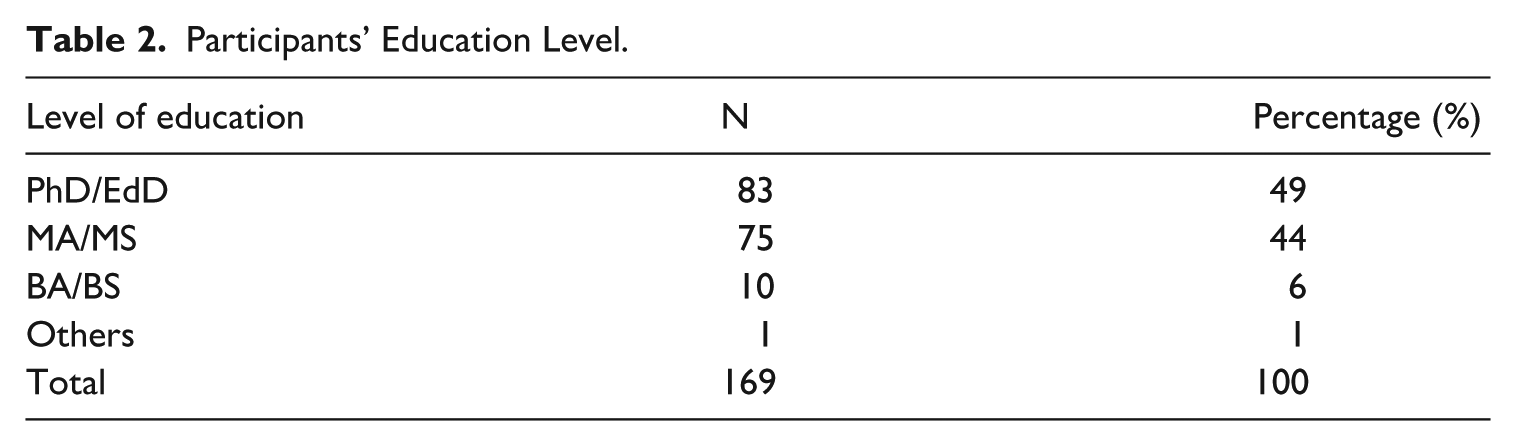
Figure 1 shows the range of teaching experience among instructors across different language programs. In general, the instructors who responded to the survey were quite experienced, and this trend was consistent across the four language groups. Respondents reported a median of 12 years of teaching experience, with the interquartile range spanning from 6 years to 17.25 years. Japanese and Russian instructors reported slightly more teaching experience on average, with median values of 14.1 years and 12 years, respectively.
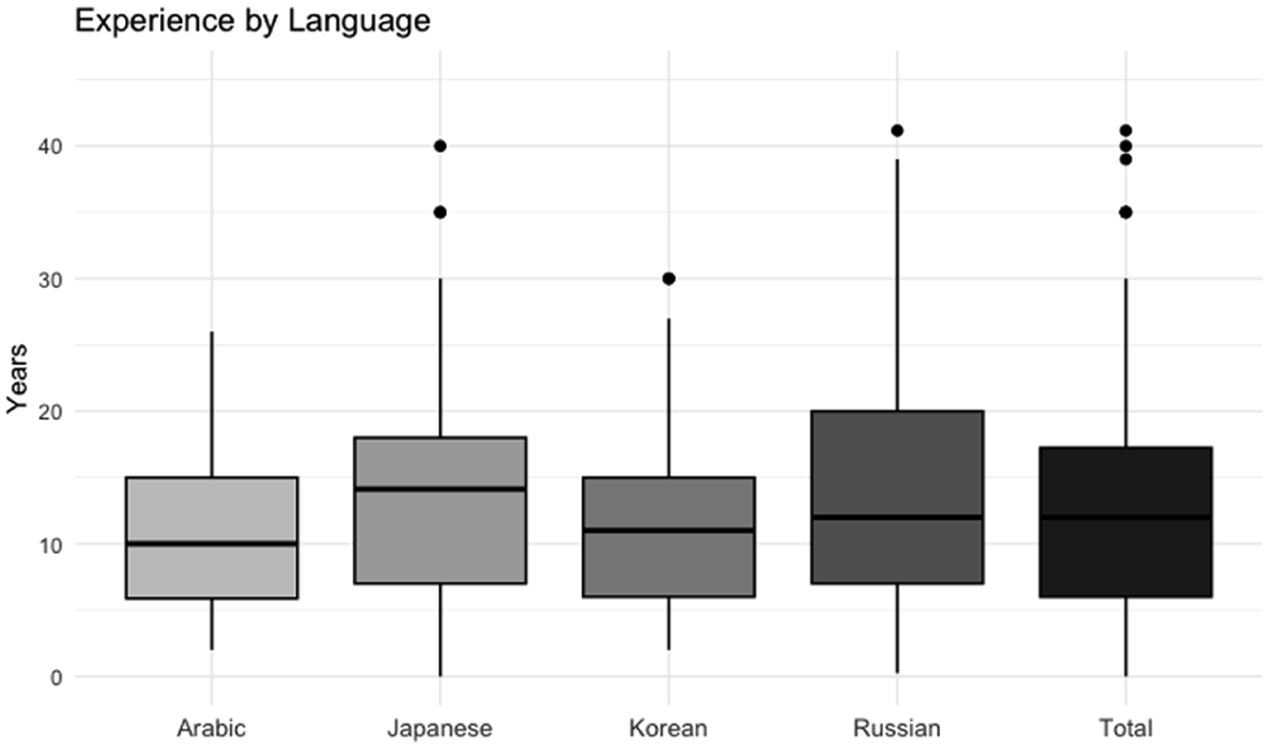
Participants’ length of teaching experience.
4.1.2. Instructors’ Beliefs
The survey assessed instructors’ beliefs about the potential for pronunciation improvement, learners’ motivation, and the importance of pronunciation instruction. As shown in Figure 2, an overwhelming majority (95%) agreed that pronunciation can improve, with 57% strongly agreeing. Russian and Arabic instructors reported the highest strong agreement (72% and 67%), whereas Japanese and Korean instructors were slightly lower (46% and 45%). Similarly, most instructors (95%) agreed that student effort can lead to pronunciation improvement, with 36% strongly agreeing and 34% agreeing. Arabic instructors led in strong agreement (50%), followed by Russian (40%), Korean (32%), and Japanese (28%).
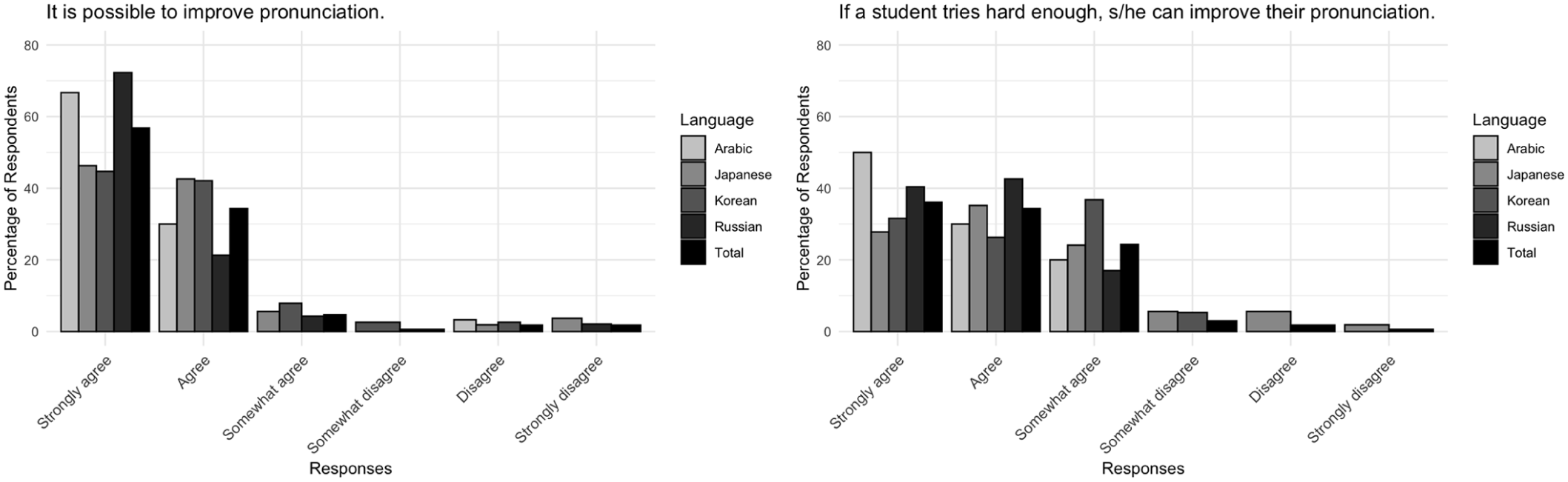
Views on pronunciation improvement.
Compared with their strong agreement about the potential for pronunciation improvement, instructors were somewhat less certain about whether instruction leads to lasting changes. Figure 3 shows that 64% expressed some level of disagreement with the negative statement, suggesting moderate overall confidence in the long-term effectiveness of pronunciation teaching. Among language groups, as before, Russian and Arabic instructors showed the strongest rejection of the negative view, with 68% and 66% disagreeing, indicating strong collective confidence in the long-term impact of pronunciation instruction. In contrast, Japanese and Korean instructors expressed more ambivalent views, with responses fairly evenly split: 56% selected disagreement and 45% agreement.
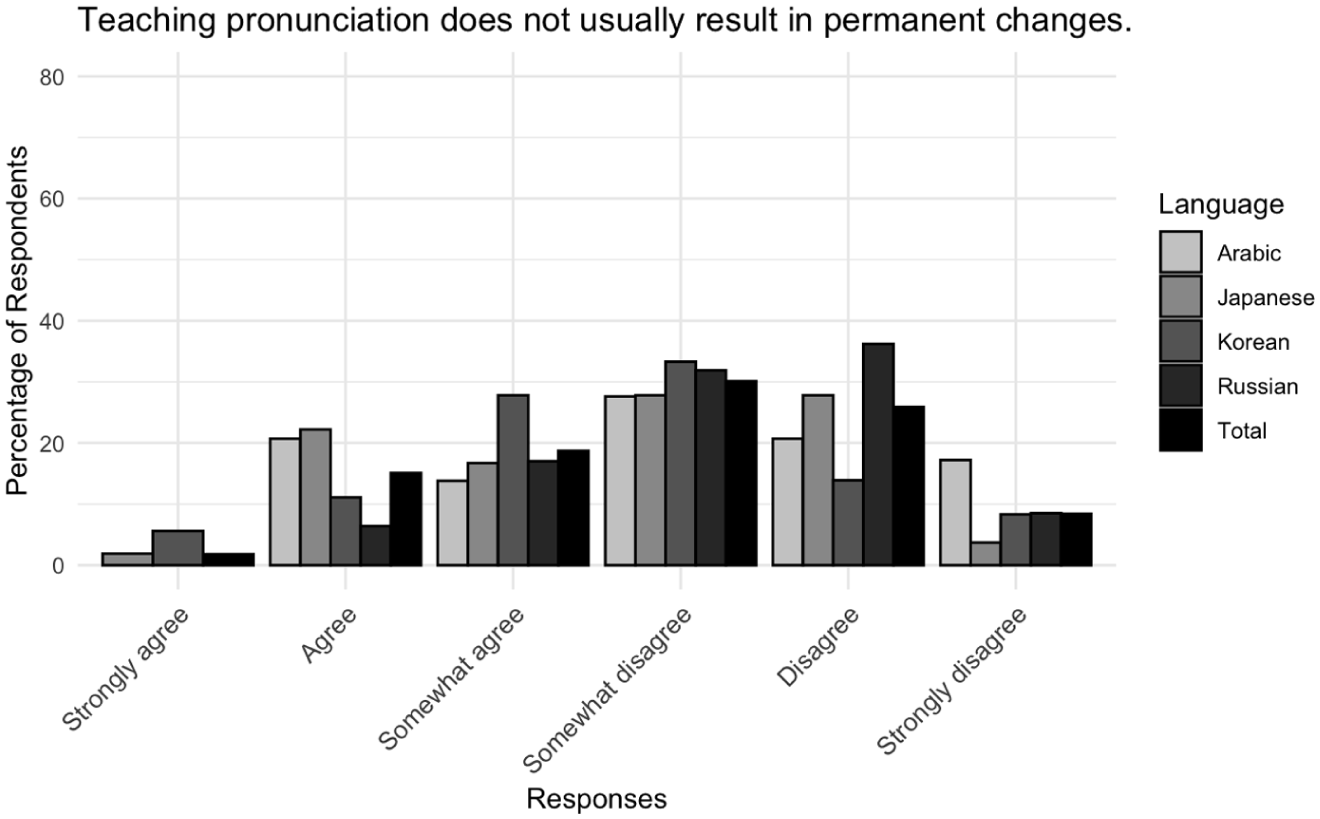
Views on the lasting effects of pronunciation instruction.
Figure 4 illustrates instructors’ perceptions of their students’ motivation to improve pronunciation. A majority (93%) agreed with the statement that their students want to improve pronunciation, indicating that most instructors view their students as motivated to improve their pronunciation. Across language groups, Arabic instructors stood out with the strongest confidence in their students’ motivation: 80% either strongly agreed or agreed.
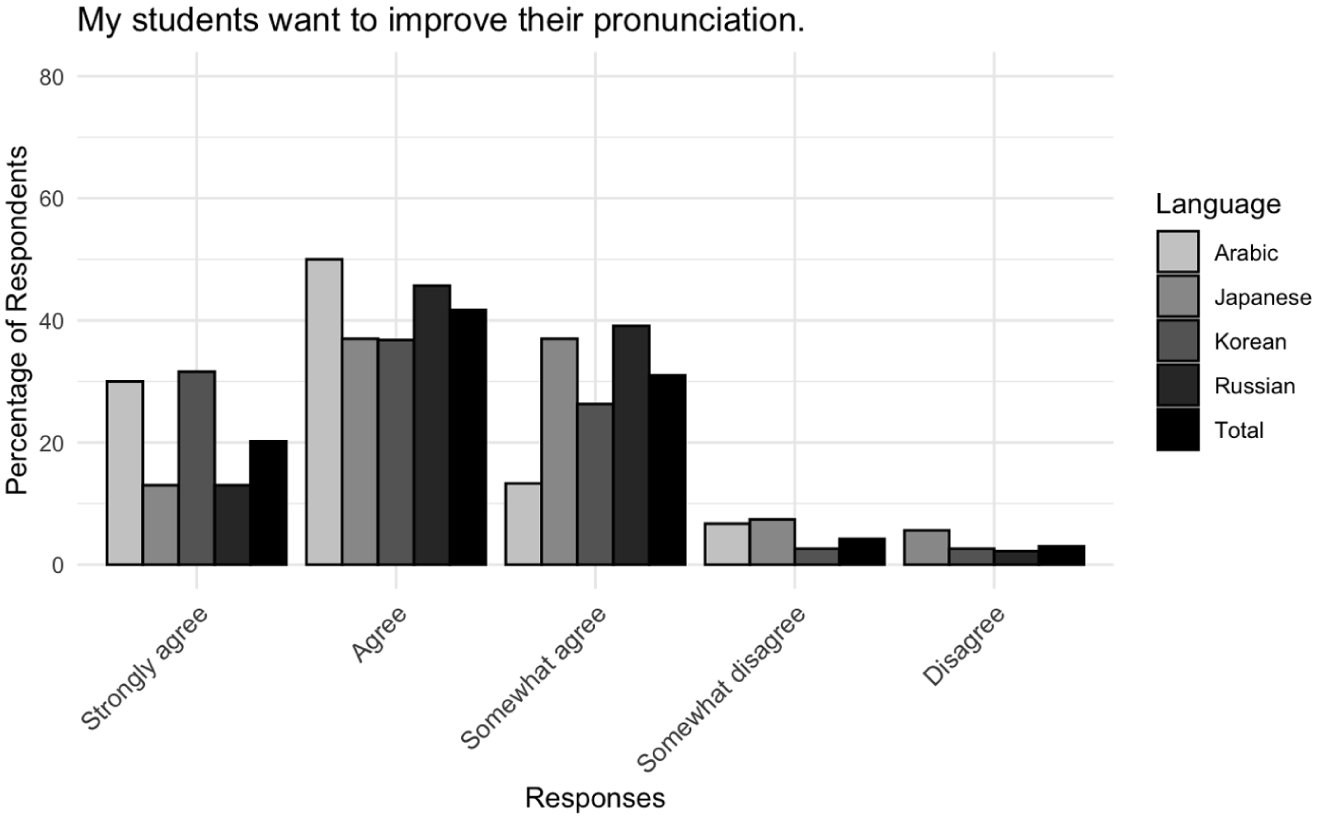
Views on students’ desire to improve their pronunciation.
Figure 5 presents instructors’ beliefs regarding the importance of pronunciation relative to grammar and vocabulary. In response to the statement “Having good pronunciation skills is not as important as learning vocabulary and grammar,” 56% of instructors expressed disagreement (25% somewhat disagreed, 19% disagreed, and 12% strongly disagreed), indicating that pronunciation is generally viewed as equally important as other language components. Russian and Arabic instructors showed the strongest disagreement with the statement, especially Arabic instructors with 30% strongly disagreeing. In contrast, Japanese and Korean instructors displayed more mixed views. Japanese instructors had the highest somewhat agree rate (33%) and Korean responses clustered around the midpoint of the scale with 33% somewhat disagreeing and 22% somewhat agreeing. When asked whether “Knowledge in grammar and vocabulary is more important than accurate pronunciation,” 57% expressed some agreement (38% somewhat agreed, 15% agreed, and 4% strongly agreed). Japanese, Korean, and Russian instructors showed moderate views, with the majority in each group selecting somewhat agree (38–44%). Notably, Japanese instructors had the highest rate of somewhat agree (44%). Unlike the other groups, Arabic instructors showed the strongest disagreement, with 40% disagreeing and 13% strongly disagreeing.
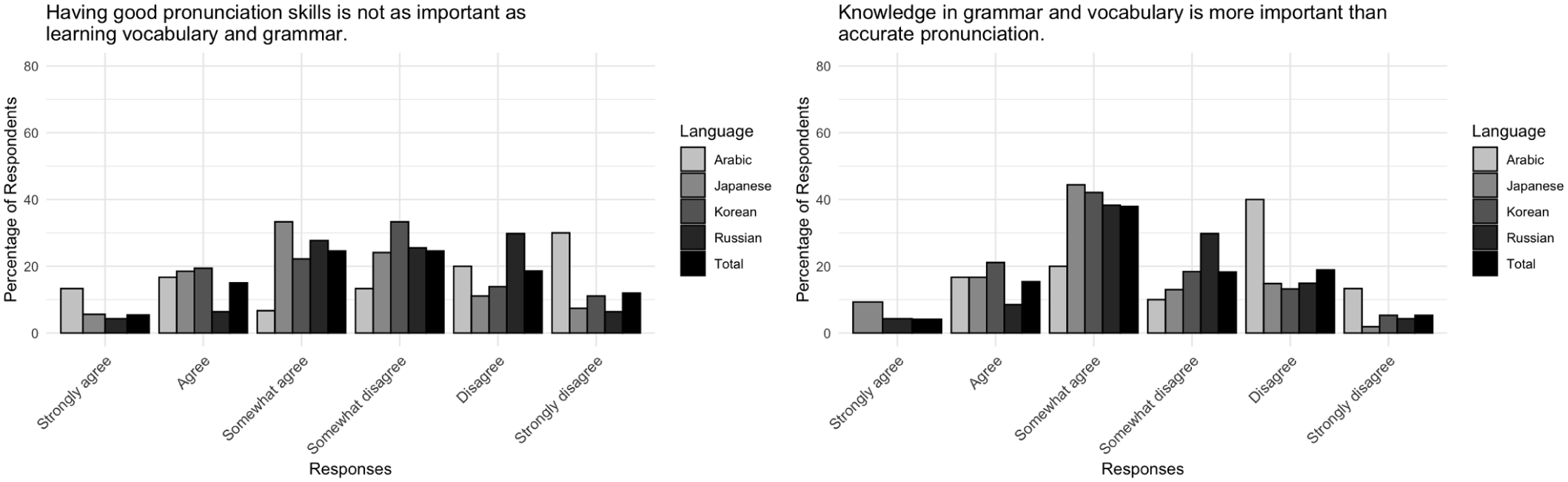
Views on the relative importance of pronunciation versus grammar and vocabulary.
In response to whether pronunciation is the most difficult aspect of foreign language learning, the majority of instructors disagree (see Figure 6), suggesting that many instructors do not view pronunciation as the most challenging aspect of language learning. Among language groups, Russian instructors expressed the strongest disagreement, followed by Japanese instructors. Arabic and Korean instructors both exhibited relatively evenly distributed responses across the scale, with a tendency toward disagreement.
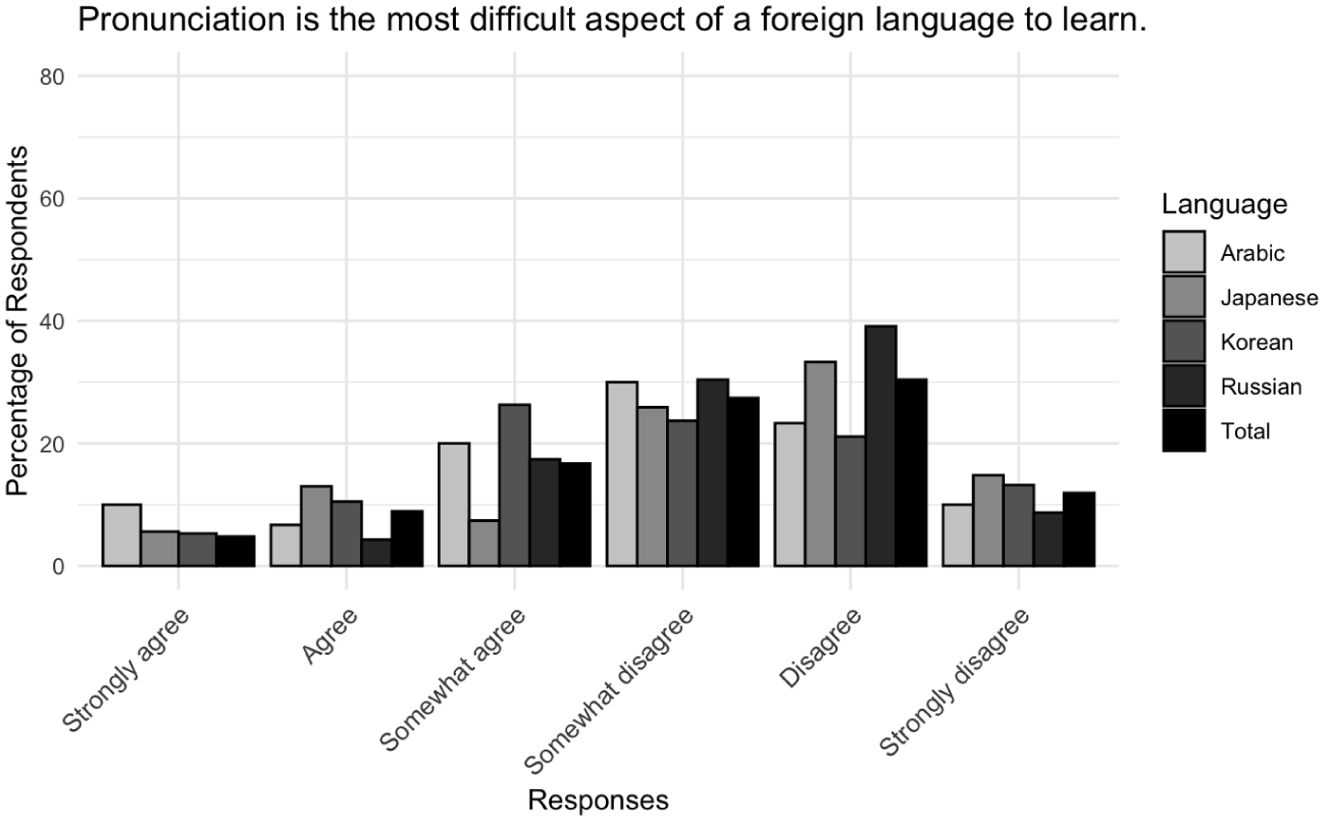
Views on the difficulty of pronunciation in foreign language learning.
4.1.3. Instructors’ Attitudes
The survey also examined instructors’ attitudes toward pronunciation teaching, specifically whether they find it fun or boring. Figure 7 shows that a strong majority (78%) thought teaching pronunciation was fun. Figure 7 also presents responses to the statement “Teaching pronunciation is boring.” A large majority rejected this idea: 14% strongly disagreed, 31% disagreed, and 27% somewhat disagreed, totaling 72%. Overall, most instructors found teaching pronunciation fun, though a notable minority viewed it as somewhat boring.
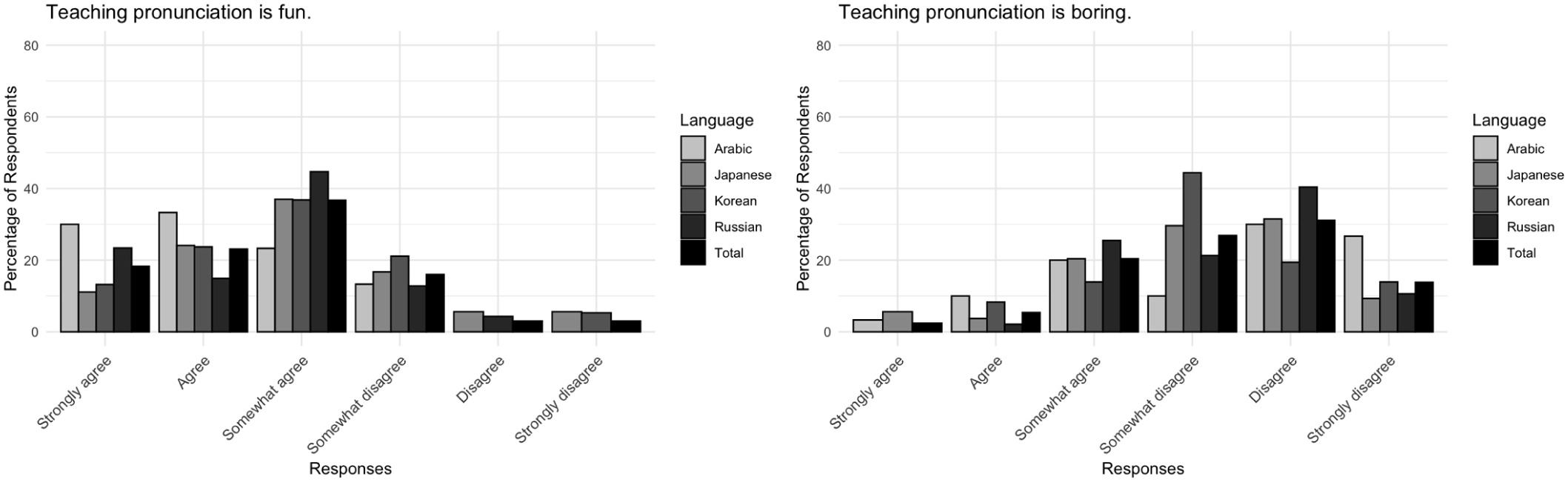
Perceived fun or boredom of teaching pronunciation.
4.1.4. Instructors’ Confidence
Regarding instructors’ confidence in teaching pronunciation at the segmental level (see Figure 8), 93% reported some level of confidence in teaching segmentals. Instructors from all language backgrounds indicated similarly high levels of confidence in teaching segmentals (Russian 96%, Korean 100%, Arabic 97%, and Japanese 83%). On the other hand, instructors were less confident in teaching prosody (e.g., intonation and stress) with 18% expressing some level of discomfort. In addition, fewer instructors strongly agreed with the prosody item (25%) compared with segmental item (47%). Among the language groups, Japanese instructors reported the lowest overall confidence in teaching prosody, with 72%.
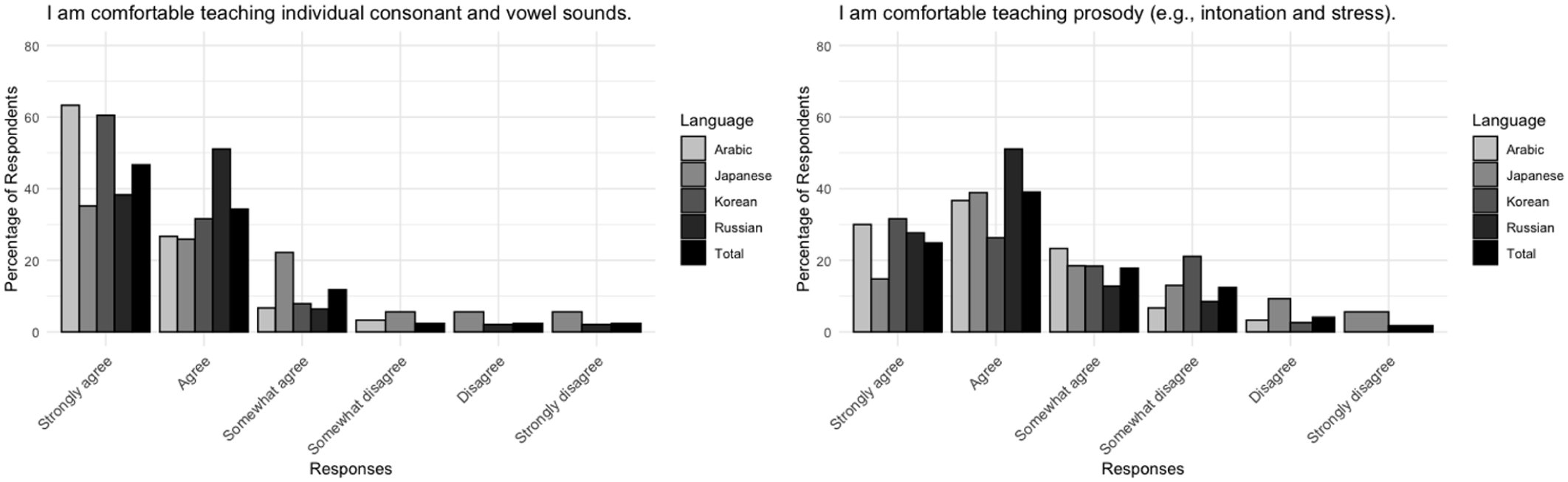
Comfort in teaching segmentals and prosody.
In the responses to the statement “I am confident that I have the background knowledge to teach pronunciation” (Figure 9), 84% of respondents expressed some level of confidence in their background knowledge, with 34% strongly agreeing, 34% agreeing, and 17% somewhat agreeing. Confidence levels in the background knowledge were generally high across all language groups.
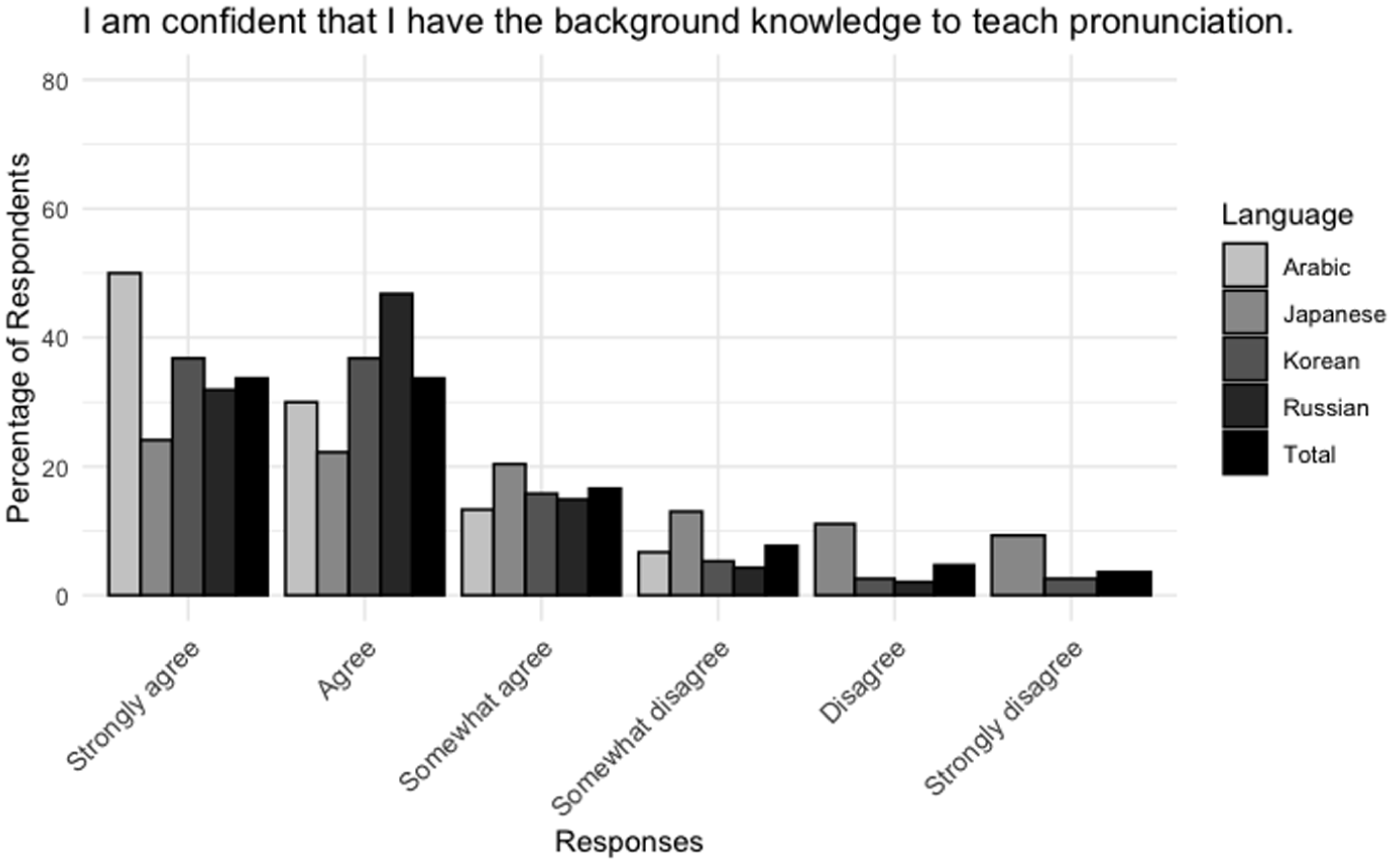
Confidence in background knowledge for teaching pronunciation.
Figure 10 shows the responses to the statement “I feel nervous about teaching pronunciation topics” indicating that most instructors do not experience significant anxiety when teaching pronunciation. Overall, 81% disagreed to some extent: 35% strongly disagreed, 28% disagreed, and 18% somewhat disagreed. Korean instructors showed the strongest rejection of nervousness, with 71% disagreeing or strongly disagreeing. Similarly, Japanese and Russian instructors expressed high rejection of the statement, with 61% and 60%, respectively, selecting disagreement or strong disagreement. Arabic instructors were slightly more varied in their responses, but a majority still disagreed to some degree.
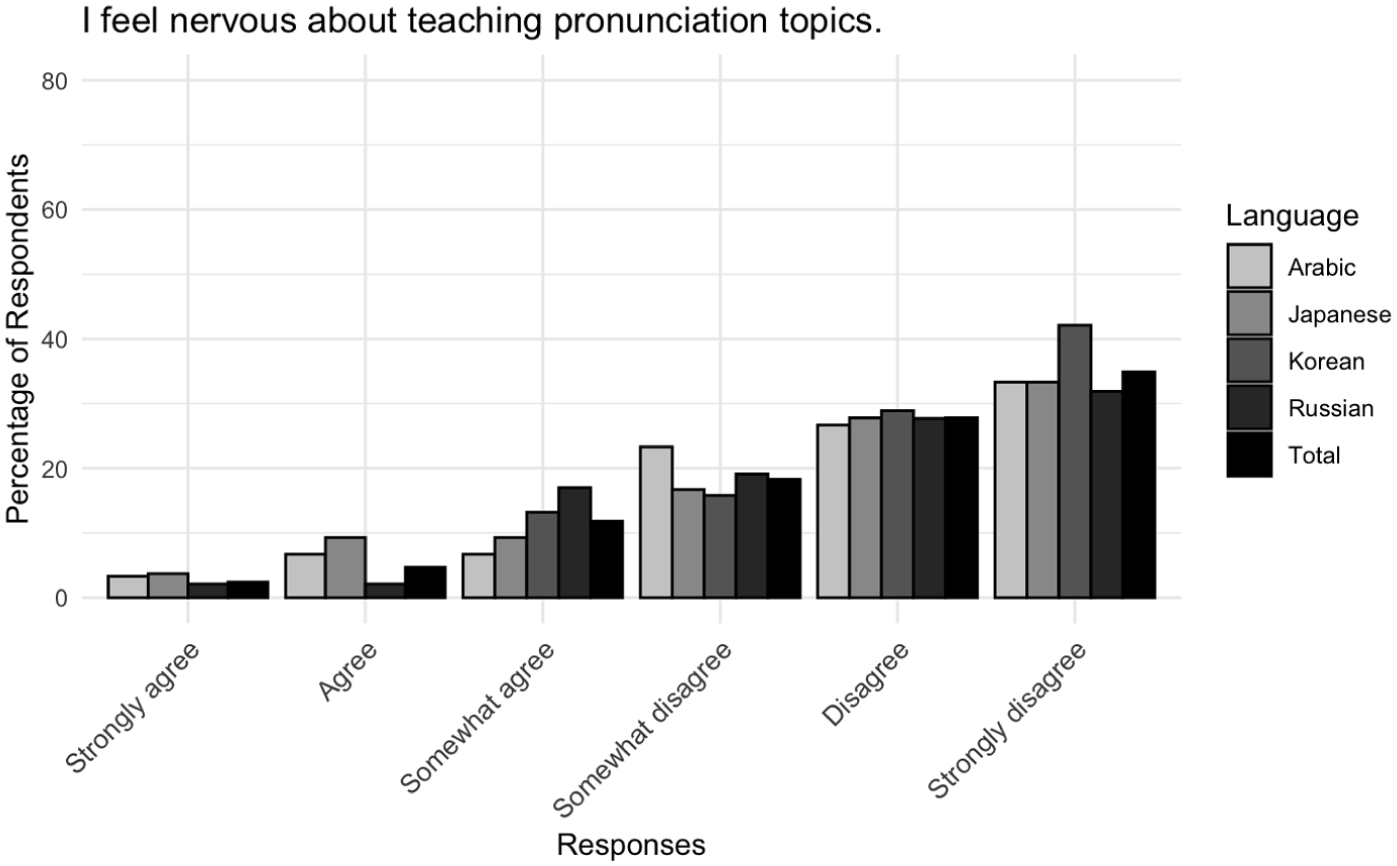
Anxiety about teaching pronunciation.
4.1.5. Training Needs
The survey revealed that a majority of LCTL instructors perceive gaps in their training for pronunciation instruction and express a strong desire for further professional development (see Figure 11). In response to the statement “I feel that I lack adequate training to teach pronunciation,” 39% of respondents agreed to some extent. However, 57% agreed with “I wish I had more training in teaching pronunciation,” including 10% strongly agree, 24% agree, and 24% somewhat agree. Across language groups, Japanese instructors reported the highest agreement with the statement that they lacked adequate training (50%), whereas Russian instructors expressed the strongest desire for additional training (66%).
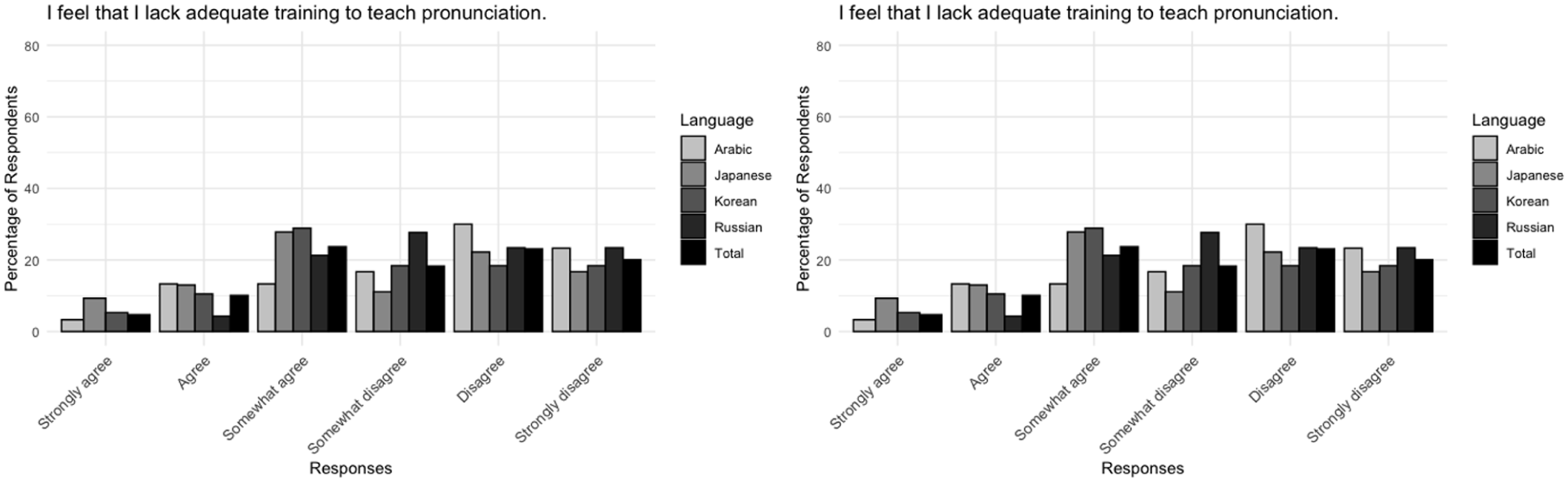
Perceived need for training in teaching pronunciation.
4.2. LCTL Instructors’ Classroom Practices
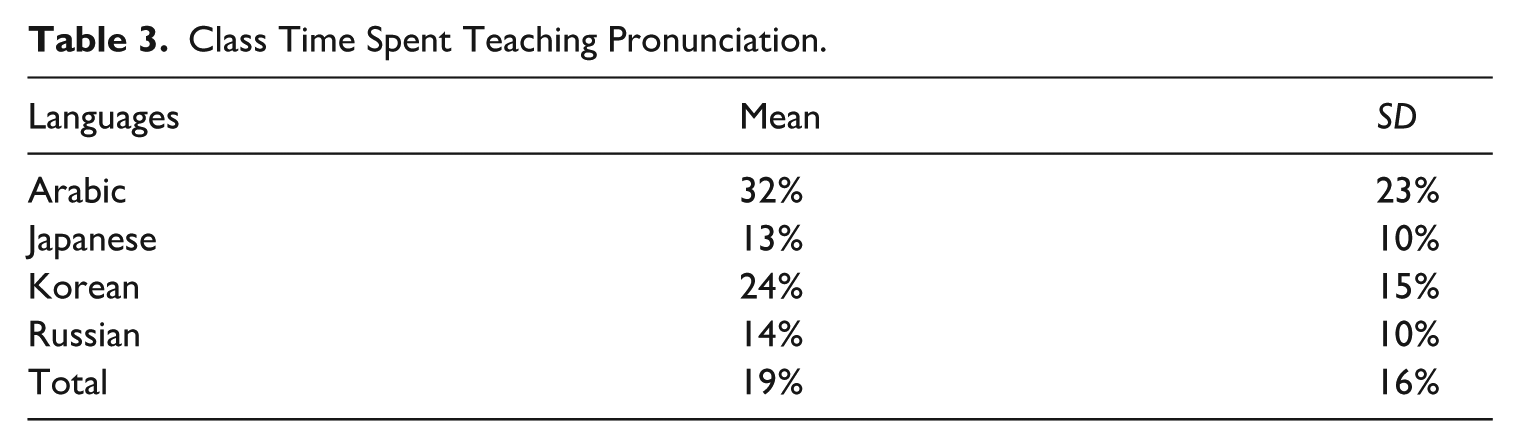
The survey also asked participants about their classroom practices related to pronunciation instruction. Table 3 and Figure 12 display the estimated percentage of instructional time dedicated to pronunciation across the four language programs, along with an overall average across all respondents.
Class Time Spent Teaching Pronunciation.
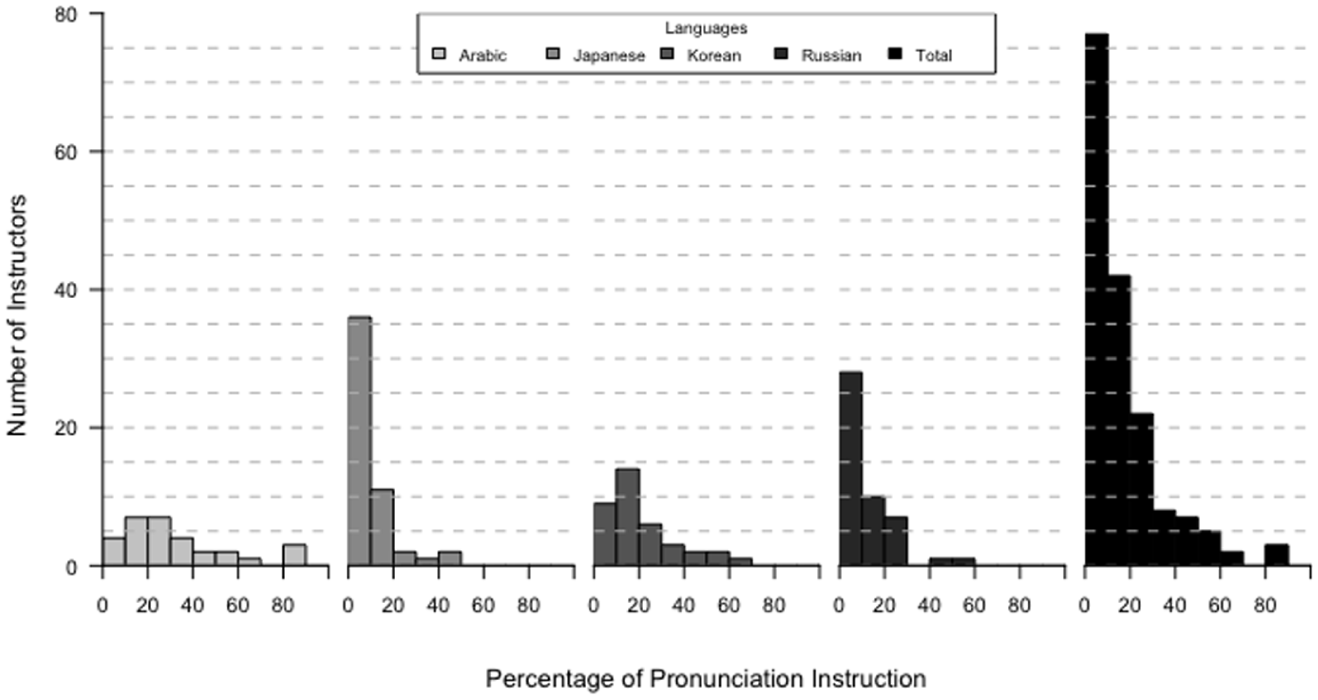
Histogram of pronunciation instruction time by language.
On average, Arabic instructors spend 32% (SD = 23%) of their class time on pronunciation instruction, the highest among the four language groups. Korean instructors allocate 24% (SD = 15%), indicating a moderate emphasis on pronunciation. Japanese instructors report the lowest percentage, averaging 13% (SD = 10%), closely followed by Russian instructors at 14% (SD = 10%). Across all language groups, the overall mean percentage of pronunciation instruction is 19% (SD = 16%). The histogram reveals that Arabic and Korean instructors exhibit greater variation in pronunciation instruction time, as reflected in their higher standard deviations. Japanese and Russian instructors appear to allocate more consistent but generally lower amounts of class time to pronunciation.
When asked about the extent to which course materials provide pronunciation activities (see Figure 13), most instructors reported either minimal or moderate inclusion in their materials. Specifically, 47% indicated minimal integration, 38% reported moderate levels, and only 14% stated that pronunciation was incorporated quite a bit. Patterns varied across language groups. Japanese and Korean instructors reported the least support, with 60% and 47%, respectively, selecting minimally. Russian instructors showed a similar trend, with 45% selecting both moderately and minimally. Arabic instructors reported slightly better support, with 24% choosing quite a bit and 48% selecting moderately. When asked how much they make use of pronunciation activities available in their course materials (see Figure 13(b)), 42% reported minimal use, 36% moderate use, and just 22% indicated frequent use. Arabic instructors stood out with the highest reported usage – 40% selected quite a bit and 47% moderately. In contrast, the majority of Japanese (57%) and Korean (53%) instructors reported minimal use, indicating lower integration of pronunciation activities despite their availability. Russian instructors were more evenly distributed, though most (66%) reported moderate or high use.
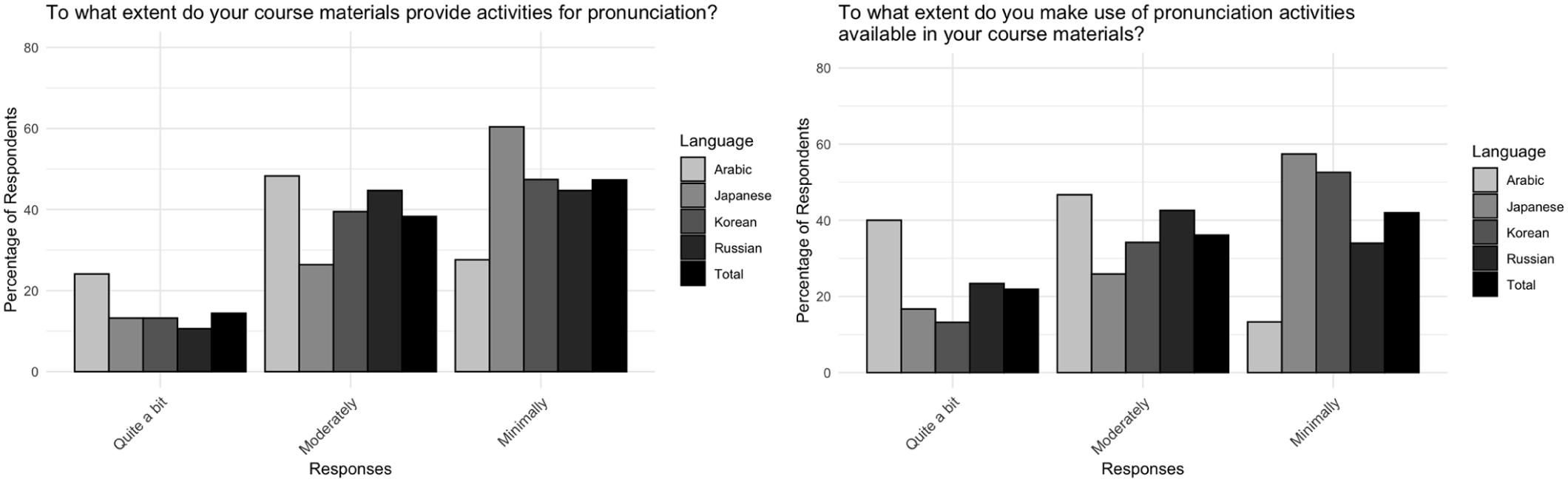
Availability and use of pronunciation activities in course materials.
When asked how much they personally develop pronunciation materials for classroom use (see Figure 14), a majority of instructors reported doing so only minimally (57%), while 30% indicated a moderate level of material development. Only 13% of respondents reported developing such materials quite a bit. This trend was especially pronounced among Japanese instructors – 68% reported minimal material development for pronunciation instruction. Korean and Russian instructors showed similar patterns, with 55% and 57% indicating minimal effort in creating additional materials. Arabic instructors were more active in this area, with 60% developing materials at least moderately and 17% doing so quite a bit.
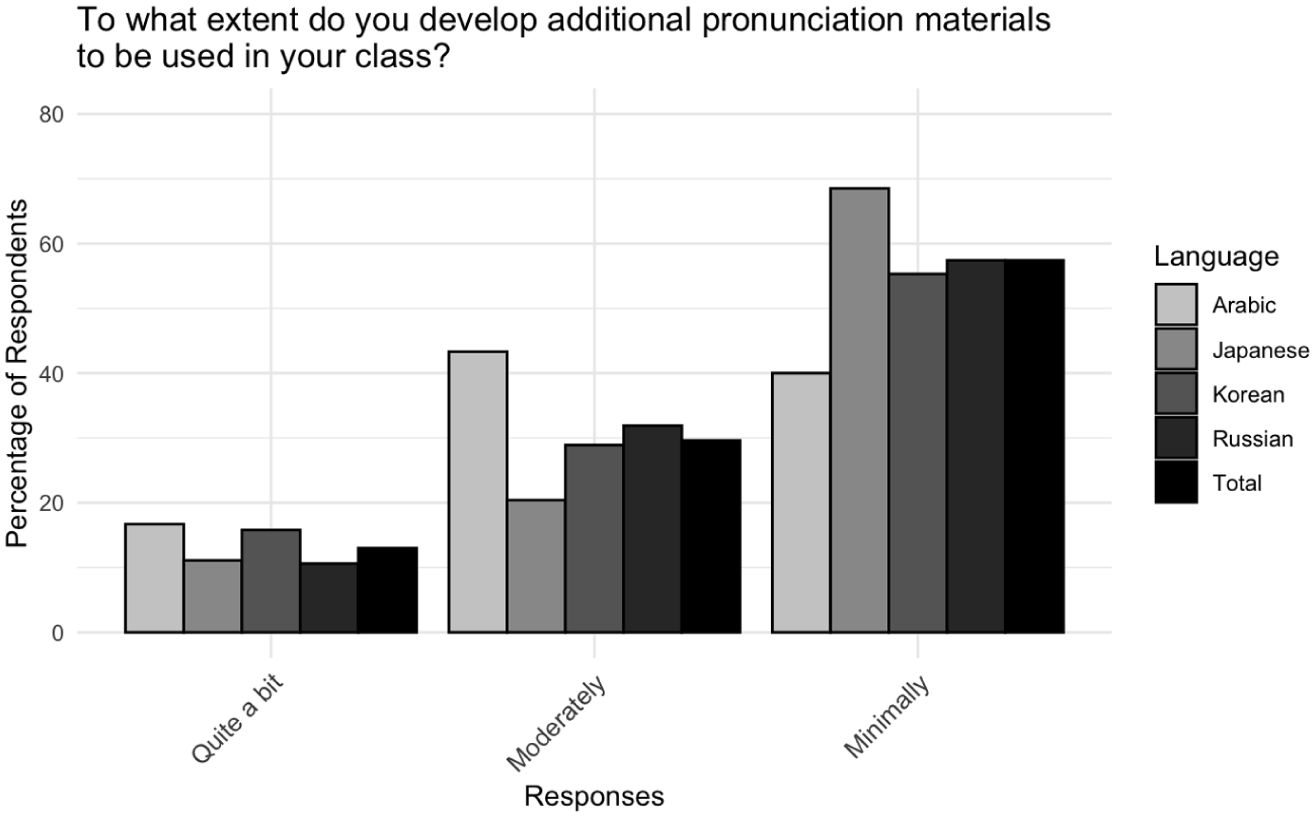
Use of self-developed pronunciation resources.
When asked whether pronunciation is included in the assessment of major oral assignments, 61% of instructors responded yes, and 39% said no (Figure 15). This trend was consistent across language groups. Korean instructors were most likely to assess pronunciation (66%), followed closely by Arabic (63%) and Japanese (62%) instructors. Although Russian instructors were slightly less likely to include pronunciation in assessments, a majority (55%) still did so.
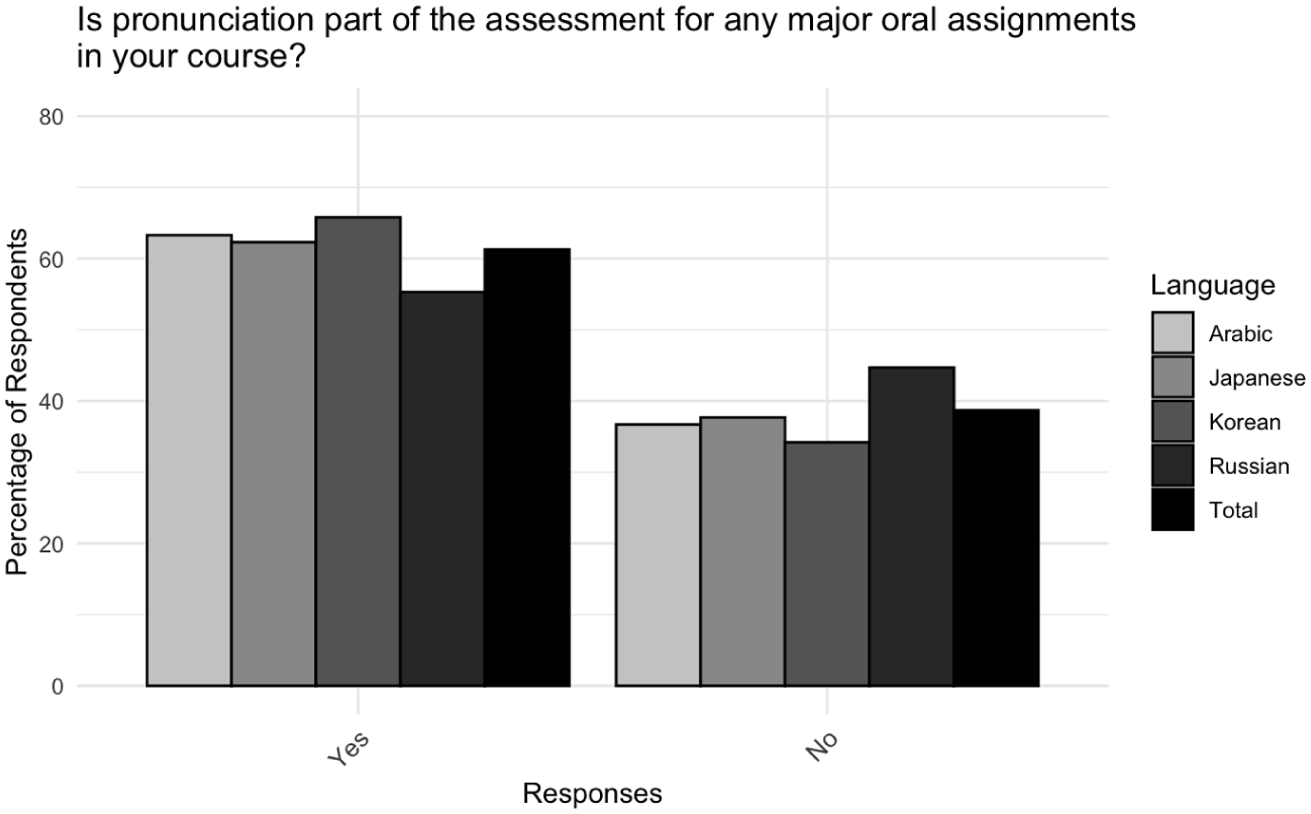
Use of pronunciation criteria in oral task grading.
5. Discussion
5.1. LCTL Instructors’ Perspectives on Pronunciation Instruction
The aim of this study was to shed light on LCTL instructors’ perspectives of and practices in L2 pronunciation instruction. One of the first clear takeaways from the current study is that the participants who completed the survey are highly qualified and experienced instructors: Over 90% hold graduate degrees, and the average teaching experience spans approximately 13 years. This finding is more aligned with outcomes in ESL/EFL contexts in which many survey participants are relatively experienced (e.g., Breitkreutz et al., 2001; Foote et al., 2011); however, this finding is in direct contrast to Huensch (2019a) who reported that a majority of participants in her study, instructors of the CTLs French, German, and Spanish, had no formal teaching certification and were relatively inexperienced, with an average of only approximately 6 years of teaching. Without knowing the specifics of hiring practices across institutions, we can hypothesize that one reason for this difference in experience could be related to the fact that there are fewer jobs available for LCTL instructors in the United States and therefore competition for those positions is more fierce. In other words, in this context, those with more previous experience are more competitive. It might also be that there is less movement between jobs. At the same time, a majority of instructors of the introductory-level language courses in Huensch (2019a) were reported to be graduate student teaching assistants. In this way, they were pursuing a PhD and less likely to have as much prior teaching experience.
Regarding beliefs, another clear takeaway was that instructors across all four languages held overwhelmingly strong beliefs about the learnability of pronunciation. At rates of 95% or above, instructors reported that pronunciation can be improved, and that student effort makes a difference. These findings are not fully aligned with those from an EFL context reported by Tsunemoto et al. (2023) in which participants with relatively more experience displayed skepticism at the learnability of pronunciation. One possible explanation for the difference in findings could be because the participants in Tsunemoto et al. (2023) were pre-service teachers whereas instructors in the current study were much more experienced in comparison. Tsunemoto et al. (2023) hypothesized that the pre-service teachers in their study might have been influenced by recent challenges they encountered with their own learning difficulties, therefore holding weaker beliefs about the learnability of pronunciation. At the same time, Tsunemoto and Trofimovich (2023) conducted a follow-up study which also focused on in-service EFL teachers who shared skepticism about the effectiveness of pronunciation instruction and appeared to value naturalistic experiences that took place outside the classroom. In comparison, instructors in the current study have more years of teaching experience, over which time they might have encountered more learning successes which could counteract these early beliefs. The nature of LCTL instruction, compared with English instruction in Tsunemoto et al. (2023), may also inform this difference in views on learnability. For example, each of our four LCTLs features unique orthographic systems, which likely required greater emphasis on pronunciation teaching as part of teaching the writing system (i.e., students could not assume the phonological form of a character as they might when two languages share orthography). As such, it may be that pronunciation instruction led to more observable pronunciation learning success. In addition, the instructors featured in our study were primarily native speakers of the target language, and may have thus felt more confidence in their ability to teach pronunciation, compared with those in Tsunemoto et al. (2023) who were all L2 speakers of English. A fruitful avenue of future work in this area might be to investigate how beliefs in learnability develop longitudinally, with considerations of not only overall experience but LCTL-specific considerations such as orthography.
Although there were some differences regarding learnability beliefs, the findings from the current study are better aligned with the outcomes of Tsunemoto et al. (2023) regarding the teachability of pronunciation. Instructors displayed no doubt that pronunciation could improve, that learner effort matters, and that their learners were motivated to improve their pronunciation, but they were much more ambivalent when asked whether teaching pronunciation imparts lasting impacts. This is an interesting finding: Although instructors think pronunciation learning is possible, they are less certain that instruction can have an impact. One possible explanation could be related to a lack of training and materials for best practices. It was also the case that although many instructors said pronunciation teaching could be fun, almost a quarter of respondents indicated it could be boring. If, as has been reported in ESL/EFL/CTL contexts, teachers’ approaches are limited to simple drills in controlled contexts (Baker, 2014; Nagle et al., 2023), it might make sense that LCTL teachers express uncertainty about instruction being able to impart lasting changes. This finding implies that support is needed for instructional materials in the form of templates and resources to help instructors move beyond simple, repetition-oriented activities to focus on more guided and communicative tasks. Celce-Murcia et al. (2010), although initially published for teaching English pronunciation, could provide a useful framework in its five stages that move from description and analysis to guided and communicative practice.
Another finding related to the teaching of pronunciation relates to how instructors compared the importance of teaching pronunciation with that of teaching grammar and vocabulary. The findings from the current study demonstrated mixed views, especially among the different LCTLs. For instance, only about half of the instructors viewed pronunciation as being as important as grammar and vocabulary, with the remaining ranking it lower. This was the most apparent for instructors of Japanese and Korean. One potential explanation for this finding might relate to the specific grammatical features of the LCTL in question. For instance, Japanese and Korean are verb-final languages (in comparison with English which uses subj-verb-obj word order) which is a well-documented challenge for learners (Mitsugi & MacWhinney, 2010). At the same time, Russian has quite flexible word order and relies on case morphology to convey thematic role information which is also well known to cause difficulties for learners (Kisselev et al., 2025), so we might have predicted a similar finding for those instructors, which was not the case in this study. This finding might be related to the finding that a majority of instructors did not identify pronunciation as the most difficult aspect of language learning. If instructors of Japanese and Korean, for example, view grammatical aspects as more challenging for their learners in comparison with pronunciation, this could explain why they view grammar as more important for learning. These findings provide some indication that this would be a fruitful avenue for future research, perhaps with focus group interviews to provide more clarity.
A final key takeaway regarding instructors’ perspectives relates to their confidence in teaching and their desire for further training. Firstly, when it comes to teaching different aspects of pronunciation, instructors were slightly more confident in their teaching of individual consonants and vowels (i.e., segmentals – 93%) in comparison with suprasegmentals (e.g., prosody – 82%). These results seem to align with previous findings that segmentals are more often the focus of classroom instruction (Baker, 2014; Huensch, 2019a). Instructors also reported a similar level of confidence in their background knowledge to teach these features (84%). At the same time, 39% of respondents indicated feeling a lack of adequate training and 57% desired more training. Although at first these findings might appear somewhat contradictory, it is possible that instructors were differentiating between knowledge about the language and training in how to teach that content (i.e., pedagogical content knowledge; Baker & Murphy, 2011). In other words, although instructors might know that Arabic has pharyngeal consonants or Japanese is a mora-timed language and understand what these features are, they might still desire additional training in effectively teaching these aspects of language to their students.
When we look deeper at the open-ended question “What, if any, are the aspects of pronunciation you find most difficult to teach?” 3 main themes surfaced: of the 140 responses, 14% (n = 20) of instructors indicated no difficulties with answers such as “n/a,” “none,” and “I don’t find difficulty in teaching pronunciation.” This might be expected given the confidence and comfort reported by many instructors. The other two main themes were suprasegmental features (25% or 35 responses such as “intonation,” “prosody,” “mora timing”) and mentions of specific or “new” consonant or vowel sounds (38% or 53 responses such as “long vowels and double consonants,” “Subtle difference between aspirated and tensed consonants,” “Pharyngeal sounds”). Comments from the open-ended “please explain [your response to do you feel confident in your ability to teach pronunciation]” might provide additional insights here: almost 25% of the 129 responses (n=28) discussed native speaker status in relation to confidence. Often, this was with a statement such as “I am a native speaker of Russian, and I model correct pronunciation in class,” or “Though not a native speaker, I was exposed to the Japanese language at a young age and have fairly good pronunciation.” Instructors also made reference to learning background with statements such as “I took Korean phonetics class and myself is doing Phonetics in PhD program” and “I’ve had training in Russian Phonetics and am well acquainted with the phonetic structure of the Russian language.” The focus on native speaker status and reference to linguistics courses might support an interpretation of this finding as highlighting mismatches between knowledge about the language and pedagogical content knowledge. Overall, this finding, in conjunction with the fact that a majority of instructors desire additional training, points to an important contribution of this study: In creating professional development opportunities for this population, it might be best to focus more on how to teach pronunciation features generally and less on the specifics of the features themselves.
5.2. LCTL Instructors’ Classroom Practices
On average, 19% of class time was spent teaching pronunciation, though this varied across languages, with Arabic instructors (32%) spending substantially more time than either Japanese (13%) or Korean (14%) instructors. The amount of time spent on pronunciation teaching in LCTL contexts seems to be higher in comparison with ESL contexts where this number was only 6% (Foote et al., 2011, 2016). Similarly, in prior CTL studies, directly addressing pronunciation in the classroom through pre-planned activities was limited, with most focus provided through corrective feedback (Huensch, 2019b). The relatively more time spent on teaching pronunciation is an encouraging finding in this context. The reason for Arabic instructors spending more time on pronunciation is unclear and would require more direct contact with instructors regarding their practices in future research.
As indicated, Japanese and Korean instructors spent the least amount of time teaching pronunciation; one reason for this may be that both groups also indicated the least amount of material support for doing so. In partnership with the aforementioned desire for more training, it is possible that these instructors did not feel confident enough to develop their own materials. Note that the Arabic instructors, who spent more time teaching pronunciation, additionally indicated spending more time developing their own materials (with 17% doing so quite a bit and 60% doing so moderately). The limited availability of teaching materials for LCTLs has been well attested (e.g., Gor & Vatz, 2009; Wang, 2009), so a finding that instructors lack materials for pronunciation instruction is not surprising. One way in which this concern may start to be addressed is through raising instructors’ awareness of materials development procedures during training. Although focused specifically on English, Celce-Murcia et al. (2010) identify different stages at which pronunciation learning might be taught across segmental and prosodic elements. Understanding the objectives of these stages, and what possible materials and techniques might be employed at each stage, might provide LCTL instructors with guidance in the development of their own materials. In addition, promoting means by which LCTL instructors can make what materials they do develop available to their peers is highly recommended.
A particular concern that arises out of the lack of classroom focus and lack of materials is that 61% of respondents indicated that they included pronunciation amongst the criteria included in oral assessments. This is a value comparable to the 66% reported in Huensch (2019a) across French, German, and Spanish teachers. In particular, two-thirds of Korean instructors did so, despite how little time they indicated teaching pronunciation. Unknown, of course, is the extent to which pronunciation is included as an overarching program objective, which may force instructors to assess a skill they are not as likely to teach. Although we did not delve into the types of assessments used in this report, Foote et al. (2011), focused on ESL, found that teachers used nearly 40 different assessment strategies. Huensch (2019a) additionally found a range of assessment strategies for French, German, and Spanish instructors.
5.3. Limitations and Future Work
Before concluding, we would like to acknowledge several limitations of the current study that could be revisited in future work in this area. Firstly, although it was a purposeful design choice of the current study, the sampling of instructors from only four LCTLs necessarily limits generalizability to all LCTLs. It is possible that the findings reported in this study do not represent all LCTL teaching contexts in the United States. At the same time, we included four languages to avoid limiting our findings to one specific language. An additional concern might be that by then focusing on four LCTLs, as opposed to only one, we limited our ability to provide a fine-grained analysis of any one LCTL. We are hopeful that some of the patterns that arose from our analyses can inform future investigations into LCTL pronunciation practices. Secondly, as with any research that relies on self-report data, there could be inconsistencies with what participants report and their actual practices. One way prior work has triangulated findings is by incorporating observational and interview data to corroborate findings (Foote et al., 2016; Huensch, 2019b). On this point, although employing a survey-based approach allowed us to reach a wider population of LCTL instructors, this approach did not allow us to follow up directly with respondents to understand interesting trends in greater detail. Future studies drawing upon interview and observation data would allow for extension and richer understanding of these initial results. Finally, another potential avenue for future work could be a comprehensive review of the teaching materials available to instructors of these (or other) languages with a particular focus on the pronunciation components. This could help research and materials developers better understand the gaps that exist in this regard.
6. Conclusion
The current study provides new insights into the pronunciation teaching beliefs and practices of instructors via its focus on an understudied population, those teaching LCTLs. Instructors of Arabic, Japanese, Korean, and Russian completed an online survey, and the results indicated both similarities and differences to ESL and CTL contexts. An encouraging finding that parallels prior research is that these instructors value pronunciation improvement and feel confident in their own background knowledge when it comes to teaching. At the same time, also paralleling trends in the literature, instructors expressed a desire for more training and materials to support their pronunciation teaching endeavors. Two novel findings were that instructors were highly qualified and experienced and reported spending relatively more time on pronunciation instruction in their classes than instructors in ESL/EFL contexts.
Footnotes
Acknowledgements
We would like to thank Yulia Khoruzhaya, John Romero, and Jung In Lee for their assistance in earlier stages of this work including planning and preparing for data collection. This project was supported by a U.S. Department of Education Title VI Award: Center for Advanced Language Proficiency Education and Research (CALPER).
Author Note
Minjin Kim is now currently affiliated with Michigan University, USA.

Ethical Considerations
This research was approved by the Penn State IRB STUDY00024313 and the University of Pittsburgh IRB STUDY24010142.
Funding
The authors disclosed receipt of the following financial support for the research, authorship, and/or publication of this article: This research was supported by a U.S. Department of Education Title VI Award: Center for Advanced Language Proficiency Education and Research (CALPER, P229A220016).
Declaration of Conflicting Interests
The authors declared no potential conflicts of interest with respect to the research, authorship, and/or publication of this article.