






Abstract
Knowing how to create a positive motivational climate that motivates college students to engage in second language (L2) courses can be a big challenge for some L2 college professors. We created an intervention that used teaching strategies consistent with the MUSIC Model of Motivation to redesign lecture-based reading and listening classes within an L2 English course. The purpose of this study was to compare the effects of the intervention on students’ perceptions of the motivational climate, motivation, and effort. Students were surveyed four times throughout the semester: before and after a reading class intervention, and before and after a listening class intervention. Participants included 31 first-year graduate students in a public university in eastern China. Paired t-test results showed that in the reading class, the intervention significantly increased students’ perceptions of empowerment and success. In the listening class, students’ perceptions of usefulness, success, interest, and effort all increased significantly. These findings provide some guidance for future L2 instructional designs, demonstrating that implementing the MUSIC model strategies tailored to specific classroom modules can optimize the motivational climate in reading and listening classes.
Keywords
1. Introduction
Motivation has been a critical factor in second language (L2) acquisition (Jones, 2020). Gardner (1985, 2019) held that there were two types of motivation in his socio-educational motivation model: (1) integrative motivation, which was driven by a desire to connect with the target language culture, and (2) instrumental motivation, which focused on practical benefits. Dörnyei (1998, 2009) presented another view with his L2 Motivational Self System, which emphasized that learners’ self-concepts shape their motivation. Later, Dörnyei and his colleagues highlighted motivation’s context-dependent nature (Dörnyei et al., 2014). Recently, Lamb (2011, 2019) claimed that language teachers and their instructional design create an engaging learning environment that can shape and sustain the language learners’ motivation during the learning process. This shift, from the internal perspective to the external context, indicates that motivation is not only an internal characteristic of the learner but also significantly affected by external factors, such as the learning climate and teachers’ strategies. In this context, educators and researchers have highlighted the importance of exploring how teachers can actively foster a positive motivational climate in the classroom (e.g. Jones, 2020).
Building on these perspectives, we employed the MUSIC Model of Motivation (Jones, 2009, 2018) to develop two interventions in an L2 English course in order to create a positive motivational climate in classrooms. The MUSIC model offers many practical strategies to motivate students to engage in their learning, with a focus on improving students’ sense of empowerment, usefulness, success, interest, and caring (MUSIC is an acronym for the initial sounds of these words). The purpose of this study was to assess the effects of a MUSIC strategy intervention on students’ MUSIC perceptions, motivation, and effort. Unlike prior studies that have focused on single instructional formats or isolated skills, this study examines parallel interventions in both reading and listening classes within the same L2 course, allowing for a more nuanced understanding of how motivational climate may vary across language skill domains. If the interventions are successful, they would lead to positive outcomes and a better motivational climate that would increase students’ motivation and engagement in the course.
2. Literature Review
The MUSIC Model of Academic Motivation (Jones, 2009, 2018; see Figure 1) provides a framework for educators and researchers to understand students’ motivation in educational settings. The MUSIC model consists of five components – e
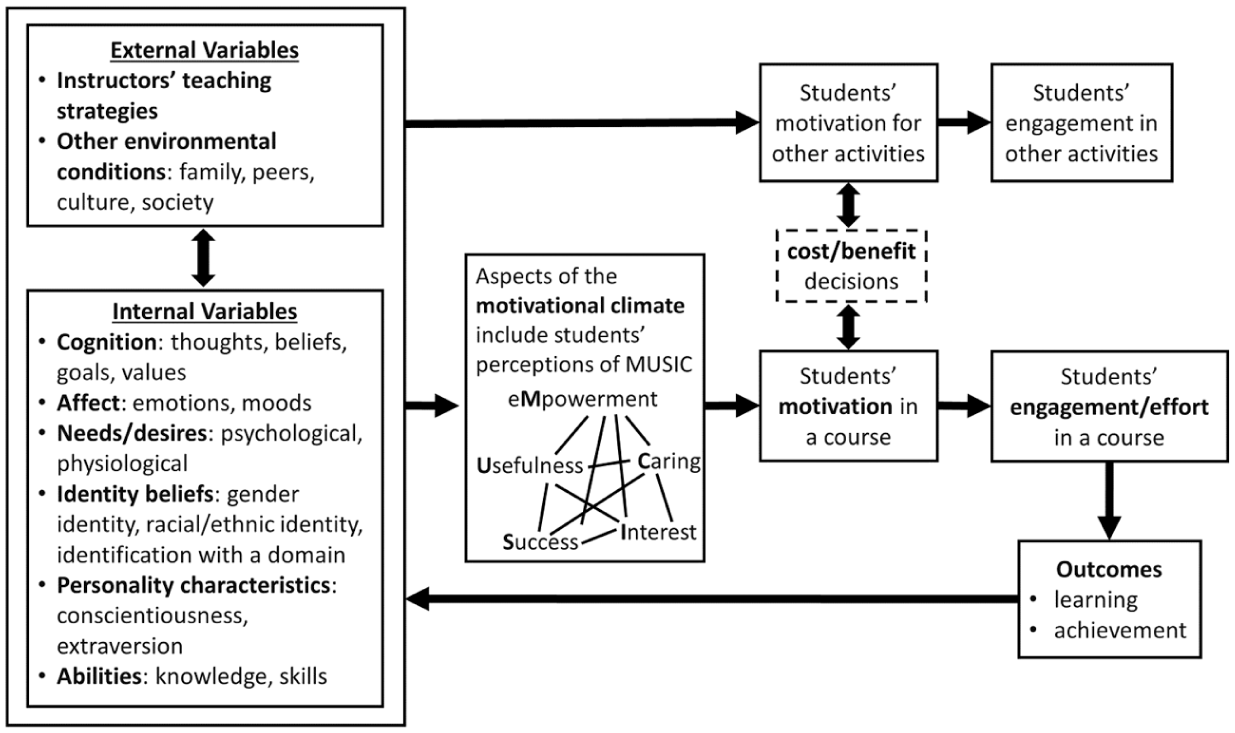
Theoretical relationships between variables in the music model of motivation.
The empowerment component of the MUSIC model highlights students’ control over and choices in their learning process. This component is based on the principles of several theories, including self-determination theory (Deci & Ryan, 1991) and control theories (Skinner, 1996). The usefulness component focuses on the usefulness of course activities as they relate to students’ goals, and is related to constructs such as utility value (Eccles & Wigfield, 1995), instrumentality (Husman & Lens, 1999), and goal-setting theories (Locke & Latham, 2002). The success category refers to strategies that increase students’ perceptions of success within the course and is derived from many different motivation theories, including expectancy-value theory (Eccles & Wigfield, 1995), self-efficacy theory (Bandura, 1986), theories of intelligence (Dweck, 1999), among others (for a more complete list, see Jones, 2018). The interest component is based on several theories, including interest theories (Hidi & Renninger, 2006), arousal theory (Berlyne, 1960), and flow theory (Csikszentmihalyi, 1990). These theories underscore the interesting and enjoyable aspects of courses. The final component of the MUSIC model is caring, and it is rooted in caring (Noddings, 1992; Wentzel, 1999) and belonging theories (Baumeister & Leary, 1995; Goodenow, 1993). The caring component emphasizes the importance of supportive, respectful, and friendly relationships between instructors and students. Students’ perceptions of the MUSIC components within a course form the motivational climate within courses (Jones et al., 2022, 2025).
The MUSIC model has been identified as a framework that can be used to motivate and engage L2 students (Jones, 2020), and some researchers have applied it within the context of L2 education to do so. For example, Li (2017) explored the effectiveness of MUSIC model strategies in the English class based on the communicative language teaching (CLT) approach in Chinese college English classes. The research results indicated that CLT classes incorporating MUSIC strategies increased students’ perceptions of empowerment, usefulness, interest, and caring, and as a result, these classes also increased students’ engagement compared to traditional lecture-based classes. Similarly, Li (2020) explored the use of the MUSIC model and computer-assisted gallery activity in a Chinese college English course. The study found that compared to a traditional lecture class, the English class incorporating MUSIC strategies such as an online gallery activity helped to increase students’ perceptions of the motivational climate and their engagement. These findings suggest that the MUSIC-based strategies can increase student motivation and engagement, and foster collaborative and interactive learning environments. Furthermore, prior studies have explored the application of the MUSIC model in L2 reading and listening classes. For instance, Li et al. (2016) applied the MUSIC strategies in English reading classes, and they found that empowerment and usefulness strategies significantly increased students’ engagement. Although the MUSIC model has the potential to be applied to L2 contexts (Jones, 2020; Li, 2017, 2020), existing studies have primarily examined English classes in general or specific instructional activities rather than systematically comparing interventions across different L2 skill-based components (e.g. reading vs. listening) within the same course. Thus, there is a need for research that examines how MUSIC-based interventions function across different language skill domains within the same course. To address this gap, we implemented two interventions in an English language course: one focused on teaching reading skills and another one focused on teaching listening skills. The interventions included MUSIC model strategies that differed significantly from traditional lecture-based approaches that are normally used in these courses in China. We assessed the effects of these interventions on students’ MUSIC perceptions, motivation, and effort by addressing these two research questions:
Research question 1: To what extent does a reading skills MUSIC intervention affect students’ MUSIC perceptions, motivation, and effort?
Research question 2: To what extent does a listening skills MUSIC intervention affect students’ MUSIC perceptions, motivation, and effort?
The present study extends prior research in three ways. First, it implements MUSIC-based interventions in both reading and listening sections within the same course, allowing for within-context comparisons across skill domains. Second, it examines changes over multiple time points using a repeated-measures design, rather than relying on single post-intervention assessments. Third, it simultaneously assesses students’ perceptions of the motivational climate, motivation, and effort, providing a more comprehensive view of how instructional strategies influence engagement.
3. Method
3.1. Participants and Procedure
Participants were 48 graduate students enrolled in a compulsory English language course at a public university in eastern China. All students majored in Mechanical Engineering within the School of Mechanical and Automotive Engineering. The students were encouraged to form self-selected study groups, each consisting of six members. Of the 31 students who consented and completed all four of the surveys, 26 were male (83.9%), and 5 were female (16.1%), with an average age of 22.6 years (SD = 0.50). All 31 participants identified as Han Chinese (100%).
Students completed one survey at the end of class in Week 1 (reading class), Week 4 (listening class), Week 5 (reading class), and Week 6 (listening class). Out of the 48 students enrolled, 31 completed all four surveys, resulting in a response rate of 64.6%. We used paired-sample t-tests to examine whether there were significant changes in students’ perceptions of the motivational climate, their motivation, and effort in both reading classes (Week 1 vs. Week 5) and listening classes (Week 4 vs. Week 6). The study procedures were reviewed and approved by the Institutional Review Board at the first author’s university (#2024-004).
3.2. English Language Courses
The English language course was completed in a 16-week semester, and each week, students participated in a 90-minute class session. The course included a reading section and a listening section, and each of them required a specific textbook (Wang, 1999; Zhang, 2022). The reading section was completed during odd weeks, while the listening section occurred during even weeks. Therefore, each of them included eight sessions. The reading section covered one unit every two weeks, while the listening section covered one unit per week.
3.3. MUSIC Interventions
Both the reading and listening sections of the course followed a traditional lecture-based syllabus. This syllabus lists the key points for the teacher’s lecture, such as chapter outlines, vocabulary, and textbook exercises. To improve the motivational climate in the reading and listening sections, the teacher implemented an intervention for each that included the selection of several strategies, such as warm-up activities, group presentations, gallery activity, pair work, and teacher feedback. The final grade for the students was based on their attendance (5%), warm-up activities (10%), group presentations (35%), and a final exam (50%).
To increase students’ perceptions of success and caring, the instructor built a virtual WeChat classroom as a communication hub, sharing materials such as slide samples, grading rubrics, and supplementary resources in advance. This platform facilitated timely teacher-student and peer interactions, with the instructor responding to students’ questions within 24 hours. For the reading section, the redesigned approach replaced lectures with group translation in the warm-up period, group presentations in the main part of the class, and peer and teacher feedback via the virtual WeChat classroom. In the listening section, the focus shifted to interactive pair tasks, such as summarizing ‘VOA News in 60 Seconds’, analyzing textbook content collaboratively, discussing their own answers to the listening exercises, and identifying the problems in their answers.
3.4. Warm-Up Activities
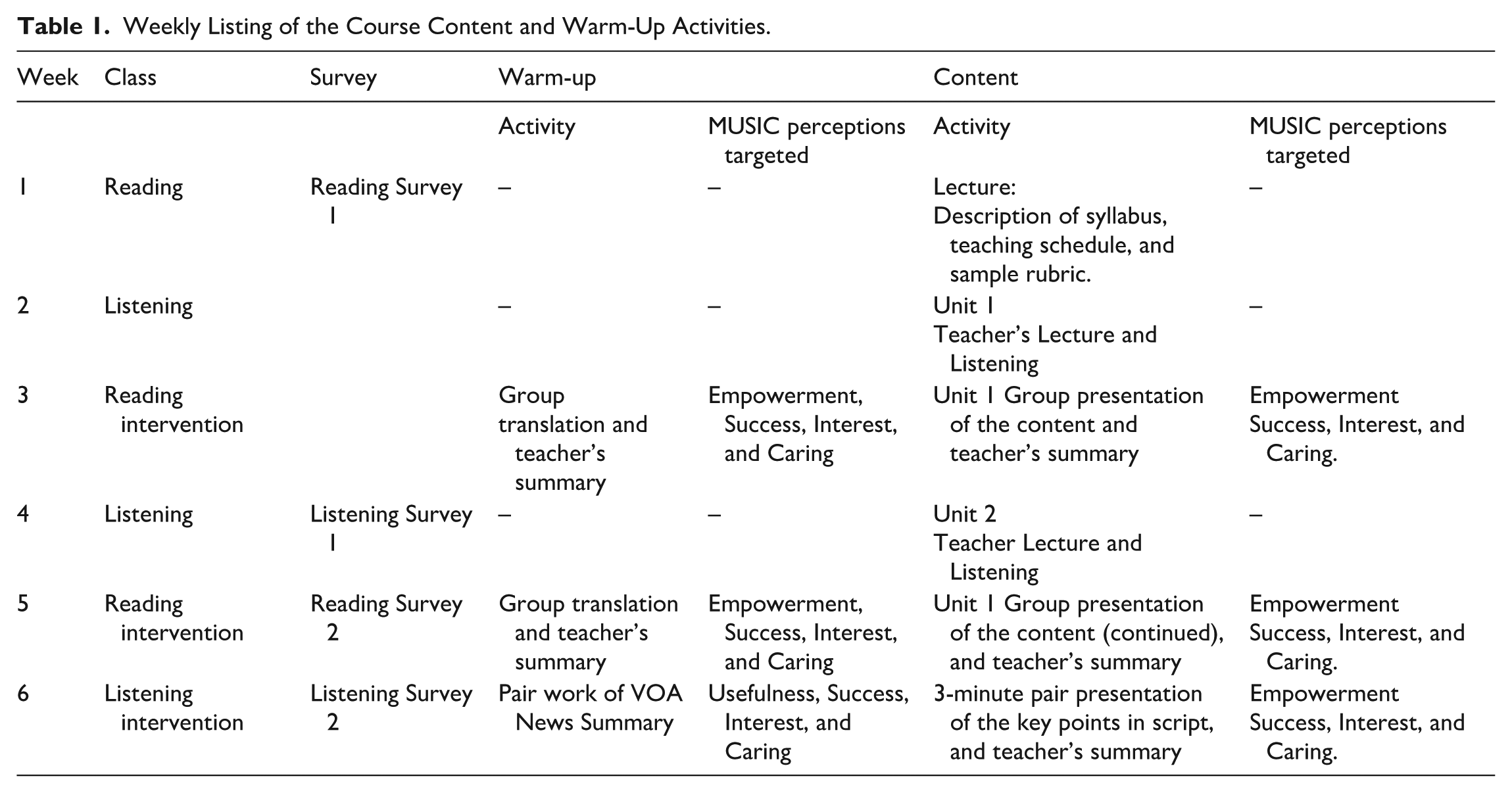
Inspired by the group work and gallery activity approaches described in Jones (2018), Li (2020) and Li and Jones (2025), the teacher conducted 15-minute Chinese-to-English translation warm-up activities in the English reading class in Weeks 3 and 5. In Week 3, the teacher uploaded a Chinese-to-English sentence translation exercise derived from the previous year’s final exam to the virtual WeChat classroom. Each group had five minutes to discuss and submit their answers as text messages or photos of handwritten responses. The teacher reviewed the submissions, praised outstanding groups with extra points, and summarized effective translation strategies. In Week 5, a similar activity was conducted, which was from the previous year’s College English Test Band Four (CET-4) exam. Groups submitted their answers to the virtual WeChat classroom, and the teacher facilitated a discussion where students evaluated the other groups’ submissions. Then the teacher randomly selected even-numbered groups and asked the representatives of these groups to present their evaluation of other groups’ answers. The teacher concluded by providing feedback, summarizing key points, and answering students’ questions (see Table 1).
Weekly Listing of the Course Content and Warm-Up Activities.
In Week 6 of the listening class, the teacher introduced a pair activity. Students were asked to join their classmates next to them and to complete a task based on a 60-second VOA news video. They watched the clip without subtitles three times, then wrote a summary of the most memorable news item and uploaded it to the WeChat classroom. The teacher selected five or six summaries (e.g. from groups with even numbers) to provide feedback. After reviewing student responses, the teacher played the video again with subtitles to help students understand the news and improve their listening comprehension.
3.5. Lecture Classes in Reading and Listening Sections
As shown in Table 1, in Week 1, the English reading class followed a traditional lecture format, with no group activities. The teacher introduced the syllabus and course schedule, informing students that future reading classes would involve group presentations – a departure from the teacher-centered approach they were accustomed to. To prepare students, the teacher outlined the presentation requirements, grading criteria, and templates. Students were asked to form groups of six, select a leader, and submit group details, such as members’ names and their campus passport numbers, to the virtual WeChat classroom. Then the teacher assigned group numbers based on the order in which each group submitted its group information to the WeChat classroom. For example, the first group to submit was Group 1, and the last group to submit was Group 8. Finally, the teacher assigned the tasks in the first unit, such as Group 1 covering the first half of the vocabulary list. Overall, the first week’s class focused on providing instructions, with students learning passively.
Weeks 2 and 4 were listening classes, and they included a traditional lecture format. In Weeks 2 and 4, the teacher introduced the syllabus and divided the session into three parts: explanation of new vocabulary, listening to audio clips, and answering questions based on the textbook. After students completed the exercises, the teacher reviewed the answers and replayed the audio to reinforce comprehension. These sessions emphasized repeated listening and teacher explanations, with no student interaction or collaborative tasks.
3.6. Group Translation and Presentation in Redesigned Reading Sections
As shown in Table 1, starting in Week 3, reading classes were redesigned using the MUSIC model strategies, focusing on empowerment through group presentations. A week before each session, the teacher posted group assignments in the virtual WeChat classroom, detailing specific tasks. For instance, Group 1 prepared vocabulary explanations, while Group 5 analyzed key points in specific paragraphs. The students followed the scoring rubrics and templates provided in Week 1 to prepare their group presentations. Before each class, groups uploaded their PowerPoint slides to the WeChat classroom for peer preview. During group presentations, some or all group members stood in front of the classroom to speak. The presentation group could receive extra points if the group members could ask their classmates questions during the presentation. After each presentation, the teacher summarized key points, praised group members’ efforts, and encouraged peer applause.
3.7. Pair Work and Presentation in Redesigned Listening Classes
In Week 6, the listening class shifted to a MUSIC strategy-based approach emphasizing empowerment and interest (see Table 1). First, audio materials and reference guides were shared via the WeChat classroom a week in advance to ensure that students were well-prepared. Then, the teacher divided the content into smaller tasks and assigned them to pairs of students. Each pair uploaded materials (e.g. vocabulary definitions, grammar analysis) to the WeChat classroom two hours before class for peer preview. Unlike group presentations in the reading section, these tasks required each pair to handle only a few items, such as 3–5 words or 1–2 grammar points. Class activities centered on pair work, with students presenting their assigned content. Those pairs who provided a good presentation received praise and extra points, while the teacher provided additional explanations for challenging sections.
3.8. Study Design
Students completed four online surveys during Weeks 1, 4, 5, and 6. The surveys in Weeks 1 and 5 were for the reading section, and those in Weeks 4 and 6 were for the listening section. The surveys assessed students’ perceptions of the motivational climate (i.e. MUSIC perceptions) in a specific class, as well as their motivation and effort in the class. Additionally, the survey included demographic items such as gender, ethnicity, age, and academic program. The teacher asked the students to complete the surveys in the last five minutes of the class for several reasons. First, it allowed students to reflect on the class with a fresh memory of the class they had just completed. Second, the students would not be confused with other courses that they attended on the same day. Finally, to ensure honesty and prevent bias, the teacher told the students that their responses would remain anonymous and would not be reviewed until the semester was over.
3.9. Measures
The survey consisted of items that measured students’ MUSIC perceptions, motivation, and effort. All items were rated on a six-point Likert scale: 1 = strongly disagree, 2 = disagree, 3 = somewhat disagree, 4 = somewhat agree, 5 = agree, 6 = strongly agree.
3.9.1. MUSIC Model of Motivation Inventory
To measure students’ perceptions of the motivational climate in the classroom, we used the Chinese translation of the college version of the MUSIC model of motivation inventory (Jones, 2012/2021). This version has been validated in previous studies (Jones et al., 2023; Jones & Wilkins, 2023). The inventory contains 19 items divided into five scales: four items for empowerment, four for usefulness, four for success, three for interest, and four for caring. The five scales measure the following aspects of students’ motivational climate perceptions: they have choices in completing coursework and assignments (empowerment), the course is closely related to their present and future goals (usefulness), they feel confident that they can succeed in the course if they work hard (success), they are interested in and enjoy the teaching methods in the course (interest), and the instructor respects them and cares about their learning (caring).
3.9.2. Motivation and Effort
To measure student motivation, we used Jones’ (2018) definition of motivation and included the following item: ‘For the next few weeks, I intend to put forth my maximum effort in this course.’ Regarding student engagement, we adopted the widely recognized classification in the field of psychology and selected effort to assess students’ behavioral engagement (Christenson et al., 2022). The item used was: ‘In this course, I have put forth my maximum effort,’ which was taken from items previously used by Jones (2019).
4. Results
4.1. Internal Consistency
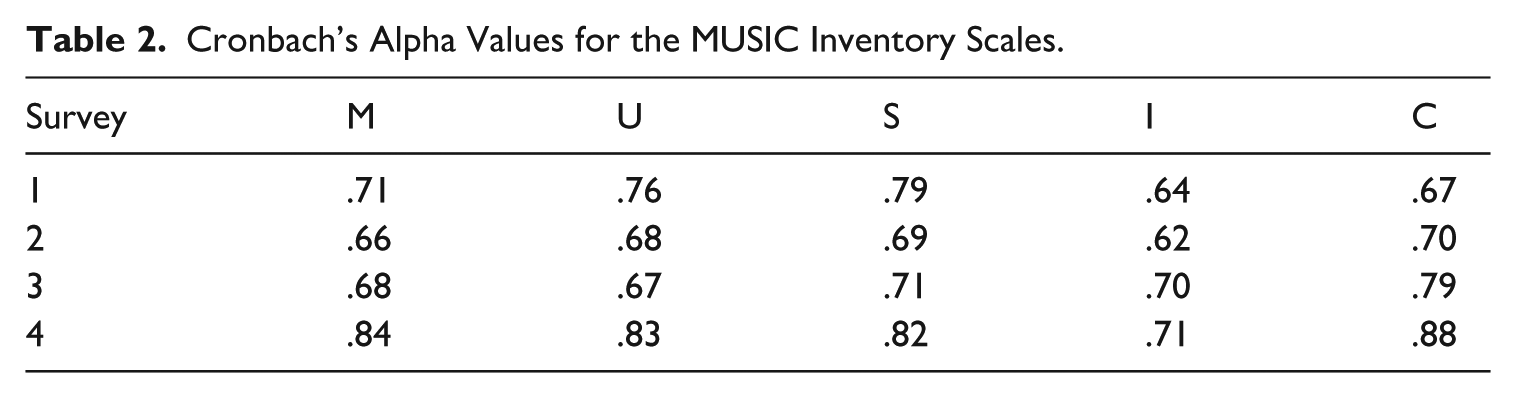
To measure the internal consistency reliability of the scales, we calculated Cronbach’s alpha values for the five MUSIC scales (see Table 2). Across four surveys, 20 alpha values were computed: four were in the good range (0.80 to 0.89), eight were in the acceptable range (0.70 to 0.79), and eight were in the questionable range (0.60 to 0.69) (George & Mallery, 2003).
Cronbach’s Alpha Values for the MUSIC Inventory Scales.
4.2. Students’ Perceptions of the Motivational Climate
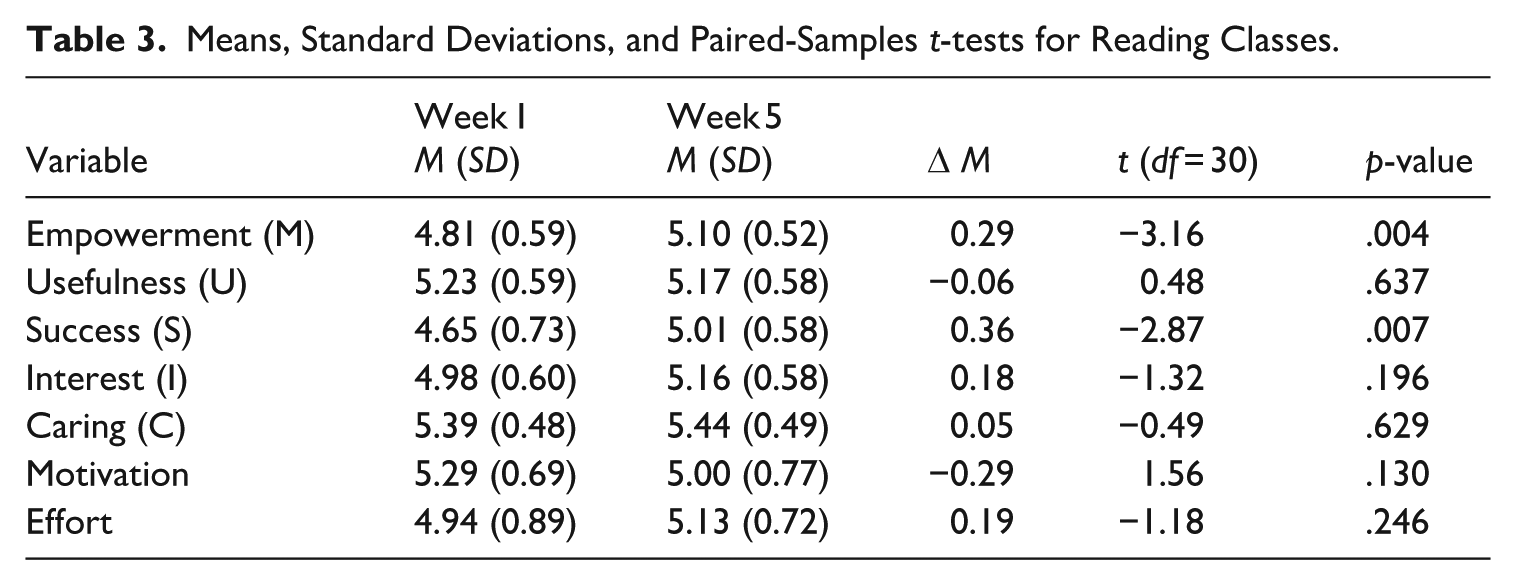
To examine how students’ perceptions of the motivational climate varied before and after the interventions, we compared the MUSIC scale scores from Week 1 and Week 5 (the reading classes; see Table 3) and Week 4 and Week 6 (the listening classes; see Table 4). Results showed significant improvements in Empowerment (M = 4.81 vs. 5.10, p = .004) and Success (M = 4.65 vs. 5.01, p = .007). The changes in Usefulness, Interest, Caring, Motivation, and Effort were not statistically significant at an alpha level of 0.05.
Means, Standard Deviations, and Paired-Samples t-tests for Reading Classes.
Means, Standard Deviations, and Paired-Samples t-tests for Listening Classes.
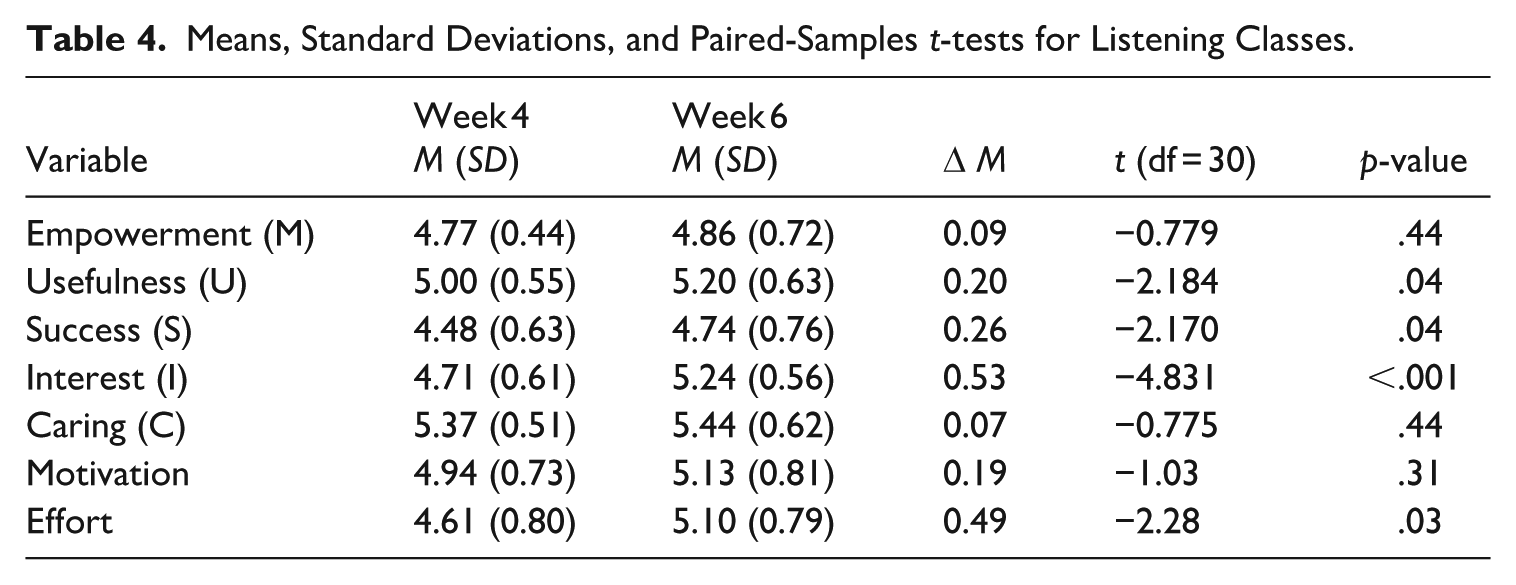
We also used paired-sample t-tests to analyze the Week 4 and 6 data from students in the listening classes. The results showed that there were statistically significant differences for Usefulness, Success, Interest, and Effort scores. There were no statistically significant changes for Empowerment, Caring, or Motivation.
5. Discussion
5.1. The Reading Classes
This study examined whether incorporating teaching strategies using the MUSIC model could improve graduate students' MUSIC perceptions (except usefulness), motivation, and effort in classes with reading lessons. The results showed significant gains in the areas of Empowerment and Success, which were two of the four MUSIC perceptions targeted in the design of the intervention (see Table 1). This suggests that students felt more control over their learning and were more likely to believe that they could succeed in the course. The improvement in empowerment likely came from shifting away from traditional lectures toward student-led group presentations. By preparing slides, speaking in front of classmates, and leading discussions, students had more opportunities to take ownership of their learning, which is one of the core goals of the empowerment component of the MUSIC model.
The rise in success scores may be due to the parts of the intervention that included clear instructions, structured preparation time, and positive feedback from both the students’ peers and the instructor. These elements likely helped students feel more capable of completing the tasks successfully.
Contrary to the prediction that the intervention would improve students’ interest and caring perceptions, there were no significant changes in either after the reading intervention. One possible reason is the ceiling effect because students already rated caring (M = 5.39) quite high before the intervention. Another explanation may be that caring is more stable throughout a course (as has been shown in other studies, such as Wilkins et al., 2025) because it is based on students’ perceptions of the instructor, not the instructional activities. Although we measured students’ perceptions of their caring relationship with the instructor, future studies could measure the caring relationship between students because participating in the group activities may have affected those relationships. Although students’ ratings of interest increased slightly, the increase was not statistically significant. It may be that it is difficult to make this class more interesting and enjoyable to students (M = 5.16 on Survey 2), given the topic.
There was also no significant improvement in students’ motivation or effort. This may be because the new approach was only implemented in two sessions, which was not enough time for students to fully adjust. Some students might also have faced time constraints or challenges working in groups, which could have limited their effort. Another reason may be that students who were accustomed to passive listening may have needed more support at the start of such a transition.
5.2. The Listening Classes
The results suggest that the MUSIC interventions in the listening classes had a positive impact on students’ perceptions of usefulness, success, interest, and effort, but no positive or negative effect on their perceptions of empowerment, caring, or motivation. The increases in usefulness suggest that students found the tasks more practical and beneficial to their future. The News Summary activities likely contributed to their increase in perceptions of usefulness because they emulated real-world activities more than listening to a lecture.
Their sense of success was likely improved by the clear instructions, moderate difficulty, and timely feedback. Also, working in pairs can help students to feel more likely to succeed because they have someone else to help them. Each pair only handled a small task, such as explaining 3–5 vocabulary items or 1–2 grammar points. Dividing the learning activities into manageable parts can also help students to believe that they can succeed, as opposed to longer, more difficult activities (Jones, 2018). Also, praise and bonus points were used to encourage students to take their tasks seriously, and likely helped students believe that they could succeed if they received the praise or bonus points.
Students also reported greater interest in the intervention listening class than the traditional listening class. Compared with the traditional lecture-based instruction, the intervention used task-based pair work and short in-class presentations. Students tend to enjoy working together, so it makes sense that they found these pair activities and the presentations more enjoyable than the lecture. This manageable structure may have also reduced their stress and made the activities more fun.
On the other hand, students’ perception of empowerment did not change significantly. This may be because students still had limited decision-making power, and the tasks were largely assigned by the teacher. Similarly, students’ ratings of caring remained stable, likely because of the reasons noted previously for the reading intervention.
As shown in Figure 1, increases in students’ MUSIC perceptions lead to increases in students’ motivation, which then affects their effort. Although students’ perceptions of usefulness, success, and interest increased, it was not enough to increase their motivation. One possible explanation is that graduate students in China have been accustomed to traditional lecture-based English instruction since primary school. When exposed to a sudden shift toward student-centered, activity-based learning at the graduate level, they may feel uncertain or skeptical about this unfamiliar approach, which could dampen their initial motivation. Therefore, they may not report increases in motivation (their intent to engage in activities), but they may still put forth more effort due to the structure and demands of the instructional activities. For example, the interactive nature of the listening intervention may have required more active participation, which could increase students’ effort even in the absence of measurable changes in their self-reported motivation. Because we did not collect other types of data to explain this phenomenon, we cannot determine the underlying reasons for this pattern. Future studies could explore these patterns, perhaps with the use of open-ended questionnaire items or interview questions.
6. Limitations
One of the main limitations of this study was that it was conducted in one class with a fairly homogeneous sample of participants, which limits the transferability of the findings to other populations, such as students from different academic disciplines, undergraduate students, or English majors. Therefore, the findings should be interpreted as context-specific rather than broadly generalizable. The study could be improved by testing the intervention in other classes with other instructors. A second limitation was that the intervention only lasted a short period of time. A longer intervention (several class periods or weeks) may be needed for students to change some of these outcomes, especially their motivation to engage in the class. While they may not immediately feel more motivated, they may still increase their effort due to the demands of more active and collaborative classroom tasks. Third, because this study is not an experimental study with a control group, we are unable to definitively attribute the findings to the effects of the intervention. Fourth, the study only included about two-thirds (65%) of the students in the course. It is possible that the students who did not participate in the study may have responded differently to the survey items. Finally, the motivation and effort constructs were measured with only one item, which we deemed to be sufficient because the manner in which they were defined and measured in this study was sufficiently ‘narrow’ that they have high content validity (for further explanation, see Bergkvist & Rossiter, 2007). However, future studies could include more items in each scale to determine if they have an effect on the measurement of the constructs.
7. Implications
7.1. Implications for the Reading Classes
To build on the benefits documented in the reading intervention classes, we suggest a few possible changes that could be made to the intervention. One suggestion is that the MUSIC teaching approaches could be used in more classes, particularly in contexts similar to the one examined in this study, to allow students more time to adjust to them and gain the benefits that can accompany them. Relatedly, with a longer intervention, regular feedback from students could be collected to help teachers fine-tune activities and assignments to make them more consistent with MUSIC strategies (e.g. make them more interesting/enjoyable, useful). In addition, group presentations could count more towards the final grade to encourage long-term engagement. Students may believe that the presentations are more useful if they are part of their grade.
Other possible suggestions are that students could be encouraged to reflect on their own learning and give feedback to their peers. This could help them understand their progress, which could improve perceptions of usefulness and success, and keep them motivated to put forth effort. The design of the activities could also be improved by including real-world topics or content from other fields to make learning more useful and interesting. Overall, the teaching approaches should aim to give students more responsibility (empowerment) while also offering enough support to foster students’ perceptions of success, thus making the MUSIC strategy approaches both effective and sustainable.
7.2. Implications for the Listening Classes
Notably, in the listening classes, students demonstrated higher perceptions of success and interest, and the possible reason is the lower interactivity and engagement in the traditional lecture style of the listening class. Thus, the MUSIC strategies, such as pair work of news summaries and unit key points presentations reviews, are an effective approach if the listening class teachers want to improve their class and create a positive motivational climate in the listening classes.
In the listening classes, we documented that using the MUSIC strategies – especially through small tasks, pair work, and mini-presentations – can effectively improve students’ perceptions of usefulness, success, interest, and effort. To strengthen these outcomes further, the following suggestions are offered. First, the teacher could continue task-based learning by using the ‘pair-task and presentation’ format, but allow students to choose topics they find useful to increase their perceptions of empowerment. Second, as noted for the reading classes, the teacher should extend the implementation period. One or two sessions are likely not enough to affect students’ motivation. Third, the teacher should involve students in content creation by encouraging them to bring their own questions or extra material to class. This can increase interaction and ownership, which can support perceptions of empowerment and interest. Fourth, the teacher could provide more feedback. After each presentation, the teacher could give specific, encouraging feedback and promote peer evaluation to build a stronger sense of achievement and success. And finally, the teacher could make content more real-life oriented and use topics that connect to students’ goals, such as job interviews or studying abroad, to boost usefulness. With these improvements, the MUSIC-based approach can do more than increase interest – it can promote deeper learning, stronger motivation, and a better overall experience in listening classes.
7.3. Overall Implications for Teaching
One overall implication is that professional development programs could be valuable in helping language teachers redesign and implement MUSIC strategies into their classes. For example, language teachers could be taught to assess the motivational climate in their courses over time, revise their instruction, and then evaluate the changes in the motivational climate over time.
Additionally, language teachers may track the changes in the motivational climate, motivation, and effort over multiple semesters or across various instructional settings (e.g. online vs. in-person). After the COVID-19 pandemic, online learning has become more typical in college teaching. Therefore, it is valuable to investigate how MUSIC strategies can be adapted to online classes and hybrid classes, particularly in language classes.
7.4. Implications for Future Research
This study provides an example of how MUSIC strategies can be used within language learning courses. Future research could explore how different learner groups (e.g. undergraduate vs. graduate, English majors vs. non-majors) respond to MUSIC interventions or whether specific combinations of strategies are more effective in different course types.
To deepen insights into the effectiveness of the MUSIC interventions in language classes, mixed methods could be used as a research design. For example, the data from the MUSIC Inventory could be combined with the qualitative feedback (e.g. open-ended survey items, interviews). In this way, more voices from the students could be heard, and more guidance could be obtained for future instructional improvement.
8. Conclusions
This study examined the use of MUSIC model strategies as an intervention to improve students’ perceptions of the motivational climate, motivation, and effort in reading and listening classes. Overall, the short interventions were effective in that they improved some aspects of the motivational climate and did not have a negative effect on any others. In this sense, they adhered to the maxim ‘do no harm’. However, there appears to be some room for improvement, which may be realized if the interventions were modified slightly and/or were implemented over a longer period of time. Therefore, although the findings are encouraging, more research needs to be conducted to determine if improved interventions can have an effect on students’ motivation and effort over time. We view this study as a successful initial attempt that researchers and teachers can build upon to create motivational climates that engage students more fully in their L2 courses.
Footnotes

Funding
The authors disclosed receipt of the following financial support for the research, authorship, and/or publication of this article: The author received financial support for the research, authorship, and publication of this article from Shanghai University of Engineering Science (Grant No. 0247-A1-0100-24-SDJH0203).
Declaration of Conflicting Interests
The authors declared no potential conflicts of interest with respect to the research, authorship, and/or publication of this article.