






Abstract
This study examines how English as a foreign language (EFL) teachers working across diverse European contexts understand and enact pronunciation instruction within increasingly multilingual classrooms. Drawing on an exploratory mixed-methods design, the study analyzes survey responses from 43 teachers across 22 European countries and follow-up interviews with 8 participants. Survey data identify patterns in teacher preparation, instructional techniques, and perceived challenges, while qualitative analysis provides deeper insight into teachers’ beliefs, experiences, and instructional decision-making processes. Findings indicate that most teachers received limited practical preparation in pronunciation pedagogy and relied on self-directed learning to address gaps in their training. Teachers identified negative first-language transfer, insufficient curriculum support, and limited instructional time as primary constraints shaping their practice. Multilingual classrooms further intensified instructional complexity, although some teachers noted pedagogical benefits linked to learners’ heightened metalinguistic awareness. Conceptually, the study frames pronunciation instruction as a form of pedagogical decision making under multilingual constraint, shaped by the interaction of teacher cognition, institutional conditions, and linguistic diversity. Implications are discussed for teacher education, curriculum design, and professional development related to pronunciation instruction in multilingual EFL settings.
Keywords
1. Introduction
Pronunciation instruction is widely recognized as a central component of communicative competence in additional language learning, yet it remains one of the least systematically developed areas of English language teaching (Derwing & Munro, 2015; Levis, 2017). Although research has demonstrated that targeted pronunciation instruction can improve learners’ oral production and intelligibility (Derwing & Munro, 2005), pronunciation remains marginalized in teacher education, and many instructors report limited preparation and uncertainty about how to integrate it into classroom practice (Derwing & Munro, 2005). These tensions have become increasingly pronounced as multilingualism expands across educational contexts, intensifying the linguistic diversity teachers must navigate when supporting learners’ spoken language development.
In linguistically diverse European educational settings, pronunciation instruction is shaped by varied learner repertoires, migration trajectories, and institutional traditions. Teachers are frequently required to work with learners who bring multiple first languages (L1s), diverse phonological systems, and differing pronunciation goals into the same classroom. Prior research has identified several structural constraints that limit teachers’ engagement with pronunciation instruction, including insufficient preparation in teacher education, limited curricular emphasis, and a lack of accessible, classroom-ready instructional materials (Grandyna, 2018; Henderson et al., 2012). However, much of this work has been conducted in English-dominant contexts or has focused primarily on learners rather than teachers (e.g., Foote et al., 2011). As a result, comparatively little is known about how teachers working across multilingual European contexts make instructional decisions about pronunciation under conditions of linguistic diversity and institutional constraint.
This gap is significant because pronunciation instruction involves ongoing pedagogical decision making rather than the implementation of fixed instructional routines. Teachers must determine when to address pronunciation, which features to prioritize, how to adapt instruction for diverse learner needs, and how to balance pronunciation with competing curricular demands (Benzies & Joy, 2013). These decisions are shaped by teachers’ professional preparation, beliefs about pronunciation, classroom composition, and institutional constraints. In multilingual settings, such decisions become more complex as teachers respond to multiple learner profiles while managing limited instructional time and curricular expectations. Pronunciation instruction therefore functions as a form of instructional decision making under conditions of pedagogical complexity.
From a multilingual education perspective, this raises important questions about how teachers negotiate linguistic diversity in practice. Multilingual classrooms introduce greater phonological variability due to the presence of diverse L1-influenced pronunciation patterns that affect intelligibility and listener processing (Derwing & Munro, 2005), yet multilingual learners may draw on expanded linguistic repertoires and cross-linguistic awareness that can function as pedagogical resources in pronunciation learning (Cenoz, 2013). Understanding how teachers perceive, interpret, and act upon these conditions is essential for developing pronunciation pedagogy that is responsive to multilingual realities rather than grounded in monolingual assumptions.
To address this need, the present study investigates how English as a foreign language (EFL) teachers working across diverse European contexts understand and enact pronunciation instruction, how they navigate institutional and linguistic constraints, and how classroom linguistic composition, including both multilingual and relatively homogeneous settings, shapes their instructional decision making. Drawing on a mixed-methods design, the study examines teachers’ training experiences, perceived challenges, and instructional strategies related to pronunciation teaching. By centering teachers’ perspectives, the study contributes to multilingual education research by illuminating how pronunciation instruction is shaped by the interaction of teacher cognition, linguistic diversity, and institutional conditions.
The study is guided by the following research questions.
By foregrounding pronunciation instruction as a site of pedagogical decision making in multilingual contexts, this study offers insight into how teachers navigate linguistic diversity in practice and highlights the need for teacher education and curricular approaches that are responsive to multilingual classroom realities
2. Literature Review and Conceptual Framework
2.1. Pronunciation Instruction in Multilingual EFL Contexts
Pronunciation instruction has long been recognized as an important component of communicative competence in English language teaching (Derwing & Munro, 2015), yet teachers across EFL contexts frequently report limited preparation, lack of confidence, and difficulty implementing systematic pronunciation pedagogy (Foote et al., 2011). These challenges are particularly pronounced in multilingual educational settings, where teachers must respond to diverse learner linguistic repertoires, varied pronunciation goals, and heterogeneous classroom needs. In linguistically diverse European contexts, multilingual classrooms have become increasingly common due to migration, mobility, and educational policy, intensifying the complexity of pronunciation instruction and the demands placed on teachers. In European EFL contexts, multilingualism often emerges not from English as the dominant societal language, but from increasing mobility and migration within non-English-speaking countries, creating classroom ecologies that differ fundamentally from traditional ESL settings.
Although a substantial body of research has examined pronunciation instruction in English-dominant English as a second language (ESL) contexts such as Canada and the United Kingdom (Bradford & Kenworthy, 1991; Foote et al., 2011), comparatively fewer studies have focused on pronunciation pedagogy in non-English-dominant EFL settings. This distinction is significant because EFL contexts differ structurally from ESL contexts in terms of exposure opportunities, institutional goals, and sociolinguistic positioning of English. In addition to European contexts, pronunciation teaching in EFL environments has been examined in various Asian settings, including Turkey (Yagiz, 2018), Saudi Arabia (Algethami & Alsofyani, 2017; Altoeriqi, 2020), Vietnam (Newton & Nguyen, 2020), and Thailand (Jindapitak, 2014). These studies highlight recurring concerns regarding limited training, teacher confidence, and curricular marginalization of pronunciation. However, much of this work has focused on nationally homogeneous EFL systems rather than linguistically diverse classroom ecologies shaped by migration and mobility within Europe.
Consequently, considerably less attention has been given to how pronunciation is taught in multilingual European EFL classrooms. Existing studies have focused predominantly on learners’ pronunciation acquisition and outcomes (Calvo Benzies, 2016; Smakman & de France, 2015; Gabriel & Thiele, 2017). Although a growing body of research in EFL contexts such as Brazil (Buss, 2016) and Spain (Quesada Vázquez, 2024) has examined teachers’ beliefs and reported practices regarding pronunciation, fewer studies have investigated how teachers’ pronunciation-related decision making unfolds within multilingual classroom ecologies and under specific curricular constraints.
2.2. Teacher Cognition and Pronunciation Pedagogy
Teacher cognition provides a useful lens for examining pronunciation instruction in multilingual contexts. Teacher cognition encompasses the beliefs, knowledge, attitudes, assumptions, and decision-making processes that shape instructional behavior (Borg, 2003, 2015). From this perspective, teaching practices cannot be understood solely through observable classroom actions but must be examined in relation to teachers’ experiences, professional preparation, and classroom contexts. Pronunciation instruction is particularly sensitive to these cognitive dimensions because it involves decisions about instructional priorities, feedback strategies, and pedagogical focus.
Teachers’ declarative knowledge, procedural knowledge, and pedagogical content knowledge develop through teacher education, classroom experience, and personal language learning trajectories. When pronunciation pedagogy receives limited emphasis in teacher preparation programs, teachers often report insufficient training (Buss, 2016; Foote et al., 2011) and tend to rely on reactive, textbook-driven, or repetition-based techniques rather than systematic, research-informed approaches (Buss, 2016). Research consistently shows that EFL teachers often complete pre-service or in-service education with limited practical preparation for teaching pronunciation (Derwing & Munro, 2015; Newton & Nguyen, 2020; Yagiz, 2018). Coursework is frequently described as theoretical, with few opportunities to practice instructional techniques, receive feedback, or develop classroom-oriented pedagogical content knowledge (Henderson et al., 2012). As Murphy (2017) argues, pedagogical content knowledge for pronunciation develops through guided practice, contextualized modeling, and structured opportunities for reflective feedback that link phonological theory to classroom implementation.
2.3. Instructional Constraints in Pronunciation Teaching
Beyond training limitations, pronunciation instruction presents a range of pedagogical challenges that are intensified in multilingual classrooms. Learners’ L1 influence has been widely identified as one of the most persistent challenges for pronunciation teaching (Bardakci, 2015; Grandyna, 2018; Calvo Benzies, 2016). Predictable patterns of phonological transfer can result in segmental and suprasegmental difficulties that require targeted instructional responses. Teachers without strong phonological and diagnostic expertise may struggle to identify the sources of these difficulties or to design effective instructional interventions.
Structural constraints related to curriculum, materials, and time also play a central role in shaping pronunciation instruction. In many EFL contexts, pronunciation is marginalized in syllabi, underrepresented in textbooks, or treated as an optional component rather than an integral part of communicative competence (Georgiou, 2019; Derwing & Munro, 2015). Teachers frequently report a lack of suitable pronunciation materials, requiring additional preparation time and personal resource development (Algethami & Alsofyani, 2017). Time pressure is particularly acute, as teachers are often expected to cover extensive curricular content within limited instructional periods (Batool et al., 2021; Gilakjani & Sabouri, 2016; Newton & Nguyen, 2020).
2.4. Multilingual Classrooms and Pedagogical Complexity
Multilingual classrooms intensify these cognitive and pedagogical dynamics. Teachers working with learners from multiple linguistic backgrounds must manage diverse phonological systems, varying levels of metalinguistic awareness, and heterogeneous pronunciation goals. While some research suggests that multilingual learners may demonstrate heightened metalinguistic awareness that supports pronunciation development (Haukås, 2016), other studies emphasize the increased planning, differentiation, and diagnostic demands placed on teachers in linguistically diverse classrooms (Eurostat, 2023; Eurydice, 2023). Pronunciation instruction in such contexts therefore involves adapting instructional decisions to diverse learner needs and contextual constraints.
2.5. Pronunciation Instruction as Pedagogical Decision Making
Across the literature, recurring challenges include insufficient teacher preparation, curriculum and material limitations, time pressure, L1 influence, and diverse learner needs. These factors suggest that pronunciation teaching involves ongoing pedagogical decision making. Teachers must determine when to address pronunciation, which features to prioritize, how to adapt instruction to diverse learner profiles, and how to balance pronunciation with other curricular demands. This perspective aligns with broader discussions of teacher agency, which emphasize teachers’ capacity to make contextually responsive instructional choices within structural constraints. In multilingual classrooms, such decision making becomes particularly complex due to competing demands and heterogeneous learner needs.
The present study addresses this gap by examining how EFL teachers working across diverse European contexts understand and enact pronunciation instruction. Grounded in teacher cognition theory, the study explores teachers’ training experiences, instructional challenges, and pedagogical strategies that shape pronunciation-related instructional decision making. By situating pronunciation instruction within multilingual classroom contexts, the study contributes to understanding how teachers navigate linguistic diversity through context-sensitive instructional decisions.
3. Method
3.1. Research Design
This study employed an exploratory mixed-methods research design to investigate how EFL teachers working across diverse European contexts conceptualize and enact pronunciation instruction in multilingual classroom settings. Mixed-methods approaches integrate quantitative and qualitative data to support a more comprehensive understanding of complex educational phenomena (Creswell & Plano Clark, 2011). An exploratory design was selected to map broad patterns in teachers’ experiences while also examining how teachers interpret and respond to multilingual instructional demands in practice.
Quantitative survey data were used to identify patterns related to teacher training, instructional challenges, pronunciation teaching practices, and experiences in multilingual classrooms. Qualitative interview data were then used to explore teachers’ reasoning, beliefs, and instructional decision-making processes in greater depth. This design aligns with research on language teacher cognition, which emphasizes the importance of examining teachers’ beliefs and practices through multiple sources of evidence to capture the complexity of instructional decision making (Borg, 2015).
3.2. Participants
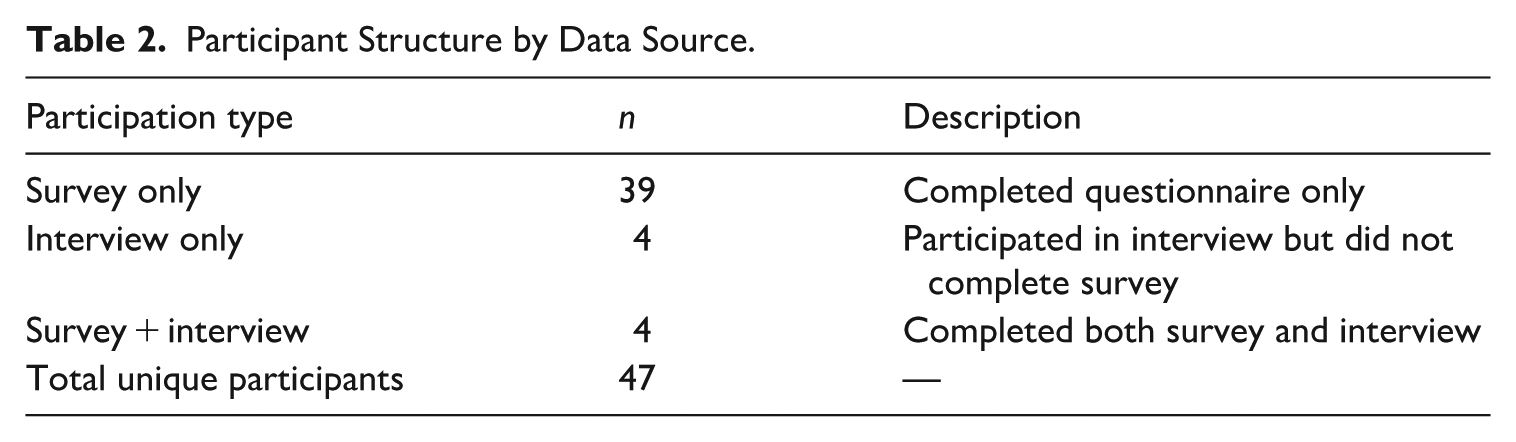
Forty-three EFL teachers completed the online survey. Eight teachers participated in follow-up semi-structured interviews, four of whom had also completed the survey, resulting in a total of 47 unique participants. Four additional interview participants who did not complete the survey were included to increase contextual diversity and to capture perspectives from teachers working in settings not fully represented in the survey sample. These participants were incorporated to deepen qualitative insight into pronunciation-related instructional decision making rather than to support direct comparison with survey responses. They did not complete the survey because they were recruited independently during the interview phase and entered the study directly at that stage. Survey participants were employed across 22 European countries. The largest representations were from Germany (n = 6) and Poland (n = 6), followed by the Czech Republic (n = 5) and Greece (n = 4). Austria, Spain, and Turkey each accounted for two participants, while Belgium, Bosnia and Herzegovina, Cyprus, France, Ireland, Italy, Norway, Portugal, Romania, Russia, Serbia, Sweden, Switzerland, the Netherlands, and Ukraine were each represented by one participant.
Participants taught English across primary, secondary, and adult education settings and worked with learners ranging from beginner (A1) to advanced (C2). Participants were not required to teach in multilingual classrooms. Rather, multilingual classroom composition was examined as a contextual variable. Of the 43 participants, 30 reported teaching in linguistically diverse (multilingual) classrooms, while 13 reported teaching in relatively linguistically homogeneous settings. Table 1 summarizes key demographic and professional characteristics of the survey sample, including geographic distribution, classroom composition, proficiency levels taught, and pronunciation-related preparation.
Participant Characteristics (Survey Sample, N = 43).
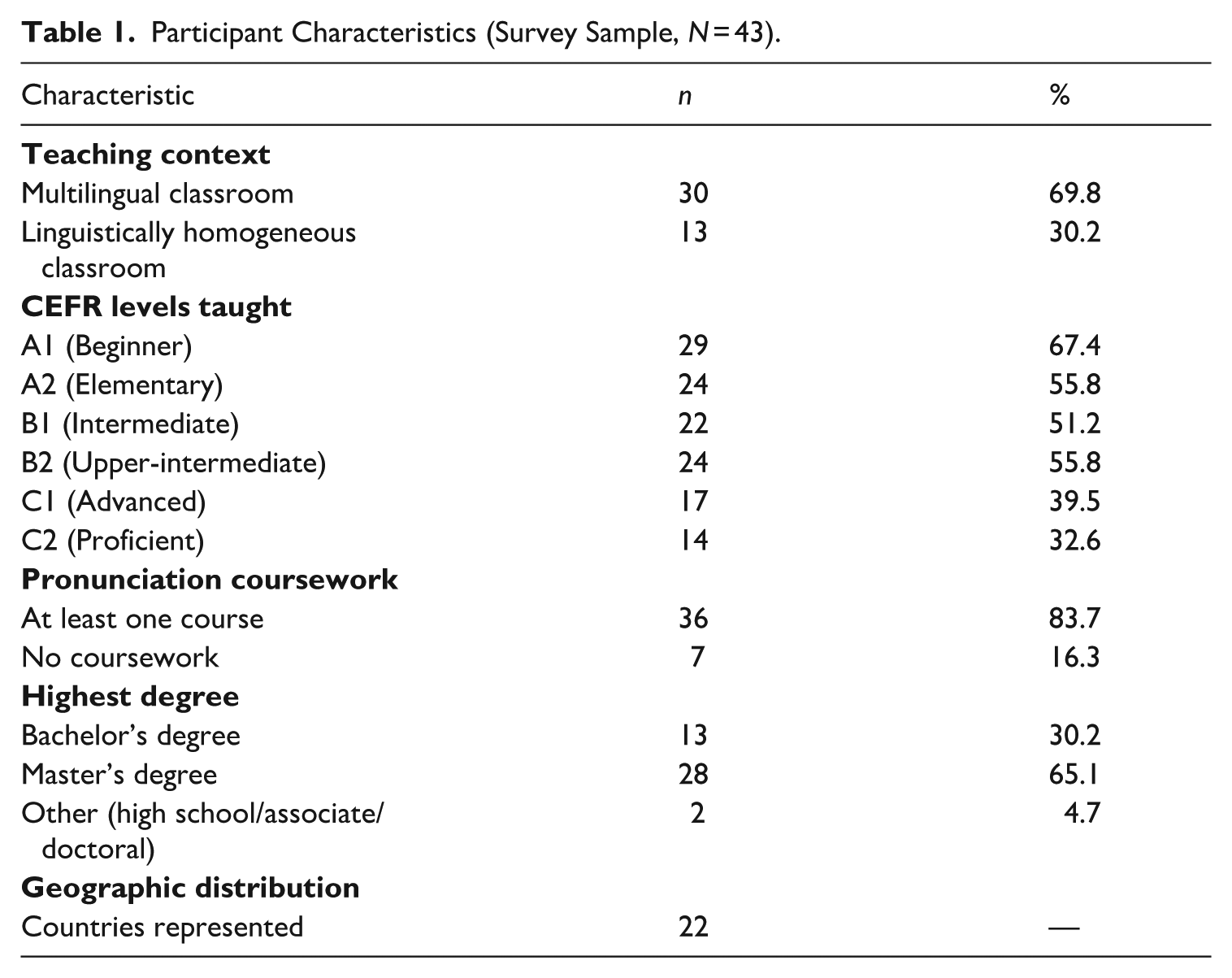
Table 2 presents the distribution of participants based on their level of participation in the study. Survey data (N = 43) were used for descriptive quantitative analysis, while interview data (N = 8) provided qualitative insight into teachers’ instructional decision making. Four participants contributed to both data sources, enabling partial triangulation across methods. Because participation was voluntary and recruitment occurred through multiple channels, the groups are not evenly balanced and were not intended for direct comparison.
Participant Structure by Data Source.
3.3. Instruments
3.3.1. Online Survey
A researcher-designed online survey consisting of 35 items was administered via Qualtrics to collect both quantitative and qualitative data. The instrument was developed for exploratory descriptive purposes rather than psychometric scale development, with the aim of mapping teachers’ reported experiences with pronunciation instruction across diverse European EFL contexts. Survey items were informed by constructs identified in prior research on pronunciation pedagogy and teacher cognition, including teacher preparation, pronunciation confidence, L1 influence, instructional constraints, and classroom linguistic diversity. Because the survey was not intended to produce validated scale scores or support inferential statistical testing, the analysis reports descriptive frequencies and qualitative patterns rather than reliability coefficients or group comparisons.
The survey was organized into eleven sections. The first section included five demographic items addressing participants’ linguistic background, country of employment, and teaching level.
Subsequent sections examined teacher education (two items), self-perceived pronunciation performance (four items), and pronunciation teaching practices (two items), all presented in matrix format. Likert-scale items used 5-point response formats depending on construct: agreement scales ranged from strongly disagree to strongly agree; frequency scales ranged from never to always; and perceived difficulty scales ranged from not challenging at all to extremely challenging.
Participants also responded to a seven-item matrix identifying challenging pronunciation features, followed by one optional open-ended question inviting elaboration. Additional sections explored instructional responses, including one item on whether teachers actively sought solutions, one item listing commonly used techniques, and a five-item matrix examining pronunciation teaching philosophy. An optional open-ended question invited participants to describe an effective pronunciation teaching experience.
The final sections addressed multilingual classroom contexts. In the survey instrument, multilingual and multicultural classroom contexts were grouped into a single item (“multilingual/multicultural classroom”), without distinguishing explicitly between linguistic and cultural diversity. Participants indicated whether they taught in multilingual classrooms (yes/no). Those responding affirmatively were invited to provide open-ended reflections on how multilingualism influenced their pronunciation instruction. A two-item matrix assessed challenges specific to multilingual classrooms, followed by an optional open-ended elaboration. The final item invited participants to indicate their willingness to participate in a follow-up interview. The full survey instrument is provided in Appendix A.
3.3.2. Semi-Structured Interviews
Semi-structured interviews were conducted with eight EFL teachers who volunteered following the survey phase. Four of these participants had also completed the survey, while four were additional interview-only participants. The interview sample included two teachers from Greece, two from Poland, and one each from Italy, Russia, Austria, and Spain. Participants taught across proficiency levels ranging from beginner (A1) to advanced (C2). Participants reported the language proficiency level of the students they were teaching (e.g., beginner, elementary, intermediate, or advanced), rather than the institutional school level (primary vs. secondary). As such, developmental stage cannot be directly inferred from the data.
Semi-structured interviews were selected to allow participants to elaborate on their instructional decision-making processes and to provide contextualized explanations of pronunciation teaching practices. The interview protocol consisted of six core questions organized around four thematic areas: (1) professional background and teaching context, (2) challenging pronunciation teaching experiences, (3) instructional techniques and perceived effectiveness, (4) evaluation of teacher training in pronunciation pedagogy, and (5) experiences in multicultural or multilingual classrooms. Example questions included: “Can you describe one of your most challenging pronunciation teaching experiences?” and “How effective do you think your teacher training was in terms of teaching pronunciation?” The complete interview protocol is provided in Appendix B.
All interviews were conducted online via Zoom, audio-recorded with participant consent, and lasted approximately 30–45 minutes. Recordings were manually transcribed. Participant anonymity was ensured through the use of coded identifiers (e.g., GR1 and PL1), and all identifying information was removed during transcription.
3.4. Procedures
The survey link was disseminated through professional networks and social media groups targeting EFL teachers working in European contexts. Survey respondents were invited to indicate interest in participating in a follow-up interview at the end of the survey. Additional interview participants were recruited through public calls posted on professional online platforms, including European EFL teacher Facebook groups and LinkedIn networks. The recruitment message briefly described the study’s focus on pronunciation instruction in multilingual European classrooms and invited currently practicing EFL teachers in Europe to volunteer for a 30–45 minute online interview conducted via Zoom. This recruitment strategy aimed to obtain a diverse sample of teachers working across different European EFL contexts. Interviews were scheduled at times convenient for participants and conducted via online video conferencing. Participants were informed of the study’s aims, confidentiality procedures, and voluntary nature, and informed consent was obtained prior to participation.
Interview-only participants were recruited through separate professional networks and public calls. Because recruitment occurred through multiple channels and participation was voluntary, not all interview participants completed the survey. In addition, survey participation and interview participation were not linked procedurally, and some participants entered the study directly at the interview stage. Their inclusion reflects the study’s exploratory design and emphasis on capturing a range of teaching contexts rather than constructing matched samples.
3.5. Data Analysis
Survey data were analyzed descriptively to identify patterns in teacher preparation, beliefs about pronunciation, pronunciation teaching practices, instructional challenges, and technique use. Frequencies were calculated for all closed-ended items and are reported as counts to support descriptive interpretation. Open-ended survey responses were analyzed thematically to identify recurring themes related to pronunciation challenges, instructional strategies, and multilingual classroom influences.
Interview transcripts were analyzed using inductive thematic analysis. Codes were developed to capture dimensions of teacher cognition relevant to pronunciation instruction, including beliefs about pronunciation, perceived adequacy of training, L1-related concerns, instructional decision making, and contextual factors associated with multilingual classrooms. Themes identified in the qualitative analysis were compared with quantitative survey patterns to support analytic triangulation across data sources.
Given the exploratory mixed-methods design, the analysis focused on descriptive patterns rather than inferential statistical comparisons. The sample size and uneven distribution across countries did not support statistical testing of group differences, and findings should therefore be interpreted as indicative rather than generalizable. The researcher-designed questionnaire was intended to capture context-specific aspects of pronunciation teaching in multilingual European EFL classrooms. In addition, multilingual and multicultural classroom contexts were combined in a single survey item, which limited the ability to distinguish between linguistic and cultural diversity. These methodological considerations align with the exploratory aims of the study while also representing limitations for interpretation.
4. Results
This section presents findings from the mixed-methods analysis of survey data from 43 EFL teachers working across diverse European contexts and interview data from eight teachers. Survey data are reported descriptively to identify patterns related to teacher preparation, instructional confidence, perceived challenges, and multilingual classroom dynamics. Interview data are used to contextualize these patterns and to describe how teachers report responding to pronunciation-related instructional demands in practice.
4.1. Teacher Preparation and Instructional Readiness
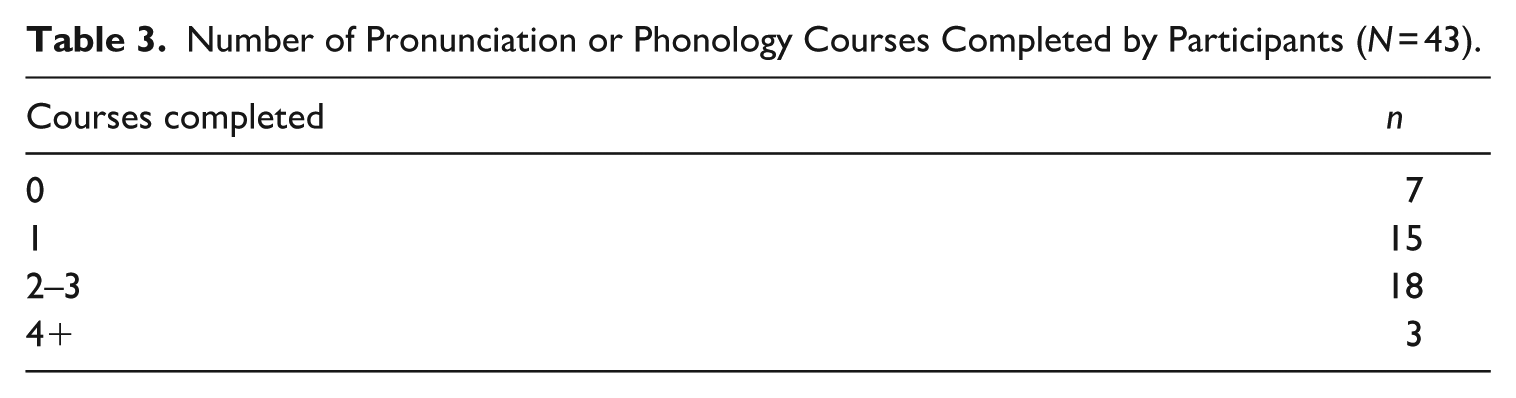
Survey findings revealed substantial variation in teachers’ formal preparation for pronunciation pedagogy. Of the 43 participants, 15 reported completing only one course related to phonology or pronunciation pedagogy, while seven reported receiving no formal training at all. Eighteen teachers reported completing two or three related courses, and only three indicated having completed more than four courses in phonology or pronunciation pedagogy. Although participants represented 22 European countries, the small number of teachers per country precluded meaningful country-level comparisons. These distributions are presented in Table 3.
Number of Pronunciation or Phonology Courses Completed by Participants (N = 43).
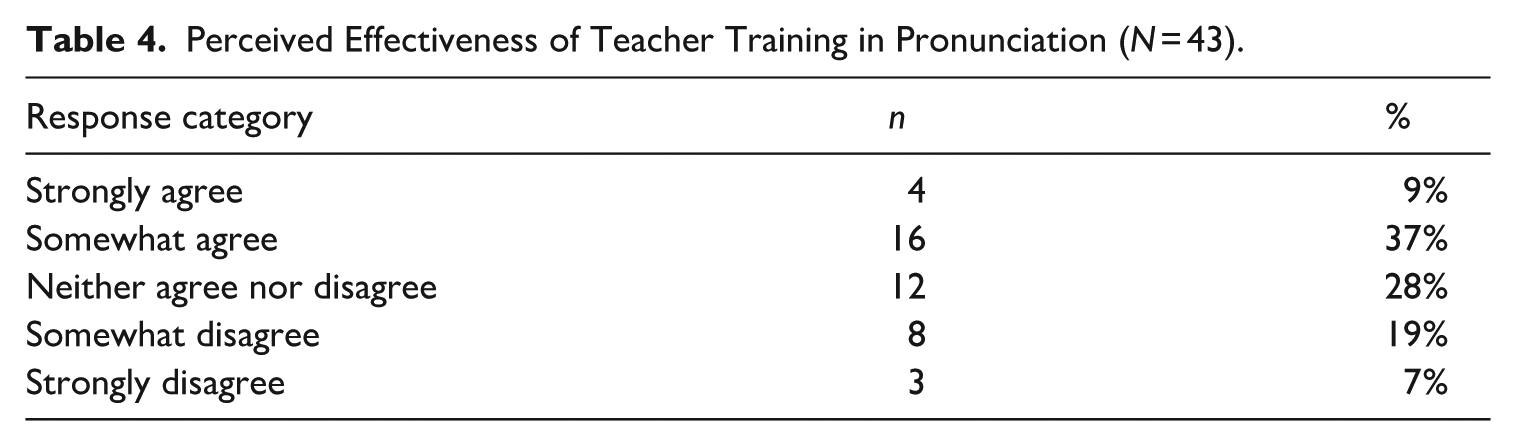
Consistent with these distributions, 23 participants indicated that their teacher training had not prepared them effectively to teach pronunciation, while 9 expressed uncertainties about the adequacy of their preparation. In this study, teacher training referred to participants’ self-reported formal preparation related to pronunciation teaching, which may have included pre-service university coursework as well as subsequent professional development.
Interview data described similar experiences. Teachers frequently characterized their preparation as theoretical rather than practice-oriented and reported limited exposure to classroom-ready pronunciation pedagogy (Table 4). Several teachers reported developing instructional approaches independently, often through online resources, professional workshops, or study-abroad experiences. One teacher described this distinction between pronunciation knowledge and instructional preparation:
“There was only a phonology class, and it helped me pronounce better but not teach effectively.”
Perceived Effectiveness of Teacher Training in Pronunciation (N = 43).
4.2. Pronunciation Confidence and L1 Influence
Teachers’ self-perceived pronunciation confidence varied considerably. Thirteen participants reported consistently feeling confident in their English pronunciation, while the remaining teachers described periodic uncertainty or difficulty. Given the relatively small number of participants per L1 group, systematic comparisons across linguistic backgrounds were not conducted. Eighteen teachers indicated experiencing pronunciation-related anxiety at least occasionally. Although none reported persistent lack of confidence, few described themselves as uniformly confident across teaching situations.
L1 influence was frequently reported. Thirty-two participants indicated that their mother tongue affected their English pronunciation to some extent. Interview accounts described phonological contrasts that teachers reported as challenging, including interdental fricatives, vowel contrasts, and prosodic features. Some teachers described adjusting rhythm and intonation patterns associated with their L1. One teacher stated:
“The ‘th’ sound is difficult for us because we don’t have such a sound in our language.”
Teachers also described connections between their own pronunciation experiences and their instructional practices. Some participants reported being cautious when modeling pronunciation or providing corrective feedback, while others described using shared linguistic backgrounds with learners to anticipate pronunciation difficulties.
4.3. Instructional Challenges and Structural Constraints
Across the survey, pronunciation was widely perceived as a challenging area of instruction. Twenty-nine participants described pronunciation as difficult to teach, while seven characterized it as both time consuming and unengaging. Ten participants reported experiencing little difficulty teaching pronunciation.
Participants reported multiple sources of difficulty. Learners’ L1 influence was the most frequently reported challenge, with 42 participants rating it as at least moderately difficult. Lack of teacher training and lack of appropriate instructional materials were each identified as challenging by 40 participants. Additional constraints included limited curriculum or syllabus support, reported by 34 teachers, and insufficient instructional time, reported by 32 teachers. These distributions are summarized in Table 5.
Most Challenging Aspects of Pronunciation Teaching Reported by Participants (N = 43).
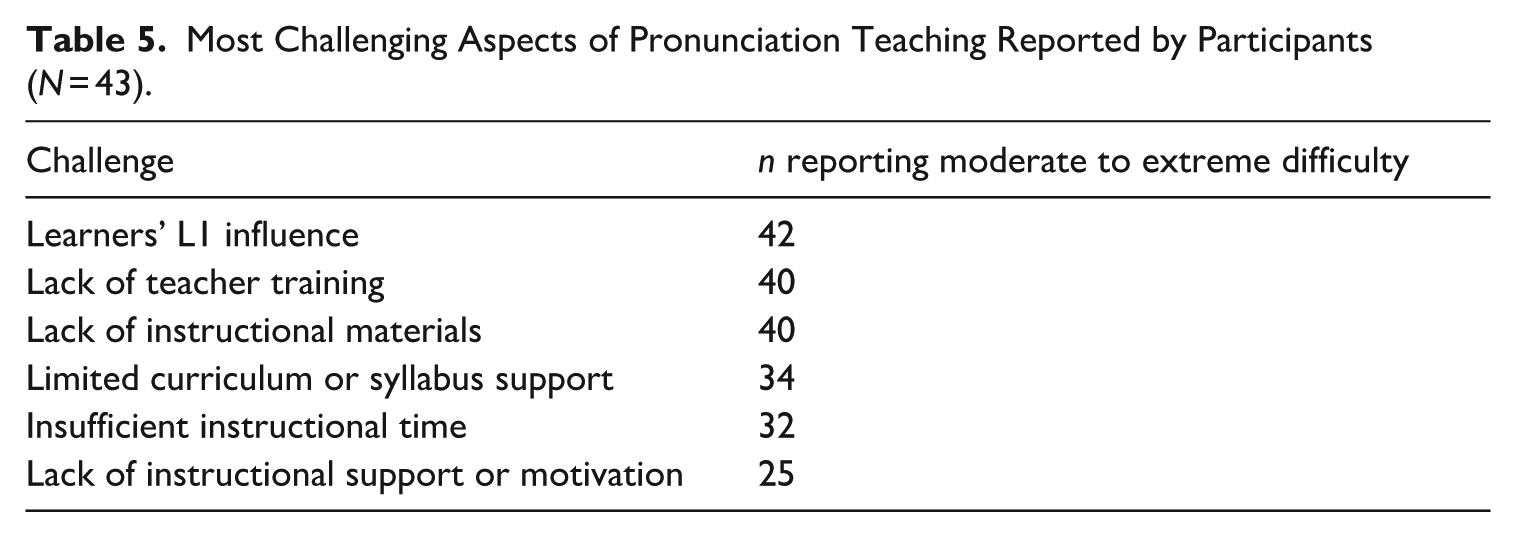
Interview data reflected similar observations. Teachers described curricular pressures that limited opportunities for sustained pronunciation instruction and noted that textbooks often prioritized grammar and vocabulary with minimal attention to pronunciation. Several teachers reported that pronunciation was rarely mandated in institutional guidelines and was often treated as optional. Teachers with limited training described difficulty addressing these constraints, particularly in multilingual classrooms where differentiated support was required.
These findings describe institutional and structural factors reported by participants in relation to pronunciation instruction.
4.4. Instructional Techniques as Responses to Constraint
Teachers reported using a wide range of pronunciation teaching techniques. Thirty-nine participants reported using listen-and-repeat activities, and 38 reported using games, songs, chants, or tongue twisters. Because participants reported student language proficiency rather than school level, the educational context (e.g., primary vs. secondary) cannot be determined. The sample included teachers working with learners across proficiency levels, including A1 and A2. By contrast, fewer than 10 participants reported regularly using IPA transcription or dictionary-based pronunciation activities. These distributions are presented in Table 6.
Reported Pronunciation Teaching Techniques (Select All That Apply) (N = 43).
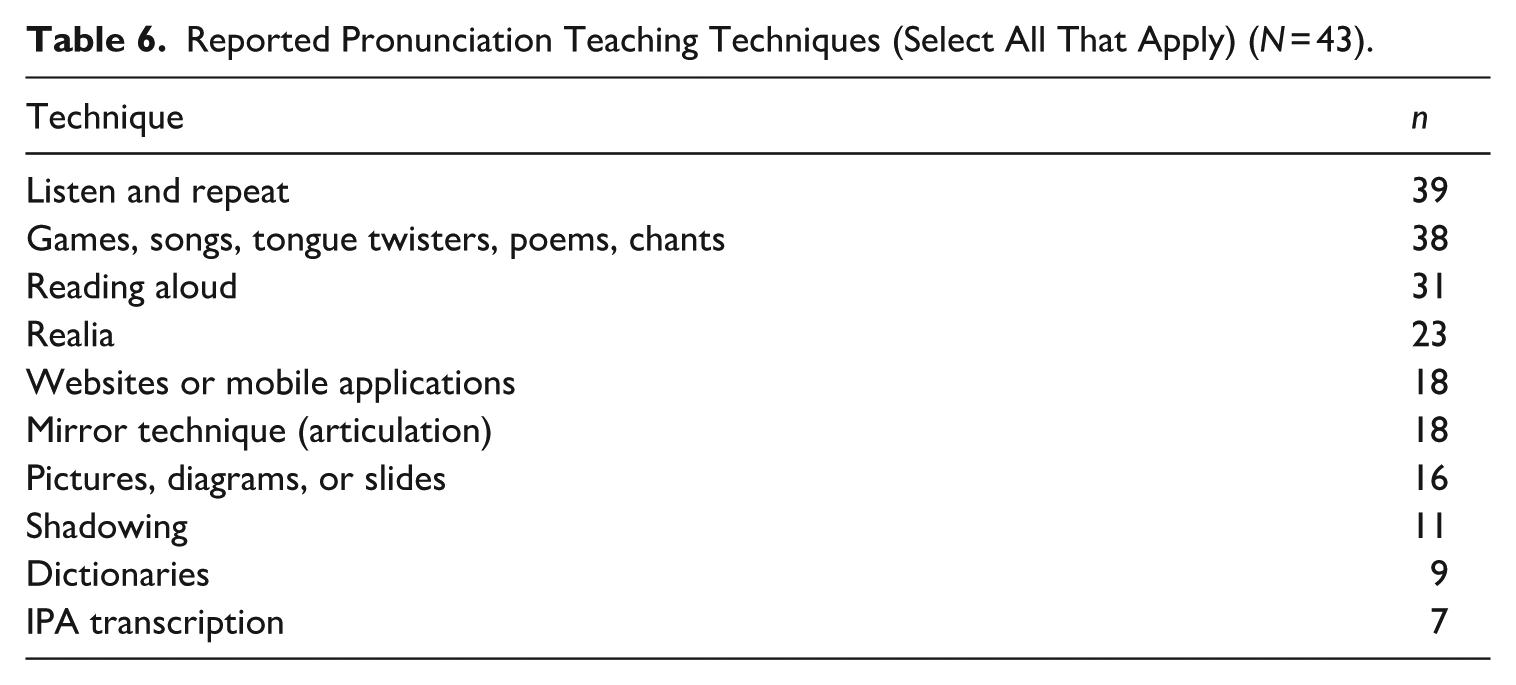
Interview data described variation in instructional choices across learner age, proficiency level, and classroom context. In open-ended responses, some participants who identified working with young learners described rhythm-based and playful activities to support engagement and sound awareness. Others who referenced adult learners reported relying more heavily on structured repetition and explicit modeling. Several interviewees, including two who worked with young learners and one who worked with adult learners, described using mirror techniques or exaggerated articulation when teaching sounds that differed from learners’ L1s.
These findings describe variation in instructional techniques reported across different classroom contexts.
4.5. Multilingual Classroom Contexts and Instructional Complexity
Of the 43 participants, 30 reported teaching in multilingual classrooms, while 13 indicated that their classrooms were linguistically more homogeneous. The following analysis focuses on the 30 teachers working in multilingual settings. Among these teachers, 16 indicated that linguistic diversity influenced their pronunciation instruction, 5 reported that it did not, and 9 expressed uncertainty. These distributions are presented in Table 7.
Perceived Influence of Multilingual/Multicultural Classroom Context on Pronunciation Teaching (N = 30).
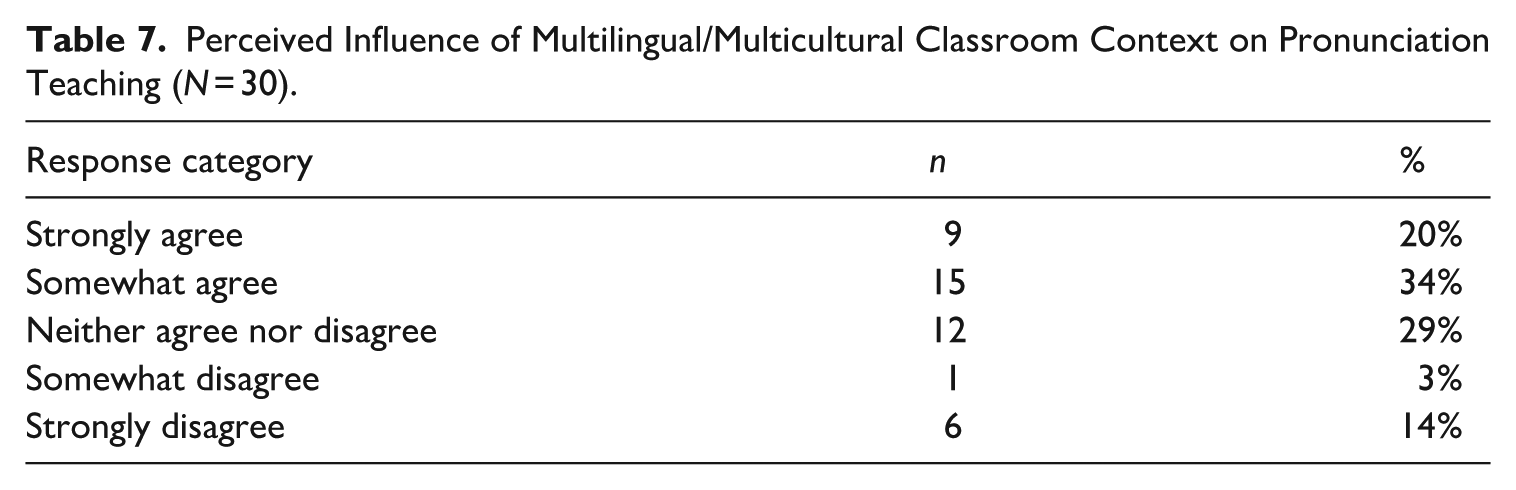
Teachers who perceived multilingual classrooms as challenging described the need to design differentiated activities for learners with distinct L1 backgrounds and phonological profiles. By contrast, teachers who reported fewer challenges often taught in contexts where learners shared a dominant L1, which they described as resulting in more predictable pronunciation patterns. One participant stated:
“Students come from different language backgrounds, and each group has different pronunciation problems.”
Survey data further indicated that 26 participants perceived pronunciation instruction as more predictable and manageable in classrooms where learners shared the same L1. Interview data reflected similar descriptions, with teachers explaining that shared linguistic backgrounds facilitated instructional planning and enabled more targeted feedback.
These findings describe teachers’ reported experiences in multilingual and linguistically homogeneous classroom contexts.
5. Discussion
The findings in relation to the two research questions highlight two broad dimensions shaping pronunciation instruction in European EFL contexts: (1) teacher preparation and self-perceived pronunciation competence; and (2) institutional and classroom constraints, including multilingual learner composition.
Interpreted within research on pronunciation pedagogy, teacher cognition, and multilingual education, the findings indicate that pronunciation instruction is shaped by multiple interacting factors. Teachers described making instructional decisions in response to training experiences, perceived pronunciation confidence, curricular expectations, available materials, and classroom linguistic diversity. These decisions were reported as situational and context dependent rather than guided by fixed instructional routines.
5.1. Training and Beliefs in Pronunciation Instruction
Addressing Research Question 1, the findings indicate that pronunciation instruction is shaped by the interaction between teachers’ formal training experiences and their beliefs about pronunciation, including self-perceived competence and L1 influence. These dimensions are analytically distinct: while training refers to formal preparation in pronunciation pedagogy, beliefs reflect teachers’ self-perceptions, prior linguistic experiences, and assumptions about pronunciation and its role in instruction, consistent with teacher cognition frameworks (Borg, 2003, 2015).
Across the dataset, teachers frequently reported a gap between formal preparation in pronunciation pedagogy and the instructional demands encountered in classroom contexts. Although 36 participants reported completing at least one course in phonology or pronunciation, these experiences were often described as theoretical rather than practice-oriented. Teachers reported limited opportunities to rehearse pronunciation instruction, observe model lessons, or receive feedback on classroom-based pedagogical decisions. This pattern aligns with prior research suggesting that pronunciation is often treated as an abstract linguistic domain rather than as a classroom-oriented pedagogical practice (Derwing & Munro, 2015; Georgiou, 2019). As a result, teachers described relying on self-directed professional development, experimenting with instructional techniques, drawing on online resources, or modeling their practice on perceived native-speaker norms. Newton and Nguyen’s (2020) notion of autonomous professionalization is relevant in this context, as teachers reported developing instructional competence independently in the absence of systematic institutional support.
From a teacher cognition perspective, limited preparation has implications for instructional decision making. As Murphy (2017) argues, pedagogical content knowledge for pronunciation develops through guided practice, contextualized modeling, and reflective feedback. In the absence of such preparation, teachers may develop declarative phonological knowledge without the procedural expertise required to adapt instruction to classroom conditions. These findings indicate that training alone does not sufficiently account for how teachers approach pronunciation instruction in practice.
In addition to formal preparation, teachers’ beliefs about their own pronunciation competence and perceived L1 influence emerged as important factors shaping instructional decision making. Although many teachers expressed general confidence, nearly three-quarters acknowledged that their L1 influenced their English pronunciation. For some participants, this influence was associated with hesitation when modeling pronunciation or providing corrective feedback, consistent with findings from Bardakci (2015), and Altoeriqi (2020). At the same time, several participants described using their own L1 experience as a resource for anticipating learner difficulties, suggesting that perceived limitations may also function as pedagogical assets.
Participants also described differing views regarding pronunciation norms. Some teachers reported engaging in study-abroad experiences to improve their pronunciation, suggesting that native-speaker models continued to inform professional self-perceptions. At the same time, others emphasized that shared linguistic backgrounds with learners facilitated anticipation of pronunciation difficulties, aligning with Jindapitak’s (2014) argument that non-native teachers may draw on shared linguistic experience in instruction. Some participants emphasized intelligibility over native-like accuracy, reflecting contemporary pronunciation frameworks. However, endorsement of intelligibility did not consistently correspond to instructional confidence, particularly in multilingual classrooms where variability in learner needs was greater.
Overall, these findings suggest that pronunciation-related instructional decisions are shaped not only by formal training but also by teachers’ beliefs, self-perceived competence, and prior linguistic experiences. From a teacher cognition perspective (Borg, 2003, 2015), pronunciation instruction emerges as a site where knowledge, beliefs, and contextual factors interact, particularly in the absence of sustained, practice-oriented preparation.
5.2. Contextual Constraints and Instructional Decision Making
Addressing RQ2, which examined institutional and classroom factors influencing pronunciation-related instructional decision making, the findings indicate that pronunciation instruction is shaped by multiple interacting constraints, including L1-related phonological challenges, curricular and material limitations, instructional time pressure, and classroom linguistic composition.
Learners’ L1 influence was frequently described as a central challenge, consistent with research on cross-linguistic phonological transfer (Syed & Hussein Abdelrady, 2022; Grandyna, 2018; Kralova & Mala, 2018). Teachers reported segmental and suprasegmental difficulties, such as interdental fricatives and rhythmic patterns, that required targeted instructional responses. Interview data also described learner reluctance to modify established articulatory habits, which participants associated with comfort and familiarity in pronunciation use (Martinez & Joy, 2017). These challenges required teachers to make ongoing decisions about which pronunciation features to prioritize and how to provide effective feedback within constrained instructional conditions.
At the same time, structural constraints related to curriculum, materials, and time limited teachers’ capacity to respond systematically. As reported in prior studies (Algethami & Alsofyani, 2017; Luan, 2021), pronunciation was often treated as optional within curricular frameworks, leaving teachers to supplement instruction through personally developed resources. These material constraints increased preparation demands, particularly in classrooms with diverse learner needs. Time pressure further restricted instructional opportunities, with teachers describing pronunciation as one of the components reduced when curricular demands intensified, consistent with Batool et al. (2021). Participants also reported that providing differentiated feedback required additional instructional time, further constraining pedagogical options.
Classroom linguistic composition added an additional layer of complexity. Teachers working in multilingual classrooms described increased differentiation demands, as learners brought diverse L1 backgrounds and phonological systems. In contrast, teachers working with learners who shared a dominant L1 described pronunciation instruction as more predictable and manageable. These findings align with Rasheed et al.’s (2017) argument that linguistically diverse classrooms require greater diagnostic and adaptive expertise. At the same time, unfamiliarity with learners’ L1s was reported as limiting teachers’ ability to explain articulatory contrasts and respond to pronunciation difficulties effectively.
However, multilingual classrooms were not uniformly described as challenging. Some participants emphasized pedagogical opportunities associated with learners’ prior bilingual experience and metalinguistic awareness, consistent with Haukås (2016). These findings suggest that multilingualism functions both as a source of instructional complexity and as a potential resource, depending on teachers’ preparedness and instructional conditions.
The findings indicate that pronunciation-related instructional decision making is shaped by the interaction of institutional constraints and classroom linguistic diversity. Teachers described adapting their instructional choices in response to competing demands, balancing available time, resources, and learner needs when determining how and when to address pronunciation. Rather than following fixed instructional routines, pronunciation teaching in these contexts appears to involve context-dependent decision making under conditions of structural and pedagogical constraint.
5.3. Synthesis and Responses to the Research Questions
In response to RQ1, the findings indicate that pronunciation instruction is shaped by the interaction between teachers’ training experiences and their beliefs about pronunciation, including self-perceived competence and L1 influence. Preparation was frequently described as insufficiently practice-oriented, leading teachers to rely on self-directed professional learning. At the same time, perceived L1 influence affected instructional confidence, at times creating hesitation in modeling pronunciation while also supporting teachers’ ability to anticipate learner difficulties.
In response to RQ2, pronunciation-related instructional decision making was shaped by multiple interacting contextual factors, including L1-related pronunciation challenges, curricular marginalization, material limitations, and instructional time pressure. Classroom linguistic composition further influenced instructional complexity, particularly in multilingual settings where teachers were required to differentiate instruction across diverse learner profiles.
Taken together, the findings indicate that pronunciation instruction in European EFL contexts involves context-dependent pedagogical decision making emerging from the interaction between teacher cognition and structural classroom conditions. Rather than following fixed instructional routines, teachers described adapting their practices in response to training experiences, beliefs, institutional constraints, and learner diversity. This positions pronunciation instruction as a dynamic site of pedagogical decision making in multilingual EFL classrooms.
6. Conclusion
This study examined how EFL teachers working across diverse European contexts understand and enact pronunciation instruction, with attention to teacher preparation, instructional challenges, pedagogical strategies, and multilingual classroom environments. Drawing on survey data from 43 teachers across 22 European countries and interview data from 8 participants, the mixed-methods design provides insight into how pronunciation instruction is influenced by teacher cognition, institutional conditions, and classroom linguistic diversity.
Across data sources, teachers frequently reported limited preparation for pronunciation instruction, particularly in relation to classroom-oriented pedagogical practice. Many participants described developing instructional approaches independently after entering the profession. Quantitative findings showed that commonly used techniques, such as listen-and-repeat activities, songs, chants, games, tongue twisters, poems, and reading aloud, were widely reported. More specialized approaches, including phonetic transcription, dictionary-based techniques, or systematic shadowing, were reported less frequently.
Pronunciation instruction was also described as shaped by multiple constraints. Teachers identified L1-related pronunciation challenges, limited instructional time, insufficient materials, and curricular frameworks that placed less emphasis on pronunciation. Multilingual classrooms were reported as increasing instructional complexity for some teachers, particularly when differentiation across learners’ linguistic backgrounds was required. At the same time, some participants described multilingual settings as offering opportunities for leveraging learners’ metalinguistic awareness.
Overall, the findings indicate that pronunciation instruction in European EFL contexts involves context-dependent instructional decisions. Teachers described balancing training experiences, classroom composition, available resources, and curricular expectations when determining how to address pronunciation. These results contribute to research on pronunciation pedagogy, teacher cognition, and multilingual education by illustrating how instructional practices are shaped through the interaction of training, institutional conditions, and classroom context.
6.1. Limitations
Several limitations should be considered when interpreting these findings. First, the study focused exclusively on EFL teachers working in European contexts. Although online data collection enabled broad geographic reach, recruitment across multiple time zones posed logistical challenges, and several interested teachers were unable to participate in follow-up interviews. Additional interviews could have strengthened the qualitative depth of the analysis.
Second, while participants represented 22 countries, some national contexts were represented by only one or two teachers. This limits the extent to which country-specific teacher education systems or curricular structures can be compared. Future research with larger and more balanced samples within individual national contexts could provide more fine-grained insights into regional variation.
Third, the survey data were analyzed descriptively, and the sample size did not support inferential statistical comparisons. As a result, the findings should be interpreted as indicative patterns rather than generalizable relationships between variables. Future research using larger samples could examine group differences and associations more systematically.
The inclusion of interview-only participants resulted in uneven participation across data sources, limiting direct comparison between survey and interview findings.
Fourth, the survey instrument was researcher-designed and not formally validated through psychometric procedures. Therefore, findings based on survey responses should be interpreted as exploratory and descriptive rather than as validated measurement outcomes. Future research could refine, pilot, and validate instruments for examining pronunciation teaching in multilingual EFL contexts.
Finally, the survey grouped multilingual and multicultural classroom contexts together. Participants interpreted these categories in different ways, which may have influenced their responses. Future research should distinguish more explicitly between linguistic and cultural diversity to capture their distinct pedagogical implications with greater precision.
6.2. Implications and Recommendations
6.2.1. Teacher Education
The findings suggest implications for pronunciation pedagogy within pre-service teacher education. Rather than positioning pronunciation primarily as theoretical phonology, programs may benefit from greater emphasis on classroom-oriented instructional practice. This could include opportunities to observe modeled pronunciation lessons, engage in microteaching, and receive feedback on instructional decisions in linguistically diverse contexts. Teacher education may also support future teachers in diagnosing cross-linguistic pronunciation challenges and developing strategies for addressing linguistic diversity in pronunciation instruction.
6.2.2. Curriculum and Materials
At the curricular level, pronunciation may be more explicitly integrated as a component of communicative competence rather than treated as optional or supplementary. Teachers’ accounts indicated that limited emphasis on pronunciation in syllabi and instructional materials contributed to its reduced attention in practice. Curricula that allocate structured time for pronunciation and provide adaptable, classroom-ready materials may reduce teachers’ preparation burden and support more consistent instruction across linguistically diverse classrooms.
6.2.3. Professional Development
Ongoing professional development may play an important role in supporting pronunciation pedagogy. Teachers who reported study-abroad experiences or targeted training described increased pronunciation confidence, suggesting that professional learning opportunities focused on pronunciation instruction may support instructional decision making. Workshops, online modules, coaching, and collaborative professional learning communities may provide structured alternatives to isolated, self-directed professional learning.
6.2.4. Future Research
Future research may build on this study in several ways. Classroom-based observations could allow closer examination of pronunciation instruction as it unfolds in real time, particularly in linguistically diverse settings. Comparative studies examining teachers with varying levels of pronunciation training could further clarify the relationship between preparation and instructional choices. Research may also distinguish more explicitly between multilingual and multicultural classroom dynamics and examine how each relates to pronunciation pedagogy.
Distinguishing between techniques teachers report using most frequently and those they perceive as most effective could also provide insight into how instructional decisions are made under contextual constraints.
Overall, the findings underscore the value of examining pronunciation instruction within broader classroom and institutional contexts. Such an approach may inform teacher education, curriculum design, and future research on pronunciation pedagogy in multilingual educational environments.
Footnotes
Appendix A. Survey Instrument
The online survey consisted of 19 items organized into 7 sections. All Likert-scale items used 5-point response formats.
Appendix B. Interview Protocol
The semi-structured interview protocol consisted of six core questions:

Ethical Considerations
This study followed all institutional ethical guidelines for research involving human participants.
Funding
The authors received no financial support for the research, authorship, and/or publication of this article.
Declaration of Conflicting Interests
The authors declared no potential conflicts of interest with respect to the research, authorship, and/or publication of this article.