






Abstract
This study aims to examine the effect of instructors’ behaviors supporting learner autonomy on students’ academic achievement and anxiety levels related to reading, listening, writing, and speaking skills in teaching Turkish as a foreign language. The study was conducted during the 2023–24 academic year with two sample groups, consisting of 1,002 students learning Turkish and 115 instructors working at the School of Foreign Languages of a state university. Participants were selected using simple random sampling within the accessible population. Reliability and validity analyses of the scales were conducted, and the adequacy of the measurement models was confirmed through confirmatory factor analysis (CFA) and the Heterotrait–Monotrait Ratio (HTMT). According to the results of multiple group analysis and canonical correlation analysis, the necessity (β = 0.114, p < 0.001) and display (β = 0.020, p = 0.001) dimensions of learner autonomy support behaviors had a positive and significant effect on academic achievement. However, the effect of foreign language learning anxiety on academic achievement was not statistically significant (β = −0.031, p > 0.05). The canonical correlation analysis revealed a 40% shared variance between the Learner Autonomy Support Scale (LASS) and Turkish Language Learner Anxiety Scale (TFLAS) data sets, with speaking anxiety contributing most strongly to the first canonical variable, while learning process support emerged as the most influential autonomy-support dimension. The findings indicate that instructors’ autonomy-supportive behaviors positively influence the academic achievement of learners of Turkish as a foreign language. Although anxiety negatively affects academic achievement, this effect is not statistically significant. Overall, the results are consistent with the literature, highlighting that supporting learner autonomy enhances motivation and may reduce anxiety in language learning. These findings emphasize the importance of learner-centered approaches and autonomy-supportive instructional strategies in teaching Turkish as a foreign language and offer practical guidance for instructors seeking to promote active student participation in the learning process.
Keywords
1. Introduction
Kaşgarlı Mahmut’s ‘Dīwān Lughāt al-Turk’ [Compendium of the languages of the Turks] – an eleventh-century dictionary and cultural encyclopedia of Turkic languages – is considered one of the earliest works in the field of teaching Turkish to non-native speakers. Although language teaching dates back to very early periods, the literature indicates that systematic and programmed approaches became particularly prominent from the mid-twentieth century onwards (Richards & Rodgers, 2014). In recent years, with the development of technological opportunities in a globalizing world and the emergence of new teaching approaches shaped by changing conditions, this field has become more visible and recognized within the academic community.
Turkish ranks fifth among the most widely spoken languages in the world. In the field of teaching Turkish as a foreign language, significant language teaching activities are carried out both within Türkiye and abroad through various institutions and organizations based in Türkiye (Aykaç, 2015; Bayraktar, 2020). In addition to traditional methods, contemporary approaches based on four fundamental language skills – such as those promoted by the European Language Portfolio – are being adapted and developed in line with current teaching methods and techniques. When an individual decides to learn a foreign language of their own volition, they take the first step toward learner autonomy (Little, 2022). In this process, learners regulate their study methods in accordance with their own learning styles and continue the learning process in line with their personal preferences (Chong & Reinders, 2025).
According to the constructivist approach, knowledge is not an element directly transmitted from teacher to student; rather, learners become active producers of knowledge and meaning through their cognitive development processes. In this context, knowledge is constructed by the learner (Doğan, 2024). Wang (2011) emphasizes that this approach focuses on learning rather than teaching. Learners’ autonomy throughout the learning process and their active participation in learning activities are therefore of great importance. With the increasing prevalence of student-centered approaches in foreign language teaching, learners’ participation in the learning process, their assumption of learning responsibility, and their ability to manage the process effectively have become priorities. In constructivist learning environments, supporting learner autonomy and enabling learners to take responsibility for their own learning are regarded as fundamental requirements (Bay et al., 2017). From a constructivist perspective, knowledge and reality are constructed by the learner; in other words, reality does not exist as an independent phenomenon outside the learner’s mind (Duffy & Jonassen, 2013).
In student-centered approaches, learning is viewed as a collaborative process between teachers and learners. In this process, teachers assume the role of facilitators who guide learning rather than authorities who transmit knowledge, while learners become active agents who produce knowledge instead of passively receiving it. This shift in expectations toward learners has paved the way for the development of different learning theories, during which the concept of learner autonomy has gained prominence. Learner autonomy is generally defined as learners’ assumption of responsibility for their own learning processes (Chong & Reinders, 2025). In order for learners to acquire this responsibility, their needs must be met, their motivation supported, and their direct participation in the learning process ensured (Borg & Alshumaimeri, 2019). In instructional settings, instructors’ support for learner autonomy enables students to participate more actively and effectively in learning activities (Wang & Ryan, 2023).
Today, the importance of learner-centered instructional environments is steadily increasing. Learners who can approach phenomena or problems holistically by considering their causes and consequences, who take responsibility for their own learning processes, and who set achievement as a goal are among the core outcomes of contemporary educational paradigms (Little, 2022). In this regard, identifying the relationship between learner autonomy and academic achievement is expected to make a significant contribution to guiding learners more effectively and designing high-quality learning activities. When learners become aware of their responsibility for their own learning, they enter an autonomous learning process; this responsibility manifests itself across all stages of learning, including planning, implementation, and evaluation.
Teaching Turkish to non-native speakers has become an increasingly strategic field in a globalizing world characterized by growing cultural, academic, and economic interactions. In this process, teaching Turkish as a foreign language is not limited to the development of linguistic skills alone; it also necessitates consideration of cognitive and affective variables that influence the learning process. In the foreign language teaching literature, particularly within constructivist frameworks, positioning learners as active agents in the learning process and supporting learner autonomy are identified as key factors that enhance the quality of learning outcomes (Holec, 1981; Little, 2007; Reeve, 2016).
Learner autonomy is defined as learners’ ability to take responsibility for their learning processes, determine their own learning goals and strategies, and develop intrinsic motivation for learning. In this context, numerous studies have demonstrated that instructors’ autonomy-supportive behaviors play a decisive role in learners’ academic achievement and affective responses to the learning process (Alrabai, 2021; Brandisauskiene et al., 2023). However, most of these studies have been conducted in the context of widely taught foreign languages such as English, while research that holistically examines the relationship between instructors’ autonomy-supportive behaviors, academic achievement, and language learning anxiety in teaching Turkish as a foreign language remains limited.
Therefore, examining the effects of autonomy-supportive practices on both cognitive outcomes (academic achievement) and affective variables (reading, writing, listening, and speaking anxiety) in the context of teaching Turkish to non-native speakers has the potential to fill a significant gap in the field.
2. Theoretical Model and Hypotheses
When the literature is examined, it is seen that learner autonomy supports behavior and autonomy support (Basri, 2023; Bonneville-Roussy et al., 2013; Brandisauskiene et al., 2023; Núñez et al., 2015; Oğuz et al., 2016; Özkal & Demirkol, 2014; Reeve & Jang, 2006; Yazıcı, 2016), self-efficacy (Miao & Ma, 2023; Tilfarlioglu & Ciftci, 2011; Yılmaz, 2010), beliefs (Aelterman et al., 2014; Carter, 1999; Durmuşçelebi et al., 2018; Yılmaz, 2010), English proficiency (Dafei, 2007; Pratiwi & Waluyo, 2023), student strategies, course success and final grades (Durmuşçelebi et al., 2018; Hofferber et al., 2014; Jehanghir et al., 2024), motivational incentives (Abula et al., 2020; Cheon et al., 2023; Haerens et al., 2015; Langdon et al., 2017) and anxiety (Kabiri et al., 2018; Li et al., 2024; Yukselir & Ozer, 2022). However, there is no study in the literature examining the relationship between learner autonomy support behavior and success in teaching Turkish to foreigners. Therefore, the following assumptions were developed in this study:
Hypothesis 1: There is a positive significant relationship between the necessity dimension of learner autonomy support behaviors and academic achievement.
Hypothesis 2: There is a positive significant relationship between the display dimension of learner autonomy support behaviors and academic achievement.
When the existing literature on anxiety is examined, studies have explored its relationship with psychological resilience (Duffy et al., 2019; Liu et al., 2024; Perişan & Koç, 2021; Wu et al., 2025) and depression (Agyapong et al., 2022; Balanza Galindo et al., 2008; Bozkurt, 2004; Dyrbye et al., 2006; Eldeleklioğlu, 2006; Erbiçer et al., 2021). A separate body of research has investigated the relationship between anxiety and academic achievement (D’Agostino et al., 2022; Mesri, 2012; Hu et al., 2024; McCurdy et al., 2023; Tan & Pang, 2023), generally indicating that higher anxiety levels are associated with lower achievement outcomes. However, no study has simultaneously examined the relationships among anxiety level, academic achievement, and autonomy-supportive teaching behaviors within a single integrated model. To address this gap, the following hypotheses were formulated:
Hypothesis 3: There is a negative significant relationship between anxiety level and academic achievement.
Hypothesis 4: There is a canonical negative correlation between anxiety level and learner autonomy support behavior in at least one variable type.
The theoretical model of this study is grounded in Self-Determination Theory (SDT) (Ryan & Deci, 2020), which explains individuals’ learning behaviors and outcomes in terms of the degree to which they perceive autonomy support from their social environment. According to SDT, when teachers support students’ three basic psychological needs – autonomy, competence, and relatedness – students are more likely to develop intrinsic motivation, deeper academic engagement, and higher achievement. A substantial body of empirical research has confirmed the role of autonomy-supportive teaching in promoting these outcomes (Behzadnia et al., 2019; Núñez & León, 2019; Siacor et al., 2024). On the basis of this theoretical framework, instructors’ autonomy-supportive behaviors were conceptualized as the primary predictor variables in the proposed model. Specifically, these behaviors were examined through two distinct dimensions – necessity and display – which are defined in the following section.
In this study, autonomy-supportive teaching behaviors were examined through two dimensions: necessity and display. The necessity dimension reflects instructors’ perceptions regarding the extent to which autonomy-supportive behaviors are pedagogically necessary in the instructional process, whereas the display dimension refers to the extent to which these behaviors are actually enacted in classroom practices. This distinction is important for capturing potential discrepancies between teachers’ beliefs and their instructional behaviors. Martinez et al. (2025) emphasize that teachers’ beliefs substantially influence educational practices, while Rodgers et al. (2022) further argue that instructional practices are unlikely to change unless teachers’ beliefs are transformed. Accordingly, both the perceptual (necessity) and behavioral (display) aspects of autonomy support were treated as separate variables in the model.
Foreign language learning anxiety was positioned as an affective predictor variable that may influence academic achievement. Previous research has demonstrated that foreign language learning anxiety can negatively affect students’ performance and participation in the learning process, particularly in speaking, writing, reading, and listening skills (Han et al., 2022; Soran et al., 2022; Thach & Khau, 2025; Zuhri et al., 2022). Han et al. (2022) further note that such anxiety may be more pronounced in higher education contexts. In this regard, anxiety is conceptualized not merely as an outcome of the learning process but also as an antecedent variable that can directly or indirectly influence academic achievement. Within the framework of Self-Determination Theory, it is assumed that autonomy-supportive instructional environments may reduce students’ anxiety levels and thereby contribute to academic achievement. Consequently, anxiety was included in the model as a predictor of academic achievement and examined alongside autonomy-supportive teaching behaviors.
In line with these considerations, the proposed theoretical model aims to test, within an integrated framework, the effects of instructors’ autonomy-supportive behaviors on both cognitive outcomes (academic achievement) and affective variables (foreign language learning anxiety; Figure 1).
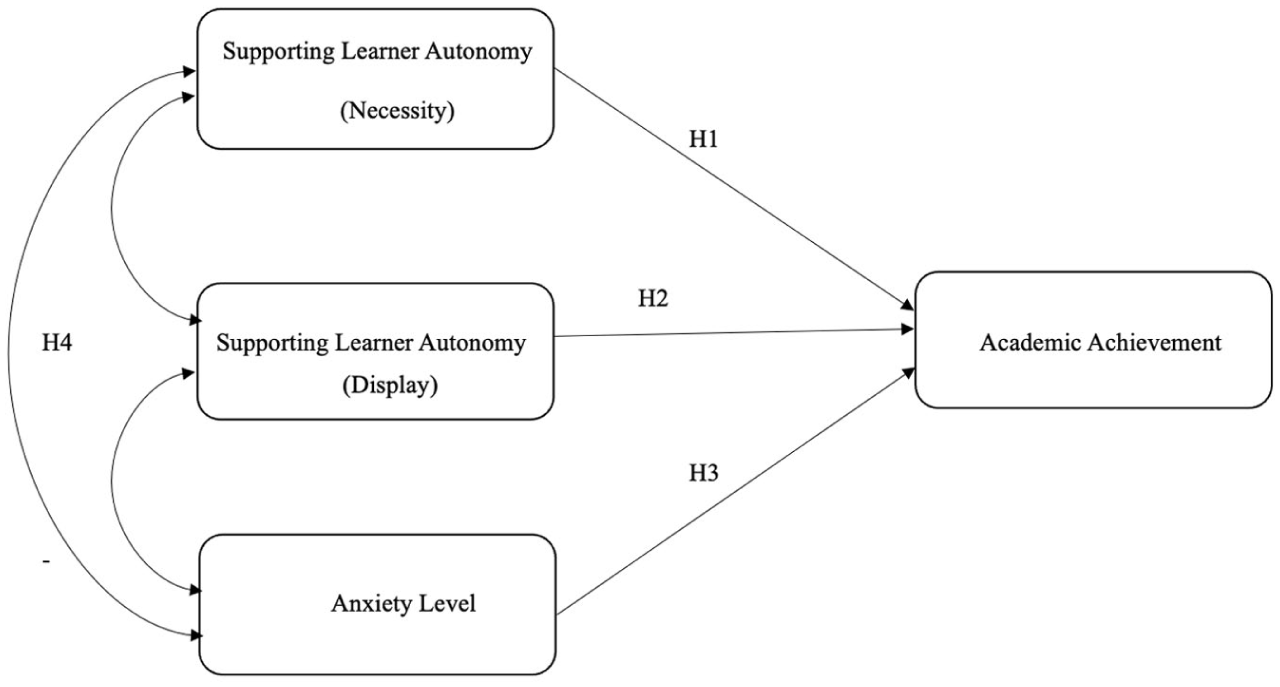
Theoretical model of the relationships among autonomy-supportive teaching behaviors, foreign language learning anxiety, and academic achievement.
3. Method
3.1. Population and Sample
The study population consisted of instructors and teachers working at the Schools of Foreign Languages of universities who taught Turkish as a foreign language during the 2023–24 academic year. In determining the sample, the accessible population was taken as the basis. Accordingly, participants were selected from among students enrolled in, and instructors working at, the institutions where the study was conducted. Within this accessible population, simple random sampling was employed to identify the participants included in the study.
In scientific research, collecting data from the entire population is considered ideal; however, in practice, it is often not feasible to obtain data from all members of the population (Acharya et al., 2013). According to Miles and Huberman (1994), it is essential for researchers to be specific about what they intend to investigate and the rationale underlying the study. In order to employ simple random sampling, the population from which the sample is drawn must be clearly defined, and it must be known which groups are to be included in or excluded from the sampling process. For instance, Cohen et al. (2002) emphasize that when a sample includes only one gender, the findings cannot be generalized to both males and females within a given population.
Simple random sampling is a technique in which members of the population are selected randomly for inclusion in the study (Bhardwaj, 2019). It is typically used for relatively homogeneous populations and ensures that each unit has an equal probability of being selected (Singh, 2003). In the present study, this sampling technique was employed to determine both samples. Although the aim was to reach the entire population, practical constraints necessitated the inclusion of instructors and teachers who teach Turkish as a foreign language, as well as students learning Turkish as a foreign language, in the study samples.
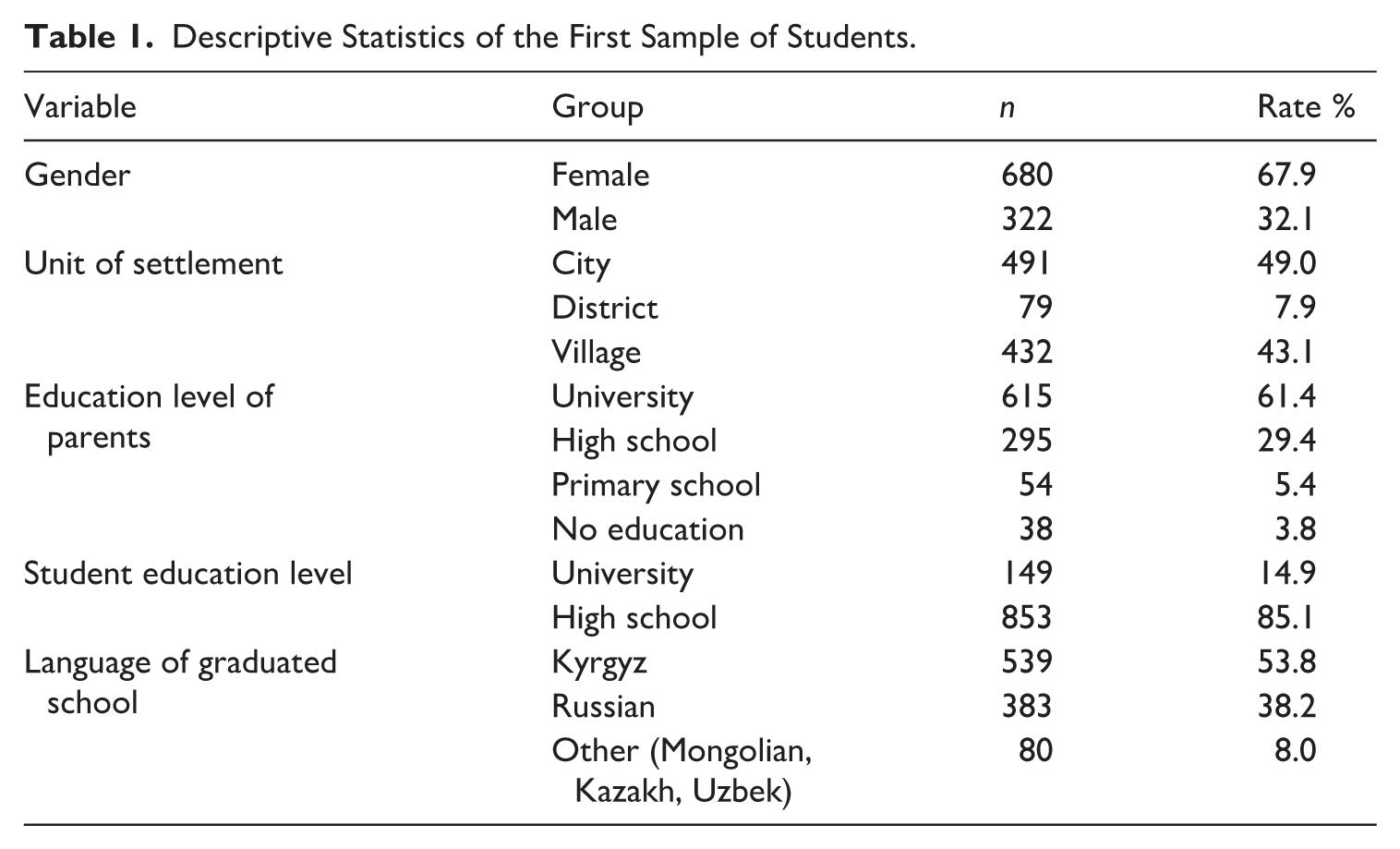
The sample size of the study was determined at a 95% confidence level using Taro Yamane’s (1967) sample size calculation formula, based on a total population of 1,270 Turkish preparatory students enrolled during the 2023–24 academic year. According to Yamane’s formula, the minimum sample size required to adequately represent the population was calculated as 304 participants. During the data collection process, potential data loss and inaccessible participants were taken into consideration, and the sample size was increased by approximately 10%. Accordingly, the final sample of the study consisted of 1,002 Turkish preparatory students. Of these participants, 322 (32.1%) were male, and 680 (67.9%) were female. Descriptive statistics related to the sample are presented in Table 1.
Descriptive Statistics of the First Sample of Students.
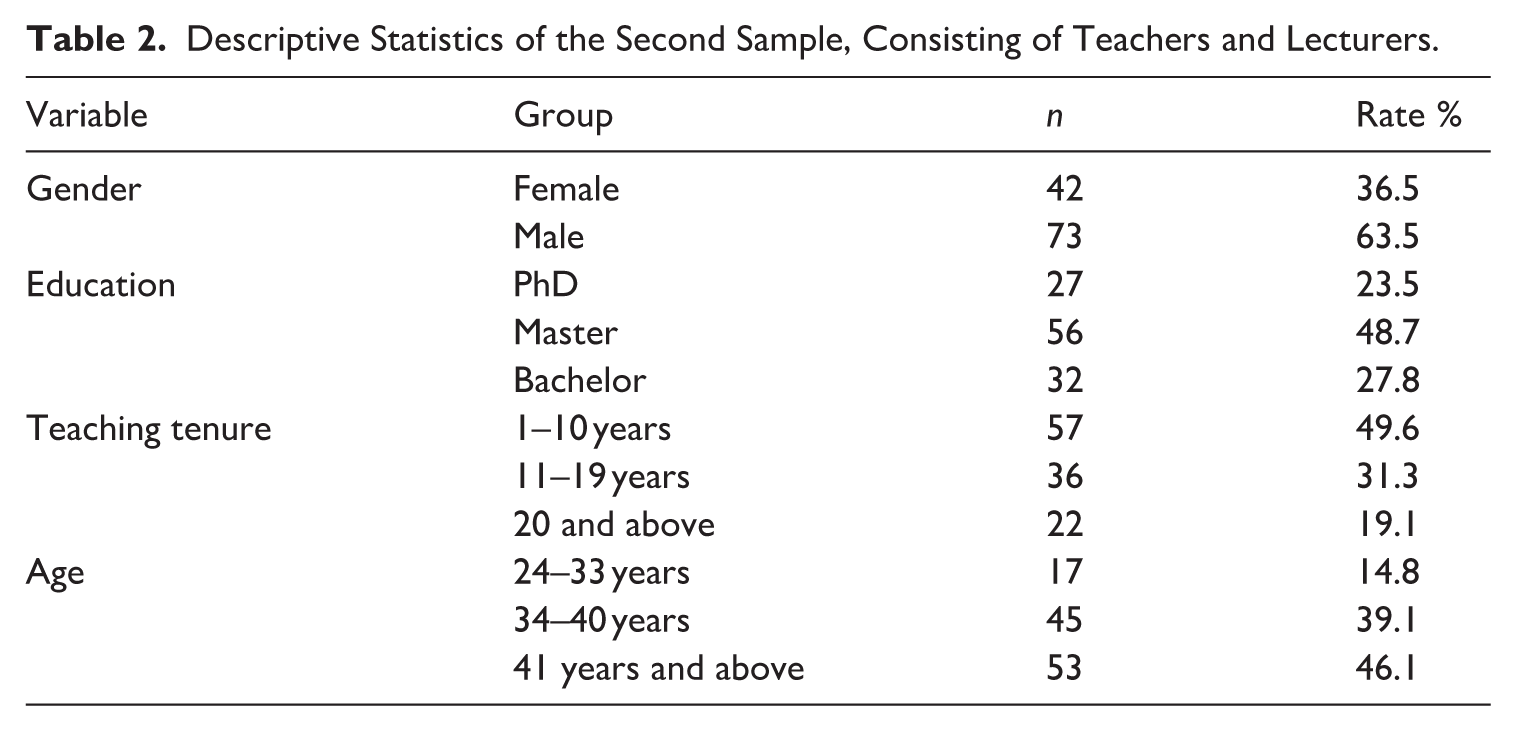
The second sample consisted of instructors and teachers who teach Turkish as a foreign language. The required sample size was calculated using Yamane’s formula, which was applied to the population of instructors and teachers. Based on this calculation, a minimum sample size of 109 participants was deemed sufficient to represent the population of 150 individuals. To ensure adequate representation of the population, data were collected from a total of 115 instructors and teachers. Descriptive statistics for the instructor sample are presented in Table 2.
Descriptive Statistics of the Second Sample, Consisting of Teachers and Lecturers.
3.2. Data Collection Instruments
3.2.1. Demographic Information Form
The demographic information form was developed by the researcher. Separate forms were prepared for instructors and students. The form designed for instructors included variables such as gender, educational background, years of teaching experience, and age. The student form consisted of variables including gender, place of residence, parents’ educational background, students’ educational level, and the language of the school from which they graduated.
3.2.2. Learner Autonomy Support Scale (LASS)
The Learner Autonomy Support Scale was developed in Turkish by Oğuz (2013). The scale has a three-factor structure, namely emotion and thought support, learning process support, and assessment support. The instrument consists of a total of 16 items. For the necessity dimension of the scale, the internal consistency coefficient was reported as α = 0.89. Cronbach’s alpha coefficients for the subdimensions were α = 0.85 for emotion support, α = 0.76 for thought support, and α = 0.81 for learning process support. The second part of the scale, which measures the display of autonomy-supportive behaviors, also consists of 16 items, with an overall internal consistency coefficient of α = 0.92. The internal consistency coefficients for its subdimensions were reported as α = 0.88, α = 0.80, and α = 0.86, respectively. In the present study, Cronbach’s alpha values were calculated as α = 0.88 for the necessity dimension and α = 0.89 for the frequency of display dimension.
3.2.3. Turkish as a Foreign Language Learning Anxiety Scale (TFLAS)
The Turkish as a Foreign Language Learning Anxiety Scale was developed in Turkish by Genç Köylü and Işık (2020). The scale has a four-factor structure comprising listening anxiety, writing anxiety, speaking anxiety, and reading anxiety. The instrument consists of 39 items, and its construct validity has been established. Cronbach’s alpha reliability coefficients were reported as α = 0.95 for listening anxiety, α = 0.92 for writing anxiety, α = 0.90 for speaking anxiety, α = 0.91 for reading anxiety, and α = 0.96 for the overall scale. In the present study, the internal consistency coefficient of the scale was found to be α = 0.91.
3.2.4. Academic Achievement Scores
Academic achievement scores of students learning Turkish as a foreign language were obtained from the School of Foreign Languages at Kyrgyz–Turkish Manas University with the necessary written permissions. Students’ scores in reading comprehension, listening comprehension, written expression, and oral expression courses during the 2023–24 spring semester were used as indicators of academic achievement.
3.3. Data Collection and Analysis
Data were collected from both instructors and students using electronically administered survey instruments. Multiple measurement tools were employed simultaneously, and common method variance was tested. Prior to hypothesis testing, it is essential to establish evidence of internal consistency and validity (APA Guidelines for Psychological Assessment and Evaluation, 2020). Accordingly, the measurement scales were subjected to analyses of normality, reliability, and validity. Reliability was assessed by calculating Cronbach’s alpha coefficients. Confirmatory factor analysis (CFA) was conducted to verify the factor structures of the scales. In addition, the theoretical model proposed in the study was validated using CFA, while convergent and discriminant validity were examined using the Heterotrait–Monotrait ratio (HTMT).
3.4. Reliability and Validity
The results of the normality tests indicated that the data obtained from the Learner Autonomy Support Scale showed a kurtosis value of −0.210 and a skewness value of −0.442 (SD = 0.226), while the data from the Turkish as a Foreign Language Learning Anxiety Scale exhibited a kurtosis value of −0.227 and a skewness value of −0.766 (SD = 0.077). These values indicate that the data were approximately normally distributed. Measurement reliability was assessed by calculating Cronbach’s alpha coefficients, and the results demonstrated that each construct exhibited satisfactory internal consistency.
To conduct canonical correlation analysis, the assumption of no multicollinearity among the variables must be met. Multicollinearity is generally suspected when correlation coefficients between variables are .90 or higher. Accordingly, Variance Inflation Factor (VIF) values were examined to determine whether multicollinearity was present. According to the literature, acceptable VIF thresholds have been suggested as 10 or below (Büyükuysal & Öz, 2016), 2.5 or below (Allison, 1999), and 4 or below (Hair et al., 2010). In the present study, the obtained VIF values ranged between 1.08 and 1.80, indicating that multicollinearity was not a concern.
To examine the validity of the measurement models, Confirmatory Factor Analysis (CFA) was conducted using AMOS. Several model fit indices were employed to evaluate overall model fit. Based on the literature (Browne & Cudeck, 1993; İlhan & Çetin, 2014; Kline, 2011), acceptable fit criteria include χ2/df values between 2 and 5, GFI values between .90 and .95, AGFI values between .85 and .90, CFI values between .90 and .95, NFI values between .90 and .95, PNFI values between .50 and .95, IFI values between .90 and .95, RMSEA values between .05 and .08, and PGFI values between .50 and .95. The results indicated that all measurement models demonstrated acceptable fit with the data (see Table 3).
Measurement Models.
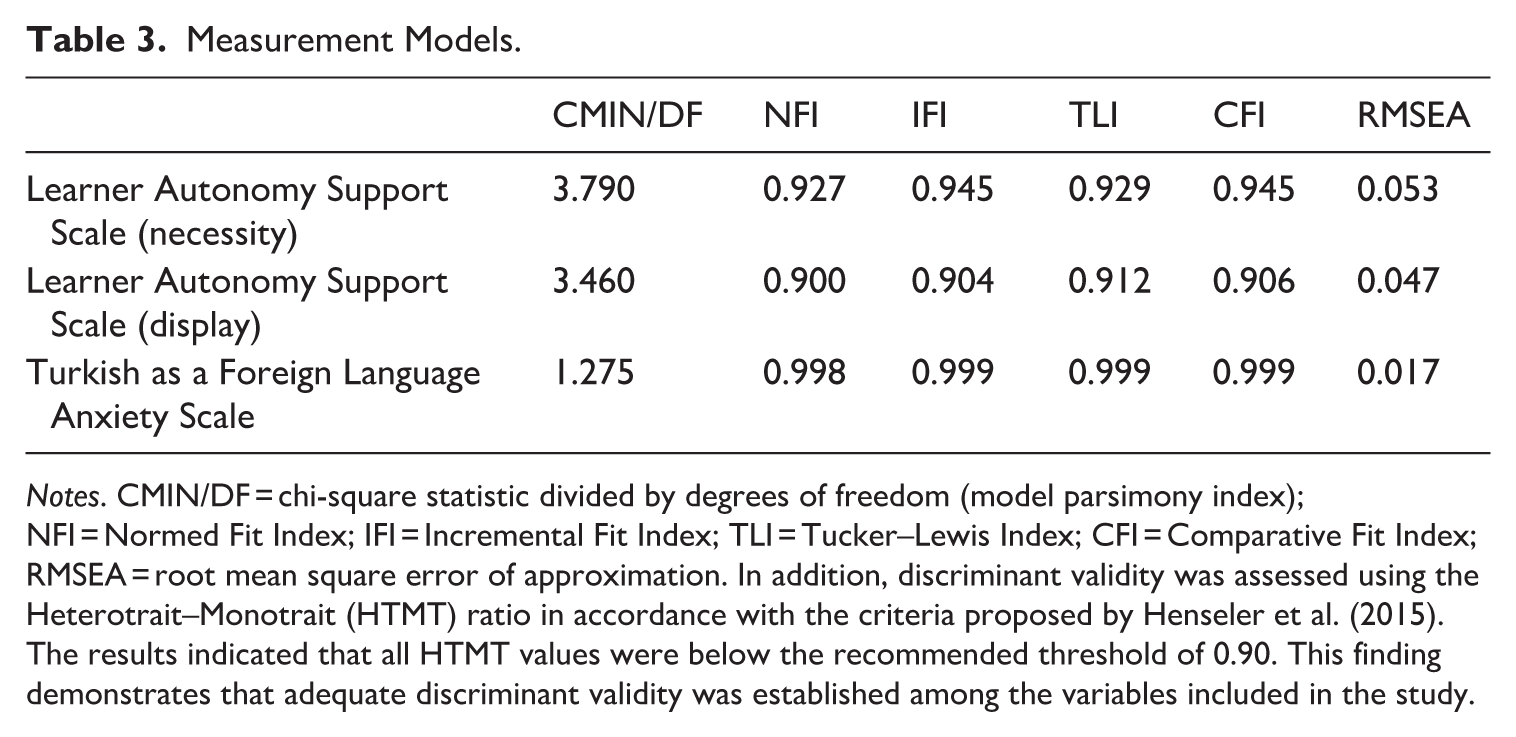
Notes. CMIN/DF = chi-square statistic divided by degrees of freedom (model parsimony index); NFI = Normed Fit Index; IFI = Incremental Fit Index; TLI = Tucker–Lewis Index; CFI = Comparative Fit Index; RMSEA = root mean square error of approximation. In addition, discriminant validity was assessed using the Heterotrait–Monotrait (HTMT) ratio in accordance with the criteria proposed by Henseler et al. (2015). The results indicated that all HTMT values were below the recommended threshold of 0.90. This finding demonstrates that adequate discriminant validity was established among the variables included in the study.
4. Results
The proposed hypotheses were tested using covariance-based structural equation modeling (CB-SEM) with SPSS AMOS. The results presented in Table 3 and Figure 2 illustrate the relationships between teachers’ autonomy-supportive behaviors – specifically the necessity and display dimensions – and academic achievement, as well as the relationship between foreign language learning anxiety and academic achievement among learners of Turkish as a foreign language.
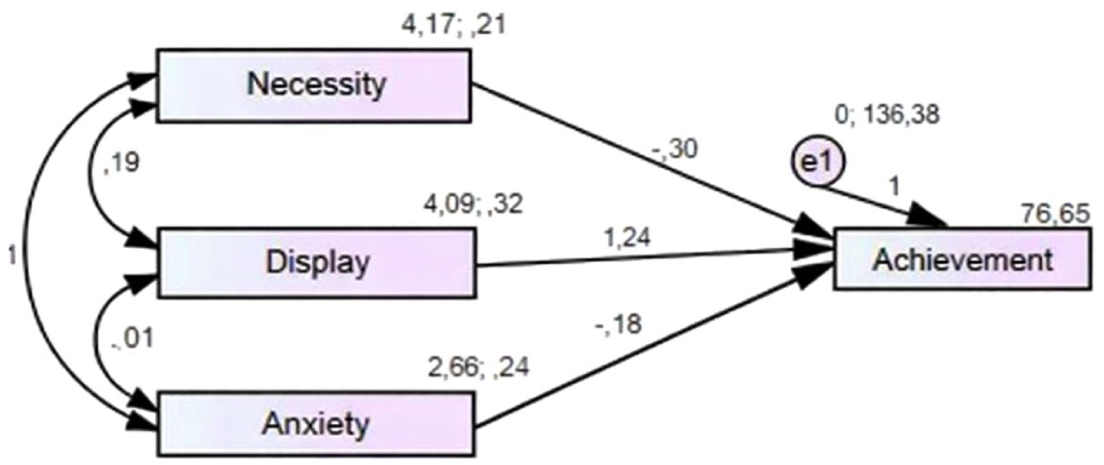
Multiple group analysis data related to the model.
As illustrated by the proposed model, the necessity dimension of autonomy-supportive teaching behaviors has a positive and statistically significant effect on academic achievement (β = 0.114, t = 8.323, p < .001). Similarly, the display dimension of autonomy-supportive behaviors exerts a positive effect on academic achievement (β = 0.020, t = 3.210, p = .001). In contrast, anxiety related to learning Turkish as a foreign language does not have a statistically significant effect on academic achievement (β = −0.031, t = −0.992, p > .05). The proposed factors accounted for 26.1%, 31.0%, and 24.2% of the variance in academic achievement, respectively (see Table 4).
Multiple Group Analysis Results.
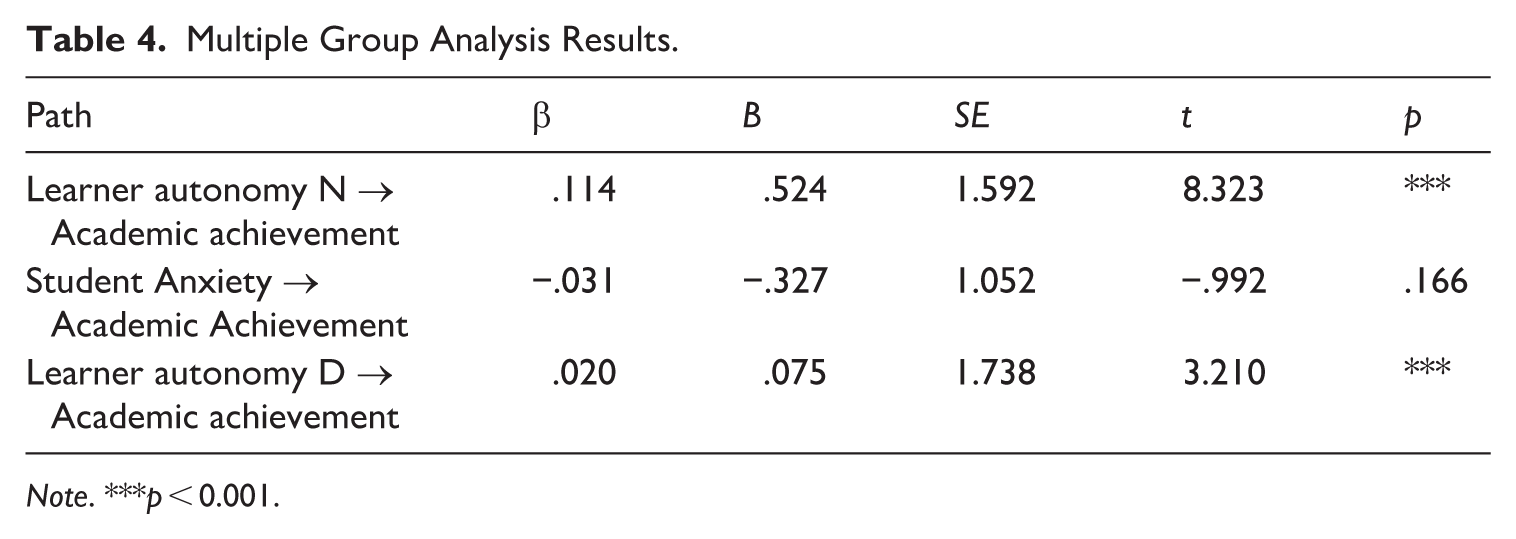
Note. ***p < 0.001.
A canonical correlation analysis was conducted to examine the relationships between the dimensions of the two variable sets. The results indicated that, among the three canonical variate pairs, only one pair was statistically significant. To assess the statistical significance of the derived canonical models, Wilks’ Lambda was employed as the multivariate test statistic. Accordingly, canonical correlation coefficients, eigenvalues, Wilks’ Lambda values, F statistics, degrees of freedom, and significance levels were calculated.
An examination of the F values based on Wilks’ Lambda revealed that the model corresponding to the first canonical variate pair was statistically significant (Wilks’ λ = 0.597, F(25) = 5.129, p < .001). In contrast, the canonical variate pairs following the first were not statistically significant. These results are presented in Table 5.
Canonical Correlation Results.
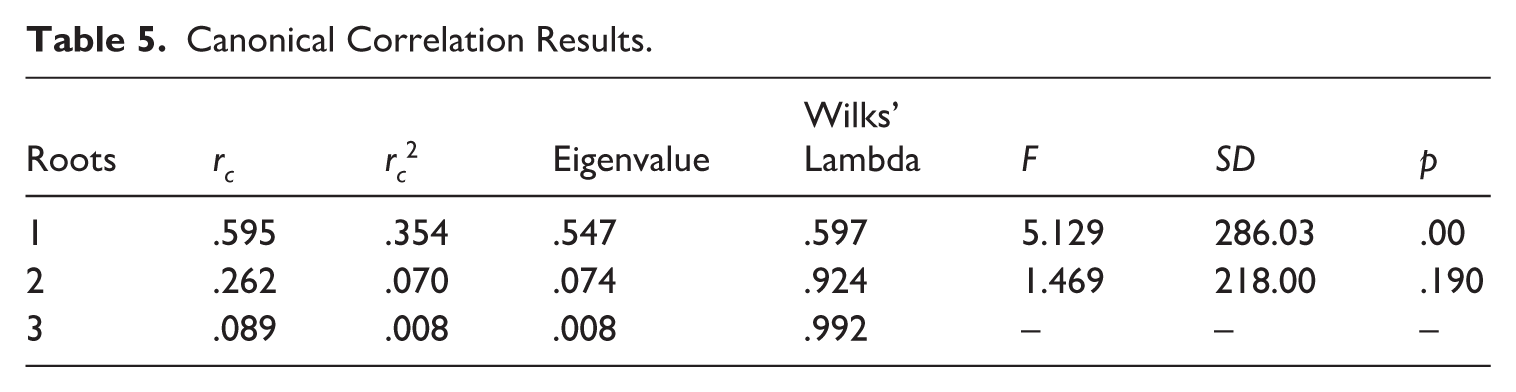
To examine the relationships between the variables in both sets and their corresponding canonical variates, standardized canonical coefficients were employed. Standardized coefficients indicate the amount of change, in standard deviation units, in the canonical variate associated with a one standard deviation increase in the observed variable (Sharma, 1996). Accordingly, the standardized canonical correlation coefficients for the variables in the first and second data sets are presented in Table 5.
For the first set of variables, the canonical equation associated with the first canonical variate is presented below:

Similarly, canonical equations can be derived for the remaining canonical variates. Examination of the standardized coefficients indicates that speaking contributed most strongly to the first canonical variate, followed by reading, listening, and writing, respectively. Therefore, within the first data set, speaking emerged as the variable with the greatest explanatory power in the negative direction.
Regarding the second set of variables, an examination of the correlations between the variables and the canonical variates (Table 5) yielded the following canonical equation for the first canonical variate:

Further analysis of the standardized coefficients revealed that the learning process contributed most strongly to the first canonical variate, followed by assessment for the second canonical variate and emotion and thought for the third canonical variate.
As can be seen in Figure 3, the common variance between the Learner Autonomy Support Scale (LASS) and Turkish as a Foreign Language Learning Anxiety Scale (TFLAS) data sets has been calculated. According to Temurtaş (2016), since Wilks’ λ value is interpreted as the inverse of the effect size, it was calculated as 1-Wilks’ λ = 1–0.60 = 0.40. Accordingly, the common variance between the LASS and TFLAS data sets is 40%. Figure 3 shows these values.
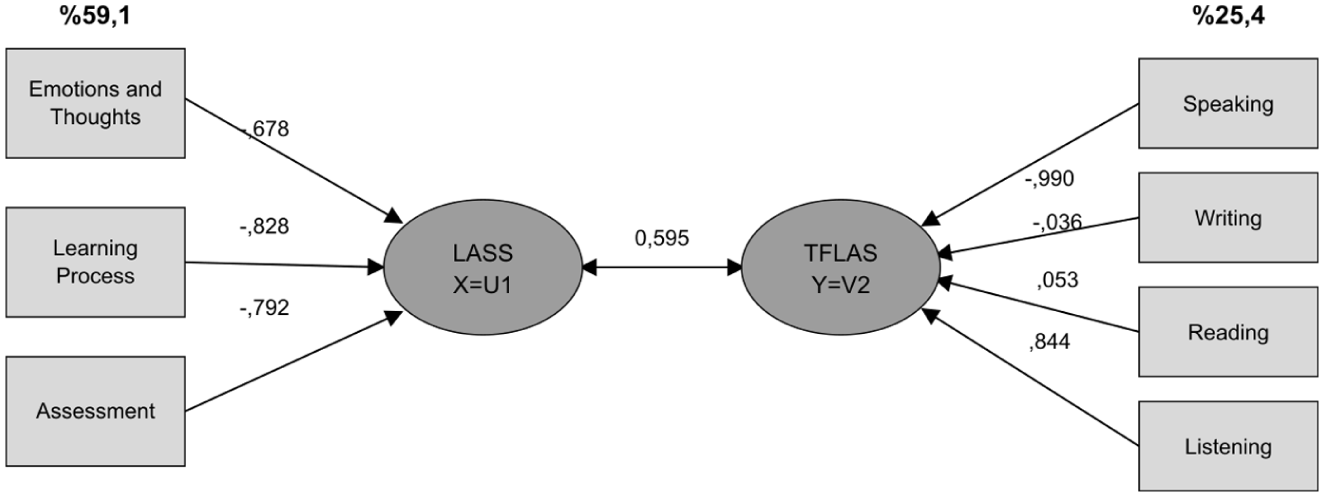
General scheme of canonical correlation analysis between learner autonomy scale (LAS) and Turkish language learner anxiety scale (TLLAS) data sets.
5. Discussion
The study investigated the relationship between Turkish language teachers’ behaviors that support learner autonomy and anxiety about learning Turkish as a foreign language and academic achievement. The results showed that the necessity sub-dimension of teachers’ behaviors that support learner autonomy had a positive effect on academic achievement. In addition, it was determined that the display sub-dimension of teachers’ behaviors supporting learner autonomy also had a positive effect on academic achievement. Learner autonomy, in relation to self-determination theory (Deci & Ryan, 2000; Ryan & Deci, 2020), can provide insight into what influences and supports students’ desire to learn. This is because high student achievement depends on being conscious and active, and researchers are conducting studies on how to improve this process (Brandisauskiene et al., 2023). According to self-determination theory, even if students have a choice based on their own interests, they are also open to the influence of others (Ryan & Deci, 2017). Therefore, it can be thought that the teacher’s support and display of student autonomy will have a positive effect on students’ academic achievement. In particular, the teacher’s behaviors that support student autonomy will minimize instructions by helping students understand their tasks and offering them options. This situation will enable students to understand their own competence and collaborate with others, and such an environment will increase intrinsic motivation, encouraging students to participate more in learning (Gagné & Deci, 2005; Reeve et al., 2018).
The findings of this study, which examined teachers’ behaviors in supporting learner autonomy, show that both the necessity and display subdimensions of these behaviors have a significant effect on academic achievement, which is consistent with the results of studies in the literature. Brandisauskiene et al. (2023) determined in their research that behaviors supporting learner autonomy have a positive effect on students’ desire to learn. Alrabai (2021) found in his study that teaching that supports autonomy has a positive effect on students’ classroom autonomy. Black and Deci (2000) found that teachers’ autonomy support has a positive effect on chemistry learning, Brandisauskiene et al. (2021) found a significant relationship between teacher support and student achievement, and Schmid (2018) found that teacher behaviors affect student achievement. There are numerous studies in the literature indicating that teacher learning autonomy behavior has a positive effect on academic achievement (Aybirdi Tanrıverdi, 2023; Germani et al., 2022; Lee et al., 2023; Xu et al., 2024). This study provides evidence that Turkish teachers’ behaviors that support learner autonomy positively affect the academic achievement of students learning Turkish as a foreign language.
Another important finding of the study is that anxiety about learning Turkish as a foreign language has an effect on academic achievement, but this effect is not significant. Anxiety is considered an important human phenomenon that affects human behavior and behavioral outcomes (Konwar et al., 2023). Therefore, it is assumed that students’ anxiety levels have a negative effect on academic achievement. The result of this study was that anxiety had a negative but not significant effect on academic achievement. Although there are studies suggesting that anxiety can have a positive effect on academic achievement (El-Anzi, 2005; Polat, 2017), it is generally accepted that it has a negative effect.
The canonical correlation test conducted for the fourth hypothesis revealed that only one of the three variable pairs formed had a statistically significant correlation. It was determined that the pairs following the first canonical correlation pair were not statistically significant. A review of the literature revealed findings that behaviors supporting learner autonomy increase academic motivation and academic perseverance (Jehanghir et al., 2024) and reduce academic stress (Zheng et al., 2020). According to Namaziandost et al. (2024), reasons such as fear of misunderstanding, making grammatical mistakes, and lack of academic motivation contribute to students’ academic anxiety. Teachers’ behaviors that support learner autonomy increase foreign language learners’ learning self-esteem (Gül & Taş, 2024; Orth & Robins, 2022). Low learning self-esteem, on the other hand, can lead to the development of academic anxiety (Zhao et al., 2021). The results of this study are consistent with the literature, showing that supporting students’ autonomy is related to their academic anxiety.
6. Conclusions
This study examined the relationships between instructors’ autonomy-supportive behaviors, foreign language learning anxiety, and academic achievement in the context of teaching Turkish as a foreign language. Grounded in Self-Determination Theory, the findings demonstrated that both the necessity and display dimensions of autonomy-supportive teaching behaviors positively predicted students’ academic achievement. These results indicate that when instructors not only perceive autonomy-supportive practices as pedagogically necessary but also actively implement them in classroom settings, students’ academic performance improves.
Although foreign language learning anxiety was found to be negatively related to academic achievement, this relationship did not reach statistical significance. This finding suggests that while anxiety may exert a suppressive effect on achievement, its influence may be mediated or moderated by other cognitive and affective variables within the learning process. The canonical correlation analysis further revealed a meaningful shared variance between learner autonomy support and foreign language learning anxiety, highlighting the interconnected nature of cognitive and affective dimensions in foreign language learning. Speaking anxiety emerged as the most influential component of the anxiety construct, while learning process support was the most salient dimension of autonomy-supportive behaviors.
Overall, the findings underscore the importance of learner-centered and autonomy-supportive instructional practices in teaching Turkish as a foreign language. By fostering autonomy-supportive learning environments, instructors can enhance students’ academic achievement and potentially mitigate anxiety-related barriers to learning.
7. Limitations and Suggestions for Future Research
Despite its contributions, this study has several limitations that should be considered when interpreting the findings. First, the study was conducted within a single institutional context, which may limit the generalizability of the results to other educational settings or cultural contexts. Second, the use of self-report instruments to measure autonomy support and anxiety may have introduced response bias, as participants’ perceptions may not fully reflect actual classroom practices or emotional states. Third, the cross-sectional design of the study restricts causal interpretations of the relationships among the variables. Finally, although anxiety was included as an affective predictor, other potentially influential variables, such as motivation, self-efficacy, or self-regulated learning strategies, were not examined within the model.
Future research could address these limitations by employing longitudinal or experimental designs to better capture the causal dynamics between autonomy-supportive teaching behaviors, anxiety, and academic achievement. Expanding the sample to include learners and instructors from different institutions and cultural contexts would also enhance the generalizability of the findings. In addition, future studies may incorporate qualitative methods, such as classroom observations or interviews, to gain deeper insight into how autonomy-supportive practices are enacted in instructional settings. Finally, integrating additional cognitive and affective variables – such as motivation, self-efficacy, and self-regulated learning – into future models may provide a more comprehensive understanding of the mechanisms through which autonomy support influences learning outcomes in teaching Turkish as a foreign language.
Footnotes
Acknowledgements
The authors would like to thank the Scientific Research Projects Coordination Office of Kyrgyz-Turkish Manas University for supporting this research.

Ethical Considerations
The study was conducted in accordance with the Declaration of Helsinki and approved by the Institutional Review Board. The Committee on Scientific Research and Publication Ethics at Kyrgyz-Turkish Manas University approved the scales used in this study (approval number: R.30.2024/BAYEK-4111, dated 06.03.2024).
Consent to Participate
Informed consent was obtained from all participants involved in the study. Participants gave verbal consent before they started filling out the scale.
Author Contributions
The first author wrote the data analysis, results, and discussion sections. The second author wrote the introduction, theoretical background, and methods sections. Both authors contributed to every section of the article.
Funding
The authors disclosed receipt of the following financial support for the research, authorship, and/or publication of this article: This research was funded under the Scientific Research Projects of Kyrgyz–Turkish Manas University (project number KTMU-BAP-2024.DRT.02).
Declaration of Conflicting Interests
The authors declared no potential conflicts of interest with respect to the research, authorship, and/or publication of this article.
Data Availability Statement
The data that support the findings of this study are available from the corresponding author upon reasonable request.
Institutional Review Board
The study was conducted in accordance with the Declaration of Helsinki, and approved by the Institutional Review Board.