






Abstract
In the present study, we developed and tested the psychometric properties of the Second or Foreign Language Boredom Coping Strategies Scale, an instrument for measuring language learners’ coping strategies in response to the experience of boredom. The research is based on a four-dimensional model of coping mechanisms, which includes the behavioral approach, cognitive approach, behavioral avoidance, and cognitive avoidance. Each factor comprises three subcomponents, which delineate the diverse strategies learners adopt to mitigate boredom in language learning contexts. The scale was tested using a sample of 363 learners of English as a foreign language at the tertiary level. The factorial structure was analyzed through confirmatory factor analysis and exploratory structural equation modeling to verify the construct validity of the measurement model and to evaluate the associations between latent variables. The findings demonstrated that the Second or Foreign Language Boredom Coping Strategies Scale effectively captures distinct ways of coping with boredom, offering valuable insights into how students respond to this emotion in language learning contexts. The Second or Foreign Language Boredom Coping Strategies Scale also demonstrated various significant associations with positive and negative language learning emotions (i.e., anxiety, boredom, and enjoyment), grit, and language achievement. The analysis also confirmed measurement invariance across gender and showed no evidence of differential item functioning across self-reported language proficiency levels, providing further support for the psychometric robustness of the Second or Foreign Language Boredom Coping Strategies Scale.
1. Introduction
Second or foreign language (L2) classrooms are inherently dynamic settings characterized by a diverse spectrum of emotional experiences (Pawlak et al., 2024). These affective experiences may range from positive emotions, such as enthusiasm, enjoyment, and pride (Dewaele et al., 2018; Dewaele & MacIntyre, 2014; Khajavy & Lüftenegger, 2024), to negative emotions including boredom, shame, anxiety, and embarrassment (Khajavy et al., 2025; Kruk et al., 2021; Teimouri, 2018), all of which contribute to shaping the emotional landscape of L2 learning environments (Gregersen & Mercer, 2022; Solhi, Elahi Shirvan, & Benlioğlu, 2024). A ubiquitous emotional experience in L2 learning, which has in recent years received considerable attention from researchers, is L2 learning boredom (Kruk et al., 2025; Pawlak, Kruk, & Zawodniak, 2022; Solhi, 2024). Empirical studies have generally focused on the nature, antecedents, impacts, and associations of L2 learning boredom with various emotional, cognitive, motivational, behavioral, and achievement-related variables (e.g., Kruk et al., 2022; Pawlak et al., 2021; Pawlak, Kruk, Zawodniak, & Pasikowski, 2022; Solhi, 2024).
In the face of the widespread presence of boredom in L2 classrooms, learners may employ a variety of boredom coping strategies (BCS) to deal with this negative emotion (Pawlak, Derakhshan et al., 2025; Solhi et al., 2025). Nett et al. (2010) categorize BCS into four distinct types, based on two dimensions—that is, approach or avoidance orientation: behavioral approach, cognitive approach, behavioral avoidance, and cognitive avoidance. Specifically, whereas approach strategies involve addressing the problem directly, avoidance strategies focus on withdrawing from the boredom-inducing situation. Although Nett et al.’s (2010) study provides a comprehensive theoretical framework for measuring learners’ BCS, the scale was initially developed for mathematics classes. As a result, applying it to L2 learning contexts necessitates adaptation. Given that L2 learning contexts present unique cognitive, emotional, and social challenges that distinguish them from other educational settings (Gregersen & Mercer, 2022), a context-specific scale for measuring L2 learners’ BCS is necessary. Furthermore, several instruments have been developed and validated to evaluate domain-specific L2 learning boredom (e.g., Kruk et al., 2023; Li et al., 2023; Pawlak, Botes, et al., 2025; Pawlak et al., 2026). However, there is currently no scale specifically developed to assess how L2 learners cope with boredom. This highlights a significant gap in L2 literature, emphasizing the need for a context-sensitive instrument that captures the strategies learners employ to manage boredom in L2 learning environments.
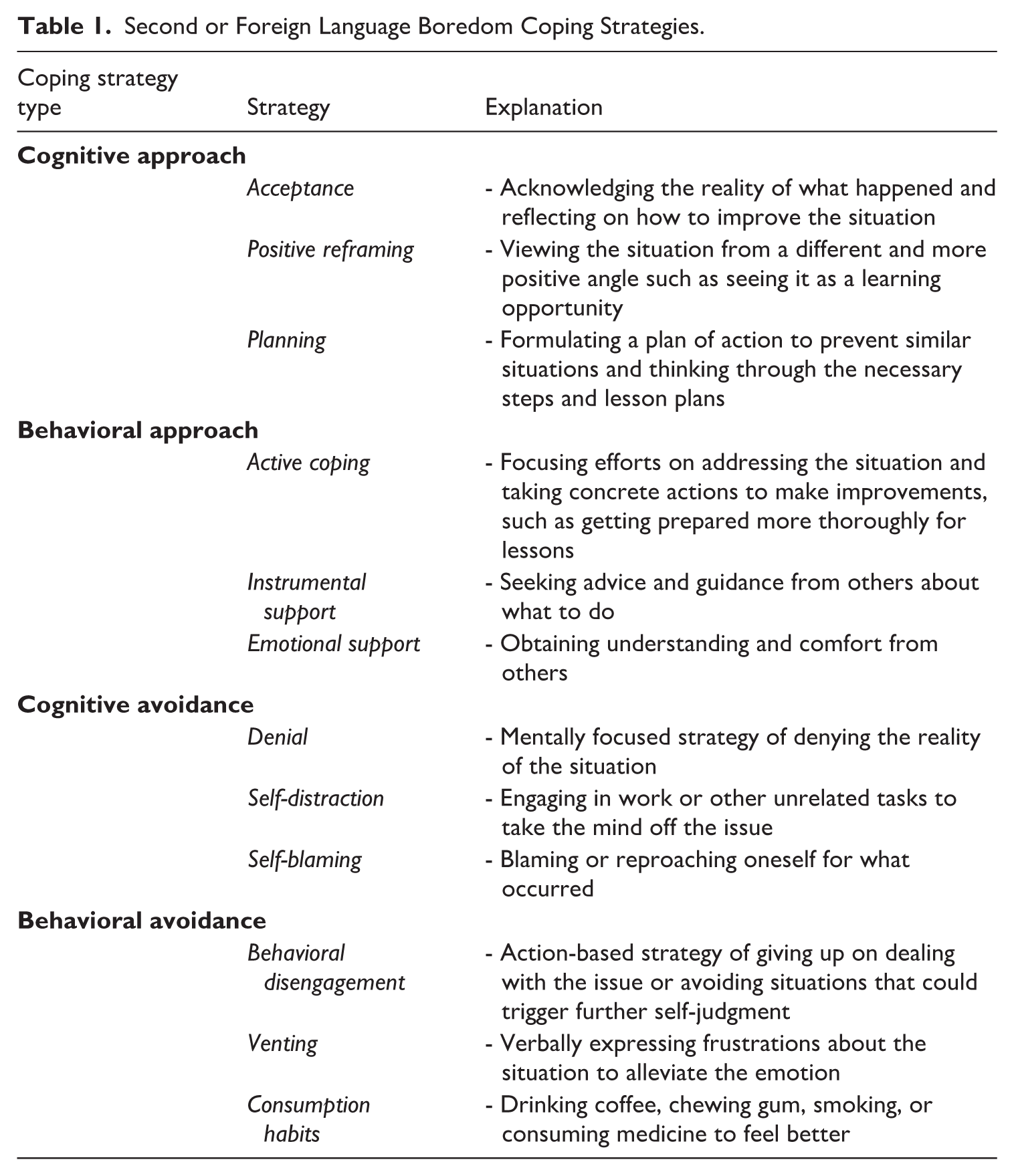
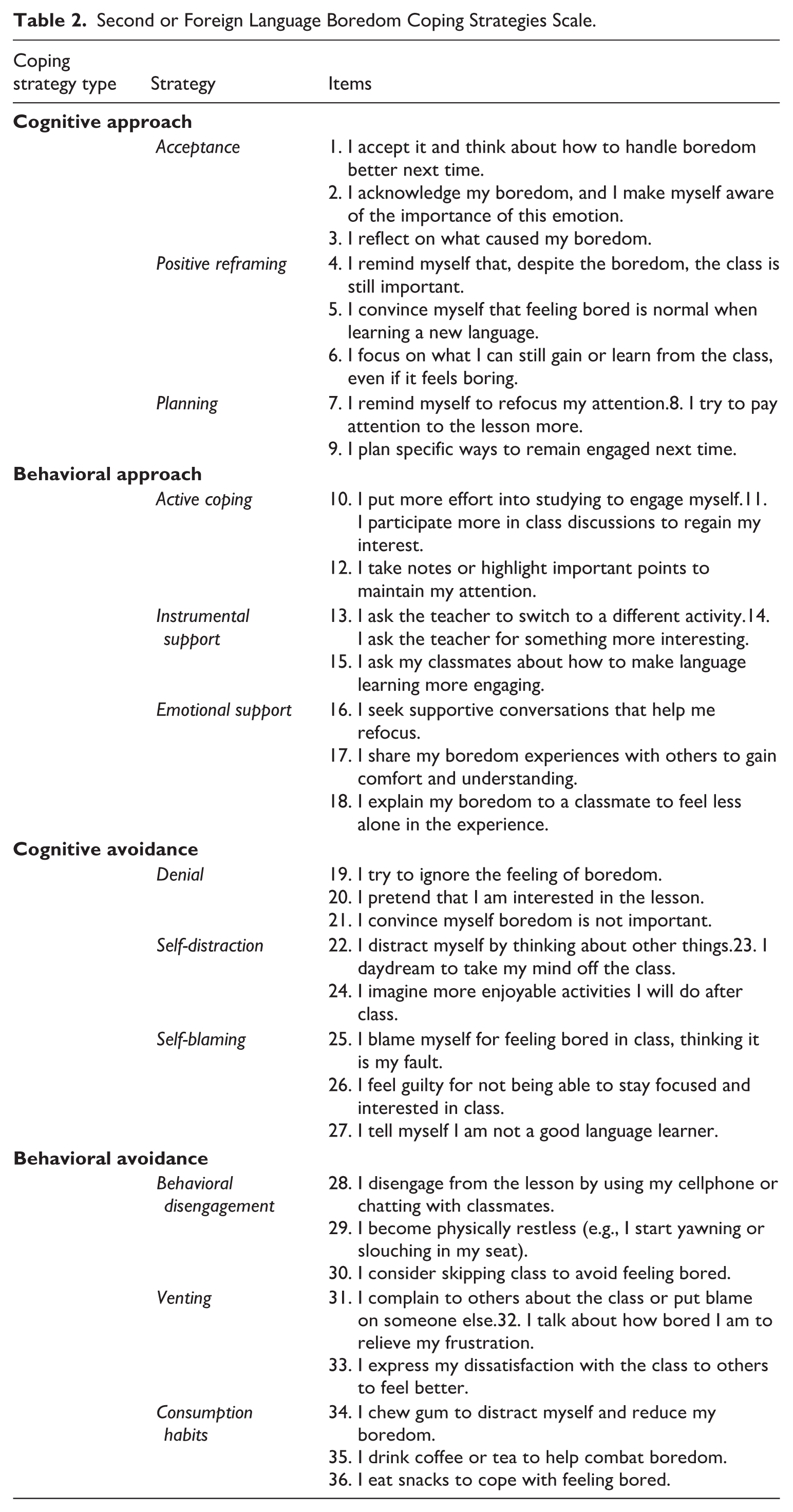
To this end, the present research explores the factorial structure and psychometric features of the L2 Boredom Coping Strategies (L2BCS) Scale. The 36-item instrument was initially developed based on the multidimensional boredom coping framework, drawing on the model proposed by Nett et al. (2010) and the general coping strategies scale adapted by MacIntyre et al. (2020). Specifically, the instrument encompasses four latent components, each comprising three subcomponents that reflect specific coping strategies (see Table 1). Each subcomponent is measured through three items (see Table 2). The factor structure of the instrument is examined using confirmatory factor analysis (CFA) to measure the construct validity of the measurement model, and exploratory structural equation modeling (ESEM) to assess the structural associations between latent variables and test the hypothesized model of coping with L2 learning boredom. Furthermore, the study examined how the scale is correlated with positive and negative L2 learning emotions (i.e., boredom, anxiety, and enjoyment), L2 grit, and L2 achievement.
Second or Foreign Language Boredom Coping Strategies.
Second or Foreign Language Boredom Coping Strategies Scale.
2. Literature Review
2.1. L2 Learning Boredom, Antecedents, and Associations
L2 learning boredom is a negative emotion characterized by an internal feeling of emptiness and a perceived absence of meaning or purpose (Kruk & Zawodniak, 2020). This affective experience is often referred to as an unobtrusive or “silent” emotion (Goetz et al., 2014, p. 402). However, despite its generally hidden and subtle nature, it is one of the most prevalent emotions in L2 learning environments (Pawlak et al., 2024). Following pioneering studies, primarily conducted in the Polish context (e.g., Kruk, 2016a, 2016b; Kruk et al., 2020; Pawlak, Kruk, et al., 2020; Pawlak et al., 2021), L2 learning boredom has received substantial research attention within the psychology of language learning and teaching (e.g., Dewaele et al., 2023; Kruk et al., 2025; Solhi et al., 2025). Previous studies have highlighted several factors contributing to L2 learning boredom, underscoring the major impact of external factors such as teachers and instructional activities, and learner-related factors ranging from general boredom proneness to physical fatigue (Elahi Shirvan, Shahnama, et al., 2024; Kruk et al., 2022; Zhao & Wang, 2024). For instance, Nakamura et al.’s (2021) study identified several key antecedents of boredom, including cognitive overload, inadequate L2 proficiency, task difficulty, mismatched activities, limited comprehension, and a lack of idea generation.
A wide range of studies has also explored the associations of this emotional experience with different affective, motivational, and behavioral variables in diverse L2 learning contexts. In general, the studies have shown that this negative emotion adversely affects L2 learning achievement in both the short and long term (Li et al., 2025). Specifically, L2 learning boredom has been found to be positively linked to L2 learning anxiety (Dewaele et al., 2023), demotivation (Solhi, 2024), and anger (Zhao & Wang, 2024). In contrast, this emotion has revealed a strong negative relationship with L2 learning enjoyment (Li, 2022), willingness to communicate (Solhi, 2024), and L2 motivation (Solhi, Derakhshan, et al., 2024). For example, Li’s (2022) study revealed that a strong negative association existed between learning enjoyment and boredom among university-level L2 learners. Furthermore, the research indicated that L2 learners’ attitudes toward the foreign language were the most influential internal contributor to boredom, whereas teacher friendliness was found to be the most significant teacher-oriented factor. These findings underscore the critical impact of both individual and contextual factors in shaping students’ boredom dispositions in L2 learning contexts.
2.2. L2 Boredom Coping Strategies
Learners may use a range of strategies to alleviate boredom during L2 learning. These coping strategies vary across four main types: behavioral approach, cognitive approach, behavioral avoidance, and cognitive avoidance, each reflecting distinct ways in which learners cognitively and behaviorally regulate their emotions in response to boredom (Nett et al., 2010). Although approach-based strategies aim to directly address and confront boredom-inducing situations through constructive cognitive reflections or behavioral efforts, avoidance-based strategies include a diverse set of thought-focused tactics and action-driven responses that seek to escape L2 learning boredom rather than addressing it effectively (Solhi, Derakhshan, et al., 2024). Using cognitive approaches, learners engage mentally with boredom-inducing situations constructively. Thus, L2 learners might contemplate the reasons behind a boredom-inducing event, reflect on why such an event happened, and endeavor to identify ways to capitalize on it. For instance, a bored L2 learner is likely to remind herself or himself of the importance of a lesson at the moment boredom emerges. Behavioral approaches involve implementing proactive measures to tackle the source of boredom. For example, a bored L2 learner might suggest that teachers incorporate more variety into the lessons. In contrast, cognitive avoidance strategies encompass mental disengagement from the situation. L2 learners may distance themselves by shifting their attention to other matters to reduce the effects of boredom-inducing events. For instance, L2 learners experiencing boredom in classes might engage in cognitive avoidance by getting lost in irrelevant thoughts while pretending to listen to the instructor. Behavioral avoidance strategies involve withdrawing from activities or adopting maladaptive strategies to avoid the feelings of boredom. For example, bored L2 learners may play games on their cell phones or engage with social media platforms during L2 lessons.
Despite a plethora of research on the antecedents, consequences, and correlates of L2 learning boredom, how L2 learners cope with boredom across different L2 learning contexts has largely remained underexplored (Pawlak, Derakhshan, et al., 2025). A handful of research studies has revealed associations between L2BCS and varied motivational and academic, as well as personality-related variables, including L2 engagement (Elahi Shirvan, Taherian, Pawlak, & Kruk, 2024), motivation (Solhi, Derakhshan, et al., 2024), teacher support (Zhang, 2023), and L2 grit (Solhi et al., 2025). For example, Elahi Shirvan, Taherian, Pawlak, and Kruk’s (2024) research revealed that L2 learning boredom indirectly impacted engagement either negatively or positively depending on whether avoidance- or approach-based BCS were employed. The findings highlight the major role of adaptive coping strategies in mitigating the detrimental effects of boredom and enhancing learners’ sustained involvement in L2 learning. Solhi et al.’s (2025) research involving English-as-a-foreign-language (EFL) university learners revealed strong associations between L2 grit and BCS, as well as between emotion regulation and BCS. Although L2 grit was identified as a strong predictor of all BCS, it most strongly predicted the use of cognitive approach strategies. The findings demonstrate the pivotal impact of L2 grit on regulating boredom in L2 learning contexts. Zhang’s (2023) research on the role of teacher variables in EFL learners’ BCS demonstrated that student–teacher rapport and teacher support were strong contributors to BCS, with teacher support exerting a stronger impact on EFL learners’ coping strategies in managing L2 learning boredom. Overall, these studies highlight the major contributions of both learner-internal and learner-external factors to how L2 learners strategically manage boredom in L2 learning contexts.
2.3. Correlates of BCS
In this study, to assess criterion-related validity of the L2BCS Scale, we explored how BCS are further correlated with theoretically relevant constructs including L2 learning emotions (i.e., boredom, anxiety, and enjoyment), L2 grit, and L2 achievement.
2.3.1. L2 Learning Emotions: Anxiety, Boredom, and Enjoyment
We examined the relations between L2BCS with three L2 achievement emotions—foreign language enjoyment (FLE), foreign language boredom (FLB), and foreign language anxiety (FLA). These positive and negative affective states are among the most prevalent and ubiquitous emotions in L2 learning settings (Botes et al., 2021; Pawlak et al., 2023), exerting a considerable impact on performance, learning, and well-being (Pekrun, 2019). FLE has indicated negative associations with FLB within L2 studies (e.g., Kruk et al., 2025), providing evidence that higher levels of FLE may provide protection against the detrimental impact of FLB, thereby promoting reliance on more adaptive coping strategies. Thus, it is reasonable to hypothesize that FLE can play a pivotal role in helping L2 learners regulate negative emotions such as FLB and employ constructive approaches to managing boredom in L2 classes. Moreover, all four BCS have revealed significant correlations with experiences of boredom (Nett et al., 2011). Additionally, FLB has also been found to be positively related to maladaptive BCS, while negatively linked to adaptive coping strategies to alleviate FLB (Solhi, Derakhshan, et al., 2024). Thus, L2 learners with heightened FLB are more likely to resort to behavioral and cognitive avoidance coping strategies in response to the negative emotional experiences associated with boredom in L2 learning contexts. Although FLA is closely associated with FLB (Solhi, 2024) and FLE (Dewaele & MacIntyre, 2014), educational research has shown that anxiety is only partially associated with BCS (Nett et al., 2011). Thus, it appears intriguing to assess the association between L2BCS and FLA in the domain-specific context of L2 learning. By exploring how L2 learners cope with boredom and how these strategies relate to their anxiety levels, this study seeks to enhance insights into the emotional dynamics in L2 learning.
2.3.2. L2 Grit
L2 grit is generally conceptualized as comprising two dimensions: consistency of interest and perseverance of effort (Teimouri et al., 2022). This personality trait has been thoroughly explored in L2 research, specifically demonstrating significant associations with FLB and behavioral and cognitive strategies to tackle FLB (Solhi et al., 2025). Thus, it is plausible to posit that the two facets of L2 grit may function as protective factors, reducing the detrimental impact of FLB while fostering the use of adaptive coping strategies in L2 learning.
2.3.3. L2 Achievement
L2 learning achievement is an outcome-oriented variable that has drawn growing attention in L2 research, specifically indicating its close associations with L2 learning emotions such as FLB (Li et al., 2025), FLA, and FLE (Li & Wei, 2023). Given that FLB has a detrimental impact on language achievement (Li & Wei, 2023), it appears crucial to investigate the strategies L2 learners might use to cope with FLB so as to promote more successful L2 learning achievement. Indeed, measuring the association between BCS and achievement can shed light on how L2 learners manage boredom and identify which strategies are most effective in supporting successful L2 learning.
2.4. The Current Study
2.4.1. Item Generation and Scale Construction Procedure
The development of the L2BCS Scale followed a theory-driven and multi-stage item generation procedure. First, the initial conceptual structure of the scale was informed by two major sources: Nett et al.’s (2010) multidimensional boredom framework, and the general coping strategies scale originally developed by Carver (1997) and subsequently adapted by MacIntyre et al. (2020). Nett et al.’s (2010) model provided the higher-order organization of boredom coping strategies into four broad dimensions: cognitive approach, behavioral approach, cognitive avoidance, and behavioral avoidance. Carver’s coping framework, as adapted by MacIntyre et al., was used to specify the lower-order coping strategies within these broader dimensions. Accordingly, the scale comprises four higher-order latent factors, each consisting of three subcomponents that represent distinct coping strategies (see Table 1). It is noteworthy that Carver’s (1997) coping framework provides a broad taxonomy of coping strategies that can be adapted to different emotional and educational contexts. MacIntyre et al. (2020) adapted this framework to the context of language teachers during the pandemic and retained 12 coping components that were relevant to language education, while excluding 2 components, namely humor and religion. These 12 components were considered conceptually relevant to the present study because they correspond closely to the approach-avoidance distinction proposed in Nett et al.’s (2010) boredom coping framework. Thus, MacIntyre et al.’s adaptation helped identify coping categories that could be meaningfully organized within Nett et al.’s (2010) cognitive/behavioral and approach/avoidance structure. We also relabeled one subcomponent, originally termed substance use, as consumption habits to make it more appropriate and contextually relevant for L2 learners. This revision was made because the original label could imply more serious or clinical forms of substance use, whereas the items in the present scale refer to everyday consumption behaviors, such as drinking coffee, chewing gum, or eating snacks, as temporary ways of coping with boredom in language classes.
The first factor, cognitive approach, includes the subscales of acceptance, positive reframing, and planning. This dimension encompasses adaptive and reflective cognitive strategies for managing L2 learning boredom. The second factor, behavioral approach, comprises active coping, instrumental support, and emotional support. This dimension reflects proactive and constructive actions to deal with or reduce boredom in L2 learning. The third factor, cognitive avoidance, includes denial, self-distraction, and self-blaming. These strategies indicate maladaptive cognitive disengagement and negative self-reflection. The fourth factor, behavioral avoidance, encompasses behavioral disengagement, venting, and consumption habits. This dimension reflects behaviors that suggest temporary soothing, often characterized by disengagement and failure to directly confront the source of boredom.
After designing the framework of the L2BCS Scale, we adapted and contextualized the items for the specific experience of boredom in L2 learning. The item generation process involved three main steps. First, for each of the subcomponents, 3 items were generated, resulting in an initial 36-item version of the scale. The number of items per subcomponent was kept equal to ensure balanced representation of the theoretical structure and to avoid overrepresenting any single coping strategy. Thus, each item had to correspond clearly to one theoretically defined coping strategy. For example, items such as “I accept it and think about how to handle boredom better next time” were developed to represent acceptance, whereas items such as “I take notes or highlight important points to maintain my attention” were developed to represent active coping. Then, to reduce the risk of selection bias and strengthen content validity, the preliminary item pool was reviewed by three external experts in applied linguistics, language education, and educational psychology. These experts were asked to evaluate whether each item was theoretically aligned with its intended coping strategy, whether the wording was clear and appropriate for EFL learners, and whether the items adequately reflected boredom coping in L2 classroom contexts. Based on their feedback, items that were considered ambiguous, repetitive, or insufficiently representative of their intended construct were revised or replaced. For example, one item originally written as “I try harder in class” was considered too broad because it did not clearly indicate how the learner coped with boredom. Following the experts’ feedback, the item was revised as “I put more effort into studying to engage myself,” which more clearly reflected an active coping response to boredom in the L2 classroom. Furthermore, a small group of EFL learners with higher propensity to use the four broad dimensions of coping strategies was purposefully selected and invited by the first researcher to comment on the comprehensibility and contextual relevance of the items. Their feedback helped ensure that the items were understandable and meaningful from the perspective of the target population. Each subcomponent was measured by three items introduced by the prompt: “When I feel bored in language classes, . . .” (see Table 2).
2.4.2. Testing the Factorial Structure and Validity of the L2BCS Scale
To assess the psychometric features of the scale, CFA and ESEM were conducted to examine the underlying factorial structure and to establish the construct validity of the measurement model. This analysis sought to determine whether the observed data fit the hypothesized model composed of four higher-order latent factors and their respective subcomponents. In addition, ESEM was employed to explore the structural interrelationships among the latent variables, allowing for an empirical test of the theoretical model that explains how different coping strategies function in response to different L2 learning emotions, personality traits, and L2 learning outcome. Specifically, to assess predictive validity, we investigated the associations between reported BCS use, and FLB, FLA, FLE, and L2 grit, as well as L2 achievement. To this end, the following research questions (RQs) were explored:
3. Methodology
3.1. Participants and Context
The study comprised 363 (180 male and 183 female) EFL learners, enrolled in English preparatory programs at various universities in Istanbul, Turkey. The participants were aged from 18 to 25 years (M = 19.29, SD = 1.08). They were non-English major students and represented a variety of academic departments, including schools of health sciences (n = 116), engineering and natural sciences, (n = 105), humanities and social sciences (n = 87), and business (n = 55). At Turkish universities with English-medium instruction, prospective students are required to take a standardized English proficiency exam administered by the university. Those who do not achieve the required score (typically between 60 and 80, depending on the department) must complete a preparatory English program lasting from 6 months to 1 year to reach intermediate (B1) proficiency level before entering their department. The data were collected from the participants at the pre-intermediate level of proficiency, all of whom were enrolled in these English preparatory programs.
3.2. Instruments
To assess the relationships among the variables, a set of self-report scales was administered to measure learners’ BCS, FLB, FLA, FLE, L2 grit, L2 achievement, and English proficiency. All scales were administered in English.
3.2.1. L2BCS Scale
The L2BCS Scale was developed specifically for the present study to assess how L2 learners manage boredom in language classes (see Section 2.4.). It consists of 36 items across 4 higher-order components: behavioral approach, cognitive approach, behavioral avoidance, and cognitive avoidance, each comprising 3 subcomponents. Participants responded to the items on a 5-point Likert scale ranging from 1 (strongly disagree) to 5 (strongly agree). A detailed description of the theoretical framework, dimensions, and sample items is provided in Tables 1 and 2.
3.2.2. L2 Learning Emotions
FLB was measured by Pawlak, Botes, et al.’s (2025) Short-Form Foreign Language Classroom Boredom Scale, which examines L2 learners’ experiences of boredom in the context of language classes. The scale is unidimensional and consists of 10 items, each reflecting different dimensions of boredom in classroom settings. A sample item is “Time always seems to be passing slowly in my language classes.” Based on the current sample, the scale showed good internal consistency: Cronbach’s α = .88 and McDonald’s ω = .89. FLA was assessed using the eight-item Foreign Language Classroom Anxiety Scale validated by Botes et al. (2022). This short-form scale assesses learners’ experiences of anxiety in L2 learning contexts. A sample item is as follows: “I start to panic when I have to speak without preparation in language class.” In the present study, Cronbach’s α was .89 and McDonald’s ω was .89. FLE was evaluated using Botes et al.’s (2021) validated nine-item Foreign Language Enjoyment Scale, which measures learners’ enjoyment in L2 learning. The short-form scale comprises three subdimensions, each represented by three items: Teacher Appreciation (e.g., “The teacher is supportive”), Social Enjoyment (e.g., “We laugh a lot”), and Personal Enjoyment (e.g., “I am proud of my accomplishments”). Reliability estimates computed from our sample were as follows: Teacher Appreciation—α = .92, ω = .92, Social Enjoyment—α = .77, ω = .78, and Personal Enjoyment—α = .71, ω = .72. All responses for L2 learning emotions were recorded on a 5-point Likert scale, ranging from 1 (strongly disagree) to 5 (totally agree).
3.2.3. L2 Grit
Data on L2 grit was collected using Teimouri et al.’s (2022) nine-item L2 Grit Scale, which evaluates L2 learners’ consistency of interest (four items; e.g., “My interests in learning English change from year to year”) and perseverance of effort (five items; e.g., “When it comes to English, I am a hard-working learner”). Responses were recorded on a 5-point Likert scale ranging from 1 (Not like me at all) to 5 (Very much like me). The internal consistency for the consistency of interest subscale was α = .68 and ω = .69; for the perseverance of effort subscale, α = .87 and ω = .88. These values are comparable to those reported in the original validation study (Teimouri et al., 2022: α = .66 for consistency of interest, α = .86 for perseverance of effort) and confirm that the scale is sufficiently reliable in our sample.
3.2.4. L2 Achievement
Participants’ end-of-semester final examination scores served as a measure of L2 achievement. The exam assessed performance across multiple language skills and components, including speaking, listening, reading, writing, vocabulary, grammar, and pronunciation. To obtain these final grades, participants were asked to voluntarily provide their names on the questionnaire forms. All but six participants consented to do so. Final scores ranged from 0 to 100.
3.2.5. Self-Reported L2 Proficiency
The participants were instructed to report their most recent scores from their university’s standardized English proficiency examination, which was used as an indicator of their L2 self-reported proficiency. This examination is prepared and administered by the testing units of English preparatory programs at universities in Türkiye to assess students’ overall English language proficiency. Depending on the institutional assessment procedures, the exam typically evaluates core language areas and skills, including grammar, vocabulary, reading, writing, and, in some cases, listening and speaking. Data collection was conducted approximately 1 month after the administration of the standardized L2 proficiency examination to ensure that participants had recently received their scores and could report them accurately.
3.3. Data Collection Procedure
The data were gathered using both online and in-person methods to ensure broad participation across multiple institutions. A link to the questionnaire was generated to measure participants’ BCS, FLB, FLA, FLE, L2 grit, and L2 achievement. Printed copies of the questionnaire were also prepared and distributed in person based on participants’ preferences. Convenience sampling was employed for participant recruitment. To expand the sample, we also contacted English-language instructor colleagues teaching at various universities in Istanbul and requested that they administer the questionnaire to their willing students. Some data were collected directly by one of the researchers during classroom visits, where he explained the purpose of the study and answered participants’ questions. Before participation, all students were informed that their involvement in the study was voluntary, all responses would be kept anonymous, and that the data would be utilized solely for academic research purposes. No identifying information was collected from any participant. The consent of the participants was also obtained. The combination of online and printed formats, along with instructor collaboration and researcher involvement, helped ensure a high response rate (n = 363) from various academic backgrounds within the preparatory programs.
3.4. Data Analysis
To evaluate the psychometric properties of the L2BCS Scale, a comprehensive data analysis plan was implemented. The analysis focused on validating the four-factor structure, assessing model fit, examining measurement invariance, and exploring predictive relationships with external variables. All the analyses were performed using Mplus Version 8.6. Missing data were minimal (< 2%) and treated using full information maximum likelihood estimation.
3.4.1. Comparison of Structural Models
The factorial structure of the L2BCS Scale was assessed by comparing CFA and ESEM. CFA was employed to test a predefined four-factor model, assuming that items load solely on their respective factors with no cross-loadings. ESEM was employed to allow for cross-loadings, providing a more flexible approach to capture potential shared variance among items. Both models were analyzed using maximum likelihood estimation with robust standard errors to handle non-normal data distributions. Model fit was measured using chi-square (χ²), Comparative Fit Index (CFI, > .90 acceptable), Tucker-Lewis Index (TLI, > .90 acceptable), and Root Mean Square Error of Approximation (RMSEA, < .06 acceptable) (Hu & Bentler, 1999). The difference in fit between CFA and ESEM was evaluated using chi-square difference tests and changes in fit indices (ΔCFI, ΔRMSEA). Factor loadings, uniquenesses, and latent factor correlations were examined to assess measurement quality and factor distinctiveness. Additionally, bifactor-CFA and bifactor-ESEM models were tested to explore whether a global boredom coping factor alongside specific factors was appropriate, with fit indices compared to the standard models.
3.4.2. ESEM-within-CFA and Predictive Analyses
To further validate the factor structure and assess predictive validity, an ESEM-within-CFA framework was utilized. This approach integrated ESEM’s flexibility in modeling cross-loadings with CFA’s robustness for examining relationships with external criterion variables: FLB, FLA, FLE, L2 grit, and L2 achievement. The ESEM-within-CFA model was estimated using Maximum likelihood regression (MLR), with model fit assessed using χ², CFI, TLI, and RMSEA. Standardized regression coefficients were computed to evaluate the predictive associations between the four L2BCS latent factors and the external variables, controlling for shared variance through cross-loadings. Internal consistency of the factors was assessed employing McDonald’s omega (ω > .70 acceptable).
3.4.3. Measurement Invariance across Gender
Gender was considered as a comparison variable because it has been widely recognized as a relevant individual-difference factor in L2 emotion, motivation, and engagement research (Elahi Shirvan, Taherian, Kruk, & Pawlak, 2024; Sudina et al., 2026). Given that learners’ emotional experiences and coping responses in language learning may vary by gender, it was important to examine whether the L2BCS Scale functioned equivalently for male and female learners. Measurement invariance was tested to ensure the L2BCS Scale’s applicability across gender (180 male and 183 female) using the ESEM framework. A sequential approach assessed configural (same factor structure), weak (equal factor loadings), strong (equal item intercepts), and strict (equal residual variances) invariance. Multi-group ESEM models were estimated using MLR, and model fit was measured using χ², CFI, TLI, and RMSEA. Invariance was supported if fit indices showed minimal change (ΔCFI ⩽ .01, ΔRMSEA ⩽ .015) and chi-square difference tests were not statistically significant (p > .05).
3.4.4. Differential Item Functioning Analysis
Differential item functioning (DIF) was examined across self-rated proficiency levels using an ESEM framework. DIF was assessed by comparing three models: a null effects model (baseline), a saturated model (allowing item-level differences), and a factors-only model (testing associations between proficiency and latent factors). Models were estimated using MLR, and model fit was measured using χ², CFI, TLI, and RMSEA. DIF was considered absent if changes in fit indices were minimal (ΔCFI ⩽ .01, ΔRMSEA ⩽ .015) and chi-square difference tests were not statistically significant (p > .05) (Swami et al., 2023).
4. Results
4.1. Comparison of Structural Models for the L2BCS Scale
4.1.1. Step 1: Comparison of CFA and ESEM
To measure the factorial structure of the L2BCS Scale, we compared CFA and ESEM models. Table 3 displays the model fit indices for both models. The CFA model exhibited sufficient fit to the data, with χ²(591) = 1539.599, p < .001, CFI = .942, TLI = .921, and RMSEA = .049. However, the ESEM model demonstrated superior fit, with χ²(492) = 1271.974, p < .001, CFI = .966, TLI = .957, and RMSEA = .047. The comparison between CFA and ESEM showed a significant improvement in fit for ESEM (Δχ² = 267.625, p < .001, ΔCFI = .024). Although both models met acceptable fit thresholds (CFI > .90, TLI > .90, RMSEA < .06), the ESEM model’s superior fit led to both models being retained for further evaluation.
Model Fit Indices for Confirmatory Factor Analysis (CFA) and Exploratory Structural Equation Modeling (ESEM) models.
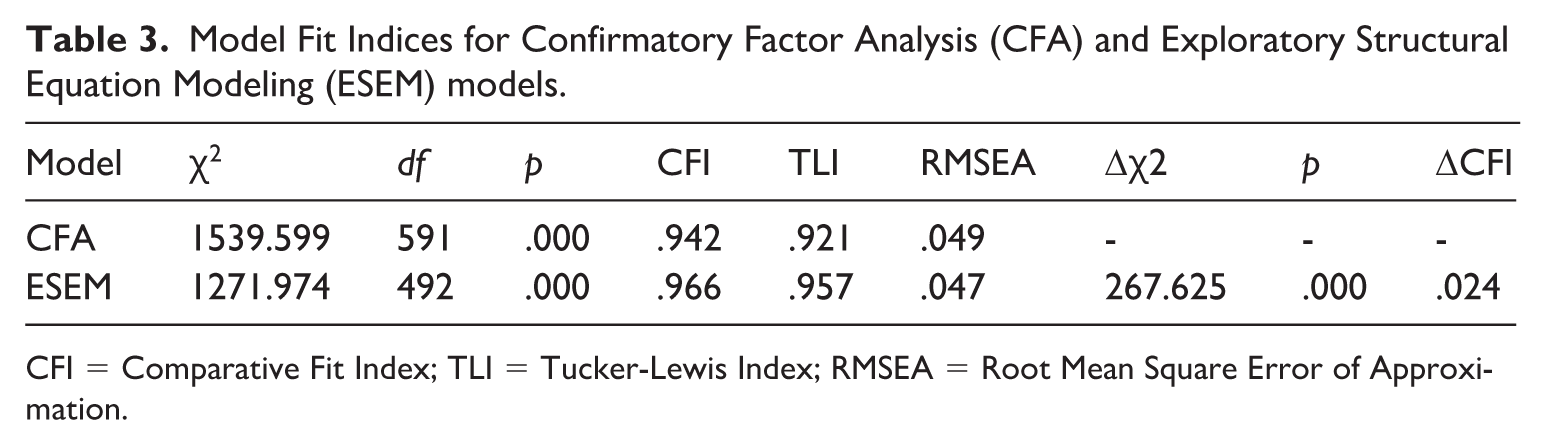
CFI = Comparative Fit Index; TLI = Tucker-Lewis Index; RMSEA = Root Mean Square Error of Approximation.
Table 4 presents factor loadings (λ) and uniquenesses (δ) for the CFA model, alongside factor loadings for the four specific factors and uniquenesses in the ESEM model. In the CFA model, factor loadings ranged from .43 to .88, indicating adequate measurement quality. In the ESEM model, primary factor loadings remained strong (ranging from .40 to .85), with cross-loadings generally small (⩽.15) and not compromising factor interpretability. These results suggest that both models adequately captured the four boredom coping strategies, but the ESEM model allowed for more flexible modeling of item relationships (see Figure 1). Importantly, the four higher-order factors representing the four main strategies included in the L2BCS Scale were characterized by acceptable levels of internal consistency reliability, as indicated in the values of McDonald’ omega (all ω values exceeding .80).
Factor Loadings and Uniquenesses for Confirmatory Factor Analysis (CFA) and Exploratory Structural Equation Modeling (ESEM) Models.
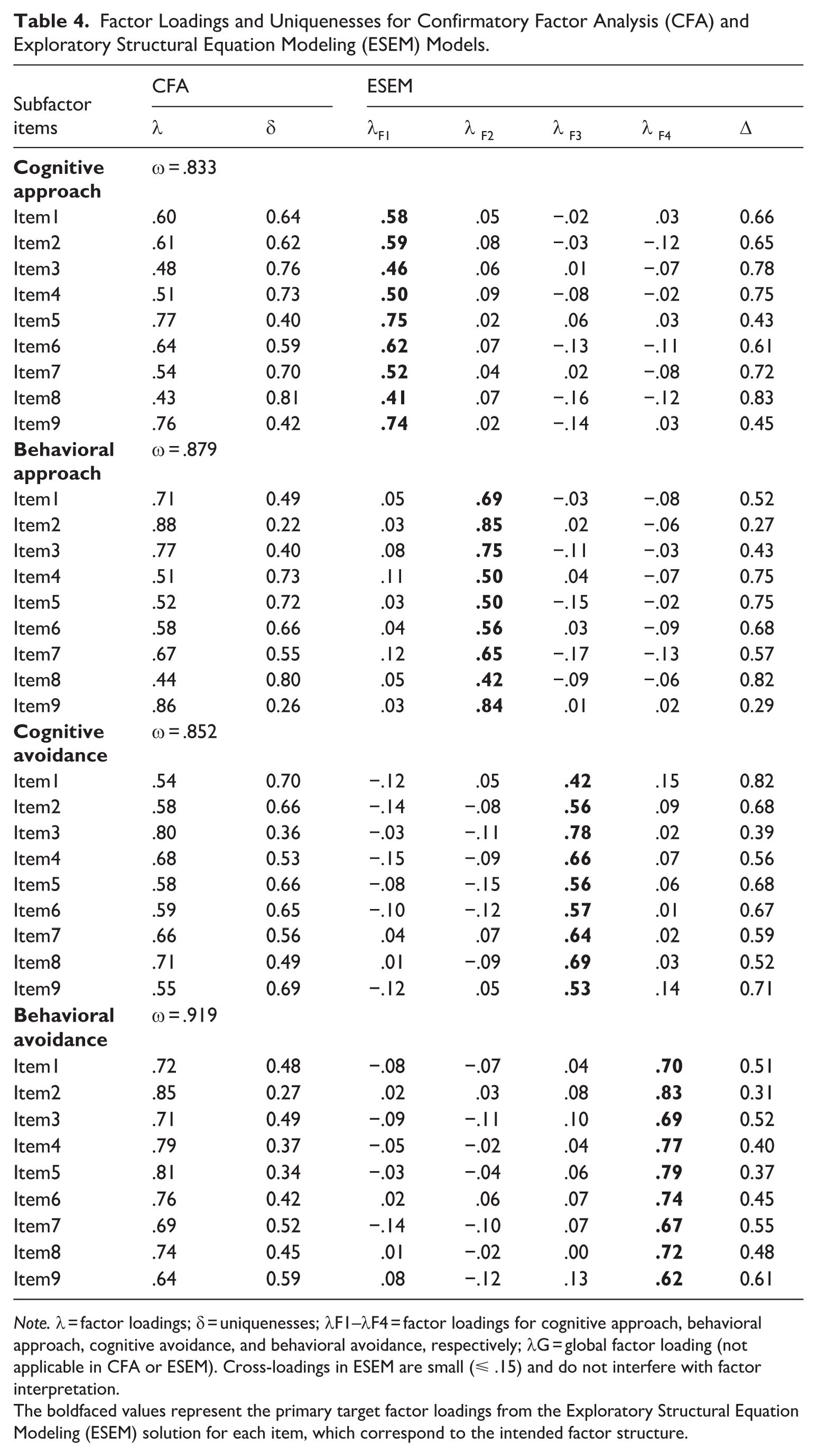
Note. λ = factor loadings; δ = uniquenesses; λF1–λF4 = factor loadings for cognitive approach, behavioral approach, cognitive avoidance, and behavioral avoidance, respectively; λG = global factor loading (not applicable in CFA or ESEM). Cross-loadings in ESEM are small (⩽ .15) and do not interfere with factor interpretation.
The boldfaced values represent the primary target factor loadings from the Exploratory Structural Equation Modeling (ESEM) solution for each item, which correspond to the intended factor structure.
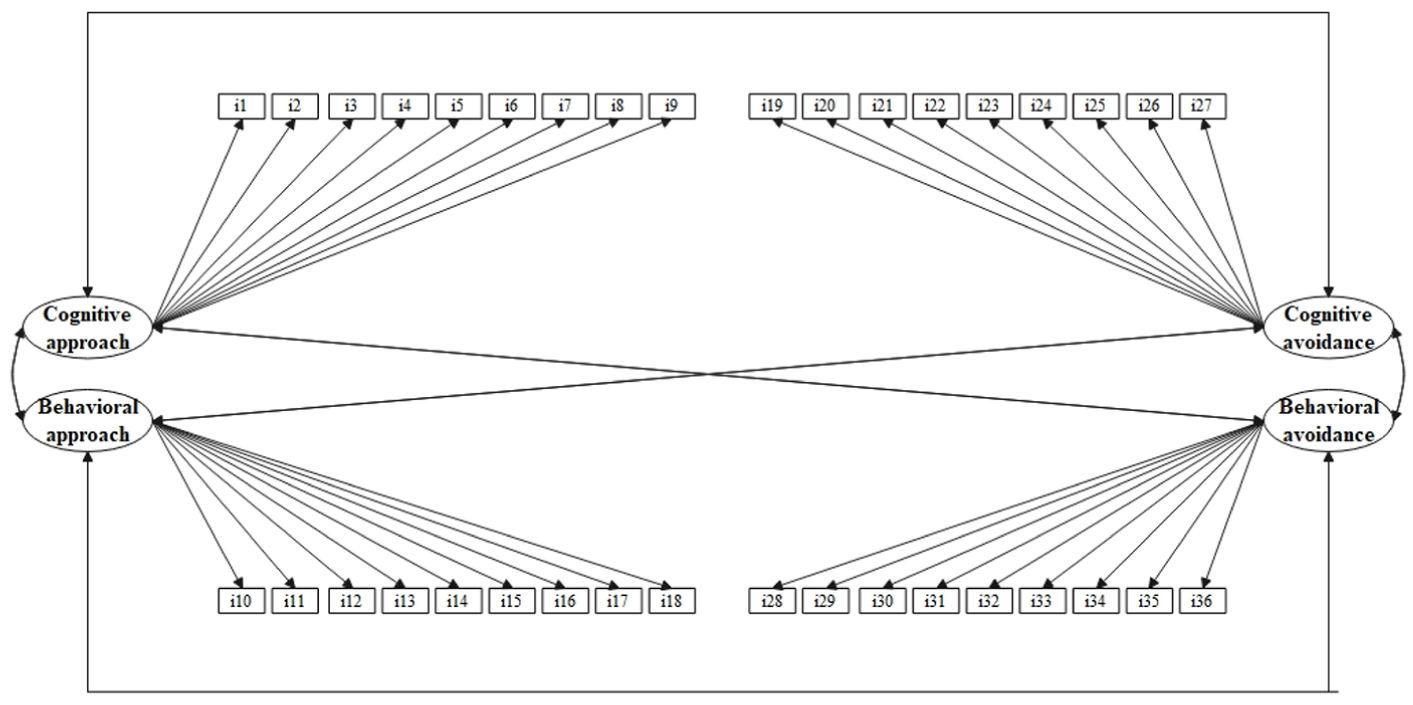
Standard confirmatory factor analysis (CFA) model.
The latent factor correlations for the CFA and ESEM models (Table 5) further highlight the differences between the two models. In the CFA model, correlations ranged from −.32 to .33, with notable positive correlations between behavioral approach and cognitive avoidance (.33), and between cognitive avoidance and behavioral avoidance (.21), as well as negative correlations between cognitive approach and both cognitive avoidance (−.26), and behavioral avoidance (−.32).In contrast, the ESEM model demonstrated weakened correlations, ranging from −.20 to .22, with the correlation between behavioral approach and cognitive avoidance dropping to .22, cognitive avoidance and behavioral avoidance to .14, and cognitive approach with cognitive avoidance and behavioral avoidance to −.18 and −.20, respectively. The reduction in correlation magnitudes in the ESEM model suggests that this model better accounts for shared variance among items through cross-loadings, resulting in less inflated inter-factor relationships and supporting its superior representation of the scale’s structure.
Latent Correlations for the Correlated Factors Confirmatory Factor Analysis (CFA) and Correlated Factors Exploratory Structural Equation Modeling (ESEM).
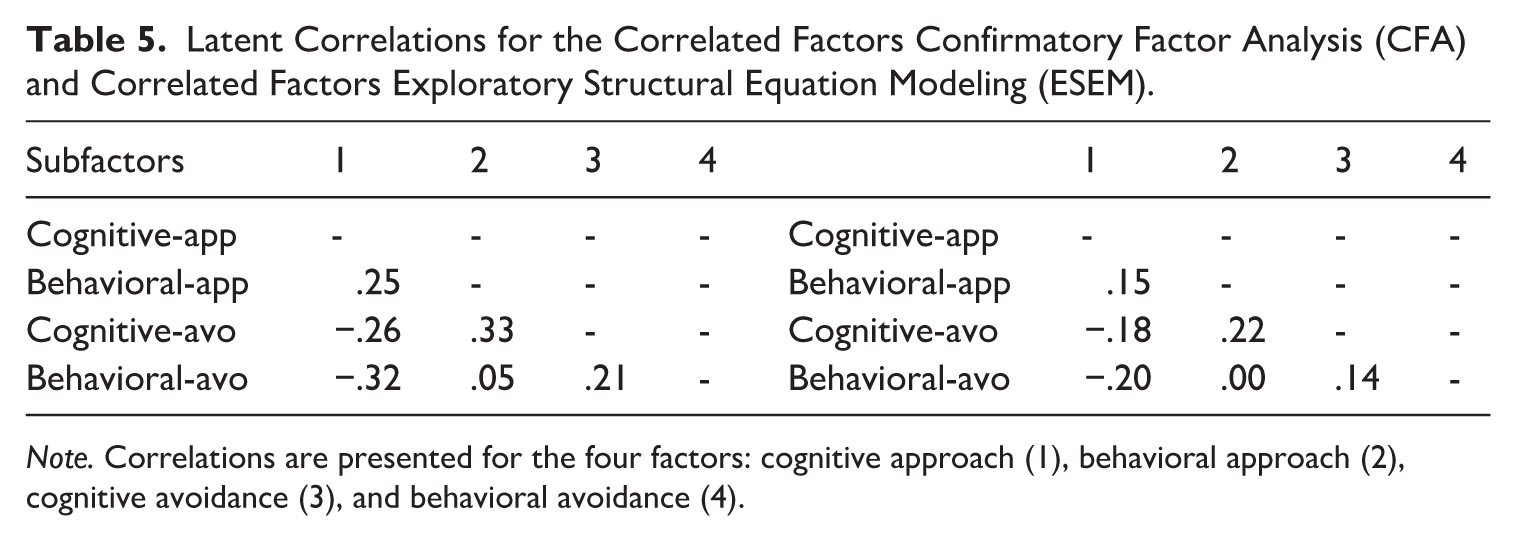
Note. Correlations are presented for the four factors: cognitive approach (1), behavioral approach (2), cognitive avoidance (3), and behavioral avoidance (4).
4.1.2. Step 2: Evaluation of ESEM Support
The ESEM model was supported by several key indicators. First, as shown in Table 3, the ESEM model exhibited improved fit over the CFA model, with a lower chi-square value, higher CFI and TLI, and a lower RMSEA. Second, compared to the CFA model, latent factor correlations were diminished in the ESEM model (see Table 5), indicating that ESEM better accounted for shared variance among items through cross-loadings, thus reducing inflated correlations. For instance, the correlation between cognitive approach and behavioral approach decreased from .25 in the CFA model to .15 in the ESEM model, and the correlation between cognitive avoidance and behavioral avoidance dropped from .21 to .14. Third, the four factors in the ESEM model remained well-defined, with strong primary factor loadings (see Table 4) and cross-loadings that did not disrupt the interpretability of the four constructs. These findings provide strong evidence for the ESEM model as a more accurate representation of the L2BCS Scale’s factor structure.
4.1.3. Step 3: Comparison with Bifactor Models
To examine whether a global/specific factor structure was appropriate for the L2CBS Scale, the best-fitting model (ESEM) was compared to its bifactor counterpart (bifactor-ESEM), alongside a bifactor-CFA model. However, both the bifactor-CFA and bifactor-ESEM models demonstrated inadequate model fit based on standard indices (e.g., CFI = .845, TLI = .807, RMSEA = .092 for bifactor-CFA; CFI = .872, TLI = .855, RMSEA = .088 for bifactor-ESEM). These results indicate that the assumption of a global boredom coping factor alongside specific strategy factors was not supported by the data. Consequently, the bifactor-CFA and bifactor-ESEM models were excluded from further evaluation. The ESEM model, with its superior fit and well-defined factor structure, was identified as the optimal model for representing the factor structure of the L2BCS Scale in this study.
4.2. ESEM-within-CFA and Predictive Analyses
To further assess the factor structure and predictive validity of the L2BCS Scale, an ESEM-within-CFA framework was employed, integrating the best-fitting ESEM model with CFA to assess relationships with external criterion variables (see Figure 2). This approach enabled a robust assessment of convergent and discriminant validity while maintaining the flexibility of ESEM to model cross-loadings. The predictive analyses focused on associations between the four latent factors of the L2BCS Scale and key external variables: FLB, FLA, FLE, L2 grit comprising perseverance of effort and consistency of interest, and L2 achievement. The analysis model was based on the ESEM model, which demonstrated excellent fit to the data: χ²(1124) = 3248.599, p < .001, CFI = .952, TLI = .931, and RMSEA = .044.
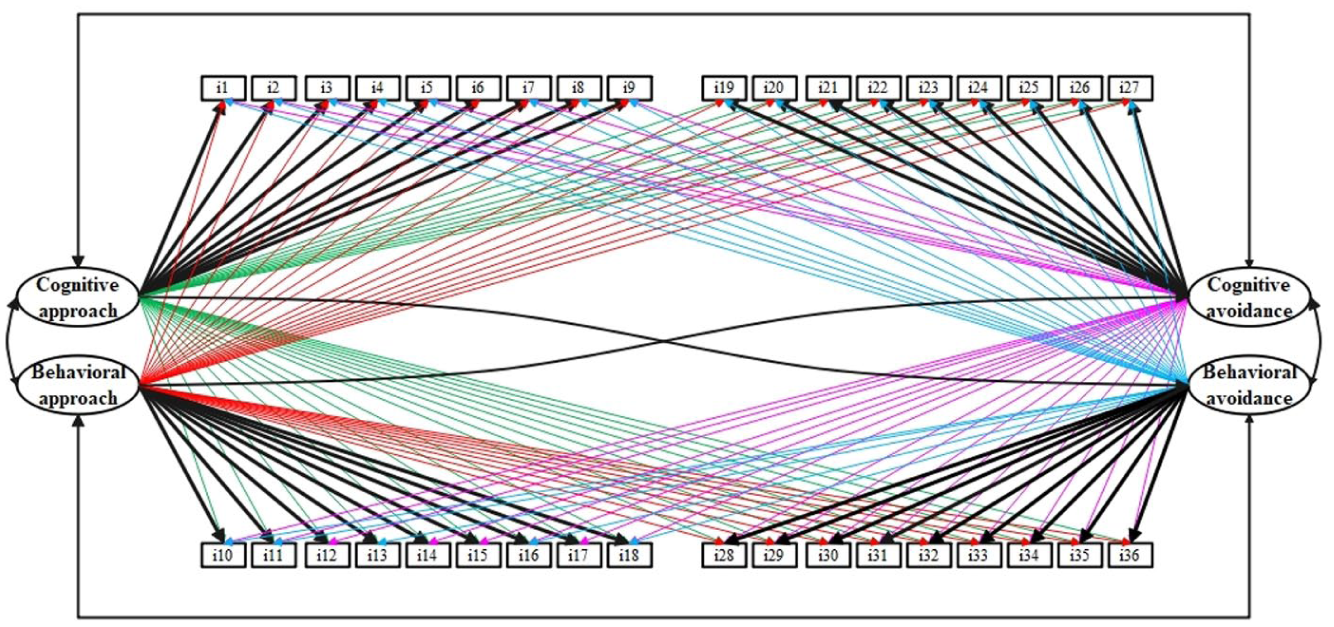
Standard exploratory structural equation modeling (ESEM) model.
The ESEM-within-CFA predictive model was used to predict the correlations between the latent factors and the external criterion variables, controlling for shared variance among factors through cross-loadings. Table 6 lists the standardized regression coefficients (β) from the predictive model. The analysis model showed good fit to the data: χ²(1124) = 3248.599, p < .001, CFI = .952, TLI = .931, and RMSEA = .044.
Correlations between Second or Foreign Language Boredom Coping Strategies (L2BCS) Scale Latent Factors and External Criterion Variables.
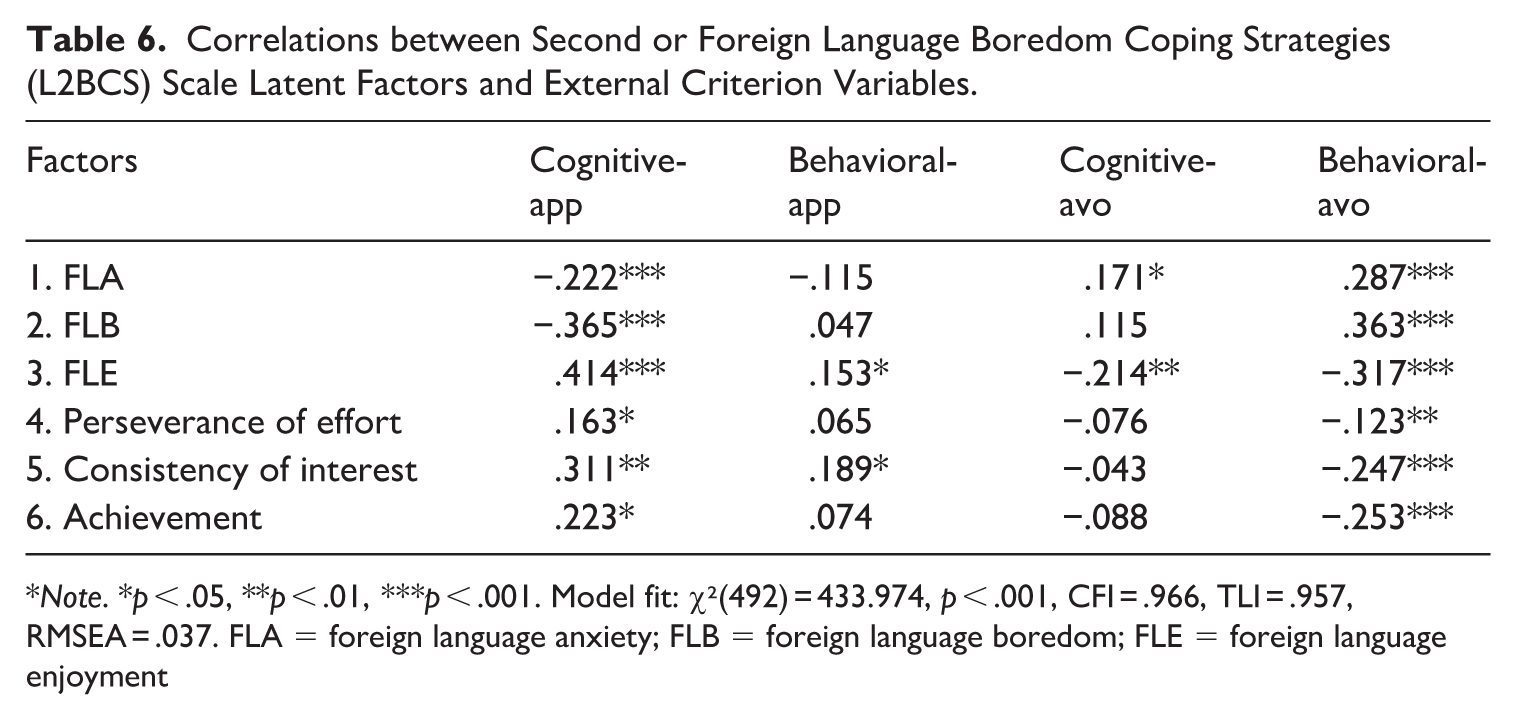
*Note. *p < .05, **p < .01, ***p < .001. Model fit: χ²(492) = 433.974, p < .001, CFI = .966, TLI = .957, RMSEA = .037. FLA = foreign language anxiety; FLB = foreign language boredom; FLE = foreign language enjoyment
According to these results, cognitive approach significantly predicted lower FLB (β = −.365, p < .001), lower FLA (β = −.222, p < .001), higher FLE (β = .414, p < .001), higher perseverance of effort (β = .163, p < .05), higher consistency of interest (β = .311, p < .01), and higher L2 achievement (β = .223, p < .05), highlighting its role in successfully confronting the experience of boredom and anxiety, boosting enjoyment, and fostering grit and achievement in L2 learning. Additionally, behavioral approach showed no significant predictive relationships with any criterion variables (all p > .05), suggesting limited impact on outcomes or actual L2 achievement. Moreover, cognitive avoidance significantly predicted higher FLA (β = .171, p < .05) and lower FLE (β = −.214, p < .01), indicating its association with negative emotional dispositions. Finally, behavioral avoidance significantly predicted higher FLB (β = .363, p < .001), higher FLA (β = .287, p < .001), lower FLE (β = −.317, p < .001), lower consistency of interest (β = −.247, p < .001), and lower L2 achievement (β = −.253, p < .001), underscoring its detrimental effects on both emotional and language-related outcomes.
4.3. Measurement Invariance across Gender
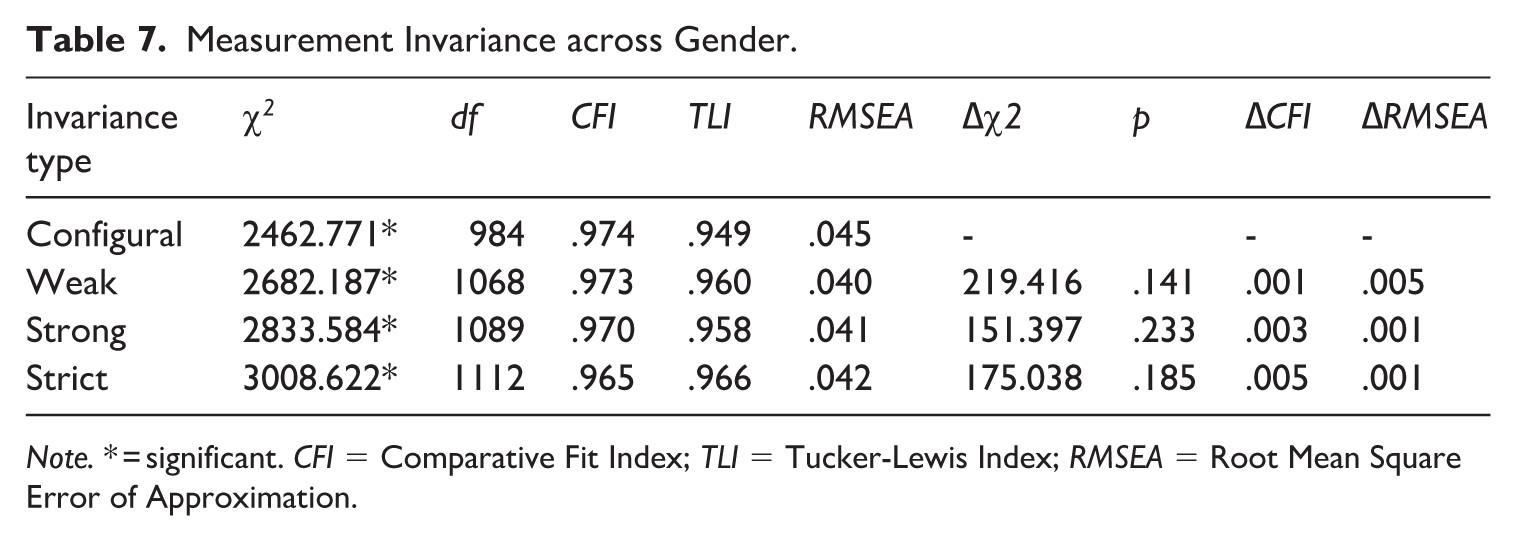
To assess the measurement invariance of the L2BCS Scale across gender, an ESEM framework was employed. Measurement invariance was tested sequentially for configural, weak (metric), strong (scalar), and strict (residual) invariance, ensuring that the factor structure, loadings, intercepts, and residual variances of the scale were equivalent across male and female groups. The results supported full measurement invariance across gender, showing that the scale assesses the constructs in the same way for male and female L2 learners (see Table 7).
Measurement Invariance across Gender.
Note. * = significant. CFI = Comparative Fit Index; TLI = Tucker-Lewis Index; RMSEA = Root Mean Square Error of Approximation.
The configural invariance model, which measured whether the same factor structure holds across genders, also demonstrated excellent fit: χ²(984) = 2462.771, p < .001, CFI = .974, TLI = .949, RMSEA = .045, confirming that the four-factor structure is equivalent across genders. Weak invariance, which constrains factor loadings to be equal across groups, was supported with a good fit: χ²(1068) = 2682.187, p < .001, CFI = .973, TLI = .960, RMSEA = .047. The change in fit indices was minimal (∆CFI = .001, ∆RMSEA = .005), and the chi-square difference test was non-significant (p = .141), indicating that factor loadings are invariant across genders. Strong invariance, which additionally constrains item intercepts to be equal, was also supported: χ²(1089) = 2833.584, p < .001, CFI = .970, TLI = .958, RMSEA = .041. The changes in fit indices were small (∆CFI = .003, ∆RMSEA = .001), and the chi-square difference test was non-significant (p = .233), confirming that item intercepts are equivalent across genders. Finally, strict invariance, which further constrains residual variances to be equal, was achieved with acceptable fit: χ²(1112) = 3008.622, p < .001, CFI = .965, TLI = .966, RMSEA = .042. The fit indices showed minimal deterioration (∆CFI = .005, ∆RMSEA = .001), and the chi-square difference test was non-significant (p = .185), supporting the equivalence of residual variances across genders.
4.4. DIF Analysis
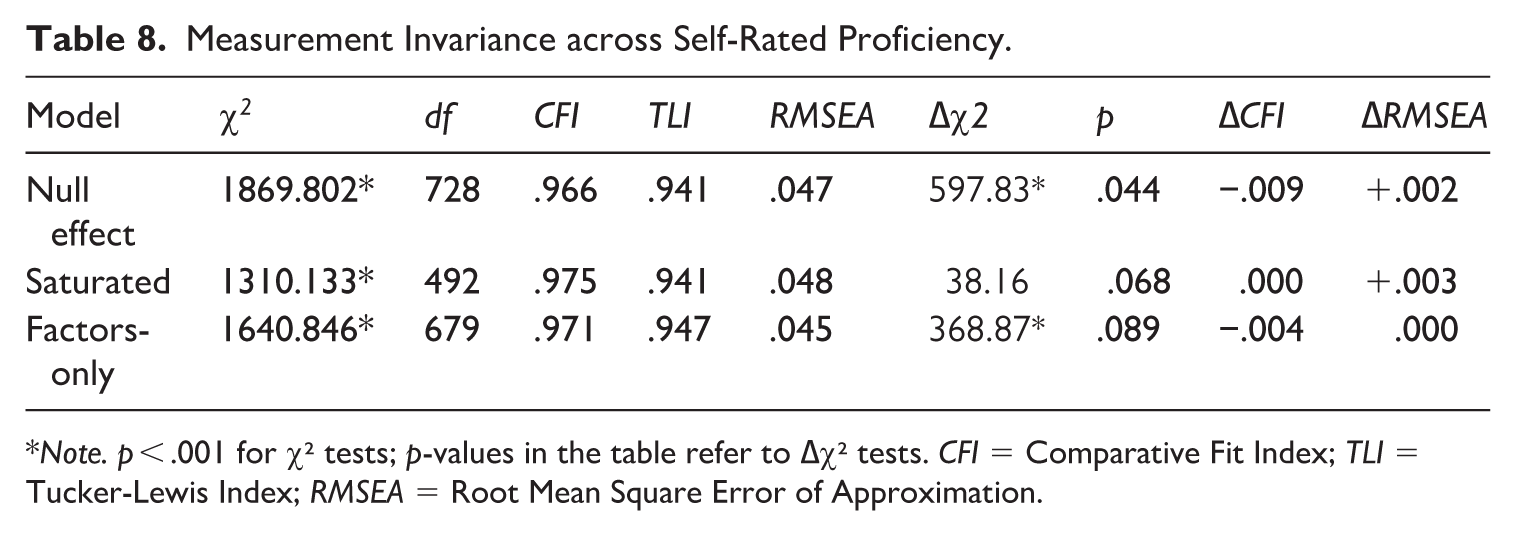
To investigate DIF across self-rated proficiency levels on the L2BCS Scale, an ESEM framework was utilized. DIF was assessed by comparing the fit of a null effects model with saturated and factors-only models, which test for item-level differences and factor-level associations with self-rated proficiency, respectively. The results indicated a lack of DIF and no significant association between self-rated proficiency and scores on the L2BCS Scale latent factors (see Table 8).
Measurement Invariance across Self-Rated Proficiency.
Note. p < .001 for χ² tests; p-values in the table refer to ∆χ² tests. CFI = Comparative Fit Index; TLI = Tucker-Lewis Index; RMSEA = Root Mean Square Error of Approximation.
The null effects model provided a baseline fit: χ²(728) = 1869.802, p < .001, CFI = .966, TLI = .941, RMSEA = .047. The saturated model, which allows for item-level differences across self-rated proficiency, showed an improved fit: χ²(492) = 1310.133, p < .001, CFI = .975, TLI = .941, RMSEA = .048. The chi-square difference test was significant (∆χ² = 38.16, p = .068), but the changes in fit indices were minimal (∆CFI = .000, ∆RMSEA = +.003), suggesting no substantial improvement in model fit over the null effects model, indicating a lack of DIF at the item level. The factors-only model, which tests for associations between self-rated proficiency and the latent factors, showed a fit of χ²(679) = 1640.846, p < .001, CFI = .971, TLI = .947, RMSEA = .045. The chi-square difference test was significant (∆χ² = 368.87, p = .089), but the changes in fit indices were negligible (∆CFI = −.004, ∆RMSEA = .000), indicating no meaningful association between self-rated proficiency and the L2BCS latent factors.
5. Discussion
The present empirical investigation aimed to explore the psychometric properties of the L2BCS Scale that was specifically developed to assess learners’ use of boredom coping strategies in learning an additional language. The scale was developed with reference to Nett et al.’s (2010) theoretical model and MacIntyre et al.’s (2020) general coping strategies scale. Specifically, the analyses focused on construct validity (model fit), predictive validity with respect to other emotional constructs, L2 grit, and L2 achievement, reliability, measurement invariance with respect to gender, and DIF analysis.
First and foremost, the factor structure of the L2BCS Scale was confirmed through both CFA and ESEM, with the latter, however, demonstrating a superior fit to the data. Thus, the division into four higher-order coping strategies included in Nett et al.’s (2010) model (i.e., cognitive approach, behavioral approach, cognitive avoidance, and behavioral avoidance) was confirmed. Moreover, they were characterized by acceptable internal consistency reliability, as evident in the values of McDonald’s omega, all of which exceeded 0.80. The superiority of the ESEM model was also corroborated by the fact that it better accounted for the shared variance between the latent factors in the L2BCS thus showing that although they were related, they still constituted distinct constructs. In addition, items included in the higher-order scales loaded more strongly onto the factors these scales represented, with observed cross-loadings not undermining the overall factor structure of the L2BCS Scale. Importantly, the ESEM model proved to be superior to bifactor ESEM and bifactor CFA models, thus providing evidence against a global factor structure for the construct. Taken together, these results indicate that the L2BCS Scale, together with the four latent factors represented by the subscales, is characterized by ample construct validity as well as internal consistency reliability.
The analyses also yielded convincing evidence for the predictive validity of the L2BCS Scale, particularly for its four higher-order subscales in relation to the criterion variables selected for the present study. Specifically, the ESEM-within-CFA predictive model showed that cognitive approach BCS predicted lower FLB and FLA, higher FLE, and L2 grit with respect to both perseverance of effort and consistency of interest, as well as L2 achievement. At the same time, behavioral BCS failed to predict any of the criterion variables, whereas both cognitive and behavioral avoidance BCS were predictors of higher FLB and FLA, lower FLE and consistency of interest as well as lower L2 achievement, thus manifesting detrimental effects on emotional and academic outcomes. On the one hand, these results highlight the beneficial role of BCS that promote deeper mental engagement with boredom-inducing situations and events, with reflection of this kind leading to more effective choices as to how to deal with boredom and in the long run triggering positive consequences for the process of L2 learning and its outcomes. This is in fact in line with the findings of research in which BCS constituted one of the variables under investigation. For example, Elahi Shirvan et al. (2025) showed that L2 boredom had a positive indirect impact on engagement when cognitive approach-based coping strategies were used, whereas Solhi et al. (2025) found that L2 grit was the stronger predictor of cognitive approach BCS. On the other hand, engaging solely in behavioral responses to ward off boredom at a given point in time may not have long-term beneficial consequences in terms of emotion regulation or achievement, perhaps because they do not entail reflection on why boredom sets in in the first place. Avoidance approaches, whether cognitive or behavioral, trigger negative consequences, which can be attributed to efforts to distance oneself from boredom-inducing situations by, for example, self-distraction (cognitive) or venting (behavioral). It is unsurprising that reliance on BCS is unlikely to enhance enjoyment and, in the long run, translate into higher target language proficiency. This mechanism has some empirical support since Elahi Shirvan et al. (2024) reported that avoidance-based strategies led to diminished engagement. Overall, the use of BCS, as measured by the L2BCS Scale, is in line with what the available, albeit scarce, previous research has shown, thus speaking to the predictive validity of the new scale.
Finally, the analyses provided evidence that the L2BCS is invariant with respect to gender and that item-level differences and latent factors were not associated with different self-rated levels of proficiency. More specifically, the tests for configural, weak, and strong as well as strict invariance demonstrated that males and females responded to the L2BCS Scale in the same way and therefore the latent constructs were measured the same way in both groups. At the same time, different levels of self-rated proficiency did not differentiate between participants with respect to how they responded to specific items or the latent factors. Such findings indicate that the L2BCS Scale can be used confidently with different groups, with the important caveat that there are other factors which may be responsible for differences in how L2 learners would respond to the scales (e.g., cultural background and educational level).
Like any study, the present empirical investigation is not free from limitations. First, the process of validation only drew on quantitative data, which precluded obtaining deeper insights with respect to the utility and consequences of different BCS, a goal that could have been achieved by means of interviews with selected participants. Second, although cross-sectional measures are useful for capturing L2 learners’ perceived coping tendencies, they may not fully reflect the dynamic and situated nature of boredom coping as it unfolds during classroom interaction. Future research should therefore complement self-report data with classroom observations or process-oriented methods such as experience sampling to capture the dynamic, situated, and in-the-moment nature of boredom coping strategies (see Elahi Shirvan et al., 2026; Solhi et al., 2026). Third, the study was carried out in one specific national, cultural, and educational context and thus there is a need to validate the scale in other settings as well. This issue is related to measurement invariance, which could not be investigated as a function of different contexts of this kind. Fourth, the participants were university-level learners of English majoring in fields other than L2 studies, and it is not clear whether the L2BCS Scale would be equally useful, for example, with secondary school students or students in degree programs in English. Lastly, the data were collected through a self-report instrument, which may be susceptible to social desirability bias. That is, participants may have reported coping strategies that they perceived as more acceptable or desirable rather than those they actually used in response to boredom in L2 classes.
6. Conclusion
The present study contributes to the field of language education by developing and validating the L2BCS Scale, a comprehensive tool for assessing how learners manage boredom in L2 learning contexts. The four-dimensional structure of the scale—encompassing cognitive and behavioral approaches as well as cognitive and behavioral avoidance—was supported through rigorous statistical analyses, demonstrating strong construct validity. The findings indicate that L2 learners employ a range of coping strategies that are significantly associated with various affective and motivational factors, including anxiety, boredom, enjoyment, L2 grit, and achievement. Moreover, the L2BCS Scale proved to be invariant across gender and proficiency levels, highlighting its generalizability. The results further suggest that fostering cognitive approach strategies, such as acceptance, reframing, and planning, may help learners to counteract boredom and sustain engagement, whereas avoidance strategies, which showed clear negative associations, should be carefully limited in classroom practices. By capturing the nuanced ways L2 learners react to boredom in L2 learning contexts, this instrument offers researchers and teachers a reliable means to better discern the psychology of L2 learning.
Footnotes

Funding
The authors received no financial support for the research, authorship, and/or publication of this article.
Declaration of Conflicting Interests
The authors declared no potential conflicts of interest with respect to the research, authorship, and/or publication of this article.