






Abstract
This study examines a potential tension in the application of self-determination theory to an extensive reading-enhanced speaking course in an English-as-a-foreign-language context. Although extensive reading is widely assumed to foster autonomous motivation by satisfying learners’ basic psychological needs for autonomy, competence, and relatedness, its implementation within formal instructional settings often involves mandatory reading quotas and graded components that may introduce controlling pressures. Drawing on data from 142 Japanese university English majors enrolled in a year-long extensive reading-integrated speaking course, this study investigated changes in motivational regulation and basic psychological needs satisfaction using Bayesian analyses. Results revealed strong evidence for increases in all three basic psychological needs, suggesting that the course provided a need-supportive learning environment. However, these gains were not accompanied by corresponding increases in autonomous motivation. Intrinsic motivation remained stable, whereas identified regulation showed strong evidence of a decrease. External and introjected regulations showed no meaningful change. Correlational analyses further indicated that increases in basic psychological needs satisfaction were not positively associated with increases in autonomous motivation, suggesting a potential discontinuity in the internalization process. These findings suggest conditions under which self-determination theory-based explanations may not fully apply in classroom-based language learning. Even when psychological needs are satisfied, contextual constraints embedded in a structured speaking course, such as grading requirements and mandatory reading targets, may offset the expected shift toward more self-determined forms of motivation. Implications for extensive reading implementation within integrated English-as-a-foreign-language speaking courses and self-determination theory-based motivational theory in structured educational contexts are discussed.
Keywords
1. Introduction
Motivation is undoubtedly a critical factor influencing success in language learning (Dörnyei & Ushioda, 2011). In typical English-as-a-foreign-language (EFL) contexts, limited opportunities for real-world immersion necessitate effective classroom interventions to enhance and sustain learners’ motivation, particularly its intrinsic or self-determined quality. Extensive reading, defined as reading large amounts of comprehensible material for pleasure (Day & Bamford, 1998), is widely theorized to be a powerful motivational intervention. By allowing learners to self-select materials and experience consistent success with peers, extensive reading is expected to satisfy the basic psychological needs (BPNs) for autonomy, competence, and relatedness, thereby promoting self-determined motivation, such as identified regulation and intrinsic motivation (Nation & Waring, 2020; M. Tanaka, 2017).
In addition to its motivational benefits, extensive reading has been widely recognized for its contribution to language development. A substantial body of research has demonstrated that extensive reading facilitates vocabulary acquisition, both through incidental learning and repeated exposure to high-frequency words in meaningful contexts (Nation & Waring, 2020; Pigada & Schmitt, 2006). Furthermore, extensive reading has been shown to enhance reading fluency, particularly by increasing reading speed while maintaining comprehension (Beglar et al., 2012; McLean & Rouault, 2017). Together, these findings highlight the dual role of extensive reading in supporting both affective and cognitive aspects of language learning.
Day and Bamford (2002) proposed the following 10 principles for instructing extensive reading.
The reading material is easy.
A variety of reading material on a wide range of topics must be available.
Learners choose what they want to read.
Learners read as much as possible.
The purpose of reading is usually related to pleasure, information and general understanding.
Reading is its own reward.
Reading speed is usually faster rather than slower.
Reading is individual and silent.
Teachers orient and guide their students.
The teacher is a role model of a reader.
These principles should not be considered as a strict definition or set of rules, but rather as guidelines (Renandya et al., 2021). Nevertheless, they continue to exert considerable influence (Arai & Takizawa, 2025). In considering classroom implementation, two principles in particular are frequently debated: “The purpose of reading is usually related to pleasure, information and general understanding” (Principle 5) and “Reading is its own reward” (Principle 6). These principles have led to the view that reading comprehension tests have difficulty assessing reading for pleasure (Alderson, 2000) and that extensive reading is difficult, if not impossible, to replicate within an assessment setting (Alderson, 1999). Accordingly, researchers have often cautioned that grading and reading quotas may undermine intrinsic motivation and autonomy (Blum, 2020; Krashen, 2004).
However, because extensive reading is often implemented in authentic educational contexts (Iwata, 2022a), it is often integrated into formal academic settings that involve mandatory evaluation requirements (Arai, 2025; Takase, 2007; Weatherford & Campbell, 2016). In practice, measures such as reading amount and written reports are commonly employed for assessment purposes (Day & Bamford, 1998; Nation & Waring, 2020). These reading targets and evaluative practices may function as forms of extrinsic motivation.
Just as there is no clear-cut definition of how much reading constitutes extensive reading (Day & Bamford, 1998), it remains unclear how different types and degrees of assessment influence learner motivation. A related pedagogical issue concerns how extensive reading can be integrated into ordinary classroom practices without undermining learners’ sense of autonomy. Park (2011) found that extrinsic reading motivation may not necessarily be detrimental when accompanied by high levels of intrinsic motivation. Similarly, it has been suggested that extrinsic motivators such as target word counts and grading should not be a serious concern as long as the pressure and demands are not excessive (Yamashita, 2015), and may even be necessary (Iwata, 2022a). However, the extent to which extensive reading functions as an intrinsically supportive intervention is likely to depend on contextual factors such as instructional design, assessment practices, and the degree of autonomy support embedded in the learning environment. Nevertheless, questions remain regarding the appropriate level of such demands and the extent to which findings can be generalized, indicating the need for an accumulation of empirical studies.
To facilitate such efforts, transparency in reporting extensive reading programs is essential. A systematic review by Arai and Takizawa (2025) reported that only 37.5% of studies included extensive reading as part of formal assessment, while 54.2% did not report whether extensive reading contributed to grading. They further pointed out that many studies lack explicit descriptions of key extensive reading features. This highlights the importance of providing as much contextual and procedural detail as possible.
The present study examines whether an extensive reading-enhanced instructional context can foster autonomous motivation when implemented within a formal classroom setting involving grading and instructional requirements. To address this question, changes in BPNs and motivational quality were investigated, guided by self-determination theory (SDT), among English majors participating in a year-long program.
2. Literature Review
2.1. Second Language Motivation Research and Transition to SDT
Early research on second language (L2) motivation, such as that by Gardner and Lambert (1972), focused on stable individual differences like integrative and instrumental motivation within a social psychological framework. However, the dynamic and personal nature of L2 motivation, coupled with limitations in conceptualizing traditional constructs in EFL contexts (e.g., Irie, 2003), highlighted the need for classroom-oriented models (Crookes & Schmidt, 1991; Ushioda, 2001). To address this, subsequent frameworks emphasized the dynamic nature of motivation (Dörnyei, 2005, 2009) and the necessity of examining the quality of motivation and the fulfillment of learners’ psychological needs (Oxford & Shearin, 1994). SDT (Deci & Ryan, 1985; Ryan & Deci, 2020) provides a complementary and robust perspective for this detailed examination in the EFL context (Wu, 2022). In particular, SDT offers a systematic framework for examining not only the quantity but also the quality of motivation, thereby addressing key limitations in earlier L2 motivation research.
2.2. SDT in the EFL Context
SDT serves as a comprehensive meta-theory that provides a nuanced analysis of motivational quality in terms of the degree of self-determination (Ryan & Deci, 2020). It conceptualizes motivation along a continuum ranging from amotivation to intrinsic motivation, encompassing various forms of extrinsic motivation. Crucially, SDT distinguishes between controlled and autonomous forms of motivation.
Controlled forms include external regulation (driven purely by external rewards/punishments) and introjected regulation (driven by internal pressures like guilt or ego-involvement). Both are experienced as controlled and non-autonomous. In contrast, autonomous forms include intrinsic motivation (interest and inherent enjoyment) and identified regulation. Identified regulation is a highly volitional form of extrinsic motivation where the individual consciously identifies with and values the activity’s outcome, making it self-endorsed despite not being inherently enjoyable (Ryan & Deci, 2020). Integrated regulation, the most fully internalized form of extrinsic motivation, is also considered autonomous. A meta-analysis by Howard et al. (2021) found that intrinsic motivation and identified regulation are positively associated with learning persistence and academic achievement.
These self-determined motivational orientations are fostered by the satisfaction of the three BPNs: autonomy (experiencing volition and self-endorsement), competence (feeling effective and capable), and relatedness (feeling connected and belonging) (Deci & Ryan, 2000). In the present study, autonomy refers specifically to autonomy as a basic psychological need, whereas autonomous motivation refers to self-determined forms of motivational regulation, including intrinsic motivation and identified regulation. SDT posits that the fulfillment of these innate needs facilitates the internalization of extrinsic motivation, moving it toward the autonomous end of the continuum (Figure 1). Conversely, learning environments that thwart these needs are detrimental to motivation and wellness. Numerous studies in the EFL context have therefore focused on satisfying these three BPNs to promote participation and enhanced motivation (Al-Hoorie et al., 2022; Dincer et al., 2019; McEown & Oga-Baldwin, 2019; Yamaoka, 2025). From this perspective, instructional approaches that effectively support learners’ BPNs are expected to foster more self-determined forms of motivation. One such approach that has received considerable attention is extensive reading.
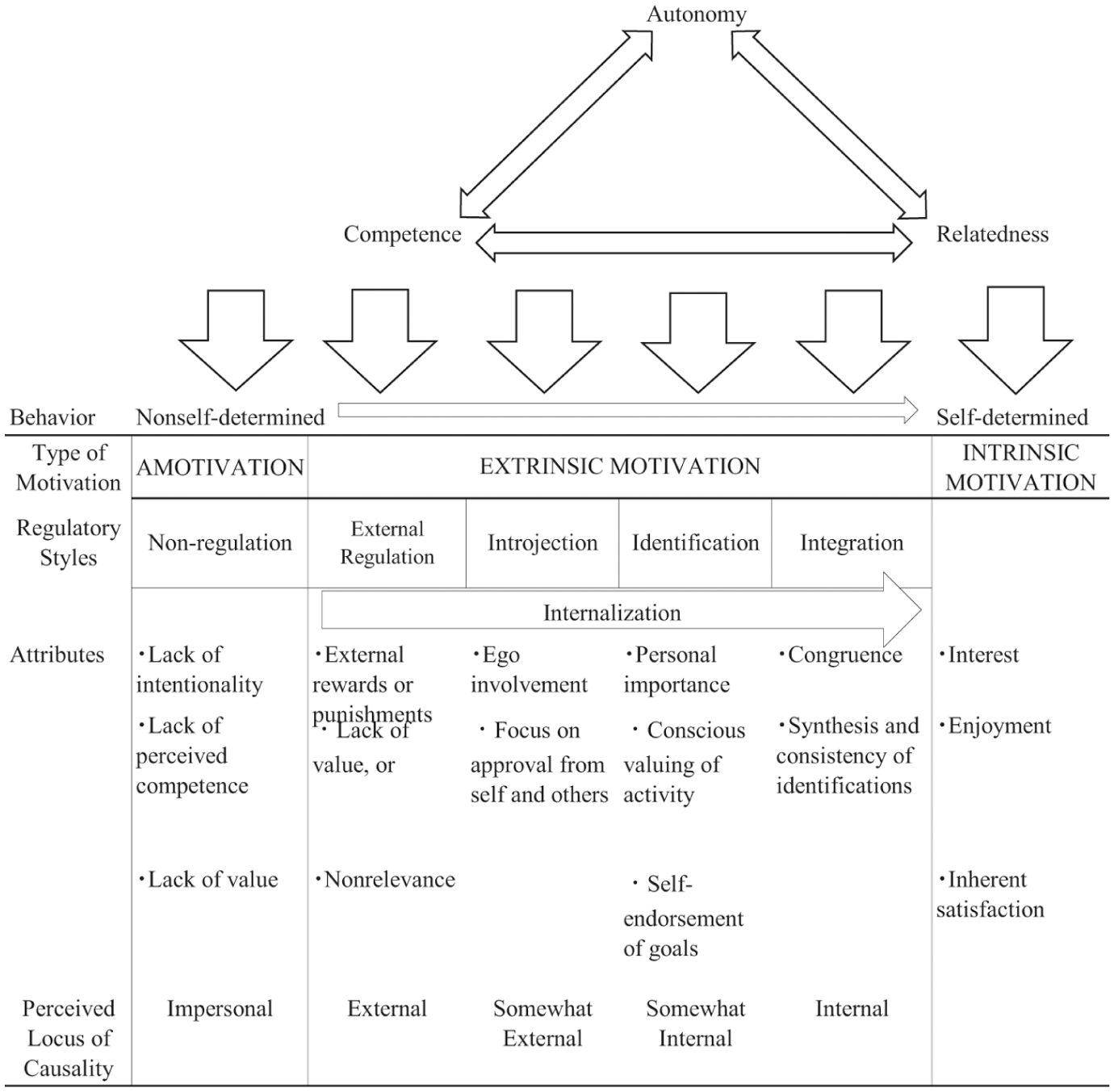
Self-determination theory’s taxonomy of motivation (Ryan & Deci, 2020: modified by the author).
2.3. Motivational Studies and SDT in Extensive Reading Instruction
From the SDT perspective, extensive reading is theorized to be a powerful motivational intervention because its key characteristics naturally satisfy BPNs. Self-selection of reading materials nurtures autonomy, while the consistent experience of success from reading accessible texts fosters competence, and interaction with peers, such as sharing and discussing books, fosters relatedness. These elements are expected to strengthen autonomous motivation, particularly identified regulation and intrinsic motivation (Day & Bamford, 1998). Empirical studies generally support this view. Iwata (2022a) found significant increases in both identified regulation and intrinsic motivation in an extensive reading program for non-English majors.
A study that examined extensive reading within the framework of SDT is M. Tanaka (2015, 2017). M. Tanaka (2015) investigated changes in motivation among 133 first-year Japanese university students participating in a year-long short in-class extensive reading program, using an SDT-based framework. At the initial stage (Time 1), identified regulation was the highest among the motivational constructs, followed by external regulation and intrinsic motivation. This pattern suggests that learners initially recognized the value of extensive reading and engaged with a certain degree of interest and willingness. However, over the course of the academic year, intrinsic motivation, identified regulation, and external regulation all showed significant declines, whereas amotivation increased, indicating an overall decrease in motivation. M. Tanaka attributed this decline, at least in part, to the loss of initial novelty; what may have begun as an enjoyable and intrinsically motivating activity gradually became routinized through its fixed weekly format (10–15 minutes), potentially transforming into a perceived obligation or chore. Notably, however, the study did not directly examine the satisfaction of the three BPNs, and thus the relationship between need satisfaction and the observed changes in motivation remains unclear.
M. Tanaka (2017), drawing on the same dataset and participants as M. Tanaka (2015), examined predictors of motivation in short in-class extensive reading among the same group of 133 first-year Japanese university students from the perspective of SDT. In this study, the satisfaction of the three BPNs, autonomy, competence, and relatedness, as well as positive peer influence, were measured at the midpoint of the academic year, and their relationships with motivational profiles at the end of the course were analyzed using path analysis. The results indicated that, at the time of predictor measurement, autonomy satisfaction was the strongest determinant of subsequent motivation. Specifically, learners who perceived higher levels of autonomy tended to demonstrate higher levels of autonomous motivation, namely intrinsic motivation and identified regulation, at the end of the course. In contrast, those who felt their behavior was externally controlled were more likely to exhibit higher levels of amotivation and external regulation. In addition, competence positively predicted intrinsic motivation, while positive peer influence contributed to identified regulation. However, relatedness did not show a direct effect on motivational regulation types.
Based on these findings, M. Tanaka concluded that the key to sustaining motivation lies in supporting learners’ autonomy. In practical terms, rather than imposing strict controls over what and how much students read, it is essential to create an autonomy-supportive environment in which learners can select reading materials themselves and progress at their own pace, thereby helping to prevent declines in motivation over extended extensive reading programs.
A study that incorporated target reading amounts and integrated extensive reading into course grading is Mori (2011). This study investigated the relationship between reading amount and motivation in a two-semester extensive reading program involving 49 first-year Japanese university students. Learners were required to read 30,000 words in the first semester and a cumulative total of 70,000 words by the end of the second semester. It was explained that exceeding the target would result in extra points, and extensive reading accounted for 10% of the final course grade. The results showed that 36 students did not reach the target, 7 students read between 70,000 and 79,999 words, and only 6 students formed an “outlier group,” recording substantially higher reading amounts exceeding 100,000 words (ranging from 105,069 to 142,155). When the data were reanalyzed excluding this small group, the initially observed strong correlation between reading amount and motivation (e.g., intrinsic motivation) was substantially reduced or disappeared. Based on these findings, Mori suggested that commonly reported conclusions in extensive reading research, such as improvements in motivation through extensive reading or the idea that higher motivation leads to increased reading, may in fact be influenced by a small number of highly engaged students, thereby creating a statistical distortion. In contrast, the majority of “average” students tended to read only enough to meet course requirements. This line of research is particularly relevant to extensive reading implemented in formal educational settings where reading is integrated into course requirements and assessment systems, highlighting the importance of considering contextual constraints such as grading and mandatory reading quotas. However, this study was not conducted within the framework of SDT, and therefore did not examine the role of BPNs or changes in motivational quality.
2.4. Research Gaps and the Present Study
A substantial body of research has examined learner motivation within the framework of SDT as well as the effects of extensive reading on L2 learning, particularly in relation to motivational change. However, as noted by Arai (2025), many studies suffer from insufficient reporting of implementation details, and often the label of extensive reading has been applied too broadly (Nation & Waring, 2020). Such variability in how extensive reading is defined and implemented makes it difficult to draw consistent conclusions across studies.
In addition, learners’ educational contexts and their pre-existing attitudes toward English learning vary considerably across studies. This suggests that the impact of extensive reading on motivation cannot be fully understood without taking these contextual and individual factors into account. Therefore, further empirical studies are needed that examine motivational change within the SDT framework while carefully documenting the conditions under which extensive reading is implemented.
A particularly important issue concerns the role of evaluation in extensive reading programs. Although extensive reading is fundamentally based on reading for pleasure, it is common in formal educational settings to incorporate elements such as assessment and course credit (Arai, 2025; Takase, 2007; Weatherford & Campbell, 2016). This raises an important question: how do different forms and degrees of evaluation influence learners’ satisfaction of BPNs and their motivation for learning English?
Previous research presents conflicting views on this issue. Some studies suggest that external requirements, such as reading targets and grading, may undermine intrinsic motivation and autonomy (Blum, 2020; Krashen, 2004). In contrast, others argue that such extrinsic elements may not be detrimental when accompanied by high levels of intrinsic motivation (Park, 2011), and that they are unlikely to have negative effects as long as the level of pressure remains moderate (Yamashita, 2015). Despite these discussions, empirical evidence addressing this issue remains limited.
To address this gap, the present study investigates motivational change within the SDT framework in a year-long extensive reading-enhanced speaking course for English majors, who are often considered relatively motivated learners. The program incorporated formal assessment elements, including reading requirements and graded presentation activities. By examining the relationship between BPNs satisfaction and motivational change under these conditions, this study aims to provide further insight into how extensive reading functions in realistic educational contexts.
To achieve this purpose, the study addresses the following research questions (RQs).
3. Method
3.1. Participants
The participants were 177 first-year English majors at a women’s junior college who enrolled in a two-semester extensive reading-enhanced speaking course across the 2021 (n = 84), 2022 (n = 60), and 2023 (n = 33) academic years. The decreasing cohort sizes across the three years reflect a general decline in student enrollment at the institution. Students who did not complete both the pre- and post-course questionnaire surveys were excluded from the analysis. Consequently, data from 142 students (68 from 2021, 47 from 2022, and 27 from 2023 cohorts) were included in the final analyses. These exclusion criteria were applied consistently across all cohorts. All classes were conducted with intact groups.
The participants’ English proficiency levels were estimated based on both their scores on the Global Test of English Communication (GTEC; a maximum of 500 points for the listening and reading sections) as an institutional placement test and their self-reported results on the EIKEN Test in Practical English Proficiency (EIKEN), the most widely used English proficiency test in Japan. They broadly correspond to EIKEN Grades 3, Pre-2, and 2, which can be aligned with A1 to B1 levels in the Common European Framework of Reference for Languages (CEFR). More specifically, given that the GTEC scores ranged from 86 to 267 out of 500 (M = 182.4, SD = 42.4), their overall proficiency can be reasonably situated within the A1–A2 range (Eiken Foundation, 2026; Ministry of Education, Culture, Sports, Science and Technology, 2018). This is also broadly consistent with national data indicating that many Japanese high school graduates remain at approximately the A2 level (Ministry of Education, Culture, Sports, Science and Technology, 2024). As an additional measure of the participants’ proficiency, the Vocabulary Size Test (VST; Nation & Beglar, 2007) up to the 5,000-word level was administered. Vocabulary knowledge was included because it is widely regarded as a useful indicator of L2 proficiency and reading ability in EFL contexts. The results showed a mean score of 34.5 (SD = 4.1), which is slightly below the average reported for Japanese university students in previous studies (e.g., McLean et al., 2014), but still falls within the range typically associated with lower-intermediate EFL learners. Negishi et al. (2013) reported that the CEFR level distribution of Japanese EFL learners is concentrated at the Basic User levels (A1–A2), which account for over 80% of the population, while Proficient Users (C1–C2) are almost absent. Although the datasets are not nationally representative, the consistency across different populations suggests a strong tendency toward lower proficiency levels. Therefore, the participants in this study can be situated within the range reported for Japanese EFL learners in previous studies.
Based on the preliminary questionnaire (see Tables 1 and 2; all questionnaire items are provided in Appendix A), the learners generally held positive attitudes toward English learning and reading in English, as indicated by relatively high ratings on a 5-point Likert scale ranging from 1 (strongly disagree) to 5 (strongly agree) (M = 4.3). However, the results also suggest that they lacked confidence in their reading ability and overall English proficiency. These items were included to provide a descriptive profile of learners’ affective orientations toward English learning and self-perceived proficiency, which served as contextual variables for interpreting subsequent changes in motivation and BPNs during the extensive reading-enhanced speaking course. Among the four language skills, a relatively larger proportion of learners reported confidence in reading (35.21%). In contrast, speaking was overwhelmingly identified as the skill they most wished to improve (62.68%). Fifteen participants (10.6%) had participated in study abroad programs; however, none had stayed abroad for longer than 3 weeks.
Students’ Attitudes and Self-Perceptions of English Proficiency.
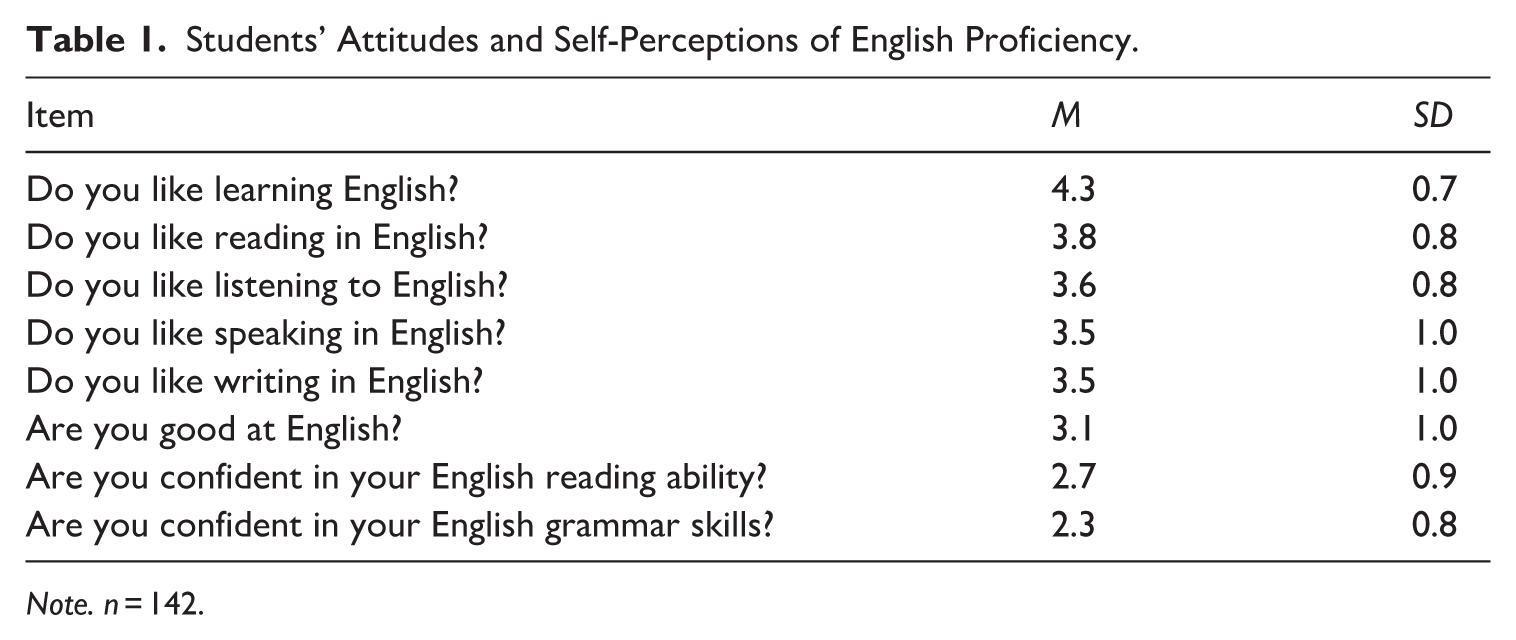
Note. n = 142.
Self-Reported Most Confident and Desired-to-Improve English Skills.
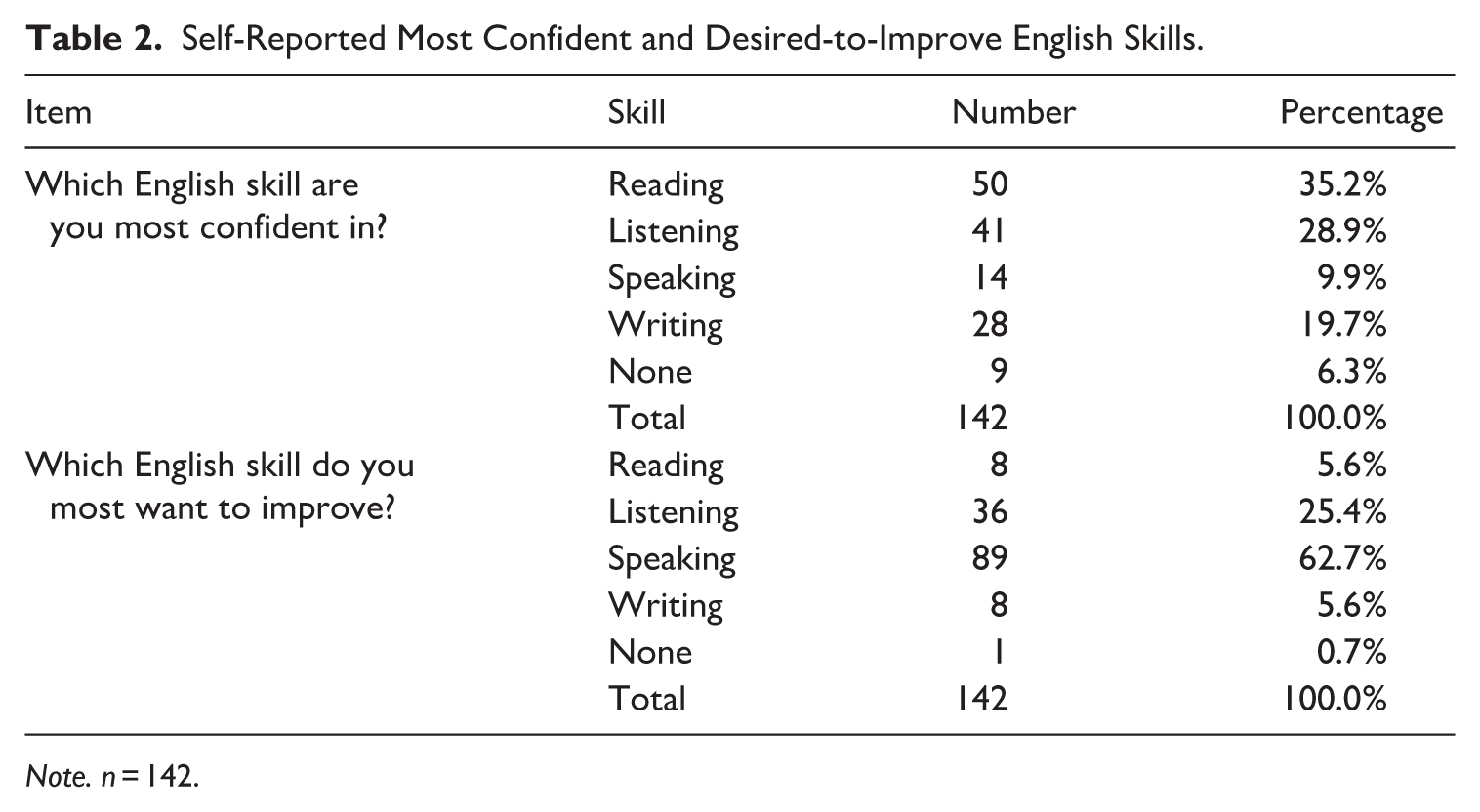
Note. n = 142.
In addition to the extensive reading-enhanced speaking course examined in the present study, the participants were required to take weekly 90-minute classes in listening, reading, writing, grammar, and pronunciation, amounting to 450 minutes of compulsory English instruction per week. Optional test-preparation courses for EIKEN and TOEIC were also offered, and 55 participants (38.7%) enrolled in these courses.
3.2. Materials
3.2.1. Extensive Reading Program and Instructions
The course utilized approximately 2,500 graded readers (from major publishers such as Oxford and Pearson), with most materials at or below M-Reader Level 4 (CEFR A1–A2). The collection consisted mainly of narrative texts, supplemented by a limited number of non-fiction titles (e.g., fact files and biographies of well-known individuals). This level was selected to ensure high comprehensibility (Hu & Nation, 2000). The required reading was mandatory, totaling 50,000 words across the academic year (20,000 words in the first semester and 30,000 in the second). The target of 50,000 words was determined based on previous extensive reading research suggesting that measurable changes in reading fluency and vocabulary learning may emerge around this amount of reading (Iwata, 2022b). In addition, Takase (2008) suggested, based on classroom observations, that learners often begin to demonstrate noticeable changes after reading approximately 50,000 words. Reading was conducted mainly outside class hours, with one 30-minute in-class reading session per month. During this time, students silently read graded readers they had borrowed from the library, while the instructor ensured that the class engaged in silent reading. Students were not allowed to take M-Reader quizzes during this in-class reading period. Students also gave three short book-report speeches in their speaking classes per semester. The content of these speeches included a description of the main characters, a summary of the story, and the students’ opinions of the book and the reasons for those opinions. The extensive reading component contributed 20% to the students’ final course grade, consisting of cumulative extensive reading word counts recorded in M-Reader (15%) and extensive reading-related book-report presentations (5%). The remaining assessment was based on regular speaking-course activities. The majority of the remaining class time was devoted to regular speaking classes. The course used a textbook (Martin, 2003) and progressed at a rate of one unit per week. Each unit typically began with listening activities, followed by written responses to textbook questions (e.g., personal information such as where students live and their hobbies in self-introduction tasks), which then served as the basis for oral presentations. The instructor also provided instruction on pronunciation and grammar related to speaking tasks. In addition to extensive reading (20%), the course assessment consisted of preparation and review (20%), class participation (30%), non-extensive reading presentations (10%), and tests and quizzes (20%).
Importantly, although extensive reading constituted a structured component of the course, it was embedded within a regular speaking curriculum. Therefore, the present study does not assume that changes in motivation can be attributed exclusively to extensive reading, but rather examines motivational changes in relation to extensive reading within an extensive reading-enhanced speaking course context.
3.2.2. The M-Reader System
The M-Reader system, a free online management system, was used to track reading progress and word counts. Upon completing a book, students took a short, timed comprehension quiz. Books were added to the cumulative word count only if the student achieved a score exceeding the pre-set threshold of 60%. It should be noted that the M-Reader system records only whether the threshold is met (pass/fail) and does not retain detailed score data. In addition, quiz items are randomly drawn from a large item pool, meaning that individual tests are not identical across attempts. Although some studies suggest higher thresholds for adequate comprehension (e.g., 70%; Anderson, 2008; see also Carver, 2000, for a 64% criterion), cut-off scores in educational contexts are often determined in relation to specific learner characteristics and pedagogical goals (Bachman & Palmer, 2010). In the M-Reader system, quiz items include not only general comprehension questions but also detailed factual questions designed to discourage passing without reading. In the present study, the 60% threshold was adopted as a pedagogically informed decision to balance comprehension requirements with the need to avoid excessive difficulty and potential demotivation due to repeated failure. The web-based system also allowed instructors to monitor students’ reading progress continuously (Milliner & Cote, 2014). Student reading progress was monitored weekly through the M-Reader system. In addition, the system settings required a 1-hour interval between quizzes to reduce inappropriate quiz-taking behavior.
3.2.3. Questionnaires
Motivation and BPNs were measured using pre- and post-course questionnaires (Appendices A and B) adapted from Iwata (2022a) and H. Tanaka and Hiromori (2007). The questionnaire assessed intrinsic motivation and three forms of extrinsic motivation (external, introjected, and identified regulation) using five items each, and the three BPNs (autonomy, competence, relatedness) using four items each. All items were rated on 5-point Likert scales.
The pre-questionnaire consisted of two parts. The first part asked participants about their English learning attitudes and experiences through high school. The second part measured motivation and the three BPNs with reference to their high school English learning, specifically the compulsory third-year high school subject communication English. The post-questionnaire also consisted of two parts. The first part asked participants about their experiences with extensive reading in the course, including free written responses. The second part employed the same motivation and BPNs items as the pre-questionnaire, but the target context was changed from high school English learning to the extensive reading-enhanced speaking course in the present study. Thus, the same constructs were measured across time while referring to different learning contexts.
Example items for motivational regulation included “I am studying English because of English tests” (external), “I sometimes feel embarrassed at not being good at English” (introjected), “English is important for my future” (identified), and “Through studying English, I feel happy when I understand words and phrases that I did not know” (intrinsic). BPNs items included “I think that in this English class, we have some degree of choice for materials, class procedures, and learning content” (autonomy), “I think this English class gives me a sense of fulfillment that my efforts have paid off” (competence), and “I think I get along well with my classmates in this English class” (relatedness). Amotivation and integrated regulation were excluded from the analysis due to minimal variance and difficulty in reliable distinction (Noels et al., 2000).
As shown in Tables 3 and 4, the internal consistency was assessed using Bayesian estimates of Cronbach’s α, with 95% credible intervals reported to reflect uncertainty in the estimates. Across both pre- and post-questionnaire measures, the reliability coefficients were generally acceptable, ranging from .66 to .91. At the pre-questionnaire, most scales exceeded the conventional threshold of .70, although autonomy (.66) fell slightly below this criterion, possibly due to a ceiling effect. At the post-questionnaire, all scales met or exceeded the acceptable level, indicating improved or stable internal consistency over time. The same questionnaire was administered before and after the extensive reading-enhanced speaking course regarding motivation and the three BPNs to ensure comparability of responses across time. The post-questionnaire data were used to compute post-course scores for motivation and BPNs, which were compared with pre-course scores in the main analyses. Before completing the questionnaires, participants were informed orally and through the Google Forms instructions that participation was voluntary, responses would remain anonymous, and the results would not affect their grades. Although repeated administration of identical scales may raise concerns regarding response consistency, such effects are generally less pronounced in self-report measures than in achievement tests.
Cronbach’s α for Each Regulation and Psychological Need (Pre).
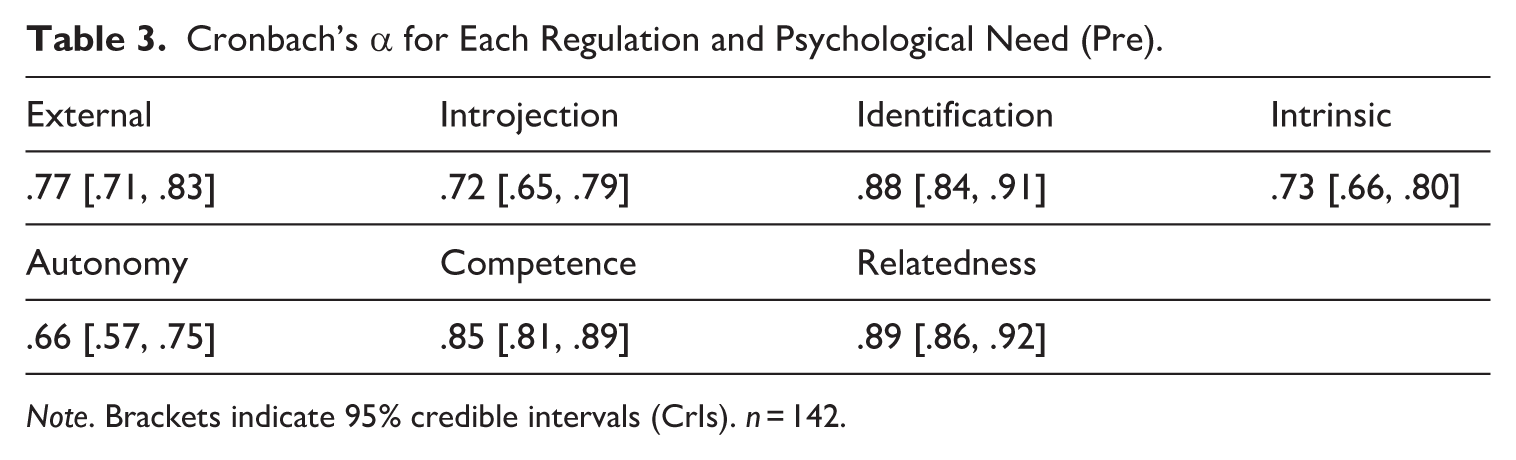
Note. Brackets indicate 95% credible intervals (CrIs). n = 142.
Cronbach’s α for Each Regulation and Psychological Need (Post).
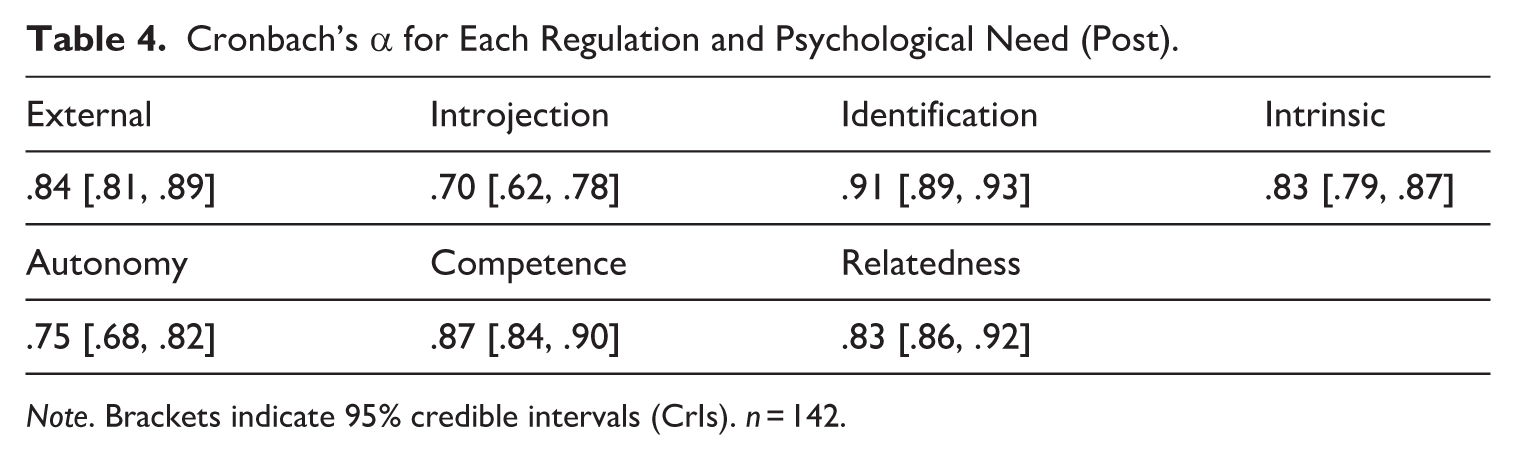
Note. Brackets indicate 95% credible intervals (CrIs). n = 142.
3.3. Procedure
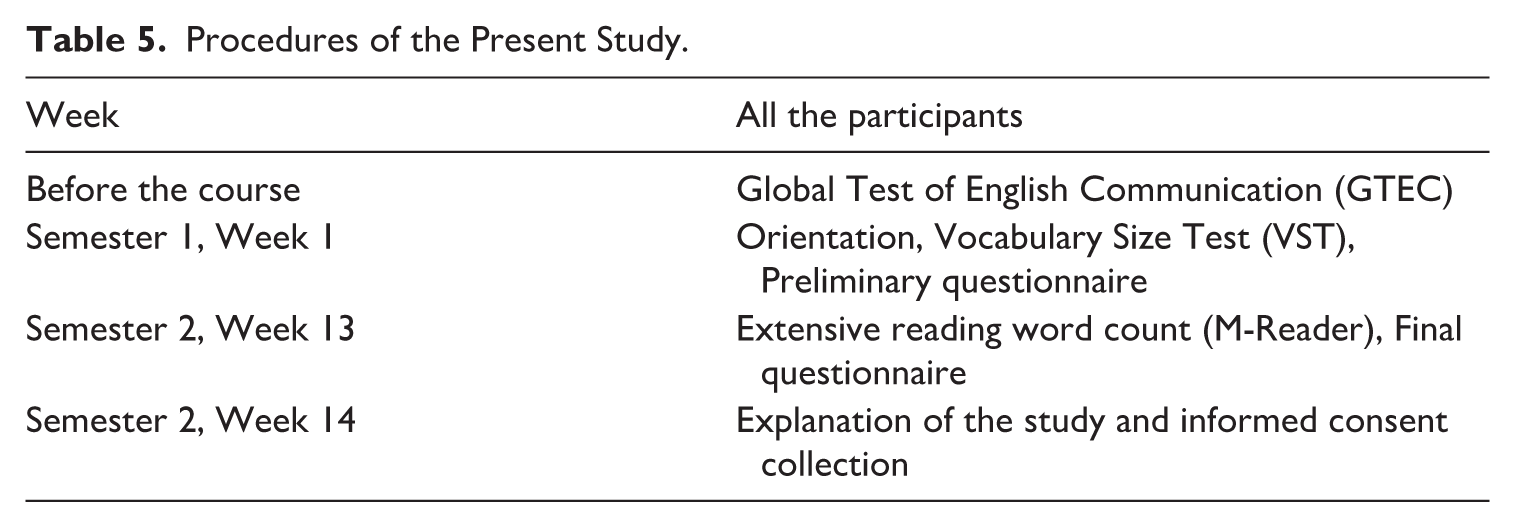
Before the course, all students took the GTEC. In Semester 1, Week 1, participants were registered on the M-Reader system, and an orientation session covering the course structure and the concept of extensive reading was conducted. The preliminary questionnaire and the VST (Nation & Beglar, 2007) were also administered. Students then selected their first book and received instructions on how to use the M-Reader system.
Extensive reading began in Week 1 and continued throughout the 1-year course. During class time, approximately 30 minutes were allocated to silent extensive reading activities once a month. In addition, a short presentation activity about the books students had read was conducted three times in each semester. Following the summer vacation period (from early August to mid-September), the second semester began and the same extensive reading-related activities continued.
The post-questionnaire and confirmation of extensive reading word counts recorded in the M-Reader system were conducted in Semester 2, Week 13. In Week 14, the purpose of the study (i.e., examining changes in motivation and BPNs over the extensive reading-enhanced speaking course) was explained in detail, and formal informed consent for research participation was obtained at this stage (Appendix C). Importantly, the preliminary and post-questionnaires were initially administered as part of routine course-related evaluation and learner feedback, and explicit research purposes were not disclosed until Week 14 in order to minimize potential influence on learners’ responses. The overall procedure is summarized in Table 5.
Procedures of the Present Study.
This study was conducted with the approval of the Institutional Ethics Board. It was explicitly ensured that participation was voluntary and that questionnaire responses would not affect course grades, despite the extensive reading-related components accounting for 20% of the course grade. Participants were also informed that they could withdraw their consent at any time without disadvantage. Data were collected only from those who provided consent, and all data were anonymized.
3.4. Data Collection and Data Analysis
Data were collected from the GTEC, VST, pre-questionnaire, post-questionnaire, and M-Reader word counts. Bayesian analysis was conducted using JASP (JASP Team, 2024) to examine changes in learners’ motivation and BPNs before and after the extensive reading-enhanced speaking course within the framework of SDT. Bayes factors were employed to quantify evidence for or against changes in motivation and BPNs, allowing for a more nuanced interpretation than reliance on p-values alone (Wagenmakers et al., 2018).
Bayesian paired-samples t-tests were conducted to examine changes in motivation and BPNs over time (pre- vs. post-). The magnitude of change was assessed using Cohen’s d, and relationships among key variables were examined using Bayesian Pearson correlation analyses. All Bayesian analyses were conducted using the default Cauchy prior distribution (r = 0.707) for effect sizes. Bayes factors (BF10) were interpreted according to commonly used guidelines based on Jeffreys (1998). Values greater than 1 indicate evidence in favor of the alternative hypothesis, whereas values less than 1 indicate evidence in favor of the null hypothesis. For ease of interpretation, BF01 values are also reported when the null hypothesis is favored. BF10 and BF01 values of 1–3 were interpreted as anecdotal evidence, 3–10 as substantial evidence, 10–30 as strong evidence, and values above 30 as very strong to decisive evidence. Effect sizes (Cohen’s d) were interpreted following conventional benchmarks (Cohen, 1988), where 0.2, 0.5, and 0.8 represent small, medium, and large effects, respectively.
Descriptive statistics (means and standard deviations) were calculated for Likert-scale questionnaire items, while frequencies and percentages were calculated for categorical responses. Responses to the open-ended questions were analyzed using a qualitative content analysis approach. First, the author and a second researcher independently segmented all responses into meaningful units, resulting in a total of 230 units. Any discrepancies in segmentation were resolved through discussion. Next, the author developed an initial set of categories based on recurring themes, which was reviewed and refined in consultation with the second researcher. Following agreement on the coding scheme, both researchers independently coded all units into the established categories. Inter-coder agreement was 81.3%, indicating acceptable reliability for qualitative coding, and all disagreements (n = 43) were subsequently resolved through discussion to reach consensus. Frequencies were calculated only to provide an overview of the relative prominence of categories, rather than for statistical generalization or quantitative analysis.
4. Results
4.1. Extensive Reading Implementation
Table 6 presents the most frequently read extensive reading series and titles among the participants. By Week 13 of the second semester (December), the learners had read an average of 62,223.2 words (SD = 23,646.8), with totals ranging from 40,032 to 163,369 words. At that point, 46 participants had not yet reached the target reading amount. The average quiz pass rate on the M-Reader system was 93.2%, indicating that most participants successfully comprehended the books they read. The participants reported spending an average of 209.3 minutes per week on extensive reading itself (SD = 103.4), with reported reading times ranging from 60 to 400 minutes per week. Although reading speed was not directly measured, students were encouraged to select books at comfortable levels and to read for overall understanding rather than detailed word-by-word analysis.
Most Frequently Read Extensive Reading Series and Titles.
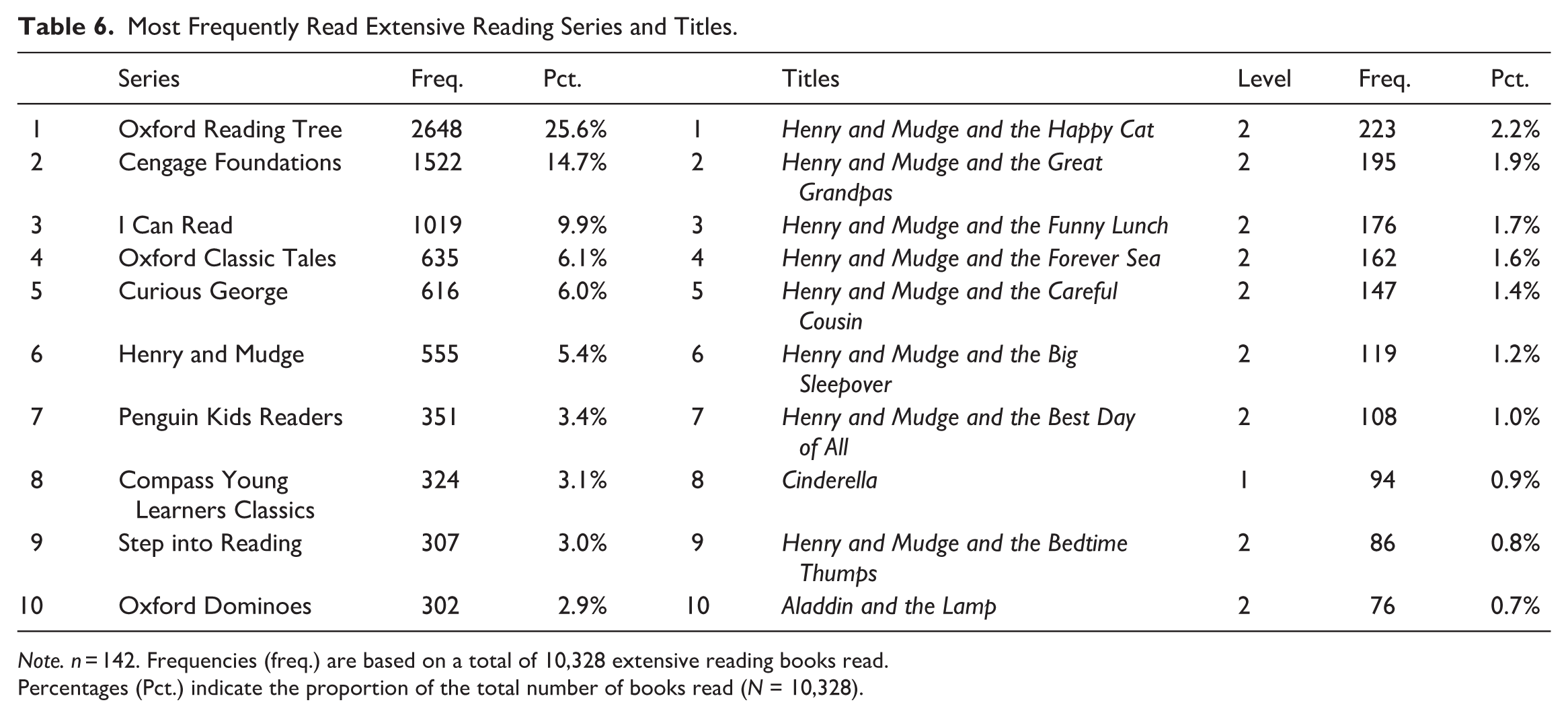
Note. n = 142. Frequencies (freq.) are based on a total of 10,328 extensive reading books read.
Percentages (Pct.) indicate the proportion of the total number of books read (N = 10,328).
4.2. Changes in Motivation and BPNs (RQ1)
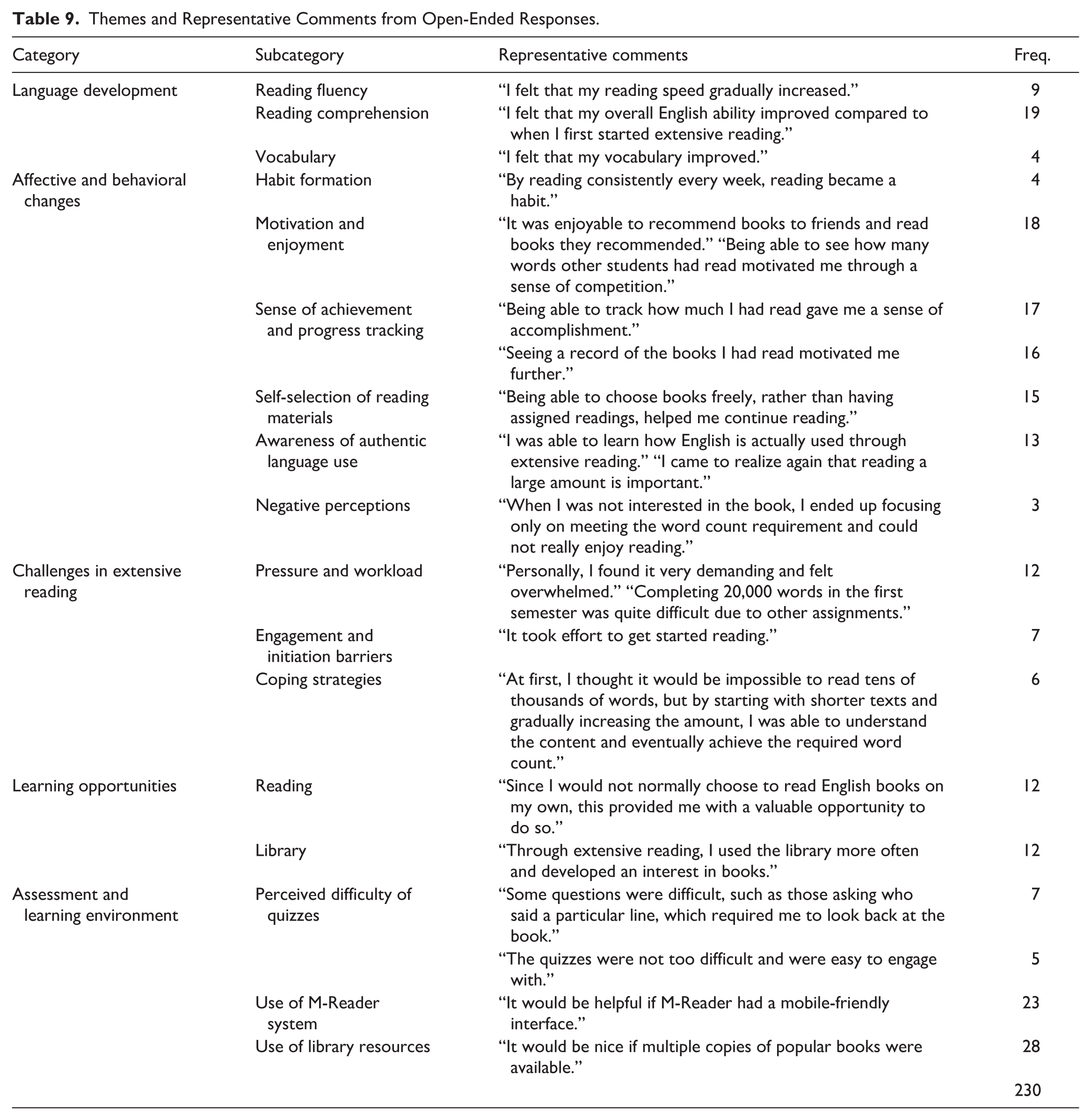
To address RQ1, changes in motivation and BPNs from pre- to post-course were examined using Bayesian paired-samples t-tests. The results revealed contrasting patterns between BPN satisfaction and motivational quality (Tables 7 and 8). Basic psychological needs showed clear positive changes, with increases observed in autonomy, competence, and relatedness, supported by strong Bayesian evidence. These findings were consistent with the qualitative data (Table 9), which indicated perceived improvements in reading ability, enjoyment, and a sense of accomplishment.
Results of Bayesian Paired-Samples t-Tests for Motivation.
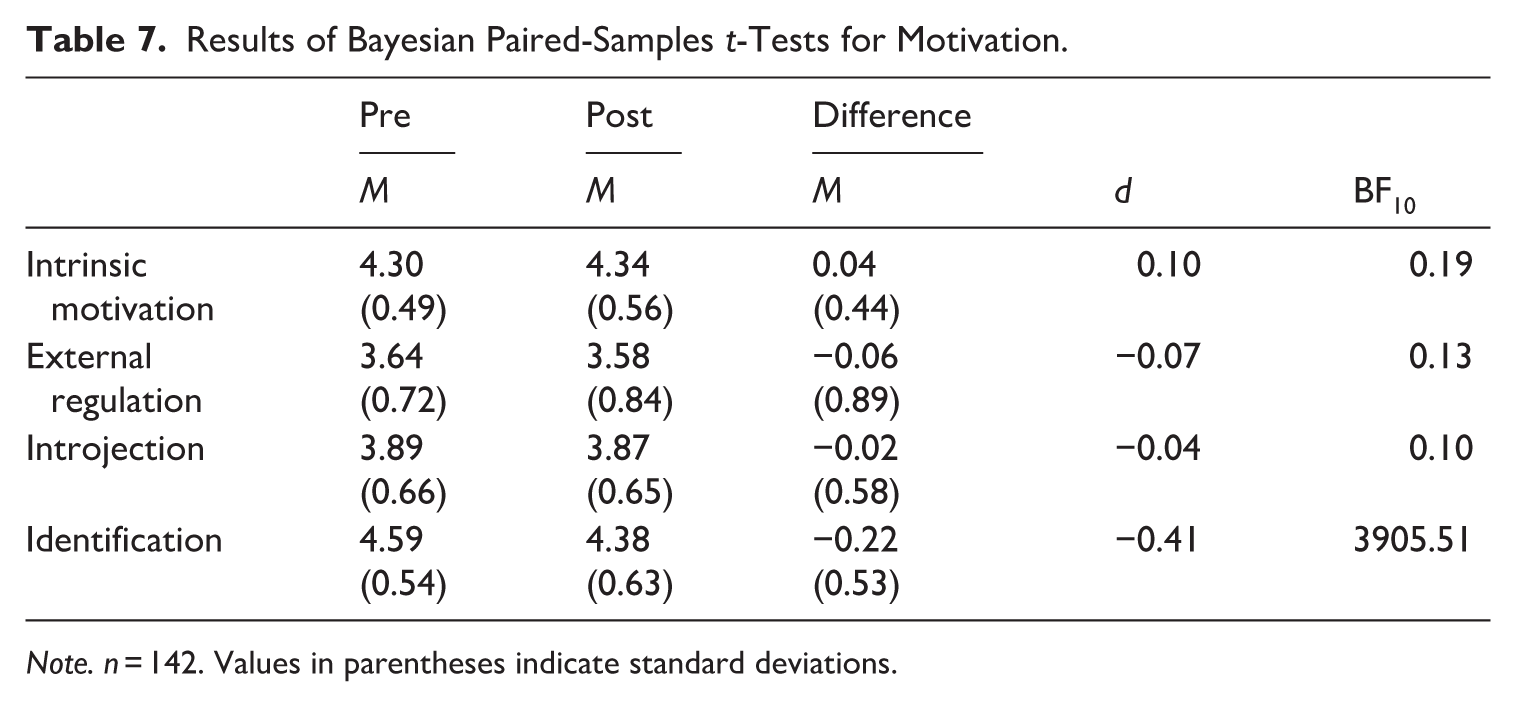
Note. n = 142. Values in parentheses indicate standard deviations.
Results of Bayesian Paired-Samples t-Tests for Basic Psychological Needs.
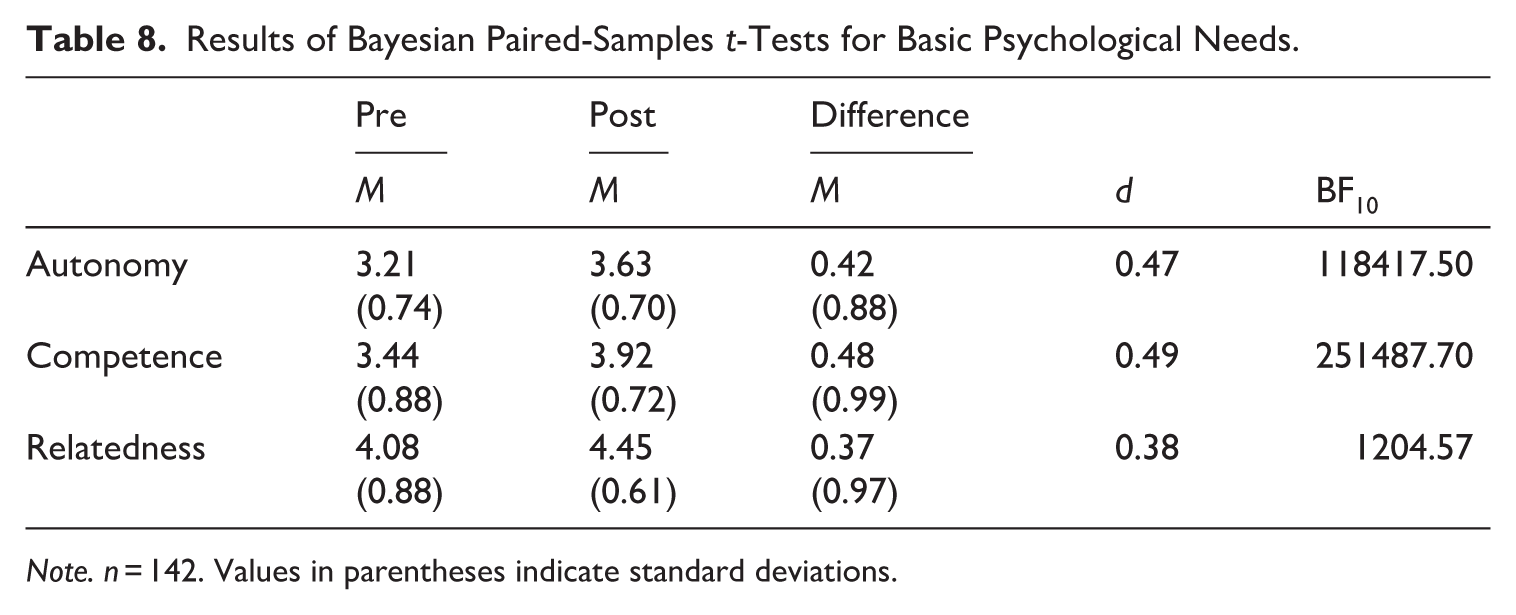
Note. n = 142. Values in parentheses indicate standard deviations.
Themes and Representative Comments from Open-Ended Responses.
In contrast, motivational quality showed a different pattern. Identified regulation decreased, while intrinsic motivation showed minimal change. External and introjected regulation remained largely stable, with Bayesian evidence supporting the absence of substantial change.
4.3. Relationships Between Changes in Motivation and BPNs (RQ2)
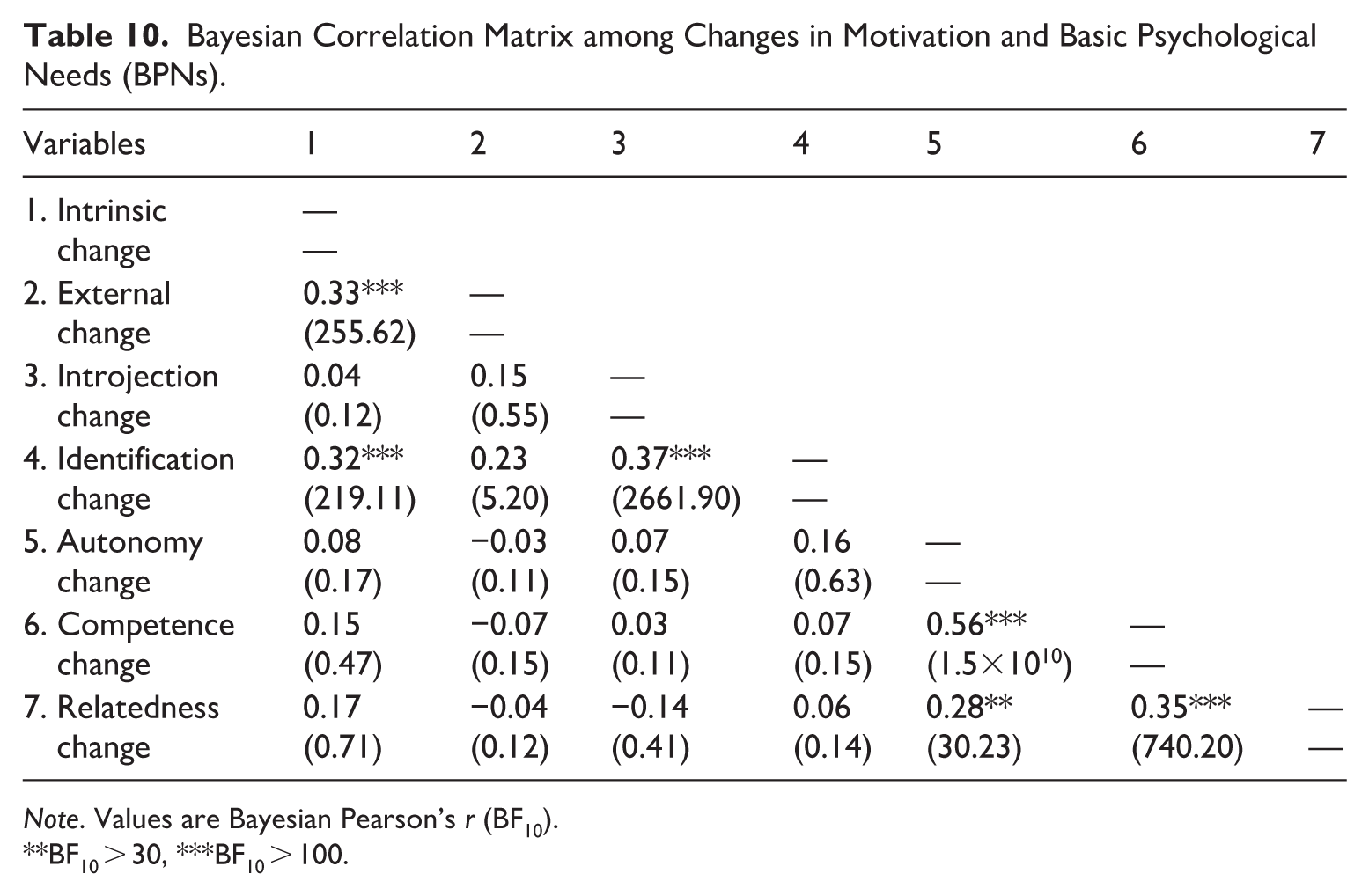
Bayesian Pearson correlation analyses were performed on the change scores (Post–Pre) to examine the relationships among motivational components and BPNs (Table 10). Evidence was considered substantial when BF10 > 3. Among the three basic psychological needs, changes were positively correlated, with a strong association between autonomy and competence, and a moderate association between competence and relatedness, suggesting that these needs tended to increase concurrently within the same instructional context.
Bayesian Correlation Matrix among Changes in Motivation and Basic Psychological Needs (BPNs).
Note. Values are Bayesian Pearson’s r (BF10).
**BF10 > 30, ***BF10 > 100.
In contrast, correlations between changes in BPNs and autonomous motivation were weak or inconclusive. Changes in all three BPNs showed little or no association with identified regulation or intrinsic motivation, indicating no clear evidence that increases in need satisfaction were directly linked to changes in autonomous motivation.
4.4. Students’ Perceptions of the Extensive Reading Component of the Course (RQ3)
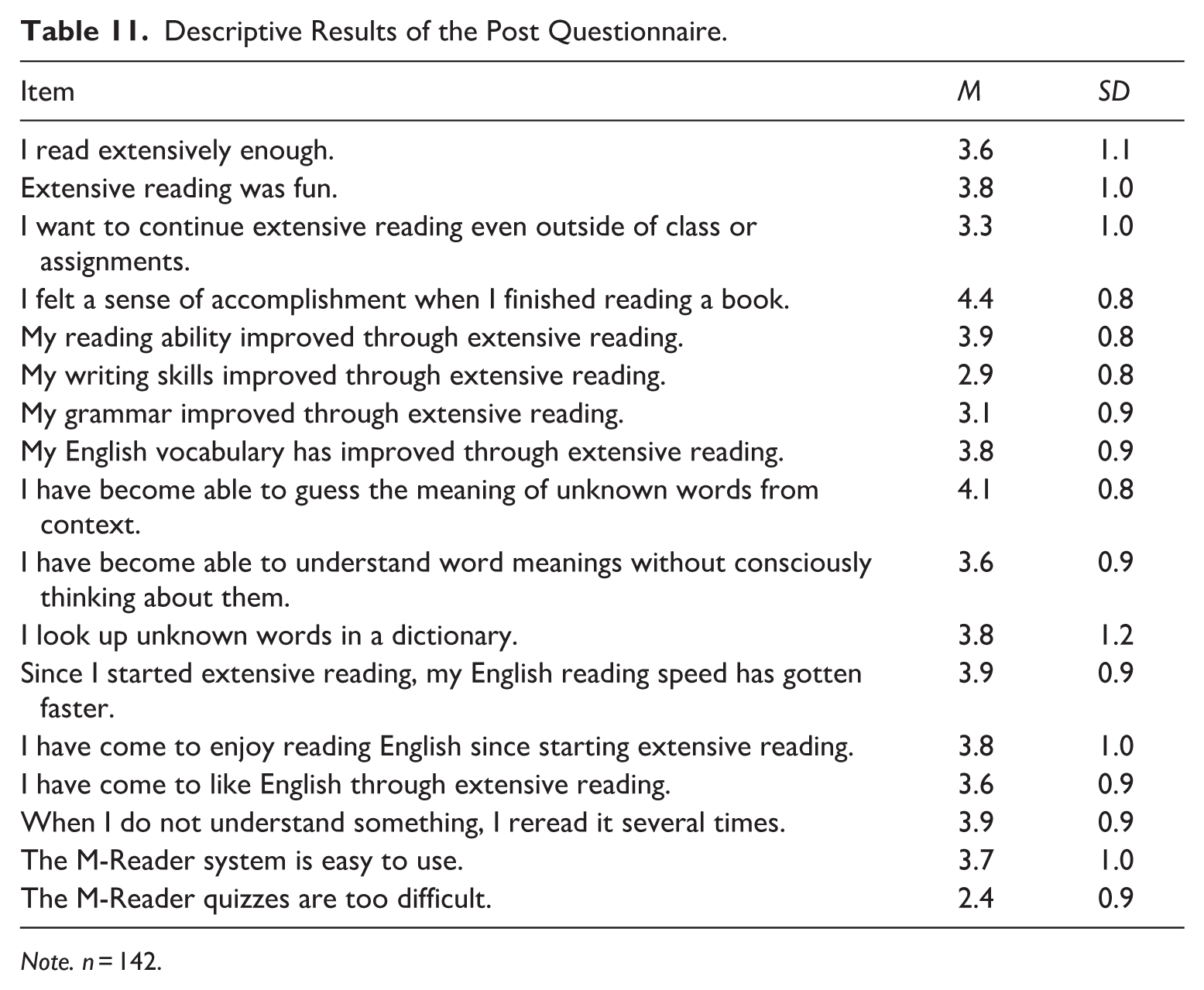
Post-questionnaire results concerning general perceptions of the extensive reading program (Table 11) and open-ended responses (Table 9) indicated that students largely reported positive experiences, such as feeling a sense of accomplishment when finishing a book (M = 4.4) and believing that their reading ability improved (M = 3.9). These perceptions, particularly the high sense of accomplishment, align with the self-reported increase in competence. However, the coexistence of positive experiences and increased BPN satisfaction alongside a decline in identified regulation warrants further qualitative exploration.
Descriptive Results of the Post Questionnaire.
Note. n = 142.
5. Discussion
Pre-course analyses suggested that the participants, although broadly comparable to Japanese EFL university students in terms of proficiency, were relatively positive and motivated toward English learning. The extensive reading-enhanced speaking course included structured extensive reading-related requirements, such as reading quotas, bonus points for exceeding the minimum requirement, and extensive reading-related assessment components accounting for 20% of the course grade, thereby providing a structured learning environment to examine changes in motivation and the three BPNs within the framework of SDT.
RQ1 asked how EFL English majors’ motivation and satisfaction of the three BPNs changed over the duration of the extensive reading-enhanced speaking course. The Bayesian paired-samples t-tests indicated changes in both motivation and BPN satisfaction. Increases in all three BPNs were observed within the extensive reading-enhanced instructional context. Autonomy was supported by the fundamental extensive reading principle of learner choice in selecting personally appealing reading materials. Questionnaire responses, such as the statement “Being able to choose books freely, rather than having assigned readings, helped me continue reading,” reflected this sense of autonomy support.
The substantial increases in BPN satisfaction may reflect their prior educational experience, where learning was often highly controlled, leading to a sharp decline in motivation following university enrollment (Miura, 2010). Specifically, motivation for English learning in Japanese high schools is often strongly driven by university entrance examinations, whereas such instrumental pressures tend to diminish after university enrollment, which may lead to a rapid shift in motivational orientation. Therefore, the observed changes in this study may reflect not only the effects of the extensive reading-enhanced speaking course but also a broader educational transition.
Increased competence was reflected in the relatively high post-questionnaire mean score (M = 3.92, SD = 0.72) and open-ended responses, such as “Being able to track how much I had read gave me a sense of accomplishment” and “I felt that my reading speed gradually increased.” These responses indicated that successfully reading and understanding English books independently provided a novel experience of accomplishment. The comment “Seeing a record of the books I had read motivated me further” also suggests that visible progress tracking through the M-Reader system may have contributed to feelings of competence.
Increased relatedness appeared to be supported by classroom interactions. Although extensive reading is often recommended as a quiet, individual activity (Day & Bamford, 2002), questionnaire responses suggested that classroom interactions were associated with increased relatedness (e.g., “It was enjoyable to recommend books to friends and read books they recommended” or “Being able to see how many words other students had read motivated me through a sense of competition”).
However, despite the substantial increased in BPN satisfaction, the quality of motivational regulation did not improve. This highlights a potential boundary condition for SDT-based explanations in this academic context. Identified regulation showed a moderate decrease (d = −0.41, BF10 = 3905.51), supported by strong evidence. However, this decrease should not necessarily be interpreted as a negative outcome, as learners may exhibit different profiles of motivational regulation, and variations across regulation types can reflect shifts in how engagement is internalized rather than a decline in overall motivation. Rather, this pattern is consistent with previous research suggesting that initially high motivation may decrease when learners lose sight of the instrumental value of an activity (M. Tanaka, 2015). Questionnaire responses supported this interpretation. Students reported that “When I was not interested in the book, I ended up focusing only on meeting the word count requirement and could not really enjoy reading,” and that “Completing 20,000 words in the first semester was quite difficult due to other assignments,” suggesting that some learners perceived extensive reading primarily as a course requirement rather than as a personally meaningful activity.
External regulation remained stable, which may reflect the dual influence of BPN satisfaction and strong external requirements, such as the mandatory reading quota and the 20% weighting in the final course grade (Stoeckel et al., 2012). This weighting was a pedagogical decision intended to balance the role of extensive reading within a speaking-focused course, ensuring that it was neither negligible nor overly dominant in the overall assessment. Although students could still pass the course without fully completing the extensive reading requirement, the extensive reading component nevertheless remained a meaningful evaluative element within the course. Students’ comments such as “Personally, I found it very demanding and felt overwhelmed” illustrate the emotional and practical demands associated with these extrinsic requirements.
However, the absence of a control group limits the extent to which the effects associated with the extensive reading component of the course can be isolated, and the results should therefore be interpreted with caution. The extensive reading component was implemented as part of the regular curriculum for all intact classes, which limited the practical feasibility of establishing a separate control group. In addition, motivation measures may reflect the course as a whole, including speaking activities, rather than extensive reading alone. This is because the questionnaire items referred to the overall course experience, in which extensive reading was embedded alongside other classroom activities. Therefore, observed associations among extensive reading, grading, and motivation should not be interpreted as causal relationships, as they may reflect overlapping influences within the integrated course design. In addition, the generalizability of the findings may be limited by the specific course context, in which extensive reading was implemented within a speaking-focused class. Students’ expectations for improving speaking skills may not have fully aligned with the extensive reading component, which may have influenced their perceptions of its value and their motivational responses.
Regarding the interrelationships (RQ2), changes in the three BPNs were moderately to strongly correlated with each other (e.g., autonomy–competence, r = 0.56), suggesting that improvements in one need tended to co-occur with improvements in the others. In contrast, changes in BPNs were not strongly associated with changes in autonomous motivation (e.g., autonomy change vs. identified regulation, r = 0.16).
This pattern suggests that, although psychological need satisfaction increased within the extensive reading-integrated instructional context, these improvements did not necessarily translate into parallel increases in autonomous motivation. One possible interpretation is that the structured nature of the course, including grading and mandatory reading quotas, may have introduced controlling elements that may have influenced the internalization process proposed in SDT (Deci & Ryan, 2000). In this respect, the motivational impact of the extensive reading component may depend partly on contextual factors such as assessment practices, grading pressure, and the degree of autonomy support embedded in the instructional design.
This interpretation is supported by the qualitative data (Table 9), which indicated both positive experiences (e.g., enjoyment, sense of accomplishment, improved fluency) and experiences of pressure related to workload and reading requirements. In addition, responses suggested that many students were unlikely to continue extensive reading outside course requirements, indicating that sustained engagement with the extensive reading component may have been partly supported by assessment-related requirements, such as reading targets and presentation activities. These course-related requirements may have been associated with more externally regulated forms of engagement, as participation appeared to be partly driven by the need to meet course requirements rather than solely by intrinsic interest in reading. Overall, these findings suggest that the extensive reading-integrated learning environment included both autonomy-supportive and controlling elements, and that external requirements may have played a dual role in shaping engagement and motivational regulation.
Regarding RQ3, post-questionnaire responses indicated generally positive perceptions of the extensive reading component of the course, with most items falling between “somewhat agree” and “agree” on the Likert scale. Mean scores ranged from 3.3 to 4.4, with the highest ratings for sense of accomplishment (M = 4.4), perceived improvement in reading ability (M = 3.9), and perceived increase in reading speed (M = 3.9). These findings are broadly consistent with the quantitative results showing increased competence satisfaction. Enjoyment of extensive reading was also relatively high (M = 3.8), and open-ended responses suggested that opportunities to select reading materials freely may have supported learners’ enjoyment and engagement.
Items related to engagement with extensive reading received generally positive ratings. For example, “I read extensively enough” received a relatively positive rating (M = 3.7), suggesting that learners generally felt they had engaged adequately with the extensive reading component. However, “I want to continue ER [extensive reading] even outside of class or assignments” received a somewhat lower rating (M = 3.3), implying that extensive reading may be more sustainable within structured and supportive learning environments in this context, which may reflect characteristics of Japanese classroom culture (Miura, 2010). Open-ended responses further suggested that learners perceived accomplishment, improvement in reading ability, and increased reading speed positively, contributing to favorable attitudes toward extensive reading. In addition, even limited classroom opportunities for peer interaction, such as short presentations and book recommendations, appeared to support learners’ extensive reading experiences, highlighting the potential role of social support in enhancing relatedness. From an SDT perspective, such social interactions may enhance learners’ sense of relatedness by fostering feelings of belonging and mutual support, which may in turn contribute to sustained engagement in reading activities.
Finally, extensive reading’s core features, such as self-selected and level-appropriate reading materials, may help accommodate individual differences in learners’ interests and reading pace. Although substantial variation was observed in reading volume and time spent reading, overall evaluations of extensive reading were generally positive. These findings suggest that extensive reading may provide a relatively flexible learning environment that was perceived positively by many learners in this context.
5.1. Pedagogical Implications
The findings suggest that the English course incorporating extensive reading was associated with improvements in learners’ satisfaction of BPNs. Although the present study does not permit a strict causal interpretation of the extensive reading component specifically, the results indicate that extensive reading may serve as a valuable pedagogical component for supporting learners’ psychological needs in EFL classrooms.
For practical implementation, three points are noteworthy. First, extensive reading may be effectively implemented in EFL classrooms, given the observed improvements in BPN satisfaction. Second, mandatory quotas and grade integration appeared to be associated with continued engagement, potentially through external regulation (Kitao et al., 1990), thereby sustaining participation even as the perceived instrumental value (identified regulation) declined. Third, incorporating social elements (e.g., peer recommendations and short presentations) alongside individual reading may help enhance learners’ sense of relatedness.
5.2. Limitations and Future Research
One limitation of the present study is the absence of a control group. As a result, it is difficult to determine the extent to which the observed motivational changes were attributable to the extensive reading component as implemented within the course, or to other instructional and assessment-related factors, including the extensive reading requirement (15% of the final grade), extensive reading-related presentation activities (5%), and other aspect of the grading policy (20% of the final course grade), as well as additional classroom activities. In addition, participants were simultaneously enrolled in other English language courses (e.g., listening, reading, writing, grammar, pronunciation, and test preparation), which may also have influenced their overall motivational profiles. Therefore, the findings should be interpreted cautiously, and causal relationships cannot be firmly established.
In addition, the participants were drawn from a single cultural and educational context (Japanese English majors at a women’s junior college), which may limit the generalizability of the findings to other EFL settings and learner populations. However, the study’s strength lies in its ecological validity within an authentic classroom context. The study examined an extensive reading component embedded within an actual required course, including mandatory reading quotas and grade weighting, provided insights into how contextual and evaluative factors may shape the relationships among extensive reading, BPN satisfaction, and motivational regulation in real educational settings.
Another limitation concerns the data collection procedure. Although participants were informed that questionnaire responses were voluntary, anonymous, and unrelated to course grades, the detailed research purpose was not fully emphasized prior to data collection in order to reduce the potential influence of demand characteristics and socially desirable responses associated with the instructor-researcher role. However, this procedure itself may have influenced how participants evaluated their classroom experiences and motivational states. Therefore, the findings should be interpreted with caution, particularly regarding the relationships between perceived BPN satisfaction and motivational regulation.
Future research should prioritize: (a) detailed qualitative inquiry into how learners interpreted and experienced the decrease in identified regulation, including whether it reflected diminished perceived value or changes in the nature of engagement with reading; (b) experimental or quasi-experimental studies employing comparison groups to clarify the specific effects of extensive reading as implemented within instructional contexts and other associated contextual factors; and (c) examining the optimal design of controlling features (e.g., quota size and grade weighting) to maximize BPN satisfaction while minimizing the undermining of autonomous motivation.
6. Conclusions
This study investigated the relationship between extensive reading, motivation, and BPN satisfaction among English-major students participating in an extensive reading-enhanced speaking course that included mandatory reading quotas and grade weighting within an EFL context. The findings showed substantial increases in satisfaction in all three BPNs (autonomy, competence, and relatedness), suggesting that extensive reading may function as a need-supportive educational component within such instructional settings.
At the same time, increases in BPN satisfaction were not accompanied by corresponding increases in more autonomous forms of motivation. In particular, identified regulation showed a decrease despite improvements in learners’ perceived autonomy, competence, and relatedness. Drawing on SDT (Deci & Ryan, 2000), this finding may suggest that strong contextual controlling factors, such as grade weighting and mandatory reading quotas, may have interacted with otherwise need-supportive practices in ways that complicated the internalization process typically predicted by SDT.
These findings suggest that, in addition to the need-supportive qualities of instructional practices, the broader motivational context in which they are implemented may also play an important role in shaping motivational outcomes. In this sense, the present study contributes to the growing discussion of how extensive reading functions within authentic classroom settings that include institutional requirements and evaluative components, rather than under idealized conditions.
In addition, extensive reading appeared to support BPN satisfaction within the classroom context, suggesting its potential value as a flexible motivational practice in EFL education. The findings also raise the possibility that external structures, such as grading policies and reading quotas, may help sustain engagement in academically demanding contexts, although they do not necessarily foster greater autonomous motivation.
Supplemental Material
sj-docx-1-ltr-10.1177_13621688261457494 – Supplemental material for Student Perceptions of a Speaking Course Enhanced by Extensive Reading within a Self-Determination Theory Framework
Supplemental material, sj-docx-1-ltr-10.1177_13621688261457494 for Student Perceptions of a Speaking Course Enhanced by Extensive Reading within a Self-Determination Theory Framework by Akira Iwata in Language Teaching Research
Footnotes

Funding
The author received no financial support for the research, authorship, and/or publication of this article.
Declaration of Conflicting Interests
The author declared no potential conflicts of interest with respect to the research, authorship, and/or publication of this article.
Supplemental Material
Supplemental material for this article is available online.
References
Supplementary Material
Please find the following supplemental material available below.
For Open Access articles published under a Creative Commons License, all supplemental material carries the same license as the article it is associated with.
For non-Open Access articles published, all supplemental material carries a non-exclusive license, and permission requests for re-use of supplemental material or any part of supplemental material shall be sent directly to the copyright owner as specified in the copyright notice associated with the article.
