






Abstract
Although the learning benefits of peer feedback in English-as-a-foreign-language writing instruction have been well recognized, the process and effects of peer feedback are largely reliant on teacher agency in conducting such activities. However, inadequate research has been conducted on this issue, leaving the dynamic features and causes of teacher agency in peer feedback largely unknown. Drawing on an ecological perspective, this comparative case study examined how two English-as-a-foreign-language teachers from two universities enacted agency in organizing peer feedback activities in their writing instructions. Multiple data including classroom observation, interviews and relevant teaching documents were collected and coded for themes. The study revealed that both teachers exerted dynamic agency in creating peer feedback experiences for students, but showed considerable differences before, during and after peer feedback. Overall, the novice teacher shifted from showing proactive agency to constrained agency, whereas the experienced teacher moved from demonstrating automatic agency to autonomous agency. This stark contrast was shaped by the synergism of different temporal affordances and constraints in relation to individual and contextual factors. The study highlights the need to provide tailored support to enhance teacher agency in dealing with possible challenges in facilitating students’ experiences with peer feedback.
1. Introduction
Teacher agency has gained burgeoning attention in the field of applied linguistics over the past decade and has been described as teachers’ active efforts in making intentional choices and acting accordingly in order to make a notable difference (Kayi-Aydar, 2019; Toom et al., 2015). It not only enhances teacher professional development, but also advances instructional practices and student learning outcomes (Ruan et al., 2025; Tao & Gao, 2017). Although existing studies primarily examine how teachers wield agency amid macro-level educational reforms, there is much to learn about the complexities of teacher agency within micro-level teaching contexts (Ashton, 2022; Tao & Gao, 2021).
Assessment for learning (AfL) is widely recognized as a powerful catalyst for student learning (Black & Wiliam, 2009; Han & Xu, 2019). Among its key strategies, peer feedback is particularly notable, and has been proven to have unique advantages in improving students’ reader awareness, feedback literacy and writing revision in English as a foreign language (EFL) writing (Yu & Lee, 2016; Zhang & Gao, 2024). However, for peer feedback to have an impact on students’ learning, it must first be integrated into instructional design, and, further, initiated and organized by teachers (Sun & Wang, 2025). Effective implementation of peer feedback demands that teachers exercise agency in navigating practical challenges, including students’ limited literacy in giving and receiving feedback (Dong et al., 2023), alongside interpersonal conflicts and misaligned expectations arising from peer interactions (Chen & Lee, 2022). Although Carless and Winstone (2023) called to view feedback as a shared responsibility between students and teachers, previous studies have mainly investigated learner agency in peer feedback activities (He et al., 2024; Wang & Lee, 2021), leaving the active role of teachers under-represented (Vuogan & Li, 2022).
Given that teacher agency is context-specific, exploration of teacher agency requires careful consideration of sociocultural issues, especially in cultures where traditional summative assessment and teacher feedback dominate EFL writing courses (Wang & Lee, 2021; Wang et al., 2020). In addition, consistent with peer feedback as a process-writing activity, teacher agency in peer feedback is fundamentally dynamic in nature (Cong-Lem, 2021; Kayi-Aydar, 2019). When navigating emergent challenges in group interactions during feedback exchanges, teachers need to continuously diagnose learner needs, make real-time decisions to adapt instructional strategies and engage in critical reflection (Rollinson, 2005; Zhao, 2014). Therefore, to investigate this issue, an ecological perspective, which conceptualizes agency not as a static individual trait but as a temporally embedded and relational process of negotiation with the environment, offers a particularly apt theoretical lens (Priestley et al., 2015).
Following the ecological lens, the current case study intends to examine how two EFL teachers enacted agency in conducting peer feedback in their writing courses and the possible factors influencing their enactment of agency during a semester of 16 weeks in two Chinese universities. Hopefully, the findings of this study could deepen our understanding of the complexities of teacher agency in implementing peer feedback activities.
2. Literature Review
2.1. Conceptualizing Teacher Agency from an Ecological Perspective
The concept of agency has been examined through various theoretical perspectives, which have undergone developmental changes from seeing it as an innate variable of one’s intentional acts based on social cognitive theory (Bandura, 2001), to “a socio-culturally mediated capacity to act” (Ahearn, 2001, p. 202) from sociocultural theory. More recently, attempts have been made to define teacher agency as an “emergent phenomenon of the ecological conditions through which it is enacted, something that teachers do rather than possess” (Priestley et al., 2015, p. 22).
Compared with the other two approaches, the ecological lens not only recognizes agency as contextually resourced but also as subject to changes, illustrated in its unique consideration of three temporal dimensions (Ruan et al., 2025). Specifically, the iterational dimension is concerned with the influence of the teachers’ life histories and their more specific professional histories; the projective dimension relates to teachers’ abilities to form short-term and long-term visions of action; the practical-evaluative dimension makes a further analytical distinction between three elements of cultural, material and structural aspects. Notably, the ecological perspective also posits that teachers fail to exercise agency when they merely comply with any established routines or habitual behaviours without considering alternative courses of action (Priestley et al., 2015). Being agentic means that teachers choose to self-initiate behaviours beyond what was stipulated.
In the area of EFL learning and teaching, the ecological approach essentially regards agency as doing, and autonomous behaviours were viewed as one form of agency practice (Tao & Gao, 2021). Taşdemir and Gümüşok (2025) adopted the ecological perspective to explore the instructional practices of two novice EFL teachers in Turkish high schools. One teacher demonstrated markedly autonomous agency by designing creative activities and modifying syllabi. The other, however, was caught in a condition of constrained agency: her intent to provide individualized feedback was structurally undermined by oversized classes. A notable limitation of the study, however, lies in its exclusive focus on the practical-evaluative dimension and thus the absence of longitudinal tracking of teacher agency development over time. This limitation was partly compensated by the study of Ashton (2021), which discovered the non-linear development of novice teachers’ agency in making complex pedagogical decisions when faced with the challenge of teaching multi-level language classes in New Zealand. In addition, the study by Nazari et al. (2025) traced teacher agency development in writing instruction in a private Iranian language school. The evolution of teacher agency was found to run from an assumed state during teacher education, to a challenged phase upon initial classroom implementation and, finally, to an enhanced form of agency through sustained reflection. Inspiringly, this study ventured to observe teacher agency longitudinally and revealed the dynamics of teacher agency enactment across time. However, the study was confined to the autonomous agency development of a cohort of experienced instructors, thus leaving much to explore about the situated nuances of teacher agency across different career stages.
Notably, central to the concept of teacher agency are the agentic practices teachers enact in their pedagogical contexts (Nazari et al., 2025), which could be instantiated through three empirically supported indicators: learning, adaptation and collaboration (Ashton, 2022; Cong-Lem, 2025; Nazari & Hu, 2024; Xu & Fan, 2022; Xu & Tao, 2025). Using an ecological lens, Ashton (2022) identified all three among New Zealand teachers during COVID-19 online teaching: the teachers enacted agency by observing other colleagues’ pedagogical practices (learning), modifying their teaching methods and materials (adaptation) and co-exploring unfamiliar content online with students (collaboration). In terms of learning, Xu and Fan (2022) found that Chinese EFL teachers exercised agency by proactively acquiring task-based language teaching knowledge through professional resources such as training programs and scholarly literature, driven by self-recognized instructional needs rather than external directives (Jenkins, 2020). Regarding adaptation, Cong-Lem (2025) revealed that Vietnamese university EFL teachers adjusted their instructional strategies via simplifying tasks, re-pairing students and offering additional support. As for collaboration, both novice and late-career teachers addressed professional challenges by engaging in communities where colleagues freely exchanged knowledge about digital skills and openly shared their emotional vulnerabilities (Nazari & Hu, 2024; Xu & Tao, 2025). Therefore, the working definition of teacher agency in peer feedback in the current study is proposed as: active learning, adaptive and collaborative behaviours that teachers voluntarily engage in when conducting peer feedback activities, beyond the existing syllabus and assessment requirements.
2.2. Teacher Agency in Conducting Feedback Practices in Writing Instruction
Although existing studies have not made teacher agency a discrete focus of inquiry in carrying out feedback practices, there has been implicit scholarly attention devoted to how teachers act agentively and its associated factors in relation to writing instruction and assessment.
Research on teacher agency enactment of feedback practices across diverse teaching contexts identified learning, adaptation and collaboration as salient manifestations of agentic actions (Lee & Yuan, 2021; Willis & Klenowski, 2018; Xu & Fan, 2022; Xu & Harfitt, 2019). Regarding learning, after completing a university writing teacher education course in Hong Kong, some participating teachers not only applied the acquired feedback strategies in their classrooms, but also actively sought expert guidance when challenges arose (Lee & Yuan, 2021). Adaptation emerged as another core feature: EFL teachers shifted from assigning tasks without feedback to providing scaffolded teacher feedback (Xu & Fan, 2022), and incorporated audio comments and out-of-class writing conferences to address large class sizes in Chinese universities (Xu & Harfitt, 2019). Regarding collaboration, Willis and Klenowski (2018) documented some teachers’ agentic redesign of tasks with colleagues when implementing peer feedback in formative writing assessment in an Australian high school. Although the above studies have captured the three key characteristics of teacher agentic actions, none have tracked its potential developmental trajectory over time. Given that feedback practices in writing instruction are not something that can be established within the short term in particular, how and why teachers enacted agency before, during and after the peer feedback process in authentic pedagogical settings becomes the very issue the present study seeks to address.
Another line of research has delved into the influencing factors of teacher agency in carrying out writing feedback. Scholars have identified personal factors such as sufficient teacher feedback abilities (Lee & Mao, 2024) and positive experiences with feedback practices (Yu & Lee, 2016) as major affordances in enhancing teacher agency. More often than not, teacher agency was deactivated due to contextual constraints such as a heavy teaching load (Xu & Harfitt, 2019), overcrowded classes (Cong-Lem, 2025) and students’ negative reactions (Zong et al., 2025), as well as a lack of collegial and administrative support (Jenkins, 2020). Taking an ecological perspective, Jiang et al. (2022) contributed to a more thorough understanding of the influencing factors of English teachers’ formative assessment and feedback agency in Chinese universities. The study showed that teacher agency was contingent upon the interwoven influence of the iterational dimension (teacher beliefs), the practical-evaluative dimension (time limit, classroom interaction and institutional culture) and the projective dimension (students’ development). However, there remains a fundamental gap in understanding the underlying interplay through which these internal and external factors collectively operate.
Based on the aforementioned gaps, and echoing Xu and Tao’s (2025) call to trace the temporally varied manifestations of teacher agency from an ecological perspective, the current study employs a qualitative case study design to address two research questions.
To better answer the research questions, a framework for understanding teacher agency in conducting peer feedback activities is proposed in this study (Figure 1).
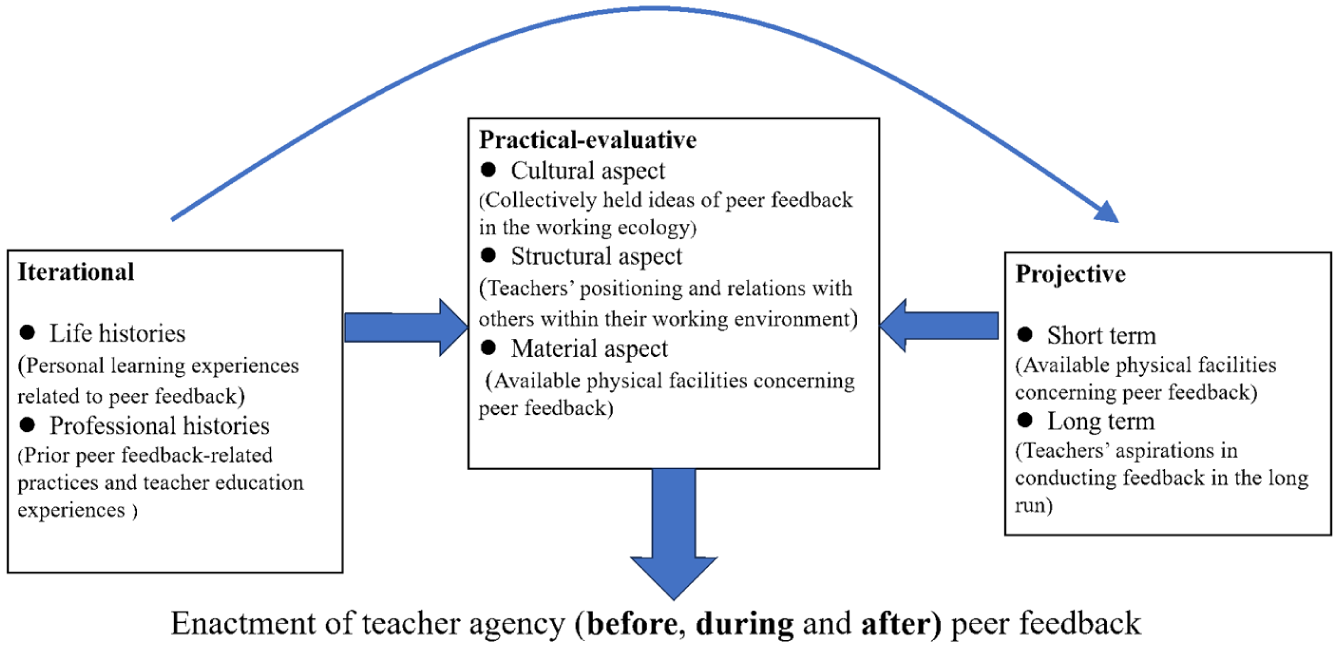
Understanding teacher agency in conducting peer feedback activities adapted from Priestley et al. (2015).
3. Methodology
3.1. Context and Participants
The study was conducted with two female second language (L2) writing teachers from two different kinds of universities in Northeast China. Specifically, Cindy’s institution is a national “Double First-Class” project university with an orientation toward science, engineering and research, whereas the institution in which Ruby works is a provincial comprehensive normal university. In terms of departmental management styles, Cindy’s department follows a top-down approach concerning policy implementation and assessment procedures, requiring teachers to learn writing pedagogy from a team of native English-speaking teachers with limited instructional flexibility. Ruby’s department, on the other hand, has a more relaxed and democratic leadership style that encourages teachers to independently explore and experiment with new approaches to writing instruction. Through a 16-week semester in the autumn of 2024, each teacher taught two English-major sophomore classes for a compulsory English writing course (about 30 students in each class). Both teachers conducted peer feedback activities as part of their course assessment, with detailed peer feedback procedures presented in Table 1.
Comparison of Peer Feedback Procedures between Cindy and Ruby.
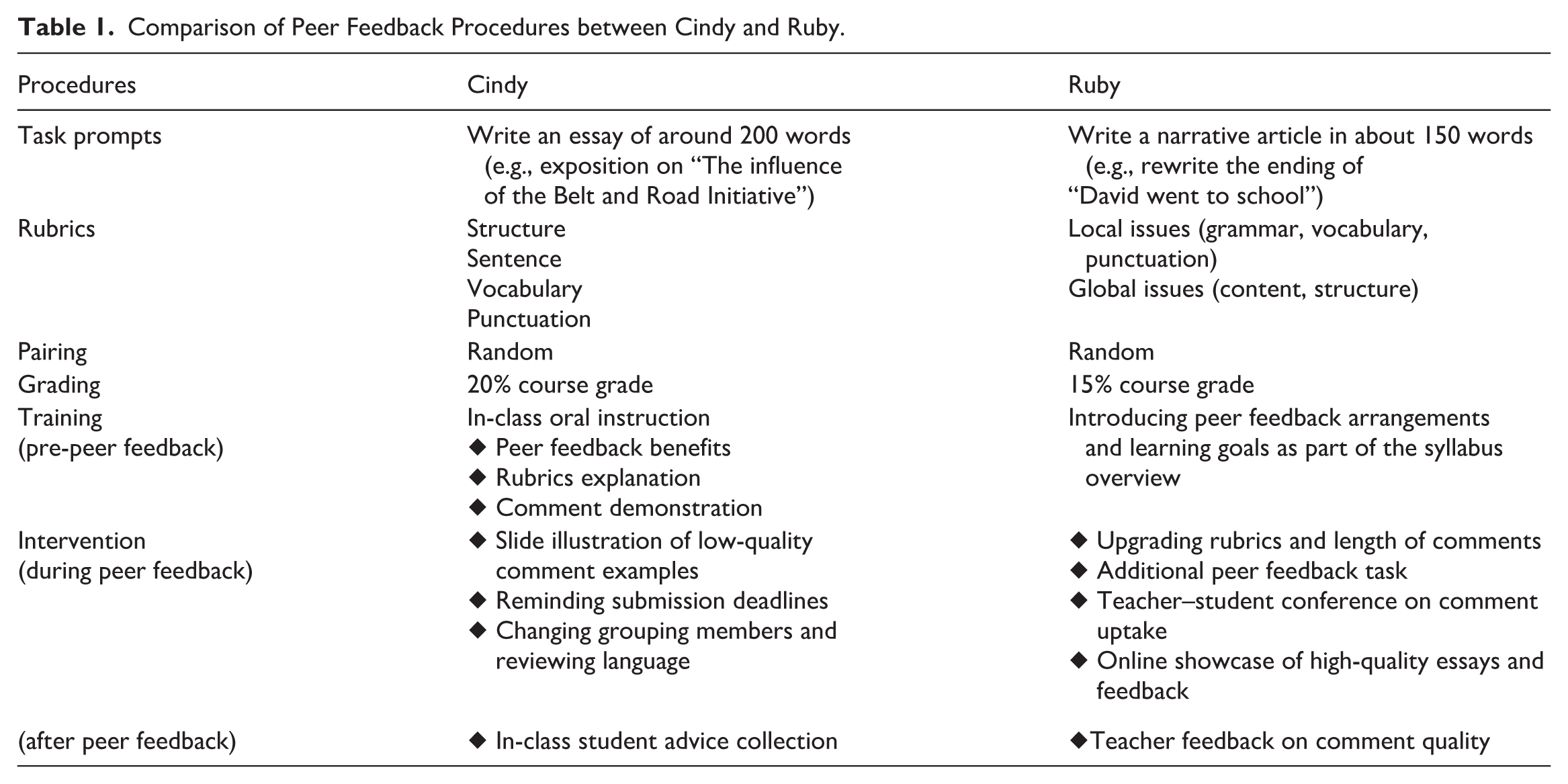
The teacher participants were selected based on purposeful sampling with a maximum variation strategy (Duff, 2018). Initially, we contacted 10 teachers who integrated peer feedback in English writing instruction to identify information-rich cases. The two teachers (Cindy and Ruby, pseudonyms) were finally invited because: (a) they not only actively applied peer feedback but also displayed observable shifts in their practices during the semester; (b) there was a strong contrast regarding their teaching years, peer feedback implementation experiences, professional titles and positions within their teaching community; (c) they agreed to undergo multiple rounds of observation and interviews. Their demographic information is summarized in Table 2.
Background of the Participants.
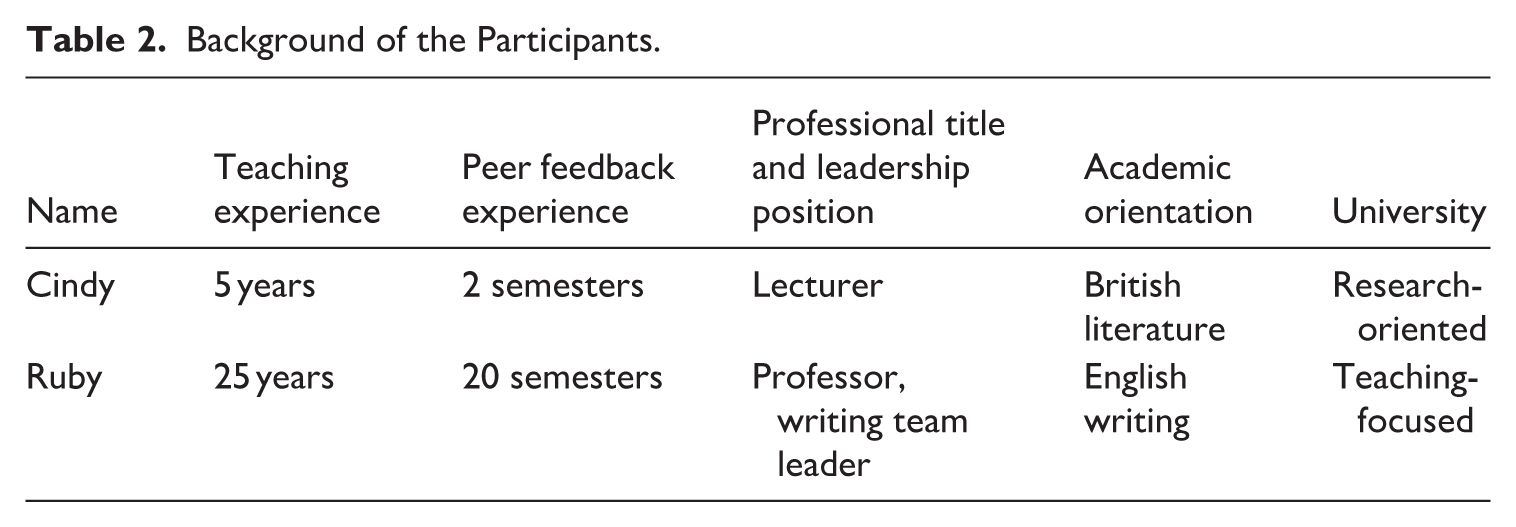
As shown in Table 2, Cindy is an early user of peer feedback from a key public research university, who had only conducted peer feedback twice before the study was conducted, whereas Ruby is an experienced user of peer feedback from a teaching-focused comprehensive college, who has consistently incorporated peer feedback into her writing course over the past decade. Compared with the expertise of the relatively novice teachers, the vast majority of experienced teachers develop a range of well-practiced routines that enable them to deal with certain teaching tasks effortlessly and automatically (Tsui, 2003).
During the semester, Cindy asked students to complete four peer feedback tasks in Microsoft Word after class, following the instruction of each writing genre (description, narration, exposition and argumentation). Students submitted their drafts to the online chat group and conducted written peer feedback with their assigned peer partner. Ruby taught narrative writing and conducted one online written peer feedback after class and four spontaneous paper-based written peer feedback in class. Despite the differences, both teachers employed dyadic peer feedback and required one round of peer feedback, with all tasks completed in written rather than oral mode.
As the two teachers assigned writing tasks with different frequencies and intervals within the semester, peer feedback as a pedagogical process is analysed at three separate stages (before, during and after peer feedback) to display comparative results across the semester.
3.2. Data Collection
As noted by Ruan et al. (2020), current teacher agency studies focus more on teacher perceived agency derived from interview data or questionnaire results, with insufficient attention paid to teacher agency in practice. Thus, this study particularly collected multiple data, including not only interviews (audio-recorded), but also classroom observation (video-recorded) and relevant teaching documents. Before the study commenced, ethical approval was obtained from the authors’ university. Teacher and student participants were informed about the research purpose and provided their written consent to be audio- and video-recorded for data collection. All transcribed data corresponding to its collection phases was displayed in Table 3.
Overview of Data Collection.
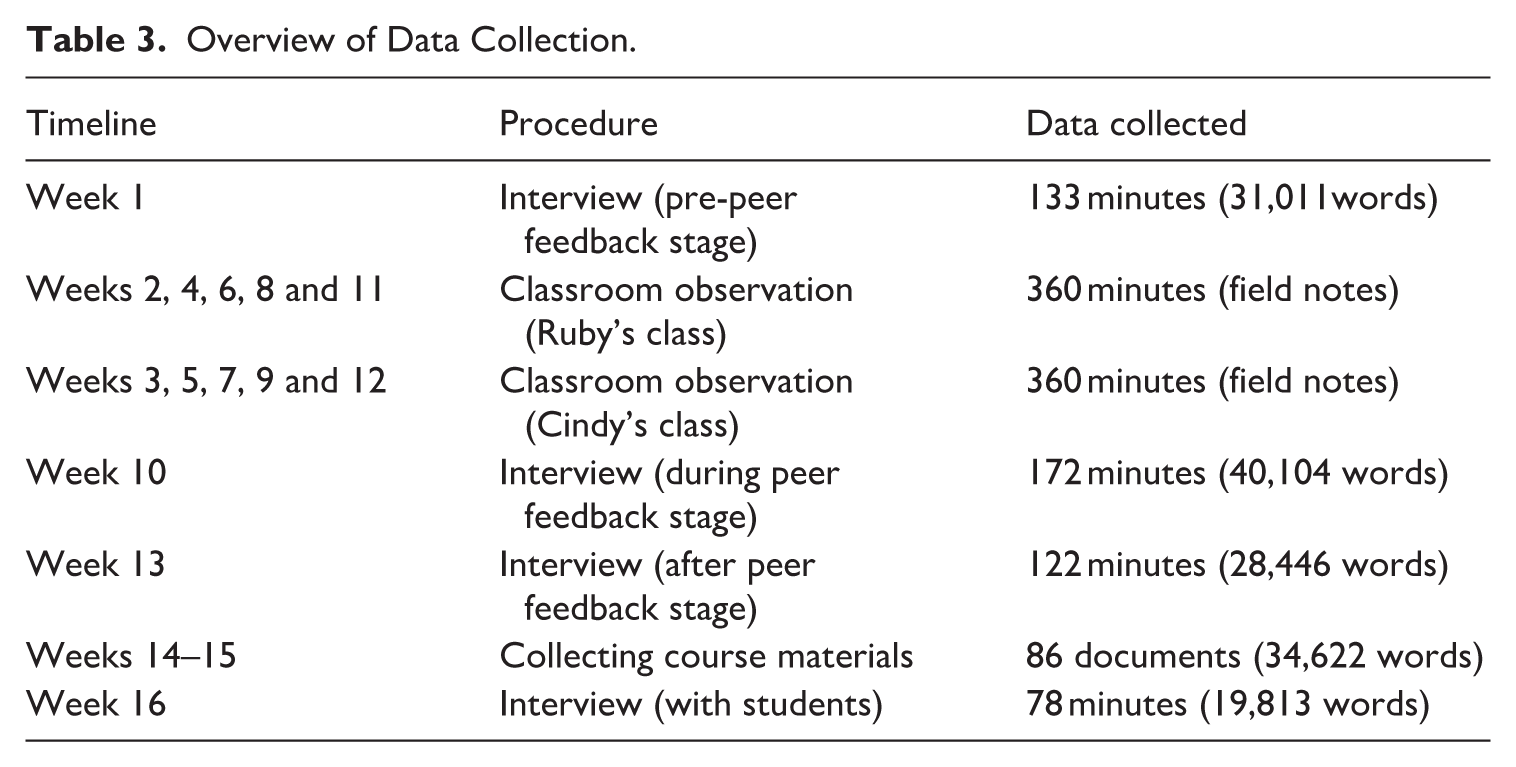
Specifically, three in-depth semi-structured interviews with each teacher were conducted to understand their agency. The first interview aimed to elicit teachers’ general background including previous English writing learning and teaching experience, assessment belief and experience of using peer feedback, as well as motives for organizing peer feedback tasks. The second interview focused on teachers’ agentic decision-making and actions as well as any contingencies that emerged during peer feedback implementation. The third interview was mainly about teacher reflections and plans for future peer feedback activities. Additionally, we conducted interviews with six focal students (three from each class) representing high, intermediate and low English proficiency respectively. The six focal student participants were selected based on the assumption that students at different proficiency levels may vary in the degree to which they engage in learning and interacting with their teachers in terms of peer feedback (Liu, 2025). This helped the researchers to investigate students’ perceptions of the changes in their teachers’ instructional behaviours towards peer feedback in class and, if any, teacher–student collaboration or interaction after class throughout the semester. All interviews were conducted in Chinese, the interviewees’ native language, to allow the interviewees to express their thoughts freely.
To capture teacher agency in teaching practice, classroom observations were conducted by the first author as a non-participant observer. Video-recorded observations produced transcripts which mainly cover classroom discourse, such as the segments of teachers soliciting students’ suggestions and feelings about peer feedback, teacher-led training and multimodal instructional sessions on peer feedback. The video recordings were viewed twice to help other researchers to make sense of how peer feedback was situated in classroom instruction, and the field notes were enriched accordingly to avoid any possible loss of information for analysis. As a result, the transcripts of both video-recorded interactional episodes and field notes were analysed and referenced in coding. Informal interviews with teachers during class break were also conducted to clarify class observations of their agentic behaviours.
Teaching documents including course syllabi, peer feedback assignment handouts, teacher feedback on peer comments, sample student writing, teaching slides and teacher–student interaction in WeChat groups (an online chatting tool) were also collected to further triangulate data. These materials also provided insights for the researchers to better understand the design, structure and intended objectives of the peer feedback activities. Further, these documents were used to assist the participants’ recall of specific details while conducting peer feedback.
3.3. Data Analysis
The audio recordings of these interviews were first transcribed verbatim in Chinese. The transcripts were then translated into English by the first author and the third author, who both hold degrees in translation studies and national translator certificates in two-way translation between English and Chinese. Back-translation was conducted using DeepL translator to ensure no meaning was lost during translation.
Data analysis was performed through thematic analysis (Braun & Clarke, 2021) with a combination of deductive and inductive coding. We started with deductive coding following the coding scheme illustrated in Table 4. Specifically, learning, collaboration and adaptation were used as predetermined indicators to identify teachers’ agentic actions in conducting peer feedback. For example, the codes “changing peer feedback communicative language” and “upgrading peer feedback rubrics” were assigned to the sub-categories of “adaptation”. The influencing factors on teacher agency were coded based on the ecological framing of teacher agency (Priestley et al., 2015) in Figure 1. For example, the codes “appreciating peers’ compositions in primary school” and “postgraduate thesis design on EFL writing assessment” were clustered into the aspect of “life histories”.
Coding Scheme of Teacher Agentic Actions in Conducting Peer Feedback Activities.
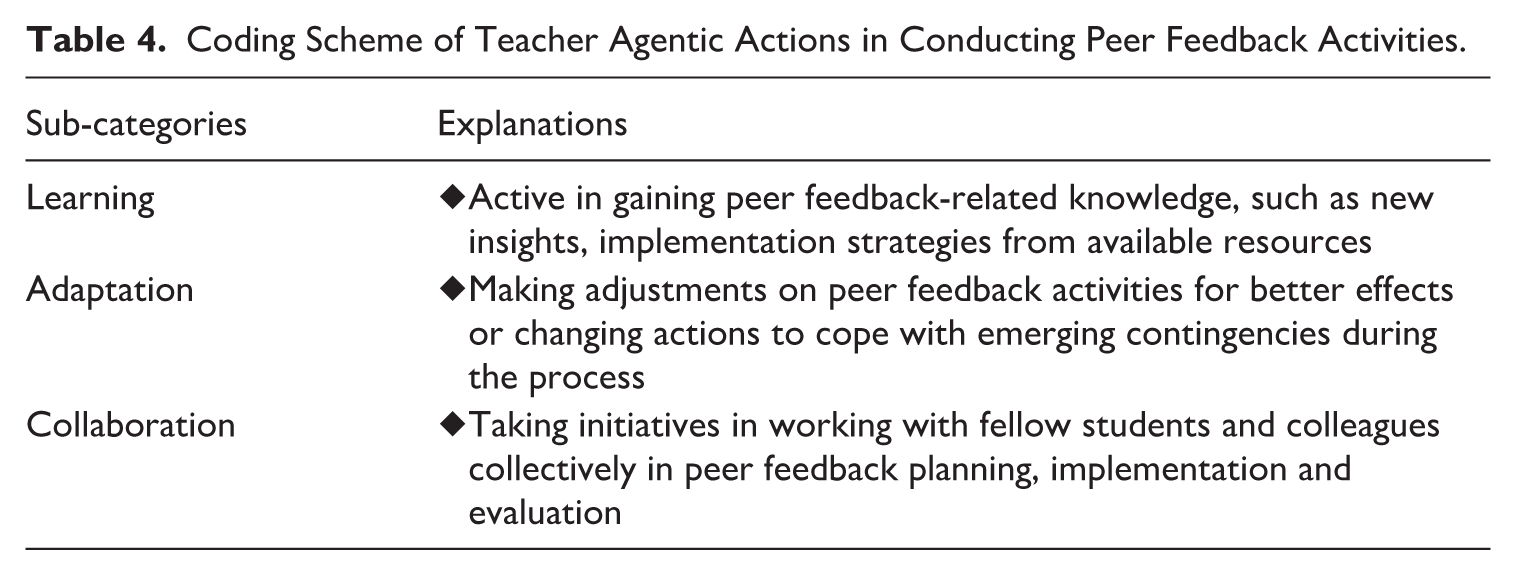
In the second stage, inductive thematic analysis was performed: “peer feedback instruction design with other colleagues” and “constant readiness to learn peer feedback information from related stakeholders” were first merged into “mobilizing resources for peer feedback preparation”. After repeatedly reading through the data, new codes outside the coding scheme also emerged. For example, the codes “customized teacher scaffolding for students receiving peer comments” and “showcasing exemplary peer works online during personal time” were assigned into sub-themes of “providing additional support for students”. In addition, “learning sugar-coating comments from students” and “seeking feedback from fellow students on activity effectiveness” were merged into “reflection on peer feedback practices”. In the same vein, the codes “mastery of peer feedback knowledge” and “beliefs and values towards peer feedback” were grouped under the sub-theme of “teachers’ abilities to execute peer feedback”. Through this iterative coding process, assigned sub-categories and themes were constantly compared, and themes common to the two teachers were generated in relation to the research questions.
To ensure rigor and trustworthiness, the first and third authors independently coded the data and wrote reflective memos, while the second author challenged initial interpretations and sought disconfirming evidence. Any coding divergences were resolved through rounds of discussion and negotiation within the team.
Although the participants’ sufficient trust in the researchers enabled them to share their genuine thoughts and practices, we remained mindful that our academic positioning might introduce bias, such as over-empathy or undue influence. To mitigate this, we returned preliminary findings to the teacher participants for member checking and held regular debriefings with other professors and PhD candidates for external feedback. Interpretations of the findings were iteratively refined against the research questions, theoretical framework and data until consensus was reached.
4. Findings
This section reports teachers’ undertaking of agentic actions throughout three stages of conducting peer feedback, and analyses the respective influencing factors in a case-by-case manner.
4.1. Cindy: From Being Proactive to Being Constrained
Although inexperienced, Cindy took the lead in applying peer feedback into the joint writing instruction after negotiating with her collaborating colleague teaching the same course. Meanwhile, she was cautious in seeking strategic unity through balancing her belief on the benefits of peer feedback and collegiality with the teaching community.
4.1.1. Enactment of Teacher Agency
4.1.1.1. Pre-Peer Feedback Stage
Cindy demonstrated strong agency in making well-calibrated preparations on the peer feedback sequence, training and platforms. During course preparation, Cindy proposed to the parallel class teacher to try out peer feedback: I feel there is a need to create new feedback experiences for students. I discussed with the professor and she agreed to give it a try rather than following the habitual teacher feedback which had long been led by foreign teachers. (Interview 1)
Both teachers reached consensus on the topics and times for peer feedback. However, in contrast to her colleague who put teacher feedback after peer feedback and automatic writing evaluation (AWE) feedback for each writing task, Cindy chose to place peer feedback and teacher feedback before AWE feedback. She explained: “I believe this arrangement could maximize learning outcomes. Students can not only integrate various revision advice but also repeatedly polish their essays with the help of the AWE feedback” (Interview 1).
In addition, failing to find detailed training procedures for carrying out peer feedback from her own literature search, Cindy proactively sought suggestions from one of the authors for expert advice. Additionally, out of concern for possible technological problems of the AWE system purchased by her department, Cindy resorted to customer service to enquire about the peer feedback function and asked some of her students to test the platform at the beginning of the semester. Student confusion about the system interface led her to decide on using direct annotations in Word documents so as to avoid the potential risk of demotivating students to engage in peer feedback (student interview).
4.1.1.2. During Peer Feedback Stage
However, due to her lack of confidence, Cindy showed a decreasing trend of agency in implementing peer feedback as manifested in the tiny tweaking of communicative language use, dynamic grouping and her monitoring efforts.
Initially, Cindy allowed students to review in Chinese as they were new to peer feedback, but she required the students to use English to finish the last two peer feedback tasks because she believed it would benefit them more: Well, change the appetite, they have done it twice in Chinese with a set of fixed words. I made this adjustment so that they would not feel so monotonous. And it’s also a training exercise to write and express their opinions in English, isn’t it? (Interview 2)
Additionally, Cindy tried to ensure that students did not review the same peer’s work by varying partners. Different from her colleague who grouped students with fixed partners, she insisted on doing random grouping for each peer feedback task, for she thought that “students could have more chances to see different writing styles”. In dealing with late submission, Cindy first asked the class monitor to remind the students to turn in assignments on time, and then emphasized several times in class that “peer feedback was a collaboration activity, delayed hand-in would impact other group members’ progress. Please take it more seriously!” (Classroom observation 1). However, this strategy seemed not that effective and depressed her greatly. She said: “I feel I’m just a nanny. Some students don’t seem to care. They still failed to submit their work” (Interview 2).
Although discouraged, Cindy struggled to self-design a grading sheet and kept careful track of students’ feedback performance meticulously. As displayed in Figure 2, Cindy marked students’ feedback performance based on their feedback provision behaviour. From time to time, Cindy would show this scoring sheet to students in class. As she explained: “I came up with this method to let them know their peers’ progress, in the hope that they could realize that low engagement leads to low grades so that they could take peer feedback seriously” (Interview 2).
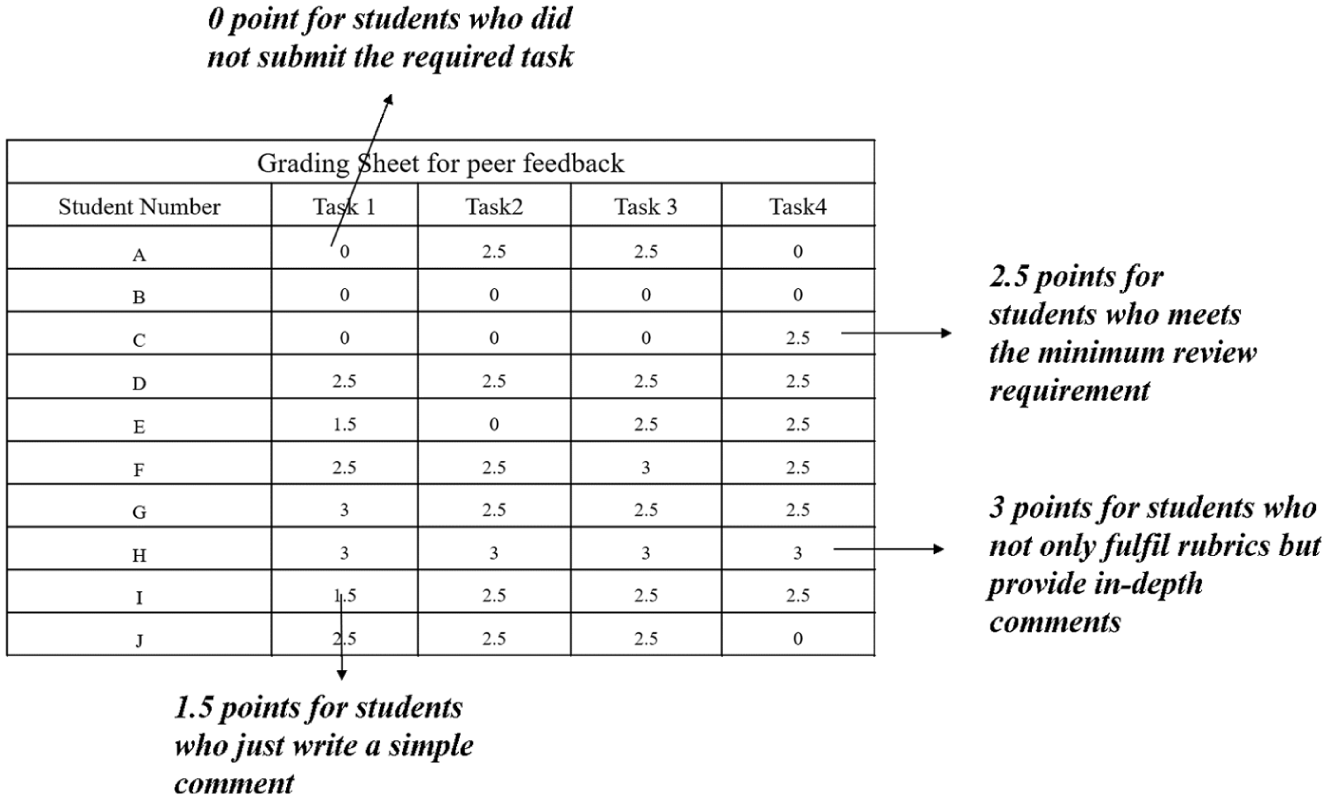
A snapshot of the grading sheet of Cindy’s class.
4.1.1.3. After Peer Feedback Stage
Growing more and more hesitant about conducting peer feedback activities, Cindy intentionally left some time to ask students’ advice on peer feedback (Classroom observation 4) in the last class of the semester:
What do you think about having four peer feedback tasks in one term? Is it too much?
It’s okay.
Or any other suggestions?
. . . (overall silence of the class)
This excerpt demonstrated that Cindy’s active solicitation for students’ advice was met with a disheartening silence. This gap disabled her to get any diagnostic feedback from students which she believed necessary to justify peer feedback as a viable tool for future teaching plans. She expressed this disappointment in the interview: “It’s tough to get their genuine thoughts in class. Hardly anyone responded, and my motivation to make improvements on peer feedback just dwindled” (Interview 3).
Although Cindy believed the peer feedback approach was theoretically sound, her willingness to implement peer feedback was profoundly constrained. At the end of all the peer feedback tasks, Cindy’s agency reached its nadir.
4.1.2. Influencing Factors of Teacher Agency
4.1.2.1. Iterational Dimension
Despite the lack of relevant peer feedback experience, Cindy demonstrated strong agency in devising action strategies and learning from others before peer feedback. She had never been exposed to any peer feedback activities during her own school years and only got to know this pedagogical activity through participating in an academic conference. Therefore, she tried to incorporate it as a strategy in her writing instruction as a novice teacher. Being conscious of her lack of experience, she made a cautious effort in anticipating possible problems and various preparations proactively before launching peer feedback in her instruction.
4.1.2.2. Practical-Evaluative Dimension
During the implementation process, Cindy’s agency was strong at the beginning, but dwindled as she experienced inadequate physical resources, top-down management culture and students’ disengagement. As an initiator of peer feedback activity, Cindy actively designed the peer feedback tasks.
However, as a novice teacher, she was submissive to her school culture and did not venture to make great changes. For example, she chose to ask students to finish peer feedback in the traditional Word documents rather than seeking additional technical support from the department: “I know there are other platforms out there with more comprehensive features for peer feedback, but our school hasn’t purchased one. I don’t dare to make any more demands” (Interview 1). Further, it was a tradition in Cindy’s department to put more trust in the foreign teachers, as the head of the English department asked all Chinese teachers to follow their writing instruction, which resulted in the supposed “authority of foreign teachers”. But when faced with peer feedback, a method unused by foreign teachers, Cindy had nowhere to seek standard practices. Thus, she asked students to refer to the bullet points in the mandated writing textbook as reviewing rubrics because “the authoritative textbook was at least a safe choice which was designated by the department”.
Furthermore, students’ lukewarm response also impacted Cindy’s agency. As she explained in the interview: “This student-centred activity was intended for their benefit, but I worried about triggering dissatisfaction. For example, if they found out the workload of assignments was different from that of other teachers’ courses, there might be complaints” (Interview 2).
Compared with her bold initiation of peer feedback at the preparation stage, her agency shrank gradually during the process mainly due to multiple contextual constraints.
4.1.2.3. Projective Dimension
The immediate goal of getting peer feedback smoothly done prompted Cindy to enact agency in planning and implementing the activity; however, she was not that committed in terms of long-term goals. She reflected: I believe it’s essential and reasonable to sustain peer feedback. However, I am uncertain whether it will become a shared goal for the department, because ultimately, we Chinese teachers only played assisting roles in teaching writing and could only make suggestions. (Interview 3)
In spite of her initial enthusiasm, Cindy was still developing a fuller sense of how peer feedback functioned in practice and what its sustained benefits could be, all of which constrained her from improving her strategies in organizing the activity for future instructions.
Overall, the dynamic interplay of her limited practice of peer feedback, lack of support from her working ecology and her own lack of clear long-term aspirations together resulted in a decreasing change of Cindy’s agency enactment during the semester.
4.2. Ruby: From Being Automatic to Being Autonomous
As a mature peer feedback practitioner, Ruby’s agency shifted from being automatic to autonomous in her practice of the peer feedback tasks. In contrast to Cindy, she exerted automatic agency before feedback, followed by a steady increase during implementation and continuous enhancement after peer feedback.
4.2.1. Enactment of Teacher Agency
4.2.1.1. Pre-Peer Feedback Stage
As the writing team leader and an experienced practitioner of peer feedback, Ruby decided to use peer feedback in her own teaching, but she did not make any special preparation for it. Although she shared her training slides with her team members, she refrained from imposing her practices on other teachers. She remarked: I uploaded the peer feedback materials into the chat group of the writing team. As for students, those who chose to participate would be credited with extra points for their daily grades. It’s up to them to decide whether to participate in peer feedback or not; after all, they are not primary school students. (Interview 1)
Owing to her wealth of experience, she foresaw the students’ passive participation and adopted a democratic peer feedback design as she always did. Being accustomed to peer feedback practices, she kept the activity going in her routine manner without making special effort to improve the practices. Thus, she was on autopilot.
4.2.1.2. During Peer Feedback Stage
Ruby’s agency developed gradually by adding a new peer feedback task and upgrading rubrics during implementation. In contrast to Cindy’s prudence, Ruby asked students to describe the scene of the school campus on a snowy day as a spontaneous peer-feedback assignment (Classroom observation 2). By referring to real-life experiences, Ruby hoped to spark the students’ curiosity, attracting more students to participate in peer feedback.
Additionally, Ruby’s guidance on peer feedback rubrics changed to make the activity more beneficial for her students. For the first peer feedback task, Ruby had less stringent requirements and only asked students to focus on the parts which they felt were less effectively written. But for the later tasks, she required students to provide comments in the format of a full paragraph on aspects such as content, structure and language. In particular, Ruby would call students up to the front of the classroom and distribute the essays back to them on a one-to-one basis (Classroom observation). She explained: “Students were asked to stay and look at the comments received on the spot. I normally ask if there was anything they did not understand. If so, I would help them to figure it out in situ” (Interview 2).
Ruby adopted this strategy to compensate for the lack of dialogical interaction of written peer feedback by offering cognitive scaffoldings from the teacher’s perspective.
Realizing the limited scope of one-on-one peer feedback, Ruby uploaded some of the well-written essays and peer comments to Writing Power, a writing-focused Web Public Account created by her in 2016. With over 700 student followers, it has become quite a useful means for Ruby to encourage students to appreciate peers’ work. As she commented: “I feel that students could improve their own writing from reading their peers’ compositions. This kind of social comparison could prompt them to revise their own articles and try to get displayed as well” (Interview 3).
Although managing the online platform meant sacrificing personal time, Ruby readily collected students’ essays and converted them into digital formats with exquisite images in her spare time (Figure 3).
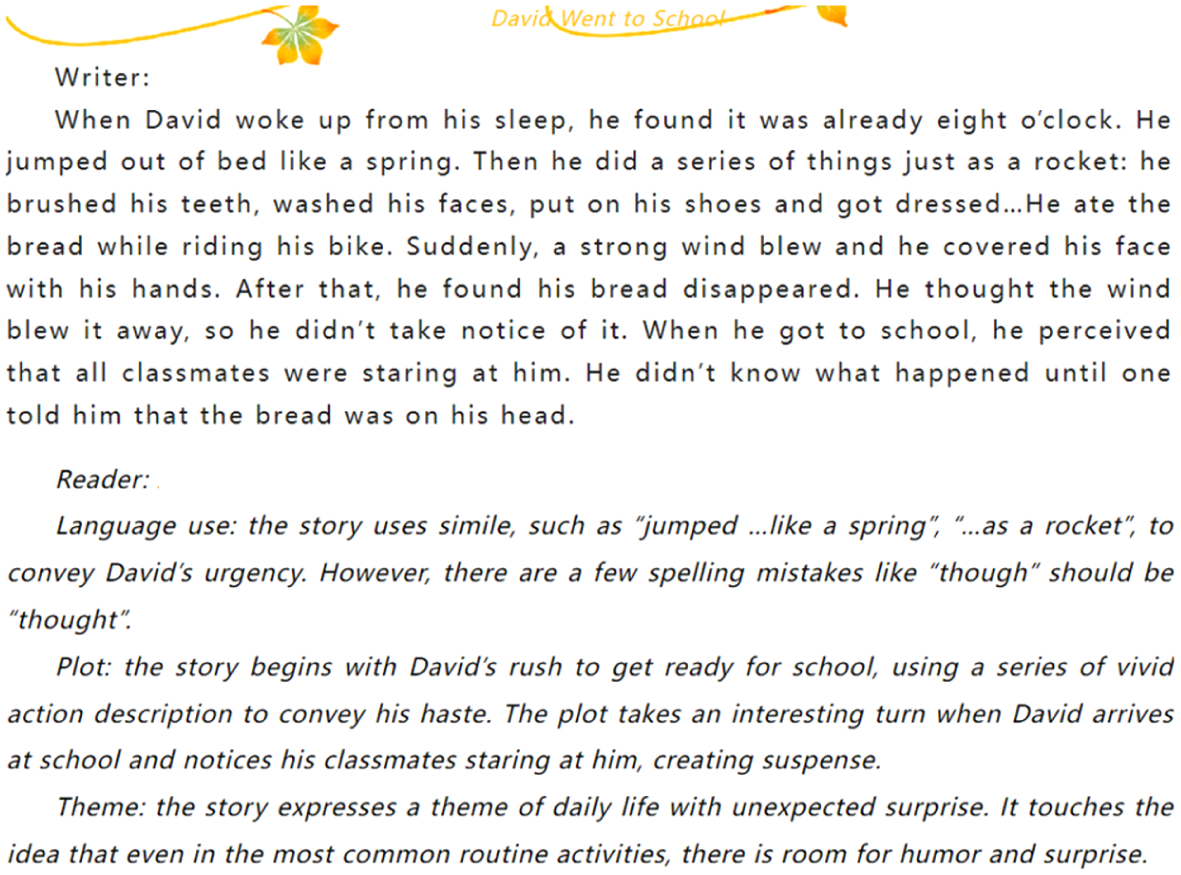
An example of a student essay from Writing Power.
4.2.1.3. After Peer Feedback Stage
Ruby’s agency was prominently high after peer feedback, manifested in her active intervention through “feedback on feedback” by providing teacher feedback on peer feedback for students, and through active reflection on the gains and losses of the practices.
In evaluating peer comment quality, unlike Cindy who did not judge the accuracy of the comments, Ruby provided her own feedback. As shown in Figure 4, Ruby not only corrected one grammatical mistake in a student reviewer’s feedback, but also commented on the parts which she agreed with (the parts in red).
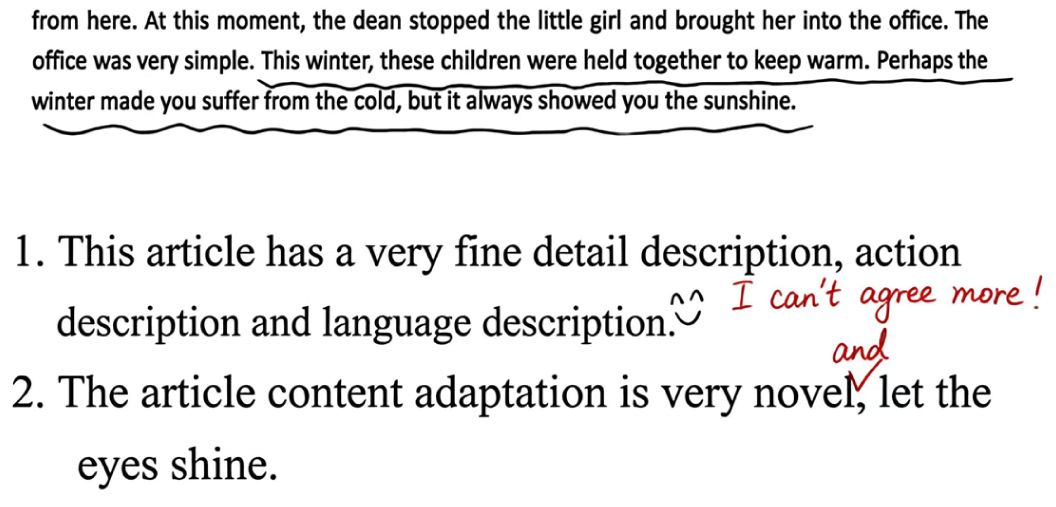
A snapshot of Ruby’s feedback on peer comments.
In reflecting on peer feedback practices, Ruby expressed her key takeaways in the interview: Reading the students’ comments has reinforced my belief in the value of peer feedback. As a teacher, I tend to focus on correcting students’ errors, whereas I noticed that the feedback among peers contains far more encouraging remarks. This is something I truly need to learn from. Moving forward, I should also pay more attention to offering positive emotional support. (Interview 3)
Regarding the peer feedback activities conducted this semester after class, her keen observations established strong groundwork for future teaching improvements.
4.2.2. Influencing Factors of Teacher Agency
4.2.2.1. Iterational Dimension
Compared with Cindy, Ruby had far more relevant experiences starting from primary school. She described how the positive learning experience of her first language (L1) writing stimulated her awareness as a reader, and later influenced her initiative in carrying out peer feedback activities as a teacher: I remember once a classmate showed me some compositions from a top class in our grade. I started to get a sense of what writing style should be—not dull and stuffy, but something that others actually want to read. The kids in that top class, same age as me, made me want to write something just as vivid, just as lively. (Interview 1)
Ruby’s postgraduate research in EFL writing was another affordance for her to try peer feedback in her own instruction. This experience served as an inspiration for her to highly value the process writing pedagogy such as using peer feedback in improving the students’ writing performance. She reflected: “My thesis is entitled “The Reading-Writing Cycle Model in Teaching English Writing”, you know, a revised model of the realization of the genre approach. Through reading relevant literature and doing experiments, I got to know the benefits of peer feedback” (Interview 1).
As the chief drafter of the writing course syllabus, Ruby developed a thorough understanding of the overall writing instruction. In particular, she incorporated peer feedback as an integral component of the genre-process writing pedagogy and the formative assessment (Figure 5).
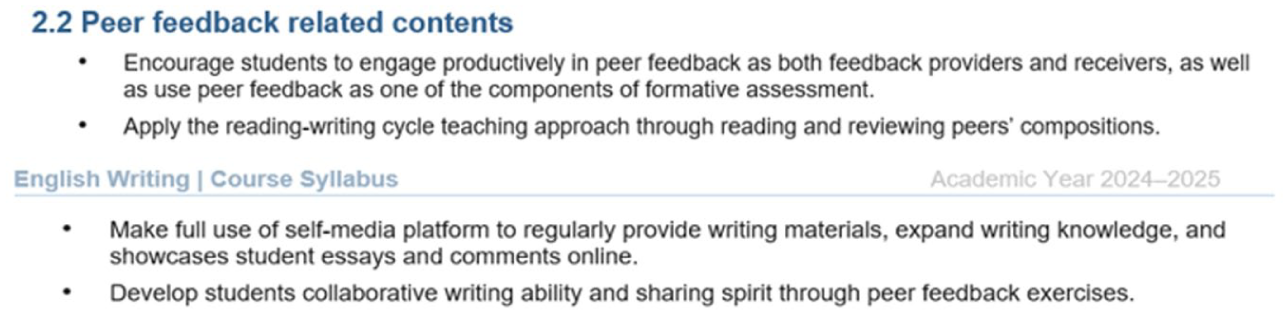
One excerpt from the syllabus from Ruby’s writing team.
Notably, cultivating students’ collaborative writing ability and operating the online public account were explicitly listed as major pedagogical objectives. The peer-feedback-related content in the syllabus corroborated what Ruby mentioned in the interview, where she articulated the affordances of the Reading-Writing Cycle Model drawn from her research during her postgraduate years.
Curious about the latest writing instruction ideas in the field, Ruby used to attend conferences like Writing Open Week in various cities in China to observe leading experts’ teaching approaches. During COVID-19, she persisted in participating in academic webinars, which further equipped her with more feedback knowledge.
Ruby also incorporated peer feedback as part of the final exam during one curriculum reform and organized an extracurricular activity called “Writing Corner” for 5 consecutive years. These experiences helped her gain deeper understanding of peer feedback. She commented: “Instead of just one-way exchange with the teacher, I self-initiated the Writing Corner for students to bring their English writings to share with others once a week. It was very popular and well-received, with many students eagerly participating” (Interview 1). This unique experience not only offered the students a delightful learning experience but also rewarded Ruby with a great deal of expertise in guiding students in doing peer feedback.
To sum up, Ruby demonstrated substantive expertise in designing and enacting peer feedback, which stemmed from her extensive hands-on experience including her professional engagement with multiple curriculum reforms and organizing “Writing Corner” sessions in L2 writing instruction. It is therefore unsurprising that she was able to carry out flexible interventions for students during the writing process.
4.2.2.2. Practical-Evaluative Dimension
Ruby experienced more affordances of trust by leaders, ease with students’ response and familiarity with the technical resources from her teaching community, all of which rendered her enough space to implement peer feedback with increasing agency.
To start with, Ruby’s faculty prioritized teachers’ autonomy in teaching writing since she was a beginner teacher a long time ago: Originally, the writing course was taught by a foreign teacher. Later, the department heads felt that the foreign teacher might not be fully aware of the Chinese students’ English level, so they chose to assign the writing course to Chinese teachers. (Interview 1)
Leaders’ appreciation and trust empowered her to take bold initiatives in experimenting with peer feedback, which was dramatically different from the working culture of Cindy. She was allowed enough leeway within an encouraging atmosphere and gradually became specialized in teaching L2 writing.
Regarding the relations with fellow students, the principle of voluntary participation ensured that students who did take part were interested, and their level of engagement made her more willing to guide their learning from a mentor’s perspective.
Although it was also the first time for Ruby to implement peer feedback with an AWE platform, she was quite relaxed. Having used the platform for AWE feedback for a few years, she was very familiar with its features. Therefore, she devoted minimal preparation and paid more attention to adapting other aspects of peer feedback.
4.2.2.3. Projective Dimension
Ruby dedicated her greatest agency even after peer feedback, primarily because she had quite a clear research plan on writing instruction including peer feedback. When reflecting on the outcomes of peer feedback, she regretted the parts that were not achieved: The quality of their comments varied and I feel that the effects are not quantifiable. My research direction and interest have always been focused on the area of writing instruction. For instance, how to maximize the effectiveness of peer feedback? This definitely deserves more research. (Interview 3)
Unlike Cindy, however, Ruby aspired to apply peer feedback pedagogically over the long term, extending beyond only a one-off course assignment.
To conclude, Ruby’s early acquisition of relative expertise in peer feedback, combined with enough leeway from her professional community and the prospect of envisaging peer feedback as part of her research plan, collectively enhanced her agency in conducting peer feedback across three distinct stages.
5. Discussion
In answering RQ1, the case study revealed that the enactment of both teachers’ agency changed across the three stages of peer feedback. Consistent with the ecological understanding of viewing teacher agency as a developmental phenomenon (Nazari et al., 2025), the dynamic development of teacher agency echoed the call for a refined unit of analysis of teacher agency in and beyond class time (Xu & Tao, 2025). Further, individualized yet opposite trajectories were uncovered, as evidenced in a gradual decline from being proactive to constrained agency by Cindy, and an enhancement from being automatic to autonomous agency by Ruby.
Before peer feedback, Cindy demonstrated moderately high agency in coordinating peer feedback into shared teaching practices. She proactively familiarized herself with peer feedback knowledge and instructional strategies by reaching out to others based on her felt needs rather than top-down directives, an act crucial for teachers’ agentic teaching (Xu & Fan, 2022). She proposed peer feedback as a joint instructional activity with her colleague before the semester because she identified there was a need to diversify students’ feedback experiences in learning English writing. At pre-peer feedback stage, Cindy’s independent literature review and collaborative dialogue with colleagues exemplified her proactive agency, underscoring her conscious efforts aimed at actively shaping a conducive environment for students’ learning. On the contrary, Ruby was less well choreographed in maintaining established peer feedback design due to her positive experiences with peer feedback (Tao & Gao, 2017; Yu & Lee, 2016). As an experienced practitioner of peer feedback, she handled peer feedback with great fluidity, especially pre-peer feedback, as what she planned was more from experiential routines, and therefore she was agentic, but only automatically so on her own. This finding aligns with studies showing that experienced teachers have a set of well-established, efficient strategies to rely on when planning content that they have taught before (Tsui, 2003).
During peer feedback, the expression of constrained agency described by Taşdemir and Gümüşok (2025) was instantiated in the case of Cindy. As peer feedback activities unfolded, she gradually struggled with a sense of frustration as she experienced inadequate support from her working ecology, such as the lack of physical resources and top-down management culture, students’ disengagement and unclear long-term aspirations, which also resulted in her tiny tweaks in the use of communicative language and dynamic grouping. Ruby, however, gradually changed the routines by taking agentic actions, such as adding new tasks and upgrading rubrics. Additionally, she demonstrated growing agency by showcasing exemplary students’ essays online after class and attended to students’ individual needs to understand peer comments in class. Clearly, she endeavoured to encourage students to generate and respond to peer feedback through social-affective support and cognitive scaffolding strategies, which corresponds to Xu and Harfitt’s (2019) claim that teacher-reviewer conferences could help refine peer comments.
After peer feedback, Cindy assumed a prudent stance in seeking students’ advice for peer feedback, an agentic act to support students’ needs (Willis & Klenowski, 2018), whereas, compared to the initial automatic state before peer feedback, Ruby engaged in much more deliberation by reading and offering teacher follow-up feedback on peer feedback. Slightly different from the findings by Priestley et al. (2015), who claimed that reflection-in-action was quite common in teachers’ instructional practices, this study revealed that both teachers engaged in active reflection, especially after peer feedback. This finding is quite encouraging as teachers’ active reflection in the after-feedback phase could serve as a springboard to improve teachers’ instruction and to feed forward into future tasks (Lee, 2021).
In answering RQ2, in accordance with the ecological framework (Priestley et al., 2015), this study demonstrates that the combined influence of individual and contextual factors within three temporal dimensions constitutes the key explanation underlying the dynamics of teacher agency in conducting peer feedback, and that these factors are not distinctly separate but closely interconnected. Additionally, the study also uncovered two new sub-dimensions, namely, teachers’ abilities to execute peer feedback in the iterational dimension and the willingness to conduct peer feedback in the projective dimension.
On the iterational dimension, teachers’ abilities to execute peer feedback were found to come from their past feedback experiences as both learners and teachers. As for Cindy, her limited experience with relevant assessment prevented her from recognizing the choices available to her, which in turn undermined her confidence in preparing feedback activities. This aligns with prior research suggesting that tertiary English writing tutors’ insufficient use of peer feedback in EFL writing instruction often stems from a lack of adequate knowledge and training (Lee & Mao, 2024). For Ruby, however, her firsthand experiences as a student receiving peer feedback, combined with the feedback skills accumulated throughout her professional life, enabled her to navigate the entire peer feedback process with great ease. This is consistent with research (Carless & Winstone, 2023; Lee & Yuan, 2021) which found that feedback-literate teachers tended to hold positive attitudes towards feedback and could skilfully apply it and share feedback expertise with others in their practice.
On the projective dimension, teachers’ willingness to carry out peer feedback was formed by the joint impacts of short-term objectives of future teaching and long-term aspirations of professional development. According to Ashton (2022), teachers could demonstrate a higher level of agency if they nurtured a vision for the future, instead of viewing their efforts merely as a transient fix. It is no wonder that there was much more agentic action-taking for Ruby, especially during and after peer feedback, as she was assured to involve peer feedback as a long-term teaching and research plan. In contrast, Cindy’s agency shrank gradually as she was uncertain whether to incorporate it into future teaching assessment or development aspirations.
On top of the above personal reasons, teacher agency was also mediated by the interplay of contextual factors on the practical-evaluative dimension, including cultural, structural and material aspects. Culturally, as revealed in the study by Xu and Fan (2022), the lack of institutional support and administrative control was an essential barrier for teachers to exert agency. With a quite open-minded atmosphere in Ruby’s faculty, writing teachers enjoyed a high degree of autonomy in teaching, which was conducive to agentic engagement in innovating pedagogical activities like peer feedback. In contrast, Cindy did not dare to violate the norm due to the more authoritative tradition within her teaching community. Pertaining to the structural aspect, relationships with colleagues and students were found to be a significant factor influencing teacher agency. Congruent with prior research by Lee (2021), positive relations with students have the potential to increase teachers’ experienced agency. Cindy was discouraged from exerting more agency when encountering students’ lukewarm reaction. In contrast, trust by leaders and ease with students encouraged Ruby to be relatively independent in conducting peer feedback, further proving that teacher support networks are crucial relational resources in shaping teacher agency. This was confirmed by the study by Ashton (2021), which found that support from the head of department was an essential affordance for enhancing teacher agency enactment. Likewise, for the material aspect, both teachers adopted alternative ways to conduct peer feedback after evaluating the technical platforms purchased by their schools. This finding confirms that teacher agency could not be separately enacted without considering surrounding conditions, and teachers are indeed “actors acting by-means-of-an-environment rather than simply in an environment” (Biesta & Tedder, 2006, p. 18).
To sum up, a tentative ecological model of teacher agency in peer feedback is proposed in this study. As shown in Figure 6, on the enactment aspect, the dynamics of teacher agency could be analysed from teacher proactive behaviours in mobilizing relevant resources for preparation (pre-peer feedback), taking creative initiatives to intervene in the students’ peer feedback process (during peer feedback) and active reflection towards its effectiveness (after peer feedback).
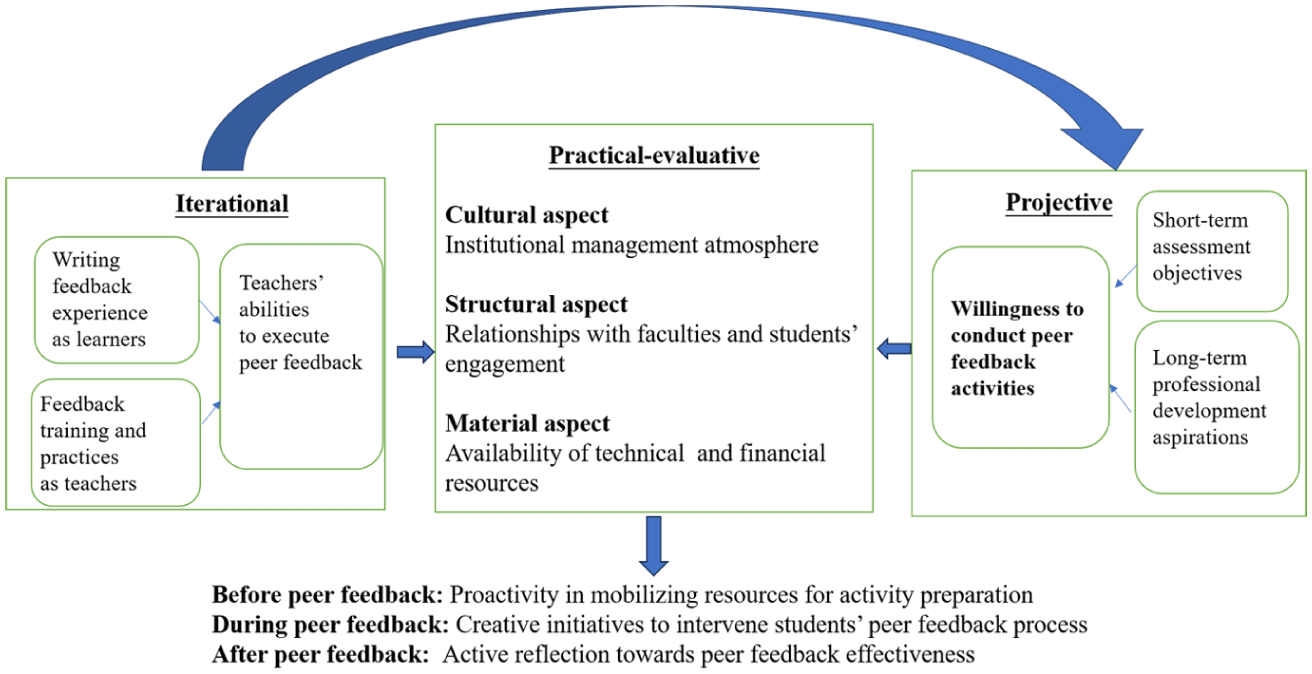
A tentative, case-grounded synthesis of teacher agency in conducting peer feedback.
In consideration of the influencing factors, the model indicates that the achievement of teacher agency relies on the activation of all three temporal dimensions. The iterational dimension serves as the initial catalyst among the influencing factors – that is, teachers’ abilities to execute peer feedback, which derives from teacher feedback experience both as a learner and as a teacher. On the practical-evaluative dimension, teacher agency is influenced by cultural, structural and material aspects in terms of institutional management atmosphere, relationships with faculties, student engagement, and availability of technical and financial resources. On the projective dimension, teacher willingness to conduct peer feedback activities on both short-term and long-term aspects matters and influences teacher agency accordingly. To further illustrate, in our case, a lack of prior experience necessitated Cindy’s proactive and extensive preparation efforts such as help-seeking before peer feedback. However, as the activity progressed, more constraints from the present dimension began to emerge. She became tangibly aware of numerous practical challenges that proved difficult to overcome. After peer feedback, the influence of the projective dimension, which was grounded in past experiences, became fully apparent. Consequently, the convergence of these three temporal dimensions ultimately deepened her sense of discouragement as a cautious ice-breaker. In contrast, however, this process of temporal convergence proved to be markedly different for Ruby, who perceived significantly greater affordances, leading to an increasing trend in her agency development across the peer feedback stages.
6. Conclusion
This comparative case study gained important insights into the enactment and influencing factors of two Chinese university EFL teacher agency in conducting peer feedback longitudinally in English writing instructions. Instead of simply distributing some peer-feedback assignments and walking away, both teachers exerted agency to make the activity more productive for students. The contrast between the novice teacher and the experienced teacher well demonstrates the malleable and complex nature of teacher agency, as it is affected by individual and contextual factors within three temporal dimensions.
Findings of the case-grounded conceptual synthesis of teacher agency in peer feedback is heuristic for investigating the dynamics and ecology of teacher agency in the context of conducting pedagogical activities like peer feedback. Nevertheless, the validity of the working model is yet to be tested with future studies of teachers carrying out similar written feedback practices in university settings across contexts.
The findings carry several practical implications. Firstly, it is necessary to build an open working culture within schools to grant sufficient trust and space for teachers to experiment with innovative feedback practices. Beyond positive support from school leadership, external experts such as university researchers could provide targeted scaffolding at different stages of teachers’ feedback practices, thereby maximizing the benefits of feedback for students. Thirdly, institutions bear responsibility for equipping teachers with adequate training opportunities and access to emerging technologies in writing assessment. Last but not least, teachers are highly recommended to initiate regular collegial and student–teacher dialogues to share challenges and exchange perspectives on feedback pedagogy.
Due to the small scale of a qualitative case study situated in two university settings in China, we acknowledge that the findings of the study are non-generalizable and not meant to represent agency development of any teachers in other individual, cultural and institutional contexts. Nevertheless, as a classroom-based study, the present findings do have ecological validity in understanding teacher agency in conducting peer feedback in authentic L2 writing classrooms. Future studies would benefit from longer time length designs to capture a more comprehensive picture of the dynamics of teacher agency in similar feedback practices.
Footnotes
Acknowledgements
We wish to express our sincere gratitude to the participants of this study. We are also grateful to the three anonymous reviewers for their valuable and constructive feedback. Last but not least, special thanks to the Editor and production team for their meticulous work in making the submission process warm and smooth.

Ethical Considerations
The study was approved by the Northeast Normal University Human Research Ethics Committee and all participants provided informed consent statements.
Funding
The authors disclosed receipt of the following financial support for the research, authorship and/or publication of this article: This article presents interim findings from the research project “Development Mechanisms and Intervention Model of Learning Engagement in College Students’ English Writing Peer Review”, funded by the Social Science Fund of Jilin Province (grant number 2024E133).
Declaration of Conflicting Interests
The authors declared no potential conflicts of interest with respect to the research, authorship and/or publication of this article.
Data Availability Statement
The data supporting this study are not publicly available due to privacy of the participants.