






Abstract
The present study investigated the effects of self-regulated strategy-based speaking instruction on English-as-a-foreign-language learners’ speaking performance and strategy use. Despite extensive research on self-regulated learning in various educational contexts, its application to second language speaking development remains underexplored. This explanatory mixed-methods quasi-experimental study employed self-report questionnaires, speaking assessments, and semi-structured interviews for data collection. A linear mixed-effects model results revealed that the experimental group (n = 54, receiving the self-regulated learning strategy-based intervention) demonstrated significantly greater improvement in speaking performance compared to the control group (n = 53, receiving traditional instruction), with effects sustained at delayed post-testing. Quantitative analyses further indicated significant increases in participants’ use of self-regulated learning strategies. Qualitative findings corroborated these results, revealing more frequent, deliberate, and sophisticated strategy application among intervention participants. Interview data also suggested differential intervention effects based on learners’ initial speaking proficiency levels. These findings underscore the efficacy of explicitly integrating self-regulated learning strategies into speaking instruction to enhance learner autonomy and speaking performance in English-as-a-foreign-language contexts.
Keywords
1. Introduction
Self-regulated learning (SRL) is an active, constructive process wherein learners manage their cognitive, motivational, and behavioral processes to achieve academic goals (Zimmerman, 2011). The value of SRL is widely recognized in second language (L2) acquisition, where strategic self-regulation is considered crucial for developing learner autonomy and proficiency (Csizér & Tankó, 2017). The effective deployment of SRL strategies is thus considered a key factor in enhancing learners’ capacity to accomplish their language learning objectives (Dörnyei & Ryan, 2015; Oxford, 2017).
This issue is particularly salient in contexts such as China, where examination-oriented and teacher-centered educational traditions can limit students’ development of self-regulated learning abilities (Deng & Carless, 2010; Shen & Bai, 2024). The challenge is especially pronounced in the development of L2 speaking skills. Chinese learners of English as a foreign language (EFL) face persistent challenges in developing speaking proficiency, primarily due to insufficient opportunities for meaningful conversation and interaction (Terhune, 2016; Wang & Sun, 2024a), rendering speaking skills a formidable obstacle (Y. Zhang & Liu, 2018). Unlike receptive skills, speaking requires the real-time integration of cognitive, linguistic, and affective resources under significant processing pressure, making it an exceptionally demanding skill for many EFL learners (Skehan, 1998; Sun, 2023).
A substantial body of research has established a robust positive association between SRL and academic achievement, particularly in first language (L1) reading (Souvignier & Mokhlesgerami, 2006), L2 reading (L. J. Zhang, 2008), L1 writing (Lee et al., 2023), and L2 writing (Shen & Bai, 2024; L. S. Teng & Zhang, 2020). These findings have solidified the importance of developing learners’ capacity for self-regulation through instructional interventions (Kormos & Csizér, 2014; Ziegler, 2014). Consequently, a significant gap remains in the literature regarding how SRL instruction can be effectively tailored to the unique, real-time cognitive and affective demands of L2 speaking. This gap is especially critical within Chinese university EFL environments, where learners require effective strategies to overcome contextual challenges to speaking proficiency development.
The Cognitive Academic Language Learning Approach (CALLA) model has emerged as the standard framework for language learning strategy instruction (LLSI) in second language acquisition (SLA) research and pedagogy (Gu, 2019). Although empirical studies employing this model have consistently demonstrated positive outcomes in various language learning contexts (e.g., Gu, 2007; Nguyen & Gu, 2013), the model’s application to L2 speaking instruction remains inadequately explored, particularly regarding how strategic self-regulation might foster speaking proficiency development.
This study examines the effects of self-regulated strategies-based speaking intervention on students’ speaking performance and SRL speaking strategy, drawing on Oxford’s (2017) strategic self-regulation (S2R) model. Informed by the CALLA model, we implement and evaluate a self-regulated strategies-based speaking intervention using an explanatory mixed-methods design with experimental and control conditions and multiple assessment points.
The study addresses the following research questions:
What are the effects of self-regulated strategies-based speaking instruction on speaking performance?
What are the effects of such instruction on SRL speaking strategy use?
How did such instruction affect students’ understanding of SRL speaking strategies?
2. Literature Review
2.1. Language Learning Strategies and Speaking Proficiency
Research in foreign language learning and SLA has consistently demonstrated that learning strategies, interacting with other factors, can significantly influence language proficiency (Pawlak, 2021; Sun et al., 2023; L. S. Teng & Zhang, 2022; L. S. Teng et al., 2020; Wang & Sun, 2024b). Numerous studies have found that strategic learners achieve proficiency more rapidly (Hong-Nam & Leavell, 2006) and that higher proficiency is associated with more frequent strategy use (Rao, 2016). More specifically, strategy deployment has been shown to be a significant predictor of language performance (Platsidou & Kantaridou, 2014) and learning outcomes (An et al., 2021). Certain strategies, particularly cognitive ones, are directly linked to academic success and comprehension gains (Lin et al., 2021; Taheri et al., 2019), while the overall impact of strategy use can also be mediated by variables such as learner attitudes (Habók & Magyar, 2018).
Although there is extensive research on language learning strategy (LLS) in areas such as vocabulary and reading, other domains like pronunciation (Alghazo, 2021; Pawlak & Szyszka, 2018; Szyszka, 2021), grammar (Hassanzadeh & Ranjbar, 2025; Pawlak, 2018a; Zarrinabadi et al., 2023), pragmatics (Derakhshan et al., 2024; Sykes & Cohen, 2018), and speaking (Pawlak, 2018b; Sun, 2022) have received less attention.
Speaking strategies are crucial for enabling learners to manage the real-time demands of oral communication (Pawlak, 2018b). Research in this area has predominantly focused on communication strategies, which are used to compensate for gaps between communicative intent and immediate linguistic resources (Dörnyei & Scott, 1997; Faucette, 2001). Specifically, this line of inquiry has involved identifying strategy types (Sun, 2022; Sun et al., 2016), exploring their use in various contexts (Nakahama et al., 2001), and examining the efficacy of strategy instruction (Nakatani, 2005; H.-C. Teng, 2012).
A key finding from this literature is the robust positive correlation between learners’ strategic competence and their oral proficiency (Griffiths, 2010; Gunning & Oxford, 2014; Lan & Oxford, 2003). Higher-achieving learners, for instance, are often distinguished by their more effective use of social-affective strategies compared to their lower-achieving peers (Nakatani, 2005). Correspondingly, instructional interventions that target these strategies have been shown to yield significant improvements in learner performance (Cohen et al., 1996; Naughton, 2006).
2.2. LLSI in Speaking
LLSI refers to the explicit teaching of learning strategies by instructors to students within a language classroom setting (Oxford, 1990). Various studies have investigated the effectiveness of LLSI in fostering more strategic and self-regulated learners (Chamot & Harris, 2019; Cohen & Macaro, 2007; Griffiths & Oxford, 2014). Chamot and O’Malley (1994) proposed CALLA, which has become the standard for LLSI (Chamot & Harris, 2019). CALLA is described as a “cognitive-social model” (Chamot & O’Malley, 1994) that not only addresses language acquisition but also aims to improve overall academic achievement for learners studying through an L2 medium.
A fundamental aspect of CALLA is its structured approach to teaching LLS to aid learners in mastering both language skills and academic content. The instructional design of CALLA is characterized by a five-stage process: preparation, presentation, practice, evaluation, and expansion (see Figure 1). This five-stage sequence is not only integral to CALLA but also resonates with other models suggested by Oxford (2011) for fostering learning strategies in the classroom. Strategy instruction models across SLA have developed along a surprisingly similar route to that of CALLA. Teachers find this model comfortable to work with, partly because of its resemblance to the traditional presentation-practice-production model which has been a major instructional approach in language teaching (Gu, 2019).
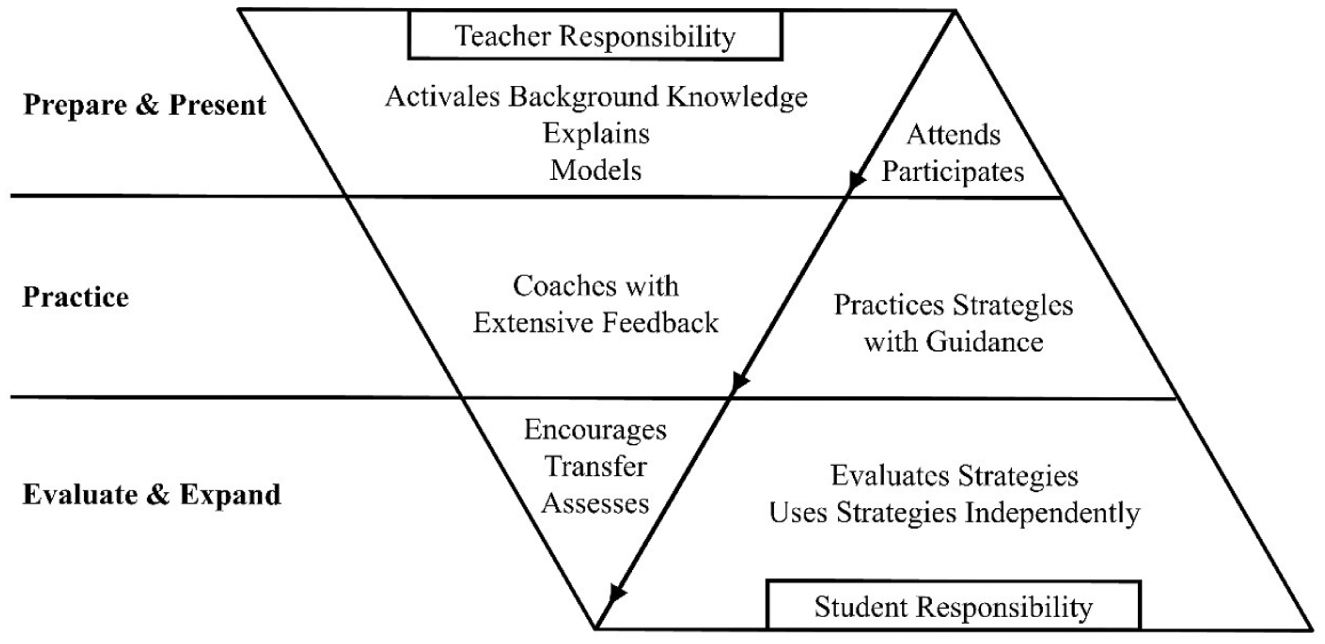
The Cognitive Academic Language Learning Approach (CALLA) model for strategies instruction (Chamot & O’Malley, 1994; Chamot et al., 1999).
The positive association between LLS use and L2 achievement has been well documented across a broad range of skills and knowledge domains. This link has been robustly established in receptive skills like reading (Huang et al., 2009; Kolić-Vehovec & Bajšanski, 2007; van Gelderen et al., 2004), listening (Dreyer & Oxford, 1996; Vandergrift et al., 2006), and writing (Shen & Bai, 2024; L. S. Teng & Zhang, 2020), as well as in overall proficiency (Nisbet et al., 2005).
However, a critical evaluation of this extensive literature suggests a significant imbalance in research focus. In a large-scale meta-analysis synthesizing 77 studies, Plonsky (2019) examined the variables influencing the effectiveness of LLSI. His findings led to a crucial pedagogical recommendation: for LLSI to be more effective, future interventions must shift their emphasis toward the development of oral skills, which have been comparatively neglected.
Research has extensively investigated the effectiveness of LLSI in fostering more strategic and self-regulated learners (Chamot & Harris, 2019; Cohen & Macaro, 2007; Griffiths & Oxford, 2014). A meta-analysis by Plonsky (2011), for instance, confirmed a small to medium positive effect size for LLSI overall. However, the efficacy of strategy instruction appears to vary considerably by language skill, with meta-analytic findings presenting a complex picture. For example, a systematic review by Hassan et al. (2005) concluded that LLSI was most effective for reading and writing. In contrast, Plonsky’s (2011) meta-analysis reported the largest effect sizes for speaking, followed by reading and vocabulary.
Despite these varying findings, the consensus is that LLSI empowers learners to take active control of their learning process (Chen, 2007). Nevertheless, the historical focus of LLSI research has been skewed. Reading and writing strategies have received considerably more scholarly attention than those for listening and speaking. Consequently, there is a comparative lack of evidence on how strategy-based instruction can be effectively implemented in the EFL speaking domain, representing a significant gap in the literature that the present study aims to address.
A substantial body of research demonstrates that strategy instruction enhances L2 oral production (Cohen, 2011; Goh & Burns, 2012; Nakatani & Goh, 2007; O’Malley & Chamot, 1990; Zarandi & Rahbar, 2016). Instruction has been shown to improve overall speaking performance by increasing both the quality and quantity of learners’ strategy use for managing interaction and enhancing communicative effectiveness. Nakatani (2005), for instance, provided compelling quasi-experimental evidence of this effect; learners who received explicit instruction successfully used strategies to sustain oral interaction, whereas their counterparts in the control group tended to abandon conversations when facing lexical difficulties. Naughton’s (2006) work on cooperative strategy instruction yielded similar positive outcomes, further corroborating the benefits of this pedagogical approach.
Despite this well-established link between strategy use and performance, explicit, classroom-based interventions designed to teach speaking strategies within an SRL framework remain surprisingly scarce. The present study, therefore, addresses this pedagogical gap by systematically investigating the impact of self-regulated strategy-based instructional intervention on the development of learners’ speaking proficiency.
3. Research Methods
3.1. Participants
The study was undertaken at a university in Southeast China following convenient sampling. At the beginning of the semester, a group of participants (n = 107) were voluntarily recruited from the university, among whom 60 were males (56.07%) and 47 were females (43.93%), and their ages ranged from 16 to 23 (M = 18.20, SD = 0.79). They reported an average of 9.65 years (SD = 2.06) of English learning experience.
An explanatory mixed-methods design was adopted, resulting in 53 students in the control group (23 female students, 43.40%) and 54 in the experimental group (24 female students, 44.44%). They were first-year non-English major students who had passed the Chinese college entrance examination (Gaokao) three months ago. Their Gaokao English average score was 134 out of 150 (SD = 8.69). They had shared comparable educational experiences with peers of the same age cohort in China.
3.2. Instruments
3.2.1. The Speaking Strategies for Self-Regulated Learning Questionnaire (S3RLQ)
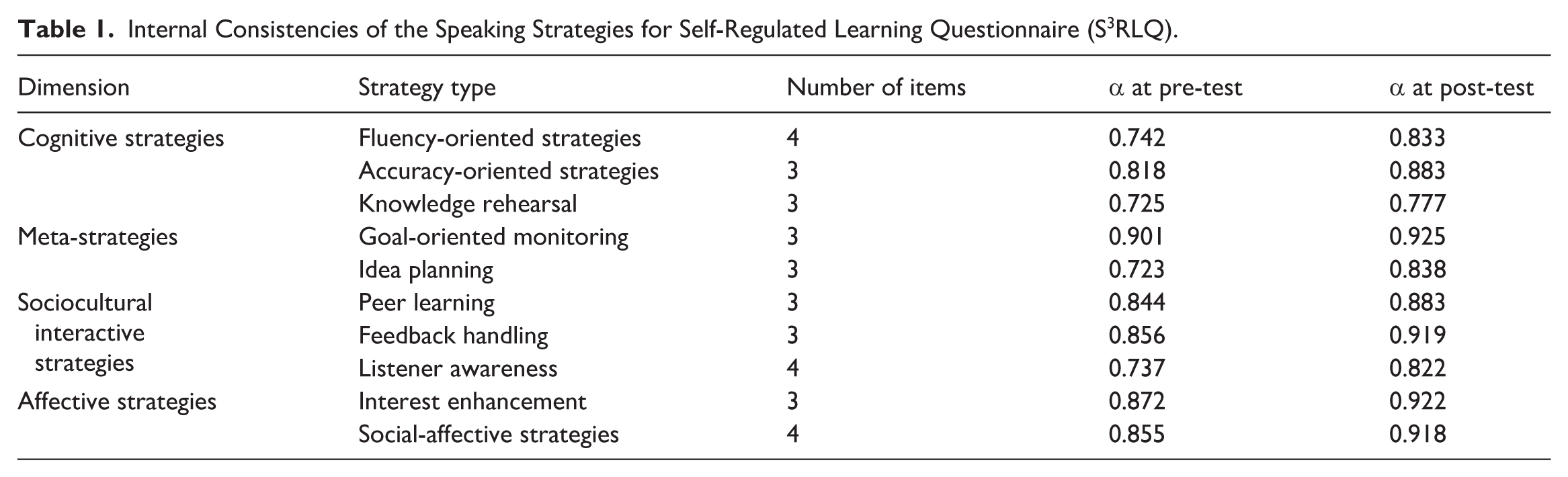
To assess participants’ use of SRL speaking strategies, this study adopted the Speaking Strategies for Self-Regulated Learning Questionnaire (S3RLQ; Wang & Sun, 2024b), an instrument aligned with the study’s theoretical framework. The S3RLQ consists of 33 items organized into 4 dimensions that encompass 10 strategy types, rated on a 7-point Likert scale from 1 (not at all true of me) to 7 (very true of me). This instrument was selected due to its established reliability and validity in a comparable Chinese tertiary EFL context (Wang & Sun, 2024b). In the current study, the internal consistency for all factors was confirmed, with Cronbach’s alpha coefficients meeting or exceeding the .70 threshold, indicating good reliability (Table 1).
Internal Consistencies of the Speaking Strategies for Self-Regulated Learning Questionnaire (S3RLQ).
3.2.2. Semi-Structured Interviews
Semi-structured interviews were employed to explore learners’ perceptions and application of SRL strategies. Six students from the experimental group (Table 2) were randomly selected to participate in interviews pre-intervention (Week 1) and post-intervention (Week 8). Guided by the prompts in Appendix A, the interviews focused on participants’ attitudes toward the instruction, their self-reported use of speaking strategies, their explicit understanding of SRL, and any perceived challenges in their speaking development. All interviews were audio-recorded, with durations ranging from 20 to 30 minutes.
Background Information of Interviewees.
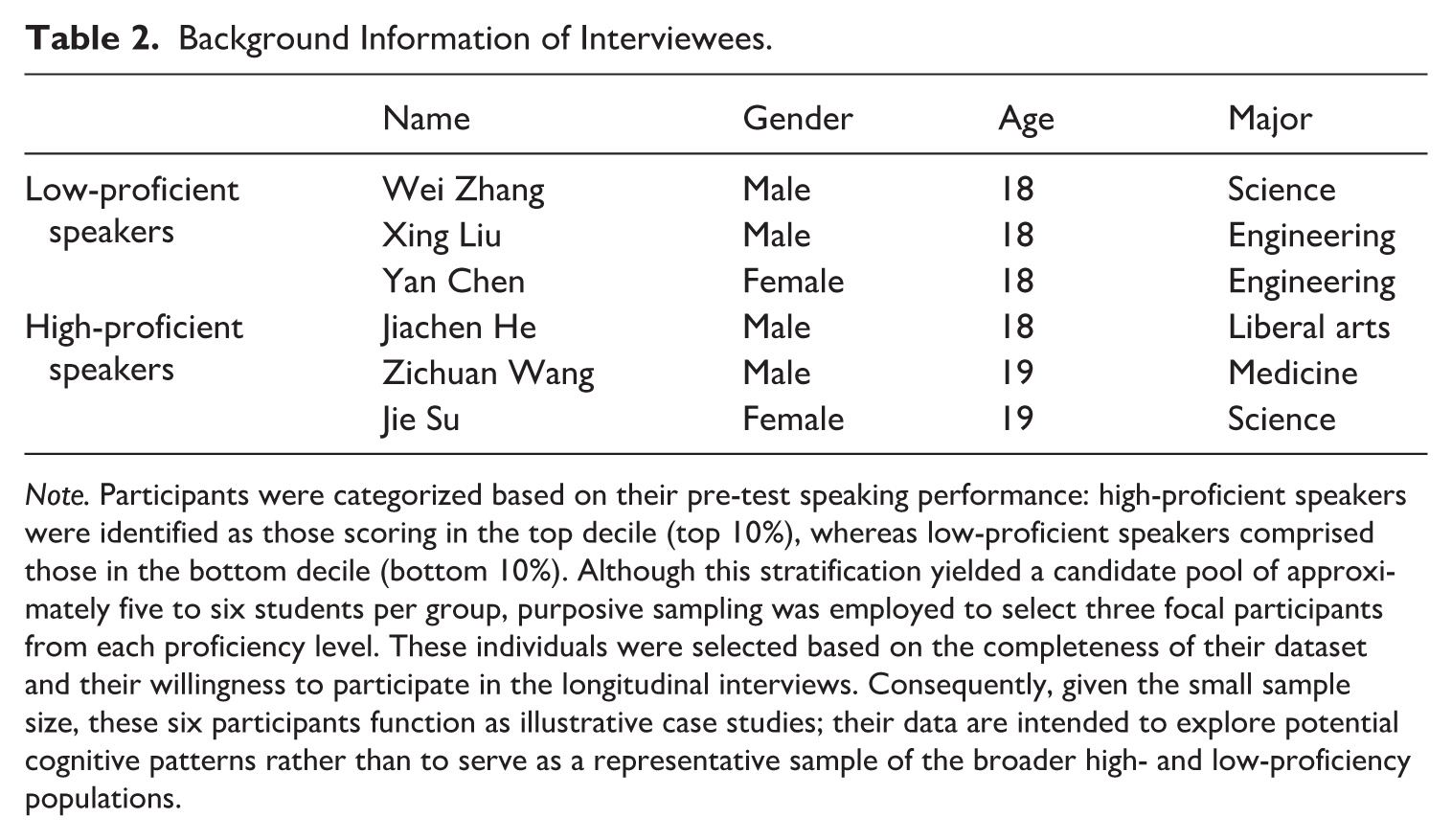
Note. Participants were categorized based on their pre-test speaking performance: high-proficient speakers were identified as those scoring in the top decile (top 10%), whereas low-proficient speakers comprised those in the bottom decile (bottom 10%). Although this stratification yielded a candidate pool of approximately five to six students per group, purposive sampling was employed to select three focal participants from each proficiency level. These individuals were selected based on the completeness of their dataset and their willingness to participate in the longitudinal interviews. Consequently, given the small sample size, these six participants function as illustrative case studies; their data are intended to explore potential cognitive patterns rather than to serve as a representative sample of the broader high- and low-proficiency populations.
3.2.3. Speaking Tests
Three parallel independent speaking tasks were designed as the pre-, post- and delayed tests, adopted from Part 2 of the International English Language Testing System (IELTS) Speaking Test. The candidate was given a speaking cue card with a topic (e.g., describe an activity you usually do that wastes your time) written on it and some prompts to assist the examinee with the structure and content of the response. In accordance with IELTS procedures, after 1 minute of preparation time, students had 1–2 minutes to respond. The speaking topics were drawn from previous IELTS test materials and selected to be general, culturally neutral, and familiar to participants’ everyday experiences. The topics were matched for difficulty to minimize topic-related bias and ensure comparability across students. Speaking skills were assessed using the IELTS speaking rubric. The two proficient IELTS teachers were invited to evaluate the performance of the participants. To minimize potential bias, the rating process was conducted under a double-blind condition. All audio recordings were anonymized using numerical codes and randomized, ensuring that the raters remained unaware of the participants’ identities and group affiliations (experimental vs. control). Additionally, the two raters performed their assessments independently without consultation. The inter-rater reliability between the raters was r = 0.87, p < .001, indicating satisfactory reliability.
3.3. Research Procedure
The experiment was conducted in the autumn–winter semester of 2021, adopting a pre-post control group explanatory mixed-methods design. Pre-test data collection included administration of the S3RLQ, student interviews, and a speaking test. All the respondents were briefed on the purpose of the study and informed of their right to withdraw from the research at any time during or after the data collection stage. They were assured that participation would not influence their academic grades and that no evaluation of academic performance was attached to the data collection. Before the intervention, the teacher, who has 10 years of English speaking teaching experience, received 8 hours of training about the intervention. During the 8-week intervention period, both the experimental group and control group met once a week for a 60-minute session. To ensure methodological rigor, total instructional contact hours were identical for both conditions.
In the control group, a typical 60-minute lesson was divided into three segments: approximately 10 minutes were spent on teacher-led input regarding the topic, followed by 15 minutes of controlled non-oral exercises (such as vocabulary learning and grammar tasks). The remaining 35 minutes were dedicated to pair work, group discussions, and general speaking practice.
In contrast, the experimental group was designed to integrate the intervention. The experimental group retained the same 10 minutes of teacher-led input and the same 35 minutes of speaking tasks. However, the 15-minute block used for non-oral exercises in the control group was replaced by 15 minutes of explicit strategy instruction (modeling, explaining, and scaffolding). Consequently, although both groups engaged in the same amount of speaking practice, the experimental group students applied the learned strategies during these tasks, whereas the control group students performed the tasks using their existing repertoire.
To avoid ethical disadvantages, all strategy materials used in the experimental group were provided to the control group participants after the study concluded. Speaking tests were administered at three time points: pre-intervention, immediately post-intervention, and a delayed post-test 2 weeks later, using six distinct topics to evaluate changes in speaking performance.
3.4. Intervention Design
3.4.1. Self-Regulated Strategies-Based Speaking Instruction
The speaking intervention was designed based on the CALLA model (Chamot & O’Malley, 1994), which integrates content curriculum, language skill development, and explicit strategy instruction to foster learner autonomy. A central feature of this intervention was the emphasis on SRL, particularly metacognitive control and self-reflection. Throughout the instructional process, students were consistently prompted to monitor, evaluate, and adapt their strategy use in relation to specific speaking task goals. This approach aimed to cultivate a learning environment where students were empowered to take ownership of their learning process. A detailed overview of the instructional sequence is provided in Appendix B.
3.4.2. Teacher Training
To prepare for the intervention, the classroom teacher participated in an 8-hour training program designed to equip them with the pedagogical principles of the CALLA model. The training introduced foundational theories of SRL and specific speaking strategies derived from Oxford’s S2R Model. The instructional sequence began with the preparation phase, where the teacher used questionnaire data to develop students’ metacognitive awareness. This was followed by the presentation phase, during which the instructor explicitly defined each strategy and its application. Subsequently, the practice phase provided learners with numerous opportunities to apply the strategies in communicative contexts. In the evaluation phase, students were encouraged to assess their own strategy use through tools like learning journals. Finally, the expansion phase aimed to promote strategy transfer to novel tasks, facilitated by scaffolding and reinforcement. The training program culminated in a discussion between the teacher and researcher to anticipate practical challenges and make necessary adjustments to the instructional design.
3.5. Data Analysis
3.5.1. Mixed-Effects Modeling
To answer the research questions, we used the linear mixed-effects model (LMM) to take into consideration the individual differences among participants. The LMM model was run using the Ime4 package in RStudio with treatment conditions (experiment vs. control) and time (immediate post-test vs. delayed post-test) along with their interaction as fixed effects. Participants served as random effects and their performances on the immediate and delayed post-tests served as dependent variables. P-values were calculated employing the ImerTest package. The MuMIn package developed by Nakagawa and Schielzeth (2013) was used for the calculation of marginal R2 and condition R2. Further, post-test differences for speaking tests at two time points (immediate and delayed post-tests) among groups were examined using the emmeans package. Cohen’s d was calculated to determine the magnitude of intervention effects in three conditions. The benchmark of small (d = 0.40), medium (d = 0.70), and large (d = 1.00) was adopted due to its preciseness in the interpretation of practical significance in L2 research effects (Plonsky & Oswald, 2014). All statistical assumptions for conducting LMM were checked and confirmed.
3.5.2. Analysis of Interview Data
Given the purposive selection of a small subset of participants (n = 6), the qualitative analysis presented here is intended to be exploratory and illustrative, offering insights into potential cognitive shifts rather than claiming representativeness for the broader high- and low-proficiency groups.
All interviews were audio-recorded, transcribed in the students’ L1, and subsequently translated into English. Data management and coding were facilitated using NVivo 11 software. The analysis employed a hybrid thematic analysis methodology, integrating a deductive, theory-driven approach with an inductive, data-driven process. The deductive phase utilized a coding scheme established a priori based on Zimmerman’s (2000) SRL framework, mapping learner behaviors to the forethought, performance, and self-reflection phases. Concurrently, an inductive approach allowed for the identification of emergent subthemes and specific strategic behaviors unique to the learners’ experiences.
The coding process followed a three-stage iterative procedure: (a) familiarization, involving repeated reading of transcripts to obtain a holistic sense of the data; (b) open coding, where data segments were assigned to specific strategy categories; and (c) refinement, where codes were collated into broader themes comparing pre- and post-intervention behaviors. To ensure trustworthiness, member checking was conducted wherein participants reviewed the translated transcripts and interpreted themes to confirm authenticity. Additionally, inter-coder reliability was established by having a second proficient SLA researcher independently code a subset (20%) of the data. Discrepancies were resolved through discussion and negotiation until full consensus was reached.
4. Results
4.1. Effects of the Intervention on English Speaking Performance
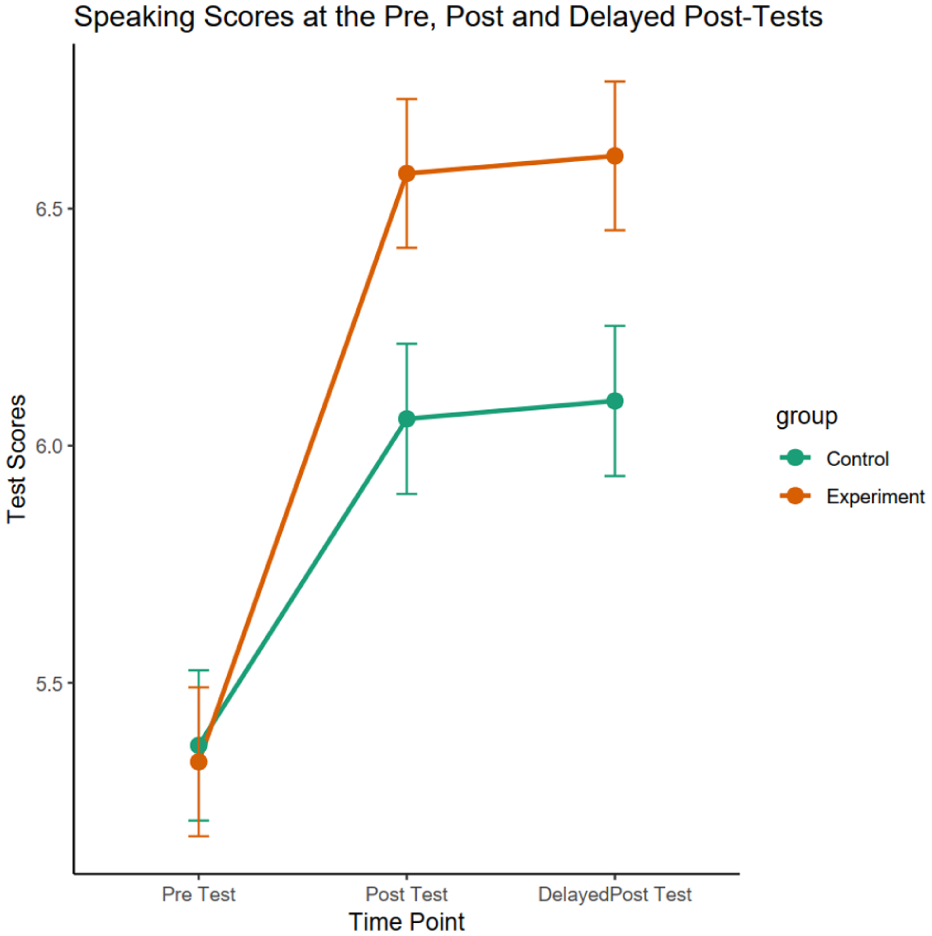
To verify baseline equivalence, independent samples t-tests were conducted prior to the intervention. The analysis revealed no significant differences in pre-test speaking performance between the experimental and control groups (t = 0.25, p = .80), confirming that both groups were comparable at the outset. Table 3 presents descriptive statistics regarding students’ speaking performance on two groups at two time points (immediate and delayed post-test). The differences among two groups’ scores in immediate post-test and delayed post-test were graphically presented in Figure. 2.
Descriptive Statistics of the Scores on Pre-Tests and Immediate and Delayed Post-Tests.
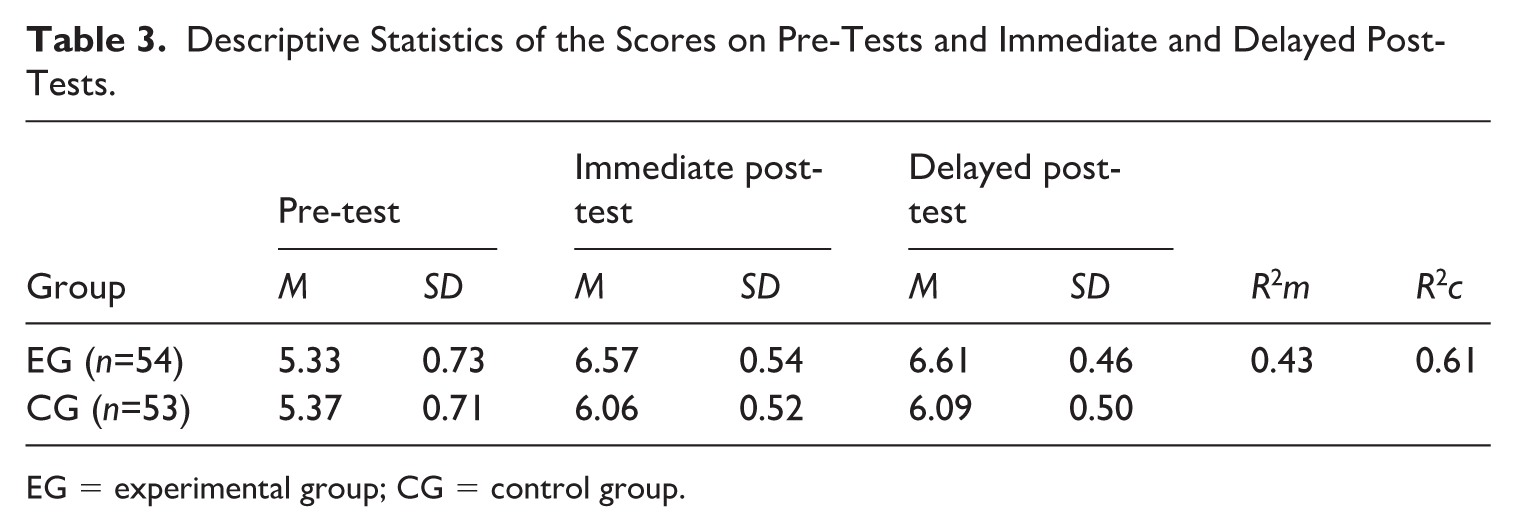
EG = experimental group; CG = control group.
Results of speaking scores at the pre-, post- and delayed posttTests.
Table 4 presents the results of the LMM, which indicated significant main effects of group (p < .001) and time (p < .001). The interaction between time and group was also significant (p < .001). The results indicated that the self-regulated strategy-based speaking intervention group had more efficient development in terms of speaking ability. The fixed effects explained 43% of the variance (R2m = .43) and 61% of the variance when taking account of participants’ differences (R2c = .61).
Results from the Mixed-Effects Regression Model with Random Intercepts.
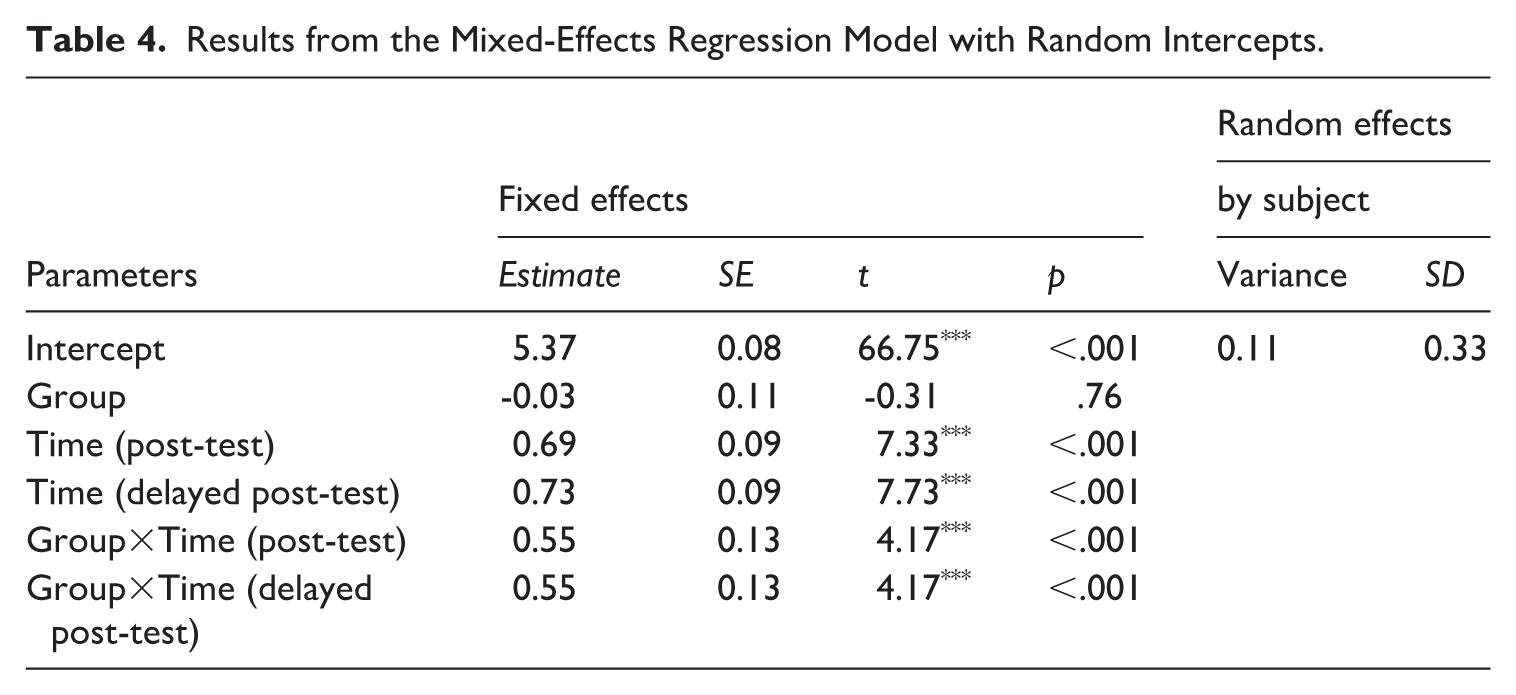
The analysis of variance (ANOVA) of the mixed-effects model confirmed significant main effects for both instructional group, F(1, 105) = 15.91, p < .001, and time, F(2, 210) = 147.52, p < .001. Crucially, the group × time interaction was highly significant, F(2, 210) = 11.60, p < .001, indicating that the change in scores over time differed between the control and experiment groups.
To decompose this interaction, estimated marginal means and pairwise comparisons (with Tukey adjustment for multiple comparisons where appropriate) were examined. At pre-test, no significant difference was observed between the control group (M = 5.37, SD = 0.71) and the experimental group (M = 5.33, SD = 0.73), t(262.24) = 0.31, p = 0.76. This confirms that both groups started at comparable achievement levels before the intervention. Comparing the groups at subsequent time points, the experimental group had significantly higher scores than the control group at post-test (MEG = 6.57 vs. MCG = 6.06), t(210) = 4.17, p < .001. This significant difference was maintained at the delayed post-test (MEG = 6.61 vs. MCG = 6.09), t(210) = 4.17, p < .001.
To quantify the practical significance of the experimental intervention, Cohen’s d effect sizes were calculated using the model’s residual standard deviation. At post-test, the experimental instruction demonstrated a large effect (d = 0.88) relative to the control condition. Similarly, at delayed post-test, the effect size remained large (d = 0.88), indicating the sustained superiority of the experimental instructional method.
4.2. Effects of the Intervention on SRL Speaking Strategy Use
4.2.1. Quantitative Use of Speaking Strategies
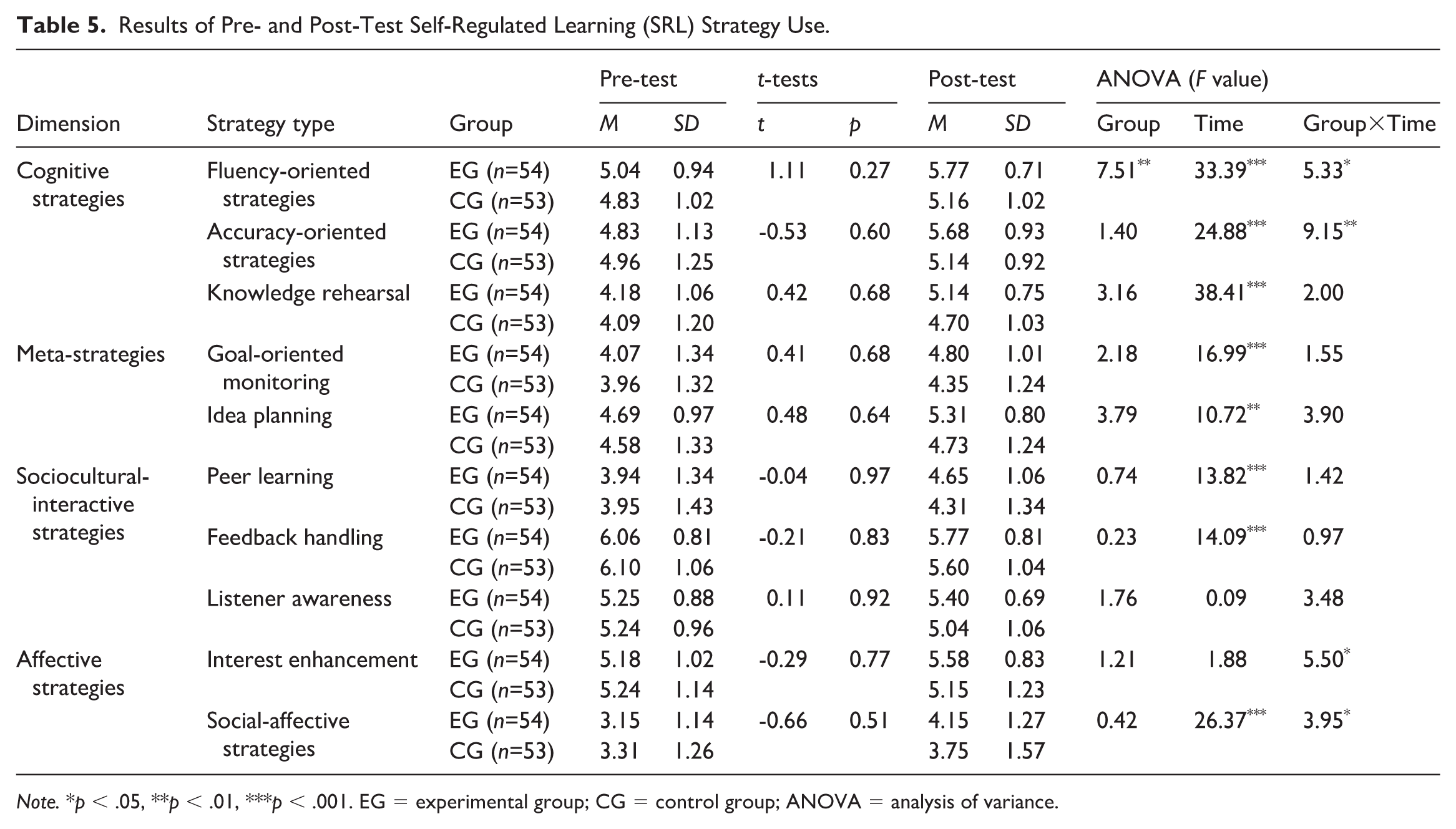
Prior to the intervention, independent samples t-tests were conducted to examine baseline comparability. The results showed no significant differences between the experimental and control groups in terms of pre-test reported strategy use, ensuring that both groups started at a comparable level. Table 5 presents independent samples t-tests and LMM results of the 10 SRL speaking strategies in the pre- and post-tests. For fluency-oriented strategies, the analysis revealed significant main effects for both group and time.
Results of Pre- and Post-Test Self-Regulated Learning (SRL) Strategy Use.
Note. *p < .05, **p < .01, ***p < .001. EG = experimental group; CG = control group; ANOVA = analysis of variance.
These main effects were qualified by a significant group × time interaction. Examination of the fixed effects for the interaction indicated that the experimental group showed a significantly greater increase in fluency-oriented strategies from pre-test to post-test compared to the control group (β = .42, p = 0.023). Post-intervention scores of both groups were significantly higher than pre-intervention scores (β = .32, p = .017).
For accuracy-oriented strategies, results demonstrated a significant main effect of time and a significant group × time interaction. The fixed effects for the interaction suggested that the experimental group (β = .64, p = .003) experienced a significantly greater improvement in accuracy-oriented strategies from pre-test to post-test compared to the control group. The control group did not show a significant change over time (β = .21, p = .171).
For interest enhancement, analysis revealed a significant group × time interaction, with the experimental group showing significantly greater improvement in interest enhancement (β = 0.50, p = 0.021) compared to the control group.
For social-affective strategies, results demonstrated a significant main effect of time and a significant group × time interaction. Post-intervention scores were significantly higher (β = .45, p = .029), with the experimental group showing a significantly larger increase (β = .56, p = 0.496).
4.2.2. Qualitative Use of Speaking Strategies
Given that the data were derived from a purposive subsample of six focal participants, the patterns described below function as illustrative case studies. They are intended to explore potential cognitive and metacognitive shifts associated with the intervention rather than to serve as generalizations representative of the broader high- and low-proficiency experimental groups.
Pre-intervention qualitative data suggested notable differences in strategic awareness and deployment between the selected proficiency subgroups. The low-proficiency participants appeared to rely primarily on rudimentary approaches, such as L1-to-L2 translation and memorized phrases. These students seemed to lack metacognitive oversight of their speaking processes, which participants linked to heightened anxiety, diminished real-time adaptability, and reduced communicative effectiveness. As Yan Chen (low, pre-test interview) noted: “When I’m going to say something, I don’t think about grammar and collocations. I just say whatever comes to my mind.”
In contrast, the high-proficiency participants displayed signs of more sophisticated strategic knowledge, including awareness of pragmatic, communicative, and sociolinguistic dimensions of effective speaking. These learners reported utilizing self-regulatory processes, such as goal-setting, monitoring, and evaluation, during speaking tasks. Their accounts indicated a capacity for strategic flexibility across contexts, appearing to integrate linguistic accuracy with discourse-level considerations. Their described approach aligned with what Zimmerman (2000) characterizes as the “performance phase” of self-regulation, marked by conscious strategy deployment and ongoing self-monitoring.
Post-intervention, the low-proficiency participants showed observable shifts across multiple strategic domains. Metacognitively, they reported enhanced planning capabilities, describing efforts to establish clear, achievable objectives and anticipate potential challenges. Cognitively, interview data suggested a move beyond surface-level translation toward more sophisticated approaches, including conscious attention to grammatical accuracy and lexical appropriateness. Wei Zhang (low, post-test interview) reported: “I started to realize that I need to pay attention to grammatical issues and the pronunciation of words when speaking English, which I usually don’t notice either.”
A notable change observed among the low-proficiency participants occurred in the socio-affective domain. These students described employing anxiety management techniques (e.g., deep breathing, positive self-talk) and expressed a greater willingness to embrace collaborative learning. Their openness to seeking and incorporating peer feedback appeared to increase, suggesting the emergence of a supportive learning community that reinforced strategy use.
High-proficiency participants appeared to further refine their existing strategic repertoire post-intervention. Their planning processes seemed to become more comprehensive, incorporating not only linguistic considerations but also audience awareness and contextual appropriateness. Their monitoring processes reportedly expanded to include rhetorical effectiveness and listener engagement, pointing toward advanced metacognitive awareness. As Jie Su (high, post-test interview) explained: “Before speaking, I have learned to take a moment to think ahead, make a plan, and then speak according to the plan. After speaking, I also start to reflect on it.”
Participants across both subgroups attributed these perceived improvements to the explicit strategy instruction, teacher modeling, and scaffolded practice opportunities. The graduated release of responsibility appeared to foster a sense of autonomy and strategic self-efficacy. These qualitative insights align with previous research (Cohen, 2011; Nakatani & Goh, 2007; Oxford, 2017) supporting the potential efficacy of explicit strategy instruction in developing self-regulated speaking competence.
The varied experiences reported by the participants imply that SRL strategy instruction might benefit from calibration to learners’ existing strategic knowledge. Whereas low-proficiency learners seemed to benefit most from foundational strategy awareness, high-proficiency learners appeared to require opportunities to integrate strategies into complex tasks. These findings offer illustrative context to our quantitative results, which established fluency-oriented, accuracy-oriented, interest enhancement, and social-affective strategies as significant predictors of speaking performance. Notably, participants reported sustained strategy use post-intervention, suggesting the potential formation of durable habits. As learners observed improvements in their performance, their belief in strategy efficacy appeared to strengthen, potentially creating a positive reinforcement cycle. This autonomy was reported as helpful for maintaining motivation, hinting that interventions may need to address the specific strategic needs of learners at different developmental stages.
5. Discussion
5.1. Speaking Performance across Three Time Points
The linear mixed-effects analysis revealed a significant group-by-time interaction effect, providing compelling evidence for the efficacy of the self-regulated strategy intervention. Although the groups demonstrated comparable speaking proficiency at pre-test, confirming their initial equivalence, their developmental trajectories diverged significantly post-intervention. Crucially, the experimental group not only outperformed the control group at the immediate post-test but also maintained this significant advantage at the delayed post-test. This pattern of sustained improvement suggests that the intervention, which was designed based on Oxford’s S2R Model and the CALLA model, did not merely produce a temporary boost but fostered durable self-regulatory capabilities.
These outcomes corroborate foundational research demonstrating that explicit strategy instruction enhances L2 speaking performance (Cohen, 2011; O’Malley & Chamot, 1990). By equipping learners with the tools to actively solve communicative problems, the intervention empowered them as active agents in their learning process, leading to improved outcomes (Chen, 2007). The lasting effect, in particular, underscores the value of an SRL-based approach in promoting enduring gains in speaking proficiency among EFL learners.
Although both groups demonstrated significant improvements from pre-test to post-test and from pre-test to delayed post-test, the magnitude of improvement was substantially larger in the experimental group. Critically, the statistical stability observed between the immediate and delayed post-tests confirms the retention of these intervention effects. This durability implies the development of internalized self-regulatory mechanisms rather than temporary strategy use. This quantitative retention is substantively corroborated by the qualitative findings. Learners across proficiency levels consistently credited explicit strategy instruction and scaffolded practice for their progress. The lack of performance attrition aligns with participant accounts of forming durable strategic habits and entering a positive reinforcement cycle, wherein perceived competence motivated continued strategy deployment. This finding underscores the importance of incorporating strategy instruction into the long-term curriculum to sustain its benefits (Graham & Macaro, 2007; Manchón et al., 2007).
The substantial fixed effects explained by the model (R2m = .43) together with the higher conditional R2 value (R2c = .61) highlight both the substantial impact of the intervention and the importance of accounting for individual learner differences when evaluating SRL strategy instruction. These findings align with previous research demonstrating the positive impact of SRL on academic performance across various domains (Ben-Eliyahu & Bernacki, 2015; Shen & Bai, 2024; L. S. Teng & Zhang, 2022) but extend this understanding specifically to L2 speaking development, an area previously underexplored in SRL research.
This finding implies that our well-designed instructional research can provide all learners with opportunities to succeed, regardless of their starting levels. The benefits of the intervention may have been internalized and generalized by the learners, leading to more autonomous and self-regulated language use. This result confirmed the goals of CALLA for students to learn essential academic content and language and to become independent and self-regulated learners through their increasing command over a variety of strategies for learning in school (Chamot & Harris, 2019). Overall, the encouraging findings of this study emphasizes the potential for self-regulated strategy-based speaking intervention to foster lasting improvements in speaking performance, enabling all learners to achieve success regardless of their initial abilities.
5.2. Use of SRL Speaking Strategies
The intervention produced a significant increase in self-regulated strategy use, with post-test results showing substantial gains in fluency-oriented, accuracy-oriented, interest enhancement, and social-affective strategies for the experimental group. Consistent with self-regulation theory (Oxford, 2017), our mixed-effects model confirmed that the magnitude of these effects varied, showing divergent patterns of development across both strategy types and learner proficiency levels.
5.2.1. Cognitive Strategies
The intervention’s impact on cognitive strategy use was highly selective, with mixed-effects modeling revealing significant effects that were contingent on the specific strategy type. A significant group-by-time interaction was found for both fluency-oriented and accuracy-oriented strategies, but not for knowledge rehearsal. The improvement in fluency-oriented strategies was particularly pronounced, with learners reporting an enhanced ability to maintain speech flow through techniques like chunking and spontaneous practice.
The pronounced improvement in fluency- and accuracy-oriented strategies is further contextualized by the qualitative data, which might suggest cognitive shifts, particularly among the selected lower-proficiency learners. Prior to the intervention, these focal participants described a reliance on mental translation and impulsive speech production with little regard for form. Post-intervention, however, they reported a conscious reallocation of attentional resources, noting a newfound realization of the need to monitor grammatical precision and lexical appropriateness.
Although these qualitative insights cannot confirm the causal mechanisms for the entire experimental group, they offer a possible explanatory context for the observed statistical gains. The accounts imply that, for these individuals, the intervention may have facilitated a transition from surface-level processing to the more intentional monitoring of form and lexis. These observations resonate with the view that strategy-focused training has the potential to empower EFL students to exercise greater metacognitive control (L. J. Zhang, 2008). As suggested by Hu and Gao (2018), such deliberate instruction can serve to heighten strategic awareness and procedural knowledge.
In contrast, the non-significant interaction for knowledge rehearsal suggests this domain was less susceptible to the intervention’s differential effects. This result likely stems from the nature of rehearsal as a more rudimentary, declarative strategy. Unlike the dynamic processing required for fluency and accuracy, rehearsal demands less real-time adaptability and metacognitive oversight, rendering it less sensitive to the high-level regulatory training provided in this study.
5.2.2. Meta-Strategies
Our analysis of meta-strategies, specifically goal-oriented monitoring and idea planning, revealed a significant main effect for time but, critically, a non-significant group-by-time interaction. This indicates that while learners in both the experimental and control groups improved their meta-strategic regulation over the instructional period, the explicit SRL intervention did not confer a statistically significant advantage over the gains prompted by regular classroom activities. This finding challenges the assumption that explicit instruction is the sole pathway to enhanced metacognitive regulation in L2 speaking.
The improvement across both groups suggests that metacognitive capabilities can develop organically through engagement in meaningful language use, a pattern consistent with emergentist perspectives (Ellis, 2006; MacWhinney, 1998). Whereas the quantitative data showed this parallel development, qualitative data from the experimental group illuminated how the instruction fostered this growth. It revealed that the intervention bolstered learners’ explicit awareness and deliberate application of these strategies, providing a structured pathway to the same developmental outcome that the control group achieved more implicitly (Nguyen & Gu, 2013; Sato & Loewen, 2018).
However, the qualitative data from the focal participants suggest a potential divergence that is obscured by this statistical parity: while the frequency of strategy use was comparable across groups, the quality of processing reported by the selected experimental learners appeared distinct. The high-proficiency participants in the experimental group described what might be interpreted as a shift in their planning processes, moving beyond simple task preparation to incorporate audience awareness and rhetorical effectiveness. They reported pausing to construct detailed plans before speaking and engaging in reflective post-task monitoring.
These observations suggest that, although general classroom practice may foster implicit or intuitive preparation (as likely seen in the control group), the intervention appears to have offered a structured pathway that facilitated learners’ explicit awareness and control. For these individuals, this process seems to have contributed to refining the sophistication of their metacognitive architecture, even if the quantitative frequency of use remained statistically similar.
5.2.3. Sociocultural-Interactive Strategies
The analysis of sociocultural-interactive strategies revealed a significant main effect for time on peer learning and feedback handling but, critically, no significant group-by-time interaction. This outcome is counterintuitive, as it appears to challenge theoretical principles which posit that interpersonal interaction should facilitate learning by mitigating cognitive load (Schunk & Greene, 2018).
We propose that this discrepancy stems from the unique processing demands of real-time spoken interaction. Unlike asynchronous collaboration in writing, the immediacy of speaking may impose an additional cognitive burden rather than alleviating it. This interpretation finds resonance in our qualitative data, which offer illustrative examples of a potential proficiency-based threshold effect. The selected high-proficiency learners, who likely possess greater automaticity in linguistic production, appeared able to leverage social collaboration effectively. In contrast, the focal lower-proficiency learners seemed to experience cognitive overload when attempting to simultaneously manage language production and social-interactive demands. This pattern is consistent with Skehan’s (1998) Limited Capacity Model, raising the possibility that only learners with sufficient attentional resources freed by automaticity may fully benefit from the cognitive advantages of real-time peer interaction.
5.2.4. Affective Strategies
The intervention proved particularly effective for affective and social strategies, with our statistical modeling revealing a significant group-by-time interaction for both interest enhancement and social-affective strategies. The finding for social-affective strategies was especially telling, showing both a strong main effect for time and a significant interaction. This pattern suggests that although these strategies may develop to some extent through any sustained language practice, the SRL intervention significantly accelerates and enhances this development.
The quantitative improvement is further contextualized by the qualitative analysis, which points to a noticeable shift in reported behavior among the selected low-proficiency learners. In pre-test interviews, these focal participants described experiencing debilitating anxiety and diminished adaptability during real-time speech. Post-intervention, however, they explicitly reported deploying concrete anxiety management techniques, such as deep breathing and positive self-talk, to regulate their emotional states. This qualitative insight offers a potential explanation for the strong statistical interaction: it suggests that, unlike complex cognitive strategies which may require prolonged internalization, the acquisition of tangible emotional regulation tools may have provided these specific learners with a more accessible means to enhance affective stability.
These findings have critical theoretical implications. Drawing on previous research (L. S. Teng & Zhang, 2018, 2020; Wolters & Hussain, 2015), we argue that social-affective strategies function as foundational enablers, mediating engagement and creating the emotional security necessary for learners to deploy other cognitive and metacognitive processes during demanding speaking tasks. By demonstrating that these often-neglected dimensions are highly responsive to instruction, this study addresses a significant gap in SRL literature, which has historically prioritized cognitive components (Efklides, 2016; Zimmerman & Bandura, 1994). Our results therefore suggest that social and affective regulation may not be peripheral, but rather fundamental to developing self-regulated speaking proficiency.
6. Conclusion
This mixed-methods study, grounded in Oxford’s S2R Model and the CALLA framework, investigated the effects of a self-regulated strategy intervention on EFL students’ speaking proficiency and strategy use. The findings provide compelling evidence that the intervention was effective. As hypothesized, participants in the experimental group demonstrated significant improvements in both their speaking performance and their deployment of SRL strategies across cognitive, metacognitive, sociocultural-interactive, and affective dimensions, with these gains maintained at the delayed post-test.
Particularly noteworthy was the intervention’s broad impact, with students showing marked improvements in fluency-oriented, accuracy-oriented, interest enhancement, and social-affective strategies. This development can be attributed to the explicit instructional design based on the CALLA framework, which proved effective in fostering not only cognitive awareness but also affective strategic competence. This aligns with prior research suggesting that supportive, structured learning environments enhance task engagement and build confidence through the successful application of SRL strategies (Chamot & Harris, 2019; Schunk & Ertmer, 2000), ultimately contributing to students’ development as self-regulated speakers.
Several limitations warrant acknowledgment. First, the reliance on convenience sampling from a single university, coupled with a relatively modest sample size, constrains the generalizability of the findings to broader L2 populations. Future research should prioritize replicating this intervention with larger, more diverse cohorts across multiple institutions. Expanding the sample size would not only enhance external validity but also afford sufficient statistical power to conduct higher-order analyses, such as structural equation modeling or multilevel modeling, thereby clarifying complex interactions between learner variables and strategy use. Second, the qualitative findings are limited by the small subsample size. The selected participants serve as illustrative case studies and cannot be claimed to represent the full spectrum of high- and low-proficiency speakers. Therefore, conclusions regarding cognitive shifts are exploratory in nature, suggesting potential patterns in strategy regulation rather than offering definitive explanatory power. Third, while our mixed-methods approach was informative, its quantitative emphasis limited the capture of dynamic, moment-to-moment strategy deployment. Subsequent studies would benefit from incorporating richer qualitative methods, such as stimulated recall protocols or micro-analytic discourse analysis. Fourth, the 8-week duration may have been insufficient to observe the full developmental trajectory of strategy use. It should be noted that the delayed post-test was administered 2 weeks following the intervention due to the constraints of the academic semester. Consequently, caution should be exercised in generalizing these findings to the sustained maintenance of self-regulated speaking strategies over longer periods. Future studies would benefit from longitudinal designs with follow-up intervals of 1 month or longer to more accurately evaluate the persistence of the intervention effects.
Supplemental Material
sj-docx-1-ltr-10.1177_13621688261459664 – Supplemental material for Enhancing English-as-a-Foreign-Language Speaking Performance through Self-Regulated Strategy Instruction: Evidence from Chinese University Learners
Supplemental material, sj-docx-1-ltr-10.1177_13621688261459664 for Enhancing English-as-a-Foreign-Language Speaking Performance through Self-Regulated Strategy Instruction: Evidence from Chinese University Learners by Yawen Wang and Peijian Paul Sun in Language Teaching Research
Footnotes
Acknowledgements
The authors would like to thank the editor and reviewers for their time and effort on this paper.

Ethical Considerations
The study was reviewed and approved by the Human Participants Ethics Committee of School of International Studies at Zhejiang University (approval number: SIS2022-01).
Consent to Participate
Informed consent was obtained from all participants prior to participation in the study.
Funding
The authors disclosed receipt of the following financial support for the research, authorship, and/or publication of this article: The study was supported by the Fundamental Research Funds for the Central Universities (JKS02262203) and Zhejiang Province Association of Higher Education under Grant No. KT2026003 (获浙江省高等教育学会课题立项资助).
Declaration of Conflicting Interests
The authors declared no potential conflicts of interest with respect to the research, authorship, and/or publication of this article.
Data Availability Statement
Researchers may contact the corresponding author for access to de-identified data.
Supplemental Material
Supplemental material for this article is available online.
References
Supplementary Material
Please find the following supplemental material available below.
For Open Access articles published under a Creative Commons License, all supplemental material carries the same license as the article it is associated with.
For non-Open Access articles published, all supplemental material carries a non-exclusive license, and permission requests for re-use of supplemental material or any part of supplemental material shall be sent directly to the copyright owner as specified in the copyright notice associated with the article.
