







Abstract
More boys than girls are diagnosed with autism spectrum disorder; however, there are conflicting findings about whether they differ in their presentation. This study involved a survey of parents of school-aged children on the autism spectrum (171 parents of girls and 163 parents of boys) that was distributed via social media. The surveys provided insights regarding the characteristics of boys and girls (as perceived by parents) as well as some demographic information. There were very few differences reported regarding communication and social strengths and difficulties of boys and girls with autism. No differences were reported in the number of boys and girls on the autism spectrum with special interests or repetitive behaviours; however, significant differences were found in the types of special interests with boys and girls showing generally interests along traditional gender lines. Qualitative analysis of open comments indicated that some parents of girls on the autism spectrum described their daughter as trying to hide or mask her difficulties more but no parents of boys on the spectrum described this phenomenon.
Introduction
More boys than girls are diagnosed with autism spectrum disorder (ASD). The ratio is commonly reported as 4:1 for all children with ASD with even fewer girls diagnosed with autism among children without intellectual disability (Baoi, 2014; Shefcyk, 2015) and higher rates of girls among children who also have an intellectual disability (Fombonne, 2003, 2009). While these ratios appear to be consistent across much of the research in the area, it is unclear why this is the case. Ascertainment bias may account for some of the difference in rates of diagnosis (Halladay et al., 2015) although the possibility that biological differences underpin the diagnosis ratios still needs to be considered (Werling and Geschwind, 2013). One suggestion is that boys and girls may differ in their presentation, making the detection of girls more difficult (Dworzynski et al., 2012; Kirkovski et al., 2013; Lai et al., 2012). Research, however, has not found a consistent pattern of differences.
Studies have suggested that boys may show higher levels of repetitive behaviour and restricted interests while girls showed greater communication difficulties (Hartley and Sikora, 2009; Kirkovski et al., 2013). Others have suggested similarities in core autism symptomatology, but that differences exist in associated features such as internalising difficulties of anxiety and depression (Hartley and Sikora, 2009; Holtmann et al., 2007). More recently, Mandy et al. (2012) reported no differences between girls and boys on communication or social interaction domains according to parental report, but that there were differences between groups on repetitive behaviours. Importantly, parents reported higher levels of internalising difficulties in girls, but these were not noted by teachers.
A recent review of 22 studies found few differences in the core deficits of autism between girls and boys (Van Wijngaarden-Cremers et al., 2014), but on the whole, lower rates of restricted interests and repetitive behaviours were noted in girls and higher rates of stereotyped movements were seen in boys. Recent studies have suggested that girls may have more appropriate interests or interests less typical of ASD (e.g. Hiller et al., 2014), but reviews suggest that this is not a consistent finding (Harrop et al., 2015). Harrop et al. (2015) found similar rates of restricted repetitive behaviours in young girls and boys with a trend towards higher frequency of these behaviours in boys.
Recent Australian research (Hiller et al., 2014) included a sample of 69 high-functioning girls and boys with an ASD diagnosis and looked not only at whether boys and girls met various diagnostic criteria but also at the way diagnosticians had reached their conclusions regarding each criterion. The behavioural characteristics were extracted from reports and indicated that there were no differences between boys and girls in the broad social criteria, but that there were differences in the way boys and girls came to meet each of the criterion. As with other research, girls also presented with fewer and different restricted interests than boys, including lower interest in screen time and more interests that were categorised as ‘random’ interests. The impact of these differences means that girls may be less likely to receive a diagnosis, even when similar levels of autistic traits are observed (Dworzynski et al., 2012).
The need for an understanding of the subtle differences between males and females was highlighted by Baldwin and Costley (2015) in their study of women on the autism spectrum. They noted that research may not indicate a unique profile of females on the autism spectrum but rather a range of subtle and subjective ways in which autism is manifested in girls and women, including differences in their perception of the social difficulties, mental health and preferences for company. Baldwin and Costley (2015) also noted higher levels of mental health concerns among women than men on the spectrum that, while not diagnostic features of autism, frequently co-occur among those with ASD, adding to the difficulties at home, school and work.
The issues addressed by this study involved gaining an understanding of the real-life characteristics of school-aged girls and boys with autism, including both diagnostic criteria and associated features, as described by their parents. It sought to add to the evidence base by including large sample sizes and a non-clinically referred population, two features that contrast with much of the previous research in the area. In addition, the use of parent-derived descriptions (rather than clinical or diagnostic descriptors) of the strengths and difficulties of girls and boys on the spectrum adds to the possibility of detecting subtle differences that may exist between the genders. It was hypothesised that this study would highlight these subtle differences in social and communication skills while further demonstrating the differences in interests in boys and girls on the spectrum.
Methods
Ethical approval for this survey-based study was provided through Autism Spectrum Australia (Aspect) Research Approvals Committee. Participants were provided with information about the survey and assured that it was anonymous. Participants gave informed consent and were able to withdraw from the study at any time.
Participants
A total of 198 parents of girls with ASD and 186 parents of boys with ASD gave informed consent to participate in the study. Following review of the data, responses that provided no details of their child’s characteristics (i.e. behavioural or personal preferences) were excluded from further analysis. This exclusion included respondents who confirmed their child was over school age (n = 1 girl, n = 5 boys). Notably, all the deleted responses either identified their child as not having a diagnosis of autism or did not respond to that question.
The sample of parents was self-selecting. Parents of girls and boys on the autism spectrum were alerted to the survey through the (name withheld for review) Facebook page, which currently has approximately 6600 ‘likes’ from parents and professionals. No parents were approached directly by the researchers.
All participants were required to answer a question about whether their child had a diagnosis of ASD and, if so, who made the diagnosis (e.g. psychiatrist, psychologist and multidisciplinary team) and the date it was made. Given the scope and nature of the survey, it was not possible to independently verify diagnosis and these questions were asked as a way of confirming that the children described by the survey responses had autism. Four parents of girls stated that their daughter did not have a diagnosis; one boy did not have a diagnosis. These participants also answered no further questions, leaving 171 parents of girls and 163 parents of boys as possible respondents to the remaining questions.
The remaining questions elicited whether the parent had observed a behaviour or interest, with a response only appropriate in the case where this was true. The highest level of response to an observation was 267 agreeing that their child did not get social cues while the lowest response regarded an interest in science fiction, with only 27 indicating interest.
Materials
This study employed a questionnaire methodology to survey the parents of children with ASD regarding their sons’ and daughters’ strengths and difficulties in communication and social skills, as well as their special interests, repetitive behaviours and sensory needs. The survey was developed from an earlier pilot study of 282 parents of girls only who provided responses to open questions about these areas. It is not known whether any of these parents went on to complete the survey in this study. These open responses underwent thematic analysis, and common themes were identified. These themes formed the basis of multiple-choice questions for this survey about communication and social strengths and difficulties. Thus, the questions, while grouped in terms of the main diagnostic features of ASD (i.e. social interaction, communication, behaviours, interests and sensory differences), were not based on diagnostic criteria; rather, they were based on the real-life descriptions of skills and difficulties made by parents of girls on the spectrum. This survey included some demographic information about the children, including their age, whether they had a diagnosis, who made this diagnosis and the type of school they attended. Questions about communication and social strengths and difficulties, special interests and sensory differences were multiple choice as described above, with an option of adding comments or other details provided. Questions about differences in skills across contexts and repetitive behaviours were open-ended questions. The survey software used was SurveyMonkey®. Parents of girls were invited first to participate in the survey with parents of boys being recruited to a separate roll out of the survey. See Appendix 1 for survey questions, available online
Analysis
The data were analysed using a mix of methods, including statistical analysis, along with thematic analysis of open comments.
Statistical analysis
Analyses were performed using the Statistical Package for the Social Sciences (SPSS) v22. Frequencies of all variables were initially described and compared across gender groups providing an initial profile of responses regarding gender characteristics of communication, areas of social difficulty and interests. Statistical analysis of these differences was not undertaken individually, due to issues associated with high numbers of multiple comparisons. A binary logistic regression was undertaken to simultaneously explore the possible effect of reported actions of boys and girls and suggested predictive factors for gender. All items regarding communication and preferences were included, as no assumptions were made about relative importance. All items were entered at the initial step. From this assessment, odds ratios (ORs) and 95% confidence intervals (CIs) were calculated, with values of p < 0.05 considered significant.
Open comments regarding differences between home and school and the types of repetitive behaviours the children showed underwent thematic analysis as per Braun and Clarke (2006). Responses were analysed, coded and grouped according to the broad themes that emerged. The open comments provide both qualitative information (e.g. observed differences between home and school) and some quantitative data (e.g. the proportion of girls and boys engaging in different types of repetitive behaviours).
Results
Demographic information
Age
All participants described children between 5 and 18 years of age (typical school-age range for students in Australia) on the autism spectrum. A total of 78% of boys and 76.6% of girls were of primary school age (5–12 years; see Table 1 for gender by age distribution).
Age distribution, school placement and diagnosis by gender.
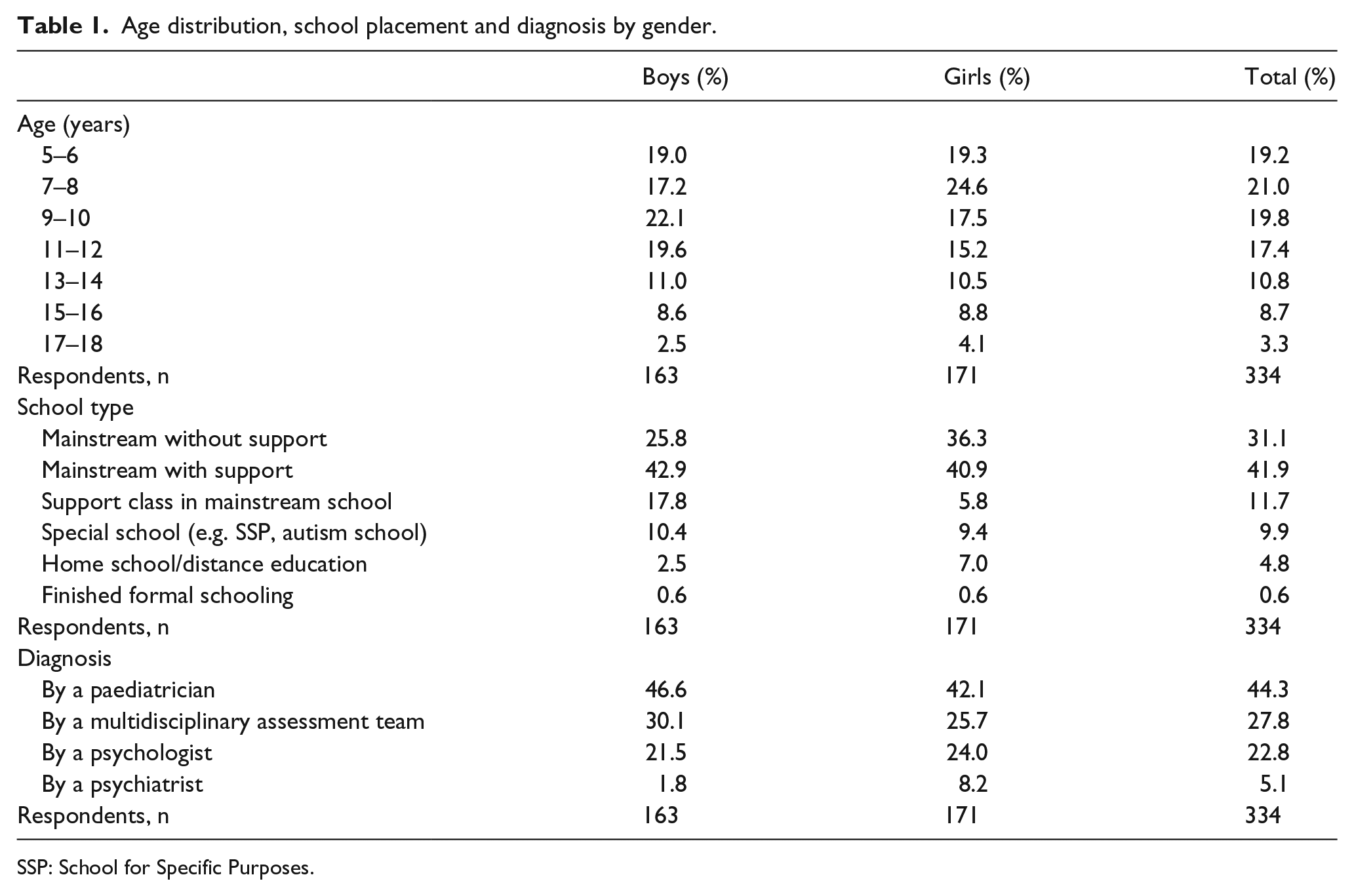
SSP: School for Specific Purposes.
Diagnostic status
Parents were asked whether their child had a diagnosis of ASD and who had made the diagnosis (e.g. psychiatrist, paediatrician, multidisciplinary team or psychologist). The most common source of a diagnosis, for both boys and girls, was by a paediatrician (46.60% and 42.10%, respectively). While diagnosis by a psychiatrist was far less common, a greater proportion of girls than boys did received their diagnosis from a psychiatrist (8.20% of girls compared to 1.80% of boys).
School type
Similar numbers of girls and boys were attending schools for specific purposes (sometimes known as special schools; around 10% of girls and boys). This figure may provide a proxy measure of intellectual functioning and may suggest that the groups could be similar in terms of cognitive skills. Similar numbers of girls and boys were in a mainstream education setting with support (such as a teacher aide), with 86.5% of boys and 83.0% of girls. However, of these more girls were in classes without support than were boys (36.3% of girls compared to a 25.8% of boys). Relatively high numbers of girls and boys were home-schooled, with a higher proportion of girls in this group (7% of girls and 2.5% of boys).
Communication, social and behaviour characteristics
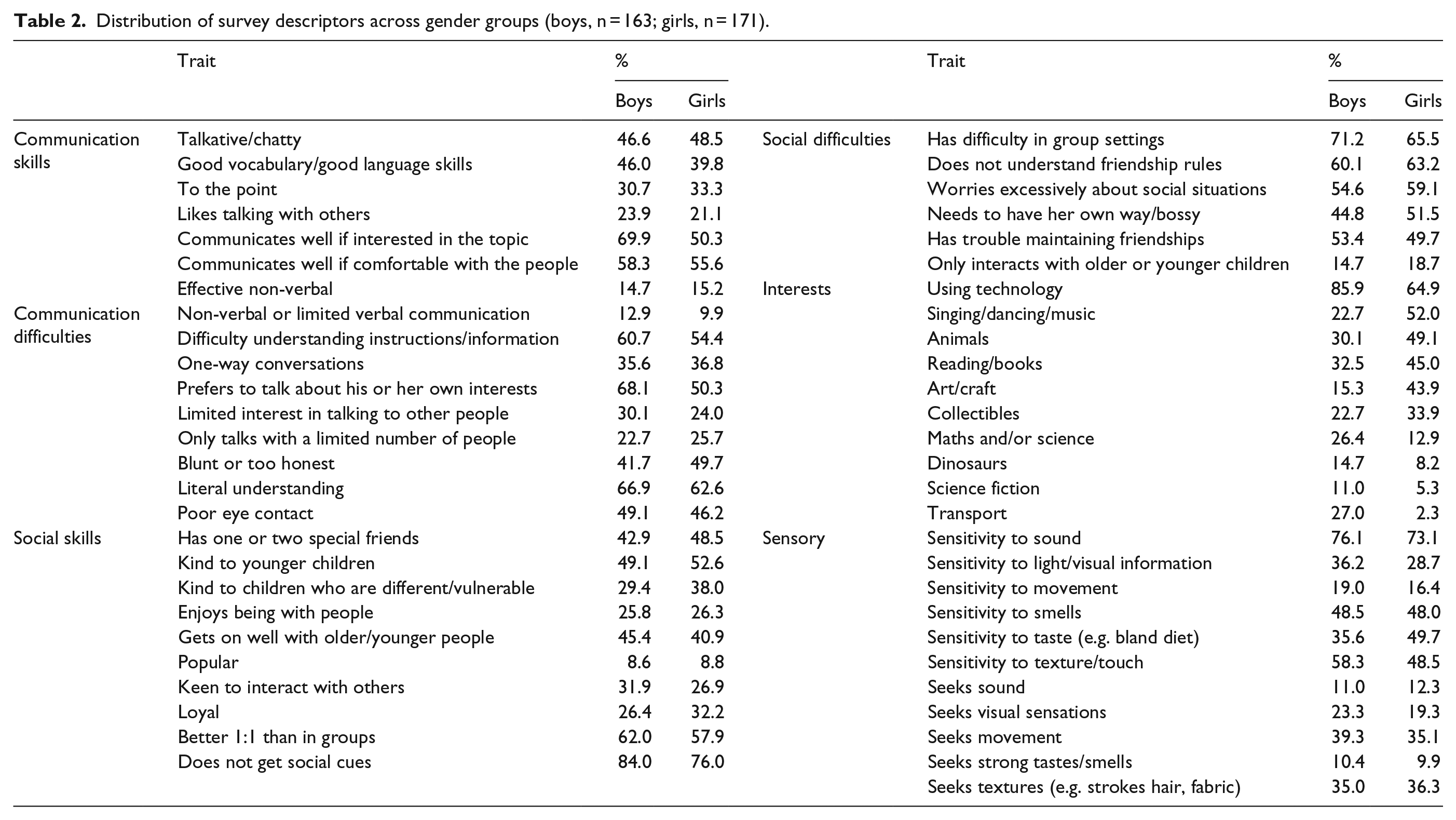
The percentage of responses to each of the descriptors on the survey is presented in Table 2.
Distribution of survey descriptors across gender groups (boys, n = 163; girls, n = 171).
Communication strengths and difficulties
There were few marked differences between girls and boys regarding communication. Boys and girls were similarly likely to be described as talkative or chatty, having good vocabulary or language skills and communicating well if comfortable with the topic. Similar numbers of boys and girls were described as non-verbal. More boys than girls were described as ‘communicates well if interested in the topic’ (69.9% boys and 50.3% girls). Similarly, more boys also were described as ‘prefers to talk about his or her own interests’ (68.1% boys and 50.3% girls).
Social interaction strengths and difficulties
As with communication, there were many similarities in social strengths and difficulties between the boys and girls described in this study. About half of boys and girls were described as having one or two special friends, and a similar number were described as kind to younger children. Approximately 60% of both groups felt their child was better in one-to-one situations and about 10% of boys and girls were described as popular. The overwhelming majority (>76%) of boys and girls were described as having difficulties understanding social cues and about 70% of both groups had difficulties in group settings. Around 60% of both boys and girls worried excessively about social situations.
Special interests
Both boys and girls were described as having special interests; however, clear differences were found in the types of special interests, with boys and girls generally showing interests along traditional gender lines (see Figure 1). Open comments about ‘other’ interests also showed differences between boys and girls. Thirteen parents of boys indicated a special interest in Lego® compared with only two girls; seven parents of girls indicated an interest in fantasy but no boys showed this interest; more boys were interested in sport than girls. In contrast, small but similar numbers of both boys (n = 5) and girls (n = 6) had an interest in television and movie characters such as Octonauts, Frozen and Teenage Mutant Ninja Turtles.
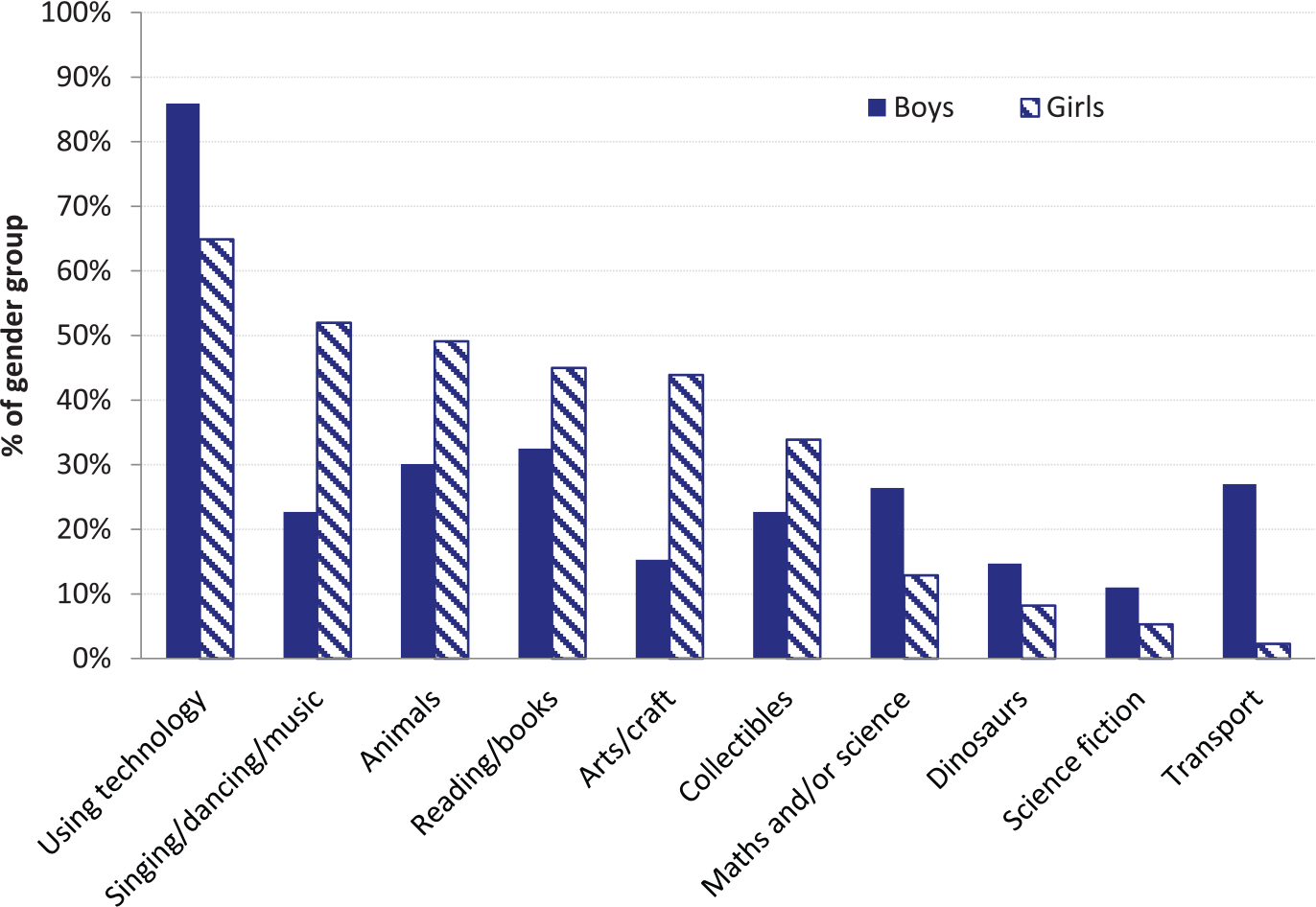
Comparison of boys’ and girls’ interests.
Repetitive behaviours
Participants were asked whether their child displayed repetitive behaviours and, if present, to describe them in an open response. Similar proportions were reported by gender with parents indicating that 67.6% of boys and 72.7% girls displayed repetitive behaviours. The open responses were then analysed to determine the broad type of behaviour. The types of behaviours described included motor stereotypies (such as rocking, flapping, flicking), behaviours indicating a need for sameness (such as sticking to routines, having meals at the same time every day), sensory-based behaviours (sniffing, licking, touching), repetitive verbal behaviour (such as repetitive questioning and vocalisations), self-injurious behaviours (skin picking), movement (running, pacing) and obsessive behaviours (such as cleaning, colour coding). There appeared to be somewhat more behaviours that could be classified as movement and obsessive behaviours in boys, but further analysis of this was beyond the scope of this article.
Sensory
Participants were given multiple-choice options regarding sensory sensitivities and sensory seeking behaviours across the senses (vision, hearing, smell, taste, touch, proprioception and vestibular senses). Boys and girls were reported to display similarities in most areas. Parents reported more sensory sensitivity (71%) than seeking behaviours (29%) in both boys and girls. Auditory sensitivity was the most common observation for both boys and girls.
Assessing significant gender differences – logistic regression
To provide a predictive picture of the gender differences in behaviours and preferences, a logistic regression was undertaken, with all dichotomous variables documenting parents’ assessments of their children’s communication and social behaviours, their interests and sensory responses entered simultaneously. Table 3 documents the findings from the logistic regression, presenting details for all significant variables from the analysis. In this assessment, ORs that are less than 1 indicate where girls show a greater level of response (e.g. girls were more likely to enjoy singing and music, OR = 0.192), and those above 1 indicate a stronger response by boys (e.g. boys were more likely to be interested in technology, OR = 4.193).
Results of logistic regression showing significant predictor variables.
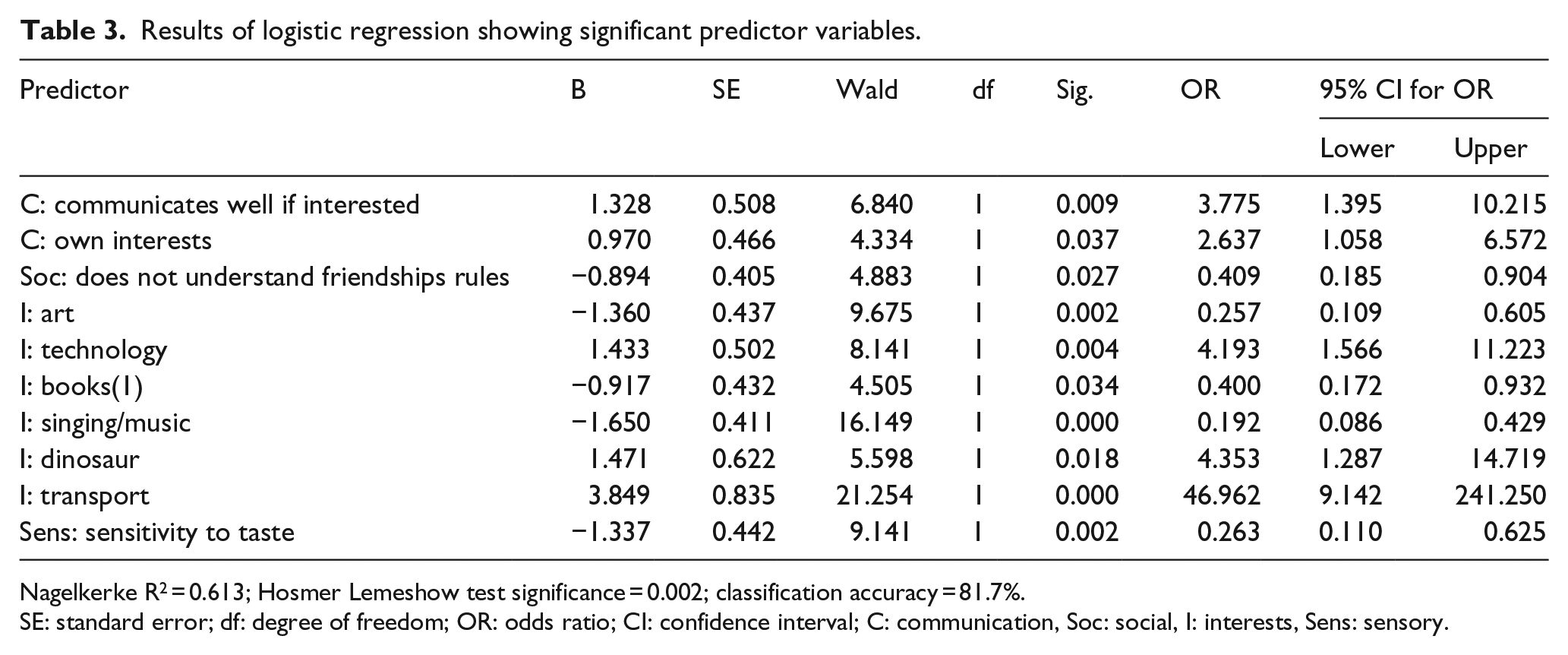
Nagelkerke R2 = 0.613; Hosmer Lemeshow test significance = 0.002; classification accuracy = 81.7%.
SE: standard error; df: degree of freedom; OR: odds ratio; CI: confidence interval; C: communication, Soc: social, I: interests, Sens: sensory.
From the logistic regression, it is clear that the main factors differentiating girls and boys are not so much in their communication or social behaviours or even their sensory reactions, but in their interests. The only factors that are identified in behaviours as significant are about communication – ‘communicates well if interested in the topic’ (OR = 3.775, p = 0.009), where parents of boys selected this much more often than parents of girls (69.9% to 50.3% agreement from males and females), and ‘prefers to talk about his or her own interests’ (OR = 2.637, p = 0.037). On the other hand, girls indicated slightly greater difficulties understanding friendship rules (OR = 0.409, p = 0.027). In looking at sensory aspects, again only one area demonstrated a significant gender difference (49.7% of girls compared to 35.6% of boys) regarding sensitivity to taste (OR = 0.263, p = 0.002).
In contrast, several significant areas differentiated boys and girls in the area of special interests. Boys were profiled as being significantly more interested in technology (OR = 4.193, p = 0.004), dinosaurs (OR = 4.353, p = 0.018) and transport (OR = 46.962, p < 0.000), while girls showed a far greater interest in art (OR = 0.257, p = 0.002), books (OR = 0.400, p = 0.034) and singing/music (OR = 0.192, p < 0.000).
Differences across settings
Participants were asked whether, to their knowledge, their child’s communication and social skills were different in the home and school setting. About three quarters of boys and girls were described as displaying similar communication characteristics across home and school settings and almost 85% of boys and girls were described as displaying similar social skills across settings. Participants provided open comments describing the observed differences and qualitative analysis of these comments indicated common themes, as follows.
More comfortable at home
Of those parents who indicated that their child’s communication or social skills were different at home and school, the majority indicated that their child was more comfortable at home. This was described in several ways including that their child was more anxious outside of home or that they were more confident at home. There was no difference in the numbers of parents of boys and girls who reported their children felt anxious or experienced anxiety. Comments included
He is more willing to explain himself at home where he is comfortable. (Parent of a boy) More comfortable at home. (Parent of a girl) Much more confident at home, sometimes quite anxious about communicating elsewhere in case she gets it wrong. (Parent of a girl)
Quiet and reserved at school
Parents of many students indicated that they were far more quiet and reserved at school, with some parents saying that their child rarely spoke at school. Many parents made comments indicating that their child was more talkative at home. Comments in this theme included
Much less willing to participate in conversations at school or ask for help when needed. (Parent of a girl) At school, she is much more anxious, so all of these issues are magnified. Where at home she is loud and bossy, at school she hides under tables, refusing to talk or make eye contact. (Parent of a girl)
Tries hard at school, holds everything together
Two parents of boys described their sons as more rule abiding at school and as putting energy into friendships at school and one parent of a boy indicated that he tried to fit in but did so by being silly and drawing attention to himself. However, neither these comments nor any others from boys’ parents explicitly indicated an awareness of difference or an effort to manage or behave differently at school. In contrast, this was a relatively common theme for parents of girls. Thirteen parents of girls indicated that their daughters were aware of their differences to their peers and that they explicitly tried to manage their difficulties at school, often becoming more quiet or cautious in their communication. Comments on this theme included
She tries hard at school holds everything together then meltdowns when gets home. Tries hard not to let people see her difficulties. (Parent of a girl) She is less verbal at school and outside home but more careful of what she says – applies filter more effectively. (Parent of a girl) Attempts to mimic very hard at school and would contain herself more than she does at home. Doesn’t want attention drawn to her in class so goes into her own superhero world. (Parent of a girl) Outside she is more worried about not being normal and saying things that make her seem different or strange. (Parent of a girl)
Discussion
This study aimed to look at differences between girls and boys on the autism spectrum using parent-derived, non-clinical descriptors of skills with a large, non-clinically referred sample of school-aged students. To our knowledge, this is one of the largest studies to look specifically at the similarities in communication and social strengths and difficulties of boys and girls, as well as behaviours and interests. The outcomes of this study may provide useful information to those involved in an autism specific diagnostic assessment, as well as the education and treatment of children on the spectrum. In this study, few differences were found in communication or social interaction skills or in the proportions of boys and girls displaying strong interests or repetitive behaviours. However, highly significant gender differences were found in the types of interests. In addition, girls and boys varied on some key demographic variables as well as in parent-reported behaviour differences between settings that suggest a desire to mask their difficulties.
Differences in demographic variables, such as who made the diagnosis and school placement, were not anticipated. The majority of both girls and boys in our study were diagnosed with autism by a paediatrician, a psychologist or a multidisciplinary team, which are likely reflective of the access to these types of diagnostic assessments in the community. Girls in our study were more likely to have been diagnosed by a psychiatrist (n = 14) than boys (n = 3). Qualitative analysis of the responses and comments by the parents of the 14 girls did not reveal any apparent pattern of differences to other girls in the cohort that might have led to the differences in specialists sought. It is possible that parents initially sought contact with a psychiatrist because of suspected mental health difficulties such as anxiety, or because they had difficulty obtaining a diagnosis through typical channels, although these were not specifically mentioned by the parents in the comments on this survey.
This study showed very few differences in parent’s descriptions of boys and girls in terms of their communication and social strengths and difficulties. It had been expected that using a tool based on girls’ parents’ descriptions may have elicited some subtle differences between boys and girls but this was not found. The responses did, however, provide a number of items of interest, including that only half of parents felt that eye contact was an issue for their child and that 1 in 10 children on the spectrum were seen as socially popular. The most prevalent social finding for both boys and girls was their difficulty ‘getting’ social cues and difficulties in groups.
Under Diagnostic and Statistical Manual of Mental Disorders (5th ed.; DSM-5) diagnostic criteria, all those diagnosed with autism must demonstrate significant special interests, repetitive behaviours and/or sensory issues (American Psychiatric Association (APA), 2013). Previous research and reviews (e.g. Frazier et al., 2014; Shefcyk, 2015; Van Wijngaarden-Cremers et al., 2014) have found lower levels of repetitive behaviour in girls and that girls are less likely than boys to engage in repetitive stereotyped behaviours such as stacking blocks (Mandy et al., 2012). In contrast, this study found broadly similar rates of repetitive behaviours in boys and girls but potentially with subtle differences in the types of those behaviours.
Similarly, and in contrast to the literature, this study found similar rates in the numbers of girls and boys who were reported to have special interests. There were, however, significant differences in the topics of interest to girls and boys. The topics were clearly divided along gender lines, with very small numbers of girls engaging in interests that are seen as typically related to the autism spectrum such as dinosaurs or an interest in transport. Rather, girls engaged in the types of interests typically expected of their gender (Gould and Ashton-Smith, 2011; Johnson et al., 2004; Ruble et al., 2007), such as animals, reading, art and music, while boys were typically described as preferring activities typical of boys of this age group (Rost and Hanses, 1994). It is possible that in some circumstances, such interests may be overlooked by diagnosticians, because they do not conform to the typical male presentation. Indeed, it has been suggested that diagnostic assessments may need to include examples that are typically associated with traditional female interests (Frazier et al., 2014; Solomon et al., 2012), a suggestion supported by this study. Greater focus on parent questionnaires and surveys used for diagnosis on the intensity of interests (Gould and Ashton-Smith, 2011), rather than the types of special interests, may also aid in understanding the presentation of ASD in girls. In addition, knowledge about the interests shown by girls may be of use in clinical and education settings so that these interests can be incorporated into learning and therapy programmes, as is routinely recommended for students on the spectrum.
The other striking difference between the genders on this study was the way parents described the differences in their children in the home and school setting. While similar numbers of girls and boys presented differently in the home and school settings, the parents of girls indicated that there was a conscious effort by the girls to blend in or to hide their difficulties. This observation may give some support to the research findings that females on the spectrum may ‘mask’ or camouflage their difficulties (e.g. Lai et al., 2015; Lehnhardt et al., 2016; Tierney et al., 2016) possibly making diagnosis less likely and support services less forthcoming for some girls (Baldwin and Costley, 2015). While there are anecdotal reports of this phenomenon, there are limited data. Hiller et al. (2015) found that teachers were less concerned with girls than boys with ASD and that the girls tended to mimic elements of the social environment in order to fit in. They suggested that the home and school presentations of girls on the spectrum are likely to be starkly different which, in turn, may impact on referral and detection rates for girls. This study did not ask parents specifically about whether their child masked or deliberately altered their presentation but simply whether they showed different skills in different settings. This may be an important topic to explore more fully in the school-aged population.
Strengths, limitations and areas for further research
The greatest strength of this study is the sample size of almost 350 participants and, more particularly, the inclusion of a comparable ratio of boys to girls with a range of abilities as reflected in their types of schooling. The use of a non-clinical survey to elicit parent observations is a relatively novel approach and complements the body of research that has used clinical and diagnostic tools to assess gender differences.
A major limitation of this study is that no comparison group of typically developing boys and girls was included. In addition, the inclusion of a similar number of girls and boys is unusual in research about ASD and does not reflect the known accepted ratio of boys to girls with ASD, risking ascertainment bias. The reasons for the high number of responses from parents of girls compared with parents of boys are unknown. It is possible that the interest in the publically available survey from parents of girls reflects the relatively limited level of information about girls on the autism spectrum and the desire of parents to obtain this. The survey was developed from a pilot study that involved only parents of girls, with thematic analysis used to develop their responses to open questions into the multiple-choice questions that were applied to both boys and girls. The use of a non-standard survey based on the observations of parents of girls is a significant departure from the tools commonly used in research about this topic and is a limitation of the study. The survey questions, while grouped in terms of the main diagnostic features of ASD (i.e. social interaction, communication, behaviours, interests and sensory differences), were not based on diagnostic criteria, nor could they form part of a diagnostic assessment as has been used in some previous work comparing boys and girls on the spectrum (e.g. Hiller et al., 2014). Rather, the survey incorporated real-life situations and descriptors that were relevant to parents and children. In addition, the use of open-ended questions allowed parents to provide addition information and to clarify their responses. It is interesting to note that few studies have engaged in research or used materials that are specifically designed for girls; indeed, the autism community and research has suggested that there is a need for questionnaires, descriptors and diagnostic tools that address the characteristics of girls specifically and explicitly (e.g. Baldwin and Costley, 2015; Shefcyk, 2015).
This study provides information about parent perceived similarities and differences in girls and boys in autism characteristics and associated features. It lends support to earlier findings that girls and boys present similarly in social and communication domains but that interests tend to fall along traditional gender lines (Gould and Ashton-Smith, 2011). Similarly, support is added to previous findings that girls may attempt to mask their difficulties at school. For teachers and diagnosticians, the findings may provide insight into why some girls with autism appear to present with fewer difficulties in the school environment compared with those seen at home. The findings also suggest that all those interacting with girls on the spectrum need to be aware of and support potential underlying anxiety and other mental health difficulties that may be masked or camouflaged at school and in the community. Further research regarding access to diagnostic services, educational placement and access to support and as well as further information about masking behaviour of girls is warranted.
Footnotes
Acknowledgements
The authors wish to acknowledge the team members of Positive Partnerships. This study was undertaken through the Positive Partnerships programme. Positive Partnerships is funded by the Australian Government Department of Education and Training through the Helping Children with Autism package, to support school-aged students on the autism spectrum. The views expressed within this article do not necessarily represent the views of the Australian Government or the Australian Government Department of Education and Training. The authors also wish to acknowledge the families who generously provided their time and insight about their daughters and sons.
Funding
The author(s) received no financial support for the research, authorship and/or publication of this article.
References
Supplementary Material
Please find the following supplemental material available below.
For Open Access articles published under a Creative Commons License, all supplemental material carries the same license as the article it is associated with.
For non-Open Access articles published, all supplemental material carries a non-exclusive license, and permission requests for re-use of supplemental material or any part of supplemental material shall be sent directly to the copyright owner as specified in the copyright notice associated with the article.
