






Abstract
How parents support social learning at the preverbal level for toddlers with autism is rarely reported, limiting the field’s understanding of factors that may influence early development of social competency. As a central challenge in autism that is resistant to intervention, preverbal social initiating is an important indicator of social motivation. This study explored parents’ application of mediated learning principles. Mediated learning theory is based on active engagement in the learning process or “learning to learn” and the Joint Attention Mediated Learning intervention applied the principles to child and parent learning. The investigation explored associations between parents’ application of mediated learning principles with unprompted initiation of joint attention for 119 toddlers with autism. Postintervention videos of unstructured parent–child interaction were used to analyze parents’ application of the principles and child initiation of joint attention. Significant differences were found between intervention and control conditions in parents’ mediation of child learning. In a multiple regression analysis of associations between parents’ application of the principles and toddler initiation of joint attention, parents’ success in applying mediated learning principles predicted toddlers’ initiation of joint attention gains. Considered individually, the strongest predictor of initiation of joint attention was the principle Giving Meaning with the principle Encouraging also showing significance.
Lay abstract
Little is known about what parents can do to promote initiating joint attention for their toddlers with autism. Initiating joint attention is important because it is an indicator of social motivation and is associated with later communication ability. In this study, parents applied mediated learning principles to help their toddlers engage with them socially. The principles included helping their child focus on social interaction, giving meaning to the social elements of interaction (and de-emphasizing nonsocial elements), and helping their toddlers understand their own social ability by encouraging. At the end of the intervention period, we compared two groups. One group received the Joint Attention Mediated Learning intervention and the other received community-based early intervention services. We found that the Joint Attention Mediated Learning participants applied mediated learning principles more often than the other group. Then, we explored how parents’ application of mediated learning principles related to toddler initiating joint attention and found that parents who were successful in applying the principles had toddlers who were more likely to show initiating joint attention. Our findings indicate that the mediated learning process shows promise as a way to promote early social learning, although other elements of the Joint Attention Mediated Learning intervention, such as actively engaging parents in the learning process, may have also contributed to both child and parent learning.
Keywords
Parent-implemented interventions for toddlers with autism have recently emerged from an understanding of parent–child interaction as the first conduit through which social learning naturally occurs. Although leveraging parent capacity is gaining prominence in early intervention (Beaudoin et al., 2014; Wainer et al., 2016), specific mechanisms by which parents impact toddlers’ social development are rarely reported (Moore et al., 2021). Addressing this gap would answer calls to identify theory-driven processes that advance knowledge of “what works for whom and why” in early intervention (Trembath & Vivanti, 2014; Vivanti et al., 2014, p. 1). In this article, we examine the extent to which mediated learning theory, when successfully applied in parent–child interaction to promote social learning, is associated with unprompted social initiating for toddlers with autism.
Foundational social communication: initiating joint attention
A clear delineation of joint attention in its expressive and responsive forms is important for evaluating how it is targeted and measured (i.e. intervention content) and for the process by which it is promoted (i.e. intervention approach and strategies), since both content and process are implicated in how this early manifestation of the core social communication challenge in autism (American Psychiatric Association, 2013) is addressed for very young children. Interventions for toddlers with autism commonly focus broadly on social communication, but often lack clarity on how they distinguish social from nonsocial communicative functions, a distinction that matters if intervention is to be well targeted to the core autism challenge. Bates and colleagues (1975) classified preverbal expressive communication as serving declarative or imperative functions. They described the declarative function, later designated initiating joint attention (IJA; Mundy et al., 1986), as initiating interaction to share experiences by nonverbally showing or commenting with signals such as gaze or gestures. (“Labeling” was classified as a separate nonsocial version of the declarative function.) Although some have described it more broadly, we define IJA as exclusively serving a social noninstrumental function and as an internally driven social competency rather than a discrete behavior or skill.
In contrast, the expressive preverbal imperative function, also labeled “instrumental” (Frith, 1989; Mundy, 1995), takes the form of initiating to request an action as a means of “controlling the listener’s behavior” (Bates et al., 1975, p. 208), in effect using the partner as an “instrument” to achieve one’s own ends. Curcio (1978) first demonstrated that preverbal nonsocial requesting is relatively intact in autism while communicating with social intent is an autism-specific challenge, a finding that has since been widely replicated (e.g. Loveland & Landry, 1986; Stone et al., 1997; Wetherby & Prutting, 1984).
In interactions between parents and toddlers with autism, communicative functions are demonstrated by both partners (Schertz, Call-Cummings, et al., 2018) in expressive and receptive forms (Luyster et al., 2009). Instrumental initiations, or imperatives, function to fulfill the initiator’s task-oriented goals, such as by the child indicating to request access to a desired object or by the adult eliciting a predetermined child response through modeling (e.g. imitation of a modeled action), prompting, directing/commanding, or, implicitly, through reinforcing (i.e. providing a reward incentive for a specific behavior). Instrumental responses are illustrated by complying with a partner’s explicit or implied requests.
The social exchange of showing or nonverbal commenting that IJA represents, in contrast, reveals a “volitional/self-generated” social motive with noninstrumental intent (Mundy, 2016, p. 136). With its representation of social motivation, IJA distinguishes between groups with and without autism more strongly than does responding to a partner’s joint attention overtures (RJA), is less responsive to intervention, and persists as a stronger challenge than RJA over time (Gotham et al., 2006; Mundy, 2016). As unprompted social initiation, IJA also presents a sharper challenge than does joint engagement (Bottema-Beutel, 2016), which, rather than a discrete initiating action as seen in IJA, is defined as a transactional state of socially embedded play—not explicitly delineated by communicative function—during which, in its advanced coordinated form, the child acknowledges the partner while focusing on a shared topic (Bakeman & Adamson, 1984).
IJA may thus be an important intervention target during the preverbal period because of its demonstration of social motivation, the apparent barrier that defines the persistent autism-specific social challenge. Although the connection between IJA and verbal language is well established (e.g. Bono et al., 2004), the more important aspect to explore may be if or how associations between IJA and verbal language differ when social and nonsocial functions are considered since it is the former that is more constrained in autism.
In recently published studies of replicated parent-implemented intervention models, their effects on IJA for toddlers with autism (i.e. less than age 36 months) were reported for two groups: Parent Early Start Denver Model (P-ESDM; Vismara et al., 2013) and Joint Attention Mediated Learning (JAML; Schertz & Odom, 2007; Schertz et al., 2013; Schertz, Odom, et al., 2018). Overall, for the eight participants in a P-ESDM single-case design (SCD) study, IJA did not increase during a 12-week intervention but a slight increase was observed in their mean scores at 3-month follow-up assessment. In that study, IJA was defined as unprompted nonverbal initiation involving alternating eye gaze between the parent and the activity and pointing/showing/giving for the purpose of sharing interest in the activity. JAML’s effects were investigated in the 2007 SCD study with positive effects on IJA for two of three participants, and in the 2013 and 2018 randomized controlled trials (RCTs) with IJA effect sizes ranging from moderate-to-large from pre- to postintervention and group differences at postintervention. Similar to P-ESDM, JAML defined IJA as alternating looks between the object and parent to “show” with evidence of noninstrumental social intent. Among developmental social pragmatic (DSP) interventions for young children with autism, JAML was the sole intervention found to demonstrate compelling evidence of positive effects on IJA (Binns & Oram Cardy, 2019).
Although both RJA and IJA are autism-specific challenges, findings reviewed above showing IJA’s stronger and more persistent challenge relative to RJA and joint engagement point to IJA as a critical intervention target. Recently reported toddler interventions showed a range of social focus with some excluding joint attention as an explicit intervention target (Bradshaw et al., 2017; Brian et al., 2017; Green et al., 2015; Steiner et al., 2013), others combining joint attention with less socially delimited intervention targets such as imitation, speech, emotional regulation, parent responsiveness, or joint engagement (e.g. Kasari et al., 2015; Rogers et al., 2012; Turner-Brown et al., 2019; Wetherby et al., 2014), and one focusing exclusively on IJA and its developmental precursors (Schertz, Odom, et al., 2018). An unanswered question is whether a broad-based “comprehensive” intervention approach or a more targeted focus produces stronger long-term outcomes related to the core autism social challenge, a consideration for future investigations.
Approaches to parent-supported toddler social learning
Leveraging the toddler’s naturally supportive and closest relationship, parent–toddler interaction provides an optimal social learning venue in parent-implemented interventions. Research and recommended practices related to interventions for toddlers with autism have surfaced and expanded since the initial studies were reported in the early 2000s (Schertz et al., 2011) but have become more established in the past decade (Sandbank et al., 2020). It should be noted that the term “parent mediated” is used by some to mean “parent implemented,” and most so-labeled interventions do not rely on mediated learning principles to promote active involvement and self-reliance in the learning process as described by mediated learning theorists and researchers in the field (Feuerstein et al., 1980; Haywood, 2013; Klein, 2003).
In parent-implemented interventions, professionals most commonly use coaching to teach parents specific strategies, model their use with toddlers, and provide feedback on parents’ implementation in “naturalistic developmental behavioral interventions” (NDBI; Schreibman et al., 2015). NDBI interventions “involve shared control . . ., utilize natural contingencies, and use a variety of behavioral strategies to teach developmentally appropriate and prerequisite skills” (Schreibman et al., 2015, p. 2411). While the interventions vary in their emphases on developmental and behavioral theories of learning, parents are typically coached to apply modeling, prompting, natural rewards in contextually embedded learning. Recent examples of interventions incorporating NDBI principles include P-ESDM (e.g. Rogers et al., 2019; Vismara et al., 2013); the Early Social Interaction project based on the Social Communication, Emotional Regulation, and Transactional Supports (SCERTS) model (e.g. Wetherby et al., 2014); the Joint Attention Symbolic Play Engagement and Regulation (JASPER) approach (e.g. Kasari et al., 2015); a structured learning approach (TEACCH; for example, Turner-Brown et al., 2019); and interventions employing strategies based on Pivotal Response Treatment (PRT; for example, Bradshaw et al., 2017; Brian et al., 2017).
Two other intervention approaches relied exclusively on professional support for parent learning using video and other resources, fully embedded intervention in parent–child rather than professional–child interaction, and excluded behavioral elements embedded in NDBI approaches. The Video Interaction to Promote Positive Parenting (VIPP) program supported parents of infants with autism risk in interaction-focused intervention targeting shared parent–infant attention, interpreting infants’ behavior and intentions, and sensitive responsiveness (e.g. Green et al., 2015). The JAML intervention, described more fully below, supported parents to actively translate conceptually based learning of developmentally ordered preverbal social communication targeted outcomes and mediated learning processes within natural interactional routines (e.g. Schertz, Odom, et al., 2018).
Orienting both intervention content and delivery processes to directly target and support social initiation may override intervention intensity in producing meaningful long-term outcomes to address the core autism social challenge. In meta-analytic findings (Sandbank et al., 2020, p. 1), language outcomes for young children with autism were not moderated by intervention intensity, and for RCTs, “evidence of positive summary effects existed only for developmental and NDBI intervention types,” but not for exclusively behavioral interventions. This finding may indicate limitations of directive approaches to child social learning that exclusively rely on strategies such as modeling or reinforcement to promote direction-following rather than supporting socially motivated communication on the child’s own volition.
The need for studies of interaction-based parent changes
Because positive effects were found on IJA across all JAML studies (Schertz & Odom, 2007; Schertz et al., 2013; Schertz, Odom, et al., 2018), an opportunity exists to investigate features of parent mediation that may have accounted for IJA effects. In JAML, parents facilitate toddler learning through a mediated learning approach by promoting “learning to learn” through actively engaging toddlers in the social learning process, observable in parents’ application of mediated learning principles. By focusing on the social learning process itself rather than training children on isolated skills or predetermined behaviors, the principles are oriented toward guiding children to attend to the social milieu, interpret targeted elements of social interaction, become socially motivated and self-reliant, and apply learning across social contexts. A measure of parents’ implementation of these principles was recently developed (Schertz, Horn, et al., 2018) and tested in a pilot RCT in which, compared with controls, JAML parent participants showed significant improvement over the intervention period in their application of mediated learning principles (Liu & Schertz, 2021).
The current study’s purpose was therefore to build on previous research demonstrating JAML’s effects on IJA (Schertz, Odom, et al., 2018) by exploring associations between parents’ use of mediated learning principles and toddler IJA. For this, we pursued two research questions:
Method
Participants
Participants were recruited from metropolitan and rural areas in Indiana, Kansas/Missouri, and North Carolina. Eligibility criteria included age less than 30 months at enrollment, scores above the designated cutoff for autism concern on the Autism Diagnostic Observation Schedule–Toddler Module (ADOS-T; Lord et al., 2012), absence of confounding developmental conditions (e.g. diagnoses such as visual or hearing impairments), and fewer than three instances of observed child joint attention (responding and initiating) in a 10-min video of unstructured parent–child play. Child participants ranged in age from 16 to 30 months at enrollment. Prior informed consent was obtained from parent participants in accordance with each site’s institutional review board’s human subjects protection provisions. Parents received a stipend to compensate for time spent in assessment activities. Random assignment to condition was conducted for eligible participants by personnel not otherwise engaged in the research. For the larger study, as participants were determined study eligible, they were randomized through a 1:1 allocation to either the JAML intervention or control condition. Each allocated pair then completed pre- and postassessment at the same time point.
Participants for the current study included 58 parent–child dyads in the intervention group and 61 dyads in the control group for whom there was time-matched postassessment. The unequal number between groups was due to incomplete assessment components for some participants. Participant characteristics are summarized in Table 1. As a secondary analysis of existing video data, participants were limited to those parent–child dyads who participated in the original study and who completed both the entire JAML intervention and three postintervention video-recordings of parent–child interaction. Therefore, unlike the larger study that followed an intent-to-treat design, this study was limited to participants who completed the intervention and the postintervention assessment.
Participant characteristics at pre-assessment.
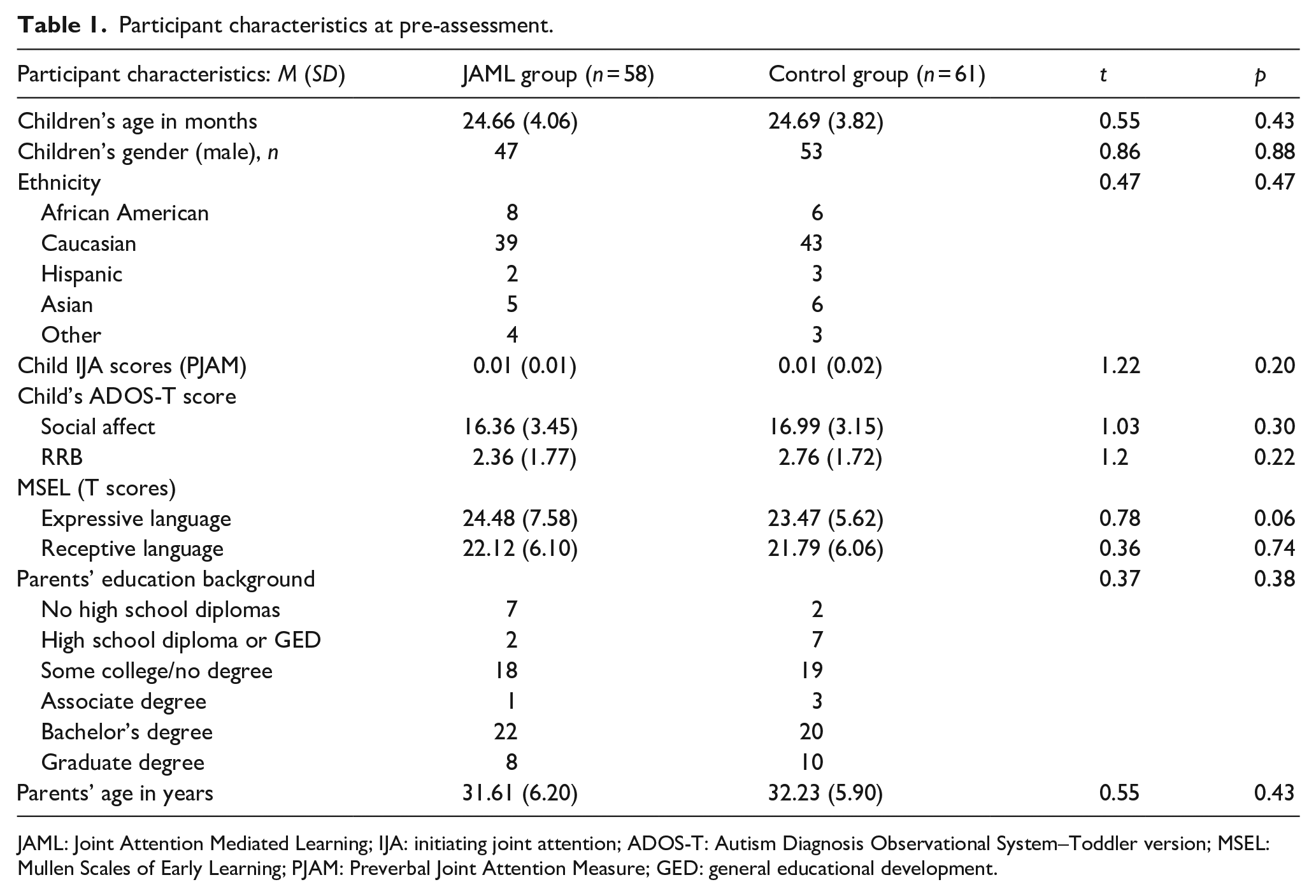
JAML: Joint Attention Mediated Learning; IJA: initiating joint attention; ADOS-T: Autism Diagnosis Observational System–Toddler version; MSEL: Mullen Scales of Early Learning; PJAM: Preverbal Joint Attention Measure; GED: general educational development.
Research design and intervention procedures
The JAML intervention was implemented with families over a 32-week period. JAML targeted four preverbal social communication outcomes for toddlers with autism: focusing on faces (FF), turn-taking (TT), responding to joint attention (RJA), and the ultimate target, IJA. The in-home learning venue focused on the parent–child interactional relationship and the process by which outcomes were promoted was systematic conceptual guidance provided by Intervention Coordinators (ICs) as spelled out in an IC manual. The ICs mediated parent learning by focusing on progressive intervention phases, FF, TT, RJA, and IJA. ICs facilitated parents’ conceptual learning rather than directing them to carry out specific strategies. An independently coded checklist assessed ICs’ fidelity with these practices (see Schertz, Odom, et al., 2018, for details). The purpose of providing conceptual guidance to parents was to arm them with knowledge of why a social focus was important (i.e. that it, unlike instrumental communication, is a unique challenge in autism), how it is distinguishable from instrumentally driven communication, and social communication’s foundational role for future language and social competency. Similarly, we provided parents with an understanding of the mediated learning process (i.e. to promote the child’s active contribution to the learning process rather than passively performing prescribed behaviors). We viewed providing a conceptual foundation as respecting parents’ ability to learn and to make their own decisions about how to align parent–toddler interactions with learned concepts.
Community members were involved in the intervention’s design through families’ participation in a series of progressively larger studies of the JAML intervention. Family input was collected in all of the studies and applied in future iterations of the intervention (Schertz & Odom, 2007; Schertz et al., 2013; Schertz, Odom, et al., 2018). This input was received in the form of weekly logs of families’ intervention experience, records of parent intervention fidelity, social validity assessments, and qualitative analyses of parents’ perceptions. The intervention design of the current study thus considered input from prior studies.
Five mediated learning principles, (1) “Focusing” and (2) “Organizing/Planning” to facilitate shared attention, (3) “Giving Meaning” to the current social learning target, (4) “Encouraging” self-reliance in interaction, and (5) “Expanding” learning to other contexts, were oriented to promoting active child engagement in the social learning process. As they applied the principles, parents were helped to distinguish active from passive engagement, with active engagement viewed as the child responding to parent social initiations on their own volition (rather than by response to prompts, modeling, or reinforcement) or unprompted initiating of social overtures. The first two principles were operationalized as guiding the child’s attention toward the interaction and establishing supportive structures. For example, the parent sets up a defined space for interaction with a blanket on the floor (Organizing) and makes an animated sound to draw the child’s attention to an object presented in a “surprise bag” (Focusing). With Giving Meaning, the parent orientes the child toward the specific aspect of interaction being promoted (e.g. emphasizing social noninstrumental engagement on the child’s own volition). Encouraging promoted the child’s self-reliance and active engagement (e.g. by acknowledging the child’s social actions). Finally, Expanding extended learned competencies to other partners and contexts, a process that was promoted in the intervention. Importantly, the mediated learning process excluded (1) promotion of direction-following (e.g. by requesting a specific child action), (2) promotion of requesting (e.g. expecting a child to point to an item before giving it to them, and (3) use of reinforcement beyond what toddlers may have experienced as they learned to appreciate the value of parents’ social responses to their social overtures. Parents were supported to translate and incorporate conceptual learning related to social content and the mediated learning process into natural everyday interactions. Table 2 illustrates parent-created activities that incorporated the principles.
Mediating learning principles: descriptions and examples to support toddler learning.
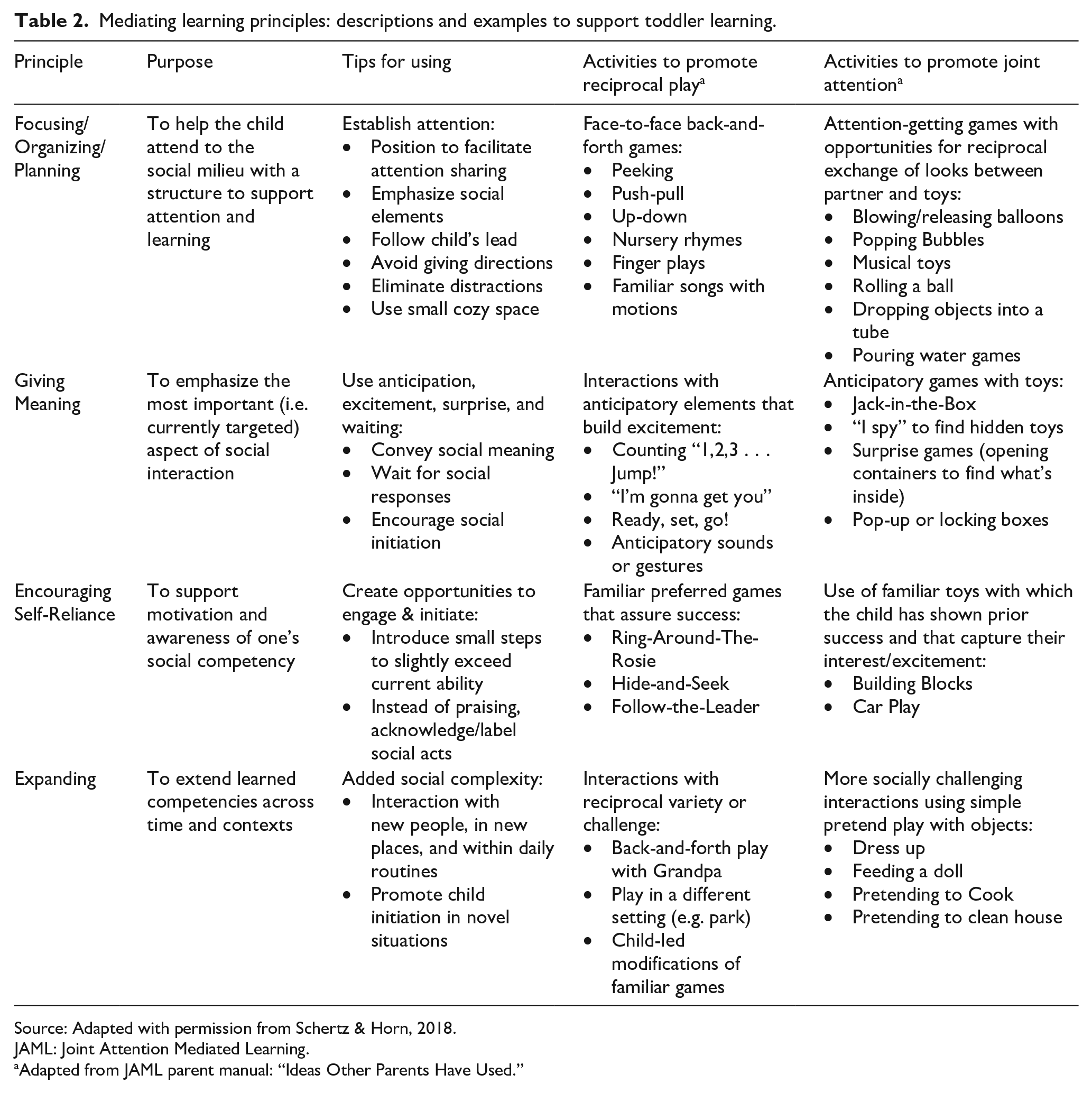
Source: Adapted with permission from Schertz & Horn, 2018.
JAML: Joint Attention Mediated Learning.
Adapted from JAML parent manual: “Ideas Other Parents Have Used.”
Weekly JAML sessions began with parents reviewing a brief log of their activities from the week. This was followed by the interventionist video-recording a 10-min parent–child interaction session that would be used for the video reflection described below. A new unit from the parent manual featuring a targeted outcome and mediated learning principle (e.g. FF and Encouraging) was then presented in hard copy, reviewed verbally, and illustrated with video examples. Finally, with the IC’s support, the parent planned new activities for the next week aligned with the new unit’s content, activities that integrated the parent’s knowledge of child and family interests/preferences with the current intervention focus.
The same mediated learning principles used to guide toddler learning were also applied to facilitating parents’ learning for the purpose of promoting their active engagement in the learning process and internal motivation for learning. Parents’ conceptual understanding of the mediated learning principles and child social communication targeted outcomes was advanced in three ways, each of which focused on supporting parents’ competence and confidence in guiding parent–child interaction. First, rather than modeling professionally determined strategies, each week ICs shared “Ideas Other Parents Have Used,” selected for the parents’ and toddlers’ current stages of learning. These activity examples, demonstrated by other parents of toddlers with autism, were presented verbally and with written and video exemplars. The examples illustrated other parents’ creativity in devising relevant and effective activities to promote currently targeted outcomes (FF, TT, RJA, or IJA) and varied strategies based on individual child interests and family cultural preferences. The parent-created activity examples were selected to demonstrate active child engagement in the social learning process and were aligned with the five mediated learning principles. The rationale for featuring activity examples collected from other parents rather than generated from professionals was to illustrate and bolster parents’ self-efficacy and to provide conceptual clarity.
Second, to leverage parents’ expertise, child learning was facilitated exclusively through parent–toddler rather than IC–toddler interaction. Parents were encouraged to spend approximately 30 min daily in focused play-based interactions and to incorporate the principles into incidental interactions throughout the day. In weekly reports of parent-logged activity, a mean of 28.64 min per day (calculated on 5 days per week) was reported with 6% of families reporting less than 20 h per week. Finally, to promote parents’ understanding of how their actions resulted in child changes, they engaged in weekly guided reflection on interaction with their toddlers from the just-recorded 10-min videos. As ICs replayed these videos, they guided parents’ reflection on the child’s social (i.e. noninstrumental as defined below) engagement and the parent’s mediational strategies, encouraging parents to identify successful parent and child actions and referencing prior concepts to facilitate problem-solving if the parent identified difficulties. In this way, ICs facilitated parent reflection and guided parent problem-solving rather than asserting their own critiques.
Control group participants continued or were referred to the federally supported and state implemented early intervention services available across the three sites. At the end of the intervention period, these participants, who were each matched on an intervention family’s timelines, received a full set of JAML intervention materials for independent use and were guided on how to use the materials. Families in both groups were free to participate in other services of their own choosing. As reported for the primary study (Schertz, Odom, et al., 2018), control group participants at each site received more hours of service weekly than did the JAML participants; however, the moderation effect for Treatment × Time × Services was nonsignificant.
Data collection
Three parent–child interaction videos were collected pre- and postintervention for each participant in the intervention and control groups. For data collection sessions, parents were asked to interact with their toddler as they normally would. Parents used toys of their own choosing, guided by toddler interests. The guidance to parents purposely did not prescribe particular toys or activities since the purpose of both parents’ application of mediated learning principles and promotion of IJA was to facillitate social engagement rather than to predetermine particular child actions. The videos were collected in family homes and each pre- and postintervention group of three videos was typically collected over a 2-week period for a total of 30 min of recorded video data for analysis. A total of 357 postintervention videos was included in the analysis.
Measures
Two primary outcome measures were applied to the video data: one to assess parents’ application of mediated learning principles, and the second to assess child IJA. The Mediation of Social and Transactional Engagement Measure (MOSTE; Schertz, Horn, et al., 2018) was developed and used to code parents’ application of mediated learning principles. The five principles promoted in intervention were reduced to three for analysis. Focusing and Organizing/Planning were taught separately but combined for analysis and labeled FO, since the purpose of both was to promote attention to the targeted outcome. Expanding, although promoted in the intervention, was not analyzed since it occurred primarily in contexts outside of the 10-min video-recordings used for data analysis. The resulting categories were FO, GM (Giving Meaning), and EN (Encouraging). The MOSTE captured parents’ application of these mediated learning principles in 10-min videos, which were split into 10-s segments for partial-interval coding. The operational definitions were for FO: The parent intentionally draws the child to the social aspect of play; for GM: The parent supports the child’s understanding by, for example, showing anticipation for the child’s turn in a TT interaction; and for EN: The parent acknowledges and promotes the child’s self-awareness of their social acts (e.g. social looks, TT, or joint attention). Three coders were trained to 85% coding agreement with an expert coder. Coding was conducted independently with coders naive to group assignment. Twenty-five percent of coded videos were randomly selected to test interobserver agreement (IOA). Cohen’s Kappa was calculated with a mean kappa of 0.75 for FO (0.63–0.82), 0.84 for GM (0.7–0.93), and 0.73 for EN (0.47–0.92).
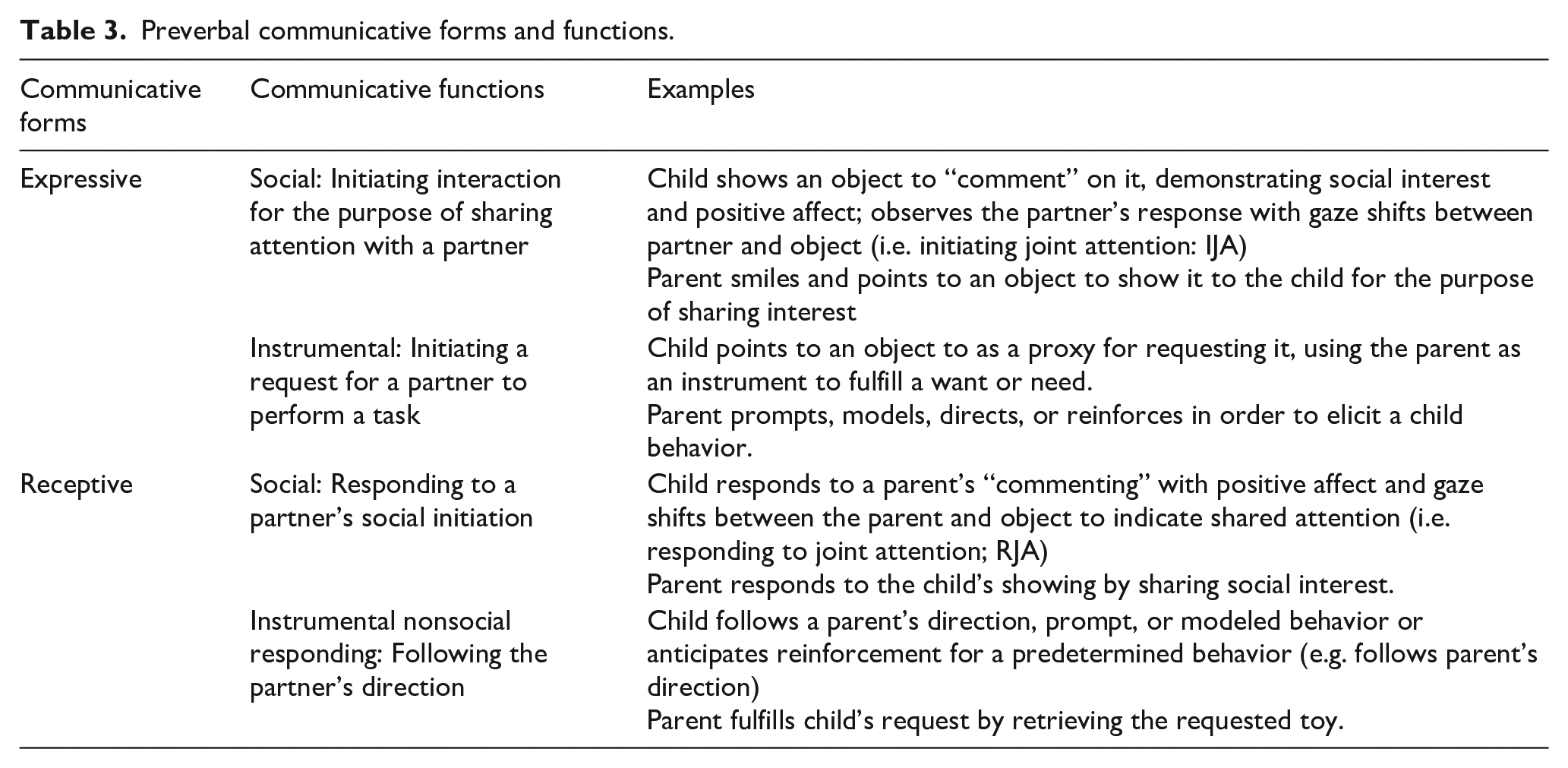
The Preverbal Joint Attention Measure (PJAM; Schertz, 2013) was used to code child IJA and its developmental precursors (FF, TT, RJA, and IJA) for the original study (Schertz, Odom, et al., 2018). The criteria for IJA were based on those established by Mundy et al. (2003). IJA was coded for a triadic interaction that connected the child, parent, and object in which the child initiated social attention by exchanging looks between the parent’s face and an object with positive affect and an indication of social noninstrumental interest (i.e. excluding an underlying requesting purpose). Given the young age and preverbal status of the toddlers just identified with autism, gestures or verbalizations were not required. We differentiated social (IJA) from instrumental (requesting) intent by considering child affect and contextual factors. For example, a toddler directing a parent’s attention to a toy to request it was accompanied by a task-oriented expression while doing so for the purpose of “commenting” or sharing attention was accompanied by positive affect, such as smiling. The difference was addressed in coder training and monitored in ongoing assessment of interrater agreement. Toddler communicative forms and functions were interpreted in reference to parent actions as classified in Table 3. Like MOSTE, the PJAM used a partial-interval reporting system. This system was chosen to standardize observations and facilitate coding and assessment of interrater agreement. Each interval was 10 s in length and a total of 60 intervals were coded for each observation. The PJAM was administrated by three coders trained to 85% agreement and naive to group assignment. Throughout the study, 25% of videos were randomly selected to assess the IOA. Cohen’s Kappa was used to calculate IOA and the mean kappa for IJA was 0.76 (0.41–1.0).
Preverbal communicative forms and functions.
Data analysis
The first research question was examined by conducting a multivariate analysis of variance (MANOVA), which detected the mean differences between intervention and control groups in parents’ application of mediating learning principles. The second question, which explored associations between parents’ application of mediated learning principles and children’s IJA outcomes at postintervention, was examined through a general linear model in a multiple regression analysis with child IJA as the dependent variable. The dependent variable was regressed on the independent variables, parents’ use of the mediated learning principles FO, GM, and EN. The association between child IJA and mediated learning principles was analyzed in two steps. First, all participants in both groups were included in the regression analysis. Second, the analysis was performed for each group separately. Data analysis was performed in SPSS26.
Results
Between-group analyses of child and parent characteristics at preintervention are presented in Table 1. Significant differences were not found for any of these variables. Descriptive statistics (Table 4) for all variables were examined to ensure the assumptions were met for MANOVA and multiple regression, including normality, linearity, multicollinearity, and homoscedasticity. No violations were for found for this data set. MANOVA was performed to examine group differences in parents’ application of mediated learning principles. The outcomes in the model were FO, GM, and EN.
Descriptive statistics.
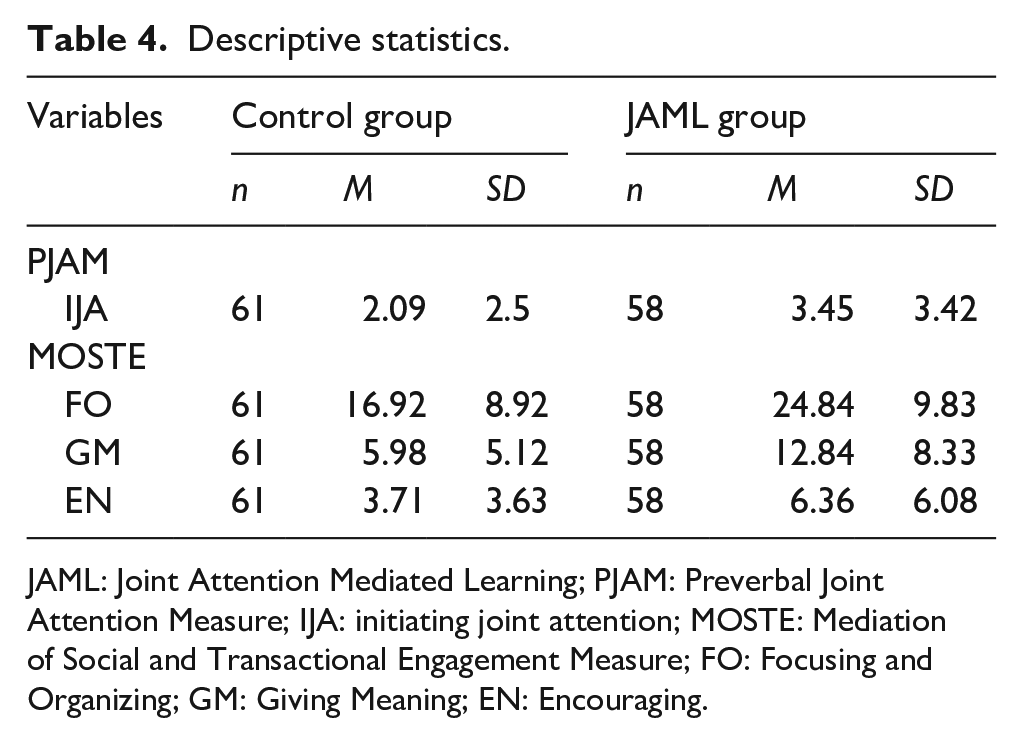
JAML: Joint Attention Mediated Learning; PJAM: Preverbal Joint Attention Measure; IJA: initiating joint attention; MOSTE: Mediation of Social and Transactional Engagement Measure; FO: Focusing and Organizing; GM: Giving Meaning; EN: Encouraging.
Parents’ application of mediated learning principles
Significant differences were found between the intervention and control groups on parents’ application of mediating learning principles at postintervention, Wilk’s Λ = 0.78, F(3, 115) = 10.61, p < 0.001, multivariate n2 = 0.22, suggesting that approximately 22% of the dependent variable’s variance was associated with the group factor. The univariate effects indicated significant group differences for FO (see Table 5), F(1, 117) = 20.58, p < 0.001; GM, F(1, 117) = 25.67, p < 0.001; and EN, F(1, 117) = 7.00, p = 0.01.
Univariate group effects.
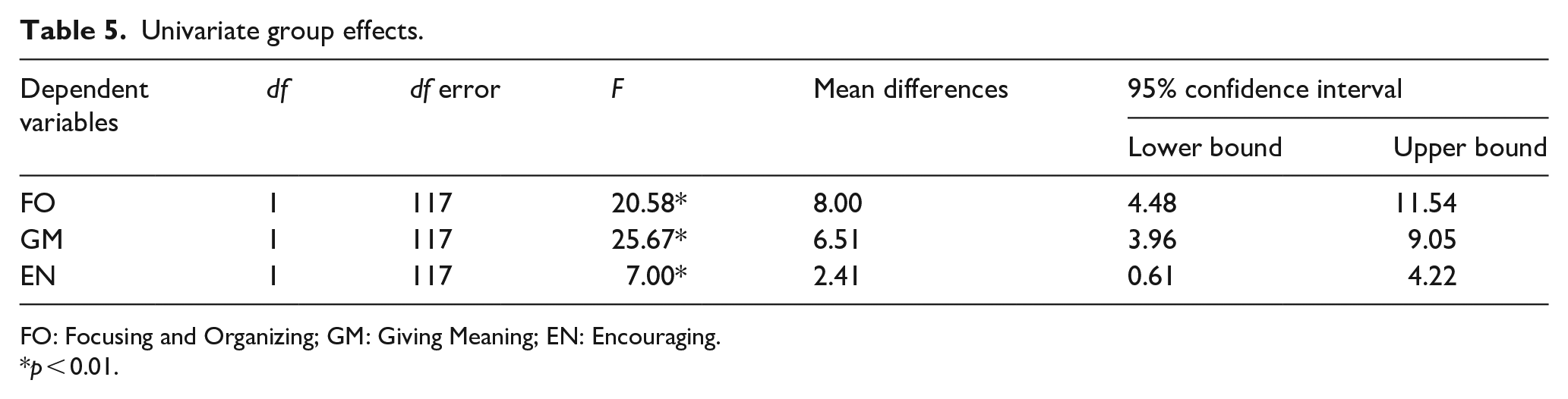
FO: Focusing and Organizing; GM: Giving Meaning; EN: Encouraging.
*p < 0.01.
Relationship between parent and child outcomes
To examine associations between mediated learning principles and child preverbal outcomes at postintervention, inspection of correlations was conducted and revealed significant linear relationships between predictor variables and outcome (see Table 6). Predictor variables were parents’ application of mediated learning principles.
Bivariate correlation matrixes of all variables.
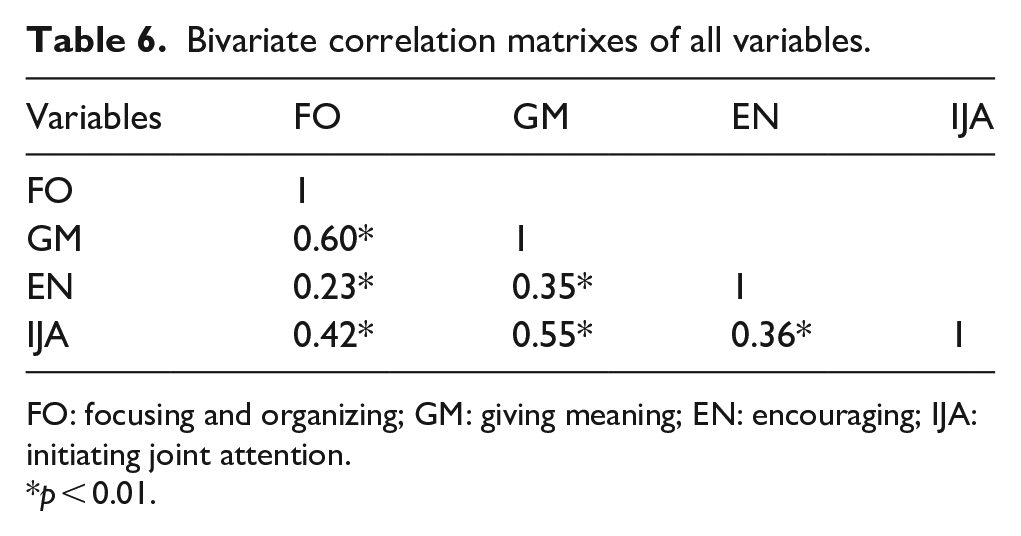
FO: focusing and organizing; GM: giving meaning; EN: encouraging; IJA: initiating joint attention.
*p < 0.01.
The first step of the multiple regression analysis was to analyze associations between parents’ application of mediated learning principles and toddler IJA for all participants in the JAML and control groups. In Table 7, the multiple regression results are displayed for all participants for the variables, regression coefficient, and R2. The results indicated that R for regression was significantly different from zero for dependent variable IJA. These findings indicated that 35% of the variance in IJA is explained by group differences in parents’ use of mediated learning principles. The mediated learning principles GM (t = 4.10, p < 0.001) and EN (t = 2.37, p = 0.02) are significant predictors of IJA. The regression equation is IJA = 0.02 + (0.40 × GM) + (0.19 × EN). The effect size related to the variances explained for the overall model is f2 = R2/1 − R2 (Cohen, 1992), with 0.02 indicating a small effect, 0.15 a medium effect, and 0.35 a large effect. For this model, f2 = 0.54, indicating that FO and GM have large effects on IJA.
Regression analysis: outcome variable IJA and predictors by group composition.
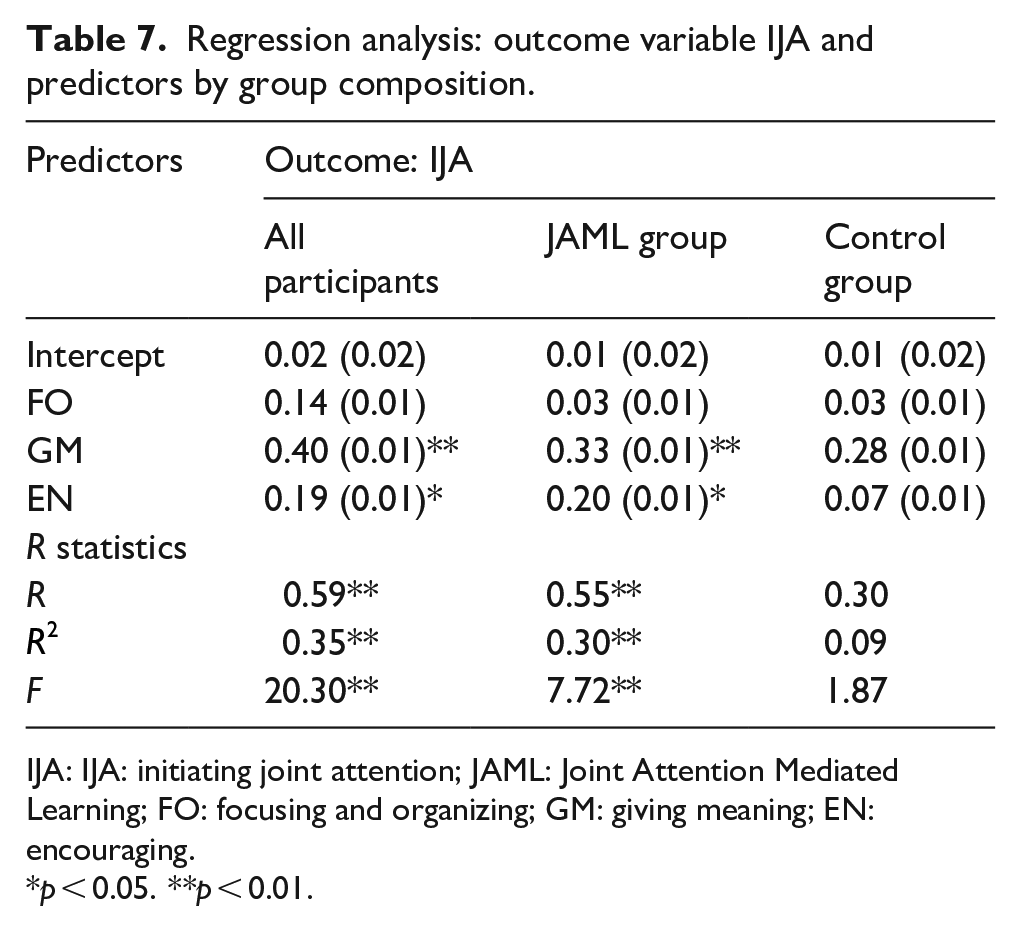
IJA: IJA: initiating joint attention; JAML: Joint Attention Mediated Learning; FO: focusing and organizing; GM: giving meaning; EN: encouraging.
p < 0.05. **p < 0.01.
The second step was to examine the relation between mediated learning principles and IJA separately for intervention and control group participants. As shown in Table 7, the relationship between parents’ application of mediated learning principles and IJA differs between groups. For the JAML group, R for regression was significantly different from zero. About 30% of IJA variance is explained by FO, GM, and EN. Two of the predictors, GM (t = 2.21, p < 0.001) and EN (t = 1.93, p < 0.05) again related significantly to IJA. The regression equation is IJA = 0.01 + (0.33 × GM) + (0.20 × EN). When GM and EN increase one unit, IJA is expected to increase 0.33 and 0.20, respectively, while holding other variables constant. The effect size for the intervention model is f2 = 0.43, indicating that parents’ application of mediated learning principles in the JAML group has a large effect on child IJA. For the control group, the results indicated a nonsignificant relationship between parents’ application of mediated learning principles and the dependent variable IJA, with R2 = 0.09, F(3, 56) = 1.48, p = 0.23. The effect size for the control group model is f2 = 0.01, indicating that parents’ application of mediating learning principles in the control group has a trivial effect on child IJA. This result indicates that, although parents’ application of FO and GM are significant predictors of IJA, parents in the control group did not significantly improve their competency in applying any of the mediated learning principles.
Discussion
Two unique features characterized the JAML intervention: its targeted focus on preverbal social noninstrumental communication and a mediated learning process. Following intervention incorporating these elements, parent participants exceeded controls in applying mediated learning principles to strengthen preverbal social communication for toddlers with autism. One finding demonstrated that intervention group parents were able to learn to apply mediated learning principles when systematically supported and that this did not naturally occur with control group parents through their community-based early intervention experience. Importantly, parents’ successful application of the principles—focusing/organizing/planning, giving meaning to targeted preverbal social competencies, and encouraging self-reliance—together predicted gains in toddler IJA in unstructured parent–child interaction, JAML’s ultimate outcome. Considered individually, the strongest predictor of IJA was the principle Giving Meaning, while Encouraging also showed significance.
Giving Meaning represents the essence of the mediated learning process and its purpose in JAML was to convey social meaning within the current intervention phase (FF, TT, or JA). Rather than eliciting predetermined behaviors, parents were guided to create a sense of social anticipation in which toddlers acted while taking the parent’s interests into account. The principle Encouraging was used to foster motivation and self-reliance in social (i.e. noninstrumental) engagement that does not rely on external controls or incentives and occurs on the child’s own volition.
Potential contributors: integrated intervention content and process
The stepwise approach to intervention content and exclusive focus on social communication likely contributed to both toddlers’ and parents’ successes and to their understanding of their own capabilities. Attending to the parent’s face is an important building block for joint attention and, though occasionally an initial challenge, ICs reported anecdotally that it was easily understood and effectively promoted by parents. This was followed by a slightly more socially challenging step, reciprocal back-and-forth play, and then by RJA and IJA, with each step building on previous ones to make success more achievable for both toddlers and parents than if earlier steps had been circumvented.
The mediated learning principles, by nondirectively fostering active engagement in learning, may be distinctively suited to promoting social motivation in communication. The process is designed to strengthen the learner’s contribution to and self-awareness of the practice of learning (e.g. Feuerstein et al., 1980) which in the current study centered on the social domain. Rather than promoting direction-following, mediated learning privileges initiation over passive responding, positioning it to address the unique IJA challenge in autism. Although typically integrated into the social repertoire in the second year, difficulty with IJA distinguishes toddlers with autism by 18 months (Franchini et al., 2019) and into the future (Mundy et al., 2016), and is a more persistent challenge than RJA (Mundy, 2016).
In parallel to parents’ mediation of toddler learning, interventionists also applied mediated learning principles to guide parent learning. For example, Giving Meaning was applied by emphasizing conceptual learning about the meaning of social communication rather than training parents in predetermined strategies, opening opportunities for parents to translate concepts into parent–child interactions commensurate with their own interests and cultural orientations. In place of professionals modeling strategies, use of the principle Encouraging supported parents’ understanding of their own expertise (i.e. self-efficacy) in two ways. First, parents were shown print and video examples of other parents supporting toddlers’ current social communication foci (“Ideas Other Parents Have Used”) to illustrate parents’ capability to translate concepts into parent–child interaction, a theory that has not yet been tested although, as noted below, this approach was largely identified by parents as helpful. Second, at each session, interventionists guided parents to reflect on videos of them interacting with their own toddlers to promote understanding of their own competency by highlighting their successes related to the current social communication focus. A separate qualitative study of perceptions of parents who had experienced both mediated learning and earlier professionally directed intervention found that having an active role aligned with self-efficacy beliefs while having a peripheral role undermined those beliefs (Schertz et al., 2020). These findings closely parallel Dunst et al.’s (2007) meta-analytic demonstration of close associations between family-centered help-giving practices and parent self-efficacy. A related analysis found that parents’ competency in applying mediated learning principles was not influenced by whether they had college degrees (Liu & Schertz, 2021), suggesting that mediated learning is feasible and effective across parental educational levels.
Implications for research and practice
The JAML intervention was carried out by trained interventionists under controlled conditions. Future research is needed to investigate whether practitioners in the field can learn to support parent mediation of child social learning in community-based early intervention settings, research that is currently underway. Successful implementation would require three adjustments in intervention practice to support early social learning for toddlers with autism and their families: (1) establishing a distinct preverbal social orientation, (2) a role shift for professionals who deliver intervention to toddlers directly toward helping parents embed social learning within the parent–child relationship, and (3) application of mediated learning principles to promote active child and parent learning. These criteria are mirrored in the documented need to adopt family capacity-building approaches in early intervention (Meadan et al., 2019) and to assess targeted theory-driven predictors of social outcomes that relate to core autism challenges (Vivanti et al., 2014). An important question for future research is whether the three identified needs are replicable in community-based efficacy research.
Limitations and strengths
For Research Question 1, which assessed postintervention differences between intervention and control group parent participants in their application of mediated learning principles, conducting a full analysis of parents’ preintervention performance might have strengthened our findings. In a previous study using a smaller sample from the JAML study (Liu & Schertz, 2021), we evaluated parents’ application of mediated learning principles at preintervention and found no group differences but, due to funding limitations, did not evaluate preintervention differences for the current study. Our assumption is that any preintervention differences on these variables in the current sample were insignificant due to random assignment. Future studies evaluating preintervention differences could extend our findings by investigating Time × Treatment effects.
Since JAML’s purpose was to promote child IJA within the supportive parent–child relationship through parents’ application of mediated learning principles, both outcomes were necessarily assessed within the context of parent–child interaction. While observational assessors were naive to treatment condition, parent participants were aware of whether or not they had received the JAML intervention. It is possible that testing child IJA in an alternate interactional venue (i.e. with strangers who had been trained to apply mediated learning principles), the toddlers might perform differently. A concern with this alternative is that using such strict generalization criteria might compromise toddlers’ performance because their social capabilities may be more relationship-dependent than those of older children. We interpreted child IJA to be a transactional process rather than a discrete skill disembodied from, in this case, the parent–child relationship. However, once well established in this context, as with other forms of early learning, generalization to other contexts and interaction partners can be expected to follow and to extend into socially motivated verbal communication. The ultimate test of effects would be downstream longitudinal study of the extent to which social competencies related to autism (e.g. social reciprocity or socially motivated verbal and nonverbal communication) are detectable in later years. Interpretation of findings should take these factors into account.
Benefits or burdens for parents should also be considered. The qualitative study (Schertz et al., 2020) of parents who had experienced the intervention reported here preceded by professionally implemented early intervention explored challenges and contributors to self-efficacy for parents of toddlers with autism. One theme revealed that parents viewed their earlier experience of having a peripheral role in the intervention as challenging their confidence in their abilities while receiving guidance in this intervention, in which they had an active leadership role, supported their sense of efficacy for promoting their toddlers’ social learning. Another theme revealed challenges to self-efficacy as most prominent in the early period as parents adjusted to the diagnosis. One facet of the intervention, showing videos of other parents demonstrating activities aligned with the child’s stage of learning instead of professional modeling of strategies was implemented to demonstrate that parents were competent to translate concepts to parent–child interaction in ways that matched their child’s interests and to suggest that they are best positioned for this role. In fact, this was the aspect of the intervention most frequently mentioned in a postintervention parent survey as what they liked most about the intervention experience (and in “suggestions for improvement” the only comments relating to video examples were five suggestions to provide more of them).
Perhaps related to the second theme mentioned above, another qualitative study of interviews with parents in one site (Amsbary et al., 2021) a year or more after the intervention ended confirmed this overall positive impression but, when probed, two parents mentioned that comparing themselves with others on occasion resulted in them feeling discouraged. As they gain experience with this method, interventionists should be alert to the need for careful selection of video examples and to emphasize the purpose: to illustrate the potential for creativity and variety rather than to suggest that parents replicate specific demonstrated activities and to show examples in which children are not yet demonstrating a targeted competency as well as examples in which they are. Another consideration is the possible burden of time required of parents to integrate learned concepts into everyday interactions. In the cross-site postintervention survey, under “suggestions for improvement,” one parent commented that the intervention was time-consuming and, in the one-site study (Amsbary et al., 2021), finding time to commit daily emerged as a theme. The response that the expectation of an active parent role was acceptable (90% agreed/8% neutral), which is a necessary feature of parent-implemented interventions, is balanced by intervention participants reporting high levels of acceptability of the intervention’s importance (99% agreed/1% neutral), support received (97% agreed/3% neutral), child progress (95% agreed/4% neutral), and improved sense of hopefulness about the child’s future and confidence with their own ability (97% agreed/3% neutral; Schertz, Odom, et al., 2018, Table 3).
Sample limitations, typical of the sites in which data were collected, relate to racial, socioeconomic, and cultural diversity. These limitations may have had a bearing on the extent to which our findings are transferrable to other populations. We also did not collect data on participants’ primary languages and, although parents’ choice of materials and activities position JAML for being adaptable across cultures, we did not study its success in doing so.
Conclusion
This research explored parents’ implementation of mediated learning processes that may support social learning for very young children on the autism spectrum. The findings suggest that intervention may promote toddlers’ ability to initiate social communication when: It focuses on preverbal social communication, it supports parents’ active engagement in relevant conceptually based learning, and parents are effective in their flexible application of mediated learning principles to translate learned concepts into socially oriented parent–toddler interactions. The two mediated learning principles most closely associated with toddler IJA were “Giving Meaning” to the social communication target and “Encouraging” the child’s self-reliance with social communication competencies.
Footnotes
Declaration of conflicting interests
The author(s) declared no potential conflicts of interest with respect to the research, authorship, and/or publication of this article.
Funding
The author(s) disclosed receipt of the following financial support for the research, authorship, and/or publication of this article: We received funding support from the U.S. Department of Education, Institute for Education Sciences, National Center for Special Education Research, Grant R324A120291. We received additional funding from the Indiana University Social Sciences Research Funding Program, Office of the Vice Provost for Research, Grant 2241771.
